INTERNACIONAL
Russian mercenaries replace Western forces as ISIS surges across Africa’s Sahel region


NEWYou can now listen to Fox News articles!
Analysts claim the withdrawal of U.S. and European troops from countries in Africa’s Sahel, and their replacement by Russian mercenaries, has led to a spike in jihadist-driven terrorism.
The Sahel is a belt of countries running roughly west to east across the continent just below the Sahara Desert. A total of 3,885 deaths — about 51% of all terrorism-related fatalities globally in 2024 — occurred in the Sahel, according to the Global Terrorism Index.
In at least three Sahel states — Mali, Niger and Burkina Faso — military juntas that came to power in coups, notably Niger and Mali, have expelled Western military forces. The U.S. was asked, after 11 years in the country, to halt anti-terror drone operations from two bases in Niger last year. In Mali, French forces were ejected in 2022 after battling Islamist terror groups for nine years.
Governments have turned to the Kremlin’s private mercenary army, the Africa Corps — formerly known as the Wagner Group — for protection. But the Russians are reportedly more interested in extracting minerals than helping stop the spread of jihadism.
IS TRUMP CONSIDERING BOLD AFRICA PLAY TO PUSH BACK ON CHINA, RUSSIA AND ISLAMIC TERRORISTS?
Supporters of Niger’s National Concil of Sefeguard of the Homeland (CNSP) hold a Russia (R) and a Chinese (L) flag as they gather at Place de la Concertation in Niamey on Aug. 20, 2023. (Photo by -/AFP via Getty Images)
Ordinary people often bear the brunt of jihadist attacks in the Sahel. Last month, Islamist gunmen on motorbikes reportedly killed 22 people in an attack on Tillaberi village in western Niger. Fifteen of the dead were families attending a naming ceremony for a child, reports said. In northern Mali in January, Russian mercenaries allegedly joined government forces in executing 10 civilians, including a 2-year-old boy.
In the Sahel, «groups affiliated with the Islamic State and al-Qaeda are continuing their territorial and strategic advance,» the Observer Research Foundation reported in August, «taking advantage of governance gaps and weak security forces to push into littoral West African states such as Benin and Togo.»
«The situation in the Sahel, particularly in Niger, Mali and Burkina Faso, has rapidly deteriorated since the U.S. and French have withdrawn from the countries following the coups,» Bill Roggio, senior fellow at the Foundation for Defense of Democracies,(FDD) told Fox News Digital.
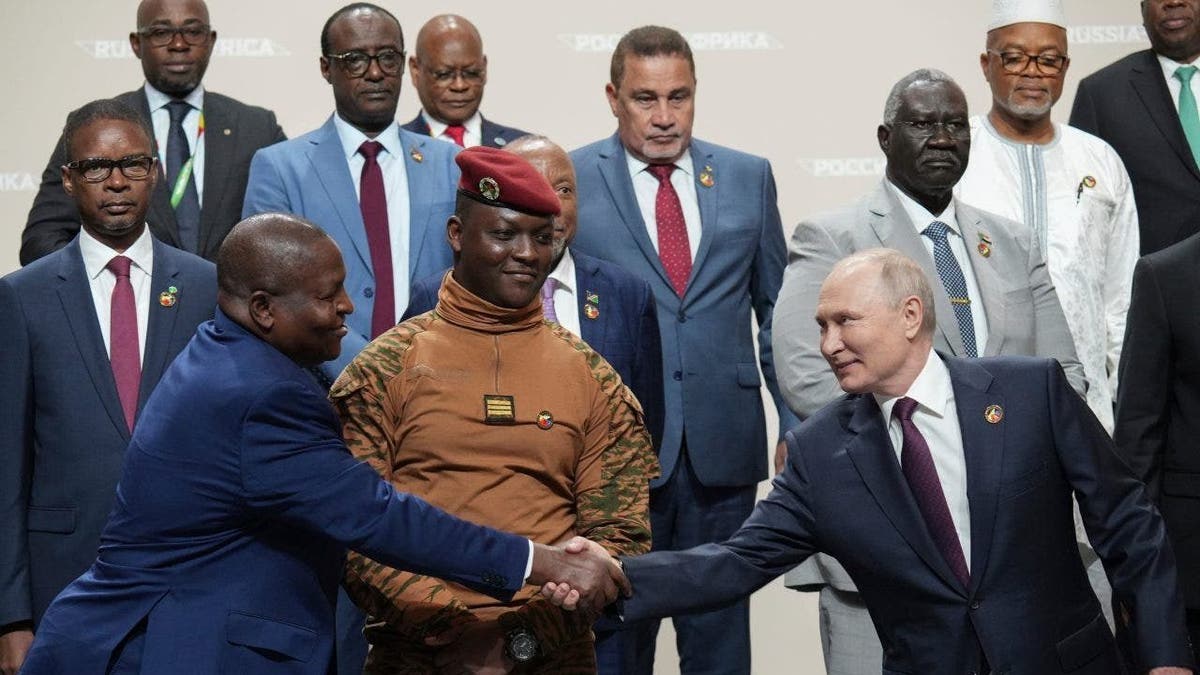
Russian President Vladimir Putin, right, and Mozambique President Filipe Nyusi shake hands during a family photo opportunity during the Russia Africa Summit in St. Petersburg, Russia, Friday, July 28, 2023. (Alexei Danichev, Sputnik, Kremlin Pool Photo via AP)
Roggio, also editor of the FDD’s Long War Journal, added, «The reality is that the situation was bad before the U.S. and French left the region, but the drawdown of U.S. and French forces has exacerbated the jihadist advances.»
«Both al Qaeda’s branch in the region, JNIM, (al Qaeda-linked Jama’a Nusrat Al-Islam wa al-Muslimin) and the Islamic State have made gains and control significant enclaves in the countries … The juntas in these three countries wanted the West out, and have turned to Russia to provide security via Wagner, which is now ironically called the Africa Corps.»
US–RUSSIA FLASHPOINT LOOMS OVER PUTIN’S PLANS FOR AFRICAN NAVAL BASE

A Boko Haram flag flutters from an abandoned command post in Gamboru deserted after Chadian troops chased jihadists from the border town on February 4, 2015. (Stephane Yas/AFP via Getty Images)
«The Russian forces have little incentive to improve security and focus on securing mineral resources for profit,» Roggio added. «This further fuels the jihadist insurgencies, which prey on civilians caught between the jihadists and weak-to-nonexistent governments in some cases. There is little the U.S. can do at the moment, as these governments are anti-West and do not want a return of U.S. and French forces. And I am not sure either country has the political will or desire to return.»
Dr. Frans Cronje, a political and economic analyst, said in an interview with Fox News Digital that during the run-up to the 2023 coup in Niger, a sophisticated political and media campaign sought to turn public opinion against Western influence, often using anti-colonial themes popular in Western political culture.

Russia’s Wagner group mercenaries in Mali, Africa. (East2West)
Cronje continued, «French and U.S. stabilization efforts were tarred as imperialist interference and worse. That was on top of the fact that French and U.S. troops were already under severe strain in combating a jihadist insurgency that threatened the civilian population. You could make the case that even without the coup, the Western position was untenable, short of committing ever greater volumes of arms and munitions to a war very far away from Paris and Washington.»
Cronje agreed with Roggio in his assessment of the Kremlin’s position: «Russia’s forces have now filled the gap left by the French and Americans, but Russia’s objective is securing resource supply chains — not civilians.»
CLICK HERE TO GET THE FOX NEWS APP

Wagner mercenaries in Mali, December 2023. (East2West)
He concluded, «It is difficult to say if this situation could have been avoided. The only way to do it would have been to run political and media operations to build popular support for Western actors, then install a pro-Western administration and, beyond that, vastly increase Western military resources, including troops, deployed in Niger. All a bridge too far for Western actors — and, in many respects, understandably so.»
A State Department spokesperson told Fox News Digital, «The United States has engaged with Sahelian countries using a pragmatic approach that focuses on advancing our foreign policy priorities. Deputy Assistant Secretary of State Will Stevens’ recent visits to the region reinforced the U.S. government’s work with host country officials to advance U.S. commercial opportunities and to engage on strategic counterterrorism priorities to mitigate threats to U.S. personnel and interests.»
isis,russia,africa,conflicts,terrorism












INTERNACIONAL
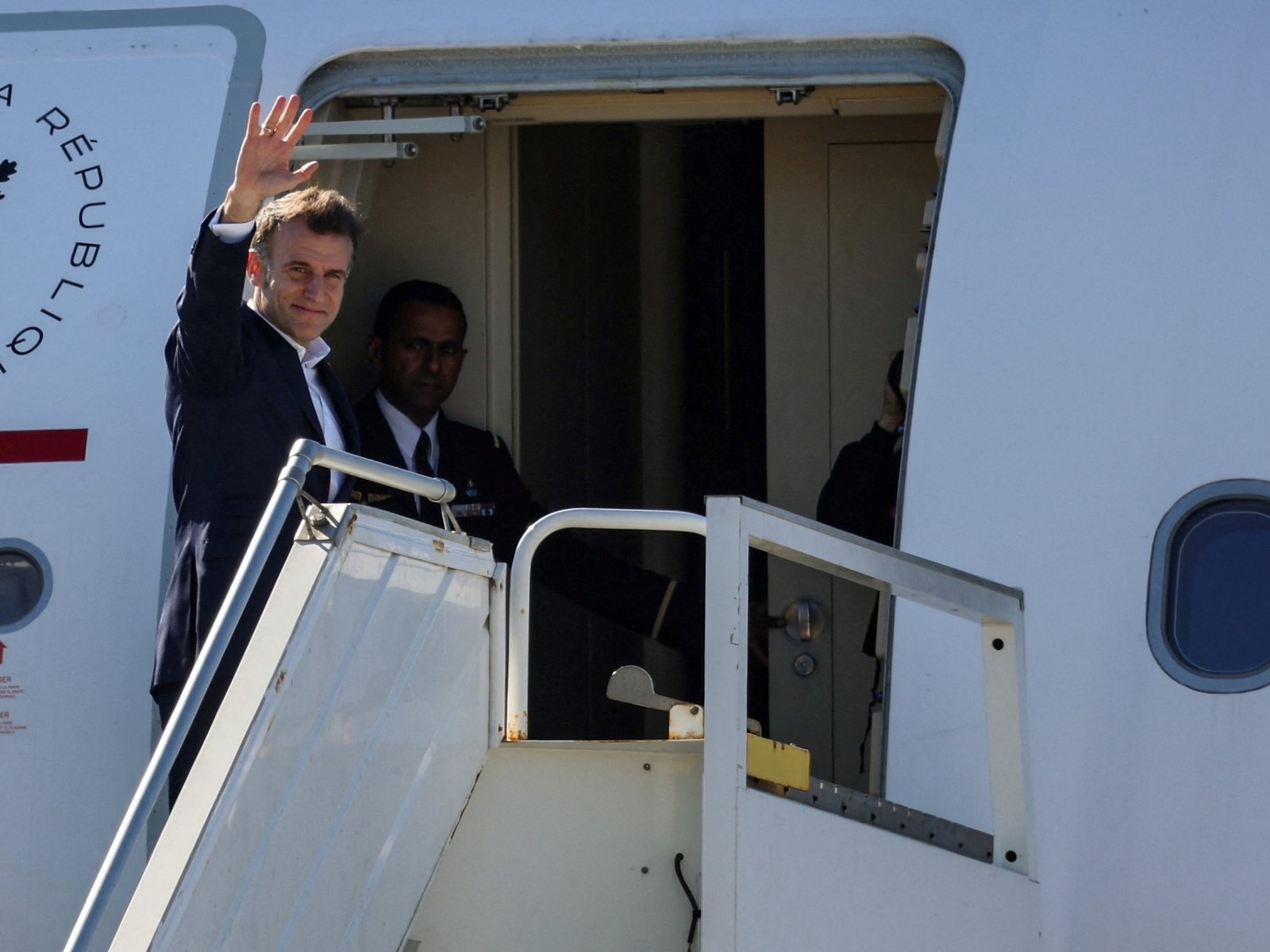
Guerra en Irán: Macron viaja a Chipre y asume el liderazgo militar de Europa con el envío de ocho fragatas más al Mediterráneo
Ocho fragatas
La guerra se siente en Europa
El ataque a Chipre
Las ambiciones de Francia

El protagonismo de Macron

Se amplía la guerra
Flotilla europea a Chipre
Falta de perspicacia estratégica
INTERNACIONAL
Panamá cerró 2025 con más de 271 mil funcionarios y una planilla que supera $5,200 millones
Panamá cerró diciembre de 2025 con 271,346 funcionarios públicos, lo que representó un aumento de 4,869 empleados frente a diciembre de 2024 y un alza de 348 funcionarios respecto a noviembre de 2025, según el más reciente informe de la Contraloría General de la República.
En paralelo, el sueldo bruto mensual de la planilla estatal llegó a $458.4 millones, con un incremento de $10.5 millones en un solo mes. El dato retrata con crudeza el tamaño que ha alcanzado el aparato público: más personal, más gasto permanente y menos margen para maniobrar cuando la caja aprieta.
Pero el dato que realmente pesa no es solo el cierre de diciembre, sino el costo total del año. La planilla pública acumuló en 2025 un gasto de $5,245.2 millones, por encima de los $5,177.0 millones de 2024.
Dicho de otra forma: solo en salarios públicos, Panamá desembolsó en un año $2,280.2 millones más que lo que aportó el Canal de Panamá al Tesoro Nacional en el año fiscal 2025, que fue de $2,965 millones.
Incluso supera en $2,051.4 millones la transferencia histórica que el Canal proyecta para la vigencia fiscal 2026, estimada en $3,193.8 millones, y rebasa en $764.2 millones el costo total estimado de la Línea 3 del Metro, calculado en más de $4,481 millones.

El crecimiento tampoco empezó ayer. Los informes anuales de la Contraloría muestran que el gasto acumulado en planilla pasó de $4,441.1 millones en 2020 a $4,738.8 millones en 2021, $4,880.3 millones en 2022, $5,014.8 millones en 2023, $5,177.0 millones en 2024 y $5,245.2 millones en 2025.
En conjunto, entre 2020 y 2025, el Estado panameño desembolsó alrededor de $29,497.1 millones en salarios públicos. Ese monto equivale a casi 10 veces el aporte canalero de 2025 y a más de 6.5 veces el costo estimado de la Línea 3.
Buena parte de ese ensanchamiento ocurrió en el quinquenio anterior. De acuerdo con la información que ya había divulgado la Contraloría y que el propio comportamiento mensual confirma en sus series, entre julio de 2019 y junio de 2024 el empleo público aumentó en 24,082 personas, al pasar de 238,248 a 262,330 funcionarios.
El resultado fue una estructura estatal más pesada, con mayor gasto recurrente, más compromisos salariales y menos flexibilidad presupuestaria. En 2025 esa inercia no desapareció: cambió de velocidad, pero no de dirección.
Las entidades que más sumaron personal en 2025 ayudan a entender hacia dónde se movió la expansión. El Ministerio de Educación cerró 2025 con 68,405 funcionarios y añadió 1,017 plazas frente a diciembre de 2024. La Asamblea Nacional terminó con 5,718 empleados y sumó 935.

El Ministerio de Seguridad Pública cerró con 33,473 funcionarios y agregó 660. El Ministerio de Obras Públicas llegó a 2,330 empleados, con un aumento de 523. El Órgano Judicial alcanzó 7,318 funcionarios y sumó 513.
En el bloque descentralizado también hubo movimientos relevantes. La Caja de Seguro Social cerró 2025 con 35,325 funcionarios y registró un incremento combinado de al menos 620 plazas entre personal permanente y eventual. Transporte Masivo de Pasajeros, S. A. terminó con 4,103 empleados y aumentó 279 funcionarios permanentes.
Ese peso del gasto de funcionamiento ha sido una de las alertas repetidas por organismos y calificadoras. Moody’s ha advertido sobre la rigidez de ciertas leyes y la dificultad del Estado panameño para recortar gasto público, mientras Fitch y el Fondo Monetario Internacional han insistido en que la consolidación fiscal sigue limitada por la presión del gasto corriente y la trayectoria de la deuda.

El ministro de Economía y Finanzas, Felipe Chapman, y el presidente José Raúl Mulino han reconocido que reducir el gasto en salarios es particularmente complejo, en parte por la existencia de leyes especiales que establecen incrementos obligatorios para educadores, estamentos de seguridad, médicos y otros profesionales del sector público.
Esa rigidez, han señalado, dificulta ajustes rápidos del gasto corriente y obliga a que cualquier estrategia de contención se apoye en reformas de mayor alcance, mejoras de eficiencia y revisiones de estructuras salariales y de contratación.
manos,dólares,pago,impuestos,transacción,billetes,recibo,economía,finanzas,dinero
INTERNACIONAL
EXCLUSIVE: Trump rejects shielding Biden records from Senate probes in executive privilege showdown
NEWYou can now listen to Fox News articles!
EXCLUSIVE: President Donald Trump rejected former President Joe Biden’s assertion of executive privilege over a tranche of documents requested by the Senate as part of various probes into the 46th president, determining it is «not in the best interests of the United States.»
White House counsel David Warrington wrote Monday in a letter addressed to the National Archives and Records Administration (NARA) and obtained by Fox News Digital that Trump «does not uphold the former President’s assertion of privilege» over records sought in four congressional probes. The letter directs NARA to provide the materials to Congress.
The dispute centers on documents related to investigations into Biden’s health, alleged politically motivated probes into Trump and his allies, and the Biden family’s financial dealings, which Republicans argue go to the heart of Congress’ constitutional authority to conduct oversight.
The letter came as a response to communication from NARA on Dec. 10 informing the White House that the former president had asserted executive privilege over the requested materials.
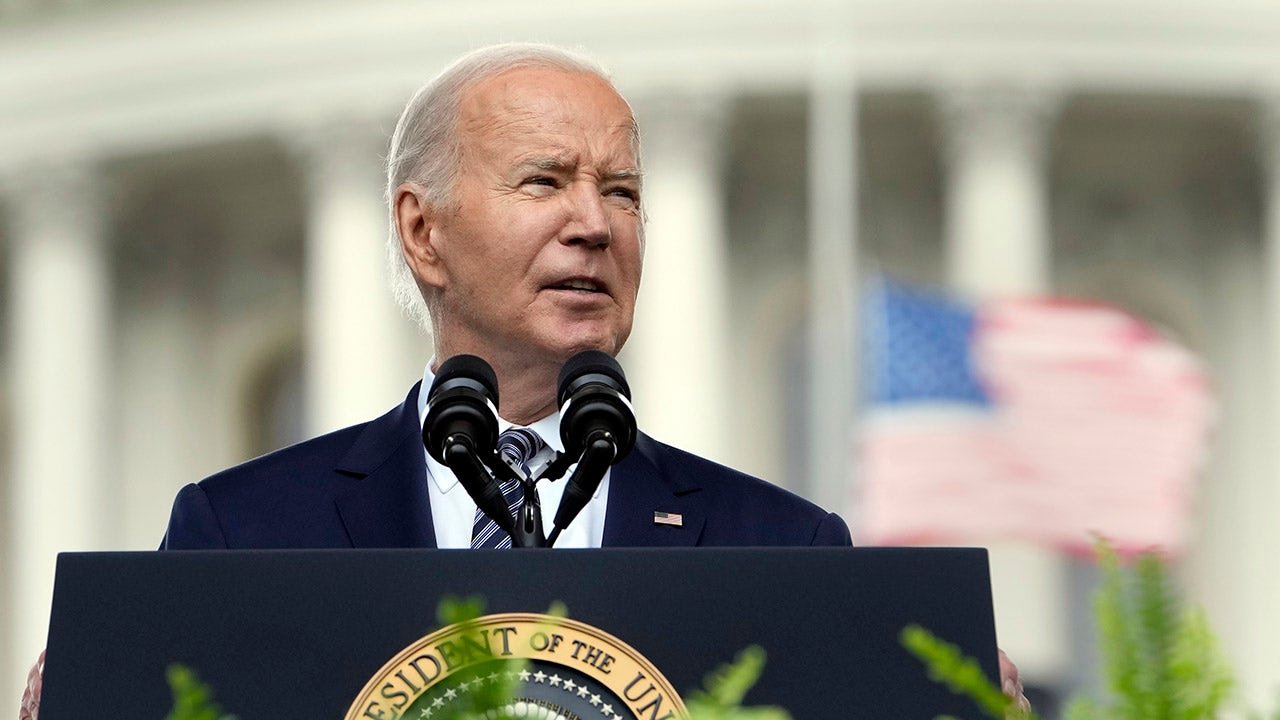
President Joe Biden speaks during an event in Washington, D.C., on May 15, 2024. (AP Photo/Susan Walsh)
Warrington said the assertion «is not justified» as to documents identified in two letters Biden sent to NARA on Oct. 22 and Dec. 3.
The first category of documents involved a request from the Senate Permanent Subcommittee on Investigations for records related to what the letter described as the «coverup of former President Biden’s health and cognitive decline.»
«The abuse of the autopen that took place during the Biden Presidency, and the extraordinary efforts to shield President Biden’s diminished faculties from the public, must be subject to a full accounting to ensure nothing similar ever happens again,» Warrington wrote, quoting a prior letter.
TRUMP TO VOID ALL DOCUMENTS ALLEGEDLY SIGNED BY BIDEN VIA AUTOPEN, THREATENS PERJURY CHARGE
Biden also asserted privilege over two Senate Judiciary Committee requests concerning «coordinated efforts by the Biden administration against President Trump and his staff through politically motivated investigations.»
The White House argued that «the constitutional protections of executive privilege should not be used to shield from Congress evidence of a President’s efforts to imprison his opponent.»
A third set of documents related to the «Biden family’s financial dealings and potential conflicts of interest,» the letter noted, referencing Biden’s use of private email accounts and his work on Ukraine as vice president while his son Hunter Biden held a lucrative position on the board of an energy company there.
CONSTITUTIONAL SCHOLAR USES BIDEN AUTOPEN TO FLIP DEMS’ ‘DEMOCRACY’ SCRIPT AGAINST THEM: ‘SCANDAL’
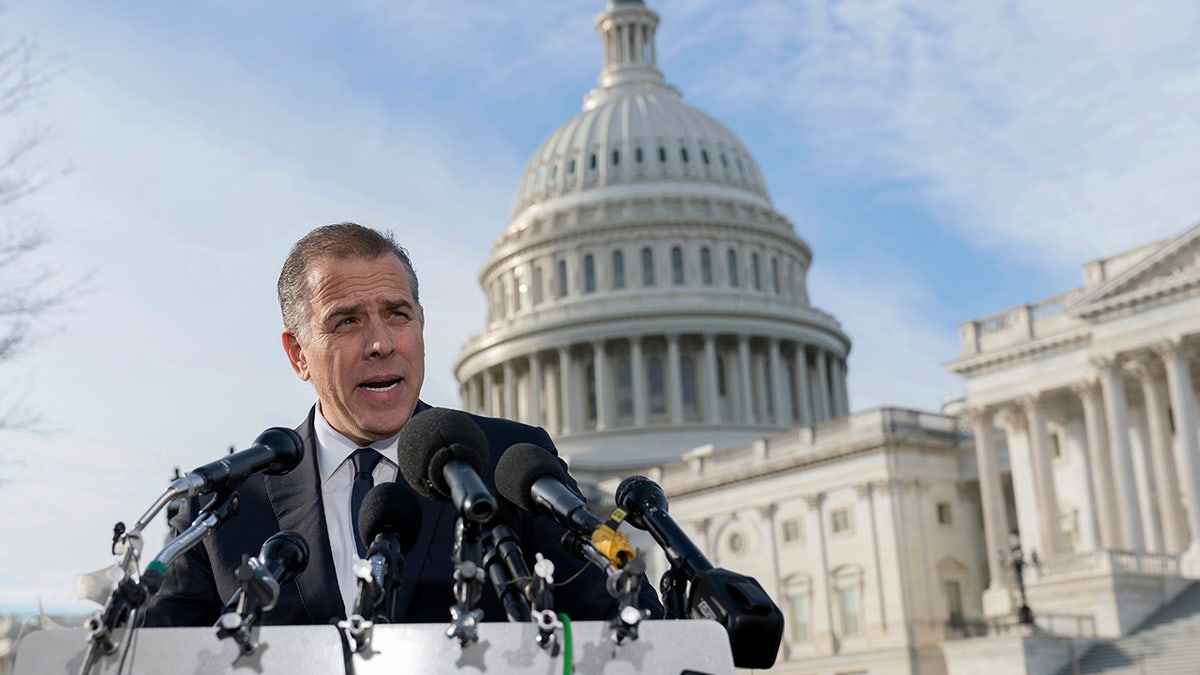
Hunter Biden, son of President Joe Biden, talks to reporters at the U.S. Capitol, in Washington, Dec. 13, 2023. (AP Photo/Jose Luis Magana)
Warrington acknowledged that the Supreme Court has recognized executive privilege as protecting presidential decision-making and deliberations but said he was «unaware of a Supreme Court ruling or constitutional text that extends those protections to former President Biden’s efforts to assist his son’s shady business deals,» underscoring a fight about how expansive the scope of executive privilege is in the face of Congress’ oversight demands.
«President Trump instructs you to provide to these congressional committees the pages identified as privileged by the former President,» Warrington wrote.
Warrington previously denied Biden’s privilege request over documents related to the Biden administration’s use of the autopen, Fox News Digital exclusively reported in December. Biden has denied accusations that official presidential documents were signed by the autopen without his knowledge, brushing them off as «ridiculous.»
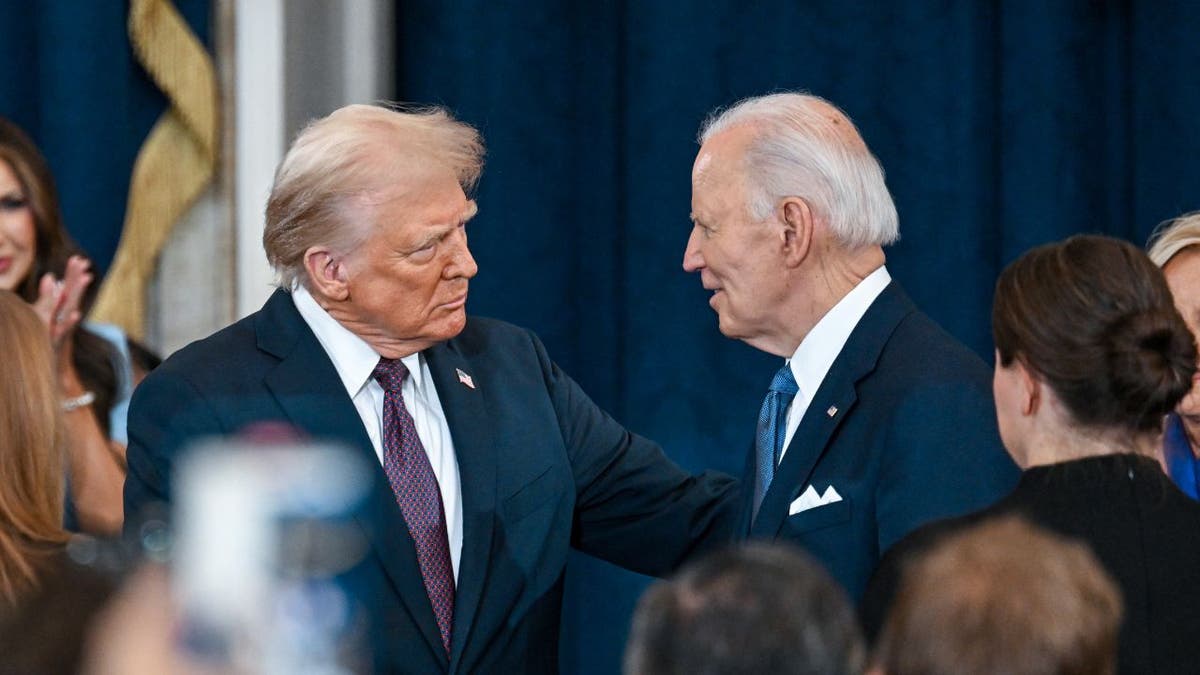
President-elect Donald Trump shakes hands with President Joe Biden at Trump’s inauguration in the Capitol Rotunda Jan. 20, 2025, in Washington. (Kenny Holston-Pool/Getty Images)
«Let me be clear: I made the decisions during my presidency. I made the decisions about the pardons, executive orders, legislation, and proclamations,» Biden said in a statement in June as Trump and Republicans sounded off about what they alleged was a scandal. «Any suggestion that I didn’t is ridiculous and false.»
Concerns over Biden’s mental acuity had simmered for years before reaching a boiling point in June 2024.
CLICK HERE TO DOWNLOAD THE FOX NEWS APP
Republicans sounded the alarm that it appeared Biden’s mental edge was slipping before even the 2020 election cycle. The media and Biden’s longtime Democratic allies joined conservatives in their alarm following Biden’s failed debate against Trump in early summer of 2024.
Biden dropped out of the race, but investigations and concerns over an alleged Biden administration coverup continue into the second Trump administration.
Fox News Digital reached out to a Biden representative and NARA for comment on Monday morning.
white house,joe biden,donald trump,congress

Horóscopo semanal del 9 al 15 de marzo: el consejo, las cartas y el cristal que deparan los astros para cada signo

La nafta ya subió 6% en la Argentina desde el inicio del conflicto en Medio Oriente

Hilario Navarro estira su extensa carrera: a los 45 años tiene nuevo club

Desde Nueva York, Milei aseguró que el régimen cubano caerá “por decantación”

Las impactantes multas que el Gobierno aplicará contra dos gremios por haber adherido al paro de la CGT

Guerra en Irán: Macron viaja a Chipre y asume el liderazgo militar de Europa con el envío de ocho fragatas más al Mediterráneo

Javier Milei habló de la crisis con la vicepresidenta: “No quiero la renuncia de Victoria Villarruel”

Ian Lucas se hartó de las mentiras de Evangelina Anderson y confirmó que fueron novios: “Ella me da vergüenza”

Wanda Nara involucrada en la separación de su hijo Valentino: su ex nuera contó toda la verdad

El Gobierno promulgó la reforma laboral: desde cuándo rige y las claves

 CHIMENTOS3 días ago
Wanda Nara involucrada en la separación de su hijo Valentino: su ex nuera contó toda la verdad
- CHIMENTOS1 día ago
La cruda confesión de Amalia Granata por el trastorno que sufre su hijo Roque: “Le hicimos estudios y salió que tiene TDAH, dislexia y disgrafia”
- ECONOMIA3 días ago
«Crisis industrial masiva»: alarmante informe de la UBA se mete en la pelea de Milei con la UIA