INTERNACIONAL
Senate races to avoid government shutdown with time ticking and lingering issues

Shutdown looms in 2026 as healthcare premiums set to spike
Fox News chief congressional correspondent Chad Pergram and Rep. Kevin Kiley, R-Calif., join ‘Fox News Live’ to discuss the expiration of Obamacare subsidies, rising healthcare premiums going into 2026 and concerns of another government shutdown.
NEWYou can now listen to Fox News articles!
The Senate will return to a fast-approaching government funding deadline, but this time both sides appear ready to avoid another shutdown.
When lawmakers in the upper chamber return Monday, they will have three working weeks to fund the government. That process fizzled out before they left town earlier in December, but lawmakers are hopeful that both parties can come together to ward off a repeat of September’s funding deadline.
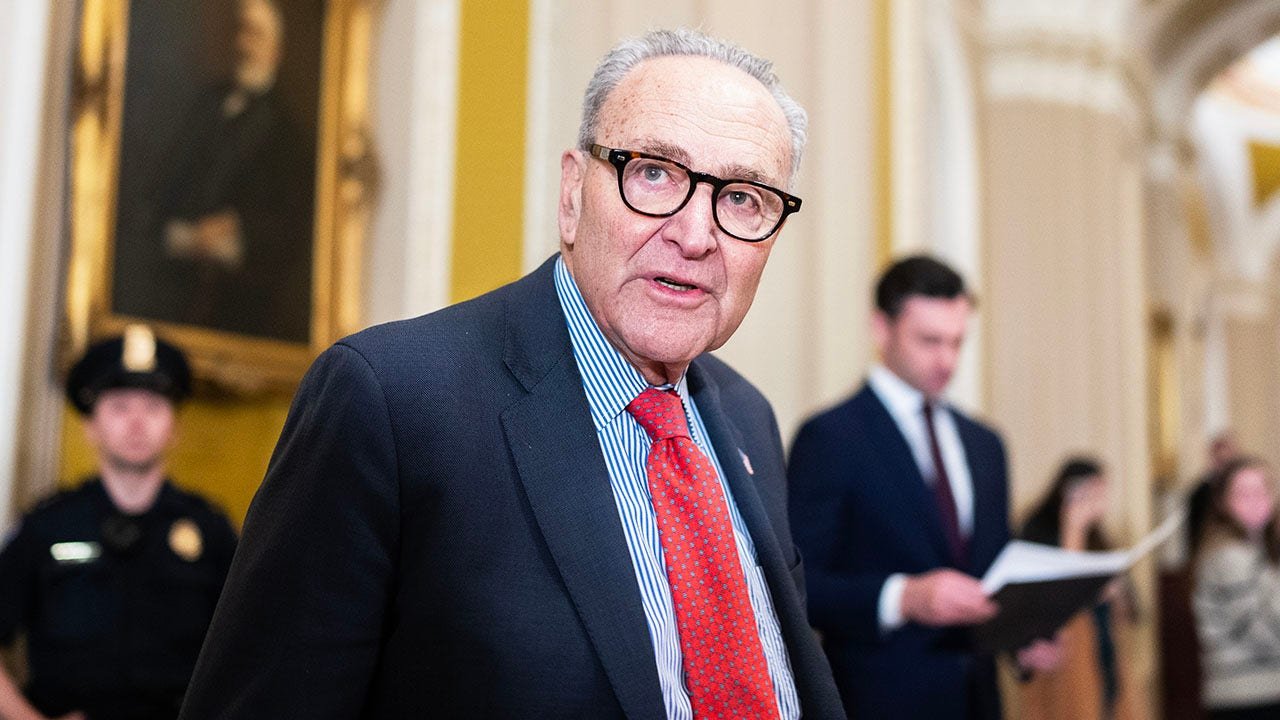
Senate Minority Leader Chuck Schumer, D-N.Y., told reporters before leaving the Capitol that Democrats’ goal was to have the remaining slate of appropriations bills completed by the Jan. 30 deadline. It takes 12 spending bills to fund the government, and so far, neither chamber has come close to hitting that mark.
DEMOCRATS’ LAST-MINUTE MOVE TO BLOCK GOP FUNDING PLAN SENDS LAWMAKERS HOME EARLY
Senate Democrats’ three-year extension of expiring enhanced Obamacare subsidies was destined to fail on Thursday as the Senate prepared to vote on dueling proposals. (Tom Williams/CQ-Roll Call, Inc via Getty Images)
«We want to get through the process and get the appropriations bills done,» Schumer said.
It’s a stark departure from his and Democrats’ earlier position, given that they shut the government down for a record 43 days in a bid to bring expiring Obamacare subsidies to the forefront of discussions.
Congressional Democrats also have been leery of working with their Republican counterparts after President Donald Trump’s roughly $9 billion clawback package, which cut funding to already agreed-to programs and priorities, passed on a partisan vote over the summer.
A similar issue played out just as the Senate was on the cusp of advancing a five-bill spending package before skipping town.
2026 DEADLINES LOOM AS CONGRESS LEAVES DC WITH SEVERAL UNFINISHED BATTLES
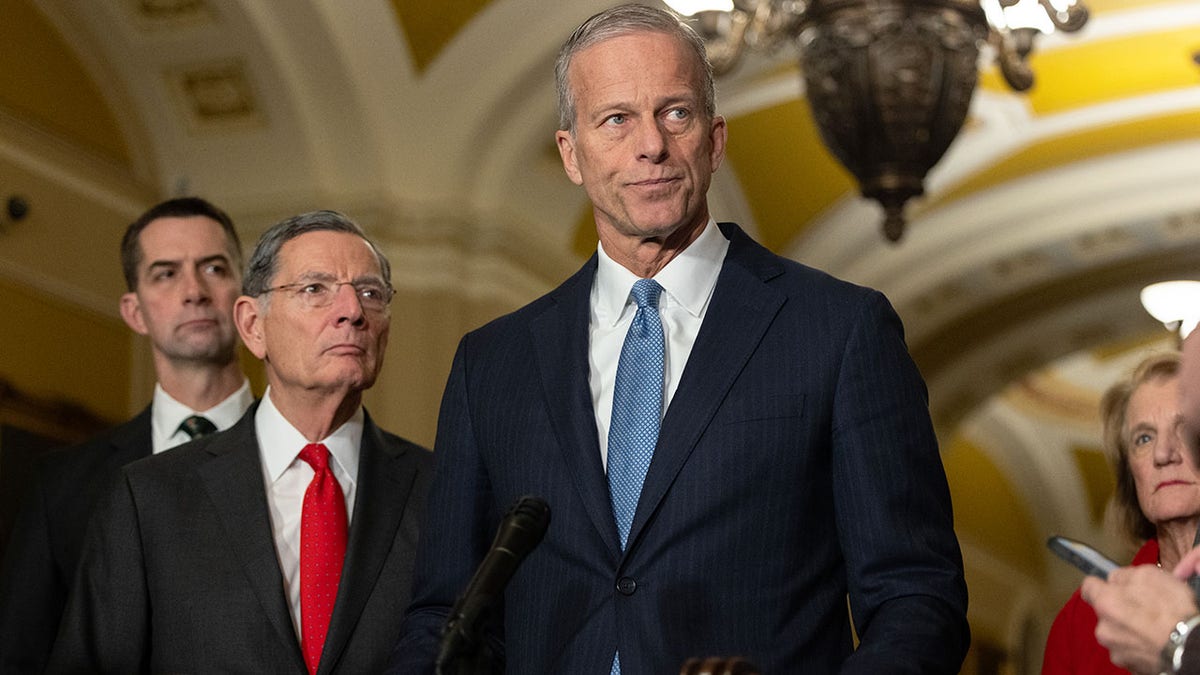
The Senate appeared primed and ready to advance a government funding package, but a last-minute block from Senate Democrats forced Senate Majority Leader John Thune, R-S.D., to abandon the plan, for now. (Nathan Posner/Anadolu via Getty Images)
Sens. Michael Bennet, D-Colo., and John Hickenlooper, D-Colo., held up the process over the Trump administration’s plan to dismantle the National Center for Atmospheric Research (NCAR) in Boulder, Colorado.
Office of Management and Budget Director Russ Vought had just announced that same day that the facility would be put under a microscope, and charged that the NCAR was «one of the largest sources of climate alarmism in the country.»
For now, the duo appear entrenched in their position.
«This holiday season, hundreds of NCAR employees face uncertainty about their jobs and communities across the state are worried they won’t get the support they need to rebuild their lives after historic flooding and wildfires,» Bennett said in a statement. «Colorado deserves better, and I am doing everything in my power to fight back and protect our state from the President’s vindictive chaos.»
There’s also the issue of dealing with the Obamacare subsidies, which will have expired by the time lawmakers return to Washington, D.C. A group of bipartisan senators are working on a possible solution, and there are plans in the House — one from the GOP that already passed and another bipartisan effort that is expected to get a vote early next month — that could make their way onto the Senate floor.
RAND PAUL’S ‘FESTIVUS REPORT’ CALLS OUT COCAINE DOGS, COVID INFLUENCERS AND A MOUNTAIN OF DEBT
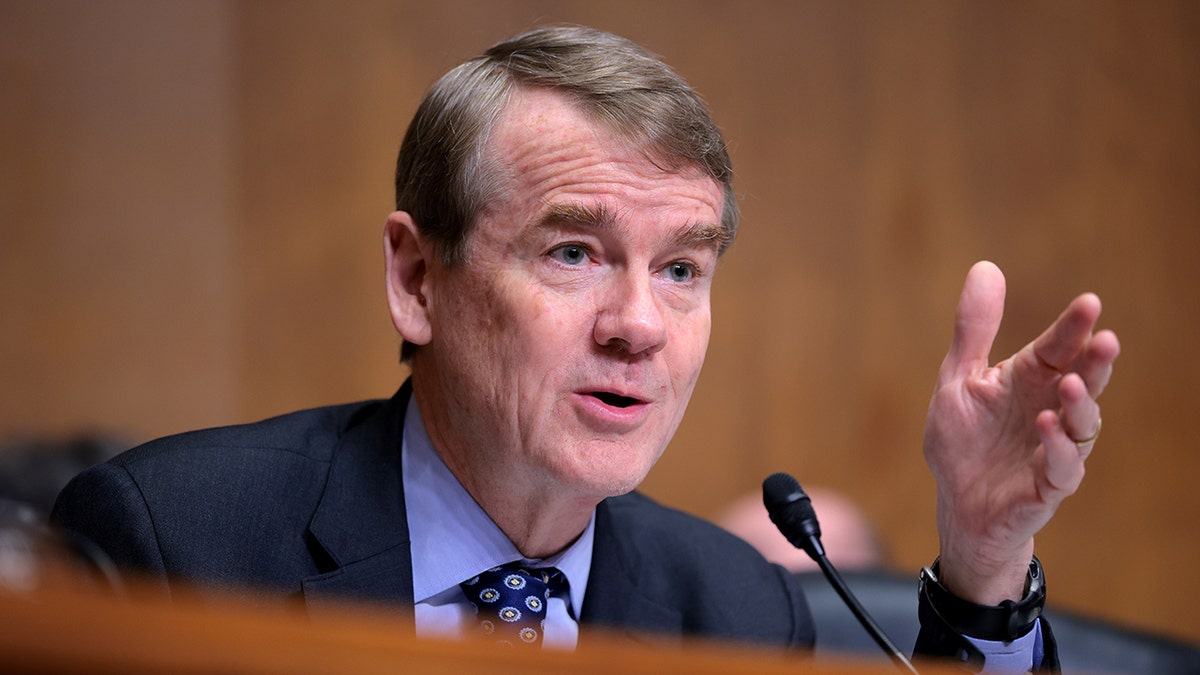
Sen. Michael Bennet, D-Colo., tried to derail Senate Republicans’ bid to confirm over 80 of President Donald Trump’s nominees, but the GOP instead is putting even more into a package for a vote next week. (Kayla Bartkowski/Getty Images)
And Congressional Democrats are likely to use the healthcare issue as leverage during the impending spending fight.
Exactly how lawmakers avoid another shutdown is still in the air. The Senate is determined to advance its five bill package, which includes legislation to fund the departments of Defense, Labor, Health and Human Services, Education, Commerce, Justice, Interior, Transportation, and Housing and Urban Development.
But in order for those bills to make it to Trump’s desk, the House has to agree. So far, the lower chamber has only passed a handful of spending bills, and has not brought any appropriations bills to the floor for months.
Senate Majority Leader John Thune, R-S.D., already is gaming out a «a contingency plan.»
CLICK HERE TO DOWNLOAD THE FOX NEWS APP
«We got to fund the government by the end of the month,» Thune said. «And so we’re looking at, you know, determining what that looks like, obviously, if we can pass the five bill package, and if we can’t, then what that looks like.»
«So there’s a lot of thought being given and just to make sure that we don’t end up in a, you know, posture at the end of the month where we’re looking at, staring at a shutdown again,» he continued.
politics,senate,government shutdown,chuck schumer,republicans










INTERNACIONAL
DOJ’s second-in-command could be central to ‘vindictive’ prosecution of Abrego Garcia, judge rules
NEWYou can now listen to Fox News articles!
A federal judge ordered the Trump administration to produce documents related to its decision to investigate and bring criminal charges against Salvadoran migrant Kilmar Abrego Garcia while he was detained at a maximum-security prison in El Salvador earlier this year – signaling what is sure to be an action-packed evidentiary hearing in Nashville next month.
The order, filed by U.S. Judge Waverly Crenshaw earlier this month and released to the public Tuesday afternoon, requires the Justice Department to produce all relevant documents to defense lawyers pertaining to its decision earlier this year to open an investigation and seek criminal charges against Abrego Garcia for conduct stemming from a 2022 traffic stop.
ABREGO GARCIA REMAINS IN US FOR NOW AS JUDGE TAKES CASE UNDER ADVISEMENT
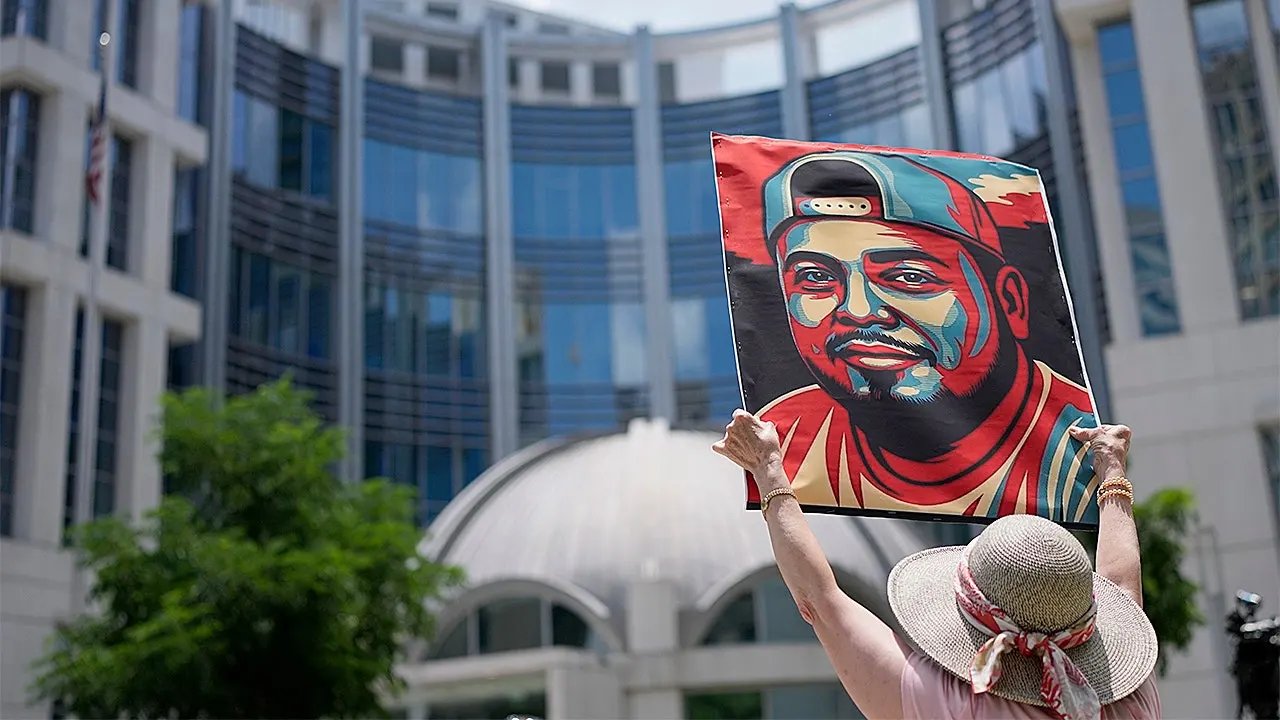
Kilmar Abrego Garcia waits to enter the building for a mandatory check at the Immigration and Customs Enforcement office in Baltimore, Friday, Dec. 12, 2025, after he was released from detention on Thursday under a judge’s order. (Stephanie Scarbrough/AP Photo)
The Justice Department opened the criminal investigation and presented the case to a grand jury earlier this year, when Abrego Garcia was detained at CECOT, and at the same time as lawyers for the Trump administration officials were telling a separate federal judge in Maryland that they were powerless to bring him back from Salvadoran custody.
The new order stops short of compelling any government witnesses to testify for next month’s hearing, including testimony from Deputy Attorney General Todd Blanche, whose remarks – for months – have been at the center of the vindictive prosecution effort pursued by Abrego Garcia’s defense team in Tennessee.
Abrego Garcia’s attorneys have argued Blanche played «a leading role» in the decision to prosecute him, a notion Blanche’s office has vehemently dismissed.
They had also honed in on the involvement of Blanche’s associate, Aakash Singh.
«The cornerstone of Abrego’s motion to dismiss is that the decision to prosecute him was in retaliation for his success in the Maryland District Court,» Crenshaw said in the newly unsealed ruling.

Salvadorian troops are seen guarding the exterior of CECOT, or Counter Terrorism Confinement Center, on Dec. 15, 2025, in Tecoluca, El Salvador. (John Moore/Getty Images)
«Indeed, at the time of Abrego’s arrest, Blanche linked Abrego’s criminal charges to his successful civil lawsuit in Maryland. Specifically, some of the documents suggest not only that McGuire was not a solitary decision-maker, but he, in fact, reported to others in DOJ and the decision to prosecute Abrego may have been a joint decision, with others who may or may not have acted with improper motivation.»
U.S. District Judge Waverly Crenshaw had ruled in October that Abrego Garcia had established a «reasonable likelihood» that the criminal case against him was the result of vindictive prosecution by the Justice Department, a determination that shifted the burden to the government to rebut ahead of the criminal trial, and ordered the Trump administration to produce for the court internal documents and government witnesses to testify about its decision to bring the case.
SCOTUS TO REVIEW TRUMP EXECUTIVE ORDER ON BIRTHRIGHT CITIZENSHIP
Lawyers for the Justice Department fiercely resisted efforts to produce government witnesses or documents, arguing that the documents should be protected by attorney-client privilege and work-product privilege, among other things.
The evidentiary hearing is slated to take place on Jan. 28.
Crenshaw separately canceled the criminal trial date for Abrego Garcia, though the update is likely more a procedural one than a reflection of the status of the case.
CLICK HERE TO GET THE FOX NEWS APP
Abrego Garcia’s status has been at the center of a legal and political maelstrom for nearly 11 months, after he was arrested and deported to his home country of El Salvador, in violation of a 2019 withholding of removal order.
This is a breaking news story. Check back for updates.
donald trump,politics,supreme court,federal courts,justice department
NEWYou can now listen to Fox News articles!
U.S. Central Command announced on Tuesday that the U.S. and partner forces have terminated or captured nearly 25 ISIS figures since a December 19 strike in Syria.
«U.S. Central Command (CENTCOM) and partners across Syria killed at least seven ISIS members and captured the remainder during 11 missions conducted Dec. 20-29. The operations also led to the elimination of four ISIS weapons caches,» an article posted by the CENTCOM X account said.
«These recent missions followed the launch of Operation Hawkeye Strike on Dec. 19 when U.S. and Jordanian forces struck over 70 targets with more than 100 precision munitions. The massive strike executed by dozens of fighter aircraft, attack helicopters and artillery destroyed ISIS infrastructure and weapons sites across central Syria,» the article explained.
TRUMP TARGETS ISIS IN NIGERIA AMID WARNINGS SAHEL REGION IS BECOMING ‘EPICENTER OF TERRORISM’
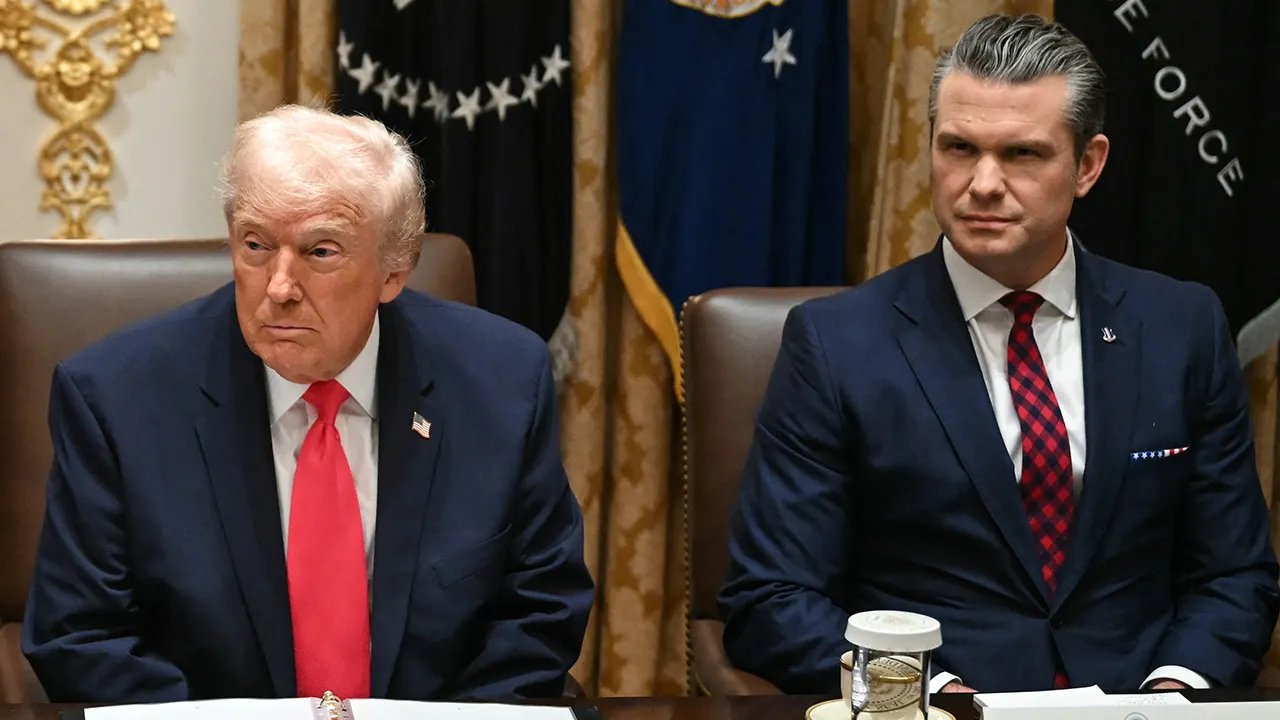
President Donald Trump, alongside Secretary of War Pete Hegseth, holds a Cabinet meeting in the Cabinet Room of the White House in Washington, D.C., on Dec. 2, 2025. (ANDREW CABALLERO-REYNOLDS / AFP via Getty Images)
The U.S. and partner forces in Syria have carried out activity in the last 12 months that led to more than 300 terrorists getting detained and more than 20 being killed, according to CENTCOM.
The CENTCOM post noted that this year, there have been «at least 11 plots or attacks against targets in the United States» that were inspired by ISIS.
WAR SEC HEGSETH ISSUES STATEMENT AFTER TWO US SOLDIERS KILLED IN SYRIA ARE IDENTIFIED

President Donald Trump salutes as he observes the return of the remains of two Iowa National Guard members and a translator killed in an attack in Syria during a ceremony at Dover Air Force Base in Delaware on Dec. 17, 2025. ( ANDREW CABALLERO-REYNOLDS / AFP via Getty Images)
«We will not relent,» CENTCOM Commander Adm. Brad Cooper said in a statement. «We are steadfast in commitment to working with regional partners to root out the ISIS threat posed to U.S. and regional security.»
«Continuing to hunt down terrorist operatives, eliminate ISIS networks, and work with partners to prevent an ISIS resurgence makes America, the region, and the world safer,» Cooper added.
US LAUNCHES ‘VENGEANCE’ ATTACK ON ISIS TARGETS AFTER NATIONAL GUARD SOLDIERS KILLED
CLICK HERE TO DOWNLOAD THE FOX NEWS APP
Two Iowa Army National Guard soldiers and a civilian interpreter were killed earlier this month in Syria. The soldiers were later identified as Sgt. Edgar Brian Torres-Tovar, 25, of Des Moines, Iowa, and Sgt. William Nathaniel Howard, 29, of Marshalltown, Iowa. The interpreter was Ayad Mansoor Sakat, 54.
military,syria,isis,terrorism,middle east
INTERNACIONAL
La lujosa y superprotegida «dacha» que descubrió Stalin y ahora es de Vladimir Putin: el supuesto blanco de un ataque que Ucrania desmiente

Políticos, artistas, cosmonautas y una boda
 El presidente ruso Vladimir Putin denunció que su lujosa residencia fue blanco de un intento de ataque de Ucrania. Foto: AP
 La residencia favorita de Putin

DOJ’s second-in-command could be central to ‘vindictive’ prosecution of Abrego Garcia, judge rules

El juez de Campana pidió quedarse con la causa por la fastuosa quinta de Pilar valuada en US$ 20 millones

U.S. announces more military actions against ISIS: ‘We will not relent’

Cristiano cerró el año con un gol de espalda y sigue a paso firme rumbo a los 1.000

La Justicia encontró un contrato entre la AFA y la empresa vinculada a Javier Faroni

Desde que asumió Milei, más de 60 mil personas dejaron de trabajar para el Estado

Una legisladora de izquierda enfrentará un juicio oral por expresiones antisemitas

Calendario de pagos de ANSES de enero 2026: cuándo cobran jubilados, pensionados y beneficiarios de planes sociales

Patricia Bullrich destacó la aprobación del Presupuesto 2026 y la ruptura del peronismo en el Senado

Milei logra su primera ley de Presupuesto: dólar e inflación en 2026 y una herramienta para Caputo

 ECONOMIA2 días ago
Calendario de pagos de ANSES de enero 2026: cuándo cobran jubilados, pensionados y beneficiarios de planes sociales
- POLITICA2 días ago
Patricia Bullrich destacó la aprobación del Presupuesto 2026 y la ruptura del peronismo en el Senado
- SOCIEDAD1 día ago
Calor extremo en el AMBA: cuándo la temperatura rozará los 40 grados