INTERNACIONAL
Sharpton blasts ‘ugly Islamophobia’ in NYC mayoral race as Mamdani attacks Trump on welfare cuts


NEWYou can now listen to Fox News articles!
The Rev. Al Sharpton on Saturday slammed what he called «ugly Islamophobia» sweeping New York City’s mayoral race, accusing some of labeling every Muslim a terrorist to attack Democratic candidate Zohran Mamdani.
Sharpton, an MSNBC host and progressive activist, was speaking at an event he was hosting for Mamdani in Harlem, and the mayoral candidate was throwing jabs too, accusing President Donald Trump of smearing and gutting welfare programs. The democratic socialist drew parallels to the Reconstruction-era agency created to help newly freed slaves to hammer home his point.
The pair were joined by Pastor Miles Travis Boyd, whose mother died on 9/11, as well as other faith leaders.
«I am outraged at the ugly Islamophobia that has been used in this campaign to act as though every Muslim is a terrorist and to act like something ugly, as what happened to us on 9/11 is an insult to the intelligence of all New Yorkers,» Sharpton told a lively crowd at the House of Justice, his National Action Network headquarters.
FBI AGENTS FROM ’93 WTC ATTACK BLAST MAMDANI FOR EMBRACING RADICAL IMAM
Democratic mayoral candidate Zohran Mamdani with the Rev. Al Sharpton at the National Action Network’s House of Justice in Harlem Nov. 1, 2025. (Ryan Murphy/Reuters)
«If you can’t get a vote on your record, don’t play us against each other.»
Former New York Gov. Andrew Cuomo faced criticism from Mamdani after Cuomo’s exchange with radio host Sid Rosenberg, who claimed Mamdani would be «cheering» if another 9/11 happened. Cuomo had argued during the segment that Mamdani was unprepared to lead the city in a time of crisis.
After Sharpton’s remarks on Saturday, Cuomo denied accusations of Islamophobia and said comments from Republican Councilwoman Inna Vernikov — who has endorsed him and has been accused of making inflammatory statements — were hers alone. Cuomo, in turn, accused Mamdani of fueling division and antisemitism for allegedly refusing to denounce calls for an «intifada» and for making past statements he described as offensive toward Jews.
Sharpton also argued Saturday that just showing up at someone’s campaign or shaking their hand doesn’t mean you share blame for whatever they’ve been accused of. Sharpton was likely referencing a meeting Mamdani had last week with Siraj Wahhaj, a Brooklyn imam who is an unindicted co-conspirator in the 1993 World Trade Center bombing and who has been linked to other terrorist activity in the United States.
Sharpton said he denounced both the Oct. 7, 2023, terrorist attacks in Israel and the subsequent war in Gaza.
«I’m against Islamophobia. But to bring it into the politics of the biggest city in the world should not be allowed to go unchecked,» Sharpton said. «We are not going to sit by silently while they do this. We are Christian. I’m a born-again Baptist, but I embrace the Muslim community to come from the shadows. The Jewish community to come from the shadows. And let’s walk down Broadway together.»
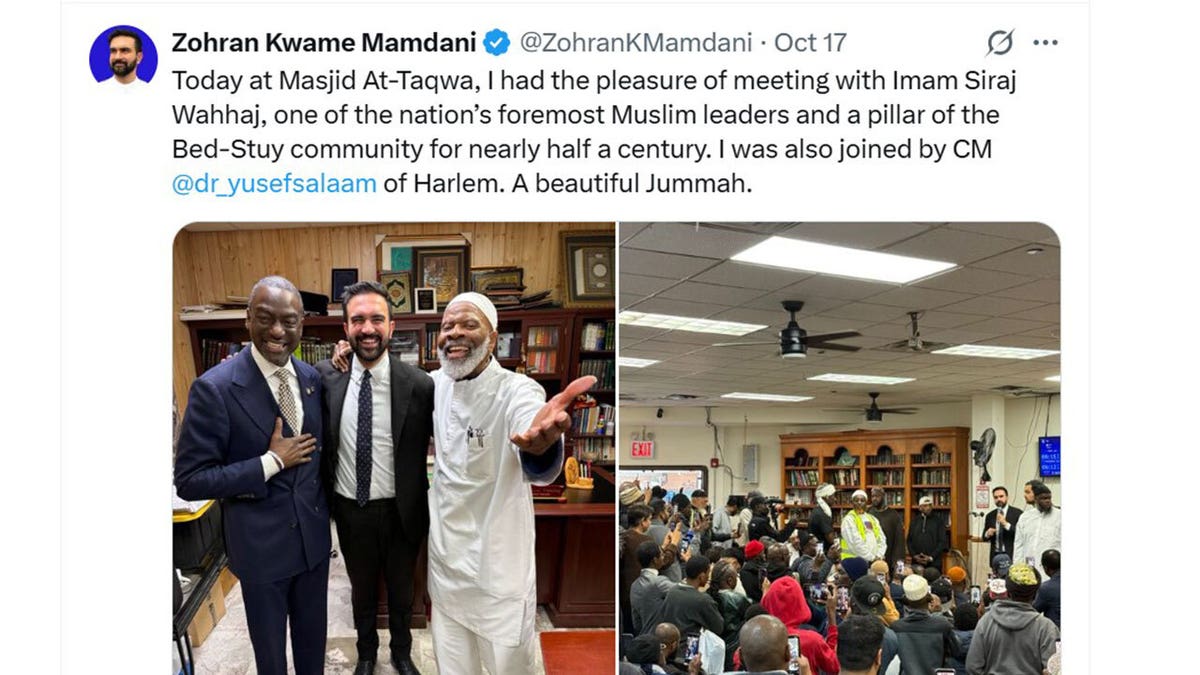
Zohran Mamdani meets Imam Siraj Wahhaj and Yusef Abdus Salaam Oct. 17, 2025. (@ZohranKMamdani/X)
OBAMA’S CALL TO MAMDANI ‘NORMALIZES’ THE DEMOCRATIC SOCIALIST CANDIDATE, SHARPTON SAYS
He then pitched his flag in Mamdani’s corner after telling the audience that Mamdani was the only candidate who turned up to their events.
«For fairness, for affordability, for those who’ve been victimized, I bring you the candidate who showed up, Zohran Mamdani,» Sharpton said, shaking Mamdani’s hand as the crowd cheered and clapped in approval.
Mamdani followed Sharpton’s remarks with a speech invoking America’s Reconstruction era, accusing Trump of gutting modern welfare programs, saying they represented today’s version of the Freedmen’s Bureau. The agency provided relief and education and helped reunite families of enslaved people and poor Whites in the post-Civil War South.
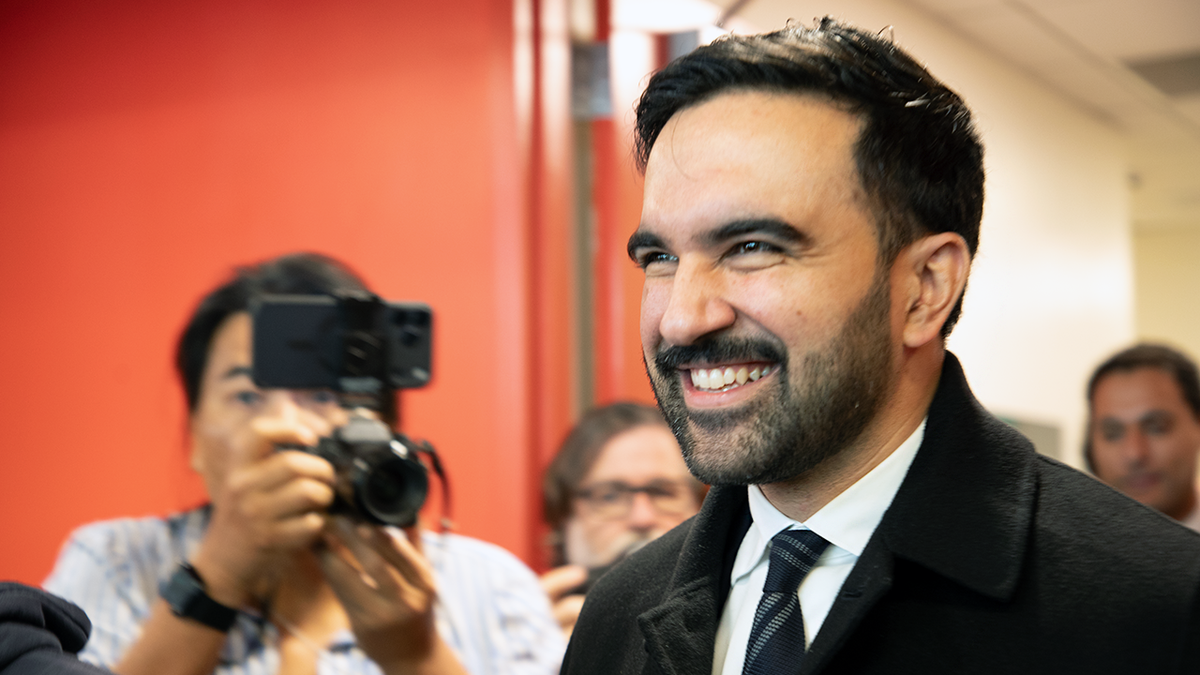
New York City Democratic mayoral nominee Zohran Mamdani practices Tai Chi on Manhattan’s Lower East Side Oct. 31, 2025. (Fox News Digital/Deirdre Heavey)
«If the Freedmen’s Bureau existed today, Donald Trump would pilfer its coffers and smear it as socialist overreach,» Mamdani said. «He would do to it what he has done to SNAP, Medicare and Medicaid, to any program that dares to uplift the poor rather than comfort the wealthy.»
Fox News Digital reached out to the White House for comment but did not immediately hear back.
Mamdani said his campaign was rooted in moral and economic renewal stretching from Harlem to Queens to Bay Ridge.
CLICK HERE TO DOWNLOAD THE FOX NEWS APP
«Over the past 12 months, my friends, we have built a movement around creating a society we would all like to see, a society where the poor receive aid, where those who work long nights are set free in the day, where injustice is banished from our city and where faith is restored in City Hall,» Mamdani said.
new york city,elections,zohran mamdani,islam,terrorism,politics,us








NEWYou can now listen to Fox News articles!
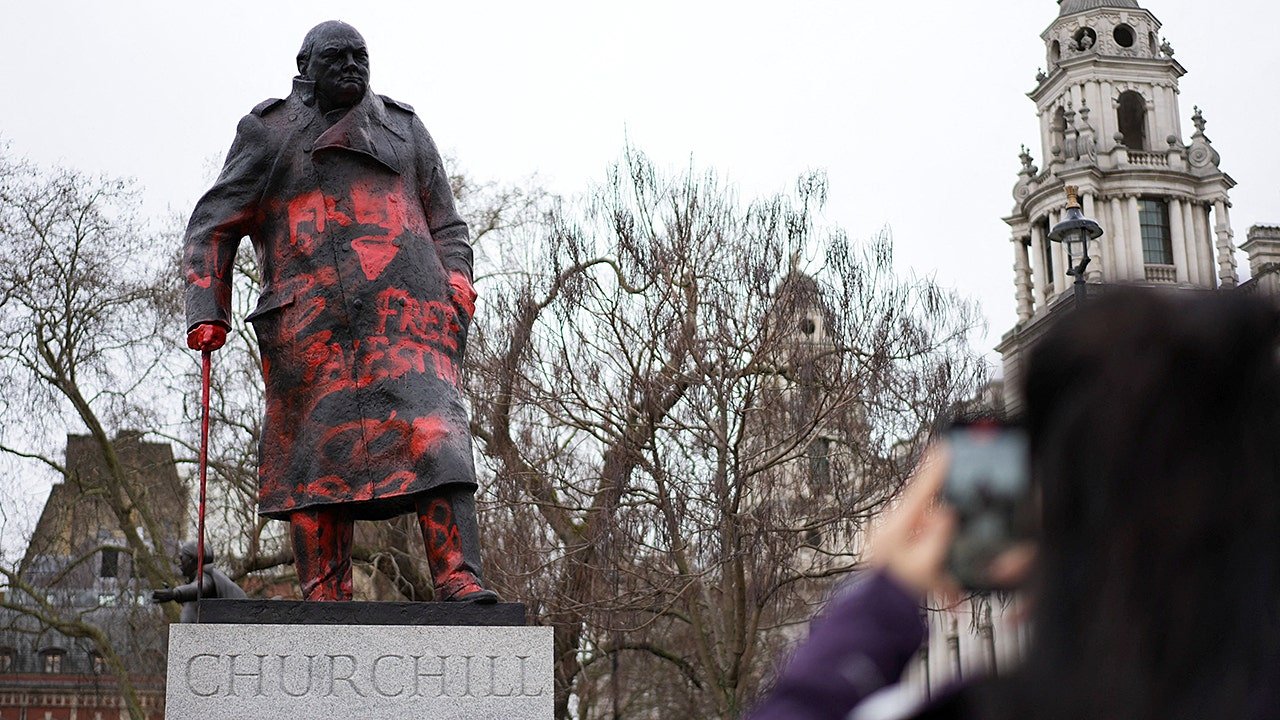
A man was arrested after a statue of late United Kingdom Prime Minister Winston Churchill was defaced with red graffiti in London, the Metropolitan Police noted in a post on X.
Photos show the statue and its base defaced with messages such as «NEVER AGAIN IS NOW,» «ZIONIST WAR CRIMINAL» AND «GLOBALISE THE INTIFADA!»
«Overnight, the Winston Churchill statue in Parliament Square was graffitied with red paint,» the police noted in the post on Friday.
A woman takes photos of the statue of Sir Winston Churchill in Parliament Square, which has been defaced overnight with red paint and the words «Free Palestine,» in London, England, Feb. 27, 2026. (REUTERS/Carlos Jasso)
«Officers were on scene within two minutes of being alerted shortly after 4am. A 38-yr-old man is in custody having been arrested on suspicion of racially aggravated criminal damage,» the police added.
A Dutch activist group claimed credit for the graffiti.
HUNDREDS OF RUSSIAN SHADOW TANKERS TRIGGER MILITARY ALARM TRANSITING NATO WATERS: REPORT
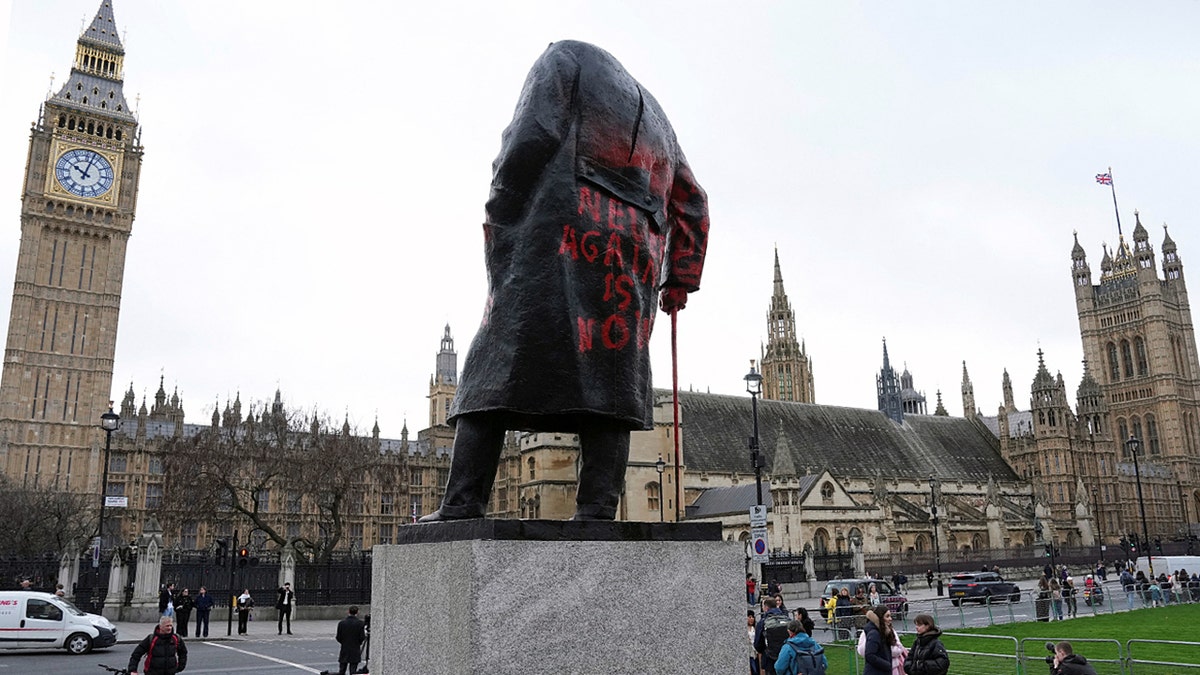
The statue of Sir Winston Churchill, which was defaced overnight with red paint and the words «Never again is now,» in Parliament Square, London, England, Feb. 27, 2026. (REUTERS/Carlos Jasso)
«On the morning of 27th February, the statue of Winston Churchill at Parliament Square was defaced with red paint. This protest was organised and executed by @freethefilton24nl,» a post on Instagram claims.
The post features a pre-recorded statement in which a man says, «My name is Olax Outis. I am a citizen of the Netherlands.»
THE LIFE AND LEGACY OF WINSTON CHURCHILL
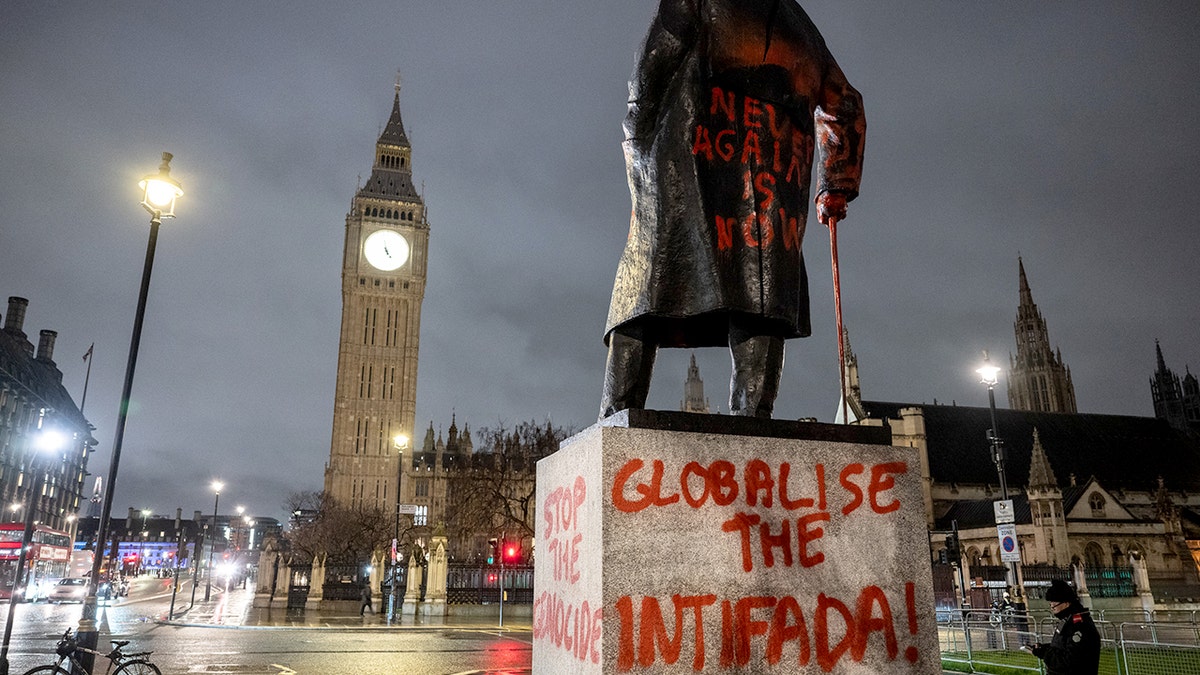
The Churchill statue in Parliament Square is vandalized in the early hours of the morning with red paint and anti-Israel slogans including «Zionist war criminal», «Stop the Genocide», «Never again is Now,» «Globalise the Intifada,» and what appears to be «Greetings from the Hague» in Dutch on Feb. 27, 2026, in London. (Guy Smallman/Getty Images)
CLICK HERE TO DOWNLOAD THE FOX NEWS APP
He identifies himself as «part of a Dutch action group called Free the Filton 24 NL,» explaining, «I’ve come to the United Kingdom to deface statue of one of history’s most well-known war criminals, Winston Churchill.»
Related Article

world,united kingdom,israel,anti semitism,politics
INTERNACIONAL
Cientos de camiones quedaron varados en Brasil: transportan una cosecha récord de soja y la mayoría está destinada a China
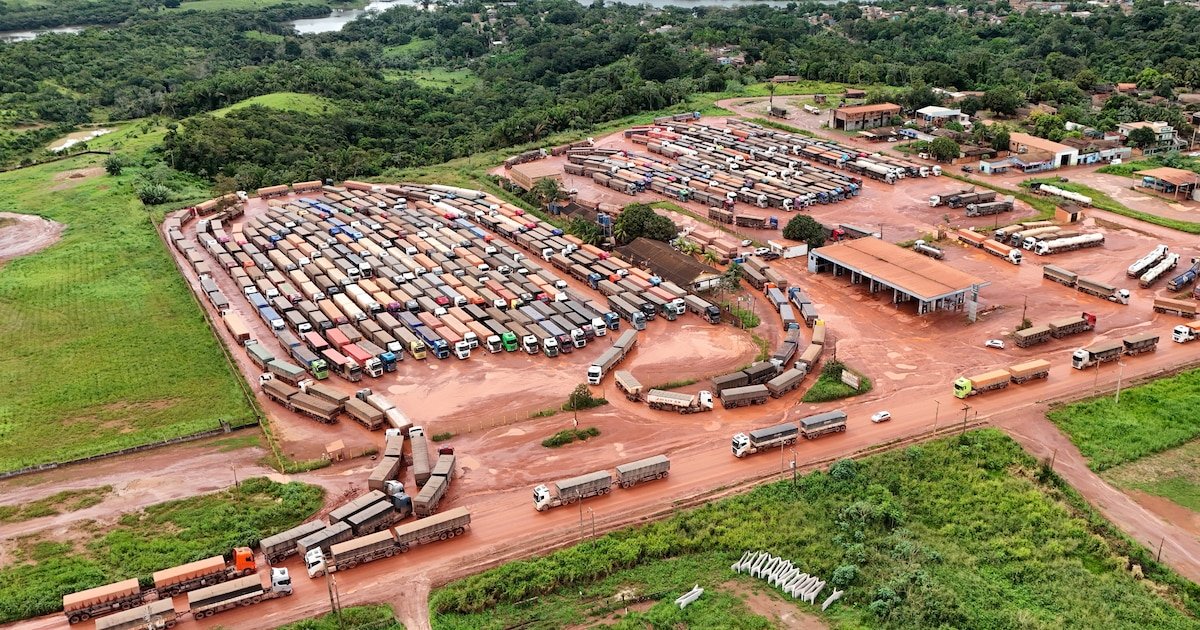
Los camioneros en Brasil enfrentan retrasos inusualmente largos para entregar soja en la terminal portuaria de Miritituba, en la selva amazónica, debido a que una cosecha récord de aproximadamente 180 millones de toneladas métricas desborda la logística en uno de los principales centros de exportación de este cultivo a nivel mundial.
El retraso en el transporte de soja desde el mayor productor y exportador mundial pone de relieve los continuos obstáculos logísticos en la cadena de suministro agrícola brasileña. Gran parte de la cosecha de soja se destina a China.
“Es una vergüenza aquí en Miritituba”, declaró a Reuters el camionero Jeferson Borges da Silva, quien esperó en una fila de 30 km (20 millas) tras recorrer 1.200 km desde Mato Grosso.
“Llevamos dos días haciendo fila, no hay forma de conseguir nada, la gente que no tiene cocina se muere de hambre en la calle, luego se equivocan de dirección y por eso les multan. El tráfico no puede circular, por eso está todo parado. Como pueden ver, la fila tiene más de 30 km. Llevamos dos días aquí y ya nadie sabe qué hacer”, dijo Borges da Silva.
“En cuanto a la protesta indígena en Cargill, creo que afectó un poco a Miritituba, porque los camioneros ganan comisión; si trabajan, ganan; si no trabajan, no. Así que no se quedaron esperando la huelga; todos vinieron a Miritituba, por eso aumentó el número de camiones”, agregó.

Miritituba, un punto crítico de transbordo, maneja aproximadamente 12 millones de toneladas métricas de granos al año, incluyendo soja y maíz. Empresas como Cargill, Bunge BG.N y la brasileña Amaggi operan terminales fluviales donde los cultivos se cargan en barcazas para su transporte río abajo a instalaciones más grandes capaces de llenar buques transoceánicos. El tráfico suele ser intenso en esta época del año.
Para agravar los problemas de la industria, activistas indígenas invadieron este mes una instalación de transbordo de Cargill en Santarém en protesta contra la política gubernamental de dragar y ampliar la capacidad de transporte marítimo a través de la cuenca amazónica.

Por su parte, la chofer de camiones Silvia Apreciada da Silva dijo: “Los puertos no tienen todo ese apoyo, y aquí sufrimos, sufrimos sin duchas, sin comida, sin poder descansar, sin dormir toda la noche, dos o tres días haciendo cola, y eso no está bien, eso no es bueno”.
“El número de camiones ha aumentado muchísimo. ¿Cómo van a caber mil camiones en un patio donde solo caben 500 o 200? Es imposible, y bloquearía la carretera», agregó.

Sus manifestaciones llevaron al gobierno el lunes a revocar un decreto que facilitaba dichas ampliaciones de vías fluviales, lo que generó mayor incertidumbre para los exportadores agrícolas.

El camionero Wellington Bressan afirmó que las protestas indígenas podrían haber contribuido al atasco en Miritituba, ya que los conductores se apresuraron a asegurar los puntos de descarga.
Cargill, que suspendió temporalmente las operaciones en su terminal de Santarém durante las protestas, anunció este jueves que está trabajando para reanudar la actividad.
(Con información de Reuters)
Corporate Events,South America / Central America
INTERNACIONAL
Crisis para Keir Starmer: una derrota humillante en elecciones parciales pone a prueba su liderazgo

El mea culpa de Starmer


Los Verdes, la nueva alternativa
Los laboristas barridos en zona roja
Gran campaña local de los Verdes

Se definieron los cruces de octavos de Champions League: Madrid vs. City y PSG vs Chelsea entre los más atractivos

Churchill statue in London defaced with anti-Israel messages

Cientos de camiones quedaron varados en Brasil: transportan una cosecha récord de soja y la mayoría está destinada a China

Darío Lopérfido y la política, un recorrido que lo llevó a la cima del poder y a la polémica por los desaparecidos

«Quedamos paralizados»: el peronismo duro reconoce que tendrá un año complicado para imponer sus proyectos en el Congreso

El juego de Pokémon con el que llevas años soñando ya existe y pronto se podrá jugar gratis si eres suscriptor de Nintendo Switch Online con expansión

Jorge Macri prepara su discurso para abrir el año legislativo: el deseo de reelección y el espejo en Bukele

Crisis en la industria: otra multinacional se achica y cierra una planta en la Argentina

Daiana Fernández Molero defendió la reforma laboral: “Va a haber mayor creación de empleo porque va a ser más fácil contratar en blanco”

Uno por uno, todos los famosos que saludaron a Mirtha Legrand por sus 99 años

 POLITICA2 días ago
Jorge Macri prepara su discurso para abrir el año legislativo: el deseo de reelección y el espejo en Bukele
- ECONOMIA2 días ago
Crisis en la industria: otra multinacional se achica y cierra una planta en la Argentina
- CHIMENTOS3 días ago
Natalie Weber, entre rezarle a San Cupertino o enviar a su hija Mía a una maestra particular: “Felicitaciones”