INTERNACIONAL
Trump moves against Muslim Brotherhood as Islamist group spreads in West

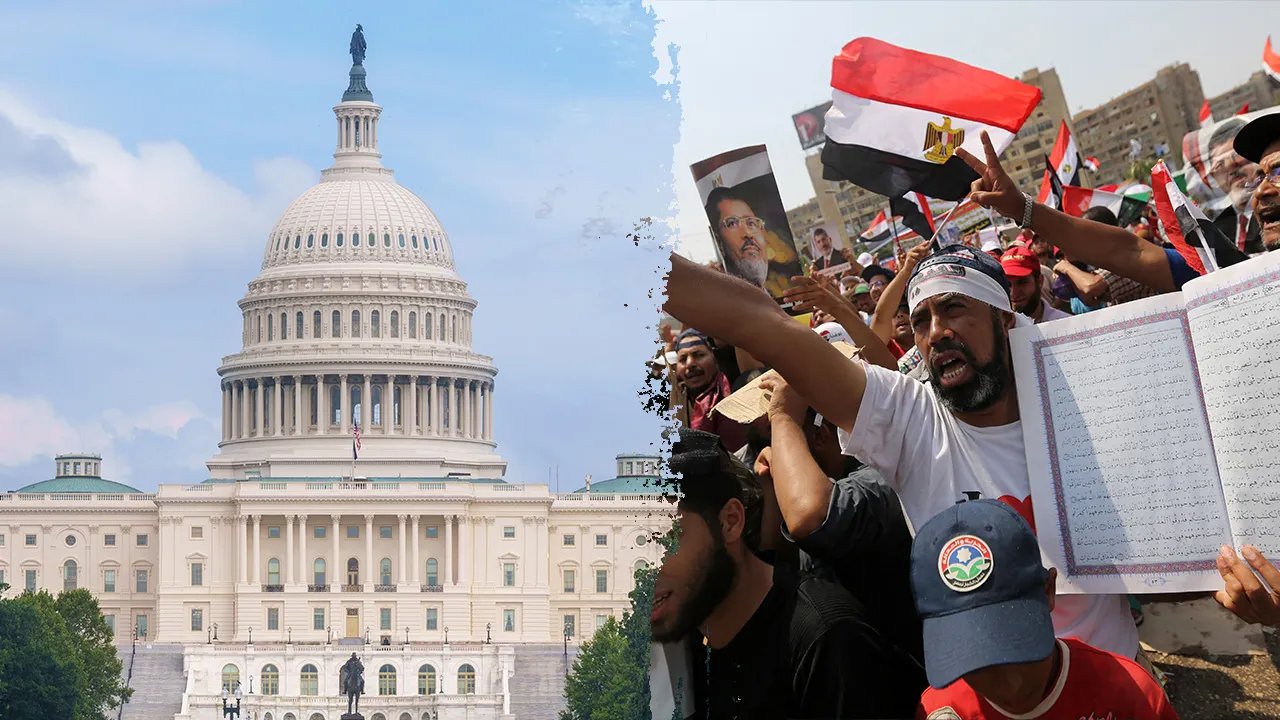
Report: Muslim Brotherhood embedded in US agencies
Dr. Qanta Ahmed of Independent Women’s Forum joins ‘Fox & Friends’ to discuss an ISGAP report that the Muslim Brotherhood has infiltrated multiple American agencies and Gov. Greg Abbotts’ R-Texas., designation of CAIR as a terrorist organization.
NEWYou can now listen to Fox News articles!
President Donald Trump’s new executive order directing the State and Treasury departments to pursue terrorism designations for specific Muslim Brotherhood chapters marks one of the most significant shifts in U.S. policy toward the movement in decades.
Signed on Nov. 24, it launches the first formal review of Brotherhood branches in Egypt, Jordan and Lebanon under U.S. designation laws and redefines how Washington treats Islamist movements with political and militant wings.
Sen. Ted Cruz, R-Texas, praised the move, calling it essential for national security. «The Muslim Brotherhood and its branches encourage, facilitate and provide resources for conducting jihadist terrorism across the world,» he said, urging Congress to advance his Muslim Brotherhood Terrorist Designation Act of 2025.
SCATHING REPORT CALLS ON US TO LABEL ISLAMIST GROUP INFILTRATING ALL ASPECTS OF AMERICAN LIFE AS TERRORIST ORG
Supporters of Jordan’s Muslim Brotherhood take part in a protest near the Jordanian border with the occupied West Bank, on May 21, 2021. (Khalil Mazraawi/AFP via Getty Images)
Washington has long debated whether the Brotherhood is a unified global movement or a loose network of national branches with different agendas and levels of militancy. That dispute stalled previous attempts to designate the group. Trump’s order bypasses that debate and directs federal agencies to examine individual chapters that analysts say already meet the legal thresholds.
Mariam Wahba, a research analyst at the Foundation for Defense of Democracies, said in a statement that the directive «replaces years of debate with concrete action» and forces U.S. agencies to assess Brotherhood entities that function as «real organizations with leadership structures, financing channels and documented ties to terrorist groups.» She said the order «treats Islamist actors according to their behavior, not their branding.»
Across the Arab world, the Brotherhood has been banned for years. Egypt outlawed it in 2013 after accusing the movement of radicalization and efforts to undermine state institutions. Saudi Arabia and the United Arab Emirates designated it soon after, calling it a direct threat to national stability. Bahrain issued similar findings. Jordan dissolved its local chapter this year following arrests tied to illicit weapons activity. Austria has also taken legal action against Brotherhood-linked networks as part of its counter-extremism framework.
Officials in these countries say the Brotherhood uses a blend of religious preaching, political activism, charitable institutions and media platforms to shape public opinion and challenge state authority.
In the West, the Brotherhood operates far more freely. In the United States, Brotherhood-linked organizations function through charities, advocacy centers, mosques, student associations and community groups. This openness has raised concerns among counterterrorism officials, especially after a U.S. federal investigation in the early 2000s uncovered an internal Brotherhood memorandum describing its work in America as a long-term effort to influence and weaken Western institutions from within.
A French government-commissioned report earlier this year warned of the Brotherhood’s influence in the country, but Paris has yet to officially implement a ban.
TRUMP SIGNALS PLAN TO DESIGNATE MUSLIM BROTHERHOOD A TERRORIST ORGANIZATION
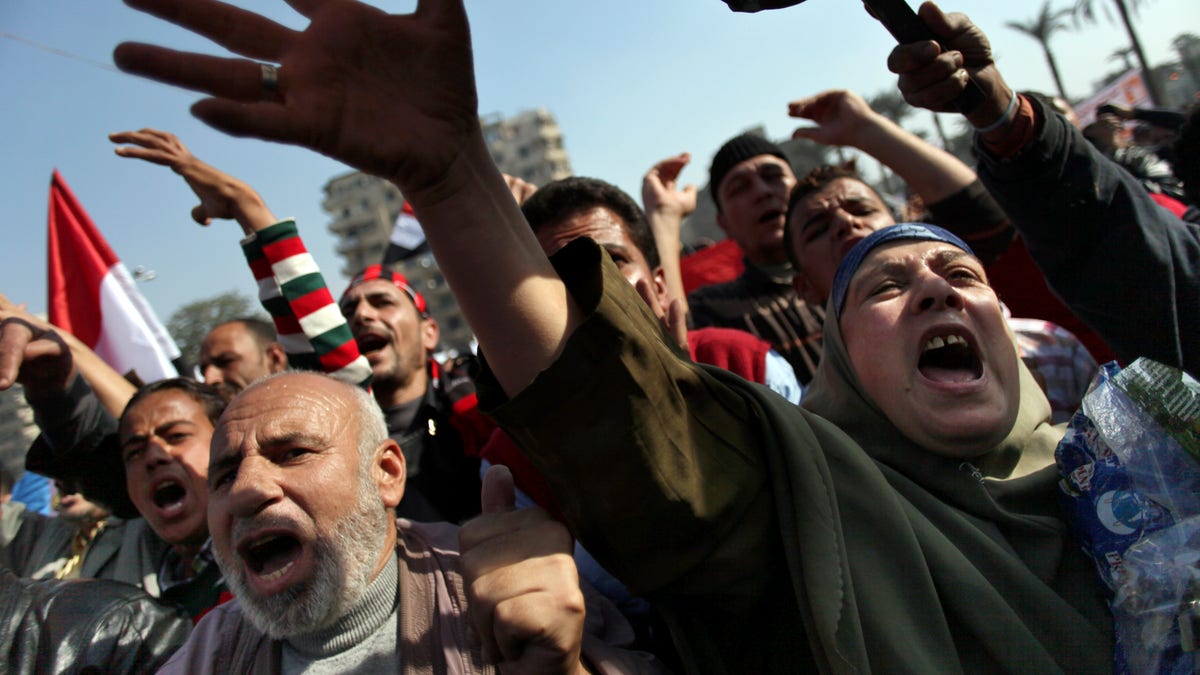
Egyptian protesters chant anti-Muslim Brotherhood slogans as they attend a rally in Tahrir Square, in Cairo on Nov. 30, 2012. (AP)
The document, according to Mind Israel think tank research, reflects the Brotherhood’s belief in «long-term social influence» through education, welfare networks and media.
The movement was founded in 1928 by Hassan al-Banna in Egypt after the collapse of the Ottoman Empire. The Brotherhood promoted Islam—according to experts—as the solution to modern political crises and relied on outreach, services and media to expand its base. Influential thinkers like Sayyid Qutb later inspired jihadist movements such as al Qaeda and the Islamic State group.
Although the Brotherhood historically maintained a symbolic «general guide» in Egypt, the movement now operates as a decentralized network across the Middle East, Africa, Europe and North America. Wahba noted that this fragmentation explains why earlier U.S. attempts to impose a blanket designation failed. Instead, Trump’s order adopts the model used when the United States designated Hamas, the Brotherhood’s Gaza branch, in 1997: target the components «that engage in violence, not the ideology itself.»
The decision also comes amid growing Israeli concern about a resurgent Islamist bloc backed by Turkey and Qatar. Israeli Prime Minister Benjamin Netanyahu publicly praised Trump’s action, calling the Muslim Brotherhood «an organization that threatens stability throughout the Middle East and beyond,» and said Israel intends to expand its own restrictions.
CLICK HERE TO DOWNLOAD THE FOX NEWS APP
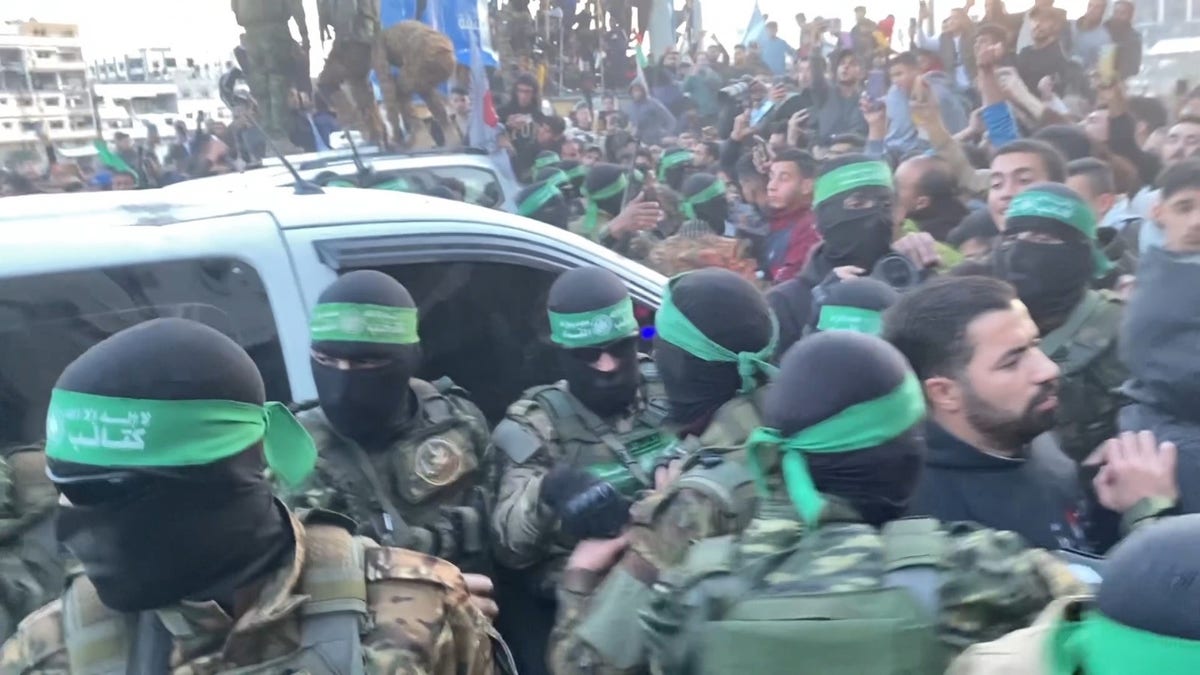
Trump’s new order adopts the model used when the United States designated Hamas, the Brotherhood’s Gaza branch, in 1997: target the components «that engage in violence, not the ideology itself.» (TPS-IL)
Avner Golov, vice president of Mind Israel, argued that the United States should pair the new review process with steps to confront foreign influence in American academia, condition arms deals on behavioral changes and close loopholes exploited by extremist-linked organizations.
As the State and Treasury departments begin assembling evidentiary files, officials say the goal is not a blanket ban, but a targeted legal process grounded in provable ties to terrorism. Analysts say the results could determine how the United States confronts a movement outlawed across the Middle East yet still active across Western societies.
terrorism,donald trump,counter terrorism,politics,middle east,ted cruz,islam










INTERNACIONAL
Los cubanos del exilio en Miami mantienen los envíos de dinero y productos básicos a la isla pese al bloqueo de Estados Unidos

INTERNACIONAL
Abbott surges Texas troopers to border after cartel kingpin’s killing sparks violence in Mexico
NEWYou can now listen to Fox News articles!
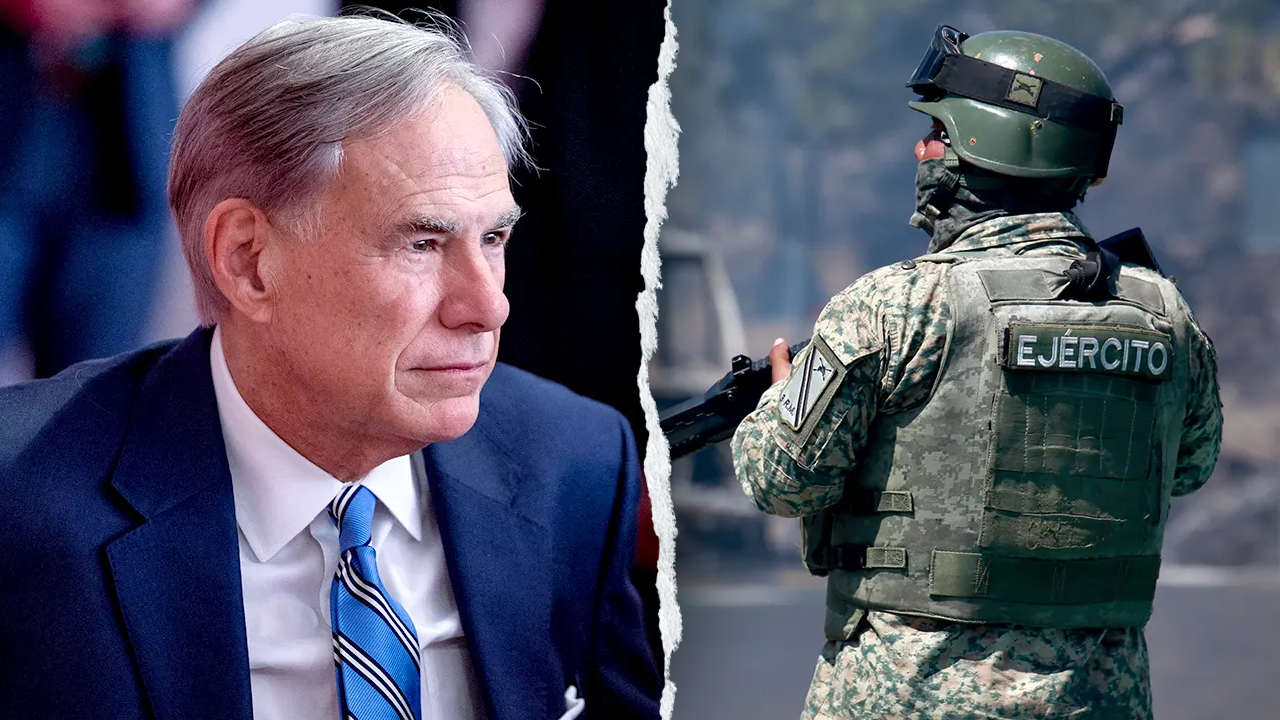
Texas Gov. Greg Abbott announced he is surging state troopers to the border and across the state to enhance public safety operations following a spike in cartel violence after the killing of kingpin «El Mencho» over the weekend.
On Monday, Abbott, a Republican, directed the Texas Department of Public Safety (DPS) to «enhance public safety and homeland security operations» across Texas. He said the surge is in response to escalating cartel violence in Mexico that he believes poses a growing threat to American civilians.
«Mexican drug cartels pose a significant threat to public safety and national security,» said Abbott. «By increasing proactive efforts to defend against cartel violence, Texas will continue to utilize every tool and strategy to protect our state and our nation.»
He vowed that in the face of increased cartel violence, «We will not cower to criminals who impose terror on our fellow Texans and Americans.»
Texas Gov. Greg Abbott visiting the border with the National Guard in Eagle Pass, Texas. (Raquel Natalicchio/Houston Chronicle via Getty Images)
At the governor’s direction, the state is surging Texas Highway Patrol, Texas Rangers, Criminal Investigations Division, and Special Operations Group resources to the border region to «detect, interdict, and apprehend criminals, and to prevent spillover activity from transnational threats.»
Texas is also increasing its Tactical Marine Unit and Aircraft Operations Division presence along the border to detect and apprehend criminals. Further, Texas is activating additional personnel from its Homeland Security Division and Texas Fusion Center to monitor social media and reports of suspicious activity 24/7.
This comes as cartel violence that erupted across Mexico left 25 Mexican National Guard troops and more than two dozen criminal suspects among the dead following the killing of Jalisco New Generation (CJNG) cartel leader Nemesio Oseguera Cervantes, who was also known as «El Mencho.»
The cartel reacted to its leader’s death with violence across Mexico, placing roadblocks and setting vehicles on fire throughout Sunday.
CRUZ WARNED MEXICO OFFICIALS ‘PRESIDENT TRUMP WAS GOING TO’ ACT IF THEY DIDN’T FIGHT CARTELS

A soldier stands guard by a charred vehicle after it was set on fire in Cointzio, Michoacán state, Mexico, Sunday, Feb. 22, 2026, after the death of the leader of the Jalisco New Generation Cartel, Nemesio Rubén Oseguera Cervantes, known as «El Mencho.» (AP Photo/Armando Solis) (AP Photo/Armando Solis)
Multiple American tourists vacationing in Puerto Vallarta, Mexico, also told Fox News Digital they unexpectedly found themselves in the middle of a violent cartel retaliation. As airlines canceled flights and authorities issued shelter-in-place orders, stranded visitors reported cars set ablaze, suspected cartel members blocking major roads, and stores ransacked by looters — scenes some witnesses said made parts of the popular resort city feel like «a war breaking out in the streets.»
Witnesses said they were forced to evacuate their rooms, manage with limited hotel food, and even venture outside in search of meals while waiting for Mexican authorities to regain control of the city.
Staying at an Airbnb near a main road, Eugene Marchenko, 37, of Charleston, South Carolina, told Fox News Digital he woke up to blaring horns and saw six cars completely engulfed in flames just outside his balcony. He and his wife, who had arrived in Mexico only a day earlier, were forced to evacuate for several hours, fearing that a nearby fuel tanker, also ablaze, could explode.
EX-NAVY SEAL PUTS ‘DERANGED’ MEXICAN DRUG CARTEL ON NOTICE AFTER VIOLENT WEEKEND: ‘MORE LIKE ISIS’
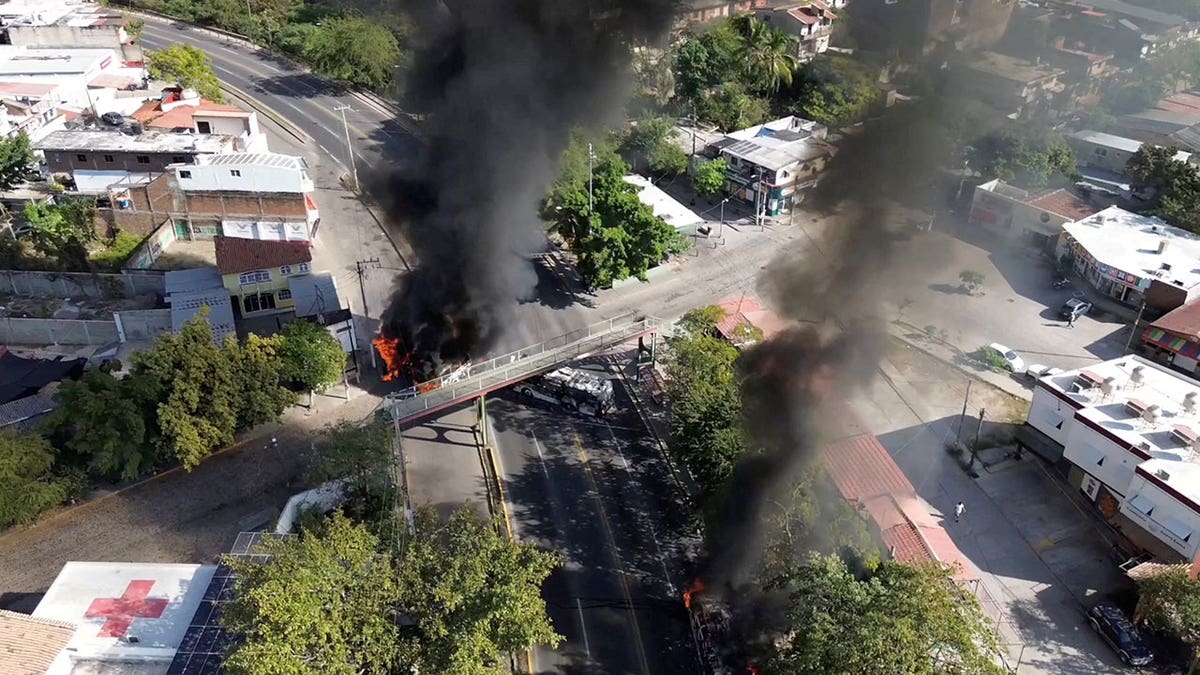
Smoke billows from burning vehicles amid a wave of violence, with torched vehicles and gunmen blocking highways in more than half a dozen states, following a military operation in which a government source said Mexican drug lord Nemesio Oseguera, known as «El Mencho,» was killed, in Puerto Vallarta, Jalisco, Mexico, Feb. 22, 2026. (screen grab obtained from a social media video. @morelifediares via Instagram/Youtube/via Reuters )
Abbott urged Texans in need of immediate assistance to call the U.S. Department of State or the Texas Fusion Center, the state’s primary tactical intelligence hub.
CLICK HERE TO DOWNLOAD THE FOX NEWS APP
He said the state is «closely coordinating» with the State Department and FBI as the situation unfolds.
Related Article
texas,mexican cartel violence,immigration,migrant crime,greg abbott

NEWYou can now listen to Fox News articles!
President Vladimir Putin said the development of Russia’s nuclear triad was an «absolute priority» Monday as he outlined the country’s stance on its weapons program, according to reports.
Marking Russia’s Defender of the Fatherland Day, the Russian leader spoke about strengthening the country’s nuclear capabilities before presenting state awards to officers involved in the invasion of Ukraine, the Moscow Times reported.
In his speech, Putin referred to the Russian nuclear triad, which is the country’s three-pronged system for delivering nuclear weapons, designed to ensure a credible second-strike capability.
Putin described its development as «an absolute priority,» saying that it «guarantees Russia’s security and ensures effective strategic deterrence and a balance of forces in the world.»
President Vladimir Putin declares Russia’s nuclear triad development an «absolute priority» on Defender of the Fatherland Day, emphasizing strategic deterrence capabilities. ( Contributor/Getty Images)
Putin also emphasized his country would continue to strengthen its army and navy, «taking into account developments in the international situation, based on combat experience gained,» amid the Russia-Ukraine war.
He added that Russia would also «significantly» enhance the capabilities of other branches of the armed forces, increasing their combat readiness, mobility, and ability to operate in all conditions, even the most challenging.
«And, of course, we will accelerate the development of advanced systems for the armed forces,» he added.
Putin’s remarks came after Russia suspended its participation in the New START Treaty on Feb. 5, 2023, the last remaining nuclear arms control agreement between Moscow and Washington.
RUSSIA FIRES NEW HYPERSONIC MISSILE IN MASSIVE UKRAINE ATTACK, KREMLIN SAYS
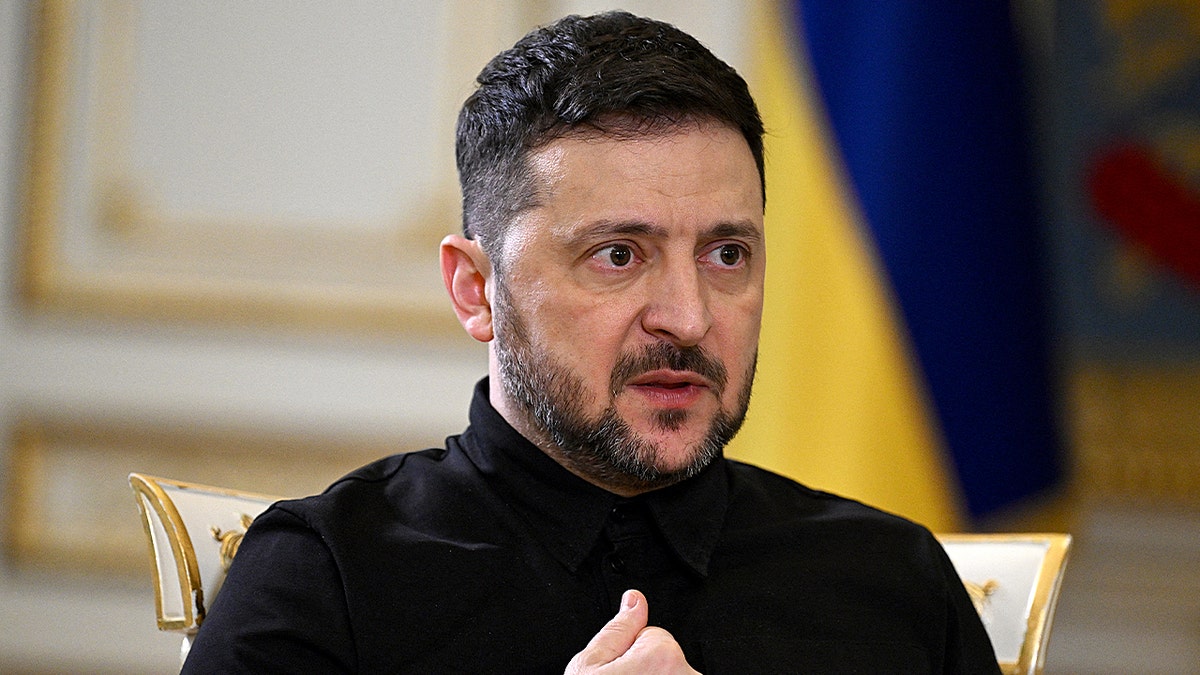
Ukrainian President Volodymyr Zelenskyy warns the Russian leader has launched «World War III.»
The treaty limited the number of deployed strategic nuclear warheads and delivery systems each country could have.
Russian officials have said they will continue to take a «responsible» approach to managing their strategic nuclear arsenal and would respect previously established limits.
Putin’s announcement came after Ukrainian President Volodymyr Zelenskyy warned that the Russian leader had effectively launched «World War III» with his invasion of Ukraine four years ago.
«I believe that Putin has already started it. The question is how much territory he will be able to seize and how to stop him… Putin will not stop at Ukraine,» Zelenskyy told the BBC in an interview Feb. 23.
RUSSIA SHIFTS FROM TALK TO ACTION, TARGETING NATO HOMELAND AMID FEARS OF GLOBAL WAR
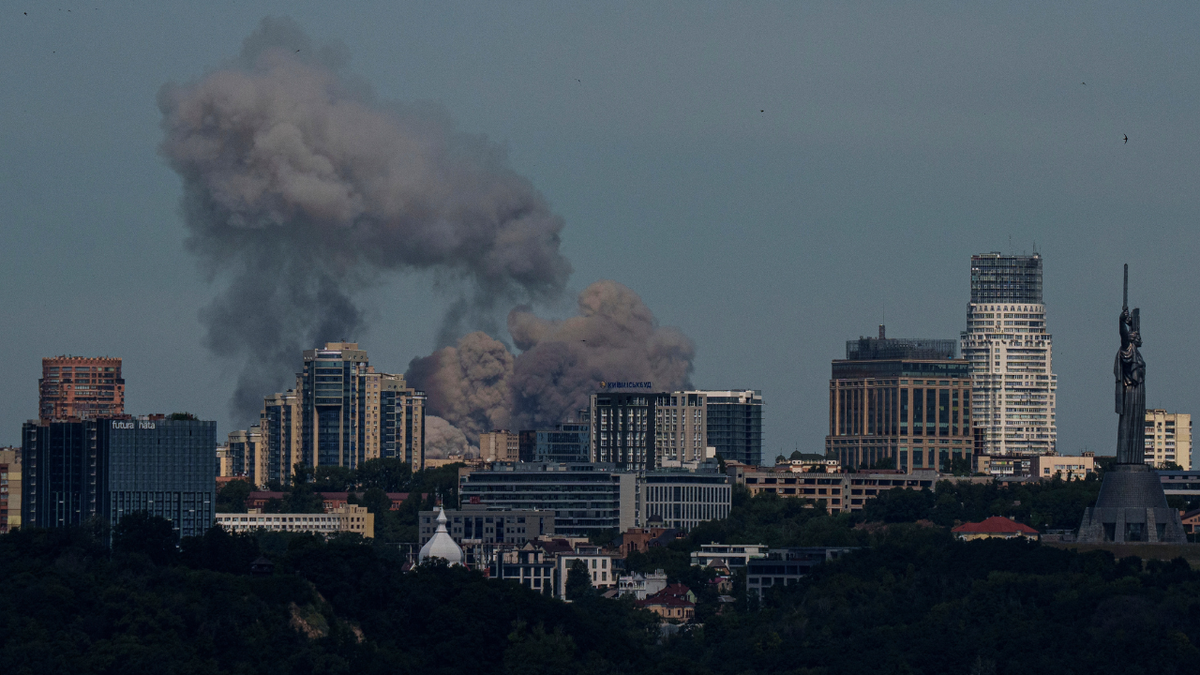
Smoke rises over the Kyiv skyline after a Russian attack, Monday, July 8, 2024. Russian forces launched multiple ballistic and cruise missiles against Ukrainian targets on Monday, Ukraine’s air force said, with explosions felt and heard across the capital, Kyiv. (AP Photo/ Evgeniy Maloletka)
Zelenskyy described the war as part of Putin’s broader attempt to impose a «different way of life» on the world.
«Stopping Putin today and preventing him from occupying Ukraine is a victory for the whole world,» he said.
However, when asked about the possibility of ceding the embattled Donbas region to Moscow as part of a peace deal, he warned that Russia would likely rebuild its military strength within «no more than a couple of years» and launch another invasion.
CLICK HERE TO DOWNLOAD THE FOX NEWS APP
«Where would he go next? We do not know, but that he would want to continue [the war] is a fact,» Zelenskyy said.
Related Article
russia,ukraine

Noche de alta tensión en MasterChef: quién es el nuevo eliminado tras un desafío inesperado

Hay alerta amarilla por vientos fuertes para este martes 24 de febrero: las provincias afectadas

La Argentina de Milei, con futuro abierto

Las razones por las que la reforma laboral quedó expuesta a una posible judicialización

Fausto Spotorno: “Todas las bajas del dólar con alta inflación en algún momento se corrigen”

Los emotivos mensajes de los hijos de Marcelo Gallardo tras el anuncio de su salida de River Plate: “El más grande, lejos”

Villarruel cuestionó la apertura de importaciones: «Sin industria, se pasa a depender de China»

“Ahora es la hora de jugarse”: el mensaje de Patricia Bullrich a los empresarios tras aprobarse la reforma laboral

Según un especialista, el precio de la carne se mantendrá alto “entre dos y tres años”

Cómo será el tratamiento de la reforma laboral en el Senado, luego de haber obtenido la media sanción en Diputados

 ECONOMIA3 días ago
Villarruel cuestionó la apertura de importaciones: «Sin industria, se pasa a depender de China»
- POLITICA2 días ago
“Ahora es la hora de jugarse”: el mensaje de Patricia Bullrich a los empresarios tras aprobarse la reforma laboral
- ECONOMIA2 días ago
Según un especialista, el precio de la carne se mantendrá alto “entre dos y tres años”