INTERNACIONAL
Trump nominees squeezed between ‘blue slips’ and blue obstruction

NEWYou can now listen to Fox News articles!
President Donald Trump has attacked the Senate for blocking his preferred nominees from being confirmed to key positions, but lawmakers and people familiar with the process say the Senate is not necessarily to blame.
Trump has faulted the Senate’s «blue slip» tradition, an unwritten rule requiring nominees for judge, U.S. attorney and U.S. marshal to obtain home state senators’ approval prior to being confirmed.
He said blue state senators will only greenlight «Democrats or maybe weak Republicans.» The president called on Sen. Chuck Grassley, R-Iowa, chairman of the Senate Judiciary Committee, to abolish the practice, and he threatened to sue over it.
But Grassley and other Republicans are unbudging in their position that blue slips are an indispensable part of the confirmation process. Blue slips have been used for more than a century. Past presidents have gotten many nominees confirmed under the system, suggesting other factors are contributing to Trump’s struggle to secure blue slips from Democrats.
TRUMP TELLS GRASSLEY TO TELL DEMOCRATS ‘GO TO HELL’ OVER BLOCKED JUDICIAL NOMINEES IN SENATE
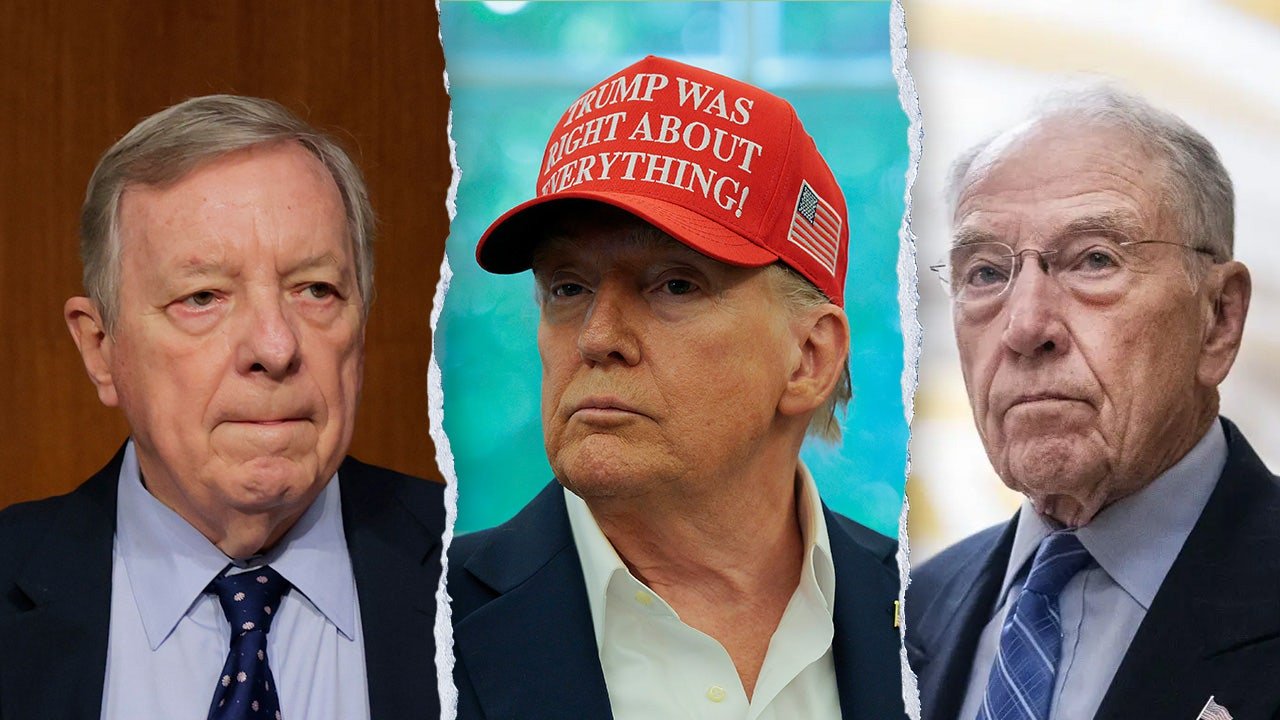
Sen. Chuck Grassley is seen in the U.S. Capitol after a Senate luncheon. (Tom Williams/CQ-Roll Call, Inc via Getty Images)
Trump threatens to sue over ‘gentlemen’s agreement’
Trump and his allies escalated attacks on the blue slip process this week, accusing Grassley of blocking nominees by maintaining it.
«This is because of an old and outdated ‘custom’ known as a BLUE SLIP, that Senator Chuck Grassley, of the Great State of Iowa, refuses to overturn,» Trump wrote on Truth Social.
The president threatened to sue over what he said was a «gentlemen’s agreement,» though it is unclear whom the government would sue and on what grounds.
«It’s not based on law, and I think it’s unconstitutional, and I’ll probably be filing a suit on that pretty soon,» Trump told reporters in the Oval Office.
Asked about the possible lawsuit and why Trump’s nominees in blue states are struggling with confirmation, the White House told Fox News Digital in a statement the holdup must be addressed.
«Senate Democrats have led a campaign of historic obstruction against President Trump and his nominees,» White House spokeswoman Abigail Jackson said. «The left’s partisan, obstructionist agenda is only hurting the American people and it must end.»
‘Troubling’ pattern of circumventing Senate
Trump appointed his former personal defense lawyer Alina Habba as «interim» U.S. attorney, which carries a 120-day term limit that federal judges have the ability to extend under federal vacancy laws if no one has been confirmed by the Senate to the position by then.
Judges have opted to extend Trump’s nominees, like in Jay Clayton’s case in the Southern District of New York. But in an unusual move, the federal judges of New Jersey rejected Habba.
The judges selected someone else, whom Trump and Attorney General Pam Bondi promptly fired. Trump and Bondi then used a series of legal maneuvers to reinstall Habba to another temporary term, but a federal judge ruled the moves unconstitutional. The Trump administration is appealing that decision in a case that could now make its way to the Supreme Court and force the justices to weigh in on what has become a pattern of Trump end-running around the Senate.
ALINA HABBA SAYS SHE ‘WON’T BE INTIMIDATED’ AFTER SENATE CUSTOM HINDERS US ATTORNEY NOMINATION
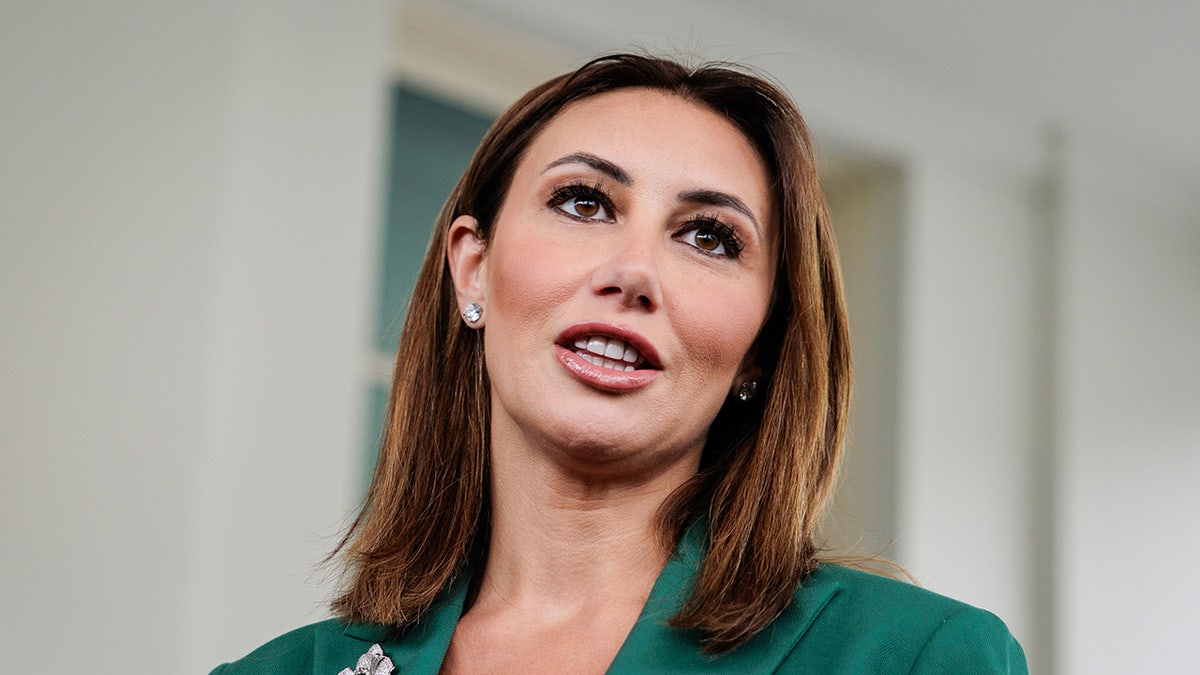
Alina Habba speaks to members of the media outside the West Wing of the White House in Washington, D.C., on Monday, March 24, 2025. (Samuel Corum/Sipa/Bloomberg via Getty Images)
John Sarcone in the Northern District of New York faced a situation similar to Habba’s, and he is now serving as «acting» U.S. attorney. Bill Essayli in the Central District of California, who has taken on a vocal pro-Trump stance amid high-profile deportation cases in his district, has also transitioned from «interim» to «acting» U.S. attorney. Acting U.S. attorneys also carry a temporary term of 210 days. It is unclear how Trump will proceed once those terms expire.
Carl Tobias, University of Richmond law professor, said the workarounds defy the spirit of the Constitution, which says nominees must be confirmed «with the advice and consent» of the Senate.
«It’s good to have that scrutiny from the Judiciary Committee and then on the floor, and so hopefully they could return to something like that, but I’m not sure that’s going to happen, and so I think it is troubling,» Tobias told Fox News Digital.
How to get a blue slip from the other party
The administration must engage with the Senate during the nomination process, including by consulting early on with home state senators about possible nominees.
Former President Joe Biden secured blue slips from opposing parties for 49 nominees, including 27 U.S. attorneys, while Trump’s first administration was able to secure confirmations for nearly all the U.S. attorneys the president nominated.
The blue slip, to senators, is a crucial negotiating tool, one that Article III Project founder Mike Davis said is not going away, despite Trump’s intensifying objections to it. Davis, a staunch Trump supporter, served as counsel to the Senate Judiciary Committee and oversaw nominations under Grassley in the prior Trump administration.
«It’s not going away. Why would it? Why would senators give up their power? They’re not going to do it,» Davis told Fox News Digital, adding that blue slips to the Senate are «the sacred china that’s never going to get broken.»
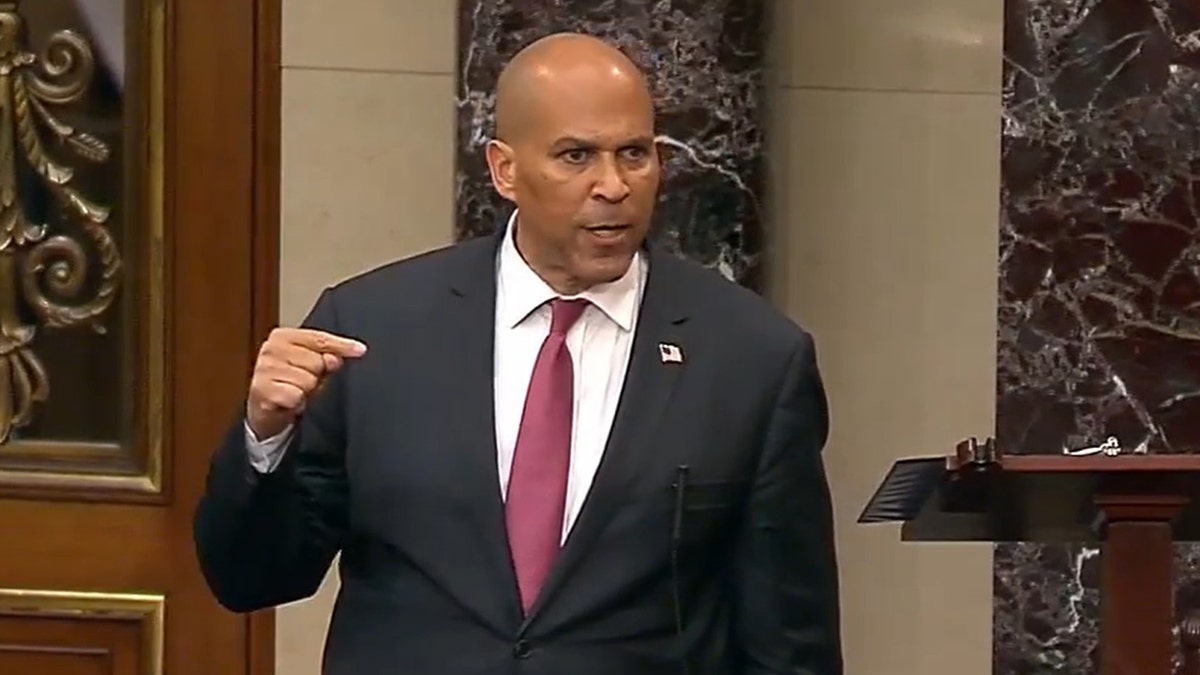
Habba has blamed Sens. Cory Booker, D-N.J., and Andy Kim, D-N.J., (not pictured) for refusing to give blue slip approval to her nomination to (Fox News)
The vetting process
Nominees must also provide the Senate Judiciary Committee with a questionnaire, an FBI background check and financial disclosures. A source familiar with the process told Fox News Digital the committee did not receive Habba’s paperwork to begin vetting her.
Habba has said she could not begin the process because Democratic Sens. Cory Booker and Andy Kim of New Jersey, would not give blue slip approval. It is unclear if and when the Trump administration approached the pair of senators about Habba.
Habba, like Trump, blamed Grassley.
«The blue slip TRADITION prevents a nominee from getting to the point of making that case to the committee and Senate floor. You know who can get rid of it? YOU @ChuckGrassley,» Habba wrote on X.
She told Grassley «this is a time for leadership, not deflection» and that the chairman should not be «doing the dirty work of Thom Tillis, Corey Booker and Andy Kim.»
Booker’s and Kim’s offices did not respond to a request for comment.
Grassley defends bipartisanship
Grassley went on a tear on social media this week, defending his decision to maintain blue slips, which the committee chair has discretion over.
«U.S. Atty/district judge nominee without a blue slip does not hv the votes to get confirmed on the Senate floor & they don’t hv the votes to get out of cmte,» the 91-year-old senator wrote. «As chairman I set Pres Trump noms up for SUCCESS NOT FAILURE.»
GRASSLEY REBUKES TRUMP’S PRESSURE TO ‘HAVE THE COURAGE’ TO SPEED UP NOMINATIONS
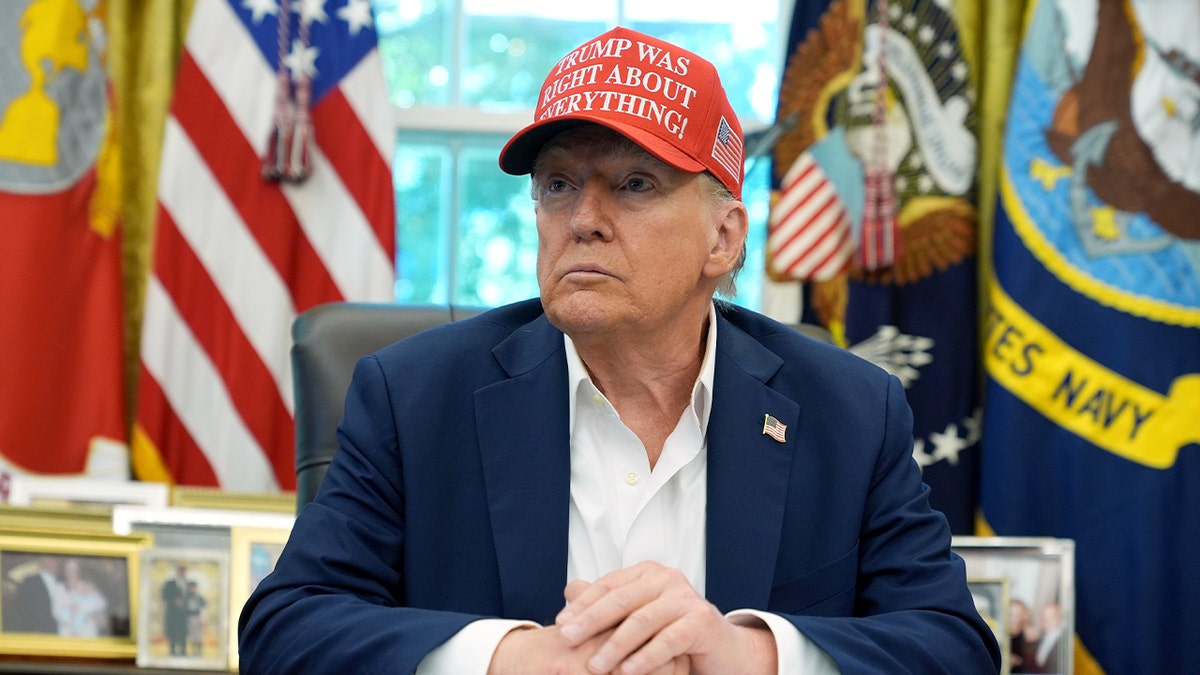
President Donald Trump speaks with reporters in the Oval Office of the White House, Friday, Aug. 22, 2025, in Washington, D.C. (Jacquelyn Martin/AP Photo)
Sen. Thom Tillis, R-N.C., who is among several Republicans who will not vote for a nominee who has not been approved by home state senators, pointed to a statement on social media when asked for comment by Fox News Digital.
«Chairman Grassley is a principled conservative who wants to keep radical liberals off the bench. Getting rid of the blue slip is a terrible, short-sighted ploy that paves the path for Democrats to ram through extremist liberal judges in red states over the long-term,» Tillis wrote on X.
Are Democrats to blame?
Trump has thus far secured opposing party blue slips for four nominees. Davis said Trump is facing a unique level of obstruction from Democrats.
«Every White House does what it can to engage the opposition party, but Democrats have made it clear they’re not interested in working with President Trump, so it’s understandable that his focus has been elsewhere for now,» Davis said.
Sen. Chuck Schumer, D-N.Y., for instance, has refused to give a blue slip to Clayton, the former Securities and Exchange Commission chairman. But Clayton’s ability to win the vote of the federal judges in the Southern District of New York has allowed him to serve as U.S. attorney without confirmation.
CLICK HERE TO GET THE FOX NEWS APP
Sen. Dick Durbin, D-Ill., Senate Judiciary Committee ranking member, has further complicated the confirmation process by putting a hold on U.S. attorney nominees, which drastically slows, but does not fully block, the process.
Vice President J.D. Vance, then a senator, did the same for Biden’s nominees toward the end of the last administration.
Trump’s fight with the upper chamber is likely to evolve, especially as higher courts weigh in on Habba’s nomination, which is currently invalid, according to the district court judge’s decision this month. The U.S. Court of Appeals for the Third Circuit has set a briefing schedule in the case that stretches through October, but eventually the Supreme Court could also chime in on whether Trump’s manner of sidestepping the Senate is constitutional.
senate,judiciary,chuck grassley,politics,democrats senate,republicans












INTERNACIONAL
As war losses near 2 million, Russia accused of trafficking foreign recruits from Africa, Asia
NEWYou can now listen to Fox News articles!
As the war in Ukraine enters its fifth year, the central challenge facing both Moscow and Kyiv is no longer territory alone. It is manpower.
Both Russia and Ukraine face a growing manpower crisis. Western estimates put Ukrainian military casualties at roughly 500,000 to 600,000 since 2022, including more than 100,000 killed, while Russia is believed to have suffered about 1.2 million casualties. Combined battlefield casualties on both sides may now be approaching two million, according to recent analyses.
Now, in an exclusive statement to Fox News Digital, the Ukrainian human rights organization Truth Hounds said Russia is increasingly turning to vulnerable foreign nationals, including recruits from Africa and Asia, through coercive and deceptive recruitment practices that in some cases may amount to human trafficking.
PUTIN VOWS VICTORY IN UKRAINE IN NEW YEAR’S ADDRESS AMID TRUMP-BACKED PEACE TALKS
Portraits of Ukrainian soldiers are seen at the Memorial for the Fallen at Independence Square on the third anniversary of Russia’s invasion in Kyiv, Ukraine, on Feb. 24, 2025. (Bo Amstrup/NTB/AFP via Getty Images)
«The patterns of recruitment in different countries and regions are quite similar,» Truth Hounds said. «Two main categories for foreign fighters could be defined. First, persons who were already in Russia, such as students and migrant workers. Second, those who were recruited in their countries of origin.»
According to the organization, many recruits were promised civilian jobs with substantially higher salaries than in their home countries but were later compelled to sign military contracts written in Russian without translation.
«In many of these cases — both when recruitment happens outside and inside Russia — there are plenty of facts indicating potential human trafficking,» the group said.
Truth Hounds said it documented cases in which individuals detained inside Russia were beaten, tortured or otherwise coerced into signing military contracts.
UKRAINE, US NEAR 20-POINT PEACE DEAL AS PUTIN SPURNS ZELENSKYY CHRISTMAS CEASEFIRE OFFER

Nationals of African countries sit in a dedicated section where foreign fighters captured while serving with Russian forces in Ukraine are held at a detention center for Russian prisoners of war in western Ukraine on Nov. 26, 2025. Since Russia invaded Ukraine in 2022, many reports have emerged of African nationals fighting alongside Moscow’s forces, with some accusing the Russian military of using deceptive tactics to recruit them. In November 2025, Kyiv said it had identified 1,426 fighters from 36 African countries serving in the Russian army. (Genya Savilov / AFP via Getty Images)
«Under such circumstances, it is difficult to characterize their enlistment in the Russian army as voluntary. Rather, these cases involve coercion into military service and exploitation — patterns that are consistent across documented cases globally, when it comes to Russian recruitment practices,» the organization said.
The group cited figures from Ukraine’s Coordination Headquarters for the Treatment of Prisoners of War indicating that more than 18,000 foreigners had joined the Russian army as of late last year, with the number continuing to grow. Truth Hounds said its interviews with foreign prisoners of war, including several from African states, revealed similar recruitment patterns.
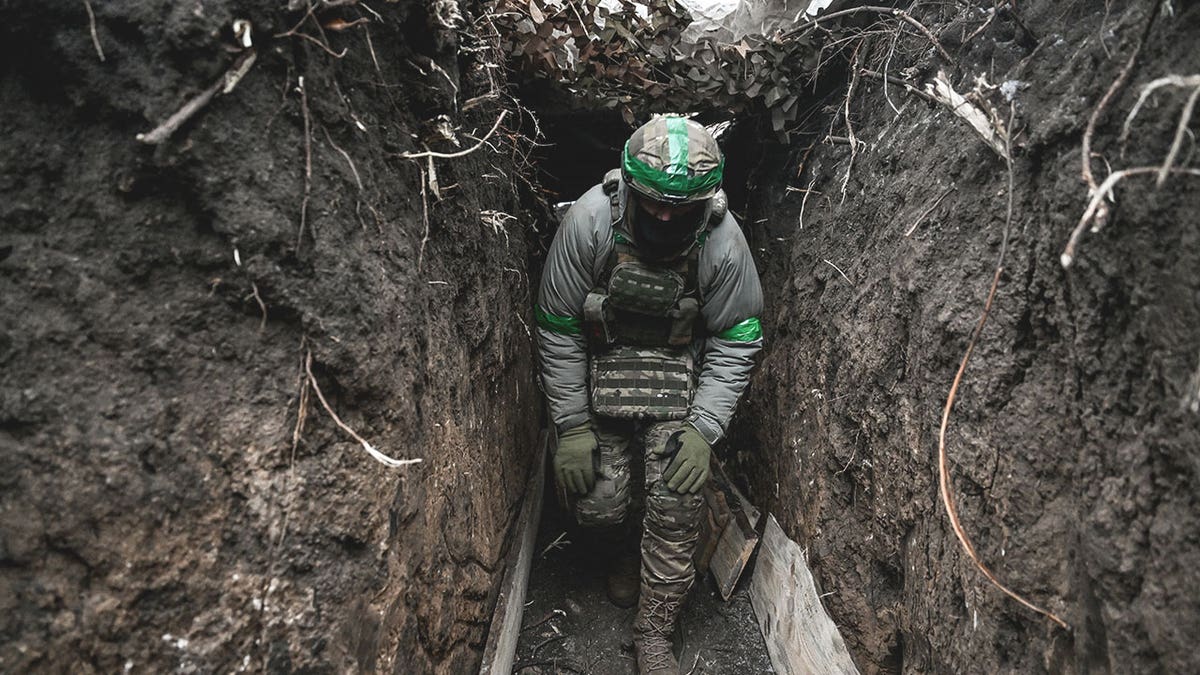
A soldier from a Ukrainian 2S22 Bohdana 155 mm self-propelled howitzer crew of the Striletskyi special forces police battalion of the National Police in the Zaporizhzhia region walks along a trench at a position in the Pokrovsky direction in the Donetsk region, Ukraine, on Jan. 23, 2026. (Dmytro Smolienko/Ukrinform/Nur Photo via Getty Images)
According to a report published by INPACT in February 2026, nearly 1,500 Africans were enlisted between 2023 and mid-2025, 316 of whom died because of a few kilometers of snow in Ukraine, a loss rate of 22%. Many others are missing or cannot be reached by their families.
At the same time, the organization cautioned that not all foreign recruits were forced to serve, noting that some joined with a full understanding of the purpose of their travel to Russia and the terms of the contract, though the proportion remains unclear.
UKRAINE–RUSSIA AT A CROSSROADS: HOW THE WAR EVOLVED IN 2025 AND WHAT COMES NEXT
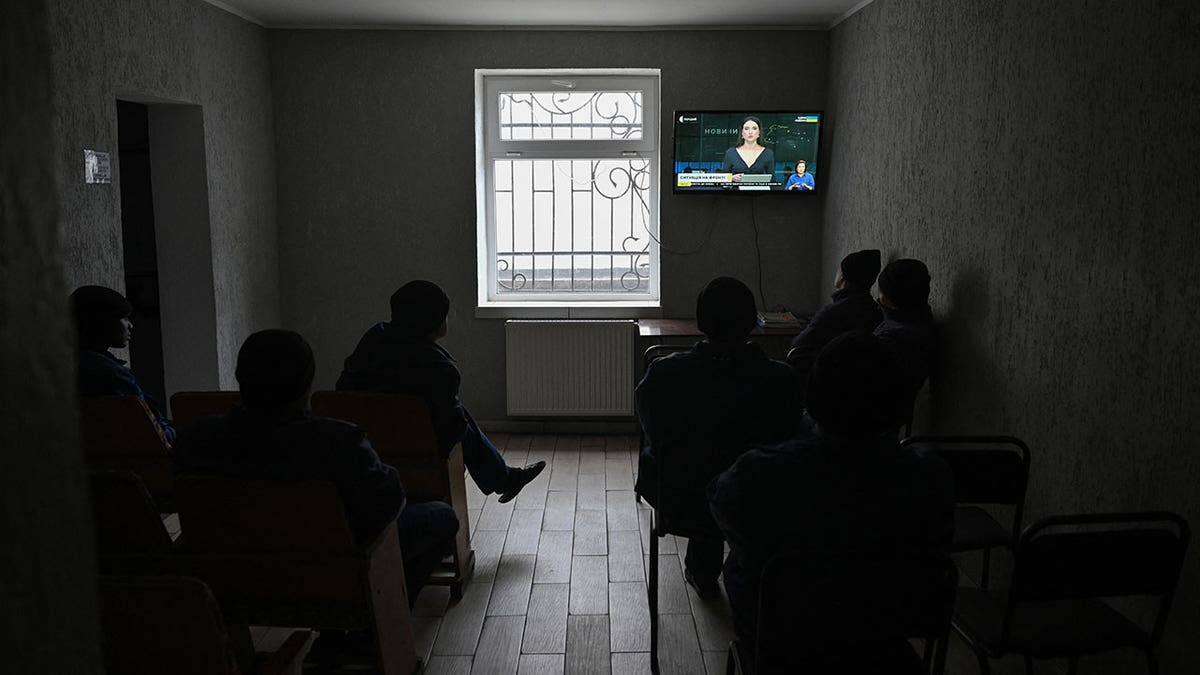
Nationals of African countries watch TV in a dedicated section where foreign fighters captured while serving with Russian forces in Ukraine are held at a detention center for Russian prisoners of war in western Ukraine on Nov. 26, 2025. Since Russia invaded Ukraine in 2022, many reports have emerged of African nationals fighting alongside Moscow’s forces, with some accusing the Russian military of using deceptive tactics to recruit them. In November 2025, Kyiv said it had identified 1,426 fighters from 36 African countries serving in the Russian army. (Photo by Genya Savilov / AFP via Getty Images)
The allegations come as African leaders have begun publicly raising the issue. Kenya’s foreign minister said Nairobi would confront Russian authorities over the recruitment of Kenyan nationals, while South African President Cyril Ramaphosa raised concerns with Russian President Vladimir Putin following distress calls from South African citizens believed to be caught in the conflict, according to Reuters.
Truth Hounds said the legal status of foreign fighters presents a complex overlap between international humanitarian law and international human rights law. Individuals who sign contracts with Russia’s Ministry of Defense are treated as members of the armed forces and are entitled to prisoner-of-war protections, though some cases may also meet the criteria for human trafficking, creating additional legal questions.
«The main question remains how to effectively stop Russia from recruiting such individuals and hold it accountable for the ruined lives of those who have already ended up there,» the organization said.
CLICK HERE TO DOWNLOAD THE FOX NEWS APP
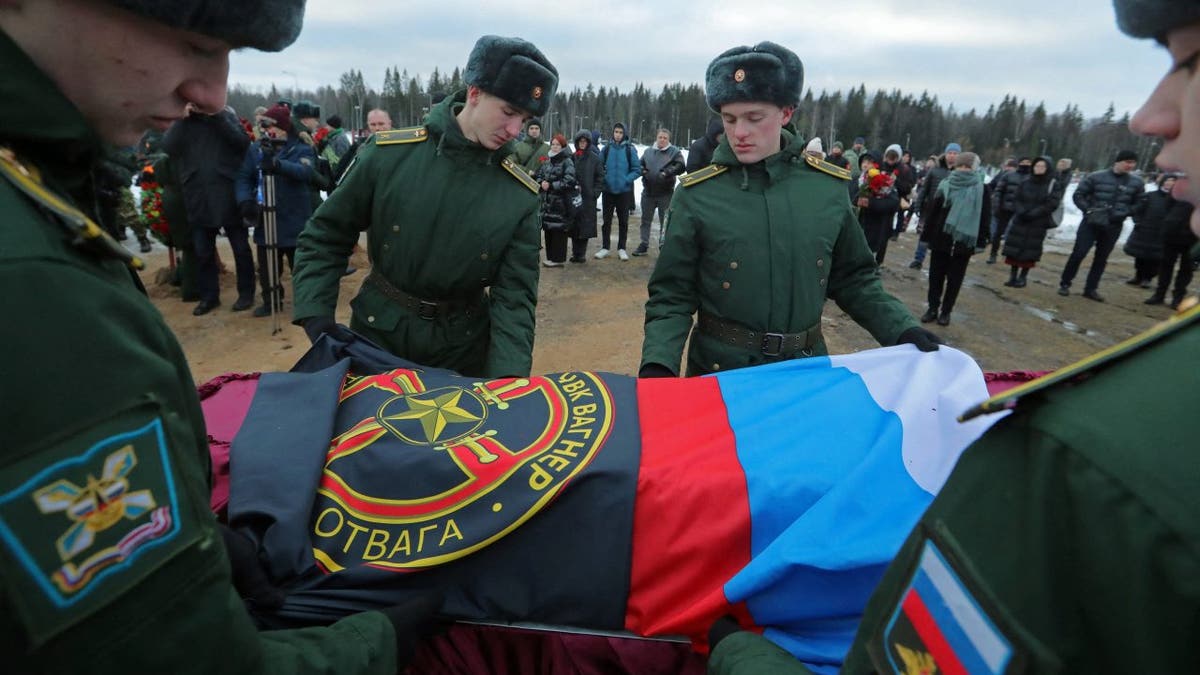
Cadets of a military academy cover the coffin with flags during the funeral of Dmitry Menshikov, a mercenary for the private Russian military company Wagner Group, killed during the military conflict in Ukraine, in the Alley of Heroes at a cemetery in Saint Petersburg, Russia, on Dec. 24, 2022. (Igor Russak/Reuters)
Moscow has previously said foreign nationals may voluntarily enlist in its armed forces. It has not publicly acknowledged coercive recruitment practices.
As the war grinds on, the battle for manpower is stretching beyond Europe’s borders, pulling in vulnerable populations from Africa and Asia and raising new diplomatic and legal challenges for governments far from the front lines.
russia,world,africa,ukraine,world politics

La oposición venezolana y organismos de derechos humanos cuestionaron el alcance de la ley de amnistía aprobada el jueves por la Asamblea Nacional y consideraron que la norma dejaría afuera a numerosos presos políticos y exiliados, entre ellos a María Corina Machado.
“Tengo que esperar a tener el texto definitivo. Pero es sumamente excluyente”, dijo a TN el activista Gonzalo Hmiob, vicepresidente de la ONG Foro Penal.
Leé también: La izquierda volvió al poder en Perú: la apuesta por el caos se cuela en las luchas electorales de la derecha
La amnistía podría beneficiar a cientos de presos políticos detenidos en cárceles de todo el país, pero al mismo tiempo podría excluir a opositores como la exiliada premio Nobel de la Paz y a militares condenados.
Uno de sus artículos más cuestionados es precisamente el que excluye “a las personas que se encuentren o puedan ser procesadas o condenadas por promover, instigar, solicitar, invocar, favorecer, facilitar, financiar o participar en acciones armadas o de fuerza contra el pueblo, la soberanía y la integridad territorial de la República Bolivariana de Venezuela por parte de Estados, corporaciones o personas extranjeras”.
Esa fue una de las acusaciones habituales contra la líder opositora y otros dirigentes como Leopoldo López, también en el exilio.
“Advertimos que la ley contempla un injustificable exceso de exclusiones, que no la exigen ni la Constitución ni los instrumentos internacionales. Esto, sin duda, no se corresponde con el espíritu de paz y reconciliación que debería tener una norma de esta naturaleza”, dijo a TN el activista Oscar Murillo, secretario general del Programa Venezolano de Educación Acción en Derechos Humanos (PROVEA).
No está claro tampoco si la amnistía beneficiará a los argentinos Nahuel Gallo, acusado tras su arresto de planear el asesinato de Delcy Rodríguez, y de Germán Giuliani, vinculado a una causa de narcotráfico (un delito que está excluido de la norma), según la versión oficial y que sus familias y el gobierno argentino niegan.
Las liberaciones de más de 600 presos políticos que el Foro Penal estima que aún siguen detenidos podrían concretarse después que la presidenta encargada promulgue la ley, posiblemente este mismo viernes.
“Un paso”
El analista venezolano Andrés Cañizalez, investigador de la Universidad Católica Andrés Bello de Caracas, dijo a TN que la aprobación de la amnistía marca “un paso” hacia adelante.
“No es el paso que quisiera la sociedad democrática nin las ONG de derechos humanos. Es un paso para aliviar un gran sufrimiento que hay en Venezuela”, afirmó.
Los legisladores aprobaron el proyecto de ley de amnistía en la Asamblea Nacional en Caracas, Venezuela, este jueves 12 de febrero de 2026. (Foto: Cristian Hernández/AP)
Pero la dirigencia opositora cuestionó varios artículos, en especial las exclusiones de la ley.
“Es una situación que crea muchísima incertidumbre. Hay que seguir insistiendo y continuar la resistencia que es algo absolutamente pacífico y a lo que ellos no están acostumbrados”, dijo a TN la exprecandidata presidencial Corina Yoris, muy cercana a Machado.
Leé también: “Un shock total”: cómo se vive en el Reino Unido la libertad bajo investigación del príncipe Andrés
Además, la dirigente opositora dijo que “no se cumplen los estándares de una ley de amnistía” y afirmó que ”no contempla la reparación de las víctimas».
“La ley de amnistía tendría que acogerse a la justicia transicional como establecen los estándares de la ONU. Son muy graves las omisiones de la ley y el deseo de pasar ´agachado´ y meter la manera de perdonar los crímenes que ellos han cometido. Es muy fuerte», afirmó.
Qué dicen los organismos de derechos humanos
Antonio González Plessmann, co-director del grupo defensor de derechos humanos Surgentes, dijo a TN que esta “es una mala ley, porque deja a muchas personas por fuera, pero sirve para mitigar daños y avanzar”.
Según afirmó, “la ley señala de manera taxativa un conjunto de hechos que son insuficientes para proteger centenares de casos de personas judicializadas por razones políticas”.
Entre estos puntos, mencionó detenciones por reclamar derechos laborales, expresar críticas, denunciar hechos de corrupción y luchar por los derechos de los campesinos.
Leé también: Trump aseguró que Obama reveló información clasificada cuando habló de la existencia de extraterrestres
“Mención aparte merecen los funcionarios militares acusados de cometer delitos militares, que fueron explícitamente excluidos”, apuntó.
Además, señaló: “La Ley crea una Comisión de seguimiento (sin participación social) que tendrá la potestad de sugerir casos no previstos que puedan ser amnistiados, generando con ello alta discrecionalidad”.
Para el activista, “la inmensa mayoría de las personas amnistiadas no cometieron ningún delito”. Por ello, dijo que era necesario “un texto que señalara que ser beneficiario de la amnistía no implica el reconocimiento de ningún delito o falta; ni inhibe la posibilidad de exigir una reparación integral por la violación a sus derechos humanos en el marco de los procesos de judicialización, detención o sanciones administrativas que sufrieron”.
“Aún con todo estos defectos, la Ley sirve para extinguir la acción penal en cientos de casos”, indicó.
Oscar Murillo, de PROVEA, aseguró: “Antes y ahora con esta ley, vamos a seguir exigiendo la liberación plena, incondicional e inmediata de todas las personas privadas arbitrariamente de libertad por razones políticas”.
“Asimismo, planteamos que deben abordarse con carácter de urgencia temas como la derogación o declaratoria de nulidad de leyes o normas utilizadas para la criminalización”, en implícita alusión a la llamada Ley del Odio que el chavismo prometió reformular, concluyó.
Venezuela, amnistia
NEWYou can now listen to Fox News articles!
For weeks, the U.S. military has quietly amassed what President Donald Trump has described as an «armada» in Iran’s backyard. Mapped out across the Persian Gulf and beyond, the deployment tells its own story — one of calculated pressure backed by credible capability.
The latest signal of escalation is the movement of the world’s largest aircraft carrier, the U.S. Navy’s USS Gerald R. Ford, and its strike group from the Caribbean toward the Middle East.
The buildup coincides with indirect negotiations between Washington and Tehran over Iran’s disputed nuclear program. Trump has warned that the regime must fully dismantle its nuclear infrastructure — or face consequences.
THE WORLD’S TOP NUCLEAR POWERS HAVE NO ARSENAL LIMITS, HERE ARE THE COUNTRIES WITH NUKES
President Donald Trump has demanded that the Iranian regime dismantle its nuclear weapons program. (Andrew Caballero-Reynolds/AFP/Getty Images)
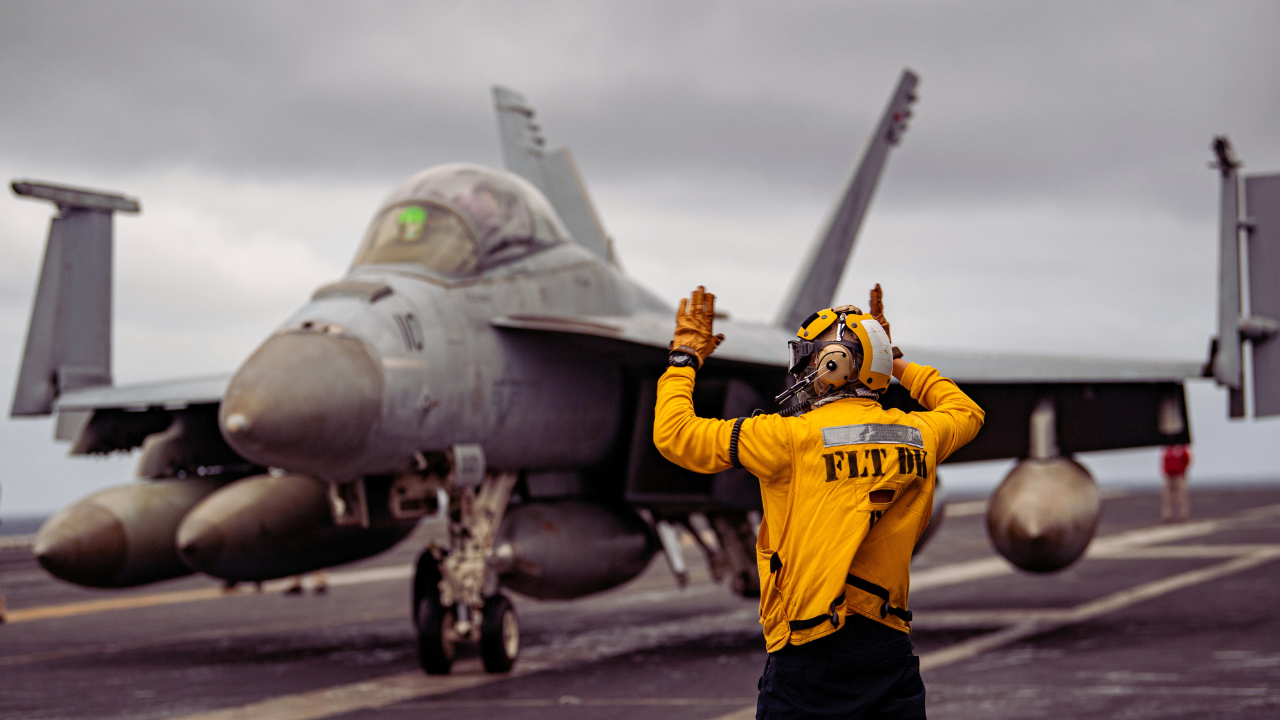
At the heart of America’s force projection is another carrier strike group: the USS Abraham Lincoln — a mobile fortress at sea, guarded by destroyers and equipped to unleash precision strikes at a moment’s notice. On deck, F-35 fighters and F/A-18 attack aircraft sit within range of dozens of key Iranian military and nuclear targets.
Meanwhile, in the Eastern Mediterranean, the destroyers USS Bulkeley and USS Roosevelt provide additional strike capability and missile defense coverage — and could potentially assist Israel in defending against any Iranian counterattack.
WORLD’S LARGEST AIRCRAFT CARRIER HEADS TO MIDDLE EAST AS IRAN NUCLEAR TENSIONS SPIKE DRAMATICALLY
Farther south, in the Red Sea, the USS Delbert B. Black adds another layer of firepower along one of the world’s most important shipping lanes. The Red Sea links the Mediterranean to the Indian Ocean through the Suez Canal, a corridor that carries a significant share of global trade and energy supplies.
A U.S. destroyer there not only protects commercial traffic but also gives Washington the flexibility to respond quickly to threats moving between the Middle East and Europe.
Even closer to Iran’s coastline, in the Persian Gulf and the Strait of Hormuz, the USS McFaul and USS Mitscher are operating in one of the most strategically sensitive waterways on the planet. Roughly a fifth of the world’s oil passes through the Strait of Hormuz each day. Their presence signals that the U.S. can both defend that vital choke point and, if necessary, strike Iranian targets from close range.
IRAN DRAWS MISSILE RED LINE AS ANALYSTS WARN TEHRAN IS STALLING US TALKS
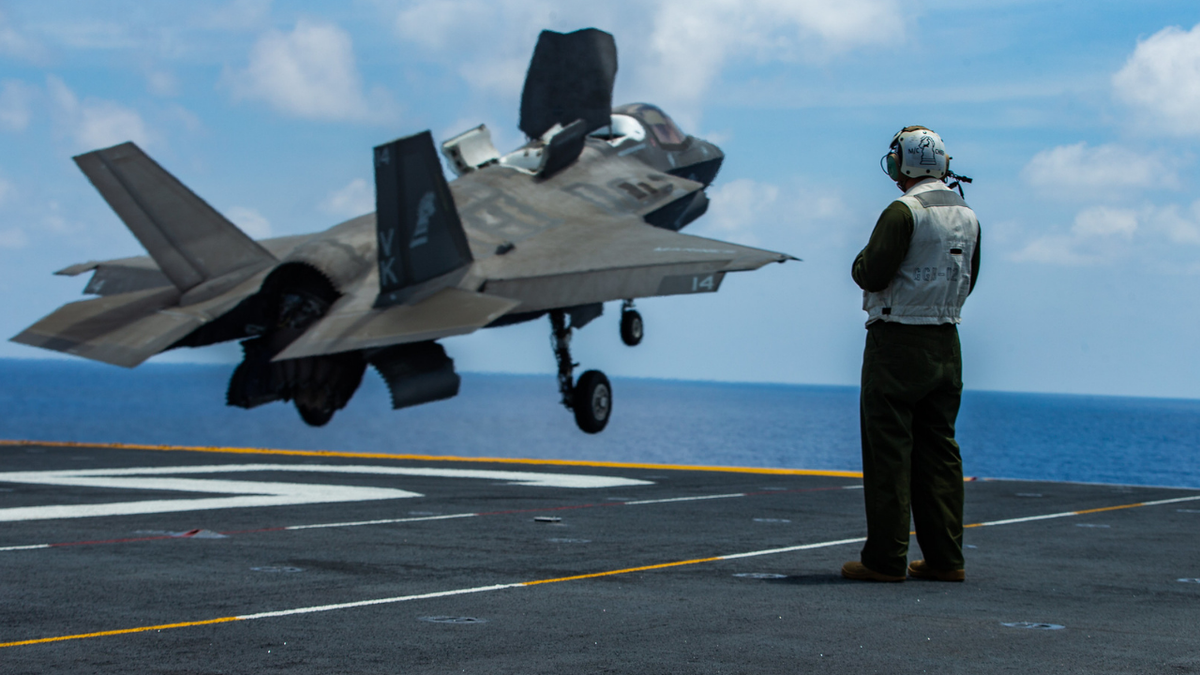
Alongside the warships in the region are advanced aircraft such as the F-35 fighter, a jet designed to slip past air defenses and hit targets with precision. (Cpl. Isaac Cantrell/U.S. Marine Corps)
Beyond naval forces, U.S. air power is spread across multiple Middle Eastern bases, giving commanders the ability to strike, defend and sustain operations quickly.
Several types of combat aircraft are operating from regional bases, including F-15s, F-16s and the radar-evading F-35. The A-10 specializes in close-air support missions against armored threats.
Those fighters are backed by a network of support aircraft. KC-135 and KC-46 tankers refuel jets midair, allowing them to fly farther and stay aloft longer. EA-18G electronic warfare aircraft can jam enemy radar and communications. E-3 Sentry aircraft serve as airborne command centers, tracking threats across wide areas. P-8 Poseidon planes patrol and monitor maritime activity.
CLICK HERE TO DOWNLOAD THE FOX NEWS APP
Additionally, heavy transports — including C-5 Galaxy and C-17 Globemaster aircraft — move troops and equipment, while MQ-9 Reaper drones provide surveillance and can carry precision weapons. The assets give U.S. commanders flexibility to operate across air, sea and land.
Taken together, the air and naval deployments create overlapping strike capability, missile defense coverage and control over major maritime routes. For Iran, it means U.S. forces are not concentrated in a single vulnerable location — they are distributed, layered and positioned to operate from multiple directions at once.
iran,middle east,donald trump,white house,nuclear proliferation,national security

As war losses near 2 million, Russia accused of trafficking foreign recruits from Africa, Asia

Dónde voto en Mendoza 2026: cómo consultar el padrón para las elecciones del 22 de febrero

Por qué “Chiqui” Tapia va a indagatoria: de la declaración clave de una contadora de la AFA al informe de ARCA

Dólar hoy en vivo: a cuánto operan todas las cotizaciones minuto a minuto este viernes 20 de febrero

¿Qué pasará con María Corina Machado en Venezuela?

El desgarrador último mensaje que Eric Dane le dejó a sus hijas antes de morir a los 53 años: el sueño que no pudo cumplir

Reforma laboral bomba: menos indemnización, más horas y despidos más fáciles — el cambio que puede sacudir el empleo en Argentina

Cristian Ritondo: “Vamos a apoyar la ley de modernización laboral, pero no el régimen de licencias por enfermedad”

El dólar no sólo cae en la Argentina: qué pasa con otras monedas emergentes y cuáles son las causas

Tras el anuncio de la CGT, también habrá paro total de los medios de transporte de pasajeros en el país

 POLITICA3 días ago
Reforma laboral bomba: menos indemnización, más horas y despidos más fáciles — el cambio que puede sacudir el empleo en Argentina
- ECONOMIA2 días ago
Ayuda Escolar Anual: a cuánto asciende, donde se tramita y quien puede cobrarla
- POLITICA3 días ago
El Gobierno endurece las medidas de seguridad y control en la marcha prevista contra la reforma laboral en el Congreso