INTERNACIONAL
Trump ordenó el bloqueo naval del estrecho de Ormuz tras el fracaso de las negociaciones en Islamabad

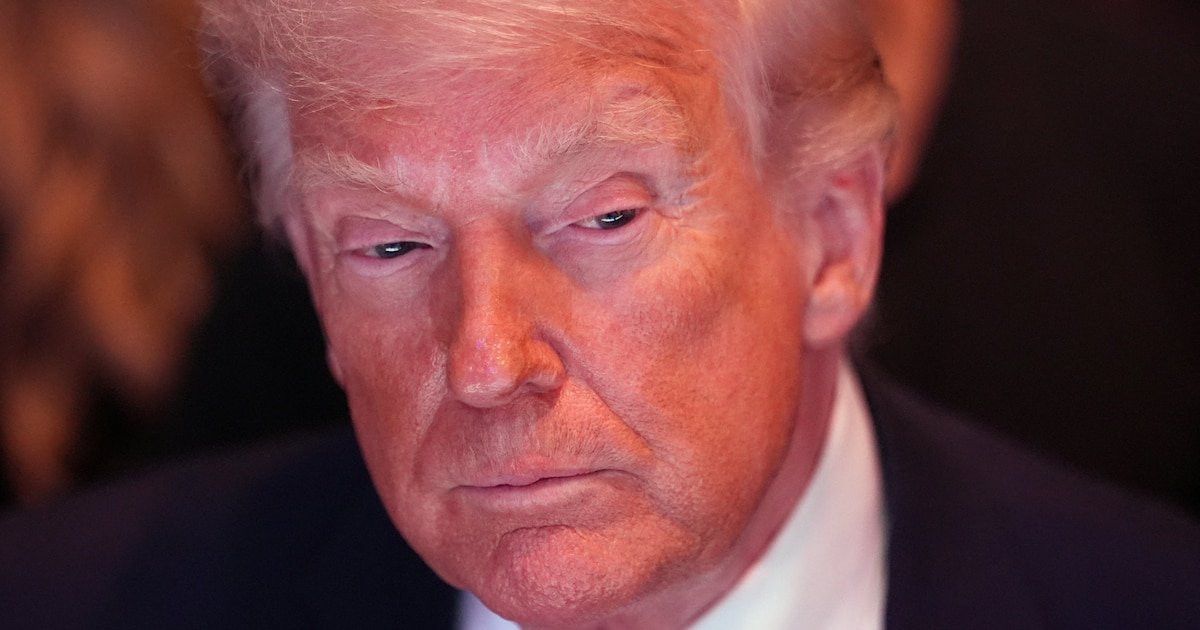
El presidente Donald Trump anunció el domingo el bloqueo naval del estrecho de Ormuz, declaró que su Marina interceptará todo barco que haya pagado peaje a Irán y advirtió que cualquier iraní que dispare contra buques estadounidenses o civiles “será enviado al infierno”, en una serie de publicaciones en Truth Social que escalaron drásticamente la tensión en el Golfo Pérsico tras el colapso de las negociaciones de paz en Islamabad.
“La Marina de los Estados Unidos, la mejor del mundo, comenzará de inmediato el proceso de bloquear cualquier barco que intente entrar o salir del estrecho de Ormuz”, escribió Trump, calificando el cierre iraní de esa vía marítima de “extorsión mundial” y afirmando que “los líderes de los países, especialmente de Estados Unidos, jamás serán extorsionados”.
El mandatario también instruyó a su armada a “buscar e interceptar todo buque en aguas internacionales que haya pagado un peaje a Irán”, y anunció que comenzarán a destruir las minas colocadas por Teherán en el estrecho. “Ninguno de los que pague un peaje ilegal tendrá libre paso en alta mar”, advirtió.
En un segundo mensaje, Trump fue aún más lejos: “En el momento apropiado, estamos completamente listos y nuestras fuerzas militares terminarán con lo poco que queda de Irán.”
El detonante: las negociaciones nucleares
Trump explicó el razonamiento detrás de la escalada: “La reunión fue bien, la mayoría de los puntos fueron acordados, pero el único punto que realmente importaba, el NUCLEAR, no lo fue.”
En su segunda publicación, el presidente fue más detallado. Dijo haber sido informado por el vicepresidente JD Vance, el enviado especial Steve Witkoff y Jared Kushner sobre las casi 20 horas de conversaciones en Islamabad, facilitadas por Pakistán. Elogió al primer ministro Shehbaz Sharif y al jefe militar Asim Munir como “hombres extraordinarios”, y agradeció que le reconocieran haber “salvado entre 30 y 50 millones de vidas” al evitar una guerra con India.
Pero sobre el resultado nuclear fue categórico: “Hay una sola cosa que importa: Irán no está dispuesto a abandonar sus ambiciones nucleares. Como siempre he dicho, desde el principio y hace muchos años: ¡Irán nunca tendrá un arma nuclear!”
Trump reconoció que los negociadores estadounidenses llegaron a establecer una relación cordial con sus contrapartes iraníes —el presidente del Parlamento Mohammad-Bagher Ghalibaf, el canciller Abbas Araghchi y Ali Bagheri— pero subrayó que eso era irrelevante ante la intransigencia de Teherán en la cuestión central.
El estrecho, corazón del conflicto

El estrecho de Ormuz se ha convertido en el principal punto de fricción entre ambas potencias desde el inicio del conflicto. Antes de su cierre efectivo por parte de Irán, por esa vía transitaba una quinta parte del petróleo mundial. Trump acusó a Irán de haber prometido abrir el estrecho y de haber incumplido deliberadamente ese compromiso.
“Dijeron que pusieron minas en el agua, aunque su Marina y la mayoría de sus ‘lanzadores de minas’ han sido completamente destruidos”, escribió. “Puede que lo hayan hecho, pero ¿qué dueño de barco querría correr ese riesgo?”
La idea de un bloqueo había sido anticipada el domingo por la mañana cuando Trump compartió un artículo que sugería que la Marina estadounidense podría “superar el bloqueo iraní” en el estrecho, replicando la estrategia que aplicó contra Venezuela antes de la caída de Nicolás Maduro.
El sábado, en plenas negociaciones en Islamabad, Trump ya había anunciado en Truth Social que Estados Unidos iniciaba “el proceso de desbloqueo” del estrecho mediante el desminado de sus aguas. Los Guardianes de la Revolución respondieron amenazando con tratar “severamente” a cualquier buque militar que transitara por allí sin autorización.
Vance: “oferta final”

Antes de los anuncios de Trump, el vicepresidente Vance había abandonado Islamabad declarando que Washington había presentado su “oferta final y mejor” y que ahora le correspondía a Irán decidir. La delegación iraní también se retiró sin acuerdo: el presidente del Parlamento Ghalibaf afirmó que su equipo presentó “iniciativas constructivas” pero que la contraparte “no pudo ganarse la confianza” de los negociadores iraníes.
El conflicto se desencadenó el 28 de febrero, cuando Estados Unidos e Israel atacaron Irán, lo que provocó una represalia de Teherán que sacudió la región y la economía mundial. Una tregua temporal de dos semanas había sido acordada para dar lugar a las conversaciones de paz, cuyo fracaso abre ahora una nueva y peligrosa fase del enfrentamiento.
Según el artículo compartido por Trump, el portaaviones USS Gerald Ford, que lideró el bloqueo a Venezuela, se encuentra actualmente en el Golfo Pérsico junto al USS Abraham Lincoln y otros activos navales de envergadura, lo que ubicaría a Estados Unidos en condiciones operativas para ejecutar esa estrategia si Irán rechaza la propuesta presentada en Islamabad.
Domestic Politics,Sports,North America,Government / Politics,Sport












INTERNACIONAL
Elecciones en Perú: ya se vota para definir el noveno presidente del país en los últimos diez años

En unas elecciones marcadas por la singular oferta de candidatos –35 en total, en un hito para la historia del país-, Perú elige este domingo al que se convertirá en su noveno presidente de los últimos diez años. Quien resulte electo, deberá asumir los destinos de los peruanos en el período 2026-2031. Todas las encuestas anticipan, sin embargo, que una segunda vuelta es prácticamente inevitable.
A las 7.00 de la mañana hora local (9 en la Argentina), empezaron a abrir los 10.336 de centros de votación instalados en Perú, que hasta las 17.00 de este domingo recibirán a los ciudadanos que deseen emitir su voto.
Las elecciones generales de este domingo se caracterizan por ser las de más amplia oferta de candidatos en la historia del país, con 35 aspirantes a la presidencia y una marcada inestabilidad política que ya vio pasar por el puesto a 8 mandatarios en los últimos 10 años.
Más de 27,3 millones de ciudadanos peruanos están habilitados para votar en los comicios de este domingo. En Perú, el voto es obligatorio para las personas entre los 18 y 64 años, y no asistir implica una multa que oscila entre los 27,50 a 110 soles (entre 8,16 y 32,65 dólares) según la condición económica del elector. Al menos 1,2 millones de votantes residen en el exterior del país, con grandes concentraciones en Buenos Aires (115.097), Santiago de Chile (113.887), Madrid (105.493) y Barcelona (79.606).
Aunque la mayoría de las encuestas anticipan que habrá una segunda vuelta, debido a la gran fragmentación de votos que implican los 35 candidatos en contienda, existe gran incertidumbre respecto de cuáles son los partidos que la disputarán y se espera que muchos peruanos decidan su voto en el último minuto.
Quienes se acerquen a votar, encuentran en las cabinas de votación una enorme papeleta que incluye cinco elecciones simultáneas: presidente, senadores nacionales, senadores regionales, diputados y representantes para el Parlamento Andino.
Entre los candidatos con mayores posibilidades de pasar al balotaje aparecen Keiko Fujimori (Fuerza Popular), hija y heredera política del expresidente Alberto Fujimori (1990-2000) quien viene de perder en la segunda durante las elecciones presidenciales anteriores.
También tienen chances de avanzar a la segunda vuelta el populista Ricardo Belmont (Obras), empresario de 80 años y exalcalde de Lima (1990-1995); y el empresario ultraconservador Rafael López Aliaga (Renovación Popular), igualmente exalcalde de la capital peruana (2023-2025) y con un estilo similar al del presidente estadounidense Donald Trump.
El cómico Carlos Álvarez (País Para Todos), una figura de la televisión peruana que se dedicó durante más de tres décadas a imitar a políticos también se presenta como opción, con un proyecto de derecha en un caso que recuerda al del presidente ucraniano Volodimir Zelenski.
Aunque pasadas las 17, cuando cierren las urnas, se iniciará un escrutinio, se descarta los resultados estén en el corto plazo. Se prevé que el recuento de votos sea lento y ya se anunció que podrían pasar varios días hasta que haya resultados concluyentes.
Tras las elecciones de este domingo, Perú volverá a tener, luego de más de 30 años, un Parlamento bicameral con 60 senadores y 130 diputados. Ello, pese a que los peruanos votaron en contra en un referéndum de 2018, en donde el ‘No’ a tener dos cámaras había ganado con el 90,5 % de votos válidos.
El desarrollo de los comicios será seguido por un total de 487 observadores acreditados entre ellos las misiones de observación de la Unión Europea (UE), con más de 150 especialistas desplegados en el país; y de la Organización de Estados Americanos (OEA), con 96 integrantes.
Una de las principales novedades en estas elecciones, a raíz de las denuncias de «fraude» realizadas en la anterior elección por Keiko Fujimori, es que los votos serán guardados hasta la proclamación de resultados, para que puedan recontarse en caso de que existan impugnaciones de actas, lo que obligará a custodiar 453 toneladas de votos, incluidos aquellos emitidos en el exterior.
INTERNACIONAL
Hungarians vote in record numbers as Trump-ally Viktor Orbán faces biggest electoral threat since 2010
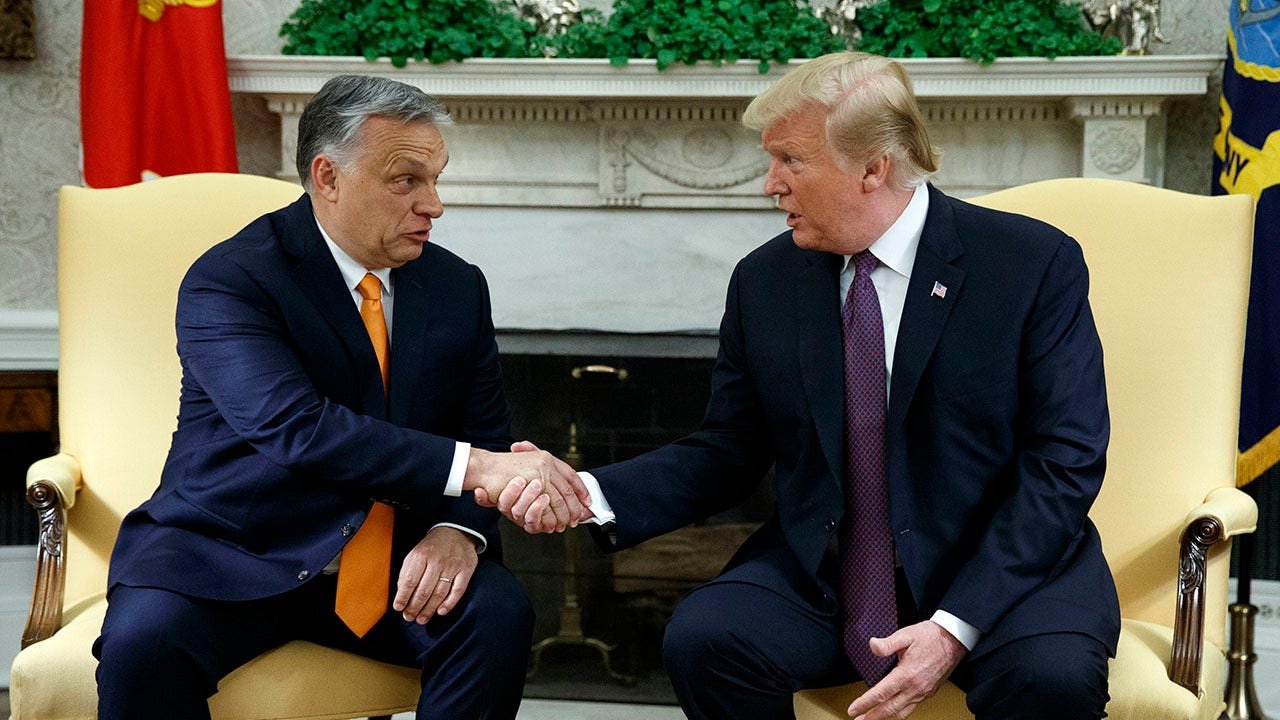
JD Vance goes to Budapest
JD Vance rallies for Hungarian Prime Minister Viktor Orban in Budapest ahead of a pivotal election, drawing attention from US conservatives. Panelists discuss Orban’s tight re-election bid, facing a flagging economy and corruption allegations that could end his 16-year hold on power. Critics highlight his controversial economic strategy and ties to Vladimir Putin, including blocking European Union aid to Ukraine, making the race unpredictable.
NEWYou can now listen to Fox News articles!
The U.S. and Europe are watching closely as Hungarians turned out in record numbers to vote Sunday in a high-stakes election that sets up Trump ally, Prime Minister Viktor Orbán, against his former political ally, Péter Magyar.
Trailing in the opinion polls, Orbán’s received a major boost earlier this week when Vice President JD Vance visited the country, making clear what the administration’s position was on the importance of having a pro-U.S. candidate in the heart of Europe, as so many of its continental allies have proven lackluster, most notably for a lack of help in the war against Iran.
In his remarks, Vance made clear why he was there. «The reason why we’re doing it is because we thought there was so much garbage happening against Viktor in this election that we had to show that there are actually a lot of people and a lot of friends across the world who recognize that Viktor and his government are doing a good job, and they’re important partners for peace,» he said at the Mathias Corvinus Collegium, a private university in Budapest, the capital of Hungary. «That’s why we’re here, but ultimately the Hungarian people are going to be sovereigns because that’s how it should be.»
TRUMP CALLS INTO VANCE-ORBAN HUNGARY EVENT: ‘MY KIND OF PEOPLE’
Vice President JD Vance laughs at the sound of President Donald Trump calling in as he was delivering remarks at a Day of Friendship event with Hungarian Prime Minister Viktor Orbán at MTK Sportpark in Budapest, Hungary, on April 7, 2026. (Jonathan Ernst/Reuters)
Following Vance’s return to the U.S., President Donald Trump weighed in on Truth Social Friday: «My Administration stands ready to use the full economic might of the United States to strengthen Hungary’s Economy, as we have done for our great allies in the past, if Prime Minister Viktor Orbán and the Hungarian People ever need it. We are excited to invest in the future prosperity that will be generated by Orbán’s continued leadership!»
Beloved by many older and more rural Hungarians and reviled by detractors, Orbán has emerged as the country’s most consequential leader since its transition to democracy at the end of the Cold War. Still, the election campaign has become intense.
Orbán’s strained relationship with the European Union comes from his positioning on Russia’s war against Ukraine, his country’s firm support of Israel and his hard stance on not accepting migrants, which led to EU financial sanctions for his refusal to open the country’s border to foreigners.
During the 16-year Orbán government, the Hungarian economy has grown relatively quickly for an EU country. The country’s GDP per capita (what the average person earns annually) rose to nearly $17,000 last year, up from approximately $12,000 in 2014, according to Trading Economics data. However, it’s not all good. Inflation has recently been relatively high at an annual rate of 4.9%, and business sentiment has been consistently negative since Aug. 2022.
TRUMP SAYS HUNGARY’S BORDER STANCE KEEPS CRIME DOWN, SAYS EUROPE ‘FLOODING’ WITH MIGRANTS
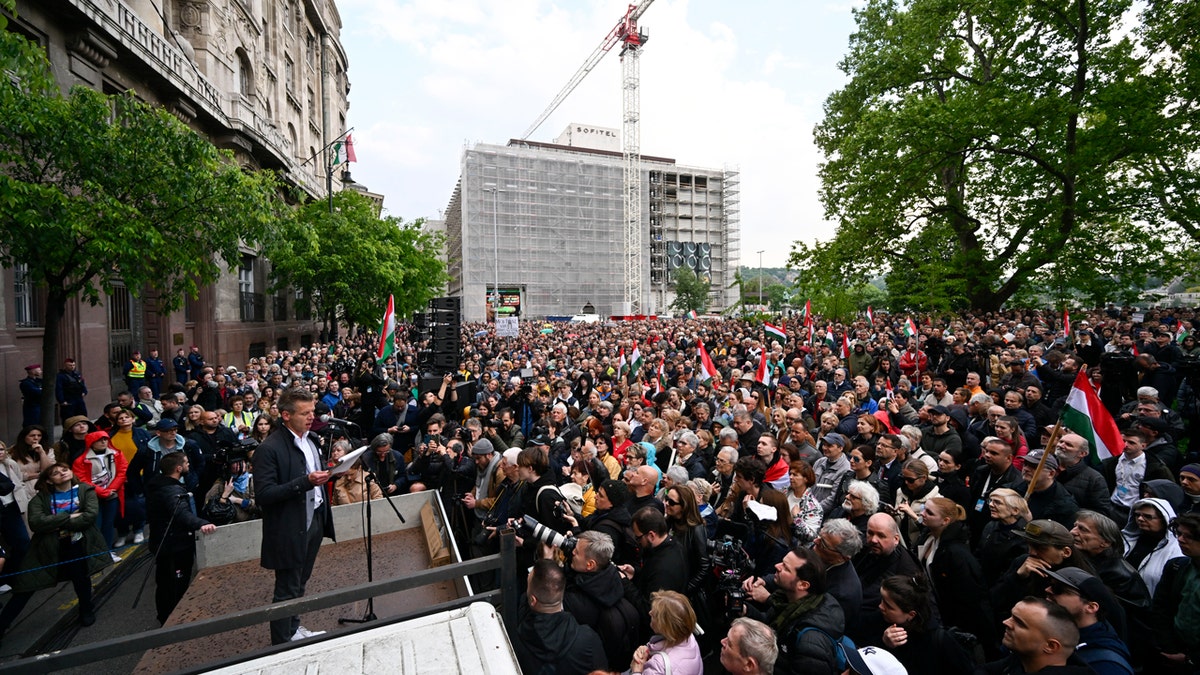
Péter Magyar, a former insider within Orban’s ruling Fidesz party speaks during a protest outside the Hungarian Interior Ministry building to demand stronger protections for children and Interior minister Sandor Pinter to step down, in Budapest, Hungary, Friday, April 26, 2024. Magyar is leading the polls in April’s 2026 election. (Denes Erdos/AP)
The poll of polls shows Magyar’s Tisza party with 50% of the vote and Orbán’s Fidesz party behind at 39% as of April 9, according to Politico. Magyar now poses the largest electoral threat to Orbán since 2010.
«The polls are going well for the opposition,» Daniel Wood, portfolio manager at William Blair Investment Management, told Fox News Digital. «If the opposition wins, there’s a chance that the EU unlocks the frozen funds, which are around 7% of the GDP.»
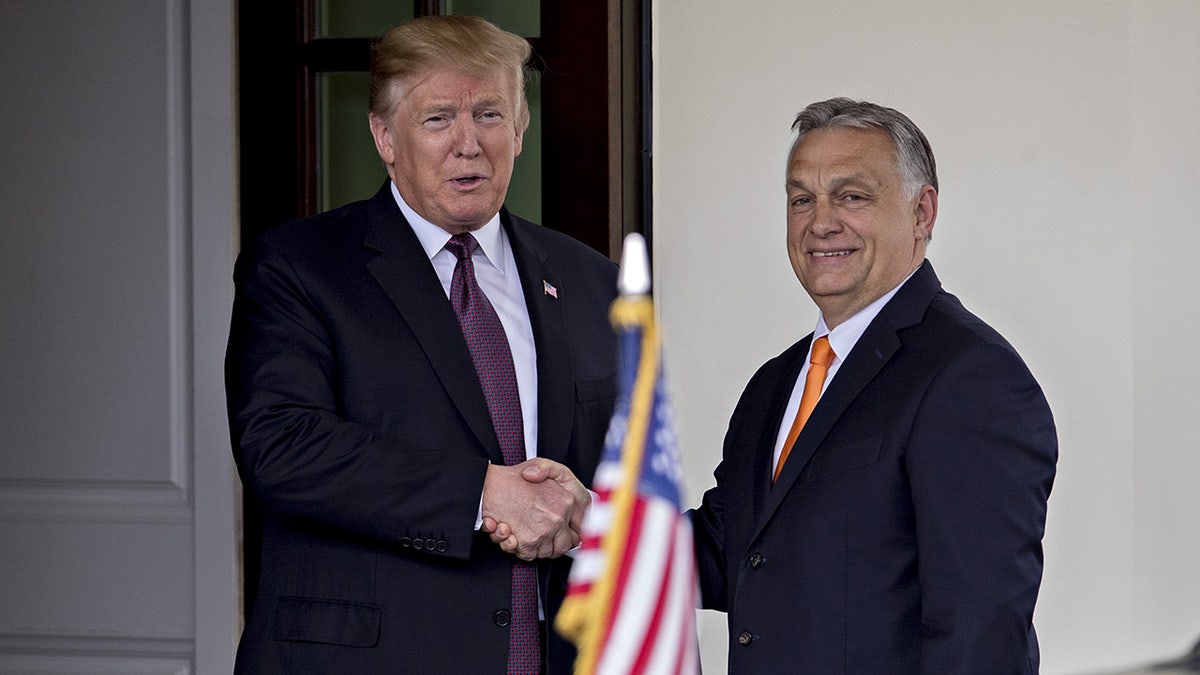
U.S. President Donald Trump, left, shakes hands with Viktor Orban, Hungary’s prime minister, at the West Wing of the White House in Washington, D.C., U.S., on Monday, May 13, 2019. Trump is meeting with the nationalist leader of Hungary despite bipartisan objections from Congress, as the U.S. seeks to steer the Central European nation and NATO member away from Russia and China. (Andrew Harrer/Bloomberg)
Speaking to reporters outside a polling station Sunday, Orbán, 62, said the campaign had been «a great national moment on our side» and thanked activists and supporters for their work. «I’m here to win,» the Associated Press reported.
In an interview earlier in the week, Péter Magyar complained the EU’s longest-serving leader has led the country on a «180-degree turn» in recent years, endangering its Western orientation while cozying up to Moscow. Yet despite that drift, «Hungarians still see that Hungary’s peace and development are guaranteed by membership of the European Union and NATO,» Magyar said. «I think this really will be a referendum on our country’s place in the world,» he told the Associated Press.
CLICK HERE TO DOWNLOAD THE FOX NEWS APP
Results are expected later this afternoon.
The Associated Press contributed to this report.
europe, elections, the european union, donald trump, alliances, jd vance
INTERNACIONAL
Appeals court says federal judge must reconsider blocking WH ballroom, weigh national security concerns
NEWYou can now listen to Fox News articles!
President Donald Trump’s $400 million White House ballroom construction will be able to continue for at least a little while longer, after an federal appeals court instructed a District Court judge to reconsider the situation.
A three-judge panel for the U.S. Court of Appeals for the D.C. Circuit ruled Saturday that construction can proceed until Friday, April 17, giving the president time to seek a Supreme Court review as the Trump administration is claiming delaying the prospect leaves the construction site exposed and risks the security of the president and his staff.
The panel instructed U.S. District Judge Richard Leon to clarify whether — and how — his injunction interferes with the administration’s claims over safety and security.
Government lawyers argued that the project includes critical security features to guard against a range of possible threats, such as drones, ballistic missiles and biohazards and that holding up construction «would imperil the president and others who live and work in the White House.»
DEMS MOVE TO SET LIMITS ON TRUMP’S DONOR-FUNDED WHITE HOUSE BALLROOM, CLAIMING ‘BRIBERY IN PLAIN SIGHT’
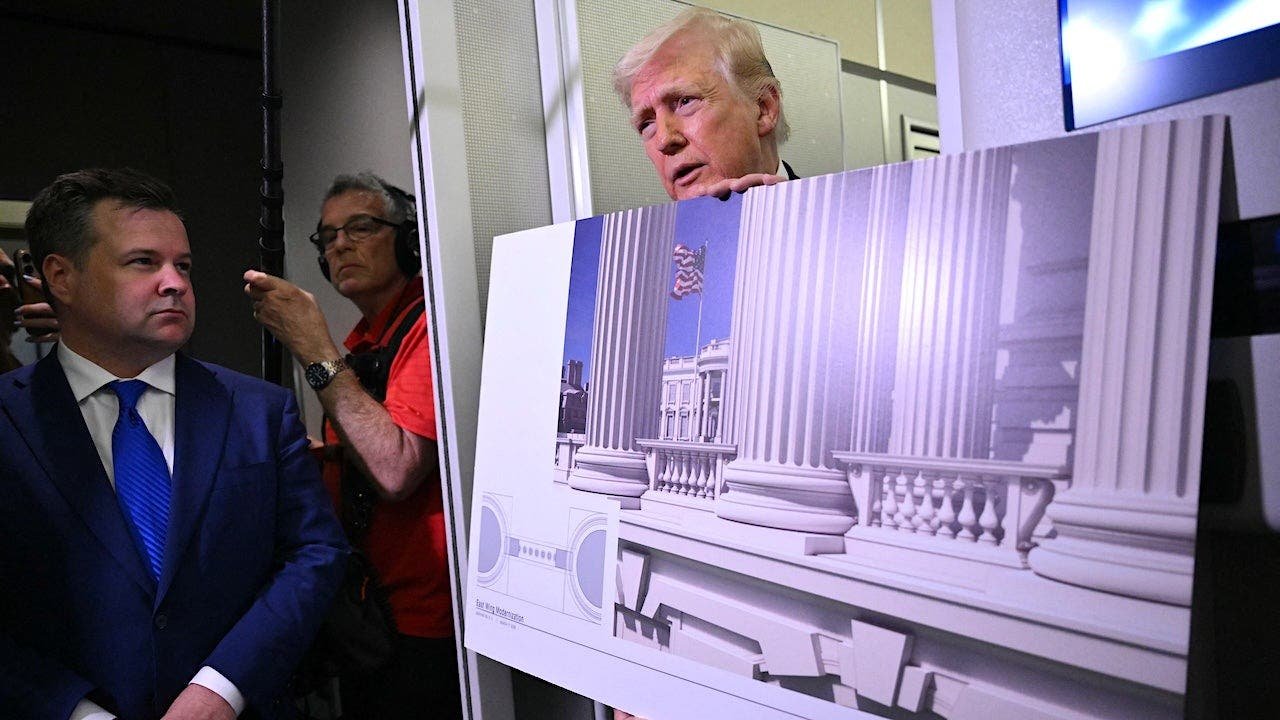
President Donald Trump holds a rendering of the White House ballroom in an Air Force One media scrum. (Mandel Ngan/AFP)
Trump had also made the case that the U.S. military was installing a «heavily fortified» facility under the ballroom, including bomb shelters and a medical facility.
The National Trust for Historic Preservation (NTHP) sued in December, a week after the White House finished demolishing the East Wing for a 90,000-square-foot (8,400-square-meter) ballroom.
The group claimed Trump exceeded his authority when he demolished the dated East Wing — built in 1902 during Theodore Roosevelt’s presidency and expanded in 1942 — arguing the president needed congressional authorization.
TRUMP SAYS IT ‘IS TOO LATE’ TO STOP THE WHITE HOUSE BALLROOM CONSTRUCTION AMID LAWSUIT
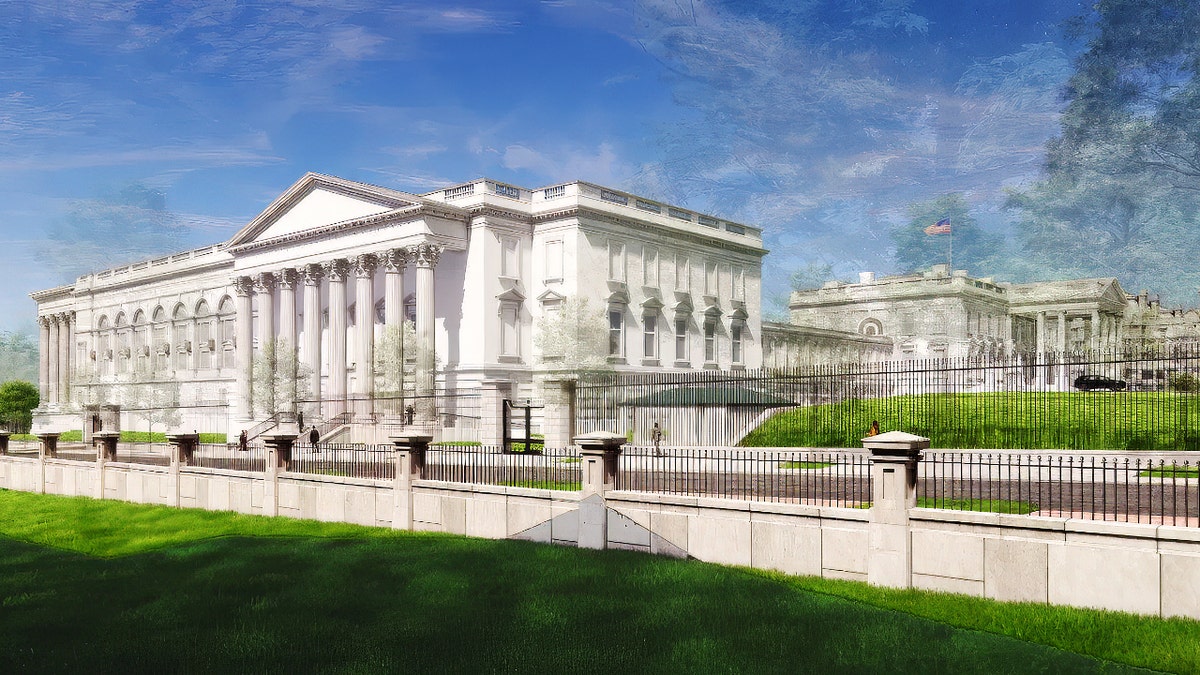
A rendering of the proposed White House ballroom shared by President Donald Trump on Truth Social on Feb. 3, 2026. (Copyright Donald Trump/Truth Social)
Trump has said the president has historically had say over the White House remodeling, and has long noted Congress does not have to pay for the privately funded project.
A lower court had issued a March 31 injunction to halt ballroom construction, but it also paused that injunction to allow for an appeal.
The White House has argued that the injunction left the White House «open and exposed,» threatening security for the building, the president and his family and staff.
TRUMP UNVEILS NEW RENDERING OF SPRAWLING WHITE HOUSE BALLROOM PROJECT

A McCrery Architects rendering provided by the White House of the new ballroom. (McCrery Architects/White House)
NTHP CEO Carol Quillen said in a statement that the organization awaited further clarification from the district court.
She said the group was committed «to honoring the historic significance of the White House, advocating for our collective role as stewards, and demonstrating how broad consultation, including with the American people, results in a better overall outcome.»
Judge Leon exempted any construction work necessary to ensure the safety and security of the White House, but said he reviewed material the government privately submitted before determining that a halt would not jeopardize national security.
«We cannot fairly determine, on this hurried record, whether and to what extent the district court’s ‘necessary for safety and security’ exception addresses Defendants’ claims of irreparable harm, insofar as it may accommodate the Defendants’ asserted safety and security need for the ballroom itself or other temporary measures to secure the safety and security of the White House, the President, staff, and visitors while this appeal proceeds,» the D.C. Circuit said in its ruling.
WARREN-LED INQUIRY DRAWS NEW DETAILS ON TRUMP BALLROOM DONATIONS FROM MAJOR CORPORATIONS

A McCrery Architects rendering provided by the White House of the new ballroom. (White House)
The appeals panel noted that much of the government’s concerns focused on that below-ground security work, which the White House argued was «distinct from construction of the ballroom itself and could proceed independently.»
The White House is making the case now that those security upgrades are «inseparable» from the project as a whole, the appeals court said, making it unclear «whether and to what extent» moving forward with certain aspects of the ballroom is necessary for the safety and security of those upgrades.
TRUMP PUSHES BACK AFTER MICHELLE OBAMA KNOCKS EAST WING RENOVATION, CALLING OLD ARRANGEMENT ‘A DISASTER’
Although Trump’s project is funded by private donations, public money is paying for construction of underground bunkers and security upgrades.
The three-judge appeals court panel was made up of Judges Patricia Millett, Neomi Rao and Bradley Garcia. Millett was nominated by former President Barack Obama, Rao by Trump and Garcia by President Joe Biden.
Rao wrote a dissenting opinion, which cited a statute that allows the president to undertake improvements to the White House.
CLICK HERE TO DOWNLOAD THE FOX NEWS APP
«Importantly, the government has presented credible evidence of ongoing security vulnerabilities at the White House that would be prolonged by halting construction,» Rao wrote, adding that such concerns outweigh the «generalized aesthetic harms» presented in the lawsuit.
Reuters and The Associated Press contributed to this report.
administration, national security, congress, white house, appeals

Sonríe la Selección Argentina: Gio Lo Celso volvió a sumar minutos tras una larga ausencia

El error con el celular que muchos cometen y provoca el clásico bajón del domingo por la tarde

Con la mira en 2027, LLA propone una reforma de la Constitución bonaerense para tener una Legislatura unicameral

Elecciones en Perú: ya se vota para definir el noveno presidente del país en los últimos diez años

Esta podría ser la historia médica más importante de la década

Polémica por la venta de carne de burro como alternativa económica en Chubut: afirman que es “muy nutritiva”

Russia seizes control of US-linked firm as it pushes for renewed ties with Washington

Participantes for export: Furia Scaglione y Coty Romero volverán a convivir en un reality español

Netanyahu afirmó que Israel destruyó el programa nuclear y de misiles de Irán: “Ahora luchan por su supervivencia”

Turismo en Buenos Aires: la aldea secreta que nadie te contó

 INTERNACIONAL19 horas ago
Russia seizes control of US-linked firm as it pushes for renewed ties with Washington
- CHIMENTOS19 horas ago
Participantes for export: Furia Scaglione y Coty Romero volverán a convivir en un reality español
- INTERNACIONAL19 horas ago
Netanyahu afirmó que Israel destruyó el programa nuclear y de misiles de Irán: “Ahora luchan por su supervivencia”