INTERNACIONAL
Trump orders ‘lethal kinetic strike’ on alleged drug trafficking boat in international waters, three killed


NEWYou can now listen to Fox News articles!
President Donald Trump announced on Truth Social Friday that he ordered a lethal strike on a vessel allegedly linked to a designated terrorist organization «conducting narco-trafficking» in the U.S. Southern Command’s area of responsibility.
The strike, carried out on a vessel confirmed by intelligence to be trafficking illicit narcotics, left three narco-terrorists dead, Trump said in the post, along with a video showing the moment the boat was struck and became engulfed in flames.
«On my Orders, the Secretary of War ordered a lethal kinetic strike on a vessel affiliated with a Designated Terrorist Organization conducting narcotrafficking in the USSOUTHCOM area of responsibility,» Trump posted to his Truth Social account Friday evening.
«Intelligence confirmed the vessel was trafficking illicit narcotics, and was transiting along a known narcotrafficking passage enroute to poison Americans.»
US MILITARY CARRIES OUT SECOND STRIKE ON VENEZUELAN NARCOTERRORISTS IN INTERNATIONAL WATERS
President Donald Trump announced on Truth Social Friday that he ordered a lethal strike on a vessel linked to a designated terrorist organization «conducting narco-trafficking» in the U.S. Southern Command’s area of responsibility. (@realDonaldTrump via Truth Social)
The strike took place in international waters, and no U.S. forces were harmed, he added.
TRUMP TOUTS US STRIKE AS MADURO SLAMS MILITARY ‘THREAT’ OFF VENEZUELA
«The strike killed 3 male narcoterrorists aboard the vessel, which was in international waters,» Trump said. «No U.S. Forces were harmed in this strike. STOP SELLING FENTANYL, NARCOTICS, AND ILLEGAL DRUGS IN AMERICA, AND COMMITTING VIOLENCE AND TERRORISM AGAINST AMERICANS!!!»

President Donald Trump speaks at a hearing of the Religious Liberty Commission at the Museum of the Bible Sept. 8, 2025, in Washington. (AP Photo/Alex Brandon)
The announcement came just days after Trump announced the U.S. military had carried out its second strike on Venezuelan cartels as the administration continues its crackdown.
RUBIO PROMISES MORE STRIKES ON VENEZUELAN CARTELS: ‘WE’RE NOT GOING TO SIT BACK ANYMORE’
«This morning, on my Orders, U.S. Military Forces conducted a SECOND Kinetic Strike against positively identified, extraordinarily violent drug trafficking cartels and narcoterrorists in the SOUTHCOM area of responsibility,» Trump posted to Truth Social on Monday.

Nicolás Maduro, Venezuela’s president, during a press conference at Miraflores Palace in Caracas, Venezuela, July 31, 2024. (Gaby Oraa/Bloomberg via Getty Images)
Earlier this month, a U.S. military strike blew apart a Venezuelan drug boat in the southern Caribbean, leaving nearly a dozen suspected Tren de Aragua narco-terrorists dead.
CLICK HERE TO GET THE FOX NEWS APP
In February, the Trump administration also designated drug cartel groups like Tren de Aragua, the Sinaloa Cartel and others as foreign terrorist organizations.
donald trump,world,drugs,south america,terrorism











INTERNACIONAL
Misión Artemis II de la NASA: los astronautas se preparan para navegar el lado oculto de la Luna

Los astronautas de Artemis II ya comienzan a visualizar el lado oculo de la Luna y en una hora, los astronautas quedarán detrás de la Tierra, por lo que la cápsula Orión perderá toda comunicación con nuestro planeta durante 40 minutos, según predijo la NASA.
“Cuando Orión pase por detrás de la Luna, aproximadamente a las 18:44 EDT o 22.44 GMT, la misión entrará en un periodo de interrupción de comunicaciones programado que durará unos 40 minutos. Durante este tiempo, la Luna bloquea las señales de radio necesarias para que la Red del Espacio Profundo mantenga contacto con la nave espacial”, explicó la NASA.
Y agregó: “Poco después de la pérdida de señal, se espera que Orión alcance su punto más cercano a la Luna alrededor de las 19:02 EDT o 23.02 GMT, cuando estará a tan solo 6530 kilómetros de la superficie lunar”.
La tripulación de Artemis II dedicó este lunes un cráter lunar recién observado al recordar a Carroll, la esposa fallecida en 2020 del comandante Reid Wiseman, durante su histórica misión que marca la mayor distancia alcanzada por seres humanos respecto a la Tierra.
El astronauta Jeremy Hansen, de la Agencia Espacial Canadiense, fue el responsable de anunciar el gesto y precisó: “Su nombre era Carroll; la esposa de Reid Wiseman, la madre de Katie y Ellie, (el cráter) es un punto brillante en la Luna, y nosotros queremos llamarla Carroll”. Así, la NASA y la CSA aprovecharon el momento para rendir tributo a familiares perdidos.
Durante la jornada, Wiseman y sus compañeros Victor Glover y Christina Koch se tomaron varios segundos para unirse en homenaje y recordaron a sus seres queridos fallecidos tras lograr el récord de distancia alcanzado en una misión tripulada.

Los astronautas de Artemis II mostraron nuevas imágenes de la Luna. “Es tan genial”, celebraron, al observar de cerca detalles sobre vieja actividad volcánica en el satélite natural.
Cuando Orión pase por detrás de la Luna, aproximadamente a las 18:44 hora EDT local, la misión entrará en un periodo de interrupción de comunicaciones programado que durará unos 40 minutos. Durante este tiempo, la Luna bloquea las señales de radio necesarias para que la Red del Espacio Profundo mantenga contacto con la nave espacial.
Poco después de la pérdida de señal, se espera que Orión alcance su punto más cercano a la Luna alrededor de las 19:02, cuando estará a tan solo 6530 kilómetros de la superficie lunar.
Los astronautas de Artemis II casi que no tuvieron tiempo de celebrar el récord de mayor distancia alcanzada por un ser humano desde la Tierra, ya que están preparando todo lo relativo a tomar imágenes en video y fotografía del lado oculto de la Luna, que ocurrirá en las próximas horas.
Además de las fotos que tomarán los astronautas, la cobertura de la NASA incluirá imágenes en directo de la Luna captadas por cámaras instaladas en los paneles solares de la nave Orión.
“La calidad de la imagen y la visualización pueden variar a lo largo del período de observación lunar debido a la distancia a la Tierra, las limitaciones del sistema y el ancho de banda de la red de comunicaciones de la NASA”, aclaró la agencia espacial estadounidense.
Récord de mayor distancia humana a la Tierra

La NASA comunicó que los astronautas Reid Wiseman, Victor Glover, Christina Koch y Jeremy Hansen son las personas que más lejos han estado de nuestro planeta en la historia. La anterior marca correspondía a la tripulación el Apolo 13 que no pudo alunizar pero la sobrevoló a 400.171,5 kilómetros de la Tierra.
Los astronautas se preparan para romper en menos de 15 minutos el récord de mayor distancia que alguna vez un humano estuvo más lejos de la Tierra.
El trayecto de Artemis II contempla una distancia máxima de 406.777,9 kilómetros desde la Tierra, cifra que supera el récord histórico de la misión Apolo 13, cuyo máximo fue de 400.171,5 kilómetros. La cápsula Orión completará así el viaje tripulado más lejano de la historia, llevando a Koch, Wiseman, Glover y Hansen a convertirse en los seres humanos que más lejos viajaron desde nuestro planeta.

Los horarios de la llegada a la Luna de Artemis II
Los horarios corresponden a la hora este de EEUU o EDT. Para los horarios de Argentina hay que sumar una hora más. Para Colombia y Perú, dos horas menos. Para México y todo Centroamérica, tres horas menos.
- 13:00 (EDT) o 14 (hora argentina), 12 (hora Colombia y Perú), 11 (hora México) y 18 (hora España) : Inicio de la cobertura en NASA+ sobre el sobrevuelo lunar.
- 13:56: Superación del récord de distancia alcanzada por humanos desde la Tierra (Apolo 13, 1970).
- 14:10: Declaraciones de la tripulación (solo audio) tras batir el récord de distancia.
- 14:15: Configuración de la cabina de Orión para las operaciones de sobrevuelo.
- 14:45: Inicio de las observaciones lunares.
- 18:44: Prevista la pérdida de comunicaciones al dirigirse a la cara oculta de la Luna (aproximadamente 40 minutos).
- 19:02: Máximo acercamiento de Orión a la Luna: 6.530 km (4.058 millas).
- 19:07: Orión alcanza su distancia máxima de la Tierra: 252.757 millas (406.127 km).
- 19:25: Amanecer terrestre; se prevé el restablecimiento de comunicaciones.
- 20:35-21:32: Eclipse solar, durante el que el Sol se ocultará tras la Luna según la percepción de la tripulación.
- 21:20: Finalización de la observación lunar.
North America,Science / Technology,Top Pictures
INTERNACIONAL
Steve Daines’ handpicked Senate successor Kurt Alme vows to keep Montana in Republican hands in 2026

NEWYou can now listen to Fox News articles!
FIRST ON FOX: Montana will again have a new face coming to the Senate, with Sen. Steve Daines, R-Mont., bowing out. His chosen successor knows he was picked to stop Democrats from taking the seat.
Former U.S. Attorney Kurt Alme was handpicked by Daines at the last minute to replace him, and he has no qualms about it as Republicans try to maintain their majority in the upper chamber in a midterm election cycle that is historically a referendum on the party — and president — in control.
«Knowing how important it was for Republicans to hold the Senate, I told him if he decided to retire, I would be interested,» Alme told Fox News Digital in an interview.
TOP TRUMP ALLY STEVE DAINES EXITS MONTANA SENATE RACE, PLANS TO RETIRE
Former U.S. District Attorney Kurt Alme knows he was tapped to replace outgoing Sen. Steve Daines, R-Mont., to maintain the GOP’s majority in the Senate, and he’s ready to lean into his bona fides to keep the Treasure State red. (Alme Campaign)
Daines, who was seeking a third term in the Senate, dropped out of the race in early March, withdrawing his name just as the registration deadline in Montana was approaching. As he bowed out, Alme leapt in.
The move drew heavy criticism from Daines’ opponents in the state and from Democrats in Washington, D.C., but Alme described the plan as one geared toward maintaining the balance of power in the upper chamber.
Seth Bodnar, the former University of Montana president who jumped into the race as an independent hours before Daines’ exit, said on X that the lawmaker had «so little respect for Montana Republicans that he withdrew at the last minute to coronate his handpicked successor instead of giving them a voice at the ballot box.»
«This is the disgusting arrogance of Washington politicians and their party bosses who trade power back and forth like candy while Montanans are crushed under higher costs and fewer opportunities,» Bodnar said.
10 SENATE RACES THAT COULD DECIDE CONTROL OF THE CHAMBER IN THE 2026 MIDTERMS
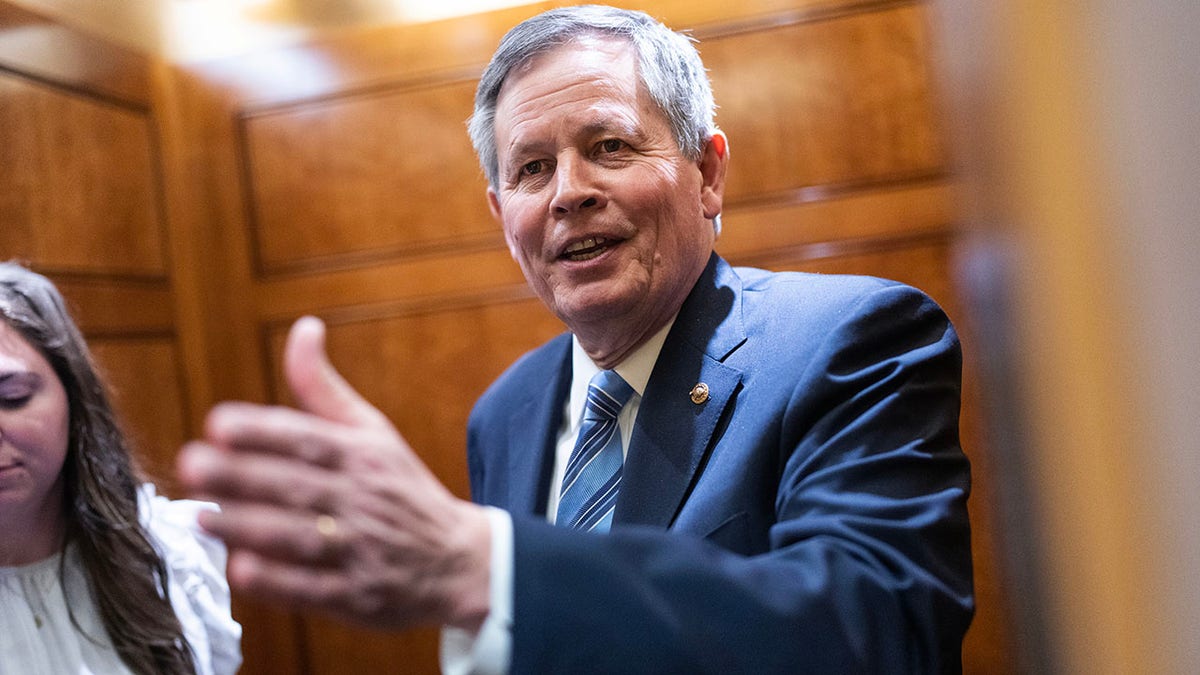
Sen. Steve Daines, R-Montana, plans to retire at the end of his term, opening up his seat in Big Sky Country as Republicans look to keep their grip in the upper chamber. (Tom Williams/CQ-Roll Call, Inc)
It’s a move fitting for Daines, given that he has become one of Washington’s savviest political operators and played a key role in clinching Republicans’ Senate majority while serving as National Republican Senatorial Committee chair during the 2024 election cycle.
«The way it happened was Senator Daines called me a few days before the filing deadline, and he said he wanted to retire, but he didn’t want to lose the seat and the Senate to the Democrats,» Alme said. «He said he’d only retire if he knew someone like me would step up and keep the seat in Republican hands.»
«So then, the morning of the filing deadline, he let me know that he would withdraw if I stepped up. So I resigned as U.S. attorney and entered the race, and now, with President Trump’s endorsement, we’re moving forward full speed with the election,» he continued.
Alme quickly racked up endorsements from President Donald Trump, Montana Gov. Greg Gianforte and his possible future colleague Sen. Tim Sheehy, R-Mont. It’s no surprise, considering Trump twice tapped Alme to serve as U.S. attorney in the Treasure State and that he previously served as Gianforte’s budget director.
Trump said on Truth Social that «if Kurt didn’t have the highest level of aptitude and talent, Steve would have remained exactly where he is.»
SCHUMER, JEFFRIES SUE TRUMP, ACCUSE HIM OF TRYING TO ‘RIG’ MAIL-IN VOTING
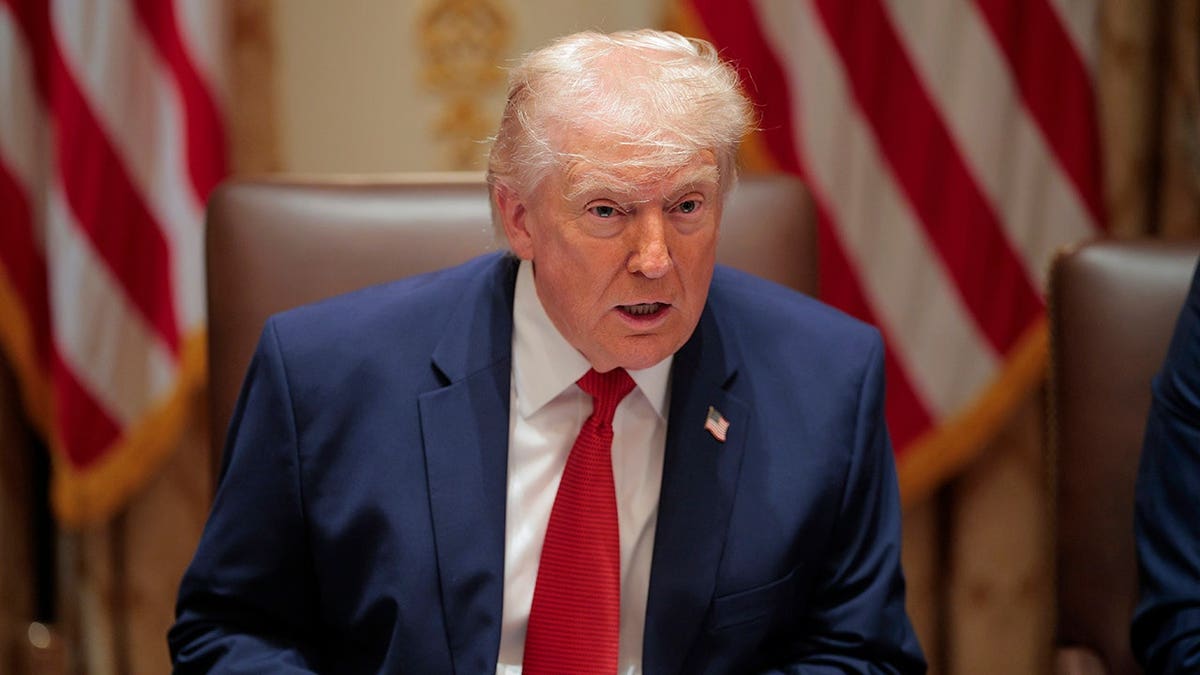
President Donald Trump credited his economic policies for the positive March jobs report. (Chip Somodevilla/Getty Images)
«But Kurt is exceptional, and I will be giving him, based on Steve’s strongest recommendation, my Complete and Total Endorsement,» Trump said.
Though Trump won Montana by nearly 20 points in 2024 and has consistently notched double-digit wins in his three bids for the White House, Alme’s ascension to the upper chamber isn’t guaranteed.
He’ll have to prevail in a three-way statewide contest against Bodnar, the independent, and the expected Democratic nominee, former Montana state Rep. Reilly Neill, who believes Daines’ exit will give her a boost.
«His stepping down opens the field for the United States Senate, and this is a good development for Montana,» Neill said.
CLICK HERE TO DOWNLOAD THE FOX NEWS APP
Still, Alme is leaning into his bona fides in his pitch to Montana voters, particularly when it comes to bringing back «fiscal discipline» and continuing the Trump administration’s crackdown on crime.
«I’ve got to go out and prove who I am, and I’m going to have to earn people’s votes,» Alme said.
«We think that the Republican platform — and certainly President Trump’s approach to governing — is a winner in Montana,» he continued. «And we think that if we stick to our conservative roots, we’re going to perform well against anyone.»
montana, senate, democrats senate, donald trump
INTERNACIONAL
Dura amenaza de Donald Trump: “Todo Irán podría ser eliminado en una noche y podría ser la de mañana”



Gimnasia (M) vs. Vélez Sarsfield: formaciones, hora y dónde ver por tv

Imagina que alguien te debe 170.000 dólares y los ‘pierde’ por accidente. Esto le ha pasado a un estudio de Japón y ya hay un claro sospechoso

La Libertad Avanza prepara un acto en Suipacha como puntapié inicial para disputarle PBA a Kicillof

Jornada financiera: las bolsas operaron con moderado optimismo y retrocedió el riesgo país

Jugada oficialista: Sturzenegger concurrirá al Senado a defender el proyecto de propiedad privada

Escándalo total en Gran Hermano: feroz cruce entre Andrea del Boca y Yanina Zilli por una polémica con Diego Maradona

La Armada sorteará 30 lugares en el buque que escoltará la salida de la Fragata Libertad: cómo anotarse

La nueva advertencia de Donald Trump a Irán: «El tiempo se acaba, quedan 48 horas antes del infierno»

Círculo rojo: intrigas en el gabinete, desgaste por el caso Adorni y movimientos inquietantes en el Poder Judicial

Créditos del Banco Nación: el Gobierno reveló que Pettovello echó a Massaccesi porque “mintió”

 INTERNACIONAL2 días ago
La nueva advertencia de Donald Trump a Irán: «El tiempo se acaba, quedan 48 horas antes del infierno»
- POLITICA2 días ago
Círculo rojo: intrigas en el gabinete, desgaste por el caso Adorni y movimientos inquietantes en el Poder Judicial
- POLITICA2 días ago
Créditos del Banco Nación: el Gobierno reveló que Pettovello echó a Massaccesi porque “mintió”