INTERNACIONAL
Trump pick for religious freedom envoy visits Holy Land, cites strong US-Israel bond

NEWYou can now listen to Fox News articles!
On his visit to Israel this week, Ambassador-Designate for International Religious Freedom Mark Walker said meeting families of hostages and survivors of Hamas captivity left him «overwhelmed,» reaffirming what he called the «spiritual and historic bond» between the United States and Israel.
Walker, a former Republican congressman and Baptist pastor from North Carolina, was nominated by President Donald Trump to serve as the nation’s top global envoy for religious liberty. He will officially assume the post once confirmed by the Senate, becoming the seventh American to hold the role since it was created by Congress in 1998.
His visit to Israel, he explained, was driven by both friendship and timing. «All these other historic landmark agreements are happening the same week we’re here,» Walker said. «It’s been amazing to see the excitement — literally banners hanging from buildings and parks thanking President Trump for his ongoing efforts and the strength he’s shown to drive the region toward peace.»
VANCE WARNS HAMAS AS GAZA PEACE PLAN’S CIVILIAN MILITARY COOPERATION CENTER OPENS
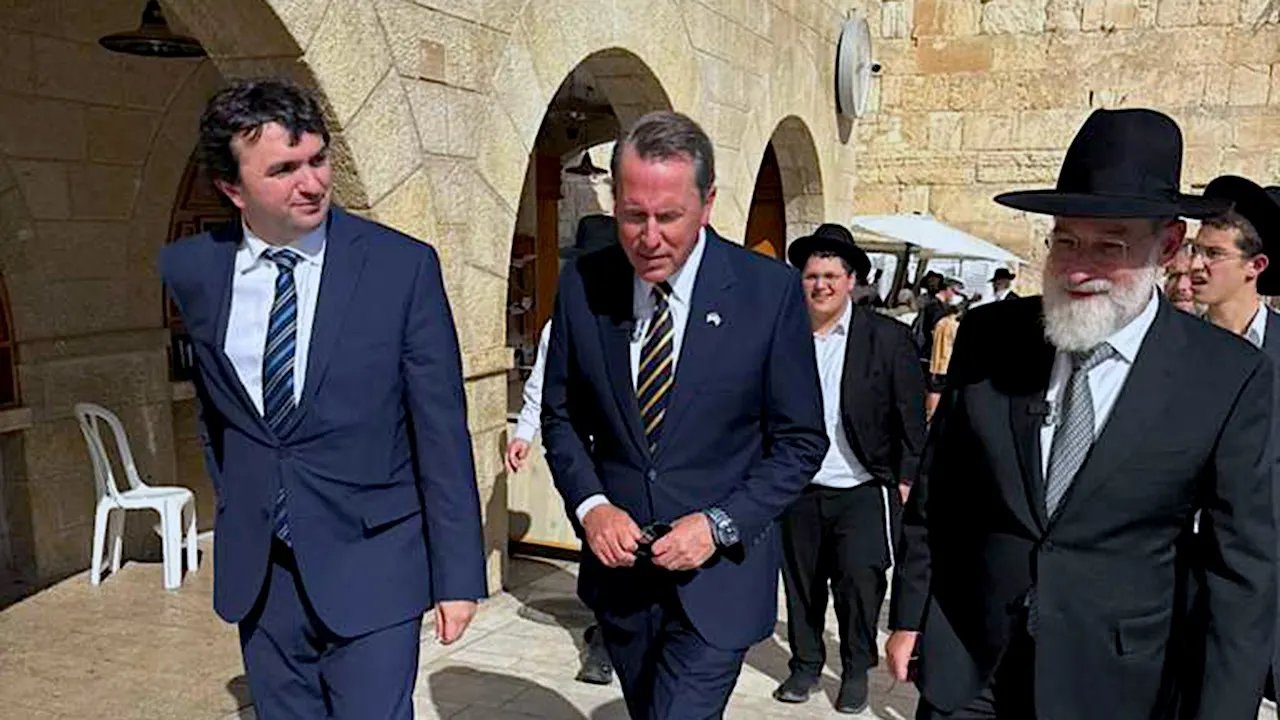
Ambassador-Designate Mark Walker, center, visits the Western Wall in Jerusalem, Israel, in October 2025. (Warren Cohn)
Walker said he was particularly moved by his meetings with hostage families.
«I was overwhelmed to spend some time with Keith Siegel, who endured 483 days of captivity and torture, and with Ruby Chen, whose son, Itay, was killed by Hamas — his body still not returned,» Walker said. «To hear the passion in Ruby’s voice, to see his perseverance, it’s overwhelming. In America, we’re watching this from a distance. But being here on the ground, seeing how the community has banded together to stand up for these hostages — alive or dead — has impacted me in a different manner.»
The experience, he said, deepened his appreciation for Israel’s resilience. «The people of Israel have stood resiliently in the face of evil,» he said. «Their faith and courage remind the world what strength looks like.»
With U.S. officials visiting Israel to monitor the fragile ceasefire, Walker said he remains confident in the administration’s leadership.
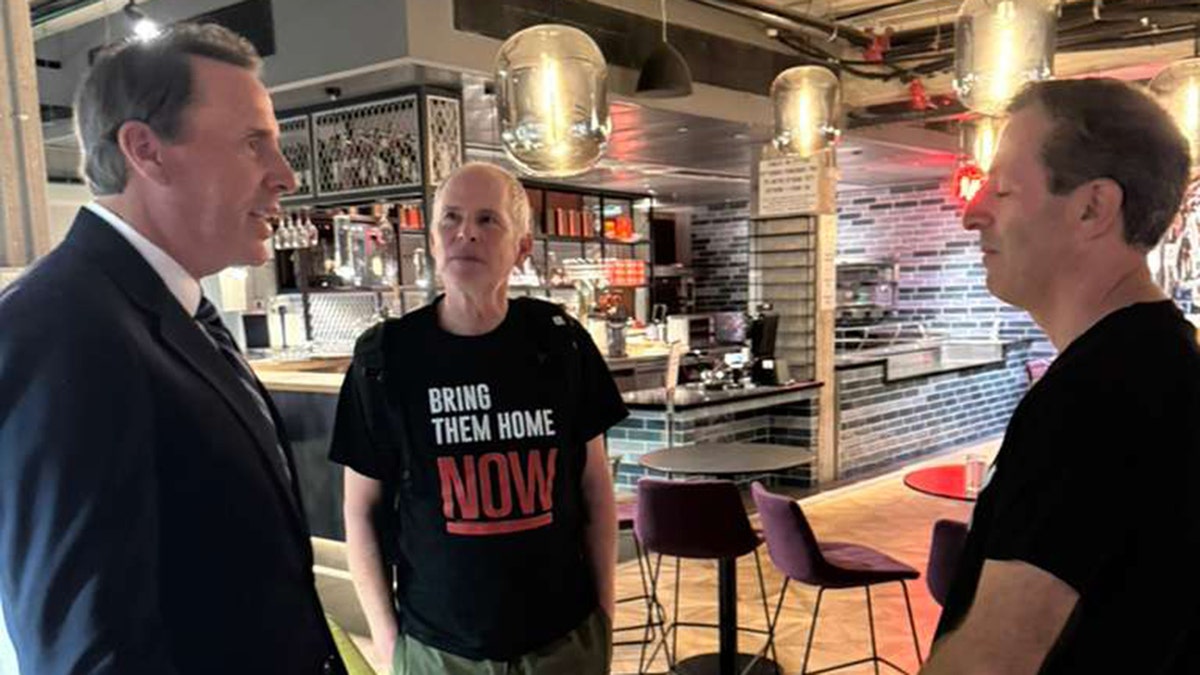
Ambassador-Designate Mark Walker for religious freedom with freed hostage Keith Siegel and Rubi Chen, father of hostage Itay Chen. (Warren Cohn)
ISRAEL IDENTIFIES 2 HOSTAGES RETURNED FROM GAZA AS RESIDENTS OF SAME KIBBUTZ
«I have no confidence in Hamas based on their history,» he said. «But I have great confidence in President Trump and what he’s doing. He’s committed to peace and showing it with his actions — sending Vice President Vance, Jared Kushner and Steve Witkoff here this week.»
He also praised Secretary of State Marco Rubio for advancing the administration’s diplomatic agenda. «This isn’t a photo opportunity,» Walker said. «It’s a real plan for long-term stability.»
When asked how he views Israel’s importance, Walker reflected on his years in Congress.
«I think historically, we’ve had a long-standing relationship of supporting each other through times of peril as well as times of success,» he said. «Certainly, military and business relationships, but from a spiritual standpoint, America was founded on Judeo-Christian principles.»
He added, «When you sit in the House chamber where President Trump gives the State of the Union, there are 22 or 23 philosophers — great men of genius — depicted above. But there’s only one historical figure looking directly at the speaker’s rostrum, and that’s Moses. That tells you a lot about the spiritual connection that binds our two countries.»
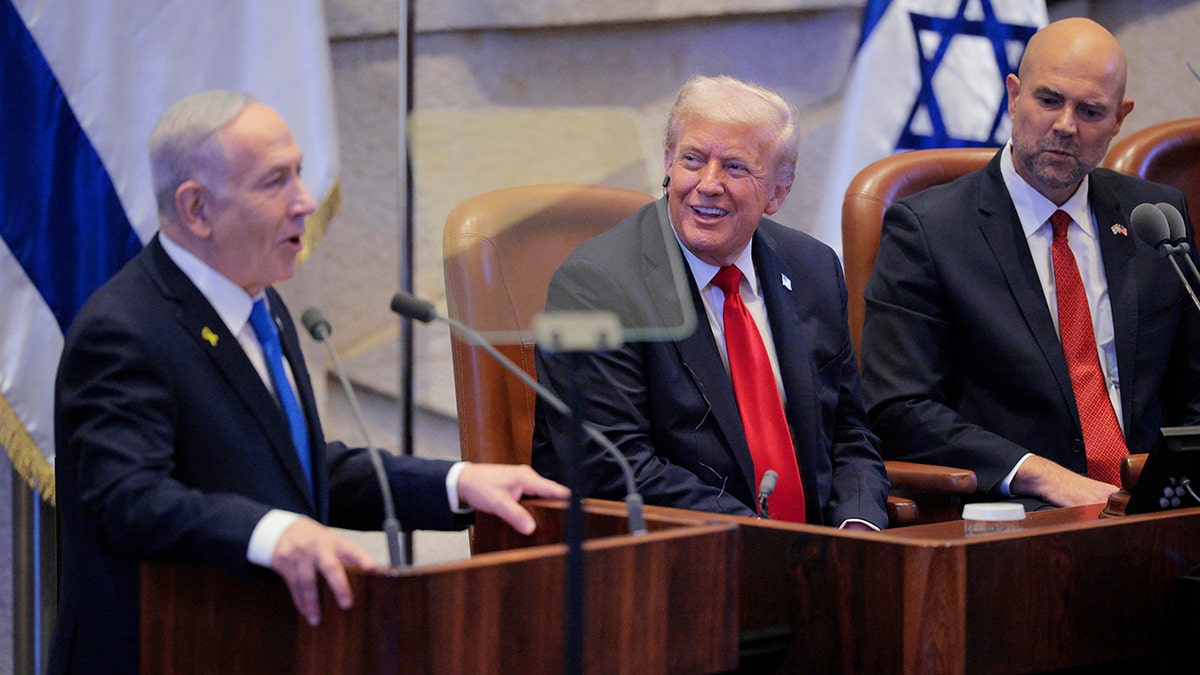
Israeli Prime Minister Benjamin Netanyahu addresses the Knesset as President Donald Trump and Amir Ohana, speaker of the Israeli Knesset, look on at the Knesset, Israel’s parliament, Monday, Oct. 13, 2025 in Jerusalem. (Chip Somodevilla/Pool via AP)
When asked about criticism from some within the evangelical community regarding its close alignment with Israel, Walker said he welcomes open discussion but rejects efforts to undermine the partnership. «I don’t have a problem with anyone questioning — we ought to be able to defend those relationships,» he said. «But when you see some of the talk lately that aims to degrade that relationship, maybe for personal gain or attention, I do have a problem with it, and I think it needs to be condemned.»
He added that such views are far from mainstream. «The evangelical communities that I’m part of — and I happen to be a member of the largest Protestant organization in the United States — don’t have those issues,» he said. «There may be some who are loosely affiliated and use that kind of rhetoric, but the overwhelming majority of evangelicals in America applaud and encourage the relationship we have with Israel.»
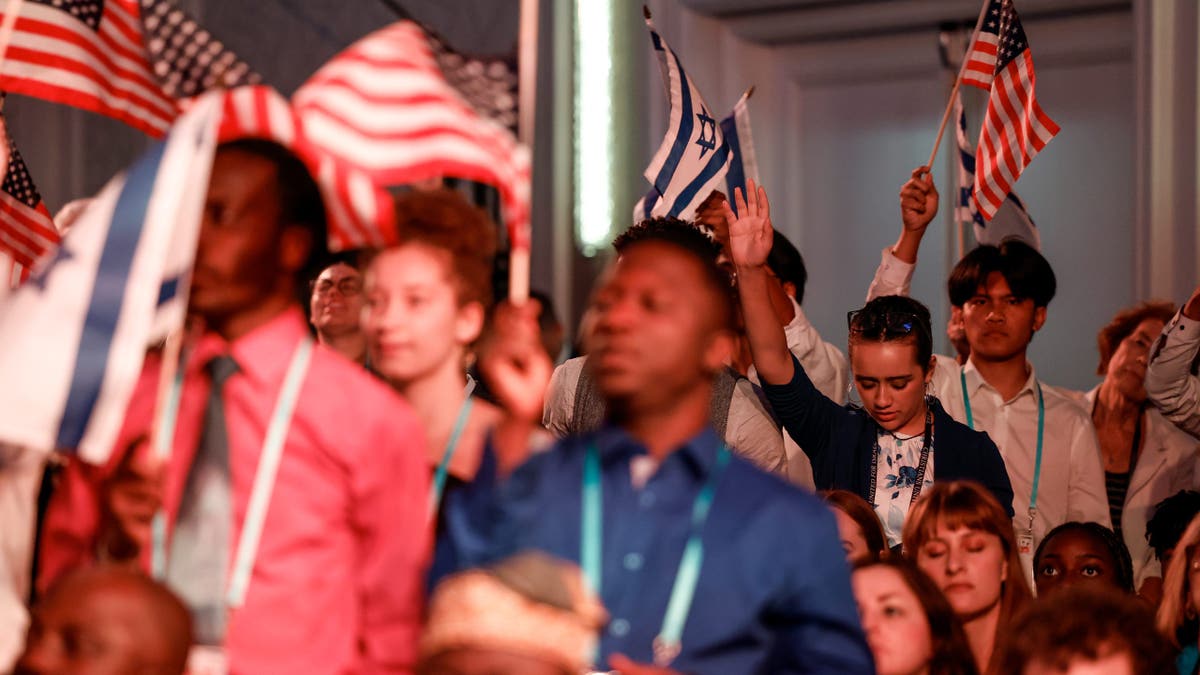
Attendees wave Israel and the United States flags at the Christians United for Israel (CUFI) summit on July 17, 2023 in Arlington, Virginia. GOP presidential hopefuls for 2024 are making their cases before the pro-Israeli group. (Photo by Anna Moneymaker/Getty Images)
On his new role, Walker said the mission was deeply personal.
«When President Trump reached out and asked us to serve as the ambassador for International Religious Freedom — that’s a global position — it was humbling,» he said. «The responsibility is to advocate for people of all faiths, especially in places where they’re persecuted or punished by blasphemy laws.»
EVANGELICAL LEADERS PRAISE TRUMP’S CONTINUED SUPPORT FOR ISRAEL AMID WAR WITH IRAN
Walker said he is already building relationships with governments and faith leaders to prepare for his official role advising both President Trump and Secretary Rubio.
«Our job is to engage, expose and eradicate atrocities — whether it’s Christians in Nigeria being massacred, Druze in Syria targeted or rising antisemitic behavior worldwide,» he said. «The United States must remain the beacon of hope for religious freedom. We’re the only country that has it written into law.»
He added that Israel’s example of tolerance stands out in the Middle East. «Christians should be able to live peaceably, share their faith and worship without fear,» he said. «The fact that Israel allows that in a region where so many others don’t is meaningful.»
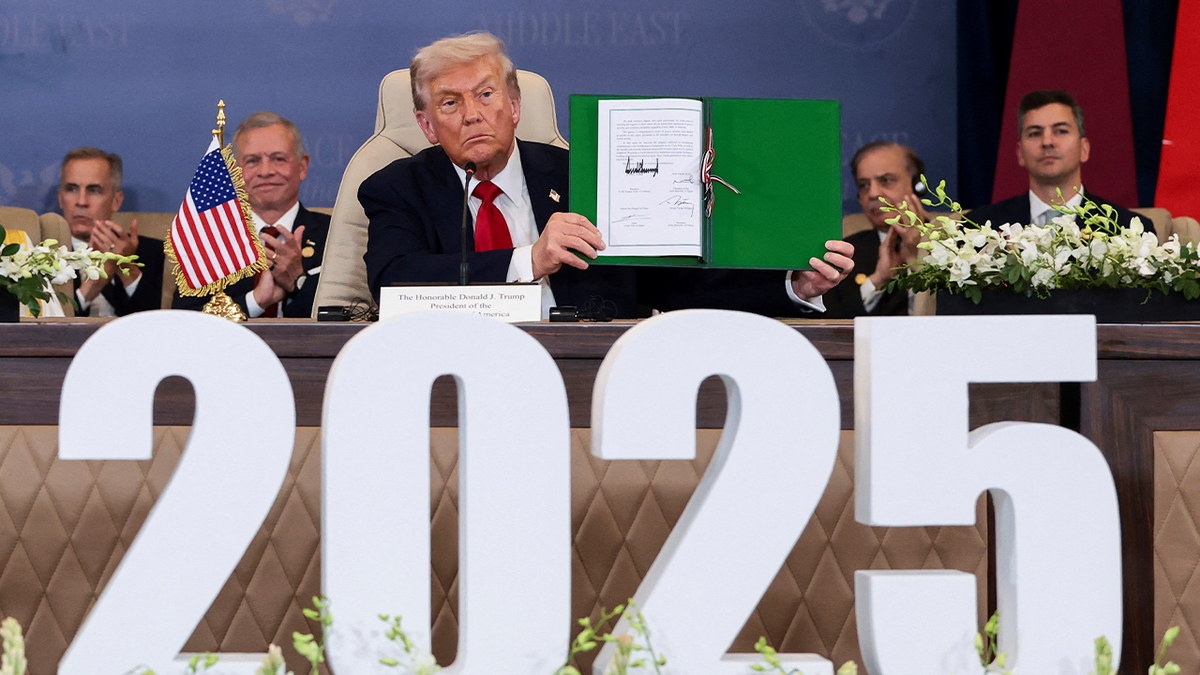
U.S. President Donald Trump holds the signed agreement of the first phase of the Gaza ceasefire between Israel and Hamas, in Sharm El-Sheikh, Egypt, October 13, 2025. (Reuters)
Walker said he plans to «push back wherever persecution exists — whether through diplomacy or by urging governments to repeal blasphemy and anti-conversion laws.»
CLICK HERE TO GET THE FOX NEWS APP
He concluded, «President Trump is the only president in American history who called a global conference on religious liberty at the United Nations,» Walker said. «That sent a message across the world — that faith matters, that freedom matters. What we see here in Israel is that same spirit of courage, and it reminds us why this partnership, rooted in faith and freedom, must endure.»
israel,donald trump,conflicts,terrorism,middle east,anti semitism








En solo ocho años se hicieron multimillonarias unas 350 personas
Las rebajas de impuestos de Trump incrementaron la venta de aviones privados y las ganancias corporativas
La pandemia fue un factor multiplicador
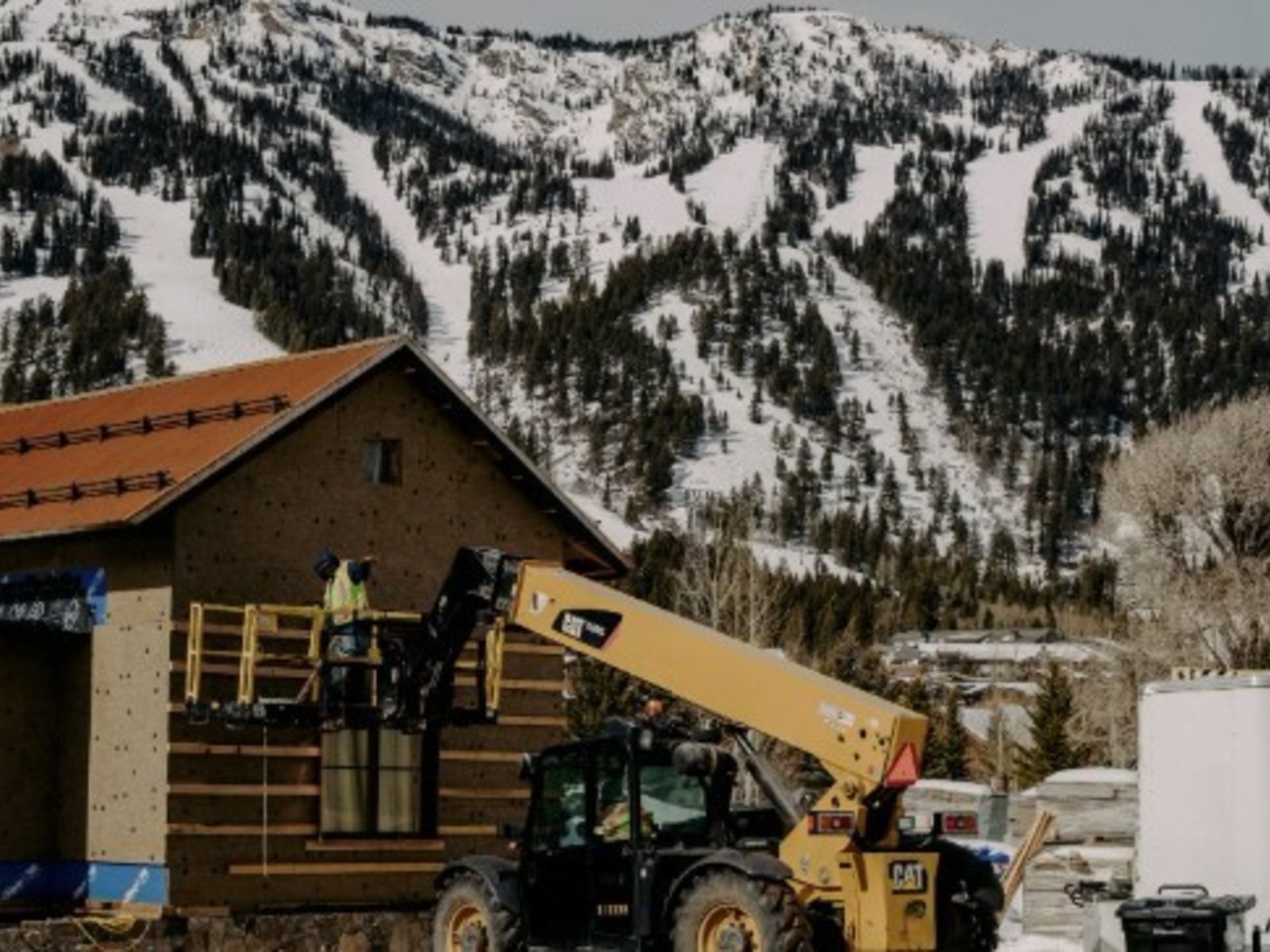
Enorme riqueza en el condado de Teton
En el condado de Teton el contrato social se está deteriorando
INTERNACIONAL
Israel strikes slain Iranian Supreme Leader Ayatollah Ali Khamenei’s underground military bunker
NEWYou can now listen to Fox News articles!
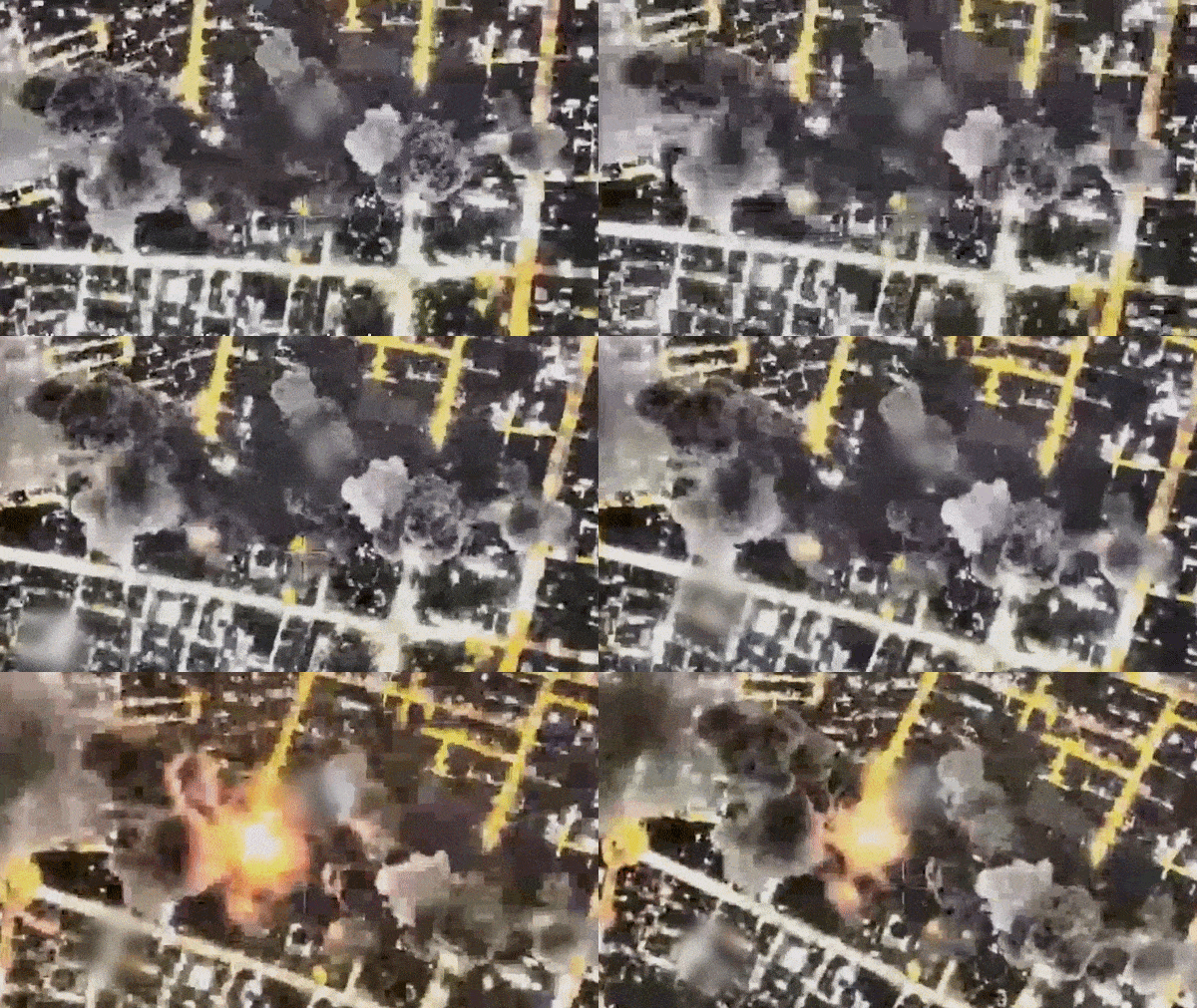
The Israel Defense Forces (IDF) on Friday announced that it had dismantled former Iranian Supreme Leader Ayatollah Ali Khamenei’s underground bunker in Tehran.
«The underground compound was created by the regime as a base for advancing military activities and its extremist ideologies against the State of Israel and the Western world,» the IDF said. «It spanned multiple streets in the heart of Tehran and contained numerous entrances and meeting rooms for senior members of the Iranian terrorist regime.»
Israel later released an illustrated video which showed a number of entry points throughout Tehran with tunnels leading to the underground bunker.
The Israel Defense Forces struck former Iranian Supreme Leader Ayatollah Ali Khamenei’s bunker in Tehran. (IDF)
The fortified compound was directly under where Khamenei and other regime leaders were situated on Saturday morning when almost 50 of them were killed in under 50 seconds during the launch of Operation Epic Fury, a senior Israeli official told Fox News.
IRAN POSTPONES TEHRAN FAREWELL CEREMONY FOR KHAMENEI WHERE LARGE CROWDS WERE EXPECTED TO GATHER
The official said that Khamenei spent millions of dollars and a number of years building the bunker, which he did not use on the morning of the strike. Sources familiar with the intelligence say that Khamenei believed no one had the guts to strike him.
The senior Israeli official told Fox News that Khamenei’s confidence was partially thanks to an Israeli-American deception plan that included messaging, signals and public statements by President Donald Trump that suggested nothing immediate was coming. Top IDF commanders even went home on Friday night, hours before the strike, in an attempt to deceive Iranian leadership.
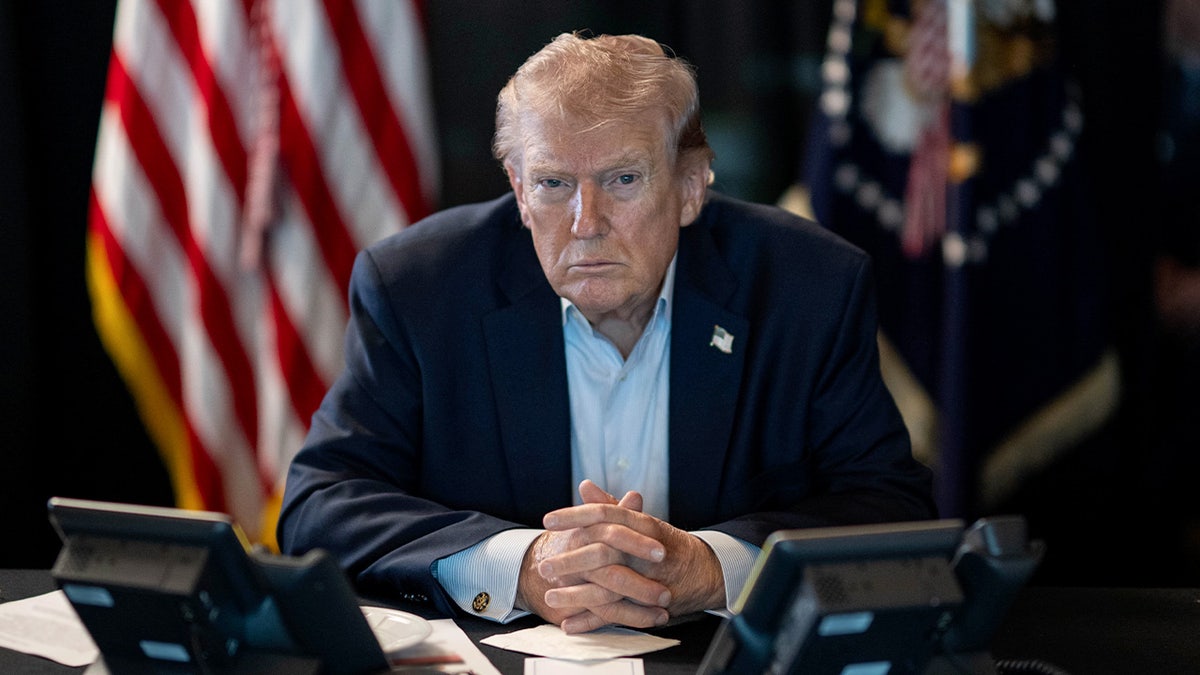
President Donald Trump confirmed the U.S. launched strikes on Iran on Saturday, Feb. 28, 2026. (The White House via X Account/Anadolu via Getty Images)
CLICK HERE TO DOWNLOAD THE FOX NEWS APP
Khamenei was killed on the first day of Operation Epic Fury after ruling the Islamic Republic for more than 30 years. During that time, he oversaw harsh internal crackdowns, including the most recent one in January, which targeted Iranian protesters, as well as international confrontations.
Fox News’ Trey Yingst and Fox News Digital’s Efrat Lachter and Ruth Marks Eglash contributed to this report.
Related Article
war with iran,iran,world,israel,middle east
INTERNACIONAL
Biden says ‘I’m a h— of a lot smarter than most of you’ to crowd at Jesse Jackson’s funeral
NEWYou can now listen to Fox News articles!
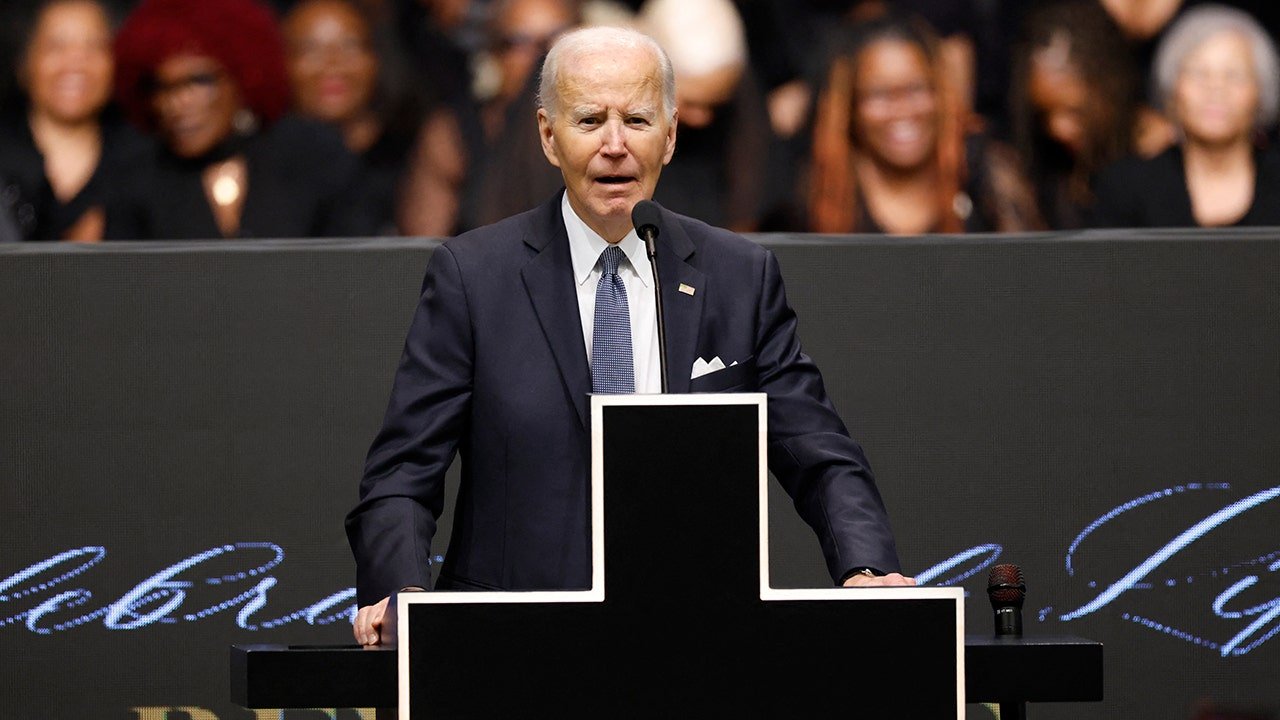
Former President Joe Biden told mourners at Rev. Jesse Jackson’s memorial service Friday that he is «a h— of a lot smarter than most of you,» a pointed remark that stood out during his tribute to the late civil rights leader.
Biden made the comment while recounting how he was mocked as a child for his stutter and how speech impediments are often mistaken for a lack of intelligence.
«If I told you I had a cleft palate or clubfoot, none of you would have laughed,» Biden said. «But it’s OK to laugh at stuttering. … It’s the one place where people think you’re stupid.
«Oh, really? I’m a h— of a lot smarter than most of you,» he added, before quickly pivoting back to his broader point. «But all kidding aside, it makes you feel really small.»
Former President Joe Biden speaks at a public memorial service to celebrate the life of civil rights activist Jesse Jackson in Chicago March 6, 2026 (Kamil Krzaczynski/AFP via Getty Images)
Biden made the remark during a memorial service in Chicago that brought together prominent Democratic leaders and civil rights figures to honor Jackson’s decades-long political influence.
Former presidents Barack Obama and Bill Clinton attended the service along with former Secretary of State Hillary Clinton, former Vice President Kamala Harris and Rev. Al Sharpton.
The event was held at the 10,000-seat House of Hope arena, where hundreds gathered to celebrate Jackson’s life and legacy.
VANCE, HARRIS, OBAMA ISSUE TRIBUTES TO REV JESSE JACKSON
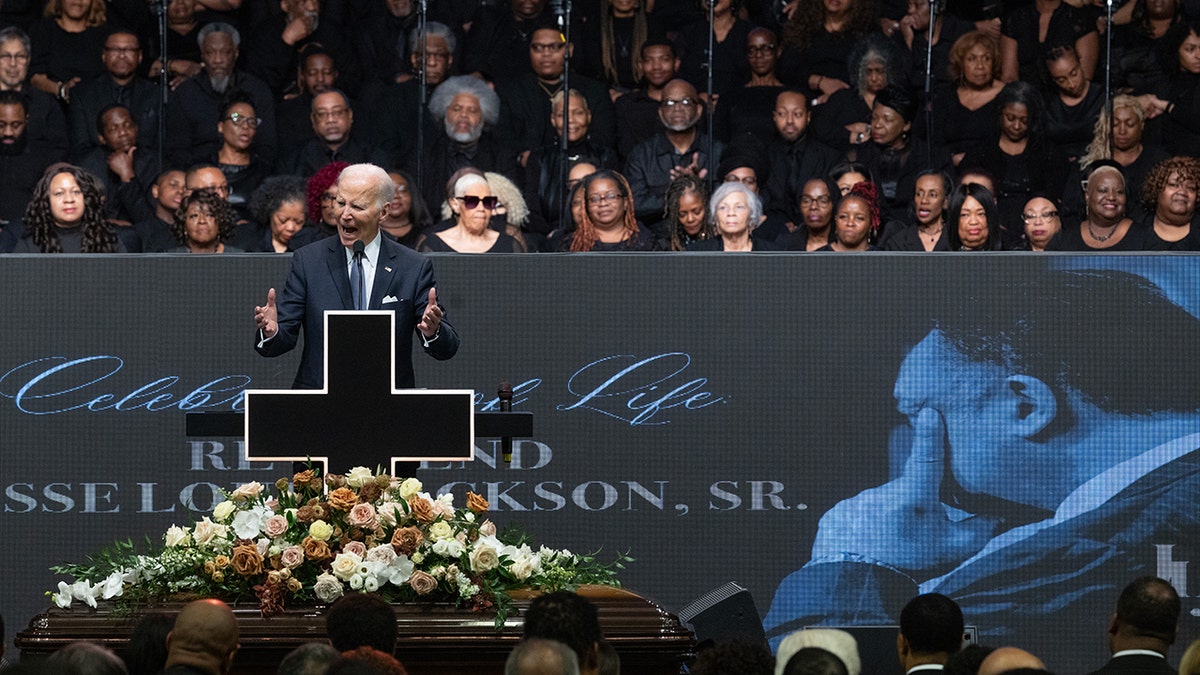
Former President Joe Biden speaks at a celebration of life service for civil rights leader Jesse Jackson Sr. at the House of Hope arena March 6, 2026, in Chicago. Jackson died Feb. 17 after a lengthy battle with progressive supranuclear palsy. (Scott Olson/Getty Images)
Jackson, who died at age 84, rose to prominence as a close associate of Martin Luther King Jr. during the Civil Rights Movement. He later founded the Rainbow PUSH Coalition and mounted two Democratic presidential campaigns in 1984 and 1988 that expanded Black voter participation and reshaped the party’s electoral coalition.
Throughout the service, speakers praised Jackson’s ability to build political alliances and elevate issues affecting marginalized communities.
Biden, who has frequently spoken about working to overcome his childhood stutter, framed his remarks around resilience and the lasting impact of being ridiculed as a young person.
TRUMP LAUDS ‘PIECE OF WORK’ JESSE JACKSON IN ‘SOLD-OUT’ BLACK HISTORY MONTH EVENT
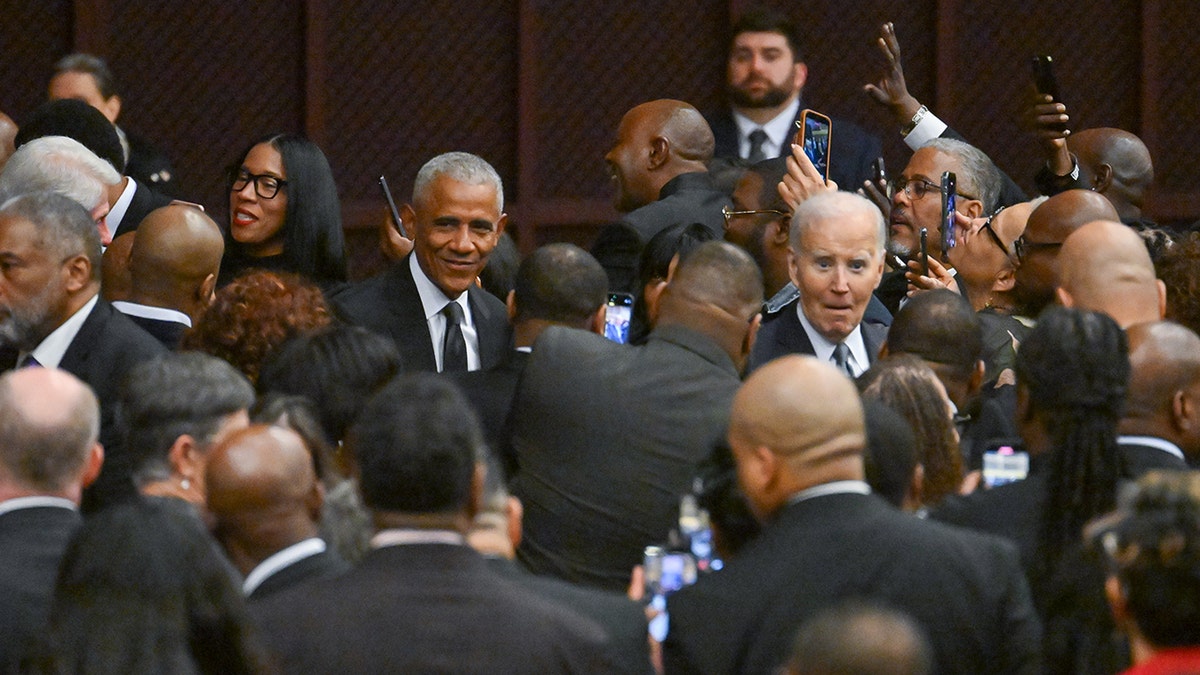
Barack Obama and Joe Biden at Reverend Jesse L. Jackson’s Peoples Celebration of Life and Homegoing Services at the House of Hope arena March 6, 2026, in Chicago. (Earl Gibson III/Deadline via Getty Images)
Later on in his remarks, Biden asserted that «the continent of Africa is going to be the largest continent in the world» to the assembled mourners.
«I remember telling Jesse that I knew I knew a guy, in South Africa,» former President Biden recalled. «I was going to go see name is Nelson Mandela. And, I’m Jesse saying, how are you going? You guys actually see him, by the way? You know, the continent of Africa is going to be the largest continent in the world in terms of population of the year 2050, the largest in the entire world. Watch, man. Watch.»
His «smarter than most of you» line was quickly added to a growing list of out-of-context gaffes for the former president, and social media users weighed in online.
Under one repost of the viral moment from user Libs of TikTok, one commenter wrote, «That’s a strange line to deliver at a memorial service.»
Another quipped, «Never ending comedy from this guy. So happy he’s back in public.»
CLICK HERE TO DOWNLOAD THE FOX NEWS APP
Outside of Biden’s remarks, the memorial largely focused on Jackson’s legacy as a civil rights leader who helped shape the modern Democratic Party and broaden political participation in the United States.
Fox News Digital’s Greg Norman-Diamond, Bradford Betz, and Patrick McGovern contributed to this reporting.
Related Article
joe biden,biden brink,kamala harris,barack obama,hillary clinton

Javier Milei llegó a Miami para participar de la cumbre de mandatarios de América Latina organizada por Trump

Quebró Garbarino: qué pasará con los electrodomésticos que le quedaron sin vender

Atlético Tucumán vs. Racing: formaciones, hora y dónde ver por tv

Los signos del horóscopo con mayor intensidad y que enfrentarán verdades fuertes en marzo, según Jimena La Torre: «Aries, Tauro, Géminis, Cáncer y Leo»

Vacantes judiciales, reformas pendientes y tensiones con los tribunales: los desafíos que enfrenta Mahiques en Justicia

Cinco conclusiones sobre el boom de multimillonarios en Estados Unidos

El hijo adoptivo de José María Muscari tomó una tajante decisión de vida a los 18 años

Petri y Villarruel se cruzaron por un gesto en el Congreso: de “golpista” a “te conozco por el trencito de la alegría”

¡Interna total! Pablo Layus explotó y blanqueó quiénes son los que arruinan Intrusos: «Te matan»

Ángel de Brito contó la oscura verdad de Jorge Rial para no ir a LAM: “Es un…”

 CHIMENTOS2 días ago
El hijo adoptivo de José María Muscari tomó una tajante decisión de vida a los 18 años
- CHIMENTOS3 días ago
¡Interna total! Pablo Layus explotó y blanqueó quiénes son los que arruinan Intrusos: «Te matan»
- CHIMENTOS2 días ago
El desafortunado comentario de Yanina Zilli contra Daniela de Lucía, tras la muerte de su padre: “Jugamos con lo personal”