INTERNACIONAL
Trump’s agenda, DOGE cuts loom large in Virginia special election to fill vacant House seat


NEWYou can now listen to Fox News articles!
FAIRFAX, VA – He’s not on the ballot, but President Donald Trump is smack in the middle of Tuesday’s special congressional election in the northern Virginia suburbs of Washington, D.C.
The federal jobs cuts implemented by Trump’s Department of Government Efficiency (DOGE), crime and immigration, transgender policies, and even the push to release the Justice Department’s files on the late convicted sex-offender Jeffrey Epstein are also in the spotlight as voters cast ballots in the Fairfax County anchored district.
James Walkinshaw, the Democratic Party nominee, told Fox News Digital the sweeping and controversial agenda Trump pushed during his first eight months back in the White House will have a «real impact» on the special election in Virginia’s left-leaning 11th Congressional District.
Republican nominee Stewart Whitson also says Trump’s in the campaign spotlight because of a «lot of the great policies that he’s been championing.»
TRUMP NOT ON BALLOT BUT FRONT-AND-CENTER IN 2025 ELECTIONS
The winner will succeed the late longtime Democratic Rep. Gerry Connolly, who died in June after a battle with cancer.
The Republicans currently control the House 219-212, with three seats controlled by Democrats vacant, as well as one held by the GOP. And if Walkinshaw tops Whitson in a district Republicans haven’t won in nearly two decades, it will further narrow the GOP’s fragile House majority.
In a district that’s home to tens of thousands of federal workers and contractors, many voters have been affected by the DOGE implemented job cuts and layoffs.
FOUR KEY SENATE SEATS THE GOP AIMS TO FLIP IN NEXT YEAR’S MIDTERM ELECTIONS
«Folks in Northern Virginia and Fairfax are feeling the impact of the Trump policies. And I like to say we’re kind of on the leading edge of the Trump economy here. Everybody in Fairfax knows someone, probably someone on their street, maybe the parent of their kid’s soccer team, who has lost their job because of DOGE or the Trump policies,» Walkinshaw said on Election Day eve.
Walkinshaw, a Fairfax County Board of Supervisors member who previously served as Connolly’s chief of staff, argued that «if the Trump policies continue, tariffs, the so-called big, beautiful bill, that’s going to be the case all around the country. So I think we’re on the leading edge of that. And I think voters tomorrow are going to send a statement about that.»
Campaign signs for Republican Stewart Whitson and Democrat James Walkinshaw, are seen on Sept. 8, 2025, in Fairfax County, Virginia, on the eve of a special election in Virginia’s 11th Congressional District. (Paul Steinhauser – Fox News )
Whitson, an Army veteran and former FBI special agent who oversees federal affairs for a conservative think tank, told Fox News digital that «the people in our district who have lost their job or who are worried about losing their job, they don’t need empathy. They need solutions.»
He said Walkinshaw is «claiming he’s going to fight President Trump and fight the administration. And my pitch to voters in our district is: is that going to help? Is that going to help improve the situation? The answer is no.»
«We need someone to represent the people in our district who can work with any administration, whether it’s Republican or Democrat,» Whitson emphasized.
Pointing to federal workers and contractors who lost their jobs, he said, «I want to find a way to get them back in. I also want to find other economic opportunities for them as well.»
While Trump isn’t very popular in the district — the president won just 31% of the vote in his White House re-election last year – Whitson said that Trump’s polices «center on… common sense.»
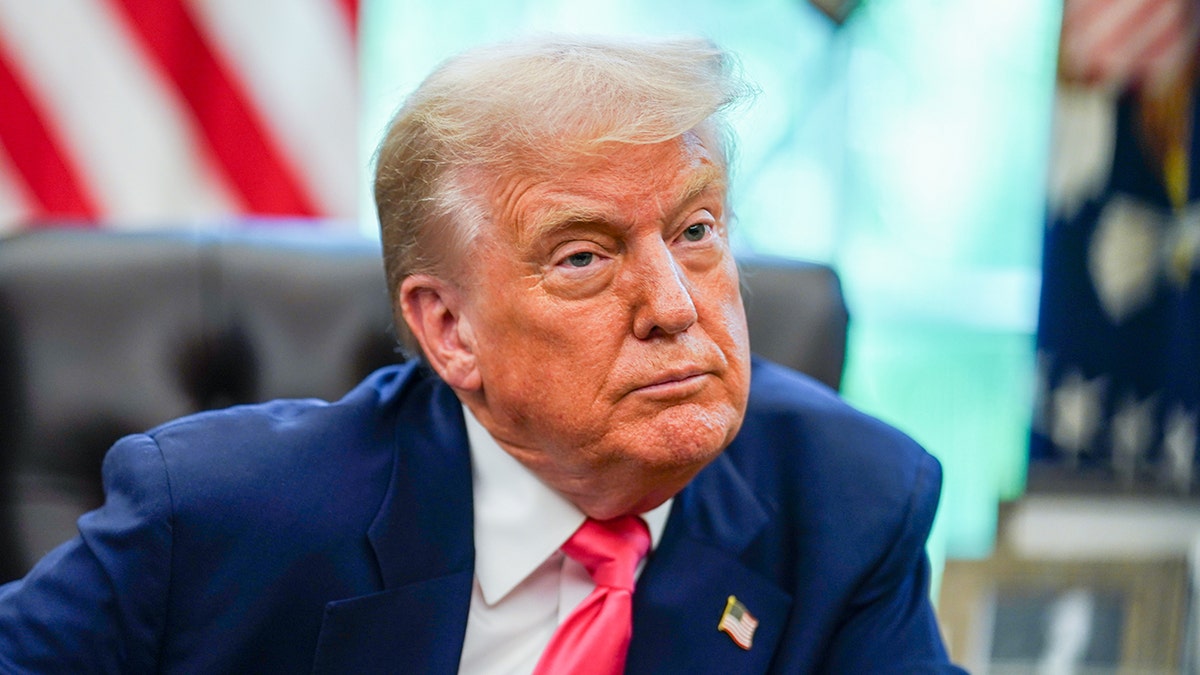
President Donald Trump, seen in the Oval Office of the White House in Washington, D.C., on Thursday, Aug. 14, 2025, isn’t on the ballot in Tuesday’s special congressional election in Virginia, but his agenda is dominating discussions on the campaign trail. (Will Oliver/EPA/Bloomberg via Getty Images)
And taking aim at Democrats, he argued, «People in our district are realizing that the radical left has just pushed so far away from common sense… the radical policies they’re pushing on our kids behind closed doors, the reckless soft on crime policies that are making us less safe. These are issues that are important to our voters.»
Whitson, pointing to the ongoing battle over allowing transgender children to use public school bathrooms in some Fairfax County schools, targeted Walkinshaw.
«My opponent believes it is a civil right for men who identify as girls or women to go into our girls’ locker rooms and watch them change. I think this is all backwards,» Whitson charged. «I think it is a civil right for girls and women when they see a female sign on a bathroom that they know they can go in there and be safe. And again, this just comes back to common sense. I’m a father with five kids. Three of those kids are daughters.»
Walkinshaw charged that Whitson has «been really obsessed with how maybe 1% of the kids in our schools use the bathrooms, and what I hear from folks in our community, and what I’m focused on is how 100% of our kids can succeed in the classrooms. So the threats to pull federal funding, the dismantling of the Department of Education, threatens the performance of our kids in the classrooms, and that’s what I’m focused on.»
Whitson has also been trying to link Walkinshaw to Zohran Mamdani, the socialist candidate who rocked the political world in June by winning the Democratic Party mayoral nomination in New York City.
Listing Walkinshaw’s record and his proposals, Whitson charged, «This is someone who has a history of supporting a lot of the exact same type of policies that Mamdani is supporting. And so I’ll let voters… draw the comparison.»
Asked about the comparison, Walkinshaw said during his four months on the campaign trail this summer, «not a single voter has asked me about the New York mayor’s election. I don’t care what happens in the New York mayor’s election. I care what happens to folks right here in the 11th District.»
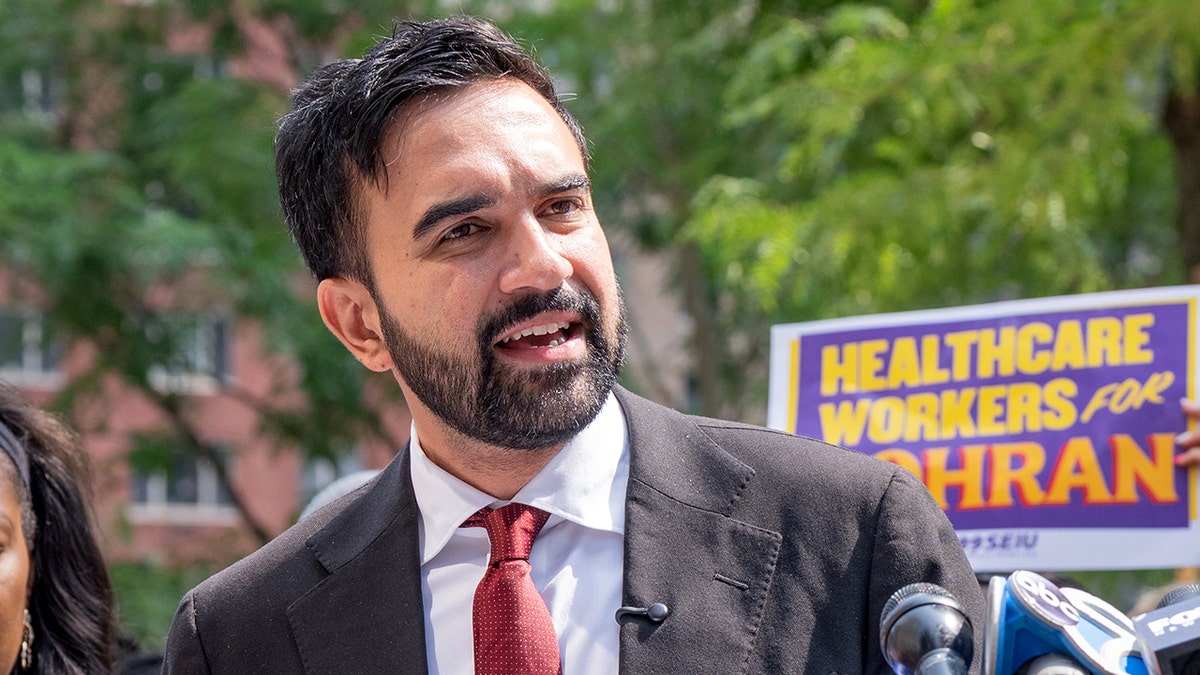
Republican congressional candidate Stewart Whitson is linking Democrat James Walkinshaw, his opponent in Tuesday’s special election, to Democratic Party mayoral nominee Zohran Mamdani of New York City (pictured). (Lev Radin/Pacific Press/LightRocket via Getty Images)
But what Walkinshaw says he has heard about on the campaign trail is the push by both Democrats and Republicans for the Justice Department to release files related to the federal investigation of Epstein, who died in prison six years ago while awaiting federal charges related to sex trafficking.
«One of these things that I hear from Democrats, independents and a lot of Republicans and conservatives who believed Donald Trump when he said there was a cover-up of the files during the Biden administration. They took him at his word, and now they’re wondering if he was lying. So yeah, it comes up, and it comes up across the political spectrum,» Walkinshaw said.
And if he wins Tuesday’s election, Walkinshaw said he will immediately sign a discharge petition by Democratic Rep. Ro Khanna of California and Republican Rep. Thomas Massie of Kentucky. The petition, which is currently just a few votes shy of passing, calls on the House to vote to urge the Justice Department to release the files.
«I absolutely will sign it,» he said. «I think the American people deserve to know. I want to know what the Trump administration, if anything, is covering up. And right now, the discharge petition is the vehicle to do that.»
Whitson argued that «my opponent’s really late to the game on this,» and that «months ago I called for a complete disclosure of all the records from Epstein files.»
CLICK HERE TO GET THE FOX NEWS APP
Whitson pointed to his years as a federal law enforcement officer in declassifying documents, and charged that Walkinshaw was using the issue as a political weapon.
«How long has this case been going on, and now he finally wants to reach on those records. And so what does that mean? It means he doesn’t care about these victims at all. He’s using the pain and the suffering that they experience to try to get political gain,» he argued.
Fox News’ Kiera McDonald contributed to this report.
donald trump,democratic party,republicans elections,house of representatives,elections,2025 2026 elections coverage,virginia,doge,jeffrey epstein,zohran mamdani




INTERNACIONAL
Entre los misiles de Irán y los ataques de Hezbollah: cómo se vive en el kibutz Hanita, el territorio israelí que limita con Líbano



NEWYou can now listen to Fox News articles!
Russia has turned to its so-called «shadow fleet» to carry out a roughly $29.3 million «semi-dark» ship-to-ship oil transfer in the Gulf of Oman, deliberately sidestepping Western sanctions, according to reports.
Maritime intelligence firm Windward AI reported on March 8 that the Russian-flagged tanker M/V TRUST, a vessel already blacklisted by the U.S., European Union and United Kingdom, carried out a «high-probability» covert crude transfer in Omani territorial waters.
Based on an estimated price of about $90 per barrel on March 10, the cargo involved in the transfer was valued at roughly $29.3 million.
«The timing of the operation coincided with heightened military escalation in the Gulf following Operation Epic Fury, suggesting the vessel exploited regional instability to conduct the transfer under reduced scrutiny,» Windward said.
HORMUZ ERUPTS: ATTACKS, GPS JAMMING, HOUTHI THREATS ROCK STRAIT AMID US-ISRAELI STRIKES
A crude oil tanker sits anchored in Muscat during the U.S.-Israeli conflict with Iran in Muscat, Oman, March 6, 2026. (Reuters/Benoit Tessier)
The tanker had previously loaded approximately 325,000 barrels of Russian crude oil at the Russian port of Ust-Luga, Windward said.
Windward described the operation as a «semi-dark» activity, meaning one of the vessels transmitted its automatic identification system (AIS) signal while the other did not.
According to the firm, the M/V TRUST had anchored and switched off its AIS transponder while holding what it called a «prolonged stationary meeting» with another tanker, likely producing an anonymous vessel to transfer cargo process.
TRUMP SAYS IT’S AN ‘HONOR’ TO KEEP STRAIT OF HORMUZ OPEN FOR CHINA AND OTHER COUNTRIES
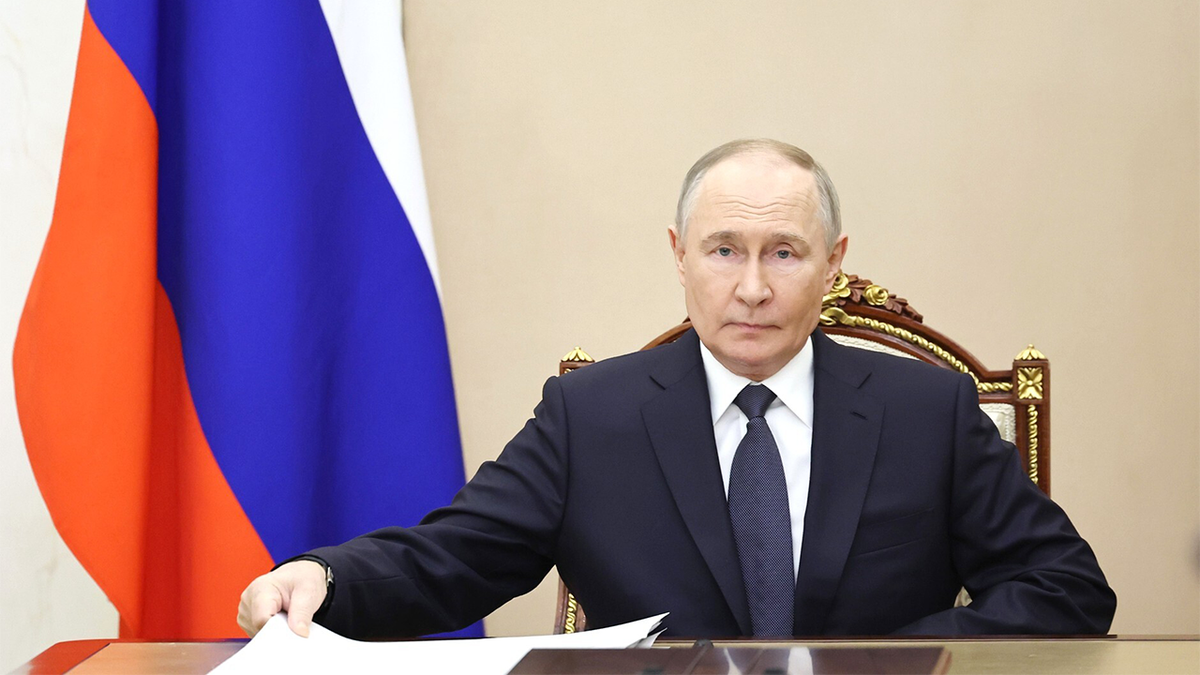
Russian President Vladimir Putin meets the Russian delegation and some officials ahead of the Istanbul talks May 14, 2025, in Moscow, Russia. (Kremlin Press Office/Handout/Anadolu via Getty Images)
A fully «dark» meeting, Windward said, typically involves two vessels not transmitting, but, in this case, only one ship appeared to be broadcasting, creating partial visibility that still complicates tracking efforts.
Such tactics are part of a broader strategy by Moscow to continue exporting crude despite sweeping Western sanctions imposed after Russia’s invasion of Ukraine.
The semi-dark oil transfer comes amid heightened volatility in global energy markets tied to the escalating conflict in the Middle East and limited traffic in the Strait of Hormuz given the joint U.S.-Israeli military action against Iran.
US SIGNALS READINESS TO ESCORT TANKERS THROUGH HORMUZ AS TRAFFIC THINS BUT NO MISSION LAUNCHED

A navy vessel sails in the Strait of Hormuz, a vital waterway through which much of the world’s oil and gas passes, March 1, 2026. (Sahar Al Attar/AFP via Getty Images)
Oil topped $100 a barrel March 9 as traders priced in the risk that the conflict was disrupting flows through the Strait, which carries about a fifth of global supply, CNBC reported.
Russian President Vladimir Putin said on March 9 that Russia, the world’s second-largest oil exporter and holder of the largest natural gas reserves, stands ready to resume long-term energy cooperation with European customers if they choose to return, Reuters reported.
CLICK HERE TO DOWNLOAD THE FOX NEWS APP
Meanwhile, Secretary of War Pete Hegseth said Tuesday that Russia «should not be involved» in the escalating conflict between the U.S., Israel and Iran.
His comments followed reports suggesting Moscow may be providing intelligence support to Tehran, though the Kremlin has not publicly confirmed the claims.
On Russia’s ship-to-ship semi-dark cargo transfer amid the ongoing conflict, Windward highlighted «operational blind spots that enable illicit maritime activity to proceed largely uninterrupted.»
russia,vladimir putin,sanctions,iran,war with iran,middle east
INTERNACIONAL
WATCH: Dem witness accuses Trump of ‘population purge,’ Kennedy fires back: ‘You trigger my gag reflex’

NEWYou can now listen to Fox News articles!
David Bier, a Democrat-called witness at a Senate Budget Committee hearing Tuesday, drew a sharp rebuke from GOP Sen. John Kennedy of Louisiana after accusing the Trump administration of attempting a «population purge» in the U.S.
Earlier in the hearing, Bier, an immigration policy expert at the CATO Institute, argued that both legal and illegal aliens «are a benefit to this country» because they help to reduce the national deficit.
Kennedy ripped into Bier, asking, «What planet did you parachute in from? You trigger my gag reflex.»
Bier had just claimed that federal judges opposing President Donald Trump’s immigration enforcement operations «are much braver» than U.S. Immigration and Customs Enforcement officers.
FAMILY DEMANDS FAR-LEFT PROSECUTOR BE OUSTED FROM OFFICE AFTER SISTER KILLED BY REPEAT VIOLENT OFFENDER
«They are much braver. They put their names on their rulings, and they stand behind their constitutional rulings,» said Bier.
He accused the administration of attempting to carry out a «population purge,» saying, «They’re trying to deport U.S.-born citizens, people born here, they are trying to deport them as well. So, it’s not a mass deportation agenda, it is also an agenda intended to reduce the population of the United States, including U.S.-born people.»
Earlier in the hearing, Bier had called for «more» immigrants to help address the soaring national deficit.
While being questioned by Sen. Chris Van Hollen, D-Md., Bier said that there are «clear reasons for believing that they are reducing the deficits and debt, they are a benefit to this country, and we need more people who are going to contribute in the future as our population ages.»
Bier said «it’s easy to understand why» immigrants reduce the deficit «because they work at 12 percentage points higher than the national average, they use less benefits because they’re subject to constraints, unique barriers to applying for those benefits, in particular Social Security and Medicare. Those are by far our largest programs, and they’re not eligible for those at all if they’re here in the country illegally or if they came legally and they don’t have a sufficient work history to qualify.»
After the hearing, Bier later told Fox News Digital that «this exchange had nothing to do with illegal immigration» and that «the question was about immigration generally.»
ILLEGAL IMMIGRANT CHARGED FOR ALLEGEDLY VOTING IN EVERY PRESIDENTIAL ELECTION SINCE 2008
ICE officers participating in a week-long immigration enforcement operation in the Houston, Texas area, which resulted in the arrests of 646 illegal immigrants. (U.S. Immigration and Customs Enforcement)
Despite testifying in a hearing titled «Sanctuary Cities: The Cost of Undermining Law and Order,» during which members criticized the mass migration under the Biden administration, Bier posited that more immigration is a positive step for the country.
«According to the Social Security Administration, we need about 35 million more workers in order to keep revenues equal to expenses by the middle of the 2030s,» he said. «So, we are at a position right now where immigration is not going to solve it. Obviously, it’s not going to solve it, but it is moving us in the right direction.»
He praised immigrants, saying, «These are people who are showing up, they’re ready to work, they’re often prime age individuals who are ready to enter the labor force.»
«So, it’s a huge benefit fiscally to the United States to have these people who want to contribute to our country,» he added.
Bier was not the only one arguing in the hearing that illegal immigrants can improve communities. Sen. Alex Padilla, D-Calif., one of the Trump administration’s most outspoken critics, took a similar line, arguing that sanctuary policies actually lower crime, poverty and unemployment.
«Data shows that sanctuary policies actually make communities safer, healthier and more prosperous. That’s right, the evidence shows, the research shows sanctuary jurisdictions have lower crime rates, higher median household income, less poverty, less reliance on public assistance, higher labor force participation, and lower unemployment,» said Padilla.
«That’s right. It seems like sanctuary cities are helping to make America great, I said it,» he added.
FOUR ILLEGAL IMMIGRANTS LINKED TO MS-13 INDICTED FOR ALLEGEDLY MURDERING 14-YEAR-OLD BOY IN MARYLAND PARK
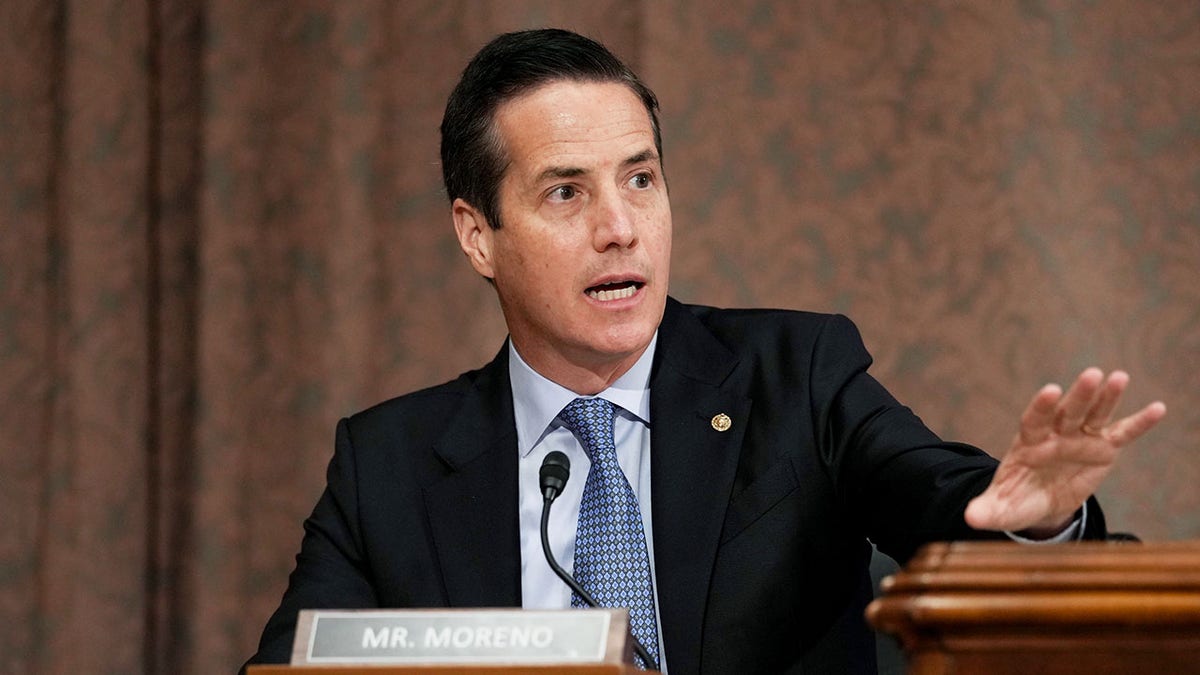
Sen. Bernie Moreno, R-Ohio. (Eric Lee/Bloomberg via Getty Images)
Likewise, Kennedy was not the only Republican who took issue with Bier. After arguing over whether it was a mistake for Congress to ban people from entering the country illegally, Sen. Bernie Moreno, R-Ohio, slammed Bier as a «smug guy.»
«You haven’t answered my question, but that’s okay. You’re a smug guy, and that’s part of your shtick,» said Moreno.
CLICK HERE TO DOWNLOAD THE FOX NEWS APP
After another Democrat-called witness declined to answer the same question, Moreno criticized both, saying, «This is the best that Democrats can come up with.»
«This is the best witnesses you’ve got? A guy who can’t distinguish whether it’s okay to have people enter our country illegally. Of all the millions of people that you could have chosen to testify … the best you have is a guy who has no idea what our immigration law is, and isn’t sure if somebody should enter the country illegally [and] another guy is a smug guy who obviously has an agenda,» said Moreno.
hearings,immigration,illegal immigrants,sanctuary cities,democratic party,woke

El baile de Javier Milei en una gala de la comunidad judía durante su visita a Estados Unidos

Pese a las críticas de Milei, los empresarios de la «Argentina Week» destacaron la alianza con EE.UU. para impulsar inversiones

Morena Rial dejará la cárcel tras cinco meses: cómo reaccionó al recibir la noticia

Jornada financiera: las acciones argentinas subieron hasta 7% y el riesgo país anotó una fuerte baja

Canales para ver el Tigre vs. Vélez Sarsfield por el Torneo Apertura

Entre los misiles de Irán y los ataques de Hezbollah: cómo se vive en el kibutz Hanita, el territorio israelí que limita con Líbano

La cruda confesión de Amalia Granata por el trastorno que sufre su hijo Roque: “Le hicimos estudios y salió que tiene TDAH, dislexia y disgrafia”

Wanda Nara involucrada en la separación de su hijo Valentino: su ex nuera contó toda la verdad

«Crisis industrial masiva»: alarmante informe de la UBA se mete en la pelea de Milei con la UIA

El mercado le está corriendo el arco a Caputo y el riesgo país no baja: en la City palpitan medidas

 CHIMENTOS2 días ago
La cruda confesión de Amalia Granata por el trastorno que sufre su hijo Roque: “Le hicimos estudios y salió que tiene TDAH, dislexia y disgrafia”
- ECONOMIA2 días ago
El mercado le está corriendo el arco a Caputo y el riesgo país no baja: en la City palpitan medidas
- CHIMENTOS1 día ago
Jenny Mavinga angustiada tras una quemadura en Gran Hermano 2026: “¡Ay, me quemó!