INTERNACIONAL
Who would rule Iran if the Islamic Republic falls?

NEWYou can now listen to Fox News articles!
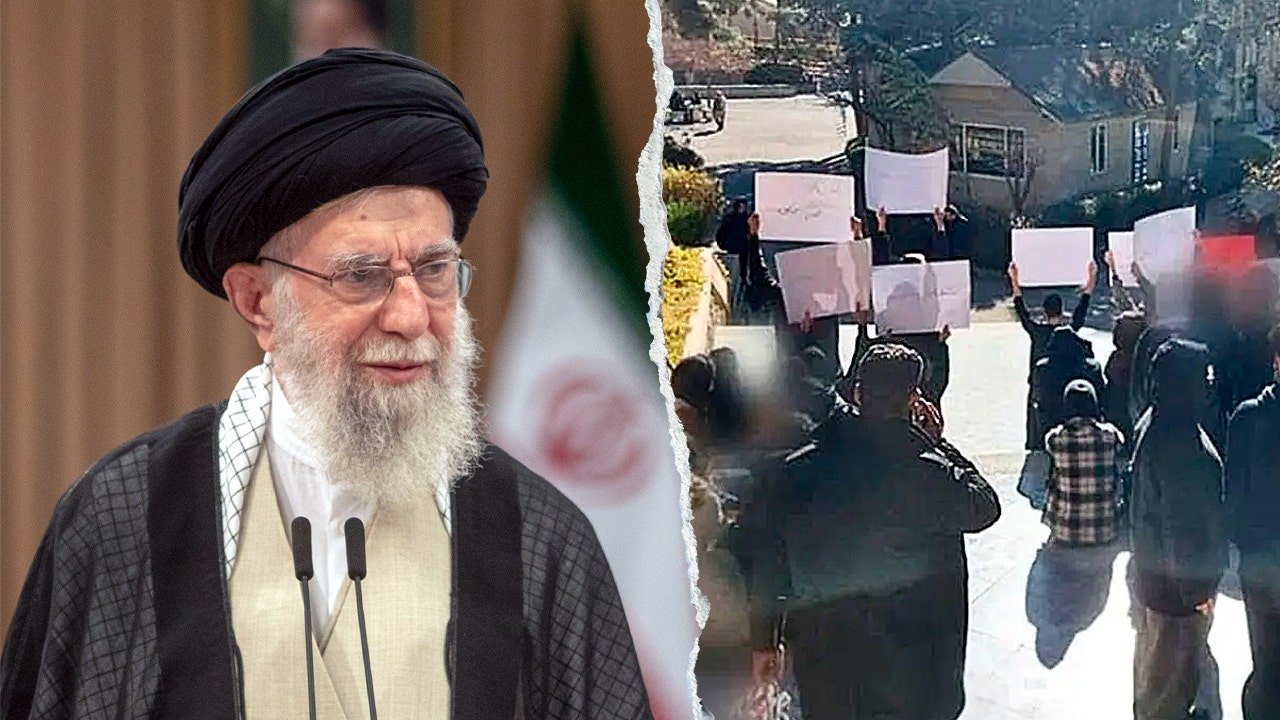
As anti-regime protests continue to spread across Iran and questions swirl about the durability of Supreme Leader Ali Khamenei’s rule, a central question looms: Who would actually take power if the Islamic Republic were to collapse?
The answer, according to regional experts and Iranian opposition figures, is far from clear. It may depend less on ideology than on how the regime falls and whether Iran’s security forces fracture or hold.
Collapse matters as much as succession
Behnam Ben Taleblu, a senior fellow at the Foundation for Defense of Democracies, said the critical variable is not simply whether the regime collapses, but how it happens.
IRAN ON THE BRINK AS PROTESTERS MOVE TO TAKE TWO CITIES, APPEAL TO TRUMP
Iranian Supreme Leader Ayatollah Ali Khamenei speaks after casting his vote for the presidential runoff election on July 5, 2024 in Tehran, Iran. (Majid Saeedi/Getty Images)
«Despite being supreme leader, one has to wonder, especially post-war and with limited public appearances, how much Khamenei is directly governing the affairs of the country,» Ben Taleblu told Fox News Digital. He warned Western governments against backing a cosmetic transition that merely reshuffles elites.
«One thing I fear is the Western temptation for a Maduro-type or Egypt-type model,» he said, referring to scenarios in which entrenched security forces retain power under new leadership. «That will only be playing musical chairs at the top and will not provide the Iranian people a pathway for meaningful change.»
Ben Taleblu argued that Iran’s opposition faces a logistical challenge more than an ideological one: translating sustained street protests into organized political power before security forces reassert control.
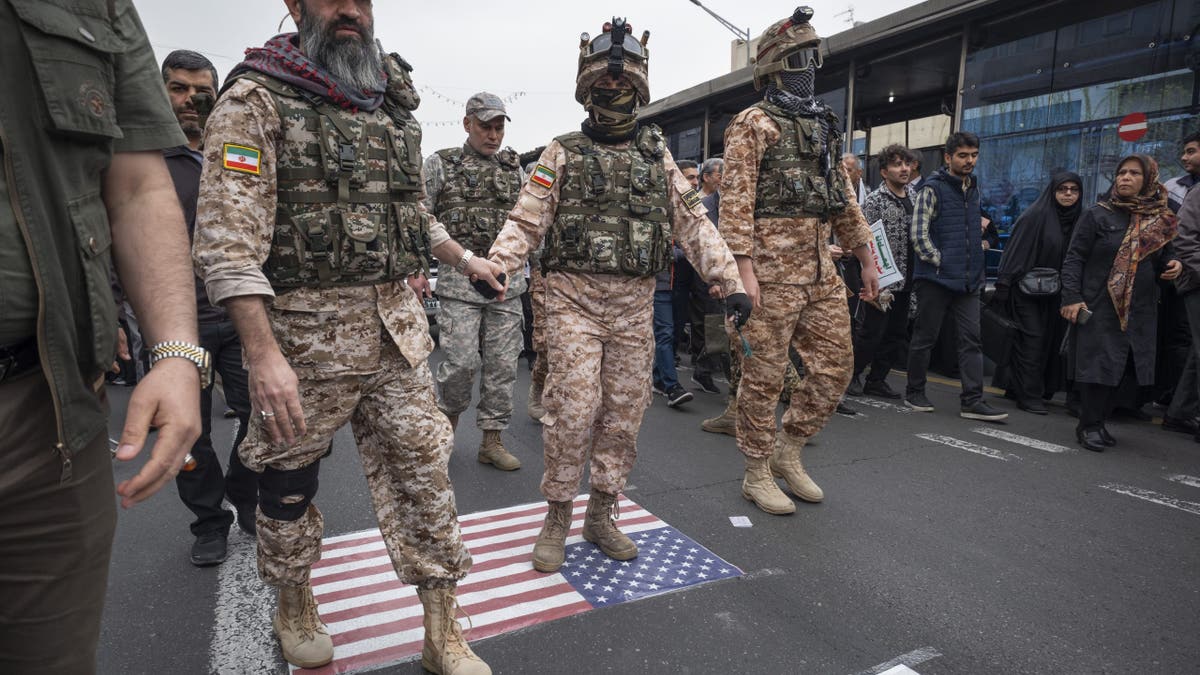
Islamic Revolutionary Guard Corps (IRGC) Special forces walk on the U.S. flag during a rally commemorating International Quds Day, also known as Jerusalem Day, in Tehran, Iran, on March 28, 2025. (Morteza Nikoubazl/NurPhoto via Getty Images)
The decisive role of security forces
Multiple experts agreed that Iran’s future hinges on whether the regime’s coercive apparatus, including the Islamic Revolutionary Guard Corps, the Basij militia and the regular military, remains intact.
Ben Taleblu said the key factor is whether segments of the security forces defect, refuse orders or fragment. «What has to be chipped away is the regime’s coercive power,» he said, adding that a transition would require sustained protests, economic strikes and cracks within security units.
Without that, analysts warn, Iran could see a scenario in which clerical figureheads disappear but real power remains in the hands of armed institutions.
«That’s the fear,» Ben Taleblu said. «If the state plays musical chairs, the street will not settle for it. That means a bumpier road ahead.»
TRUMP SAYS US WILL INTERVENE IF IRAN STARTS KILLING PROTESTERS: ‘LOCKED AND LOADED’
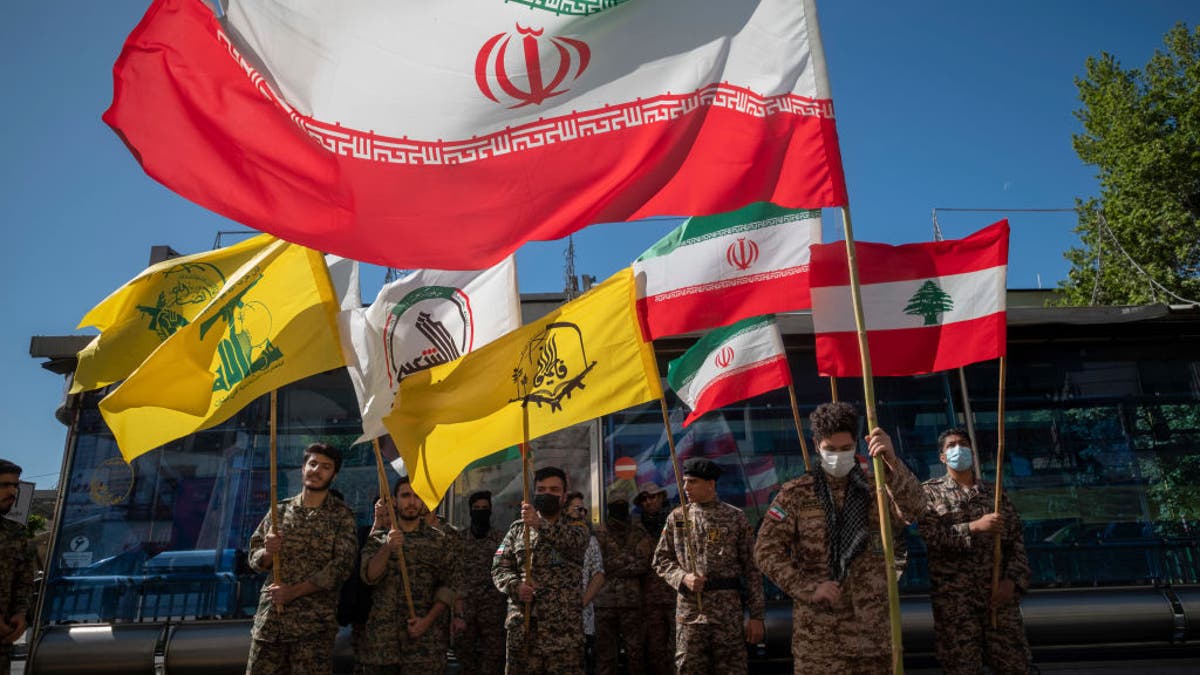
Members of the Basij paramilitary force hold Iranian flag, Lebanese flag, flag of Hashd Shabi, flag of Quds force’s Fatemiyoun Brigade, and a flag of Lebanon’s Hezbollah, during a rally commemorating International Quds Day, also known as the Jerusalem day, in downtown Tehran, April 14, 2023. (Morteza Nikoubazl/NurPhoto via Getty Images)
Could the military take over?
Some analysts point to historical precedents, including Egypt, where the military stepped in amid unrest. Benny Sabti, an Iran expert at Israel’s Institute for National Security Studies, said a military-led transition cannot be ruled out, but would be fraught.
«IRGC generals could theoretically attempt a coup,» Sabti told Fox News Digital, stressing that Iran’s military institutions are not monolithic. He distinguished between the IRGC, which he described as an ideological and asymmetric force, and the regular army, which he said is more professional and nationally oriented.
Sabti highlighted former armed forces chief Habibollah Sayyari as an example of a figure who has voiced limited criticism from within the system. Still, he cautioned that criticism alone does not make a leader and said charisma matters deeply in Iranian politics.

Iranian protests intensify for the 12th day. (The National Council of Resistance of Iran)
«There is a problem of charisma,» Sabti said. «In Iran, it is very important.»
Political prisoners and internal leaders
Despite international attention on jailed activists, experts are skeptical that Iran’s next political leadership would emerge from within the country’s prison system.
Ben Taleblu said decades of repression have made it nearly impossible to cultivate political leadership inside Iran. «What will come from within are the forces of revolution,» he said. «Political leadership has to be built outside.»
Sabti echoed that view, saying freed prisoners would likely become part of a broader system rather than dominant leaders.
«There won’t be leaders coming out of prison,» he said. «They will be part of a new system, but not charismatic leaders.»
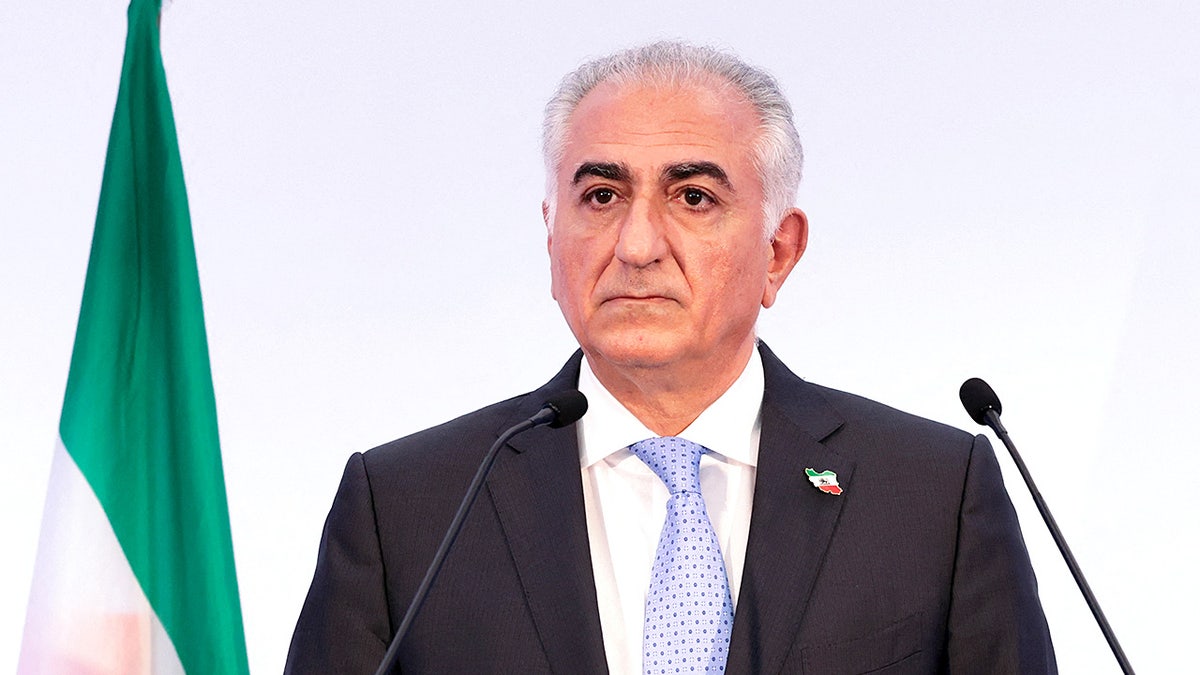
Iranian opposition leader Reza Pahlavi holds a press conference in Paris on June 23, 2025. (Joel Saget/AFP via Getty Images)
The exiled opposition and the Pahlavi question
Supporters of Reza Pahlavi say he is emerging as a focal point for opposition mobilization amid escalating unrest. On January 8, Pahlavi publicly called on Iranians to chant at 8 p.m. from their homes or in the streets and his aides said large crowds responded across multiple cities, including Tehran, Mashhad, Isfahan, Ahvaz and Tabriz.
Those close to Pahlavi describe him as advocating a secular, democratic Iran committed to human rights, while rejecting claims that he is seeking to restore the monarchy. Pahlavi has repeatedly said the form of Iran’s future system should be decided by the people through a free constitutional process.
«My role is not to tip the scales in favor of either monarchy or republic,» Pahlavi said. «I will remain entirely impartial in the process to help ensure that Iranians finally have the right to choose freely.»
Banafsheh Zand, an Iranian-American journalist and editor of the «Iran So Far Away» Substack, told Fox News Digital that Pahlavi is the only viable unifying figure capable of guiding a transition, a view strongly contested by others in the diaspora.
IRAN CRACKDOWN RATTLES MIDDLE EAST AS ANALYSTS WEIGH US OPTIONS SHORT OF MILITARY INTERVENTION
«The only person who can see this through is the crown prince,» Zand said, arguing that any prominent figure inside Iran would be swiftly eliminated by the regime. She dismissed alternative opposition figures as lacking legitimacy inside the country.
Zand said chants supporting Pahlavi during recent protests reflect genuine sentiment, not fabrication, though such claims are difficult to independently verify amid internet shutdowns and state censorship.
Some experts caution that while Pahlavi has visibility in the West and among parts of the Iranian public, he remains a polarizing figure, particularly among Iranians wary of monarchy or external influence.
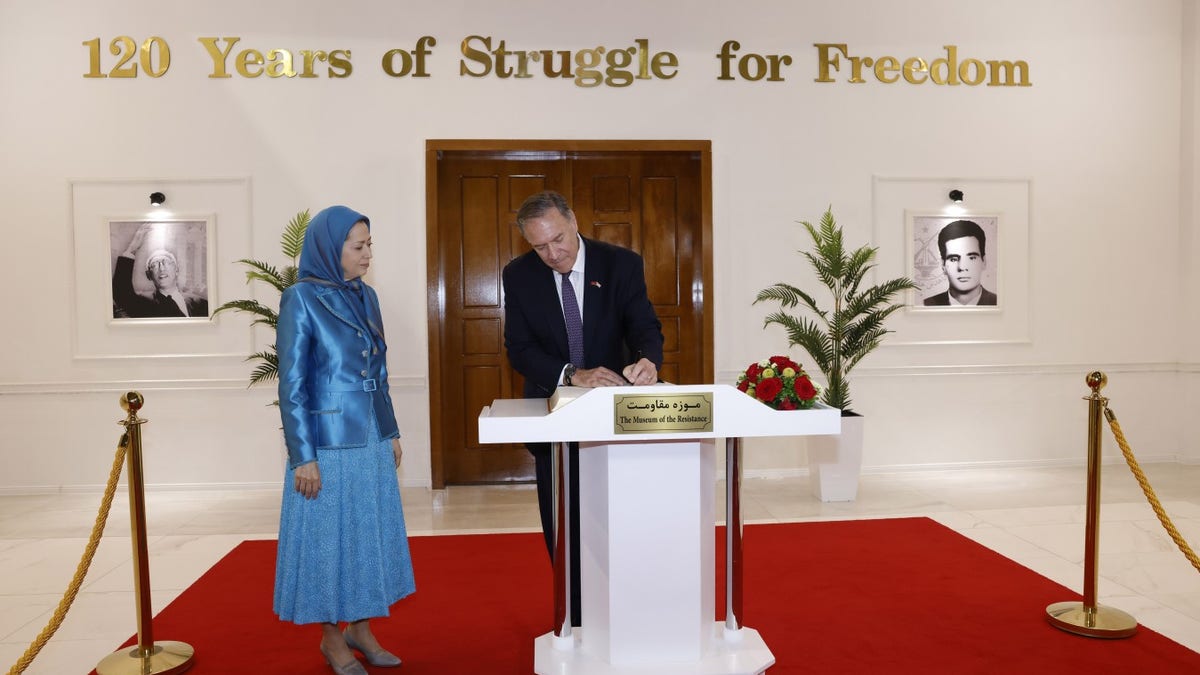
Former Secretary of State Mike Pompeo meets Maryam Rajav at Ashraf-3 – May 16, 2022, in Albania. (NCRI)
Rajavi and organized opposition groups
Another long-standing opposition movement, the Mujahedin-e Khalq, led by Maryam Rajavi, has received backing from some senior U.S. political figures from across the aisle over the years, including former Vice President Mike Pence, former Secretary of State Mike Pompeo and Rudy Giuliani.
In a statement to Fox News Digital, Rajavi said change «will not come from outside Iran, nor will it be delivered by the will of foreign capitals,» arguing that only an organized, nationwide resistance can overthrow the Islamic Republic.
Rajavi pointed to the People’s Mojahedin Organization of Iran and its «Resistance Units» as the core force behind recent uprisings, claiming they have played a decisive role in organizing protests and confronting security forces at the cost of heavy casualties. She said the National Council of Resistance of Iran does not seek power for itself, but instead proposes a six-month provisional period following the regime’s overthrow, culminating in free elections for a constituent assembly to draft a new constitution for a democratic, secular republic.
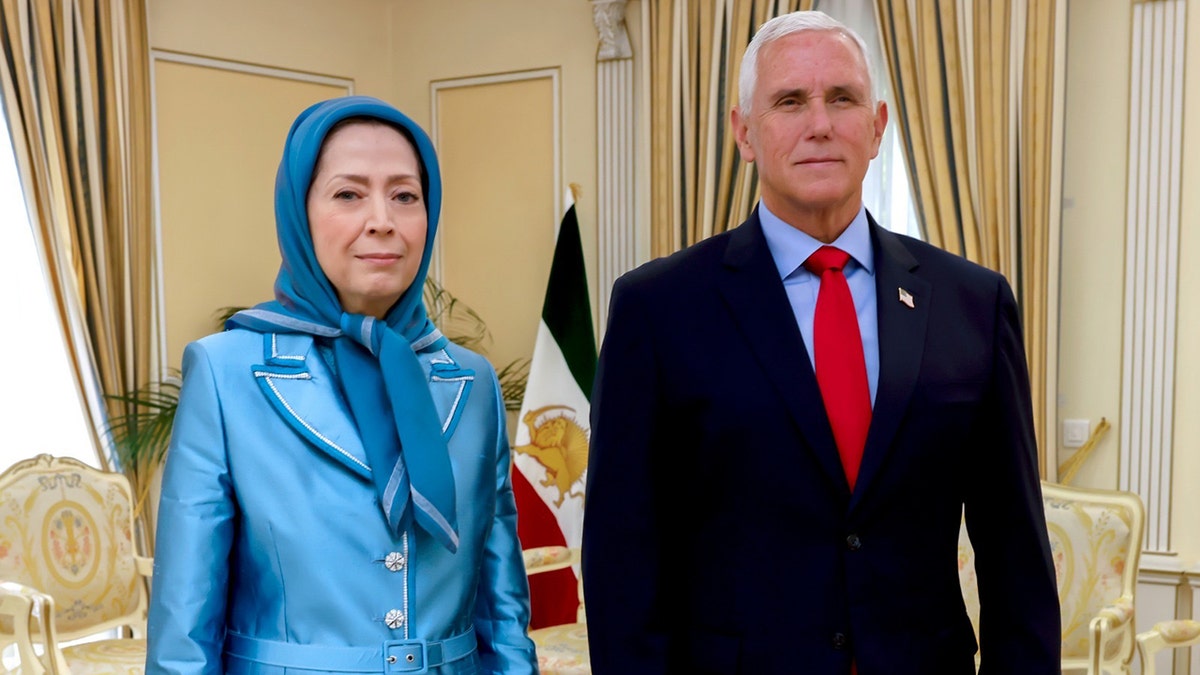
NCRI President-elect Maryam Rajavi stands with former Vice President Mike Pence. (NCRI )
«Once established, all authority will be transferred to that Assembly, which will both select the provisional government and draft the constitution of the new republic,» Rajavi said. «Gender equality in all its facets, the separation of religion and state, autonomy for Iranian Kurdistan and many other urgent matters have been ratified in detail by the NCRI.»
Rajavi also cited what she described as broad international backing for the NCRI’s platform. Critics and analysts interviewed by Fox News Digital dispute the group’s level of support inside Iran. Sabti said the MEK’s history of violence in the 1980s and its rigid ideology have alienated younger Iranians.
Speaking to an NCRI conference in Washington D.C. last November, Pompeo pushed back against critics, stating «A thriving, democratic, popular government in Iran—not a theocracy, not a monarchy, not an oppressive regime. This will be a great thing for the entire world. We are waiting for that day, and it will be a blessing to us all.»
Ben Taleblu also warned against Western governments «playing favorites» among exiled factions, saying legitimacy must ultimately come from inside Iran.
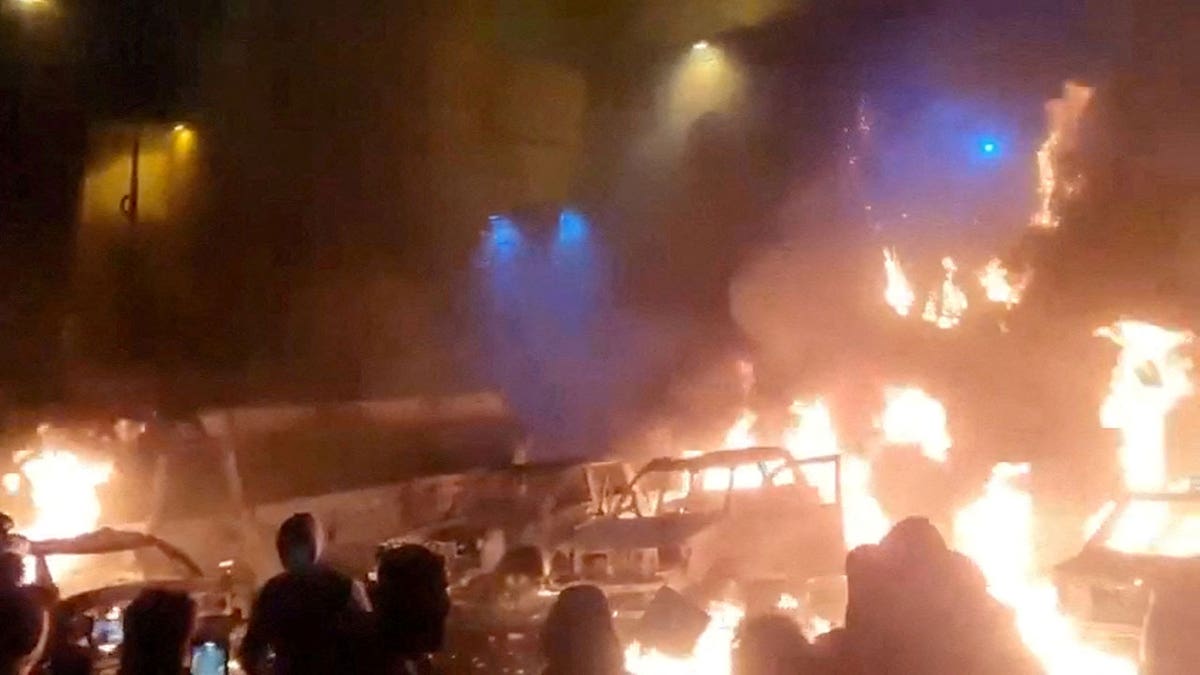
Protesters gather as vehicles burn, amid evolving anti-government unrest, in Tehran, Iran, in this screen grab obtained from a social media video released on Jan. 9, 2026. (Social Media/via Reuters)
No clear successor and a long road ahead
Despite intense speculation, experts agreed on one point: there is no clear successor waiting in the wings.
«We are not there yet,» Sabti said, noting that Khamenei remains alive, and the security forces have not fractured.
Ben Taleblu described the moment as a marathon rather than a sprint, warning against simplistic narratives about regime collapse.
CLICK HERE TO DOWNLOAD THE FOX NEWS APP
«This is about getting the best bridgehead to a post-Islamic Republic Iran,» he said, «so that the forces of revolution inside can finally become voters and choose their own fate.»
iran,middle east,world protests











INTERNACIONAL
Zelensky reiteró a sus aliados que el armamento del ejército ruso contiene “miles de componentes” de fabricación extranjera
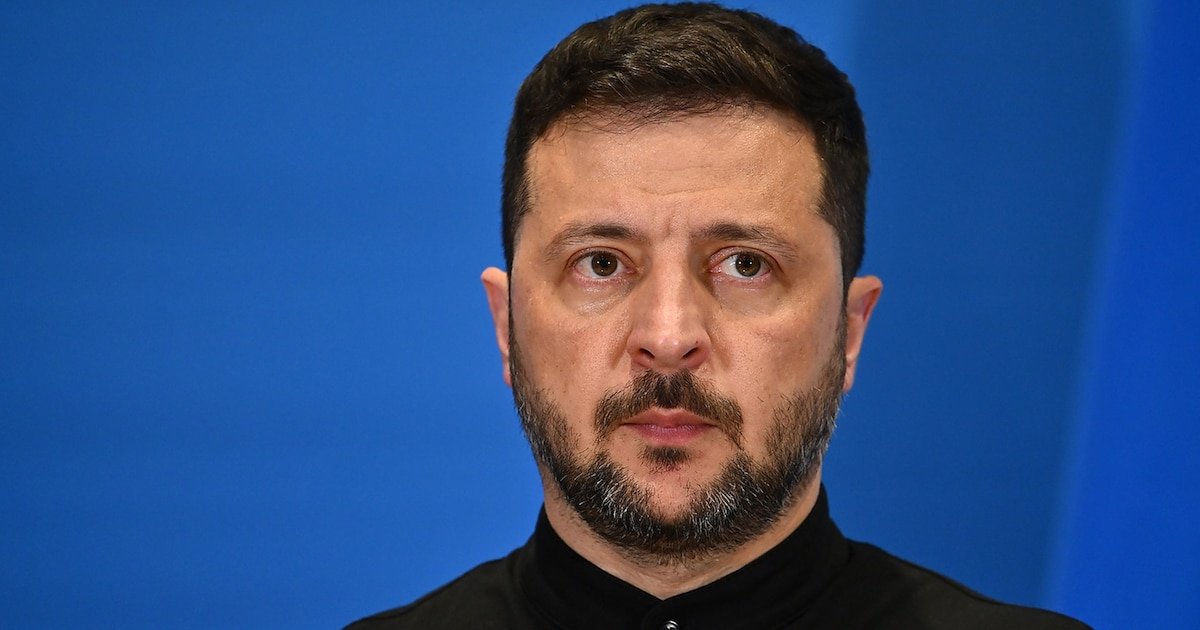
El presidente de Ucrania, Volodimir Zelensky, advirtió que los misiles y drones utilizados por el ejército ruso contienen “miles de componentes” de fabricación no rusa, especialmente procedentes de Europa, Estados Unidos y Japón, y pidió a estos países bloquear de manera efectiva estas cadenas de suministro.
“Todos esos misiles y drones rusos que se utilizan hoy en día contienen miles de componentes que Rusia no puede producir por sí sola. Cinco misiles Iskander-M llevan al menos 75 componentes críticos de fabricación no rusa. Tres misiles ‘Kh-101’ incluyen casi 160 componentes que Rusia no puede reemplazar por sí misma», detalló el mandatario.
A su vez, en un mensaje hacia sus aliados, remarcó: “Cada shahed (dron de fabricación iraní) tiene cientos de estos componentes exportados a Rusia desde otros países, y no solo de empresas chinas, por cierto. También de Europa, Estados Unidos y Japón”.
El mandatario instó a los aliados de Ucrania a bloquear realmente las cadenas de suministro que llevan componentes críticos a Rusia para la producción de armas, calificando esta medida de “crucial” tanto para Kiev como para la seguridad internacional.
“Las propias empresas deberían supervisar mejor el destino de sus componentes. Sin estas conexiones con el mundo, Rusia no puede hacer nada; no es capaz de ser fuerte estando completamente aislada”, aseguró.

Zelensky reiteró que “el bloqueo y la presión pueden realmente obligar al agresor a reconsiderar su política” en medio de la invasión al territorio ucraniano.
Respecto a las negociaciones en Suiza, indicó que la delegación ucraniana presentará un informe tras ronda de conversaciones en Ginebra sobre los ataques recientes en Odesa y sus consecuencias.
“El equipo debe plantear sin duda la cuestión de estos ataques, en primer lugar a la parte estadounidense, que propuso que tanto nosotros como Rusia nos abstuviéramos de atacar”, puntualizó respecto de los últimos bombardeos de Moscú a infraestructura crítica ucraniana.
El presidente subrayó que Ucrania está preparada y no necesita la guerra, y manifestó su disposición para avanzar hacia un acuerdo justo que ponga fin al conflicto bélico iniciado por Rusia en 2022. Además, adelantó que en las próximas semanas habrá nuevas negociaciones con socios internacionales y se discutirá la necesidad de que Europa produzca sus propios misiles de defensa aérea.
“La única pregunta para los rusos es: ¿qué quieren? Y también, si habrá consecuencias para Rusia por el hecho de que los shaheds, los misiles y las fantasiosas charlas sobre la historia les importan más que la diplomacia real, la diplomacia y la paz duradera»,
La jornada del martes incluyó una reunión de Ucrania con representantes de Estados Unidos, Francia, Reino Unido, Alemania, Italia y Suiza. El secretario del Consejo Nacional de Defensa ucraniano, Rustem Umerov, señaló que se coordinaron enfoques para los próximos pasos y destacó la importancia de mantener una visión común y la coordinación de acciones entre Ucrania, Estados Unidos y Europa.

Los negociadores de Ucrania y Rusia reanudarán una segunda ronda de conversaciones de paz en Ginebra este miércoles, mientras el principal enviado de Estados Unidos mostró optimismo sobre la posibilidad de poner fin al conflicto más letal en Europa desde la Segunda Guerra Mundial.
Estas conversaciones representan el esfuerzo diplomático más reciente para frenar los combates, que causaron cientos de miles de muertes, desplazado a millones de personas y devastado amplias zonas del este y sur de Ucrania.
Los delegados de Estados Unidos mantiene su presión para lograr un acuerdo que ponga fin a casi cuatro años de guerra, aunque hasta ahora no se ha alcanzado un compromiso entre Moscú y Kiev respecto al territorio en disputa.
El enviado estadounidense Steve Witkoff, representante de la administración del presidente Donald Trump, afirmó que los esfuerzos diplomáticos del mandatario impulsaron el proceso.
“El éxito del presidente Trump al unir a ambos lados de esta guerra ha generado un progreso significativo”, escribió en X. “Ambas partes acordaron actualizar a sus respectivos líderes y continuar trabajando para llegar a un acuerdo”.
(Con información de Europa Press)
Defence,Defense,Europe
INTERNACIONAL
Inside world’s top science society’s convention bashing Trump, pushing DEI, pronouns: ‘Felt like a funeral’
NEWYou can now listen to Fox News articles!
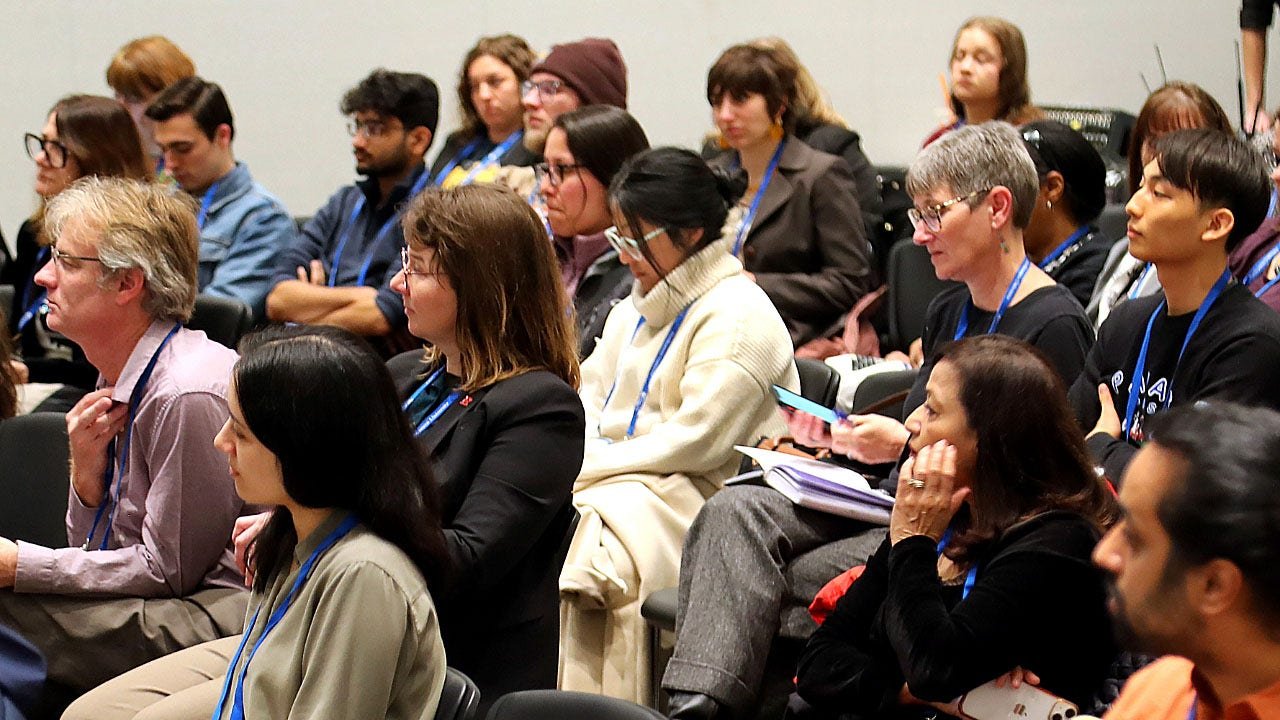
FIRST ON FOX: One of the world’s largest and most influential scientific societies held its annual conference last weekend, which a Fox News Digital review found was littered with examples of progressive messaging, criticisms of the Trump administration, and «woke» workshops.
Attendees who showed up at the American Association for the Advancement of Science (AAAS) event, held at the Phoenix Convention Center from Feb. 12-14, were immediately greeted at registration with identifier stickers that used gender pronouns such as «they/them,» «xi/xer,» «xe/xem,» and other descriptors that critics have alleged have little to do with science and biology.
During the meeting’s opening night, shortly after a 10-minute hoop dance routine from traditional Native American dancers, AAAS CEO Dr. Sudip Parikh told the audience that it’s been a «hard» and «tough year for science and scientists in this country.»
Parikh went on to blame DOGE for the «devastation» of «some of our science agencies» and the «president’s budget request» that «cut science by half» and, in his opinion, amounted to «forfeiting the future.»
DOCTORS ON KEY US HEALTH TASK FORCE ACCUSED OF PRIORITIZING DEI OVER EVIDENCE-BASED MEDICINE
The 2025 annual meeting of the American Association for the Advancement of Science. (John Tlumacki/The Boston Globe via Getty Images)
«What happened over the course of the last year is a rupture. We’re not going back, it’s not possible, too much damage has been done, too much has changed. There’s an entire generation of scientists that have a scar, a scar that is not going to go away,» Parikh explained, adding that scars can «make us tougher» and «become almost shields» that «build resilience.»
Parikh told the crowd that he warned last year that Robert F. Kennedy Jr was the «wrong person» for Health and Human Services secretary and said, «I still feel that way,» which prompted laughter and applause from the crowd.
«It’s going to take protests, it’s going to take politics, it’s going to take the ability to not speak gibberish, all of that has got to come together if we’re going to fight for the inheritance of the enlightenment to continue to make this world a better place,» Parikh said.
Workshops at the event, which provided gender-neutral washrooms, included a session titled «Mao-Mei Liu: Nurturing Diversity in Science is Resistance,» and another called «Investigating the Role of Race in Clinical Decision-Making.»
«Who Gets to Belong? Disability, Power, and Participation in Higher Education,» another workshop was called.
TOP MEDICAL SCHOOL MOVED DEI OFFICE TO SECRET LOCATION AS IT TRIES TO ‘EVADE ACCOUNTABILITY’: LEGAL GROUP

The 2026 annual AAAS conference provided guests with an all-gender washroom and gender pronoun stickers. (Fox News Digital)
Dr. Theresa A. Maldonado, a world-renowned expert in electrical engineering, delivered the president’s address at the conference and also lamented what a difficult year 2025 was for science and suggested climate change was responsible for the devastating southern California wildfires last year.
AAAS, the publisher of the highly respected Science magazine, posted several more videos over the course of the next few days, many including speakers who criticized the Trump administration and injected politics into discussions.
«Colonial Legacies, Climate Crises, and the Erosion of Mobility Choice» was another workshop that scientists at the conference were offered and in an interview with «climate justice scholar» Jola Ajibade, she explained how climate change has benefited a «few wealthy people» while «low-income communities are displaced.»
«At the center of my work is giving a voice but also bringing to the attention of everyone the impact of a slew of climate solutions, the impact of those solutions on low-income communities, on Black communities, on indigenous, on Latino communities as well,» Ajibade explained, adding that she is focused on finding a «decolonial» approach.
Listed sponsors of the event included the Science Philanthropy Alliance, a group tied to the progressive consulting behemoth Arabella Advisors through the New Venture Fund, a nonprofit that pushes a variety of progressive causes.
«The whole thing that is sad for me is that when I attended these conferences in the first Trump administration there was plenty of liberal nonsense, but it still was a celebration of science and the achievements of the year, and you left excited,» an event attendee told Fox News Digital.
«This year felt like a funeral, with nothing but griping and moaning. Why would people want to keep coming back year after year with something like that? I suspect that is why their attendance greatly suffered this year compared to the pre-COVID years. Their constant pleas to keep politics out of science are completely undercut by their perpetual whining and endorsing utter craziness. They’re happy for science to be political, as long as it’s leftist.»
Additionally, as lawmakers in the United States continue to warn about the growing threat posed by China and what they believe is the CCP’s infiltration of top institutions in the United States — particularly in the medical and science fields — the AAAS conference opted to allow the Beijing-based research institute Chinese Academy of Sciences (CAS) to operate a booth at the event.
The state-run Chinese academy, which has faced controversy over its ties to China’s government and military, has collaborated with a Chinese medical technology firm linked to a 2013 U.S. bribery case involving NIH-funded research. The company has also installed equipment in leading American research labs.
CLICK HERE TO GET THE FOX NEWS APP
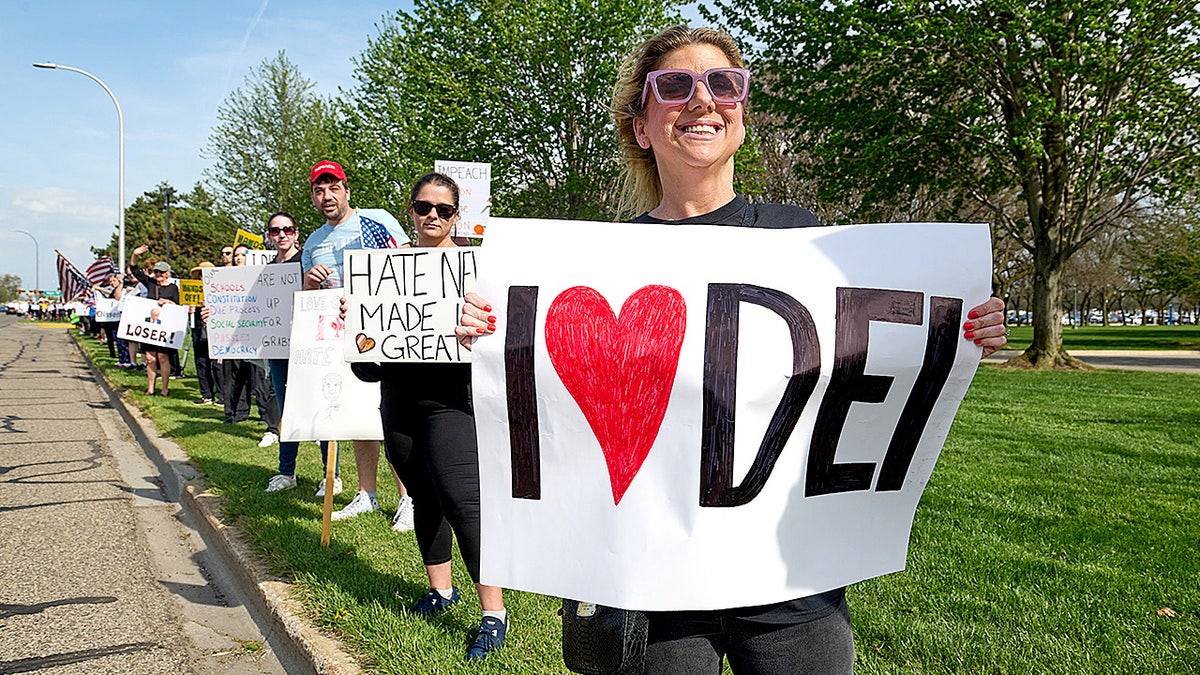
Protesters are seen outside a rally held by President Donald Trump at Macomb County Community College in Warren, Michigan. (Getty Images/Dominic Gwinn)
«The AAAS says that their organization wants to ‘inspire’ future scientists and engineers, but session topics and material from their meeting actually discourage participants from relying on their effort and merit and turns the focus to race and ethnicity,» Johnathan Butcher, acting director of the Center for Education Policy at the Heritage Foundation, told Fox News Digital.
«These are the very same kind of racist ideas inspired by DEI that have been prohibited in universities, state governments, and the federal government, because the ideas violate state and federal civil rights laws,» Butcher added. «Policymakers should be aware of what this organization is doing and make sure the association is not promoting racial preferences in hiring, promotion or research awards in academia or anywhere else.»
In a statement to Fox News Digital, an AAAS spokesperson said, «A broad spectrum of the scientific enterprise attends the meeting. The topics covered were wide-ranging across scientific disciplines and are proposed by scientists. AAAS respects their First Amendment right to free speech.»
politics,science,dei

La empresa estatal detrás de la app cubana para sacar turnos por nafta

Por el miedo a perder el empleo, el ausentismo siguió cayendo en 2025: cómo afectó a cada sector

Fue una promesa del rugby y hoy protagoniza una de las series del momento: “Es un deporte feroz y no va de la mano con la actuación”

Milei acelera con su agenda de reformas: cada Ministerio tiene en carpeta más de 10 proyectos para 2026

¡Pura emoción! La primera foto del hijo del Chino Darín y Úrsula Corberó

Zelensky reiteró a sus aliados que el armamento del ejército ruso contiene “miles de componentes” de fabricación extranjera

La desinflación se hace esperar: por qué la suba de precios no cede y qué pasará en febrero

Cristian Ritondo: “Vamos a apoyar la ley de modernización laboral, pero no el régimen de licencias por enfermedad”

Uno de los jefes de la CGT adelantó que convocarán a un paro general por la reforma laboral: “Trabajaremos para que sea una gran huelga”

Reforma laboral bomba: menos indemnización, más horas y despidos más fáciles — el cambio que puede sacudir el empleo en Argentina

Efecto Santa Fe: policías y penitenciarios de Río Negro rechazaron un aumento en cuotas y amenazan con acampar por tiempo indeterminado en Viedma

 POLITICA1 día ago
Cristian Ritondo: “Vamos a apoyar la ley de modernización laboral, pero no el régimen de licencias por enfermedad”
- POLITICA3 días ago
Uno de los jefes de la CGT adelantó que convocarán a un paro general por la reforma laboral: “Trabajaremos para que sea una gran huelga”
- POLITICA9 horas ago
Reforma laboral bomba: menos indemnización, más horas y despidos más fáciles — el cambio que puede sacudir el empleo en Argentina