INTERNACIONAL
Your guide to key ballot measures being voted on in California and New York City on Tuesday

NEWYou can now listen to Fox News articles!
Voters in California and New York City will be voting on key ballot measures on Tuesday, with some of them drawing national attention for their significance.
Both measures could have ripple effects far beyond their borders — influencing control of Congress and reshaping how America’s biggest city conducts elections. Together, the proposals offer voters in the nation’s two largest blue strongholds a chance to reshape how political power and housing policy are decided.
Read on to learn more about each of the top measures.
California’s Proposition 50
The most notable ballot measure being voted on is Proposition 50 in California, where residents are deciding whether to pass a ballot proposition which would dramatically alter the state’s congressional districts. The measure puts the left-leaning state front and center in the high-stakes political fight over redistricting.
California state lawmakers this summer approved a special proposition on the November ballot to obtain voter approval to temporarily sidetrack the state’s nonpartisan redistricting commission and return the power to draw the congressional maps to the Democratic-dominated legislature.
GOP HOPEFUL WARNS SOCIALIST MAYORAL CANDIDATE IN MINNEAPOLIS IS A ‘COPY-PASTE’ OF MAMDANI
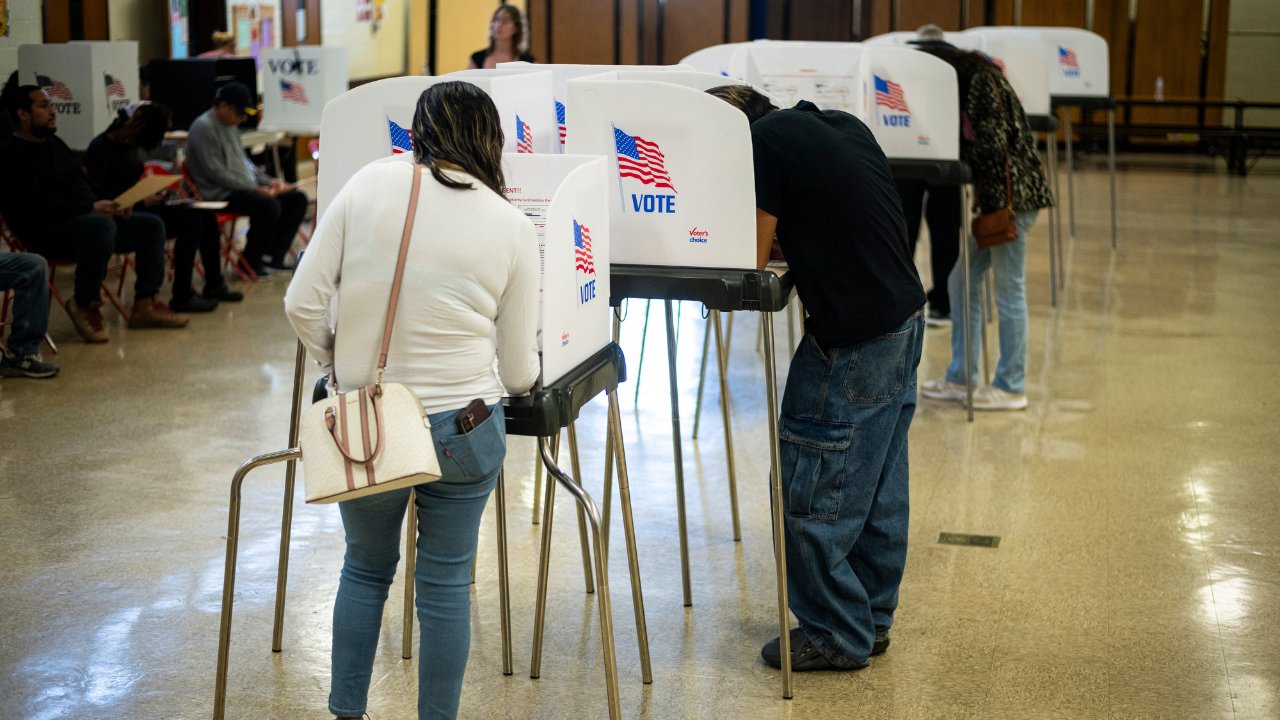
Voting booths and voters are seen at a polling location. (Graeme Sloan for The Washington Post/Getty Images)
The effort, which could create five more Democratic-leaning congressional districts, aims to counter the passage in the red-state of Texas of a new map that aims to create up to five right-leaning House seats. Failure to approve the measure would be a stinging setback for Democrats.
Proponents and opponents of Proposition 50 reported raising more than $215 million as of Oct. 2, with much of the money being dished out to pay for a deluge of ads on both sides.
One of the two main groups countering Gov. Gavin Newsom and the Democrats is labeling its effort «Stop Sacramento’s Power Grab.»
Also getting into the fight is former Gov. Arnold Schwarzenegger, the last Republican governor of California.
EVERYTHING YOU NEED TO KNOW ABOUT ELECTION DAY 2025: CRITICAL ELECTIONS, BALLOT MEASURES AND MORE
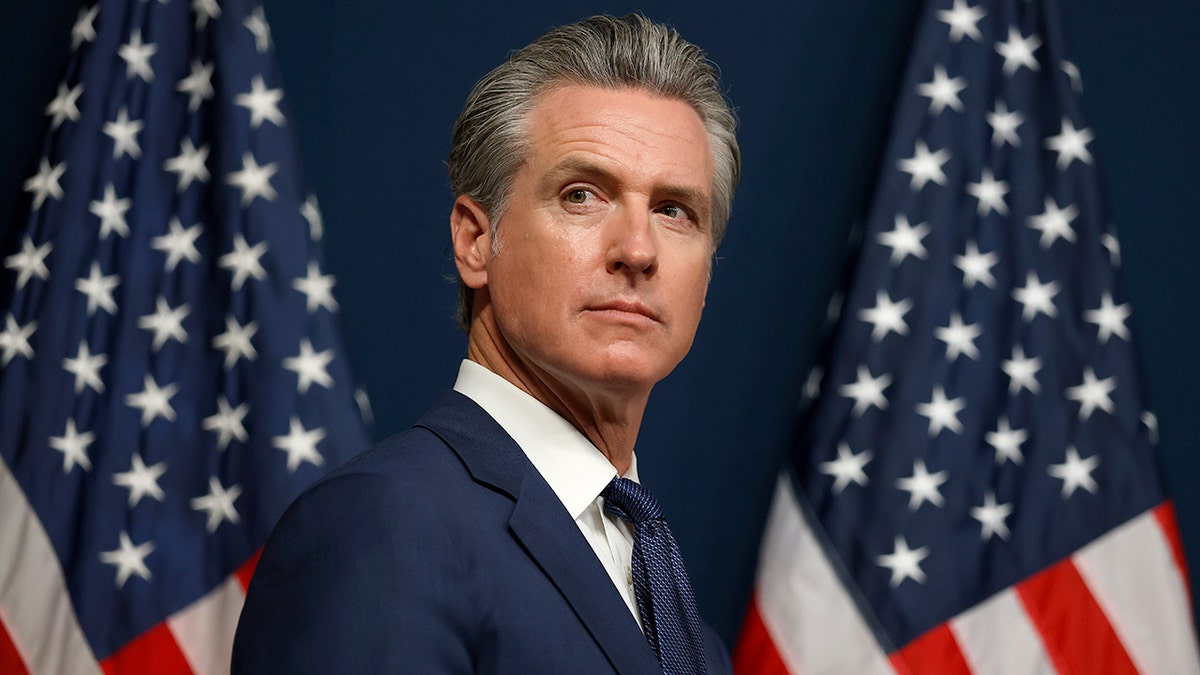
Gov. Gavin Newsom looks on during a bill signing event related to redrawing the state’s congressional maps on Aug. 21, 2025, in Sacramento, California. (Justin Sullivan/Getty Images)
«That’s what they want to do is take us backwards. This is why it is important for you to vote no on Prop 50,» Schwarzenegger says in an ad against Proposition 50. «Democracy — we’ve got to protect it, and we’ve got to go and fight for it.»
When voters head to the polls, a «Yes» vote will approve the Newsom-backed plan to re-draw the maps starting in 2026 and a «No» vote would keep the existing maps.
New York City’s Proposal 6
In addition to deciding who will be the city’s next mayor, 5.1 million registered New York City voters will also decide on a measure, known as Question 6, that would move election dates for city offices to the same year as federal presidential elections.
According to the city’s official election website, «‘Yes’ moves City elections to the same year as Federal Presidential Elections, when permitted by state law. ‘No’ leaves laws unchanged.»
Advocates of moving the election to coincide with federal elections argue it will increase turnout and thus provide results more representative of the electorate as a whole.
Opponents argue that key local issues will get buried in national politics if the elections are moved.
Housing related ballot measures in New York City
CLICK HERE TO GET THE FOX NEWS APP

«I voted today» stickers (Joseph Prezioso/AFP via Getty Images)
Affordable housing is perhaps the most talked about campaign issue in New York City and voters will be asked two questions related to that issue when they walk into polling places on Tuesday.
Proposal 2 is framed as a way to «fast track» affordable housing in the city.
«This proposal would make two new processes to fast-track certain affordable housing projects,» New York City’s election website says. «The first process is for publicly financed affordable housing projects. The second process is for affordable housing projects in the 12 community districts with the lowest rates of affordable housing development.»
Proposal 4 in New York City is described by the collection committee as a vote to, «Establish an Affordable Housing Appeals Board with Council, Borough, and Citywide Representation.»
«This proposal would change the current land use review process when the City Council rejects or changes an affordable housing project,» the measure is framed.
«The proposal would create an Affordable Housing Appeals Board, made up of the local Borough President, Speaker of the City Council, and Mayor. The proposal would allow the Appeals Board to reverse the City Council’s decision with a two-to-one vote.»
Housing is also the focus of Proposal 3, «where a Yes» vote «simplifies review for limited land-use changes, including modest housing and minor infrastructure projects» and a «no» vote is described as a vote that «leaves these changes subject to longer review, with final decision by City Council.»
politics,new york city,california,2025 2026 elections coverage











INTERNACIONAL
Qué leer gratis: cómo vivir sin ansiedad, los “desamores breves” y el pionero argentino de la ciencia ficción

Algunos creen que no hay salida, que desde que apareció el celular ya no se puede sacar la cara de la pantalla. Una salida posible es el libro: tirarse a leer a la sombra de sauce una buena historia atrapante. Pero quizás el problema no sea el soporte sino el contenido. ¿Y si en vez de estar scrolleando eternamente en las redes sociales nos sentamos a leer, en el mismo celular, un buen cuento, una novela, un ensayo, algo que nos lleve de paseo por otra vida, otro mundo, otra sensibilidad?
A continuación, tres libros que se pueden leer gratis en Bajalibros.
Las fuerzas extrañas, de Leopoldo Lugones
Las fuerzas extrañas, de Leopoldo Lugones, publicado en 1906, es un libro fundamental porque marca el nacimiento de la ciencia ficción y la fantasía en la literatura argentina. Aunque en su momento fue poco comprendido y no tuvo éxito comercial, la colección de cuentos imaginó experimentos y avances científicos que, décadas después, la propia ciencia acabaría confirmando. Lugones explora el conocimiento humano y la curiosidad científica en relatos que mezclan el asombro, la tragedia y el humor, anticipando temas que hoy atraviesan el género.

La importancia del libro reside en su capacidad para mostrar cómo la literatura puede ser un laboratorio de ideas y una puerta a futuros posibles. Cada cuento de Las fuerzas extrañas se convierte en una reflexión sobre los límites de la ciencia, la ética y la imaginación, invitando al lector a cuestionar la realidad y a considerar el impacto del progreso sobre la condición humana. Obras como “La fuerza omega”, “La metamúsica” o “Yzur” se adelantaron a debates contemporáneos sobre inteligencia artificial, la relación con los animales y los riesgos del conocimiento sin control.
Para un lector actual, Las fuerzas extrañas no es solo una curiosidad histórica: es una obra que sigue vigente porque plantea preguntas esenciales sobre el sentido del avance científico y el papel de la ficción como herramienta para pensar el presente y el futuro. Leer a Lugones hoy es reconocer la potencia de la literatura para anticipar y provocar cambios en la forma en que comprendemos el mundo.

(Des)Amores breves de Carolina Balbiani
Carolina Balbiani es periodista de Infobae. Los lectores la conocen. Escribe historias de amor y muerte con una intensidad impactante. Publicó varios libros. Uno de ellos se titula (Des)Amores breves, cuentos en el que hace foco en los efectos que el amor desbordante provoca en ciertas personas que no están preparadas para romper la vida cotidiana. Cuando el encanto de la pasión se vuelve un hechizo maldito.

“Son historias que nacen de historias que escuché y todas terminaban mal. Los finales felices son un poco bobos, me parece. Es un prejuicio mío, es totalmente arbitrario. Pero cuando me protestan por los finales, yo digo que si el día es lindo y está todo bien, no hay historia. Hay una idealización del amor fogoso, pero después decanta la vida. Y la vida es mucho más que la pasión. Intenté poner esas cosas que uno piensa y no dice. Como cuando hay gente que piensa que mejor no hubiera tenido un embarazo, o un romance, o una historia, pero no lo dice porque es políticamente incorrecto. Me gusta que el personaje pueda expresarse”, dijo la autora en una entrevista para Infobae con Patricia Zunini.
60 maneras de vivir sin ansiedad
En tiempos de mucho celular y la imposibilidad de una pausa reflexiva, viene muy bien la lectura. La lectura en general. Pero en particular, un libro: 60 maneras de vivir sin ansiedad. Técnicas sencillas, explicaciones dinámicas y buenas ideas para replantearse la vida cotidiana son algunas de las propuestas de este texto que se puede leer como una especie de guía para el bienestar personal.

Cómo dejar de ser perfeccionista cómo mejorar la organización cotidiana para ganar en armonía y bienestar o de qué manera alejar los pensamientos negativos y reducir la velocidad vertiginosa a la que vivimos figuran entre los temas centrales que ofrecemos aquí. Además los lectores encontrarán técnicas saludables para aliviar las tensiones del cuerpo y de la mente. Meditación, tai chi chuan, recetas naturales, relajación, masajes y mucho más.
INTERNACIONAL
Ukraine peace talks on ‘situational pause’ as Middle East conflict intensifies: Kremlin

NEWYou can now listen to Fox News articles!
Ukraine peace talks are on a «situational pause» as the Middle East conflict intensifies, the Kremlin said Thursday, even as Kyiv signaled negotiations could resume as soon as this weekend.
Following reports in Russian media that the Kremlin had paused talks on Ukraine and that the Middle East conflict could push Kyiv toward compromise, Kremlin spokesperson Dmitry Peskov confirmed the pause.
«This is a situational pause, for obvious reasons,» Peskov told reporters when asked about the report, according to Reuters.
Peskov added that as soon as «our American partners» could refocus on the Ukraine conflict, Moscow hopes the pause will end and new talks can begin, the outlet reported.
UKRAINE TO MEET TRUMP ENVOYS AHEAD OF HIGH-STAKES GENEVA TALKS WITH RUSSIA AS WAR ENTERS FIFTH YEAR
Ukrainian President Volodymyr Zelenskyy speaks during a briefing in Kyiv, Ukraine, Saturday, Jan. 3, 2026. (Danylo Antoniuk/AP)
Ukrainian President Volodymyr Zelenskyy said in a video posted on X that Kyiv has received signals from the U.S. that it is ready to resume talks aimed at ending the war.
«There has been a pause in the talks, and it is time to resume them,» he said. «We are doing everything to ensure that the negotiations are genuinely substantive.»
Zelenskyy added that a Ukrainian negotiating team is already on its way to the U.S. and is expected to hold meetings Saturday.
RUSSIA, UKRAINE TO DISCUSS TERRITORY AS TRUMP SAYS BOTH SIDES ‘WANT TO MAKE A DEAL’

Firefighters put out the fire in the ruins of an apartment building following Russia’s missile attack in Kharkiv, Ukraine, Saturday, March 7, 2026. (AP Photo/Andrii Marienko)
Earlier this month, President Donald Trump said the «hatred» between Russia and Ukraine was getting in the way of reaching a peace deal.
Speaking at the Shield of the Americas Summit in Doral, Florida, Trump said the «hatred between Putin and his counterpart is so great.»
«It’s so great that, you know, Ukraine, Russia, you’d think there would be a little bit of camaraderie, [but] there’s not. And the hatred is so great. It’s very hard for them to get there. It’s very, very hard to get there. So we’ll see what happens,» Trump said. «But we’ve been close a lot of times and one or the other would back out.»
UKRAINE’S ZELENSKYY: RUSSIA TRYING ‘TO PLAY’ GAME WITH TRUMP, STALL PEACE TALKS

U.S. President Donald Trump and Ukrainian President Volodymyr Zelensky shake hands at a news conference following a meeting at Trump’s Mar-a-Lago club on December 28, 2025 in Palm Beach, Florida. (Joe Raedle/Getty Images)
Trump’s comments came after NATO Secretary General Mark Rutte said in January that Russia was losing between 20,000 and 25,000 troops each month in its war against Ukraine.
The pause in talks comes as Ukraine is increasingly being drawn into the wider Middle East conflict.
With the conflict in Iran now in its third week, Ukraine is providing technology and battlefield-tested tactics to counter Iranian drone attacks.
CLICK HERE TO DOWNLOAD THE FOX NEWS APP
U.S. and Gulf partners have requested Ukrainian assistance, with Kyiv signaling it is prepared to share both systems and personnel to help defend against Iranian aerial threats.
Fox News Digital’s Greg Norman-Diamond and Morgan Phillips contributed to this report, along with Reuters.
volodymyr zelenskyy,ukraine,middle east foreign policy,vladimir putin
INTERNACIONAL
Dems face reckoning after putting deceased labor leader on pedestal as sexual abuse allegations emerge
NEWYou can now listen to Fox News articles!
Democrats are facing a reckoning after casting César Chavez as a near-sacred figure of the American left for decades— honoring him in DNC statements, White House proclamations and annual public tributes — but that long-running celebration is now colliding with newly surfaced abuse allegations.
Allegations that a 45-year-old Chavez sexually abused and groomed minors and adults, including one girl who was as young as 13 at the time of the abuse and another who became pregnant twice following their encounters, broke earlier this week after the New York Times published allegations from Chavez’s victims who largely remained silent for decades.
After the news, the Chavez-founded labor union, United Farm Workers, called the allegations «profoundly shocking» and decided to cancel its upcoming annual celebrations honoring him. Meanwhile, the César Chavez Foundation opted to do the same, describing the allegations as «disturbing» and noting they were «deeply shocked and saddened.»
CESAR CHAVEZ DAY CANCELED BY UNIONS AFTER ‘TROUBLING’ SEXUAL ALLEGATIONS AGAINST CIVIL RIGHTS LEADER
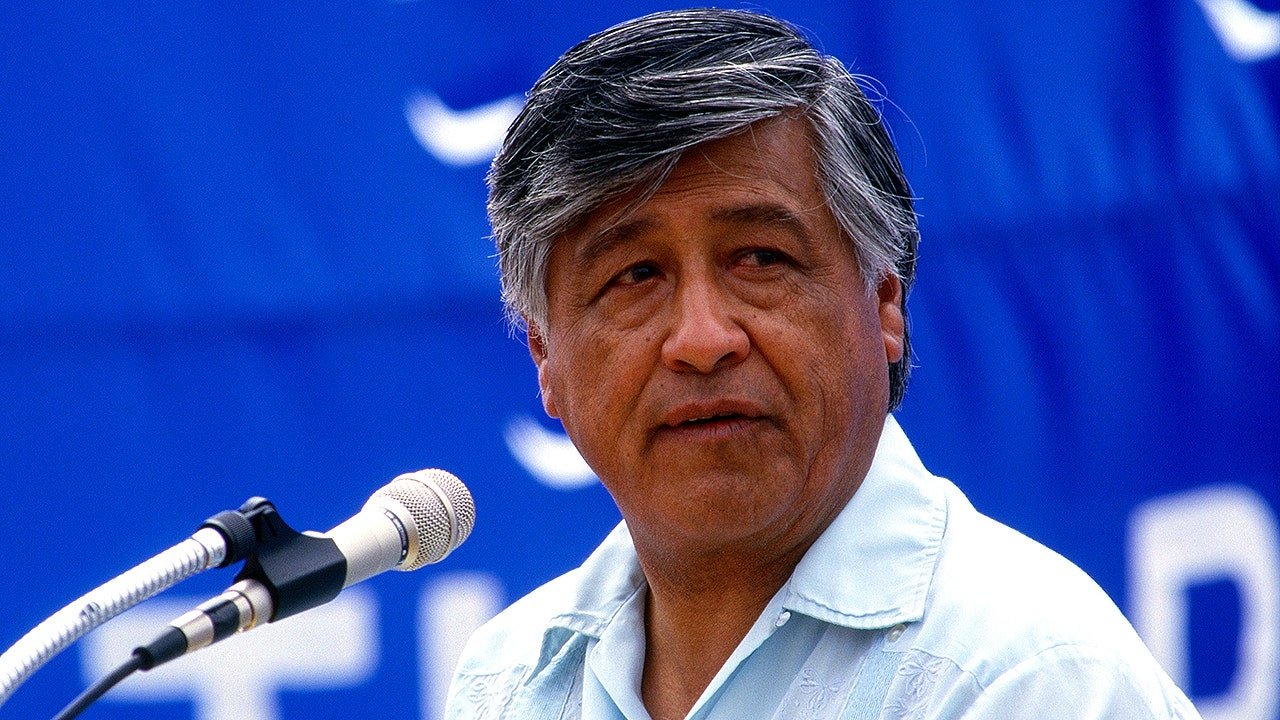
Cesar Chavez speaks to demonstrators in Washington, D.C. (Frank Hurley/NY Daily News Archive via Getty Images)
In 2010, President Barack Obama issued a presidential proclamation declaring March 31 César Chavez Day. You would have to go back to Bill Clinton, before César Chavez Day even existed, to find a Democratic Party president who did not honor him during the month of March. Obama began the tradition in 2009, issuing an official White House statement explicitly commemorating «César Chavez’s birthday» and praising his legacy as a civil rights and labor leader.
The following year, he announced the first official César Chavez Day to be held March 31 every year, and then subsequently, every year thereafter, put out a statement in honor of him. The tradition was then picked up when former President Joe Biden took office in 2021.
«The hypocrisy is rich, and Democrats’ praise for an abuser and rapist has-been is now exposed,» a national GOP strategist told Fox News Digital. «Any refusal to apologize or retract statements will be taken as Democrats supporting his disgusting behavior.»
After the allegations broke Wednesday, Fox News Digital reached out to a slew of Democrats, as well as the Democrat National Committee (DNC), all of whom recently professed public praise and support for Chavez.
«A movement is about the people—not any one person—and its strength lies in the values it upholds. We can honor the farmworker movement—and the generations who sacrificed to build it—while also confronting painful truths,» said Speaker Emerita Nancy Pelosi, who touted Chavez as a «champion for justice and dignity» on César Chavez Day in 2024. «No legacy is above accountability.»
«The farm workers movement and a labor movement are much bigger than one man — and we celebrate that and that will be our focus as we process what the next steps are,» said California Gov. Gavin Newsom, who, alongside his wife Jennifer, posted a video tribute to Chavez on March 31 of last year praising him as «a leader who fought for justice, dignity and fairness.»
However, in light of the new allegations, a source familiar with Newsom’s thinking said the governor was open to conversations with California lawmakers about proposed statutory changes in response.
SCALISE ACCUSES DEMOCRATS OF REVIVING ‘DEFUND THE POLICE’ PUSH WITH DHS FUNDING GAMBIT
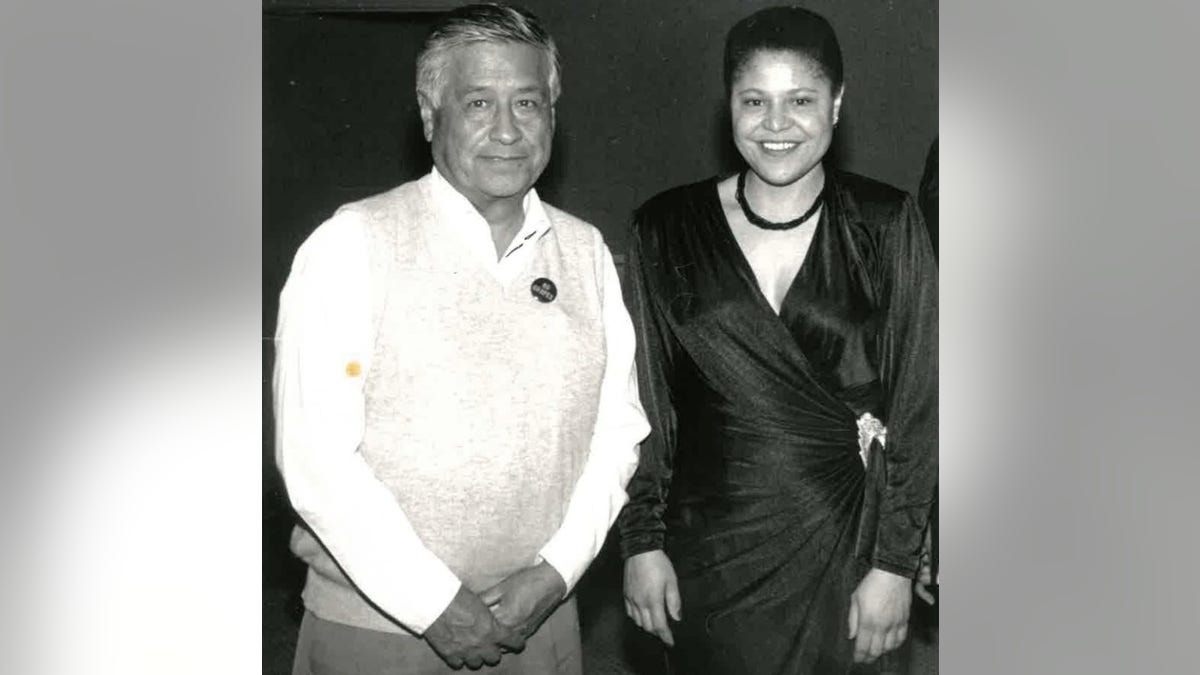
Los Angeles Mayor KAren Bass posted this photo of her younger-self next to Cesar Chavez on Cesar Chavez Day last year. (Mayor Karen Bass)
«I am keeping Dolores Huerta, Ana Murguia, and Debra Rojas in my heart, and I honor their strength and that of every woman and girl horrifically harmed by those in power,» said Los Angeles Mayor Karen Bass, who posted a photo of herself with the late civil rights and labor union leader last year on his March 31 day of remembrance instituted by Obama.
«The sickening reality is that what Dolores, Ana, and Debra endured is not isolated, nor is it of the past. Real progress requires more than moments of reckoning – it demands sustained action to dismantle social, cultural, economic, and political structures that have hurt women throughout our history,» Bass continued. «Dolores and leaders like her inspired so many of us to activism. Mr. Chavez’s crimes do not diminish the courage of farm workers and workers everywhere who fight for their rights, equality for Latinos, and a stronger nation for everyone.»
On Thursday, Bass signed a proclamation of her own to rename César Chavez Day to «Farm Workers Day.» Meanwhile, Colorado Democrat Gov. Jared Polis, who also praised the activist on March 31 last year, said his state would not be celebrating the honorary holiday for Chavez «this year.»
«Nor does he plan to direct state agencies to take action to celebrate Cesar Chavez in light of these heinous allegations,» a Polis spokesperson added. «Further, he would encourage the legislature to consider drafting legislation to change the optional state holiday, which is in law.»
Other Democrats scrambled to put out statements after news of the accusations broke, with many mirroring the language from top Democrats that the movement Chavez helped create is bigger than just him.
CLICK HERE TO DOWNLOAD THE FOX NEWS APP
The allegations against Chavez remained out of the public’s eye for many years, although, per the New York Times, there were earlier signs. According to their reporting, the victims they spoke to were not only embarrassed but also scared of tarnishing the reputation of someone so important to so many others and to the labor union and civil rights movements.
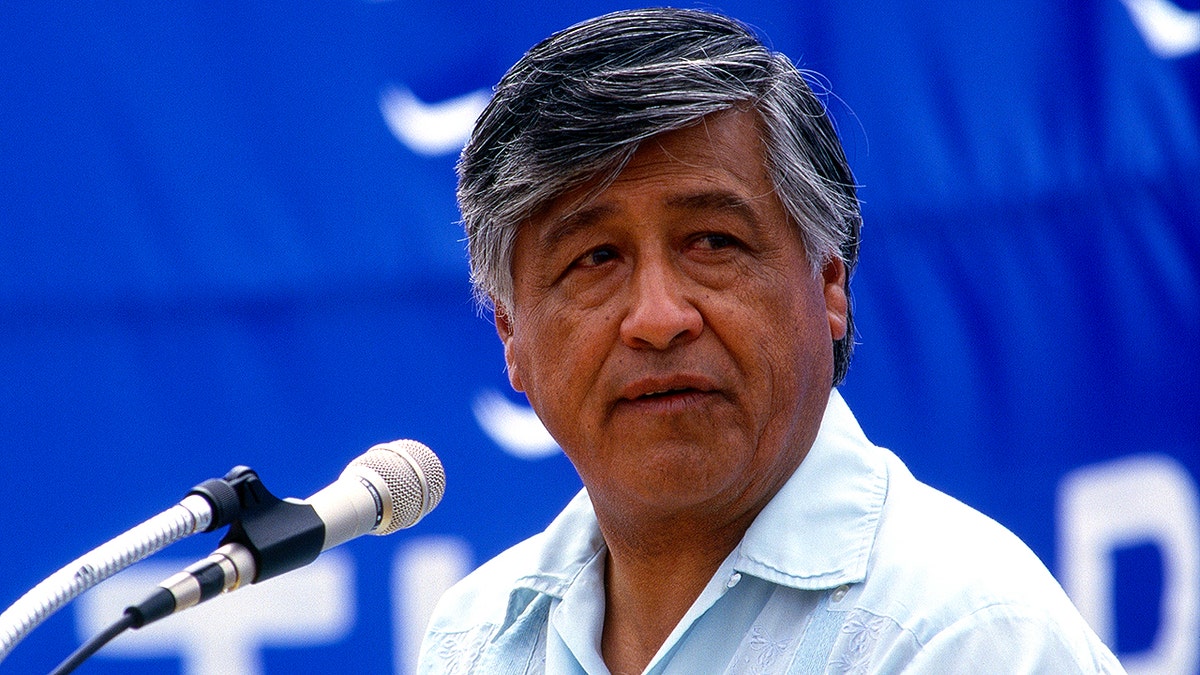
Cesar Chavez, then-president of the United Farm Workers, speaks in California in 1988. (Bob Riha, Jr./Getty Images)
On Wednesday afternoon, Republican Governor of Texas, Greg Abbott, said that Texas will no longer be observing César Chavez Day on March 31, and that he was instructing all state agencies to comply. The Texas governor added that he plans to work in the upcoming legislative session to remove the day of remembrance from state law completely.
«Reports of the horrific and widely acknowledged sexual assault allegations against Cesar Chavez rightfully dismantle the myth of this progressive hero and undermine the narrative that elevated Chavez as a figure worthy of official state celebration,» Abbot said.
democratic party,democrats,democrats senate,labor unions,politics,barack obama,joe biden

Hay alerta naranja y amarilla por tormentas, lluvias y vientos fuertes para este viernes 20 de marzo: las provincias afectadas

Qué ver en Netflix, la miniserie de 6 episodios que es el gran hallazgo para abrir el fin de semana de viernes: «Esa noche»

El peso argentino es una de las pocas monedas emergentes que se apreciaron desde el inicio de la guerra en Irán

La Ligue 1 da un paso histórico con ‘El Partido Más Inclusivo’

Un ex intendente bonaerense se sumó al equipo de Diego Santilli en el Ministerio del Interior

Qué leer gratis: cómo vivir sin ansiedad, los “desamores breves” y el pionero argentino de la ciencia ficción

TRAICIÓN Y ÉXODO: La promesa rota de Monteoliva que desató una ola masiva de bajas en la Policía Federal

Adorni se disculpó por el viaje de su esposa: “Fue una pésima decisión, más allá de que no generó gasto para el Estado”

Horacio Rodríguez Larreta reapareció y lanzó “Metrópolis”, su nuevo espacio en la Ciudad de Buenos Aires

Insólito: un esquiador británico terminó la Copa del Mundo de Oslo bajo los efectos del alcohol

 POLITICA2 días ago
Las chicanas de Cristina Kirchner en el arranque de su indagatoria: “Tengo apodos, pero no me parecen adecuados”
- ECONOMIA2 días ago
Juicio por YPF: la Justicia de EEUU benefició a Argentina y suspendió todas las demandas hasta que se defina la cuestión de fondo
- POLITICA1 día ago
Senado: la oposición pidió explicaciones por $LIBRA y los vuelos de Adorni y Bullrich defendió al Gobierno