INTERNACIONAL
‘Peace through strength’: Trump Gaza plan gains global backing one year on

Jack Keane: Trump’s Gaza peace deal is a ‘huge step forward’
Ret. Four-Star Gen. Jack Keane breaks down the next phase of President Donald Trump’s Gaza peace deal on ‘Fox & Friends.’ Keane explains how the historic agreement mandates the complete disarmament of Hamas and other armed groups, leading to the withdrawal of Israeli forces and the transition of power to a new Palestinian government.
NEWYou can now listen to Fox News articles!
A year has passed since President Donald Trump made history by brokering a ceasefire between Israel and Hamas, setting in motion an ambitious peace plan aimed at bringing lasting stability to the region.
In the days and months since the ceasefire and Trump’s 20-point peace plan took hold, progress has drawn support from across the globe — including from unexpected quarters.
Senior advisor to the Board of Peace Josh Gruenbaum told Fox News Digital that the success of the last 12 months was largely attributable to President Donald Trump’s leadership and commitment to seeking peace.
TRUMP-BACKED BOARD OF PEACE, ISRAEL ‘WILL TAKE ACTION’ IF HAMAS REMAINS OUT OF COMPLIANCE: NETANYAHU ADVISOR
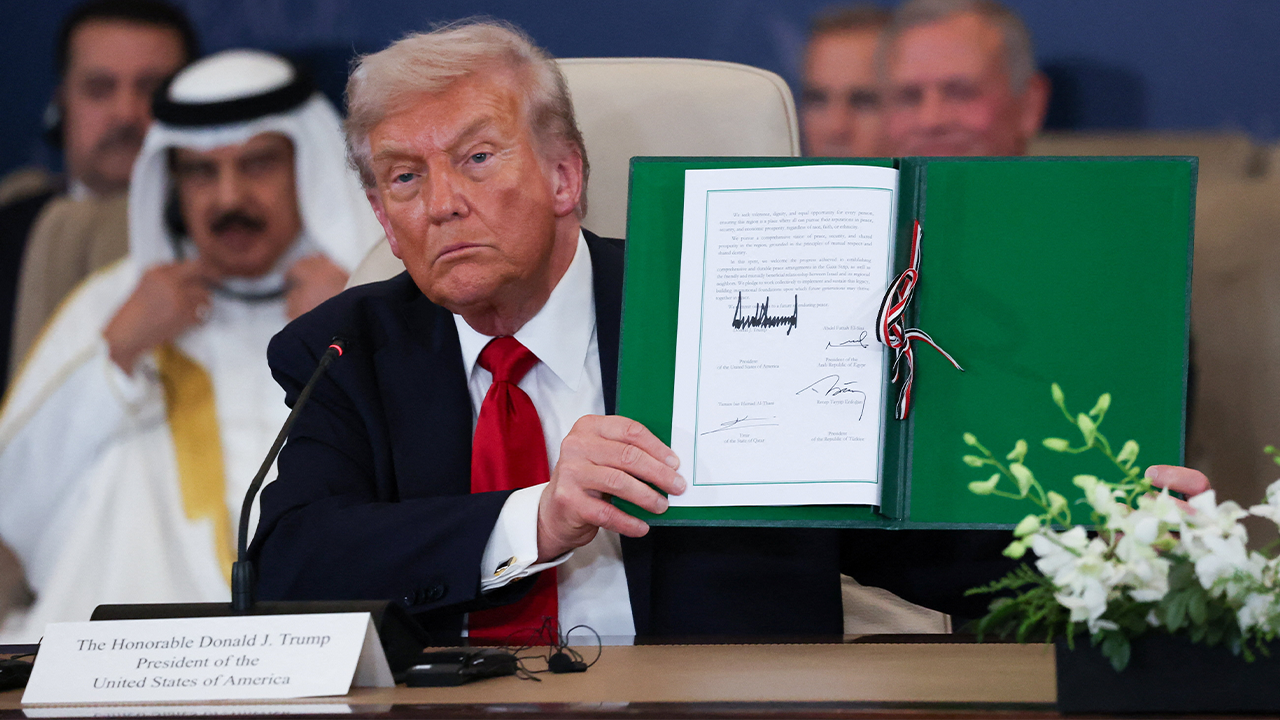
President Donald Trump poses with the signed agreement at a world leaders’ summit on ending the Gaza war, amid a U.S.-brokered prisoner-hostage swap and ceasefire deal between Israel and Hamas, in Sharm el-Sheikh, Egypt, October 13, 2025. (Suzanne Plunkett/Reuters)
«The unlock was somebody who came in, who really knew the file because they had the chance to study it and understand it,» Gruenbaum said. Trump and his team, including U.S. special envoy to the Middle East Steve Witkoff, U.S. special envoy for Peace Jared Kushner and Secretary of State Marco Rubio, «created working relationships with regional actors with trust, overlaid with peace through strength,» while also forcing Hamas to finally understand that «this was either going to end the very hard way for them, or there was an off-ramp and a way to do this in a more dignified way, which is what the 20-point plan was.»
He said this has been achieved by «building consensus through the world, including through Europe, that this is the only game in town. This is the only pragmatic approach to make this thing stop.» A particular point of strength for the Board of Peace, Gruenbaum added, has been «cultivating really strong relationships with the United Nations.»
In November 2025, the United Nations endorsed the Board of Peace through Resolution 2803.
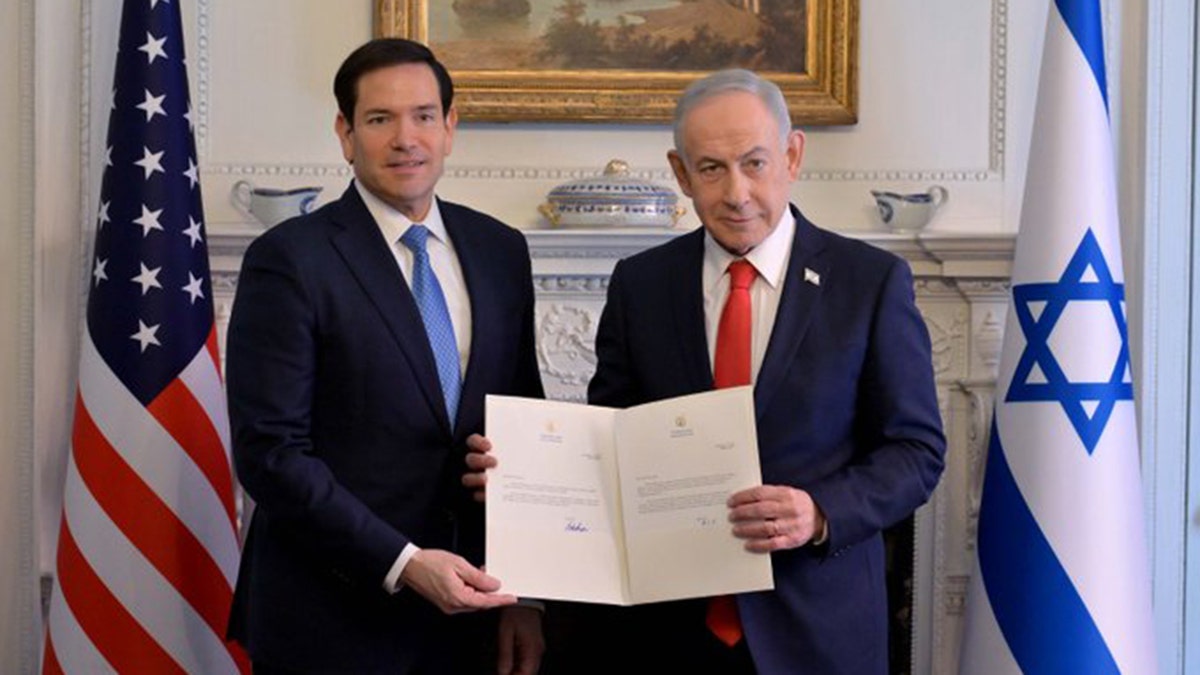
Prior to his meeting with President Trump at the White House, Prime Minister Netanyahu signed up, in the presence of Secretary of State Rubio, as a member of the Board of Peace. (@IsraeliPM)
European Union Commissioner for the Mediterranean and for Demography Dubravka Šuica announced at a high-level briefing at the Board of Peace in September that the European Union had «gathered about $1 billion for early recovery in Gaza,» and would sign recovery projects with the UNDP and UNICEF. «We are doing this in alignment with the priorities of the Board of Peace and the National Committee for the Administration of Gaza (NCAG),» Šuica stated.
US URGES DONORS TO ABANDON UNRWA FUNDING AS UN DEFENDS AGENCY’S MISSION
The International Stabilization Force, which will train a future police force in Gaza and oversee demilitarization, has received commitments from Kazakhstan, Morocco, Albania and Kosovo, with other countries said to be in the pipeline for admission.
Notably absent from Gaza’s future, per the Board of Peace plan, is the United Nations Relief and Works Agency for Palestine Refugees in the Near East (UNRWA). The Board of Peace has been unequivocal that UNRWA will have no involvement in Gaza. One U.S. agency, the USAID Office of the Inspector General, is currently investigating over 1,500 UNRWA employees for involvement in terror groups.
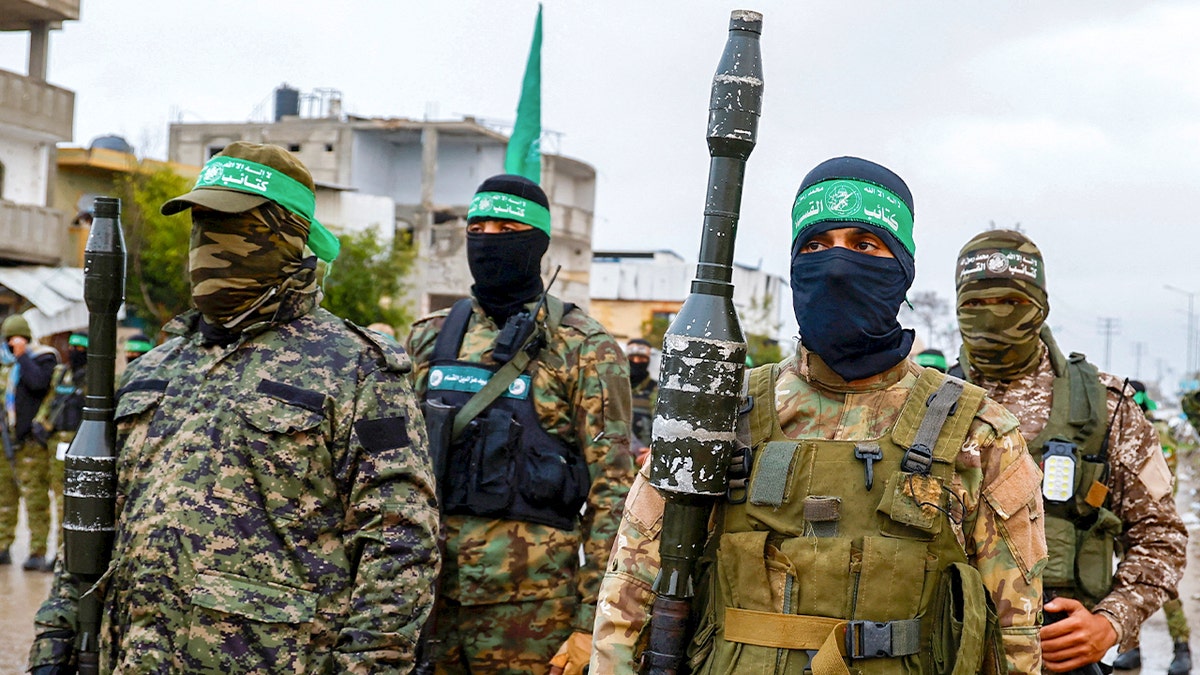
Hamas terrorists stand guard on the day of the handover of hostages held in Gaza since the deadly October 7, 2023, attack, as part of a ceasefire and a hostages-prisoners swap deal between Hamas and Israel, in Rafah in the southern Gaza Strip, Feb. 22, 2025. (Hatem Khaled/Reuters)
On X, the Board of Peace recently stated that it «will only work with trusted partners who deliver for the people of Gaza and contribute to a deradicalized Strip,» and emphasized that «UNRWA fails on those litmus tests.»
The Board of Peace’s effort has support from unlikely corners. Former Secretary of State Hillary Clinton wrote in a June editorial in the Financial Times that while the plan was «not the one many of us would have drafted,» she believes «it remains the only framework backed by sufficient leverage, political engagement and potential resources to move parties towards implementation.»
The Board of Peace has received about $18 billion in pledges for reconstruction, the BBC recently reported. A Board of Peace official told Fox News Digital that next steps in the reconstruction program include a six-month program with 66 recovery initiatives, including rubble clearance, unexploded ordnance clearance, construction of temporary housing and destroying tunnel infrastructure. The initiatives are expected to cost $2.45 billion, and tenders for some projects have been submitted.
KUSHNER GIVES HAMAS STARK ULTIMATUM: DISARM OR ISRAEL GETS US BACKING TO ‘FINISH THE JOB’
In the year ahead, the Board of Peace must clear a number of hurdles, including a full demilitarization and de-radicalization of Hamas in Gaza. Gruenbaum says that the Board of Peace is «realistic and sober» but is also «in a historic place with Hamas,» having secured verbal agreements and offering a path to amnesty for those who qualify.
Gruenbaum also says that the 20-point plan is Hamas’ best path forward and that regional dynamics leave them with few remaining options. Mediators are increasingly supporting the Board of Peace, Tehran is focused on its current war, and Israel is continuing to apply pressure, though Gruenbaum says the Board of Peace continues to stress that they must comply with the ceasefire.
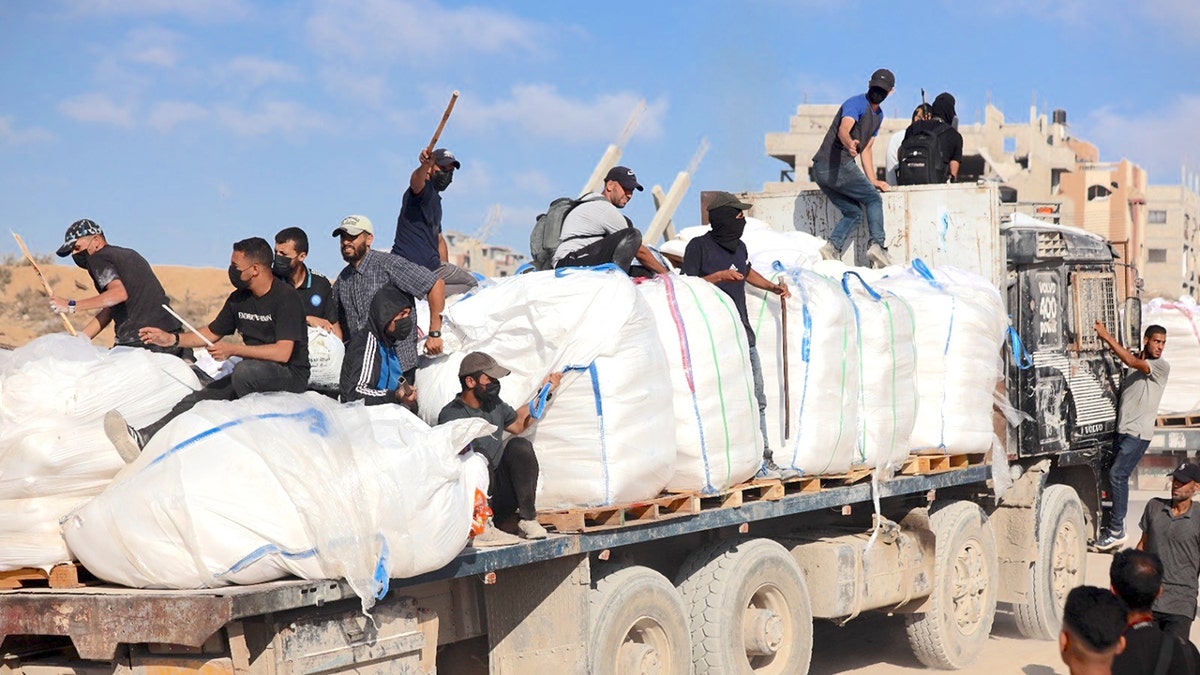
Hamas terrorists carrying clubs and firearms secure and divert humanitarian aid trucks in the northern Gaza area of Jabaliya on June. 25. (TPS-IL)
Gruenbaum said that deradicalization will never be a top-down process led by the U.S., but will be managed through the NCAG. He said that the NCAG’s members «have kids that have been brought up» under the current UNRWA-run system, so «they understand the situation.» The approach will involve the new technocratic government, whose members have extensive experience in civil service, taking the lead on «vetting teachers» and «vetting people who are involved in civil governance.»
Gruenbaum celebrated the potential of bringing together the NCAG and Israeli authorities through the transformation of Gaza. «This is a monumental opportunity for the Palestinian people of Gaza where their governing body is going to be uniquely focused on delivering services for its constituents and if we could create this amazing relationship where we build trust between Israel and the NCAG, we deliver on both sides of the equation – security for Israel and freedom and a better life, self-determination and prosperity-building inside of Gaza. That’s a two-way trust-building system.»
Gruenbaum added that the successes in Gaza could lead to successes elsewhere. «Maybe these best practices get learned by the Palestinian Authority. Maybe Israel starts adding more trust with different people in the system. I think this is a huge moment in the history of the Middle East.»
israel, conflicts, hamas, terrorism, national security, state department, anti semitism












INTERNACIONAL
James Talarico, el rostro joven de la histórica victoria demócrata que se suma a la carrera presidencial del 2028 en EE.UU.
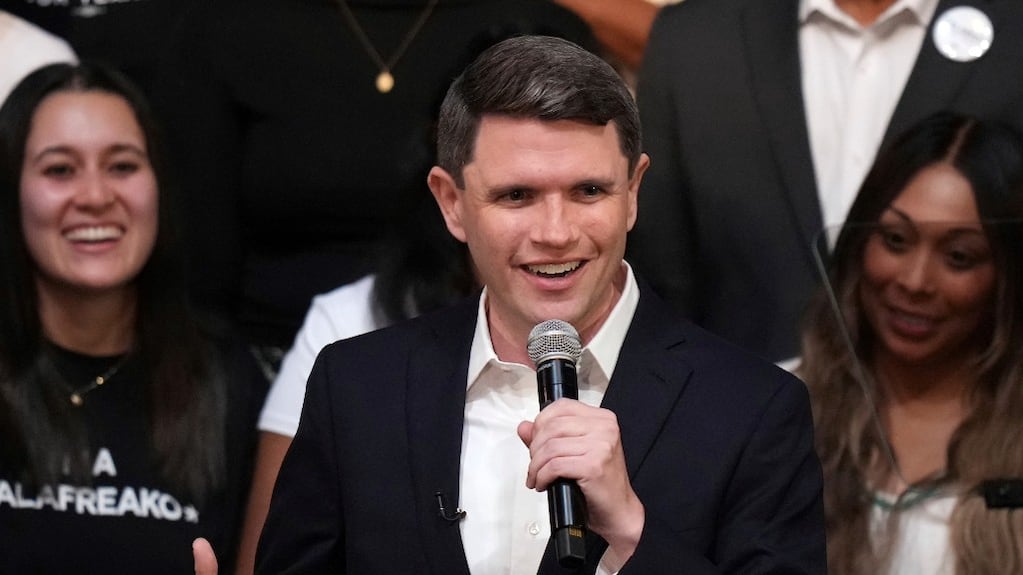
Es el rostro más visible de la victoria demócrata sobre Donald Trump. Tiene 37 años, rostro de niño y apellido italiano. James Talarico pateó el tablero político en Texas y fue electo senador por el Partido Demócrata en un tradicional bastión conservador.
Será el legislador más joven del nuevo Senado estadounidense, tras unas elecciones que delinearon un nuevo mapa político con un Congreso dominado por la oposición.
Su triunfo sobre su rival republicano Ken Paxton fue histórico y lo catapultó a la primera línea de la carrera presidencial demócrata para las elecciones de 2028, junto a la exvicepresidenta Kamala Harris.
Talarico, maestro y seminarista presbiteriano, ganó en forma holgada a pesar de los fondos millonarios de la campaña republicana, la más cara para una elección no presidencial en la historia del estado. Según los resultados oficiales, ganó con el 54% de los votos.
Se estima que más de U$S 500 millones fueron donados a las arcas republicanas para evitar una derrota que no se daba desde hace casi 40 años. Solo Elon Musk giró unos U$S 200 millones, de acuerdo a la prensa local.
“David no era tan grande ni tan fuerte como Goliat. No tenía tantas armas, pero tenía esperanza. Tenía fe y tenía una honda. Ustedes fueron mi honda. Gracias. El pueblo de Texas fue mi honda. Y esta noche, hemos derrotado a Goliat”, dijo Talarico en un acto en Austin, capital de Texas.
Quién es James Talarico
Talarico nació el 17 de mayo de 1989 en Round Rock, en la periferia de Austin.
Se dedicó a la docencia y trabajó en una escuela pública de San Antonio antes de lanzarse a la política.
Su abuelo fue un pastor bautista. El flamante senador es abiertamente religioso y suele citar a Jesús en sus discursos, lo que lo diferencia de otros dirigentes del partido más inclinados a la izquierda, como la diputada Alexandria Ocasio-Cortez o el también electo senador Abdul El-Sayed, que será el primer miembro musulmán de la cámara alta.
De hecho, Talarico estudia actualmente en el Seminario Teológico Presbiteriano después de obtener un máster en política educativa en Harvard.
“Su perfil lo hace candidateable (en las elecciones presidenciales de 2028), sobre todo porque es joven. Además, es moderado, dentro de todo lo que representa el ala más radical y extremista del Partido Demócrata”, dijo a TN el analista Mauro Enbe.
Unidos
INTERNACIONAL
Iran takes a victory lap over stunning US election results, claims ‘collapse has accelerated’
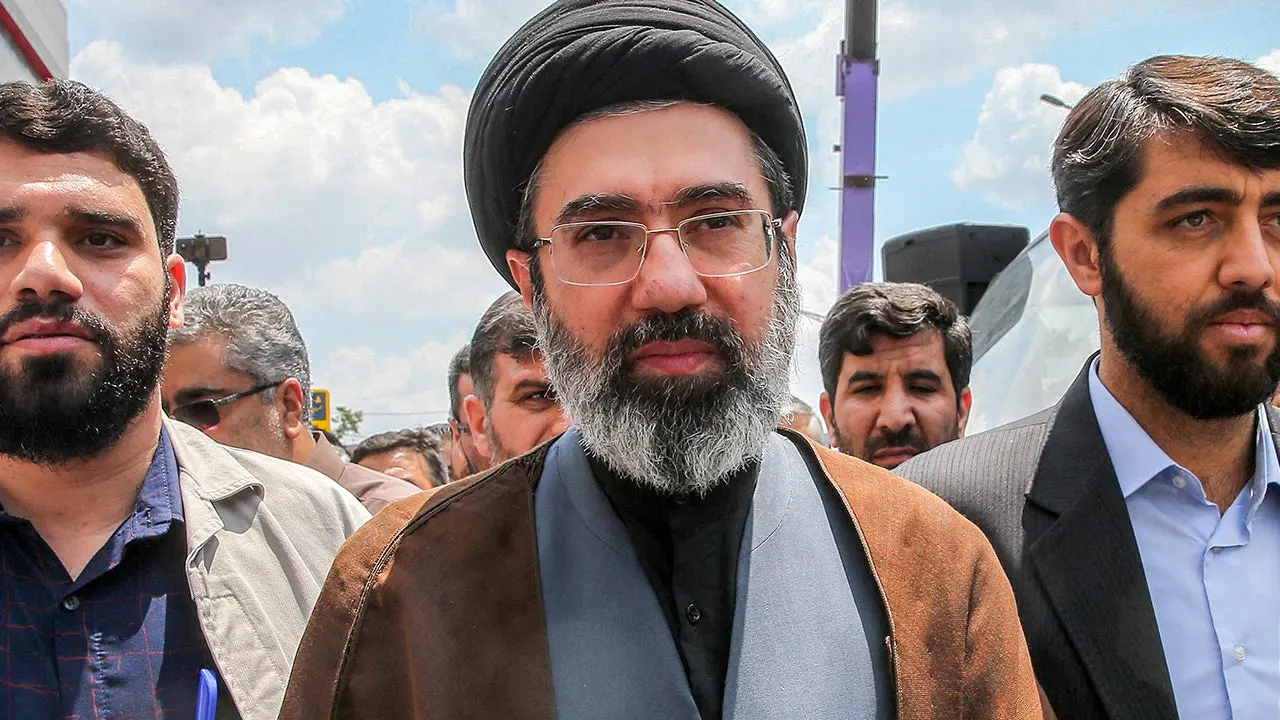
Democrats weren’t the only ones celebrating amid shattering defeats for Republicans in the midterm elections — Iranian leaders also took a victory lap Wednesday.
Iran cast the results — where Democrats made gains even in traditional Republican strongholds — as a rejection of President Donald Trump’s war and a decisive referendum on the economic toll it took on American voters in the months before the election.
«The process of the US’s collapse has accelerated,» Iran’s current Supreme Leader, Ayatollah Mojtaba Khamenei, posted on an official English language account on X.
«Conscience or the cost of living, Americans said NO TO WAR, and we endorse this message,» Iranian Parliament Speaker Mohammad Bagher Ghalibaf, who has also served as Tehran’s chief negotiator in talks with Washington, posted on X.
STATE OF PLAY: BLUE WAVE SWEEPS DEMOCRATS INTO POWER, WITH KEY RACES STILL HANGING IN BALANCE
«If the US govt betrays their public will to serve international paymasters and blackmailers, it will learn our NO comes with a Nightmare,» Ghalibaf added.
Khamenei, meanwhile, appeared to signal Iran would dig in its heels rather than negotiate with the U.S.
«The Great Satan [the US] wants the surrender of the Iranian nation. The slightest inclination toward submission would cause the immense capital acquired through the blessings brought by the blood of our martyrs and the sacrifices of the entire Iranian nation to be lost,» he wrote in another post on X.
«It would embolden the enemy to launch more wars, and carry out its next acts of aggression.»
The declarations came after Democrats seized control of Congress Tuesday night in a political bloodbath for Republicans, delivering a major rebuke to Trump after a campaign dominated by concerns over affordability and the months-long war with Iran that the president repeatedly promised was nearing its end.
When the attacks began earlier this year, Trump said it would last a weeks — maybe a bit over a month. It has now been raging for more than eight months.
TRUMP CALLS IRAN CONFLICT A ‘SOFT WAR,’ INSISTS US HOLDS THE CARDS AHEAD OF MIDTERM ELECTIONS
Iran was hardly the only issue driving voters to the polls — but the conflict became increasingly intertwined with Americans’ economic concerns as the war sent energy prices higher and impacted the costs of gas and most goods.
Polling ahead of Election Day showed deep public dissatisfaction with the Iran conflict.
Trump himself acknowledged after the results came in that Iran «partly» played a role in Republicans’ losses, even as he continued to defend his decision to go to war.
Vice President JD Vance was much more blunt, writing in a lengthy X post: «The reason we lost is the war.»
«If you’d like to argue it was worth it, that losing the Senate for the next 6 years was worth it, then do so,» he continued. «Argue it was a worthwhile cost to pay. Agree or disagree, that’s at least honest.»
Other voices in Tehran also claimed vindication in the wake of the results.
TRUMP ADMIN THREATENS IRAN WITH ‘CONSEQUENCES’ AS ALLIES CONVENE AMID THREATS OF POST-ELECTION ESCALATION
Iranian Deputy Parliament Speaker Ali Nikzad called the Republican losses the «aftershocks» of what he described as Trump’s defeat at the hands of Iran, while a senior official in Iranian President Masoud Pezeshkian’s office claimed the war and U.S. support for Israel had brought Republicans an historic electoral defeat.
Trump entered the conflict predicting a short war.
In the opening days of Operation Epic Fury, the president repeatedly said the campaign would take roughly four to six weeks and soon declared U.S. forces were running «substantially ahead» of schedule. American and Israeli strikes quickly eliminated senior Iranian military leaders and battered Tehran’s military infrastructure.
But the war proved far easier to start than to end.
Iran retaliated by choking commercial traffic through the Strait of Hormuz, the narrow waterway that before the war carried roughly a fifth of the world’s oil supply, while launching attacks on energy infrastructure across the Persian Gulf. Shipping through the strait nearly ground to a halt in the early weeks of the conflict, removing millions of barrels of oil from global markets and sending energy prices sharply higher.
Iranian attacks damaged oil and energy facilities in Saudi Arabia, Kuwait and elsewhere in the Gulf, further squeezing supplies. By the end of May, more than 1.1 billion barrels of crude that would ordinarily have reached global markets had been disrupted, according to the International Monetary Fund.
THE OVERLOOKED WAY THE IRAN WAR IS MAKING GROCERIES, AMAZON PACKAGES AND NEW HOMES MORE EXPENSIVE
What Trump initially described as a matter of weeks instead stretched across much of 2026, as the administration struggled to secure lasting freedom of navigation through Hormuz and Iran retained the ability to threaten commercial shipping and its Gulf neighbors.
The economic consequences followed Americans home.
Oil prices surged after the war began, feeding through to gasoline and other consumer costs just as Republicans headed into a midterm election already dominated by concerns over affordability.
Even after U.S.-led operations restored much of the traffic through Hormuz by the fall, oil flows remained below prewar levels and Iran continued attacking commercial vessels.
The prolonged conflict also complicated Trump’s effort to argue that the war had already accomplished its central objectives. By October, the president was disputing that he had ever promised the entire conflict would end within four to six weeks, saying that timeline referred only to eliminating Iran’s nuclear threat.
war with iran, donald trump, congress, midterm elections, national security, politics, geopolitics, foreign affairs
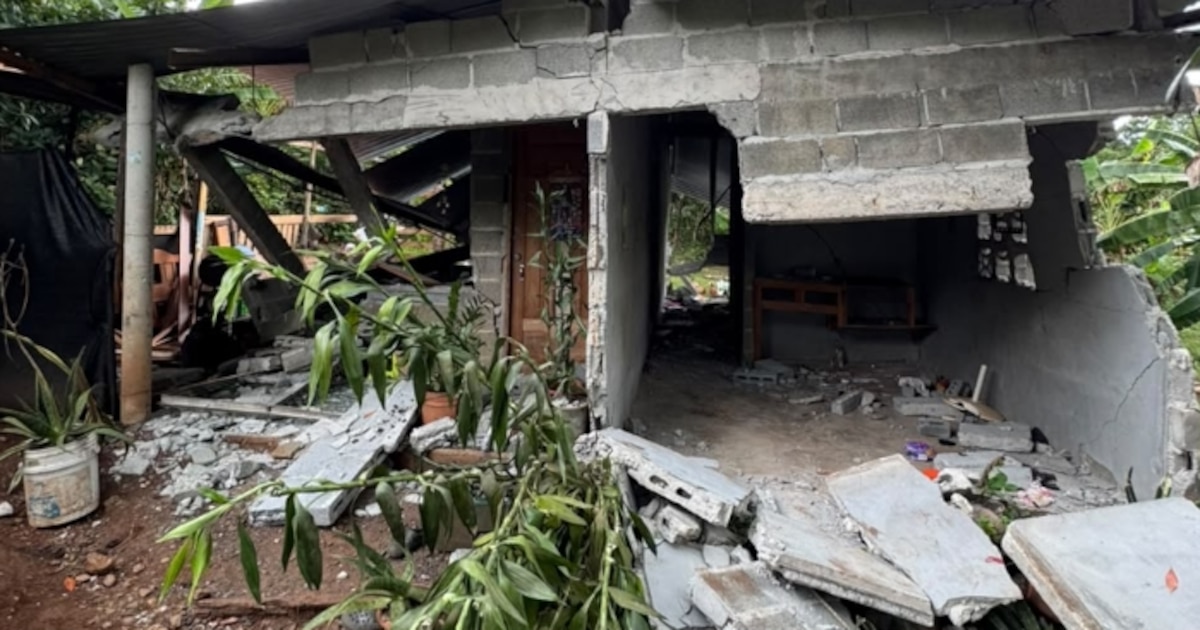
Un total de 4,633 viviendas presentan daños totales en Panamá como consecuencia del terremoto de magnitud 7.5 registrado el pasado 9 de octubre. El Sistema Nacional de Protección Civil (Sinaproc) informó que 19,865 residencias han sido evaluadas, mientras las inspecciones abarcan a 63,767 personas en diez provincias y la comarca Ngäbe-Buglé.
El balance del Centro de Operaciones de Emergencias (COE), actualizado al 2 de noviembre, revela que 11,107 viviendas registran afectaciones moderadas y parciales, mientras otras 4,125 presentan daños leves o menores.
Las cifras reflejan la magnitud de las pérdidas materiales ocasionadas por el movimiento telúrico, cuando han transcurrido 24 días desde la emergencia.
Las evaluaciones se desarrollan mediante el sistema de Evaluación de Daños y Análisis de Necesidades (EDAN), que permite identificar las condiciones de las estructuras y las necesidades de sus ocupantes. El informe también registra 198 mujeres embarazadas y 2,758 personas con discapacidad, grupos que requieren seguimiento prioritario durante la recuperación.
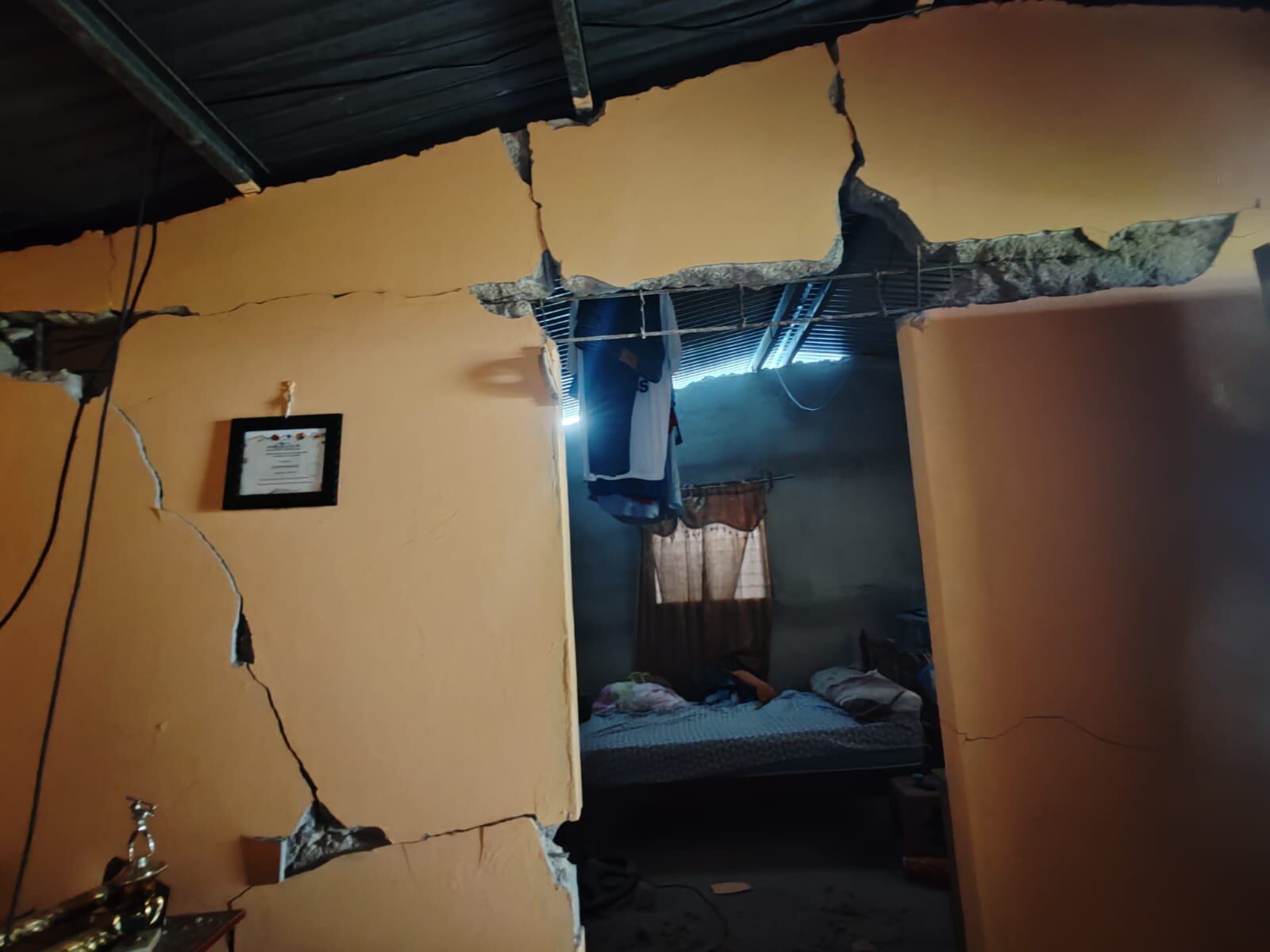
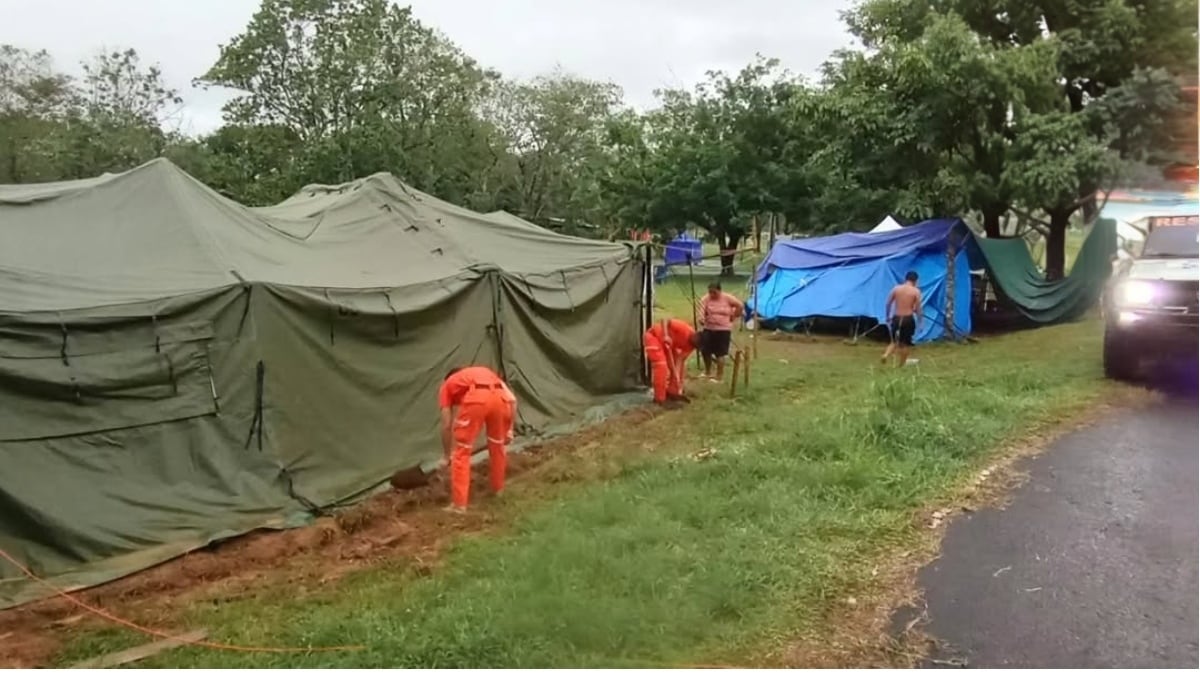
La emergencia mantiene 113 albergues activos en diferentes regiones del país, donde permanecen 3,356 personas pertenecientes a 886 familias. Veraguas concentra la mayor cantidad de damnificados, con 1,635, seguida de Los Santos, que contabiliza 1,153 personas bajo atención de los organismos de respuesta.
En Herrera permanecen 359 personas alojadas en instalaciones temporales, mientras la comarca Ngäbe-Buglé registra 129. Coclé mantiene 66 damnificados y Chiriquí otros 14.
Estas cifras muestran la persistencia de necesidades de alojamiento, especialmente entre las familias cuyas residencias sufrieron afectaciones estructurales importantes.
El Sinaproc mantiene desplegados equipos de evaluación y trabajadores sociales para identificar las necesidades de las comunidades afectadas, orientar a las familias y facilitar la atención institucional.
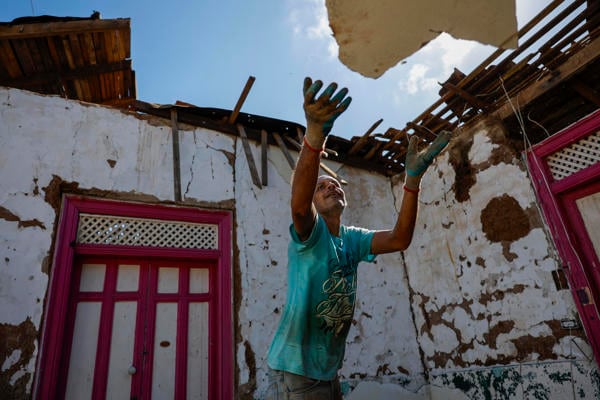
Las labores incluyen acompañamiento a personas vulnerables y distribución de asistencia humanitaria, mientras continúa la verificación de los daños reportados.
En materia alimentaria, el Instituto de Mercadeo Agropecuario (IMA) informó sobre la distribución de 81,229 bolsas de alimentos en 1,548 comunidades. Esta operación forma parte de las acciones de abastecimiento dirigidas a los hogares impactados, particularmente en sectores donde las afectaciones dificultan el acceso a productos básicos.
La respuesta logística también ha requerido movilizar más de 208,317 libras de carga por vía aérea, mediante 343 horas de vuelo y 39 evacuaciones. Paralelamente, las instituciones han transportado 385.50 toneladas de suministros por vía terrestre, utilizando diferentes mecanismos para llegar a las poblaciones necesitadas.
En infraestructura pública, las autoridades reportan más de 853 centros educativos inspeccionados y 120 instalaciones de salud evaluadas. Un balance anterior identificó afectaciones en 619 escuelas, mientras las revisiones estructurales buscan determinar las condiciones de seguridad y facilitar el restablecimiento de los servicios esenciales.
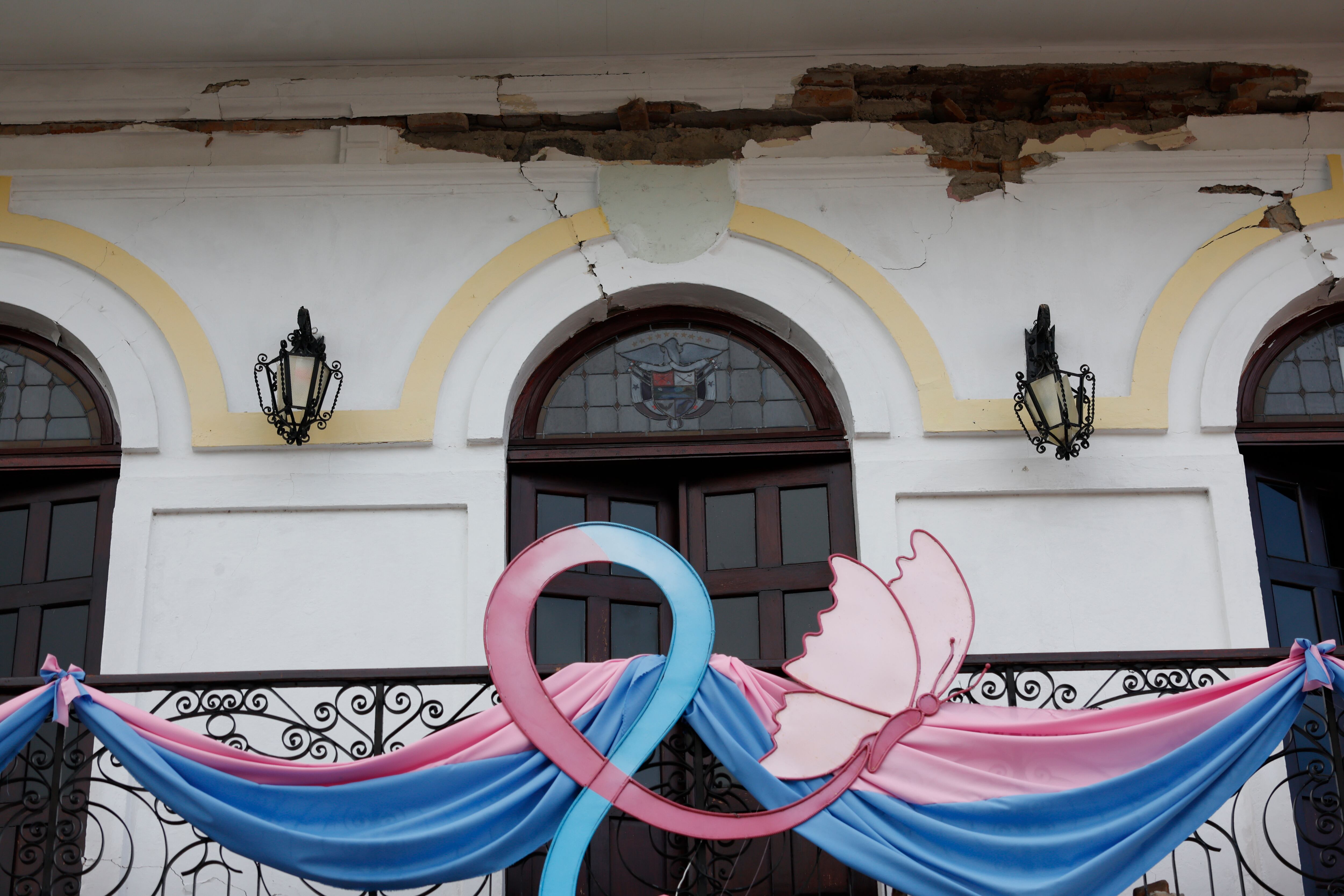
}El terremoto ocurrió el viernes 9 de octubre, a las 12:56 p. m., con epicentro localizado a 39 kilómetros al noroeste de Tonosí, provincia de Los Santos, y una profundidad de cuatro kilómetros. El movimiento provocó daños en viviendas, carreteras, puentes y edificios públicos, principalmente en las provincias centrales.
La evolución de la emergencia refleja un incremento considerable en las evaluaciones realizadas. El 26 de octubre se contabilizaban 13,681 viviendas inspeccionadas y 44,885 personas registradas, frente a las cifras actuales. Aquel balance también reportaba dos personas fallecidas y 27 lesionadas, como parte de las consecuencias del desastre.
El seguimiento internacional ha incluido la participación de organismos de Naciones Unidas, que colaboran en áreas de salud, alojamiento, agua, saneamiento y protección. La Organización Panamericana de la Salud también documentó más de 600 réplicas posteriores al terremoto, un factor que ha complicado la recuperación de algunas comunidades.
Durante las festividades patrias, los equipos de emergencia continúan trabajando en territorio, sin suspender las inspecciones ni la entrega de suministros. Las autoridades también mantienen vigilancia ante las lluvias propias de la temporada, que podrían agravar las condiciones de terrenos inestables y zonas afectadas por deslizamientos.
El Sinaproc reiteró la necesidad de evitar cruzar ríos y quebradas crecidos, atender los avisos meteorológicos y extremar las precauciones con niños y adultos mayores. Mientras avanzan las evaluaciones, la atención a las familias desplazadas y la recuperación de infraestructura siguen entre las principales prioridades de las instituciones.
corresponsal:Desde Panamá

Javier Milei faltó a la inauguración de la Cumbre Iberoamericana y no irá a la cena con los reyes, pero se reunirá con el líder de Vox

El Gobierno francés admite que varios bancos de sangre también han sido objetivo de ciberataques

La chicana de Martín Caparrós a Javier Milei por la derrota de Trump en las elecciones de EE.UU.

James Talarico, el rostro joven de la histórica victoria demócrata que se suma a la carrera presidencial del 2028 en EE.UU.

Cuánto cuestan las pick ups compactas en Argentina tras el lanzamiento de la nueva competidora nacional

¡Récord mundial! Un partido brasileño se salda con 51 expulsados y la intervención de la policía militar

Qué pasó con el Refugio de Eli y por qué hizo enfurecer a Santi Maratea: «Fue un desastre, él nunca más le contestó y le prohibió…»

El “efecto Lula” sigue pegando en Argentina: los bonos sintieron el impacto, pero el tipo de cambio aguantó

Milei parte nuevamente a España y en el gobierno dicen que no bajará el tono de sus críticas a Pedro Sánchez

Agustín Caulo: “El Gobierno sigue trabajando para que no se politice la visita de León XIV a la Argentina”

 CHIMENTOS2 días ago
Qué pasó con el Refugio de Eli y por qué hizo enfurecer a Santi Maratea: «Fue un desastre, él nunca más le contestó y le prohibió…»
- POLITICA22 horas ago
Milei parte nuevamente a España y en el gobierno dicen que no bajará el tono de sus críticas a Pedro Sánchez
- POLITICA11 horas ago
La oposición cuestionó la suspensión de embargos a las pymes y criticó el plan económico: “Llegaron tarde”