INTERNACIONAL
Peltola campaign’s alleged Dan Sullivan spoiler plot takes new turn as DOJ faces major legal hurdle

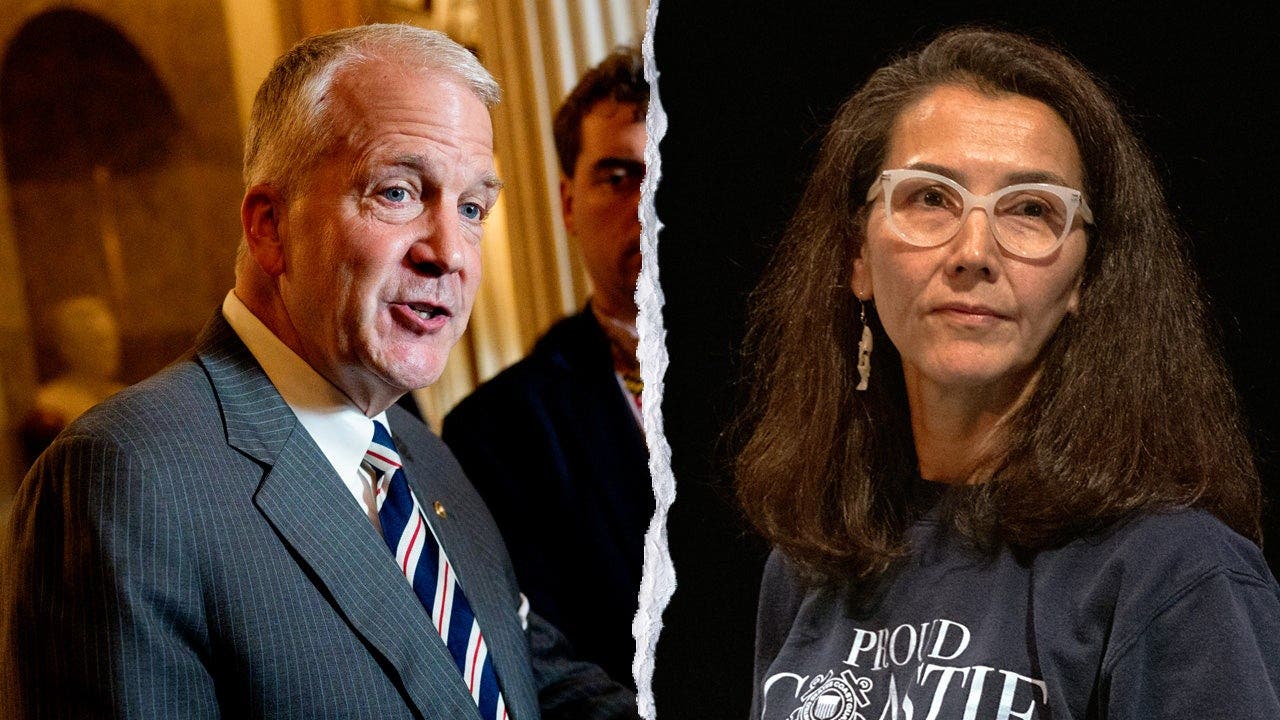
The Department of Justice faces an uphill legal battle in Alaska, where it is trying to convince a federal court that confusion between two Senate candidates with nearly identical names could be enough to delay certification of the election results.
Roughly two weeks before Election Day on Oct. 22, the DOJ filed a federal lawsuit seeking to delay certification if Sen. Dan Sullivan loses and votes cast for another candidate named Daniel J. Sullivan could have changed the result, pending an investigation into whether voters mistakenly selected the wrong candidate.
The DOJ’s complaint stems from a controversy in Alaska where two individuals by the name of Dan Sullivan, one a retired schoolteacher and the other the state’s incumbent senator, appear alongside each other on the state’s ballots. Although Alaska has traditionally been a Republican stronghold in Senate elections, the state’s race could carry greater national significance this year as Republicans seek to defend their narrow Senate majority.
The New York Times reported Wednesday that the campaign of Mary Peltola, the Democrat running for Senate in Alaska, reportedly worked with operatives to recruit another Dan Sullivan to run for Alaska’s Senate seat, hoping voter confusion would draw support from the incumbent Republican senator. Citing interviews, text messages and documents prepared for a potential lawsuit, the Times reported that the effort also targeted other potential spoiler candidates, despite the Peltola campaign’s repeated denials of involvement in the second Sullivan’s candidacy.
TODD BLANCHE CHALLENGES DANA BASH FOR ONLY CITING PART OF CONSTITUTION DURING HEATED ELECTION CLASH
learned Wednesday that federal prosecutors are conducting an «aggressive criminal investigation» into how the second Sullivan secured a spot on Alaska’s ballot, according to two sources familiar with the probe. Investigators are preparing grand jury subpoenas and examining potential violations of voters’ rights, with the investigation expected to continue beyond Election Day. The DOJ declined to comment.
On Sunday, Peltola’s campaign and the Democratic Senatorial Campaign Committee filed a proposed motion to dismiss the Justice Department’s lawsuit, arguing that the federal law cited by the DOJ governs voter registration, not candidate eligibility or ballot design. They also urged the court to resolve the case before Election Day.
Conservatives have argued that two similar names on the same ballot could possibly lead to voters who would prefer to reelect the state’s Republican senator accidentally voting for the retired school teacher. Opponents of the effort to remove Daniel J. Sullivan from the ballot argue that sharing a name with an incumbent is not grounds for disqualification and that Alaska’s ranked-choice voting system allows voters to rank both candidates, potentially limiting the effects of mistaken selections.
Alaska’s Division of Elections initially sided with conservatives, disqualifying Sullivan the schoolteacher by finding that his candidacy was not a genuine, good-faith bid for office but instead was designed to confuse voters into mistaking him for the senator. Alaska Superior Court Judge Thomas Matthews overturned the decision in June, holding that the Division of Elections had no authority to void a candidacy on that basis.
Alaska’s general election ballot identifies the incumbent as «Sullivan, Dan S.,» with Republican and incumbent designations, while listing the other candidate as «Sullivan, Daniel J. Jr.,» without a party affiliation, a measure some argue is enough to clear up potential confusion. Lawyers at the Justice Department, however, remain unconvinced.
Although Attorney General Todd Blanche has suggested that officials could examine ranked-choice ballot patterns for signs of confusion, the Justice Department has not explained how those patterns could establish that individual voters mistakenly selected the wrong candidate. Voter privacy protections pose a major obstacle to a potential federal case, as it would be nigh impossible to tie specific voters to specific ballots to serve as evidence of confusion.
ALASKA HAS A VOTING SYSTEM LIKE NO OTHER STATE; REPUBLICANS WORRY IT COULD COST THEM IN NOVEMBER
«This is just the stuff that is just impossible to measure after the fact,» Notre Dame law professor Derek Muller said of the DOJ’s plan to infer voter intentions from anonymous ballots.
Blanche, in interviews with the press, has provided some insight into how he would like the DOJ to go about solving this problem.
«So, because of rank-based voting, voters… they write not just one, not just two, but multiple names on the ballot. And so there are a number of scenarios where it could be obvious that a voter was confused by the way they wrote down candidates,» Blanche told CNN’s Dana Bash.
Blanche’s comments suggest that the Justice Department could examine ranked-choice ballot patterns for potential signs of confusion, although such patterns alone would not establish whether voters intended to support a different candidate.
«It will be obvious from the results and from the ballots that voters were confused, and that could be obvious from the way that they rank the Dan Sullivans or not including a Dan Sullivan on the ballot,» he said in a later interview with CBS.
ALASKA REPUBLICANS SCRAMBLE TO EDUCATE VOTERS ON SUSPECTED DEM PLANT AS ‘BALLOT FATIGUE’ THREATENS RACE
Don Palmer, senior legal fellow for election integrity at the right-of-center Heritage Foundation, told Digital that he feels the Justice Department might have a case if the agency’s lawyers construct it properly. Statistical analysis of ballots alone, he maintains, will likely not be sufficient to convince a judge of the administration’s position.
«You’ll have the opportunity to interview witnesses, do some statistical analysis, and make a decision whether or not the campaign wants to contest the results of the election,» Palmer said. «So it’s actually quite a high standard where you have to bring in witnesses. You can’t generally just prove it with some statistical analysis… the campaign would have to show to the court through statistical and expert testimony, plus witness testimony, plus affidavits, that enough voters were confused, that they made inaccurate choices on what they intended to do. Then and only then could the court determine whether the race should be overturned.»
«If voters voted for the non-Republican Dan Sullivan as their first choice, but voted down ballot for Republicans as their first choice otherwise, that could indicate patterns of confusion whereby voters were looking to vote straight Republican as their first choice and were prevented from doing so because the inclusion of Daniel J. Sullivan on the ballot confused matters,» a spokesman for the America First Policy Institute told Digital.
Ben Hovland, a senior fellow at the left-of-center Center for American Progress and an expert on elections, was more bearish on the DOJ’s prospects.
SEEING DOUBLE: SECOND DAN SULLIVAN ADVANCES, SETTING UP BIZARRE ALASKA SENATE BALLOT
«You’ve never seen a claim like this made under the National Voter Registration Act,» he told Digital. «This is not a matter of federal law. This is a state ballot qualification issue and the Alaska Supreme Court addressed this issue months ago. For the Department of Justice to step in at this point and sort of make this claim, you know, doesn’t appear to be about winning in a lawsuit because it doesn’t seem like there’s any scenario where [they win], this is clearly about trying to sow confusion or sow doubt or set the stage to undermine the results of the election if the administration doesn’t like what the voters will have to say.»
Walter Olson, a senior legal fellow at the libertarian Cato Institute, also isn’t convinced that the Justice Department will be able to get its case off the ground.
«I wouldn’t expect Blanche’s local allies to get very far in this effort unless a federal court rules in favor of his theory that Alaska violated federal (as opposed to state) law by letting the schoolteacher stay on the ballot,» Olson told Digital. «I think the state is likely to beat Blanche in federal court on that point, and that should end the case.»
Alaska has already moved to have the DOJ’s case dismissed.
The DOJ did not respond to a request for comment when reached by Digital on Tuesday.
politics, elections disputes, justice department, voting, elections, midterm elections








INTERNACIONAL
Trump-Xi showdown revives 25-year-old Clinton China ‘mistake’ as Senate vet demands reversal
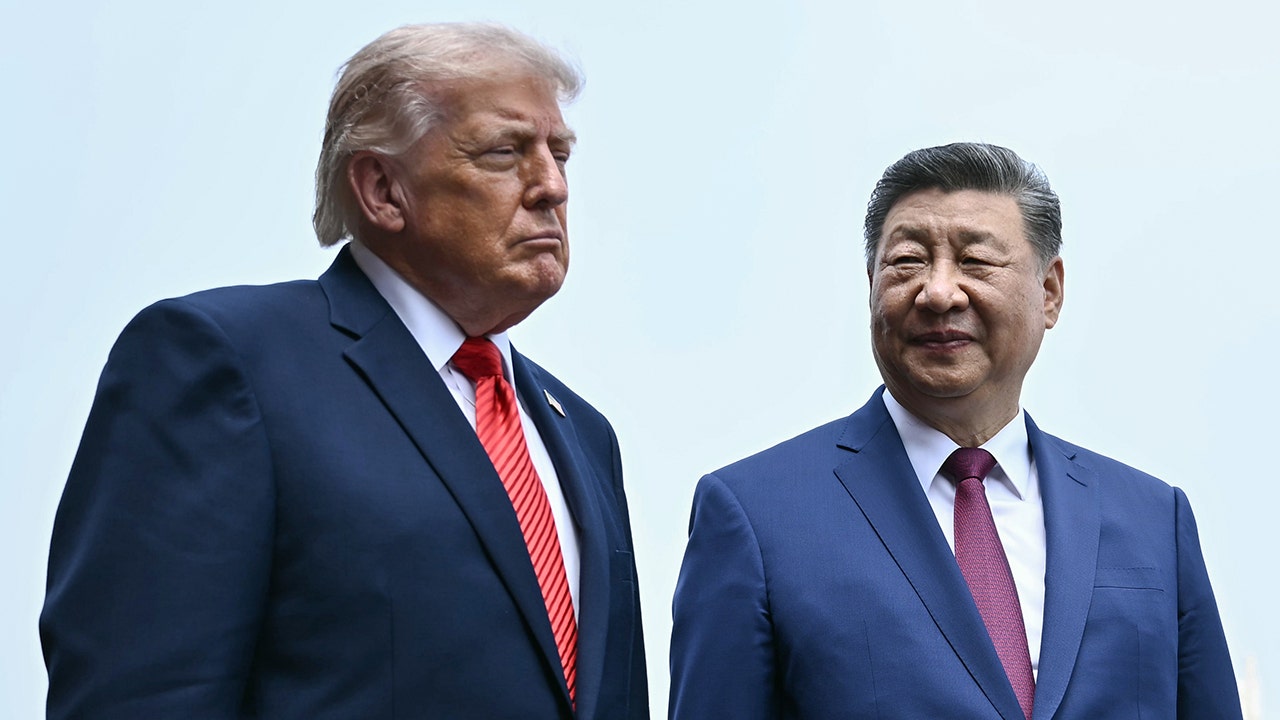
Former Trump Ambassador Sam Brownback is urging Washington to reverse a decades-old trade decision and strip China of its permanent normal trade relations status, arguing the United States must rethink its economic relationship with Beijing as President Donald Trump prepares to meet with Chinese President Xi Jinping.
«I think it’s time we back up and correct the mistake we made 25 years ago in granting normal trade relations with China, a country that seeks our demise and doesn’t grant human rights, and remove that,» Brownback told Digital in an interview.
Trump is traveling to China this week for his third meeting of the year with Xi, with the two leaders scheduled to hold talks Thursday in Shenzhen before joining Russian President Vladimir Putin for a trilateral meeting, amid ongoing trade tensions and concerns over American dependence on Chinese supplies.
TRUMP BRINGS TWO DIVIDED CABINET HEAVYWEIGHTS TO CHINA AS CONTROVERSY HANGS OVER HIGH-STAKES TALKS
«I think, tactically, President Trump is playing through this right,» Brownback said. «But we’re in a tough spot right now.»
Brownback, who served as ambassador-at-large for international religious freedom during Trump’s first administration, pointed to Washington’s decision more than two decades ago to establish permanent normal trade relations with China.
President Bill Clinton signed legislation authorizing permanent normal trade relations with China in 2000, and President George W. Bush formally granted the trade status in December 2001, following China’s accession to the World Trade Organization.
Revoking China’s permanent normal trade relations status would generally subject Chinese imports to higher tariffs, rather than automatically ending trade between the two countries.
Brownback said that reducing those dependencies and restructuring trade relations would require years rather than an immediate break with Beijing.
TRUMP SHOULD PRESS XI ON CHINA’S PERSECUTION OF BELIEVERS AT HOME AND ABROAD
Brownback argued that the United States should now consider reversing that decision through an orderly process that would pressure Beijing to respect human rights and religious freedom.
He suggested reaching a «Helsinki Accords 2.0» deal, modeled on a landmark 1975 Cold War agreement that incorporated human rights into broader discussions between the United States, its European allies and the Soviet Union.
The agreement, Brownback said, would allow Washington to negotiate with Beijing over trade and religious freedom while warning that continued abuses could jeopardize normal trade relations.
«Either you grant human rights and religious freedom to your own people, or we’re pulling back normal trade relations,» Brownback said.
Brownback also urged Trump to raise religious persecution directly with Xi, arguing that Beijing’s treatment of Christians and other religious groups should become a central part of future negotiations.
THE CCP’S NEW ‘UNITY’ LAW TURNS CHINA’S REPRESSION INTO A GLOBAL THREAT
The U.S. Department of Labor estimated in 2022 that 100,000 Uyghurs and other ethnic minority former detainees in China may have been working under forced-labor conditions following detention in re-education camps.
«We can’t trade with you if you’re going to continue to operate the way you are, particularly towards people of faith, towards Christians,» Brownback said.
Brownback said stabilizing the relationship would itself represent a meaningful achievement while the United States works to reduce its dependence on Chinese supplies.
«I think a successful trip is a continuation of the current situation right now, just stabilizing the relationship, not having it deteriorate further until we get in a better position on dealing with things like rare earth minerals and pharmaceutical supplies,» Brownback said.
AMERICA DEPENDS TOO MUCH ON CHINA FOR ESSENTIAL MINERALS. WE NEED TO DIG OUR FUTURE
He also argued that religious freedom represents a strategic vulnerability for China’s communist leadership, which he said views independent religious institutions as a threat to its authority.
«They now have a bigger navy than we do, but they fear religious freedom more than they do our aircraft carriers or our missiles,» Brownback said.
china, xi jinping, trade, national security, foreign policy
NEWYou can now listen to Fox News articles!
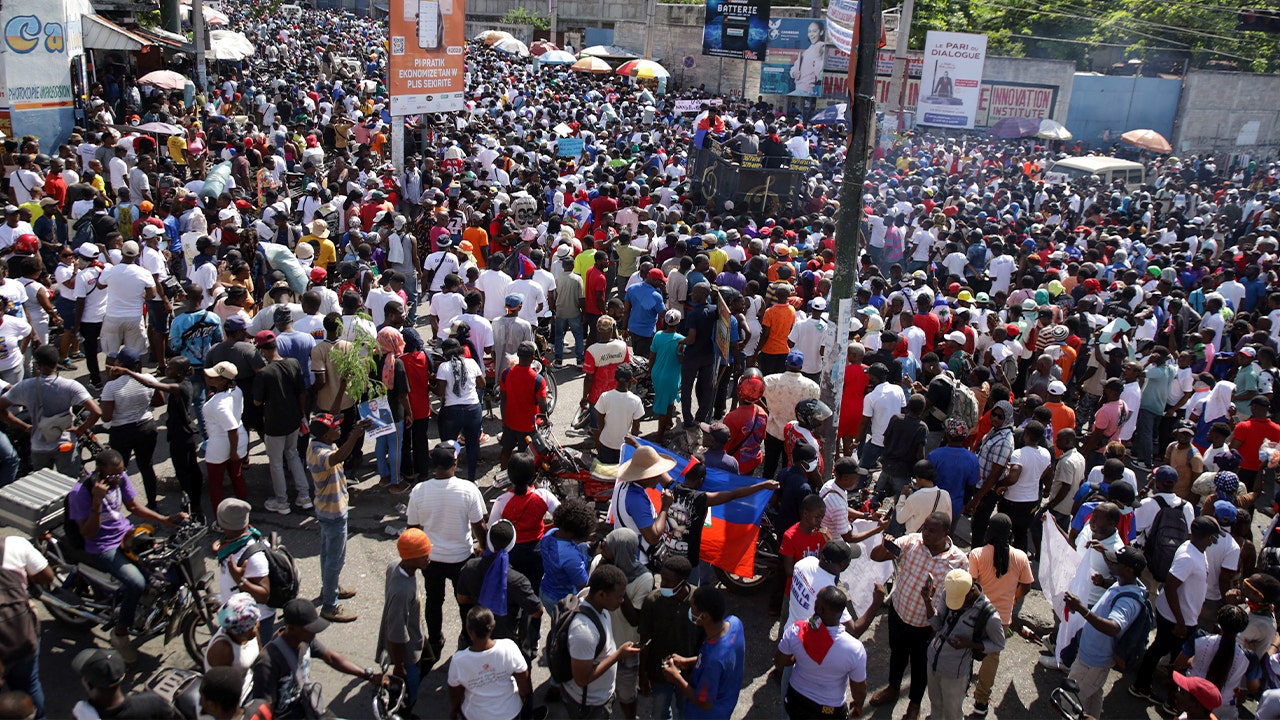
Thousands of people in Haiti took to the streets Tuesday in a show of support for Salvadoran President Nayib Bukele deploying troops to the country to combat violent armed gangs.
The demonstration unfolded as Haiti’s Minister of Justice and Public Security, Patrick Pélissier, prepared to travel to San Salvador to discuss anti-gang strategies and ongoing troop cooperation.
The president reflected on the moment in a post on X, sharing a video capturing a sea of people chanting, dancing and cheering in celebration.
«I never expected anything like this. I hear you loud and clear. I love you too. We will triumph. God will give us victory,» Bukele said.
BUKELE WARNS HAITIAN GANG LEADERS THAT HIS FORCES WILL ‘FINISH’ THEM AS HE DID IN EL SALVADOR
Demonstrators gather during a rally to express support for Salvadoran President Nayib Bukele and Salvadoran troops involved in efforts to combat gangs in Port-au-Prince, Haiti, Nov. 17, 2026. (Reuters/Fildor Pq Egeder)
According to Reuters, some demonstrators carried signs reading «Long live Bukele» and «Down with the gangs,» while others voiced their support for the Salvadoran leader.
«Only a week of operation, we can see the path to change in Haiti. We say thank you to Bukele for all the help he gives us,» demonstrator Claudy Mayas said.
Another demonstrator said Bukele was providing Haitians with the one thing they had been waiting years for.
«Four years ago, I could not go to Champs de Mars. I couldn’t go to the south of Haiti,» a demonstrator, also identified as Claude, said.
«We don’t ask much of the government. We don’t ask for jobs. We need only security.»
ROBOT DOGS MOUNTED WITH RIFLES DEPLOYED IN ANTI-GANG STADIUM OPERATION IN HAITI

Salvadoran President Nayib Bukele told Haitian supporters «We will triumph» after thousands rallied to thank him for sending troops to fight gangs. (Alex Pena/Anadolu via Getty Images/File)
Just two weeks ago, Bukele backed an operation involving devastating airstrikes that destroyed the headquarters of 400 Mawozo, one of Haiti’s most powerful criminal gangs. The home of its leader, Lanmò San Jou, was also targeted in the operation, Bukele previously said.
The direct military action marked a dramatic escalation in Haiti’s fight against years of severe gang violence and insecurity.
Bukele joined the mission after four Salvadoran members of the U.N.-backed anti-gang force went missing in a suspected gang ambush near Port-au-Prince on Oct. 18. At the time, Bukele sent more than 2,000 troops to Haiti.
EL SALVADOR-BACKED AIR ASSAULT DESTROYS HAITI GANG HEADQUARTERS AMID SEARCH FOR MISSING TROOPS

A demonstrator carries a Salvadoran flag during a rally to express support for El Salvador’s President, Nayib Bukele, in Port-au-Prince, Haiti, Nov. 17, 2026. (Reut3ers/Fildor Pq Egeder)
While residents paraded through the streets in celebration, U.N. officials issued a statement Tuesday reminding leaders that anti-gang operations must prioritize civilian protection.
«Security forces must strictly limit the use of lethal force to situations where it is unavoidable to protect life from an imminent threat and as a last resort,» the agency said.
According to the U.N., armed gangs control an estimated 80% to 90% of Haiti’s capital and are expanding into surrounding regions.
Between January and October 2026 alone, the U.N. documented nearly 4,600 people killed, alongside the wider displacement of nearly 1.5 million people.
central america, caribbean region, crime world, crime
INTERNACIONAL
El Gobierno de Guatemala entrega más de 53.000 raciones a familias afectadas por la sequía en tres departamentos

El Gobierno de Guatemala entregó más de 53.000 raciones de alimentos a familias afectadas por la sequía en Santa Rosa, San Marcos y Suchitepéquez, como parte de un plan que prevé asistir a 609.718 hogares en los 22 departamentos del país. La distribución ya concluyó en Suchitepéquez y continúa en los otros dos territorios, según el Sistema de la Coordinadora Nacional para la Reducción de Desastres (CONRED).
La asistencia cubrió 28 municipios de los tres departamentos y responde a las pérdidas de cosechas provocadas por la escasez de lluvias y las altas temperaturas. Santa Rosa concentró la mayor cantidad de ayuda, con 41.200 raciones destinadas a 14 municipios.
San Marcos recibió 7.185 raciones para nueve municipios, mientras que Suchitepéquez completó la entrega de 4.997 raciones en cinco localidades. El acto protocolar de la distribución se realizó en el municipio de Taxisco, en Santa Rosa, aunque la entrega ya se desarrollaba de manera simultánea en los tres departamentos.

Alimentos para cubrir un mes por familia
Cada ración familiar contiene 140 libras de alimentos: 100 libras de maíz, 30 de frijol y 10 de arroz. La cantidad fue calculada para cubrir durante un mes las necesidades de un hogar integrado por cinco personas.
La entrega se ejecuta bajo la Función 2, Gestión de Alimentos, del Plan Nacional de Respuesta. CONRED indicó que el operativo reúne a instituciones nacionales, autoridades departamentales, municipalidades y organismos vinculados con la atención de emergencias.
El Ministerio de Agricultura, Ganadería y Alimentación (MAGA) elaboró las estimaciones sobre las pérdidas de cultivos para identificar a las familias que requerían asistencia. Esa información fue remitida a los Centros de Operaciones de Emergencia municipales y departamentales, donde se revisaron y aprobaron las solicitudes.
La respuesta en Santa Rosa comenzó tras la declaración de alerta roja emitida por el Centro de Operaciones de Emergencia Departamental el 3 de junio, ante la falta de lluvias y las elevadas temperaturas que afectaban la producción agrícola. La gobernación activó entonces los centros de emergencia de las 14 municipalidades del departamento.
En octubre, el centro departamental recibió los requerimientos de los municipios y determinó que la demanda superaba la capacidad de respuesta local. Las autoridades trasladaron al nivel nacional del sistema CONRED, el 26 y 29 de octubre, la solicitud de alimentos para las familias afectadas.
El gobernador de Santa Rosa, Alan Javier Melgar, destacó el proceso realizado por el departamento: “Santa Rosa fue uno de los primeros departamentos que hizo ese proceso y que lo hizo bien”.
Un plan de alcance nacional
La distribución forma parte de una estrategia progresiva que se extenderá a Petén, Quiché y Baja Verapaz mientras se valida la situación de las familias afectadas en el resto del país. La meta nacional contempla atender a 609.718 familias en 190 municipios.
El programa prevé la compra de alimentos con una asignación de Q500 millones. CONRED solicitó el acompañamiento de la Contraloría General de Cuentas para supervisar los desembolsos al Programa Mundial de Alimentos (PMA), la adquisición de productos, la salida de las bodegas y la entrega final en los municipios.
El ministro de Desarrollo Social, Abelardo Pinto, señaló que la respuesta involucra a CONRED, el MAGA, la Secretaría de Seguridad Alimentaria y Nutricional y el PMA. “Ningún nivel de gobierno puede enfrentar por sí solo estos desafíos”, afirmó durante el acto realizado en Taxisco.
El ministro de Agricultura, José Antonio López, aseguró que mantendrá presencia en las zonas alcanzadas por la sequía y brindará apoyo técnico a los productores. “Vamos a estar en el territorio, vamos a acompañarlos, vamos a brindar una asistencia técnica de calidad”, manifestó.
La secretaria ejecutiva de CONRED, Claudine Ugalde, explicó que la asistencia se ajusta a los mecanismos del Plan Nacional de Respuesta y al sistema escalonado de atención, desde el ámbito comunitario hasta el nacional. “Esta primera entrega no representa una acción aislada ni constituye el final de nuestro compromiso”, sostuvo.
Guatemala,Karin Herrera,asistencia alimentaria,CONRED

El horóscopo de hoy: jueves 19 de noviembre

Trump-Xi showdown revives 25-year-old Clinton China ‘mistake’ as Senate vet demands reversal

Bukele gets hero’s welcome from afar as thousands rally in Haiti after gang crackdown

Tras la reducción de la condena a José Alperovich, habló la víctima: “Me dignifica”

Marruecos hace historia en el ranking FIFA y España sigue en lo más alto

A contramano del pedido de Milei, una provincia sube impuestos a su banco y al gas para financiar la educación

La inflación de octubre: el dato que sorprendió a casi todos y la distancia que persiste con los parámetros internacionales

U2 vuelve con 12 nuevas canciones y una pregunta incómoda sobre si el rock todavía puede decir algo nuevo

Milei dijo que el riesgo país sube por el miedo a "Orcolandia" y afirmó: "Los argentinos no van a votar hacia el pasado"

Se agudiza la suba de tasas y se complica la economía mundial

 POLITICA2 días ago
Milei dijo que el riesgo país sube por el miedo a "Orcolandia" y afirmó: "Los argentinos no van a votar hacia el pasado"
- ECONOMIA3 días ago
Se agudiza la suba de tasas y se complica la economía mundial
- INTERNACIONAL2 días ago
Caída de sistemas, fallas y sospechas: qué hay detrás de la suspensión del tráfico aéreo y los problemas en los bancos de EE.UU.