INTERNACIONAL
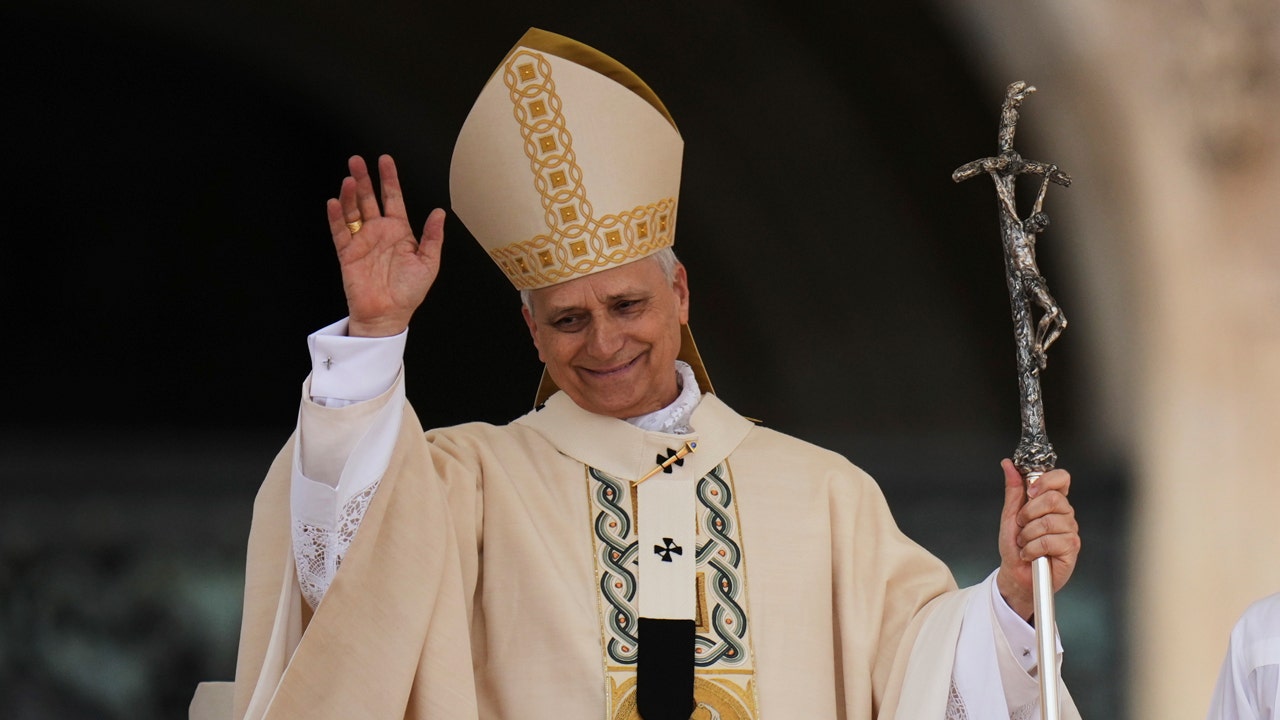
Pope Leo announces tumor on lung, surgery planned in ‘next few days’

NEWYou can now listen to Fox News articles!
Pope Leo XIV announced Sunday that he will undergo surgery to remove a small nodule from his lung, revealing the unexpected health concern to thousands of faithful gathered in St. Peter’s Square following his traditional Angelus prayer.
The 71-year-old pontiff said doctors discovered the «localized» nodule at a «very early stage» and recommended its removal.
The surgery is scheduled for early next week, with the pope expected to remain hospitalized for approximately one week, according to Vatican spokesman Matteo Bruni.
This is a developing news story; check back for updates.
pope leo xiv, roman catholic, vatican, religion, world






INTERNACIONAL
“Desde que mi madre murió no he sido capaz de celebrar la Navidad”: el dolor y la promesa de la hija de Almudena Grandes

“Desde que mi madre murió no he sido capaz de celebrar la Navidad. He decidido volver a hacerlo” dijo, ante un auditorio lleno, en el centro cultural El Ateno de Madrid, Elisa García Grandes, hija de Almudena Grandes, en el homenaje por el quinto aniversario de su muerte
Elisa García Grandes tomó el micrófono el domingo con una niña en brazos —su hija Candela, que no llegó a conocer a su abuela— e hizo algo que nadie en la sala esperaba: no habló de la escritora, habló de su madre. De las Navidades que ella organizaba con una energía que parecía inagotable, del pesebre descomunal que montaba cada año, donde las figuras principales no eran las del portal de Belén sino las de la vida ordinaria: el maestro, la mujer que lavaba la ropa, el panadero. Habló, también, del vacío que todo eso dejó cuando Almudena Grandes murió el 27 de noviembre de 2021.
Fue esa confesión, sencilla y sin adornos, la que rompió la tarde. Los aplausos tardaron un segundo en llegar, el tiempo que tarda la gente en salir del asombro.
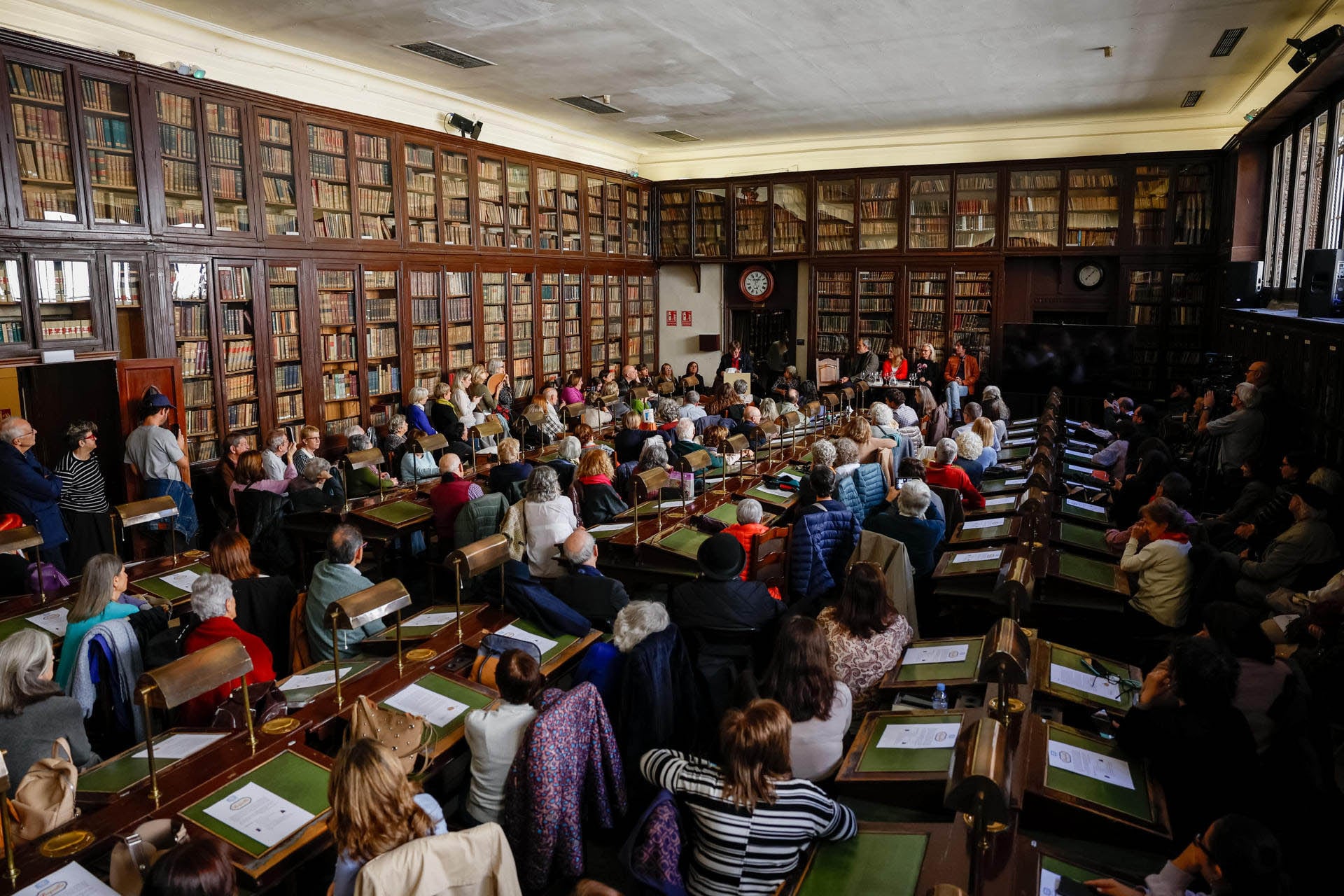
El homenaje, organizado cinco años después de la muerte de la escritora madrileña por la editorial Tusquets, reunió a quienes la quisieron y a quienes la leyeron. Fue un duelo que por fin encontraba la manera de decirse en voz alta, con micrófono, entre aplausos y lágrimas que nadie intentó disimular.
La ausencia de una abuela
La decisión de volver a celebrar la Navidad, dijo Elisa, no fue sola. La empujó Candela. Para que las tradiciones no mueran con quienes las inventaron. Para que una niña tenga el pesebre y, también, la comida y el calor que su abuela había convertido en ceremonia.
Elisa leyó, entonces, El espíritu de la hierbabuena, un artículo que Almudena había publicado en el diario El País, donde evocaba la ausencia de su propia madre durante las fiestas. Fue uno de esos momentos en que una escritora y su hija quedan atrapadas en el mismo texto: Elisa leyendo a su madre, que escribía sobre echar de menos a la suya. La lectura terminó en lágrimas. “Para quienes la amábamos, el día de su muerte nunca va a terminar”, diría más tarde el escritor Benjamín Prado, y la frase le servía a todos.
García Montero cambió el poema de amor por un llamado urgente
Luis García Montero, el poeta que fue su compañero de vida durante casi tres décadas, había preparado un poema de amor escrito por Almudena. Uno de esos gestos íntimos con los que él suele honrarla en público. Pero antes del homenaje recibió el mensaje de una lectora que le recordó un artículo de la escritora publicado en 2019, titulado Elecciones Generales. En él, Almudena pedía a sus lectores que fueran a votar en un momento que ella consideraba “especialmente peligroso”. “Es precisamente la hora de mancharse”, escribió entonces.
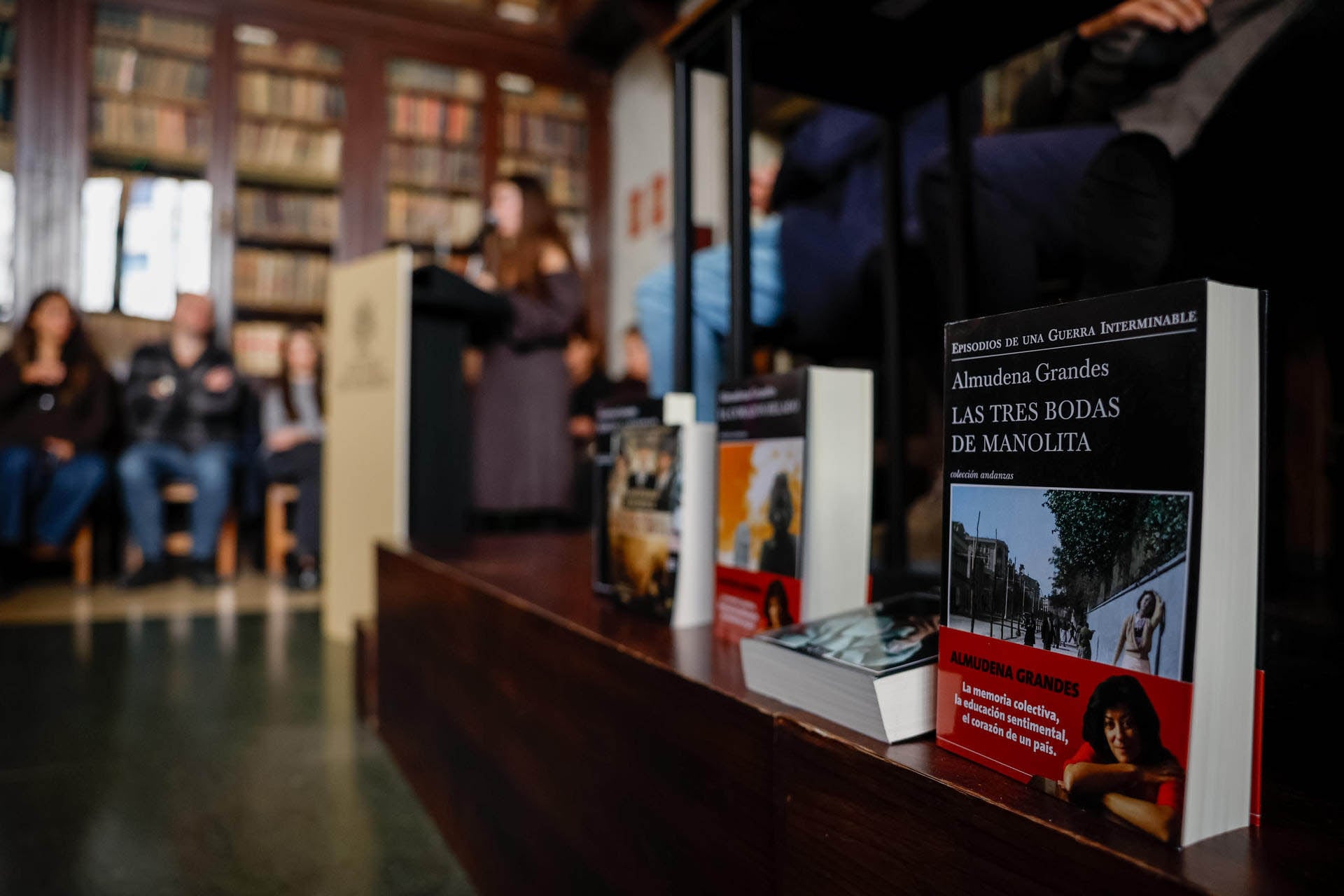
García Montero leyó ese artículo en lugar del poema. No hubo que explicar por qué.
“Cuando voy por la calle o acudo a un acto y los lectores me paran para recordar sus libros y su vida, siento que Almudena está profundamente viva en la memoria colectiva”, dijo el poeta, que dirige el Instituto Cervantes y que lleva cinco años buscando la manera de seguir viviendo con esa ausencia. No se sabe si la encuentra. Pero algo parecía aliviarse ese domingo.
Benjamín Prado: el día que pensó que “Malena” era un ladrillo
Benjamín Prado fue el encargado de arrancar las carcajadas. Contó el día que conoció a Almudena en Sitges, cuando él trabajaba para un periódico y vio Malena es un nombre de tango sobre una mesa. Su primera impresión, confesó, fue que era “un ladrillo”. Un dato que después le echó en cara a la escritora entre risas, en una de esas comidas que ella organizaba con la misma vocación con que organizaba sus tramas: sin dejar cabos sueltos, sin que nadie se quedara con hambre.
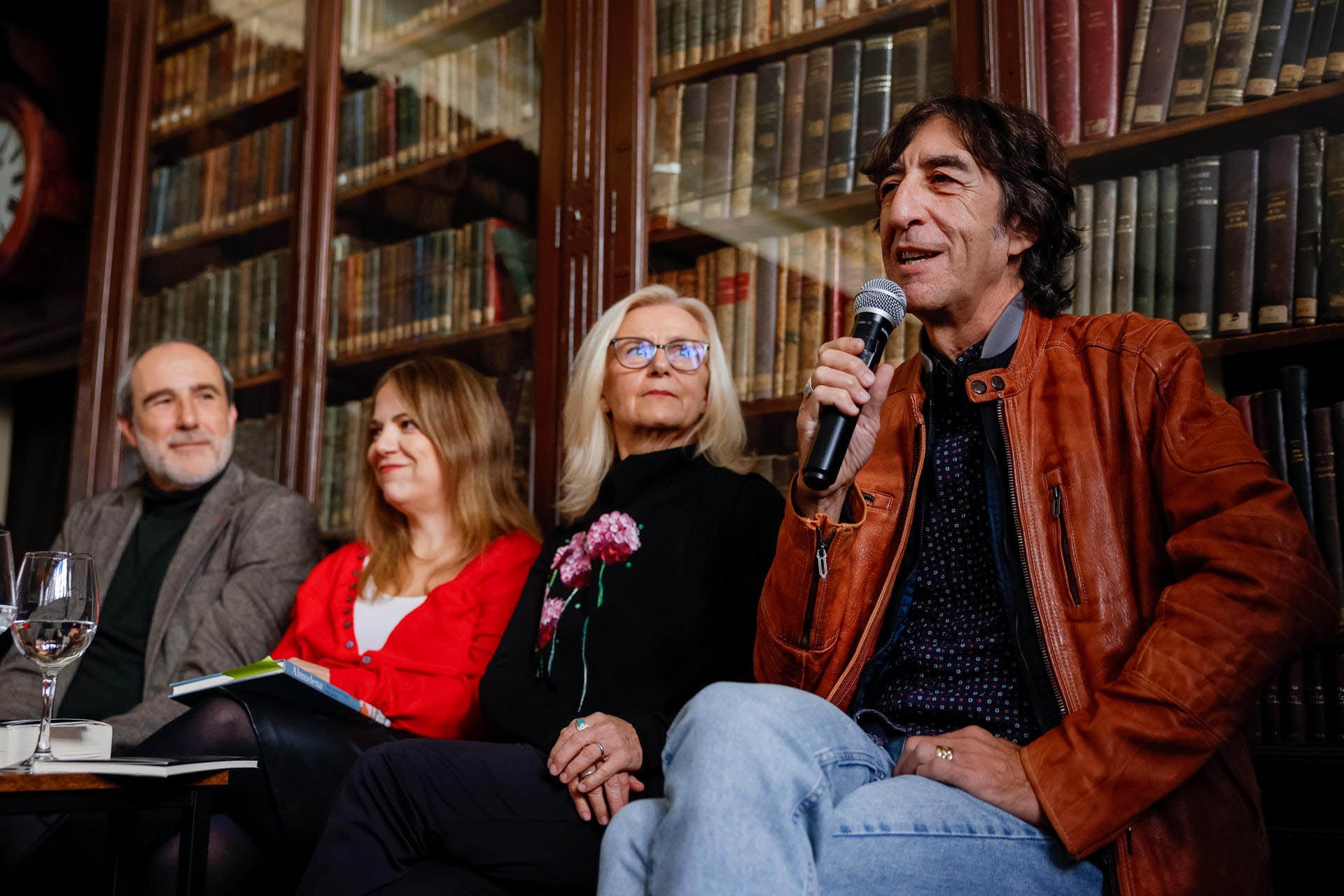
Prado habló también de “el bicho”, que era como Almudena llamaba al cáncer. Con esa distancia irónica que le permitía seguir escribiendo, seguir cenando, seguir siendo el centro de gravedad de una familia de amigos que ella había construido a su alrededor.
Luego leyó El año de Almudena, un poema que escribió durante la enfermedad y cuyo final tuvo que reescribir después de que ella muriera. La sala lo recibió en silencio. García Montero miraba el suelo.
Azucena Rodríguez: el documental que empezó siendo una cosa y terminó siendo otra
Azucena Rodríguez, directora del documental Almudena y amiga cercana de la escritora, contó que el proyecto nació con otra intención. Quería filmar el proceso creativo de una autora capaz de vender cientos de miles de ejemplares sin ceder un milímetro en sus ambiciones literarias. La pandemia, la enfermedad y la muerte convirtieron ese proyecto en otra cosa: en un retrato de la ausencia y de la necesidad de no dejar que esa ausencia se vuelva olvido.
Rodríguez también anunció la noticia que más aplausos cosechó de la tarde: “si nada se tuerce”, Inés y la alegría —la novela que abrió la serie de los Episodios de una guerra interminable— llegará al cine el próximo otoño. La cineasta leyó una nota en la que Almudena recordaba cómo había imaginado a su protagonista: “a caballo y con cinco kilos de rosquillas”. El público rio. Era el tipo de imagen que solo Almudena podía tener.
El libro que toda una generación leyó a escondidas
Aroa Moreno, periodista y escritora, recordó que muchas lectoras de su generación descubrieron Las edades de Lulú a escondidas de sus padres. Ese primer libro, el que Almudena escribió sin editorial y sin críticos, fue para muchas adolescentes una especie de iniciación. No solo literaria. También sentimental e ideológica.
Moreno, que después tuvo “la osadía”, como ella misma la llama, de escribir junto a Ana Jarén una biografía ilustrada de la escritora, agradeció la mano que Almudena le tendió en sus comienzos. “Para todas nosotras, Almudena ha sido una referencia fundamental”, afirmó.
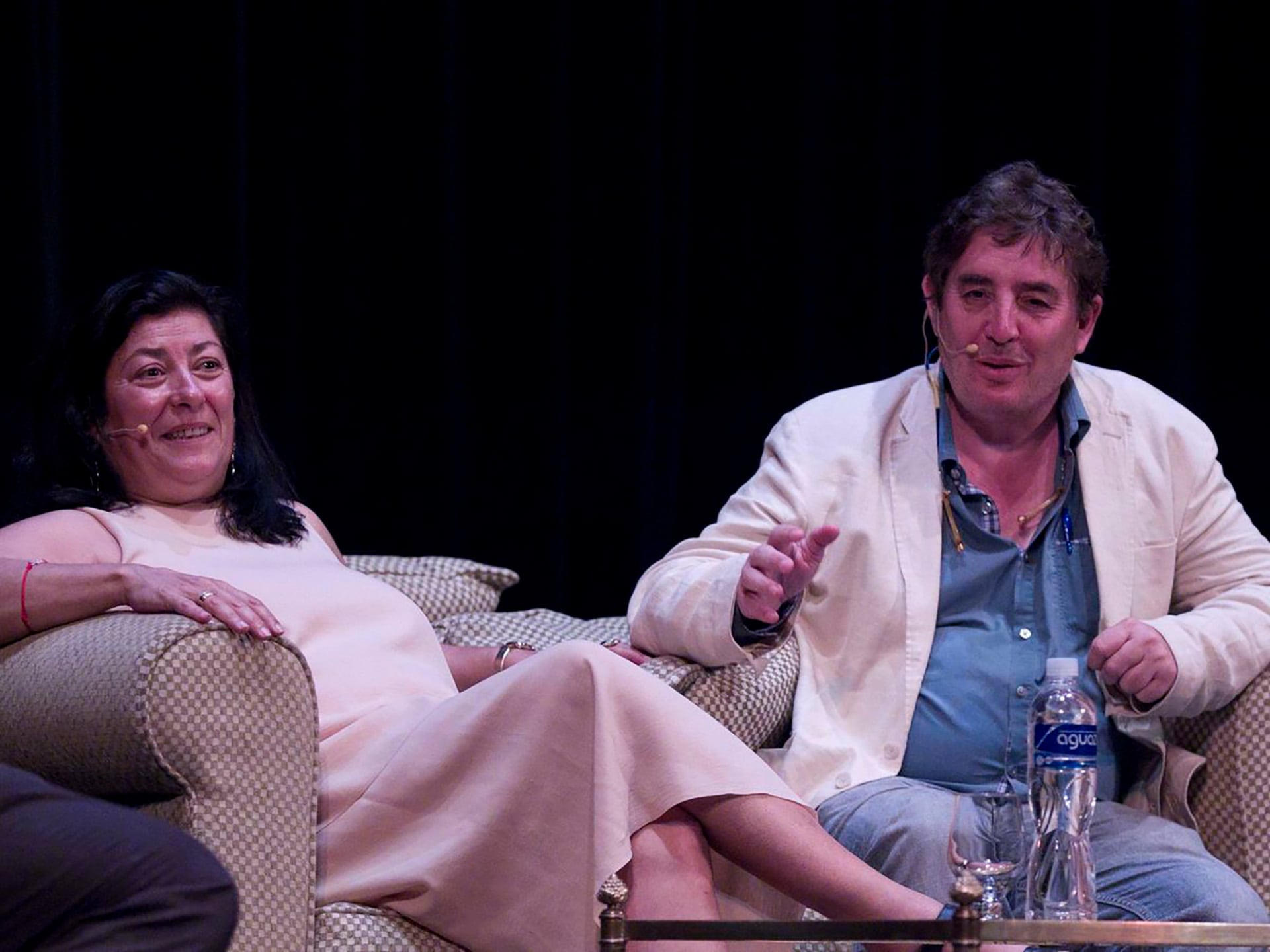
Juan Cerezo, director editorial de Tusquets, cerró el encuentro recordando que La madre de Frankenstein había fascinado a su hija y a sus amigas durante el bachillerato. Sus novelas, dijo, “siguen ayudando a comprender el pasado reciente y el presente”. Una manera de decir que Almudena Grandes no es todavía historia. Que sigue siendo, para muchos lectores, una voz contemporánea.
La escritora que soñó de niña con ser Ulises
Almudena Grandes nació en Madrid en 1960 y murió en la misma ciudad a los 61 años. Entre esas fechas caben Las edades de Lulú, Malena es un nombre de tango, Atlas de geografía humana, El corazón helado, Inés y la alegría y una decena larga de novelas que convirtieron a su ciudad en escenario casi exclusivo. La ciudad era, según ella misma explicaba, su “caos ordenado”. Sus calles guardaban las historias. Ella las encontraba y las contaba.
Empezó de niña, escribiendo cuentos que nunca acababa mientras su familia veía los partidos del Atleti. Fue una versión infantil de La Odisea —regalo del abuelo— la que le reveló lo que quería hacer con su vida. Podía ser Ulises. Podía vengarse de todas las injusticias con unas palabras. No lo dudó más.
Lo que siguió fue una carrera construida con una disciplina que ella misma llamaba “prusiana”: largas jornadas de escritura en zapatillas, cuadernos llenos de tramas y personajes escritos a mano, novelas que se volvían más largas a medida que ella se volvía más ambiciosa. Cuando cayó en la cuenta de que todos los libros que habían quedado para siempre eran novelas de mil páginas, dejó de escribir libros cortos.
García Montero y ella estuvieron juntos desde 1994 hasta que, en la pandemia, “se quebró el nosotros”. Él lo dijo así, con esa precisión de poeta que nombra las cosas sin exagerarlas. Ahora queda la obra. Queda el documental. Queda la adaptación cinematográfica que llegará el año que viene. Queda una niña llamada Candela que tendrá su belén en Navidad.
Y queda Luis García Montero caminando por la calle, parándose cuando alguien lo para, escuchando cómo le hablan de ella. “Siento que Almudena está profundamente viva en la memoria colectiva”, dijo. Era la mejor prueba de que tenía razón.
literatura,Almudena Grandes,biblioteca,acto cultural
INTERNACIONAL
Former Navy SEAL says New Jersey’s Islamophobia bill puts protected speech in the crosshairs
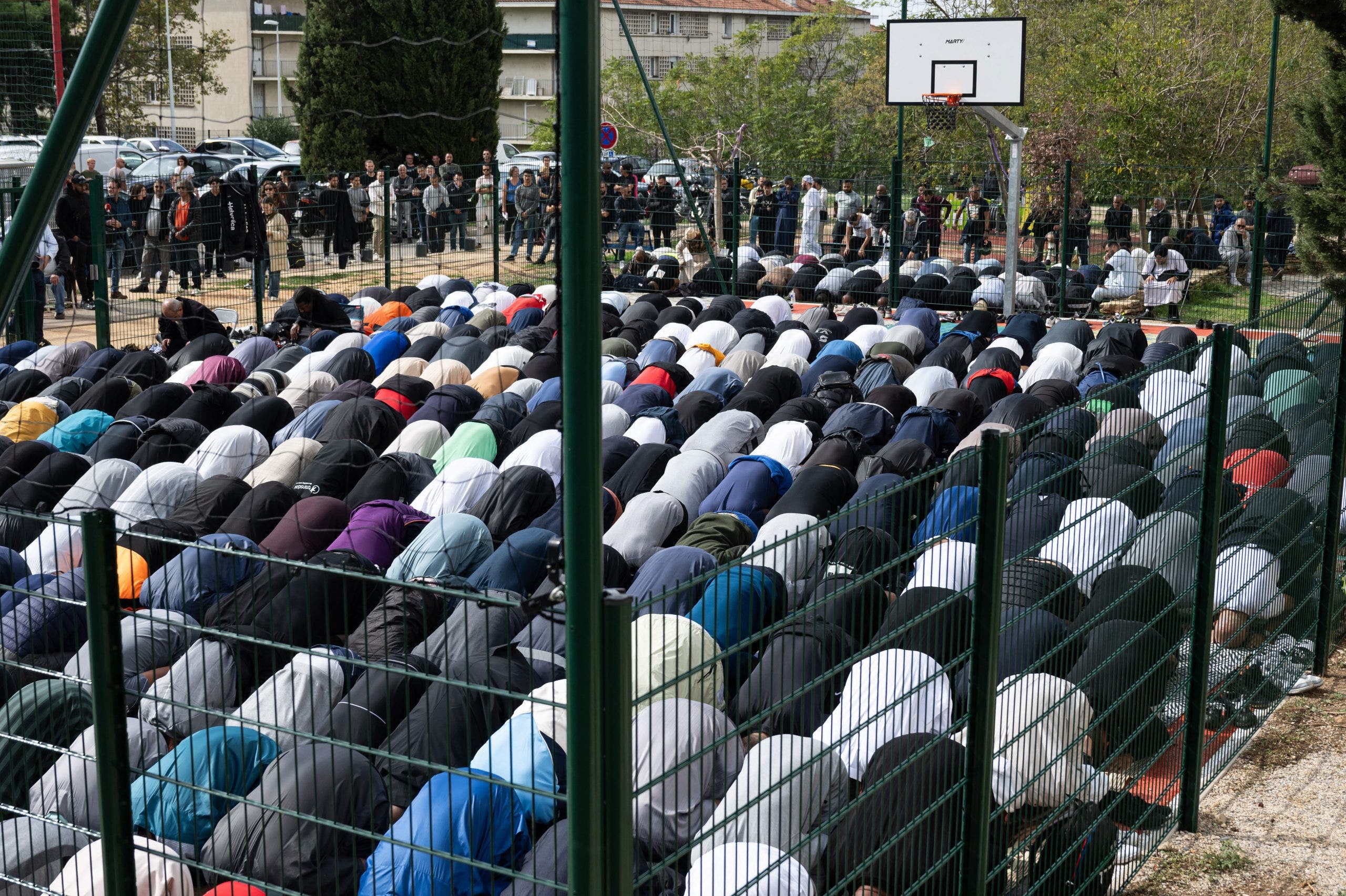
A New Jersey proposal aimed at combating anti-Muslim discrimination could make Americans think twice before criticizing religious and political ideas, a lawyer and former Navy SEAL warned.
Bill Brown, a partner at Parlatore Law Group, told Digital that Assembly Bill 1146 contains language broad enough to discourage public debate, even though the legislation expressly preserves First Amendment rights.
«The mere threat of state scrutiny is a direct assault on public debate,» Brown said.
TRUMP DOJ EXPANDS RELIGIOUS LIBERTY PROTECTIONS AFTER MAJOR SUPREME COURT RULINGS
The proposal would establish a state definition of Islamophobia and require public officials and law enforcement officers to consider it when determining whether alleged discriminatory acts were motivated by anti-Muslim bias.
Brown argued that requiring officials to use a definition that includes harsh criticism and other speech could make people afraid to speak openly.
CHRISTIAN GROUPS AND PASTORS SAY NEW CALIFORNIA LGBT HATE SPEECH LAW IS DISGUISED AS INDOCTRINATION
«The First Amendment guarantees that no religion or theology is immune to criticism,» he said.
Democratic Assemblyman Joe Danielsen sponsors the bill, which is co-sponsored by fellow Democrats Assemblywomen Verlina Reynolds-Jackson and Mitchelle Drulis and Assemblyman Roy Freiman. The legislation describes a uniform definition as a tool to help officials identify and investigate anti-Muslim crime, harassment and discrimination.»
Digital made multiple attempts to contact Danielsen and all three co-sponsors for comment but did not receive a response.
Its definition includes «hatred or severe disparagement towards Muslim persons or their culture,» as well as «rhetorical, violent, or physical anti-Muslim manifestations.»
Other examples include pulling hijabs from Muslim women, discriminatory treatment and blaming Muslims collectively for wrongdoing committed by an individual or group.
CONNECTICUT BARS NATIVITY DISPLAY IN STATE CAPITOL BECAUSE IT’S ‘RELIGIOUS,’ LAWSUIT THREAT SAYS
The bill would create no standalone criminal offense for criticizing Islam. It directs officials to consider the definition when reviewing an alleged violation of an existing policy, law or regulation prohibiting discriminatory acts.
It also explicitly says nothing in the legislation should diminish or infringe on rights protected by the First Amendment or New Jersey’s Constitution.
AMERICA’S FIRST MUSLIM SENATOR EXPOSES A POLITICAL BLIND SPOT
Asked about that safeguard, Brown maintained that the prospect of scrutiny itself could discourage people from speaking, regardless of whether a case ultimately succeeds.
He also singled out a provision in the bill’s legislative findings that lists «anti-Islamism» among terms that may describe the same characteristics as Islamophobia. Brown argued that the wording risks blurring the distinction between prejudice against Muslim people and criticism of a political movement.
JONATHAN TURLEY: FRANCE’S FREE SPEECH CRACKDOWN SHOWS WHAT HAPPENS WHEN POLITICIANS DEFINE TRUTH
«Islamism is a distinct geopolitical movement,» he said. «It’s not just a religious faith.»
Brown described the proposal as a «backdoor blasphemy law,» arguing that government should protect people’s rights while allowing their religious beliefs to face public scrutiny.
PASTOR UNLEASHES ON DEARBORN AS RELIGIOUS TENSIONS ERUPT AT CITY COUNCIL MEETING: ‘ENOUGH IS ENOUGH’
The legislation excludes criticism of Muslim-majority countries comparable to criticism directed at other countries. Brown argued that criticism of religious and political ideology also needs protection.
Brown said his concerns are informed in part by his military service. He recalled responding to two suicide bombings in Iraq and said he remains committed to speaking out against jihadist ideology.
He also recalled studying Arabic at Rutgers after leaving the military, where Muslim American classmates helped him when he struggled with the language.
For Brown, the broader concern is whether Americans will feel free to challenge ideas they oppose.
«True diversity is diversity of thought,» he said.
us, first amendment, islam, new jersey, legislation, controversies
INTERNACIONAL
Russia warns of ‘preventive nuclear attack’ as Medvedev claims Ukraine, NATO crossed line

NEWYou can now listen to Fox News articles!
Russia warned Monday that it could carry out a «preventive nuclear attack» under certain circumstances, with former President Dmitry Medvedev claiming Ukraine and NATO allies have already crossed certain thresholds that could push Moscow to consider using nuclear weapons.
«The massive use of non-nuclear means that cause catastrophes makes a preventive nuclear attack by the Russian Federation possible,» Medvedev, deputy chairman of Russia’s Security Council, wrote in an article published Monday in the Moscow Journal of International Law and excerpted by the state news agency TASS.
Medvedev also warned that «secret or hidden supplies of nuclear weapons from the West to Kyiv will provoke a legitimate preventive nuclear attack by Russia.»
MOSCOW THREATENS NUCLEAR RESPONSE OVER TINY FORTRESS WEDGED BETWEEN US ALLIES AS CLASH FEARS GROW
Dmitry Medvedev takes part in a wreath-laying ceremony marking Defender of the Fatherland Day at the Tomb of the Unknown Soldier by the Kremlin Wall in Moscow, Russia, Feb. 23, 2024. (Yekaterina Shtukina/Sputnik/Pool via Reuters.)
«Kyiv and its allies must remember that the Russian Federation not only has the right, but in various situations has the obligation to use nuclear weapons,» he wrote.
Medvedev’s warning came amid continuing tensions between Moscow and the West over the nearly five-year war in Ukraine and NATO’s military support for Kyiv.
He argued that Ukraine and its Western allies have already created circumstances under which Russia could consider a nuclear strike, though he said Russian President Vladimir Putin carefully weighs the consequences before making such a decision.
«Formally, in a number of cases, the parties collectively opposing us (Ukraine, NATO countries, and several Western countries outside the alliance) have already created situations in which Russia considers the possibility of launching a nuclear strike,» Medvedev wrote in the article, titled «State Sovereignty and Nuclear Weapons: International Legal Aspects of Ensuring National Security».
TRUMP HOLDS THE NUCLEAR CARDS TO PLAY AGAINST CHINA AND RUSSIA ON ARMS CONTROL
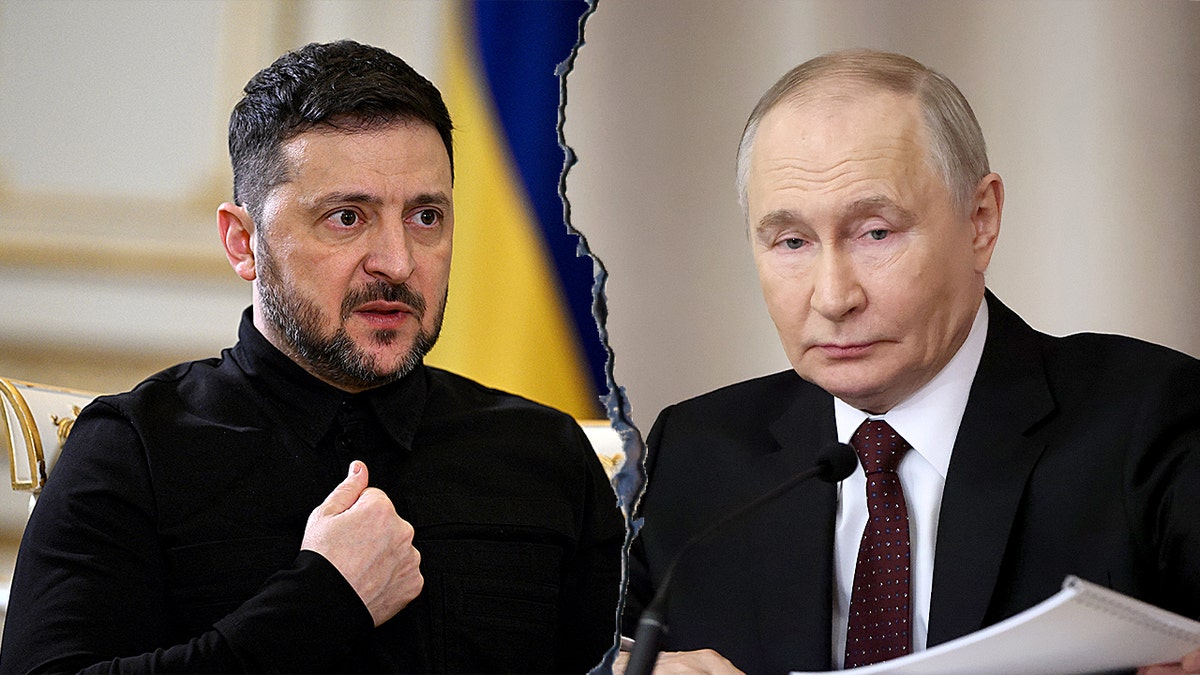
Ukrainian President Volodymyr Zelenskyy and Russian President Vladimir Putin (Genya Savilov/AFP via Getty Images; Contributor/Getty Images)
Despite those warnings, Medvedev wrote that Putin «is always guided by a comprehensive analysis of all factors and the proportionality between the actual damage inflicted and the retaliatory measures.»
Medvedev also said Russia has not used nuclear weapons during the war with Ukraine because it has not considered them necessary, though he warned that calculation could change.
«Obviously, so far the course of events in the Ukrainian crisis has not created a state of direct necessity to use nuclear weapons,» he wrote.
«The decision on Russia’s use of nuclear weapons during the special military operation was not taken due to the lack of a direct necessity to do so,» he added, using the Kremlin’s preferred term for the war in Ukraine.
Medvedev argued that while Russia’s nuclear doctrine does not explicitly authorize preventive nuclear strikes, certain scenarios — including catastrophic attacks using conventional weapons or the transfer of nuclear arms to Ukraine — could justify preemptive action.
He said any final decision rests solely with Putin.
TRUMP’S HISTORIC SUMMIT WITH XI, PUTIN MARKS DIPLOMATIC MILESTONE, BUT BREAKTHROUGHS REMAIN ELUSIVE

Russian President Vladimir Putin, Chinese President Xi Jinping and President Donald Trump meet during the Asia-Pacific Economic Cooperation Leaders’ Summit in Shenzhen, China, on Nov. 19, 2026. (Reuters)
«In making such decisions, the Russian president is always guided by a complete analysis of all factors and the proportionality between the actual damage caused and the retaliatory measures,» Medvedev wrote.
«The Kyiv regime and its sponsors must not harbor dangerous illusions,» he warned.
«If the scenarios mentioned above were to occur, the head of state not only has the right, but also the obligation to use nuclear weapons. All those who are currently fanning the flames must fully realize this».
Medvedev’s remarks came within days of President Donald Trump meeting with Putin and Chinese President Xi Jinping on Nov. 19 in Shenzhen, China, where the leaders of the three nuclear powers agreed to pursue talks aimed at reducing nuclear risks and preventing proliferation.
While the summit produced no major breakthrough on arms reductions, the leaders reaffirmed in a declaration that a nuclear war cannot be won and must never be fought.
TRUMP WILL FACE REPORTERS AFTER HISTORIC XI-PUTIN TALKS AS WAR QUESTIONS LINGER
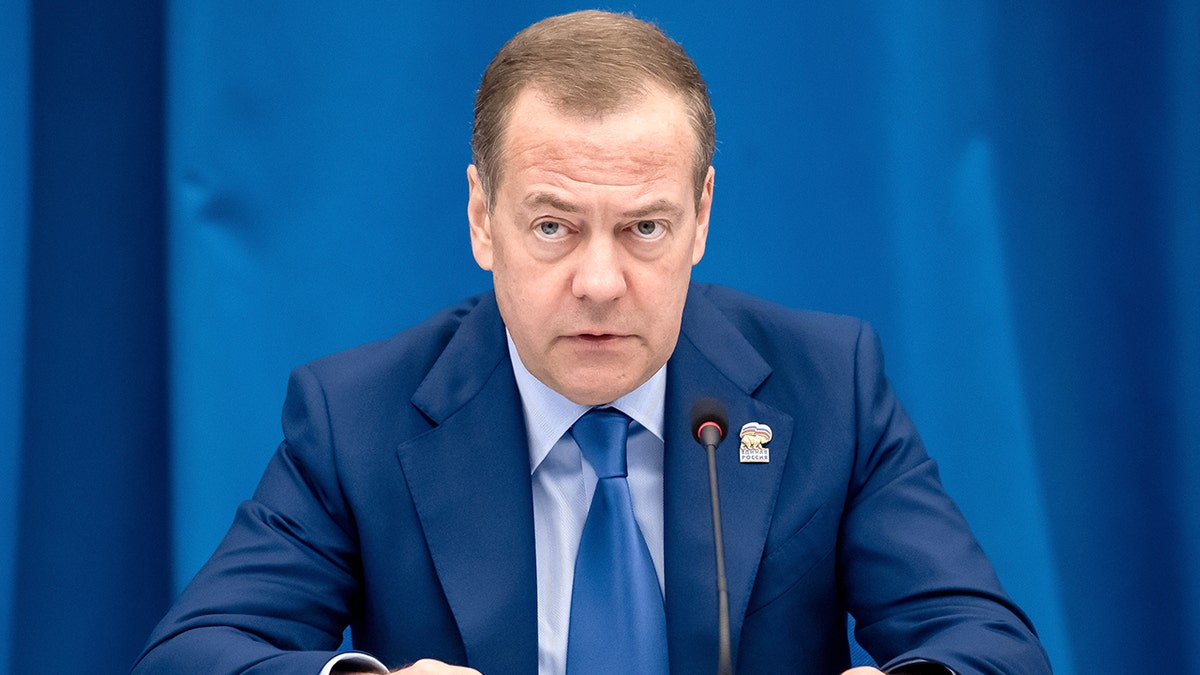
Dmitry Medvedev, Russian Security Council deputy chairman, speaks at a meeting of the United Russia party programme commission in Moscow, Oct. 1, 2025. (Ekaterina Shtukina, Sputnik Pool Photo via AP)
To support his argument, Medvedev cited a 1996 International Court of Justice advisory opinion, contending that international law does not categorically prohibit the use of nuclear weapons when a state’s survival is at stake.
The court concluded that the threat or use of nuclear weapons would generally violate international humanitarian law, but it did not definitively resolve whether such use would be lawful in extreme circumstances of self-defense.
Medvedev, who served as Russia’s president from 2008 to 2012 and later as prime minister under Putin, has become one of Moscow’s most outspoken voices on nuclear escalation since Russia invaded Ukraine.
Medvedev accused NATO members of undermining nonproliferation efforts, criticizing Germany’s participation in nuclear deterrence arrangements and arguing that NATO’s nuclear-sharing policies do not represent a universally accepted interpretation of the Nuclear Non-Proliferation Treaty (NPT)
On Monday, he also accused the U.S. of applying double standards toward Iran and said Washington used nonproliferation fears to justify military action against Tehran while following its own objectives.
world, russia, ukraine, nato, vladimir putin, national security, foreign policy, international law

Matías Mayer, actor de Gordon, anunció que será papá por primera vez: “¡De golpe se agranda la familia!»

¿Titulares o suplentes? La postura del Vasco para el duelo de Boca Juniors ante Independiente Rivadavia

El Gobierno le advierte a funcionarios de la UBA que cometen un delito si se concreta el homenaje a Santucho

El Gobierno recibió el mensaje de la Iglesia por la ley de ludopatía, pero no va a apurar los tiempos legislativos

La decana de la Facultad de Sociales de la UBA defendió el polémico homenaje al terrorista Santucho: su vínculo con Montoneros

“Desde que mi madre murió no he sido capaz de celebrar la Navidad”: el dolor y la promesa de la hija de Almudena Grandes

Javier Milei destacó el desembarco de Tesla en el país y aseguró: “Esto también es devolverle la libertad a los argentinos”

Financial Times duda de la economía argentina: riesgo país, financiamiento e imagen Milei

Agustín “Rada” Aristarán se despide de Chanta: “Con esta obra dejé de ser un impostor”

NYC college put on notice after Jewish campus group shunned by student government: ‘rude awakening’

 POLITICA3 días ago
Javier Milei destacó el desembarco de Tesla en el país y aseguró: “Esto también es devolverle la libertad a los argentinos”
- ECONOMIA22 horas ago
Financial Times duda de la economía argentina: riesgo país, financiamiento e imagen Milei
- CHIMENTOS1 día ago
Agustín “Rada” Aristarán se despide de Chanta: “Con esta obra dejé de ser un impostor”