INTERNACIONAL
¿Qué ocurre con la fecha de las elecciones presidenciales en Venezuela?

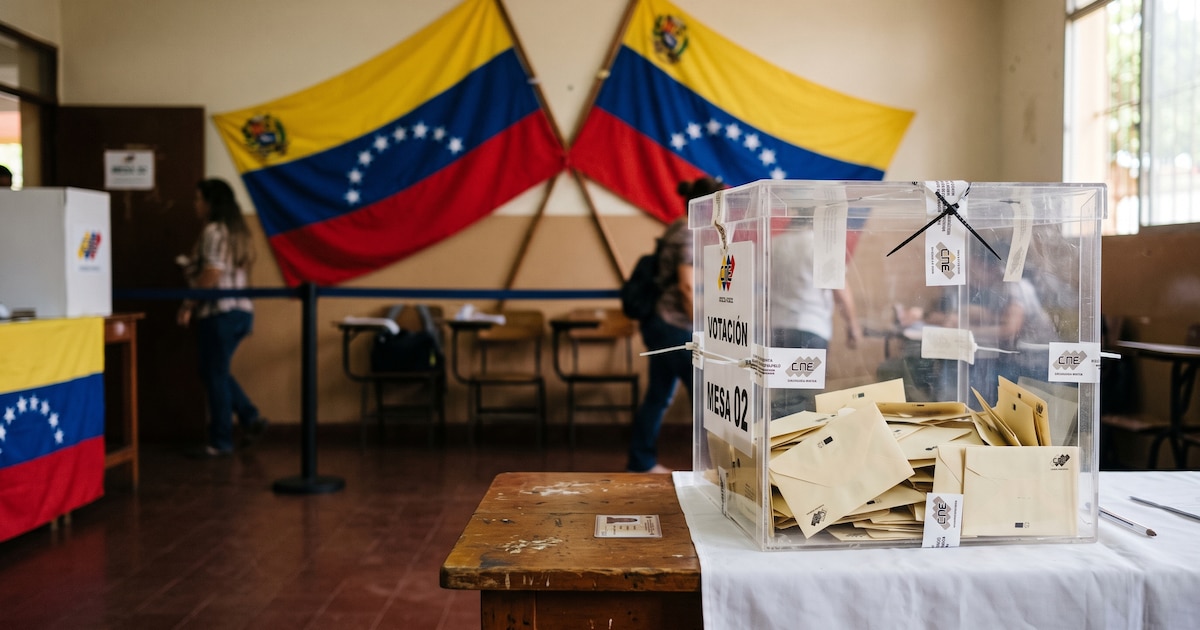
En Venezuela se está desarrollando un proceso de negociación singular, en el que ambos bandos parecen recibir órdenes de un único interlocutor externo. Esto plantea una pregunta: si ambas partes reciben instrucciones de la misma fuente externa, ¿por qué no logran llegar a un acuerdo con mayor rapidez? ¿Por qué no construir un proceso basado en principios éticos y resolver los problemas relacionados con el déficit democrático y las violaciones de los derechos humanos en Venezuela?
Quizás el problema sea algo más complejo —dado que todas las cuestiones venezolanas están sumamente entrelazadas— y estos procesos adolecen invariablemente de los mismos defectos, las negociaciones se estancan en asuntos secundarios, aun cuando el tratamiento de estos puntos accesorios influye en las posibilidades de resolver los problemas prioritarios. En lo que respecta a estas cuestiones secundarias, los negociadores a menudo se dejan absorber tanto por la dinámica del régimen que terminan reproduciendo patrones de violación constitucional e infracción de las normas internacionales vigentes en materia de democracia y derechos humanos.
Ya estamos en octubre; no solo no se han celebrado elecciones, sino que ni siquiera se ha fijado una fecha; está claro que no se vislumbra ningún plazo electoral en el horizonte. Con la perspectiva que dan diez meses, resulta evidente que fijar la fecha de los comicios ahora —en octubre— difiere considerablemente de haberla fijado en enero o febrero. Si la fecha se hubiera establecido antes, el calendario electoral se habría convertido en la prioridad, en lugar de ser la supervivencia del régimen delciniano la prioridad. Esta situación ha hecho que los negociadores pierdan su legitimidad. Se trata de un punto muy grave, pues la situación es muy distinta cuando las partes implicadas llegan a esta etapa careciendo de legitimidad. Los representantes del régimen, por su parte, adolecen manifiestamente de todas las formas imaginables de ilegitimidad en cuanto a origen. Llevan años usurpando el poder. Ya en 2017 se constató una ruptura del orden constitucional en Venezuela; desde entonces, la reelección de Maduro —así como cualquier proceso electoral posterior, ya fuera nacional o subnacional— ha estado marcada por la ilegitimidad. Por otro lado, la otra delegación se enfrenta al siguiente problema: el mandato para el que sus miembros fueron elegidos inicialmente expiró hace mucho tiempo y, en los últimos ciclos electorales —ya se tratara de primarias o de elecciones nacionales—, no han desempeñado ningún papel significativo en la percepción pública, es decir no han marcado significativamente desde el punto de vista electoral.
Otro aspecto negativo tiene que ver con la cuestión de los presos políticos. Para cualquier negociador serio, exigir la liberación de todos los presos políticos debería ser algo evidente; sin embargo, siguen utilizándose como moneda de cambio. Hay más de 400 en Venezuela, incluidos, por supuesto, militares que optaron por defender la Constitución en lugar de obedecer al narco-dictador; en realidad, estos soldados siguen expuestos a las peores represalias y abusos. Todo ello por haber tomado una decisión mucho más valiente que la de muchos líderes políticos latinoamericanos que se escudaron tras el narco-dictador.
Esto genera, naturalmente, una incertidumbre constante entre los miembros de la oposición venezolana que buscan una solución para su país: una solución que conlleva necesariamente un cambio de régimen. A este respecto, desconozco cuándo arraigó la idea distorsionada de que los cambios de régimen son reprobables; sin embargo, no deberían considerarse tales cuando se transita de la dictadura a la democracia, sino únicamente en el caso inverso: es decir, el paso de la democracia a la dictadura. No obstante, debido a una peculiar lógica regional y a la falta de ética de gran parte de la clase política, este concepto ha derivado en una paranoia —lo opuesto a lo que debería ser— y contradice lo dispuesto en la Carta Democrática Interamericana y en la Convención Americana sobre Derechos Humanos.
Por supuesto, si esta negociación se hubiera basado en un mínimo de ética y guiado, aunque fuera brevemente, por principios morales, ambas partes —incluido su interlocutor distante— ya habrían facilitado el regreso de María Corina Machado a Venezuela. Nada de esto ha sucedido; y aquellos de nosotros que hemos tenido que afrontar el “lodazal” de la política sin mancharnos las manos debemos comprender, tal vez, que otros carecen de tales escrúpulos y que, al participar en esta lucha, se ensucian tanto como pueden. En este sentido, asistimos a situaciones verdaderamente extraordinarias: ambas partes negociadoras, junto con su contraparte distante, parecen estar de acuerdo en violar la Constitución venezolana mediante el nombramiento de nuevos magistrados para el Tribunal Supremo de Justicia. Al hacerlo, desprecian los juramentos prestados —conforme a la Constitución— ante la Asamblea Nacional elegida democráticamente en 2015; juramentos que garantizaban a estos magistrados un mandato de doce años a partir de 2017. Considero que los negociadores deberían preocuparse por no vulnerar la Constitución de su país, tal como aparentemente se cuida no violar la de Estados Unidos.
La Constitución venezolana ha soportado toda suerte de atropellos y violaciones a manos de dictadores, pero también —cuando la ocasión lo propició— a manos de aquellos que, en algún momento, sirvieron a sus intereses. Algunos actuaron por puro oportunismo, pues el mundo empresarial es cruel y despiadado, y los intereses económicos y financieros derivados de los recursos de Venezuela han generado, sin duda, fortunas para muchos. Otros cedieron bajo coacción: el miedo no es tonto y engendra ira; por ello, es comprensible que quienes fueron amenazados o presionados terminaran cediendo. En cuanto a aquellos que fueron tomados como rehenes por la dictadura, encarcelados por motivos políticos o torturados, resulta comprensible que —aun sabiendo que tales prácticas no deberían regir el juego político— optaran en algún momento por colaborar de una manera que hirió profundamente a quienes respetaban su integridad y su trayectoria política. Sin embargo, esto sigue ocurriendo, porque vivimos una época en la que los negocios en Venezuela tienen gran peso: así como la miel atrae a las moscas, la miel del dinero ha atraído siempre a las moscas de la política. Así como los bolichicos y especies semejantes que medraron siguen haciéndolo. Es cruel, pero es la realidad.
Hemos constatado que la falta de representatividad de los negociadores permanece inalterada; resulta, cuanto menos, sorprendente que se elija para negociar a personas que representan —quizás— aún menos votos que el propio régimen. No obstante, esto no supondría un problema si demostraran firmeza; si, a falta de un mandato emanado de las urnas, asumieran al menos el papel de defensores de los intereses éticos del pueblo venezolano.
Exijo un nivel mínimo de exigencia ética: sencillamente, la posibilidad de que los individuos antepongan su propia dignidad a las instrucciones que reciben o a los intereses económicos surgidos, sin legitimidad alguna, de una dictadura. Vemos a políticos revolcarse en el barro para entretener a quienes se han beneficiado de la manera más abyecta de lo que pertenecía al pueblo venezolano: no solo el petróleo o los minerales raros, sino también la libertad de cada venezolano y el pleno ejercicio de sus derechos fundamentales.
Luis Almagro / Instituto CASLA
Venezuela,elecciones,urna electoral,voto,CNE













INTERNACIONAL
De la gloria al abandono y la miseria, el patrón que repiten decenas de excampeones cubanos al retirarse

Más de un millón de reproducciones en apenas 24 horas acumuló un video que muestra a Félix Savón, tres veces campeón olímpico de boxeo, mientras busca comida en la calle. La grabación, difundida el 11 de octubre, reabrió un debate que atraviesa al deporte cubano desde hace meses: el de sus glorias envejecidas y sin respaldo.
El clip, de apenas 17 segundos, fue publicado por la página de Facebook BoxeoCubano y recogido por Periódico Cubano, sitio de noticias independiente sobre la isla.
En las imágenes, un hombre que graba desde un automóvil le pregunta al excampeón qué hace. Savón responde: “Yo recogiendo comida, comida para comer”.

Sin datos sobre el origen del video
Según detalló Periódico Cubano, no se conoce quién filmó la escena ni dónde ni cuándo ocurrió. La página que difundió el material tampoco se atribuyó la autoría, aunque acompañó el video con un mensaje sobre “la realidad que enfrentan algunas antiguas glorias deportivas de Cuba”.
Savón ganó oro en Barcelona 1992, Atlanta 1996 y Sídney 2000, además de seis títulos mundiales amateur. Su caso, documentado también por Cubanoticias 360, portal de noticias sobre Cuba, no es aislado: corresponde a un patrón que se repite entre decenas de atletas retirados en la isla.
Según las denuncias recogidas por medios independientes, la combinación de pensiones mínimas, desabastecimiento de medicamentos y falta de mecanismos reales de apoyo institucional deja a numerosos exdeportistas sin ingresos suficientes al retirarse, pese a los reconocimientos oficiales que reciben como glorias del deporte.

Boxeadores veteranos sin respaldo institucional
El caso de Gaspar Casamayor Álvarez salió a la luz en marzo, cuando una denuncia documentada por Cubanoticias 360 mostró a este exboxeador de Santiago de Cuba pidiendo dinero y vendiendo artículos para comer. Casamayor cuenta con una credencial oficial de Gloria Deportiva otorgada por el Instituto Nacional de Deportes, Educación Física y Recreación (INDER), vinculada a su trayectoria pugilística de los años 60 y 70.

Un caso similar se sumó este mes en Holguín. Leonardo Winter Echeverría, boxeador activo durante la década de 1980 y con 207 combates disputados, vive en Banes con artrosis de rodilla y asegura no recibir respaldo del INDER. Su testimonio fue documentado en video por el movimiento opositor Cuba Independiente y Democrática.
Ariel Hernández, doble campeón olímpico de boxeo, relató que la remuneración recibida por sus resultados internacionales nunca cubrió sus necesidades y que debió trabajar como custodio tras retirarse de la competencia.

Demencia senil y una casa con goteras en Camagüey
El caso de Bernardo Comas Aguilera, campeón mundial amateur de boxeo en Múnich 1982, cobró fuerza en septiembre cuando su familia denunció sus condiciones de vida en Camagüey, según reportó Cubanoticias 360. El exboxeador, de 65 años, padece demencia senil.
Una investigación de CiberCuba, portal de noticias independiente, amplió el panorama semanas después. Su madre, cuidadora principal, describió una vivienda con filtraciones: “Cuando llueve, no duermo. Tenemos que apurarnos”, relató ante el portal. Sobre los electrodomésticos fue tajante: “Nada funciona aquí. Ni el refrigerador, ni la lavadora, ni el ventilador”.
La familia sobrevive con 8,000 pesos cubanos mensuales ( unos 333 dólares) de la pensión del exboxeador y 3.000 (124.9 usd) pesos de la jubilación de la madre. En octubre, el INDER provincial rechazó las acusaciones de abandono y afirmó mantener “visitas, asistencia médica, apoyo institucional y homenajes públicos”, aunque, según CiberCuba, no presentó registros que lo acreditaran.

El ajedrez y el béisbol también denuncian abandono
Jesús Nogueiras Santiago, Gran Maestro Internacional de ajedrez que representó a Cuba en 14 olimpiadas, acusó públicamente al INDER de negarle la garantía alimentaria pactada.
Cubanoticias 360 reportó además que Nogueiras padece esquizofrenia, un trastorno hereditario en su familia que se ha agravado por la falta periódica de medicamentos.
En el béisbol, Braudilio Vinent, considerado uno de los mejores lanzadores de la historia nacional con 221 victorias en 20 temporadas, denunció su situación ante CiberCuba este mes: “Yo me sacrifiqué por la Revolución, ahora nadie se acuerda de mí”. El exlanzador, de más de 70 años, advirtió que podría retirar de las paredes de su casa las medallas y diplomas que documentan su carrera, aunque aclaró que no piensa venderlos.
El exjugador granmense Víctor Tornés fue reportado en situación de abandono tras sufrir un derrame cerebral, mientras la esposa del campeón olímpico Andrés Aldama, de 70 años y con demencia y diabetes, pidió ayuda pública en Matanzas. Ambos casos fueron documentados por CiberCuba.
Baloncestistas y atletas olímpicas en situación de calle
El exbaloncestista Félix Morales Alfonso, de 73 años y participante en dos Juegos Olímpicos, fue filmado en agosto vendiendo productos en Cárdenas, Matanzas.
“Estoy pasando por un mal momento”, reconoció ante 14ymedio, diario digital cubano, que detalló cómo recorría el reparto 13 de Marzo buscando ingresos.
Aleida Palomo Sánchez, antigua atleta de alto rendimiento y profesora, fue vista enferma y desorientada en Santiago de Cuba, según una denuncia recogida por Cubanoticias 360 en octubre de 2025.
Miguel Calderón Gómez, medallista de bronce en el baloncesto olímpico de Múnich 1972, enfrentó problemas de salud y carencias materiales antes de morir en septiembre de ese año.
La exbaloncestista Margarita Skeet, parte de la selección olímpica en Moscú 1980 y ganadora de cuatro títulos centroamericanos, depende hoy de la ayuda de vecinos y familiares para sus necesidades cotidianas.

El INDER niega un abandono generalizado
El comisionado nacional de Atención al Atleta del INDER, Wilmer Lewis Calvo, negó en febrero de 2025 en el programa televisivo Mesa Redonda que existiera abandono hacia los deportistas históricos. Aseguró que el organismo cuenta con estructuras institucionales de apoyo.
Los casos documentados por CiberCuba contradicen esa versión oficial. El portal reportó que el 39% de los jubilados cubanos recibe la pensión mínima de 1.528 pesos mensuales, una cifra insuficiente para cubrir necesidades básicas. Una encuesta a 506 jubilados en cinco provincias mostró que el 98.8% percibe abandono institucional.
El ajedrecista Lázaro Bruzón, radicado fuera de Cuba desde 2018, resumió el fenómeno ante CiberCuba: “Todos los deportistas fueron cifras útiles mientras producíamos resultados. Una vez retirados, se acabó el negocio para ellos”. Bruzón agregó que el sistema deportivo cubano “recicla personas, exprime almas y descarta” a quienes dejan de ser útiles.
Los casos de Savón, Comas Aguilera, Nogueiras, Morales Alfonso, Palomo Sánchez y otros comparten un mismo patrón: nombres que llenaron titulares de orgullo nacional y que hoy encabezan denuncias de hambre, enfermedad y vivienda precaria.
La situación, documentada por Cubanoticias 360 y por otros medios independientes, sigue sin recibir una respuesta institucional que satisfaga a las familias afectadas.
Félix Savón,boxeo,Cuba,medallas olímpicas,acuarela

NEWYou can now listen to Fox News articles!
JERUSALEM — Israel’s high-stakes election on Oct. 27 pits the longest serving prime minister, Benjamin Netanyahu, against the highly decorated retired Lt. Gen. Gadi Eisenkot. While fairly new to politics, Eisenkot has an impressive resume that could help him become the Jewish state’s next leader.
According to a number of polls, Eisenkot’s centrist political party, Yashar, has a narrow lead over Netanyahu’s Likud. To form a government, Yashar or Likud will need to cobble together a 61-seat majority of parties to be able to form a new coalition government.
TRUMP SAYS NETANYAHU NEEDS TO BE RE-ELECTED, OR ELSE US WILL HAVE TO ‘FINISH THE JOB’ AGAINST IRAN ALONE
Gadi Eisenkot, leader of the Yashar party, speaks from behind a podium with a banner reading «Yashar with Eisenkot» during an event presenting the party’s full candidate list ahead of October’s general election on Sept. 7, 2026 in Rosh HaAyin, Israel. Eisenkot, a retired chief of the Israel Defense Forces, has emerged as the foremost challenger to Prime Minister Benjamin Netanyahu. (Erik Marmor/Getty Images)
Who is the 66-year-old Eisenkot?
He was born in Tiberias in Israel’s north to a Jewish-Moroccan family who relocated to Israel’s southernmost city, Eilat, on the Red Sea when he was a toddler.
A career soldier, he opted to serve in the infantry. He was part of the elite Golani Brigade and reached the zenith of the military with his 2015 appointment to the Israel Defense Forces (IDF) chief of staff in 2015 until 2019.
Yossi Melman, one of Israel’s most respected journalists on intelligence and defense reporting, told Fox News Digital that Eisenkot, «Is 100% a soldier. He is very brave and humble. He is an officer and gentleman.»
Melman noted that when Eisenkot was chosen to be the next IDF chief of staff, he declined because he felt that then General Benny Gantz should receive the appointment. Melman asked, «How many people would do that? He was selected after Gantz. It shows his traits of modesty, honesty and not arrogant.»
Melman said, «It is a miracle he is leading in the polls. He is the antithesis of a what a politician should be. He is not a great orator when you compare him to Netanyahu. He radiates honesty.»
BENJAMIN NETANYAHU’S LEGACY AND POLITICAL FUTURE ON THE LINE IN ISRAEL’S OCT 27 ELECTION
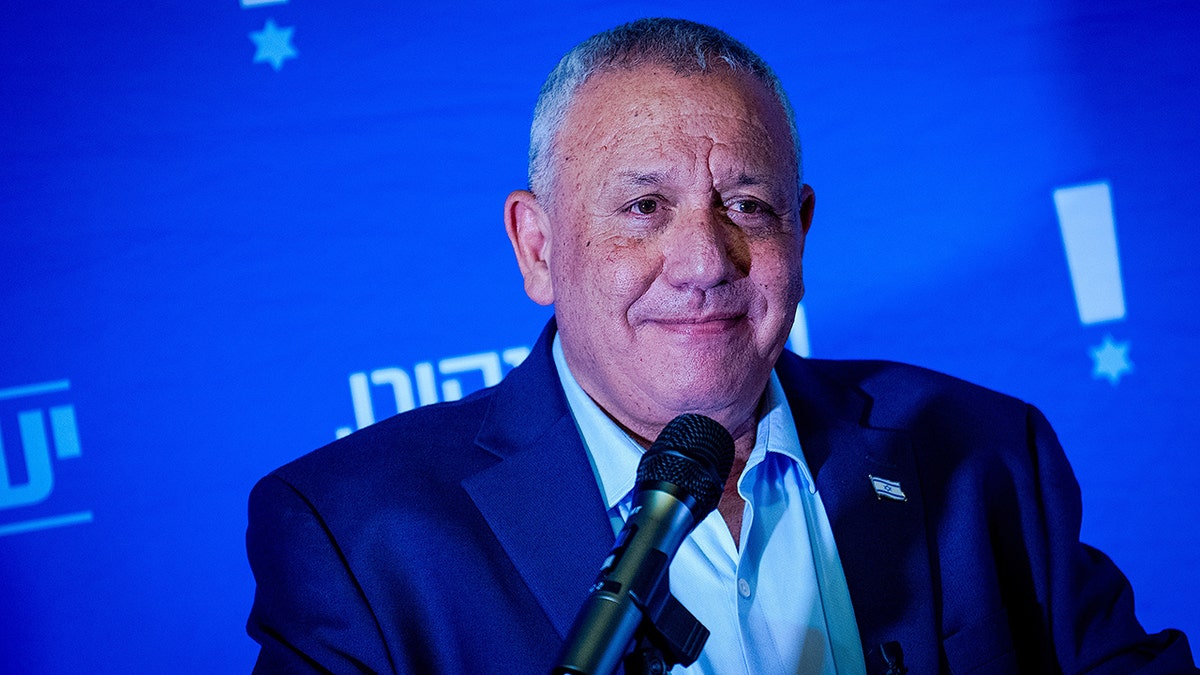
Yashar party leader Gadi Eisenkot attends the Jerusalem Residents Conference on Aug. 12, 2026 in Jerusalem. Gadi Eisenkot, a retired chief of the Israel Defense Forces and current leader of the Yashar party, has emerged as the foremost challenger to Benjamin Netanyahu ahead of October’s general election. (Erik Marmor/Getty Images)
Eisenkot’s Mizrahi background — Jews who originate from North Africa and the Middle East — would mean, if he prevails, that he would be the first Israeli Prime Minister of Moroccan origin. The Prime Minister’s office has been held by Israelis of Eastern European descent (Ashkenazi) since the rebirth of the Jewish state in 1948.
After Hamas invaded Israel on Oct. 7, 2023 and slaughtered over 1,200 people, including more than 40 Americans, Eisenkot joined Netanyahu’s war cabinet as a minister without portfolio.
Melman said Eisenkot «did not set any political conditions» and «his presence in the cabinet saved Netanyahu.» After eight months of serving in the war cabinet, Eisenkot resigned, blaming the prime minister for failing to implement a comprehensive strategy.
The war against the Iran-backed terrorist movement Hamas took an enormous toll on the battle-hardened General Eisenkot and his family. Hamas killed his son, 25-year-old Master Sergeant Gal Eisenkot, in Dec. 2023. The terrorist organization also killed two nephews of Eisenkot. Netanyahu and his wife Sara said at the time that they were devastated by Gal’s death and Eisenkot was a «true hero.»
ZIONISM EXPLAINED FROM ITS BIBLICAL ORIGINS TO THE REBIRTH OF THE STATE OF ISRAEL

Gadi Eisenkot, former Israeli army chief of staff and head of the Yashar party, is seen at the Black Arrow memorial site near Kibbutz Mefalsim during a visit to deliver a statement near the border with the Gaza Strip on Oct. 15, 2026, ahead of the Israel’s legislative election. (Ilia Yefimovich/AFP via Getty Images)
Danny Orbach, a military historian from the Hebrew University of Jerusalem, gave his take on the leading contender to replace Netanyahu. «I think his military record and his prospects as a national leader have both significant strengths and serious weaknesses. He bears considerable responsibility for shaping the IDF that existed on Oct. 7, 2023. And that was, paradoxically, both the army that proved capable of defeating Hezbollah, striking Iran and achieving unprecedented military successes in the extraordinarily difficult, tunnel-ridden battlefield of Gaza and the army that failed so miserably on Oct. 7.»
He continued that, «Like other chiefs of staff, Eisenkot bears responsibility for the decisions that reduced the army’s size and for the infamous ‘conceptzia’ [Hebrew word for concept] regarding Hamas. In that respect, I consider him just as culpable as Netanyahu.»
Israel’s military, intelligence and political establishments bought into the ‘conceptzia’ that Hamas could be housebroken with massive infusions of economic aid. Hamas, however, was wedded to its radical Islamist ideology —the destruction of the Jewish state — and used the funds to advance its war aims.
Orbach noted that «I don’t think most of Eisenkot’s support stems from his energy, enthusiasm or even his political platform. My impression is that Eisenkot has emerged as the default ‘non-Bibi’ candidate, the politician who currently channels much of the camp’s hopes and expectations.»

Israeli Prime Minister Benjamin Netanyahu and Israeli Chief of Staff Gadi Eizenkot (L) give a press conference in Tel Aviv, on Dec. 4, 2018. Israel’s army said today it has discovered Hezbollah tunnels infiltrating its territory from Lebanon and launched an operation to destroy them, a move likely to raise tensions with the Iran-backed group. (Jack Guez/AFP Via Getty Images)
Orbach added that «I also doubt that Eisenkot would have had the political determination to stand up to the Biden administration on such matters.»
Netanyahu and former President Biden repeatedly clashed over Biden’s attempts to rope in Israel’s efforts to defeat Iran’s seven-front war against the Jewish state.
The military historian, however, noted that «I believe an Eisenkot government could address several of Israel’s most urgent problems. It would remove Ben Gvir from power, confront the growing problem of Jewish extremist violence and terrorism in the West Bank, and begin repairing Israel’s severely damaged international legitimacy.»
Itamar Ben-Gvir is a controversial right-wing firebrand politician and the current minister of national security since 2022, who has outraged many Western European and foreign leaders with his heated rhetoric against the Palestinians.
TIMELINE OF DECADES-LONG ISRAELI-ARAB, PALESTINIAN CONFLICT

Former army chief Gadi Eisenkot attends the funeral for his son, First Sergeant Major Gal Meir Eisenkot, 25 years old, at the Herzliya cemetery on Dec. 8, 2023 in Herzliya, Israel. The Israel Defense Forces said the 25-year-old major, son of the cabinet minister and former army chief Gadi Eisenkot, died on Thursday in Gaza. (Dima Vazinovich / Middle East Images / Middle East Images/AFP via Getty Images))
Eisenkot’s wife, Hannah, comes from an American Jewish family. U.S. General Joseph Dunford awarded Eisenkot the Commander of the Legion of Merit because of his «exceptionally meritorious service as chief of the General Staff of the IDF» and his «contribution to the strategic cooperation between the United States and Israel [that] will have a lasting effect on both countries,» according to the Washington Institute, where Eisenkot served as a military fellow in 2019.
Nadav Eyal, an Israeli analyst and journalist for the mass circulation Israeli paper Yedioth Aharonoth, told Fox News Digital, Gadi Eisenkot is widely considered one of the most successful Chiefs of Staff that Israel has had in the last thirty years.»

Israel’s new Chief of Staff Gadi Eisenkot delivers a speech during his swearing-in ceremony at the Prime Minister’s Jerusalem offices on Feb. 16, 2015. (Menahem Kahana/AFP via Getty Images)
He continued that «Chiefs of Staff in Israel, unlike in other countries, are really extremely capable, in general, to be prime minister. They are leading the country’s biggest organization, the IDF.»
Eyal, who writes extensively about the IDF, credited Eisenkot’s military planning against the Iran-backed Hezbollah terrorist organization in Lebanon and the significant defeats the Lebanese Shiite entity experienced, including the «discovery of tunnels that Hezbollah built» to enter Israel. Hezbollah immediately joined Hamas’s war against Israel in Oct. 2023.
Given the nature of Israel’s electoral system, an outright winner won’t likely be known for several days, since the leading party will need to form a coalition to get to the 61-seat mandate to run the country.
israel, benjamin netanyahu, world elections, middle east, middle east foreign policy, elections

ANN ARBOR, Mich. — Socialism is gaining popularity among young Americans, but Digital found strikingly different understandings of the ideology among college students, some of whom acknowledged that their generation may not fully grasp what they’re embracing.
A recent poll found that 48% of Americans ages 18 to 34 viewed socialism favorably, compared with 32% of Americans overall. When Digital asked more than a dozen University of Michigan students to define socialism, their answers ranged from government-funded safety nets and affordable health care to collective ownership of industry.
«If the definition was more widely known, people would support it less honestly,» one student, Ahnika, told Digital.
Other students acknowledged the confusion, while at least a dozen declined to be interviewed on camera because they said they did not know enough about socialism to give an informed answer.
THE NUMBERS DON’T LIE. YOUNG AMERICANS ARE FALLING IN LOVE … WITH SOCIALISM
«Absolutely. I feel like many people don’t really understand, I feel, the full grasp or scope of what socialism really means,» a student named Owen told Digital. «I think they kind of have a more idealistic image of it.»
The divide over what socialism actually means comes as the ideology becomes an increasingly prominent issue in American politics, including Michigan’s closely watched Senate contest, where Republicans have sought to tie Democratic nominee Abdul El-Sayed to socialism – despite his rejection of the label.
Socialism? It’s a safety net
Some of the students interviewed used the word socialism as a way to describe a government that spends more money on subsidizing healthcare, housing or other basic necessities.
«It’s an economic system in which the resources of the government … are allocated into public services such as housing, affordable housing, food like food banks, education, things like that,» James, one student, told Digital.
«Socialism to me is a concept in politics where everybody gets a little bit of everything. Everybody benefits and everybody is really taken care of. Kind of that social net that you see in other types of politics,» Kayla, another student, said.
«It’s a political system where less social goods are delivered by the market than in capitalism,» said her fellow student, Sam.
Republicans and centrist Democrats have both raised concerns about the rising tide of socialism, while young people turn to it as a solution to the cost of living.
«Does the socialism thing scare me? Yes. Is it the wrong solution? Yes,» Vice President JD Vance said in a July interview. «But one thing I try to persuade my fellow Republicans of is socialism is the alternative if we don’t have a pathway to give people a sense that the system is not rigged and that the American dream is attainable.»
While the precise definition of socialism is debated by economists and philosophers, the ideology generally calls for replacing private ownership of major productive assets with some form of public, collective or worker ownership, though socialists differ sharply over whether that control should be exercised through the government, workers themselves or other institutions.
Modern socialism emerged as a major political and economic movement in 19th-century Europe, fueled by concerns over wealth inequality, industrial working conditions and the concentration of economic power in private hands.
A fair number of the students who spoke with Digital had understandings of socialism more in line with this traditional definition.
EL-SAYED REVEALS HE WOULD GO ‘STEP FURTHER’ THAN SANDERS ON SOCIALIST PLAN FOR MAJOR US INDUSTRY
Or is it government control?
«It’s an economic system where certain aspects [of the economy] are controlled by the government such as health care, possibly housing, agriculture, general necessities,» Owen said. «It’s distinct from communism in that the government does not have free rein over every aspect of the market, but it’s not the same as capitalism where the free market determines everything.»
How far government control should extend has long divided socialists. Some advocate government ownership of nearly all major industries, while others favor worker-owned businesses amid a mix of public and private enterprise.
«I guess I would define it as an economic system where resources are shared in a more, in a somewhat equitable sense, and there’s some level of, you know, public control of that,» Zack, also a student at the university, told Digital. «It’s not really any more specific than that, socialism is a broad term, you know?»
While some young Americans associate socialism with government control of private businesses, an idea that has long faced resistance in American politics, the ideology has gained support among younger voters, even as they differ over what it would mean in practice. The Democratic Socialists of America, which advocates replacing capitalism with a more collectively controlled economy, has seen its ranks swell with members and notched a series of electoral victories during the second Trump administration.
«I’d say I define socialism by the government taking collective ownership of companies’ production and distribution of goods,» student Ahnika told Digital.
«As far as I’m aware, it’s about like workers and members of society owning the product … as opposed to capitalism where you make the product, if you work on an assembly line, the product goes to your manager or whoever runs the factory and then they make most of the profit off of your work,» Noah, also a student, told Digital.
Maybe it’s Canada?
Others defined socialism in relation to countries or politicians.
«Mostly I think of Canada when I think of socialism,» Samantha, another student, told Digital. Elyse, her peer, said that New York City Mayor Zohran Mamdani comes to mind when thinking of a definition for socialism.
LIBERAL-CITY RESIDENT HESITATES WHEN PRESSED ON BELIEFS: ‘I HADN’T REALLY THOUGHT ABOUT SOCIALISM THAT WAY’
The University of Michigan’s student body isn’t alone in its division over the definition of socialism.
Gallup found in 2018 that 23% of Americans thought the word meant «equality, including equal rights, standing or distribution,» while 10% defined it as «provision of benefits and services, such as health care,» 6% said it was «communism or a modified version of it» and further 6% understood it to be «being social or getting along with others.»
Roughly a quarter of respondents had no opinion on the definition of socialism, and just 17% described it as «government ownership or control of businesses and the economy,» the definition typically favored by economists.
Michigan, where many of the students interviewed vote, could easily decide control of Congress following November’s midterm elections. Socialism is a major issue in the race, with Republicans attempting to portray Democratic nominee Abdul El-Sayed as a socialist — a label he rejects despite a long-running association with the Democratic Socialists of America.
At least a dozen students told Digital that they were not comfortable filming an interview because they did not feel they knew enough about socialism to give an informed response, further highlighting the degree of confusion surrounding the term among young people.
LIBERAL HOT SPOT RESIDENTS CAN’T AGREE ON WHAT SOCIALISM MEANS AS FAR-LEFT MOVEMENTS GAINS STEAM
While the students couldn’t agree on what socialism meant, they did agree that their peers were confused.
«Yeah, I mean there’s sort of a general idea of an equitable distribution of resources, but other than that, in terms of how it should be done, um like what it actually looks like, how power is distributed, there’s a lot of open questions there,» said Zach.
«Yeah, absolutely. There’s a huge misconception about socialism, even capitalism as well,» a student named Jeff told Digital. «So I think these terms in the broader space of political thought are probably allegories depending on your political orientation for good or bad … that’s probably the most ubiquitous use of that term. ‘Socialism bad, capitalism good,’ or vice versa if you’re a progressive.»
THE MEDICARE FOR ALL TRADE-OFFS SOCIALISTS AREN’T TALKING ABOUT, ACCORDING TO EXPERTS
Other students felt their peers were too quick to define socialism in relation to other political systems.
«I would say some people would compare socialism to communism as being practically identical, whereas others would just understand it as having a stronger social safety net like in like Nordic countries,» Sam said, noting that he doesn’t feel there is a right or wrong definition for the word.
«Yeah, I feel like a lot of people don’t really understand what socialism is,» Tommy, another student, said. «I feel like they think that sometimes it’s communism and they conflate the two. So I feel like people need to educate themselves on what the concept actually is.»
One student felt that, if more people understood socialism to imply government ownership of industry, the system would be significantly less popular.
«I honestly think there’s a bit of confusion … If the definition was more widely known, people would support it less honestly,» Ahnika said. «Rather than having a good understanding of what socialism is, people often try to antagonize the opposite end of the spectrum, which is private ownership.»
Not everyone felt that the ambiguity surrounding the term was necessarily a bad thing, however.
«I think having complex definitions of things only encourages conversation and when those conversations can be productive and when we approach them in a productive way I think we only uh strengthen what can be the collective definition of stuff like socialism,» Elyse told Digital.
politics, socialism, college, education, midterm elections

De la gloria al abandono y la miseria, el patrón que repiten decenas de excampeones cubanos al retirarse

Insólito accidente en una pelea de MMA: noqueó a su rival, pero el árbitro lo lesionó cuando paró el combate

La formación de Boca Juniors vs. Independiente, por la fecha 14 del Torneo Clausura

Lacunza defendió las PASO y rechazó modificar el sistema electoral cerca de los comicios

La gravísima amenaza de muerte que sufrió Karina Mazzocco con una foto que provocó terror: “Una cosa muy espantosa”

Former IDF chief Gadi Eisenkot emerges as Netanyahu’s leading election challenger

Javier Milei y sus medidas, en vivo: el mandatario dijo que piensa un proyecto a “100 años” para la Argentina

Cuáles son las condiciones que enfrentan las pymes para financiarse en el mercado de capitales

Escándalo con Sancor Salud: Cuotas millonarias por un servicio nefasto que abandona a los pacientes en urgencias

Tensión por discapacidad: la Iglesia advierte sobre el dictamen del oficialismo y reclama la prórroga de la ley de emergencia

 POLITICA2 días ago
Javier Milei y sus medidas, en vivo: el mandatario dijo que piensa un proyecto a “100 años” para la Argentina
- SOCIEDAD2 días ago
Escándalo con Sancor Salud: Cuotas millonarias por un servicio nefasto que abandona a los pacientes en urgencias
- DEPORTE3 días ago
Estudiantes de La Plata busca su sexta final de Copa Libertadores: la tabla histórica del torneo y la disputa Argentina-Brasil que podría dirimir