INTERNACIONAL
Sin reservas, sin protocolos y con Nicaragua sin poder abastecer a sus vecinos: la fractura del modelo agrícola centroamericano


El frijol nicaragüense que llega a los mercados salvadoreños ilustra el problema de fondo: Centroamérica integró sus mercados agrícolas, pero no construyó los mecanismos para proteger esa integración cuando la crisis golpea a todos los proveedores al mismo tiempo. Así lo plantea un análisis publicado por Divergentes, medio centroamericano de periodismo.
El actual episodio de El Niño funciona como prueba de estrés para todo el modelo regional. La sequía deja al descubierto una contradicción que hasta ahora permanecía oculta: los seis países comercian como un solo bloque, pero responden a las crisis como si fueran economías aisladas.
El comercio regional pasó del 7% al 30% en seis décadas
El intercambio intrarregional representaba apenas el 7% de las exportaciones de la zona en 1960. Hoy esa proporción ronda el 30%, según el análisis de Divergentes.
La cifra convirtió al propio mercado regional en uno de los principales destinos de las exportaciones centroamericanas. Ningún país produce ya de forma aislada: la disponibilidad de frijol en Costa Rica depende de lo que ocurra en Nicaragua, y los precios del maíz en Honduras no responden solo a la cosecha hondureña.
¿Por qué El Niño afecta más a Centroamérica que sequías anteriores? Porque los países que tradicionalmente compensaban las pérdidas de sus vecinos también están golpeados esta vez.

El mecanismo de respaldo regional se debilita justo cuando más se necesita, y eso convierte una sequía localizada en un problema de toda la cadena de suministro.
Nicaragua, el proveedor que ya no puede sostener a la región
El caso del frijol resume la fragilidad del sistema. Nicaragua ha ejercido durante años el papel de principal proveedor regional del grano y compensaba los déficits que aparecían en otros mercados.

Ese respaldo ya no puede darse por seguro. Cuando el país que suele cubrir la escasez enfrenta las mismas limitaciones que sus compradores, la interdependencia deja de operar como ventaja y se transforma en vulnerabilidad compartida, señala Divergentes.
El fenómeno no se limita al frijol. La presión alcanza también a los granos básicos, el café, el ganado y los lácteos, con efectos que llegan hasta las cadenas de procesamiento, los exportadores y los consumidores finales.

Instituciones para comerciar, no para enfrentar la escasez
El diagnóstico central del análisis es directo: la región construyó instituciones para mover mercancías, pero no para administrar crisis alimentarias compartidas. No existe una reserva estratégica regional de alimentos ni protocolos para coordinar políticas de emergencia entre gobiernos.
Ante ese vacío institucional, los incentivos políticos empujan en sentido contrario a la cooperación. Cada gobierno enfrenta la presión de proteger primero a sus propios consumidores y productores, lo que abre la puerta a restricciones de exportación, trabas administrativas o medidas sanitarias con fines proteccionistas.
Estas decisiones no responden necesariamente a una intención de perjudicar a los países vecinos. Surgen de gobiernos que actúan según incentivos nacionales mientras el problema opera a escala regional, según describe el medio.

El riesgo climático se convierte en riesgo empresarial
Para las compañías que operan en la región, la crisis agrícola trasciende la pérdida de cosechas. Implica mayores costos de materias primas, interrupciones logísticas, volatilidad de precios y cambios regulatorios difíciles de anticipar.
Divergentes plantea una batería de medidas pendientes: un sistema regional de alerta temprana que combine datos climáticos, productivos y comerciales, reservas coordinadas de maíz y frijol, protocolos que limiten las restricciones comerciales unilaterales en emergencias y mecanismos de financiamiento que actúen antes de que la pérdida agrícola derive en inflación y conflictividad social.
Nada de esto requiere una integración política profunda ni una nueva burocracia regional. Exige, según el planteamiento, reconocer que la realidad económica ya se integró y que las instituciones deben ponerse a la altura de esa realidad.

Una pregunta que va más allá de los alimentos
La misma tensión que hoy aparece en el sector agrícola se repetirá, advierte el análisis, en la gestión del agua, la energía, las telecomunicaciones y la infraestructura logística. Los riesgos contemporáneos no respetan fronteras, pero las herramientas para administrarlos siguen atadas a ellas.
La sequía actual terminará, como terminaron las anteriores. Pero los fenómenos climáticos extremos seguirán siendo más frecuentes y la volatilidad internacional seguirá presionando la seguridad alimentaria de la región.

La pregunta de fondo, plantea Divergentes, no es cómo responder a este episodio puntual de El Niño. Es si Centroamérica está dispuesta a construir mecanismos permanentes para gestionar vulnerabilidades que ya comparte, o si seguirá funcionando como mercado común solo cuando conviene y como seis economías separadas cuando llegan los riesgos.
La integración económica de la región ya es un hecho consumado. Lo que queda pendiente, según el medio, es decidir si esa integración tendrá una gobernanza a la altura o si Centroamérica esperará a la próxima crisis para recordar, una vez más, que el mercado llegó antes que las instituciones.
sequia,guatemala,campesinos













INTERNACIONAL
Liberal-city resident hesitates when pressed on beliefs: ‘I hadn’t really thought about socialism that way’
PORTLAND, Maine — Americans who were asked for their opinions of socialism by Digital offered sharply different interpretations of the ideology, with some embracing its promises of economic equality while others expressed strong reservations about government control over the means of production.
Digital took to the streets of Maine’s largest city, a progressive bastion, to talk to residents about their definitions of socialism and how far they would be willing to go to embrace its ideals.
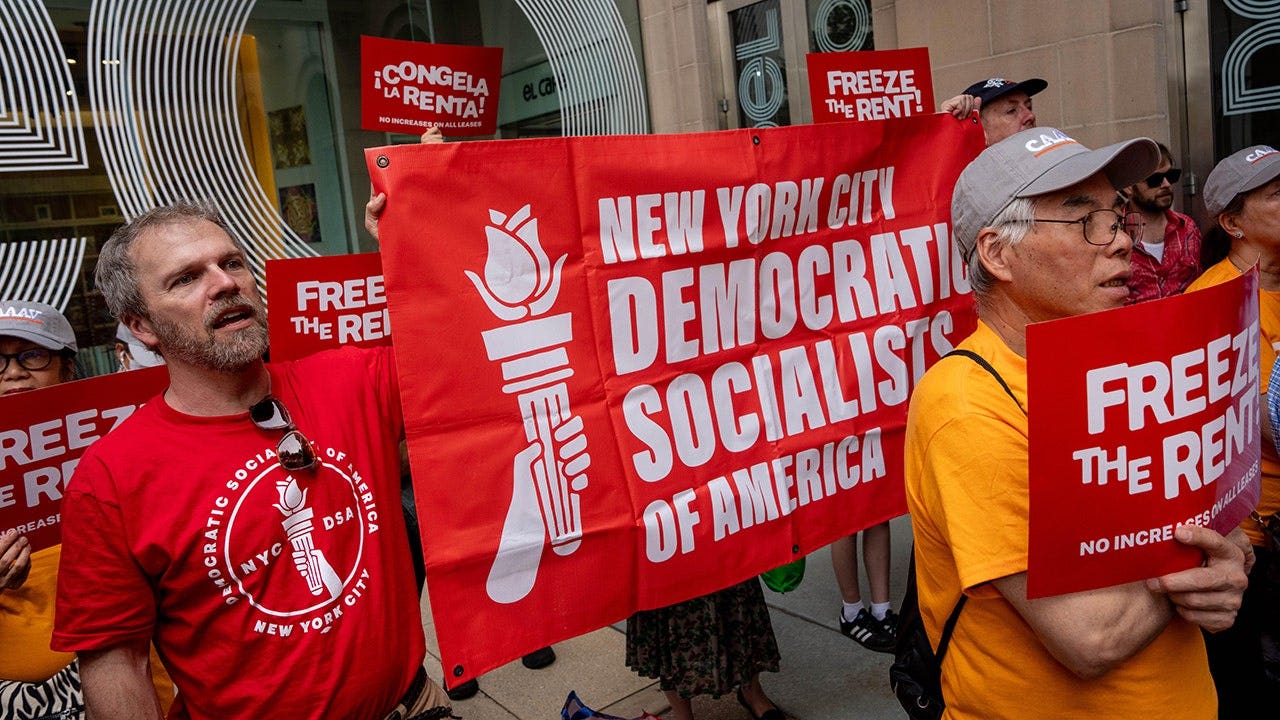
The topic of socialism has featured prominently in campaign coverage during this midterm election cycle, as candidates backed by the Democratic Socialists of America (DSA) scored high-profile victories over more centrist rivals in a slew of Democratic primaries this year. DSA’s outsized influence has been a driving force in the ballot box battle for the Democratic Party’s ideological future.
LIBERAL HOTSPOT RESIDENTS CAN’T AGREE ON WHAT SOCIALISM MEANS
A new national poll indicates 32% of voters have a favorable view of socialism, with 64% seeing it in an unfavorable way. But the favorable rating matches an all-time high, first reached five years ago, since first began asking the question in 2019. And a September Gallup poll found that 43% of Americans had a positive image of socialism, the highest level since the polling organization began tracking the question in 2010.
Lewis, a retired Navy veteran, said socialism was a good thing because it «looks out for people’s needs…. and it’s not communism.»
Socialism and communism both emphasize collective ownership of the means of production, such as factories, businesses and major industries. But socialism encompasses a range of approaches, including those that allow private enterprise, while communism traditionally envisions the abolition of private ownership of productive assets and, ultimately, a classless society.
CHECK OUT THE LATEST NATIONAL POLL
Lewis turned skeptical when Digital asked whether he would personally surrender private property to government or collective control.
«I guess. I hadn’t really thought about socialism that way. I think about taking care of the needs of people, you know, things like… national health care, things like that,» he answered. «I don’t like government taking things away from you.»
Nolan, who recently moved to Portland, told Digital «there’s a lot of wealth imbalance in America right now, and we could benefit from some sort of leveling system.»
He said socialism exists to help «people who aren’t as, you know, benefiting in society.»
Nolan added that «business owners should have their autonomy» and that «people deserve to earn their money.»
«But there are a lot of really high-end… corporations that benefit so much… that really don’t need that much wealth… there’s so much exorbitant wealth at the top end that a lot of that could trickle down to people who are disadvantaged and don’t have homes,» Nolan stated.
SIGN UP TO GET THE POLITICS NEWSLETTER
Nola, another resident passing through Portland’s Monument Square, said socialism’s «a good thing. It means equity.»
Asked about the takeover of businesses and means of production under socialism, Nola said she still «100%» supported socialism.
«I’m the daughter of a small business owner. I’ve seen how tough it is to run a small business in this country and how easy it is for corporations to just do whatever they want,» she explained. «So if we gave actually back to small businesses and the government helped them out… and so much of the market that’s privatized actually became public, I think… with how big the U.S. has gotten, it’s only a good thing.»
Ted disagreed.
«Socialism overall, I think it’s a horrible idea,» he emphasized. «If we can learn from history, anything from history, we see that it’s gonna really give way too much power to the government institution. It’s gonna… make things that are harmful overall for everyone… it’s like it’s dictatorship.»
Ted argued that «socialism just impoverishes. Capitalism, the free market economy is a good thing.»
He added that while «some people are very wealthy and very greedy,» that overall capitalism «creates other wealth for other people.»
The new poll found that 51% of voters had a favorable view of capitalism, compared with 32% who viewed socialism favorably. Another 46% had an unfavorable view of capitalism.
politics, socialism, polls, maine, midterm elections, democrats elections

NEWYou can now listen to Fox News articles!
A prominent French newspaper delivered a blistering critique of the country’s leadership after nationwide protests descended into riots, looting and arson.
The article, written by Vincent Trémolet de Villers for the conservative newspaper Le Figaro and published Sunday afternoon local time, blamed years of political failures for contributing to the unrest and took particular aim at President Emmanuel Macron.
It criticized what it described as a justice system that is «lenient toward criminals,» accused far-left groups of carrying out violence with little consequence and took aim at France’s immigration and security policies.
«A judiciary that is lenient toward criminals but unrelenting toward decent citizens. The incomprehensible privilege of these far-left militias, who destroy, set fires, and kill with impunity,» the article stated, according to a translation.
«An uncontrolled immigration, in which a portion of the immigrants rebels against the country that took them in.»
WHERE’S MACRON? FRENCH LEADER BLASTED FOR ATTENDING CONCERT AS RIOTS ESCALATED
The article took aim at Macron over his past calls for police to show greater empathy. (Ludovic Marin/Pool Photo via AP)
The article also took aim at Macron over his past calls for police to show greater empathy.
«Emmanuel Macron’s reprimands toward a police force he deemed insufficiently ‘empathetic’ — directed at officers under attack by bolts, cobblestones, and mortar fireworks — will remain an indelible stain,» it stated.
The author argued that the unrest reflected deeper failures by France’s political establishment.
«If the far-left, criminals, and looters can turn France upside down in a matter of hours, it is primarily because a technocratic monarchy — intoxicated by its own self-importance — has methodically dismantled all the moral, security, cultural, and economic safeguards that allow a society to remain standing.»
The scathing assessment followed a day of violence across France, where masked groups clashed with police, looted businesses, set fires and attacked public buildings, according to The Associated Press.
Macron addressed the nation Sunday, condemning the violence and vowing that those responsible would be held accountable.
PHOTOS SHOW AFTERMATH OF RIOTS AS MASKED GROUPS CLASH WITH POLICE ACROSS FRANCE
«Nothing will excuse their actions. We all tonight feel angry. We feel shame as well,» Macron said, according to a translation of his televised remarks.
«There needs to be a response. Those people who looted need to pay for their crimes,» he added.
The French president also acknowledged concerns raised by the youth about their economic prospects and futures.
«The youth of our nation are expressing great anguish and concern about the future, the conditions of where their careers will take them, what role they will be able to play in society,» Macron said. «… I hear what they are saying, for the past ten years I’ve been fighting for them, so we need to pay heed to what they are saying.»
Macron said he ordered officials to increase security around public buildings and businesses, with protests potentially restricted in some areas.
At least 2,400 people were arrested nationwide, including 855 in the Paris region, according to the AP.
More than 500 police officers, gendarmes and firefighters were injured, the AP reported, citing Interior Minister Laurent Nuñez.
LIMOGES TOWN HALL ‘LARGELY LOST’ AFTER FAR-LEFT RIOTERS SET HISTORIC BUILDING ON FIRE AMID FRENCH UNREST

The criticism also comes as Macron faces scrutiny over his decision to attend a Celine Dion concert with his wife, Brigitte, on Friday night, on the eve of the nationwide demonstrations. (LUDOVIC MARIN/AFP via Getty Images)
Authorities estimated roughly 550,000 people took part in Saturday’s demonstrations, while organizers put turnout at 800,000, according to the AP.
Hundreds of businesses were looted nationwide, and unrest continued Sunday in Paris, where police used tear gas as tensions flared around Place de la République.
The criticism also comes as Macron faces scrutiny over his decision to attend a Celine Dion concert with his wife, Brigitte, on Friday night, on the eve of the nationwide demonstrations.
The protests, fueled in part by anger over rising living costs, school conditions and public services, erupted into violence Saturday.
Macron’s office and Le Figaro could not immediately be reached by Fox News Digital for comment.
Fox News Digital’s Bradford Betz and The Associated Press contributed to this report.
world, emmanuel macron, france, crime world, politics, world protests
The Trump administration is expected to decide by late December whether to strip the American Bar Association’s (ABA) law school accrediting arm of federal recognition, a move that would not automatically end the ABA’s accreditation of law schools or change state bar-admission rules but could accelerate states’ efforts to approve alternative paths to becoming a lawyer.
Two legal education experts told Digital that while most law students would be unlikely to lose access to federal loans if the ABA’s accrediting arm loses recognition, the decision could accelerate a broader shift away from the organization’s longstanding dominance over legal education, with states increasingly exploring alternative accreditation pathways that could change how law schools operate and who qualifies to practice law.
«I think the biggest thing is, everyone should know that the federal recognition of the ABA is just the first step,» Adam Biggs, general counsel of the University of Austin, told Digital. «If they get knocked off their perch, that’s going to supercharge the conversations of these state supreme courts to create alternative pathways that are not just the ABA.»
The looming decision follows a September vote by the National Advisory Committee on Institutional Quality and Integrity (NACIQI), the federal panel that advises the Education Department on accreditation matters, which remained deadlocked over whether to recommend renewing the ABA’s federal accreditation recognition. Education Department staff have already recommended denying renewal, and now the decision rests in the hands of Under Secretary of Education Nicholas Kent to rule on whether the ABA’s accrediting arm can retain its federally recognized status, which it has held since 1952.
AI BACKLASH REACHES MAJOR UNIVERSITY WITH BOLD BAN ON LAPTOPS AND PHONES FOR LAW STUDENTS
The ABA has long served as the primary gatekeeper for legal education in the United States, with most states requiring graduates to have attended an ABA-accredited law school to qualify for the bar exam. Although losing federal recognition would not automatically end that arrangement, critics argue it could accelerate efforts already underway in some states to recognize alternative law school approval systems, potentially allowing institutions to experiment with cheaper, shorter programs outside the ABA’s traditional accreditation model.
One such alternative is taking shape in Texas, where Biggs is helping develop a new law school at the University of Austin (UATX) that would operate without ABA accreditation. The university is considering a two-year law program or a model that combines undergraduate and legal studies. It plans to make tuition free and avoid federal funding altogether. The proposed school could also depart from traditional law school staffing models by relying more heavily on practicing attorneys and federal judges as adjunct instructors, rather than maintaining the extensive full-time faculty structure that Biggs says ABA accreditation standards require and that can pose a high bar for institutions.
Biggs argued that the ABA’s longstanding influence over legal education has discouraged such experimentation by imposing what he described as a «one size fits all elitist model of education,» which he said drives up costs and limits schools’ ability to offer alternative approaches to training future lawyers.
DUKE LAW’S ALLEGED RACE-BASED ADMISSIONS ACCUSED OF DEFYING SUPREME COURT RULING: DOJ
«Right now, the model they force makes it impossible to cut overhead, and it’s going to be an expensive product,» Biggs said, criticizing the ABA’s accreditation requirements. «That makes the decision for you. Because you need to live in a big city to go work at a firm to pay off your massive amount of debt.»
Biggs added that reducing the cost of legal education could help address attorney shortages in rural and underserved communities, where graduates carrying substantial student debt may struggle to pursue lower-paying legal work. Allowing law schools to operate with less overhead, he said, could give new attorneys greater flexibility to serve those communities and potentially make legal services more affordable.
The ABA faculty requirements criticized by Biggs are also facing scrutiny from the Justice Department, which has threatened an antitrust investigation over restrictions on adjunct professors teaching core law school courses. In an Oct. 7 letter, Associate Attorney General Stanley Woodward gave the ABA 15 days to revise or justify its rules, arguing that the requirements restrict competition and contribute to higher tuition costs, The Wall Street Journal reported.
The emergence of alternative accreditation pathways could offer aspiring lawyers new opportunities, but also introduce complications for graduates hoping to practice in states other than where they attended law school.
While the federal government determines which accrediting agencies it recognizes for federal purposes, state supreme courts generally set their own bar-admission requirements. Many states currently require graduation from an ABA-accredited law school, a requirement that would not automatically disappear if the ABA loses its federal recognition.
TRUMP ADMINISTRATION ACCUSES PRESTIGIOUS LAW SCHOOL OF FAVORING BLACK APPLICANTS OVER WHITE, ASIAN PEERS
That means graduates of schools approved through alternative state-level processes, such as the one UATX hopes to pursue in Texas, could qualify for the bar in their home state but face additional hurdles elsewhere. Biggs predicted that as more states adopt alternative pathways, others could face pressure to reconsider their requirements.
«Eventually there’s gonna be a very large group of states that are not ABA or nothing,» Biggs said, predicting that states such as New York and Illinois would eventually have to confront the issue. «They’re gonna have to come to the table and try to figure out how portability is gonna work.»
Several states have already begun loosening the ABA’s longstanding hold over legal education. In January, Texas became the first state to end its exclusive reliance on ABA accreditation for bar eligibility, with the state Supreme Court assuming authority to approve qualifying law schools. Florida followed nine days later, adopting its own approach to recognizing law schools outside the traditional ABA system.
The movement has since extended to other states. Ohio’s Supreme Court proposed changes in May to establish a state-run law school approval process, while courts in Tennessee, Alabama and Washington have also taken steps toward reducing their reliance on the ABA, as Digital previously reported.
ILLEGAL IMMIGRANT TUITION PERKS PUT 4 STATES IN TRUMP DOJ CROSSHAIRS
The potential consequences for federal student loans, meanwhile, may be far more limited. Biggs explained that most law schools are affiliated with larger universities that maintain their own institutional accreditation, allowing students to access federal aid without relying exclusively on the ABA’s recognition.
«So unless you are a freestanding law school that only relies on the ABA, your students are gonna be fine,» Biggs said.
Sarah Parshall Perry, attorney and vice president of nonprofit Defending Education, similarly told Digital that the more immediate federal-aid concerns would fall on standalone law schools that rely on the ABA’s federal recognition rather than a parent university’s institutional accreditation. Perry estimated that roughly 15 standalone law schools could potentially face federal funding complications if the ABA loses its recognition.
Beyond the immediate financial implications, Perry argued that loosening the ABA’s grip on legal education could bring more fundamental changes to what law schools teach and how they prepare students for the profession.
TRUMP’S JUSTICE DEPARTMENT SUES NEW YORK, OTHER BLUE STATES OVER TUITION FOR ILLEGAL IMMIGRANTS
«These law students are actually going to get a better education,» Perry argued. «Because we get the ABA meddling away from curricular inclusions, and we get them away from race mandates in admissions and in hiring and promotions, we get back to ground zero on making excellent lawyers.»
«I don’t care what color my attorney is if I get in a car crash. I am very concerned that he recognizes principles of contract law and insurance liability. That’s what matters most,» she added.
The ABA’s accrediting council has already moved to roll back some of its DEI requirements amid concern the federal government could strip its accrediting status. In September, the council voted 10-6 to repeal Standard 206, which had required law schools to demonstrate a commitment to diversity and inclusion among students, faculty and staff.
SIGN UP TO GET THE POLITICS NEWSLETTER
Education Department officials previously told Digital that staff had recommended denying the organization’s renewed recognition after finding it out of compliance with more than 26 federal recognition criteria, including concerns about the accrediting council’s independence from the broader ABA membership and advocacy activities.
The ABA has disputed the Department’s findings and defended the independence of its accrediting council. Even if the administration ultimately revokes federal recognition, the organization could continue accrediting law schools, leaving states to decide whether to maintain their longstanding reliance on ABA approval or embrace alternative pathways as some have already started doing.
education, law, politics, justice department, regulation, reform

Diego Santilli, jefe de Gabinete: “Si el domingo que viene hay elecciones, Milei les gana a todos”

Deportivo Riestra vs Unión: formaciones, hora y dónde ver por tv

Martín Llaryora habló de la interna dentro del peronismo: “Entendemos el Justicialismo distinto a como lo entiende el kirchnerismo”

Caída interanual en las ventas por el Día de la Madre por quinto año consecutivo

La esposa del Dibu Martínez habló tras el tremendo accidente del arquero quien debió ser operado de urgencia: «Volverá a ser el de siempre y…»

La Justicia espera un peritaje en el caso Chocolate del Senado bonaerense y diez exlegisladores se desligaron

La lesión de Lautaro Martínez que encendió las alarmas de la selección argentina: el comunicado del Inter

El crédito que nadie te cobra

Noche negra y oleada de críticas contra Jofre Torrents

Gremios que le ganaron a la inflación de septiembre por aumentos de sueldo en paritarias

 ECONOMIA3 días ago
El futuro será inteligente, pero inconsciente
- SOCIEDAD3 días ago
La ANMAT prohibió un dispositivo de depilación definitiva por irregularidades sanitarias
- DEPORTE3 días ago
Nacho Fernández rompió en llanto al hablar de la cinta de capitán con la imagen de Maradona: “Me acompaña todos los partidos”