INTERNACIONAL
‘Thrill killer’ and desert executioner — meet the dozens of criminals Dem AG backed for parole: ‘No brainer’

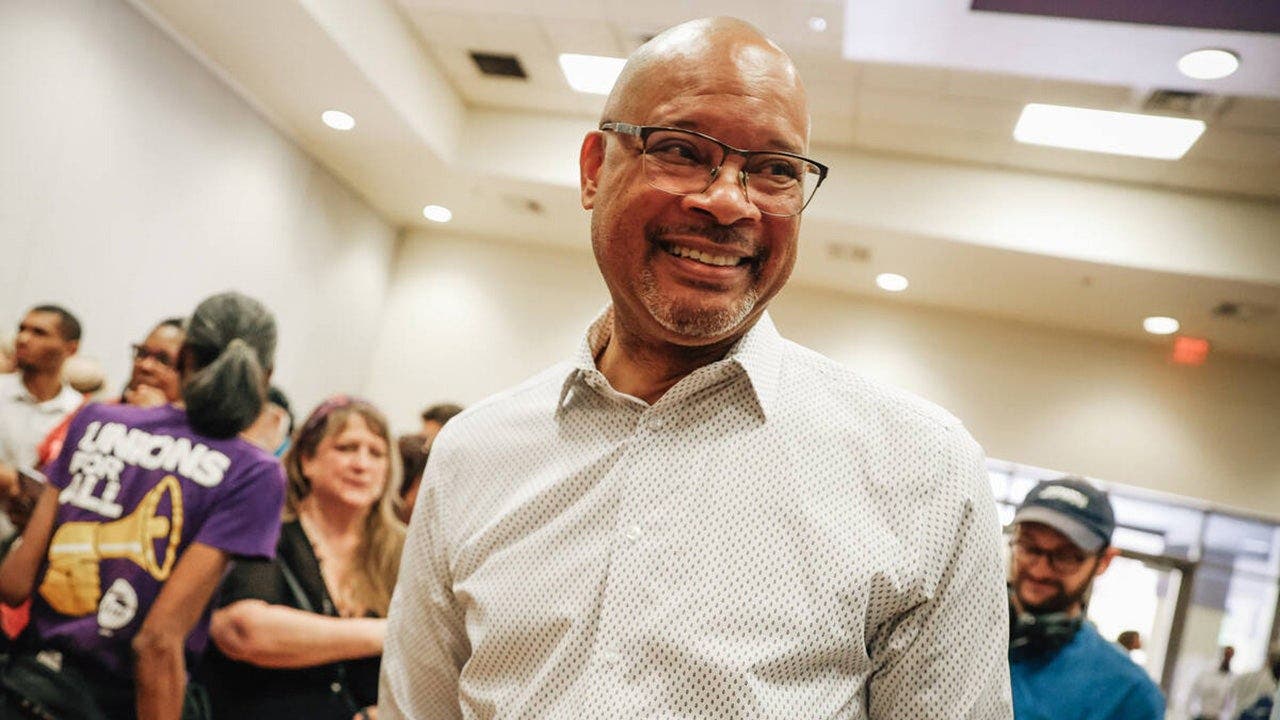
Nevada Attorney General Aaron Ford voted to support clemency for several convicted murderers, including men responsible for the kidnapping and execution-style killing of a teenager, the «thrill killing» of a Pizza Hut worker and the beating death of another victim with a cinder block.
Ford is currently facing backlash over his clemency bid for a convicted killer who took the life of a pregnant woman while out on bail for a series of armed robbery attacks on Vegas tourists. Now, a Digital review of state pardon hearings that took place during Ford’s nearly eight years as attorney general show him supporting clemency for dozens of other violent offenders, with some convicted killers receiving reduced sentences, pardons or earlier parole eligibility while others had their requests denied.
Ford is running to be Nevada’s next governor, seeking to oust incumbent Republican Gov. Joe Lombardo. His race is shaping up to be one of the most competitive gubernatorial elections of the cycle.
Unlike governors in most states, Nevada’s governor cannot unilaterally grant pardons or commute prison sentences, with those decisions instead resting with the state’s Board of Pardons Commissioners, made up of the governor, attorney general and Nevada Supreme Court justices.
JOE LOMBARDO CRUISES PAST SIX GOP CHALLENGERS TO SECURE NEVADA REPUBLICAN GUBERNATORIAL NOMINATION
Since becoming the state’s attorney general, Ford has voted to pardon or significantly reduce the sentences of 30 people convicted of murder, Digital found.
Ford, for example, supported a convicted kidnapper and murderer eligible for parole when Lombardo voted against him.
Michael Cu, the convict in question, kidnapped a 16-year-old in 1996, forced him to drive out to the desert, then killed him execution-style — all to steal the rims off his car. The victim was shot seven times with a rifle, with the fatal shot being fired at nearly point-blank range into his head.
«Mr. Judge I would like to tell you these people, I don’t want them to be free,» the deceased’s mother pleaded with the judge at Cu’s sentencing in March 2000. «There’s a lot of people outside, a lot of mothers outside … I’m afraid because I have more children.»
Cu could eventually make it back onto the streets after the board commuted his sentence, making him eligible for parole in 2035 — though his release would still require approval from the state’s parole board.
Ford has made his experience as Nevada’s top law enforcement official a focal point of his gubernatorial campaign.
ABBOTT SPOTLIGHTS NO-SHOW TALARICO, LAUNCHING TEXAS-SIZED CRIME CRACKDOWN
«As Attorney General, Ford has worked with federal and local law enforcement to prosecute criminals and protect our communities,» his campaign website reads. «He’s gone after corporate landlords who are illegally jacking up prices, taken on big drug companies, prioritized putting child predators in jail, battled fentanyl being trafficked across our borders, and fought to keep dangerous untraceable ghost guns off of our streets. He ended a decades-long rape kit back log and has prosecuted human traffickers who threaten the safety of our communities.»
Republicans may seize on some of Ford’s pardon votes to challenge the image he’s cultivated of a crusader for public safety.
While Ford offered no substantive remarks in most of the pardon hearings, he occasionally had something to add.
«I gleefully vote yes for this motion,» he said, explaining his June 2022 support to make a man who killed someone in an armed robbery when he was 15 eligible for parole. Ford talked to the man, Shaquille Hazelwood, on the importance of the moment and advised him to live up to the faith the state was placing in him.
He called his decision to grant parole eligibility to an individual who stabbed a 17-year-old to death a «no-brainer» in September 2025. Ford sponsored the hearing where witnesses spoke to the character of the murderer, Bobby Thomas.
Ford also supported a commutation for Anthony Amati, whom police and prosecutors described as a «thrill killer,» in a June 2025 decision that allowed the convicted murderer to become immediately eligible for parole.
Amati was convicted of ambushing a 22-year-old Pizza Hut worker as he walked a co-worker home. The co-worker, who was at the trial, testified that Amati and his friends «cackled … laughed like it was a big joke» and jumped around while firing multiple bullets into the victim.
Deputy District Attorney Christopher Lalli argued at the time that Amati should never be eligible to walk free because his crime was a «thrill killing … for the mere pleasure of it.»
Amati became immediately eligible for parole following the board’s decision, although his release was not guaranteed.
HOUSE DEMOCRAT BLASTED AFTER EARLY RELEASE LAW FREED INMATES LATER CHARGED WITH MURDER
Ford also supported clemency for Arlander Givens, who beat his victim to death with a cinder block and was sentenced to two consecutive life terms, but the board ultimately denied his application, Digital found.
Other convicted killers Ford voted to grant clemency included a murderer involved in a carjacking, a man who stabbed a 17-year-old to death over a basketball game and another who lured his victim into his home with the promise of a drug deal before shooting him dead, Digital found.
GUBERNATORIAL CANDIDATE VOWS TO PARDON COP CONVICTED OF MANSLAUGHTER IN DEATH OF FLEEING SUSPECT
Lombardo’s predecessor and Ford did vote together for leniency in some cases. For instance, the duo both voted to pardon a man found guilty of masterminding a contract killing after he was exonerated by DNA evidence.
Ford’s office and his gubernatorial campaign did not respond to a request for comment when reached by Digital on Wednesday.
politics, fox news investigates, crime world, attorney general, gubernatorial, nevada











Updated Nov. 1:
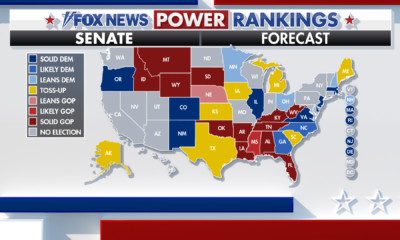
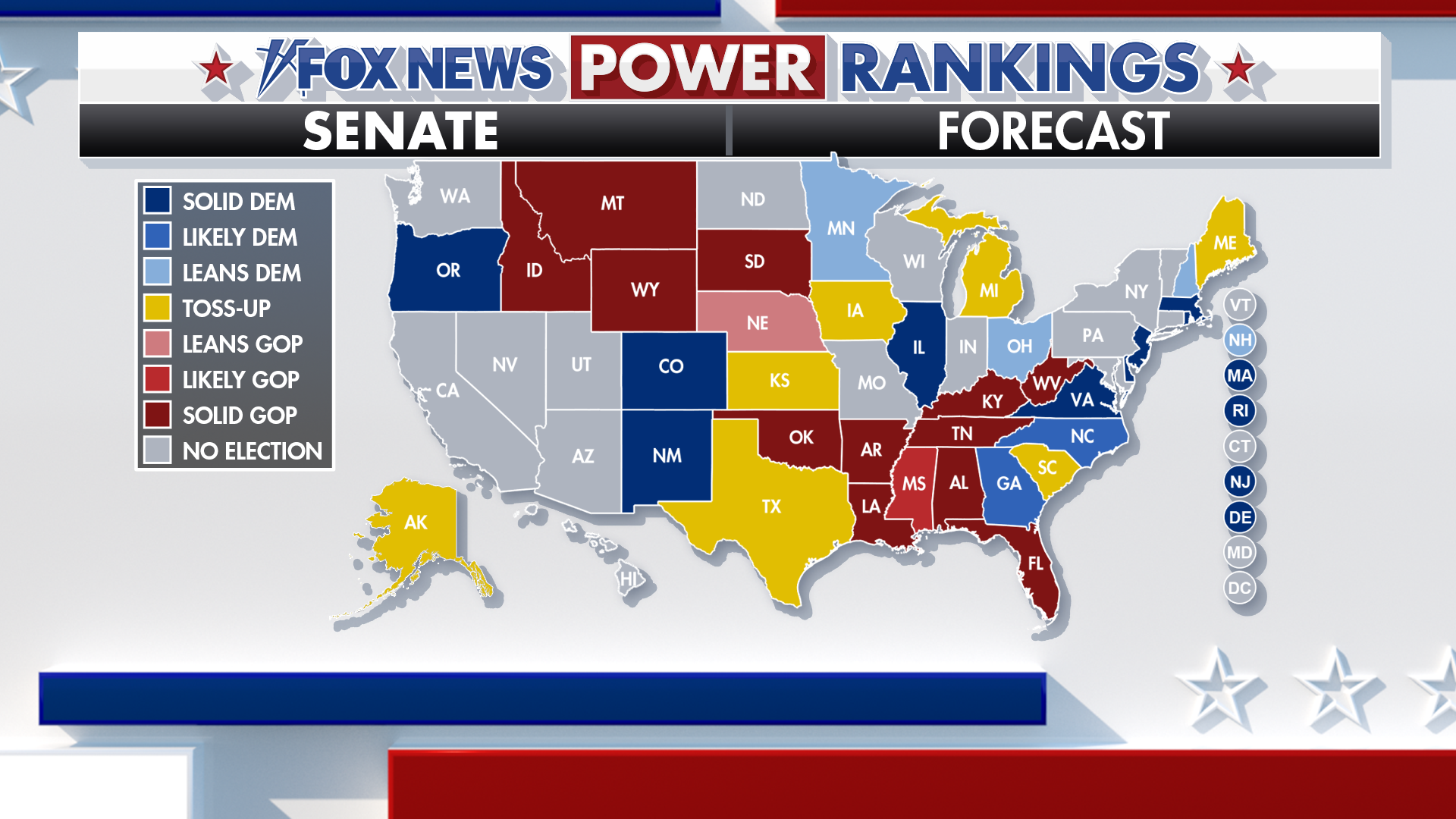
We’re updating this forecast to move Kansas from Lean R to Toss-up, and Nebraska from Likely R to Lean R.
Kansas is a conservative stronghold, but Republicans are spending too much time and money relative to other states to conclude that Sen. Roger Marshall has an edge over Democrat Adam Hamilton.
The odds remain in Republican Sen. Pete Ricketts’ favor in Nebraska. A larger-than-expected swing against the GOP could open the door for independent Dan Osborn to pull off an upset.
We still consider Senate control a toss-up.
Seven states are most likely to decide the majority. On a good night for the Democrats, their ceiling rises to 55 seats. A good night for the Republicans could see them retain control with up to 52 seats.
TRUMP-BACKED SENATOR ADMITS GOP FACES NIGHTMARE SCENARIO IN STATE REPUBLICANS HAVEN’T LOST IN 90 YEARS
—
It seems like there are two electorates in these midterms.
SCHOEN, COOPERMAN: DEMOCRATS COULD BE RIDING A MIDTERM WAVE. THESE NUMBERS SHOULD TERRIFY THE GOP
The first is frustrated with President Donald Trump and ready to reject Republicans. It includes growing numbers of independent, rural and Hispanic voters who say they’ll vote for a Democrat.
That’s what the latest round of House polling shows, including a survey last week that had Democrats up 11 points on the generic ballot, and Fox’s most recent national poll.
The second electorate is wavering on Republicans but won’t necessarily hand Democrats the Senate. These are the voters in the Midwest and a few other places. They say they prefer the Democrat or Republican in their states by a point or two at most.
That’s the right conclusion from most of the battleground Senate polling.
How could both things be true? In other words, if Democrats have such a wide lead in the House, won’t the Senate fall too?
Both are true, and a big lead in the House doesn’t necessarily translate to the Senate. These voters are all in the same electorate, and they only seem divorced from each other because the House and Senate maps are so far apart this year.
POWER RANKINGS: FOR THE DEMOCRATS, WHERE COULD IT POSSIBLY GO WRONG?
The president’s declining approval rating and Democratic advantages on the issues will likely deliver them the House, and possibly by many seats.
Those advantages have also allowed the blue team to play in a lot of Senate races that Republicans thought were unreachable, but only to the point of making them battlegrounds.
GOP SENATE MAJORITY FACES FRESH UNCERTAINTY AS 2 KEY RACES TIGHTEN DAYS BEFORE MIDTERMS
The road to a Senate majority goes through several states that Trump won by 11 points or more. Democrats can win any of these races. If Republicans turn out and stay loyal to their party, the climb for the left will be steep.
That’s why the Senate is a toss-up. Voters could give Democrats a majority, and maybe with several seats to spare. They could also let the Republicans keep control.
We’ll find out next week.
In his 11-year political career, Trump has triumphed over almost all the threats to his power. The exception was the coronavirus pandemic, which was the top issue for voters in the 2020 election and ushered in the Biden presidency.
It was also one of the few threats that Trump has faced from abroad.
This time, Trump and the Republicans face a new foreign opponent: Iran. The administration’s decision to start joint U.S.-Israeli military strikes against the nation in February has cast a shadow over the GOP.
First, it has impacted Trump’s approval rating, which will decide the fate of many congressional Republicans and has fallen since the war began. It was 44% in the last pre-war survey and sits at 36% now.
The war has also given Democrats advantages on the top issues. In Fox’s October survey, Iran played a role in four issues that more than two-thirds of voters said they were concerned about: inflation (85%), gas prices (83%), government leadership (79%), and the war in Iran itself (75%).
Most voters said they preferred the Democrats to handle those issues: 16 points on inflation, 12 points on gas prices, 11 points on leadership, and 9 points on foreign policy.
Still, voters are not convinced that the Senate should change hands.
That comes down to the territory. Trump won seven of the 11 battleground states in 2024, and seven of them by double digits. That includes Alaska, Iowa, Kansas, Nebraska, Ohio, South Carolina and Texas.
Democrats don’t need to win all of those states to take the Senate, but it’s hard to see how they get to 51 seats without at least two of them.
While former Democratic Sen. Sherrod Brown leads in Ohio, the other states are close. Turnout, a polling error in either direction or both could decide them.
There are also a lot of undecided voters. In Alaska, Iowa and Kansas, three states with recent high-quality polling, an average of 10% of voters say they haven’t decided who they will support or won’t support the major candidates.
Any guess on how those voters will break at the ballot box is only a guess. All we know from prior results is that the overall electorate leans conservative, so the Democrats have the tougher assignment to bring them over to their side (or keep them at home).
There are far fewer undecided voters in Texas, where last week’s Poll showed a tied race at 49%-49%.
If Democrats only win two Trump-won battlegrounds, they’ll need to win three other races where former Vice President Kamala Harris delivered single-digit victories in 2024: Maine, Minnesota and New Hampshire.
Democrats are ahead in the latter two. Maine could go either way. While Democrats win its presidential races, it could just as easily be considered a Republican state when Susan Collins is on the ballot.
Both parties are short of a majority in this forecast. Democrats are favored in 48 seats and Republicans are ahead in 45.
On a good night for Democrats, the party would win most or all the toss-ups, taking the majority with up to 55 seats. In that scenario, other competitive states would also come into focus, including Nebraska, and possibly Mississippi.
A good night for the Republicans would see them simply hold on to most of the states they already have, up to a ceiling of 52 seats. The party also has opportunities to flip a couple of states, including Minnesota and New Hampshire.
Five states have moved in Power Rankings forecasts this week.
In Ohio, Brown has enjoyed a lead in three polls this year, including last week’s survey, which had him five points ahead of Republican incumbent Sen. Jon Husted at 52%-47%.
Ohio voters are very familiar with Brown, having sent him to the Senate three times. That has made it hard for Husted to campaign on socialism and woke politics, themes that Republicans elsewhere see as their strongest cards to play.
Ohio moves from Toss-up to Lean D.
(«Lean D» means the Democrat has an edge, but it’s still a highly competitive race. We define every ranking and the process for setting them on FoxNews.com.)
As this week’s Power Rankings previously reported, Republicans already viewed this as an uncomfortably close race. That belief is now widely shared.
The president headed back there to help Sen. Darline Graham in the Upstate, where she underperformed in her primary runoff against Rep. Ralph Norman.
South Carolina moves from Lean R to Toss-up.
Kansas is a conservative stronghold, but Republicans are spending too much time and money relative to other states to conclude that Sen. Roger Marshall has an edge over Democrat Adam Hamilton.
Kansas moves from Lean R to Toss-up.
The odds remain in Republican Sen. Pete Ricketts’ favor in Nebraska. A larger-than-expected swing against the GOP could open the door for independent Dan Osborn to pull off an upset.
Nebraska moves from Likely R to Lean R.
Mississippi is a Republican stronghold, but Trump’s decision to rally there over other deep red states is a sign that the party thinks it’s competitive.
GOP Sen. Cindy Hyde-Smith faces Democratic District Attorney Scott Colom in a race where protein choice has become a breakout issue.
Mississippi moves from Solid R to Likely R.
Democrats are still likely to flip the House this November, and in this forecast, they’re predicted to take at least 223 seats.
Since a good night for the Democrats would see them take most of the toss-up races, they could end up with as many as 240 seats.
(On a great Democratic night, the party would pick up most of the Lean R districts as well, taking them as high as 252 seats.)
Republicans have 195 seats in their columns. A good night for them would take that total up to around 212. That’s six short of a majority, but enough to make life difficult for the next Democratic House speaker, who would have to balance the demands of the moderate and far-left wings of the party.
Nineteen more races have shifted in the Democrats’ direction this week, all on the same themes outlined in the last House update: national and district polling, top-of-the-ticket strength, and rural voter erosion.
The earliest-closing districts on election night will give some sense of the House’s future. Keep an eye on Kentucky’s 6th District, which covers Lexington and a large central area of the state. Trump won here by 15 points in the last presidential election. Thanks to a combination of left-leaning college voters and farmers grappling with higher costs, it looks close this cycle. The district moves from Lean R to Toss-up.
Finally, Ohio’s gubernatorial race is also on the move. The campaign between Democrat Amy Acton and Republican Vivek Ramaswamy was the top story in politics last week after Ramaswamy ran an ad featuring Acton’s mother, who called her daughter a liar.
Acton has been estranged from her mother since age 12, when she says she and her brother left her family home because her mother’s husband was sexually abusing her. Acton’s brother now appears in a response ad discussing their family history.
This ratings change is less about the response to the ad (Ramaswamy and President Trump are supportive of the commercial; most others, including Husted and Gov. Mike DeWine are against it) than it is about the fact that the Ramaswamy campaign felt the need to run it.
While Ramaswamy sat only two points behind Acton in last week’s Fox poll, he’s an average of seven points behind in other high-quality polls since September.
The businessman and onetime presidential hopeful has struggled in favorability ratings throughout his political career. This ad is unlikely to help.
The Ohio governor’s race moves from Toss-up to Lean D.
SIGN UP TO GET THE POLITICS NEWSLETTER
—
Fox News’ special coverage of the 2026 midterm elections begins at 6 p.m. ET Tuesday, Nov. 3, anchored by Bret Baier and Martha MacCallum. Tune in for the latest race calls and projections for control of the House and Senate from the Decision Desk.
power rankings, politics, midterm elections, senate, elections
INTERNACIONAL
Una madre y una abuela planearon durante días el asesinato de cuatro chicos: el padre estaba a punto de reencontrarse con ellos

Una tragedia familiar que conmocionó a una pequeña ciudad de Estados Unidos tuvo un desenlace todavía más estremecedor cuando los investigadores reconstruyeron lo que había ocurrido dentro de un departamento de Mechanicville, en el estado de Nueva York. Una madre y una abuela planearon durante varios días el asesinato de cuatro chicos de entre 10 y 13 años. Después de concretarlo, ambas se quitaron la vida.
Las víctimas fueron identificadas como Harper Harmon, de 13 años; Hudson, de 11; y los mellizos Gavin y Gracelynn, de 10. Sus cuerpos fueron encontrados el 23 de junio en el departamento de Amy Steadman, la abuela materna, de 64 años. Allí también estaba su hija, Sarah Myers, de 44.
El caso comenzó a esclarecerse el 4 de agosto, cuando el jefe de la Policía de Mechanicville, William Rabbitt, brindó detalles de la investigación. Según explicó, se cree que las dos mujeres habían comenzado a planear los crímenes el 5 de junio. Los mensajes intercambiados entre ellas permitieron reconstruir cómo coordinaron los pasos para matar a los chicos.
De acuerdo con la reconstrucción policial, Steadman y Myers compraron medicamentos en distintas farmacias durante los días previos al crimen. También investigaron en internet los efectos de distintas sustancias y sus posibles reacciones.
Los investigadores establecieron que el ataque ocurrió el 10 de junio. Los mensajes entre ambas indicaban que tenían previsto administrarles los medicamentos a los chicos entre las 10.30 y las 12, antes de una comunicación telefónica que tenían programada con su padre para las 18.
crimenes
INTERNACIONAL
Everything to know about House and Senate control, ballot measures and 2026 Election Day poll closing
In two days, Americans voting in the midterm elections will decide control of the U.S. House and Senate for the next two years.
Republicans are defending their slim congressional majorities, but President Donald Trump predicts the GOP will hold the House and Senate.
«If you elect a Republican House and a Republican Senate on Nov. 3, we will continue to put America first every single day,» the president pledged on the campaign trail last week. And he claimed if the Democrats take control, «this country will go to hell.»
CHECK OUT THE FINAL POWER RANKINGS IN THE MIDTERM ELECTIONS
Republicans are fighting political history, as the party in power in Washington has traditionally lost seats during midterm election years. The GOP also faces a challenging political climate fueled by persistent inflation tied in part to what polls show is an unpopular war with Iran and Trump’s increasingly negative approval ratings.
Also up for grabs in this year’s midterm elections — governorships in 36 of the 50 states (as well as the territories of Guam, the Northern Mariana Islands and the U.S. Virgin Islands). Plus, all but four states are holding legislative elections. And voters will also weigh in on 145 statewide ballot measures in states from coast to coast.
Here’s a closer look at what’s up for grabs on Election Day 2026.
Republicans currently control the chamber 53-47, with the final Power Rankings ahead of Election Day rating the race for Senate control a toss-up.
Both parties are three seats short of a majority, according to the forecast. Democrats are favored in 48 seats and Republicans are ahead in 47. The GOP needs to hold 50 seats to retain control of the chamber, since Republican Vice President JD Vance is the tie-breaking vote in the Senate.
WHO’S UP AND DOWN IN THE FINAL MIDTERM ELECTION POLLS
If Democrats ride a blue wave to victory by winning most or all of the competitive races, they could potentially come away from the midterms with up to 54 seats. But if Republicans have a good night and defy expectations, the GOP could hold the majority with up to 52 seats, according to the forecast.
Republicans are playing defense in Alaska, Iowa, Maine, South Carolina and Texas, which are all rated toss-ups in the Power Rankings. They’re also defending seats in competitive races in Kansas, which is rated Lean Republican, and Ohio, which is rated Lean Democrat.
Democrats are on defense in Michigan, which is rated a toss-up, and in Minnesota and New Hampshire, which are listed as Lean Democrat.
HOUSE OF REPRESENTATIVES
The GOP is hanging on to a razor-thin majority in the House, and the Power Rankings point to the Democrats retaking control of the chamber.
A good night for the Democrats could see them ending up with as many as 240 seats in the 435-seat chamber. But if Republicans have a good night, they could end up with 212 seats. That’s six short of a majority, but enough to make life difficult for the next Democratic House speaker, who would have to balance the demands of the moderate and far-left wings of the party.
SIGN UP TO GET THE POLITICS NEWSLETTER
The earliest-closing districts on election night will give some sense of the House’s future.
«Keep an eye on Kentucky’s 6th District, which covers Lexington and a large central area of the state. Trump won here by 15 points in the last presidential election. Thanks to a combination of left-leaning college voters and farmers grappling with higher costs, it looks close this cycle,» Remy Numa, a contributor who steers the network’s Power Rankings, said.
There are currently 26 Republican and 24 Democratic governors.
The Power Rankings list three states where the GOP controls the governor’s office – Alaska, Nevada and Georgia – as toss-ups. Wisconsin, which has an open Democratic-controlled governor’s office, is also rated a toss-up.
The gubernatorial races in red states Florida, Kansas and Texas are rated Lean Republican, according to the Power Rankings.
DEMOCRACY 2026: STAY UP TO DATE WITH THE ELECTION HUB
Five other races are also seen as competitive and rated Lean Democrat. They are Arizona, Michigan and Oregon, where Democrats are playing defense, and Iowa and Ohio, where the GOP is defending open governor’s offices.
Referendums requiring voters to present identification when they show up at the polls, or bans on noncitizen voting, are on the ballot in 11 states: Alaska, Arizona, Arkansas, California, Colorado, Kansas, Nevada, North Carolina, Ohio, South Dakota and West Virginia.
Voters in Alaska will also decide if they want to repeal the state’s ranked choice voting system, open primaries and a campaign finance disclosure rule. Voters approved the current system in 2020 and narrowly kept it in 2024.
But the voting system has come under fresh scrutiny amid the controversy over a potential spoiler candidate in Alaska’s U.S. Senate race.
Voters in Virginia will decide whether the right to vote should be restored to convicted felons upon their release.
California’s Proposition 40 is making national headlines.
The measure, the first of its kind, would slap a one-time 5% tax on wealth for Californians worth over $1 billion, with the vast majority of the revenue generated going to pay for healthcare.
Also in the spotlight is a millionaires’ tax in Washington state. If passed, the referendum would repeal a 9.9% tax on income over $1 million a year, which state lawmakers recently approved. Washington state currently does not have a personal income tax.
Voters in Maryland, Missouri and Colorado weigh in on ballot measures on congressional redistricting, as the mid-decade redistricting fight between Democrats and Republicans will be waged again in 2028.
Arizona, Colorado, Nebraska and Washington state have referendums on transgender students’ participation in sports. Colorado also has a referendum on blocking gender transition surgeries for minors and preventing state or federal funding from being used for those operations.
Voters in Missouri weigh in on repealing a right to abortion and banning gender transition medical care for children. Meanwhile, an Idaho initiative would overturn one of the nation’s strictest abortion bans, while Virginia and Nevada voters decide on establishing a right to abortion in their state constitutions.
California, Colorado and Arizona hold ballot measures on policy around energy, transportation and development.
The first poll closings come at 6 p.m. ET on Election Day, with the final poll closings happening at 1 a.m. ET.
6 p.m. ET: Polls close in parts of Kentucky and Indiana.
7 p.m. ET: Polls close in Georgia, South Carolina, Vermont and Virginia. The final polls in Kentucky and Indiana close. And most polls in Florida and New Hampshire close.
7:30 p.m. ET: Polls close in North Carolina, Ohio and West Virginia.
8 p.m. ET: Polls close in Alabama, Connecticut, Delaware, Illinois, Maine, Maryland, Massachusetts, Mississippi, Missouri, New Jersey, Oklahoma, Pennsylvania, Rhode Island, Tennessee and Washington, D.C. The remaining polls in Florida and New Hampshire close. Most polls close in Texas, Michigan, Kansas, North Dakota and South Dakota.
8:30 p.m. ET: Polls close in Arkansas.
9 p.m. PT: Polls close in Arizona, Colorado, Iowa, Louisiana, Minnesota, Nebraska, New Mexico, New York, Wisconsin and Wyoming. The final polls close in Texas, Michigan, Kansas, North Dakota and South Dakota.
10 p.m. ET: Polls close in Montana and Utah. Most polls also close in Idaho and Oregon.
11 p.m. ET: Polls close in California and Washington state, with the remaining polls in Idaho and Oregon also closing.
Midnight ET: Polls in all of Hawaii and most of Alaska close, with the remaining polls in Alaska closing at 1 a.m. ET.
politics, midterm elections, elections, house of representatives, senate elections, gubernatorial, donald trump

Power Rankings: Kansas moves to Toss-up, Nebraska moves to Lean R

La estricta condición que Lali y Pedro Rosemblat impusieron a sus invitados en la fiesta y que nadie esperaba

En medio de la tensión con Brasil, Milei afronta compromisos internacionales: cuándo podría volver a verse con Lula

Con 7800 voluntarios, 13.000 policías y un costo de 10 millones de dólares, Córdoba se prepara para recibir a León XIV

¿Dónde ver EN VIVO y ONLINE el Newell’s vs Unión?

EA habría exigido a BioWare eliminar una bandera LGBTQIA+ tras la entrada de Arabia Saudí – Nintenderos

Europa entre Escila y Caribdis

El “efecto Lula” sigue pegando en Argentina: los bonos sintieron el impacto, pero el tipo de cambio aguantó

La reflexión de Gabriel Rolón sobre la felicidad: “Es ese momento de eternidad donde lo que fuiste, querés ser, te atormenta y temés coexisten”

Goleada en contra y apenas 22 minutos para el Chango Zeballos en Monza

 ECONOMIA22 horas ago
El “efecto Lula” sigue pegando en Argentina: los bonos sintieron el impacto, pero el tipo de cambio aguantó
- CHIMENTOS2 días ago
Darío Barassi reveló el nombre que había elegido en caso de tener un hijo varón: «Tiene personalidad»
- ECONOMIA2 días ago
BCRA asegura que ya no hay freno monetario para la economía pero la reactivación no llega