INTERNACIONAL
Tragamonedas y pandillas en Guatemala: el dinero que fortalece a las estructuras, el reclutamiento de menores y la red de “banderas” que las protege

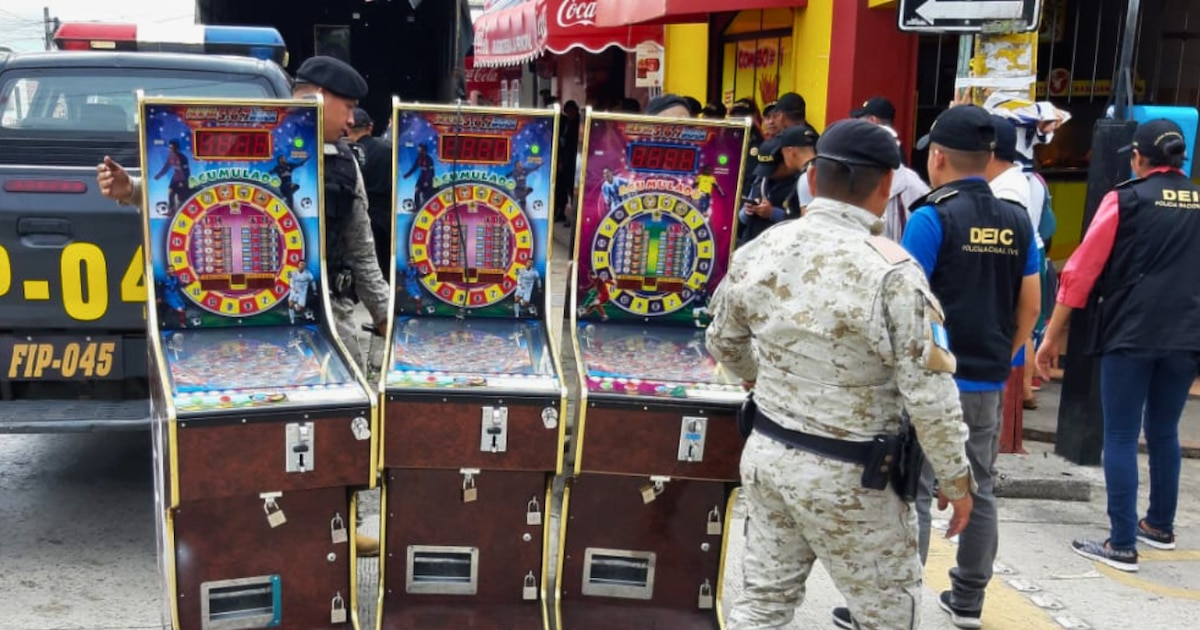
La Policía Nacional Civil (PNC) de Guatemala vinculó las máquinas tragamonedas, con el control de las pandillas, ya que muchas de estos aparatos son propiedad de estas estructuras criminales y sirven, no sólo para capitalizarlo, sino para cooptar, principalmente a menores de edad.
Según el director de la policía, David Custodio Boteo, el problema se concentra en comunidades urbanas y municipios donde el control es más difícil.
La policía sostuvo que desde hace aproximadamente un mes y medio instaló mesas de análisis para definir el alcance legal del problema de las máquinas tragamonedas y establecer qué acciones pueden tomarse sin vulnerar normas sobre propiedad privada.
No obstante, Custodio Boteo advirtió que muchas de estas “maquinitas” son propiedad de los mismos pandilleros, con las que “recaudan grandes cantidades de dinero que es utilizado para fortalecer (económicamente) a estos mismos grupos” delincuenciales.
Por su parte, Jorge Aguilar, portavoz de la PNC de Guatemala, explicó a Infobae que no notas las máquinas tragamonedas son propiedad de las pandillas, pero sí una gran cantidad.
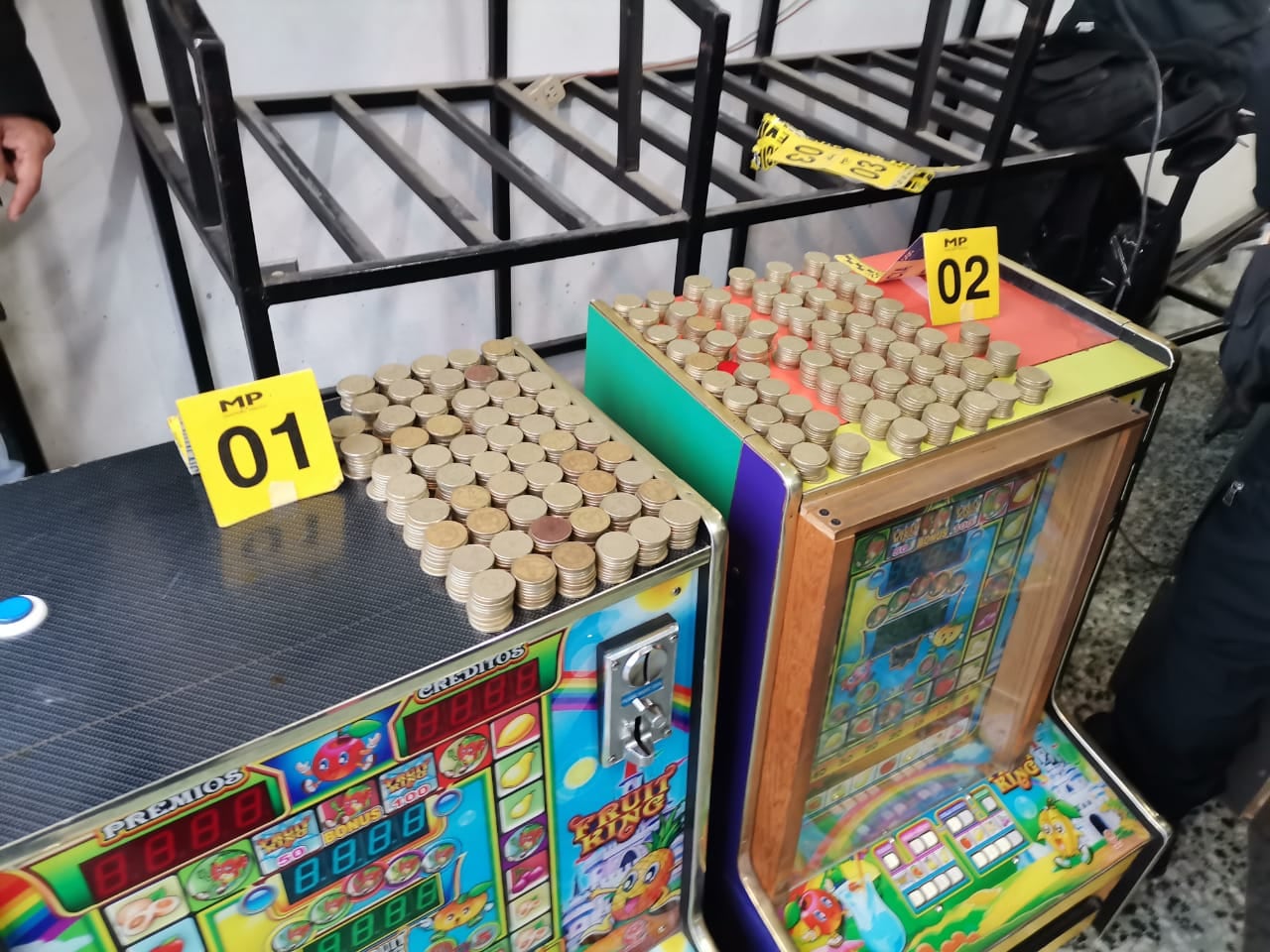
Esto ha dificultado el retiro de las mismas, debido a que al momento de realizar operativos, las viviendas, tiendas o negocios donde mantienen estos juegos ilícitos, suelen cerrar para evitar que los oficiales puedan incautarlos, ya que son alertados por “las banderas”.
Violencia y cooptación
Aguilar explicó que, además de ser ilegales, las máquinas tragamonedas suelen ser utilizadas por pandilleros para atraer a menores de edad, principalmente y, aprovechando su vulnerabilidad, los reclutan para formar parte de los grupos ilegales.
“Suelen ser espacios de ocio, donde converge el consumo de alcohol u otras sustancias ilícitas. Entonces, suelen generarse conflictos que, algunas veces, terminan en ataques armados”, detalló.
Para el portavoz de la PNC, uno de los puntos más críticos, es que estos lugares para pasar el tiempo son aprovechados por los pandilleros para acercarse a los menores de edad e involucrarlos en sus estructuras. “Comienzan por una especie de diversión y luego los enrolan en sus filas”, lamentó.
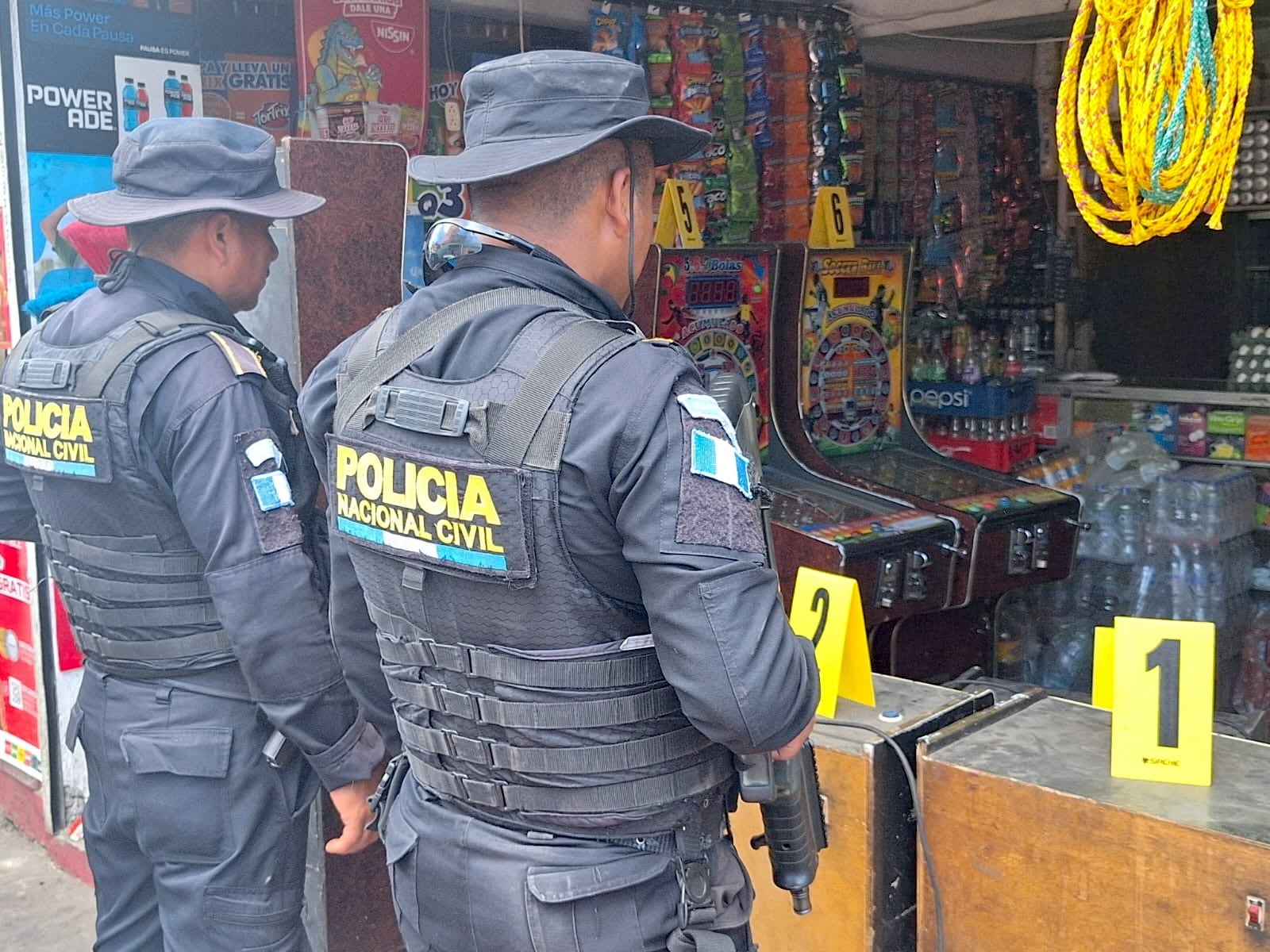
Además, “los juegos, como los tragamonedas, generan conflictos, porque allí se juntan los pandilleros y al ver que otro ganó, los despojan del dinero y comienzan los problemas, más cuando hay drogas y alcohol de por medio”, detalló.
Según Aguilar, hay varios lugares de conflictividad identificados en los que suelen concurrir las máquinas tragamonedas como las colonias Lomas de Santa Faz, La Maya y la Kennedy, todas ubicadas en la zona 18.
Los tragamonedas están prohibidas en Guatemala
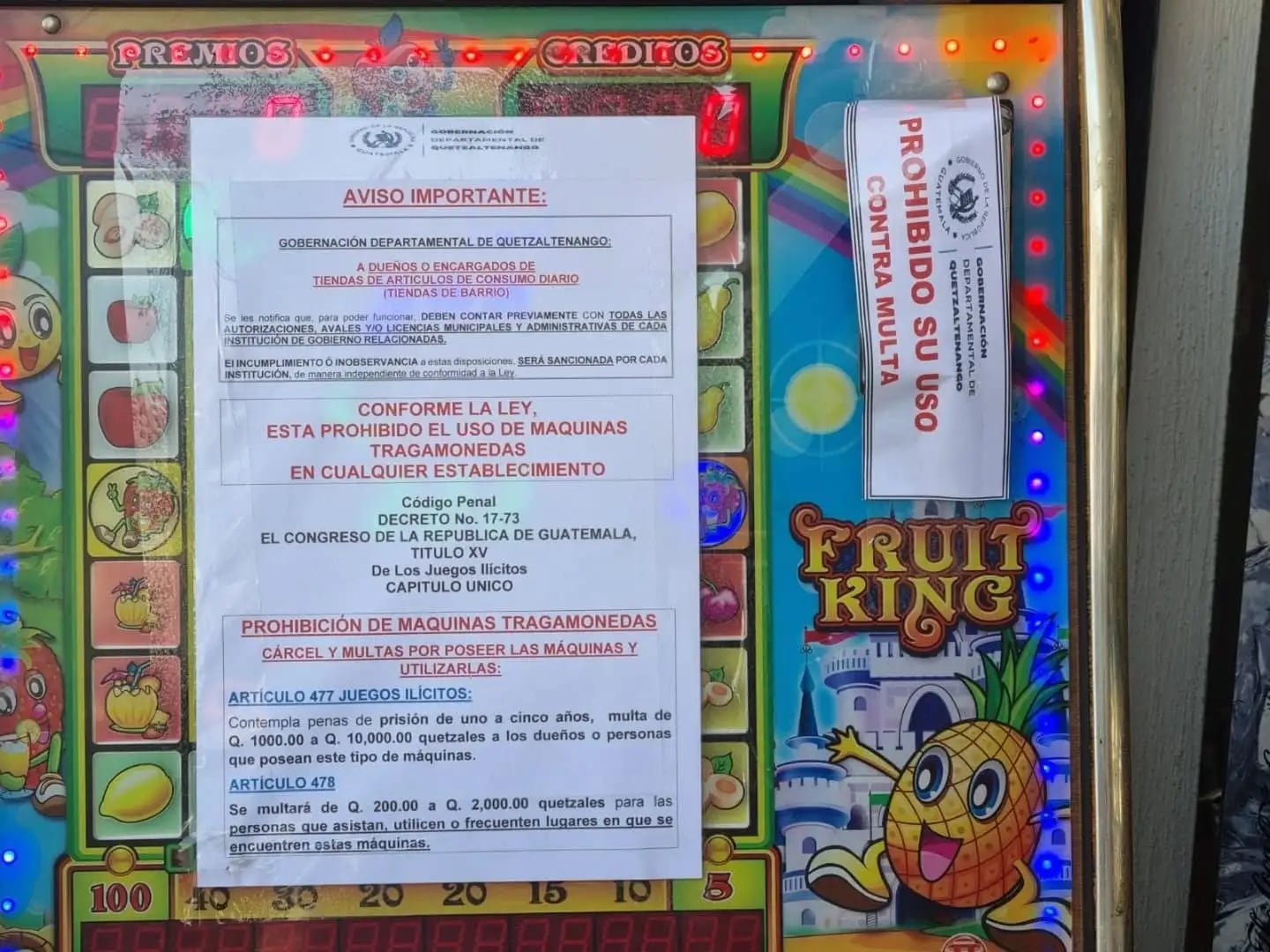
Si bien en Guatemala no existe una ley general que legalice y regule las máquinas tragamonedas, el Código Penal establece en su artículo 477 establece sanciones con penas de prisión y multas para los establecimientos que promueva los juegos de suerte.
“Los banqueros, administradores, empresarios, gerentes, dueños o personas encargadas de casas o establecimientos de juegos de suerte, envite o azar serán sancionados con penas de prisión de uno a cinco años y multas que van de Q1 mil (USD 130) a Q10 mil (USD 1.299)”, se lee en el artículo.
Además, sanciona a las personas que concurren a estas casas de suerte o de juegos de azar a multas que van de los Q200 (USD 26) a los Q2 mil (USD 260). Sin embargo, no es difícil adquirir una máquina tragamonedas. Incluso, suelen venderse a través de las redes sociales.
En una revisión en el MarketPlace se ubicaron varias publicaciones con información de venta. Las tragamonedas oscilan entre los Q2 mil usadas (USD 260), hasta los Q7 mil nuevas (USD 975), dependiendo el tamaño y el estilo.
También hay anuncios donde se promueve el alquiler de estas máquinas. Un tendero que fue entrevistado pero que pidió guardar su identidad, comentó a Infobae que él tiene una máquina alquilada y que no sólo le sirve como ingresos, sino también para que visiten su negocio.
“Las personas vienen porque tenemos la maquinita (tragamonedas). Están aquí bastante tiempo y se juntan varias personas para ver. Mientras están aquí consumen y eso le ayuda a mi negocio”, manifestó.
Al consultarle si sabía que están prohibidas por la ley, afirmó que era la primera vez que lo escuchaba y se negó a seguir conversando.
Mientras que Aguilar afirmó que, además de estar prohibidas, estas máquinas tampoco generan ingresos al fisco, porque no pagan impuestos, debido a que no están registradas bajo ningún control estatal ni municipal.
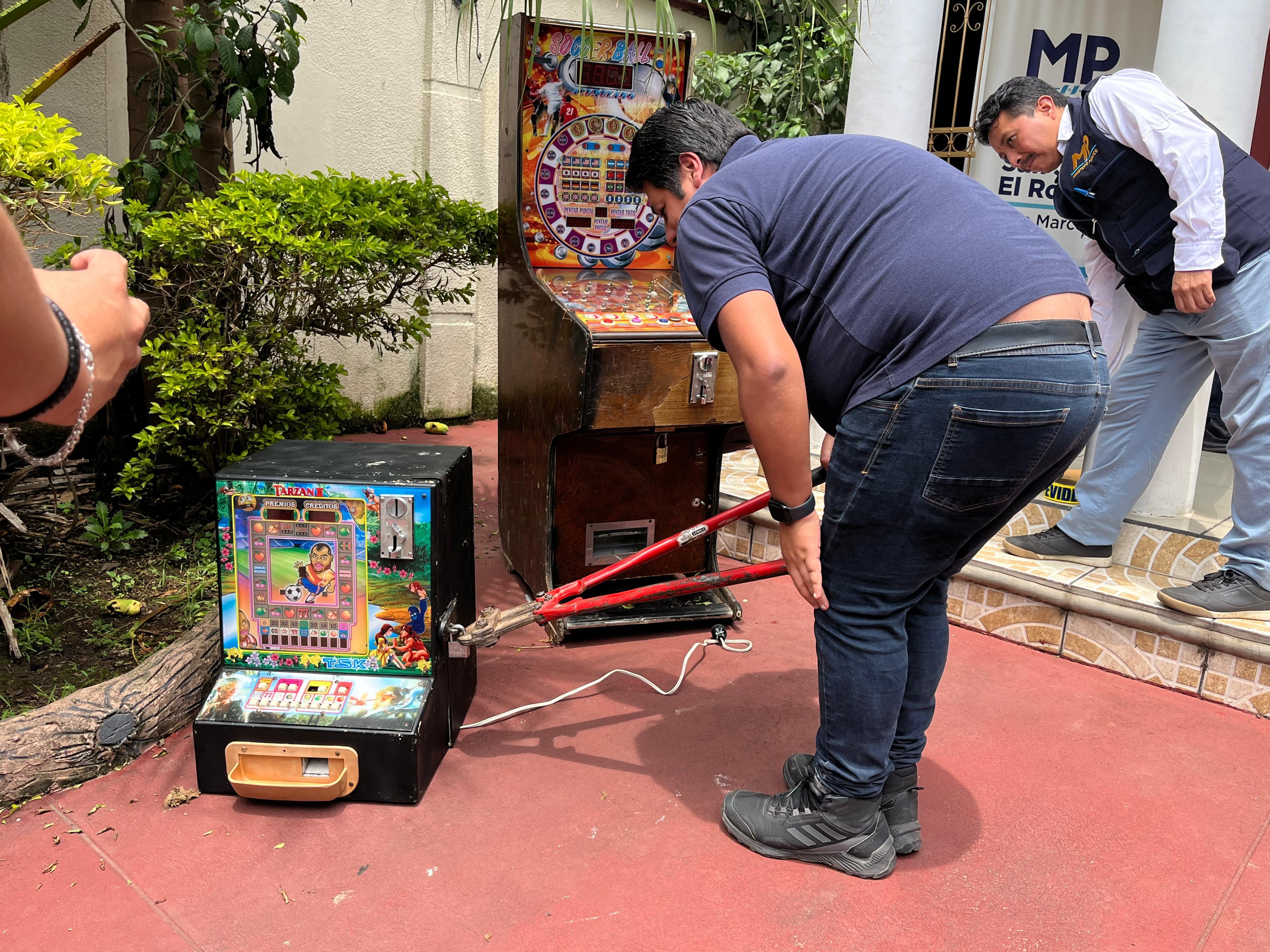
Algunos municipios ya retiraron tragamonedas y otros alegan riesgo para intervenir
Pese a los riesgos y a las constantes intervenciones de la PNC, hay divergencia entre las autoridades de Seguridad y las municipales.
Una de las medidas impulsadas por la policía fue establecer mesas de diálogo con alcaldes para buscar mecanismos de regulación o prohibición, pero la postura no es uniforme entre municipios.
Por ejemplo, hay municipios como Palencia donde las máquinas tragamonedas están absolutamente prohibidas, pero hay otros lugares donde los alcaldes han manifestado que los grupos involucrados o dueños (como las pandillas) son “muy peligrosos” y que por eso resulta muy difícil intervenir.
Custodio Boteo fue más directo y afirmó: “Hay municipalidades que no nos están ayudando. Queremos hacer operativos multidisciplinarios con los jueces de asuntos municipales para retirar estas traganíqueles, pero los alcaldes no quieren apoyar”.
El director de la PNC no quiso entrar en detalle y se limitó a indicar que los Municipalidades que no colaboran están en los departamentos de Guatemala y Escuintla.
No obstante, de manera extraoficial se conoció que se trata específicamente de Mixco, San José Pinula, Santa Catarina Pinula, Villa Nueva, Guatemala y Fraijanes.
Fuentes allegadas a la policía indicaron que estos lugares suelen ser los de mayor conflictividad y los que poseen la mayor cantidad de máquinas tragamonedas con propiedad de las pandillas pues, en su mayoría, están ubicadas en zonas catalogadas como “rojas”.
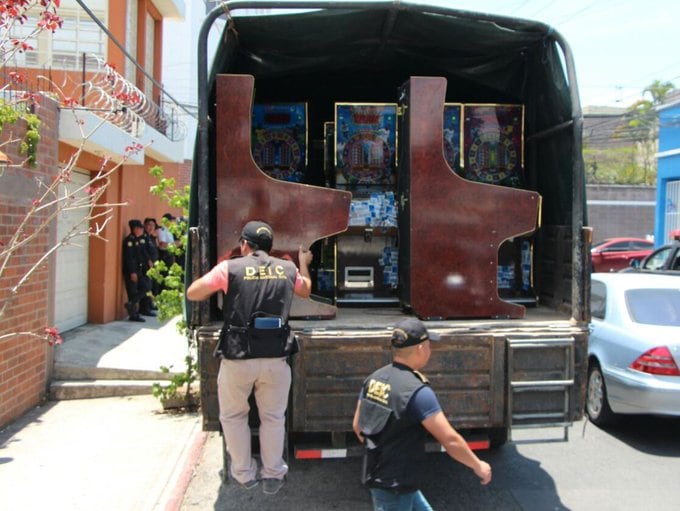
“Podríamos decir que las traganíqueles de los pandilleros están en el área Metropolitana y Escuintla, las que funcionan en los departamentos, no tanto”, comentaron las fuentes.
Aunque, hay autoridades municipales que actúan junto con la PNC y han llegado hasta a clausurar los negocios que reinciden con la instalación de traganíqueles.
Mientras tanto, la advertencia de la institución fue concreta: si el blanco del ataque está en uno de esos establecimientos y hay 10 personas “incluyendo niños”, los atacantes “van a dispararle a lo que venga”.
Guatemala,pandillas,tragamonedas,traganíqueles,juegos de azar,apuestas ilegales









INTERNACIONAL
Una modelo de OnlyFans fue detenida por el ICE y su familia denuncia condiciones inhumanas en la cárcel

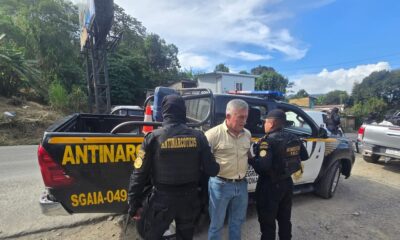
Vera Dijkmans, una modelo holandesa de OnlyFans que se autoproclamó “la novia más buscada del mundo”, fue detenida por agentes del Servicio de Inmigración y Control de Aduanas de Estados Unidos (ICE) y permanece alojada en un centro de detención de Nueva Jersey.
El arresto ocurrió el miércoles 11 de noviembre, cuando llegó al aeropuerto internacional Newark Liberty en un vuelo procedente de Miami. Según contaron sus familiares, los agentes la esposaron y la trasladaron en una camioneta con vidrios polarizados hasta el centro de detención Delaney Hall, en Newark.
Desde entonces, sus allegados iniciaron gestiones para conseguir su liberación y expresaron preocupación por las condiciones en las que se encuentra.
Dijkmans tiene alrededor de seis millones de seguidores en Instagram y otros 875.000 en OnlyFans.
Había viajado a Nueva York para asistir a un evento de UFC en el Madison Square Garden, donde tenía previsto generar contenido junto a peleadores de artes marciales mixtas.
Por qué detuvieron a la modelo de OnlyFans
La situación migratoria de Dijkmans es uno de los puntos centrales del caso. Según contó su madre, Marianne Scholt, a medios neerlandeses, la joven había ingresado a Estados Unidos con una visa de turista B-2, que permite permanecer en el país por un período limitado, pero no autoriza a trabajar.
La familia explicó que la influencer había iniciado un trámite para obtener la residencia permanente, pero que habría faltado a una citación vinculada con ese procedimiento.
Su hermana, Iza Dijkmans, contó que la joven tampoco se presentó a una audiencia migratoria porque, según sostuvo, nunca recibió la notificación correspondiente.
“Había una fecha de audiencia y no recibió una carta, por lo que se perdió el juicio sin saberlo”, explicó en declaraciones al New York Post.
La familia consultó a un abogado, pero recibió una respuesta poco alentadora. “Como tiene una orden de deportación, no pueden hacer nada”, contó su hermana.
Este martes 17 de noviembre, el Departamento de Seguridad Nacional de Estados Unidos (DHS) difundió su versión de los hechos y aseguró que la modelo tenía antecedentes migratorios.
Según la agencia, Dijkmans había sido detenida y expulsada del país en marzo de 2019, después de intentar ingresar de manera ilegal por el aeropuerto George Bush de Houston. En agosto de 2024, las autoridades le permitieron volver a entrar por un período limitado.

Sin embargo, el organismo sostuvo que luego excedió el tiempo autorizado de permanencia. También informó que la modelo fue incorporada a un procedimiento de deportación en agosto de 2025 y que el 26 de mayo de 2026 un juez migratorio emitió una orden definitiva de expulsión después de que ella no se presentara a una audiencia.
“Pasó por un proceso legal justo y permanecerá detenida por el ICE en espera de su deportación”, declaró un portavoz del DHS.
Las denuncias de su familia por las condiciones de detención
Mientras las autoridades estadounidenses justifican el procedimiento por la situación migratoria de la influencer, sus familiares expresaron preocupación por el trato que recibe.
Su madre viajó desde los Países Bajos para visitarla y aseguró que quedó impactada al verla vestida con el uniforme del centro de detención y en un estado de angustia.
“Vera estaba llorando y apenas la reconocí con esa ropa de prisión”, declaró Marianne Scholt al diario neerlandés AD.
“La situación es muy angustiosa para ella”, dijo su madre. “Las circunstancias son inhumanas; tememos por su vida mientras permanezca allí”, agregó en declaraciones al diario Destentor.
Según su testimonio, la modelo comparte una habitación con otras 12 mujeres, recibe poca comida y agua y tiene escaso acceso al aire fresco y a la luz natural.

La familia también denunció que las condiciones de higiene son deficientes y que las camas resultan incómodas. Además, aseguró que el acceso al teléfono fue restringido: pasó de disponer de 45 minutos a apenas cinco minutos por llamada.
De acuerdo con su madre, hay solo cuatro teléfonos disponibles para unas 60 personas, por lo que los familiares no pueden comunicarse libremente con las detenidas.
La situación también motivó la intervención de las autoridades diplomáticas de los Países Bajos. El Ministerio de Asuntos Exteriores confirmó que está al tanto del caso y que brinda asistencia consular, aunque evitó dar detalles por cuestiones de privacidad.
Por el momento, Dijkmans continúa detenida mientras avanza el procedimiento migratorio.
Antes de quedar en el centro de esta polémica, Vera Dijkmans había conseguido una enorme exposición pública gracias a sus publicaciones en redes sociales y su actividad como creadora de contenido para adultos.
En 2025 se hizo viral cuando se presentó como “la novia más buscada del mundo” e invitó a hombres de distintos países a completar un formulario para convertirse en su pareja.
La convocatoria tuvo una repercusión masiva: recibió miles de postulaciones de hombres interesados en conocerla. Su popularidad también creció por sus publicaciones vinculadas al mundo del deporte y sus colaboraciones con luchadores de UFC.
Only Fans, migrantes, Estados Unidos, Modelo, Países Bajos
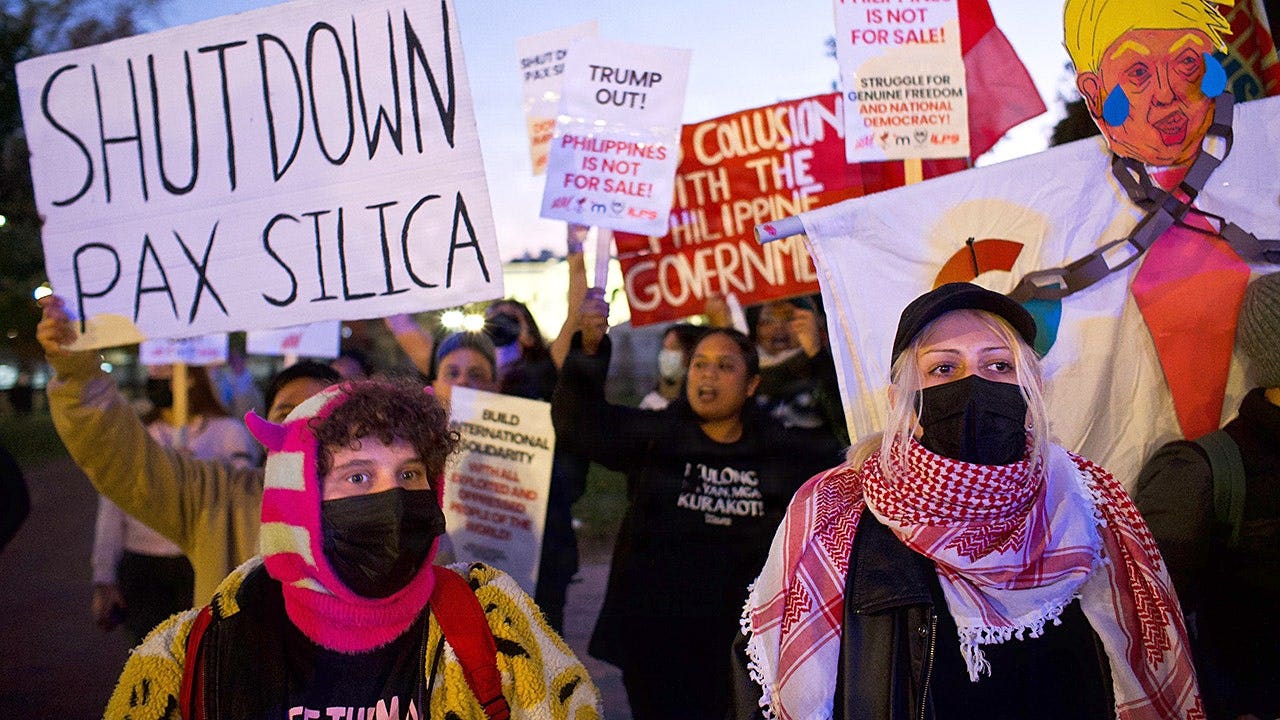
As President Donald Trump attends the 49th ASEAN Summit in the Philippines, American communist and far-left organizations are mobilizing internationally against an American initiative designed to reduce reliance on China.
According to a Digital investigation, a network of 120 mostly communist, socialist and far-left U.S. groups – many of them pro-China – are joining protests in Asia opposing the Trump administration’s effort to build an artificial intelligence and semiconductor hub in the Philippines that would reduce U.S. dependence on China in the AI war.
The target is the Pax Silica tech industrial hub in the Philippines, which Undersecretary of State for Economic Affairs Jacob Helberg, a former senior adviser at Palantir Technologies, said last year would strengthen American control over AI infrastructure, semiconductor production and critical mineral supply chains. Two days ago, Helberg described Pax Silica as key to the world’s «superintelligence revolution.»
The dispute centers partly on the proposed Clark Advanced Manufacturing Park, a roughly 4,000-acre development in New Clark City, Tarlac, in the Philippines, that would be a hub for the Pax Silica project.
UPDATED – CHAOS INC.: COMMUNISTS, ANTIFA, AGITATORS IN THE RED-GREEN ALLIANCE
A Digital investigation traced support for the protests to a transnational pro-China activist network stretching from Manila to New York, Washington, D.C., Los Angeles and Canada, including the Democratic Socialists of America East Bay, Calif., chapter and organizations with ties to American-born, Shanghai-based Marxist tech millionaire Neville Roy Singham. The protests also include indigenous groups in the Philippines that allege Pax Silica is being built on ancestral land.
About eight of 10 of the organizations in the network of 120 are openly communist, socialist or «anti-imperialist.»
TRUMP TO SIGN TRADE DEAL AS HE KICKS OFF ASIA TRIP AHEAD OF NUCLEAR TALKS WITH XI AND PUTIN
In addition, most of them are openly «anti-Zionist,» opposed to the existence of a Jewish state of Israel, according to a Digital analysis of the groups in the network.
CodePink, a pro-communist, pro-China nonprofit co-founded by Singham’s wife, Jodie Evans, has used its media programming to criticize Pax Silica as a «military-industrial-surveillance complex.»
For Washington, experts say, the Pax Silica plan is about securing the technology and resources needed to compete with Beijing. For opponents, the protests are a way to curb American economic and military domination.
The campaign also reveals how opposition to Trump’s China strategy is being organized not only overseas, but through pro-China activist networks inside the United States.
TRUMP LEAVES DOOR OPEN TO KIM JONG UN JOINING HIGH-STAKES TALKS WITH XI, PUTIN
The U.S. network, organizing behind a campaign called «Shut Down Pax,» includes familiar faces in the Singham network’s protest circuit: BAYAN USA, a pro-communist Filipino American alliance helping lead the campaign; Anakbayan USA, a pro-communist youth organization; and the International League of Peoples’ Struggle, or ILPS, founded with the help of Jose Maria Sison, the late founder of the Communist Party of the Philippines.
The campaign has also reached the U.S. Congress. A letter, headlined «Shut Down Pax Silica in the Philippines» calls on lawmakers to halt the initiative pending review of environmental protections, labor rights and the treatment of Philippine communities.
The activism intersects with other nonprofits in the network funded by Singham, including the People’s Forum and BreakThrough News, that have promoted opposition to American foreign policy and challenged Washington’s confrontation with Beijing.
On Sept. 20, the U.S. chapter of the International League of Peoples’ Struggle, the International Coalition for Human Rights in the Philippines-US and Bagong Alyansang Makabayan USA, or BAYAN USA, launched the «Shut Down Pax Silica Campaign Network» in Queens, New York, with organizers claiming about 500 participants in person and online.
An article, published by Bulatlat, invoked a term popular in communist, «anti-imperialist» circles, claiming that a movement had begun in «the belly of the beast,» with «resistance» to Pax Silica «rising.»
«We unite to confront and oppose the Trump/U.S.-led Pax Silica Initiative in its competition with China to dominate the AI/tech supply chain,» the coalition declared in its organizing platform.
FIRST ON FOX: ‘NO KINGS’ PROTEST NETWORK BEHIND FIGHT AGAINST AI DATA CENTERS AND FLOCK CAMERAS
«We Filipinos in the U.S. must also take action,» BAYAN USA declares on its campaign website, urging opposition to U.S. investments associated with Pax Silica.
A month later, on Oct. 24, CodePink Radio published Episode 374, with host Marcy Winograd interviewing sociologist William Robinson about his new book, «Pax Silica: The New Ruling Class,» examining the «rise of a new transnational capital complex» that combines big tech with global finance and the «military-industrial-surveillance complex» to «colonize the world unless we continue to protest, disrupt, divest and withhold our labor.»
The Black Alliance for Peace, which participated in CodePink’s November «Taxpayer Uprising» campaign in Washington, D.C., last week, also promoted the anti-Pax Silica campaign’s launch.
Anakbayan USA, its local chapters and GABRIELA USA, a Filipino women’s organization, appear among the American coalition’s participants. Their Philippine counterparts are involved in the demonstrations surrounding Trump’s visit.
The coalition’s published platform also identifies «Migrante USA,» student organizations and other activist groups.
The overlapping campaigns bring together Filipino American organizations, socialist activists and groups that have previously organized against U.S. military operations, Israel and American foreign policy.
Singham, an American-born technology entrepreneur who sold his consultancy ThoughtWorks for an estimated $785 million in 2017, has financed an extensive network of U.S. nonprofits.
A Digital investigation traced $278 million into six core American nonprofits, including CodePink, People’s Forum, Tricontinental and BreakThrough BT Media Inc., which operates BreakThrough News.
AMERICA RUNS ON DATA. IF WE DON’T BUILD THE INFRASTRUCTURE, CHINA WILL
In July, the House Ways and Means Committee subpoenaed three organizations as lawmakers investigated the financial network and potential foreign influence. The organizations have challenged the investigation.
One connection to the anti-Pax Silica campaign from the Singham network is «Nodutdol for Korean Community Development,» an American group listed among the coalition’s endorsers.
Nodutdol member Winter Oh participated in the September launch in Queens.
BreakThrough News has amplified the Philippine protests and criticism of Pax Silica, this summer promoting a BAYAN and Kilusang Mayo Uno demonstration with the slogan «The Philippines is not for sale!» As Trump was still in flight to Manila, BreakThrough news highlighted growing opposition to Pax Silica with a story headline, «ASEAN summit in Manila met with protests over Trump’s participation.»
Philippine officials have previously accused organizations such as Gabriela, Anakbayan, Karapatan and Kilusang Mayo Uno of acting as communist fronts. The groups have denied those allegations.
CODEPINK LAUNCHES CHINA TOUR AS GRAND JURY INVESTIGATION INTO SINGHAM NETWORK FUNDING CONTINUES
The ideological roots of the campaign extend to the Communist Party of the Philippines, founded by Sison in 1968.
The United States designated the Communist Party of the Philippines and its armed wing, the New People’s Army, as a foreign terrorist organization.
In a Nov. 7 editorial, the party’s official newspaper, Ang Bayan, urged Filipinos to organize «widespread protests» against Trump and to «reject and drive him out.»
The editorial accused Trump of advancing Pax Silica to strengthen American control over Philippine resources.
The publication also reported that clandestine organizations associated with the National Democratic Front of the Philippines staged demonstrations. One teachers’ group, KAGUMA, reportedly chanted, «Join the New People’s Army!»
The American campaign includes explicitly communist organizations, including the Workers World Party, a Marxist-Leninist organization, and the International Action Center.
Separately, «Fight Back! News,» published by the Freedom Road Socialist Organization, a Marxist-Leninist group that has organized many anti-ICE protests this year, republished an editorial from Ang Bayan criticizing Trump’s Pax Silica initiative.
CHINA ‘THROWING GASOLINE ON THE FIRE’ IN AI DATA CENTERS RACE, SAY LAWMAKERS
The International League of Peoples’ Struggle called for global protests under the slogans «Trump Out!» and «Reject Pax Silica!» The organization said groups planned demonstrations in 23 cities worldwide, including locations in the United States, Canada, Europe and Asia.
American organizers identified planned actions in Los Angeles, Oregon, Washington, D.C., New York and Honolulu.
In Ottawa, International League of Peoples’ Struggle Canada, Anakbayan Ottawa, Migrante Ottawa and «Ottawa for Palestine» announced a demonstration for Wednesday outside the U.S. Embassy under the slogan «Shut the Pax Down!»
In an April proposal to the U.S. State Department, Philippine officials outlined plans involving critical minerals, industrial infrastructure, investment and technology development.
Protesters allege the project could displace Ayta Indigenous communities, expand mining, and strain electricity and water supplies.
Philippine officials dispute allegations that the project would create a U.S.-controlled enclave or include the massive AI data centers described by activists. They say the development remains subject to Philippine law.
As Trump arrived, demonstrations escalated.
Reuters footage showed students marching with anti-Trump banners. SunStar reported more than 200 arrests during demonstrations in Metro Manila, while GMA News reported that activists condemned police dispersals and disputed the government’s response.
artificial intelligence, fox news investigates, world, asia world regions, globalism, donald trump
INTERNACIONAL
Kim Jong Un’s daughter hits ski slopes in rare photos as North Korean dictator tours mountain resort
NEWYou can now listen to Fox News articles!
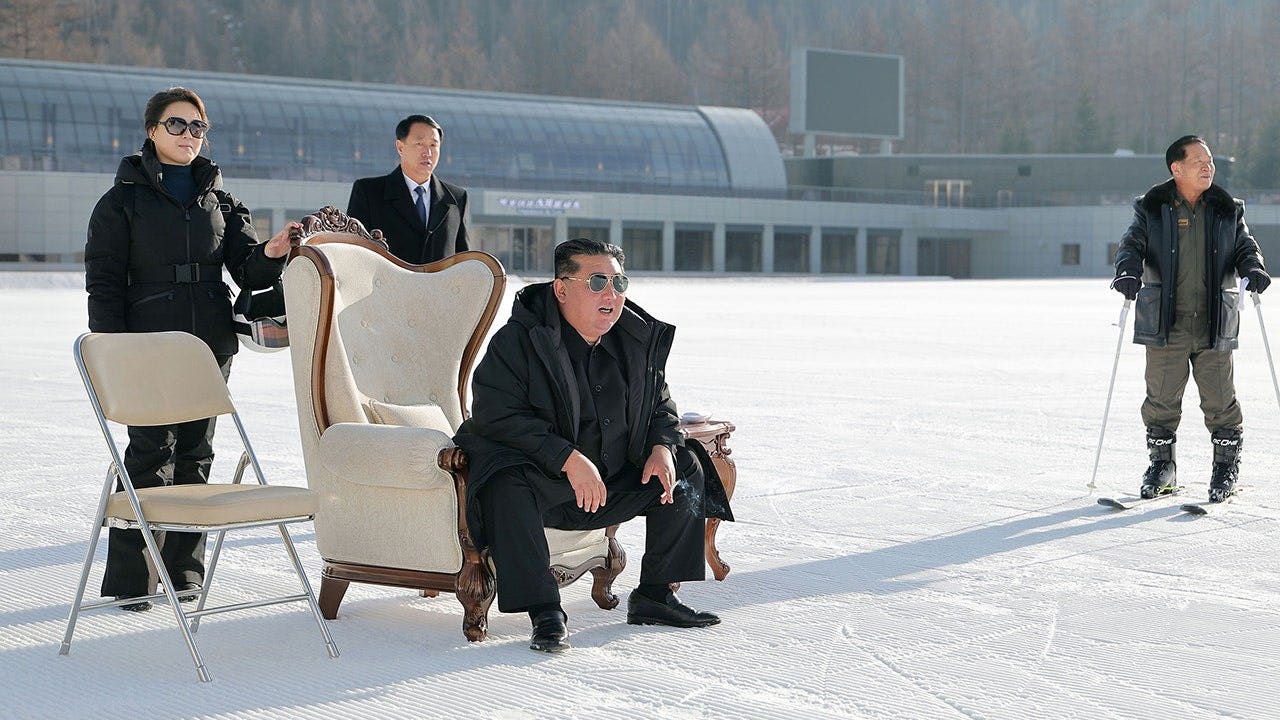
North Korean leader Kim Jong Un was photographed sitting in an ornate, throne-like armchair in the middle of a snowy ski resort while his daughter, viewed as his likely successor, carved down the slopes during an unusual family outing.
The striking images, released Monday by North Korean state media, show Kim wearing sunglasses and dress shoes while seated in the elaborate upholstered chair, holding a lit cigarette.
Other photographs show his daughter skiing in an all-white outfit as officials navigate the slopes nearby.
The girl, believed to be named Kim Ju Ae, has increasingly appeared alongside her father at high-profile public events.
South Korea’s National Intelligence Service has assessed that she is being positioned as his likely successor, although North Korea has not publicly confirmed a succession plan.
TRUMP ARRIVES IN PHILIPPINES AHEAD OF XI JINPING SUMMIT IN CHINA AFTER GOP MIDTERM LOSSES
North Korean leader Kim Jong Un inspects a tourist zone under development during his Nov. 15-16 visit to Samjiyon city, North Korea. The content of this image is as provided and cannot be independently verified. (KCNA via KNS via AP)
The snowy spectacle unfolded just as President Donald Trump raised the possibility that Kim could make an unexpected appearance during his upcoming high-stakes meetings with Chinese President Xi Jinping and Russian President Vladimir Putin.
«We might have Kim Jong Un. He may come, I don’t know. That’s up to President Xi,» Trump told reporters Monday.
TRUMP’S ASIA TRIP TAKES ALASKA DETOUR AS WEATHER FORCES REFUELING STOP CHANGE

In this photo provided by the North Korean government on Nov. 17, 2026, North Korean leader Kim Jong Un inspects a tourist zone under development during his Nov. 15-16 visit to Samjiyon city, North Korea. Independent journalists were not given access to cover the event. The content of this image is as provided and cannot be independently verified. (KCNA via KNS via AP)
The photographs were taken during Kim’s Nov. 15–16 inspection of a tourist zone under development in Samjiyon, a mountainous city in northern North Korea, according to a report by the state-run Pyongyang Times reviewed by Fox News Digital.
Kim visited a ski resort under construction near Mount Pukphothae, where he examined skiing tracks and equipment and instructed officials to prepare the facilities for operation, the outlet reported.
His daughter was photographed skiing at the tourist zone on Nov. 15, according to an Associated Press caption accompanying the government-provided images.
The North Korean leader’s visit was part of a broader effort to transform Samjiyon into a year-round mountain tourism destination, with plans for hotels, ski facilities, railway connections and an expanded airport.
TRUMP PLAYS NUCLEAR POKER WITH KIM JONG UN — BUT WHO HOLDS THE CARDS?

The daughter of North Korean leader Kim Jong Un skis at a tourist zone under development in Samjiyon city, North Korea, on Sunday, Nov. 15, 2026. Independent journalists were not given access to cover the event depicted in this image distributed by the North Korean government. The content of this image is as provided and cannot be independently verified. (KCNA via KNS via AP)
The appearance of Kim’s daughter added another layer of intrigue to the ski resort visit.
South Korean intelligence officials have pointed to her increasingly prominent public role as evidence that she may eventually inherit power from her father. In an October 2026, assessment reported by KBS World, the National Intelligence Service said her position as a potential successor was strengthening.
The agency has also noted her frequent appearances at military-related events, although the North Korean government has made no formal announcement identifying her as the country’s next leader.
The latest photographs offered a different setting for the young girl, showing her navigating a groomed ski slope rather than accompanying her father at an official event.

In this photo provided by the North Korean government on Nov. 17, 2026, Kim Yo Jong, sister of North Korean leader Kim Jong Un, skis at a tourist zone under development in Samjiyon city on Sunday, Nov. 15, 2026. Independent journalists were not given access to cover the event. The content of this image is as provided and cannot be independently verified. (KCNA via KNS via AP)
Meanwhile, the possibility of renewed diplomacy between Trump and Kim remains uncertain.
Trump and Kim last met in 2019, when their summit in Hanoi ended without an agreement on North Korea’s nuclear program. Efforts to restart negotiations have since stalled as Pyongyang has continued developing its nuclear and missile capabilities.
A U.S. official told ABC News last week that no engagement with North Korea was planned during Trump’s Asia trip, according to Fox News Digital’s previous reporting.
Fox News Digital’s Alec Schemmel contributed to this reporting.
north korea, kim jong un, asia world regions, donald trump, world

Gallardo consiguió su segundo triunfo en Ecuador: 2-0 a Bolivia con un gol de caño de Jordy Caicedo

Ganó la lista de Gil Lavedra en la elección de representantes de los abogados en el Consejo de la Magistratura de la Ciudad

Una modelo de OnlyFans fue detenida por el ICE y su familia denuncia condiciones inhumanas en la cárcel

Los memes de la goleada 7-0 de Argentina a Costa Rica: de la “10″ de Messi para Nico Paz al look de Mastantuono

Tiene 16 años, recicló más de 227 kilos de basura y creó un producto para combatir plantas invasoras con restos de café

El comunicado sobre la salud de Mariano Chihade: “Clínicamente estable”

La inflación de octubre: el dato que sorprendió a casi todos y la distancia que persiste con los parámetros internacionales

U2 vuelve con 12 nuevas canciones y una pregunta incómoda sobre si el rock todavía puede decir algo nuevo

Democrats seize on midterm wins to push massive minimum wage hikes, but economists see trouble ahead

La respuesta sin filtro de Wanda Nara a la China Suárez: «Le pidió al bobo que necesitaba una familia en Turquía»

 ECONOMIA2 días ago
La inflación de octubre: el dato que sorprendió a casi todos y la distancia que persiste con los parámetros internacionales
- INTERNACIONAL3 días ago
U2 vuelve con 12 nuevas canciones y una pregunta incómoda sobre si el rock todavía puede decir algo nuevo
- POLITICA1 día ago
Milei dijo que el riesgo país sube por el miedo a "Orcolandia" y afirmó: "Los argentinos no van a votar hacia el pasado"