INTERNACIONAL
Trump’s $5K checks could join stack of past unfulfilled promises, former Congress budget chief warns

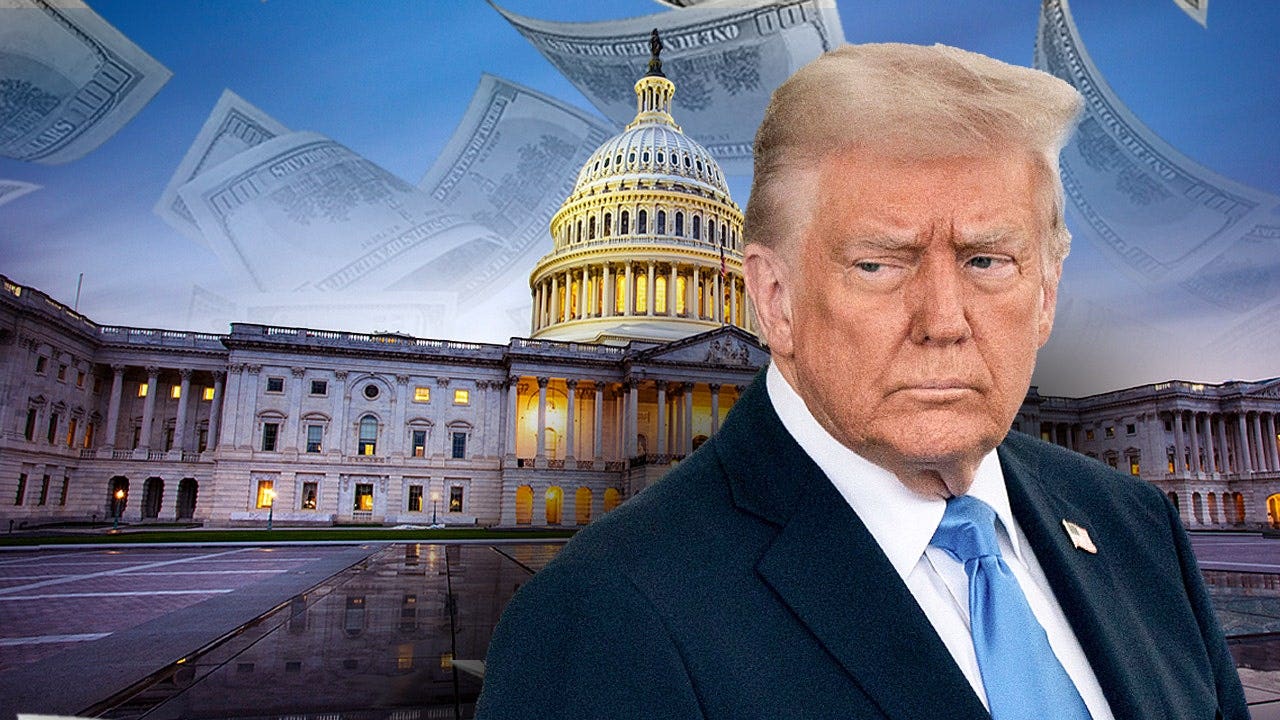
President Donald Trump’s latest cash promise to Americans is unlikely to come to fruition, just like others before it, an economist and former congressional budget hawk told Digital.
«So the president has promised a lot of checks, the most recent being $5,000 to every American if Republicans hold on to the House and Senate. We ever going to see these? Well, I don’t think so,» said Douglas Holz-Eakin, president of fiscal policy think tank American Action Forum.
Holz-Eakin previously served as the director of the Congressional Budget Office and as the director of domestic and economic policy for late Republican Sen. John McCain’s 2008 presidential campaign.
TRUMP DEFENDS $5,000 DIVIDEND PROPOSAL, PRAISES ‘BEAUTIFUL’ TARIFFS ON ‘INGRAHAM ANGLE’
«The DOGE checks were never realistic because DOGE was never going to save that much money,» said Holz-Eakin in reference to the Elon Musk-led Department of Government Efficiency’s sweeping layoffs and budget cuts to federal agencies.
He continued: «And the tariff checks were never that realistic because [Trump] didn’t have the authority to issue the checks, and that’s actually true of all of these promises.»
Holz-Eakin also mentioned the Trump administration’s recently proposed plan to give $9,000 checks to stay-at-home mothers likely won’t come through either.
«Trying to get money to stay at home moms for childcare, there’s a route to that, but it’s gonna be tough … we’ll see if they actually pull it off,» he said. «So, I would be skeptical that any of these checks are gonna be in your mailbox very soon.»
The internationally-known economist likened the Trump administration’s fiscal policy to that of former President Joe Biden’s Democratic administration.
«I think we’ve seen two successive administrations get themselves in the following position: inflation is too high and wages aren’t keeping up with it. Well, that’s failing at the American dream,» Holz-Eakin explained.
THE FED JUST THREW A WRENCH IN TRUMP’S MIDTERM ECONOMIC MESSAGE
He said that getting inflation under control was the first step in restoring order, as well as being «utterly supportive» of the Federal Reserve, which Holz-Eakin says is working to achieve that goal.
The Fed hiked interest rates Wednesday for the first time in three years, and signaled that more rate increases could be coming. This comes despite Trump’s push to have the world’s most powerful central bank lower interest rates to lessen the monthly burden on Americans seeking home and auto loans.
«Inflation remains elevated,» the Federal Open Market Committee said in a post-meeting statement. «Today’s policy action will support a timelier return to the Committee’s 2 percent goal. The Committee will deliver price stability.»
«You need to have, I think, a more vibrant economy, and this economy is doing okay, but it’s putting up with a lot of headwinds,» said Holz-Eakin.
He named specific Trump administration policy decisions he says are to blame for the lackluster economy, which has burdened the middle class as grocery prices continue to rise.
«The first headwinds were tariffs, second headwinds were the oil prices and fight with Iran, and we need to get past those battles, and let the economy just go, and … that would be a better environment for the families,» he told Digital.
CONGRESS SPENDS $7 TRILLION. HERE’S HOW THAT MATH WORKS OUT IF YOU THINK OF JUST $100
As for overall fiscal policy, Holz-Eakin says he’s worried that the country is going in the wrong direction when it comes to economic and fiscal policy.
«I’m a former director of the Congressional Budget Office. I have to every day get up and look at the books and wonder, ‘how’s this going to add up?’» he said. «And right now it doesn’t add up.»
«We’re $41 trillion in debt. The deficit is $2 trillion every year and it’s getting larger. You can’t just keep putting people on the on government programs. It won’t add up.»
He proposed a fix — reverting to «old-school conservative» politics.
«I’d like to see a bit of a U-turn that got the debt under control, didn’t spend quite so much money, and got through this without having to raise our taxes. So, that sounds like an old-school conservative plan to me, but that’s not what we’re seeing right now.»
Digital reached out to the White House for comment on Trump’s economic promises, but did not hear back at time of publication.
politics, donald trump, economic policy, economy, executive policy, growing the debt










INTERNACIONAL
Investigadores argentinos lograron reducir tumores de mama triple negativo en un estudio preclínico

Una proteína que ayuda a las células de un tumor de mama agresivo a crecer y a esquivar las defensas del organismo quedó bajo estudio como posible blanco para futuros tratamientos. Investigadores del Consejo Nacional de Investigaciones Científicas y Técnicas (CONICET) bloquearon esa proteína, llamada receptor H4 de histamina o H4R, en células tumorales y ratones.
Como resultado, los tumores crecieron menos y el sistema inmunitario respondió con mayor fuerza contra las células cancerosas.
El trabajo se publicó en la revista Frontiers in Immunology. Se trata de una investigación preclínica, es decir, realizada con células de ratón y modelos animales. Por lo tanto, todavía no se puede afirmar que este método funcione en personas con cáncer de mama ni que el compuesto utilizado sea seguro para pacientes.
La investigación fue liderada por Mónica Vermeulen, investigadora del CONICET y directora del Laboratorio de Células Presentadoras de Antígeno y Respuesta Inflamatoria del Instituto de Medicina Experimental (IMEX). El primer autor fue Ramiro Vázquez, integrante del mismo equipo.

Por qué el cáncer de mama triple negativo es difícil de tratar
El cáncer de mama triple negativo representa entre el 10 y el 15% de todos los casos de cáncer de mama. Se lo denomina “triple negativo” porque las células del tumor no tienen tres proteínas que suelen servir como objetivo de tratamientos: los receptores de estrógeno, los receptores de progesterona y la proteína HER2.
En otros tipos de cáncer de mama, los médicos pueden usar medicamentos que bloquean esas proteínas o hormonas para frenar el tumor. En el triple negativo, esas opciones no sirven porque las células cancerosas no tienen esos blancos. Por eso, los especialistas buscan otras proteínas que puedan atacar sin dañar en exceso a las células sanas.
El equipo del CONICET estudió el receptor H4R en células 4T1, un tipo de célula de ratón que se usa para investigar tumores con características parecidas a las del cáncer de mama triple negativo.
H4R es uno de los receptores de la histamina, una sustancia que el cuerpo produce de manera natural. La histamina participa, por ejemplo, en las reacciones alérgicas y en la inflamación. También cumple funciones en el estómago y el sistema nervioso. Para actuar, se une a receptores ubicados en las células. Uno de ellos es H4R, que aparece en distintos tumores mamarios.

El compuesto bloqueó una señal que favorecía al tumor
Los investigadores usaron un compuesto llamado JNJ-7777120, abreviado como JNJ. Su función es bloquear H4R. Dicho de forma simple, impide que la histamina active ese receptor y envíe señales a la célula tumoral.
Cuando trataron las células cancerosas con JNJ, observaron que se multiplicaban menos y perdían parte de su capacidad para moverse. Este segundo punto es relevante porque las células tumorales deben desplazarse para invadir otros tejidos y, en algunos casos, formar metástasis. La metástasis ocurre cuando el cáncer se extiende desde el tumor original hacia otros órganos.
El compuesto no eliminó las células tumorales. Lo que hizo fue detenerlas en una etapa previa a la división. En otras palabras, no las mató, pero redujo su capacidad para generar nuevas células cancerosas.
Además, el tratamiento redujo la producción de especies reactivas de oxígeno. Son moléculas que las células producen y que, en cantidades elevadas, pueden contribuir al crecimiento y a la supervivencia de algunos tumores. El bloqueo de H4R también modificó procesos metabólicos, es decir, la forma en que las células obtienen y utilizan energía.

“Nuestros hallazgos respaldan un papel protumoral de la histamina que actúa a través de H4R durante las primeras etapas de la tumorigénesis en células 4T1”, escribieron los autores. Esto significa que, en el modelo analizado, la histamina parece favorecer el desarrollo del tumor cuando se une a ese receptor.
Los tumores crecieron menos después de una sola exposición al compuesto
Luego, los científicos evaluaron qué ocurría en animales. Para eso, trataron las células tumorales con JNJ antes de inocularlas en ratones con un sistema inmunitario normal.
Una semana después, los ratones que recibieron células tratadas desarrollaron tumores más pequeños que los animales del grupo de control, que recibieron células sin exposición al compuesto. El efecto se mantuvo durante al menos dos semanas.
“Curiosamente, una sola dosis fue suficiente para inhibir el crecimiento tumoral durante al menos dos semanas”, indicaron los investigadores.
Este resultado sugirió que el JNJ no actuaba solamente sobre la célula tumoral. También parecía modificar la respuesta de las defensas del organismo frente al cáncer.
El efecto dependió del sistema inmunitario
Para comprobarlo, el grupo repitió la prueba en ratones RAG1. Estos animales no tienen linfocitos T y B funcionales, dos tipos de células esenciales para la inmunidad adaptativa. Se trata de la parte del sistema inmunitario que reconoce amenazas específicas, como una célula infectada o cancerosa, y dirige una respuesta contra ellas.
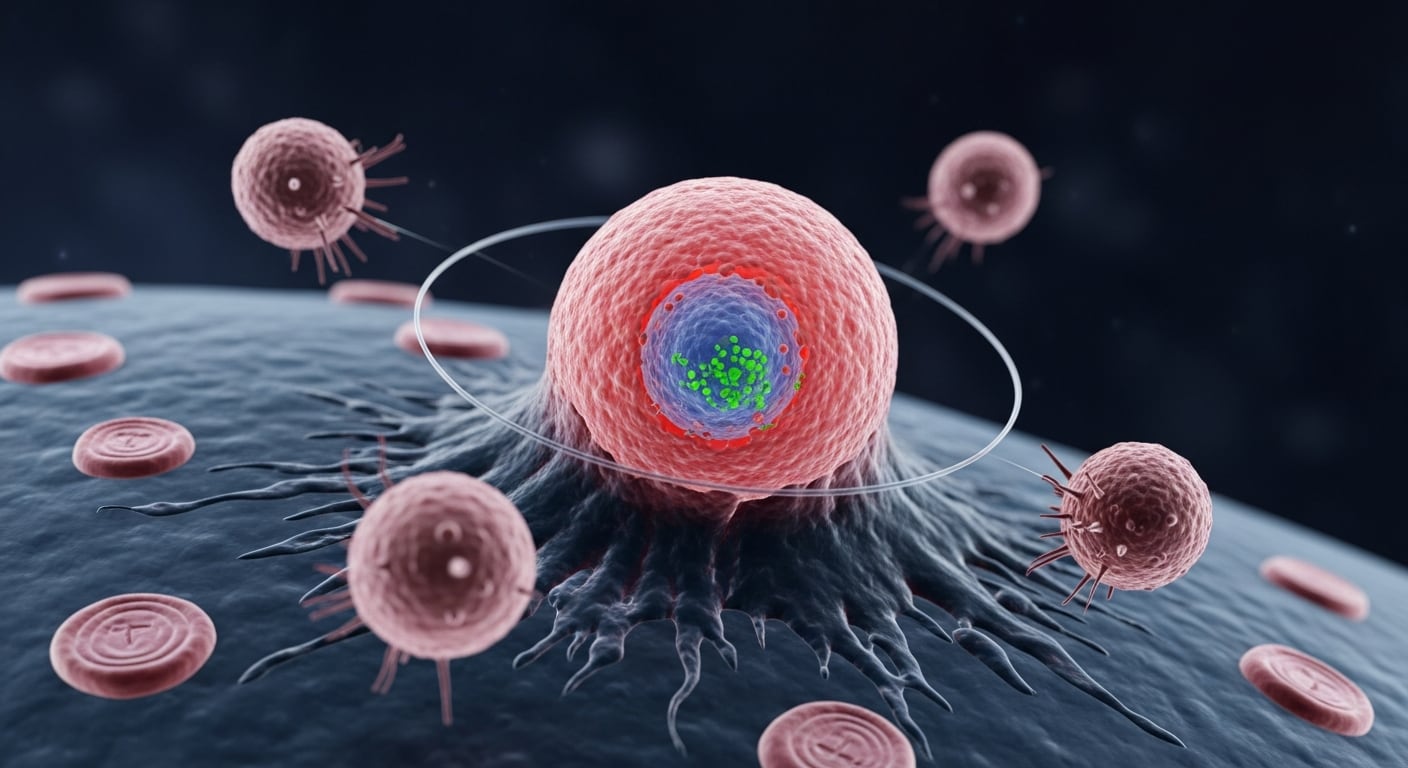
En esos ratones, el tumor creció de manera similar al del grupo que no recibió el compuesto. “El crecimiento tumoral en estos animales fue comparable al de los controles, lo que indica que la respuesta inmunitaria adaptativa desempeña un papel central”, señalaron los autores.
En los ratones con defensas normales, en cambio, el bloqueo de H4R aumentó la presencia de linfocitos CD8+ dentro del tumor durante la primera semana. Estos linfocitos son células que pueden reconocer y destruir células cancerosas.
A los 14 días, su cantidad ya era similar a la registrada en el grupo de control. Sin embargo, los linfocitos obtenidos de tumores tratados con JNJ mostraron mayor capacidad para eliminar células cancerosas.
Los investigadores también detectaron un aumento de interferón gamma, una proteína que participa en la activación de las defensas y en la respuesta contra infecciones y tumores.
Falta comprobar si el mecanismo se repite en pacientes
Vermeulen remarcó que los resultados todavía están lejos de una aplicación médica. “Son resultados alentadores que requieren estudios adicionales para determinar si pueden reproducirse en muestras humanas de pacientes con cáncer de mama triple negativo”, sostuvo.
El próximo paso será analizar tumores humanos para determinar si H4R tiene el mismo papel que mostró en el modelo de ratón. También será necesario establecer qué tipo de medicamento podría bloquearlo, en qué dosis y bajo qué condiciones podría resultar seguro.
Los investigadores indicaron que esta línea también puede ser de interés para otros tipos de tumores donde la histamina y sus receptores tienen participación, entre ellos los cánceres de colon, páncreas, ovario e hígado, además del melanoma.
mamografía,cáncer de mama,negatoscopio,médica,diagnóstico
There are two big differences between the previous Trump-era midterms and this year’s contest.
The first is the president’s approval rating, which is lower now than it was during President Donald Trump’s first term in 2018 or President Joe Biden’s term in 2022.
The second is Democrats’ generic ballot lead, which is wider and more enduring than it was in the 2018 «blue wave» election and much larger than the edge the GOP had in 2022.
Combined with Democrats’ candidate quality improvements and a Republican-led redistricting effort that could fall short of expectations, the House is likely out of reach for the GOP this year.
REPUBLICANS FACE BRUTAL MIDTERM HEADWINDS. SIX FORCES COULD HELP THEM DEFY HISTORY.
Then there’s a similarity: in all three elections, the Senate has been in play right up until the finish line.
In Trump’s first term, the Republicans ended up gaining two Senate seats despite a gloomy national environment. Four years ago, with inflation surging, the Democrats managed to add a Senate seat to their tally.
12 RACES SCRAMBLE SENATE BATTLEFIELD AS DEMOCRATS EYE COMEBACK
The Democrats have plentiful paths to 51 seats on election night. Republicans keep plowing money into six toss-up states, plus Kansas, and those efforts haven’t much moved the needle.
Yet the GOP’s paths to 50 are getting wider. That, plus a major update to the House forecast, in this week’s edition of the Power Rankings.
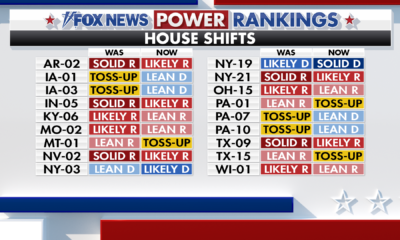
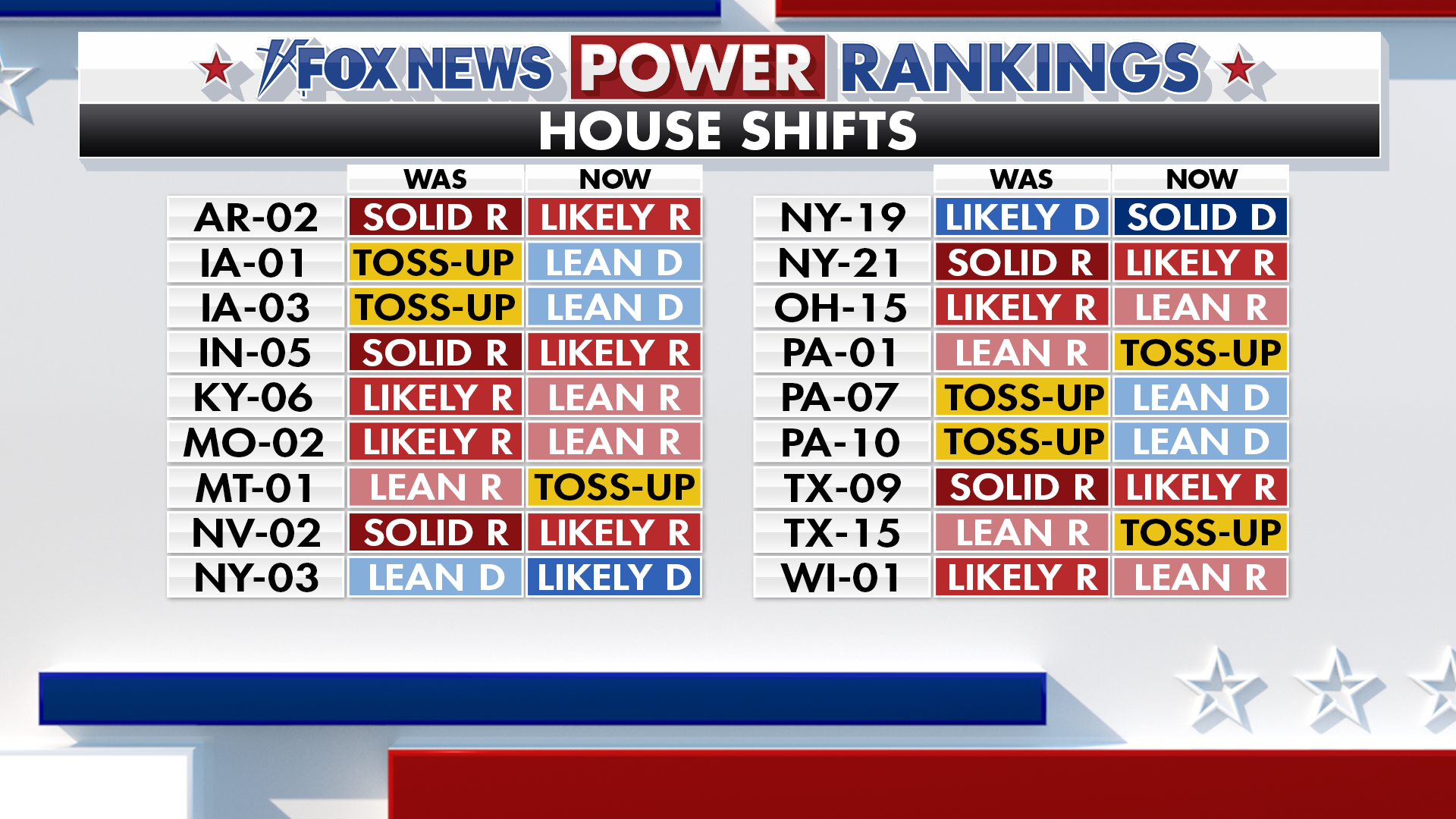
The Democratic Party has enjoyed a lead in the House all year. Now, as another 20 races shift leftward, this forecast sees the Democrats taking control.
THE BLUE WAVE LOOKS REAL UNTIL YOU LOOK A LITTLE CLOSER
Democrats have an advantage in at least 219 seats, while Republicans should hold on to at least 198 seats. There are 18 toss-ups on the board.
On a good night for the Democrats, the party will hold around 237 seats, or a gain of 22 from their current position. That’s because toss-up seats have mostly fallen in one party’s direction in previous elections.
POWER RANKINGS: FOR THE DEMOCRATS, WHERE COULD IT POSSIBLY GO WRONG?
(A «great night» for the Democrats, which would see the party take some Lean R seats as well, would mean a Democratic majority of up to 249.)
If the toss-up seats go the other way, the GOP could make life hard for the left. A good night for Republicans would see the party end up with around 216 seats. That’s two short of a majority but also leaves the Democrats with a mere two-vote cushion in the House.
In that scenario, a coalition of far-left Democrats, like the «Squad» of years past, could band together to put policy pressure on the next House speaker. That group is about to get bigger, thanks to the sure-thing victories of Democratic Socialists like Darializa Avila Chevalier and Claire Valdez.
Some of this week’s shifts are a product of polling. The Democrats’ generic ballot lead has pushed districts like Kentucky’s 6th District (Lexington and its suburbs) and Texas’ 15th District (Rio Grande Valley and Coastal Bend) away from the GOP.
The party’s strength in statewide races also plays a role, especially in Iowa (the 1st and 3rd districts, which contain the state’s biggest cities), and in Pennsylvania (three districts have shifted to the left, thanks in part to Governor Josh Shapiro’s coattails).
Other shifts are the result of Republican groups moving resources elsewhere, like from New York’s 19th District. Democratic Rep. Josh Riley lost this race by fewer than 5,000 votes four years ago, but as the GOP sends its money to more winnable races, it’s moving to Solid D.
A more surprising theme is also emerging: the GOP is in trouble with rural voters.
Sitting above Albany, New York’s 21st District contains some of the state’s most rural areas. Its voters delivered President Trump a 21-point victory over Vice President Harris two years ago. A survey last week had the Democratic candidate four points ahead of the Republican, 46%-42%.
DEMOCRATS SEE NEW CHANCES TO FLIP RED STATES — BUT A $400M GOP SPENDING ADVANTAGE COULD DERAIL THEIR PLANS
Maine’s 2nd District, which famously voted for President Trump three times in a row – and last time by nine points – is an open race this year after Rep. Jared Golden’s retirement. It was thought to be one of the best flip opportunities for the GOP. A new poll has the Democrat at 51% and the Republican at 45%.
Even Virginia’s 5th District, stretching across the Southside region and home to a two-thirds rural population, is a six-point race in a recent survey (45%-51% with the Republican ahead). The Democrat, Tom Perriello, was recently endorsed by Rep. Alexandria Ocasio-Cortez.
Gas, diesel and grocery prices are to blame. In dollar terms, the cost of living is higher in cities and suburbs, but voters across the country keep saying they are feeling the pressure of those increases and blame Republicans for them.
Iowa, for example, has experienced the fourth-highest gas price hike in the nation. Kentucky, Ohio and Texas are all in the top five states for diesel increases. That has proven tough for GOP candidates to counter.
New York’s 21st District moves from Solid R to Likely R. (Virginia’s 5th and Maine’s 2nd districts remain at Lean R and Toss-up, respectively.)
The Senate is still a toss-up with Democrats and Republicans taking 47 seats apiece. Six toss-ups are the most likely to determine control.
If Democrats win all six of those states, the party will take the majority with two seats to spare, for a total of 53. On the other hand, this forecast still sees a pathway for the GOP not to lose any seats. They’d accomplish that just by holding on to the same six states.
The toss-ups have largely been locked in through summer. There’s been a lot more movement in the «lean» categories (Kansas in, Georgia and North Carolina out). Collectively, you can think of these as the election night battlegrounds.
This week, a ninth state joins the list: Minnesota.
The North Star State has been on the political radar since Republicans recruited Michele Tafoya, the former NFL sideline reporter. She has deftly navigated her foray into politics by focusing on fraud, crime, and the cultural issues that animate GOP voters.
She also has a favorable matchup against Peggy Flanagan, Minnesota’s sitting lieutenant governor. It’s not clear whether Flanagan’s progressive politics or her proximity to the fraud issue is giving voters pause. Whatever the cause, there are signs that they are.
A new gold-standard survey shows 47% of likely voters support Flanagan, while 43% back Tafoya. Another 9% are undecided.
Republicans are fully united behind Tafoya, while 9-in-10 Democrats say they’ll support Flanagan’s bid. Independents are much less settled: 38% back Tafoya, 32% support Flanagan, and 29% haven’t decided.
Minnesota’s voter profile and election history suggest that there are some left-of-center voters in the «independent» column. They may be wavering on Flanagan now, then show up to vote for her on election day.
The Senate hopeful’s spot on the ballot next to Amy Klobuchar, the Democrats’ gubernatorial candidate and electoral over-performer, may also help push her over the line.
Either way, that poll can’t be ignored. Minnesota moves from Likely D to Lean D.
power rankings, midterm elections, politics, senate elections, elections

NEWYou can now listen to Fox News articles!
Pope Leo XIV arrived at Agostino Gemelli University Hospital in Rome for a procedure to remove a small node on his lung on Tuesday.
The 71-year-old pontiff said Monday that doctors discovered the nodule at a «very early stage» and recommended its removal. The surgery is not expected to last long, and the pope is expected to remain hospitalized for approximately one week, according to Vatican spokesman Matteo Bruni.
«Doctors found a small lump in the lung,» Leo said after an Angelus address at St. Peter’s Square on Monday. «It was identified at a very early stage and well situated.»
POPE LEO ANNOUNCES TUMOR ON LUNG, SURGERY PLANNED IN ‘NEXT FEW DAYS’
Pope Leo XIV is welcomed by Health Director Andrea Cambieri as he arrives at the Gemelli University Hospital for an operation to remove a lump from his lung in Rome on October 13, 2026. (Photo by Alberto PIZZOLI/AFP via Getty Images)
«The doctors consider it appropriate to intervene and so, following their advice, I decided to have surgery to remove it,» he continued. «The surgery is already scheduled for the next few days. I thank you for your spiritual closeness and I rely on your prayer.»
The surgery is likely to take place within a few days at the Gemelli Hospital in Rome, which is known as the «Pope’s» hospital, Vatican sources told Fox News.
POPE LEO XIV BEGINS HISTORIC 4-DAY VISIT TO FRANCE
The Vatican has not disclosed whether the nodule is cancerous, and no further details about the pope’s diagnosis or the planned procedure were immediately available.
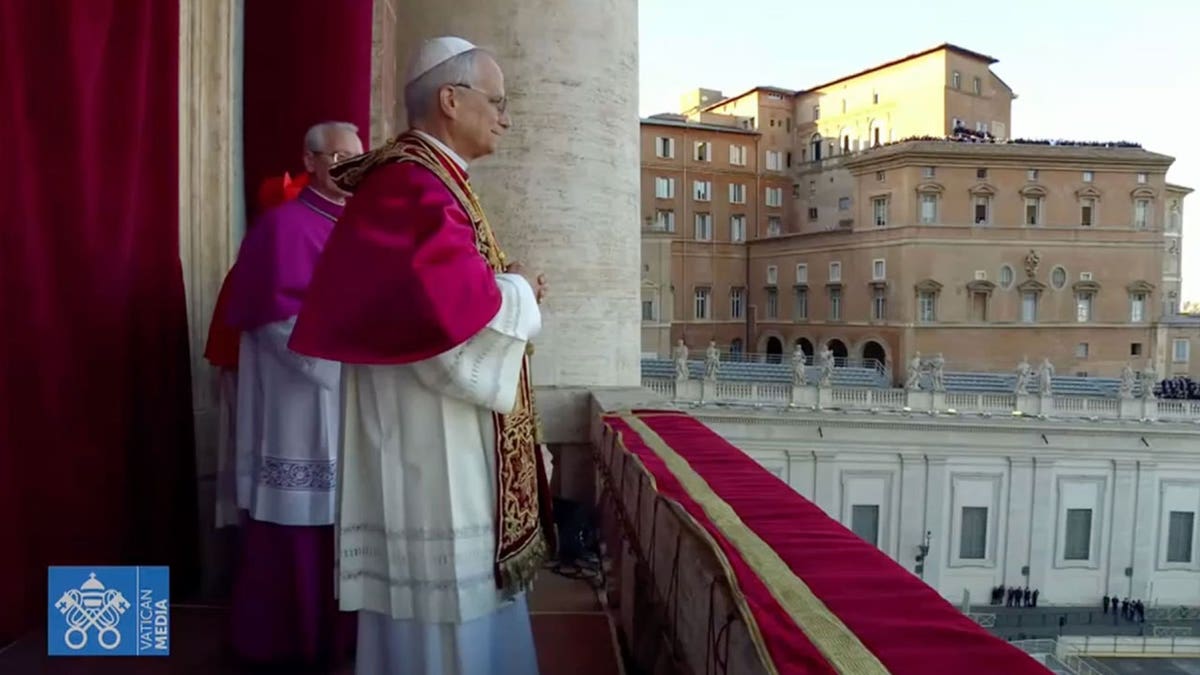
Pope Leo XIV steps out as the first American pope in history at the Vatican on Thursday, May 8, 2025. (Vatican Media)
The announcement comes as a surprise for the American-born pontiff, who has no previously known health problems and is known for maintaining an active lifestyle.
POPE LEO VISITS SITE OF MIRACLE CURES, MEETS PEOPLE WHOSE UNEXPLAINED HEALINGS STUNNED DOCTORS
Leo regularly plays tennis and swims at the papal summer retreat in Castel Gandolfo, according to The Associated Press.
The pope is also scheduled to embark on a major international trip from Nov. 6–17, with planned stops in Uruguay, Argentina and Peru. It remains unclear whether his surgery and recovery will affect those travel plans.
UKRAINE’S ATTACKS ON RUSSIA ARE PUSHING PUTIN CLOSER TO NEGOTIATING TABLE, TRUMP NATO AMBASSADOR SAYS
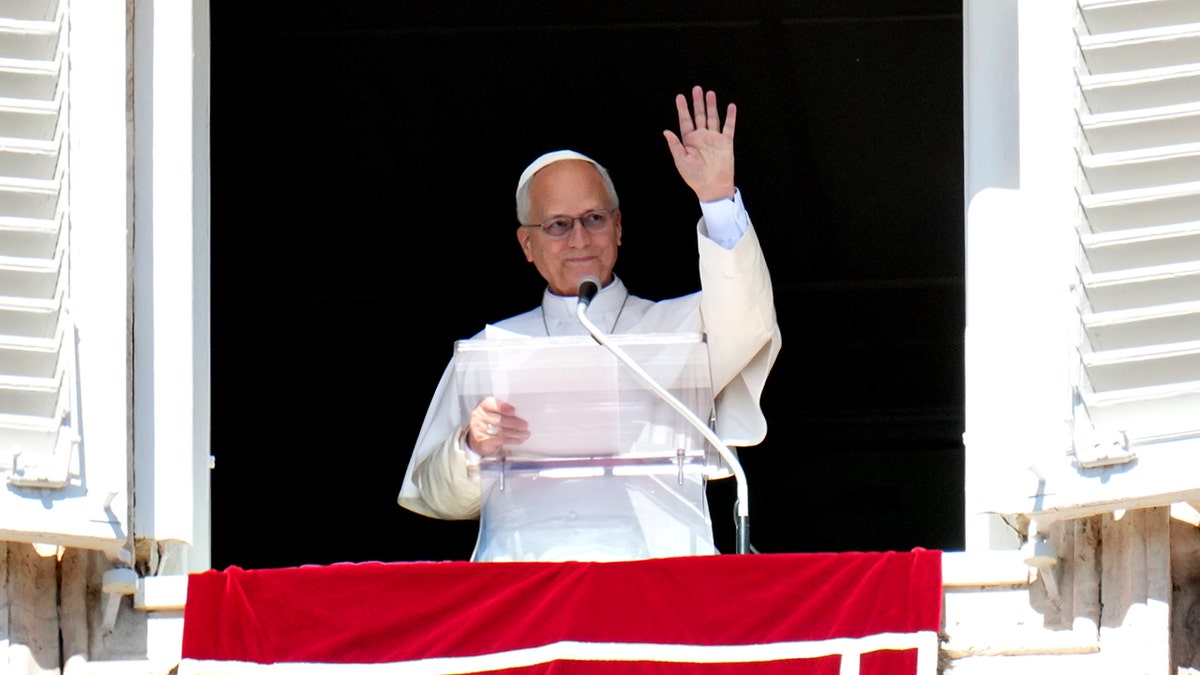
Pope Leo XIV delivers the Angelus prayer in St. Peter’s Square at the Vatican on Sunday, Oct. 11, 2026. (AP Photo/Gregorio Borgia)
In addition to addressing his health, Leo used his Sunday remarks to renew his appeal for peace in war-torn Ukraine, warning that the conflict continues to inflict suffering far beyond the country’s borders.
«The war in the martyred Ukraine continues to create suffering, even beyond its borders, especially in the poorest countries, where many people depend on the exports of cereals and grains,» the pope said.
Fox News’ Courtney Walsh and Stephen Sorace contributed to this report.
pope leo xiv, roman catholic, vatican, religion us, world, christianity religion

Tras revelarse que Ana Paula Dutil fue la culpable de la separación de Julieta Prandi y Emanuel Ortega, se supo lo peor: «Él le mete los cuernos y la vuelve loca»

Internas y apuro en el Congreso: se reúne la Mesa Política para definir la estrategia por las reformas

Discapacidad: Rodrigo Sbarra quedó a cargo de forma interina del área por el accidente que sufrió el nuevo secretario

Lionel Messi eligió a las 10 futuras estrellas del fútbol e incluyó a un futbolista de Boca Juniors

El Gobierno promulgó la Ley de Zonas Frías: los 94 municipios que pierden el subsidio y cuándo empieza a regir la nueva norma

Fue figura en un partido del Mundial y le dieron un Record Guinness: “Orgulloso de hacer historia”

Conciliaciones entre comercios y consumidores resuelven reclamos por más de $12.5 millones en Panamá

Regresos importantes y una duda clave: Arruabarrena definió el equipo de Boca Juniors para visitar a Instituto

El nuevo mapa del mercado automotor: qué marcas ganaron y cuáles perdieron con la apertura de las importaciones