INTERNACIONAL
Why Trump is suddenly threatening Iran’s last untouched nuclear site

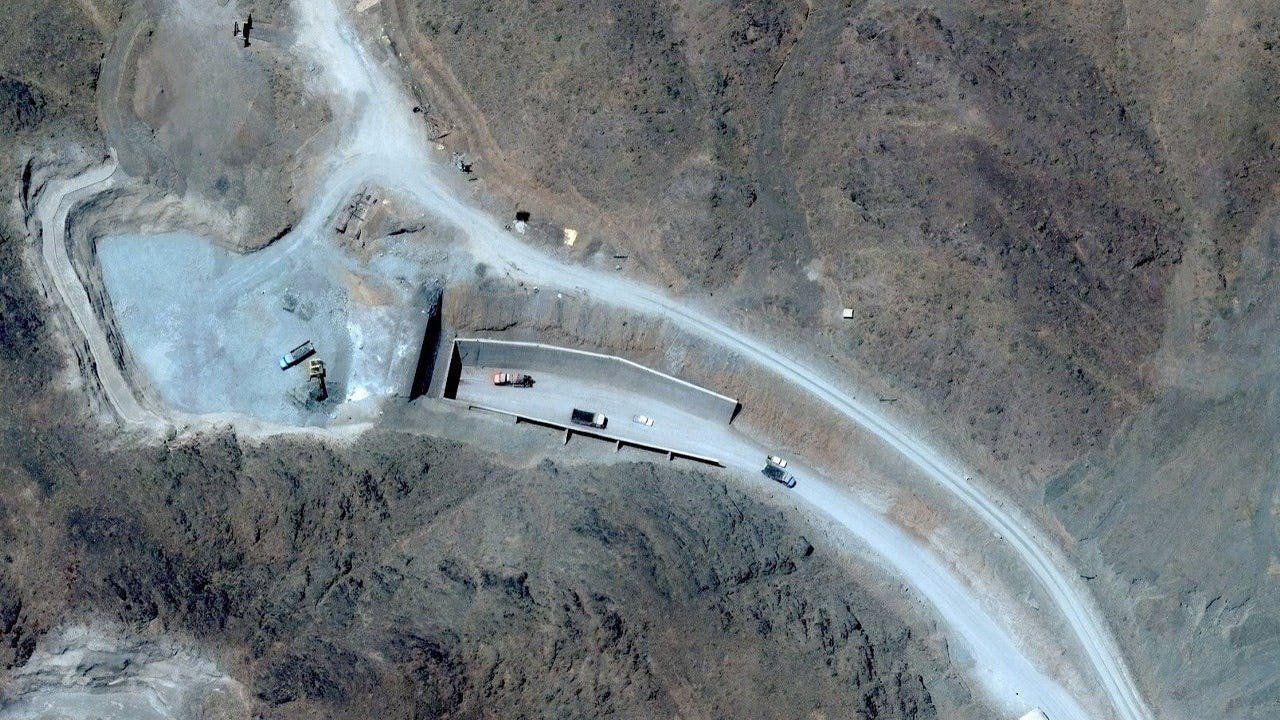
Trump doubles down on Iran nuclear weapons pledge with Pickaxe Mountain threat
President Donald Trump vows to ensure Iran never acquires a nuclear weapon, prompting a discussion with Mark Wallace, CEO of United Against Nuclear Iran. Wallace highlights the threat posed by Iran’s hidden ‘Pickaxe Mountain’ nuclear facility, which may contain centrifuges and enriched uranium. He emphasizes the need to neutralize this site and discusses the Iranian regime’s use of nuclear ambitions as leverage against the West.
NEWYou can now listen to Fox News articles!
President Donald Trump is threatening to strike Iran’s deeply buried Pickaxe Mountain nuclear facility — a site the United States previously left untouched while bombing the country’s other major nuclear sites, raising new questions about what may have changed.
Estimated to lie beneath at least 100 meters of rock near Iran’s damaged Natanz nuclear enrichment complex, Pickaxe was designed to replace an above-ground plant capable of assembling roughly 6,000 advanced centrifuges each year before it was destroyed in 2020.
Iran said the replacement would be larger, more modern and built «in the heart of the mountain.» Analysts believe the tunnels could eventually hold a centrifuge assembly line, an enrichment plant or equipment used in certain nuclear weaponization activities.
Satellite image Pickaxe Mountain (Vantor/Handout via Reuters)
I’VE STUDIED MILITARY STRATEGY. TRUMP NOW FACES IRAN’S OLDEST BATTLEFIELD TRICK
Yet the administration has not said whether it has confirmed that centrifuges were moved inside — or why a site left untouched during earlier attacks now warrants a strike. Military experts also disagree over whether airstrikes could destroy Pickaxe’s interior or merely seal its entrances temporarily.
The same depth that could protect Iran’s nuclear infrastructure may place Pickaxe’s main chambers beyond the reliable destructive reach of America’s most powerful conventional bunker-busting weapon. Bombing its exposed entrances could deny Iran access without destroying the facility or anything stored inside.
Trump said Tuesday that the United States would probably strike the area «pretty soon» and «very heavily.»
TRUMP THREATENS ‘MAJOR MILITARY PUNISHMENT’ FOR IRAN OVER FUTURE HOUTHI ATTACKS
His warning came after The Wall Street Journal reported that Israeli intelligence believes Iran moved thousands of centrifuges into Pickaxe last fall. Trump said the transfer «may have» occurred but added that the United States did not have it «on record.»
«Maybe this one they have right,» Trump said. «But it’s okay. It doesn’t mean anything unless they have the material.»
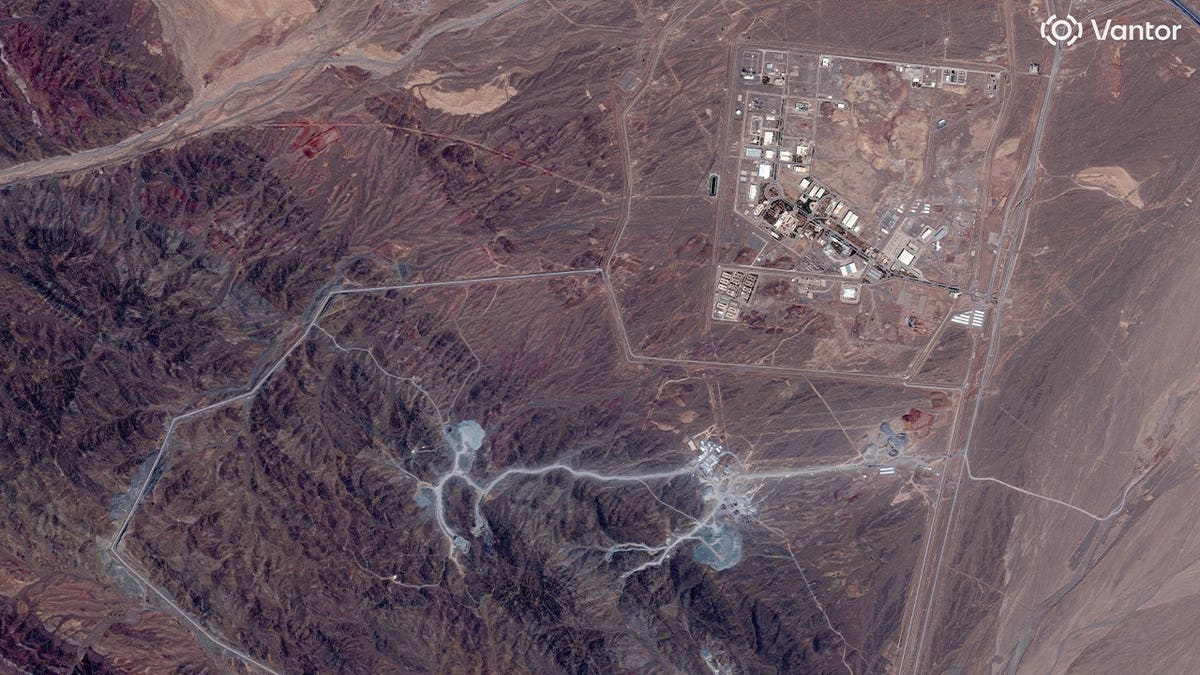
A satellite view shows an overview of the Natanz nuclear facility and Pickaxe Mountain, near Natanz, Iran, June 30, 2026 (Vantor/Handout via Reuters)
«We follow the material,» he added.
TRUMP SEEKS $672M TO STOP IRANIAN NUKES AS NEGOTIATORS WEIGH FATE OF URANIUM STOCKPILE
By «the material,» Trump was referring to Iran’s enriched uranium, including uranium gas that centrifuges can further enrich to weapons-grade levels.
Before the June 2025 attacks, the International Atomic Energy Agency had verified that Iran possessed 440.9 kilograms of uranium enriched to 60%, enough, if further enriched, for approximately 10 nuclear weapons under the agency’s standard measurement.
Most of the stockpile was believed to have been held at Isfahan, with additional material at Natanz and Fordow. Inspectors have since been unable to verify its amount, condition or present location.
The Institute for Science and International Security assesses that the material remains trapped at those three sites and does not believe enriched uranium has entered Pickaxe.
The administration has not said whether the United States independently corroborated the reported Israeli assessment, whether centrifuges are being stored or installed inside Pickaxe or whether nuclear material has entered the facility.
Storing centrifuges would not make Pickaxe an operational enrichment plant. The machines would have to be installed in connected cascades, linked to electrical, ventilation and piping systems and fed uranium gas.
Satellite imagery shows continued construction but no indication that Pickaxe is operational, according to the Washington-based institute. Images from February showed Iran adding concrete, rock and reinforced structures over tunnel portals in an apparent effort to harden them against airstrikes.
Analysts also observed smaller closed-roof vehicles near the entrances that could indicate Iran was outfitting the interior. The imagery could not establish what the vehicles carried.
Spencer Faragasso, a senior research fellow at the Institute for Science and International Security, said earlier U.S. and Israeli attacks prioritized Iran’s operating enrichment program. Based on what was understood about Pickaxe at the time, he said, there was «nothing of priority» inside that warranted expending valuable deep-penetrating weapons.
«The facility is still under construction, and it’s unlikely that a centrifuge plant is operating inside there,» Faragasso told Fox News Digital.
But Faragasso said centrifuges could have entered aboard covered trucks without being detected in commercial imagery, making the reported Israeli intelligence plausible but impossible for outside analysts to confirm.
The reported transfer could help explain Trump’s recent focus on Pickaxe, he said. The facility is also one of the last nuclear-related sites of its size that has not been struck.
Trump did not publicly name Pickaxe during the opening months of Operation Epic Fury. It entered his public rhetoric July 13, when conservative radio host Hugh Hewitt raised the facility during an interview.
Trump said American surveillance had detected no activity there but called Pickaxe a possible target for a «nice big fat shot right into the front door.»
At the end of the interview, Hewitt urged Trump to «go get Pickaxe Mountain.»
«We’re going to take out Pickaxe Mountain,» Trump replied. «Tell the Iranians to be ready.»
The White House could not be reached for comment for this story.
The administration has not explained whether the recent threats reflect new intelligence, an effort to deter Iran from activating the facility or a shift from destroying existing enrichment capacity to preventing Iran from rebuilding.
Whether the United States could destroy Pickaxe from the air remains disputed.
Nicole Grajewski, an assistant professor at Sciences Po and nonresident scholar in the Carnegie Endowment for International Peace’s Nuclear Policy Program, said it would be «very close to impossible» to destroy the facility through an air campaign like the one the United States carried out against Fordow.
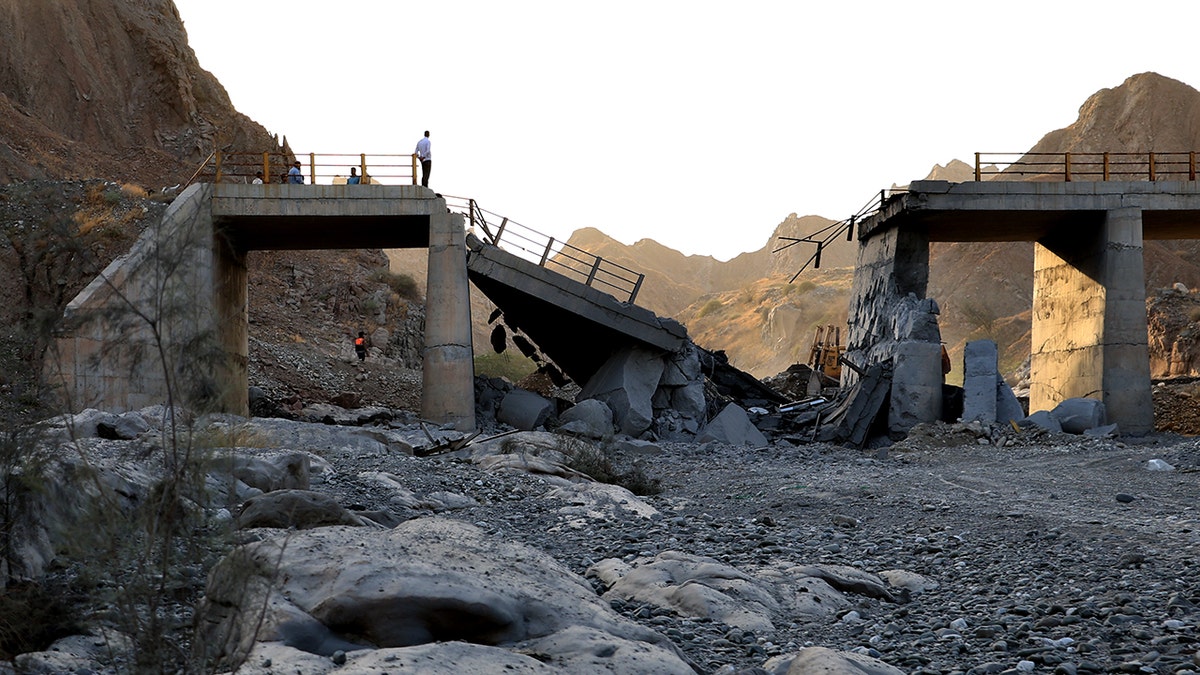
People stand on a bridge destroyed after a strike in Hormozgan province, southern Iran, Saturday, July 18, 2026. (Amirhosein Khorgooi/Iranian Students’ News Agency via AP)
Pickaxe is deeper and more heavily fortified, she said, and does not have a publicly confirmed structural weakness comparable to those exploited there.
Retired Air Force Brig. Gen. Robert Spalding, a former B-2 operations commander, said planners would first determine whether the mission required destroying Pickaxe’s interior or merely preventing Iran from using it.
«You assess what the goals are, and then you assess the costs associated with making something not fit for use — or destruction,» Spalding said.
If destroying the facility proved infeasible, he said, the U.S. could instead deny access and prevent Iran from bringing in the personnel and equipment needed to operate it.
The institute has identified two possible ventilation-shaft locations through satellite imagery, including one it considers probable. Without internal schematics, however, analysts cannot confirm their purpose or connection to the main chambers.
Faragasso said the shafts could provide weak points for deep-penetrating weapons, although the results of an attack might remain unclear.
«The facility is not invulnerable,» he said. «There are options.»
«At the minimum, the tunnel entrances can be collapsed,» Faragasso added, saying a strike could also send damaging shock waves into the facility.
Grajewski said collapsing the portals would prevent Iran from moving personnel or equipment in or out without first undertaking an excavation visible to American and Israeli surveillance. Any effort to reopen Pickaxe could trigger another strike.
But Iran has previously excavated entrances to missile tunnels after they were attacked, meaning keeping Pickaxe closed could require continued surveillance and repeated military action.
CLICK HERE TO DOWNLOAD THE FOX NEWS APP
Grajewski said a strike could provide the U.S. with a «symbolic win» against one of Iran’s most prominent remaining nuclear-related facilities but would not eliminate the broader program.
«It is a very high-value facility,» she said. «But it’s not the entirety of the Iranian nuclear program.»
war with iran, nuclear proliferation, middle east, national security, politics













INTERNACIONAL
Cómo el olfato canino y la inteligencia artificial podrían cambiar la detección temprana del cáncer en la India

En Bangalore, una empresa emergente de India entrena a perros para detectar algunos tipos de cáncer a partir del aliento humano, con apoyo de inteligencia artificial y mediante una tecnología experimental que analiza sus reacciones físicas y de comportamiento frente a muestras respiratorias.
Según informó GEO, el proyecto trabaja con 15 canes, entre ellos Chloé, una perra mestiza de labrador de 4 años. Los animales usan un casco y un arnés con sensores mientras huelen mascarillas de algodón en las que pacientes respiraron durante unos 10 minutos.
La iniciativa busca crear una herramienta de cribado preliminar de bajo costo y no invasiva, es decir, una prueba de detección temprana. El gobierno de India estima que 1 de cada 9 personas de sus 1.500 millones de habitantes podría desarrollar la enfermedad.
La inteligencia artificial traduce el olfato en datos
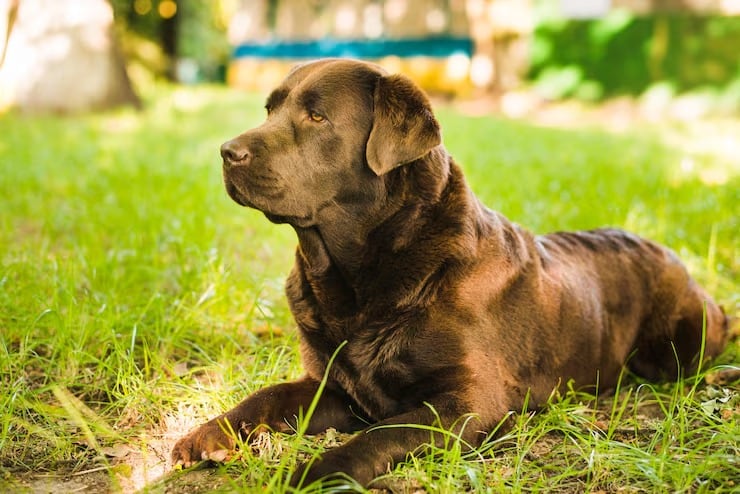
Los ingenieros apuestan por estudiar la actividad cerebral, la respiración y el lenguaje corporal de los perros mientras olfatean una muestra. Después, esos signos se transforman en datos con asistencia de inteligencia artificial para intentar identificar indicios de tumores.
“Son como si estuvieran equipados con ‘Iron Man’”, dijo a la AFP Akash Kulgod, cofundador de la empresa y graduado en ciencias cognitivas por la Universidad de Berkeley.
“En 1 hora, pueden olfatear miles de muestras”, afirmó Kulgod. La técnica parte de trabajos científicos que sugieren que algunas enfermedades, entre ellas ciertos cánceres, el párkinson o el covid-19, alteran las sustancias químicas del cuerpo y, por lo tanto, también los olores.

Según una investigación reciente realizada por la propia compañía sobre 1.500 pacientes y publicada en el Journal of Clinical Oncology, la técnica alcanzó una fiabilidad del 90% para identificar 7 tipos de patologías oncológicas.
Ese resultado alimenta la expectativa de que el sistema sirva como una primera herramienta de identificación para derivar a personas con sospecha de la enfermedad hacia estudios complementarios. La meta no es reemplazar los exámenes médicos convencionales, sino orientar los casos que requieran una evaluación más profunda.
Un antecedente científico respalda la hipótesis
“El estudio es prometedor como herramienta de detección inicial”, señaló el doctor Santhosh Kumar Devadas, jefe del servicio de oncología del Hospital Ramaiah Memorial de Bangalore.

Además, añadió que “ahora es necesario ampliar el estudio a un grupo mucho mayor de participantes antes de poder extraer conclusiones definitivas”. Esa observación apunta a una de las principales limitaciones actuales del desarrollo, que todavía necesita mayor validación científica.
En la misma línea, el doctor Neelesh Reddy, de los hospitales Manipal, sostuvo que “solo el tiempo dirá si esta tecnología puede ser útil para pacientes reales”. El sistema aún no está autorizado para su comercialización.
Un trabajo publicado en BMC Cancer en 2021 analizó la capacidad de perros entrenados para identificar cáncer de pulmón a partir de muestras de aliento y orina, y concluyó que la detección olfativa canina puede funcionar como una herramienta para reconocer señales asociadas a la enfermedad.
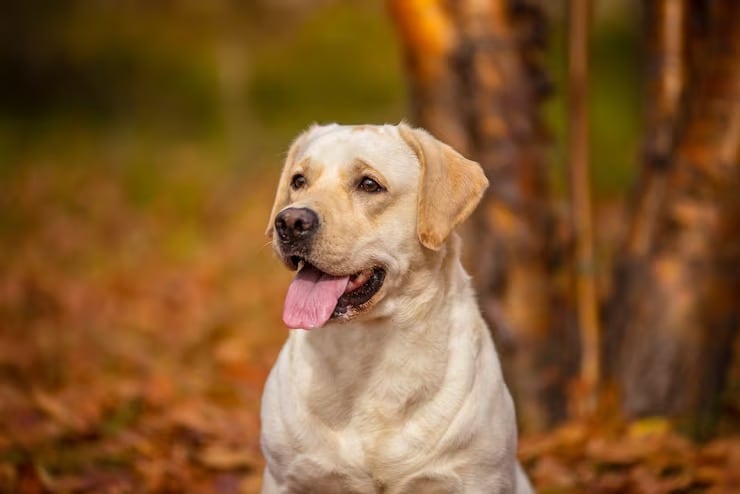
En esa investigación, los animales lograron identificar correctamente 40 de 41 casos cuando se combinaron ambos tipos de especímenes, mientras que en las pruebas realizadas solo con aliento detectaron 32 de 41. Los autores señalaron que estos resultados respaldan la idea de que ciertas enfermedades modifican compuestos orgánicos del cuerpo.
Un desarrollo que aún espera validación
Kulgod, de 26 años, y su socio Itamar Bitan, de 28, prevén una posible salida al mercado en 2027. Si eso ocurre, la firma se convertiría en la tercera del mundo en este segmento, después de compañías de Alemania e Israel.
Bitan, quien trabajó en una unidad militar canina, explicó que el entrenamiento se basa en el condicionamiento: los ejemplares aprenden a reconocer un “olor específico” a cambio de una recompensa. En el laboratorio, los perros olfatean muestras sobre plataformas equipadas con dispensadores automáticos de premios.

La mayoría de los perros preparados para esta tarea son beagles, malinois y cruces del pastor alemán, rescatados de refugios o adquiridos a criadores. Según la empresa, mantienen un equilibrio entre actividad y descanso, con sesiones de trabajo de entre 30 y 45 minutos diarios.
Las reacciones no son iguales en todos los animales: “Algunos corren directamente al dispensador (…) esperando una recompensa, otros se quedan inmóviles, otros rascan la muestra con entusiasmo”, explicó Bitan.
El cofundador sostuvo que esas diferencias no impiden el funcionamiento del sistema, siempre que la máquina aprenda a reconocer de manera consistente la respuesta de cada perro. Por ahora, el desarrollo sigue en fase experimental y su aplicación práctica en pacientes dependerá de estudios futuros y de la autorización correspondiente.
biotecnología,inteligencia artificial,sensores,análisis molecular,perro,laboratorio
INTERNACIONAL
Florida sues Netflix, alleges streamer tracked children after promising families privacy

Texas lawsuit targets Netflix over user data
Fox News correspondent Madeleine Rivera reports on Netflix countering a Texas lawsuit that accuses it of privacy violations and using addictive design to target children on ‘Fox Report.’
NEWYou can now listen to Fox News articles!
Florida Attorney General James Uthmeier sued Netflix on Wednesday, accusing the streaming giant of misleading subscribers by promising an ad-free, privacy-focused service while secretly collecting years of behavioral data — including from children’s profiles — to build the advertising business it long insisted it would never create.
The 66-page lawsuit alleges Netflix built its brand by assuring consumers that paying a monthly subscription meant they could avoid the surveillance-driven advertising model used by other major technology companies. Instead, Florida alleges Netflix quietly collected extensive user data before launching its ad-supported platform in November 2022.
«Netflix told Florida families they could pay a monthly fee to escape Big Tech surveillance. That was false,» Uthmeier said in a news release announcing the lawsuit. «Netflix collected detailed data on children and families, designed its product to keep kids watching, and then commercialized that information to launch the advertising business it promised never to build. Parents, not corporate executives, direct the upbringing of their children. Netflix should expect to be held accountable.»
The complaint points to repeated public statements from Netflix executives who touted the company as different from advertising-supported competitors. Among them, the lawsuit cites former CEO Reed Hastings, who said during a 2020 earnings call that Netflix was «not integrating everybody’s data,» adding, «We don’t collect anything,» and describing the streaming service as «the safe respite» from companies that exploit users through advertising.
WASHINGTON POST FACES CLASS-ACTION LAWSUIT ALLEGING ‘SURVEILLANCE PRICING’ OF SUBSCRIBERS
The Netflix logo is shown on one of their buildings in the Hollywood neighborhood of Los Angeles on Dec. 2, 2025. (Mike Blake/Reuters)
Florida alleges those assurances were misleading because Netflix built what the lawsuit describes as a massive behavioral-data operation that records how subscribers use the platform. According to the complaint, Netflix tracks billions of user interactions, including what subscribers watch, search for, pause, rewind, skip and abandon, along with information about their devices and locations. The state alleges Netflix uses that information to improve its recommendation systems and support its advertising business.
The lawsuit places particular emphasis on Netflix’s Kids Profiles, which the company markets as dedicated spaces designed for children. Florida alleges Netflix encouraged parents to create children’s profiles by describing them as «Great for kids» and a child’s «own space» while continuing to collect and analyze children’s viewing behavior through the same telemetry systems used for adult accounts.
PARENTS PUSH CONGRESS TO ACT ON KIDS’ ONLINE SAFETY AFTER JURIES FIND META AND YOUTUBE LIABLE FOR HARM
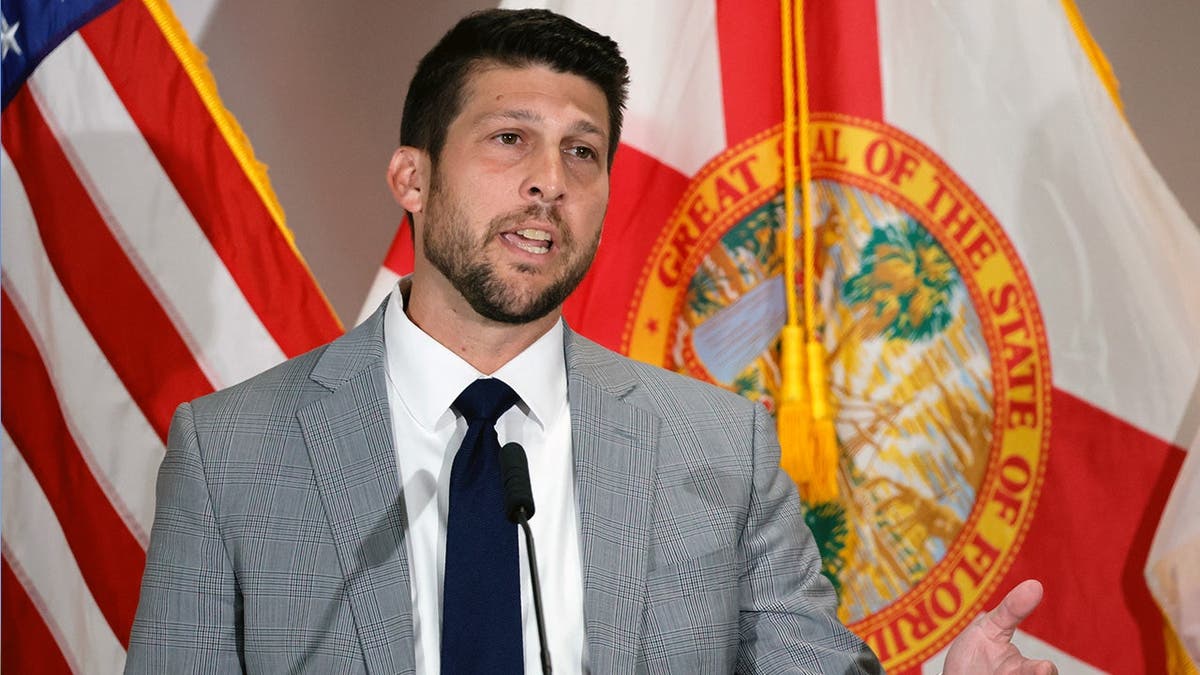
Florida Attorney General James Uthmeier announced a lawsuit accusing Netflix of misleading subscribers about its data collection practices and children’s privacy. (Amy Beth Bennett/South Florida Sun Sentinel)
Florida also accuses Netflix of using so-called «dark patterns» to keep viewers engaged. The complaint alleges autoplay, which is enabled by default on Kids Profiles, is intentionally designed to extend viewing sessions, increase binge watching and generate additional behavioral data, particularly from children.
The state further alleges Netflix expanded into the advertising business it once rejected by allowing advertisers and advertising technology companies to use subscriber data for audience targeting and campaign measurement after launching its ad-supported tier in November 2022.
The lawsuit accuses Netflix of violating the Florida Deceptive and Unfair Trade Practices Act and the Florida Digital Bill of Rights. Among other claims, Florida alleges Netflix unlawfully shared sensitive personal data collected from children without obtaining the consent required under state law.
MARYLAND MOVES TO BAN SURVEILLANCE PRICING IN GROCERY STORES

In this photo illustration, the logos of media service providers, Netflix, Amazon Prime Video, Disney+ and Hulu are displayed on the screen of an Apple MacBook Pro screen. (Chesnot)
Uthmeier is asking the court to permanently block the alleged practices, order Netflix to delete data the state says was deceptively collected from Floridians, stop using historical subscriber data to support its advertising business, purge behavioral data collected through Kids Profiles, prohibit the use of alleged dark-pattern designs and impose civil penalties authorized under Florida law.
Netflix did not immediately respond to Fox News Digital’s request for comment.
politics, technology, privacy, florida, netflix
INTERNACIONAL
Ukraine strikes deep into Russia’s Arctic gas heartland as Trump pushes Putin toward peace

Kushner and Witkoff meet with Russian and Ukrainian presidents
Fox News reporter Stephanie Bennett has the latest on U.S. peace envoys Steve Witkoff and Jared Kushner meeting with Russian President Vladimir Putin and Ukrainian President Volodymyr Zelenskyy as the Trump administration pushes to revive stalled peace negotiations, with discussions focusing on a potential path toward ending the war and broader diplomatic efforts on ‘Special Report.’
NEWYou can now listen to Fox News articles!
Ukrainian drones struck deep into Russia’s Arctic north Wednesday, sparking a fire at an industrial facility in Novy Urengoy, a city in the heart of Russia’s most important natural-gas producing region, according to Russian officials and the Associated Press.
Regional Gov. Dmitry Artyukhov said Russian air defenses repelled the attack but falling drone debris caused a fire at an industrial site. He did not identify the facility, and the extent of the damage was still being assessed, Reuters reported Wednesday.
Ukrainian defense manufacturer Fire Point appeared to claim involvement, posting: «Guess who covered more than 3,300 km and successfully hit the target.»
The extraordinary strike comes as Washington makes a renewed push to end the more than four-year war even as Russia and Ukraine intensify long-range attacks on each other.
UKRAINE UNLEASHES MORE THAN 400 DRONES NEAR MOSCOW IN ONE OF WAR’S BIGGEST ATTACKS
Flames and smoke rise from an industrial facility in Novy Urengoy, in Russia’s Yamalo-Nenets Autonomous Okrug, after a Ukrainian drone attack on Sept. 9, 2026. Russian officials said air defenses repelled the attack but falling debris sparked a fire. (East2West)
Speaking to reporters at Joint Base Andrews on Wednesday, President Donald Trump said he had just spoken with Russian President Vladimir Putin and suggested both Moscow and Kyiv may be prepared to negotiate.
«We had a great conversation. He is wanting to make a deal. And if Zelenskyy is wanting to make a deal, that would be very nice,» Trump said.
Asked what was holding up an agreement, Trump pointed to the personal animosity between Putin and Ukrainian President Volodymyr Zelenskyy, calling them «two people that hate each other.»
«These are two people that are tired of fighting,» Trump added.
Trump’s comments followed a weekend diplomatic push by U.S. special envoys Steve Witkoff and Jared Kushner, who traveled to Moscow and Kyiv in an effort to revive negotiations. The talks produced no breakthrough, according to the Associated Press.
RUSSIAN STRIKES CONTINUE FOLLOWING VISIT BY WITKOFF AND KUSHNER TO KYIV
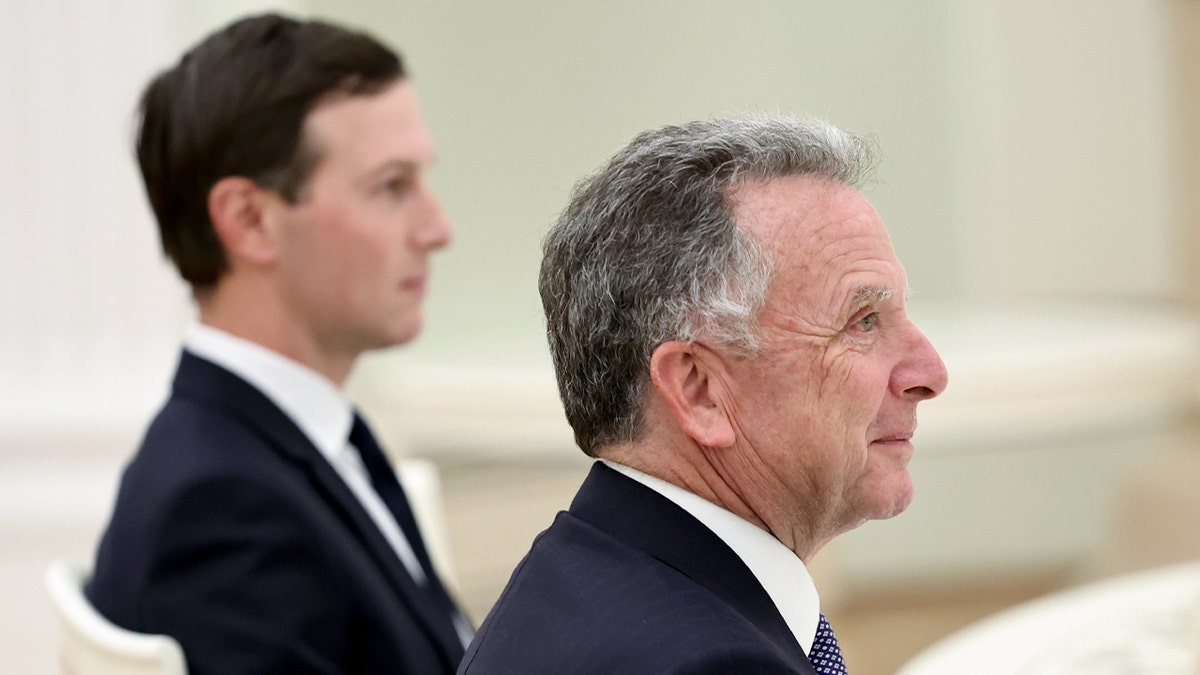
Steve Witkoff and Jared Kushner attend talks with Russian President Vladimir Putin at the Senate Palace of the Kremlin in Moscow on Dec. 2, 2025. (Alexander Kazakov, Sputnik, Kremlin Pool Photo via AP)
Russia resumed major missile and drone attacks on Kyiv shortly after the American delegation left Ukraine, killing five people and wounding 35 on Tuesday, Reuters reported.
A European intelligence source told Fox News Digital that the simultaneous diplomacy and military escalation reflects a long-standing dilemma for Western governments trying to engage Moscow.
«You have to talk, you have to explain,» the source said, arguing that communication is necessary to prevent misunderstandings.
RUSSIA UNLEASHES NEARLY 600 MISSILES AND DRONES ON KYIV IN DEADLIEST STRIKE SINCE MAY
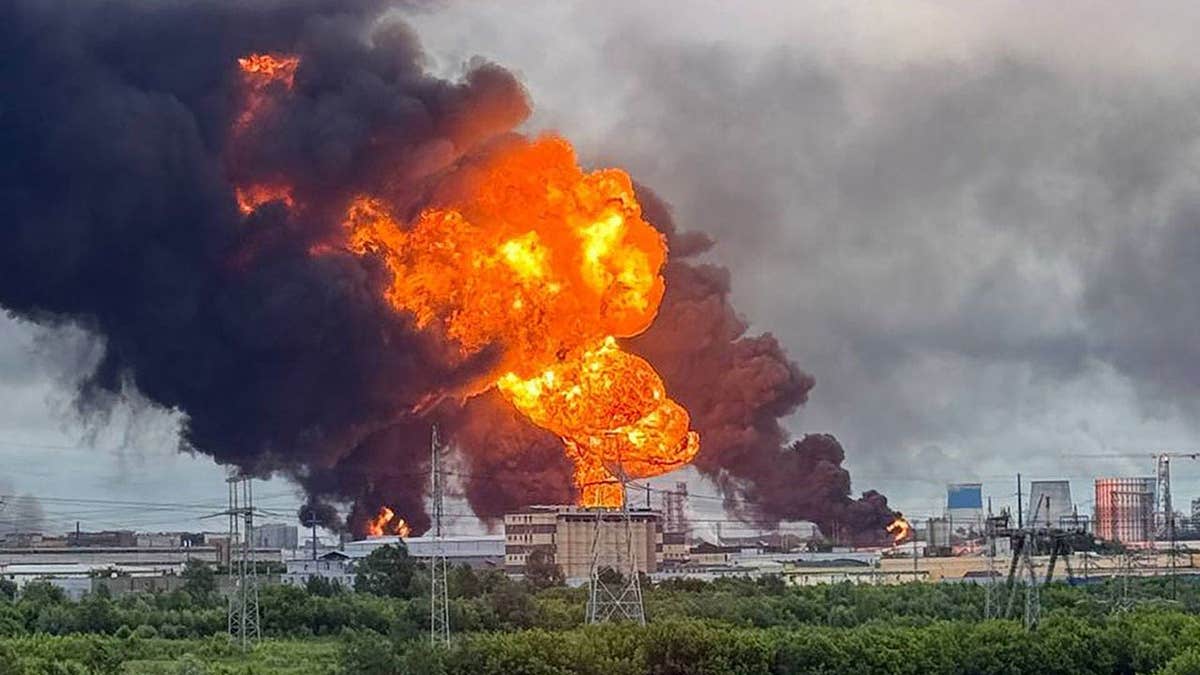
Smoke and flames rise over Moscow on June 18, 2026, following a Ukrainian drone attack that hit the Kapotnya oil refinery and other targets in the Russian capital. (East2West)
But the source said Russian officials can interpret Western outreach differently.
«Whenever you talk with them, they consider that this is a Western weakness,» the source said, adding that the assessment was based in part on informal contacts with Russian officials.
The source also said Putin’s recent emphasis on Russian «military progress in Ukraine» appeared aimed in part at Washington, projecting strength as U.S. officials seek to revive negotiations.
The escalation is taking an increasing toll on civilians. The United Nations said last month that Russian attacks killed or wounded more Ukrainian civilians in July than in any month since March 2022, with 437 killed and more than 2,600 wounded.
More than 16,800 Ukrainian civilians have been killed and more than 51,000 wounded since Russia launched its full-scale invasion in February 2022, according to the U.N. Human Rights Monitoring Mission in Ukraine. Moscow has repeatedly denied deliberately targeting civilians and says its strikes are aimed at military and military-related facilities.
DRONE OFFENSIVE HITS RUSSIAN OIL TANKERS AND REFINERIES AT ‘INDUSTRIAL SCALE’ AS MOSCOW BANS DIESEL EXPORTS

A rescuer works at the site of a Russian drone strike in Dnipro, Ukraine, in a picture released on April 30. (Governor of Dnipropetrovsk Regional Military Civil Administration Serhiy Lysak via Telegram/Handout via Reuters)
United24 described Wednesday’s attack as the deepest Ukrainian drone strike inside Russia since Moscow launched its full-scale invasion in February 2022.
Novy Urengoy lies roughly 1,740 miles from Ukraine’s border. Artem Zhoga, Putin’s envoy to Russia’s Urals Federal District, said a Ukrainian drone had attempted to strike a fuel-and-energy facility in Yamal, according to Meduza.
The city sits in Russia’s Yamalo-Nenets Autonomous Okrug, the country’s dominant natural-gas producing region. About 80% of Russia’s natural gas is extracted there, according to Interfax data cited by the Associated Press.
Artyukhov said there were no reported casualties.
The attack was part of a broader Ukrainian drone assault on Russia. Zelenskyy said Ukrainian forces also struck targets around the Black Sea port of Novorossiysk, including a naval base, an oil-loading terminal, military port facilities and warships capable of carrying cruise missiles, according to the Associated Press.
Russian authorities said four people, including a child, were killed and 29 wounded in the Novorossiysk attack.

Firefighters work at a site of an apartment building hit by a Russian drone strike in Kyiv, Ukraine, in this handout picture released Sept. 9, 2026. (Press service of the State Emergency Service of Ukraine in Kyiv/Handout via Reuters)
Russia, meanwhile, continued its own long-range campaign against Ukraine Wednesday. Russian drones struck the Starokozache border crossing between Ukraine and Moldova, killing two civilians and wounding three, while another wave of attacks on Kyiv killed one person and wounded 14, according to Reuters.
Reuters and the Associated Press contributed to this report.
russia, ukraine, wars, foreign affairs, national security

Nuevo traspié legislativo del Gobierno: se suspendió la sesión en el Senado para aprobar cambios al régimen de biocombustibles

Malvinas: la Justicia de Tierra del Fuego se declaró competente para intervenir en la demanda contra Sea Lion

Valentín Barco marcó su primer gol en Chelsea: el gesto de un compañero, la reconciliación con los hinchas y el mensaje de su esposa

Jornada financiera: la Bolsa encadenó la tercera suba seguida a pesar de las bajas en los mercados del exterior

La jugada foto que Felipe Fort compartió con su novia en la cama después de hacer el amor

Quirno volvió a defender la soberanía sobre Malvinas y le apuntó a los kelpers: ““La autodeterminación no aplica en casos de colonialismo”

1000 días de Milei: los logros, las crisis que lo marcaron y los déficits de su gestión

Martín Menem dijo que Milei será el primer no peronista en ser reelecto y llamó a invertir más

Franco Colapinto largará en el puesto 7 con su Alpine el Gran Premio de Italia de la Fórmula 1: hora, TV y todo lo que hay que saber

Multas millonarias, arrestos y trabajo comunitario: cómo se prepara una provincia para enfrentar el Súper Niño

 SOCIEDAD2 días ago
Femicidio brutal en Merlo: un jubilado de 64 discutió con su esposa y la asesinó a puñaladas
- POLITICA2 días ago
El gobierno de Kicillof retendrá un 2% en los premios de las apuestas online
- DEPORTE2 días ago
El rotundo cambio de Julián Álvarez en una foto presentación del Atlético de Madrid tras quedarse en el club