INTERNACIONAL
Tit for tat: House censures are becoming ‘snap’ solutions

NEWYou can now listen to Fox News articles!
The House of Representatives censured the late Roderick Butler, R-Tenn., in 1870 for taking a bribe for a military academy appointment.
The House also censured late Rep. Thomas Blanton, D-Texas, in 1921 for inserting a document into the Congressional Record which contained obscene language.
And late Rep. Gerry Studds, D-Mass., faced censure in 1983 for having sex with a 17-year-old page.
Those are three of the 28 Members ever censured by the House.
4 HOUSE REPUBLICANS VOTE WITH DEMS TO BLOCK RESOLUTION CENSURING ILHAN OMAR FOR CHARLIE KIRK COMMENTS
Rep. Ilhan Omar, with Rep. Rashida Tlaib at her side. (Renee Jones Schneider/Star Tribune via Getty Images)
Rep. Ilhan Omar, D-Minn., did not become the 29th Member slapped with censure recently.
That’s probably because Rep. Cory Mills, R-Fla., was one of four Republicans who joined Democrats to block a censure of Omar. And in so doing, Mills may very well have prevented himself from becoming the 30th House Member to be censured.
Censure is the second-highest form of discipline in the House. It falls between a reprimand and expulsion. Censure is more than a regular foul in a soccer game. Kind of like a yellow card, which serves as a caution. But it’s not a red card, either, which triggers ejection.
That said, censure has become a «thing» in recent years on Capitol Hill. If the House were to ever consider censuring any Member, such an inquest would go behind closed doors with the Ethics Committee. An inquiry may take months.
No more. «Snap» censures are now fashionable in the House of Representatives.
Here’s how it works:
Someone thinks someone says a colleague says something outrageous. So they just prep a censure measure, go over the head of the Congressional leadership by making their resolution privileged (meaning the House must consider it within two days) and, if the House votes in favor of your gambit, that Member is censured.
Done.
Rep. Nancy Mace, R-S.C., crafted a resolution to censure Omar and strip the Minnesota Democrat from her committee assignments. Mace accused Omar of using inflammatory rhetoric in the wake of Charlie Kirk’s assassination.
During an appearance on the news outlet Zeteo, Omar claimed «there is nothing more effed up, than to completely pretend that his words and actions have not been recorded and in existence for the last decade or so.» Mace’s resolution quoted from a profane social media video not produced by Omar — but reposted by her — which fired invective at Kirk.
Mace’s maneuver came as leaders from both sides tried to urge calm at the Capitol amid the assassination of Charlie Kirk.
‘SQUAD’ MEMBER, NANCY MACE CLASH ON SOCIAL MEDIA: ‘YOU BELONG IN REHAB’
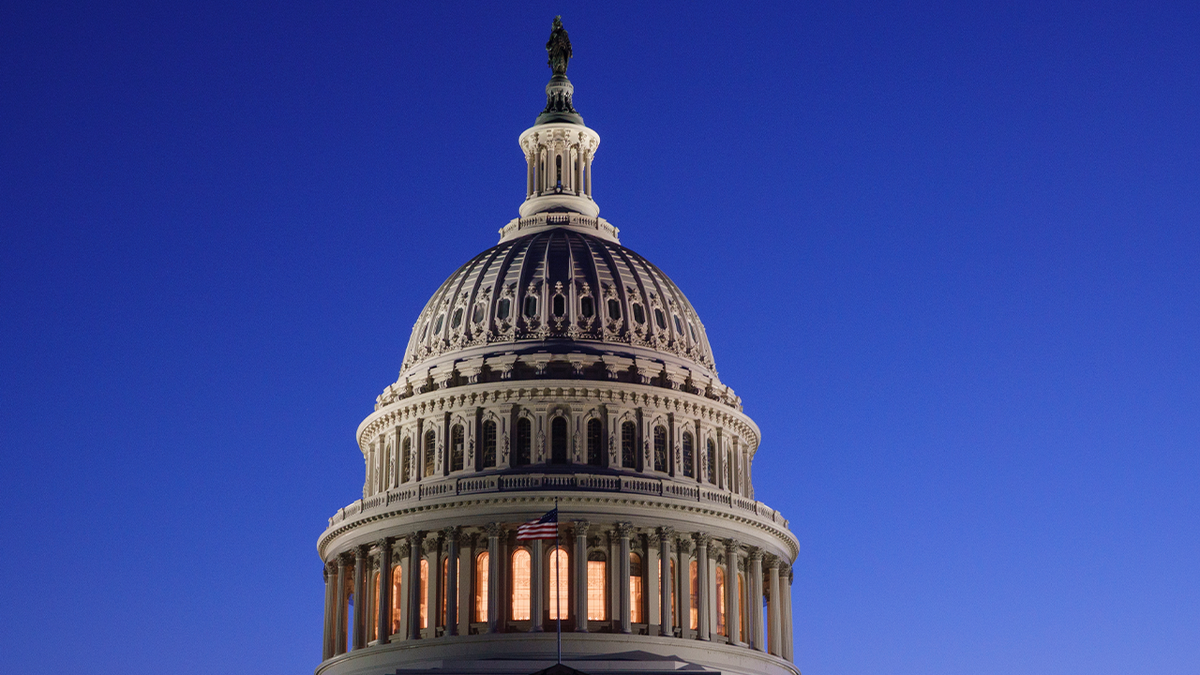
Tit for tat: The House censure is becoming a fashionable political «yellow card.» (Kevin Carter/Getty Images)
«Every leader has an obligation to lower the temperature right now,» said House Democratic Caucus Chairman Pete Aguilar, D-Calif. «I disagree with the retweet of one of our one of our colleagues.»
Aguilar said that Mace’s resolution to sanction Omar was not «helpful.»
«Every member of Congress, and certainly the President of the United States, have a responsibility to take the temperature down,» said House Minority Leader Hakeem Jeffries, D-N.Y. «Nancy Mace wants to lecture Ilhan Omar and Democrats about civility? Are you kidding me? It’s not a serious effort. It’s an effort to drive donors into her gubernatorial campaign.»
For his part, House Speaker Mike Johnson, R-La., didn’t try to sidetrack Mace. He declared that «Members have a prerogative to file privileged motions.»
«What she did was outrageous and dangerous. And there has to be accountability in the House for these kinds of activities,» said Johnson. «I don’t understand why she uses that kind of language.»
Mace and Omar wound up tangling over the censure resolution on X.
«One-way ticket to Somalia with your name on it, Ilhan Omar,» posted Mace.
«I am going soon, so please drop off the tickets on your way to your office. I am next door,» retorted Omar.
The Minnesota Democrat added that Mace was either not «well or smart.» She added «you belong in rehab, not Congress.»
Democrats defended Omar.

Rep. Nancy Mace, R-S.C., crafted a resolution to censure Rep. Ilhan Omar and strip the Minnesota Democrat from her committee assignments. (Tracy Glantz/The State/Tribune News Service via Getty Images)
«When we are all trying to take the political temperature down, when we are all trying to work to be able to approach our differences with humanity and stand out against political violence, this is the wrong move,» said House Minority Whip Katherine Clark, D-Mass.
But lawmakers from both sides are growing weary of the censure trap.
«Every time a Republican in this House is offended, they pile on censure resolution,» said Rep. Alexandria Ocasio-Cortez, D-N.Y. «I’m not here to be fighting over whatever people’s schoolyard thing is for the day.»
«It’s escalation,» said Rep. Don Bacon, R-Neb., of Mace’s maneuver. «You’ve got to remember, we’re going to be in the minority someday. We’ll be on the receiving end of this.»
Bacon added that Congress is now «better at shaming people versus legislating.»
Ultimately, the House never took a direct vote on sanctioning Omar. Democrats instead moved to «table» or kill the resolution. That blocked an actual up/down vote on disciplining Omar. The House then voted 214-213 in favor of tabling Mace’s measure. All 210 Democrats who cast ballots voted to table. But four Republicans joined Democrats: Reps. Mike Flood, R-Neb., Jeff Hurd, R-Colo., Tom McClintock, R-Calif., and Mills.
A ballot by Mills against tabling would have reversed the final tally to 214-213. That means the House would have proceeded immediately to the actual vote to censure Omar. But Mills’ vote with the Democrats froze Mace’s effort.
ILHAN OMAR TANGLES WITH CNN HOST IN FIERY INTERVIEW, RIPS ‘HATEFUL’ CHARLIE KIRK
It’s unclear if Mills based his decision on self-preservation. But had the House censured Omar, it would have undoubtedly triggered a resolution by Rep. Greg Casar, D-Texas, to sanction Mills.
Casar’s resolution accused Mills of assault – which Casar denies. It also alleged that Mills improperly received the Bronze Star when he served in the Army. But once the House diffused the Omar measure, Casar withdrew his plan for Mills.
Flood explained his vote to table.
«I’m going to vote in ways that support the Ethics Committee,» said Flood. «If we were to pursue a censure action against this Representative, that should be referred to the Ethics Committee. It should be investigated. There should be due process. There should be a back and forth before you issue a censure.»
Mace excoriated her Republican colleagues who voted to table.
«They didn’t stand with Charlie Kirk. They didn’t stand with the millions of Americans mourning his death. They stood with the one who mocked his legacy. They showed us exactly who they are. And we won’t forget,» said Mace in a statement.
But censure is now en vogue.
The House censured no members between Studds in 1983 and late Rep. Charlie Rangel, D-N.Y. in 2010. But five Members have felt the weight of censure since 2021.
The House voted to censure Rep. Paul Gosar, R-Ariz., for posting a cartoon video depicting him killing Ocasio-Cortez.
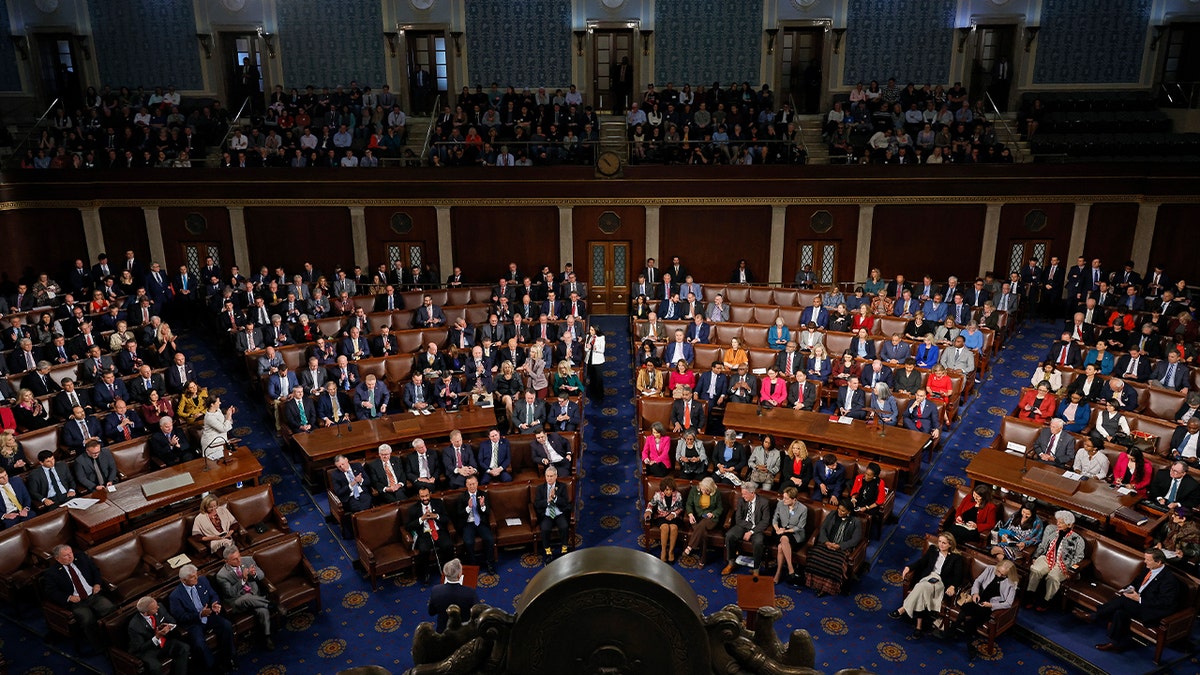
House of representatives (Chip Somodevilla)
Republicans then began returning the favor.
The House voted to censure former Rep. and now Sen. Adam Schiff, D-Calif., for how he handled the Russiagate investigation. Rep. Rashida Tlaib, D-Mich., faced censure for her comments after Hamas attacked Israel. The House censured former Rep. Jamaal Bowman, D-N.Y., for pulling a false fire alarm. And the House voted earlier this year to censure Rep. Al Green, D-Texas, for heckling President Trump during his State of the Union speech.
Members have embraced censure lately. Those censured have characterized it as a «badge of honor.» They’ve fundraised off censure. Their colleagues have even engineered a pep rally in the well of the chamber to drown out the House Speaker when he issues the censure.
This probably won’t be the House’s last dalliance into the realm of censure.
CLICK HERE TO GET THE FOX NEWS APP
«It just seems like every week or so we want to censure somebody for something,» lamented Rep. Troy Nehls, R-Tex., who is no fan of Omar. «A lot of people say a lot of stupid stuff around here.»
This is Congress. So you can bet that someone will say some «stupid stuff» soon. And unless lawmakers can restore some calm, there will be another effort to censure someone else any day now.
house of representatives politics,republicans,the squad,ilhan omar,democrats











INTERNACIONAL
Caso Andrés: la policía peina cada rincón de su antigua mansión tras el operativo supersecreto para detenerlo

Una operación secreta
Un convoy discreto hasta Sandringham

Como un sospechoso ordinario
Huellas dactilares y foto

NEWYou can now listen to Fox News articles!
The Pentagon is deploying the USS Gerald R. Ford to the Middle East, creating a rare two-carrier presence in the region as tensions with Iran rise and questions swirl about possible U.S. military action.
The Ford will reinforce the USS Abraham Lincoln already operating in theater, significantly expanding American airpower at a moment of heightened regional uncertainty.
While officials have not announced imminent action, the dual-carrier presence increases the Pentagon’s flexibility — from deterrence patrols to sustained strike operations — should diplomacy falter.
The largest aircraft carrier in the world
The Gerald R. Ford is the largest and most advanced aircraft carrier ever built.
Commissioned in 2017, the nuclear-powered warship stretches more than 1,100 feet and displaces more than 100,000 tons of water. It serves as a floating air base that can operate in international waters without relying on host-nation approval — a key advantage in politically sensitive theaters.
Powered by two nuclear reactors, the ship has virtually unlimited range and endurance and is designed to serve for decades as the backbone of U.S. naval power projection.
The world’s largest aircraft carrier, USS Gerald R. Ford, steams alongside the replenishment oiler Laramie. (U.S. Naval Forces Central Command / U.S. 6th Fleet / Handout via Reuters)
WORLD’S LARGEST AIRCRAFT CARRIER HEADS TO MIDDLE EAST AS IRAN NUCLEAR TENSIONS SPIKE DRAMATICALLY
How much airpower does it carry?
A typical air wing aboard the Ford includes roughly 75 aircraft, though the exact mix depends on mission requirements.
Those aircraft can include F/A-18 Super Hornets, stealth F-35C Joint Strike Fighters, EA-18G Growler electronic warfare jets, E-2D Hawkeye early warning aircraft and MH-60 helicopters.
In a potential conflict with Iran, several of those platforms would be central.
The F-35C is designed to penetrate contested airspace and carry out precision strikes against heavily defended targets. The Growler specializes in jamming enemy radar and communications — a critical capability against Iran’s layered air defense systems.
The E-2D extends surveillance hundreds of miles, helping coordinate air and missile defense.
Together, they give commanders options ranging from deterrence patrols to sustained strike operations.
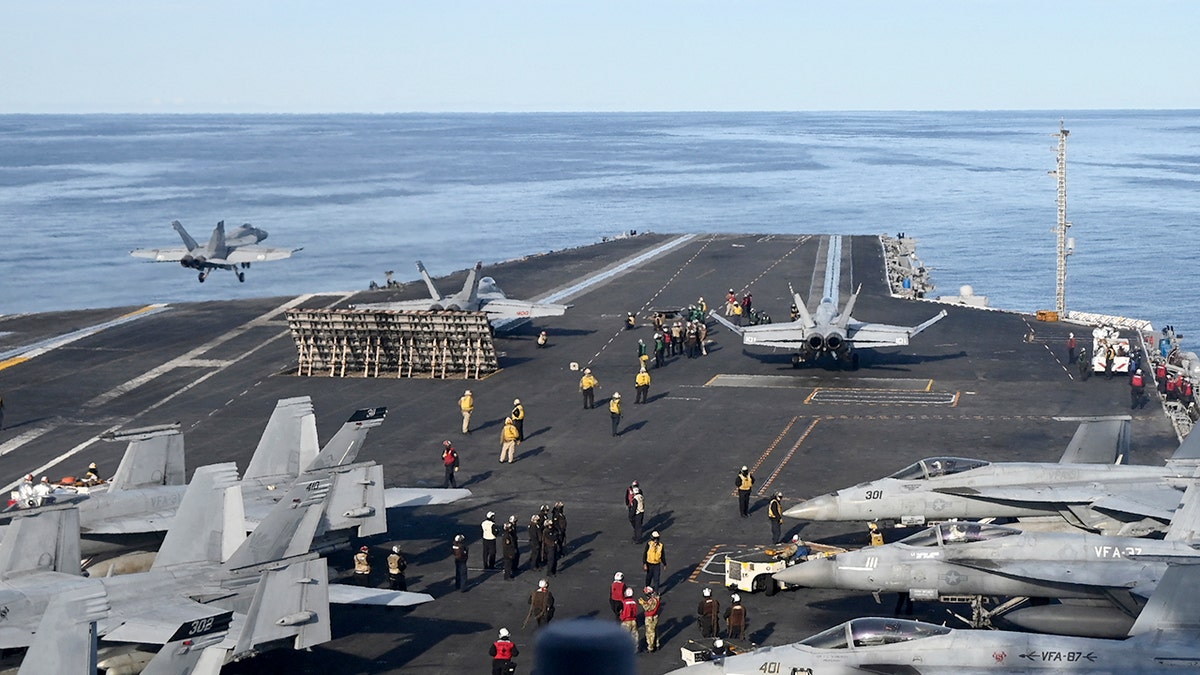
An F-18E fighter jet takes off from the aircraft carrier USS Gerald R. Ford as it sails during NATO Neptune Strike 2025 exercise on Sept. 24, 2025, in the North Sea. (Jonathan Klein/AFP via Getty Images)
Built for higher combat tempo
What separates the Ford from earlier carriers is its ability to generate more sorties over time.
Instead of traditional steam catapults, it uses an electromagnetic aircraft launch system, or EMALS, allowing aircraft to launch more smoothly and at a faster pace. The system is designed to reduce stress on jets and increase operational tempo.
The ship also features advanced arresting gear and a redesigned flight deck that allows more aircraft to be staged and cycled efficiently.
In a high-intensity scenario — particularly one involving missile launches or rapid escalation — the ability to launch and recover aircraft quickly can be decisive.
How it compares to the Lincoln
While both the Ford and the Abraham Lincoln are 100,000-ton, nuclear-powered supercarriers capable of carrying roughly 60 aircraft to 75 aircraft, they represent different generations of naval design.
The Lincoln is a Nimitz-class carrier commissioned in 1989 and part of a fleet that has supported decades of operations in the Middle East. The Ford is the Navy’s next-generation carrier and the lead ship of its class.
The key difference is efficiency and output.
The Ford was built to generate a higher sustained sortie rate using its electromagnetic launch system, along with a redesigned flight deck and upgraded power systems. In practical terms, both ships bring substantial strike capability — but the Ford is designed to launch and recover aircraft faster over extended operations, giving commanders greater flexibility if tensions escalate.

USS Gerald R. Ford pictured in the Mediterranean Sea. (U.S Naval Forces Central Command / U.S. 6th Fleet / Handout via Reuters)
IRAN SIGNALS NUCLEAR PROGRESS IN GENEVA AS TRUMP CALLS FOR FULL DISMANTLEMENT
How it defends itself
The Ford does not sail alone. It operates as the centerpiece of a carrier strike group that typically includes guided-missile destroyers, cruisers and attack submarines.
Those escort ships provide layered air and missile defense, anti-submarine protection and additional strike capability.
The carrier itself carries defensive systems including Evolved Sea Sparrow Missiles, Rolling Airframe Missiles and the Phalanx Close-In Weapon System — designed to intercept incoming threats at close range.
That defensive posture is especially relevant in the Middle East.
Iran has invested heavily in anti-ship ballistic missiles, cruise missiles, armed drones, naval mines and fast-attack craft operated by the Islamic Revolutionary Guard Corps. The Gulf region presents a dense and complex threat environment, even for advanced U.S. warships.

The world’s largest warship, U.S. aircraft carrier USS Gerald R. Ford, on its way out of the Oslofjord at Nesodden and Bygdoy, Norway, Sept. 17, 2025. (NTB/Lise Aserud via Reuters)
Why two carriers matter
With both the Ford and the Lincoln in theater, commanders gain more than just added firepower. Two carriers allow the U.S. to sustain a higher tempo of operations, distribute aircraft across multiple areas, or maintain continuous presence if one ship needs to reposition or resupply.
Dual-carrier deployments are relatively uncommon and typically coincide with periods of heightened regional tension.
CLICK HERE TO DOWNLOAD THE FOX NEWS APP
The timing — as negotiations with Tehran continue — underscores the strategic message. Carriers are often deployed not only to fight wars, but to prevent them.
By positioning both ships in the region, Washington is signaling that if diplomacy falters, military options will already be in place.
conflicts defense,us navy,iran,middle east,pentagon
INTERNACIONAL
Trump dijo que desclasificará la información secreta del Gobierno de EE.UU. sobre «los extraterrestres y ovnis»
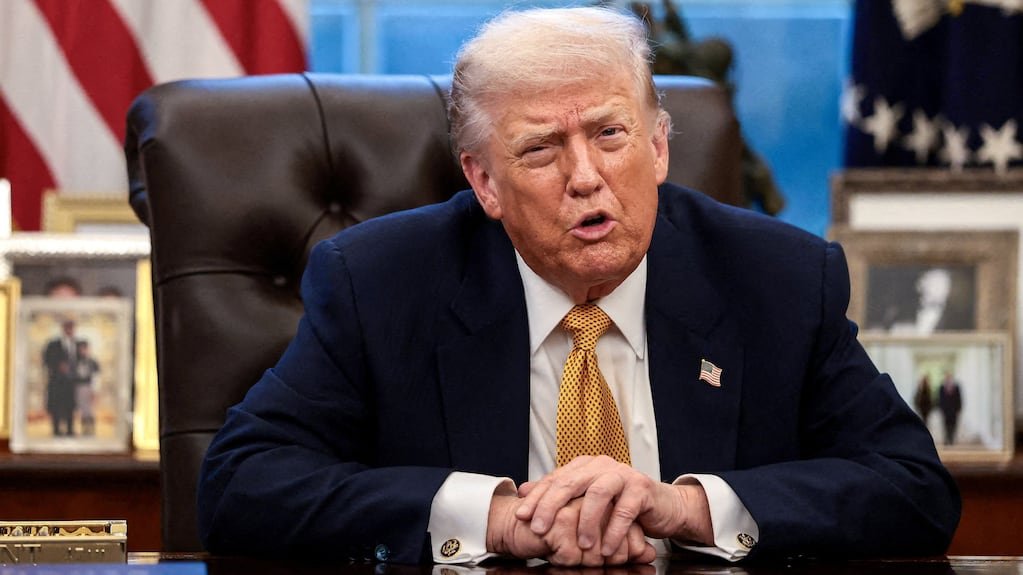
Donald Trump anunció que ordenará a las agencias federales de Estados Unidos publicar documentos clasificados sobre “vida extraterrestre” y “ovnis”.
El presidente eligió su red social, Truth, para lanzar la promesa y aseguró que el proceso incluirá archivos sobre fenómenos aéreos no identificados (UAP) y objetos voladores no identificados (UFOs), además de cualquier otra información relevante.
Leé también: Trump aseguró que Obama reveló información clasificada cuando habló de la existencia de extraterrestres
“En vista del gran interés mostrado, ordenaré al secretario de Defensa, Pete Hegseth, y a otros departamentos y agencias relevantes que inicien el proceso de identificación y publicación de archivos gubernamentales relacionados con vida extraterrestre, fenómenos aéreos no identificados y objetos voladores no identificados, así como cualquier otra información relacionada con estos asuntos altamente complejos, pero extremadamente interesantes e importantes”, escribió Trump en su mensaje.
Cruce con Obama y acusaciones de información clasificada
Horas antes, Trump apuntó contra Barack Obama y lo acusó de revelar información clasificada sobre alienígenas durante una entrevista en un popular podcast. “Son reales, pero no los he visto y no los tienen guardados en… el Área 51”, le dijo al presentador Brian Tyler Cohen al referirse a esa instalación secreta y que es centro de muchas teorías conspirativas sobre los ovnis.
El expresidente demócrata Barack Obama causó revuelo al decir en un podcast que los extraterrestres «son reales». (Foto: EFE/EPA/Micheal Reynolds)
“No hay una instalación subterránea. A menos que exista una conspiración enorme y se lo hayan ocultado al presidente de Estados Unidos”, agregó.
Las declaraciones de Obama generaron revuelo en redes sociales y alimentaron la expectativa de quienes creen en la existencia de vida fuera de la Tierra.
El exmandatario demócrata intentó bajar el tono y, en un comunicado, sostuvo: “El universo es tan vasto que hay muchas probabilidades de que contenga otras formas de vida. Pero las distancias entre los sistemas solares son tan grandes que la probabilidad de que hayamos sido visitados por extraterrestres es baja, y durante mi presidencia no vi ninguna evidencia de que extraterrestres hayan contactado con nosotros. ¡De verdad!”.
Al ser consultado por periodistas a bordo del Air Force One, Trump insistió en que Obama “proporcionó información clasificada; y se supone que no debe hacerlo”.
Sin embargo, evitó responder si eso significa que los alienígenas existen y deslizó que podría “sacar de apuros” a su antecesor desclasificando los archivos, aunque no dio detalles sobre cómo ni cuándo lo haría.
Una promesa en medio de sospechas y cortinas de humo
Como suele ocurrir con Trump, no está claro si cumplirá con su promesa ni de qué manera piensa hacerlo. Tampoco se sabe cuánto de “cortina de humo” hay en el anuncio, justo cuando otros temas sensibles, como el caso Epstein, dominan la agenda mediática en Estados Unidos.
Lo cierto es que el interés por los ovnis y la vida extraterrestre creció en los últimos años. Según una encuesta de YouGov de noviembre pasado, el 56% de los estadounidenses cree que “los alienígenas visitaron la Tierra”.
El Congreso y los testimonios sobre ovnis
El tema no es nuevo en la política estadounidense. El Congreso realizó varias audiencias sobre ovnis, y en el verano de 2023 escuchó a testigos clave como David Fravor (comandante retirado de la Marina), Ryan Graves (expiloto de la Armada) y David Grusch (exoficial de inteligencia de la Fuerza Aérea), quien afirmó que el Pentágono tiene partes de naves alienígenas y “restos no humanos”.
Leé también: Así cayó el príncipe Andrés: su vínculo con Epstein, títulos reales perdidos y un arresto histórico
El objetivo de esas audiencias fue presionar al Pentágono para que difunda información clasificada, bajo el argumento de que se trata de una cuestión de seguridad nacional.
Algunos legisladores, como Tim Burchett (Tennessee), insisten en que los UAP pueden ser naves extraterrestres, pero también globos espía, artefactos de potencias rivales como China y Rusia, chatarra aeroespacial, satélites de Elon Musk o simples ilusiones ópticas.
Una fascinación que viene de lejos
La obsesión de Estados Unidos por los ovnis se remonta a 1947, cuando el piloto Kenneth Arnold describió una cadena de objetos brillantes sobre el Monte Rainier, en Seattle, y popularizó el término “platillo volador”, según re4cordó el diario El País.
En 2017, un artículo de The New York Times reveló la existencia de un programa secreto del Pentágono que desde 2007 estudia los avistamientos militares de UAP. Tras esa publicación, el Departamento de Defensa decidió en 2020 divulgar videos de encuentros de pilotos militares con objetos voladores no identificados, que ya circulaban por internet.
Donald Trump, ovnis, extraterrestres, Barack Obama

El error que pocos conocen al empezar a hacer ejercicio: “Es lo más importante”

El oficialismo aprobó la modernización laboral en Diputados y envió una fuerte señal promercado

Asume un administrador en la obra social militar, que mantiene una abultada deuda y cortes de prestaciones

Caso Andrés: la policía peina cada rincón de su antigua mansión tras el operativo supersecreto para detenerlo

Carlos Melconian: “Hay confusión sobre el mercado de cambios, la gente no afloja con la compra de dólares”

El técnico que cuestionó a José Mourinho por haber desacreditado a Vinicius

Reforma laboral bomba: menos indemnización, más horas y despidos más fáciles — el cambio que puede sacudir el empleo en Argentina

Cristian Ritondo: “Vamos a apoyar la ley de modernización laboral, pero no el régimen de licencias por enfermedad”

El dólar no sólo cae en la Argentina: qué pasa con otras monedas emergentes y cuáles son las causas

Tras el anuncio de la CGT, también habrá paro total de los medios de transporte de pasajeros en el país

 POLITICA3 días ago
Reforma laboral bomba: menos indemnización, más horas y despidos más fáciles — el cambio que puede sacudir el empleo en Argentina
- ECONOMIA2 días ago
Ayuda Escolar Anual: a cuánto asciende, donde se tramita y quien puede cobrarla
- POLITICA3 días ago
El Gobierno endurece las medidas de seguridad y control en la marcha prevista contra la reforma laboral en el Congreso