INTERNACIONAL
Texas finds thousands of illegal immigrants registered to vote on state voter rolls

NEWYou can now listen to Fox News articles!
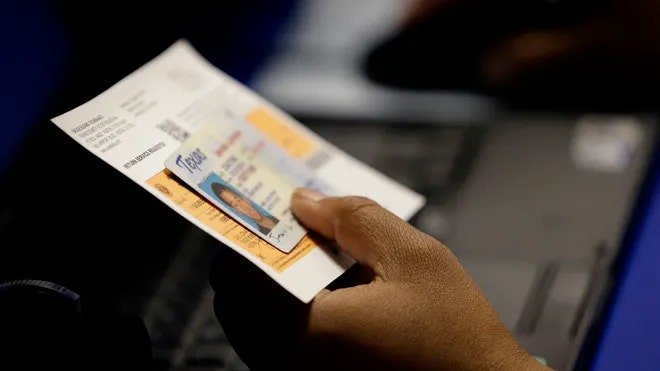
A Texas election review has identified thousands of illegal immigrants on the state’s voter rolls, Texas Secretary of State Jane Nelson said Monday.
Nelson said a crosscheck of state voter records found that more than 2,700 possible illegal immigrants were registered on the voter rolls, leading to an eligibility review across the 254 counties.
The data came from a full comparison of Texas’s 18 million registered voters against federal citizenship records in the U.S. Citizenship and Immigration Services’ SAVE database, according to the Secretary of State’s office.
«Only eligible United States citizens may participate in our elections,» Nelson said. «The Trump Administration’s decision to give states free and direct access to this data set for the first time has been a game changer, and we appreciate the partnership with the federal government to verify the citizenship of those on our voter rolls and maintain accurate voter lists.»
TRUMP ADMIN BLOCKS CITIZENSHIP FOR ILLEGAL MIGRANT VOTERS
A voter wearing a protective mask and gloves signs a document at a drive-thru mail ballot hand delivery center in Austin, Texas. (Sergio Flores/Bloomberg via Getty Images)
The investigation showed after running the SAVE crosscheck, that state officials could identify 2,724 potential noncitizens whose voter files have been sent to local counties to be further investigated.
This process falls under Chapter 16 of the Texas Election Code, which requires counties to verify each voter’s eligibility and remove confirmed noncitizens from the rolls.
Nelson said the review is part of an effort to maintain an accurate voter list and to safeguard election integrity ahead of the 2026 election cycle.
«Everyone’s right to vote is sacred and must be protected,» Nelson said. «We encourage counties to conduct rigorous investigations to determine if any voter is ineligible – just as they do with any other data set we provide.»
Each flagged voter will receive a notice from their county registrar giving them 30 days to provide proof of U.S. citizenship. If a voter does not respond, their registration will be canceled, though it can be reinstated immediately once proof of citizenship is provided.
Nelson’s statement said confirmed noncitizens who voted in previous Texas elections will be referred to the Attorney General’s Office for further review and potential prosecution.
The announcement comes amid growing national scrutiny of voter rolls as several states – including Georgia, Arizona, and Florida – have conducted similar audits of voter eligibility.
Republican Governor Greg Abbott said that since Senate Bill 1 was signed into law, Texas has removed more than one million ineligible or outdated registrations from the state’s voter rolls, calling the effort essential to safeguard Texans’ right to vote.
ILLEGAL IMMIGRANTS POTENTIALLY COUNTED IN US CENSUS TAKE CENTER STAGE IN REDISTRICTING BATTLE
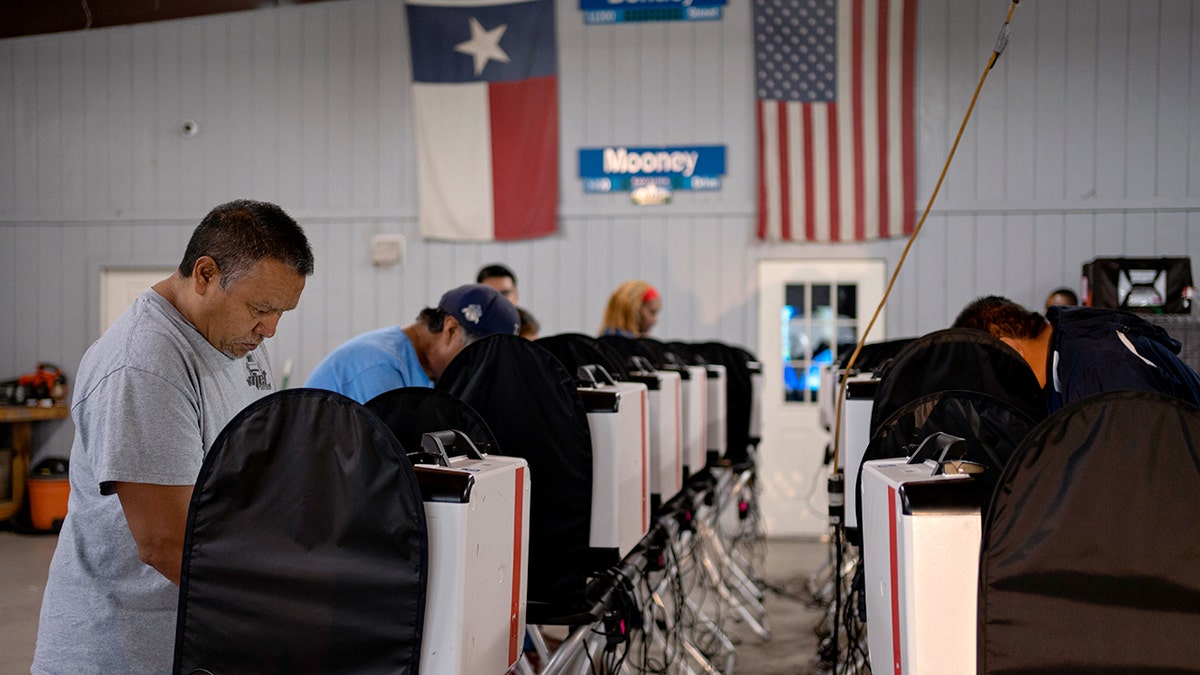
Texas has confirmed noncitizens who voted in previous elections will be referred to the Office of the Attorney General for further review and potential prosecution. (Getty Images)
«These reforms have led to the removal of over one million ineligible people from our voter rolls in the last three years, including noncitizens, deceased voters, and people who moved to another state,» Abbott said. «The Secretary of State and county voter registrars have an ongoing legal requirement to review the voter rolls, remove ineligible voters, and refer any potential illegal voting to the Attorney General’s Office and local authorities for investigation and prosecution. Illegal voting in Texas will never be tolerated. We will continue to actively safeguard Texans’ sacred right to vote while also aggressively protecting our elections from illegal voting.»
Abbott has called the initiative proof that Texas is «leading the nation in election integrity.»
A breakdown of the information was released by the Secretary of State’s office showing Harris County with the largest number of potential noncitizens at 362, followed by Dallas County (277), Bexar County (201), and El Paso County (165).
Smaller counties, including Andrews, Llano, and Cooke, reported fewer than ten flagged registrations.
In total, all 254 Texas counties were included in the SAVE database review. Counties began sending verification notices this week as part of the 30-day review process.
In June, Texas Secretary of State Jane Nelson announced that she had referred to the Office of Attorney General to investigate the names of 33 potential noncitizens who voted in the November 2024 General Election.
The statement released by Nelson said the referral came within weeks of Texas gaining access to U.S. Citizenship and Immigration Service’s SAVE Database.
«Gaining access to this database has been a game-changer. Not only have we been able to identify individuals who should not have voted in the last election, we have also been able to confirm naturalization of dozens more,» Secretary Nelson said.
The crosscheck was made possible after the Trump Administration granted states direct and free access to the federal SAVE database for the first time.
The tool allows election officials to confirm voter citizenship against immigration and naturalization records.
The statement also said Texas was among the first states to join a pilot program with DHS, USCIS, and the Department of Justice (DOJ) to improve the database’s functionality.
CLICK TO GET THE FOX NEWS APP
«We are in the early stages of this pilot program, but we already see promising results. This may be the most current and accurate data set there is when it comes to citizenship verification,» Secretary Nelson said.
County registrars are expected to complete their investigations by early December, with official removals and potential referrals to follow.
The Secretary of State’s office said the review will continue with periodic checks against federal databases to ensure accuracy.
«The SAVE database has proven to be a critically important data set and one of many that we will continue to use in Texas to ensure that only qualified voters cast a ballot in our elections,» Nelson said.
elections,voting,illegal immigrants,texas,democrats,republicans










INTERNACIONAL
Apareció la autobiografía que Jacobo Timerman decidió no publicar: la tortura, el periodismo, las anécdotas falsas
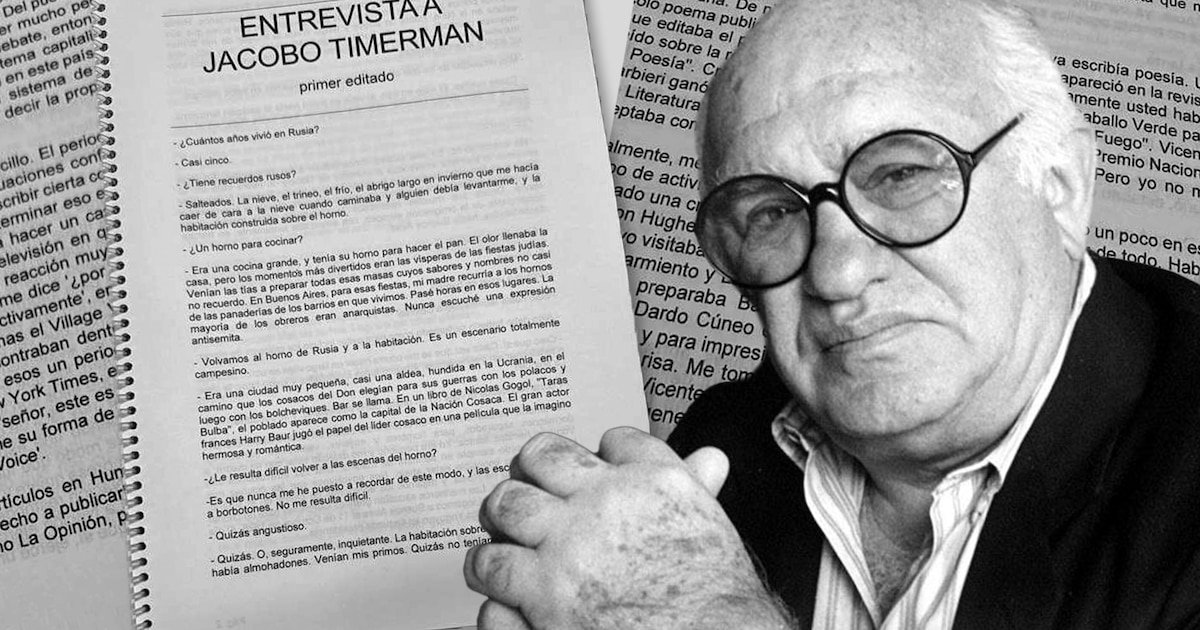
Todo empieza con un tuit. Javier Timerman cuenta que apareció un relato autiobiográfico inédito de su padre. Su padre es Jacobo Timerman y es un mito del periodismo argentino. El que fundó las revistas Primera Plana y Confirmado y el diario La Opinión. El que, en 1977, fue secuestrado, como miles, por la dictadura militar. El que fue blanqueado y siguió preso y cuando salió, se fue del país. El que escribió todo en un libro cuyo título estremece: Preso sin nombre, celda sin número. El que volvió, declaró ante la CONADEP. El de las mil anécdotas con periodistas. Duras, muchas.
Jacobo Timerman murió en la Argentina en 1999… y resulta que ahora hay un relato autobiográfico, “un libro”, dice su hijo Javier. Donde opina, donde cuenta anécdotas, donde desmiente lo que otros –Osvaldo Soriano– han escrito sobre él. Son 220 páginas y ahora las tiene el hijo.
Javier se entusiasma y quiere leer eso. Estamos hablando por teléfono, pero se ve que busca y vuelve con la cita. Lee el párrafo sobre Soriano: “Muchos de sus libros traen anécdotas sobre mí. Son todas mentiras. Son divertidísimas. Pero no hay ni una cierta. Ni una. Son cosas que él vio, que él entendió, que él imaginó, que él soñó, que él creyó haber visto, pero que no tienen nada que ver conmigo”.
Decía que el periodista, el creador, la persona que él había sido, se terminaron en el momento en que lo torturaron
Se ríe, Javier. Porque lee y al leer escucha, vuelve, la voz de su padre: “Sentí que que el libro refleja muy bien lo que fue mi padre. El miedo y el coraje a la vez. A él todo el mundo lo veía como muy valiente, como muy omnipotente, como muy poderoso. Sin embargo se sentía profundamente vulnerable muchas veces y sufría por eso, pero tenía que dar las peleas que tenía que dar. Lo hacía con miedo, pero lo hacía”.
El relato, en realidad, no sale de la pluma de Jacobo Timerman sino de la de Carlos Ulanovsky. El periodista fue contratado por la editora Julia Constenla para entrevistar largamente a Timerman y escribir ese libro de memorias, que no llegó a publicar pero dejó en marcha en 1988. ¿Dónde quedaron esas páginas? ¿Cómo las encontraron ahora?

Javier Timerman siempre había querido recopilar las anecdotas de su padre. Hace unos meses se decidió y llamó a otro periodista, Claudio Polosecki, para que lo hiciera. Polosecki se puso a investigar: “Me costaba bastante encontrar testimonios, gente que quisiera hablar. Entonces revisé libros, se me ocurrió que en uno de Horacio Verbitsky podía haber algo”, le dice ahora a Infobae. “No encontré nada que me interesara y, porque sí, me puse a revisar la bibliografía y ahí decía, en dos renglones: ‘Entrevista inédita a Jacobo Timerman. Archivo Giussani Constenla, Biblioteca Nacional Mariano Moreno’. Se ve que, cuando murió Constenla, la Biblioteca recibió el material. Ahi estaba, me lo dieron en una caja, me tuve que poner guantes. En la Biblioteca me ayudaron y hasta lo digitalizaron. Llevó mucho tiempo, pero lo encontramos”.
Polosecki se devoró el material. Notó tensiones. “Es una especie de esgrima entre Ulanovsky y Jacobo. Jacobo quería hablar de su opinión sobre lo que pasaba en el mundo, el estado de la cultura, lo que él pensaba de distintas cosas. Y Carlos quería que le contara su vida. Claro. Y Jacobo muchas ganas de contar su vida no tenía”.
El periodista tiene derechos y el dueño del diario tiene derechos. Hay situaciones en que es difícil determinar si el periodista, al escribir cierta cosa, afecta los intereses del diario o no los afecta.
Desde el otro lado del teléfono, Javier Timerman suena a veces entusiasmado, a veces emocionado. “No puedo parar de llorar, lo escucho a mi viejo”, dirá un rato después de la entrevista, cuando arreglemos detalles por Whatsapp. Pero, ahora, cuenta:
-Mi papá había decidido no publicar nada de esto que se había hablado, era una especie de autobiografía dialogada con Ulanovsky. Yo me había olvidado del tema y creo que Ulanovsky también. Lo estoy terminando, pero veo que es un libro que dice mucho de él de su creatividad, de su personalidad.
-¿Qué cuenta?
-Hay varias anécdotas de su vida como linyera, literalmente viviendo en trenes, recorriendo el país, escribiendo poesía o, o viajando en tranvía horas para poder leer libros. Cuenta cómo conoció a Borges cuando no él era nadie, simplemente se presentó en la casa para hablar de poesía.

-Había nacido en Rusia. ¿Hablan de eso?
-Claro, incluso arranca el libro diciendo: “¿Cuántos años vivió en Rusia?» “Casi cinco”. ¿Tiene recuerdos rusos?” Y ahí habla un poco de cómo era la vida en Rusia, lo que se acuerda, cómo llegaron a Argentina, la pobreza, cómo empezó a leer, cómo empezó a interesarse por el periodismo… Hay mucho foco en eso del periodismo.
-¿Te sorprendió algo de lo que decía?
-No, la verdad que no. Aaunque no haya conocido las anécdotas, hay cosas que eran tan parte de la personalidad de mi padre…
-¿Por ejemplo?
-En un momento hablan del trato a los periodistas y mi padre dice que nunca le faltó el respeto a un periodista, sino que les exigíaa, pero siempre desde el respeto. Y habla de una anécdota que cuenta Soriano, que mi padre dice que no existió. En esa anécdota, mi padre ponía los pies sobre la mesa, sobre el escritorio y con un habano le gritaba a un periodista. Y mi padre dice: “Nunca hice eso y nunca haría eso, no con un periodista, sino con nadie. Puedo haberle gritado a un periodista en algún momento porque una nota no cerraba o porque no traía la nota que tenía que traer, pero jamás pondría los pies sobre el escritorio porque yo no le falto al respeto a nadie”. Y es exactamente como nos educó a nosotros.

Javier Timerman busca el párrafo y lee. Ahora habla Jacobo: “Si alguien dice que yo estaba con los pies sobre el escritorio con un cigarro atendiendo un periodista, bueno, él dice que me vio hacer eso, yo digo que nunca lo hice, que siempre atendí a mis periodistas con mucho respeto. Frente a frente, charlando, a veces gritando, a veces ironizando, como cuando una vez tomo un artículo de Osiris Troiani y le digo: ‘Mire, es muy largo, vea usted, Troiani, que saco cualquiera de las hojas, la tiro y el artículo sirve igual´. Sí, he hecho estas ironías despiadadas, pero nunca con los pies sobre la mesa fumando un cigarro, que es una actitud despectiva que nunca tuve ante nadie».
-¿Habla de cuando estuvo desaparecido y detenido?
-Dice una cosa que lo he escuchado decir muchas veces y es que él sentía que después de la tortura desapareció como persona, que ya nunca más fue lo mismo. Que el periodista, el creador, la persona que él había sido, se terminaron en el momento en que lo torturaron. Después de la tortura ya es otra persona. Que no pudo encontrar algo que lo apasionara.
-¿Leíste algo que no supieras?
-Hay muchas anécdotas sobre periodismo, sobre política, relaciones de él con intelectuales… Cuenta que se encontraba con intelectuales, por ejemplo, en Edelweiss y hablaban hasta que el humo no dejaba ver. Ese tipo de cosas. Estaban ahí Leopoldo Torre Nillson y Juan José Sebreli, “el joven Sebreli”.
Entre las cosas que dice sobre periodismo, cuenta Javier Timerman, hay dos cosas que subrayar. Una es su defensa de una pluralidad que permitía que en las mismas páginas escribiera gente que pensaba muy distinto. Otra, su visión como empresario periodístico.

Esto dice Jacobo Timerman:
“Uno dice: ‘Bueno, pero escribían tipos que pensaban distinto’. Pero eso forma parte de la realidad, no es una oposición hipócrita. Sí, escribía Mariano Grondona que defendía una cosa y Mariano Montemayor que defendía otra, o cuando yo tenía dos columnas enfrentadas, una de Mariano Montemayor y una de Emilio Jardoy, el conservador, ¿qué van a decir? ¿que la revista era hipócrita? No. Yo publicaba las dos posiciones que creía que todo el mundo quería leer. Pero no, no era una hipocresía la revista, no era que bailaba en dos casamientos al mismo tiempo. Eso es lo que no entienden».
Y también: “Una vez dije estas cosas que se dicen porque todo el mundo estaba asombrado de cómo yo conseguía buenos periodistas, olvidándose todo el trabajo creativo que yo hacía con cada redactor. Entonces, yo dije una frase: ´’A los que despiden, yo los tomo’. Con eso, con los desechos, hago mis publicaciones. Y una vez en Israel, en la televisión, el que me entrevistaba me dice: ‘¿Es verdad que usted aprovecha la represión de los directores de diarios para pagar salarios más bajos?’ Y yo lo miré asombrado y le digo:’ ¿A qué se refiere?’ «
Es que el Jacobo Timerman empresario también aparece acá. Dice:
“¿Qué quiere decir la propiedad privada en un diario?. Es un proceso muy complejo. No es tan sencillo. El periodista tiene derechos y el dueño del diario tiene derechos. Hay situaciones confusas en que es difícil determinar exactamente si el periodista al escribir cierta cosa afecta los intereses del diario o no los afecta. Es muy difícil determinar eso en todos los casos. Hay casos en que es fácil determinar, y voy a hacer un caso concreto: Eliaschev hizo una audición de televisión en que preguntaba sobre el tamaño del pene. Y hubo una reacción muy grande al respecto. Lo consulto y le digo que había hecho mal, me dice: ‘¿Por qué?’ Si es un tema que todo el mundo puede hablar. Le digo ‘efectivamente’. ‘Entonces ¿por qué el canal me sanciona?’. Le digo: ‘Mirá”, si vos tomas el Village Voice en Nueva York hay una cantidad de artículos que se encontraban dentro de la personalidad del Village Voice, ahora si un artículo de esos, un periodista en vez de llevarlo al Village Voice lo quiere publicar en el New York Times, el dueño del New York Times tiene derecho a decir que no, le dice ‘Señor, éste es el New York Times, tiene su personalidad, tiene su identidad, tiene su forma de comunicar, usted no puede traerme algo que es para el Village Voice’.
Trayéndolo a la Argentina, hay artículos en Humor que yo lucharé hasta la muerte para que Humor tenga derecho a publicarlos pero no los publicaría en un diario como La Opinión, porque no tienen nada que ver…«
Cuenta Polosecki que fueron seis entrevistas y que aunque en los papeles que estaban en la Biblioteca Nacional hay mucho material, todavía queda por hacer una edición que lo convierta en un libro. Ese será el próximo paso: el libro autobiográfico que Timerman hizo, junto con Carlos Ulanovsky, en 1988 y que estuvo “perdido”. Pero bien cuidado.
Jacobo Timerman,entrevista,documento,publicado,periodismo,escritor,historia,medios,Argentina
INTERNACIONAL
Estados Unidos: Donald Trump estableció que los gases de efecto invernadero no dañan la salud y eliminó regulaciones ambientales
INTERNACIONAL
Sanctuary policies let alleged child predator roam free until DHS made Portland, Oregon, airport arrest
NEWYou can now listen to Fox News articles!
FIRST ON FOX: The Department of Homeland Security (DHS) arrested an illegal migrant who was charged with rape, purchasing sex with a minor, and sexual abuse in Oregon, after the migrant was released on bail by sanctuary policies.
Manuel Cruz-Ramirez, who still faces the slew of charges, was not referred to immigration officers upon his arrest and release due to Marion County’s sanctuary status.
The illegal immigrant from Mexico was apprehended only because he was using a fraudulent Mexican passport at the Portland International Airport. TSA and CBP agents were flagged when his falsified name did not return full data, according to DHS.
«Manuel Cruz-Ramirez was arrested for rape, purchasing sex with a minor, and sexual abuse in Oregon,» DHS Assistant Secretary Tricia McLaughlin told Fox News Digital. «The state’s sanctuary politicians allowed this pedophile to be released from jail back into American communities.»
An anti-ICE agitator chants and gestures at a U.S. Immigration and Customs Enforcement facility, Jan. 9, in Portland, Ore. (Mathieu Lewis-Rolland/Getty Images)
TRUMP URGES DHS, ICE TO PUBLICIZE ARRESTS, SAYS CRACKDOWN IS ‘SAVING MANY INNOCENT LIVES’
In non-sanctuary cities, Cruz-Ramirez would have referred to immigration officers, who would have apprehended him before he was released from detention.
«Americans can be proud of the swift actions of TSA and CBP for protecting them and our judicial system by preventing this monster from fleeing the country,» McLaughlin explained. «Criminal illegal aliens should not be released from jails back onto our streets to terrorize more innocent Americans.
«Oregon’s sanctuary politicians must stop this reckless insanity of releasing child predators from jail back into our neighborhoods to prey on more innocent children,» she added.
DHS DEMANDS MN LEADERS HONOR ICE DETAINERS, ALLEGES HUNDREDS OF CRIMINAL ALIENS HAVE BEEN RELEASED UNDER WALZ
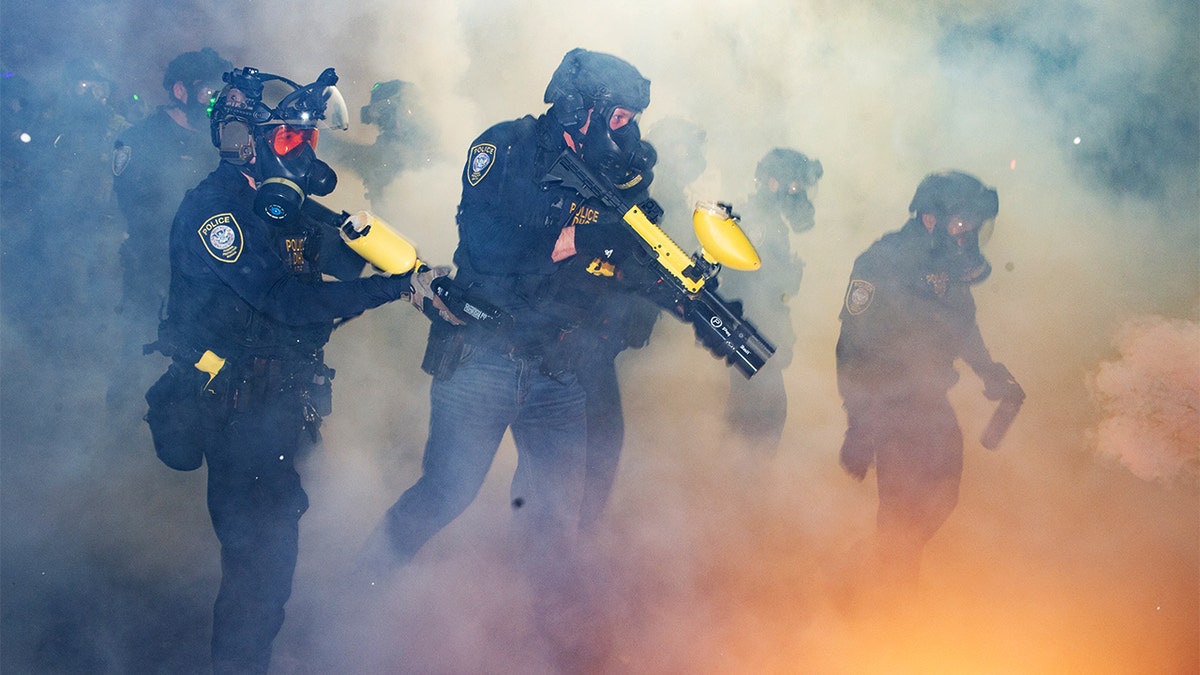
Federal immigration enforcement officers deploy tear gas as hundreds of anti-ICE agitators march from Portland City Hall to an ICE facility, Feb. 1, in Portland, Ore. (Sean Bascom/Anadolu via Getty Images)
DHS also told Fox News Digital that Cruz-Ramirez had been deported from the U.S. in 2018, though he re-entered the country at an unknown location and time. He is now in ICE custody and his removal order has been re-instated.
Portland has been one of several cities where agitators have mobilized to confront and protest federal law enforcement.
On Thursday, Fox News Digital reported that DHS launched an investigation into an Oregon resident who was arrested during a traffic stop with knives and materials to make Molotov cocktails.
DHS URGES NEWSOM TO HONOR ICE DETAINERS AFTER FEDERAL AGENT ASSAULTED WHILE ARRESTING ILLEGAL ALIEN AT JAIL
The 18-year-old Oregon resident allegedly authored a manifesto with the intention of killing ICE at a Portland ICE office. The individual reportedly told authorities that he was planning on picking up an AR-15 rifle to carry out the attack.

President Donald Trump has repeatedly backed DHS Secretary Kristi Noem. (Jim Watson/Getty Images)
Democrats, including those in Congress, have referred to ICE agents as Nazis and gestapo, and the Trump administration has said that such rhetoric is endangering the lives of law enforcement officers across the country.
During an interview with Fox News Digital earlier this month, DHS Secretary Kristi Noem noted the difference between some cities and those which are controlled by far-left leaders, saying that in cities where authorities cooperate with federal law enforcement there is far less conflict.
CLICK HERE TO DOWNLOAD THE FOX NEWS APP
«Minneapolis and St. Paul, the Twin Cities, have an opportunity to do the same thing that Memphis did. There we had a Democrat mayor who worked with us,» Noem told Fox News Digital. «It was about the same size as a city, about the same amount of federal law enforcement officers were there, and we dramatically cut crime and murder rates and partnered well together.»
Fox News’ Andrew Mark Miller contributed to this report.
immigration,illegal immigrants,migrant crime,portland,oregon,kristi noem,homeland security

Apareció la autobiografía que Jacobo Timerman decidió no publicar: la tortura, el periodismo, las anécdotas falsas

Axel Kicillof y otros gobernadores le solicitaron una reunión al Gobierno para debatir la reforma laboral

La pesada broma de Wanda Nara a Maxi López mientras enfrentaba el “mercado a oscuras” de MasterChef Celebrity

El FMI anunció que terminó la misión en Argentina para revisar el acuerdo

Tras la derrota de River, Matías Biscay habló en conferencia en lugar de Gallardo: “Con las ideas claras, vamos a salir”

Principales puntos del nuevo régimen penal juvenil: garantías, penas y asignación presupuestaria

Acuartelamiento policial en Santa Fe: reclamo salarial y temor a un conflicto nacional de seguridad

La advertencia de ATE a los gobernadores que apoyan la reforma laboral: “Firmarán su sentencia de muerte”

Cuánto le cuesta a la clase media llenar el changuito y cómo varían los precios de los alimentos entre provincias

A quién afecta la Reforma laboral: estos son los puntos clave del proyecto de Milei

 POLITICA3 días ago
Acuartelamiento policial en Santa Fe: reclamo salarial y temor a un conflicto nacional de seguridad
- POLITICA3 días ago
La advertencia de ATE a los gobernadores que apoyan la reforma laboral: “Firmarán su sentencia de muerte”
- ECONOMIA3 días ago
Cuánto le cuesta a la clase media llenar el changuito y cómo varían los precios de los alimentos entre provincias