Connect with us

INTERNACIONAL

El paraíso bajo terror: la violencia asedia un destino turístico en Colombia

Published

on


En apariencia es una joya turística de aguas cristalinas a orillas del Caribe y rodeada de montañas de picos nevados. Pero en las entrañas de un destino paradisíaco de Colombia la violencia paramilitar mantiene bajo el miedo a comerciantes y pueblos indígenas.

En la Sierra Nevada de Santa Marta, los turistas disfrutan sin percatarse de los escuadrones de camuflado que los vigilan de cerca, extorsionan a los negocios alrededor y siembran terror en las comunidades originarias, cuyo conocimiento ancestral es reconocido como patrimonio de la humanidad por la UNESCO.

Advertisement

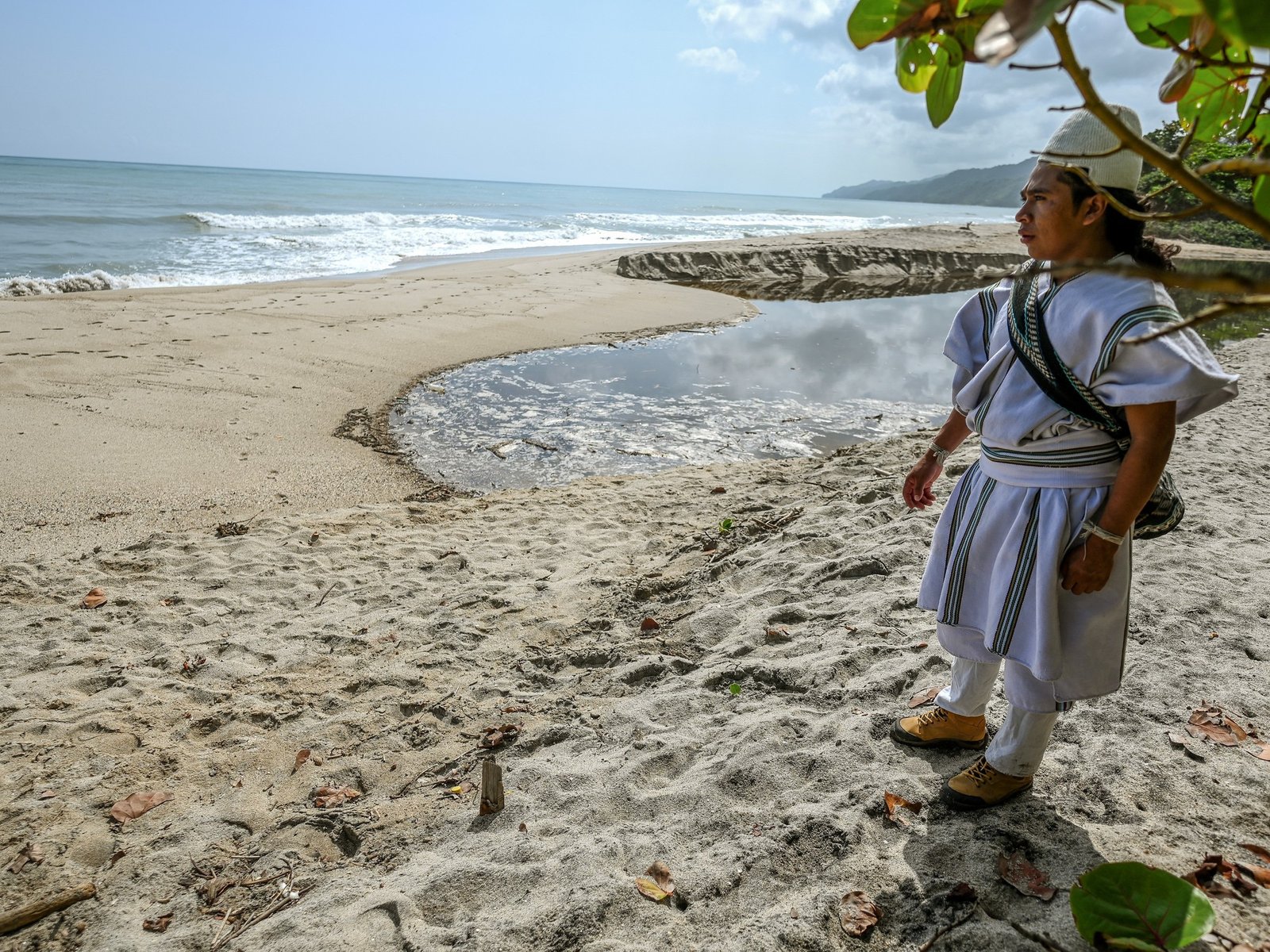
«Tenemos miedo, zozobra por el porvenir», dice el gobernador del pueblo kogui Atanasio Moscote, en lo alto de la reserva que los indígenas consideran «el corazón del mundo».

Detrás de la violencia están las Autodefensas Conquistadoras de la Sierra Nevada (ACSN), un grupo de origen paramilitar que se financia con el control de las rutas del narcotráfico en la montaña costera más alta del mundo al imponer su dominio sobre el territorio y la población.

Advertisement

«El entrar con armas genera un desequilibrio en la sierra», se queja Moscote vestido con su tradicional atuendo blanco tejido a mano.

Parque Tayrona

Ante la violencia, el presidente Gustavo Petro cerró por más de dos semanas, entre febrero y marzo, el emblemático Parque Tayrona, una de las dos reservas naturales de la sierra que recibe cada año a miles de visitantes.

Advertisement
Vista aérea de Bahía Concha en el Parque Nacional Natural Tayrona. Foto: Luis Acosta/ AFP

El gobierno justificó la medida por las extorsiones, los bloqueos de rutas y las amenazas contra los guardaparques, quienes se oponen a actividades ilegales como la tala.

La AFP acompañó a uno de estos funcionarios intimidado a lo largo de un recorrido por la reserva.

«Nuestra presencia en cada rincón, en cada zona, es de vital importancia para conservar, mantener y monitorear los recursos que tenemos», dice Yeiner Hernández, de 31 años.

Los guardaparques reciben advertencias por su labor de protección, que riñe con los intereses de grupos criminales.

Advertisement

Según investigadores, esos grupos ilegales reciben rentas del turismo y buscan controlar playas para exportar droga.

Peor que nunca

El Tayrona alberga el bosque seco mejor conservado del país, así como ricos ecosistemas marinos que atraen a buceadores.

Advertisement
Policías en la entrada del parque Tayrona. Foto: Luis Acosta/ AFP

Pegado se encuentra el Parque Nacional Natural Sierra Nevada, que alcanza los 5.700 metros sobre el nivel del mar. Ambas áreas protegidas recibieron en 2025 a más de 873.000 viajeros.

También son hogar de los arhuacos, koguis y otras comunidades indígenas.

Históricamente, grupos criminales, entre ellos la extinta guerrilla de las FARC, se han disputado el control de la zona a sangre y fuego, debido a su ubicación estratégica y a su extensión de 2,3 millones de hectáreas según la UNESCO.

Comunidades indígenas de diferentes regiones del país cruzan un río tras asistir a una reunión en la Sierra Nevada de Santa Marta. Foto: Raul Arboleda / AFP

Los indígenas afirman que actualmente la violencia ha alcanzado niveles peores contra sus comunidades debido al terror que ejercen los llamados «Conquistadores», herederos de un exjefe paramilitar extraditado a Estados Unidos tras firmar la paz con el gobierno en 2006.

«Estos grupos se han subido a la parte más alta». «Afectan a una comunidad en la que el 95% son totalmente propios (nativos), que no saben hablar español, que viven de sus cultivos y de su conocimiento«, dice Luis Salcedo, gobernador arhuaco de larga cabellera, mientras mastica hoja de coca, su planta sagrada.

Advertisement

Y ahora se suma la guerra del Clan del Golfo. En los últimos meses el principal cartel del narcotráfico intenta tomar el poder de la sierra con combates cerca de los cabildos indígenas.

«¿Turismo a Ucrania?»

Petro incluyó a las ACSN dentro de su política de «paz total», una estrategia con la que intentó negociar el desarme de las principales organizaciones del país.

Advertisement

Sin embargo, las conversaciones no avanzaron y el conflicto se intensificó cuando falta poco para que Petro deje el poder en agosto.

Según la investigadora Norma Vera, las ACSN son la autoridad de facto en la región pues ejercen «un control territorial a través de una gobernanza armada consolidada», un fenómeno usual en un país con más de seis décadas de conflicto armado.

Además, explotan ilegalmente minas de oro que contaminan el agua con mercurio y controlan hasta «el plato de comida que se vende» a los turistas mediante la extorsión, asegura.

Advertisement

Estos cobros disfrazados son un delito en aumento en Colombia. El Ministerio de Defensa asegura haber recibido más de 46.000 denuncias desde 2022.

Un vendedor de juguetes inflables en las playas de Santa Marta, Colombia. Foto: Luis Acosta/ AFP

Para el sector turístico, la violencia se traduce en una mala reputación, dice Ómar García, presidente del gremio hotelero en la ciudad de Santa Marta.

«Afecta el número de visitantes». «¿Quién va a hacer turismo a Ucrania?» «¿A Irán?», ejemplifica.

David Salazar
Advertisement

Agencia AFP

Bio completa

Advertisement

INTERNACIONAL

US-backed pipeline proposal targets global reliance on Strait of Hormuz amid Iran threats

Published

on


NEWYou can now listen to Fox News articles!

A new U.S.-backed proposal to build a network of overland energy pipelines bypassing the Strait of Hormuz is gaining attention as tensions in the region expose a critical vulnerability in the global energy system.

Advertisement

A policy memo reviewed by Fox News Digital outlines the concept, known as «ARAM Express,» a proposed consortium between the United States and Gulf partners to develop a multidirectional overland network for oil, gas and petrochemicals, originating with Richard Goldberg of the Foundation for Defense of Democracies.

The plan envisions pipelines extending westward to the Red Sea and Mediterranean, as well as southern routes toward the Arabian Sea, creating multiple export pathways that would reduce reliance on the strait, through which roughly one-third of the world’s seaborne oil currently flows.

TRUMP OPENS HORMUZ UNDER FIRE WITH ‘PROJECT FREEDOM’ AS IRAN WARNS OF ATTACKS

Advertisement

USS George H.W. Bush transits the Arabian Sea as U.S. forces enforce a naval blockade against Iran and support Project Freedom in the Strait of Hormuz, according to U.S. Central Command. (Fox News)

The proposal would rely on broad international participation, with European and Asian buyers investing in infrastructure and securing long-term supply agreements.

«European buyers are desperate for long-term supply resilience, and Asian customers are equally exposed,» Goldberg said. «Even China cannot tolerate the risk of a sustained disruption.»

Advertisement

The push comes as Iran’s threats to commercial shipping and ongoing U.S. efforts to secure the waterway under President Donald Trump’s «Project Freedom» highlight the risks posed by a single chokepoint to global energy flows.

Roughly one-third of the world’s seaborne oil passes through the narrow waterway, making it a critical artery for global markets. With Iran threatening shipping and U.S. forces now guiding vessels through the strait under President Donald Trump’s «Project Freedom,» the White House is framing the crisis in global terms. 

«The President will not allow Iran to hold the global economy hostage and undermine the free flow of energy,» said White House spokeswoman Taylor Rogers, describing the launch of «Project Freedom» as a humanitarian effort to restore navigation through the strait.

Advertisement

That framing aligns with a growing view among U.S. officials and analysts that the risk is not only immediate but also structural.

U.S. Ambassador to the United Nations Mike Waltz signaled that Washington’s partners are already looking beyond the strait itself.

«I know our Gulf partners and allies are seriously thinking through that,» Waltz told Fox News Digital when asked about long-term alternatives during a conference call with reporters Monday.

Advertisement

«I know they’re looking at additional alternatives to frankly diversify their pathways and diversify their economies,» he added.

MIKE WALTZ PUSHES UN RESOLUTION TO STOP IRAN MINING KEY GLOBAL SHIPPING ROUTE

Anti-piracy operations Gulf of Aden

The surge in regional piracy risk is exacerbated by the volatility of the Strait of Hormuz as Iranian-backed threats persist in the Persian Gulf and global energy flows are shifting. (Mass Communications Specialist 1st Class Cassandra Thompson/U.S. Navy via Getty Images)

A vulnerability years in the making

The idea that Hormuz represents a structural weakness is not new. But until now, it has largely been tolerated, with global markets relying on stability in the Gulf to keep energy flowing.

Advertisement

That assumption is now under strain.

Even with U.S. naval power deployed to secure the waterway, the current crisis has highlighted how quickly disruption, or even the threat of it, can ripple through global supply chains.

«This isn’t just a long-term idea anymore,» said Rich Goldberg of the Foundation for Defense of Democracies think tank. «There is a real threat to the Strait of Hormuz that isn’t going away so long as the regime in Tehran remains.»

Advertisement

AS IRAN WEAKENS, QUESTIONS GROW OVER MOHAMMED BIN SALMAN’S REGIONAL AMBITIONS

Marines enforce blockade in the Strait of Hormuz

The proposal would rely on broad international participation, with European and Asian buyers investing in infrastructure and securing long-term supply agreements. (U.S. Central Command)

Saudi Arabia: Building around the risk

Saudi Arabia stands out as the country among Gulf states that has invested most heavily in reducing reliance on Hormuz.

Its East-West pipeline allows crude oil to travel from eastern fields on the Gulf to the Red Sea port of Yanbu, bypassing the strait entirely. From there, shipments can move toward Europe, Africa and Asia without entering the chokepoint.

Advertisement

«Saudi Arabia has treated the Strait of Hormuz risk with planning, not panic,» said Salman Al-Ansari, a Saudi geopolitical analyst.

«The East-West pipeline is strategic insurance,» he told Fox News Digital, «A Hormuz closure would be disruptive, but not paralyzing. Saudi Arabia has spent years reducing that vulnerability, and today it is uniquely positioned to absorb shocks and keep global flows moving.»

Al-Ansari argued that the kingdom’s strategy goes beyond energy exports, positioning the country as a broader logistics hub.

Advertisement

«Ports, pipelines, land bridges, storage and Red Sea access are all part of one Saudi contingency architecture,» he said.

HORMUZ CHOKE POINT PERSISTS AS IRAN HALTS OIL TRAFFIC DESPITE TRUMP CEASEFIRE

Iran's strikes on UAE

The plan envisions pipelines extending westward to the Red Sea and Mediterranean, as well as southern routes toward the Arabian Sea, creating multiple export pathways that would reduce reliance on the strait, through which roughly one-third of the world’s seaborne oil currently flows. (Fadel Senna / AFP via Getty Images)

UAE and the fragmentation of the Gulf model

Saudi Arabia is not the only player adapting. 

Advertisement

The United Arab Emirates also has developed alternative export capacity through its pipeline to Fujairah, outside the Strait of Hormuz.

At the same time, some analysts argue that recent regional dynamics point to a deeper shift, one that goes beyond infrastructure and into the political structure of the Gulf itself.

Yonatan Adiri, an Israeli entrepreneur and former adviser to former Israeli President Shimon Peres, said the traditional model of a unified Gulf energy system centered on Hormuz is beginning to break down.

Advertisement

«The whole arrangement … it’s starting to expire,» Adiri said, referring to the long-standing reliance on the strait as a central artery for Gulf exports. 

He pointed to emerging economic and geopolitical realignments, including new corridors and shifting alliances, that are fragmenting the region’s traditional energy architecture.

«The UAE stepping away from OPEC is not just about production policy,» Adiri said, referring to the country’s decision to leave the Organization of the Petroleum Exporting Countries effective May 1, 2026. «It reflects a broader shift toward an independent strategy — building its own routes, partnerships and leverage rather than relying on a collective system.»

Advertisement

These changes are driven in part by broader global competition, according to Adiri, particularly efforts by the United States and its partners to counter China’s Belt and Road Initiative.

«The entire system is being rethought,» he said, describing a shift toward diversified routes that reduce reliance on single choke points.

WHY GULF STATES AREN’T JOINING THE WAR AGAINST IRAN — DESPITE ATTACKS ON THEIR SOIL

Advertisement
Cargo ships anchored in the Gulf near the Strait of Hormuz seen from northern Ras al-Khaimah

Cargo ships are anchored in the Gulf near the Strait of Hormuz as seen from northern Ras al-Khaimah, United Arab Emirates, March 11, 2026. (Reuters/Stringer/File Photo/File Photo)

Uneven exposure across the Gulf

Despite these developments, not all Gulf states are equally prepared.

«If you’re Kuwait, you’re in a world of hurt,» Goldberg said, pointing to countries that lack meaningful alternatives to maritime exports.

Qatar, one of the world’s largest exporters of liquefied natural gas, remains heavily dependent on the strait, with limited options to reroute supply if shipping is disrupted.

Advertisement

This uneven exposure could reshape regional dynamics, giving countries with alternative routes greater resilience and leverage in future crises.

Political limits and long-term questions

While the technical case for alternative routes is growing stronger, political constraints remain.

One of the most sensitive issues is whether future corridors could involve Israel, even indirectly.

Advertisement

«As for routes involving Israel, even indirectly, the politics are extremely difficult under current circumstances,» Al-Ansari said. «I genuinely do not see it happening now.»

At the same time, he suggested that such cooperation could become more realistic in the future under different political conditions.

A system in transition

For now, the U.S. and its allies remain focused on stabilizing the immediate situation in the Strait of Hormuz, ensuring that ships can pass safely and global markets continue to function.

Advertisement

But as tensions persist, the current crisis is forcing a broader reassessment.

CLICK HERE TO DOWNLOAD THE FOX NEWS APP

A UAE navy ship sailing next to a cargo ship in the Strait of Hormuz

While the technical case for alternative routes is growing stronger, political constraints remain. (Altaf Qadri/The Associated Press )

The question is no longer just how to secure the strait, but whether the global energy system can afford to depend on it to the extent it has for decades.

Advertisement

If the current trajectory continues, Hormuz may remain critical, but no longer dominant, experts argue, as countries invest in new routes, new partnerships and a more diversified energy map.

Fox News Digital reached out to Saudi Arabia and the UAE for comment but did not receive a response in time for publication.

Advertisement


war with iran, middle east, saudi arabia, trade, iran, geopolitics, energy

Advertisement
Continue Reading

INTERNACIONAL

La calificadora Moody’s ratifica la nota Ba1 de Guatemala y mantiene la perspectiva estable

Published

on


Una mano coloca un marcador «Ba1» sobre un mapa de Guatemala, simbolizando la ratificación de la calificación crediticia por Moody’s y la perspectiva estable del país. (Imagen Ilustrativa Infobae)

Moody’s reafirmó la calificación de Guatemala en Ba1 y mantuvo la perspectiva estable, lo que posiciona al país centroamericano a un solo nivel del grado de inversión e implica un reconocimiento al avance institucional y la prudencia fiscal, de acuerdo con información del Ministerio de Finanzas Públicas citada por Minfin.

Esta ratificación consolida una tendencia favorable iniciada en 2025, cuando S&P Global Ratings elevó su nota a BB+ y Fitch Ratings también mejoró su evaluación, alineando a las tres principales agencias internacionales en un diagnóstico común: estabilidad del perfil crediticio guatemalteco.

Advertisement

El dato más reciente sobre la economía nacional indica que Guatemala creció 4,3% en 2025, resultado que supera el 4,1% estimado previamente y confirmado por las autoridades monetarias tras la revisión efectuada en abril, según Minfin.

Esta evolución se da en un contexto en el que el país sostiene una de las deudas públicas netas más bajas de América Latina, fenómeno destacado por Moody’s Ratings en su informe. La agencia cita también el rol de las remesas y el gasto público como factores clave en el dinamismo económico.

La decisión de Moody’s se fundamenta en tres áreas: el refuerzo institucional, el crecimiento sólido y la resiliencia externa. El informe expresa: “La confirmación de la calificación Ba1 de Guatemala equilibra el impulso institucional en mejora, el sólido crecimiento tendencial, el historial de gestión fiscal prudente y la limitada vulnerabilidad externa, frente a las persistentes restricciones estructurales económicas e institucionales en comparación con países de mayor calificación”, según la propia calificadora.

Advertisement

La ratificación se produce tras la aprobación de instrumentos legislativos como la Ley de Infraestructura Vial Prioritaria, la Ley de Alianzas Público-Privadas y la Ley de Competencia, reformas impulsadas por el gobierno del presidente Bernardo Arévalo y destinadas a fortalecer la competitividad y atraer inversiones. Moody’s resalta estos logros como indicadores de que la agenda de reformas se mantiene en marcha.

Comunicado oficial del Ministerio de Finanzas Públicas de Guatemala en fondo azul claro, con el escudo nacional y texto sobre la calificación crediticia de Moody's
Moody’s mantiene la calificación crediticia de Guatemala en Ba1, reflejando confianza en la fortaleza macroeconómica, la prudencia fiscal y las reformas estructurales del país. (Ministerio de Finanzas Públicas de Guatemala)

La permanencia en el nivel Ba1 obedece también a la evaluación de desafíos persistentes. Moody’s advierte que la capacidad estatal, la baja base de ingresos y el déficit significativo de infraestructura continúan afectando el desempeño económico.

Estas debilidades, originadas en un “largo historial de baja formación de capital físico y humano”, restringen la capacidad productiva y dificultan tanto las funciones administrativas y regulatorias estatales como la captación de inversión extranjera directa y la competitividad exportadora.

Pese a estas restricciones, Moody’s señala que la fortaleza fiscal de Guatemala se apoya en un “largo historial de gestión prudente de la deuda y una carga de deuda gubernamental baja”. Sin embargo, la estructura rígida del gasto y los ingresos limitados afectan la flexibilidad del gobierno en el manejo fiscal y la asequibilidad de la deuda, de acuerdo con el reporte de Minfin.

Advertisement

La perspectiva estable asignada por la agencia responde a la expectativa de una mejora gradual. Moody’s sostiene que los avances en materia institucional “tardarán en traducirse en fundamentos económicos o fiscales materialmente más sólidos”, dado que la aplicación de políticas enfrenta barreras estructurales.

Por otro lado, advierte que los riesgos externos —como el endurecimiento de las políticas migratorias de Estados Unidos y la volatilidad de los precios internacionales— pueden incidir en el flujo de remesas, aunque estos efectos se ven mitigados por los “sólidos colchones externos y la gestión macroeconómica prudente”.

Imagen gráfica con el logo del Banco de Guatemala y un mapa de Guatemala en tonos azules, mostrando la calificación Ba1 de Moody's Ratings
El Banco de Guatemala anuncia que Moody’s Ratings confirma la calificación Ba1 con perspectiva estable para el riesgo crediticio del país. (Banco de Guatemala)

En el sistema financiero, el techo soberano en moneda local permanece en Baa1, tres escalones por encima de la nota soberana, reflejo de la “limitada intervención gubernamental en la economía y el riesgo político contenido”. El techo de moneda extranjera se mantiene en Baa3, dos niveles por debajo del techo local, y evidencia la persistencia de una “alta relación de préstamos en moneda extranjera respecto a depósitos, superior al 100% en el sistema bancario guatemalteco frente a sus pares regionales”.

El Ministerio de Finanzas Públicas coordina la gestión del riesgo país a través de la Mesa Interinstitucional para el Análisis de la Calificación del País (MINAPA), encargada de canalizar la interlocución con inversionistas, agencias calificadoras y organismos multilaterales. Según Minfin, la cartera intensificará esta estrategia de comunicación con los mercados para respaldar el proceso de reforma y avanzar hacia el grado de inversión.

Advertisement


Moody’s,Guatemala,Ba1,calificación,crédito,economía,perspectiva,estable,finanzas

Continue Reading

INTERNACIONAL

Elizabeth Warren’s Bezos Met Gala jab backfires as critics mercilessly drag ‘un-American’ lawmaker

Published

on


NEWYou can now listen to Fox News articles!

Sen. Elizabeth Warren, D-Mass., drew intense criticism on Monday after she claimed on X that Amazon founder Jeff Bezos should pay more in taxes in response to him sponsoring the Met Gala, with conservatives questioning the senator’s record and accusing her of misrepresenting facts.

Advertisement

«The answer to everything, up to and apparently including bankrupting an airline at the cost of something like 15,000 jobs and the entire concept of budget airfare, is ‘Jeff Bezos has a lot of money though,’» venture capitalist and media founder Mike Solana wrote in response to Warren’s post.

Solana was referring to the recent demise of Spirit Airlines. Conservative commentators claim Spirit could have been saved if Warren hadn’t pushed to block JetBlue’s acquisition of the budget carrier on anti-trust grounds in 2024. 

«If Jeff Bezos can drop $10 million to sponsor the Met Gala, he can afford to pay his fair share in taxes,» Warren said on Monday, sparking the glut of pushback from social media users. 

Advertisement

WASHINGTON POST ARGUES THERE’S ‘LITTLE TO GAIN BY RAISING TAXES ON THE RICH,’ RATES ALREADY HIGH ENOUGH

Sen. Elizabeth Warren, D-Mass., questions Treasury Secretary Janet Yellen during a Senate Finance Committee hearing on Capitol Hill in Washington on March 16, 2023. (Jacquelyn Martin/AP)

Following news that Bezos had cut an eight-figure check to fund the Met Gala, liberals in the entertainment industry such as Mark Ruffalo and Taraji P. Henson joined Warren in criticizing Amazon and Bezos for their allegedly unethical business practices. Protesters appeared outside the gala on Monday holding signs criticizing Bezos. One demonstrator was detained for trying to break into the event.

Advertisement

Warren’s message backfired online, as commenters pointed to the demise of Spirit Airlines and took issue with her tax policies across the years. 

«Jeff Bezos employs over 1.5 million people at Amazon,» X user Gina Milan wrote. «You’re responsible for 17,000 workers losing their jobs and for blocking the merger that ultimately killed Spirit Airlines.»

Spirit put downward pressure on prices at other airlines and its folding could lead to an increase in overall travel prices, industry analysts told USA Today. Estimated job losses stemming from Spirit’s shuttering include approximately 15,000 direct employees and an additional 2,000 indirect employees.

Advertisement

«This myth just won’t die,» Reason Magazine reporter Billy Binion posted, responding to Warren’s assertion that Bezos isn’t paying enough in taxes. «In 2024 alone, it’s estimated Jeff Bezos paid almost $3 billion in taxes. Painting rich people as tax avoiders plays great on social media, but it’s not reality. The U.S. has the most progressive tax system in the developed world.»

Forbes estimates that Bezos paid $2.7 billion in taxes in 2024 after he sold $13.6 billion worth of Amazon stock. He reduced his tax burden that year by donating $2.5 billion in Amazon shares to charity over the three prior years. Bezos paid nearly $1 billion in taxes between 2014 and 2018, according to a ProPublica analysis of tax documents. 

To minimize tax burdens, billionaires like Bezos often take out loans secured against their massive stock holdings to acquire spending money, according to securities filings reviewed by ProPublica. Since the IRS doesn’t consider loans income, this setup gives the wealthy access to cash without having to pay income taxes.

Advertisement

FROM ‘JUMP ON A BUS’ TO TAX CRACKDOWNS: BLUE STATES CHASE WEALTHY RESIDENTS FLEEING TO RED HAVENS

Billionaire Jeff Bezos standing at DealBook Summit

Billionaire Jeff Bezos attends the DealBook Summit. Critics on social media have accused Bezos of allowing the Washington Post to suffer amid hundreds of staff layoffs. (Eugene Gologursky/Getty Images for The New York Times)

Some on social media pushed Warren for specifics on how she plans to make Bezos pay his «fair share.» 

«What’s his fair share?» Sen. Mike Lee, R-Utah, asked Warren. «What tax rate?»

Advertisement

Warren has proposed a wealth tax, charging households with net worths above $1 billion an annual tax worth 6% of their total wealth. Under Warren’s proposal, households with net worths between $50 million and $1 billion would be subject to a similar 2% tax.

Sen. Elizabeth Warren speaking to a staff member before a Senate Banking Committee hearing

Sen. Elizabeth Warren speaks to a staff member before the Senate Banking Committee hearing on oversight of credit reporting agencies on Capitol Hill in Washington, D.C., on April 27, 2023. (Drew Angerer/Getty Images)

CALIFORNIA’S HATRED FOR CAPITALISM IS KILLING THE GOOSE THAT LAID ITS GOLDEN EGG

Much of the growth in wealth experienced by Bezos and other billionaires comes through the unrealized gains of their assets, which Warren’s tax would target.

Advertisement

Writer Mike Coté pointed out that Bezos is «so rich that he can simply leave the jurisdiction or get citizenship elsewhere» if Warren’s tax plans were signed into law.

CLICK HERE TO DOWNLOAD THE FOX NEWS APP

«Liz Warren does not want progressive taxation,» he continued. «She wants confiscatory taxation. It’s fundamentally un-American. And it doesn’t work.»

Advertisement

Warren’s office did not respond to a request for comment sent by Fox News Digital Tuesday morning.

jeff bezos, taxes, amazon, elizabeth warren, senate elections

Advertisement
Continue Reading

Tendencias