Connect with us

INTERNACIONAL

Crisis en Bolivia: el pujante comercio en El Alto pone un freno a los piquetes y busca volver a la normalidad

Published

on


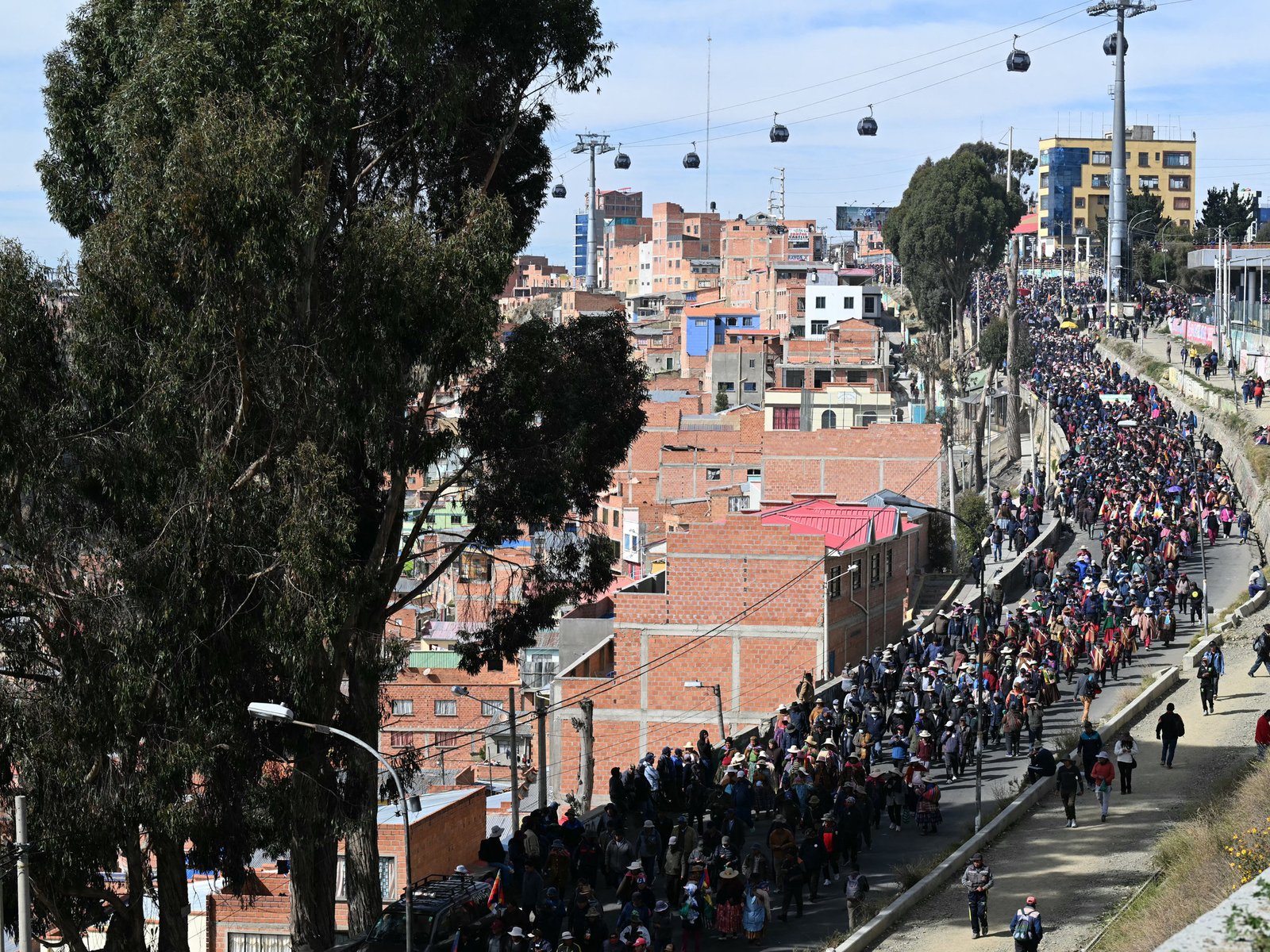
Desde el Teleférico se ve la enormidad de la feria 16 de Julio, que cubre barrios enteros de la ciudad de El Alto y donde se vende todo tipo de objetos, desde ropa, zapatillas, vajilla, accesorios para teléfonos celulares, herramientas o productos de limpieza a precios claramente más bajos que en los comercios formales. Aquí algunos la comparan con La Salada, de Buenos Aires. Con más de 250.000 puestos, según se estima, este gigantesco mercado popular genera millones de dólares por semana, especialmente los jueves y domingos, los días de actividad plena.

Después de días de protestas, piquetes, enfrentamientos con la policía, El Alto –la ciudad satélite de La Paz, a unos 20 kilómetros y a 4100 metros de altura- parecía recuperar el ritmo habitual para un domingo, mientras el presidente Rodrigo Paz y su equipo mantenía un maratón de reuniones con asociaciones campesinas y otros grupos para tratar de poner fin a una crisis que lleva ya más de tres semanas y tiene en vilo al país.

Advertisement

Poco antes de las 11 de la mañana, la estación 16 de Julio de la Línea Roja del Teleférico -el medio de transporte más práctico y económico- estaba colmada de paceños y alteños que viajaban en ambas direcciones. Muchos llegaban desde La Paz hasta la gran feria, donde los puestos de ropa o electrónicos se mezclan con locales de comida que ofrecen sopa de fideos con pollo o carne, trucha con papas fritas, jugos de frutas o tajadas de sandía.

En los estrechos pasillos, entre charcos dejados por la lluvia de la noche anterior, un enjambre de mujeres, hombres, familias enteras buscan ofertas y preguntan precios. Un cartel señala un baño público por 1 boliviano (unos 15 centavos de dólar). Algunos se sientan a tomar un caldo caliente por 9 bolivianos (1,5 dólares, según el cambio oficial).

A pocos metros, sobre la ruta que conduce a La Paz, algunos tramos siguen cortados. Se ven grupos de unas pocas personas que bloquean el paso justo antes del peaje. Y, si bien la ruta desde y hacia el aeropuerto internacional funciona sin problemas, todavía está cerrado el paso para los camiones que llevan combustible, alimentos y otros productos. Y se ha frenado el tránsito de micros, por los piquetes que se instalaron a comienzos de mayo para exigir la renuncia del presidente Paz y que en la última semana causaron una grave crisis de desabastecimiento en La Paz.

Advertisement

Entre la calma y la incertidumbre

Después de varios días de enfrentamientos que a comienzos de la semana pasada estallaron en choques violentos entre policías y manifestantes, el escenario parece más calmo. Al menos por ahora.

“Mañana será un día clave. Si la feria 16 de julio abre sin problemas es que se ha empezado a resolver el conflicto”, dijo a Clarín el sábado el ministro de la Presidencia, José Luis Lupo. Es que en estos días los comerciantes de El Alto comenzaron a expresar, en redes sociales, en la calle y en los medios, su malestar con los bloqueos encabezados por la Central Obrera Boliviana –el sindicato más poderoso y aún con una fuerte influencia de Evo Morales-, y grupos de campesinos.

Advertisement

El Alto, con más de 885.000 habitantes –más que La Paz, que tiene cerca de 760.000, según el censo de 2025- se ha convertido en una ciudad con gran poder económico, de la mano de una pujante burguesía comercial que nació bajo el impulso de los primeros años del gobierno del MAS, cuando Evo Morales y su entonces ministro de economía Luis Arce lograron un gran crecimiento económico impulsado por el alto precio de los commodities y especialmente de los hidrocarburos.

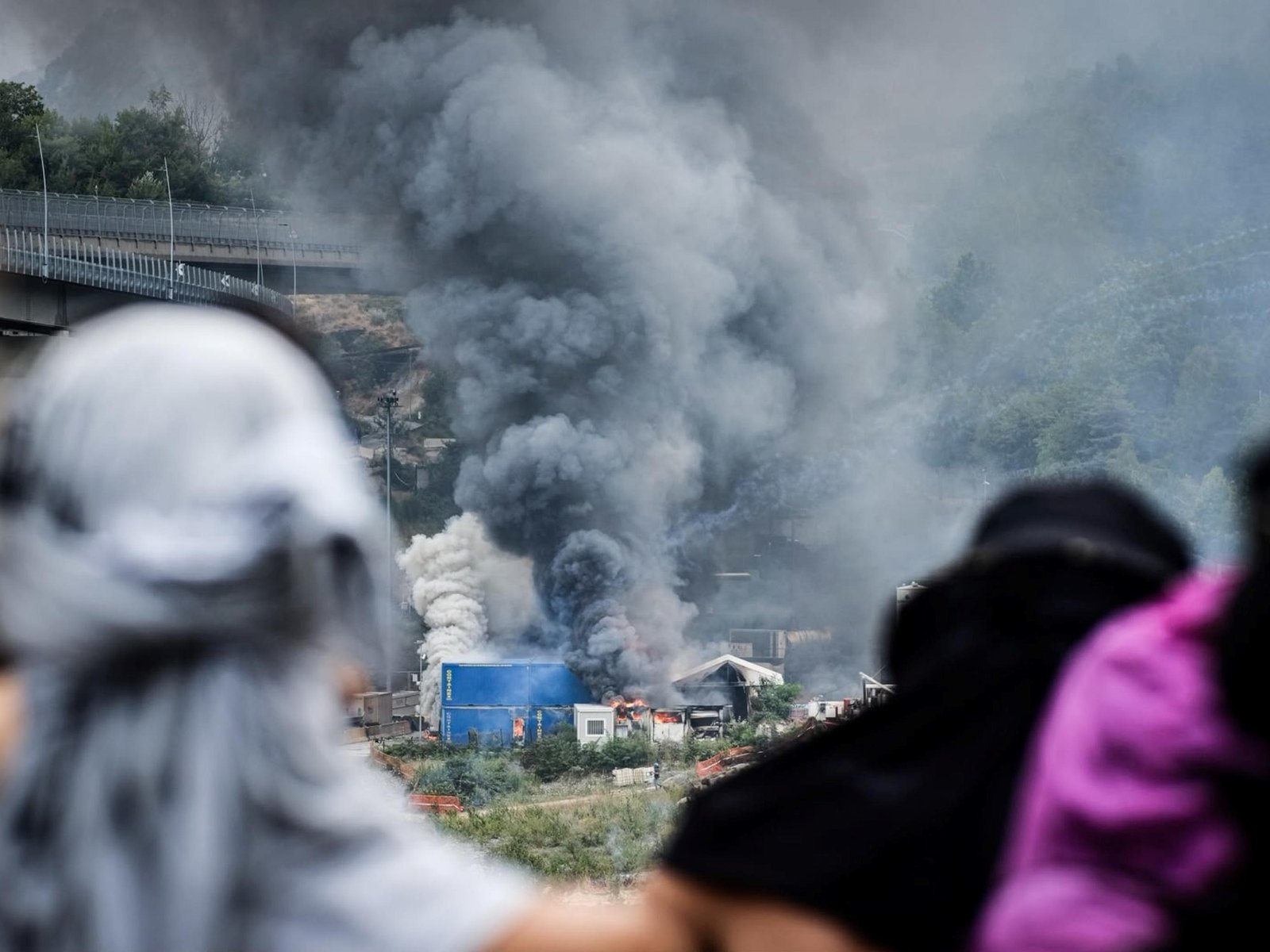
El gobierno envió topadoras para levantar los piquetes el sábado a la ruta que lleva a La Paz. Foto Reuters

“El Alto refleja una nueva forma de organización económica, con grupos emergentes, que surgen de la bonanza comercial a partir de 2006”, señaló a esta enviada el economista Gonzalo Chávez Álvarez, profesor de la Escuela de la Producción y la Competitividad de la Universidad Católica Boliviana.

Desde la Línea Azul del teleférico que recorre varios barrios de El Alto se evidencia cómo se ha expandido la ciudad, con nuevos edificios que aquí llaman “cholets”: construcciones vistosas, de vidrio o ladrillos, de cinco o seis pisos, que combinan locales comerciales, viviendas y, en la terraza, un chalet, donde vive posiblemente la familia del propietario del edificio, según relató a Clarín el economista.

“Estos grupos tienen una renta enorme, manejada de manera jerárquica, están muy bien organizados. Y se cruza con temas culturales, étnicos, que les da un valor diferente, muy interesante”, analizó Chávez.

Advertisement

Pero, agregó, “también se ve la estratificación. Sigue siendo una ciudad con mucha pobreza, viviendo del comercio, y que al mismo tiempo ha generado mucha riqueza”.

El analista político Diego Ayo coincide con esta visión y remarca que aunque desde una mirada superficial se puede pensar que todo El Alto apoya los piquetes y las protestas contra Rodrigo Paz, la realidad es otra.

“El Alto no es una ciudad compacta, homogénea, unívoca. No, no es así. Hay comerciantes, hay artesanos, hay burócratas, hay profesionales, profesores. Todos ellos, que son un 85% de la población, no están a favor de las protestas”, explica.

Advertisement

Como en El Alto, en La Paz y otras ciudades afectadas por los cortes de ruta, una mayoría de la población quiere volver a la normalidad. Mientras el gobierno de Rodrigo Paz apuesta al diálogo, aquí se respira incertidumbre.

Advertisement

INTERNACIONAL

El Salvador: Un agente municipal falleció tras accidente vial en el centro de San Salvador

Published

on


La tragedia ocurrió cuando un microbús ignoró la luz roja y embistió al trabajador en plena jornada en el centro capitalino (Foto cortesía PNC)

Un agente del Cuerpo de Agentes Metropolitanos murió la mañana de este domingo tras ser embestido por un microbús de la Ruta 11 (que transita desde el distrito de San Marcos hacia el Centro de San Salvador), informó la Policía Nacional Civil. El choque ocurrió en la intersección de la 3ª Avenida Norte y 3ª Calle Poniente, del centro histórico de San Salvador. La víctima falleció en el lugar.

La Policía Nacional Civil (PNC) informó que el conductor del transporte público, Luis Enrique H. M., de 34 años, no respetó el semáforo en rojo y no tenía licencia de conducir.

Advertisement

Según las investigaciones preliminares de la Policía Nacional Civil, Hernández Martínez conducía el microbús de la Ruta 11 cuando impactó al agente del Cuerpo de Agentes Metropolitanos. La PNC indicó que el conductor se pasó el semáforo en rojo y que no portaba licencia de conducir al momento del incidente.

Momentos más tarde, la página de prensa de la alcaldía de San Salvador Centro compartió una nota de pésame por el fallecimiento de la víctima, identificada como Julio César Magaña Tobar: “Lamentablemente perdió la vida en el cumplimiento de su labor de proteger a los ciudadanos de San Salvador Centro. Expresamos nuestras más sinceras condolencias a su familia, elevando nuestras oraciones por su eterno descanso”.

Las autoridades revelaron que el responsable del percance ignoró señales de tránsito y carecía de documentación para conducir (Foto cortesía PNC)

El Observatorio Nacional de Seguridad Vial reporta un incremento en el número de víctimas fatales en siniestros viales durante los primeros meses de 2026, con un total de 592 fallecidos entre el 1 de enero y el 23 de mayo, siendo los motociclistas y peatones los grupos más vulnerables. Según el informe anual, la Policía Nacional Civil registró 9.292 siniestros viales y 6.280 lesionados en el mismo periodo, lo que representa un aumento de 25% en muertes y 26% en personas heridas respecto al año anterior.

El análisis del Observatorio Nacional de Seguridad Vial indica que los motociclistas encabezan la lista de víctimas fatales entre los usuarios vulnerables, con 259 decesos en lo que va del año. Los peatones también figuran entre los grupos de mayor riesgo, con 216 fallecidos, mientras que los ciclistas suman 13 muertes. Los datos, recogidos por la Policía Nacional Civil, muestran además que la cifra total de fallecidos superó en 117 casos el registro del mismo periodo de 2025.

Advertisement

De acuerdo con el Observatorio Nacional de Seguridad Vial, la distracción del conductor es la principal causa de muertes, con 202 víctimas fatales. La velocidad excesiva provocó 139 decesos, seguida por la invasión de carril con 78 y la inexperiencia con 42. Entre las causas que generan mayor siniestralidad general también figuran no guardar la distancia reglamentaria y el irrespeto a las señales de tránsito.

El reporte anual señala que los siniestros viales aumentaron en 1.260 casos respecto a 2025, con un promedio diario de 65 incidentes. Las lesiones también crecieron, con 1.284 personas más afectadas y un promedio de 44 lesionados cada día. El tipo de incidente más frecuente corresponde a colisiones, con picos los días viernes y sábados, seguidos por choques y atropellos. Los “siniestros de características especiales” incluyen caídas de pasajeros, incidentes por derrames de aceite o caída de árboles, y hechos provocados por animales en la vía.

El incidente reavivó el debate sobre los controles hacia los conductores en rutas urbanas. La historia detrás del hombre que perdió la vida en una mañana común permanece repleta de preguntas.

Según el informe del Observatorio Nacional de Seguridad Vial, la cantidad de detenidos por conducción peligrosa alcanzó 892 personas, un aumento del 11% respecto al año anterior. El análisis también muestra que las infracciones vinculadas a la invasión de carril y la distracción al volante son determinantes tanto en lesiones como en fallecimientos.


corresponsal:Desde San Salvador, El Salvador

Advertisement
Continue Reading

INTERNACIONAL

Mass tanker blackout rattles Gulf ahead of 1.35M-barrel oil transfer amid US-Iran talks: firm

Published

on


NEWYou can now listen to Fox News articles!

Maritime tracking transmissions collapsed near the UAE’s main oil hub, rattling Persian Gulf shipping hours before President Donald Trump announced progress was made on a bilateral peace deal with Iran, according to an AI maritime firm. 

Advertisement

Maritime intelligence firm Windward AI first detected the blackout in Automatic Identification System (AIS) transmissions near Fujairah, suggesting heightened electronic warfare, jamming, deliberate AIS shutdowns and intense cyber interference near the key UAE oil port.

«Fujairah goes dark: AIS transmissions collapse after Iran’s PGSA announcement,» Windward warned in a post shared on X.

«Vessels are still in the area. They are loading less, and a meaningful number have gone dark,» the firm said.

Advertisement

GULF SHIPPING OPERATIONS GRIND TO HALT NEAR IRAN, US QUIETLY PREPARES FOR POSSIBLE STRIKE: ‘HEIGHTENED RISK’

A tanker sits at the Port of Fujairah, as the U.S.-Israel conflict with Iran limits marine traffic in the Strait of Hormuz. (Reuters/Amr Alfiky/File Photo)

As Trump announced that an Iran deal was «largely negotiated» and would see a reopening of the Strait of Hormuz, Fujairah went on to move 1.35 million barrels of crude Sunday aboard a single tanker bound for South Korea.

Advertisement

«Today, May 24, the port moved 1.35 million barrels, a single VLCC, destined for South Korea,» Windward said before reporting a tense, ongoing «ceasefire posture» and blockade footprint quickly being set into place.

«One cargo doesn’t mark a return to baseline, but it’s the first signal of flow resuming out of Fujairah since the announcement,» Windward said.

Ahead of the barrel transfer, Trump had stated that Washington and Tehran had «largely finalized» a memorandum of understanding for a peace agreement. He posted an AI-generated image depicting exploding IRGC fast boats in the strait.

Advertisement

TRUMP SAYS IRAN DEAL ‘LARGELY NEGOTIATED’ AS 84-DAY WAR NEARS POSSIBLE END

A cargo ship sailing in the Persian Gulf toward the Strait of Hormuz

A cargo ship sails in the Persian Gulf toward the Strait of Hormuz on April 22, 2026. (AP Photo)

Iran responded directly by continuing to declare the strategic maritime choke point stays under Tehran’s absolute control.

«We reaffirm that the Strait of Hormuz will remain under full Iranian administration and sovereignty, even in the event of reaching any future agreement,» Iran’s official military spokesperson, Ibrahim Al-Fiqar, said in a statement shared on X.

Advertisement

«The Islamic Republic emphasizes that the authorities to determine transit routes, timing, and issuance of maritime licenses are an absolute sovereign right exclusively in the hands of Tehran.»

The tanker blackout, crude transfer activity and movement toward a U.S.-Iran deal accelerated following the launch of Iran’s Persian Gulf Strait Authority on May 20.

Overseen by the Islamic Revolutionary Guard Corps (IRGC) Navy, the PGSA functions as a sovereign regulator by requiring ships to submit vessel, cargo, insurance and crew details — along with mandatory payments — for «safe passage» through the strait.

Advertisement

Regional analysts told Fox News Digital that, ahead of deal progression, Iran’s territorial claims had even been stretching beyond its own waters into areas tied to Oman and the UAE.

US EYES IRAN FAST BOATS WITH ‘KILL’ TACTICS TESTED IN VENEZUELA DRUG-BOAT STRIKES

An Islamic Revolutionary Guard Corps speedboat sailing in the Persian Gulf near Bushehr nuclear power plant

An Islamic Revolutionary Guard Corps speedboat sails in the Persian Gulf near the Bushehr nuclear power plant during a marine parade marking Persian Gulf National Day in Bushehr, Iran, on April 29, 2024. (Morteza Nikoubazl/NurPhoto)

Alex Vatanka, director of the Iran Program at the Middle East Institute, told Fox News Digital that enforcement «relies on the IRGC Navy’s asymmetric playbook.»

Advertisement

«This includes fast boats, drones, radar tracking, coastal missiles and selective intimidation rather than constant physical interdiction,» Vatanka said.

«Tehran wants Gulf states and major importers to gradually accept Iranian oversight of Hormuz as a new geopolitical reality,» he added.

While nuclear issues are dominating the current negotiations amid reports of a 60-day ceasefire, the PGSA has quickly emerged as an economic leverage tool threatening global oil and shipping markets.

Advertisement

«Now Hormuz is Iran’s main non-nuclear leverage tool,» Vatanka said as the PGSA he claimed gives Tehran a «mechanism to pressure rivals, favor allies and normalize IRGC oversight of one of the world’s most critical energy routes.»

According to Vatanka, the system was functioning as a wartime extortion mechanism.

CLICK HERE TO DOWNLOAD THE FOX NEWS APP

Advertisement

«Ships submit cargo and crew data for approval, while reports point to quiet ‘facilitation payments,’ preferential treatment for friendly states and uncertainty for everyone else,» Vatanka warned.

«Iran keeps the penalties deliberately vague. Noncompliant ships risk delays, harassment, drone surveillance, IRGC interception or denial of safe passage — enough pressure to encourage compliance without outright closing the strait.»

Advertisement


wars, conflicts, us navy, iran, trade

Advertisement
Continue Reading

INTERNACIONAL

‘After your boy’: Hasan Piker lashes out over fed probe into Cuba trip

Published

on


NEWYou can now listen to Fox News articles!

Marxist political influencer Hasan Piker is lashing out over a federal inquiry into his recent trip to communist Cuba, calling it an «intimidation tactic» prompted by his harsh stance on Israel and the U.S.

Advertisement

The response by Piker — echoed by other leaders from Democratic Socialists of America and pro-communist and anti-Israel leaders — illustrates how quickly the Cuba «solidarity» movement, pro-communist influencers and anti-Israel activist networks converged online to frame the federal inquiry not as a sanctions or foreign influence investigation, but as political repression aimed at broader anti-capitalist, anti-Western, anti-Israel activist movements.

Piker told followers during a livestream on Twitch Sunday afternoon that he is being targeted for being a «loudmouth» and «rabble-rouser,» criticizing Israel and the «fascist» United States.

Fox News Digital reported Saturday that the Treasury Department’s Office of Foreign Assets Control has sent administrative subpoenas to Piker and leftist CodePink co-founder Medea Benjamin to get documents about the financial, logistical and communications details of their March trips to Cuba, in possible violation of laws and regulations about doing business with the government of Cuba.

Advertisement

«It’s not great,» Piker told his followers in the early minutes of his livestream on Sunday afternoon. «The news is not great, okay? Um, I mean, it’s bulls—. But still not great…I mean it’s bulls— but still not great that they’re after your boy. They’re up my a–.»

Piker didn’t respond to requests for comment, although he acknowledged receiving the queries as he spoke to his followers during his livestream. He said that he got his trip cleared by the Office of Foreign Assets Control, saying, «Everything we did was cleared by Treasury.»

The Treasury Department’s Office of Foreign Assets Control didn’t respond to a request for comment.

Advertisement

By the end of his segment on the federal inquiry, Piker pivoted from the Cuba sanctions inquiry to argue that the scrutiny was really driven by backlash to his comments on Israel.

«A lot of this, by the way, does still have a lot to do with Israel,» he said, charging that his critics «don’t like that I talk s— about Israel» and «don’t like that I am a loudmouth, a rabble-rouser.»

He claimed the investigation was not «just about Cuba» but also about his role in boosting anti-Israel voters and candidates.

Advertisement

«They recognize that Democrats and young people are against Israel» and see him «campaigning with candidates who are anti-Israel, and they are winning their races,» he said.

FEDS SUBPOENA HASAN PIKER, MEDEA BENJAMIN OVER CUBA TRIPS

Marxist political influencer Hasan Piker stands outside his home in West Hollywood, Calif., on May 12, 2026, pointing silently to his dog Kaya to direct her back into his home. (MB/Splash for Fox News Digital)

Advertisement

Piker’s response followed a pattern that has become common among online activist influencers under scrutiny: reframing a legal or regulatory inquiry as political persecution while broadening the issue into a sweeping ideological struggle. Rather than focus narrowly on the sanctions questions surrounding the Cuba trip, Piker repeatedly cast himself as the victim of a coordinated campaign by «Israel first» Democrats, pro-Israel activists, mainstream media figures and the «fascist» Trump administration.

He frequently shifted the conversation away from the specifics of Treasury’s inquiry and toward a larger narrative in which the federal government is allegedly criminalizing anti-Israel activism, anti-capitalist politics and opposition to U.S. foreign policy. He sought to portray the investigation as evidence that powerful political and media institutions are targeting dissenting voices who challenge establishment positions on Israel, Cuba and American foreign policy.

At one point, Piker said he created a mini-documentary about life in Cuba during his March trip, saying he was serving as a journalist. In other moments, he has described the mission as a «humanitarian» effort, framing his trip as providing «humanitarian aid» to the people of Cuba.

Advertisement

Piker also characterized the controversy using language increasingly emerging from socialist, communist and anti-capitalist movements online, where activists have used the phrase «Epstein class» as shorthand for wealthy elites and the supposed moral corruption of American capitalism. The rhetoric repeats the propaganda of U.S. adversaries, including Cuba, China, the Islamic Republic of Iran and Russia.

He read a comment from a fan, who wrote, «We’ll free you, my brother.»

POWER COUPLE OF CHAOS: HOW A TYCOON AND ACTIVIST BUILT A ‘REVOLUTIONARY BASE’ AT THE HOUSE OF SINGHAM

Advertisement
Hasan Piker and Jodie Evans standing together in Havana, Cuba

Hasan Piker, a Democratic Socialists of America member, and CodePink co-founder Jodie Evans meet in Havana, Cuba, as part of a «United Front» supporting the communist regime. (CodePink via Storyful)

Piker responded, «I’m seemingly going to be made an example of…in America’s galloping toward fascism.»

He batted away suspicions that Elon Musk made a «boss call» to subpoena Piker after he did an interview yesterday with Ashley St. Clair, the mother of a baby with Musk. The two are going through a custody dispute.

«I haven’t gotten anything yet,» said Piker.

Advertisement

«Yes, I’ll get lawyered up,» he said, in response to a follower.

He said he needed a lawyer with expertise on the First Amendment and «knowledgeable on OFAC.»

«I haven’t had anything happen to me yet,» he said. «And it’s not like anything I’ve done.»

Advertisement

Saturday evening, Piker posted on X that «the American govt would rather try to criminalize delivering aid to a country we’d starved, than punish the Epstein class.»

MEDIA TAPS TWITCH STAR WHO TOLD VIEWERS TO ‘KILL’ REPUBLICANS FOR COMMENT ON CHARLIE KIRK’S ASSASSINATION

Medea Benjamin and Tighe Barry arriving home in Washington D.C.

CodePink co-founder Medea Benjamin arrives home in Washington, D.C., on May 11, 2026, with her partner TIghe Barry. (LG for Fox News Digital)

At 10:51 p.m., CodePink’s Benjamin posted: «Taking medical supplies to pediatric hospitals in Cuba is now a crime? Saving the lives of babies is a crime? The administration is beyond grotesque.»

Advertisement

Benjamin repeated the movement’s broader framing of the Cuba trips as «humanitarian» missions, even as organizers and participants repeatedly paired the aid campaigns with overt political rhetoric condemning the Trump administration, U.S. sanctions policy and what activists described as «imperialism» and «settler colonialism» in Cuba and Latin America.

Piker’s uncle, far-left commentator Cenk Ugyur, the co-founder of Justice Democrats, a socialist organization that helped elect Ilhan Omar, Rashida Talib and Alexandria Ocasio-Cortez to Congress in 2018, defended him online Saturday night.

«Government apparently sent some bullshit subpoena to Hasan,» Ugyur wrote. «They’re tightening the noose on speech. Remember, they’ll always have an excuse or some technicality. It’s not like they’re going to tell you, ‘We did it because we don’t like what you’re saying.’»

Advertisement

Uygur then linked the investigation to broader left-wing claims about suppression of pro-Palestinian and anti-Israel speech, arguing the government was using legal and procedural mechanisms to target political dissent rather than directly censoring viewpoints.

WHO IS HASAN PIKER? MEET THE FAR-LEFT STREAMER WHO IS STIRRING UP CONTROVERSY ONLINE AND DIVIDING DEMOCRATS

Piker called CodePink co-founder Jodie Evans a «wonderful person.» He took a photo in Havana with Evans, which she shared on her Instagram account from Cuba.

Advertisement

A little after 3 p.m., one hour and 12 minutes into his livestream, Piker acknowledged, «I would much rather not have to deal with this.»

Half an hour later, he insisted that he was being targeted for his strong opposition to the existence of the state of Israel, playing a clip of Rep. Mike Lawler, R-N.Y., Rep. Josh Gottheimer, D-N.J., as they spoke about the growing tide of anti-semitism, including from Piker.

At one point, Piker scoffed as the two lawmakers discussed increasing reports of antisemitism in the U.S.

Advertisement

Piker later moved on to a segment supporting the the Islamic Republic of Iran in its talks with the U.S. and Israel to end the war in Iran, mocking the Israel delegation’s «chirping,» critiquing U.S. foreign policy for allegedly letting «Israel take control over our entire Middle East policy» and moving the focus of his monologue to a critique of the «Zionist» state of Israel and the «rogue» United States.

Fox News Digital’s Sophia Compton contributed to this report.

CLICK HERE TO DOWNLOAD THE FOX NEWS APP

Advertisement

cuba, fox news, investigations, fox news investigates, sanctions

Continue Reading

Tendencias