INTERNACIONAL
WATCH: Inside look at the dangerous cartel human smuggling tunnels still being used at border


Fox News uncovers El Paso drain system used to smuggle migrants
Brooke Taylor uncovers El Paso, Texas’ underground storm drain system, a hidden world exploited by cartels to illegally move migrants from Mexico into the United States. Taylor highlights the extreme danger and harsh conditions within the hot, dark, and tight tunnels. Smugglers are now charging migrants a premium fee of $20,000 to $30,000 for passage through these confined spaces.
NEWYou can now listen to Fox News articles!
Despite President Donald Trump’s tight clamp on the border, cartels are continuing to attempt to smuggle humans and narcotics by going underground using a vast network of storm drain tunnels in El Paso.
U.S. Customs and Border Protection’s (CBP) elite Confined Space Entry Team gave Fox News an exclusive look inside the narrow tunnels, which stretch for miles across the region.
There are 32 entry points into the tunnels from the Rio Grande and hundreds of exit points throughout the city. The team said this makes patrolling the tunnels a game of «whack-a-mole» because smugglers can pop out of storm drains at any point. According to CBP, it is much more difficult for Border Patrol agents to detect and intercept smugglers using these secret routes. Nevertheless, they use technology to detect movement underground, monitor entry points and strategically position teams to intercept groups.
The greatest challenge, a team member told Fox News, is the heat and the time spent in the tunnels’ thick, low-oxygen air. He said that often by the time they encounter a cartel smuggler, «you’re already exhausted, and now, you have to potentially fight with someone underground.»
EXCLUSIVE: GUATEMALAN NATIONALS PLEAD GUILTY TO HORRIFIC HUMAN SMUGGLING CRASH THAT KILLED 56, INJURED 100+
A U.S. Border Patrol agent works at the border to seal an illegal cross-border tunnel which was originally discovered on January 10, 2025, between El Paso and Ciudad Juarez, Mexico on March 11, 2025. (HERIKA MARTINEZ/AFP via Getty Images)
«You can’t call for backup; you can’t call for help. It’s just you and your team versus everybody else,» he said.
Team members said that the number of migrants being smuggled through the tunnels has dropped dramatically under Trump. Whereas there would regularly be groups of 40 to 60 people moving through the tunnels, agents now typically encounter two or three at a time.
Still, the smugglers have not stopped entirely. Reports indicate that cartels have significantly increased their fees for would-be illegal immigrants to take the tunnel routes, with migrants paying $20,000 to $30,000 per person to be guided through the underground routes.
MEXICAN NATIONAL SENTENCED IN BORDER CHILD SMUGGLING CASE INVOLVING THC-LACED CANDY

Mexican police operate to close and secure a clandestine tunnel discovered at the border between Mexico and the United States, in Ciudad Juarez, Mexico, on January 13, 2025. The tunnel, used for drug and human trafficking, was secured by the Mexican National Guard and personnel from the Attorney General’s Office, who collected evidence before sealing it permanently. (David Peinado/Anadolu via Getty Images)
CBP also said that smugglers are increasingly using social media to recruit and train guides to navigate the hazardous passageways. The conditions underground are perilous, with poor air quality and intense heat, and El Paso daytime summer temperatures often exceed 100 degrees.
To prepare for this mission, the elite CBP team undergoes specialized training to operate underground, monitor oxygen levels and navigate the tunnels.
Fox News got this exclusive look as the Department of Homeland Security announced this week that June marked 14 consecutive months of zero releases at the border, continuing what it touted as an «unprecedented trend of historically low border crossings.»
TRUMP REVERSES DHS POLICY, ORDERS ICE TO RESUME VEHICLE STOPS AFTER ONE-DAY PAUSE

CIUDAD JUAREZ , MEXICO – JANUARY 14: American authorities, Border Patrol agents and the Texas National Guard investigate the area where the tunnel between Juarez and El Paso was found in Ciudad Juarez, Mexico on January 14, 2025. While on the Mexican side, two agents and a National Guard patrol car are guarding the entrance to the tunnel that was secured by the State Investigation Agency, on the American side, six Border Patrol trucks, as well as a dozen agents, supported by a machine that was passing over the concrete near where the tunnel was located, were conducting an inspection along the border. ((Photo by Christian Torres/Anadolu via Getty Images))
Daily apprehensions at the border are down 94 percent from what they were during the Biden administration, according to DHS.
CLICK HERE TO DOWNLOAD THE FOX NEWS APP
Meanwhile, CBP has broken staffing records this spring, the agency announced, reaching 21,471 agents — the most in the agency’s 102-year history.
Fox News Digital’s Leo Briceno contributed to this report.
immigration, border security, homeland security, location mexico, texas, donald trump, enforcement











INTERNACIONAL
Time enough at last: What’s next after the House passes bill to do away with Daylight Saving Time?
US House passes the Sunshine Protection Act
FOX News Chief Congressional Correspondent Chad Pergram discusses the latest updates on the Sunshine Protection Act, which aims to make daylight saving time permanent, removing the need to change clocks twice a year.
NEWYou can now listen to Fox News articles!
There are 86,410 seconds in a day.
1,440 minutes.
The most daylight in Washington, D.C. emerges in June, stretching 14 hours and 57 minutes.
The shortest is near the winter solstice, clocking in at a scant nine hours and 29 minutes.
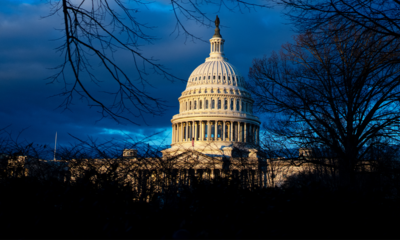
Sunrise light hits the U.S. Capitol dome. (Bill Clark/CQ-Roll Call, Inc via Getty Images)
Congress can’t change any of that. But it can alter how we perceive it.
Lawmakers routinely fork over to public tax cuts, economic stimulus and the elimination of a cumbersome law or policy.
Awarding something to the voters is part of the Congressional DNA.
So even though time is finite, lawmakers are again trying to give people something: more daylight.
The House of Representatives overwhelmingly approved the Sunshine Protection Act this week, 308-117.
HOUSE PASSES SUNSHINE PROTECTION ACT TO MAKE DAYLIGHT SAVING TIME PERMANENT
No. Our sun wasn’t in jeopardy of going supernova — although it is about halfway through its 10 billion year lifespan. Lawmakers weren’t safeguarding it. But they wanted you to think they were.
The Sunshine Protection Act permanently shifts the U.S. onto Daylight Saving Time. That’s a congressionally contrived temporal statute.
In other words, with adoption of the bill, we will never shift back to Standard Time again.
No more «springing forward» or «falling back.»
We’re on Daylight Saving Time now. And we are here to stay if this becomes law.
«Polling shows that two-thirds of Americans want to unlock the clock. My bill is simply a solution to make Daylight Saving Time permanent,» said Rep. Vern Buchanan (R-Fla.), one of the chief sponsors of the legislation. «Allowing an extra hour of sunlight in the evening gives families more time for outside sports activities and school.»
An extra hour of sunlight? Really?
In other words, it’s really the same amount of light – or lack thereof – at 7 p.m. under Daylight Saving Time that we could experience at 6 p.m. under Standard Time.
But Congress is in the giving business.
«Why are we forcing families, businesses, and communities to adjust their schedules every spring and fall? The twice-yearly clock change is a relic of the past that no longer reflects the way Americans live,» said Rep. Gus Bilirakis (R-Fla.)
Perhaps it’s an idea whose time has come.
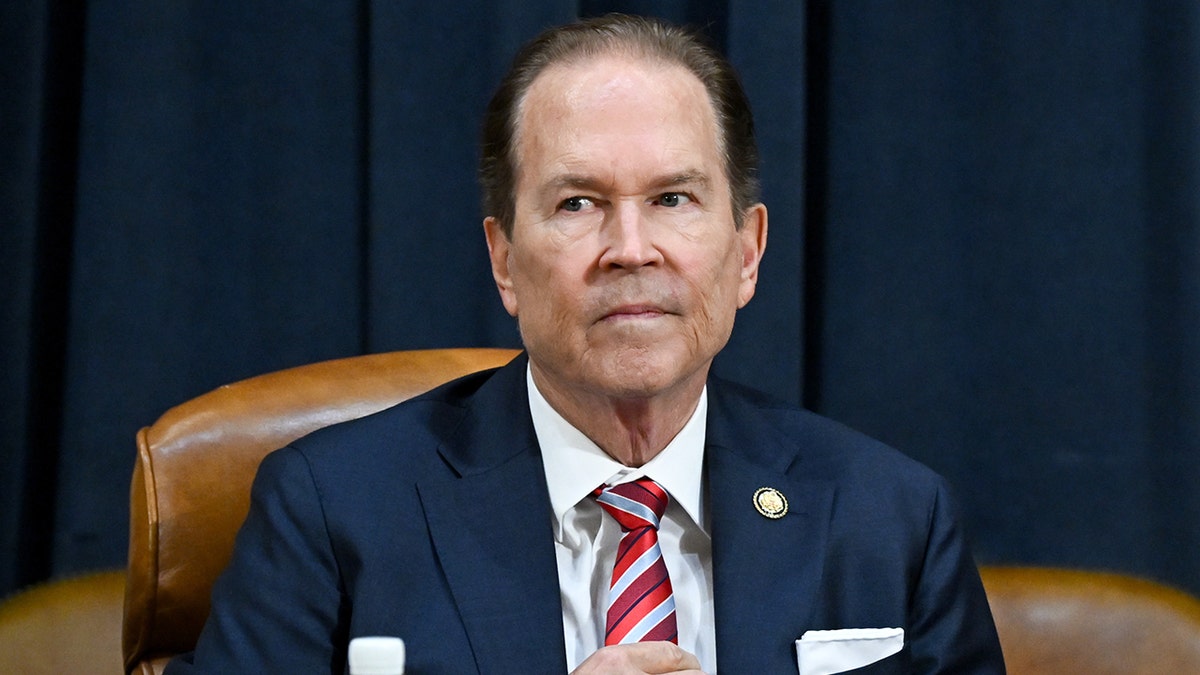
Rep. Vern Buchanan, R-Fla., is a lead sponsor of the Sunshine Protection Act, legislation that would end the twice-yearly clock changes. (Graeme Sloan/Bloomberg via Getty Images)
The biannual time change is maddening.
My mother taught second grade at the same elementary school I attended in rural Ohio.
One year, the school custodian got to work early on the Monday morning after the fall time change. He began to reset the clocks in each classroom. He maneuvered from south to north through the building, updating the clocks in the kindergarten. Then onto the first grade. Second grade after that. Third grade. Finally, fourth grade.
But as you traversed the school, each clock ran two to three minutes behind the one the custodian set previously.
We theorized that he looked at his watch, say around 7:10 a.m. – and proceeded to set each clock to 7:10 – regardless of the actual time. By the time you got to fourth grade, the clocks were nearly 20 minutes behind schedule.
As they say, timing is everything.
Only an episode involving my mother and grandmother tops the school’s time warp.
My mother once called my grandmother to remind her the time change would kick in at 2 a.m. on Sunday.
My grandmother was incredulous.
«You mean I have to sit up until two o’clock in the morning to change it?» she asked.
Establishing a year-around time isn’t something worth losing sleep over. Most just hate the exercise.
HOUSE PASSES DAYLIGHT SAVING TIME REFORM AS TRUMP SIGNALS SUPPORT FOR ENDING CLOCK CHANGE
«People in Tennessee wanted it gone. It’s ridiculous. In the fall it starts getting dark around 5:00. Kind of depresses me. Really kind of a doggy downer. So I’m kind of digging the fact that we’re going to fix it,» said Rep. Tim Burchett (R-Tenn.)
Only one member spoke out in opposition when the House debated the time-change bill: Rep. Madeleine Dean (D-Pa.)
Her grievances focused on why Congress was even considering the legislation when it wasn’t trained on bread-and-butter subjects which could be key in the midterms.
«We aren’t voting on bills right now that would reduce the sky-high costs of food, fuel, health care, or addressing the President’s war in Iran. Instead, we’re considering a bill that was deadly and dangerous in the past, in the ‘70s,» said Dean.
Dean is referring to an experiment in 1974. Congress voted in late 1973 to park the nation on Daylight Saving Time for two solid years. This would help combat the OPEC oil embargo and fuel shortages.
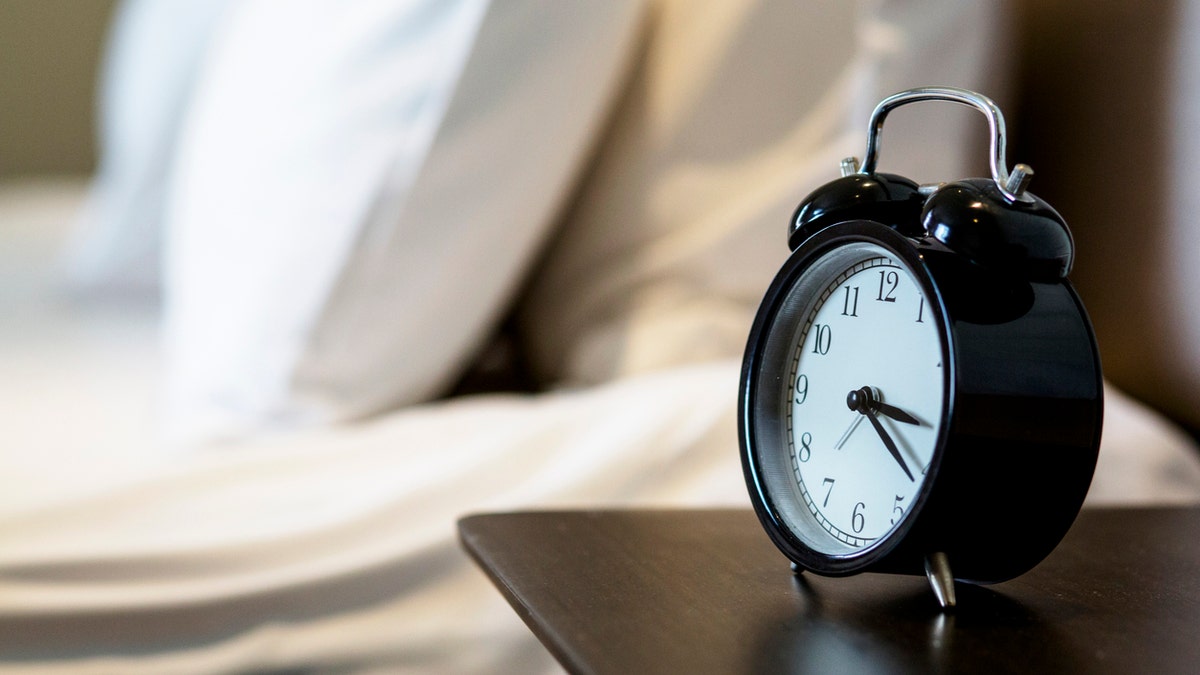
Daylight saving time (DST), or turning the clock by an hour, is ineffective in reducing energy expenditures and lends health consequences, experts say. (iStock)
It was a disaster.
Kids in Washington, DC headed for school around 8:30 a.m. It’s unclear whether the custodian properly adjusted the clocks. But it was «jet black» in DC, according to one news account from the time. Some kids set off for school with flashlights illuminating their paths.
You might not give politics the time of day.
But the time of day infuriated Americans in the mid-1970s.
Seventy-nine percent of those surveyed embraced the year-round time switch in December 1973.
But that number plunged to 42 percent by August 1974.
Future Senate Majority Leader Bob Dole (R-Kan.) offered a measure to torpedo the Daylight Saving Time project. It passed. And by fall, everyone was falling back.
A House panel examining the issue declared that changing the clocks «must be balanced against a majority of the public’s distaste for the observance of Daylight Saving Time.»
In 2022, the Senate unexpectedly approved a year-round Daylight Saving Time bill. But it languished as the House hit the snooze button.
Now the House approved an updated version of the legislation. President Trump called switching the clocks «ridiculous.» Sen. John Kennedy (R-La.) even discussed the issue with him this week.

President Donald Trump has expressed support for ending the twice-yearly clock changes as the Senate considers the Sunshine Protection Act. (SAUL LOEB / AFP via Getty Images)
«He seems to be very enthusiastic about it. I would put it that way. And I think we’re going to move the bill pretty quickly,» said Kennedy. «Some of my colleagues are opposed to it. They’re entitled with their opinion. But I think we’ll have a vote soon.»
If the Senate passes the bill, some people will say it’s about time.
But others, like Madeleine Dean, remember the 1970s.
CLICK HERE TO DOWNLOAD THE FOX NEWS APP
George Santayana declared that «those who cannot remember the past are condemned to repeat it.»
But if you’re running an hour ahead of Daylight Saving Time, perhaps you should switch your clock back and fix it to Standard Time.
donald trump, congress, bills
INTERNACIONAL
El Salvador refuerza cooperación con el Programa Mundial de Alimentos en beneficio de la seguridad alimentaria

La ministra de Relaciones Exteriores de El Salvador, Alexandra Hill, y el director ejecutivo interino del Programa Mundial de Alimentos (PMA), Carl Skau, reafirmaron este viernes el compromiso de fortalecer la seguridad alimentaria de la población salvadoreña. El encuentro se realizó en el marco de la visita oficial de Skau, quien llegó al país para evaluar los avances de la colaboración conjunta y explorar nuevas vías de cooperación.
El Ministerio detalló que existe un marco de cooperación quinquenal, vigente desde 2022, con una asignación de USD 129.2 millones. Este acuerdo se consolidó para complementar las políticas y programas que impulsa el Gobierno de El Salvador en materia de alimentación y nutrición, especialmente en las zonas más vulnerables. Según comunicó la Cancillería, el aporte técnico y financiero del PMA ha permitido ampliar el alcance de las iniciativas orientadas a la protección de los sectores más desfavorecidos.
Entre las principales acciones derivadas de esta alianza, el Ministerio citó proyectos de preparación y respuesta ante emergencias, ejercicios de fortalecimiento de capacidades para pequeños productores agrícolas y apoyo a emprendedores en el sector alimentario. Además, se han implementado programas de alimentación escolar y de nutrición infantil, que buscan mejorar los indicadores de salud de la niñez salvadoreña. La cartera de Estado subrayó que estas iniciativas han generado oportunidades directas para miles de personas en situación de vulnerabilidad.

Durante la reunión, la ministra Hill destacó la relevancia de la cooperación internacional y reconoció el papel estratégico que desempeña el PMA en la agenda de desarrollo nacional.
Una de las experiencias que más atención ha recibido es el programa GastroLab, que ofrece formación culinaria a jóvenes de distintas localidades con el propósito de facilitar su inserción en los sectores turístico, hotelero y restaurantero. El Ministerio señaló que esta propuesta no solo responde a la necesidad de empleo juvenil, sino que también impulsa el desarrollo de industrias que han mostrado una tendencia de crecimiento sostenido en los últimos años.
Por su parte, el director ejecutivo interino del PMA, Carl Skau, acudió al encuentro acompañado de la representante del organismo en El Salvador, María Guimarães. Skau valoró el trabajo conjunto y coincidió con la canciller Hill en la importancia de mantener y ampliar la cooperación. De acuerdo con el comunicado, ambas partes reiteraron su interés en avanzar hacia la seguridad y sostenibilidad alimentaria para todos los habitantes del país.

La Cancillería recalcó que el respaldo del PMA se ha traducido en resultados concretos: más comunidades atendidas durante emergencias, mayor acceso a capacitación para productores y emprendedores, y una mejora sustantiva en los servicios de alimentación escolar. El Ministerio puntualizó que la coordinación con el organismo de Naciones Unidas ha fortalecido los mecanismos de respuesta rápida ante desastres y emergencias alimentarias.
Por su parte, el PMA remarcó que la cooperación con El Salvador constituye una referencia en la región centroamericana. Según la representación del organismo, los proyectos ejecutados han permitido replicar buenas prácticas y lecciones aprendidas en otros países con desafíos similares en materia de seguridad alimentaria.
corresponsal:Desde San Salvador, El Salvador
INTERNACIONAL
Donald Trump denunció que China interfirió en las elecciones de 2020 en EE.UU. y volvió a agitar el fantasma del fraude



Mercados: las acciones argentinas tuvieron cierre dispar en un negativo contexto financiero en el exterior

Time enough at last: What’s next after the House passes bill to do away with Daylight Saving Time?

El Salvador refuerza cooperación con el Programa Mundial de Alimentos en beneficio de la seguridad alimentaria

Deportivo Riestra derrotó a San Lorenzo en la tanda de penales y se clasificó a octavos de la Copa Argentina: así quedó el cuadro

Un juez de la Corte brasileña endurece el arresto domiciliario de Jair Bolsonaro y frustraría la visita de Milei

La respuesta de Mimi Alvarado tras la denuncia de Milett Figueroa: “Llevo años padeciéndola, me consumió”

El machete del arquero inglés en una botella que sorprendió a Messi tras el triunfo: el dardo de un ayudante de Scaloni a Inglaterra

El fuerte cruce público entre Victoria Villarruel y Patricia Bullrich tras los chats filtrados antes de la sesión del Senado

Vaca Muerta promete renta anual del 15% y desata una fiebre inmobiliaria sin precedentes

El Gobierno centralizó en Gustavo Coria la gestión del Fondo de Aportes a las provincias

 DEPORTE2 días ago
El machete del arquero inglés en una botella que sorprendió a Messi tras el triunfo: el dardo de un ayudante de Scaloni a Inglaterra
- POLITICA1 día ago
El fuerte cruce público entre Victoria Villarruel y Patricia Bullrich tras los chats filtrados antes de la sesión del Senado
- POLITICA1 día ago
Adrián Ravier, vocero de Milei: “No coincidimos en el Gobierno con esto de que la gente no llega a fin de mes”