INTERNACIONAL
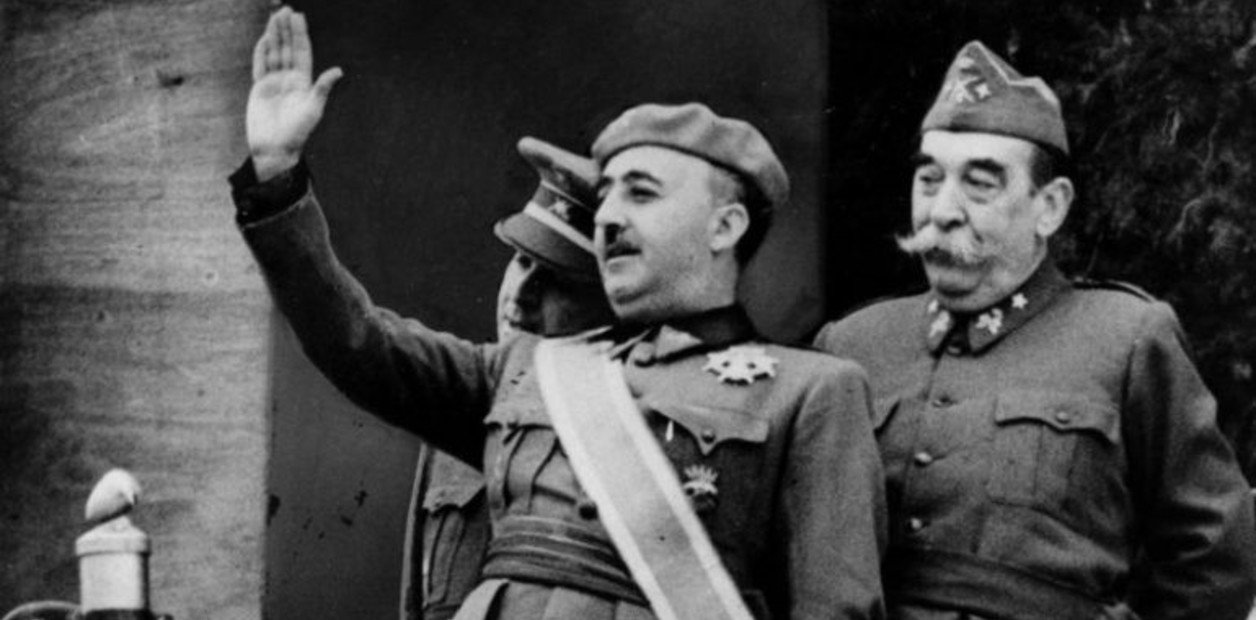
La memoria de la Guerra Civil española y sus espantos, 90 años después




INTERNACIONAL
Brasil proclama a sus candidatos a presidente con Lula por delante de Flávio Bolsonaro en los sondeos

INTERNACIONAL
Europe’s fires reveal deadly mix of record heat, human error, arson and land mismanagement
NEWYou can now listen to Fox News articles!
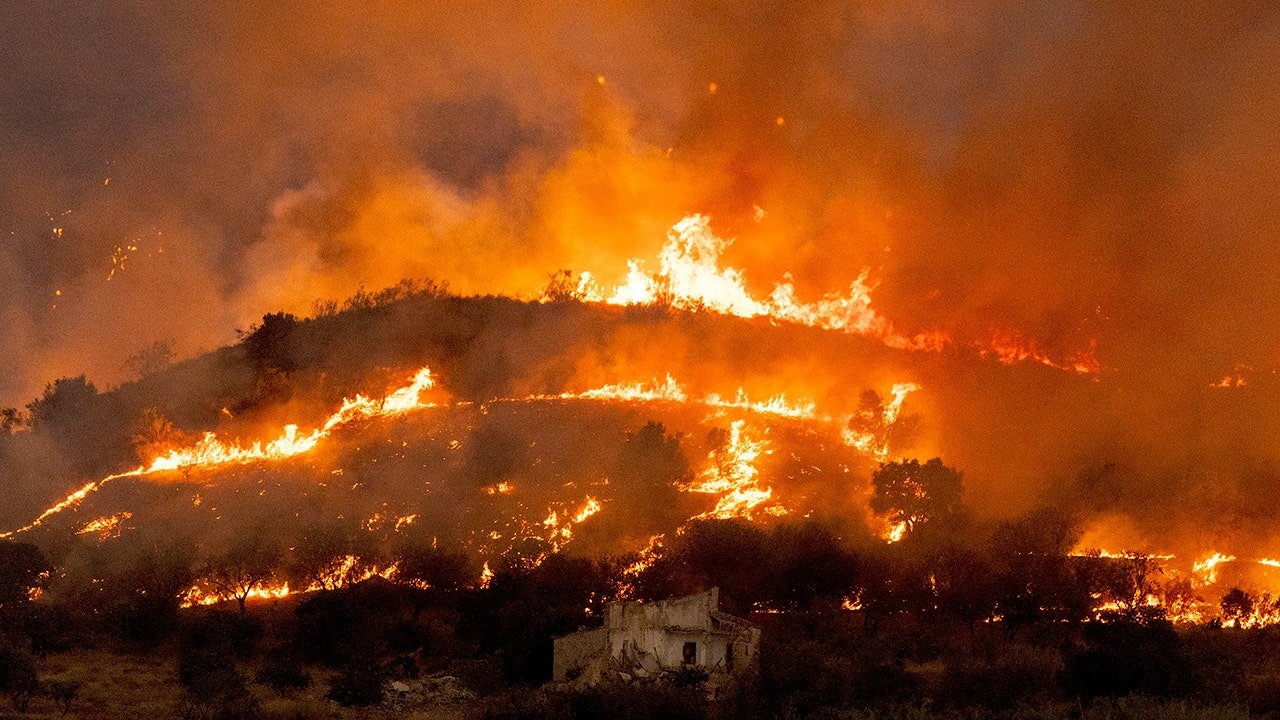
Since the beginning of the month, France and Spain have been hit by massive wildfires. Some observed the fires looked like a scene from Armageddon. The infernos destroyed buildings and forests alike, where the epic heat wave in Europe has hit record levels in many parts of the bloc. The heat has already led to thousands of deaths. However, the fires are not just due to the record heat.
Notably, last week, the famous Fontainebleau Forest near Paris was set alight, destroying 2,000 hectares (4,942 acres) of woodland. Approximately 1,000 people were evacuated, and 850 emergency firefighters were deployed — efforts to end the fire could take weeks.
Reports show that it’s not just climate change causing the destruction. The latest data from France’s Ministry of Agriculture says nine out of 10 wildfires are caused by people. Often it’s campfires, unextinguished cigarettes, or similar negligence. That was exacerbated by the extreme heat this year in France and Spain, which in many cases turned scrub grassland into a tinderbox. It’s also true that both countries have regulations that prohibit clearing of certain protected lands, according to information from each country. «Policies of nature restoration and building have made it hard in some cases to clear the brush that piles up,» Daniel Lacalle, chief economist at Madrid-based investment company Tressis, told Fox News Digital.
1,700 EVACUATED, FIREFIGHTER DEAD AS TURKEY WILDFIRES TEAR THROUGH MAJOR CITY
Firefighters ignite vegetation in a controlled burn to create a firebreak in the Fontainebleau Forest on July 15, 2026 in Fontainebleau, France. Firefighters say they have now contained the fire that began July 12, 2026 in the former royal hunting preserve. The blaze, which police believe was arson, has burned thousands of acres. (Pierre Crom/Getty Images)
The causes of fires in the U.S. are quite similar to those in France. According to data from the National Interagency Fire Center (NIFC) and the U.S. Forest Service, 85% of fires are caused by people. However, the total wildfire burns in the U.S. from lightning-caused fires tends to burn more acreage because they often strike in remote, hard-to-reach areas.
France’s Interior Minister Laurent Nuñez said experts found ten points around a little more than half of a mile radius that were used for ignition, according to a report by France Insider. It also found that pattern «suggests a voluntary origin,» the minister reportedly said.
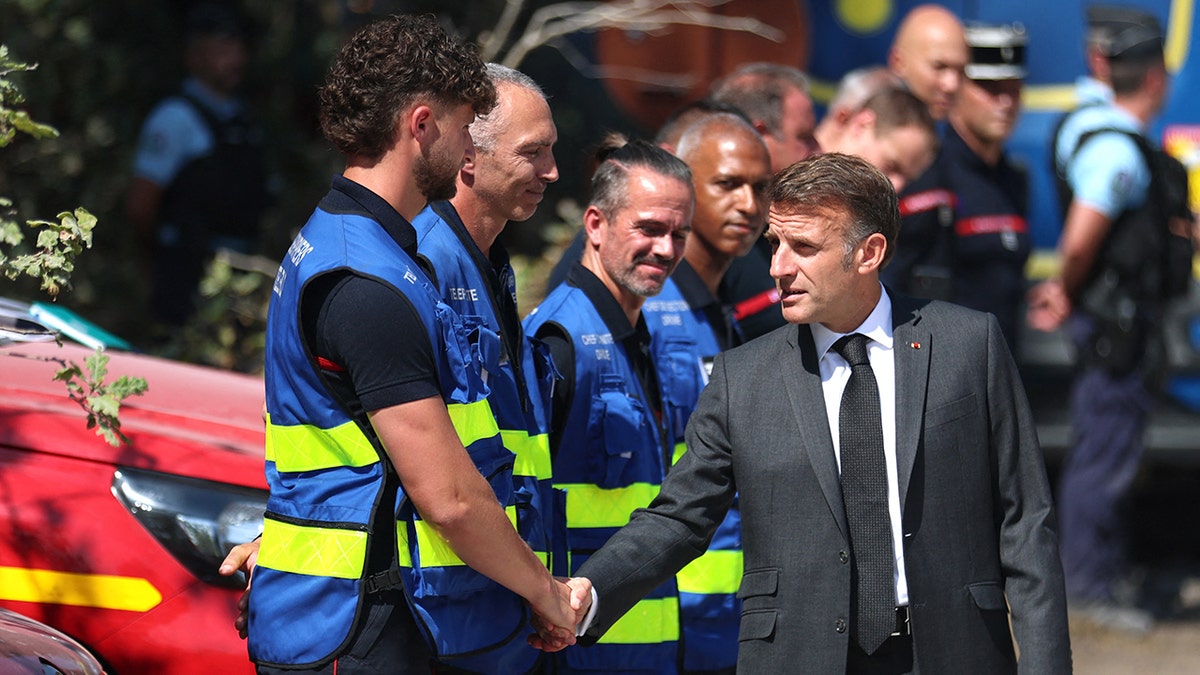
France’s President Emmanuel Macron shakes hands with firefighters members of the drone section during a visit at the firefighters’ central command site following a fire in the Fontainebleau Forest, in Noisy-sur-Ecole, in the Paris’ Ile-de-France region on July 16, 2026. A volunteer firefighter who was suspected of starting a fire in France’s historic Fontainebleau forest, was placed under formal investigation and remanded in custody on Wednesday, a prosecutor said. Interior Minister has said 32,000 hectares have been hit by fires since the start of this year — more than during the entire 2025 fire season. (Mohammed Badra/Pool/AFP via Getty Images)
France 24 reported that dozens of people have been arrested across the nation for either accidentally or deliberately starting fires. On a visit to the Fontainebleau forest last week, French President Emmanuel Macron said that the country «has never faced so many outbreaks of fire across the country since the end of World War II.» He added, «Here, as everywhere else in France, there will be zero tolerance» for arsonists, «because it is, of course, our national territory that is under attack every time a fire breaks out,» Macron said according to the France 24 report.
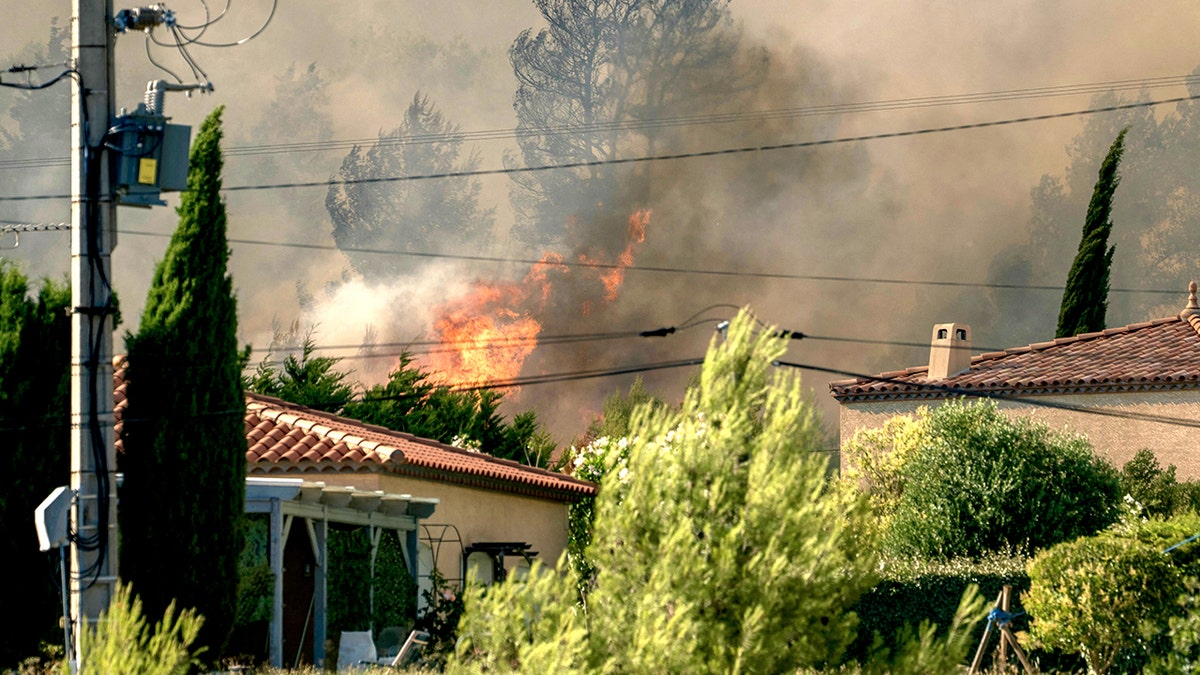
This photograph shows a wildfire raging near houses in Pouzols-Minervois, southwestern of France, on July 2, 2026. Hundreds of firefighters are battling wildfires in the south that are being fueled by wind, drought, and heat. The largest fire is in the Aude department, but there are also fires north of Marseille, where the prime minister is expected to chair a new inter-ministerial crisis task force. (Idriss Bigou-Gilles / AFP via Getty Images)
Meanwhile, Spain has been dealing with three separate wildfires, one of which has been stopped. A fire in Zaragoza destroyed 12,000 hectares (29,653 acres) and resulted in the evacuation of six separate villages. Fires in Madrid and Guadalajara impacted at least 2,000 people. «The speed of these fires is something that even the most experienced firefighters are saying they have never seen anything like this,» Lacalle told Fox News Digital.
THREE MAJOR US CITIES RANK AMONG WORST AIR QUALITY IN THE WORLD AS CANADIAN WILDFIRE SMOKE INVADES AMERICA
A fire in the Spanish Andalusia region killed at least 13 people, including a 93-year-old woman who was injured in the fire at Los Gallardos.
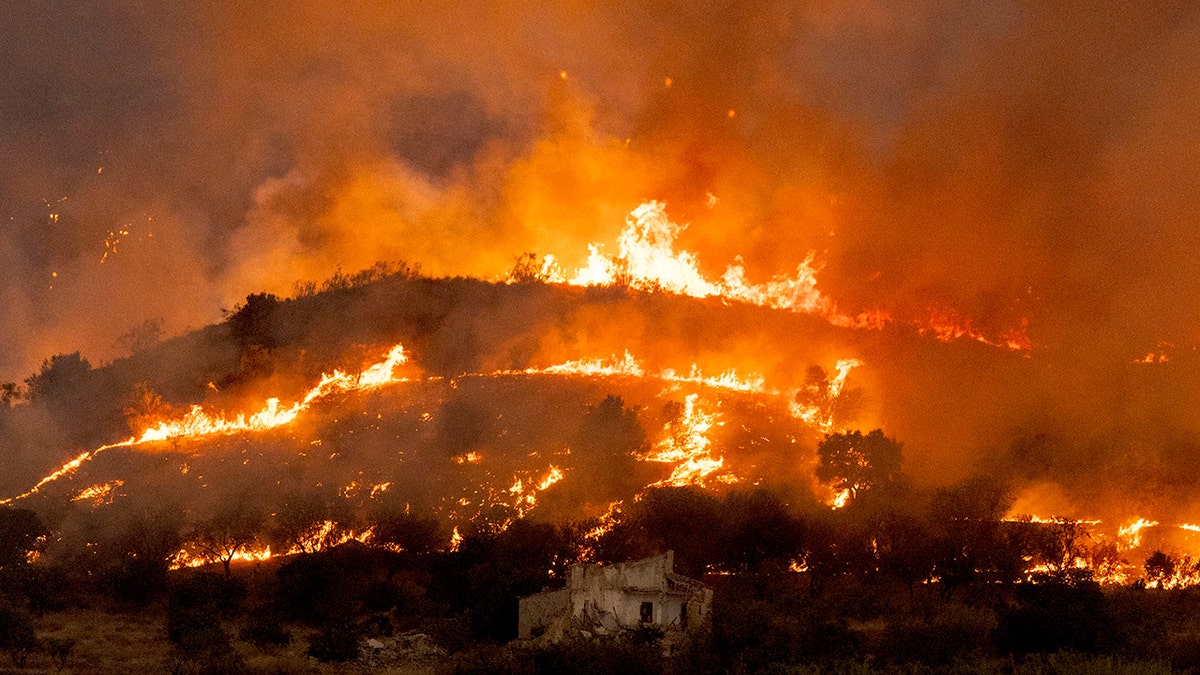
ALMERIA, SPAIN – JULY 10: Flames and smoke rise from a wildfire near the municipality of El Pocico on July 10, 2026 in Almeria, Spain. Emergency crews continue to battle the wildfire in Spain’s southern province of Almería that has killed at least 11 people, with 19 to 23 others still reported missing. (Pablo Blazquez Dominguez/Getty Images)
Spain has vast areas of unused land with most of the population living in cities. «Some unused areas have not been cleaned up,» Lacalle told Fox News Digital. «Because they have uncleared scrub land, there is a higher likelihood of a disastrous fire.» That unclears scrub that gets dried out by an extreme heat wave effectively creates a tinderbox that ignites quickly, even with a partially smoked cigarette.
Are there more wildfires happening across the globe than there used to be? Not necessarily. The volume of land burned declined 26% between 2002 and 2021, according to data from Global Wildfire Information System (2026). «It seems to be getting more attention,» Gilbertie told Fox News Digital. «It’s also the manifestation of the increased weather volatility.
Are there more wildfires happening across the globe than there used to be? The number of people exposed to wildfires has grown by an average of 382,700 per year during the period from 2002 to 2021, an increase of 40%, according to a study by the University of East Anglia in England. The study says, «This surge in human exposure was driven mainly by population growth and migration into fire-prone landscapes.» Over the same period, the amount of land burned decreased by 26%, according to the UEA study.
CLICK HERE TO DOWNLOAD THE FOX NEWS APP
Separately, the extreme heat across France over the last month has caused a high death rate. The Guardian reported that some 2,000 people died at the end of June. However, that heat wave is forecast to continue through August.
France is the epicenter of the excessive heat, which has resulted in many outdoor events being canceled, especially in the south of the country. «Europe is being hit by a unique situation,» Hackett told Fox News Digital. «The extreme heat and dryness are mainly being driven by the warm surface in the Mediterranean Sea and the cold-water Atlantic.» And that situation of warm dry weather will continue into August.
europe, france, spain, wildfire, heat wave, world
INTERNACIONAL
Guatemala asume la presidencia de la Red Iberoamericana de Directores y Directoras de Biodiversidad por dos años
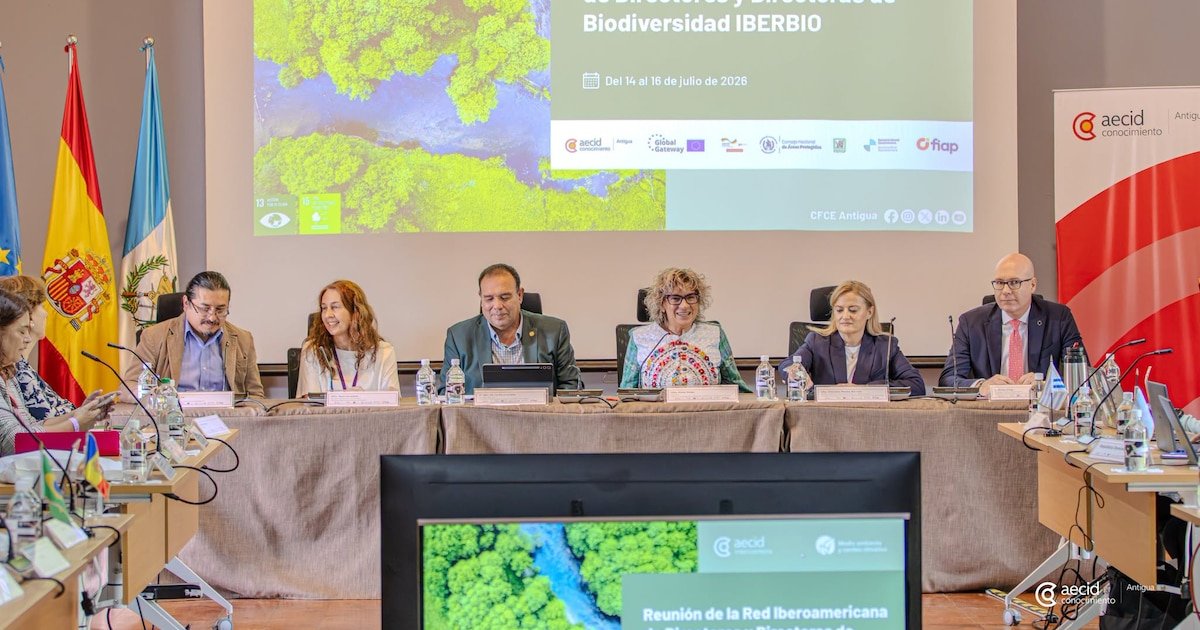
Guatemala asumirá la presidencia de IberBio durante dos años tras la primera reunión presencial de la red, celebrada del 14 al 16 de julio en Antigua Guatemala, un encuentro que reunió a representantes de 15 países para definir su programa de trabajo 2025-2027 y coordinar acciones regionales sobre biodiversidad.
La decisión se tomó después de un proceso iniciado en 2024, durante la COP de Cali, y quedó formalizada en esta cita presencial, donde también se avanzó en la consolidación de la Red Iberoamericana de Directores y Directoras de Biodiversidad. La presidencia guatemalteca implicará representar a la red en distintos espacios y velar por el cumplimiento de los planes y actividades acordados.
Según la Secretaría General Iberoamericana, la reunión convocó a delegaciones de 15 países de Iberoamérica con el objetivo de fortalecer el diálogo y la cooperación en favor de la biodiversidad. Guatemala participó como país anfitrión y presentó experiencias nacionales vinculadas con la gestión sostenible de la diversidad biológica y la restauración ecológica de ecosistemas.
Igor de la Roca, director del Consejo Nacional de Áreas Protegidas, destacó que las delegaciones llegaron para conocer experiencias guatemaltecas en gestión sostenible y restauración. También sostuvo que la combinación entre riqueza natural y riqueza cultural convierte a las prácticas del país en un referente para la región.

La I Reunión de la Red Iberoamericana de Directores y Directoras de Biodiversidad tuvo como objetivo consolidar la red, avanzar en la implementación de su programa de trabajo 2025-2027 y reforzar el diálogo entre los países participantes. El propósito fue identificar retos comunes y coordinar respuestas frente a compromisos compartidos en biodiversidad.
Durante tres días, las delegaciones participaron en sesiones plenarias, talleres de trabajo en grupos, mesas de diálogo e intercambio, además de espacios de interacción orientados a fortalecer la cooperación regional. El encuentro incluyó una visita de campo como parte de esa agenda de colaboración.
En el segundo día, Guatemala compartió experiencias de gestión territorial y restauración, con énfasis en el trabajo de restauración de tul que se desarrolla en la Reserva de Uso Múltiple de la Cuenca del Lago de Atitlán. Esa tarea se realiza entre el CONAP, la Autoridad del Lago de Atitlán y otras instituciones aliadas.
De acuerdo con el CONAP, la biodiversidad constituye uno de los principales patrimonios naturales del país. El organismo impulsa el fortalecimiento del Sistema Guatemalteco de Áreas Protegidas, la conservación de especies y ecosistemas estratégicos, la restauración de paisajes y el trabajo conjunto con comunidades y socios para promover una gestión sostenible del territorio.

La delegación visitó el Centro de Educación para el Desarrollo Rural y la Adaptación al Cambio Climático (CEDRACC), de la Asociación Vivamos Mejor, ubicado en el caserío Chuitzanchaj, municipio de Santa Cruz La Laguna, en el departamento de Sololá. El recorrido buscó mostrar experiencias que conectan conservación de la biodiversidad, producción y participación comunitaria.
El centro funciona como escuela de campo comunitaria y como centro de rescate de biodiversidad. Allí se desarrollan procesos de conservación y reproducción de especies nativas forestales y agrícolas, y la formación se apoya en la práctica directa de familias y comunidades, con intercambio de saberes ancestrales y científicos.
La visita permitió conocer de primera mano modelos centrados en la restauración de la Reserva de Uso Múltiple de la Cuenca del Lago de Atitlán, la producción y conservación de la agrobiodiversidad, las unidades demostrativas y productivas para el desarrollo rural, el enfoque de adaptación al cambio climático y las oportunidades para el desarrollo sostenible.
Sara Covaleda, jefa de la división de medio ambiente de la SEGIB, explicó que la reunión presencial sirvió para cerrar el trabajo iniciado el año pasado y tomar decisiones sobre la conducción de la red. “Hoy estamos tomando decisiones importantes, siendo una de las principales que el país que va a asumir la presidencia de la red. Esta presidencia será asumida por Guatemala durante los próximos dos años, en las que el país deberá representarla en los distintos escenarios y asegurar que se van cumpliendo sus planes de trabajo y actividades que se propongan”.
Expertas y expertos iberoamericanos también compartieron durante el encuentro experiencias nacionales en conservación, protección y restauración de ecosistemas. El Centro de Formación de la Cooperación Española en Antigua Guatemala fue sede de este espacio de diálogo regional, que además acogió un intercambio orientado a fortalecer la protección de las personas defensoras del medio ambiente.
biodiversidad,IBERBIO,reunión,Antigua,cooperación internacional,conservación

Brasil proclama a sus candidatos a presidente con Lula por delante de Flávio Bolsonaro en los sondeos

Las radios AM y FM que transmiten el Argentina vs. España por el Mundial 2026

Estiman en USD 58 millones la demanda de dólares de los argentinos que a última hora asistirán a la final del Mundial

A falta de dos, se implementaron cuatro pausas de rehidratación en una liga de Estados Unidos

María Becerra llegó al estadio de la final del Mundial 2026 para cantar el Himno: “Esto es lo más lindo de mi carrera”

Ese dorado objeto de deseo: historia, materiales y diseño de la Copa del Mundo, que gane quien gane seguirá en Zurich

El machete del arquero inglés en una botella que sorprendió a Messi tras el triunfo: el dardo de un ayudante de Scaloni a Inglaterra

El fuerte cruce público entre Victoria Villarruel y Patricia Bullrich tras los chats filtrados antes de la sesión del Senado

Adrián Ravier, vocero de Milei: “No coincidimos en el Gobierno con esto de que la gente no llega a fin de mes”

🇦🇷La Victoria Legendaria – El llanto interminable de Lautaro Martínez tras el pase a la final del Mundial: “Soñé que iba a hacer este gol”

 POLITICA3 días ago
El fuerte cruce público entre Victoria Villarruel y Patricia Bullrich tras los chats filtrados antes de la sesión del Senado
- POLITICA3 días ago
Adrián Ravier, vocero de Milei: “No coincidimos en el Gobierno con esto de que la gente no llega a fin de mes”
- INTERNACIONAL2 días ago
Rubio’s call to combat global funders of far-left terrorism could put Singham in crosshairs