INTERNACIONAL
“Tengo que ser visto para que me crean”: los secretos de los silenciosos vestuaristas de la realeza británica a través de la historia


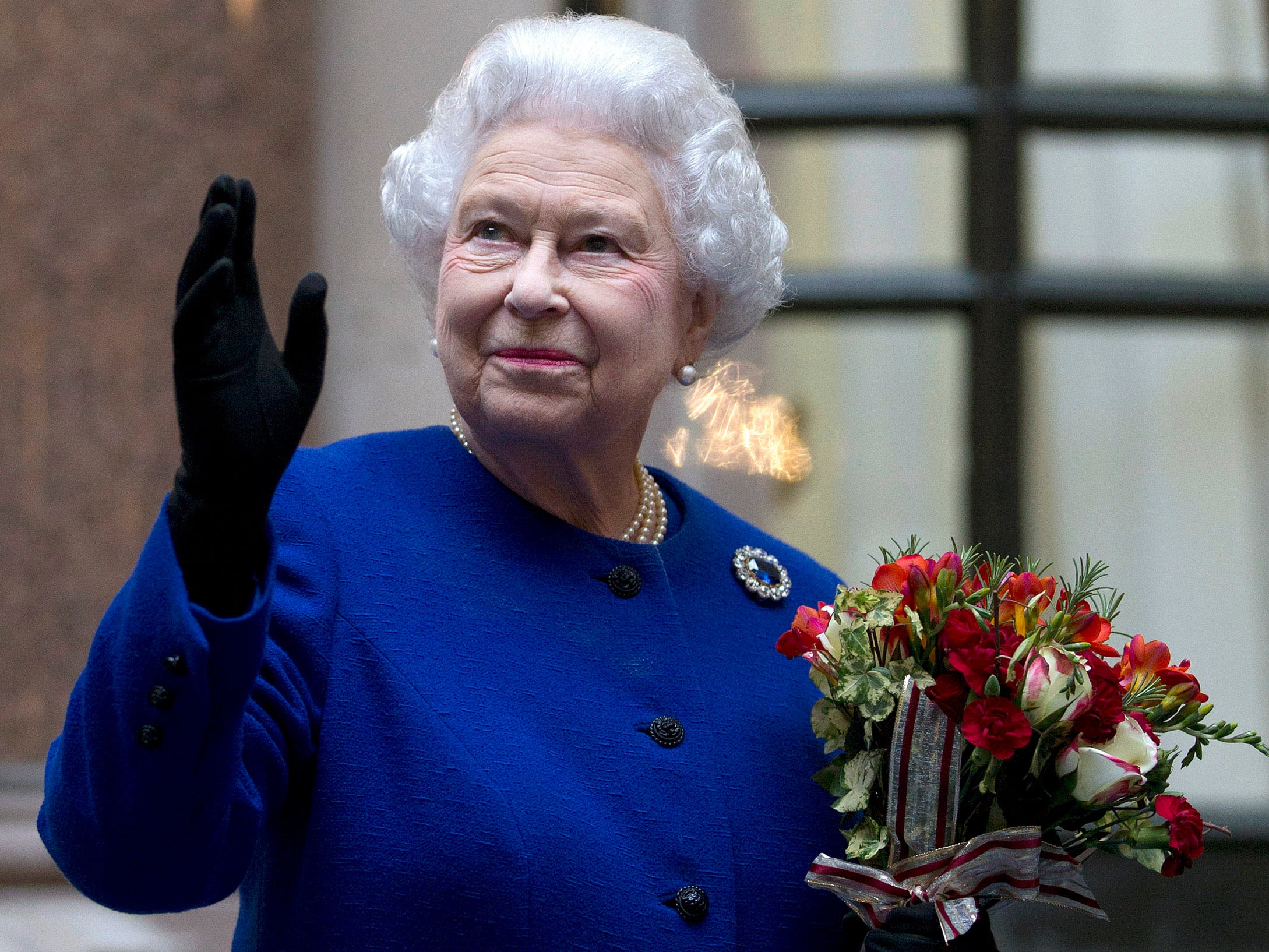
Pese al alboroto sensacionalista que suelen generar ciertos miembros díscolos de su familia, la imagen de una reina Isabel II cumplidora e impecablemente digna sigue siendo un referente para los admiradores de la monarquía británica. Una exposición que actualmente se presenta en el Palacio de Buckingham ofrece una mirada inusualmente íntima a la ropa que ayudó a definir esa imagen.
Se trata de la muestra más amplia jamás organizada sobre el vestuario de la difunta monarca: reúne más de 300 prendas y accesorios que recorren su vida, desde la infancia hasta el final de su reinado de 70 años. Contemplar estos objetos permite entender que, para Isabel —como para tantas reinas a lo largo de la historia—, la ropa siempre fue más que “simplemente” ropa. Podía funcionar como herramienta de Estado o de diplomacia, como publicidad patriótica o incluso como diversión personal. El conjunto característico de Isabel —un abrigo de colores vivos y un vestido a juego, un sombrero extravagante y zapatos prácticos de tacón bajo— funcionaba como una especie de uniforme, indispensable para el desempeño de sus deberes reales y, en verdad, para la propia representación de la realeza. Como ella misma dijo célebremente: “Tengo que ser vista para que me crean”.
Sin embargo, la figura de la reina, reconocible al instante, nunca fue obra de un único diseñador. Fue la creación colectiva de ejércitos de trabajadores especializados: hombres y mujeres que cortaban, cosían, confeccionaban, bordaban, tejían, trenzaban, ajustaban y construían de otras maneras sus múltiples componentes, ya fueran chales de cachemira de Norwich o vestidos de Norman Hartnell. En su esclarecedor nuevo estudio, Dressing the Queen, Kate Strasdin reconstruye las vidas y los trabajos de las “muchas manos” que, desde la época de la tatarabuela de Isabel II, la reina Victoria, han dado forma a los contornos sartoriales de la reina británica.

Historiadora del vestuario en la Universidad de Falmouth y autora de The Dress Diary, Strasdin define su proyecto como un intento de apartar el foco de Victoria e Isabel y dirigirlo “hacia los artesanos que, prenda a prenda, pusieron todas sus habilidades al servicio de la creación de objetos que pasarían a formar parte de la iconografía de la realeza, mientras ellos mismos permanecían casi por completo ocultos”.
Cada capítulo del libro se concentra en un área distinta de especialización y, a partir de una abundante investigación de archivo, vincula un puñado de historias de vida hasta ahora desconocidas con cada una de las categorías del guardarropa de la reina: desde túnicas de Estado y tiaras hasta atuendos de equitación y gabardinas.
Strasdin describe magníficamente las condiciones —a menudo insalubres— en las que trabajaban sus protagonistas y la naturaleza específica y sumamente exigente de sus tareas. También procura relacionar, siempre que es posible, un rostro y una identidad humanos concretos con las personas cuyos esfuerzos profesionales narra.
Dado que, en su mayoría, los trabajadores especializados que examina no dejaron —a diferencia de las reinas a quienes sirvieron— registros extensos para la posteridad, Strasdin se topa a menudo con vacíos documentales que no puede llenar. Su respuesta consiste en entregarse a moderados ejercicios de especulación. Por ejemplo, sobre el tejedor de seda George Doré, escribe: “Me pregunto qué sintió en ese último instante de creación, cuando el hilo final de brillante color petunia fue tejido en la tela del manto de terciopelo de la reina Alejandra. ¿Compró ediciones de recuerdo de los periódicos que registraban los detalles de la ceremonia de coronación celebrada el 9 de agosto de 1902?”.
Al presentar a Ethel Oatham, de 17 años, registrada en el censo de 1911 como trabajadora junto a su hermana Delia en adornos de alta gama para vestidos de mujer, pregunta: “¿Ethel retorcía y enlazaba cordones de seda o tejía las vertiginosas variedades de pasamanería? Quizá se sentaba con su hermana mayor y confeccionaba las bandas de flecos listas para ser cosidas al dobladillo de un vestido refinado”.
Y, acerca de una señorita Reid, de la empresa que producía el querido tartán de Balmoral de la reina Victoria y el príncipe Alberto: “¿Disfrutaba ser la única empleada mujer entre todos los sastres y fabricantes varones, o temía cada día al ocupar su lugar en el taller?”.

La invisibilidad de estos trabajadores dedicados contrasta de manera impactante con el perfil incomparablemente alto de las prendas que produjeron, una idea que Strasdin subraya repetidamente a lo largo de los 18 capítulos del libro. “Sus nombres individuales pueden perderse a veces, pero su trabajo permanece intacto”.
Aunque nunca menciona a Karl Marx —casi contemporáneo exacto de la reina Victoria, pues ella era un año menor y él vivió en Londres durante 34 años de su reinado—, quizá a Strasdin le habría interesado advertir que él previó este problema apenas siete años después de la llegada de Victoria al trono. Al desarrollar su idea del trabajo “alienado”, Marx afirmó en 1844: “El trabajador pone su vida en el objeto; pero ahora su vida ya no le pertenece a él, sino al objeto”. Como podría preguntarse Strasdin, ¿estaba Marx pensando en la suntuosa indumentaria de coronación de Victoria o en sus tweeds escoceses de las Highlands? ¿Se habría cruzado de algún modo con George Doré o la señorita Reid?
También en este punto la historia guarda silencio, y solo nos deja reflexionar, junto con Strasdin, sobre cómo, con el paso del tiempo, los creadores del guardarropa real desaparecieron en la magnificencia de aquello que hicieron.
Fuente: The New York Times

INTERNACIONAL
20 states sue to block Trump admin rule that would make it harder for immigrants to obtain visas, green cards
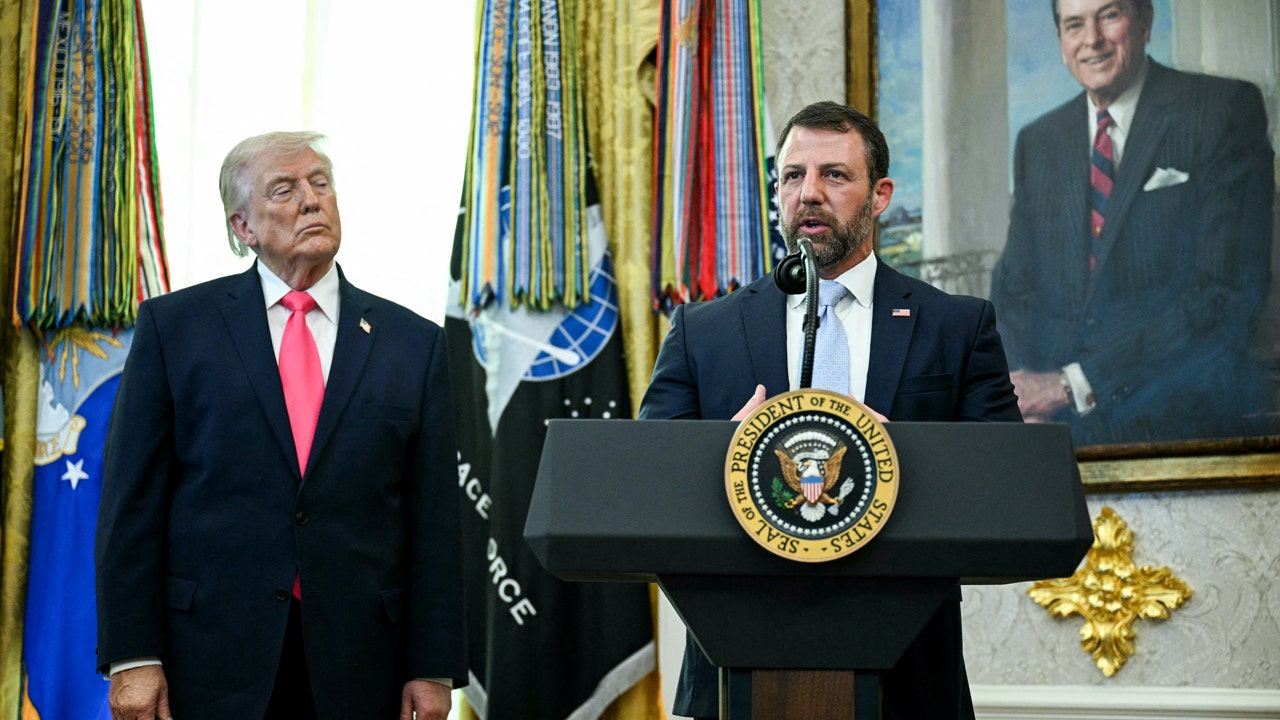
More than 20 states are suing the Trump administration over a new Department of Homeland Security rule that would give immigration officials wider discretion in determining what constitutes a public charge, a statute that allows the government to deny visas or green cards to applicants it determines are likely to become dependent on government assistance.
The rule, which is set to take effect on Friday, would expand the list of possible government aid that officials could point to when deciding to disqualify an applicant.
New York State Attorney General Letitia James led a coalition of 21 states and Washington, D.C., in suing the administration over what they describe as punishment for immigrants’ law use of public assistance. New York City Mayor Zohran Mamdani led a separate lawsuit filed by a coalition of cities challenging DHS’ rule.
James said the rule would allow immigration officials to consider an immigrant’s use of benefits like Medicaid, the Supplemental Nutrition Assistance Program (SNAP) and participation in school meal programs when determining whether they could become dependent on government aid. She also said it could lead to more fear of interacting with the government for people who are part of an immigrant family.
TRUMP ADMIN PAUSES VISA APPOINTMENTS WORLDWIDE AMID HEIGHTENED SCREENING FOR APPLICANTS
«Hardworking families should not be forced to go without the support they need because they fear asking for assistance will get them deported,» James said in a statement. «This rule preys on that fear and counts on families forfeiting the food assistance, health care coverage, and other public benefits to which they are legally entitled. My office fought this exact policy once before and won, and we are leading the nation to ensure the Trump administration cannot inflict this harm on families again.»
The public charge ground applies to certain immigrants seeking admission or adjustment of status. Most undocumented immigrants are ineligible for federal means-tested public benefits, although limited exceptions exist under federal and state law.
The states argue they would lose billions of dollars in federal funding if immigrants pull from programs over fears about the public charge rule.
Immigration officials under the Biden administration’s 2022 public charge rule generally considered only cash assistance for income maintenance, such as Temporary Assistance for Needy Families (TANF) or Supplemental Security Income (SSI), along with government-funded long-term institutionalization, when determining a public charge.
The rule does not specify a fixed list of public benefits that immigration officials may consider. Instead, it states that officers may consider the receipt of any means-tested public benefits as part of a public charge determination, giving them broader discretion in evaluating applicants.
The states’ and cities’ lawsuits asked the courts to declare the rule unlawful and prevent DHS from using it.
«It’s very hard to predict how courts will look at this issue. It is very unusual regulation though,» Cato Institute Director of Immigration Studies David Bier told Digital. «I think from that standpoint the states have a good argument that we had a well defined public charge rule and the administration didn’t replace it with some other well defined rule, it replaced it with nothing. So now there’s just discretion to the officers to do whatever they want with the underlying statute. There’s no regulation that clearly says this is what it means to be a public charge in the United States.»
«The rule as it was before this new regulation was you had to be primarily dependent on certain government benefit programs. This rule removes that definition and doesn’t replace it with anything. So now people and applicants, lawyers who are applying to the government on behalf of applicants, they don’t know really what the law is,» he continued.
The states’ lawsuit argues that DHS is exceeding its authority because Congress did not approve a broader interpretation of what it means to be a public charge. The states say the new rule is arbitrary and that the agency ignored the harmful consequences of the change.
DOJ THREATENS TO CUT BILLIONS IN WELFARE FUNDING FROM STATES FOR FAILING TO REPORT ILLEGAL MIGRANTS
«Cruelty is the point,» James said at a press conference on Monday. «Having a chilling effect on immigrants is the point. Letting individuals know that they are not welcome here is the point. Immigration animus is the point. The fact that you’re going to deny individuals who are sick and hungry and homeless benefits just is beyond the pale.»
DHS did not respond to Digital’s request for comment in time for publication.
Bier said the rule does not prohibit immigrants from receiving welfare and is only used as an officer’s projection about someone’s likelihood of future welfare use in the U.S., warning that it could lead to self-sufficient applicants being denied.
«Whether someone is currently using benefits or not doesn’t matter under this evaluation. It’s this probabilistic determination of the future that they’re using in order to deny people legal status and legal permanent resident status in the United States. That’s a much more difficult assessment to make. That’s going to result in arbitrary denials. It’s just not possible to do this type of assessment and not result in people who would be self-sufficient being denied status,» he said.
This comes as President Donald Trump pursues a broader immigration crackdown that has extended beyond illegal immigration to legal immigration pathways. While Trump campaigned in 2024 on curbing illegal immigration, his administration has also imposed additional restrictions on legal immigration, including higher fees for certain work visas and new limits on how long some foreign students and journalists can remain in the U.S.
The administration has also pursued visa revocations and removal proceedings in cases involving political activity and speech, including some anti-Israel activists. Those efforts have prompted court challenges in which plaintiffs allege violations of First Amendment free speech and Fifth Amendment due process protections.
«It’s very clear that this administration wants to restrict both illegal immigration, which obviously it’s done at the border, and through deportations, but also legal immigration,» Bier said.
Last month, the administration directed U.S. embassies and consulates around the world to postpone immigrant visa interviews while consular officers complete training on new public charge guidance, temporarily stalling applications that had reached the interview stage.
«The primary population that’s going to be affected by this public charge rule are spouses of U.S. citizens and their kids who are trying to receive green cards so they can live with their American spouse or parent here in the United States. That’s the overwhelming majority of the people who are going to be affected by the rule. It’s going to result in many of those immigrant families being separated from their American spouse or parent,» Bier said.
MAMDANI BLASTS FEDS FOR WAGING ‘CAMPAIGN OF VIOLENCE AND TERROR’ AGAINST NYC’S IMMIGRANTS
The public charge provision stems from the Immigration Act of 1882, when federal lawmakers sought to ensure that immigrants would be able to take care of themselves and not become a public burden.
After years of only considering cash benefits, the first Trump administration widened the categories of benefit programs that could be considered a public charge, including Medicaid, food stamps and housing vouchers. But the Biden administration in 2022 published a rule that returned to the previous guidance. The rule set to take effect this week would rescind the Biden administration’s rule.
The new rule is more broad than the one from the first Trump administration, as it does not specify which safety nets should be considered and only states that DHS «will consider the receipt of any means tested public benefits.»
«One of the most important things to understand is that during the first Trump administration, they had a public charge rule that was well defined that really did explain exactly what you were supposed to do in order to not be deemed a public charge or who was a public charge. This is completely different from that. It’s essentially the Wild West. No one knows what’s going on, no one knows what the law is now,» Bier said.
immigration, politics, homeland security, donald trump, us
INTERNACIONAL
El tope a los combustibles en Guatemala, la petición de Bernardo Arévalo y el pulso institucional que retrasa su aplicación
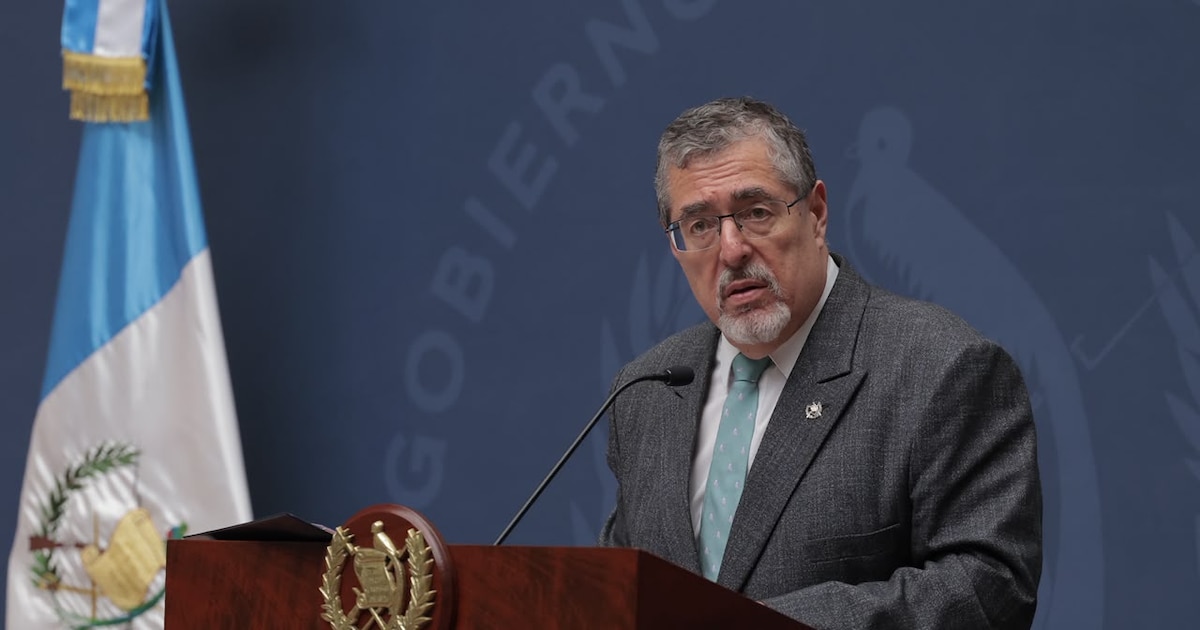
El presidente BernardoArévalo pidió acelerar la entrada en vigor del Decreto21-2026 para fijar precios máximos a los combustibles en Guatemala, tras una escalada que llevó el galón de diésel cerca de los Q50 (USD 6.49) y la amenaza con trasladarse al costo de los alimentos y la economía de los hogares.
La norma, aprobada por el Congreso de la República el 8 de septiembre con carácter de urgencia nacional, permanece sin ser trasladada al Ejecutivo por cuatro objeciones presentadas por el diputado opositor de Vamos Allan Rodríguez. La discusión deberá volver al pleno el 22 de septiembre.
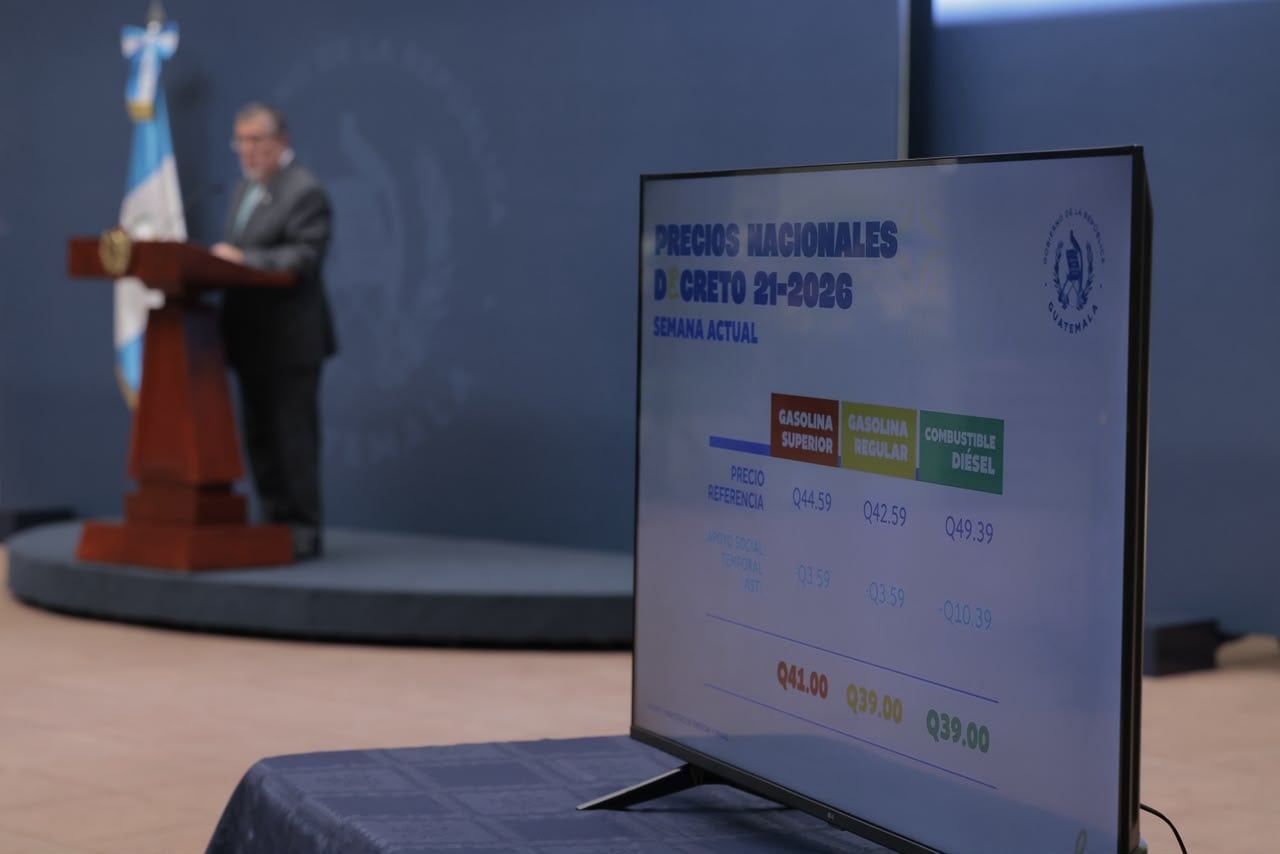
Durante la conferencia de prensa La Ronda, realizada el miércoles 16 de septiembre en el Palacio Nacional de la Cultura, Arévalo sostuvo que el Ejecutivo debe actuar frente a circunstancias internacionales que afectan al país. Identificó dos riesgos inmediatos: el encarecimiento de los hidrocarburos y la reducción de las lluvias.
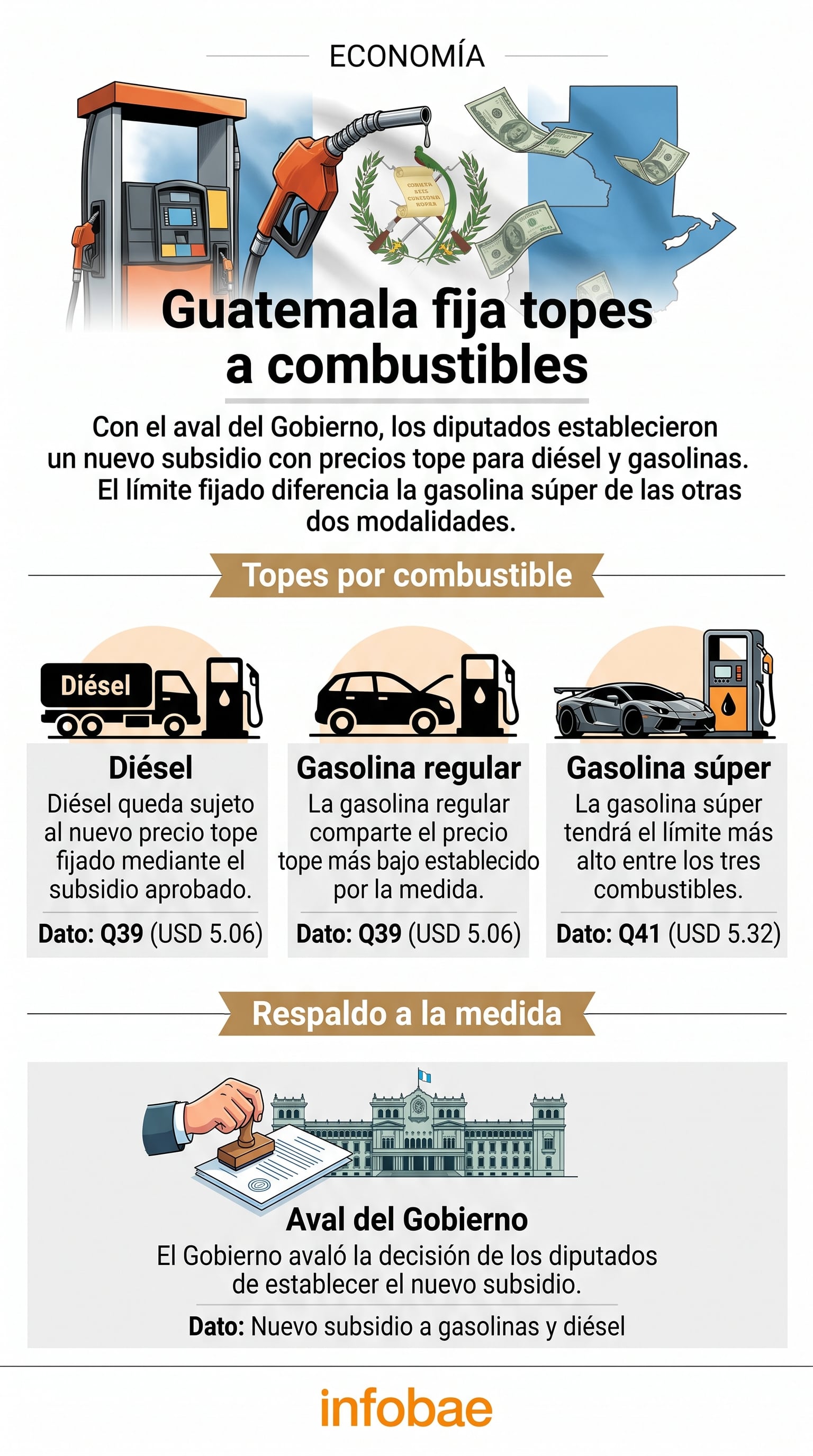
El Decreto 21-2026 establece un tope de Q39(USD 5.06) por galón para el diésel y la gasolina regular, y de Q41(USD 5.32) para la gasolina superior, hasta el 31 de diciembre. El mandatario afirmó que esta alternativa permitiría contener de inmediato el impacto sobre los consumidores, aunque no resolvería de manera permanente la crisis de precios.
“Son casi Q50 (USD 6.49) el galón, lo que afecta a todos y tiene efecto en la economía. No tenemos por qué seguir en ese marco”, expresó Arévalo. También indicó que, una vez que el Congreso envíe la normativa, podrá sancionarla y activar el nuevo esquema de precios.
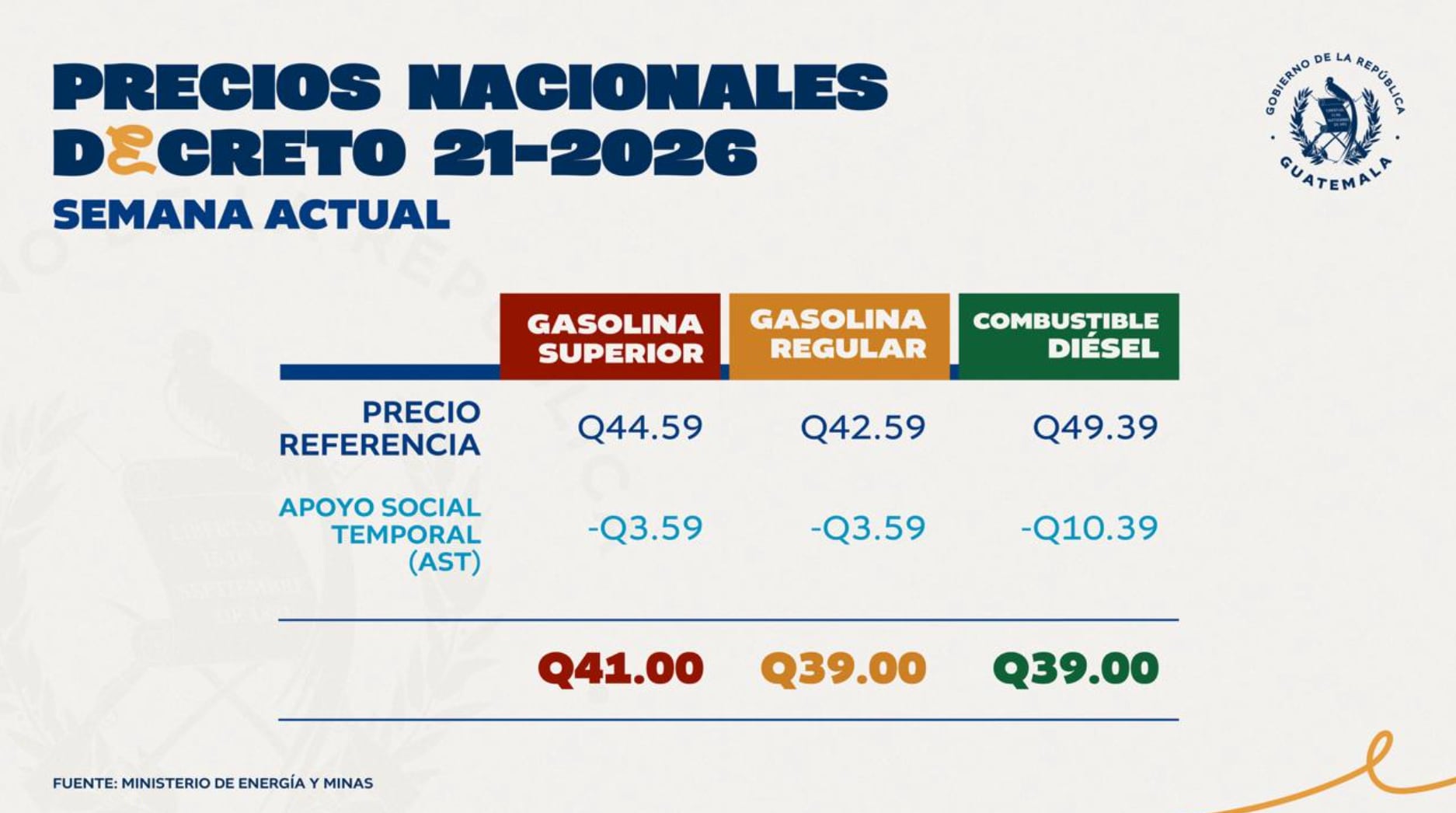
El mandatario guatemalteco explicó que el mecanismo mantendría el precio tope aun si las cotizaciones internacionales siguieran en ascenso durante los próximos días o semanas. Si el valor de mercado cayera por debajo del tope, el consumidor pagaría automáticamente el precio menor.
“Ahorita lo importante es mitigar el impacto de estos precios. Podemos seguir trabajando y nosotros tenemos el compromiso para seguir buscando otras medidas para darle respuesta a esta situación”, afirmó el Presidente. El Gobierno mantiene abierta la posibilidad de acuerdos con el Congreso y otros sectores para desarrollar soluciones complementarias.
El Ministerio de Energía y Minas y la Dirección de Atención y Asistencia al Consumidor deberán verificar que las estaciones de servicio apliquen los precios fijados y evitar cobros abusivos. La medida aprobada también contempla un fondo de compensación, aunque su aplicación continúa detenida por las objeciones legislativas.
Precios tope detenidos por objeciones y sin avance en el Congreso
La iniciativa de precios tope no ha avanzado en el Congreso. Si bien se aprobó con el voto favorable de 130 de 160 diputados, las objeciones presentadas por el congresista opositor, Allan Rodríguez, han impedido que el Decreto continúe su proceso.
Al respecto, Juan Carlos Rivera, primer Secretario del Legislativo, aseguró que este miércoles 16 de septiembre la Junta Directiva conoció las objeciones y se percataron que hubo un error al momento de citar el número del Decreto, por lo que, a criterio del legislador, debieran de ser rechazadas.
No obstante, aseguró que los abogados del Congreso analizan cuáles serán los pasos a seguir, aunque adelantó que si la mayoría de los integrantes de Junta Directiva deciden rechazar las objeciones por el error, entonces se enviará de inmediato la Ley aprobada al Ejecutivo para su veto o sanción.
De aceptarse las objeciones, se tendrán que conocer en el pleno hasta la próxima semana, pero también planteó la posibilidad de que se conozcan mañana jueves 17 de septiembre, sólo si dentro del hemiciclo hay 107 diputados o más, para alterar el orden del día y suspender la interpelación al ministro de Agricultura, Abelardo Pinto.
La iniciativa 6809 y un aporte estatal de hasta Q2 mil millones
Mientras tanto, en el Congreso continúan buscando otras soluciones a parte de la que ya fue aprobada. En este caso, la Comisión de Comunicaciones emitió dictamen favorable para la iniciativa de ley de Apoyo Temporal para el Consumo del Combustible en Guatemala que pretende la eliminación temporal de impuestos.
La propuesta tendría vigencia durante seis meses, entre el 15 de octubre de 2026 y el 15 de abril de 2027. Plantea suspender el 100% del Impuesto a la Distribución del Petróleo para diésel y gasolinas regular y superior, además de eximir el 65% del Impuesto al Valor Agregado en la venta final al consumidor. El apoyo equivaldría a Q12 (USD 1,56) por galón de diésel y Q10 (USD 1,30) por cada galón de gasolina.
Los precios de referencia propuestos serían de Q35 (USD 4,55) para el diésel, Q34,50 (USD 4,48) para la gasolina regular y Q36 (USD 4,58) para la gasolina superior. La diferencia entre las exenciones tributarias y el monto necesario para alcanzar esos límites sería cubierta por un aporte extraordinario del Estado.
Ese aporte tendría un techo de Q2 mil millones (USD 262 millones) y se financiaría con saldos no comprometidos ni devengados de los ministerios durante 2026. El Ministerio de Finanzas Públicas podría realizar readecuaciones presupuestarias sin afectar asignaciones constitucionales, gastos comprometidos ni recurrir a deuda pública.
El presidente de la Comisión de Comunicaciones, Jeovanni Domínguez, explicó que excluir esos recursos buscó evitar que las municipalidades pierdan ingresos esenciales para su funcionamiento. “No podemos dejar a las municipalidades sin recursos para su funcionamiento, tomando en cuenta que hay municipalidades pequeñas que en su momento solo tienen recaudación de Q4 millones (USD 524 millones) al año”, sostuvo.
La Superintendencia de Administración Tributaria fiscalizaría las medidas tributarias, mientras que el Ministerio de Energía y Minas controlaría los precios y su exhibición en los expendios. Los comercios deberían mostrar el precio tope junto con el valor de referencia anterior, bajo sanciones previstas en el Código Tributario y la Ley de Protección al Consumidor y Usuario.
El diputado Gerson Barragán, integrante de la comisión por el bloque Viva, afirmó que el mecanismo fue diseñado sin préstamos. Rudy Pereira, también miembro de esa instancia, señaló que se consideraron planteamientos de transportistas y consumidores para definir qué parte de los impuestos podía eliminarse y cuál debía cubrirse con un subsidio.
Guatemala,Combustibles,precio gasolina,diésel,precios tope,Congreso,Eliminar impuestos
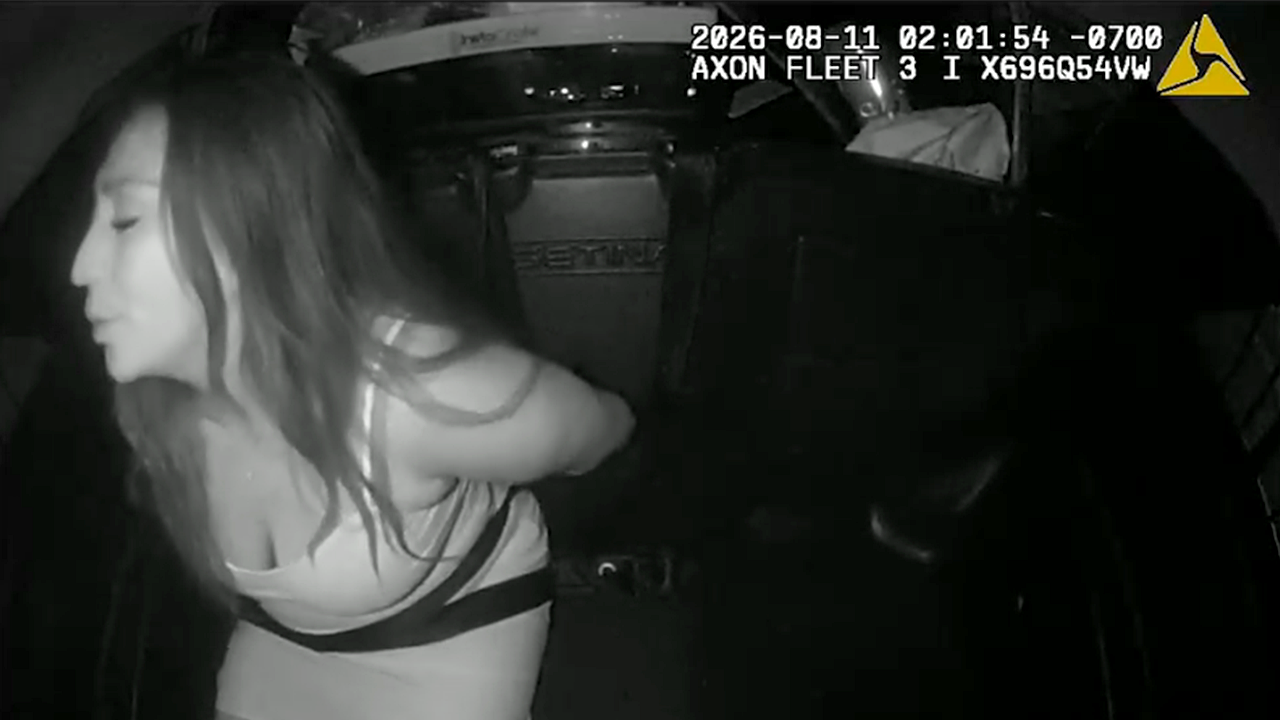
Washington state Democrat Krista Perez, who is running for a state House seat, was seen on police video admitting to drinking wine, declining field sobriety tests and begging to go home before praying and crying in the back of a patrol car after her DUI arrest.
Perez finished first in last month’s primary in the 29th Legislative District, Position 1, and will face incumbent state Rep. Melanie Morgan, also a Democrat, in November, as the top two candidates advance to the general.
Tacoma Police said Perez’s 2019 Chevrolet Silverado allegedly struck a parked car on South G Street shortly after midnight on August 11, setting off a chain reaction that damaged five vehicles, according to The Jason Rantz Show on Seattle Red.
Prosecutors charged her with DUI, with a refusal enhancement in connection with the collision and a later encounter with police.
MASSACHUSETTS DEMOCRATIC PARTY CHAIRMAN ADMITS TO SUFFICIENT FACTS IN JUNE DRUNKEN DRIVING CASE
Body camera footage shows police questioning Perez after the crash and her subsequent arrest, while footage from the backseat of the patrol car shows her praying and sobbing, according to video obtained by The Jason Rantz Show on Seattle Red.
After police arrive at the scene, Perez told an officer she did not understand what was going on and claims she was not involved in an accident, the footage shows.
«Did you get into an accident here?» the officer asks.
«I did not,» Perez responded.
The officer then asked what happened.
«I don’t know. I’ve never been in an accident before,» she replied.
She also said she switched insurers just weeks before the incident when asked for her documents. She was able to tell the officer the name of the insurance company.
Perez told the officer she was driving from a friend’s business on Tacoma Avenue South when the collision happened.
«Did you have anything to drink tonight?» the officer asked.
«I just had some wine while I was there,» Perez replied.
Asked how much wine she had, Perez said she had one glass.
When the officer asked how big the glass was, she told him, «I think you might need to contact the business.»
The officer then asked her to rate her sobriety on a scale of zero to 10, with zero being completely sober.
She first told the officer that she wants to go home. But when asked a second time, she rated herself a four.
The officer then asked her to take standardized field sobriety tests but stated multiple times that the tests are optional.
«So it’s a series of tests that I take you through to make sure to see if you’re impaired by alcohol, or you’re not. Are you okay with doing that? It’s totally voluntary,» he said.
Perez declined the tests, kept saying she wanted to go home and repeatedly said that she was «confused.»
«Not right now. I’d like to go home first,» she said.
«You’re not going to go home first. I’m going to tell you that right now, okay? So your options between the test, yes or no, that’s going to be determined tonight, right now, not when you go home. So would you like to take these tests or no?» the officer asked.
Perez responded by asking if she was allowed to decline the tests.
«You do have a choice. You can either say yes, or you can say no. They’re totally voluntary tests,» the officer answered.
«Yeah, I would like to go home first,» she replied.
The officer asked whether her answer meant she was declining the tests, and she said yes.
She was then told she was under arrest for DUI and to put her hands behind her back.
«Hold on. Hold on. One second. Hold on,» she said.
Perez repeatedly told the officer that she did «not know what any of this means.» He told her it means she is under arrest for DUI.
Under Washington state law, roadside sobriety tests are not required and declining them is separate from the refusal enhancement prosecutors allege in Perez’s case. According to an arrest report cited by The Jason Rantz Show on Seattle Red, the enhancement stems from what occurred later at Tacoma Police headquarters, where police said she did not provide a usable breath sample after three attempts before the machine timed out.
BODYCAM SHOWS TONY ROMO ARGUING WITH OFFICER BEFORE REFUSING BREATH TEST DURING DUI ARREST
Inside the patrol car, she can be seen in the footage sobbing, praying and asking God to help her, with her crying lasting several minutes.
«Help me, God. Help me. Help me. Holy Spirit, help me, God,» she said.
State law does not prohibit someone with a DUI charge from serving in the legislature. Other Democrat lawmakers have kept their seats after an alcohol-related incident, including House Majority Leader Joe Fitzgibbon, who apologized after acknowledging he drank alcohol before a House Appropriations Committee hearing in February.
«I made a poor choice last night by drinking alcohol before we had finished our work for the day. I am disappointed in myself and take responsibility for that poor choice. It won’t happen again, and I’m committed to completing my work this session without alcohol,» Fitzgibbon said in a statement at the time to The Jason Rantz Show on Seattle Red.
washington, us, police and law enforcement, crime, politics

20 states sue to block Trump admin rule that would make it harder for immigrants to obtain visas, green cards

Misiones buscará desdoblar las elecciones provinciales y ya analizan en qué fechas se pueden realizar

Todo el año hubo viento de cola para la Argentina, pero ahora empezó a soplar también de frente

Enriquecimiento ilícito: Roberto Baratta fue indagado en Comodoro Py y aseguró que solo tiene una propiedad

El tope a los combustibles en Guatemala, la petición de Bernardo Arévalo y el pulso institucional que retrasa su aplicación

Eliana Guercio protagonizó un papelón con Andrea del Boca y después renunció: Ángel de Brito contó la explosiva interna

Entre arroyos y countries: vecinos intentan salvar el último pulmón rural del conurbano antes de que cambie para siempre

El polémico video de Tiago PZK con La Joaqui cuando ella aún estaba de novia con Luck Ra que desató un escándalo

Trump habló de una posible guerra por Malvinas y dijo que podría intervenir para resolverla

Más allá de la música, el nuevo negocio de Pablito Lescano, el líder de Damas Gratis

 ECONOMIA3 días ago
Comienza una de las semanas más complicadas del año: debate entre empresarios de IA con Trump y casi segura suba de tasas en Estados Unidos
- INTERNACIONAL3 días ago
Federal judge rules Trump admin plan to cut FEMA workforce in half is unlawful
- POLITICA3 días ago
El PRO avanza con el pedido de juicio político a la jueza que suspendió el Régimen Penal Juvenil