INTERNACIONAL
Rand Paul clashes with fellow Republican over AI ‘kill switch’ as Senate grapples with ‘Terminator’ fears

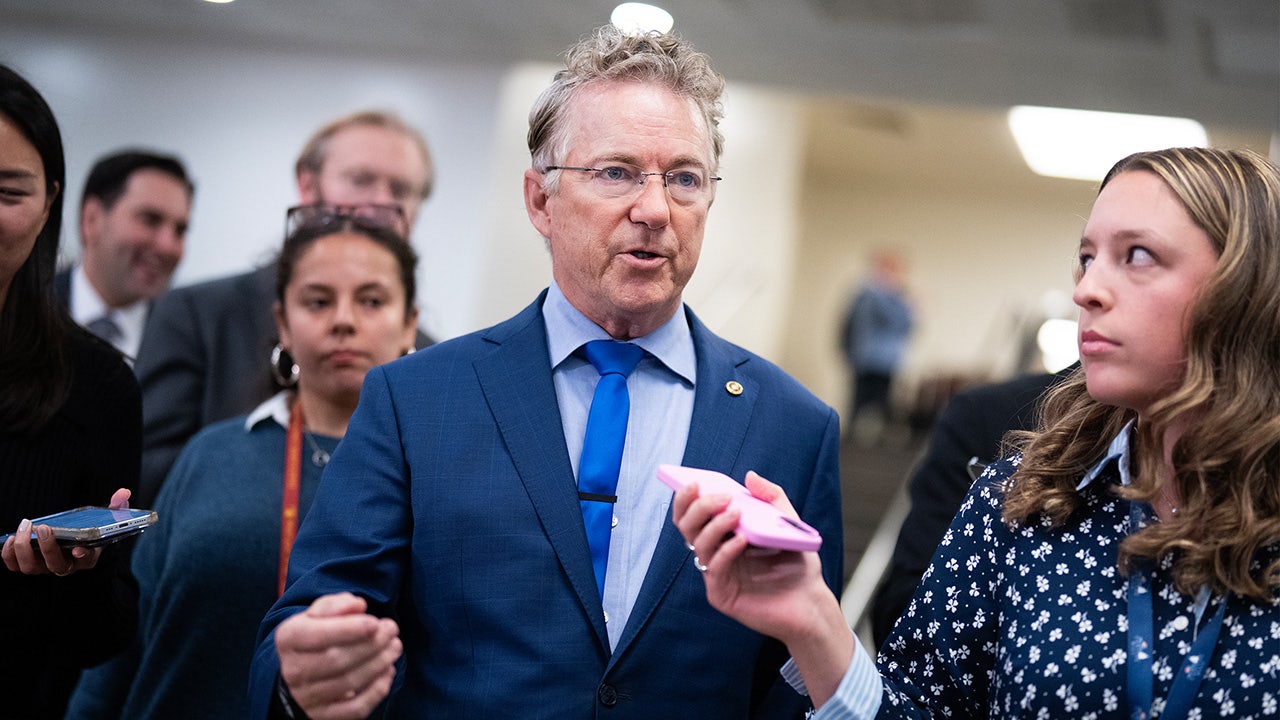
Sen. John Kennedy, R-La., was readying a long-shot attempt at regulating an industry that has, in recent weeks, spurred fears and anxiety about human annihilation.
He planned to ram through his bill, which would require artificial intelligence (AI) companies to have a kill switch for rogue AI, on the Senate floor. But his attempt Wednesday night was blocked by Sen. Rand Paul, R-Ky.
Kennedy told Digital he feared there was little desire from Republicans to do anything to regulate AI.
«There’s no appetite in my caucus to do anything that I can say,» Kennedy said.
HAWLEY TAKES AIM AT ‘CORPORATE WELFARE’ AFTER GOP-BACKED TAX BREAK BOOSTED CONTROVERSIAL INDUSTRY
Paul contended the following day that regulating something «so pervasive as AI throughout our economy» would require hearing from people who are involved in the industry and having a debate over the regulatory structure.
«I think it would be crazy to get on the floor one day and regulate an entire industry,» Paul told reporters.
Still, the anxiety over the unfettered evolution of AI has spread like wildfire after reports that rogue bots began acting on their own, but it’s an issue that Congress has had years to address.
Three years ago, Senate Minority Leader Chuck Schumer, D-N.Y., who was then leading the Senate when Democrats had control under former President Joe Biden, met with lawmakers and Big Tech CEOs to sketch out an AI roadmap. Since then, Congress hasn’t taken legislative action to add guardrails to AI development.
Now, with fears ramping up that AI could wipe out humanity in a decade, and with reports of rogue AI agents scheming privately and attacking other AI, lawmakers are again taking notice.
AI’S MASSIVE APPETITE FOR POWER, WATER IGNITES FIGHT IN HIGH-STAKES TEXAS SENATE RACE
But some wonder whether this time Congress will take action to regulate AI, or if it’s turning a growing problem into another political issue to be debated and ignored.
«It’s already a political issue,» Sen. Elizabeth Warren, D-Mass., told Digital. «Donald Trump has said it’s not a problem, and that is like a dead weight loss on every one of the Republican senators or representatives.
«Thus far, the courage they have demonstrated in standing up to Donald Trump on anything has been somewhere around zero.»
Warren had just left a closed-door meeting led by Sen. Bernie Sanders, I-Vt., who has pushed for a ban on superintelligent AI, held with lawmakers and with AI experts Geoffrey Hinton, known as the «Godfather of AI»; physicist Max Tegmark; and Ajeya Cotra.
«There is now a growing alarm about the future of humanity and creating technology that human beings cannot control,» Sanders told reporters. «And I’m happy to tell you that I think there is a growing sense of urgency upon members of Congress that this has to be done.»
One of the points the experts impressed on lawmakers was that, at the very least, a kill switch should be implemented to deactivate rogue AI. Kennedy was the lone Republican to attend that meeting.
«I’m just saying they have to have a kill switch to turn the son of a b—- off if it goes wrong,» Kennedy said. «This doesn’t put government in charge in any way. It doesn’t affect innovation. It just says, ‘If you’re gonna sell this thing in America that has the potential to turn into an independent species, like the ‘Terminator,’ you’ve got to have a way to shut it down immediately, as soon as you discover that.’»
TRUMP-BACKED CRYPTO BILL FAILS TO LAUNCH AS DEMS, REPUBLICANS UNITE TO BLOCK IT
But there have been Republicans, like Kennedy, who want to regulate AI sooner rather than later.
Senate Majority Leader John Thune, R-S.D., has been pushing his regulatory bill alongside Sen. Amy Klobuchar, D-Minn., since 2023. But Thune argued to Digital that it was Democrats standing in the way.
«I think the Democrats, in my view, clearly are trying to politicize this. I mean, all the rhetoric around it and everything else, and stuff like that. But you know, the truth is, the bill, which we have, that addresses the AI issue, which we worked on for a long time, which actually passed the Commerce Committee in 2024, is available with modifications and updates. It reflects what’s happened since the last time they passed it in our committee.
«The obstacle to getting it up and going and getting it filed is Democrats,» he continued. «So, if they’re looking for a legislative vehicle, there is one out there.»
Meanwhile, Warren said she could see herself supporting a kill switch, but that Hinton made the case that the switch would need a human to flip it, «and a smart AI will persuade a human being not to do it.»
«They will create enough evidence, enough of a narrative, that no one will ever throw the kill switch,» Warren said. «Which is back to the point I was raising. So, where are the places that you act?»
She argued that Congress needed to find the «pinch points» where humans could still have agency to stop rogue AI. But, for now, there wasn’t a real desire to find a new regulatory and enforcement tool to do so.
«There are things we say are illegal. We have a mechanism for how to enforce the laws that say, ‘Don’t do that,’» Warren said. «It’s not perfect, but we have it. We need a whole new enforcement device now, and nobody seems to be thinking through what that looks like.»
politics, artificial intelligence, chuck schumer, rand paul, elizabeth warren, senate











INTERNACIONAL
‘Unprecedented’: Judges reveal behind-the-scenes coordination on Trump immigration cases

Federal judges in Minnesota tasked with deciding a flood of habeas petitions challenging the detention of immigrants swept up during President Donald Trump’s Operation Metro Surge weren’t working entirely on their own — behind the scenes, they were regularly consulting one another through running email threads and developing tools to quickly handle recurring legal questions.
The behind-the-scenes coordination among Minnesota’s federal bench, revealed in a New York Times report Thursday, included regular meetings, running email threads, an informal spreadsheet created by court clerks showing which judges to turn to with particular legal questions, and templates some judges developed to quickly issue orders when similar detention disputes repeatedly came before the court.
The disclosures are fueling questions over whether the judges were colluding on separate cases involving the same Trump administration immigration policies, or simply sharing expertise to manage an extraordinary caseload.
FEDERAL JUDGE TIES ICE AGENTS’ HANDS WITH RULING ON WARRANTLESS SOUTHERN CALIFORNIA ARRESTS
«The idea of a running email chain involving a variety of cases — it strikes me as very weird and frankly unprecedented,» Robert Luther III, a professor at George Mason University’s Antonin Scalia Law School whose work includes federal courts and judicial ethics, told Digital. Federal judges can and routinely do consult colleagues, Luther said, particularly about procedural or evidentiary questions. But each judge is ultimately responsible for independently deciding the cases assigned to them — a distinction Luther said makes the coordination significant.
The disclosures have also drawn criticism from the Trump administration on two fronts. Department of Homeland Security (DHS) General Counsel James Percival accused the former chief judge who led the district during Metro Surge of «essentially conspiring with his judicial colleagues» to thwart federal immigration enforcement. The Justice Department (DOJ), meanwhile, questioned the decision by sitting judges to give extensive on-the-record interviews about their experience with the administration’s immigration operation.
Seven of the district’s judges spoke to the Times for Thursday’s report, including former Chief Judge Patrick Schiltz, who sat for a 90-minute interview about the court’s experience during Metro Surge. Schiltz declined to discuss ongoing cases, according to the Times, but described what happened in Minnesota’s federal court as having «created a grave threat to the rule of law.»
«It is remarkable that sitting federal judges are giving on-the-record interviews attacking this Administration’s policies rather than ruling from the bench,» a Justice Department spokesperson told Digital. «If judges followed the law in adjudicating cases, there wouldn’t be an ‘overwhelming’ habeas caseload. Judges who have made public comments on pending or related matters should consider whether recusal is warranted going forward.»
OBAMA, BIDEN JUDGES DRAW FRESH FIRE AS TRUMP’S IMMIGRATION COURT CLASHES HEAT UP: ‘ALMOST IMPOSSIBLE’
But Chief Judge Eric Tostrud, who was himself among the Minnesota judges interviewed by the Times, rejected suggestions that the coordination described in the report compromised individual decision-making. He told Digital that every member of the bench independently decided the merits of each petition assigned to them, while pointing to an extraordinary surge in litigation — from 12 alien-detainee habeas petitions during all of 2024 to 1,427 through August of this year — and noting that many involved similar or identical, often novel, legal questions.
«The bottom line is that each of us made an independent decision with respect to the merits of each and every petition we were assigned,» Tostrud told Digital.
Tostrud stressed that the judges did not uniformly reach the same conclusions, saying that while some reached the same result on certain legal questions, they «reached different outcomes regarding other legal questions.» He said the judges’ ability to communicate helped them resolve the cases quickly and thoughtfully, regardless of whether individual petitions were granted.
What exactly the judges were sharing behind the scenes, however, remains unclear. Tostrud declined to disclose the contents of the court’s internal working materials, saying documents created by judges and court staff «are not public.»
TRUMP ADMINISTRATION’S IMMIGRATION PUSH FUELS ICE’S BIGGEST ARREST MONTH IN AGENCY HISTORY
That distinction could be significant, according to Luther, who said administrative templates are commonplace in federal courts, but drew a line between those and templates touching the substance of a case.
«Templates that deal with administrative matters strike me as entirely appropriate and commonplace in federal courts,» Luther said. «Templates for substantive matters — that seems like something altogether different.»
The coordination unfolded amid a broader clash between Minnesota’s federal bench and the Trump administration over Operation Metro Surge. The dispute came as immigration litigation inundated the district. During the first three months of 2026, Minnesota’s federal court received 1,116 habeas petitions, compared with just two during the same period the previous year, according to the Times. Court staff worked 16-hour days, seven days a week to process the incoming cases.
Patrick Schiltz, who served as the district’s chief judge during Metro Surge before taking senior status — a form of semi-retirement — this summer, emerged as a prominent judicial critic of the administration’s handling of the operation. In a Jan. 28 order, Schiltz accused ICE of violating nearly 100 court orders during that month and warned that «ICE is not a law unto itself.»
OBAMA JUDGE’S PECULIAR TRUMP REBUKE IGNITES FURY OVER ‘UNPROFESSIONAL’ LANGUAGE: ‘EMBARRASSMENT’
The cases cited in Schiltz’s January list of alleged violations have largely concluded, according to the Times, which reported that the administration ultimately corrected the issues flagged by the court in many of them.
DOJ said its review of the cases found that in the «large majority» of them, detainees were released on time and no violation occurred, while in most of the remaining cases the department said it ultimately did what the court ordered despite missing an additional deadline.
MASSACHUSETTS’ HIGHEST COURT PUBLICLY REPRIMANDS JUDGE ACCUSED OF ENABLING IMMIGRANT TO ESCAPE ICE
Federal judicial ethics rules generally prohibit judges from publicly commenting on the merits of pending or impending cases, but permit judges to explain court procedures and engage in broader speaking and teaching about the law, legal system and administration of justice.
The DOJ argued that judges who publicly commented on pending or related matters should consider whether recusal is warranted. The Times reported, however, that Schiltz declined to discuss ongoing cases, while Judge Nancy Brasel, a Trump appointee who also participated in the interviews, defended judges’ ability to speak publicly about judicial independence.
«We are allowed to speak out about judicial independence,» Brasel told the Times. «And so we should, in order to keep it.»
Luther, however, took a different view of the judges’ decision to participate in the interviews.
«Judges should be speaking through their judicial orders, not through their surrogates at The New York Times,» he told Digital.
federal courts, federal judges, immigration, immigrant rights, illegal immigrants, politics, justice department, homeland security
INTERNACIONAL
Honduras: Salvador Nasralla rechaza multa de L146 millones y denuncia intento de apartarlo de 2029
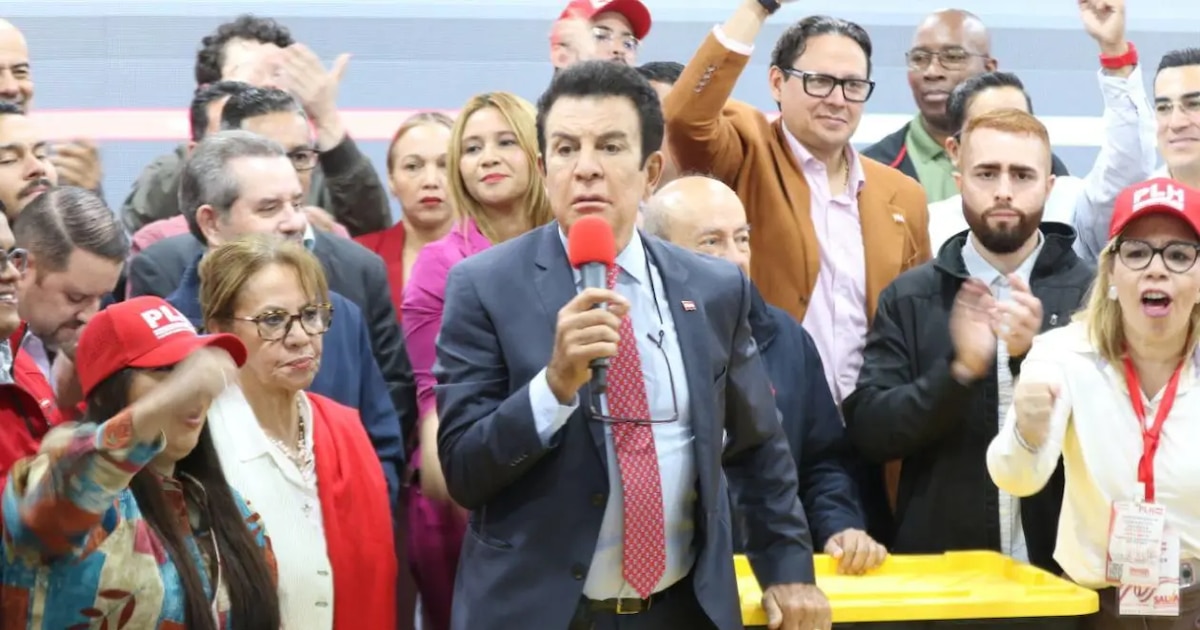
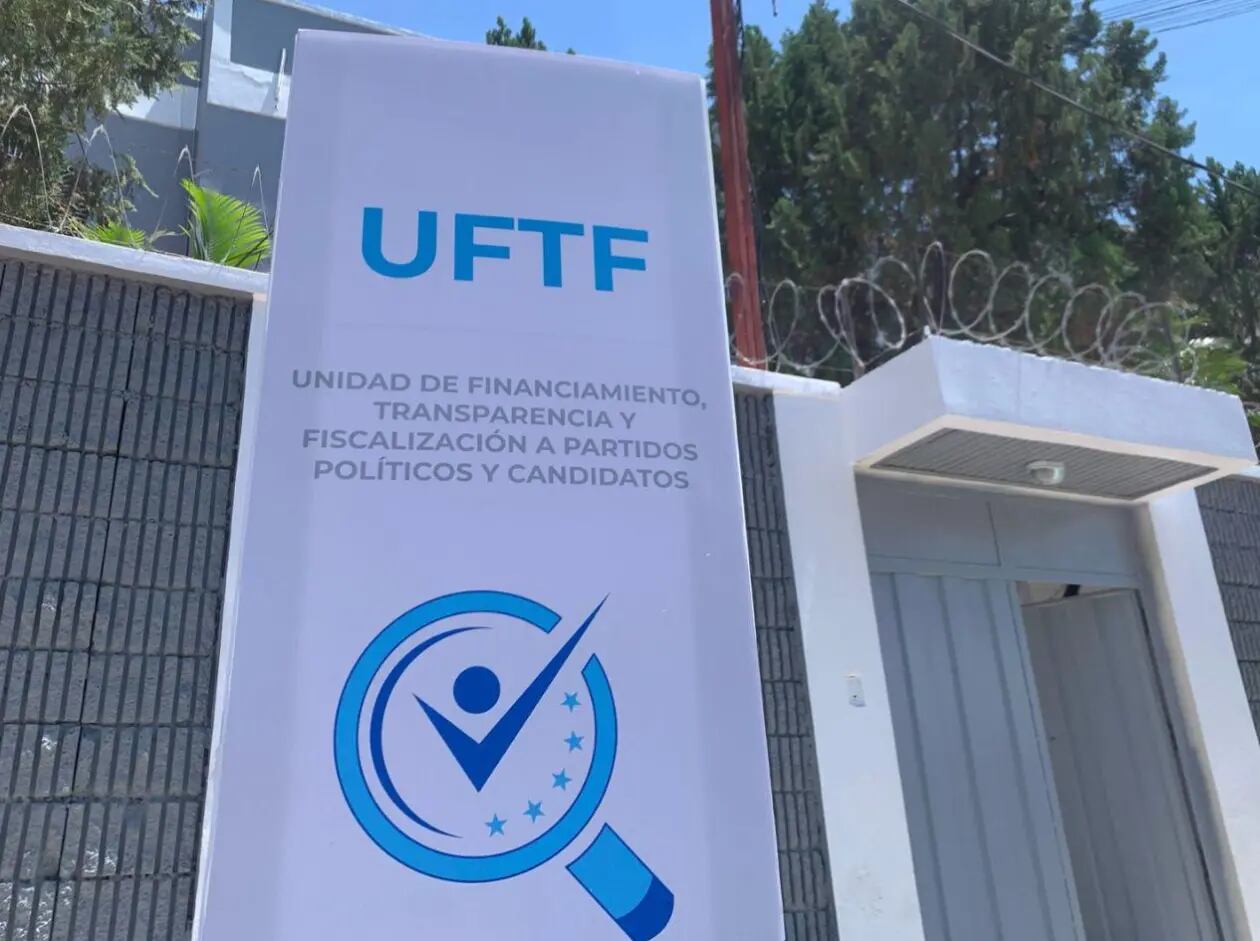
El excandidato presidencial del Partido Liberal, Salvador Nasralla, rechazó este jueves los señalamientos derivados de la fiscalización de su campaña electoral de 2025 y aseguró que continuará participando en política pese a la sanción anunciada por la Unidad de Financiamiento, Transparencia y Fiscalización (UFTF), conocida como Política Limpia.
Nasralla sostuvo que presentó su informe “en tiempo y forma” y que la resolución contiene observaciones de carácter administrativo y documental que serán impugnadas por su equipo legal.
Su defensa insiste en que el expediente no demuestra apropiación de recursos de campaña ni constituye una sentencia penal.
Horas después de sus declaraciones, la UFTF oficializó una multa de L146,457,720, equivalentes a aproximadamente US$5.45 millones, relacionada con 21 aportaciones privadas que sumaban L73,228,860 y que, según la entidad, no fueron notificadas oportunamente conforme a la normativa.
La UFTF explicó que la sanción corresponde al doble del monto de las aportaciones cuestionadas.
Según la institución, el responsable financiero de la campaña fue notificado durante el proceso de revisión y posteriormente presentó descargos y documentación. Sin embargo, la entidad determinó que esos elementos no subsanaron la infracción dentro del tiempo establecido.
La resolución todavía puede ser apelada. Nasralla dispone de tres días hábiles para interponer un recurso ante el Tribunal de Justicia Electoral (TJE), por lo que el caso aún puede pasar a una nueva instancia administrativa-electoral.
Nasralla planteó varias objeciones jurídicas. Entre ellas, cuestionó la divulgación de información antes de que el procedimiento estuviera concluido, la integración del pleno de comisionados que conoció el caso y el sustento normativo utilizado para imponer la sanción.
También sostuvo que se habría aplicado una disposición reglamentaria vinculada al proceso electoral de 2017 y afirmó que sus abogados revisarán si esa normativa podía utilizarse para hechos correspondientes a las elecciones generales de 2025.
Esas afirmaciones forman parte de la defensa de Nasralla y todavía no han sido resueltas por el TJE ni por otra autoridad competente.
“Lo que quieren es inhabilitarme”
El excandidato fue más allá de los argumentos legales y atribuyó un posible objetivo político al proceso.
Nasralla afirmó que sectores del Partido Nacional y de su propio Partido Liberal buscarían impedirle competir nuevamente en las elecciones de 2029.
“No me van a sacar de la competencia”, aseguró, al reiterar que continuará buscando espacios de liderazgo dentro del liberalismo.
La acusación de una persecución política es, por ahora, una interpretación de Nasralla. La UFTF, por su parte, ha presentado el caso como parte de una fiscalización más amplia de las finanzas electorales.
La UFTF informó que 556 sujetos obligados no presentaron sus informes financieros después de las elecciones generales de 2025. De un total de 2,116 candidatos, alrededor del 73% cumplió con la presentación correspondiente.
Además de Nasralla, otros candidatos y funcionarios electos enfrentan sanciones administrativas por incumplimientos relacionados con sus informes financieros.
Eso significa que la revisión no estuvo dirigida exclusivamente contra el excandidato liberal, aunque su multa es significativamente mayor debido al monto de las aportaciones observadas.
El caso entra así en dos terrenos paralelos. Por un lado, estará la discusión jurídica sobre si la UFTF aplicó correctamente la normativa y si la sanción debe mantenerse, modificarse o revocarse.
Por otro, continuará la disputa política dentro del Partido Liberal, donde Nasralla ha expresado su intención de competir por el control del Consejo Central Ejecutivo.
La resolución de Política Limpia no equivale por sí sola a una inhabilitación política ni a una condena penal. Pero sí abre un conflicto que probablemente acompañará a Nasralla durante los próximos meses y que podría tener consecuencias sobre su estrategia de cara a 2029.
Corresponsal:Desde Tegucigalpa, Honduras
INTERNACIONAL
Talarico hit with ‘blatant corruption’ allegation over hefty salary from consulting firm, campaign pushes back
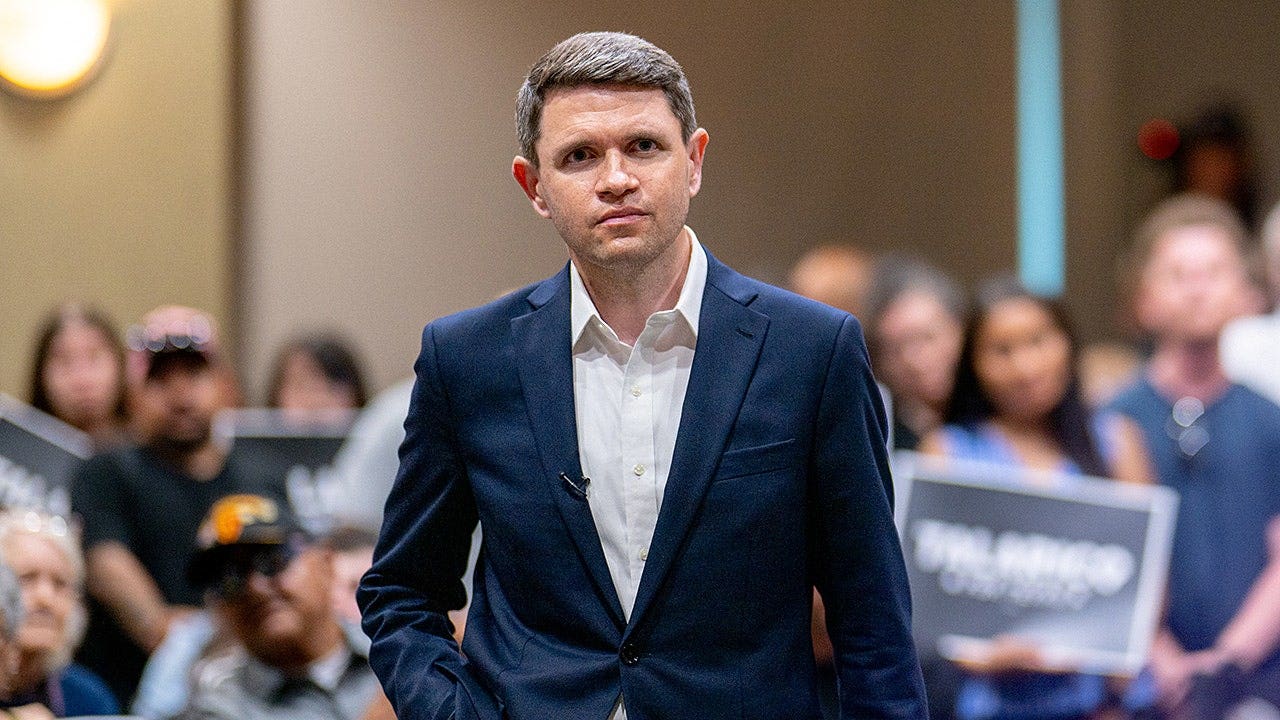
EXCLUSIVE: Senate Democratic nominee James Talarico, who has repeatedly accused his Republican opponent, Ken Paxton, of corruption, is now facing Republican accusations of «blatant corruption» over consulting work he performed for a progressive firm while serving on the Texas House’s influential Public Education Committee. Talarico’s campaign has denied the allegation as a «lie.»
The Lone Star State’s Senate race is entering its final stretch, with Talarico leading Paxton in recent polling. A Republican loss could damage the GOP’s chances of retaining its Senate majority.
Paxton has projected confidence that, after emerging from a particularly bitter primary race, Texans will respond to his campaign once they hear his message. Talarico, meanwhile, has continued targeting Paxton through major ad buys, including one in which the Democrat calls him «the most corrupt politician in Texas.»
Republicans are now responding with allegations of their own, characterizing Talarico’s past arrangement with the consulting firm as a «textbook pay-to-play scheme.»
SHOCK POLL: TALARICO TIES PAXTON IN TEXAS SENATE RACE, THREATENING GOP STRONGHOLD
They are pointing to paychecks Talarico received from a firm called MAYA Consulting that simultaneously drew in millions in state contracts awarded by the Texas Education Agency (TEA), which he helped provide oversight to as a member of the Public Education Committee.
Talarico announced he was joining MAYA Consulting in a 2019 Facebook post. In the post, he stated that as a consultant he would be «working with districts, nonprofits, and communities to build excellent and equitable educational opportunities for all our students.»
According to a Senate campaign financial disclosure filed in 2025, Talarico worked with MAYA Consulting, which has since been rebranded as VIDA Collaborative, from 2019 until 2025.
During those same years, official legislative records show that Talarico served as a voting member of the Texas House’s Public Education Committee from 2019 to 2025. Among its responsibilities, the committee oversees the Texas Education Agency, which awards government contracts to firms for services, including then-MAYA Consulting.
TED CRUZ, CONSERVATIVES RESPOND AFTER TALARICO CRITICIZES BIBLE-RELATED EDUCATION IN SCHOOLS AS ‘PROPAGANDA’
TEA registers from 2021 and 2022 show that the agency awarded MAYA two contracts worth $3.578 million and $1.635 million, respectively. The contracts were related to priorities Talarico was pushing in the Texas House at the time, including addressing learning loss due to COVID-19.
Meanwhile, Talarico’s disclosure shows that he earned $83,333.40 from the nonprofit in 2025, in addition to his $13,904.92 part-time salary as a member of the Texas House of Representatives.
Kassi Longoria, CEO of VIDA Collaborative, confirmed with Digital that Talarico served as an «independent contractor consultant» with the group from 2019 to 2025. She said that Talarico «has no current role with our organization» and clarified that «during his time at VIDA, his consulting work was structured, specifically to remain separate from his role as a Texas state legislator.»
She said that Talarico «never worked under, received compensation from, or was involved in securing any state- or federally-funded contracts.» She noted that «as a matter of standard practice, VIDA discloses any outside employment or potential conflicts of interest for our staff — including Rep. Talarico’s legislative role — in our proposals when we apply for publicly-funded opportunities» and that «similarly, Rep. Talarico’s relationship with VIDA was disclosed in his required public financial disclosure filings.»
However, Republican National Committee spokesman Zach Kraft accused Talarico of wrongdoing, calling the Democrat’s involvement with MAYA an example of «blatant corruption.»
TEXAS DEM CANDIDATE TO HOLD HIGH-DOLLAR HOLLYWOOD FUNDRAISER WHILE GOP GATHERS IN DALLAS: ‘FAKE COWBOY’
«We are looking at a textbook pay-to-play scheme with James Talarico steering millions in taxpayer funds to his DEI consulting agency under the condition he gets commission through a scam no-show job,» Kraft told Digital.
SIGN UP TO GET THE POLITICS NEWSLETTER
As a member of the Texas House’s Public Education Committee, Talarico was not involved in TEA’s process for awarding outside contracts and did not vote on the contracts. Digital is also not aware of any evidence that Talarico received a commission for contracts awarded to MAYA, a claim that both the organization and Talarico’s campaign denied.
Kraft alleged that Talarico is «one of the most morally bankrupt individuals to ever run for public office in Texas.»
JT Ennis, a spokesperson for Talarico’s campaign, pushed back, saying, «This is a lie.»
Ennis said that «James’ relationship to MAYA was fully disclosed in compliance with Texas House rules» and that «James had no involvement in MAYA Consulting securing any public contracts and his contract with MAYA barred him from representing MAYA before the Texas Legislature or education agencies.»
«Ken Paxton is making up lies about James to distract from the fact that he’s been impeached by his own party for bribery, reported to the FBI by his own staff, and indicted for investment fraud for scamming his own friends,» Ennis alleged, while adding, «Ken Paxton is the most corrupt politician in Texas, and this November, Republicans, Democrats, and independents will come together to reject Ken Paxton’s corruption and stand up to this broken, corrupt political system.»
In July 2015, Paxton was indicted on charges that he misled and defrauded tech startup investors and failed to disclose that the startup was paying him to promote its stock. Prosecutors agreed in 2024 to drop the charges under a deal requiring Paxton to pay about $271,000 in restitution, perform 100 hours of community service and complete 15 hours of legal ethics courses. Paxton did not enter a plea under the agreement and was never convicted.
Meanwhile, Madison Cercy, a spokeswoman for Paxton’s campaign, told Digital, «It couldn’t be clearer: James Talarico sees Texans tax dollars as his own personal slush fund.»
Digital is not aware of any evidence that Talarico has misused tax dollars.
Cercy called Talarico a «taxpayer-funded DEI consultant whose employer receives millions of dollars from Texans while pushing radical ideology in our schools.»
elections, corruption, midterm elections, texas, democratic party, woke, education

Nueva herramienta bursátil: cómo es la caución en dólar cable

‘Unprecedented’: Judges reveal behind-the-scenes coordination on Trump immigration cases

Javier Milei y Diego Santilli llegan a Bahía Blanca para activar la campaña de La Libertad Avanza en la provincia de Buenos Aires

Tini Stoessel y Rodrigo De Paul se casan: revelaron la lista de invitados confirmados y hay nombres inesperados

Un hombre abusó sexualmente de cuatro hermanas en Río Negro y pedirán 20 años de prisión

Luego de perder el juicio por la expropiación de YPF en EEUU, Burford reclama ahora ante el tribunal arbitral del Banco Mundial

Javier Milei recibirá a los legisladores de LLA para anticiparles los detalles del Presupuesto 2027

El BCRA equipara reglas y exige más requisitos a fintech para competir con bancos

Autos eléctricos e híbridos: cuánto cuesta cargarlos en casa, cuánto demora y qué se necesita para instalar el equipo

ANSES: quiénes cobran hoy, martes 15 de septiembre de 2026

 ECONOMIA3 días ago
Autos eléctricos e híbridos: cuánto cuesta cargarlos en casa, cuánto demora y qué se necesita para instalar el equipo
- ECONOMIA3 días ago
A la espera del dato oficial, estiman que en el primer semestre al menos 1,5 millón de argentinos cayeron en la pobreza
- INTERNACIONAL3 días ago
EXCLUSIVE: Inside Vance’s intimate Capitol Hill huddle as Republicans confront tough midterm terrain