INTERNACIONAL
Qué pasó con el hombre que mató a puñaladas a una refugiada ucraniana en un tren de EE.UU.


La Justicia federal de Estados Unidos resolvió que Decarlos Brown Jr., el hombre acusado de asesinar a puñaladas a la refugiada ucraniana Iryna Zarutska en un tren de Charlotte en agosto de 2025, no está en condiciones de afrontar un juicio debido a su estado de salud mental.
El caso, que conmocionó a Carolina del Norte, quedó en suspenso desde junio mientras el imputado recibe tratamiento médico.
El juez federal Kenneth D. Bell aceptó el pedido de la defensa y ordenó que Brown, de 35 años, permanezca hasta cuatro meses en una institución médica penitenciaria. El objetivo es intentar restablecer su capacidad para comprender el proceso y colaborar con su defensa.
El informe psiquiátrico y la decisión judicial
Según la evaluación forense presentada en abril, Brown padece una enfermedad mental que le impide entender la naturaleza y las consecuencias del juicio, así como participar adecuadamente en su defensa.
El informe, presentado bajo secreto de sumario, indicó que existe un pronóstico favorable de recuperación si recibe la medicación adecuada.
El magistrado dispuso que Brown quede bajo custodia del fiscal general para su hospitalización y tratamiento.
Al finalizar el período de internación, la Justicia evaluará si el acusado recuperó la competencia para continuar con el proceso, si requiere más tratamiento o si resulta imposible restablecer su aptitud.
Los pedidos del acusado y el contexto del caso
En una presentación judicial, los abogados de Brown informaron que su cliente insistió en que el tribunal conociera su situación.
“Quiero decirle a la corte que tengo una emergencia corporal. Alguien tiene acceso total a mi cuerpo y me controla de manera indebida. La policía se niega a investigar y esto requiere una investigación”, expresó Brown, quien además sostuvo que fue mal diagnosticado con esquizofrenia.
El acusado enfrenta un cargo federal por causar la muerte en un sistema de transporte masivo, delito que puede ser penado con la muerte.
Además, hay una causa estatal por homicidio en primer grado, que quedó en pausa hasta que se resuelva el proceso federal.
Qué pasará con el proceso judicial
Una vez que finalice el tratamiento médico, el juez deberá determinar si Brown está en condiciones de ser juzgado.
Si su competencia es restablecida, el proceso continuará; de lo contrario, podría ordenarse un tratamiento prolongado o declararse su inimputabilidad definitiva.
Cómo fue el crimen de la joven ucraniana
Zarutska, que había huido de su Ucrania natal tras la invasión de su país por Rusia, regresaba a casa después de trabajar en una pizzería cuando Brown la apuñaló mortalmente en un tren la noche del 22 de agosto de 2025.
Un video grabado en el vagón por cámaras de seguridad muestra a Brown sentado detrás de Zarutska, antes de levantarse y clavarle un cuchillo en el cuello.
La joven murió minutos después en el tren, mientras que Brown huyó del lugar y fue arrestado poco después.
En una conversación con su hermana Tracey, Brown afirmó que mató a la joven porque “le leía la mente”.
La familia de Brown asegura que el hombre sufre de esquizofrenia paranoide y que venía mostrando signos de deterioro mental desde hacía tiempo. “Cuando vi el video, supe que había llegado a un punto de quiebre. No lo justifico, pero él no era así”, contó Tracey.
Tracey explicó que su hermano venía obsesionado con la idea de que el gobierno le había implantado un chip y que todos lo perseguían. “Me dijo varias veces que tenía ‘materiales’ en el cuerpo y que eso lo obligaba a hacer cosas”, explicó.
En una conversación telefónica desde la cárcel, Brown Jr. le contó a su hermana que no conocía a la víctima y que los supuestos “materiales” en su cerebro controlaban sus acciones. “Me lastimé la mano apuñalándola. Ni siquiera conocía a la señora. Nunca le dije una palabra. Es aterrador, ¿no? ¿Por qué alguien apuñalaría a otra persona sin motivo?”, expresó, visiblemente perturbado.
Incluso, en la conversación, se refirió a sí mismo en tercera persona y aseguró que “quien manejaba los materiales” fue quien “descargó la furia” sobre la joven.
La madre de Brown, Michelle Dewitt contó que días antes del ataque llevó a un refugio para personas en situación de calle porque se estaba poniendo cada vez más agresivo y que intentó hacerlo internar en vano.
“Cuando llevas a una persona a salud mental y te dicen ‘no tenemos suficiente espacio’ o ‘¿está intentando matarse o matar a alguien?’ y yo respondo que no, entonces no hay nada que podamos hacer, necesita una orden judicial”, explicó.
Sobre su hijo, afirmó “no creer que entienda lo que sucede”.
El caso reavivó el debate sobre la relación entre salud mental y seguridad pública en Estados Unidos. “La seguridad pública y la salud mental deben ser parte de una conversación permanente y conjunta”, sostuvo el exfiscal federal Michael Easley Jr.
Estados Unidos, Asesinato, Crimen, Carolina del Norte













INTERNACIONAL
Más de 3 mil guatemaltecos han retornado en septiembre: el acumulado anual llegó a 45 mil 615

El Instituto Guatemalteco de Migración registró 3,394 guatemaltecos retornados desde Estados Unidos durante los primeros 18 días de septiembre de 2026, con lo que el acumulado entre enero y ese mes ascendió a 45,615 personas. El flujo mantuvo niveles elevados tras los máximos alcanzados en julio y agosto, mientras Huehuetenango concentró más de cuatro de cada 10 retornados, según una publicación del Diario LaHora.
Julio fue el mes con más llegadas del año, con 7,035 personas, seguido por agosto, con 6,379. Ambos períodos reunieron casi el 30% de los retornos desde Estados Unidos contabilizados en los primeros nueve meses de 2026.
La cifra de septiembre es parcial porque el reporte fue divulgado el 18 de ese mes y puede modificarse con las actualizaciones posteriores. Antes del aumento del tercer trimestre, mayo había registrado 5,058 casos; febrero, 4,914; marzo, 4,871; abril, 4,767; enero, 4,749; y junio, 4,448.
Las estadísticas que incluyen retornos tanto desde Estados Unidos como desde México muestran otro universo de medición. Entre el 1 de enero y el 31 de agosto, esos dos países devolvieron a Guatemala 46,194 ciudadanos, frente a los 31,309 registrados en el mismo período de 2025: un aumento de 47.5%.

Adultos, menores y familias dentro del flujo de retornos
Los adultos sumaron 41,001 de las 45,615 personas retornadas desde Estados Unidos, cerca de nueve de cada 10 casos. Los restantes 4,614 correspondieron a niños, niñas y adolescentes.
Durante los primeros 18 días de septiembre regresaron 3,063 hombres adultos y 250 mujeres adultas. El registro incluyó además a 31 menores hombres y 31 menores mujeres que viajaban acompañados por familiares o responsables adultos.
Otros 19 menores retornaron sin acompañamiento: 16 hombres y tres mujeres. Su recepción requiere verificar la existencia de redes familiares, las condiciones de cuidado y los posibles riesgos que pueden enfrentar tras llegar al país.
El Instituto Guatemalteco de Migración identificó 426 unidades familiares integradas por 1,168 personas. Ese grupo estaba compuesto por 141 hombres adultos, 324 mujeres adultas, 388 niños y 315 niñas.
La información oficial incorporó además la pertenencia a comunidades lingüísticas de las personas retornadas. La comunidad K’iche’ concentró 5.585 casos, seguida por Q’eqchi’, con 2,876; Q’anjob’al, con 1,380; Kaqchikel, con 1,030; e Ixil, con 833.
El registro incluyó personas pertenecientes a las comunidades Achi’, Chuj, Akateko, Awakateko, Poqomam, Ch’orti’, Tz’utujil, Chalchiteko, Sipakapense, Sakapulteko, Tektiteko, Uspanteko, Mopán, Itza’, Garífuna y Xinca.

Huehuetenango reúne más de 19 mil retornados
El departamento de Huehuetenango encabezó la distribución territorial con 19.030 personas retornadas desde Estados Unidos. San Marcos ocupó el segundo lugar, con 6,051, y Quiché quedó tercero, con 5,049.
Quetzaltenango registró 3,191 retornados; Petén, 2,503; Guatemala, 2,491; y Alta Verapaz, 2,373. Las cifras de Huehuetenango, San Marcos y Quiché coinciden con los departamentos que ya figuraban entre los de mayor número de casos en las estadísticas de retornos desde Estados Unidos y México entre enero y agosto.
Otros departamentos superaron los mil casos: Chimaltenango, con 1,484; Suchitepéquez, con 1,449; Chiquimula, con 1,398; Jutiapa, con 1,299; Totonicapán, con 1,285; Baja Verapaz, con 1,223; Jalapa, con 1,137; Escuintla, con 1,130; y Sololá, con 1,024.
El Gobierno de Guatemala mantiene el Plan Retorno al Hogar, que articula servicios de empleo, capacitación, documentación, salud y educación para quienes regresan al país. La Agencia Guatemalteca de Noticias informó que el Centro de Atención y Registro atendió a 23.388 migrantes retornados entre enero y el 31 de agosto.
De esas personas, 1,785 ingresaron al mercado laboral, 1,296 recibieron capacitación y 155 obtuvieron certificaciones de competencias. Las instituciones participantes entregaron alimentos a 29,210 personas, incorporaron a 219 al sistema educativo y distribuyeron 20,769 tarjetas SIM con tiempo de aire.
Guatemala,deportación,migración,América Central
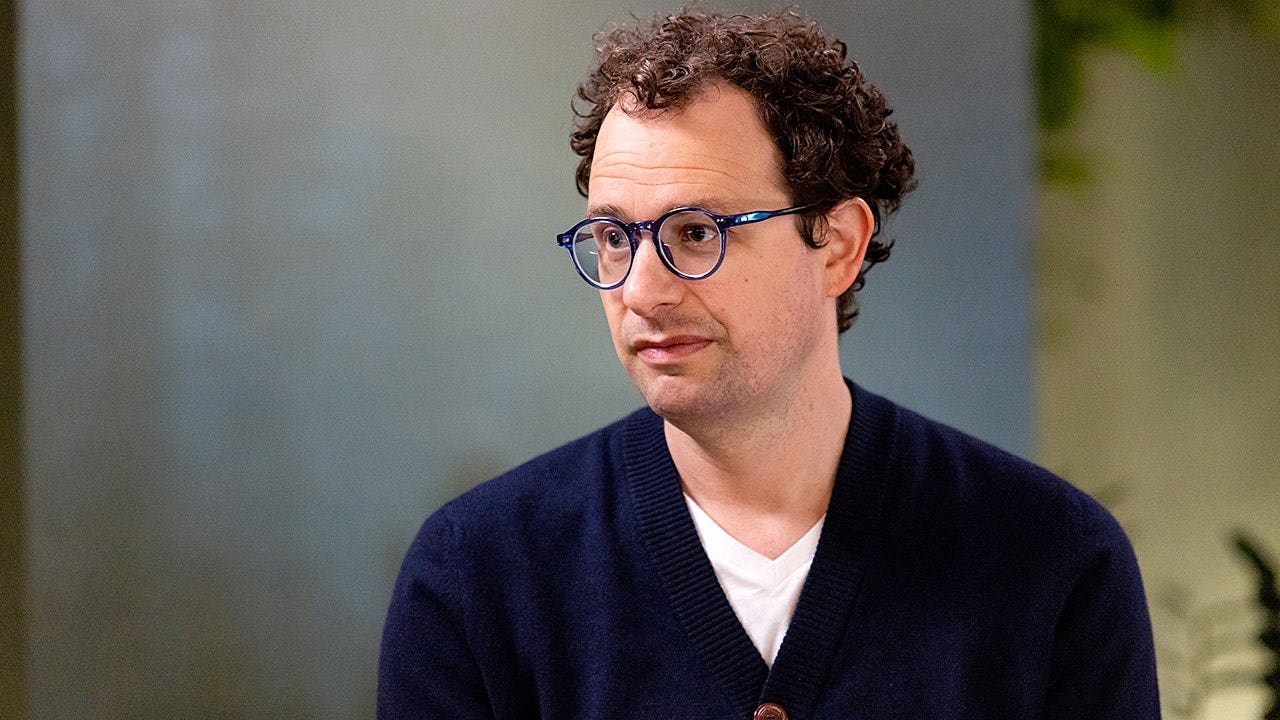
Anthropic CEO Dario Amodei believes artificial intelligence (AI) companies need the help of independent outside watchdogs to safeguard their developing technologies. But one of the organizations he believes could do the job, METR, is closely connected to the same AI safety community that has ties to Anthropic’s start.
Many of its leading figures have ties to a movement called «effective altruism (EA)» — the belief that evidence and careful reasoning can help maximize the good that companies and people can do with their time and resources.
METR describes itself as an AI safety testing laboratory.
ANTHROPIC CEO LIKENS AI FIGHT WITH CHINA TO COLD WAR, SEEKS ‘DISARMAMENT NEGOTIATIONS’
«METR evaluates frontier AI models to help companies and wider society understand AI capabilities and what risks they pose,» its website reads.
Although its website and public materials don’t make mention of effective altruism, its founders have used it as a framing for their work.
Beth Barnes, METR’s founder and CEO, worked at OpenAI alongside Amodei as the company developed early versions of ChatGPT.
At an Effective Altruism Global event, she laid out her vision for how to maintain AI safety.
«Our overall plan is — it sort of seems like it would be good if it was someone’s job to look at models and decide if they’re going to kill us, think through the ways that that might happen, anticipate them, figure out what the early warnings would be, that sort of thing,» Barnes said.
Similarly, Paul Christiano, who led the research around OpenAI’s efforts to ensure its models followed acceptable strategies for delivering requested results, later founded the first iteration of METR. He too has framed parts of his approach to AI safety as a form of effective altruism.
«My suspicion is that it is more important for the ‘effective altruism’ movement to have a fundamentally good product and to generally have our act together than for it to grow more rapidly,» Christiano said in a 2014 article.
Figures like Barnes and Christiano provide informal links to Anthropic — a company that received funding from effective altruism’s largest supporters when it emerged as a way of thinking among tech moguls. Barnes and Christiano also both worked on evaluations involving Anthropic models, providing safety checks for Anthropic’s flagship AI, Claude.
Most notably, Sam Bankman-Fried, the founder of the cryptocurrency exchange FTX, led Anthropic’s 2022 Series B financing round before his company collapsed and he was convicted in a multibillion-dollar fraud case. Before FTX’s downfall, Bankman-Fried was one of the highest-profile proponents of the Effective Altruism movement, publicly saying it shaped his approach to earning and giving money.
ANTHROPIC’S MORAL COMPASS ARCHITECT SUGGESTED AI OVERCORRECTION COULD ADDRESS HISTORICAL INJUSTICES
RUTHLESS EXCLUSIVE: PENTAGON CTO REVEALS REASONING FOR ANTHROPIC REMOVAL
Similarly, Skype co-founder Jaan Tallinn led Anthropic’s 2021 Series A financing round. Tallinn has been one of the Effective Altruism movement’s most prominent supporters, speaking at Effective Altruism Global conferences, helping found the Centre for the Study of Existential Risk and the Future of Life Institute, and donating more than $1 million to the Machine Intelligence Research Institute, an organization focused on AI safety and alignment research.
Amodei isn’t calling for the rest of the industry’s leaders to submit to the thinking of METR, specifically. But in a recent letter, he used them as an example of the guidance he believes the industry needs.
Amodei proposed a plan: accountability could come through «embedded evaluators» that would supervise AI development companies.
«Each frontier AI company commits to giving ongoing, employee-like access to a team of embedded third-party evaluators (such as METR) whose role it is to verify adherence to safety practices and commitments, report incidents and help assess the alignment of not just completed AI models but training pipelines and processes.
«Regardless of what commitments we make, the public deserves to know what is going on. We are still the ones choosing what to include and omit. Embedded evaluators will change this dynamic,» Amodei wrote.
Few figures in the AI space are as well known for their efforts on AI safety as Amodei.
Amodei originally studied biophysics, earning a Ph.D. from Princeton in 2011. He would go on to become a postdoctoral scholar at the Stanford University School of Medicine.
After his studies, Amodei worked for a series of technology companies like Baidu, Google Brain, and, in 2016, OpenAI — the company that developed ChatGPT .During his time at Baidu, Amodei worked to develop speech recognition through machine learning, a kind of pattern identification. And at Google, he began working on safety while helping develop the company’s neural-net research, computer models that loosely mimics brain function.
At OpenAI, Amodei continued those themes, eventually becoming vice president of research as the company developed its ChatGPT 2 and ChatGPT 3 models.
In its early stages, the GPTs were asked to fill in blanks to sentences like: «Today, I went to the ______ and bought some milk and eggs,» and «I knew it was going to rain, but I forgot to take my ______.»
But just as the company began to discover that it could amplify the power of its models through larger and larger language models, Amodei left OpenAI in 2020. He believed the company wasn’t doing enough to install guardrails on what he saw as a budding reality of the technology he had long theorized about.
He also didn’t know if he could trust the company to set aside its financial interests.
«When you feel that you can’t trust someone, when you feel that their values are not what they say they are, when you feel that they’re not honest, when you feel that they’re not in it for the reasons that they say, when you see disturbing patterns of behavior, dishonesty, that makes it very hard to continue to work with a company, to continue to trust the company,» Amodei said in an interview with Bloomberg earlier this year.
Since leaving OpenAI, Amodei helped start Anthropic, a company that has made AI safety a key part of its makeup. Anthropic even has a sort of constitution for its flagship AI; a guiding document laying out boundaries for its research.»Anthropic wants Claude to be genuinely helpful to the people it works with or on behalf of, as well as to society, while avoiding actions that are unsafe, unethical, or deceptive,» the company wrote.
BIOWEAPON THREAT EXPOSED AS ANTHROPIC SOUNDS ALARM ON FOREIGN ACTORS PLOTTING VIRUS EXPERIMENTS
That directive has caused the company to clash with the U.S. Department of Defense over developing tools that could be used to autonomously target humans on the battlefield. It also refused to do work that, in its estimation, amounted to mass surveillance.
Although that tension cost Anthropic a $200 million contract, Amodei believes it’s time for the industry to take similar stances, especially as some companies began to report trouble controlling their own agents.
Amodei continues to believe that AI capabilities can grow safely, but only if the industry sets standards for how it achieves «safe.»
«I continue to believe that AI can enormously improve the quality of human life. My desire to achieve these benefits is undimmed. But the benefits will only be achieved if we build the technology in the right way, and — so long as we use the time we gain well — it is worth taking unusually deliberate care to get it right,» Amodei wrote in his letter.
politics, artificial intelligence, smart and safe tech, tech, technology
INTERNACIONAL
Dem’s data center attack in critical Senate race hits snag when money trail surfaces: ‘Jekyll-and-Hyde’

FIRST ON FOX: Former Democratic Sen. Sherrod Brown is targeting Republican Sen. Jon Husted over Ohio’s growing data center industry in a new campaign ad that features a facility owned by Google — whose corporate PAC and lobbyists have contributed thousands of dollars to Brown’s campaigns.
The Sept. 4 ad features an Ohioan blaming Husted for spearheading «the push to bring data centers to Ohio» and linking their expansion to «higher electric bills.»
The facility featured in the ad, which opened in Lancaster in 2023, is owned by Google.
Campaign finance records reviewed by Digital show Google’s corporate PAC contributed $20,000 to Brown over his political career. Brown also received thousands of dollars from individuals who lobby for Google, including two whose firms have worked on permitting, grid reliability and energy affordability issues.
WATCH: GOP SENATOR UNLOADS ON ‘CREATURE OF WASHINGTON’ CHALLENGER IN CRITICAL SENATE SHOWDOWN
«Apparently Google is terrible enough to put in a campaign attack ad, but perfectly acceptable when the political contributions are coming in,» Mehek Cooke, a GOP strategist and attorney in Ohio, said in a statement to Digital. «That is the contradiction Brown needs to answer. If Google’s Lancaster investment is so bad for Ohio, why was Google political money acceptable to Sherrod Brown?»
Among the contributors are Google lobbyist Lisa Kountoupes, who donated $3,500 in March, and Google lobbyist Michael D. Smith, who donated a total of $10,200 to Brown since 2017, according to Federal Election Commission records. The contributions were made to Friends of Sherrod Brown, Brown’s principal campaign committee.
Kountoupes’s firm, Kountoupes Denham Carr & Reid, was hired by Google in December to lobby on «issues related to permitting reform» tied to the company’s data center needs, Politico previously reported. Smith’s firm, Cornerstone Government Affairs, reported lobbying for Google on «issues related to permitting reform for grid reliability and energy affordability,» according to federal lobbying filings.
FEC records show Brown also received a combined $6,000 over the past decade from three additional Google lobbyists.
In a statement to Digital, Lauren Chou, a spokeswoman for Brown’s campaign, highlighted Brown’s opposition to Ohio’s data center expansion, saying Husted «led the charge,» but did not address Brown’s past campaign contributions.
«Husted is a ‘chief reason’ Ohio has 226 data centers and is ‘the face of data centers’ in Ohio,» Chou wrote. «Ohioans shouldn’t be forced to subsidize these costs and Ohioans – not Jon Husted and his billionaire friends – should get to decide if data centers are built in their community.»
Cooke accused Brown of acting like his «Google relationship in Washington does not count,» calling it «Jekyll-and-Hyde politics.»
POLL: ECONOMIC ANXIETY AND CANDIDATE CONCERNS DEFINE OHIO SENATE RACE
«For nearly five decades, Brown has sold himself as the plaid-shirt, working-class populist,» she said. «He lost in 2024, and now he is back running the same playbook: say one thing to Ohioans while his Washington record tells a very different story.»
Brown, who is seeking to return to the U.S. Senate in the high-stakes race against Husted, was elected to the U.S. Senate in 2006 before losing his reelection bid in 2024 to Sen. Bernie Moreno, R-Ohio.
But this isn’t the first time Brown’s comeback campaign has faced questions over conflicting positions.
POLL: DEMOCRATIC UNITY, REPUBLICAN CROSSOVERS SHAPE OHIO SENATE RACE
In 2015, Brown celebrated the construction of an Amazon data center in central Ohio, saying in a press release the new facility «is great news for New Albany and central Ohio.»
Despite his public praise, Brown has become an outspoken critic of Ohio’s growing number of data centers, a defining issue in Ohio politics ahead of the midterms. President Donald Trump has pushed to expand the facilities, warning that communities that block them would «end up being backwards and poor.»
But Cooke said this about more than one local data center.
«America is in a global race for AI, computing capacity and energy infrastructure,» she said. «China is not slowing down because American politicians discovered that attacking data centers makes a convenient campaign commercial.»
In a statement to Digital, Husted campaign spokesperson Amy Natoce said that Brown failed Ohio families during his 32 years in Washington and is «once again resorting to lies instead of facing his abysmal record head-on. «
«The House overwhelmingly passed Sen. Husted’s bipartisan legislation requiring data center companies to pay for the power they use, but Senate Democrats blocked it,» Natoce said. «Sherrod Brown and his friends would rather play politics and stick Ohio families with higher electric bills than pass a commonsense solution. It’s despicable.»
politics, midterm elections, ohio, google, lobbying, campaigning

Villa La Angostura: mapuches desalojados tenían luz, internet y otros servicios provistos por organismos públicos

El Gobierno intenta bajar el tono a los desmarques de Bullrich en una semana de tensión

Día del Preceptor: por qué se celebra hoy y 150 frases para enviar por WhatsApp

Más de 3 mil guatemaltecos han retornado en septiembre: el acumulado anual llegó a 45 mil 615

El Gobierno porteño reportó menos reclamos por residuos y una encuesta mostró apoyo a controles y sanciones

Karol G brilló en Nueva Jersey al frente de su Tropitour: fuegos artificiales, mariachis y un guiño a Selena

La Justicia confirmó las fechas de los juicios contra Cristina y Máximo Kirchner por las causas Los Sauces y Hotesur

Autos eléctricos e híbridos: cuánto cuesta cargarlos en casa, cuánto demora y qué se necesita para instalar el equipo

"Atendiendo a los kukas mentirosos": el presidente Javier Milei opinó sobre las reservas en el oro del Banco Central

A la espera del dato oficial, estiman que en el primer semestre al menos 1,5 millón de argentinos cayeron en la pobreza

 POLITICA23 horas ago
La Justicia confirmó las fechas de los juicios contra Cristina y Máximo Kirchner por las causas Los Sauces y Hotesur
- ECONOMIA1 día ago
"Atendiendo a los kukas mentirosos": el presidente Javier Milei opinó sobre las reservas en el oro del Banco Central
- POLITICA3 días ago
Cortocircuito y quiebre entre la Casa Rosada y sus diputados por la ley de discapacidad