INTERNACIONAL
Chinese Coast Guard rams Philippine boat in South China Sea, sparking diplomatic clash


NEWYou can now listen to Fox News articles!
Tensions in the South China Sea escalated again Friday after a Chinese Coast Guard vessel collided with a Philippine government ship, an encounter captured on video that prompted competing accounts from Manila and Beijing.
The Philippine Bureau of Fisheries and Aquatic Resources vessel BRP Datu Magat Salamat was distributing fuel to Filipino fishermen when the collision occurred at 11:13 a.m., roughly 54 nautical miles off the coast of Palawan province — an area Manila says is well within the Philippines’ exclusive economic zone.
Footage released by the Philippine Coast Guard showed crew members shouting, «Brace for impact!» moments before the collision. Photographs taken afterward showed bent and detached railings, damaged metal supports and debris scattered across the Philippine ship’s deck. No injuries were reported.
SEE IT: CHINESE NATIONALS INTERCEPTED IN ‘EXTREMELY DANGEROUS’ INFILTRATION ATTEMPT NEAR FLORIDA COAST
A Philippine Bureau of Fisheries and Aquatic Resources vessel, labeled DA-BFAR MMOV 3015, navigates in close proximity to another ship during a maritime encounter. (Chinese Coast Guard )
Philippine officials accused Beijing of deliberately ramming a civilian government vessel on what they described as a humanitarian and livelihood mission.
Jay Tarriela, the Philippine Coast Guard spokesperson for West Philippine Sea concerns, said the Chinese vessel first cut across the Philippine ship’s stern at a distance of about 33 feet before repeating the maneuver minutes later and colliding with it.

Two Philippine Coast Guard ships were reportedly surrounded by Chinese vessels in a tense standoff in the South China Sea on March 24, 2025. (Philippine Coast Guard (PCG)/Anadolu via Getty Images)
Beijing disputed Manila’s account. Chinese Coast Guard spokesperson Jiang Lue said the Philippine vessel «intentionally adjusted its course and suddenly accelerated to cut across the bow» of the Chinese ship after disregarding repeated warnings. China said its vessel had been conducting lawful operations near Sabina Shoal and blamed the Philippine side for the collision.
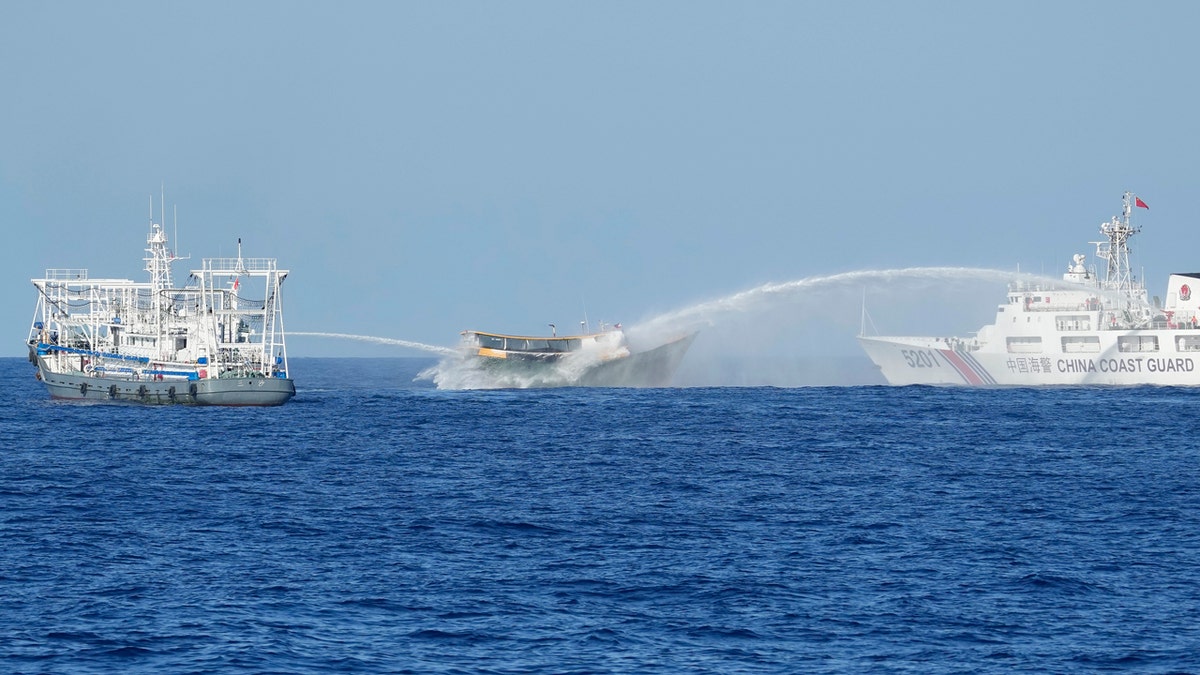
Philippine resupply vessel Unaizah May 4, center, is hit by two Chinese coast guard water canons as they tried to enter the Second Thomas Shoal in the disputed South China Sea on March 5, 2024. (AP Photo/Aaron Favila, File)
The incident also drew Washington into the dispute. U.S. Ambassador to the Philippines Lee Lipton said the United States «strongly condemn[s] the China Coast Guard’s deliberate ramming.»
The Chinese Embassy in Manila responded by accusing the United States of backing Philippine «infringement and provocations» in the disputed waters.
CLICK HERE TO GET THE APP
Friday’s collision was the latest in a series of maritime confrontations between China and the Philippines. In July, Manila accused Chinese forces of firing water cannons at government vessels near Scarborough Shoal and striking a Philippine Navy staff member in the head with a wooden baton during an encounter at Second Thomas Shoal.
Reuters contributed to this report.
world, asia world regions, china










INTERNACIONAL
Dem reactions within moments of Austin ICE shooting spark viral outrage locally, online: ‘Disqualifying’
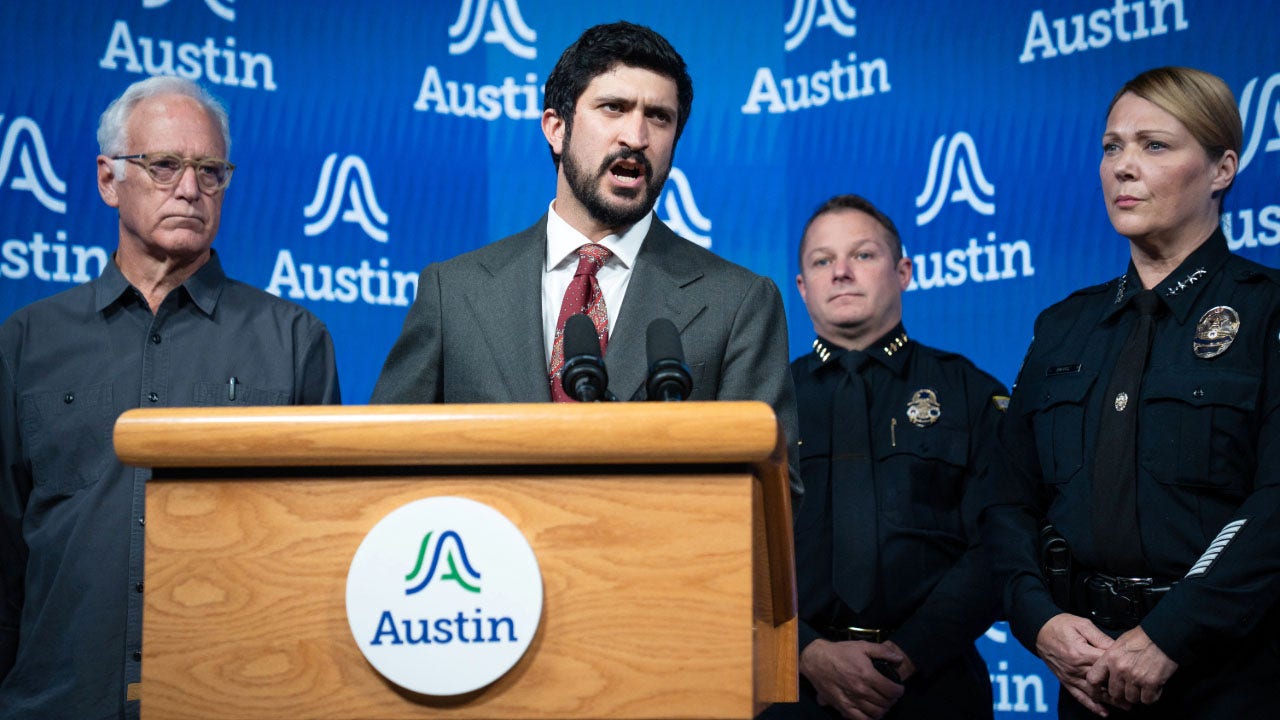
Democrats in Austin, Texas, are facing criticism both online and from a retired cop who spoke to Digital after rushing to attack Immigration and Customs Enforcement moments after a suspected illegal immigrant was shot before any investigation had taken place.
An ICE officer shot a man in Austin on Sunday and almost immediately, before basic facts had been established in the case, and before the man had been identified as Wilber Rafael Garces Perez, elected Democrats in Austin were speaking out against ICE, including Rep. Greg Casar, Councilman Mike Siegel, and Mayor Kirk Watson.
«It is awful that this war has come to our doorstep,» Casar, a member of the progressive Squad caucus, said during a Sunday press conference in a clip that was highlighted by the White House Rapid Response account on X.
«And as the mayor said, unfortunately it is not a surprise. Just a few weeks ago as we saw the ICE surge come to Austin, especially to north central Austin, I and others said that ICE needed to leave before someone was shot like in Minneapolis or like in Corpus Christi or like in Chicago, and that day is here and so I think the message remains that for Austin to be safe, ICE should end its surge here in our community.»
BRANDON GILL UNLOADS ON DEMOCRATS OVER ILLEGAL IMMIGRANT CHARGED WITH RAPING TEEN: ‘COLLATERAL DAMAGE’
Casar and his fellow Democrats quickly sparked viral social media criticism from conservatives accusing the left of selective outrage when it comes to crime, particularly illegal immigrant crime.
«Where was the outcry from this guy last fall when an illegal alien in Texas used a machete to behead a man in front of his spouse and child?» Tricia McLaughlin, former assistant secretary of Homeland Security for public affairs, posted on X. «The perpetrator reportedly kicked the head of the victim ‘around like a soccer ball.’ «
«There it is,» Townhall’s Amy Curtis posted on X. «The Democrats want no immigration laws. They want to destroy this nation. Remember this in November.»
«This sort of rhetoric should be disqualifying for any elected official,» Texas Republican State Rep. Andy Hopper posted on X. «You cannot faithfully take the oath of office and be for open borders. «
Dennis Farris, president of the Austin Police Retired Officers Association, told Digital he expects that kind of rhetoric from Casar and Siegel but was surprised to hear Mayor Watson rush to place blame on ICE both in the press conference and on social media.
‘OUT OF CONTROL’ KILLINGS IN SPANBERGER’S VIRGINIA REACH ‘INSANE’ POINT AS MIGRANT CHARGED IN STABBING SPREE
«With Casar, it didn’t surprise me, that’s Greg Casar, he’s a bomb thrower, he’s been a bomb thrower and he’s been a reactionary known for shooting his mouth off before he has all the facts,» Farris said. «He did that when he was on the city council. He did it in the Mike Ramos shooting. That’s just Greg Casar, He’s known for his theatrics.»
«I’ve known the mayor a long time, consider the mayor a friend, I was really shocked at how visceral his reaction was, he’s usually a lot more measured,» Farris said. «I can understand being upset but the way he reacted, I think, raised the temperature in Austin because he is the one that he is, the leader, right? He is the city leader. He’s the mayor. He’s the one supposed to be trying to keep things calm and I think his reaction yesterday made it worse.»
Watson’s post was «ratioed» on social media, yielding far more negative comments and quote tweets than positive ones, with locals and internet users accusing him of fanning the flames before the facts were known.
«Honestly shocking Mayor @KirkPWatson would issue this sort of statement knowing full well the investigation has barely started, Hope he’s not about to make an Adler-esque 2nd term turn,» prominent Austin attorney Adam Loewy posted on X, referencing former Austin Mayor Steve Adler who presided over the 2020 George Floyd rioting in the city.
Digital reached out to the offices of Casar, Watson, and Siegel for comment.
Farris rejected Democrat claims that ICE is «surging» in Austin and said that federal immigration authorities, whether ICE or INS, have been conducting deportations in Austin for decades without any fanfare.
«They’ve been arresting people that were in the country illegally and I think what we’re seeing here is that the reaction to it is because of Trump, it’s the Trump administration doing it and it’s just another way to dislike the president for whatever reason you want to dislike him for,» Farris said.
In the aftermath of the shooting, Austin Police said three people were arrested, several police vehicles were damaged, and two officers were injured after hundreds took to the streets throwing rocks, bottles, and piece of concrete at officers, national correspondent Brooke Taylor reported.
DHS sources confirmed to on Sunday that Garces Perez is an illegal immigrant from Venezuela with a final order of removal. DHS said Garces Perez illegally entered the United States under the Biden administration. The agency said he was shot during a law enforcement operation.
Perez’s attorney, Kate Lincoln-Goldfinch, claims he was driving for DoorDash when an unmarked truck sideswiped him, chased him and struck his car again before an ICE officer shot him in the back of the neck.
«Wilber entered through CBPOne seeking asylum,» Lincoln-Goldfinch posted on X on Monday. «He was inspected and entered lawfully through a port of entry. He was issued a valid work permit. The issue regarding the deportation order is that he moved and changed addresses. There was a notice for a hearing sent to the wrong address that he missed, which is VERY common. We are working on that. He will be released from detention, his immigration matter will be resolved, and the agencies will be held accountable.»
politics, austin, illegal immigrants, blue city crime, deportation, crime world, texas
INTERNACIONAL
Middle East takes center stage at UN as regional leaders confront Iran war, Gaza and Houthi threat
NEWYou can now listen to Fox News articles!
UNITED NATIONS — The Middle East will take center stage when world leaders open the U.N. General Assembly’s annual debate Tuesday, with some of Washington’s most important regional partners arriving in New York facing a question: What will the region look like after months of war with Iran, renewed Houthi attacks and an uncertain future for Gaza?
Leaders from Jordan, Türkiye, Qatar and Egypt are expected to address the Assembly during the annual General Debate, which begins Sept. 22. Israeli Prime Minister Benjamin Netanyahu is also scheduled to attend.
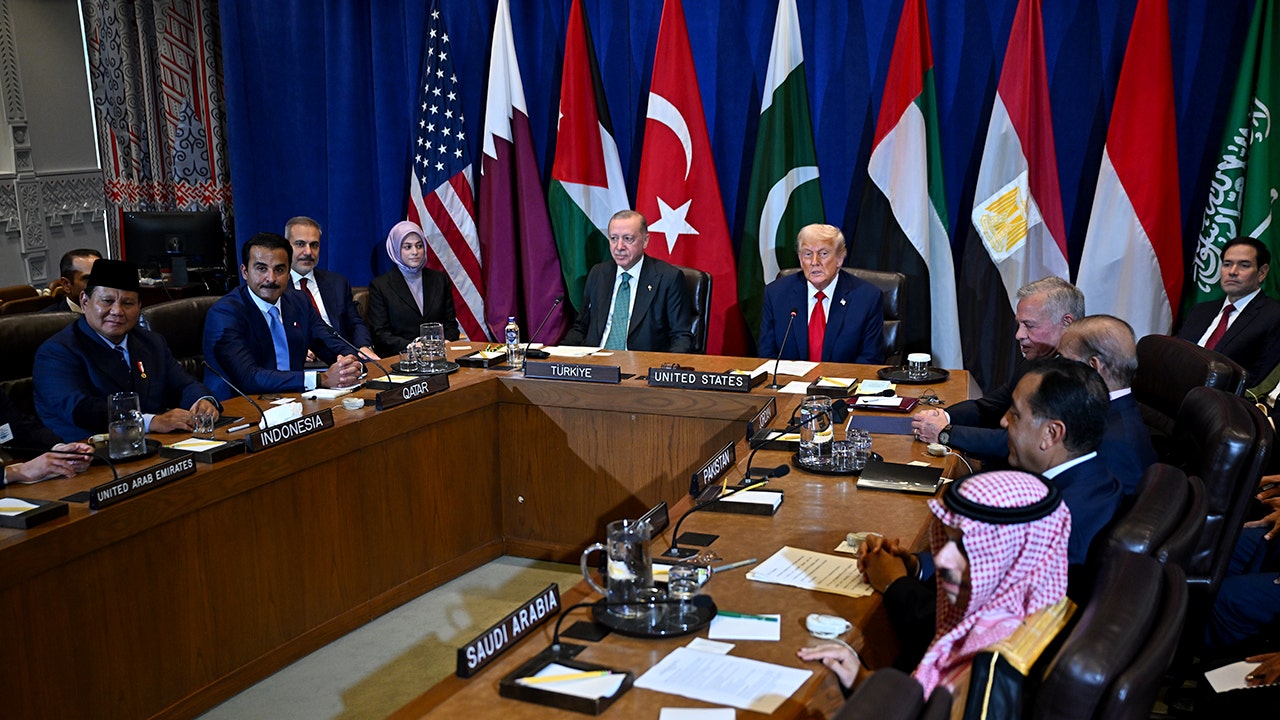
President Donald Trump is expected to meet Gulf leaders on the sidelines of UNGA to discuss the Iran conflict and the region’s future. U.S. Ambassador to the U.N. Mike Waltz told Fox News Digital that the administration wants to hear directly from Gulf leaders about their concerns, describing the meeting as an important opportunity for diplomacy.
TRUMP WELCOMES NETANYAHU TO WHITE HOUSE AS RAGING IRAN WAR THREATENS TO SOUR US-ISRAEL RELATIONSHIP
Turkish President Recep Tayyip Erdogan and President Donald Trump attend a multilateral meeting on Gaza with several Muslim country leaders during the 80th United Nations General Assembly at the U.N. Headquarters in New York, United States, on September 23, 2025. (Photo by Celal Gunes/Anadolu via Getty Images)
Rich Goldberg, a senior adviser at the Foundation for Defense of Democracies, told Fox News Digital that the Iran war has fundamentally altered the region’s strategic landscape, creating opportunities for new energy partnerships and closer cooperation between Israel and its Arab neighbors.
«The opportunity for regional integration and normalization works alongside energy infrastructure meeting the moment, the crisis of needing bypasses for Hormuz,» Goldberg said.
He argued that a network of pipelines carrying Gulf energy overland to the Mediterranean, potentially through Israel, could reduce dependence on vulnerable shipping routes.
«We can make the Strait of Hormuz irrelevant,» Goldberg said, describing potential energy links between Saudi Arabia and Israel, as well as routes connecting Qatar to the Mediterranean.
IRAN-BACKED TERROR GROUP’S LATEST TERRITORIAL GRAB THREATENS SECOND GLOBAL SHIPPING CHOKEPOINT
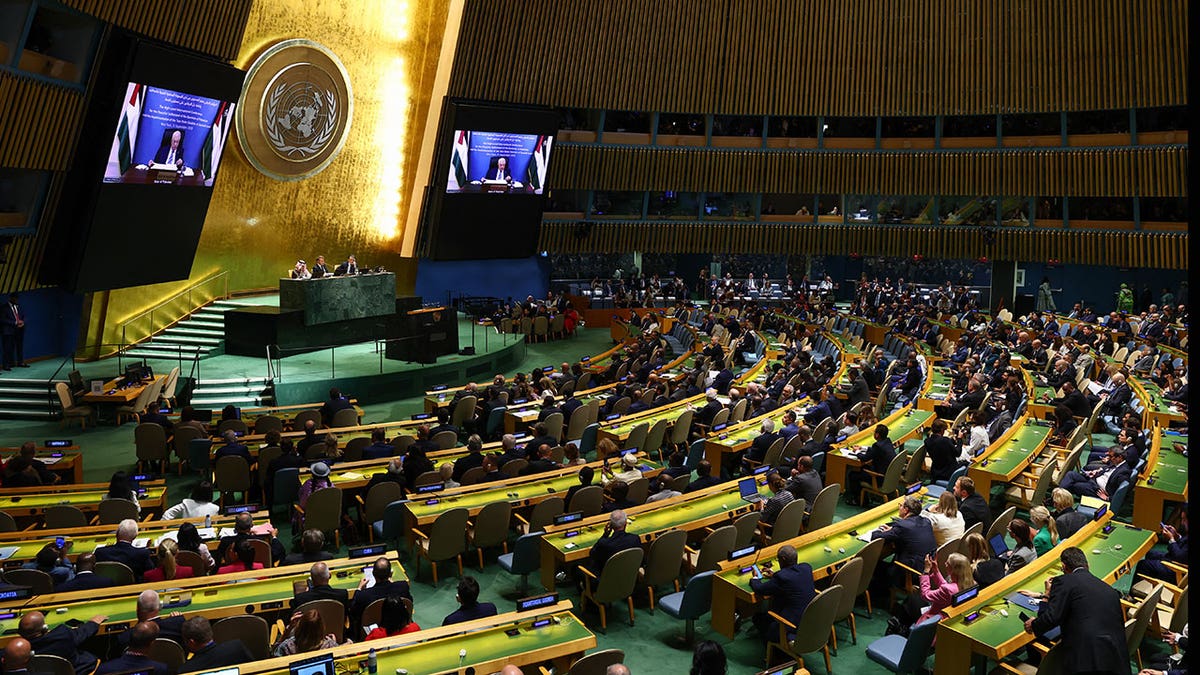
Palestinian Authority President Mahmud Abbas is displayed on a screen as he speaks remotely during a United Nations Summit on Palestinians at U.N. headquarters during the United Nations General Assembly (UNGA) in New York on Sept. 22, 2025. (Angela Weiss/AFP via Getty Images)
But the threat to regional energy supplies now extends beyond Hormuz. The Houthis’ offensive along Yemen’s Red Sea coast has raised new concerns over the Bab el-Mandeb, another critical maritime choke point. Washington Institute analysts April Longley Alley and Allison Minor wrote in a Sept. 11 analysis that the offensive had «shattered the status quo» along Yemen’s western coast.
NETANYAHU REJECTS BOARD OF PEACE’S GAZA PLAN: NO ‘WITHDRAWAL UNTIL HAMAS IS GENUINELY DISARMED’
Gaza presents a separate diplomatic challenge, with Arab governments seeking a political settlement while differing with Israel over Palestinian statehood and the territory’s future.
In a Sept. 6 joint statement, the foreign ministers of Jordan, Egypt, Qatar, Türkiye, Saudi Arabia, the UAE, Indonesia and Pakistan rejected proposals to forcibly displace Palestinians from Gaza and reiterated support for a Palestinian state along the 1967 lines, with East Jerusalem as its capital. They also warned that displacement proposals risk undermining Trump’s Gaza peace plan.
ISRAEL’S E1 PLAN EXPLAINED: THE JERUSALEM-AREA CORRIDOR SPARKING INTERNATIONAL BACKLASH
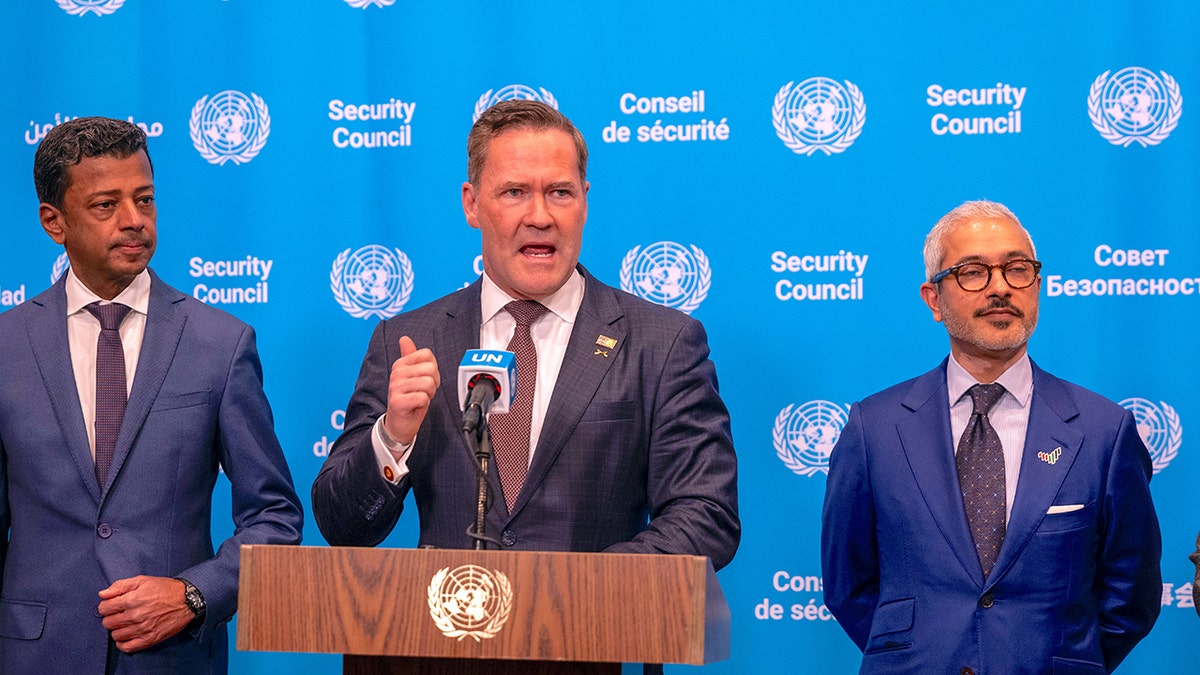
Ambassador to the United Nations Mike Waltz is joined by Ambassador Jamal Fares Alrowaiei of Bahrain (left), Permanent Representative of the United Arab Emirates Mohamed Issa Abushahab (right) and other Gulf states ambassadors as he speaks to reporters after the passing of a U.N. Security Council draft resolution on the situation with ships in the Strait of Hormuz on May 7, 2026, in New York City. (Spencer Platt/Getty Images)
Qatar has simultaneously condemned renewed Iranian attacks against Arab states and Houthi attacks on Saudi Arabia and Red Sea shipping, while insisting that the Palestinian issue remains a priority.
In a Sept. 8 joint statement, the leaders of France, Britain and Canada announced plans to ban imports from Israeli settlements and pursue targeted measures against settlements and those who facilitate them. They also said they would co-chair a meeting during UNGA to advance a two-state solution, one year after recognizing Palestinian statehood.
The diplomatic divisions will also be reflected in who can address the U.N. in person. Palestinian President Mahmoud Abbas was denied a U.S. visa for the second consecutive year. The General Assembly voted Thursday to allow him to deliver his address by video.
Netanyahu, meanwhile, is expected to travel to New York weeks before Israel’s Oct. 27 parliamentary elections, the country’s first national vote since the Oct. 7, 2023, Hamas attacks, amid declining international support for Israel. A June 2026 Pew Research Center survey found that a median of 67% of adults across 36 countries held unfavorable views of Israel, compared with 25% who viewed it favorably.
For Washington, the challenge is balancing its regional security relationships with competing demands over Gaza and the future of relations with Israel.
TRUMP CALLS ON ARAB NATIONS TO SIGN ABRAHAM ACCORDS
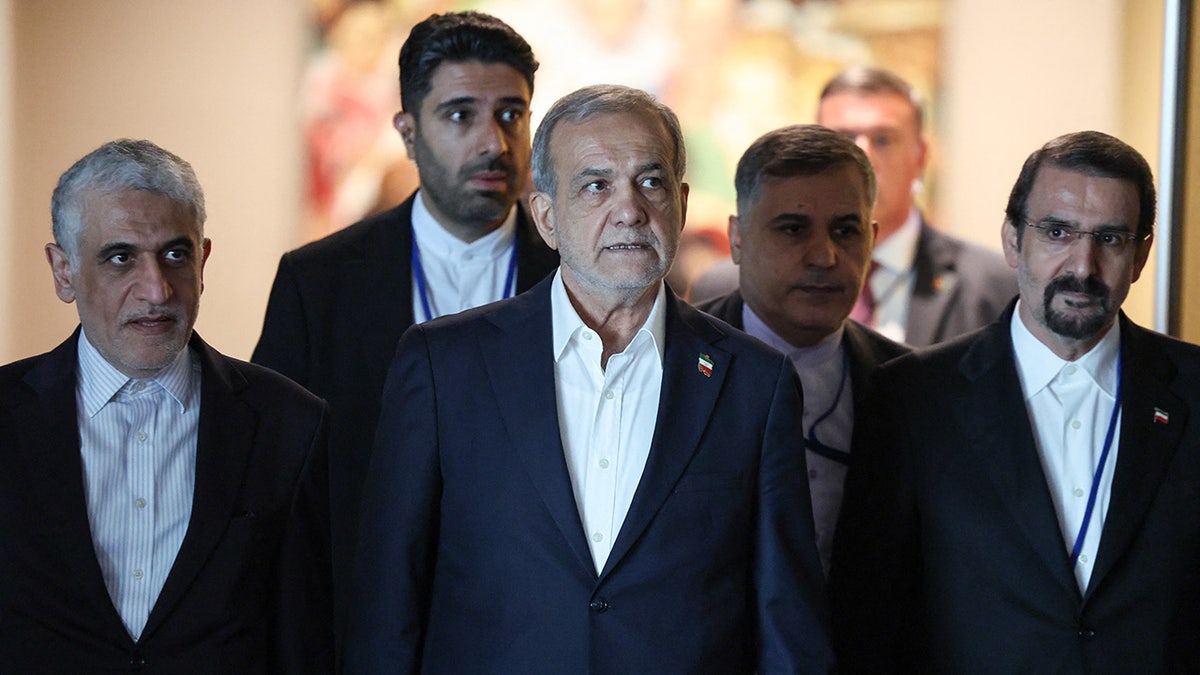
Iran’s President Masoud Pezeshkian (C) walks on his way to a bilateral meeting with France’s President Emmanuel Macron on the sidelines of the United Nations General Assembly at U.N. headquarters in New York City on Sept. 24, 2025. (Ludovic Marin/AFP via Getty Images)
Goldberg predicted that some of the most consequential discussions would take place away from the General Assembly podium, with Arab leaders delivering one message publicly and another in private meetings with Trump and senior U.S. officials.
«We may see the old propaganda of criticizing Israel and saying everybody wants a different future, and they’re going to support Gaza and the Palestinians, they demand a Palestinian state,» Goldberg said.
Behind closed doors, he predicted the discussions would focus on U.S. security guarantees, the next steps in confronting Iran and expanding regional energy infrastructure.
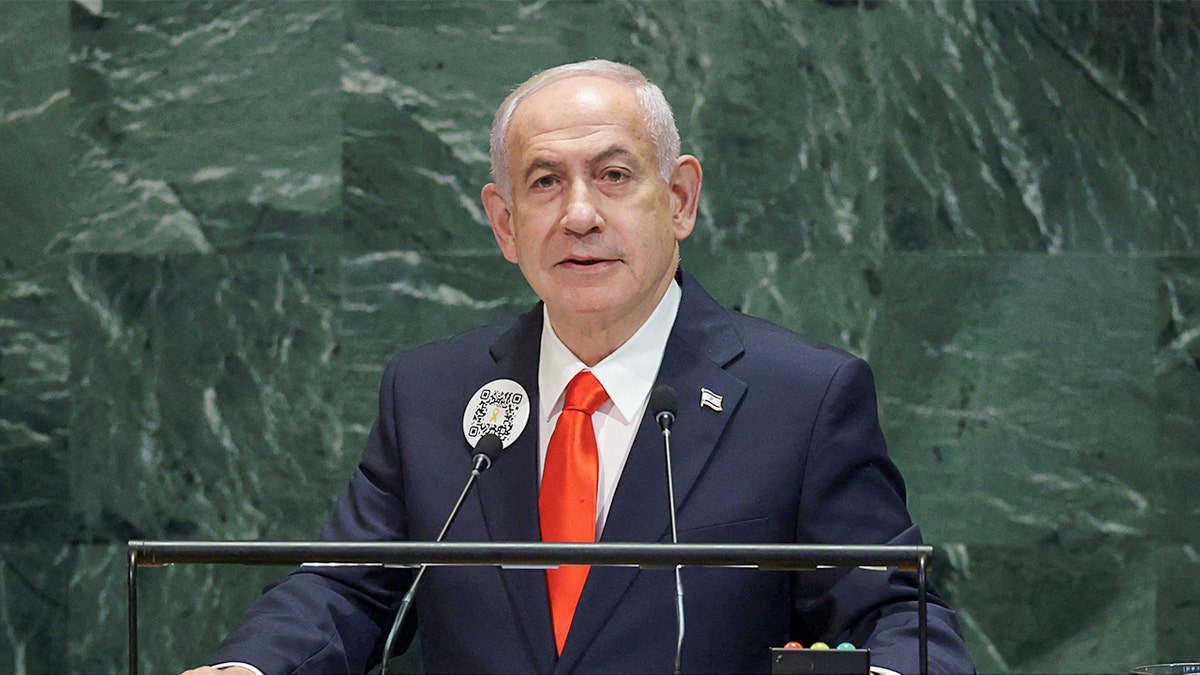
Israeli Prime Minister Benjamin Netanyahu addresses the 80th United Nations General Assembly (UNGA) at U.N. headquarters in New York City, Sept. 26, 2025. (Jeenah Moon/Reuters)
«What will be a pathway forward politically that the U.S. can provide to these leaders so that they can normalize with Israel alongside the necessary infrastructure upgrades that they need to make for their own energy securities and physical securities going forward?» Goldberg said.
united nations, general assembly, war with iran, middle east, foreign policy
INTERNACIONAL
Instituciones nicaragüenses coordinan detenciones, ocultamiento y bloqueo de recursos judiciales
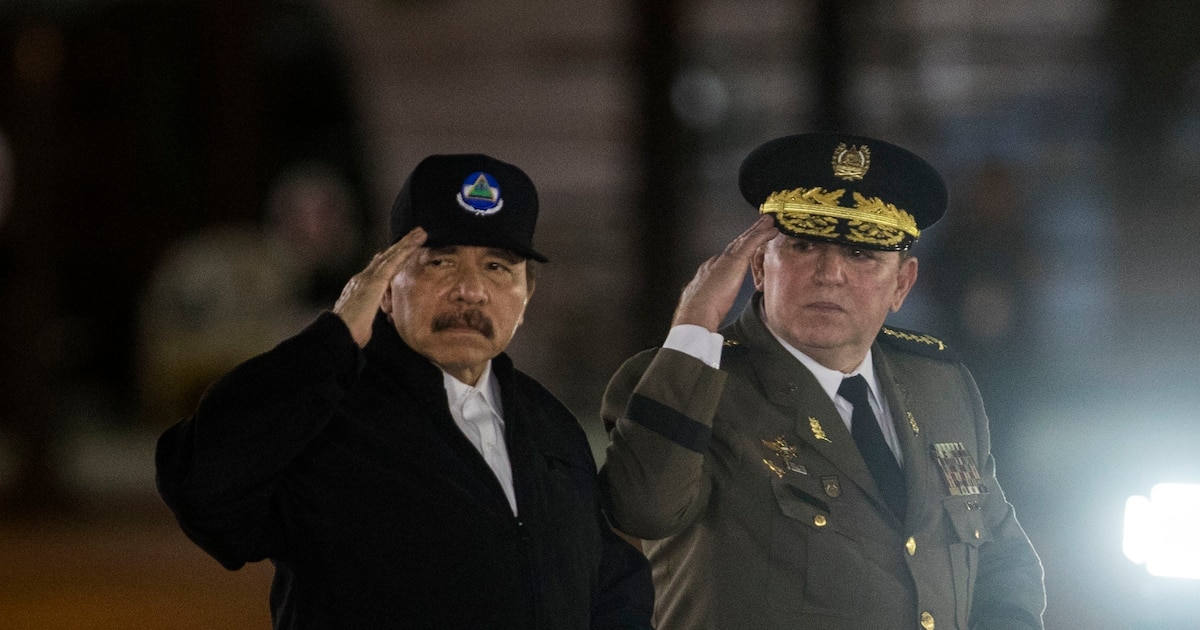
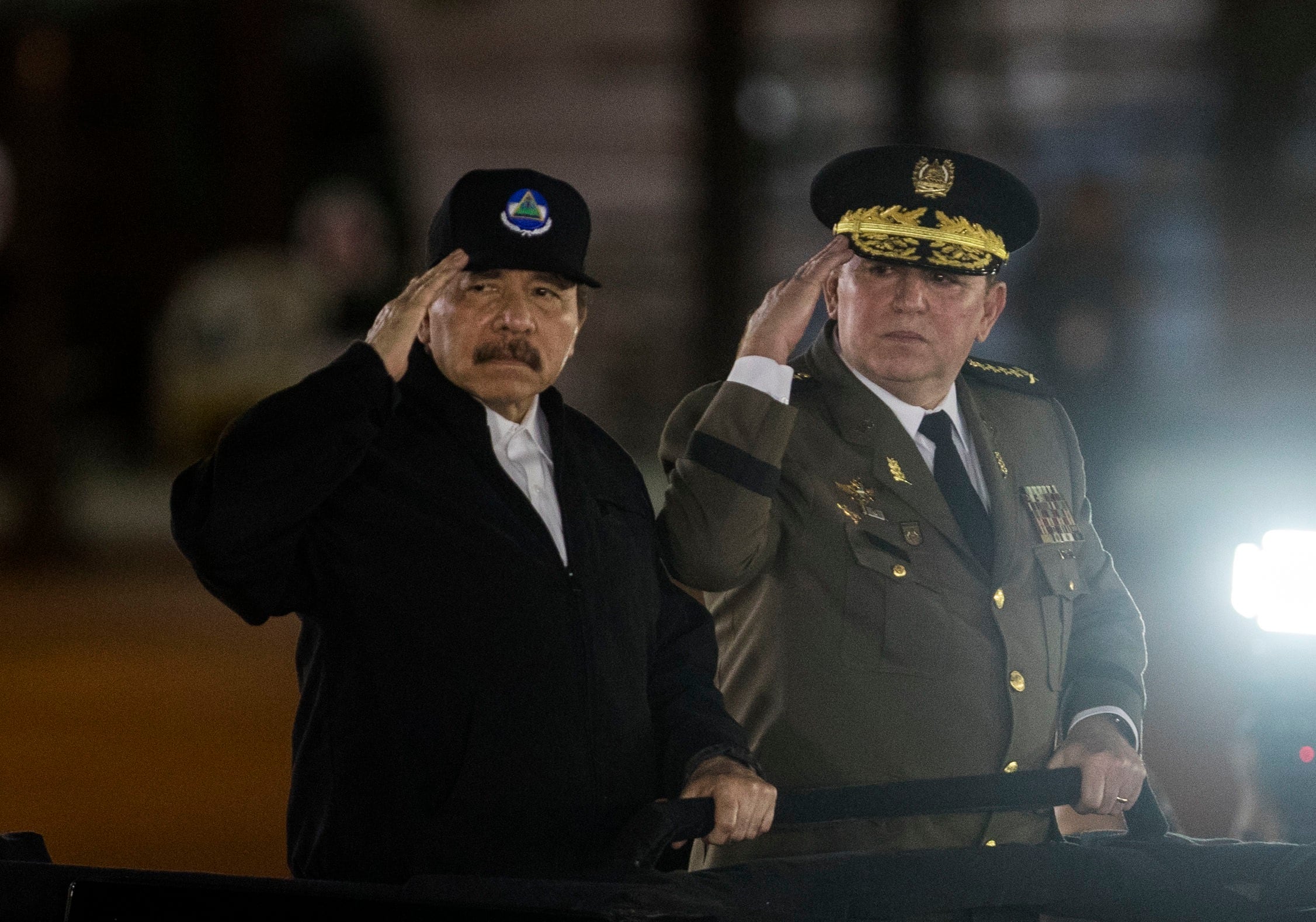
La represión contra personas opositoras o percibidas como tales en Nicaragua no responde, según el Grupo de Expertos en Derechos Humanos de Naciones Unidas, a actuaciones aisladas de funcionarios individuales. El informe, presentado hoy bajo el título “Anatomía de la crueldad estatal. Desaparición forzada y muerte bajo custodia en Nicaragua”, identifica una estructura institucional coordinada que articula detenciones arbitrarias, ocultamiento de personas detenidas y bloqueo de los recursos judiciales destinados a proteger la libertad y la integridad de las víctimas.
La Policía Nacional, el Sistema Penitenciario Nacional, el Ministerio del Interior, el Ministerio Público y el sistema de justicia habrían participado, por acción u omisión, en un mecanismo que permite mantener a personas desaparecidas forzadamente durante días, meses o años. El Grupo afirma tener “motivos razonables para creer” que esta coordinación opera dentro de una cadena de mando que llega a los niveles más altos del Gobierno.
“Las desapariciones forzadas no son el resultado de conductas aisladas de funcionarios individuales”, señala el documento. Por el contrario, fueron “facilitadas y prolongadas mediante acciones y omisiones coordinadas” de diversas instituciones estatales.
El mecanismo inicia con la identificación y captura de la víctima. El informe documenta detenciones sin orden judicial, realizadas en viviendas, negocios, iglesias, espacios públicos y puestos fronterizos. Con frecuencia, los agentes no explican las razones del arresto, no muestran documentos de autoridad y no informan el centro de detención al que trasladarán a la persona.
En la siguiente etapa, familiares y abogados buscan información en delegaciones policiales, cárceles y oficinas estatales. Allí, funcionarios niegan que la persona esté bajo custodia, afirman que no hay registros de detención o remiten a los familiares a otras instituciones. De esa manera, el Estado impide verificar si la víctima continúa con vida, dónde está recluida o si recibe atención médica.
El Grupo de Expertos identificó responsabilidades específicas en centros bajo control policial y penitenciario. Los sucesivos jefes de la Dirección de Auxilio Judicial y de la delegación policial del Distrito III, en Managua, habrían conocido que personas desaparecidas estaban recluidas en El Chipote, El Nuevo Chipote y otras instalaciones, pero se negaron a proporcionar información e instruyeron a subordinados para actuar de la misma forma.
Una práctica similar habría operado en el Sistema Penitenciario Nacional. El informe menciona a las direcciones de La Modelo, La 300 y La Esperanza, cuyos responsables, según el Grupo, habrían ocultado sistemáticamente la suerte y el paradero de personas detenidas por motivos políticos. La información sobre traslados, condiciones de salud y acceso a visitas también habría sido restringida deliberadamente.
El recurso de exhibición personal, equivalente al habeas corpus, aparece como uno de los principales mecanismos judiciales bloqueados. En teoría, este procedimiento debe permitir que un juez examine rápidamente la legalidad de una detención y ordene la presentación física de la persona detenida. Sin embargo, el Grupo documentó retrasos, inadmisiones, falta de respuesta y desacato a las órdenes judiciales.

Según una investigación citada en el informe, el 90.1% de las 315 solicitudes de habeas corpus presentadas entre 2018 y 2024 por detenciones políticas resultaron ineficaces. Solo el 1.6% condujo a una protección efectiva. El resto fue rechazado, ignorado o quedó sin resultados verificables.
“Cuando los jueces ejecutores o los abogados defensores intentaron acceder a delegaciones policiales o establecimientos penitenciarios, con frecuencia se les denegó la entrada o no recibieron una respuesta sustantiva”, detalla el informe. Incluso cuando se nombró a jueces para ejecutar el recurso, autoridades policiales y penitenciarias habrían impedido el ingreso a las instalaciones, el acceso a registros y la comunicación con las víctimas.
La Sala Penal Uno del Tribunal de Apelaciones de Managua es mencionada como una instancia que, bajo sus sucesivas presidencias, habría obstaculizado deliberadamente o impedido la ejecución de recursos de habeas corpus a favor de personas detenidas por motivos políticos en Managua.
El documento señala que el sistema judicial, lejos de funcionar como contrapeso, contribuyó a dar una apariencia de legalidad a la privación de libertad. Muchas víctimas fueron presentadas tardíamente ante tribunales, sin defensa de su elección y mediante procesos expeditos, a puerta cerrada o por videoconferencia. En algunos casos fueron condenadas sin conocer formalmente la sentencia o la pena impuesta.

El caso de Brooklyn Rivera Bryan refleja esta coordinación institucional. La Policía lo detuvo sin orden judicial; el Sistema Penitenciario lo mantuvo aislado y fuera de contacto regular con su familia; el Ministerio Público no investigó su desaparición ni su muerte; y el Ministerio de Salud no entregó sus registros médicos completos a los familiares, según el Grupo.
El informe sostiene que este entramado opera bajo un “control centralizado” de los copresidentes Daniel Ortega y Rosario Murillo. Aunque el Grupo no afirma haber encontrado órdenes escritas para cada caso individual, considera que la estructura de mando, la repetición de los métodos y la actuación uniforme de las instituciones permiten establecer esa conclusión.
“La impunidad no es un elemento incidental, sino el mecanismo que permite la continuidad de la política”, concluye Naciones Unidas.
altos cargos,militares,políticos,saludando,saludos militares,tomas de posesión

Elina Costantini destapó los secretos más íntimos de su relación y cómo es el sexo con Eduardo Constantini a sus 80 años: “Si yo soy guerrera, él es…»

Hay 17 provincias que ya lanzaron planes para refinanciar deudas en mora: una por una, cuáles son las tasas y plazos

Dem reactions within moments of Austin ICE shooting spark viral outrage locally, online: ‘Disqualifying’

Middle East takes center stage at UN as regional leaders confront Iran war, Gaza and Houthi threat

A falta de recursos, Luis Caputo propone trasladar a las provincias las obras públicas

El polémico antecedente de la jueza porteña que sobreseyó a un adolescente de 14 años acusado de robar

La Justicia confirmó las fechas de los juicios contra Cristina y Máximo Kirchner por las causas Los Sauces y Hotesur

Tras los cruces por Discapacidad, Javier Milei y Patricia Bullrich se reencuentran en la reunión de Gabinete para delinear la agenda legislativa

Alejada de la fama, así vive hoy a los 55 años Ana Paul Dutil con un nuevo trabajo y priorizando su salud mental, tras la polémica con Julieta Prandi y Emanuel Ortega

Curiosidades de un mercado cada vez más cambiante: estas son las versiones más elegidas por quienes compran autos 0 Km

 POLITICA2 días ago
Círculo rojo: conversaciones informales por un acuerdo judicial con los gobernadores y el factor Bullrich
- ECONOMIA2 días ago
Enrique Szewach: “El apretón monetario afecta a la actividad, al salario real y a los márgenes”
- POLITICA13 horas ago
Radiografía del ajuste: Los flancos más criticados de la gestión de Javier Milei entre recortes sociales, crisis previsional y salarios de miseria