INTERNACIONAL
La ONU busca a su próximo líder

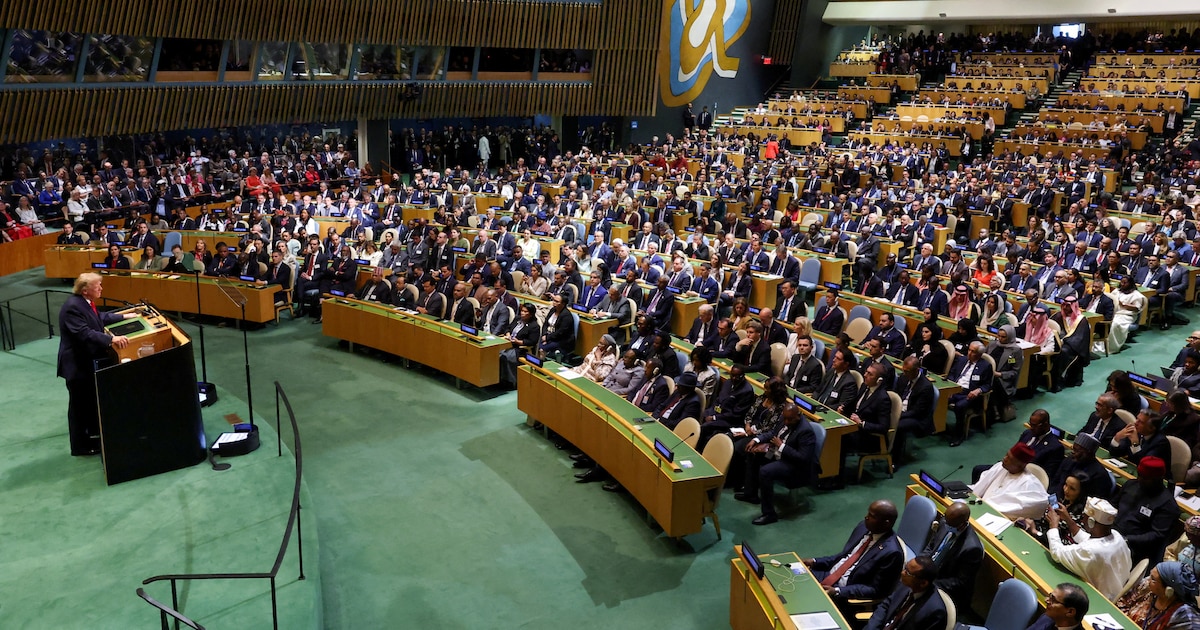
Mientras la Organización de las Naciones Unidas busca a su próximo líder, diplomáticos afirman que existen cualidades clave que les gustaría ver en el futuro secretario general. Buscan a alguien que coloque proactivamente a la ONU en el centro de la resolución de conflictos globales e imponga reformas y recortes de gastos.
Se espera que la sucesión de António Guterres, cuando este deje el cargo en diciembre, sea un tema de acalorado debate a puerta cerrada esta semana durante las reuniones diplomáticas de la Asamblea General de la ONU en Nueva York. Las conversaciones “definirán en gran medida la suerte de los candidatos y separarán a los verdaderos aspirantes de los que no tienen posibilidades”, señaló Daniel Forti, jefe de asuntos de la ONU en el International Crisis Group.
Esto es lo que necesita saber:
Una selección de varios meses
El Consejo de Seguridad de la ONU elige al secretario general mediante un proceso de varios meses que comienza con una “votación oficiosa” informal, no vinculante y a puerta cerrada. Los 15 miembros del Consejo votan por los candidatos.
En estas votaciones indican si las candidaturas son “alentadas”, “desalentadas” o si “no se expresa opinión”.
La última votación oficiosa se realizó el 18 de septiembre y, aunque los resultados deben ser confidenciales, se han filtrado a los medios de comunicación.
Una vez que el Consejo acuerde un único nominado, aprobará una resolución y recomendará a la persona ante la Asamblea General, la cual someterá la propuesta a una votación de procedimiento. Para obtener el puesto, el candidato debe contar con al menos nueve votos a favor y ningún veto de los cinco miembros permanentes del Consejo de Seguridad (Estados Unidos, Francia, Reino Unido, Rusia y China).
Votaciones secretas
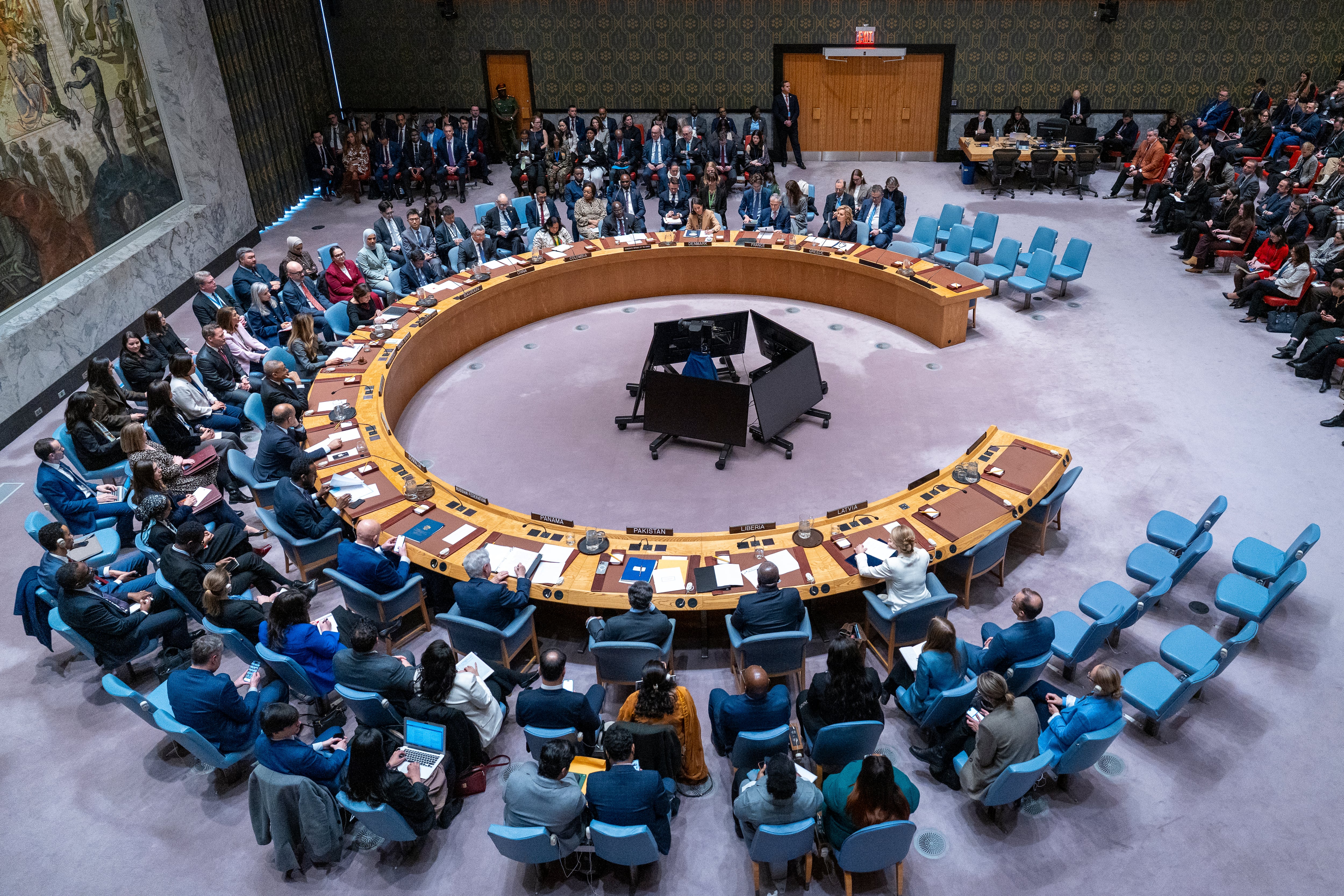
De ocho candidatos iniciales, la lista se redujo a siete tras la retirada de la contienda de Michelle Bachelet el viernes debido a sus bajos resultados en las encuestas.
Bachelet, de 75 años, ex presidenta de Chile en dos ocasiones, también se desempeñó como alta comisionada de la ONU para los derechos humanos y como directora ejecutiva de ONU Mujeres, una organización centrada en los derechos de las mujeres. En la votación obtuvo un voto de apoyo, 11 en contra y tres abstenciones.
Hasta el momento no ha surgido un favorito claro, según diplomáticos y los resultados filtrados de tres votaciones secretas realizadas por el Consejo de Seguridad. Forti afirmó que es probable que más aspirantes se sumen a la contienda o se retiren antes de la recomendación final del Consejo.
Diplomáticos señalan que, en selecciones anteriores, para estas fechas ya habrían surgido al menos uno o dos favoritos. Los resultados de los sondeos han sido tan poco concluyentes que, por primera vez, según Forti, diplomáticos y funcionarios de la ONU se preguntan abiertamente qué sucederá si el Consejo no logra ponerse de acuerdo sobre un candidato.
Guterres, de 77 años, ex primer ministro de Portugal que también dirigió la agencia de la ONU para los refugiados (ACNUR), ocupa el cargo de secretario general desde 2017 y ha cumplido dos mandatos. Su portavoz, Stéphane Dujarric, afirmó que Guterres no está interesado en permanecer de forma interina y planea estar en su Portugal natal a principios del próximo año.
El sucesor de Guterres debe ser elegido antes del 31 de diciembre, para asumir la jefatura de la ONU el 1 de enero de 2027.
EEUU y Rusia muestran su descontento

Diplomáticos y un alto funcionario de la ONU señalaron que Rusia ha indicado que vetaría a uno de los candidatos, Rafael Grossi, director del organismo de control nuclear de la ONU, debido a su disconformidad con el manejo que le dio al estancamiento entre Rusia y Ucrania respecto a la planta nuclear de Zaporiyia.
Por su parte, Estados Unidos ha indicado que bloquearía a Bachelet por sus posturas sobre el aborto. También se opone a Carolyn Rodrigues-Birkett, embajadora de Guyana ante la ONU, por calificar de genocidio la conducta de Israel en Gaza.
Por costumbre, la ONU rota la oficina del secretario general entre sus cinco regiones reconocidas. Dado que los últimos tres líderes han sido de África, Asia y Europa Occidental, se espera que el nuevo secretario general provenga de América Latina o el Caribe.
Asimismo, la elección de una mujer como secretaria general sería un hito histórico en los 81 años de la organización.
Los candidatos y sus posiciones en los sondeos
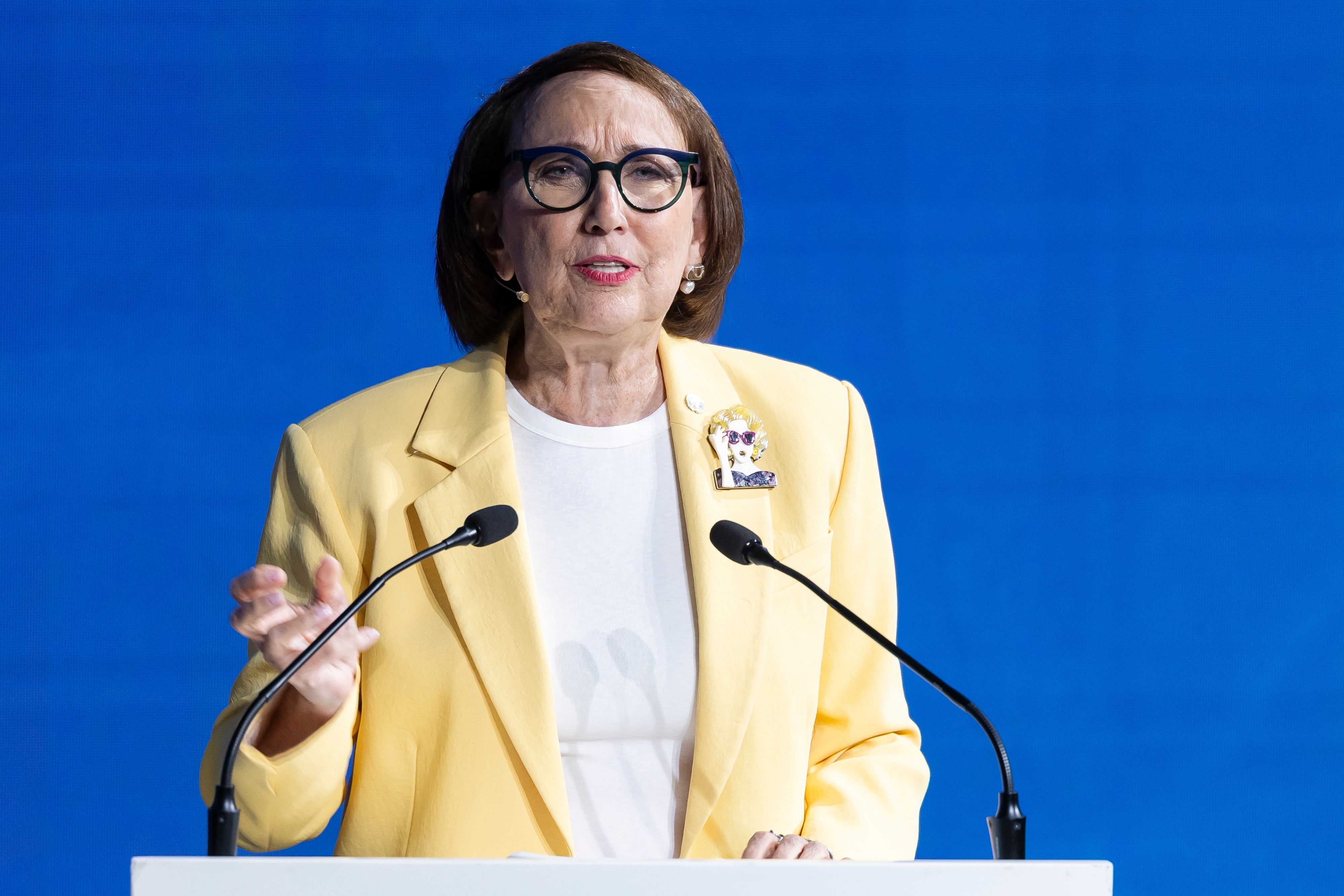
- Rebeca Grynspan, 70 años. Economista y ex vicepresidenta de Costa Rica, actualmente lidera la Conferencia de las Naciones Unidas sobre Comercio y Desarrollo (UNCTAD). Se apartó de sus funciones para evitar conflictos de interés mientras hace campaña para el máximo cargo de la ONU. Grynspan obtuvo una ligera ventaja en la votación oficiosa más reciente, con nueve votos a favor, cinco en contra y uno sin opinión.
- Carolyn Rodrigues-Birkett, 53 años. Ex ministra de Relaciones Exteriores de Guyana, se ha desempeñado como embajadora de su país ante las Naciones Unidas desde 2020. Como ex miembro del Consejo de Seguridad, cuenta con experiencia de liderazgo en la ONU. Recibió ocho votos a favor, seis en contra y uno sin opinión.
- Olara Otunnu, 75 años. Político y diplomático ugandés, se desempeñó como subsecretario general de la ONU bajo la administración de Kofi Annan. Es el candidato de mayor edad en la contienda. Fue embajador de Uganda ante la ONU en la década de 1980 y ministro de Relaciones Exteriores de su país entre 1985 y 1986. Obtuvo cinco votos a favor, siete en contra y tres sin opinión.
- Rafael Grossi, 65 años. Diplomático de carrera argentino, dirige el Organismo Internacional de Energía Atómica (OIEA), el organismo de vigilancia nuclear de la ONU. Durante los últimos seis años, Grossi ha desempeñado un papel destacado en dos crisis nucleares notables: el conflicto con Irán por su programa nuclear y las amenazas a la planta de Zaporiyia en Ucrania tras la invasión a gran escala por parte de Rusia. Obtuvo cinco votos a favor, ocho en contra y dos sin opinión.
- Macky Sall, 64 años. Destacado político senegalés, fue presidente de su país de 2012 a 2024. También fue primer ministro y presidente de la Asamblea Nacional. Registró cinco votos a favor, nueve en contra y uno sin opinión.
- María Fernanda Espinosa, 62 años. Fue ministra de Relaciones Exteriores y ministra de Defensa de Ecuador. También cuenta con una amplia experiencia en la ONU, tras haber sido embajadora de Ecuador ante el organismo y presidenta de la Asamblea General. Es la directora ejecutiva de GWL Voices, una organización sin fines de lucro enfocada en la igualdad de género, y ha sido asesora de la ONU en cambio climático, biodiversidad y derechos de los pueblos indígenas. Recibió tres votos a favor, seis en contra y seis sin opinión.
- Ivonne Baki, 75 años. Político y diplomática ecuatoriana, fue ministra de Industrias y Productividad y presidenta del Parlamento Andino. Fue la primera mujer de su país en ser embajadora ante Estados Unidos y también se desempeñó como embajadora en Francia y Qatar. Tuvo cero votos a favor, 10 en contra y cinco sin opinión.
© The New York Times 2026.
International,Relations,Diplomacy / Foreign Policy,North America











INTERNACIONAL
Russia’s neighbor reveals personal appeals to Trump as US weighs NATO troop pullback in Europe

NEW YORK — Lithuanian President Gitanas Nausėda revealed Monday he personally pleaded with President Donald Trump to maintain U.S. forces on NATO’s eastern flank as Washington reviews its military footprint in Europe.
Meanwhile, Russia’s war in Ukraine has raged on for more than four-and-a-half years and raised questions on how far Moscow will push into the continent.
Nausėda said during remarks at a fireside chat moderated by Digital at the Presidential Business Forum on Resilience on the sidelines of the United Nations General Assembly New York that Lithuania is prepared to provide «very generous host-nation support» for American forces to remain in the region.
«I personally sent two letters to the president,» Nausėda said of the plea to keep an American troops presence.
PENTAGON CUTS BRIGADE COMBAT TEAMS IN EUROPE AS TRUMP PRESSURES NATO ON SPENDING
The Pentagon has already begun scaling back some forces and capabilities in Europe, while reported options under review could remove tens of thousands more troops.
The review is part of a broader Pentagon strategy to shift primary responsibility for Europe’s conventional defense onto European allies, while reserving a more limited U.S. role. But Washington has also signaled that its retrenchment may not be uniform: Trump said last week that the U.S. was making progress toward a permanent Army base in Poland, one of NATO’s highest-spending members.
That has left frontline allies trying to determine where they fit in with an emerging U.S. strategy that calls for a smaller overall role in Europe while deepening ties with countries Washington views as carrying more of the burden.
The review also comes as Russia’s war with Ukraine has increasingly spilled into NATO territory.
RUSSIA PREPARING HYBRID ATTACKS ON NATO’S EASTERN FLANK, INTELLIGENCE WARNS
Lithuania experienced that threat firsthand last week when NATO fighters shot down a drone that crossed into Lithuanian airspace from Belarus. Nausėda later said the aircraft was likely Russian and intended for an attack on Ukraine before veering off course.
The country’s intelligence services warn that Russia is already rebuilding military capabilities near NATO’s eastern borders despite its losses in Ukraine.
Lithuania’s 2026 National Threat Assessment found that a ceasefire or frozen conflict in Ukraine could accelerate that buildup, allowing Moscow to move more troops and equipment back toward permanent bases near the Baltic states and replenish weapons and ammunition depleted during the war. In that scenario, Lithuanian intelligence assessed Russia could eventually develop enough capability to launch military action against the Baltics and seek an initial regional advantage before NATO could fully respond.
Asked how much time NATO would have if a ceasefire were reached tomorrow, Nausėda declined to put a timeline on the threat but warned that «a ceasefire for Russia may mean» looking for new targets.
He said whether Moscow ultimately tests NATO would depend largely on the alliance’s ability to strengthen its deterrence and demonstrate that it can defend its eastern flank.
Nausėda cast doubt on the prospect of near-term peace talks, saying that «for the time being Russia is not ready to start the peace negotiations.»
Instead, he said Moscow appears intent on using the approaching winter to increase pressure on Kyiv by striking Ukraine’s energy infrastructure and worsening conditions for civilians.
«The winter is coming. Russia knows very well where they should target, and they will target energy infrastructure first of all,» Nausėda said, describing the attacks as an effort to make living conditions in Ukraine as difficult as possible and pressure its leadership toward concessions.
«For these negotiations, I don’t see any ground, at least right now,» he said, adding that talks could become possible «maybe next year.»
The threat to energy infrastructure was particularly resonant for Nausėda, who spoke as Lithuania marked another step in its yearslong effort to insulate itself from energy pressure from Moscow.
Lithuania, marking a new long-term natural gas agreement with U.S. natural gas producer EQT Corp. this wee during the president’s trip to New York, began importing U.S. LNG in 2017 and now gets roughly 70% of its LNG from the United States, Nausėda said.
During Monday’s forum, Lithuanian energy company Ignitis signed a new long-term LNG agreement with U.S.-based EQT Corp
Nausėda said Lithuania’s push for energy independence was shaped by years of experience with Moscow using the country’s dependence on Russian energy as political leverage.
«Our history shows that all the time Russians misused our dependencies for their own benefit,» Nausėda said.
Nausėda stressed that Lithuania is also increasing its own defense burden, saying the country is spending 5.4% of GDP on defense while building a national division and preparing to host a full German brigade by the end of 2027.
He said Lithuanian intelligence has periodically warned of a risk that Russia could target critical infrastructure in Lithuania, prompting additional measures to protect energy and other strategic assets.
nato, politics, ukraine, russia, donald trump, national security, geopolitics
INTERNACIONAL
Francia y Estados Unidos preparan una resolución de la ONU que impulse una misión internacional para reabrir el estrecho de Ormuz
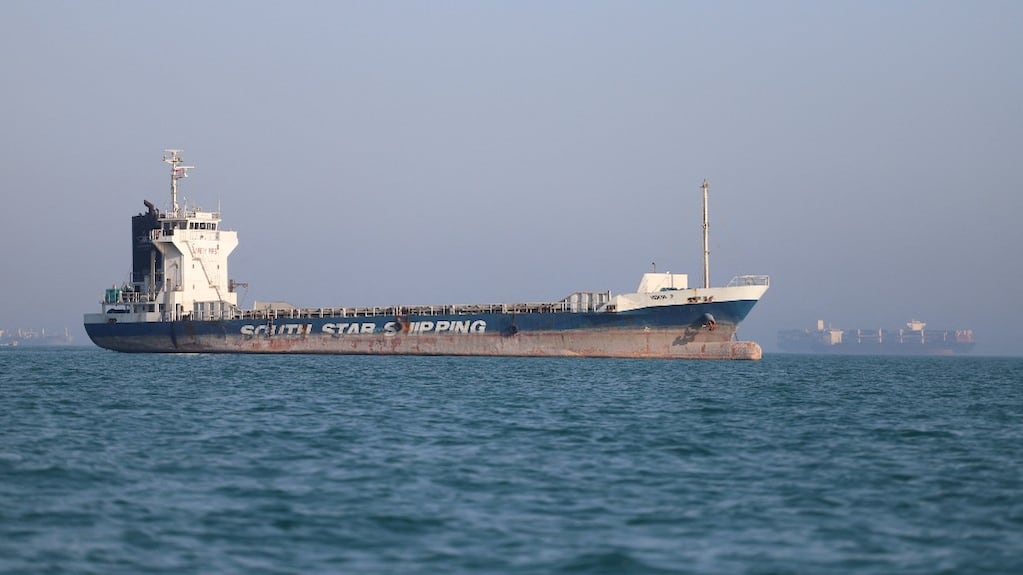
Francia comenzó a preparar junto con Estados Unidos una nueva resolución del Consejo de Seguridad de las Naciones Unidas para avanzar con una misión internacional en el estrecho de Ormuz, una de las rutas marítimas más importantes para el comercio mundial de energía.
La iniciativa busca restablecer y proteger la circulación de buques comerciales, especialmente petroleros y portacontenedores, en momentos en que las dificultades para navegar por la zona presionan sobre los precios internacionales de la energía.
Diplomáticos citados por Reuters indicaron que París trabaja en el texto después de las conversaciones que mantuvieron el presidente francés, Emmanuel Macron, y su par estadounidense, Donald Trump, durante la Asamblea General de la ONU en Nueva York.
La propuesta retoma un proyecto que Francia viene impulsando desde hace varios meses junto con otros países. La diferencia es que París ahora intenta conseguir un acuerdo dentro del Consejo de Seguridad, donde anteriores iniciativas tropezaron con las objeciones de Rusia y China, que consideraron que podían estar dirigidas contra Irán.
Por ese motivo, la diplomacia francesa busca que el nuevo documento se concentre específicamente en la libertad de navegación y la seguridad marítima, sin convertir la misión en una operación ofensiva contra Teherán ni vincularla con otros conflictos de Medio Oriente.
El plan de Macron para reabrir el estrecho de Ormuz
Macron había explicado días atrás que Francia trabaja para lograr una “reapertura pacífica” del estrecho. El proyecto contempla que, cuando las condiciones de seguridad lo permitan, una misión internacional pueda escoltar petroleros y portacontenedores y facilitar la normalización progresiva del tránsito marítimo.
La iniciativa tiene antecedentes concretos. En abril, Francia y Reino Unido encabezaron conversaciones con decenas de países y más de una docena manifestó su disposición a participar de una eventual misión. Alemania también expresó posteriormente su respaldo y señaló que podría aportar recursos una vez que estuvieran dadas las condiciones.
Trump
INTERNACIONAL
Reporter’s Notebook: Congress struggles to find a message that resonates with voters ahead of midterms
Canadian sociologist Marshall McLuhan famously declared that «the medium is the message.»
But what if the message is just «medium?» Or, perhaps in today’s vernacular, «mid.»
Both sides are trying to curate what they say to voters in order to coax them to vote for their party in November.
«The message matters,» said House Majority Whip Tom Emmer, R-Minn., on Fox. «We have accomplished a ton. No taxes on overtime. No taxes on tips. We raised the child care tax credit. The list goes on and on.»
EXCLUSIVE: INSIDE VANCE’S INTIMATE CAPITOL HILL HUDDLE AS REPUBLICANS CONFRONT TOUGH MIDTERM TERRAIN
Those are all vestiges of the Big Beautiful Bill which the Republican-led Congress passed last summer. Now Republicans are scrambling to remind voters what they did.
«It was a great message last year and we missed the opportunity, in my view, to talk about the good things we did last year,» conceded Sen. Kevin Cramer, R-N.D.
But Cramer says voters want to know what you’ve done for them lately. And that’s where the GOP could struggle.
«People’s rearview mirror is getting shorter and shorter all the time,» said Cramer. «What you are going to do for me today is more important to them than what you tried to do a year ago.»
That’s why some Republicans are frank about their prospects at the polls.
«This midterm is going to be a f—ing bloodbath,» fumed Rep. Nancy Mace, R-S.C., who is retiring. «I think that both parties know everyone’s putting blame on the Republicans right now.»
Democrats are campaigning on affordability. The cost of groceries and fuel are top of mind.
«What’s most important to Americans are pocketbook issues,» said Sen. Tim Kaine, D-Va. «And they see the tariff strategy as punishing our allies and punishing their pocketbooks for no purpose.»
But Democrats are also stumping on a promise.
«The top priority in these next two years is going to be holding Donald Trump accountable,» said Colorado Democratic House nominee Melat Kiros.
«We’ll hold this administration accountable for its corruption,» warned House Democratic Caucus Chairman Pete Aguilar, D-Calif.
«We will subpoena them if we need to,» declared Rep. Pramila Jayapal, D-Wash.
It’s unclear if threats of Presidential probes could dilute the Democrats’ directive this fall.
«When you talk about (investigations),» yours truly asked House Minority Leader Hakeem Jeffries, D-N.Y., «Does that step on your message in any way about costs?»
«No, because there’s a cost to the American people around corruption,» answered Jeffries. «Which is why the American people are demanding that action be taken and that we hold the crooks accountable.»
POLL: SQUEEZED BY COSTS, FRUSTRATED VOTERS TURN TO THE DEMOCRATS
Still, one Democrat says the party is better politically if it sticks to bread and butter issues.
«There are a lot of corruption questions,» said Sen. Peter Welch, D-Vt. «But I think the gold ring, the brass ring, is focusing on affordability.»
While Republicans try to remind voters about the «big, beautiful bill,» another prominent GOP senator says his party lacks a coherent message.
«We’re lucky because the Democrats don’t have a plan either,» said Sen. John Kennedy, R-La. «Here’s the strategy for both sides. ‘The other guys are worse than me.’»
So some Republicans are reverting to a wedge issue which worked for them at the ballot box two years ago.
«We’re going to tell the story about the closed border. I mean, President Trump has the most secure border in our history,» argued Sen. Katie Britt, R-Ala.
But both parties are evaluating a late-emerging issue: artificial intelligence.
«In the next 30 days, as we go into this election, Democrats have an opportunity to basically put AI on the ballot,» said Sen. Chris Murphy, D-Conn., on MS NOW.
Jeffries suggested Republicans are dismissing immediate concerns about AI agents going rogue.
«This is a serious thing. It requires urgent Congressional action and Republicans are abandoning their responsibility,» said Jeffries. «Democrats will not do that.»
Sen. Jon Husted, R-Ohio, faces a competitive race this fall in the Buckeye State. He tried to blend a sliver of concerns over AI with the «affordability» question last week.
The House passed the Ratepayer Protection Act, 417-3. The bill defrays the high utility costs consumers are sometimes forced to pay if they live near data centers. The legislation diverts those bills to big tech firms which run the data centers. So, Husted made the case to protect consumers from shelling out extra cash.
«If you create the cost, you should pay the cost,» said Husted.
OBAMA PRIVATELY SOUNDS ALARM ON ‘DANGEROUS’ AI, URGES DEMOCRATS TO PUT ISSUE AT CENTER OF AGENDA
But Sen. Martin Heinrich, D-N.M., the top Democrat on the Energy and Natural Resources Committee, stood in the way.
«It’s not enough for us to tell states to consider making data centers pay for grid updates, rather than voluntary pledges or suggestions to states,» said Heinrich. «Congress needs to pass real legislation with real teeth.»
The New Mexico Democrat then objected, blocking Husted’s entreaty on the spot. However, Republicans actually think the move by Heinrich could boost Husted, help Republicans and backfire on Democrats. In other words, a Democratic blockade might assist the GOP make the point that they’re for affordability and the other party is standing in the way. Especially on a bill which passed with such overwhelming support in the House.
«Now there’s a differentiation between Republicans and Democrats. Republicans are looking out for ratepayers. Democrats are not,» said Cramer.
Fox is told it’s possible the Senate could try again on the data center-related measure before senators leave the Capitol for the midterms. Another on-the-spot, unanimous consent request would take a matter of minutes to either pass or block the bill (again).
But a customary debate accompanied by multiple procedural votes likely consumes a week – even if there’s support for the plan. That said, some lawmakers from both sides wouldn’t mind a roll call vote where they’re documented as supporting the issue. Or, a vote where Republicans dare Democrats to go on the record opposing it.
What that means is that the Senate likely leaves town for the midterms without addressing «affordability.» Republicans can blame Democrats — a little. Specifically on the Ratepayer Protection Act. But Democrats aren’t in the majority. They can upbraid Republicans for not addressing some of those pocket book concerns.
That’s the «message» ahead of November. As Kennedy suggested, it might fall flat on both sides. Or, as is sometimes said these days, «mid.»
After all, it is the midterms.
congress, midterm elections, politics, senate, house of representatives politics, elections

Un cardiólogo explicó en detalle por qué es grave el cuadro de Mirtha Legrand, a sus 99 años, y lo que hay que evitar

Russia’s neighbor reveals personal appeals to Trump as US weighs NATO troop pullback in Europe

Discapacidad: el Gobierno reúne hoy a los aliados para consensuar el proyecto final y apura su tratamiento antes de la visita de León XIV

El Gobierno rechazó la decisión de Reino Unido de extender por cinco años las licencias petroleras en las Malvinas

Habló por primera vez Hernán, el hombre que amenzó de muerte a Homero Pettinato: “Cuando lo vi empecé a ver rojo”

Francia y Estados Unidos preparan una resolución de la ONU que impulse una misión internacional para reabrir el estrecho de Ormuz

Tras los cruces por Discapacidad, Javier Milei y Patricia Bullrich se reencuentran en la reunión de Gabinete para delinear la agenda legislativa

Alejada de la fama, así vive hoy a los 55 años Ana Paul Dutil con un nuevo trabajo y priorizando su salud mental, tras la polémica con Julieta Prandi y Emanuel Ortega

Curiosidades de un mercado cada vez más cambiante: estas son las versiones más elegidas por quienes compran autos 0 Km

Pablo Moyano reapareció en la paritaria de Camioneros después de cuatro años: el trasfondo de la reconciliación con su padre Hugo

 POLITICA3 días ago
Círculo rojo: conversaciones informales por un acuerdo judicial con los gobernadores y el factor Bullrich
- ECONOMIA3 días ago
Enrique Szewach: “El apretón monetario afecta a la actividad, al salario real y a los márgenes”
- POLITICA2 días ago
¿Inflación a la baja pero bolsillos vacíos?: por qué los precios en el supermercado trepan hasta un 20% mientras los índices oficiales dan otro