INTERNACIONAL
France is devouring itself as school riots reveal a crisis far bigger than broken classrooms

NEWYou can now listen to Fox News articles!
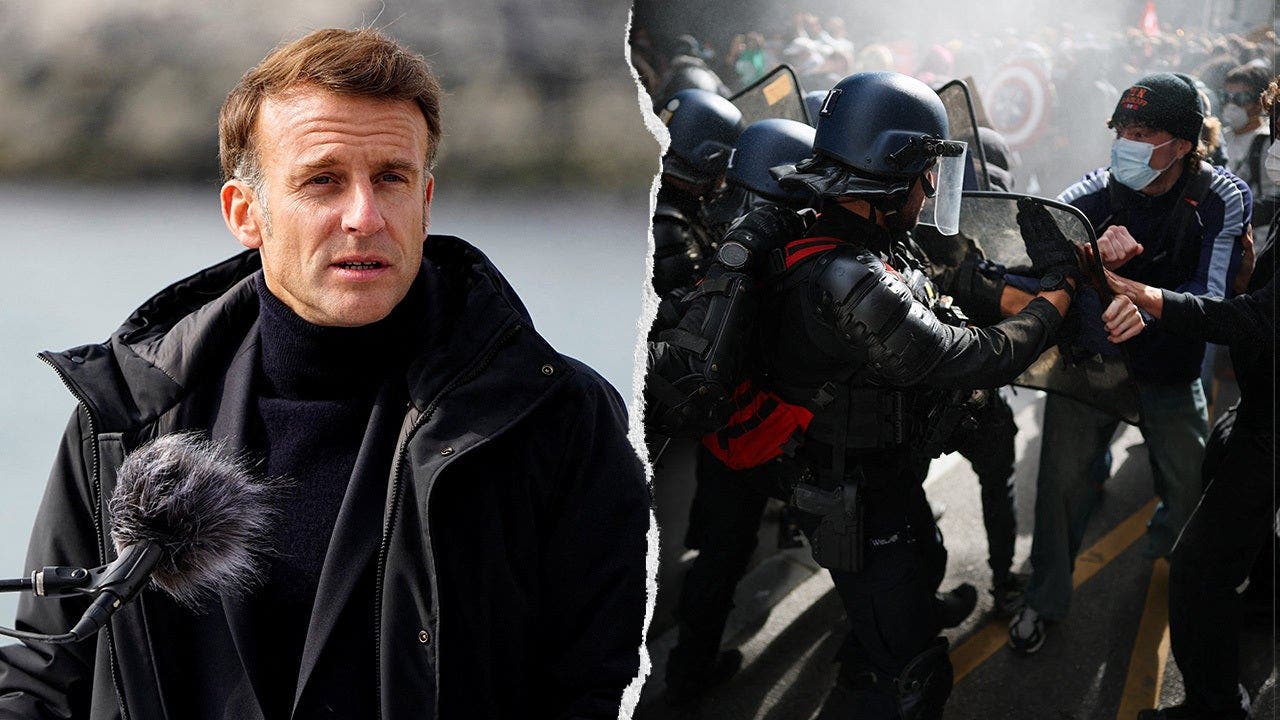
Student protests over crumbling schools despite billions in public spending are fueling a broader crisis in France, as experts warn that the country’s mounting financial troubles, President Emmanuel Macron’s weakened political center and radical movements are pushing the unrest far beyond its original educational grievances.
Simone Rodan-Benzaquen, the Foundation for Defense of Democracies’ senior envoy for Europe, told Fox News Digital in an interview from Paris that what began in September with legitimate complaints about school conditions has increasingly been exploited by political forces seeking confrontation with the state.
«Overall I’d say the anger is real but the violence I would say is organized,» she said, adding that destroying schools would do nothing to improve the education system.
FRANCE EXPLODES AGAIN AS STUDENTS RIOT OVER EDUCATION
FRANCE-POLITICS-EDUCATION-DEMO A protesting student feeds a burnt barrier during a blockading action outside the secondary school Le Corbusier, in Aubervilliers, northern Paris on October 1, 2026. Since late September, students have staged protests outside schools over grievances ranging from timetables, class sizes and a shortage of teachers to overheated classrooms during this year’s heatwaves. The protests started in the Ile-de-France region around Paris but have now spread to other cities nationwide. (Photo by LOU BENOIST / AFP via Getty Images) ( )
Seventy-two percent of education expenditure went toward salaries, social contributions and pensions for teaching and non-teaching personnel, while just 8.5% went toward investment, including infrastructure and equipment. The figures cover the entire education system, not just high schools, according to France’s Education Ministry’s 2026 statistical overview.
Harvey Feigenbaum, a professor of political science and international affairs at George Washington University and an expert on French politics, told Fox News Digital that France’s underlying problem is a government caught between expensive social commitments, sluggish economic growth and mounting pressure to cut spending.
«France is in deep debt. It wants to cut its expenses,» Feigenbaum said, explaining that years of financial pressure and neglected school facilities have fueled frustration among students.
The scale of the financial predicament is striking. According to Eurostat, French public debt stood at 117.6% of GDP in the first quarter of 2026, the third-highest ratio in the European Union, behind Greece and Italy.
Reuters reported October 8 that rising borrowing costs and investor concerns have severely limited the government’s ability to resolve unrest through additional spending, a strategy employed during previous waves of French protests.
The financial squeeze has collided with an increasingly fragmented political system, creating opportunities for parties at both ends of the political spectrum to capitalize on public dissatisfaction.
FRENCH SCHOOL RIOTS DEEPEN AS EXPERTS POINT TO FAR-LEFT ALLIANCE FUELING ‘BROADER CONFRONTATION’
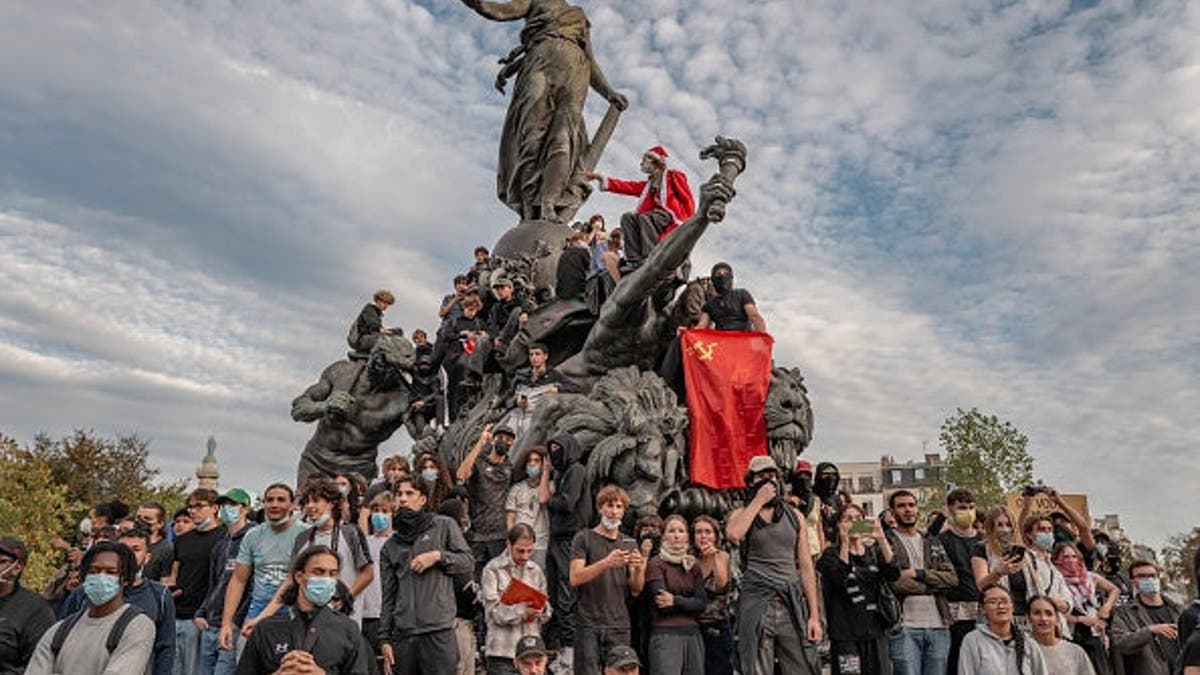
Protestors gather around the Monument à la République in Place de la République in Paris on Oct. 4, 2026, during nationwide demonstrations against an overcrowded, ill-equipped and understaffed education system. A masked protestor holds a red flag of the Soviet Union with the communist hammer and sickle. (Veronique de Viguerie/Getty Images)
Macron’s political center collapses
For Feigenbaum, the long-term roots of the crisis lie in Macron’s political legacy.
When Macron won the presidency in 2017, he promised to move beyond France’s traditional left-right divide, combining policies from both sides into a new centrist political movement.
But Feigenbaum argues that the strategy produced an unintended consequence: weakening France’s established moderate parties without creating a durable governing coalition to replace them.
«What he ended up doing was attracting the moderate voters from the parties of the moderate left and the parties from the moderate right, and essentially destroyed those parties,» Feigenbaum said.
He argued that the collapse of the traditional political center helped create space for more ideologically polarized movements. «Macron is a smart man, but he’s a terrible politician,» the professor added.
Macron’s controversial pension reforms illustrate the difficulty of persuading French voters to accept reductions in longstanding public benefits, Feigenbaum argued. Those efforts triggered widespread protests, while implementation of the 2023 retirement changes has since been suspended until 2028.
The situation became especially difficult after Macron called snap parliamentary elections in 2024, producing a deeply divided National Assembly without a governing majority.
«Even if the government wanted to do something coherent, they simply don’t have the votes to do it,» Feigenbaum said.
That paralysis has left Prime Minister Sébastien Lecornu handling the immediate unrest while Macron faces questions about the stability of the political system he helped reshape.
FRENCH PM REJECTS POLICE BRUTALITY CLAIMS AFTER TEENS SEVERELY INJURED IN PROTESTS: ‘ACCIDENTS HAPPEN’
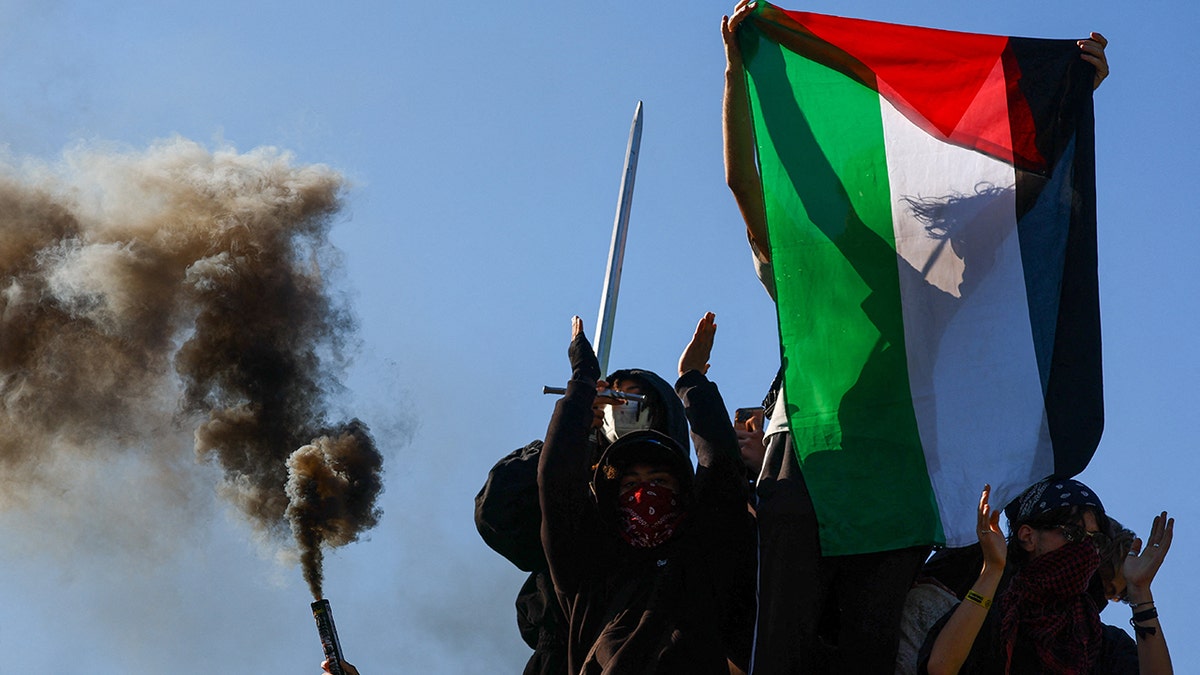
Protesters hold a Palestinian flag on the day French high school and university students attend a demonstration in Strasbourg as part of a nationwide day of protests and blockades, voicing anger over overcrowded classrooms, teacher shortages and dilapidated school buildings, which students blame on years of underinvestment, France, October 6, 2026. REUTERS/Kai Pfaffenbach ( )
Why are France’s schools struggling despite billions in spending?
The protests began in the Paris suburbs in September amid complaints about overcrowded classrooms, inadequate heating and cooling, aging buildings and teachers who were not replaced when absent.
Rodan-Benzaquen said the anger reflected years of educational instability, frequent ministerial changes and reforms that have failed to resolve persistent school problems.
She also pointed to a broader sense of anxiety among young people about their economic future, artificial intelligence, climate change and international conflicts.
According to the OECD’s September 2026 Education at a Glance report, France spent $16,674 in funding per student in general upper-secondary education in 2023, compared with an OECD average of $12,421, adjusted for purchasing power.
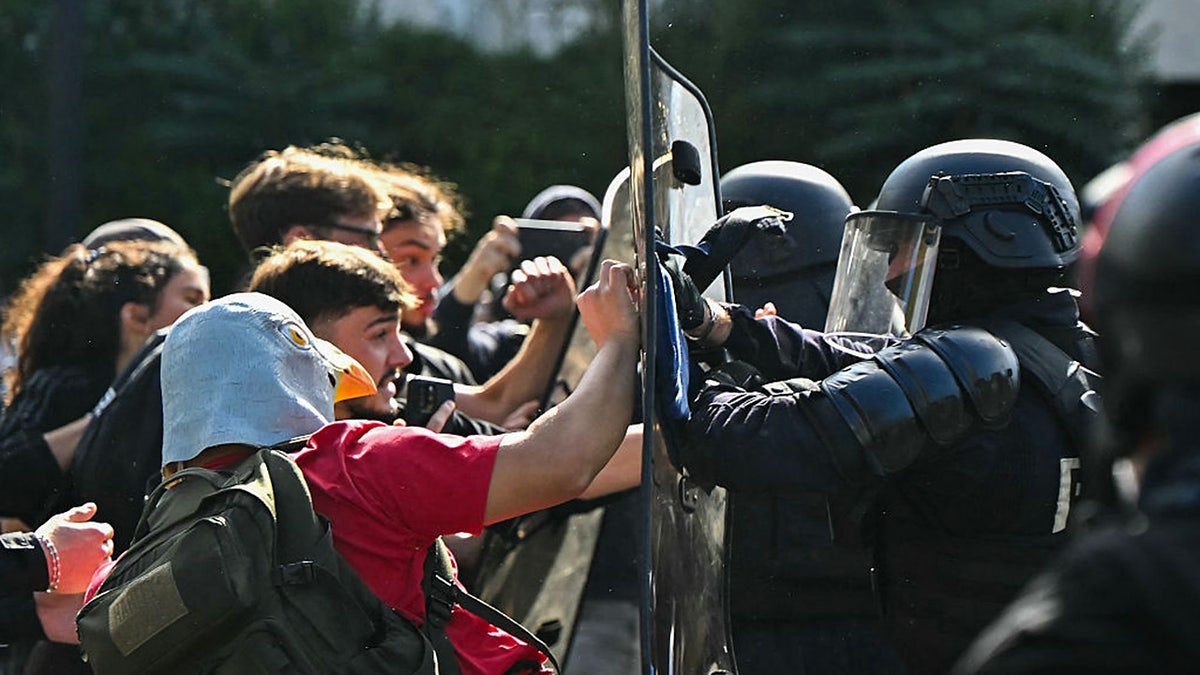
TOPSHOT – Anti-riot police officers face protesting students carrying out blockading action outside the secondary school Le Corbusier, in Aubervilliers, northern Paris on October 1, 2026. Since late September, students have staged protests outside schools over grievances ranging from timetables, class sizes and a shortage of teachers to overheated classrooms during this year’s heatwaves. The protests started in the Ile-de-France region around Paris but have now spread to other cities nationwide. ( )
Yet teachers and students continue to complain about basic shortages.
Responsibility for public high school buildings and equipment falls to regional authorities, while the national government oversees much of the education system, including teacher staffing.
Feigenbaum said France’s centralized education structure makes national leaders the focus of public anger when schools fail to deliver.
The pressure has already forced a concession.
Reuters reported Friday that Education Minister Édouard Geffray announced an emergency plan to deploy 3,000 qualified educators to particularly affected schools, costing several dozen million euros.
Student unions welcomed the measure as an initial victory but pledged to continue demonstrating.
The spending figures raise broader questions about whether France’s financial and political priorities have left sufficient resources for maintaining school infrastructure and meeting students’ needs. They do not, however, establish that teachers’ unions or other organized constituencies have improperly diverted funding.
TEEN’S HAND BLOWN OFF BY POLICE GRENADE DURING FRENCH STUDENT PROTESTS: REPORT
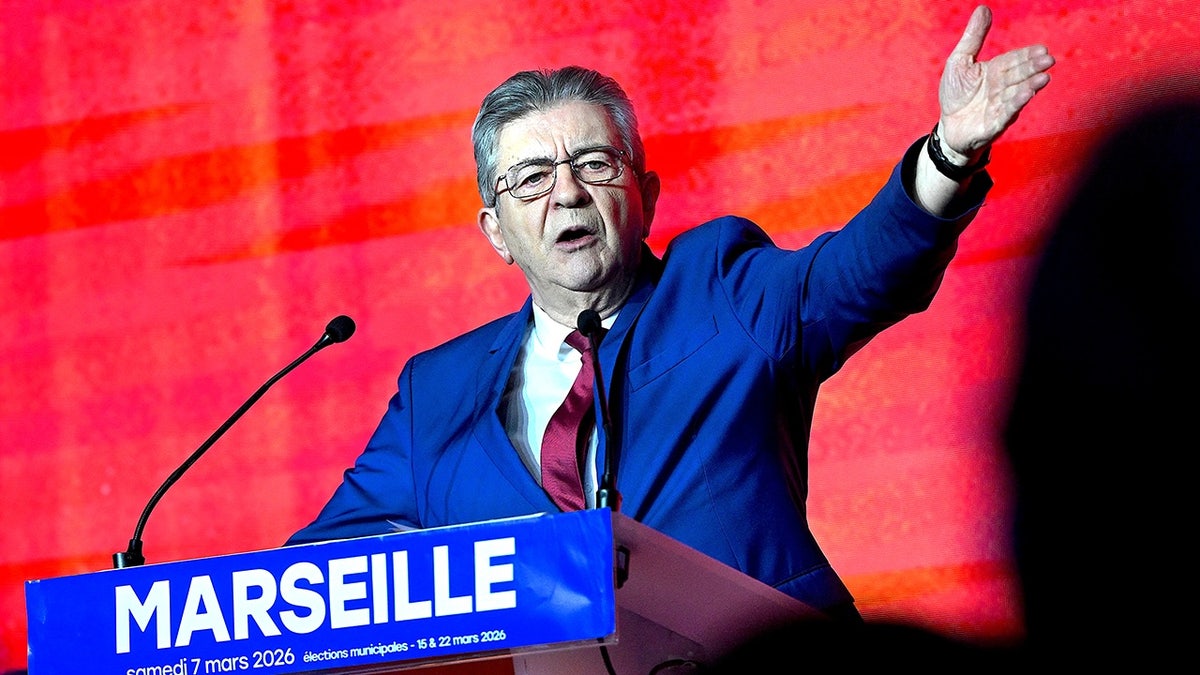
Leader of French left-wing La France Insoumise (LFI) party Jean-Luc Melenchon delivers a speech during an electoral campaign meeting of the local LFI candidate for French municipal elections in Marseille, southern France, on March 7, 2026. (Miguel Medina / AFP via Getty Images)
How the far left entered the unrest
As the demonstrations expanded, the involvement of France’s hard-left La France Insoumise party, known as LFI, led by Jean-Luc Mélenchon, became an increasingly contentious issue.
Reuters reported October 1 that French intelligence agencies had told a government crisis meeting that LFI and affiliated activists played a role in fomenting the unrest. Interior Minister Laurent Nuñez also cited agitators moving between schools to encourage violence.
LFI has denied responsibility and accused authorities of aggravating tensions through their response.
Rodan-Benzaquen said far-left movements were capitalizing on students’ frustration.
«There is an obvious instrumentalization, obvious manipulation,» she said, arguing that activists were seeking to push some protesters toward violence.
She linked the unrest to what she described as Mélenchon’s broader political strategy ahead of France’s 2027 presidential election.
«His idea is that on the one hand he will scare voters on the right and on the far right, who will then go to vote for the far-right, and on the other hand he would mobilize his own camp,» she said.
Rodan-Benzaquen argued that intensifying political confrontation could help Mélenchon consolidate his support among younger voters and immigrant communities, while portraying the far right as an increasingly serious threat.
She described it as a calculated political strategy rather than a spontaneous response to students’ concerns.
The involvement of LFI politicians has been documented by French media, although there is disagreement over whether the party helped initiate the demonstrations or became involved after the protests began.
An October 2 investigation by Le Monde examined a police intelligence assessment describing radical-left activity around schools in Seine-Saint-Denis but questioned whether the evidence established that the movement itself was politically orchestrated.
Feigenbaum offered a more cautious interpretation, describing some of the violent perpetrators as fringe provocateurs who exploit broader demonstrations without necessarily directing them.
«They’re not being organized by some, you know, some mastermind at the national level, at least as far as anyone knows,» he said.
FRANCE ROCKED BY STUDENT RIOTS AS HUNDREDS ARRESTED, VIOLENCE SPREADS NATIONWIDE
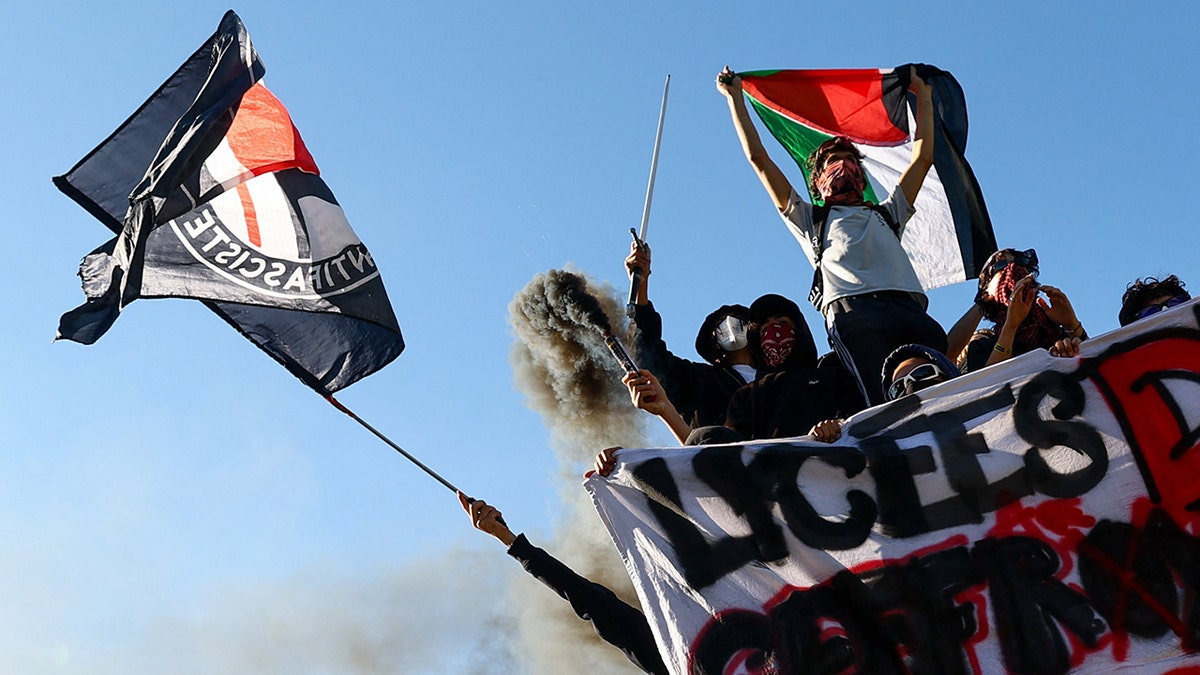
Protesters hold Palestinian and Antifa flags as French high school and university students attend a demonstration in Strasbourg, France, on Thursday, Oct. 6, 2026. (Kai Pfaffenbach/Reuters)
Islamist influence or political solidarity?
The demonstrations have also raised questions about whether Islamist groups and pro-Palestinian activists are seeking to use the unrest to advance broader ideological causes.
Rodan-Benzaquen argued that Mélenchon’s emphasis on Gaza and the Palestinian cause has helped bring together political constituencies that might otherwise have little in common.
«It’s sort of the idea of sort of an intersection of different movements where they manage to bring together the different groups, the far left, Islamist movements, pro-Palestinian activists,» she said.
She pointed to Palestinian flags appearing during the demonstrations as an indication of how the movement has expanded beyond its original educational demands.
The FDD expert argued that Islamist elements were attempting to capitalize on the turmoil, although she cautioned against reducing the entire crisis to immigration or religion.
«But this goes far beyond the issue of immigration, it goes far beyond the issue of Islamism, it goes far beyond the issue of Islam,» she said.
EUROPE’S LEFT COURTS MUSLIM VOTERS AS ANTI-ISRAEL POLITICS RESHAPE CONTINENT
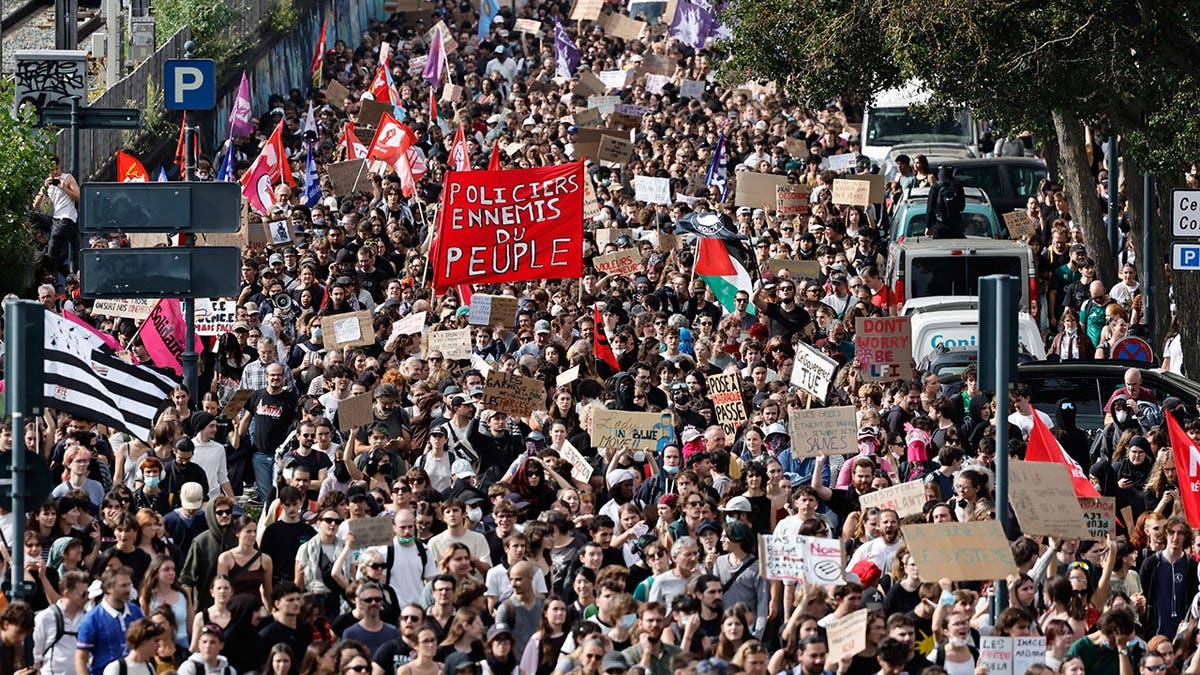
Students march with a large red banner reading «Police officers, enemy of the people» during a protest against under-resourced schools in Rennes, western France, on Tuesday, Oct. 6, 2026. (Jeremias Gonzalez/AP)
A crisis France cannot simply spend its way out of
The government’s latest concessions have not ended the protests.
According to Reuters on Friday, 141 schools remained closed while students continued demanding broader reforms. Nearly 10% of teaching hours in French public high schools remained unstaffed.
For Rodan-Benzaquen, one of the greatest dangers is that the demonstrations reflect a society increasingly divided into competing political realities.
She described how her 17-year-old son created separate left-wing and right-wing Instagram accounts and encountered radically different portrayals of the same unrest: one emphasizing police violence and the other violence by protesters.
«Now, if you live in two drastically different realities, it is very complicated to come to any form of dialog and end agreement,» she said.
Her warning extends beyond France’s current protests.
«We are in an extremely polarized environment,» Rodan-Benzaquen said, noting that social media can deepen divisions and allow confrontations to escalate rapidly.
Feigenbaum sees an additional structural danger: a government burdened by accumulated financial obligations and deprived of the political consensus needed to reform them.
The result is a country spending heavily to sustain its public institutions while struggling to deliver the services citizens expect — and a political system increasingly consumed by conflict over how to fix them.
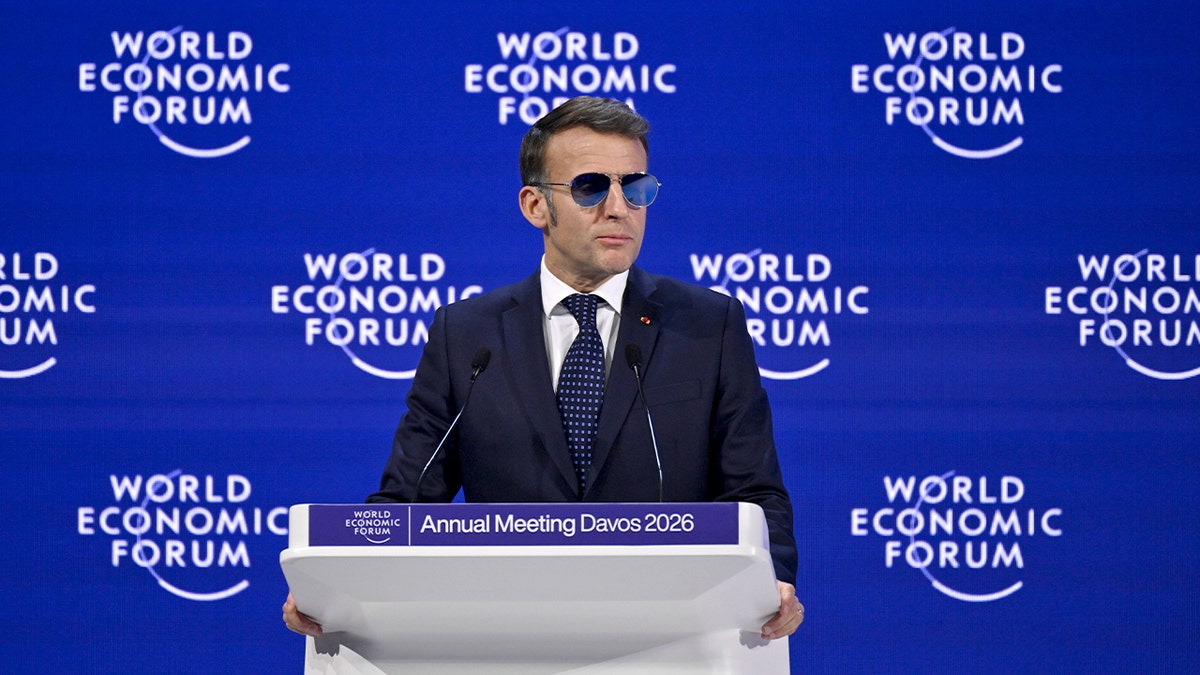
French President Emmanuel Macron delivers a speech during the World Economic Forum annual meeting in Davos, Switzerland, Jan. 20, 2026. (Harun Ozalp/Anadolu via Getty Images)
What began as a rebellion against broken classrooms has become a test of whether France can reconcile its costly promises with its financial reality before the divisions consuming its schools deepen further.
world protests, emmanuel macron, high school, france, world








INTERNACIONAL
Elecciones en España: se define la continuidad socialista o un giro a la derecha con la eventual irrupción de Vox en el gobierno
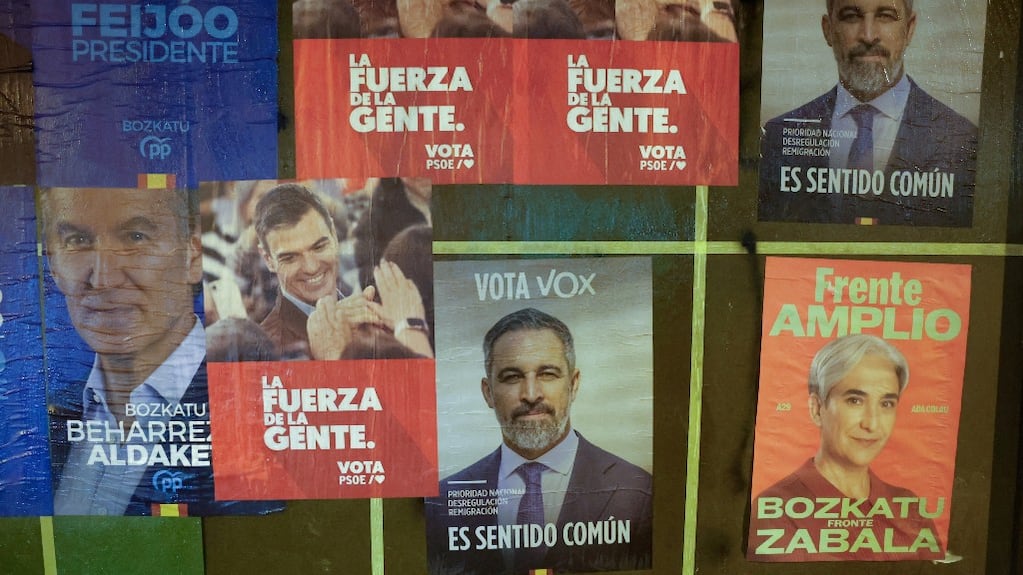
España celebra este domingo unas elecciones generales en las que el socialista Pedro Sánchez pone en juego su continuidad en el poder frente a una derecha favorita para terminar con ocho años de gobiernos progresistas.
Un total de 38.728.356 personas están habilitadas para votar, de las cuales más de 2,7 millones residen en el exterior. De ellas, más de medio millón viven en la Argentina.
El principal rival de Sánchez es el Partido Popular (PP), liderado por Alberto Nuñez Feijóo, que encabeza todas las encuestas con más del 31% de las intenciones de voto y con cuatro puntos de ventaja sobre el oficialista Partido Socialista Obrero Español (PSOE).
Sin embargo, según los sondeos, el PP no contaría con la mayoría absoluta en el Congreso y necesitaría pactar con la ultraderechista Vox para asumir el poder. De concretarse esta posibilidad, la derecha radical de Santiago Abascal, muy cercano a Javier Milei, accedería al gobierno por primera vez desde la muerte del dictador Francisco Franco en 1975.
Vox reúne cerca del 18% de las intenciones de voto, seis puntos más de lo que obtuvo en las elecciones de 2023. Más atrás, el Frente Amplio (izquierda), de la exalcaldesa de Barcelona Ada Colau, obtendría alrededor del 7%, según el promedio de varias encuestas.
En estos comicios se presentan también varias agrupaciones regionales y de distintas tendencias ideológicas, en especial en Cataluña, el País Vasco, Galicia y las Islas Canarias.
“Es una elección decisiva porque puede suponer un cambio no solo de ciclo político, sino un cambio de época”, dijo a TN la periodista y analista política española Marta Monforte.
¿Fin de ciclo?
Los españoles elegirán este domingo a 350 diputados y 209 senadores. Pero serán los diputados los encargados de elegir al jefe del gobierno español a propuesta del rey Felipe VI. En general, el monarca invita a formar un ejecutivo al candidato más votado o al que cree que podrá formar una coalición que le permita gestionar. No es una elección directa, como ocurre en la Argentina.
“Llevamos ocho años de un gobierno progresista de la mano del PSOE con aliados como Podemos en su momento, ahora Sumar y otras fuerzas arraigadas en la izquierda nacionalista o territorial. Si ganan las derechas, tanto el Partido Popular como Vox, supondría un cambio porque se presentaría por primera vez la posibilidad de que la extrema derecha española entre en un gobierno nacional”, dijo Monforte.
Hasta ahora, el PP y Vox solo han sellado pactos en comunidades autonómicas.
Si bien ninguno de los dos partidos ha admitido explícitamente la posibilidad de un acuerdo programático que le permita formar una coalición de gobierno, todo hace prever un cambio de timón bajo una alianza conservadora.
La ofensiva de Vox y la estrategia socialista
En un marco político crispado por el estallido de una crisis de vivienda y una emergencia migratoria en Ceuta y las Islas Canarias, desde Vox comenzó a ponerse en duda la legitimidad de los comicios.
“Si las elecciones son mínimamente limpias, España podrá salir del pozo profundo -al que nos hundió Sánchez y su banda que han convertido el PSOE en crimen organizado. Haremos desregulación, orden, ley y justicia y defensa de las fronteras”, vaticinó a TN el eurodiputado de Vox Hermann Tertsch.
Para el legislador europeo, “si Sánchez logra falsificar como Lula (en Brasil) un triunfo, entraremos en deriva hacia un régimen tiránico en la primera narcodictadura europea”. El presidente brasileño fue reelecto por otros cuatro años en el balotaje del 25 de octubre pasado, en unas elecciones consideradas limpias y justas por observadores internacionales.
Feijóo
NEWYou can now listen to Fox News articles!
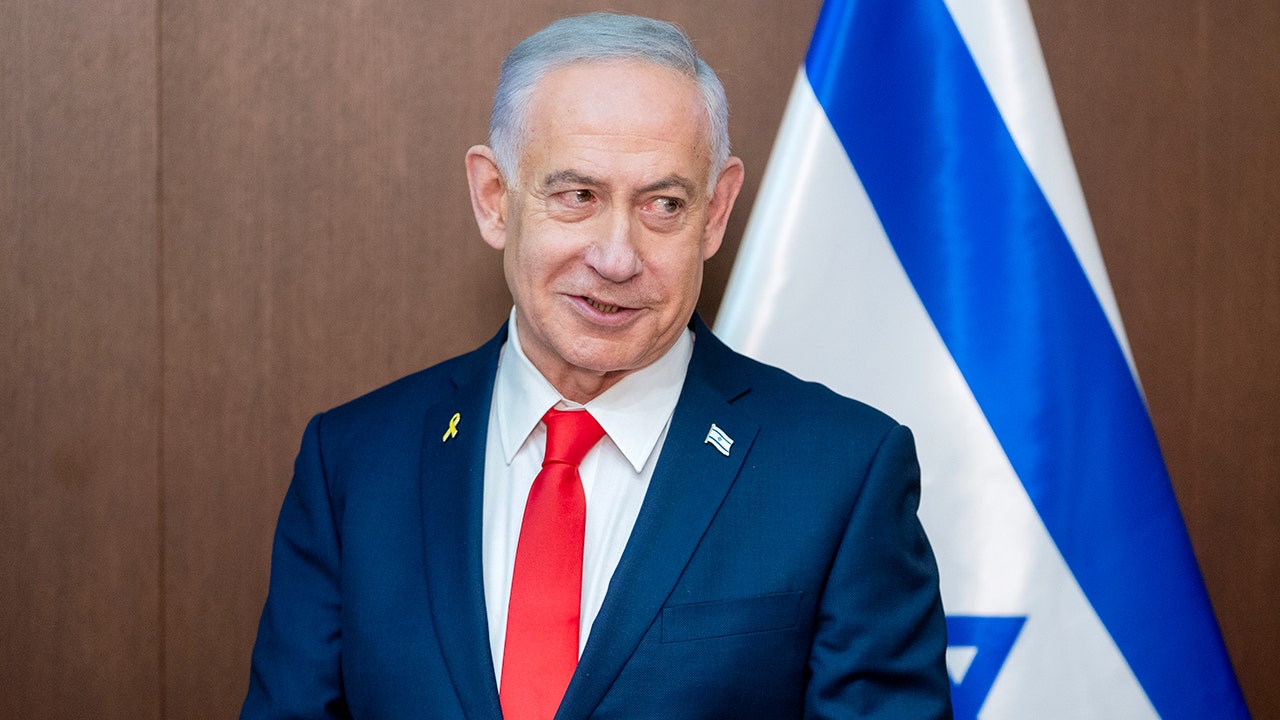
Israeli Prime Minister Benjamin Netanyahu said Saturday that he was willing to temporarily relinquish power to Gadi Eisenkot, allowing his political rival to serve first as prime minister under a new rotating unity government.
In a statement posted on X, Netanyahu outlined a proposed power-sharing agreement between his Likud party and Eisenkot’s Yashar party that would see Netanyahu initially yield the premiership to his rival and serve as alternate prime minister before returning to the top post later in the term.
Netanyahu wrote in the social media post that he believes he should lead the Israeli government as head of the largest party, but said that «given the magnitude of the existential threat and the possibility that a government could be formed that isn’t able to deal with this danger,» his responsibility as a leader required that he «put everything aside.»
ISRAEL’S LEADING CONTENDER FOR PRIME MINISTER CLASHES WITH NETANYAHU OVER IRAN STRIKES
Israeli Prime Minister Benjamin Netanyahu proposed Saturday temporarily ceding power to political rival Gadi Eisenkot under a rotating unity government. (Nathan Howard – Pool/Getty Images)
The concession comes as Eisenkot — a former military chief — reportedly edges closer to forming an opposition-backed coalition that would oust Netanyahu from power.
Israel’s Oct. 27 legislative election left no bloc with a governing majority, leaving neither Netanyahu nor Eisenkot with a clear path to the premiership.
Eisenkot has since worked to turn an electoral opening into a governing coalition after Israeli President Isaac Herzog tasked him earlier this month with forming a government.
ISRAELI PRESIDENT TAPS NETANYAHU RIVAL TO FORM GOVERNMENT AS COALITION BATTLE LOOMS
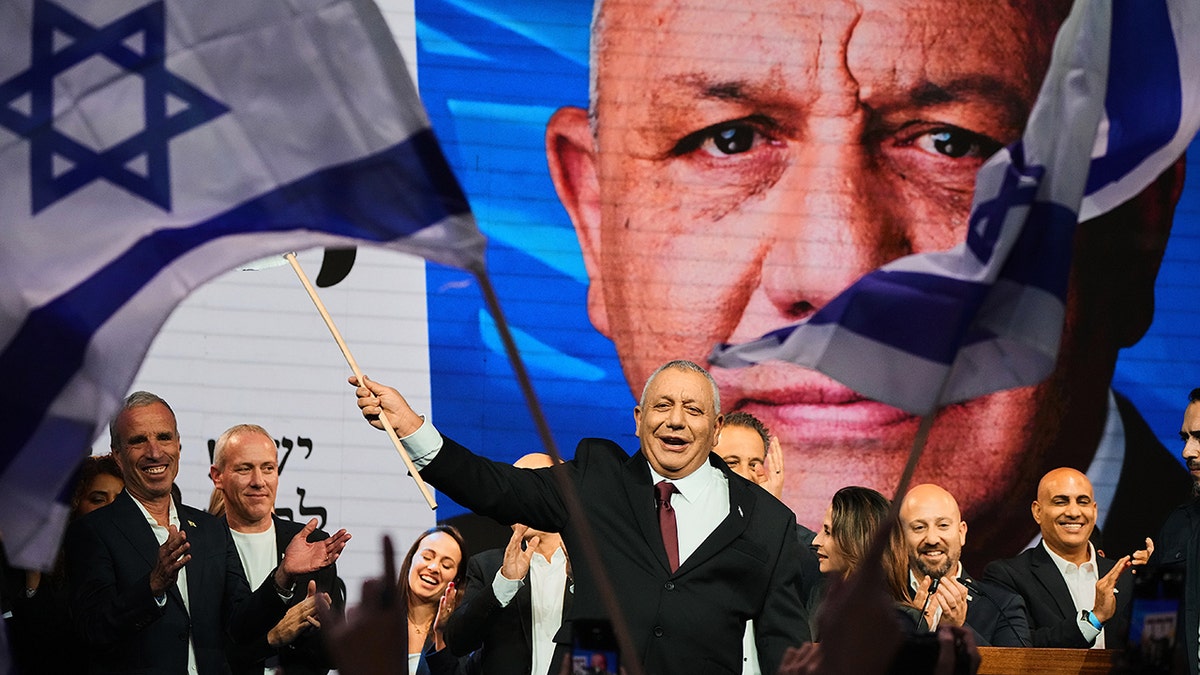
Gadi Eisenkot, leader of the Yashar («Straight») party, waves an Israeli flag onstage following the release of the first exit poll results in Israel’s general election in Tel Aviv, Israel, Wednesday, Oct. 28, 2026. (Ariel Schalit/AP Photo)
He has until Dec. 6 to finalize a coalition, with the possibility of a 14-day extension.
This week, Eisenkot gained momentum from potential partners — including The Democrats, a left-wing party, and the right-wing Yisrael Beiteinu party — boosting his odds of assembling a parliamentary majority.
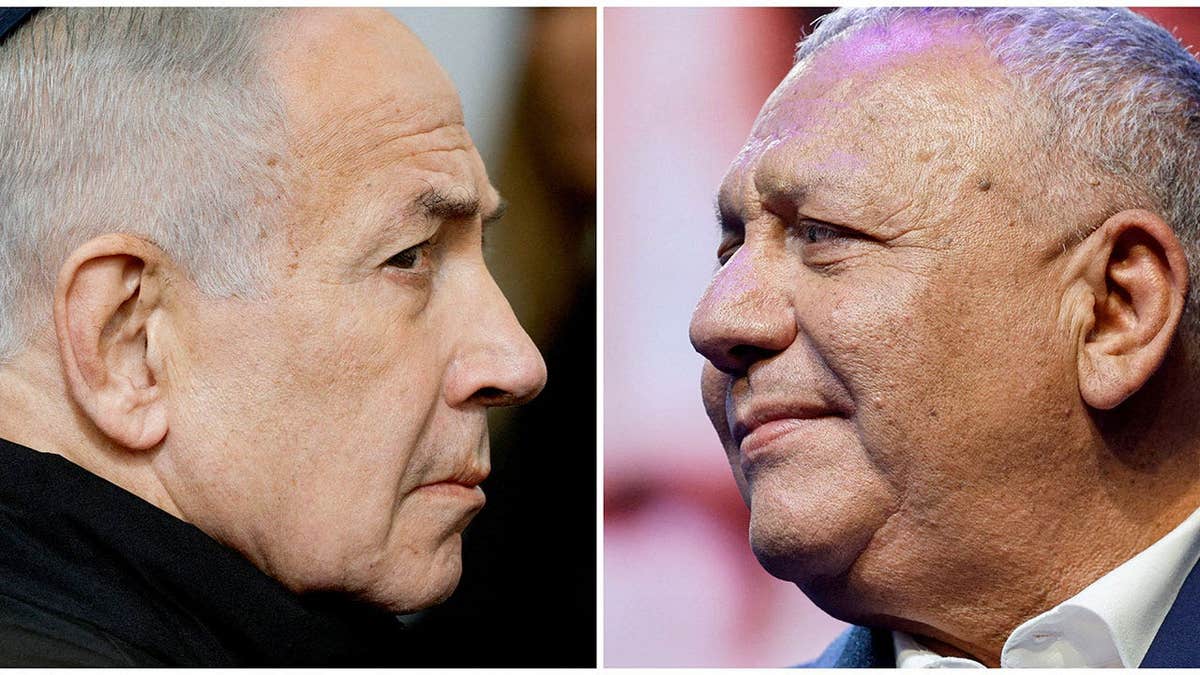
Israeli Prime Minister Benjamin Netanyahu offered to temporarily relinquish power to political rival Gadi Eisenkot as part of a proposed rotating unity government. (Amir Cohen/Reuters)
In response to Netanyahu’s proposal Saturday, Eisenkot said in a statement that his Yashar party’s negotiating team had been «trying to conduct a real, sincere, and accelerated negotiation» with Netanyahu’s Likud party but faced «refusal and evasion.»
He then invited Netanyahu to engage in serious negotiations with his party’s team on the «core lines and policy issues.»
Fox News Digital’s Efrat Lachter and Reuters contributed to this report.
world, benjamin netanyahu, politics, israel, middle east
INTERNACIONAL
Why Mamdani’s move to close infamous NYC jail could be ‘massive hit’ that reverberates for years: expert

Democratic New York City Mayor Zohran Mamdani announced that Rikers Island would be closed «once and for all» by 2032, a promise one crime expert said doesn’t add up and could release violent criminals back onto streets.
Mamdani pledged to replace the city’s largest jail with four smaller prisons across different boroughs, and corrections officers and criminal justice scholars have raised concerns that lowering the population of more than 6,000 inmates could carry lasting consequences.
Rafael Mangual, head of research for policing and public safety at the Manhattan Institute, told Digital there won’t be enough beds to accommodate a city of nearly 9 million people.
«If New York City gets this wrong, make no mistake, there will be a massive hit to public safety,» Mangual said.
MAMDANI IN HOT SEAT OVER POST MOURNING DEATH OF INMATE CHARGED WITH CALLOUS CRIME: ‘ABSOLUTELY SHAMEFUL’
The replacement jails in Manhattan, Brooklyn, Queens and the Bronx will have a capacity of 4,160 beds, with an additional 340 therapeutic beds for inmates with mental illnesses and other medical needs. They will be placed closer to public transit and courthouses.
Mamdani said the decision to push the closure of Rikers back by five years was because of «prior administration delays.» The city will also invest $146 million in support services.
The mayor’s office directed Digital to its Rikers Island closure plan and Mamdani’s remarks at a news conference last week, where he defended his position by saying, «We are making a conscious decision to advance a new model of a criminal legal system in our city, one that takes on that problem head-on.»
Mangual maintained the plan could lead to significant overcrowding and trigger more «violence and other kinds of contraband problems.»
«You can expect that the jails will continue to operate at 100% of capacity for as long as they exist if that project actually comes to fruition,» he said.
He added that the city’s jail population dropped below 4,000 in April 2020 during the COVID-19 pandemic. However, shootings and homicides spiked.
That year, there were 1,531 shootings, up 97% from 2019, and 462 murders, up from 319 in 2019, according to the New York City Police Department (NYPD).
HOUSE REPORT SAYS NYC PROSECUTORS TAILORED PLEA DEALS TO SHIELD ILLEGAL IMMIGRANTS FROM DEPORTATION
«The experiment is not going to be a pretty one, and that’s the thing that I think people need to be most concerned with,» he said. He added that Rikers had between 9,000 and 10,000 inmates during 2017 and 2018, which were some of the city’s safest years.
Despite the city seeing record-low murders and shootings so far this year, according to NYPD data, Mangual said other major crimes, like felony assaults, remain high.
«That’s a major problem that is only going to get worse,» he said.
He said previous efforts to bring down the jail population have posed additional risks to public safety, pointing to the city’s bail reform law and Manhattan District Attorney Alvin Bragg’s limits on low-level prosecutions that have made it easier to avoid jail.
«We certainly haven’t been able to get it down to where it is now without compromising public safety,» he said.
ILLEGAL IMMIGRANT SUSPECTS WITH LENGTHY CRIMINAL RECORDS ARRESTED IN STABBING OF OFF-DUTY NYPD DETECTIVE
Mangual said repeat offenders like Alexander Florentino could now be put back on the streets. Florentino, a homeless illegal immigrant, was arrested this month on a murder charge in the death of a 62-year-old woman inside her Chinatown apartment, one day after a judge released him without bail, according to the Department of Homeland Security (DHS) and court records.
Warning that reducing the jail population will only «erode the incapacitation benefits that incarceration provides,» Mangual said the city will be left with no other solutions.
«The idea that there’s an alternative to incarceration is one of the most misguided notions in criminal justice policy debates,» he said.
Rikers has faced years of controversy, with many inmates and activists criticizing harsh conditions, trial delays and limited access to family members and support services. The city’s goal is «to build a safer and more humane jail system,» according to a Nov. 20 press release.
But Mangual believes city officials still aren’t looking at the full picture, arguing that building multiple jails with the same systems, inmates and guards will not solve the problem and that some criminals are «simply too dangerous to coexist with the rest of society.»
«What they ought to have done was invest in refurbishing the jails that already existed, building new ones with adequate space, and then moving the inmate population around as required,» he said.
If the plan moves forward, Mangual said the city could see crime surge on a «much larger scale.»
«We’re already seeing what that could possibly look like when you have individuals who are out walking the streets with 30, 40, 50, 100 prior arrests, and they eventually kill somebody or shove somebody in front of a subway train,» he said.
Digital reached out to Bragg’s office for comment but did not receive a response before publication.
zohran mamdani, politics, new york city, blue city crime, immigration

Desapareció un joven de 18 años tras meterse al río en General Roca e imputaron a un instructor náutico

Pochettino toca fondo en el Manchester United: ‘El descenso se acerca’

Elecciones en España: se define la continuidad socialista o un giro a la derecha con la eventual irrupción de Vox en el gobierno

Con trabajo, pero pobres: el 72% de quienes tienen empleo no ganan lo necesario para cubrir la canasta básica

En un guiño al oficialismo, Macri se reunirá con Bullrich y ministros de Milei – Nexofin

A solas con Bruno Senna: cómo siente “la presencia de Ayrton”, su elogio a Franco Colapinto y la intimidad de la visita de Kimi Antonelli

Efecto reforma electoral: la suspensión de las PASO divide la estrategia de los “outsiders”

“Estoy preparada para ser presidenta”: fuerte desafío de Patricia Bullrich a Javier Milei

“Lo real es que estamos estancados”: el análisis de un economista tras la caída de la actividad

El juez retó a Chiqui Tapia y le subió el monto que debe pagar para salir del país

 POLITICA2 días ago
Efecto reforma electoral: la suspensión de las PASO divide la estrategia de los “outsiders”
- ECONOMIA2 días ago
Cerraron más de 50.000 kioscos en los últimos tres años y el sector perdió casi la mitad de sus locales
- POLITICA3 días ago
Presupuesto 2027: el oficialismo encamina el quórum en Diputados, pero persisten las diferencias por los fondos para discapacidad