INTERNACIONAL
Socialists set sights on the ground floor of government as GOP warns of bigger plan unfolding

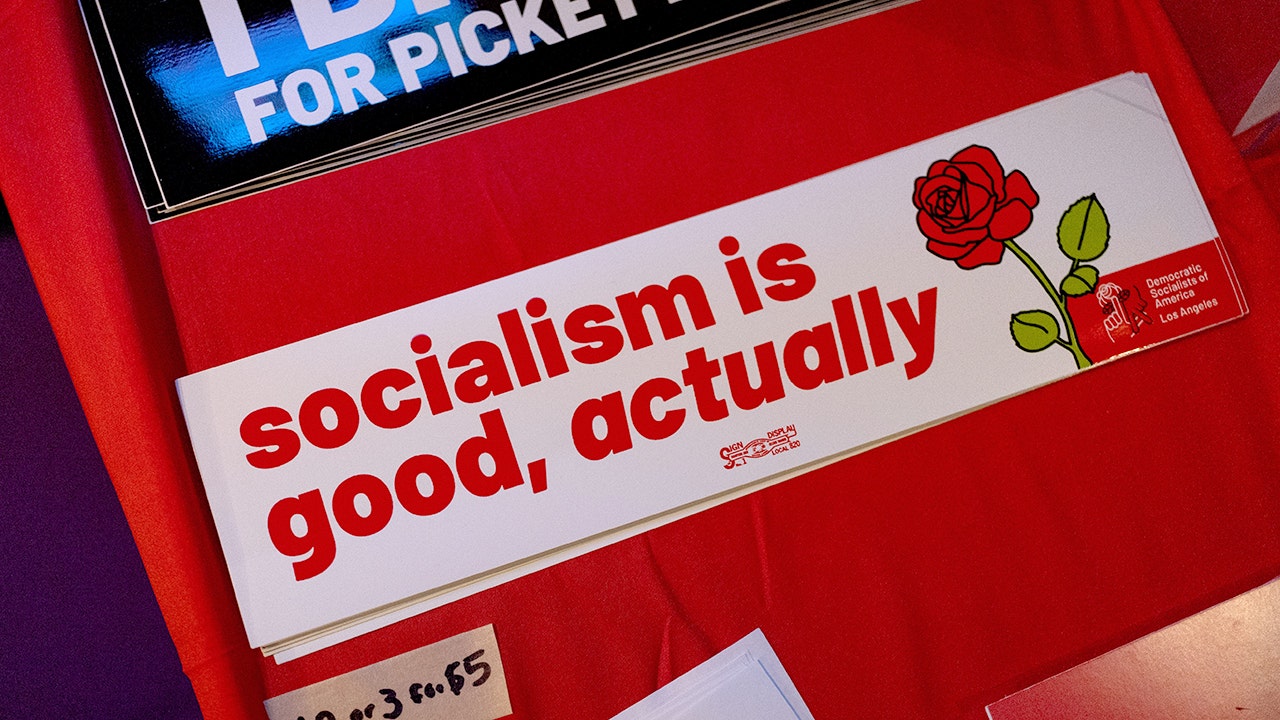
FIRST ON — Dozens of individuals backed by the Democratic Socialists of America are set to appear on ballots as candidates for state legislature seats on Election Day, something Republicans say could set in motion a trend that transforms the Democratic Party.
At least 65 DSA-aligned candidates have advanced to contest state legislative seats in November’s general election. The Republican State Leadership Committee — the official GOP body responsible for ensuring state-level conservative victories — claimed that these races could very well determine the future of the Democratic Party, according to a memo obtained exclusively by Digital.
«The statehouse trend is also relevant because several prominent DSA-aligned Congressional candidates in 2026 have emerged from state and local political organizing,» the memo reads. «These victories demonstrate one potential progression: movement organizations can help develop candidates locally and at the state level, provide them with political experience and organizational networks, and eventually support campaigns for Congress.»
SOCIALISTS CHEER ‘SHOCKWAVE’ PRIMARY NIGHT AS DSA-BACKED CANDIDATES WIN, ADVANCE ACROSS THE MAP
«The scale of that presence matters not only because DSA-aligned candidates could influence the direction of their state legislatures if elected, but because state legislative offices can provide a platform, governing experience, donor networks and organizational infrastructure for future campaigns for higher office,» it continues.
The RSLC’s methodology included candidates who are DSA members, DSA endorsees or self-identified members of the organization.
DSA-affiliated candidates identified by the RSLC take positions on a number of issues that crucial swing voters and independents may find extreme, including defunding or abolishing police departments, left-wing economic policies and demanding race-based reparations.
Opposition to traditional policing has emerged as a prominent issue among some of the DSA-aligned state legislative candidates identified by Republicans.
«As a State Senator I will continue to do everything I can to end policing and incarceration in New York State,» Democratic State Sen. Jabari Brisport’s campaign website reads. Brisport also supports decriminalizing prostitution, arguing that removing criminal penalties for sex workers while maintaining protections against trafficking and exploitation would help keep communities safe.
TALARICO PUT ON DEFENSE AFTER 2020 COMMENTS ABOUT DEFUNDING POLICE RESURFACE: ‘WE MUST REPLACE’
Over in Wisconsin, Democratic State Rep. Ryan Clancy has stood by his statement that police work has «no dignity or value.»
«It means that American policing has always been bad and it always will be,» Clancy told a local outlet in 2023, alleging that American police forces have their roots in slave patrols. «It’s not like we can get back to this to the early days… American policing… [is] epically racist and classist because that’s a dead end. That is the point of American policing.»
Clancy told Digital that his comments concerned officers who abused their authority over sex workers, although his original remarks and subsequent 2023 interview criticized policing more broadly as an institution he argued was inherently racist and could not be reformed.
He concurred with the RSLC’s assertion that DSA-aligned candidates are shaping the future of the Democratic Party.
State Rep. Eleanor Chávez, running with the DSA’s backing in New Mexico, meanwhile has called Immigration and Customs Enforcement «fascist» and compared its agents to the KKK. Republicans in New Mexico have condemned such rhetoric, arguing that it could spur people to commit violence against law enforcement officers.
Despite its propensity to draw attention to its stances on social issues, the DSA bills itself as an economically motivated organization.
NEWSOM ADMITS DEMOCRATIC SOCIALIST IDEAS ‘MAINSTREAM’ IN DEMOCRAT PARTY: ‘PRETTY ALIGNED’
To this end, some of its members running for state legislatures have called for reforms some have described as radical.
New York Democratic Assemblywoman Sarahana Shrestha, who is running for re-election with the backing of the DSA, has pushed legislation that would allow the government to acquire the privately held Central Hudson Gas & Electric Corp., potentially through eminent domain if a negotiated purchase cannot be reached.Dylan Wegela, a DSA-backed state house candidate in Michigan, has similarly pushed for state acquisitions of utility companies.
Shrestha agrees with the RSLC’s assessment that DSA-aligned state lawmakers could influence the Democratic Party’s trajectory.
«The things DSA-aligned state lawmakers are fighting for are things that are extremely popular with voters, and have been for a long time,» she told Digital. «A majority of our constituents believe the energy sector should not be for profit, healthcare should be single-payer and universal, the government should play a positive role in building necessary infrastructure such as permanently affordable housing and public transit, and so on.»
The DSA-affiliated lawmaker also defended her plan to take over the Central Hudson Gas & Electric Corp., citing a feasibility study commissioned by supporters of the bill that found it would lower costs for consumers.
Sometimes, the stances of DSA clash with Democratic policy priorities.
Gabriel Acevero, a DSA-backed lawmaker in Maryland, for instance, opposed a marijuana legalization measure he argued did not go far enough to address racial inequities, declaring that «cannabis legalization without reparations for communities harmed by the intentional drug war is not progressive policy.» Scores of DSA-affiliated candidates running in states such as New York, Minnesota and Massachusetts have thrown their support behind reparations for racial minorities.
SOCIALISTS ARE HELPING GOP CAMPAIGNS HEADING INTO NOVEMBER
Republicans have a vested interest in tying the mainstream Democratic Party to the DSA. A poll from September found that 55% of registered voters had an unfavorable opinion of the DSA.
While some in the Democratic Party argue that Republican attempts to tie the Democratic Party to socialism are bad-faith campaign tricks, party leadership has recently made significant concessions to its left-wing flank.
Senate Minority Leader Chuck Schumer backed Abdul El-Sayed’s more moderate opponent in Michigan’s Democratic Senate primary, but a super PAC aligned with Schumer has since committed millions of dollars to supporting El-Sayed’s general-election campaign. El-Sayed is a progressive backed by prominent figures on the party’s left, but who has said he is not a socialist.
Due to the disorganized nature of the DSA and the varying degrees of affiliation held by candidates, estimates of the number of socialist candidates running for state legislature vary across sources. The Brookings Institution, for instance, found at least 76 had advanced to the general election, while the RSLC’s analysis identified a minimum of 65 running in a total of 24 states.
Though the DSA’s gains have received significant attention, a Brookings Institution analysis found that candidates backed by the organization represent only a tiny fraction of the nation’s state legislative seats, raising questions about how far the socialist movement’s growing influence extends.
«The RSLC has consistently said that socialism starts in the states and that is where we need to stop it,» the RSLC’s memo reads. «The DSA’s growing presence in statehouse races could have dangerous impacts for state policy in the short-term, and it reflects a clearly orchestrated long-term effort to build political power from the state-level up.»
Every state legislative candidate mentioned was reached for comment by Digital on Tuesday.
politics, democratic party, state and local, state and local, midterm elections, socialism











INTERNACIONAL
France is devouring itself as school riots reveal a crisis far bigger than broken classrooms

NEWYou can now listen to Fox News articles!
Student protests over crumbling schools despite billions in public spending are fueling a broader crisis in France, as experts warn that the country’s mounting financial troubles, President Emmanuel Macron’s weakened political center and radical movements are pushing the unrest far beyond its original educational grievances.
Simone Rodan-Benzaquen, the Foundation for Defense of Democracies’ senior envoy for Europe, told Fox News Digital in an interview from Paris that what began in September with legitimate complaints about school conditions has increasingly been exploited by political forces seeking confrontation with the state.
«Overall I’d say the anger is real but the violence I would say is organized,» she said, adding that destroying schools would do nothing to improve the education system.
FRANCE EXPLODES AGAIN AS STUDENTS RIOT OVER EDUCATION
FRANCE-POLITICS-EDUCATION-DEMO A protesting student feeds a burnt barrier during a blockading action outside the secondary school Le Corbusier, in Aubervilliers, northern Paris on October 1, 2026. Since late September, students have staged protests outside schools over grievances ranging from timetables, class sizes and a shortage of teachers to overheated classrooms during this year’s heatwaves. The protests started in the Ile-de-France region around Paris but have now spread to other cities nationwide. (Photo by LOU BENOIST / AFP via Getty Images) ( )
Seventy-two percent of education expenditure went toward salaries, social contributions and pensions for teaching and non-teaching personnel, while just 8.5% went toward investment, including infrastructure and equipment. The figures cover the entire education system, not just high schools, according to France’s Education Ministry’s 2026 statistical overview.
Harvey Feigenbaum, a professor of political science and international affairs at George Washington University and an expert on French politics, told Fox News Digital that France’s underlying problem is a government caught between expensive social commitments, sluggish economic growth and mounting pressure to cut spending.
«France is in deep debt. It wants to cut its expenses,» Feigenbaum said, explaining that years of financial pressure and neglected school facilities have fueled frustration among students.
The scale of the financial predicament is striking. According to Eurostat, French public debt stood at 117.6% of GDP in the first quarter of 2026, the third-highest ratio in the European Union, behind Greece and Italy.
Reuters reported October 8 that rising borrowing costs and investor concerns have severely limited the government’s ability to resolve unrest through additional spending, a strategy employed during previous waves of French protests.
The financial squeeze has collided with an increasingly fragmented political system, creating opportunities for parties at both ends of the political spectrum to capitalize on public dissatisfaction.
FRENCH SCHOOL RIOTS DEEPEN AS EXPERTS POINT TO FAR-LEFT ALLIANCE FUELING ‘BROADER CONFRONTATION’
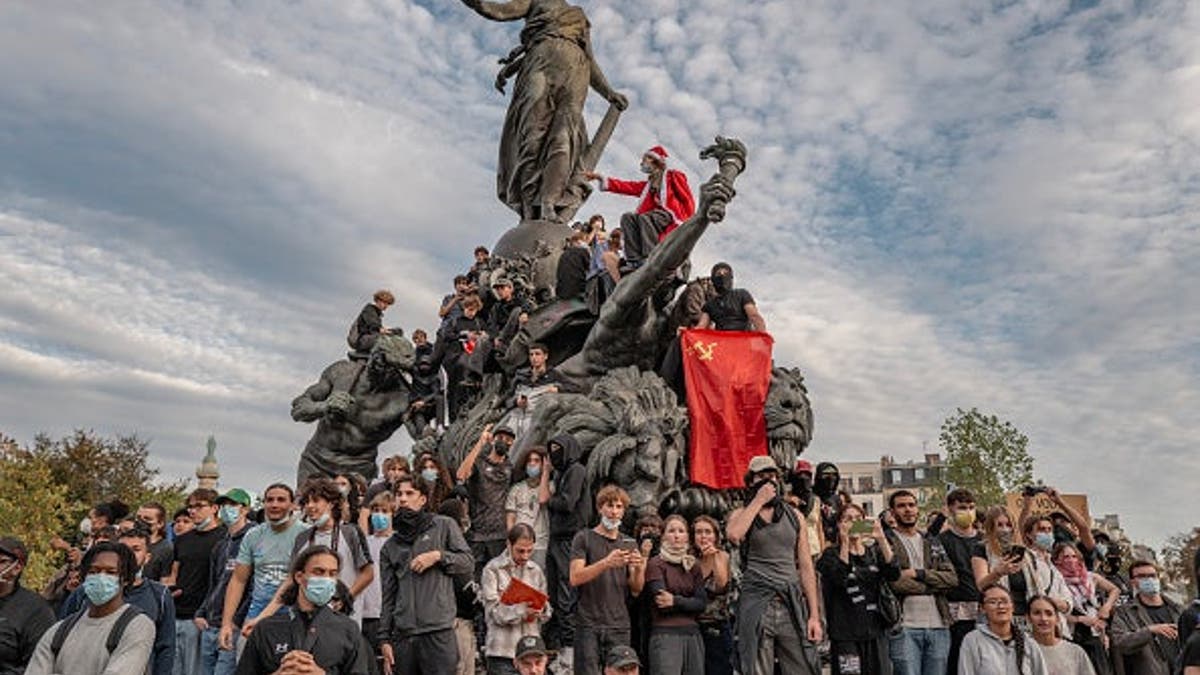
Protestors gather around the Monument à la République in Place de la République in Paris on Oct. 4, 2026, during nationwide demonstrations against an overcrowded, ill-equipped and understaffed education system. A masked protestor holds a red flag of the Soviet Union with the communist hammer and sickle. (Veronique de Viguerie/Getty Images)
Macron’s political center collapses
For Feigenbaum, the long-term roots of the crisis lie in Macron’s political legacy.
When Macron won the presidency in 2017, he promised to move beyond France’s traditional left-right divide, combining policies from both sides into a new centrist political movement.
But Feigenbaum argues that the strategy produced an unintended consequence: weakening France’s established moderate parties without creating a durable governing coalition to replace them.
«What he ended up doing was attracting the moderate voters from the parties of the moderate left and the parties from the moderate right, and essentially destroyed those parties,» Feigenbaum said.
He argued that the collapse of the traditional political center helped create space for more ideologically polarized movements. «Macron is a smart man, but he’s a terrible politician,» the professor added.
Macron’s controversial pension reforms illustrate the difficulty of persuading French voters to accept reductions in longstanding public benefits, Feigenbaum argued. Those efforts triggered widespread protests, while implementation of the 2023 retirement changes has since been suspended until 2028.
The situation became especially difficult after Macron called snap parliamentary elections in 2024, producing a deeply divided National Assembly without a governing majority.
«Even if the government wanted to do something coherent, they simply don’t have the votes to do it,» Feigenbaum said.
That paralysis has left Prime Minister Sébastien Lecornu handling the immediate unrest while Macron faces questions about the stability of the political system he helped reshape.
FRENCH PM REJECTS POLICE BRUTALITY CLAIMS AFTER TEENS SEVERELY INJURED IN PROTESTS: ‘ACCIDENTS HAPPEN’

Protesters hold a Palestinian flag on the day French high school and university students attend a demonstration in Strasbourg as part of a nationwide day of protests and blockades, voicing anger over overcrowded classrooms, teacher shortages and dilapidated school buildings, which students blame on years of underinvestment, France, October 6, 2026. REUTERS/Kai Pfaffenbach ( )
Why are France’s schools struggling despite billions in spending?
The protests began in the Paris suburbs in September amid complaints about overcrowded classrooms, inadequate heating and cooling, aging buildings and teachers who were not replaced when absent.
Rodan-Benzaquen said the anger reflected years of educational instability, frequent ministerial changes and reforms that have failed to resolve persistent school problems.
She also pointed to a broader sense of anxiety among young people about their economic future, artificial intelligence, climate change and international conflicts.
According to the OECD’s September 2026 Education at a Glance report, France spent $16,674 in funding per student in general upper-secondary education in 2023, compared with an OECD average of $12,421, adjusted for purchasing power.
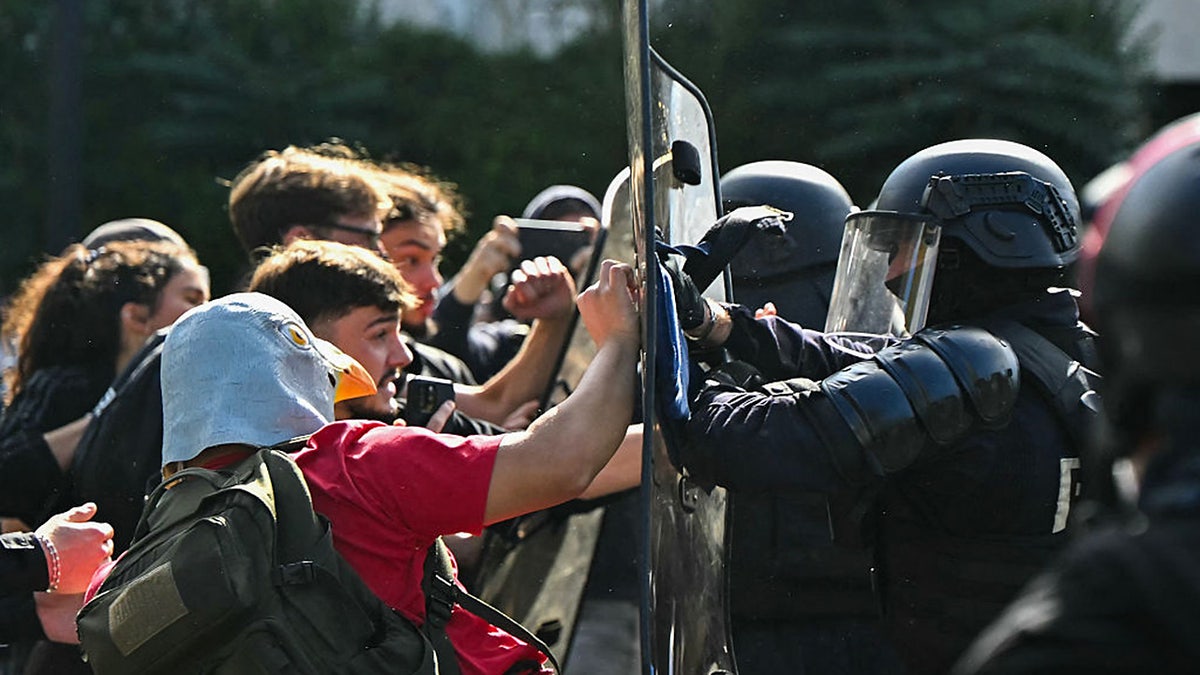
TOPSHOT – Anti-riot police officers face protesting students carrying out blockading action outside the secondary school Le Corbusier, in Aubervilliers, northern Paris on October 1, 2026. Since late September, students have staged protests outside schools over grievances ranging from timetables, class sizes and a shortage of teachers to overheated classrooms during this year’s heatwaves. The protests started in the Ile-de-France region around Paris but have now spread to other cities nationwide. ( )
Yet teachers and students continue to complain about basic shortages.
Responsibility for public high school buildings and equipment falls to regional authorities, while the national government oversees much of the education system, including teacher staffing.
Feigenbaum said France’s centralized education structure makes national leaders the focus of public anger when schools fail to deliver.
The pressure has already forced a concession.
Reuters reported Friday that Education Minister Édouard Geffray announced an emergency plan to deploy 3,000 qualified educators to particularly affected schools, costing several dozen million euros.
Student unions welcomed the measure as an initial victory but pledged to continue demonstrating.
The spending figures raise broader questions about whether France’s financial and political priorities have left sufficient resources for maintaining school infrastructure and meeting students’ needs. They do not, however, establish that teachers’ unions or other organized constituencies have improperly diverted funding.
TEEN’S HAND BLOWN OFF BY POLICE GRENADE DURING FRENCH STUDENT PROTESTS: REPORT
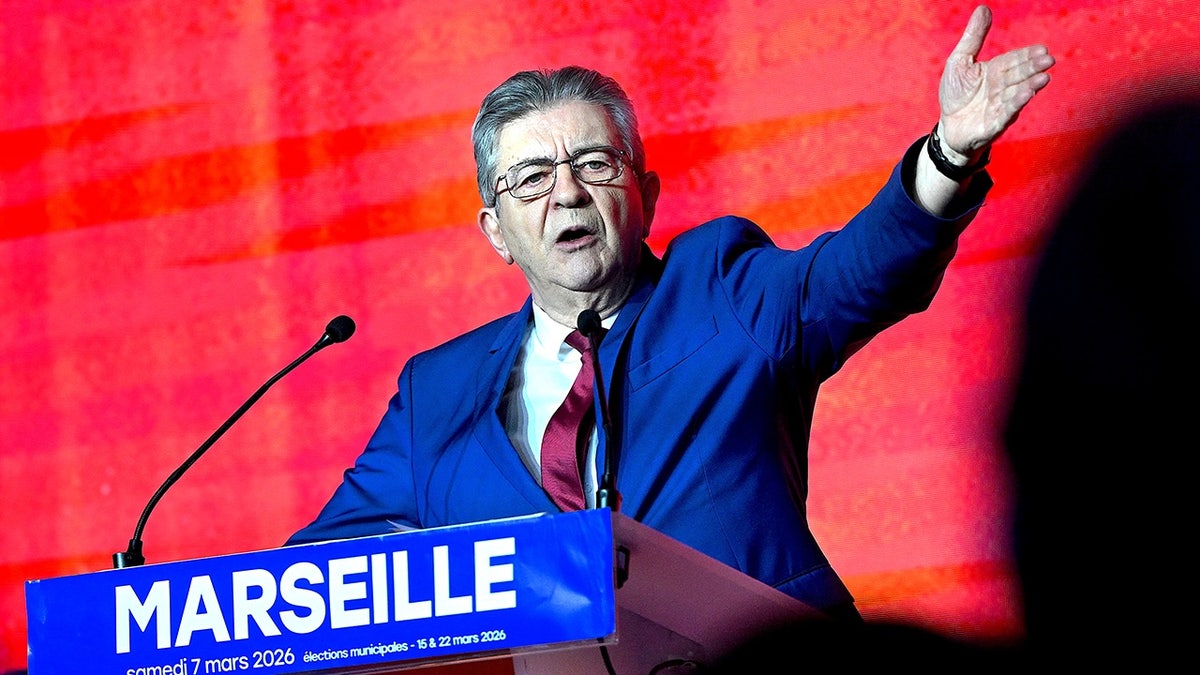
Leader of French left-wing La France Insoumise (LFI) party Jean-Luc Melenchon delivers a speech during an electoral campaign meeting of the local LFI candidate for French municipal elections in Marseille, southern France, on March 7, 2026. (Miguel Medina / AFP via Getty Images)
How the far left entered the unrest
As the demonstrations expanded, the involvement of France’s hard-left La France Insoumise party, known as LFI, led by Jean-Luc Mélenchon, became an increasingly contentious issue.
Reuters reported October 1 that French intelligence agencies had told a government crisis meeting that LFI and affiliated activists played a role in fomenting the unrest. Interior Minister Laurent Nuñez also cited agitators moving between schools to encourage violence.
LFI has denied responsibility and accused authorities of aggravating tensions through their response.
Rodan-Benzaquen said far-left movements were capitalizing on students’ frustration.
«There is an obvious instrumentalization, obvious manipulation,» she said, arguing that activists were seeking to push some protesters toward violence.
She linked the unrest to what she described as Mélenchon’s broader political strategy ahead of France’s 2027 presidential election.
«His idea is that on the one hand he will scare voters on the right and on the far right, who will then go to vote for the far-right, and on the other hand he would mobilize his own camp,» she said.
Rodan-Benzaquen argued that intensifying political confrontation could help Mélenchon consolidate his support among younger voters and immigrant communities, while portraying the far right as an increasingly serious threat.
She described it as a calculated political strategy rather than a spontaneous response to students’ concerns.
The involvement of LFI politicians has been documented by French media, although there is disagreement over whether the party helped initiate the demonstrations or became involved after the protests began.
An October 2 investigation by Le Monde examined a police intelligence assessment describing radical-left activity around schools in Seine-Saint-Denis but questioned whether the evidence established that the movement itself was politically orchestrated.
Feigenbaum offered a more cautious interpretation, describing some of the violent perpetrators as fringe provocateurs who exploit broader demonstrations without necessarily directing them.
«They’re not being organized by some, you know, some mastermind at the national level, at least as far as anyone knows,» he said.
FRANCE ROCKED BY STUDENT RIOTS AS HUNDREDS ARRESTED, VIOLENCE SPREADS NATIONWIDE
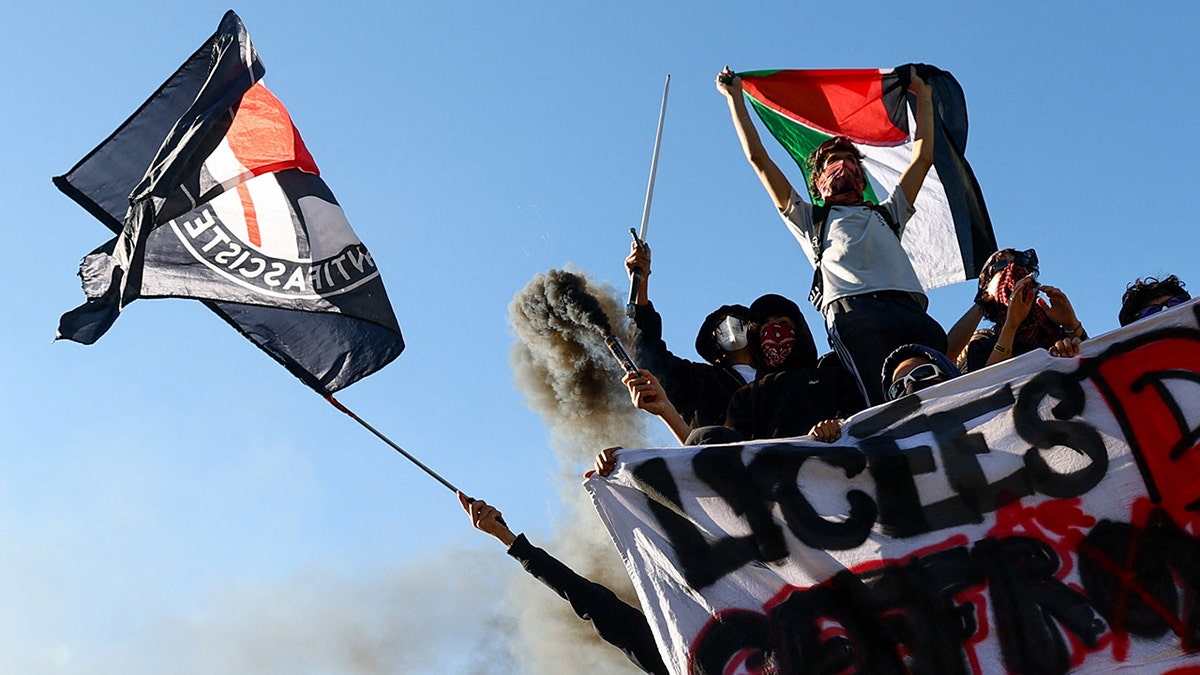
Protesters hold Palestinian and Antifa flags as French high school and university students attend a demonstration in Strasbourg, France, on Thursday, Oct. 6, 2026. (Kai Pfaffenbach/Reuters)
Islamist influence or political solidarity?
The demonstrations have also raised questions about whether Islamist groups and pro-Palestinian activists are seeking to use the unrest to advance broader ideological causes.
Rodan-Benzaquen argued that Mélenchon’s emphasis on Gaza and the Palestinian cause has helped bring together political constituencies that might otherwise have little in common.
«It’s sort of the idea of sort of an intersection of different movements where they manage to bring together the different groups, the far left, Islamist movements, pro-Palestinian activists,» she said.
She pointed to Palestinian flags appearing during the demonstrations as an indication of how the movement has expanded beyond its original educational demands.
The FDD expert argued that Islamist elements were attempting to capitalize on the turmoil, although she cautioned against reducing the entire crisis to immigration or religion.
«But this goes far beyond the issue of immigration, it goes far beyond the issue of Islamism, it goes far beyond the issue of Islam,» she said.
EUROPE’S LEFT COURTS MUSLIM VOTERS AS ANTI-ISRAEL POLITICS RESHAPE CONTINENT
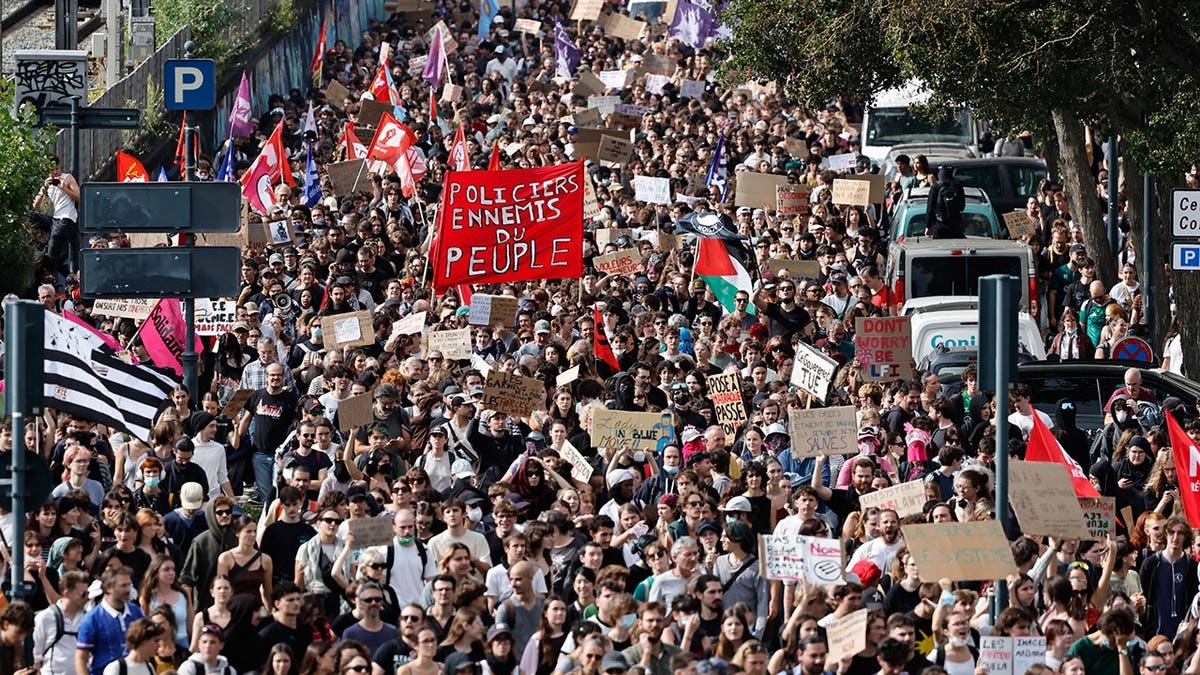
Students march with a large red banner reading «Police officers, enemy of the people» during a protest against under-resourced schools in Rennes, western France, on Tuesday, Oct. 6, 2026. (Jeremias Gonzalez/AP)
A crisis France cannot simply spend its way out of
The government’s latest concessions have not ended the protests.
According to Reuters on Friday, 141 schools remained closed while students continued demanding broader reforms. Nearly 10% of teaching hours in French public high schools remained unstaffed.
For Rodan-Benzaquen, one of the greatest dangers is that the demonstrations reflect a society increasingly divided into competing political realities.
She described how her 17-year-old son created separate left-wing and right-wing Instagram accounts and encountered radically different portrayals of the same unrest: one emphasizing police violence and the other violence by protesters.
«Now, if you live in two drastically different realities, it is very complicated to come to any form of dialog and end agreement,» she said.
Her warning extends beyond France’s current protests.
«We are in an extremely polarized environment,» Rodan-Benzaquen said, noting that social media can deepen divisions and allow confrontations to escalate rapidly.
Feigenbaum sees an additional structural danger: a government burdened by accumulated financial obligations and deprived of the political consensus needed to reform them.
The result is a country spending heavily to sustain its public institutions while struggling to deliver the services citizens expect — and a political system increasingly consumed by conflict over how to fix them.

French President Emmanuel Macron delivers a speech during the World Economic Forum annual meeting in Davos, Switzerland, Jan. 20, 2026. (Harun Ozalp/Anadolu via Getty Images)
What began as a rebellion against broken classrooms has become a test of whether France can reconcile its costly promises with its financial reality before the divisions consuming its schools deepen further.
world protests, emmanuel macron, high school, france, world
INTERNACIONAL
Una nena de 12 años murió tras tomar un licuado: el grave error que cometió la cafetería
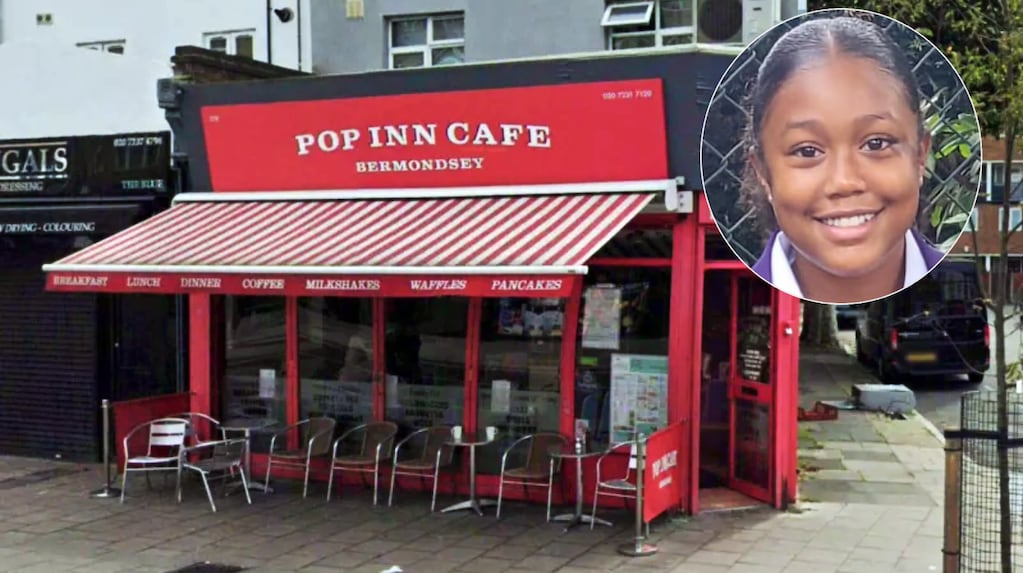
Mia Shay St Hilaire, una nena de 12 años, murió después de tomar un licuado en un café de Londres. Según determinó la justicia británica en un informe dado a conocer esta semana, la nena, que tenía una alergia severa a los frutos secos, sufrió un shock anafiláctico fulminante después de que le sirvieran una bebida preparada en una licuadora que no había sido lavada tras usarse para otra licuado con avellanas.
El hecho ocurrió cuando Mia visitó el Pop Inn Café de Southwark Park Road, Londres, junto a su tía y su hermana en agosto de 2023.
Mia pidió un milkshake de Twix, pero el dueño del local, Baris Yucel, había usado el mismo vaso para preparar antes una bebida con Kinder Bueno, que contenía avellanas. Las cámaras de seguridad registraron que no limpió la licuadora antes de preparar el pedido de la menor.
Según la investigación judicial, la anafilaxia avanzó rápidamente y Mia colapsó poco después en la casa de su tía. A pesar de recibir atención médica de urgencia y ser trasladada a terapia intensiva en el Evelina London Children’s Hospital, no lograron salvarla.
El fallo judicial y la condena al responsable del café
La investigación, a cargo de la perita forense Briony Ballard, concluyó que la bebida estaba contaminada con residuos de avellana y que la reacción alérgica fue consecuencia directa de la negligencia del dueño del café.
El ayuntamiento de Southwark inició una causa penal contra el local. En enero de 2025, Baris Yucel admitió seis violaciones a la Ley de Seguridad alimenticia, entre ellas no informar ni hacer visible el asesoramiento sobre alérgenos, no controlar la contaminación cruzada y servir alimentos con ingredientes no declarados. El café fue multado con 18.000 libras esterlinas (unos 24.000 dólares) y Yucel fue condenado a realizar 100 horas de trabajo comunitario.
El abogado de Yucel aseguró que su cliente mostró “remordimiento genuino” y que, tras el incidente, buscó capacitarse mejor y se declaró culpable en la primera oportunidad. “No pasa un día sin que piense en la nena y su familia”, afirmó.
El reclamo de la familia y el pedido de cambios en la ley
Los padres de Mia, Adrian y Chanel, agradecieron la investigación y reclamaron reformas urgentes para proteger a quienes viven con alergias alimentarias. “Los consumidores confían en las calificaciones de higiene, pero no dicen nada sobre cómo se gestionan las alergias en los locales”, señalaron.
“Ninguna familia debería perder a un hijo en estas circunstancias”, expresaron en un comunicado. “Si las autoridades hubieran asegurado que el café entendía y aplicaba correctamente sus responsabilidades, creemos que Mia seguiría viva”.
La familia pidió que la muerte de Mia impulse cambios para proteger a quienes viven con alergias alimentarias. “Queremos que el legado de Mia sea el cambio, para ayudar a salvar vidas en el futuro”, remarcaron.
Propusieron que exista una calificación específica y visible sobre el manejo de alérgenos, similar a la de higiene, para que las familias puedan elegir dónde comer con mayor seguridad.
El impacto en la comunidad y el debate sobre la seguridad alimentaria
El caso generó un fuerte debate en el Reino Unido sobre la gestión de alergias en la industria gastronómica. La abogada de la familia, Michelle Victor, remarcó que la muerte de Mia expuso graves fallas en la comprensión y el control de los riesgos alimentarios en bares y restaurantes. “Las regulaciones actuales son insuficientes y deben ser revisadas”, sostuvo.
Tanya Ednan-Laperouse, fundadora de Natasha’s Foundation —organización creada tras la muerte de su hija por una alergia alimentaria—, advirtió que la tragedia de Mia demuestra cuánto falta para mejorar la conciencia y la regulación sobre alergias.
“Las alergias no son una preferencia, son una condición médica grave y potencialmente mortal. Todos tenemos la responsabilidad de proteger a quienes las padecen”, afirmó.
licuado, Alergias, Reino Unido, Londres
INTERNACIONAL
Más allá del ADN: descubren que ciertos rasgos heredados pueden persistir durante 15 generaciones en algunos organismos

La herencia suele explicarse a partir del ADN que pasa de padres a hijos. Sin embargo, investigadores de la Universidad de Ginebra comprobaron que cambios en la actividad de los genes pueden mantenerse durante al menos quince generaciones, aun cuando el ADN de los descendientes no presenta la alteración inicial. El trabajo se realizó con el gusano microscópico Caenorhabditis elegans.
La pregunta era cuánto podían durar las señales que regulan los genes sin modificar su secuencia, un campo conocido como epigenética. Estas señales ayudan a determinar cuáles instrucciones del genoma se usan en cada célula, de modo que una célula nerviosa y una muscular, aunque compartan el mismo material genético, cumplen tareas distintas. Un estudio publicado en la revista EMBO Journal siguió ese proceso en distintas camadas de gusanos y halló que sus efectos podían persistir mucho más de lo que se había observado hasta entonces.
El resultado aporta una pista para entender que la información hereditaria no depende solo de las letras del ADN. La trayectoria de vida y el ambiente pueden influir en la forma en que los genes se activan o se silencian, sin reescribir el código genético. El experimento no se hizo en personas ni permite trasladar sus resultados a la salud humana, pero aclara mecanismos básicos de la regulación genética.
Las proteínas que envuelven el ADN también guardan información

Dentro de cada célula, el ADN está enrollado alrededor de proteínas llamadas histonas, que permiten ordenarlo y compactarlo. Esas proteínas pueden recibir pequeñas señales químicas que funcionan como indicaciones sobre qué genes deben quedar activos y cuáles deben permanecer en silencio. No cambian el contenido del ADN, pero sí condicionan la lectura que la célula hace de él.
El equipo encabezado por Florian Steiner, profesor del Departamento de Biología Molecular y Celular de la Universidad de Ginebra, se concentró en una de esas señales, denominada H3K27me3. Se trata de una modificación presente en las histonas que ayuda a impedir la activación de determinados genes. Para volverla más fácil de identificar, los investigadores alteraron de manera transitoria su distribución en los gusanos.
El cambio inicial se produjo al hacer que los animales fabricaran una versión modificada de una histona. Esa intervención redujo la fertilidad de forma notable: en condiciones habituales, cada ejemplar podía tener cerca de 300 crías, mientras que los afectados tuvieron entre 50 y 100 descendientes. Sin embargo, los hijos seleccionados para continuar el experimento ya no llevaban la modificación genética que había provocado la alteración.

Aun así, conservaron tanto la distribución inusual de la señal química como la menor fertilidad. “Los cambios en la regulación de los genes y los problemas de fertilidad persistieron durante al menos quince generaciones”, afirmaron Isa Özdemir, estudiante de doctorado, y François-Xavier Stubbe, investigador posdoctoral del grupo de Steiner, según el comunicado de la Universidad de Ginebra.
La señal se instala primero y luego se conserva
Los investigadores comprobaron que este fenómeno no depende de un único mecanismo. Según el trabajo, la transmisión tiene dos fases encadenadas: una inicial, necesaria para establecer el nuevo estado, y una segunda, que permite conservarlo en la descendencia. Ambas intervienen sobre las histonas, aunque actúan en momentos diferentes.
En la primera, una proteína llamada SET-32 agrega una señal química transitoria a las histonas. Esta modificación resulta necesaria para que el cambio pase de la generación expuesta a sus hijos. Después, otra proteína, MES-4, toma parte en la conservación del efecto a lo largo de las siguientes camadas. “Mantener un estado epigenético depende de una sucesión de mecanismos especializados, y no de un solo proceso”, explicaron Özdemir y Stubbe, según el comunicado.

El estudio también mostró que la transmisión no era idéntica en todos los animales. En cada camada, algunos recuperaban el patrón habitual de regulación genética y su fertilidad, mientras que otros conservaban la alteración. Entre los descendientes de ejemplares con baja fertilidad, entre el 25% y el 40% mantuvo ese rasgo en las generaciones observadas.
Esta variación se explica porque conviven dos procesos. Uno replica el estado alterado y otro reconstruye el patrón normal. El paper indica que esa competencia hace que el cambio sea inestable: puede perdurar, aunque también puede revertirse en cada individuo y en cada camada. Por eso, el hallazgo no implica que toda modificación epigenética se transmita de forma automática ni permanente.
Un modelo para estudiar la herencia sin mutaciones
El uso de C. elegans permitió seguir muchas camadas en poco tiempo y observar células individuales. Este gusano es un modelo habitual en biología porque se reproduce rápido y comparte procesos celulares básicos con otros seres vivos. De todos modos, sus resultados no equivalen a una demostración de que el mismo fenómeno ocurra en humanos.

Lo que sí establece el estudio es que una alteración transitoria de la regulación genética puede dejar una huella heredable sin modificar el ADN. “Una alteración temporal de la regulación genética puede dejar una impronta duradera y transmisible, aunque el cambio genético que la provocó haya desaparecido en los descendientes”, concluyó Steiner, según el comunicado.
Para los autores, esta forma de transmisión podría constituir un mecanismo adicional con el que los organismos responden a condiciones cambiantes. La investigación describe ese mecanismo en gusanos y no determina qué experiencias concretas podrían activar procesos comparables fuera del laboratorio. Aun así, permite separar con mayor precisión dos preguntas que suelen confundirse: qué información está escrita en el ADN y qué señales influyen en la manera en que las células la utilizan.
ADN,epigenética,histona,H3K27me3

Martín Menem habló sobre el armado electoral del Gobierno: “Sería más fácil cerrar acuerdos con cuanto gobernante se nos cruza”

Quilmes vs Agropecuario: formaciones, hora y dónde ver por tv

La felicidad de Barby Franco y Fernando Burlando por el logro de su hija Sarah: “Después de tanto tiempo de lucha”

El Gobierno busca suspender las PASO mientras enfrenta nuevas señales de enfriamiento en la economía – Nexofin

Tras el abandono en la Sprint, Franco Colapinto afronta la clasificación para el Gran Premio de Singapur de Fórmula 1

France is devouring itself as school riots reveal a crisis far bigger than broken classrooms

Escándalo total en la AFA: reventa millonaria, un homenaje paupérrimo a Messi y el pedido urgente de renuncia a Chiqui Tapia

Después de su prohibición, las plataformas de apuestas deportivas y los casinos en línea ya están fuera de servicio en Brasil

Marcha contra la Corte: sectores del PJ, la izquierda, gremios y piqueteros protestan por el fallo que libera la venta de tierras para extranjeros

El discurso completo de Leo Messi en su despedida con Argentina: ‘Hoy me toca quizás el día más triste de mi carrera’

 DEPORTE3 días ago
Escándalo total en la AFA: reventa millonaria, un homenaje paupérrimo a Messi y el pedido urgente de renuncia a Chiqui Tapia
- SOCIEDAD2 días ago
Tobey Maguire se quedaba ciego con el traje de Spider-Man y casi se desmaya durante una prueba: fabricar su disfraz fue una pesadilla
- DEPORTE2 días ago
El presidente de Burkina Faso, duro tras el amistoso con la Selección: «Nuestro fútbol está enfermo» :: Olé