INTERNACIONAL
Salvia messii, la flor andina que une ciencia, biodiversidad y un homenaje a Lionel Messi


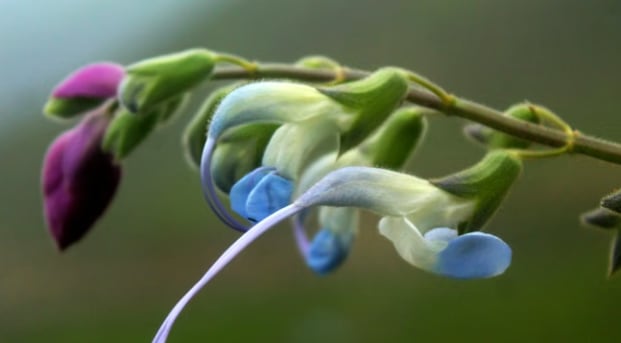
En las laderas montañosas de Perú, entre matorrales expuestos, rocas y cambios bruscos de temperatura, un equipo internacional identificó una nueva especie vegetal para la ciencia y decidió llamarla como su ídolo deportivo.
El arbusto recibió el nombre de Salvia messii, en homenaje a Lionel Messi, a partir de un rasgo visible en su floración: pétalos blancos y celestes que remiten a los colores de la selección argentina. La descripción formal apareció en la revista especializada Phytotaxa, luego de varios años de revisión botánica, comparación de muestras y recorridos por zonas de altura.
El descubrimiento ofrece una muestra de la biodiversidad que todavía permanece sin clasificar en los Andes. La especie vive en un ambiente concreto de la cordillera peruana, dentro de una franja situada entre los 2.000 y los 2.400 metros sobre el nivel del mar. Esa distribución limitada convirtió al hallazgo en un dato relevante para la botánica y para la conservación, ya que la planta enfrenta amenazas asociadas a incendios forestales y variaciones climáticas.
La trayectoria que llevó a la identificación no empezó en una expedición ni en una colección de museo. El primer indicio surgió de fotografías compartidas por aficionados a la naturaleza en plataformas de ciencia ciudadana. Ese tipo de registros, que permite documentar observaciones de flora y fauna fuera de los circuitos académicos tradicionales, abrió una pista que luego requirió validación científica.
Una imagen puede alertar sobre una rareza, pero no alcanza para establecer que una planta corresponde a una especie nueva.
El ingeniero agrónomo argentino Rolando Uría, cultivador y fitomejorador reconocido por la Royal Horticultural Society de Londres, detectó que aquellas imágenes no encajaban con los registros disponibles. La forma del arbusto, el aspecto de las flores y el sitio donde aparecía exigían una revisión más profunda. Uría contactó entonces al botánico peruano Paúl Gonzáles Arce, investigador del Museo de Historia Natural de Lima, y al biólogo Jean Capcha Ramos. A partir de ese vínculo, el hallazgo inicial pasó a formar parte de una investigación sistemática.
La sospecha nacida en registros ciudadanos llegó a una descripción científica

El trabajo combinó tareas de distinto tipo. Los investigadores consultaron archivos históricos, revisaron ejemplares depositados en colecciones científicas y contrastaron características morfológicas con otras especies del género Salvia. También realizaron expediciones por la cordillera peruana, donde observaron plantas en su ambiente natural. Ese recorrido permitió establecer rasgos constantes y descartar que se tratara de una variante ya conocida, de un ejemplar aislado o de una población poco estudiada de otra especie.
En taxonomía, el área de la biología que clasifica a los seres vivos, la diferencia entre una observación llamativa y una especie inédita exige pruebas acumuladas. Los científicos deben comparar hojas, tallos, flores, tamaños, estructuras reproductivas y ambientes de crecimiento. En este caso, la combinación de rasgos permitió separar a la nueva planta de otras salvias registradas. La publicación en Phytotaxa formalizó ese proceso y dejó disponible una referencia para especialistas que estudien la flora andina en el futuro.
La Salvia messii forma un arbusto robusto que puede alcanzar 1,5 metros de altura. Su aspecto contrasta con la idea habitual de una flor pequeña o frágil: la especie posee una estructura adaptada a las condiciones de montaña. Las laderas rocosas y áridas de la cordillera imponen desafíos vinculados con la disponibilidad de agua, la exposición solar y la amplitud térmica. La planta logró establecerse en ese contexto, aunque su presencia conocida se concentra en un territorio reducido.

Las flores concentran buena parte de la atención pública. Los pétalos muestran una combinación de blanco y celeste claro, una característica que motivó el vínculo con Messi. El nombre científico no responde solo a una elección simbólica. La nomenclatura botánica internacional establece reglas para nombrar especies nuevas y reconoce la posibilidad de dedicar una denominación a una persona. En este caso, el reconocimiento conectó un hallazgo natural de Perú con una figura deportiva de alcance global.
La escritura del epíteto también tiene una explicación técnica. El apellido Messi recibe una segunda “i” en la forma messii por una regla de latinización utilizada en la nomenclatura científica. Esa terminación expresa pertenencia o dedicación a la persona homenajeada. Por eso, el nombre puede interpretarse como la salvia dedicada a Messi. La coincidencia cromática con la camiseta argentina reforzó una decisión que, además de respetar las normas taxonómicas, permite que la especie resulte fácil de recordar fuera de los ámbitos especializados.
Su distribución limitada plantea un desafío para la conservación en los Andes peruanos
El dato más sensible del descubrimiento no se vincula con el homenaje, sino con el estado de su hábitat. Los investigadores localizaron a la planta solo en un sector de matorrales montañosos. Una especie con presencia restringida puede resultar más vulnerable frente a alteraciones ambientales, porque no cuenta con numerosas poblaciones dispersas que compensen pérdidas locales. Incendios, sequías, cambios en el uso de la tierra y modificaciones del clima pueden afectar de forma directa a organismos que dependen de un espacio acotado.
Por ese motivo, la clasificación preliminar ubica a la Salvia messii como especie en peligro de extinción. Esa categoría señala una alerta y no un destino inevitable. Para precisar su situación, futuros estudios deberán ampliar los relevamientos, calcular el tamaño de las poblaciones, delimitar con mayor exactitud su área de presencia y examinar las presiones sobre el ecosistema. La descripción científica aporta una base indispensable: resulta muy difícil proteger aquello que todavía carece de nombre, diagnóstico y registro formal.

La especie pertenece a la familia de las lamiáceas, un grupo vegetal que incluye numerosas plantas aromáticas, y al género Salvia. Sus hojas y tallos contienen aceites esenciales, una característica asociada al aroma de muchas especies de esa familia. Sin embargo, el carácter reciente del hallazgo impone una cautela necesaria. No existen todavía análisis específicos sobre la composición química, los usos medicinales o las propiedades farmacológicas de esta planta en particular. La pertenencia a un grupo botánico no permite trasladar resultados de otras especies de forma automática.
Algunas salvias cuentan con flavonoides estudiados por sus posibles efectos antioxidantes, antiinflamatorios y antisépticos. Ese antecedente puede orientar investigaciones posteriores, pero no prueba que Salvia messii tenga la misma concentración de compuestos ni idénticas aplicaciones.
La botánica descriptiva constituye apenas una etapa dentro de un proceso más amplio. Para conocer la química de la nueva especie, harían falta estudios de laboratorio que identifiquen sus moléculas, evalúen su variación y determinen cualquier efecto con métodos adecuados.
El caso también subraya el valor de las colecciones científicas. Los herbarios conservan ejemplares vegetales que funcionan como archivos de la diversidad y permiten comparar nuevas muestras con materiales reunidos durante décadas. En una investigación como esta, esos registros ayudan a detectar diferencias que una fotografía no revela. El cruce entre observaciones digitales, trabajo de campo, conocimientos locales y colecciones botánicas ofrece herramientas complementarias para reconocer especies desconocidas y ubicar cada hallazgo dentro de una clasificación verificable.
Para la cordillera peruana, la publicación suma una especie a una flora de enorme variedad y recuerda que los paisajes de altura todavía guardan información pendiente. La visibilidad que aporta el nombre puede despertar curiosidad sobre la planta, aunque la prioridad científica pasa por conocerla mejor y preservar el ambiente donde vive.
Las próximas etapas dependerán de nuevos relevamientos y del seguimiento de sus poblaciones. Por ahora, Salvia messii representa una planta recién descrita, con un sitio preciso en los Andes y una necesidad concreta de protección.
Salvia messii,Perú,Lionel Messi,Phytotaxa,especie en peligro de extinción













INTERNACIONAL
Honduras bajo alerta verde: lluvias y tormentas amenazan al Distrito Central y Lago de Yojoa
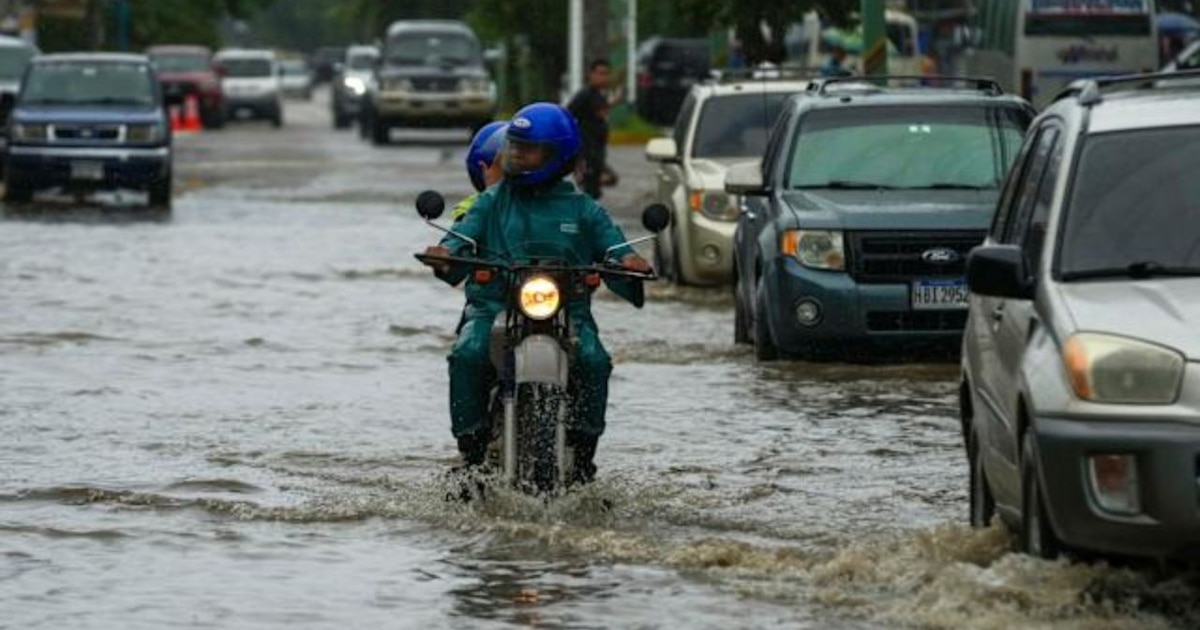
Las lluvias que afectan a Honduras mantienen en vigilancia a las autoridades de protección civil, ante el riesgo de crecidas de ríos, inundaciones repentinas, deslizamientos de tierra y caída de árboles en sectores vulnerables.
La Secretaría de Gestión de Riesgos y Contingencias Nacionales (Copeco) extendió la alerta verde para las zonas aledañas al Lago de Yojoa y el Distrito Central, en Francisco Morazán, debido a las condiciones de humedad y las precipitaciones previstas para las próximas horas.
La institución emitió el boletín número 045-2026 el viernes 16 de octubre, con una vigencia de 48 horas a partir de las 9:00 de la noche de esa jornada. La medida busca que la población adopte precauciones ante posibles incidentes relacionados con el aumento de las lluvias.
Las autoridades recomendaron mantenerse atentos a los comunicados oficiales, especialmente en comunidades cercanas a ríos, quebradas y zonas donde el terreno presenta condiciones de vulnerabilidad.
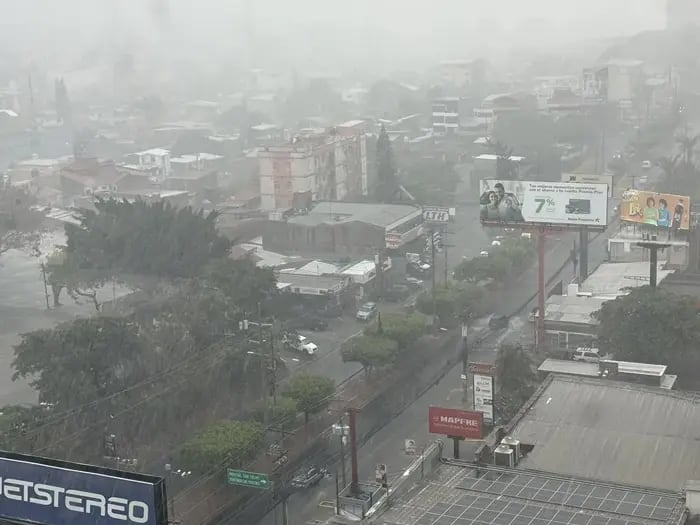
El Centro Nacional de Estudios Atmosféricos, Oceanográficos y Sísmicos (Cenaos) informó que una vaguada en superficie, combinada con los remanentes de una onda tropical, favorecerá la formación de lluvias y chubascos de intensidad débil a moderada en gran parte del país.
De acuerdo con el pronóstico meteorológico para este sábado 17 de octubre, las precipitaciones podrían estar acompañadas de actividad eléctrica, principalmente durante las horas de la tarde y la noche.
Las regiones noroccidental, occidental, central y sur figuran entre las zonas donde se esperan los mayores acumulados de lluvia. Estas condiciones podrían incrementar el riesgo de inundaciones repentinas, particularmente en lugares donde el agua suele acumularse o donde los ríos y quebradas aumentan rápidamente su caudal.
El meteorólogo de Cenaos, Mario Centeno Paz, explicó que la vaguada mantendrá su influencia sobre el territorio hondureño y favorecerá las precipitaciones desde el noroccidente hasta la región sur.
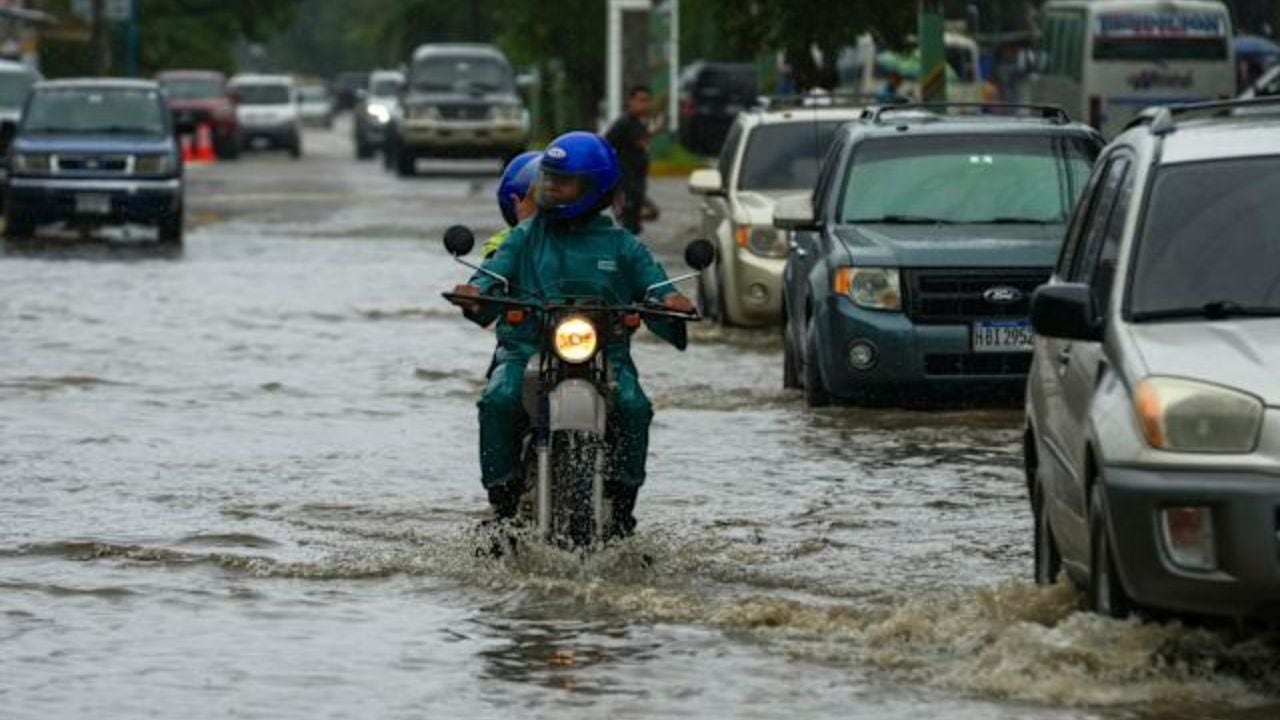
Aunque se prevén tormentas eléctricas, el especialista indicó que los chubascos serían de intensidad leve a moderada y descartó la presencia de temporales destructivos o lluvias severas durante la jornada, según el pronóstico citado.
No obstante, las autoridades mantienen las advertencias preventivas debido a que incluso las precipitaciones moderadas pueden generar situaciones peligrosas en áreas vulnerables, sobre todo cuando existe saturación del suelo o un incremento repentino del caudal de las fuentes de agua.
Ante la persistencia de las lluvias, Copeco hizo un llamado a la población para que evite exponerse a corrientes de agua y tome medidas preventivas en sus viviendas y comunidades.
Entre las principales recomendaciones figura no cruzar ríos, quebradas, vados ni riachuelos cuando presenten un aumento en su caudal, aunque el nivel del agua parezca manejable.
La institución también pidió limpiar cunetas, tragantes y alcantarillas para facilitar el drenaje del agua y reducir las posibilidades de inundación en calles, patios y viviendas.
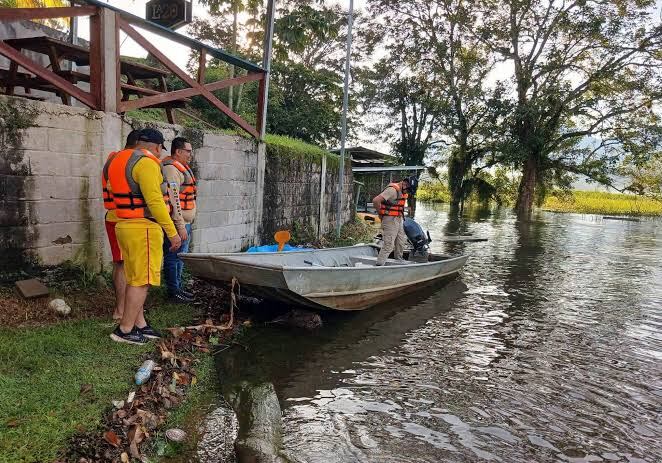
Durante las tormentas eléctricas, las personas deben alejarse de las fuentes de agua y buscar refugio en lugares seguros. Asimismo, se recomienda evitar permanecer debajo de árboles o cerca de estructuras que puedan caer o representar un peligro.
En las zonas donde se presenten deslizamientos, inundaciones u otras situaciones que amenacen a las familias, las autoridades instaron a seguir las instrucciones de los organismos de primera respuesta y evacuar cuando sea necesario.
La alerta verde representa un llamado preventivo para que la población permanezca vigilante ante la evolución de las condiciones meteorológicas.
Mientras las precipitaciones representan un riesgo para las comunidades vulnerables, también han tenido efectos favorables en las reservas hídricas del Distrito Central, según la información proporcionada por el especialista de Cenaos.
Las lluvias registradas durante los últimos días han contribuido a mejorar la disponibilidad de agua, un aspecto relevante para Tegucigalpa y Comayagüela, donde las reservas de las represas son fundamentales para el abastecimiento de la población.
corresponsal:Desde Tegucigalpa, Honduras
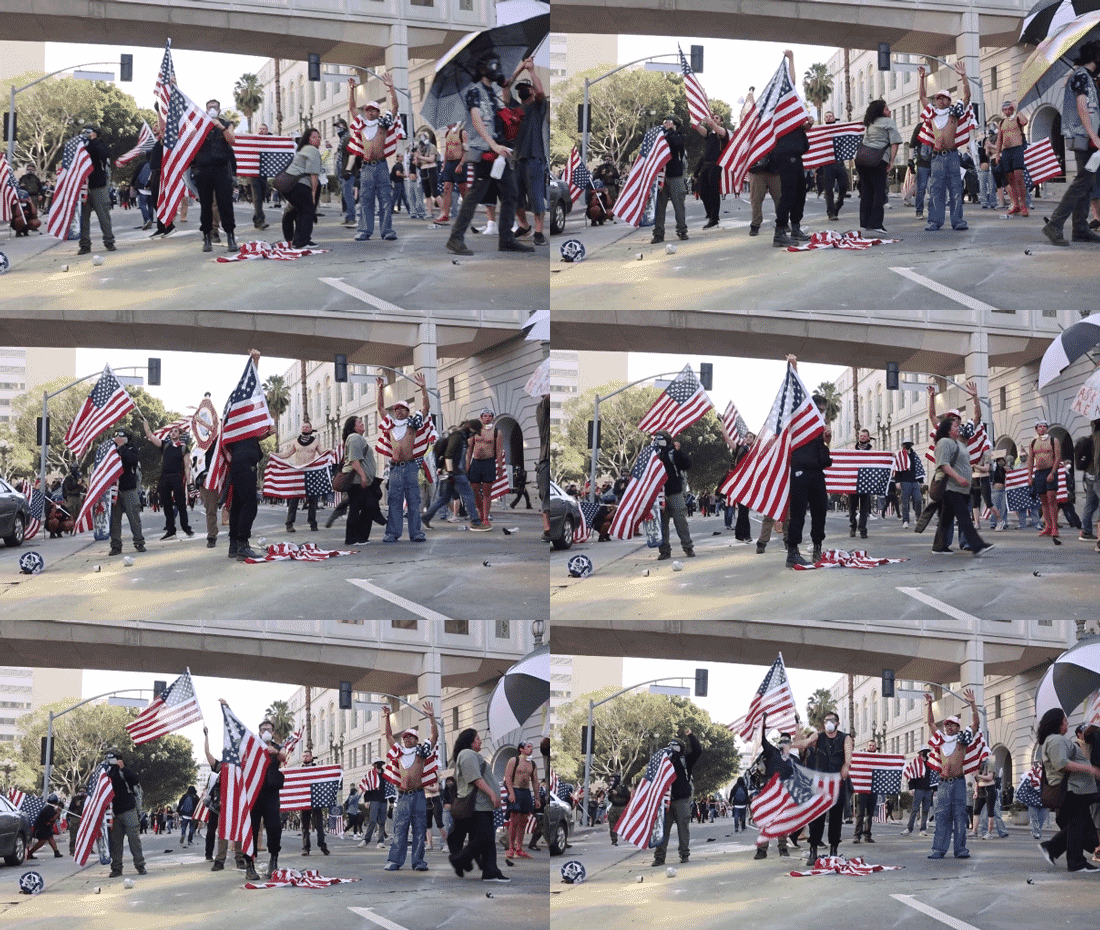
WASHINGTON, D.C. — As the high-level organizers of the «No Kings» demonstrations seek to turn their operation into a nationwide get-out-the-vote rally Saturday, their warning to steer clear of partisan messaging that could violate their own rules is falling on deaf ears.
A Digital investigation reveals that, on the ground, the political activation is, in fact, highly partisan, led by the center-left Indivisible nonprofit that has received millions of dollars of funding from Democratic megadonor George Soros. «No Kings» organizers didn’t respond to a request for comment.
The partisan nature of the day’s events is important because political experts say the «No Kings» operation reveals a sophisticated electoral strategy: transform the crowds assembled for anti-Trump protests into a durable voter bloc that participates in elections and turns out a «Blue Tsunami» of votes in political battles. But federal election law bars nonprofits, many of which fund the «No Kings» operation, from advocating for particular candidates.
NEW MIDTERM BATTLEGROUND TAKES SHAPE AS PARTIES BUILD ELECTION ARMIES
Behind today’s action, Digital has identified a sprawling network of 300 progressive advocacy organizations, labor unions, Democratic political operatives and tax-exempt nonprofits with an estimated $2.5 billion in annual revenues, transforming the «No Kings» protest movement into a nationwide voter-mobilization operation of an estimated 3,000 events for Democrats.
A review of digital advertisements for Saturday’s «No Kings: Vote Early» demonstrations and their organizing rhetoric identifies multiple instances of organizers promoting the very language the coalition’s national rulebook forbids in its attempt to create the illusion of nonpartisanship.
In Newark, Delaware, Democratic activists from the local Indivisible chapter are encouraging voters to «wear blue» to their 2 p.m. demonstration at the corner of S. College Avenue and W. Main Street, and their «Sign Ideas» include: «Vote Blue Nov. 3,» «Vote Early, Vote Blue» and «Time for a Blue Tsunami.»
Their announcement reads, «💙 Wear blue to signify the blue tsunami we are hoping we will see in Nov!»
Some 3,000 miles away, in Roseburg, Oregon, Indivisible Douglas County activists are advertising their own «No Kings» rally with suggested signs reading, «DOUGLAS COUNTY VOTES BLUE!,» «REPUBLICANS HAD THEIR CHANCE!» and «VOTE EARLY. VOTE THEM OUT!»
«Be bold. Be direct. Don’t hold back,» the Oregon organizers told participants.
Those are precisely the kinds of partisan political messages the national «No Kings» coalition has explicitly prohibited.
After deadline as the protests were beginning Saturday morning, Eunic Epstein-Ortiz, national spokesperson for No Kings, called Digital and challenged the idea that the protests are partisan, saying, «No Kings is a nonpartisan, peaceful movement that has brought millions of Americans together to stand up for democracy, defend our freedoms, and reject authoritarianism.»
She asserted that the protests are drawing even Republicans, stating, «Today, No Kings is organizing the largest early voting activation in our nation’s history, bringing together Democrats, Independents and Republicans who share a fundamental belief: voters should decide who leads our country, and every eligible voter deserves to have their voice heard.»
She added, «We are aware of partisan events circulating online that are not affiliated with or officially organized by No Kings. Many people utilize the No Kings name as a rally cry. But the coalition’s focus remains clear: helping Americans understand where, when, and how to vote, encouraging people to cast their ballots as early as possible, and ensuring every voter has the information they need to make their voice heard.»
On a webinar Thursday night promoting the protests, a member of Indivisible Colorado Springs told Indivisible co-founders Leah Greenberg and Ezra Levin that the group’s event is struggling to attract media attention without focusing on President Donald Trump.
Levin replied, «By all means, make it about Trump. Y’all make it about Trump. Create some conflict. Use some strong language. There’s nothing about No Kings that says you can’t focus on the fascists in the White House.»
SUPREME COURT STRIKES DOWN LIMIT ON PARTY CAMPAIGN SPENDING IN COORDINATION WITH CANDIDATES
Under «Event Prohibitions,» a «Host Toolkit» warns, «Events must not be partisan in nature or make references to preferred election outcomes.» It bars «candidate campaign activity,» «any political party or political committee attending or helping coordinate the event.»
The «Event Prohibitions» list bars events from being held at «overtly partisan organizations, or held at campaign offices, political party headquarters, or other locations principally associated with candidate or party political activity.» The prohibitions explicitly state: «Events should not be jointly branded with partisan organizations,’ and provides as «Examples: Democratic clubs, ‘the Lincoln County Democratic Party.’»
Yet, in Roseville, California, the Placer County Democratic Party is explicit in its connection to the «No Kings» voter drive, advertising a canvassing operation specifically tied to Saturday’s «No Kings» rally at the Roseville Galleria.
The party’s website invites activists to attend a morning canvassing session at Harry Crabb Park, saying voters will be gathered at the rally at the Galleria and promising materials to help participants «support our endorsed candidates.»
On their Democratic Party website, the local party activists describe the «No Kings» rally as «a day of nonpartisan voter participation.»
ACTBLUE SCRUTINY FUELS NEW GOP BILLS TO TIGHTEN ELECTION DONATION RULES
The advertisement raises questions about the relationship between the Democratic Party’s candidate support operation and an event whose national organizers expressly prohibit political parties, political committees and candidate campaigns from coordinating activities.
In Springfield, Pennsylvania, an event listed on the Women’s March organizing platform advertises a one-hour «No Kings FOUR» demonstration at 1200 Baltimore Pike. The event calls for voter participation and, in another direct conflict with the national coalition’s ban on «vote Blue» appeals, also declares, «Vote Blue. Vote. Make Your Voice Count.»
FIRST ON FOX: ‘NO KINGS’ PROTEST NETWORK BEHIND FIGHT AGAINST AI DATA CENTERS AND FLOCK CAMERAS
The coalition’s own documents leave little ambiguity about its official standards.
In a five-page «Talking Points + Messaging» guide, organizers instruct participants not to use partisan political language, including telling participants to «vote for Democrats up and down the ballot» or saying, «We can get a Democratic Congress elected in 2026 to resist Trump.»
It bars any «speaker expressing bias for or against any candidate for office.»
It prohibits candidate campaign activities, including campaign literature, fundraising and coordination with campaign staff. Political parties and political committees are also barred from helping coordinate events.
The instructions go beyond conventional warnings against endorsements.
Organizers specifically prohibit references to «MAGA politicians» and calls to elect a Democratic Congress. Even urging participants to register as Democrats ahead of the midterms is explicitly forbidden.
Another document, «Event Prohibitions + Things to Note,» specifically prohibits «vote them out» and «vote Blue» messaging, campaign fundraising and political party coordination.
Still, in Kingstowne, Va., Indivisible of Franconia is promoting its Oct. 17 rally at South Van Dorn Street and Kingstowne Village Parkway with the statement, «We vote for leaders to represent our interests — and if they don’t, we need to vote them out.»
The coalition also prohibits events hosted or co-sponsored by overtly partisan organizations, including Democratic clubs.
Its «Election Law FAQs» and «Resources» go further, warning that merely describing an event as «nonpartisan» doesn’t establish that it meets the standard.
«Saying this doesn’t automatically make it so,» the document states.
The contradictions come as «No Kings» draws on a sprawling coalition of advocacy organizations, labor unions and political activists.
In March, Digital identified about 500 organizations associated with the movement, representing an estimated $3 billion in combined annual revenues.
The coalition partner list for today’s protests is smaller but continues to include major labor organizations such as the American Federation of Teachers; the American Federation of State, County and Municipal Employees; the National Education Association; and the Service Employees International Union.
It also includes organizations that align with the Democratic Party, including, Indivisible, MoveOn, Planned Parenthood Action Fund, End Citizens United, NextGen America, Our Revolution, Voto Latino and the Democratic Socialists of America.
Most of these organizations or their affiliated political committees have histories of substantial spending to support Democratic candidates and causes. Their involvement places organizations with extensive electoral experience inside a coalition now publicly promising to avoid partisan campaign activity.
The coalition’s breadth also raises questions about how organizers distinguish between participating in a nonpartisan event and advancing the electoral objectives of affiliated political organizations.
The political infrastructure was visible during the March 28 flagship «No Kings» rally in St. Paul, Minnesota.
Digital documented an estimated $250,000 production operation involving nine vendors, approximately 30 semitrucks, a massive stage, eight video screens and other concert-scale equipment.
Roger Fisk, a former Obama and Biden administration political strategist, described himself as a senior advisor to the flagship event and credited its sophisticated media operation with generating hundreds of millions of digital impressions.
The event featured Democratic political figures and celebrities, including rock star Bruce Springsteen and actress Jane Fonda, illustrating the extensive organizational and political relationships behind the movement.
Former Gov. Tim Walz, Rep. Ilhan Omar and Minnesota Attorney General Keith Ellison — all Democrats — were among the event’s political speakers alongside Sen. Bernie Sanders, I-Vt.
The involvement of Democratic officials in earlier anti-Trump demonstrations illustrates the movement’s close relationship with Democratic political figures.
Now the coalition is moving from street demonstrations to voter mobilization.
In its October «Host Toolkit,» «No Kings» describes Saturday’s events as an opportunity to turn protest participation into electoral engagement.
«Pivoting our strategy from marching to voting is our movement using the tool available to us when it matters most,» the coalition tells organizers.
The «Host Toolkit» insists, «Vote Early events are nonpartisan and are designed to increase participation from all eligible voters. The event should not reference, endorse, or oppose any candidate or political party. The event should not coordinate with any campaign or permit campaign materials. The event should comply with all applicable federal, state and local election laws.»
The campaign calls for voter education, early voting assistance, volunteer recruitment and election-protection training, with additional organizing sessions scheduled after Oct. 17.
The coalition maintains that the effort is intended for all eligible voters, regardless of party preference.
The distinction between partisan advocacy and nonpartisan voter education matters, particularly for tax-exempt organizations.
Under federal law, 501(c)(3) charities are prohibited from supporting or opposing political candidates. Other organizations, including 501(c)(4) advocacy groups and political action committees, operate under different legal restrictions.
Indivisible, the coalition’s leading organizer, operates through several affiliated entities with different legal structures, including a 501(c)(4) advocacy organization, a 501(c)(3) nonprofit and a political action committee.
The coalition has scheduled an Oct. 21 training session on what happens after the demonstrations, followed by an Oct. 22 session on sustained mobilization and protecting election results.
Just two days before the nationwide «No Kings» demonstrations, Indivisible co-founders Levin and Greenberg discussed the November midterms in openly partisan terms, celebrating Democratic candidates, criticizing Republicans and outlining their hopes for Democratic control of Congress.
«Our candidates are quite good all around the country. Their candidates are quite trash all over the country,» Levin said, referring to Democratic and Republican candidates, respectively.
During the program, Levin, identifying himself as «a Texas Democrat,» summarized the organization’s immediate priorities, saying, «Right now, we’re just full on let’s win the election, but after that, we’re going to shift.»
Levin said «you got to let people connect the dots» on the «nonpartisan» messaging.
«No Kings» spokesperson Epstein-Ortiz asked that Digital include another part of Levin’s comments, in which he stated, «You can’t say, and that’s why we’ve endorsed this Democratic candidate, go out and vote.»
The spokesperson also asked that comments by Levin and Greenberg be noted, asserting their support of candidates «regardless of party.»
«They’re going to go out and they’re going to exercise the right to vote,» Levin said in the webinar. «That’s your victory. That is your victory is getting as many people out to vote and as many people signed up for election defense as possible. We have a faith that if you do that, then pro-democracy candidates all over the country will win, and we’ll have a pro-democracy Congress.»
Greenberg responded: «Regardless of party.»
Levin added: «Regardless of party. And in fact, Indivisible itself, we are backing several independent candidates in the election all over the country, where they are pro-democracy candidates.»
In a webinar last week, however, Levin was clear about the effort’s political and electoral goals to win a «Democratic trifecta» in the White House, the House of Representatives and the Senate, saying: «It ain’t over in November. It ain’t over in 2027. It ain’t over in 2028. We are building towards a national Democratic trifecta in 2029 that ushers in an age of accountability and reform.»
politics, fox news investigates, us protests, midterm elections, donald trump
INTERNACIONAL
Limoges Town Hall ‘largely lost’ after far-left rioters set historic building on fire amid French unrest
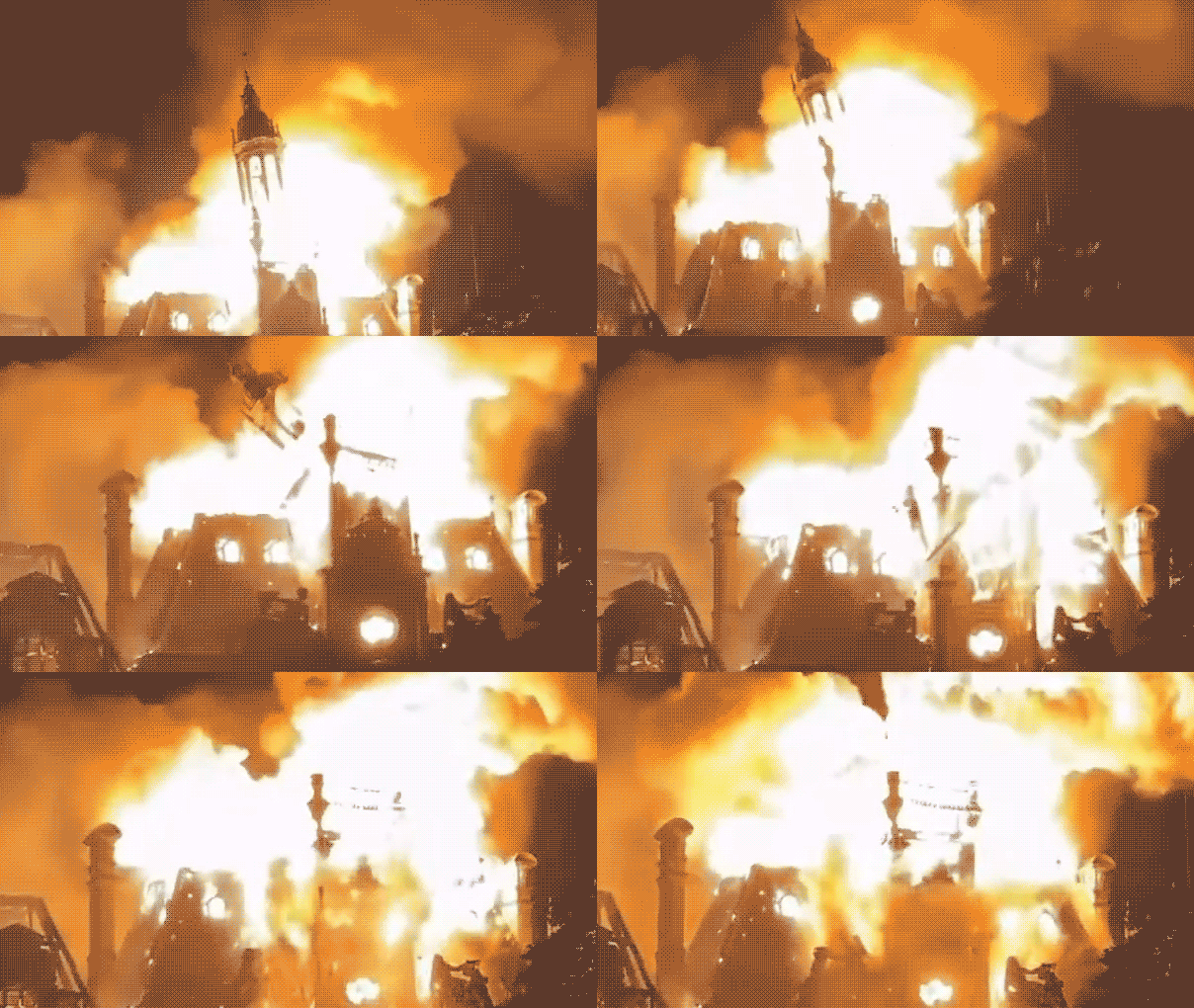
Unrest across Europe leaves destruction in wake
Far-left protests and riots have broken out across Europe and in France, where police and violent rioters have clashed, leading to destructive fires to businesses and infrastructure. (Credit: Reuters)
NEWYou can now listen to Fox News articles!
A historic building in the French town of Limoges, about three hours south of Paris, has been «largely lost» after it was set on fire by rioters as demonstrations continue across France.
The Limoges Town Hall was built in 1883, and was made a historic landmark in 1975.
«The roof has collapsed onto lower floors, except the west wing, and two-thirds of the exterior has already disappeared,» the local prefect, Maurice Barate, told the AFP news agency.
The tower roof of the 143-year-old Limoges Town Hall collapses.
MASSIVE FIRE DESTROYS 400-YEAR-OLD FOOD MARKET, LEAVING HISTORIC LANDMARK IN RUINS
Barate called it «a deliberate act by hooligans,» adding that it was a «catastrophe for heritage.»
The destruction came as far-left anti-government protests and violent clashes entered their fourth week in the European country over the cost of living.
On Saturday, outgoing President Emmanuel Macron wrote on social media: «There is no place for violence in our republic.»
FRANCE EXPLODES AGAIN AS STUDENTS RIOT OVER EDUCATION
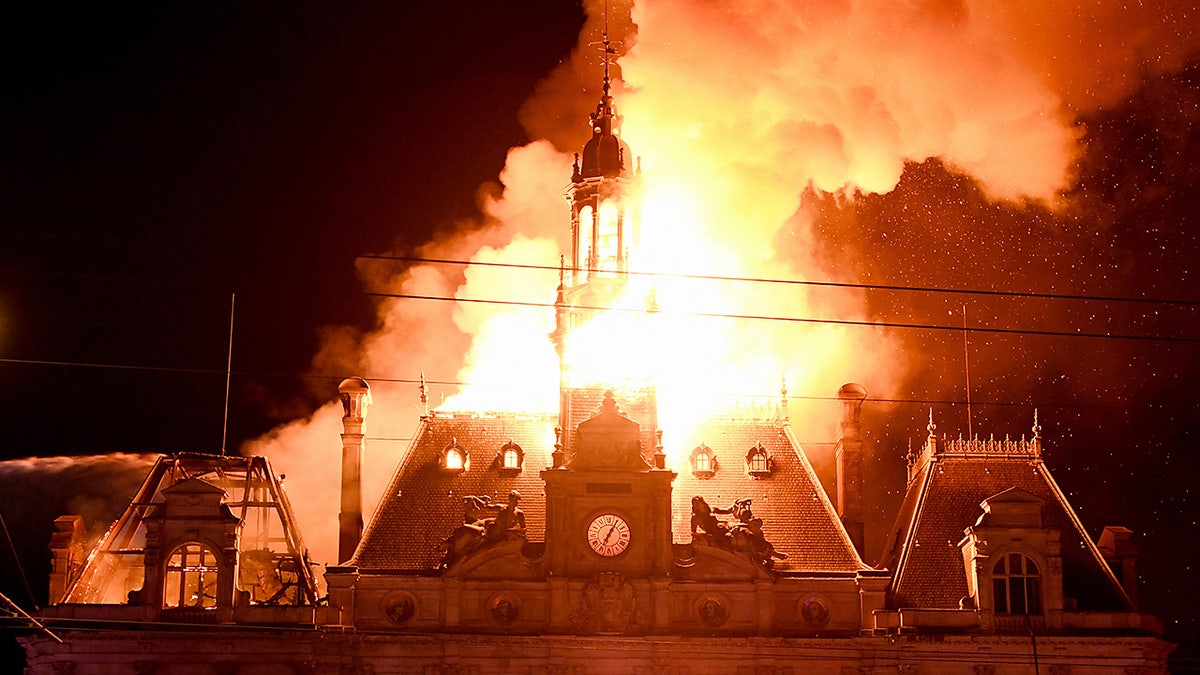
Fire destroys Limoges Town Hall after rioters broke into the historic building to protest the «high cost of living,» in Limoges, central France on Saturday. (Pascal Lachenaud / AFP via Getty Images)
«Those who have broken, attacked the prefectures as well as businesses, looted even our town halls, will be prosecuted and punished,» he added translated from French. «To the law enforcement forces, guarantors of the right to demonstrate, I express the support of the Nation. We will all stand united against the sowers of chaos, who seek only to bring down our institutions and prevent those who peacefully express their demands from doing so.»
Macron leaves office in six months.
GRETA THUNBERG JOINS MASSIVE FRENCH STUDENT PROTESTS AS CARS BURN, POLICE FIRE TEAR GAS
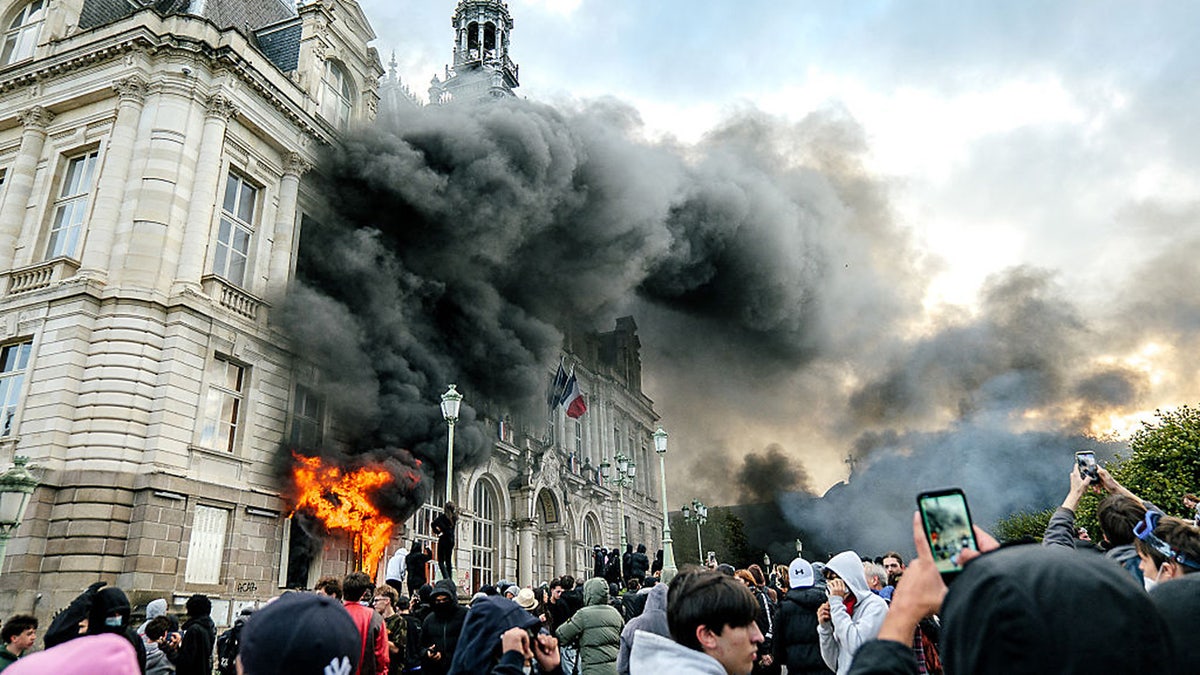
A fire breaks out at Limoges Town Hall in Limoges, central France on Saturday, during a demonstration. (Elise Cabane / Hans Lucas / AFP via Getty Images)
Around 400 people were arrested on Saturday, according to Interior Minister Laurent Nuñez, as more than a half million people took part in more than 100 marches across the country.
Masked groups also attempted to break into city halls in Lille and Calais and a police station in Brest, the interior minister reported, along with violence in Rennes, Toulouse, Montpellier and Grenoble, among other cities.
BEHIND FRANCE’S STUDENT RIOTS: COMMUNISTS, UNIONS AND A GLOBAL PROPAGANDA NETWORK
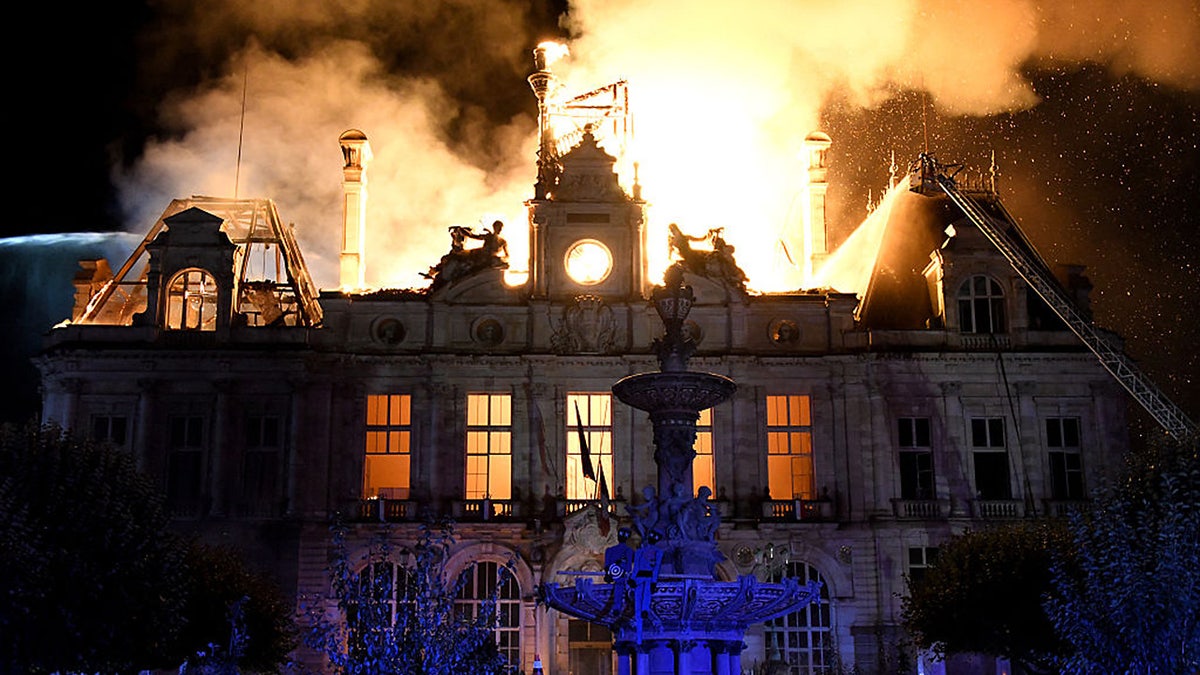
Fire destroys Limoges Town Hall after rioters broke into the historic building to protest «high cost of living,» in Limoges, central France on Saturday. (Pascal Lachenaud / AFP via Getty Images)
Nuñez blamed the unrest on «extremely violent, radical far-left groups.»
While many of the protests were without violence, many have descended into riots. Police used tear gas and water cannons on Saturday to disperse violent groups in Paris, where people wearing hoods and masks threw fireworks and other objects at officers in the Place de la République.
france, world protests, europe, historic sites, world

Se confirmó la lesión que sufrió Emiliano Dibu Martínez tras el brutal choque de cabezas que obligó a trasladarlo al hospital

Dibu Martínez fue operado con éxito en Inglaterra

La bazuca de Milei y su alianza de cristal

Mario Pergolini no pudo contener las lágrimas al hablar de su mamá: su conmovedor mensaje antes del Día de la Madre

Pichetto volvió a cuestionar la inhabilitación perpetua de Cristina Kirchner y no descartó que pueda ser candidata en 2027

Honduras bajo alerta verde: lluvias y tormentas amenazan al Distrito Central y Lago de Yojoa

Autos chinos en Argentina: el caso de Noruega reaviva las alertas por espionaje y riesgos para la seguridad nacional

La angelita de LAM que reveló la peor infidelidad que sufrió en un matrimonio: «Encontré mensajes con otras mujeres y…»

El Índice de Incertidumbre Económica de septiembre alcanzó el nivel más alto de 2026, según la UCA