INTERNACIONAL
‘No Kings’ foot soldiers ignore organizers’ warning, go all in for Democrats


WASHINGTON, D.C. — As the high-level organizers of the «No Kings» demonstrations seek to turn their operation into a nationwide get-out-the-vote rally Saturday, their warning to steer clear of partisan messaging that could violate their own rules is falling on deaf ears.
A Digital investigation reveals that, on the ground, the political activation is, in fact, highly partisan, led by the center-left Indivisible nonprofit that has received millions of dollars of funding from Democratic megadonor George Soros. «No Kings» organizers didn’t respond to a request for comment.
The partisan nature of the day’s events is important because political experts say the «No Kings» operation reveals a sophisticated electoral strategy: transform the crowds assembled for anti-Trump protests into a durable voter bloc that participates in elections and turns out a «Blue Tsunami» of votes in political battles. But federal election law bars nonprofits, many of which fund the «No Kings» operation, from advocating for particular candidates.
NEW MIDTERM BATTLEGROUND TAKES SHAPE AS PARTIES BUILD ELECTION ARMIES
Behind today’s action, Digital has identified a sprawling network of 300 progressive advocacy organizations, labor unions, Democratic political operatives and tax-exempt nonprofits with an estimated $2.5 billion in annual revenues, transforming the «No Kings» protest movement into a nationwide voter-mobilization operation of an estimated 3,000 events for Democrats.
A review of digital advertisements for Saturday’s «No Kings: Vote Early» demonstrations and their organizing rhetoric identifies multiple instances of organizers promoting the very language the coalition’s national rulebook forbids in its attempt to create the illusion of nonpartisanship.
In Newark, Delaware, Democratic activists from the local Indivisible chapter are encouraging voters to «wear blue» to their 2 p.m. demonstration at the corner of S. College Avenue and W. Main Street, and their «Sign Ideas» include: «Vote Blue Nov. 3,» «Vote Early, Vote Blue» and «Time for a Blue Tsunami.»
Their announcement reads, «💙 Wear blue to signify the blue tsunami we are hoping we will see in Nov!»
Some 3,000 miles away, in Roseburg, Oregon, Indivisible Douglas County activists are advertising their own «No Kings» rally with suggested signs reading, «DOUGLAS COUNTY VOTES BLUE!,» «REPUBLICANS HAD THEIR CHANCE!» and «VOTE EARLY. VOTE THEM OUT!»
«Be bold. Be direct. Don’t hold back,» the Oregon organizers told participants.
Those are precisely the kinds of partisan political messages the national «No Kings» coalition has explicitly prohibited.
After deadline as the protests were beginning Saturday morning, Eunic Epstein-Ortiz, national spokesperson for No Kings, called Digital and challenged the idea that the protests are partisan, saying, «No Kings is a nonpartisan, peaceful movement that has brought millions of Americans together to stand up for democracy, defend our freedoms, and reject authoritarianism.»
She asserted that the protests are drawing even Republicans, stating, «Today, No Kings is organizing the largest early voting activation in our nation’s history, bringing together Democrats, Independents and Republicans who share a fundamental belief: voters should decide who leads our country, and every eligible voter deserves to have their voice heard.»
She added, «We are aware of partisan events circulating online that are not affiliated with or officially organized by No Kings. Many people utilize the No Kings name as a rally cry. But the coalition’s focus remains clear: helping Americans understand where, when, and how to vote, encouraging people to cast their ballots as early as possible, and ensuring every voter has the information they need to make their voice heard.»
On a webinar Thursday night promoting the protests, a member of Indivisible Colorado Springs told Indivisible co-founders Leah Greenberg and Ezra Levin that the group’s event is struggling to attract media attention without focusing on President Donald Trump.
Levin replied, «By all means, make it about Trump. Y’all make it about Trump. Create some conflict. Use some strong language. There’s nothing about No Kings that says you can’t focus on the fascists in the White House.»
SUPREME COURT STRIKES DOWN LIMIT ON PARTY CAMPAIGN SPENDING IN COORDINATION WITH CANDIDATES
Under «Event Prohibitions,» a «Host Toolkit» warns, «Events must not be partisan in nature or make references to preferred election outcomes.» It bars «candidate campaign activity,» «any political party or political committee attending or helping coordinate the event.»
The «Event Prohibitions» list bars events from being held at «overtly partisan organizations, or held at campaign offices, political party headquarters, or other locations principally associated with candidate or party political activity.» The prohibitions explicitly state: «Events should not be jointly branded with partisan organizations,’ and provides as «Examples: Democratic clubs, ‘the Lincoln County Democratic Party.’»
Yet, in Roseville, California, the Placer County Democratic Party is explicit in its connection to the «No Kings» voter drive, advertising a canvassing operation specifically tied to Saturday’s «No Kings» rally at the Roseville Galleria.
The party’s website invites activists to attend a morning canvassing session at Harry Crabb Park, saying voters will be gathered at the rally at the Galleria and promising materials to help participants «support our endorsed candidates.»
On their Democratic Party website, the local party activists describe the «No Kings» rally as «a day of nonpartisan voter participation.»
ACTBLUE SCRUTINY FUELS NEW GOP BILLS TO TIGHTEN ELECTION DONATION RULES
The advertisement raises questions about the relationship between the Democratic Party’s candidate support operation and an event whose national organizers expressly prohibit political parties, political committees and candidate campaigns from coordinating activities.
In Springfield, Pennsylvania, an event listed on the Women’s March organizing platform advertises a one-hour «No Kings FOUR» demonstration at 1200 Baltimore Pike. The event calls for voter participation and, in another direct conflict with the national coalition’s ban on «vote Blue» appeals, also declares, «Vote Blue. Vote. Make Your Voice Count.»
FIRST ON FOX: ‘NO KINGS’ PROTEST NETWORK BEHIND FIGHT AGAINST AI DATA CENTERS AND FLOCK CAMERAS
The coalition’s own documents leave little ambiguity about its official standards.
In a five-page «Talking Points + Messaging» guide, organizers instruct participants not to use partisan political language, including telling participants to «vote for Democrats up and down the ballot» or saying, «We can get a Democratic Congress elected in 2026 to resist Trump.»
It bars any «speaker expressing bias for or against any candidate for office.»
It prohibits candidate campaign activities, including campaign literature, fundraising and coordination with campaign staff. Political parties and political committees are also barred from helping coordinate events.
The instructions go beyond conventional warnings against endorsements.
Organizers specifically prohibit references to «MAGA politicians» and calls to elect a Democratic Congress. Even urging participants to register as Democrats ahead of the midterms is explicitly forbidden.
Another document, «Event Prohibitions + Things to Note,» specifically prohibits «vote them out» and «vote Blue» messaging, campaign fundraising and political party coordination.
Still, in Kingstowne, Va., Indivisible of Franconia is promoting its Oct. 17 rally at South Van Dorn Street and Kingstowne Village Parkway with the statement, «We vote for leaders to represent our interests — and if they don’t, we need to vote them out.»
The coalition also prohibits events hosted or co-sponsored by overtly partisan organizations, including Democratic clubs.
Its «Election Law FAQs» and «Resources» go further, warning that merely describing an event as «nonpartisan» doesn’t establish that it meets the standard.
«Saying this doesn’t automatically make it so,» the document states.
The contradictions come as «No Kings» draws on a sprawling coalition of advocacy organizations, labor unions and political activists.
In March, Digital identified about 500 organizations associated with the movement, representing an estimated $3 billion in combined annual revenues.
The coalition partner list for today’s protests is smaller but continues to include major labor organizations such as the American Federation of Teachers; the American Federation of State, County and Municipal Employees; the National Education Association; and the Service Employees International Union.
It also includes organizations that align with the Democratic Party, including, Indivisible, MoveOn, Planned Parenthood Action Fund, End Citizens United, NextGen America, Our Revolution, Voto Latino and the Democratic Socialists of America.
Most of these organizations or their affiliated political committees have histories of substantial spending to support Democratic candidates and causes. Their involvement places organizations with extensive electoral experience inside a coalition now publicly promising to avoid partisan campaign activity.
The coalition’s breadth also raises questions about how organizers distinguish between participating in a nonpartisan event and advancing the electoral objectives of affiliated political organizations.
The political infrastructure was visible during the March 28 flagship «No Kings» rally in St. Paul, Minnesota.
Digital documented an estimated $250,000 production operation involving nine vendors, approximately 30 semitrucks, a massive stage, eight video screens and other concert-scale equipment.
Roger Fisk, a former Obama and Biden administration political strategist, described himself as a senior advisor to the flagship event and credited its sophisticated media operation with generating hundreds of millions of digital impressions.
The event featured Democratic political figures and celebrities, including rock star Bruce Springsteen and actress Jane Fonda, illustrating the extensive organizational and political relationships behind the movement.
Former Gov. Tim Walz, Rep. Ilhan Omar and Minnesota Attorney General Keith Ellison — all Democrats — were among the event’s political speakers alongside Sen. Bernie Sanders, I-Vt.
The involvement of Democratic officials in earlier anti-Trump demonstrations illustrates the movement’s close relationship with Democratic political figures.
Now the coalition is moving from street demonstrations to voter mobilization.
In its October «Host Toolkit,» «No Kings» describes Saturday’s events as an opportunity to turn protest participation into electoral engagement.
«Pivoting our strategy from marching to voting is our movement using the tool available to us when it matters most,» the coalition tells organizers.
The «Host Toolkit» insists, «Vote Early events are nonpartisan and are designed to increase participation from all eligible voters. The event should not reference, endorse, or oppose any candidate or political party. The event should not coordinate with any campaign or permit campaign materials. The event should comply with all applicable federal, state and local election laws.»
The campaign calls for voter education, early voting assistance, volunteer recruitment and election-protection training, with additional organizing sessions scheduled after Oct. 17.
The coalition maintains that the effort is intended for all eligible voters, regardless of party preference.
The distinction between partisan advocacy and nonpartisan voter education matters, particularly for tax-exempt organizations.
Under federal law, 501(c)(3) charities are prohibited from supporting or opposing political candidates. Other organizations, including 501(c)(4) advocacy groups and political action committees, operate under different legal restrictions.
Indivisible, the coalition’s leading organizer, operates through several affiliated entities with different legal structures, including a 501(c)(4) advocacy organization, a 501(c)(3) nonprofit and a political action committee.
The coalition has scheduled an Oct. 21 training session on what happens after the demonstrations, followed by an Oct. 22 session on sustained mobilization and protecting election results.
Just two days before the nationwide «No Kings» demonstrations, Indivisible co-founders Levin and Greenberg discussed the November midterms in openly partisan terms, celebrating Democratic candidates, criticizing Republicans and outlining their hopes for Democratic control of Congress.
«Our candidates are quite good all around the country. Their candidates are quite trash all over the country,» Levin said, referring to Democratic and Republican candidates, respectively.
During the program, Levin, identifying himself as «a Texas Democrat,» summarized the organization’s immediate priorities, saying, «Right now, we’re just full on let’s win the election, but after that, we’re going to shift.»
Levin said «you got to let people connect the dots» on the «nonpartisan» messaging.
«No Kings» spokesperson Epstein-Ortiz asked that Digital include another part of Levin’s comments, in which he stated, «You can’t say, and that’s why we’ve endorsed this Democratic candidate, go out and vote.»
The spokesperson also asked that comments by Levin and Greenberg be noted, asserting their support of candidates «regardless of party.»
«They’re going to go out and they’re going to exercise the right to vote,» Levin said in the webinar. «That’s your victory. That is your victory is getting as many people out to vote and as many people signed up for election defense as possible. We have a faith that if you do that, then pro-democracy candidates all over the country will win, and we’ll have a pro-democracy Congress.»
Greenberg responded: «Regardless of party.»
Levin added: «Regardless of party. And in fact, Indivisible itself, we are backing several independent candidates in the election all over the country, where they are pro-democracy candidates.»
In a webinar last week, however, Levin was clear about the effort’s political and electoral goals to win a «Democratic trifecta» in the White House, the House of Representatives and the Senate, saying: «It ain’t over in November. It ain’t over in 2027. It ain’t over in 2028. We are building towards a national Democratic trifecta in 2029 that ushers in an age of accountability and reform.»
politics, fox news investigates, us protests, midterm elections, donald trump









INTERNACIONAL
Elecciones en España: se define la continuidad socialista o un giro a la derecha con la eventual irrupción de Vox en el gobierno
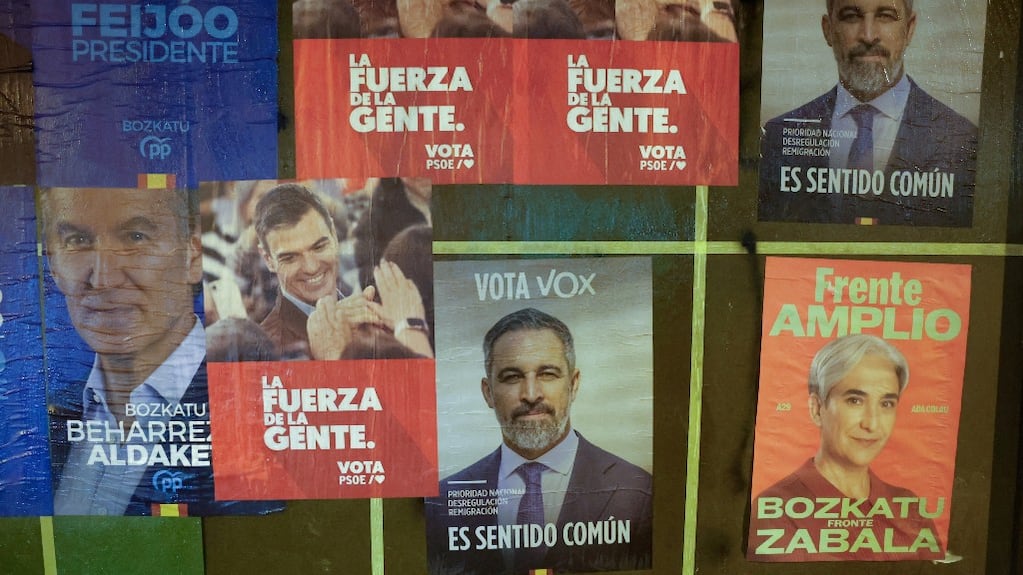
España celebra este domingo unas elecciones generales en las que el socialista Pedro Sánchez pone en juego su continuidad en el poder frente a una derecha favorita para terminar con ocho años de gobiernos progresistas.
Un total de 38.728.356 personas están habilitadas para votar, de las cuales más de 2,7 millones residen en el exterior. De ellas, más de medio millón viven en la Argentina.
El principal rival de Sánchez es el Partido Popular (PP), liderado por Alberto Nuñez Feijóo, que encabeza todas las encuestas con más del 31% de las intenciones de voto y con cuatro puntos de ventaja sobre el oficialista Partido Socialista Obrero Español (PSOE).
Sin embargo, según los sondeos, el PP no contaría con la mayoría absoluta en el Congreso y necesitaría pactar con la ultraderechista Vox para asumir el poder. De concretarse esta posibilidad, la derecha radical de Santiago Abascal, muy cercano a Javier Milei, accedería al gobierno por primera vez desde la muerte del dictador Francisco Franco en 1975.
Vox reúne cerca del 18% de las intenciones de voto, seis puntos más de lo que obtuvo en las elecciones de 2023. Más atrás, el Frente Amplio (izquierda), de la exalcaldesa de Barcelona Ada Colau, obtendría alrededor del 7%, según el promedio de varias encuestas.
En estos comicios se presentan también varias agrupaciones regionales y de distintas tendencias ideológicas, en especial en Cataluña, el País Vasco, Galicia y las Islas Canarias.
“Es una elección decisiva porque puede suponer un cambio no solo de ciclo político, sino un cambio de época”, dijo a TN la periodista y analista política española Marta Monforte.
¿Fin de ciclo?
Los españoles elegirán este domingo a 350 diputados y 209 senadores. Pero serán los diputados los encargados de elegir al jefe del gobierno español a propuesta del rey Felipe VI. En general, el monarca invita a formar un ejecutivo al candidato más votado o al que cree que podrá formar una coalición que le permita gestionar. No es una elección directa, como ocurre en la Argentina.
“Llevamos ocho años de un gobierno progresista de la mano del PSOE con aliados como Podemos en su momento, ahora Sumar y otras fuerzas arraigadas en la izquierda nacionalista o territorial. Si ganan las derechas, tanto el Partido Popular como Vox, supondría un cambio porque se presentaría por primera vez la posibilidad de que la extrema derecha española entre en un gobierno nacional”, dijo Monforte.
Hasta ahora, el PP y Vox solo han sellado pactos en comunidades autonómicas.
Si bien ninguno de los dos partidos ha admitido explícitamente la posibilidad de un acuerdo programático que le permita formar una coalición de gobierno, todo hace prever un cambio de timón bajo una alianza conservadora.
La ofensiva de Vox y la estrategia socialista
En un marco político crispado por el estallido de una crisis de vivienda y una emergencia migratoria en Ceuta y las Islas Canarias, desde Vox comenzó a ponerse en duda la legitimidad de los comicios.
“Si las elecciones son mínimamente limpias, España podrá salir del pozo profundo -al que nos hundió Sánchez y su banda que han convertido el PSOE en crimen organizado. Haremos desregulación, orden, ley y justicia y defensa de las fronteras”, vaticinó a TN el eurodiputado de Vox Hermann Tertsch.
Para el legislador europeo, “si Sánchez logra falsificar como Lula (en Brasil) un triunfo, entraremos en deriva hacia un régimen tiránico en la primera narcodictadura europea”. El presidente brasileño fue reelecto por otros cuatro años en el balotaje del 25 de octubre pasado, en unas elecciones consideradas limpias y justas por observadores internacionales.
Feijóo
NEWYou can now listen to Fox News articles!
Israeli Prime Minister Benjamin Netanyahu said Saturday that he was willing to temporarily relinquish power to Gadi Eisenkot, allowing his political rival to serve first as prime minister under a new rotating unity government.
In a statement posted on X, Netanyahu outlined a proposed power-sharing agreement between his Likud party and Eisenkot’s Yashar party that would see Netanyahu initially yield the premiership to his rival and serve as alternate prime minister before returning to the top post later in the term.
Netanyahu wrote in the social media post that he believes he should lead the Israeli government as head of the largest party, but said that «given the magnitude of the existential threat and the possibility that a government could be formed that isn’t able to deal with this danger,» his responsibility as a leader required that he «put everything aside.»
ISRAEL’S LEADING CONTENDER FOR PRIME MINISTER CLASHES WITH NETANYAHU OVER IRAN STRIKES
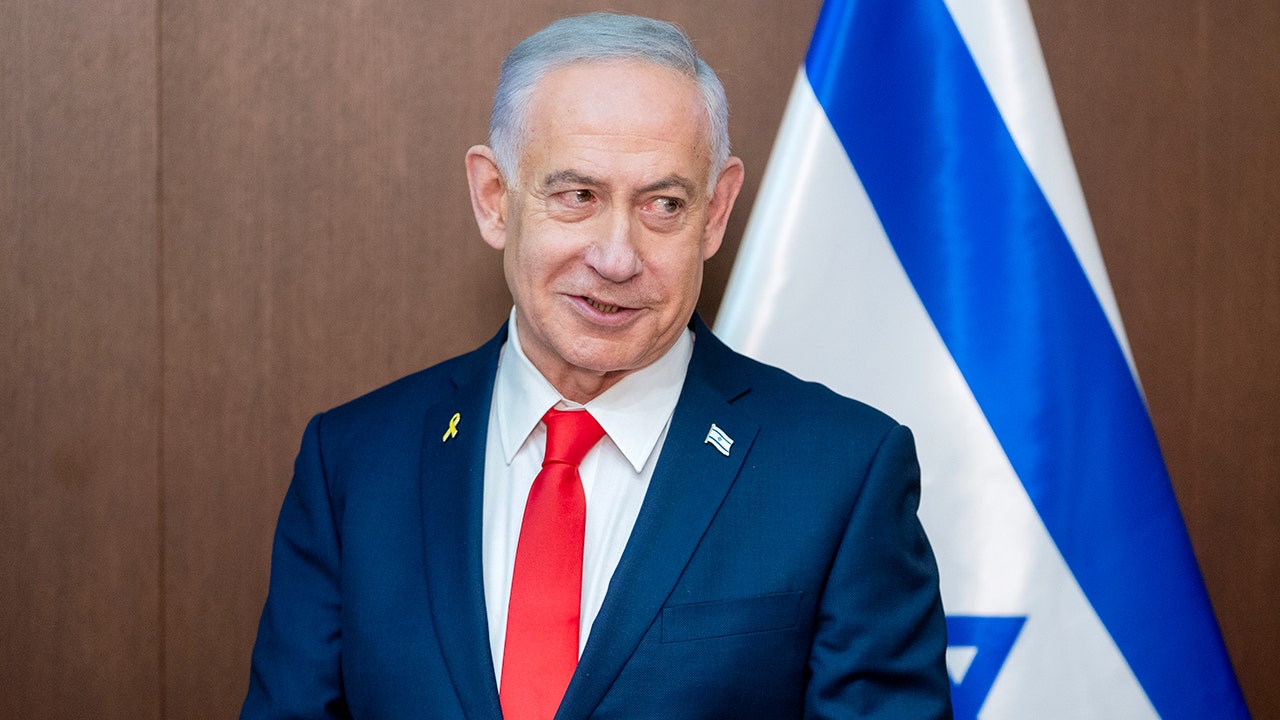
Israeli Prime Minister Benjamin Netanyahu proposed Saturday temporarily ceding power to political rival Gadi Eisenkot under a rotating unity government. (Nathan Howard – Pool/Getty Images)
The concession comes as Eisenkot — a former military chief — reportedly edges closer to forming an opposition-backed coalition that would oust Netanyahu from power.
Israel’s Oct. 27 legislative election left no bloc with a governing majority, leaving neither Netanyahu nor Eisenkot with a clear path to the premiership.
Eisenkot has since worked to turn an electoral opening into a governing coalition after Israeli President Isaac Herzog tasked him earlier this month with forming a government.
ISRAELI PRESIDENT TAPS NETANYAHU RIVAL TO FORM GOVERNMENT AS COALITION BATTLE LOOMS
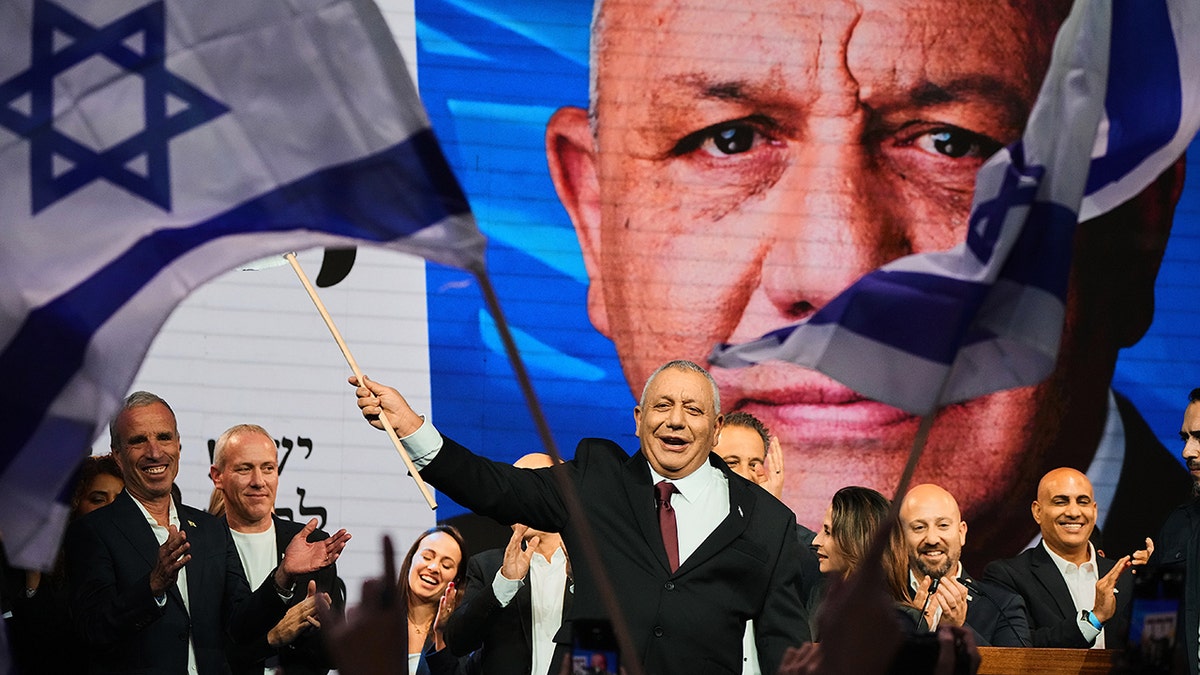
Gadi Eisenkot, leader of the Yashar («Straight») party, waves an Israeli flag onstage following the release of the first exit poll results in Israel’s general election in Tel Aviv, Israel, Wednesday, Oct. 28, 2026. (Ariel Schalit/AP Photo)
He has until Dec. 6 to finalize a coalition, with the possibility of a 14-day extension.
This week, Eisenkot gained momentum from potential partners — including The Democrats, a left-wing party, and the right-wing Yisrael Beiteinu party — boosting his odds of assembling a parliamentary majority.
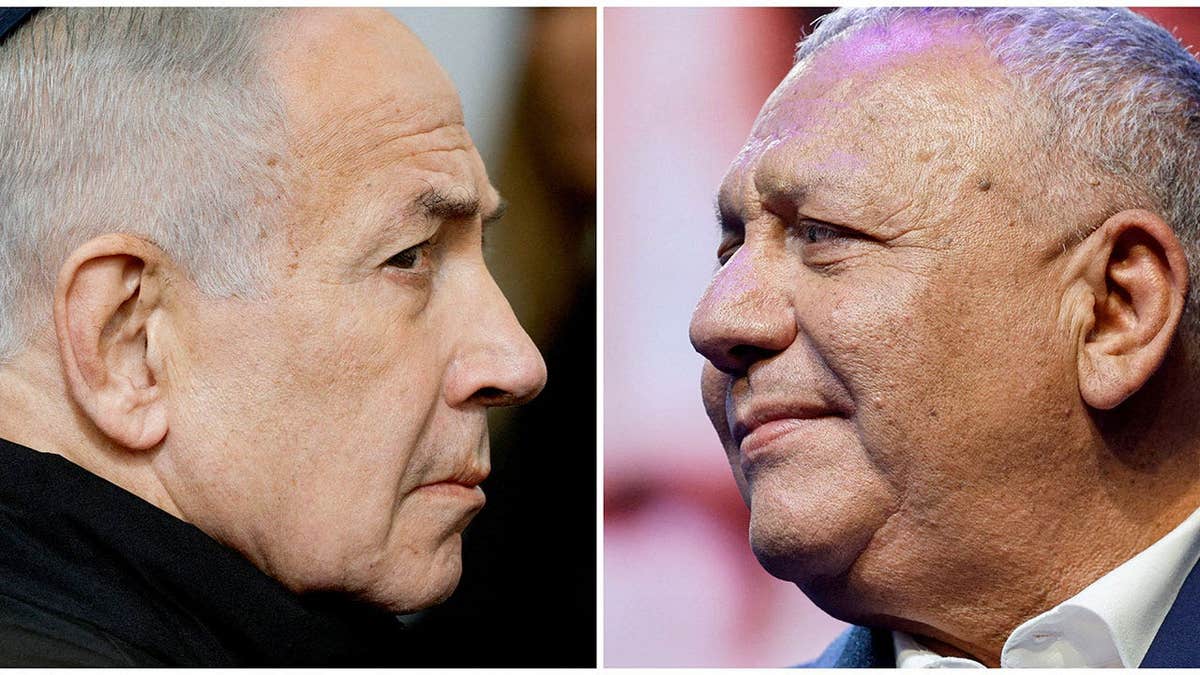
Israeli Prime Minister Benjamin Netanyahu offered to temporarily relinquish power to political rival Gadi Eisenkot as part of a proposed rotating unity government. (Amir Cohen/Reuters)
In response to Netanyahu’s proposal Saturday, Eisenkot said in a statement that his Yashar party’s negotiating team had been «trying to conduct a real, sincere, and accelerated negotiation» with Netanyahu’s Likud party but faced «refusal and evasion.»
He then invited Netanyahu to engage in serious negotiations with his party’s team on the «core lines and policy issues.»
Fox News Digital’s Efrat Lachter and Reuters contributed to this report.
world, benjamin netanyahu, politics, israel, middle east
INTERNACIONAL
Why Mamdani’s move to close infamous NYC jail could be ‘massive hit’ that reverberates for years: expert

Democratic New York City Mayor Zohran Mamdani announced that Rikers Island would be closed «once and for all» by 2032, a promise one crime expert said doesn’t add up and could release violent criminals back onto streets.
Mamdani pledged to replace the city’s largest jail with four smaller prisons across different boroughs, and corrections officers and criminal justice scholars have raised concerns that lowering the population of more than 6,000 inmates could carry lasting consequences.
Rafael Mangual, head of research for policing and public safety at the Manhattan Institute, told Digital there won’t be enough beds to accommodate a city of nearly 9 million people.
«If New York City gets this wrong, make no mistake, there will be a massive hit to public safety,» Mangual said.
MAMDANI IN HOT SEAT OVER POST MOURNING DEATH OF INMATE CHARGED WITH CALLOUS CRIME: ‘ABSOLUTELY SHAMEFUL’
The replacement jails in Manhattan, Brooklyn, Queens and the Bronx will have a capacity of 4,160 beds, with an additional 340 therapeutic beds for inmates with mental illnesses and other medical needs. They will be placed closer to public transit and courthouses.
Mamdani said the decision to push the closure of Rikers back by five years was because of «prior administration delays.» The city will also invest $146 million in support services.
The mayor’s office directed Digital to its Rikers Island closure plan and Mamdani’s remarks at a news conference last week, where he defended his position by saying, «We are making a conscious decision to advance a new model of a criminal legal system in our city, one that takes on that problem head-on.»
Mangual maintained the plan could lead to significant overcrowding and trigger more «violence and other kinds of contraband problems.»
«You can expect that the jails will continue to operate at 100% of capacity for as long as they exist if that project actually comes to fruition,» he said.
He added that the city’s jail population dropped below 4,000 in April 2020 during the COVID-19 pandemic. However, shootings and homicides spiked.
That year, there were 1,531 shootings, up 97% from 2019, and 462 murders, up from 319 in 2019, according to the New York City Police Department (NYPD).
HOUSE REPORT SAYS NYC PROSECUTORS TAILORED PLEA DEALS TO SHIELD ILLEGAL IMMIGRANTS FROM DEPORTATION
«The experiment is not going to be a pretty one, and that’s the thing that I think people need to be most concerned with,» he said. He added that Rikers had between 9,000 and 10,000 inmates during 2017 and 2018, which were some of the city’s safest years.
Despite the city seeing record-low murders and shootings so far this year, according to NYPD data, Mangual said other major crimes, like felony assaults, remain high.
«That’s a major problem that is only going to get worse,» he said.
He said previous efforts to bring down the jail population have posed additional risks to public safety, pointing to the city’s bail reform law and Manhattan District Attorney Alvin Bragg’s limits on low-level prosecutions that have made it easier to avoid jail.
«We certainly haven’t been able to get it down to where it is now without compromising public safety,» he said.
ILLEGAL IMMIGRANT SUSPECTS WITH LENGTHY CRIMINAL RECORDS ARRESTED IN STABBING OF OFF-DUTY NYPD DETECTIVE
Mangual said repeat offenders like Alexander Florentino could now be put back on the streets. Florentino, a homeless illegal immigrant, was arrested this month on a murder charge in the death of a 62-year-old woman inside her Chinatown apartment, one day after a judge released him without bail, according to the Department of Homeland Security (DHS) and court records.
Warning that reducing the jail population will only «erode the incapacitation benefits that incarceration provides,» Mangual said the city will be left with no other solutions.
«The idea that there’s an alternative to incarceration is one of the most misguided notions in criminal justice policy debates,» he said.
Rikers has faced years of controversy, with many inmates and activists criticizing harsh conditions, trial delays and limited access to family members and support services. The city’s goal is «to build a safer and more humane jail system,» according to a Nov. 20 press release.
But Mangual believes city officials still aren’t looking at the full picture, arguing that building multiple jails with the same systems, inmates and guards will not solve the problem and that some criminals are «simply too dangerous to coexist with the rest of society.»
«What they ought to have done was invest in refurbishing the jails that already existed, building new ones with adequate space, and then moving the inmate population around as required,» he said.
If the plan moves forward, Mangual said the city could see crime surge on a «much larger scale.»
«We’re already seeing what that could possibly look like when you have individuals who are out walking the streets with 30, 40, 50, 100 prior arrests, and they eventually kill somebody or shove somebody in front of a subway train,» he said.
Digital reached out to Bragg’s office for comment but did not receive a response before publication.
zohran mamdani, politics, new york city, blue city crime, immigration

Desapareció un joven de 18 años tras meterse al río en General Roca e imputaron a un instructor náutico

Pochettino toca fondo en el Manchester United: ‘El descenso se acerca’

Elecciones en España: se define la continuidad socialista o un giro a la derecha con la eventual irrupción de Vox en el gobierno

Con trabajo, pero pobres: el 72% de quienes tienen empleo no ganan lo necesario para cubrir la canasta básica

En un guiño al oficialismo, Macri se reunirá con Bullrich y ministros de Milei – Nexofin

A solas con Bruno Senna: cómo siente “la presencia de Ayrton”, su elogio a Franco Colapinto y la intimidad de la visita de Kimi Antonelli

Efecto reforma electoral: la suspensión de las PASO divide la estrategia de los “outsiders”

“Estoy preparada para ser presidenta”: fuerte desafío de Patricia Bullrich a Javier Milei

“Lo real es que estamos estancados”: el análisis de un economista tras la caída de la actividad

El juez retó a Chiqui Tapia y le subió el monto que debe pagar para salir del país

 POLITICA2 días ago
Efecto reforma electoral: la suspensión de las PASO divide la estrategia de los “outsiders”
- ECONOMIA2 días ago
Cerraron más de 50.000 kioscos en los últimos tres años y el sector perdió casi la mitad de sus locales
- POLITICA3 días ago
Presupuesto 2027: el oficialismo encamina el quórum en Diputados, pero persisten las diferencias por los fondos para discapacidad