INTERNACIONAL
Power Rankings: As Iran looms large, can the GOP keep the faithful?

It seems like there are two electorates in these midterms.
The first is frustrated with President Donald Trump and ready to reject Republicans. It includes growing numbers of independent, rural and Hispanic voters who say they’ll vote for a Democrat.
That’s what the latest round of House polling shows, including a survey last week that had Democrats up 11 points on the generic ballot, and Fox’s most recent national poll.
SCHOEN, COOPERMAN: DEMOCRATS COULD BE RIDING A MIDTERM WAVE. THESE NUMBERS SHOULD TERRIFY THE GOP
The second electorate is wavering on Republicans but won’t necessarily hand Democrats the Senate. These are the voters in the Midwest and a few other places. They say they prefer the Democrat or Republican in their states by a point or two at most.
That’s the right conclusion from most of the battleground Senate polling.
How could both things be true? In other words, if Democrats have such a wide lead in the House, won’t the Senate fall too?
Both are true, and a big lead in the House doesn’t necessarily translate to the Senate. These voters are all in the same electorate, and they only seem divorced from each other because the House and Senate maps are so far apart this year.
DEMOCRATS THINK A BLUE WAVE IS BUILDING. HERE ARE 3 FORCES THAT COULD STOP IT
The president’s declining approval rating and Democratic advantages on the issues will likely deliver them the House and possibly by many seats.
Those advantages have also allowed the blue team to play in a lot of Senate races that Republicans thought were unreachable, but only to the point of making them battlegrounds.
The road to a Senate majority goes through several states that Trump won by 11 points or more. Democrats can win any of these races. If Republicans turn out and stay loyal to their party, the climb for the left will be steep.
That’s why the Senate is a toss-up. Voters could give Democrats a majority and maybe with several seats to spare. They could also let the Republicans keep control.
We’ll find out in seven days.
In his 11-year political career, President Trump has triumphed over almost all the threats to his power. The exception was the coronavirus pandemic, which was the top issue for voters in the 2020 election and ushered in the Biden presidency.
It was also one of the few threats that Trump has faced from abroad.
This time, Trump and the Republicans face a new foreign opponent: Iran. The administration’s decision to start joint U.S.-Israeli military strikes against the nation in February has cast a shadow over the GOP.
VOTERS PREPARE TO WEIGH-IN ON TRUMP’S ECONOMY AS COSTS CONTINUE TO SURGE
First, it has impacted Trump’s approval rating, which will decide the fate of many congressional Republicans and has fallen since the war began. It was 44% in the last pre-war survey and sits at 36% now.
NOT EVEN SKY HIGH GAS PRICES OR THE IRAN WAR WILL STOP TRUMP SUPPORTERS VOTING MAGA
The war has also given Democrats advantages on the top issues. In Fox’s October survey, Iran played a role in four issues that more than two-thirds of voters said they were concerned about: inflation (85%), gas prices (83%), government leadership (79%) and the war in Iran itself (75%).
Most voters said they preferred the Democrats to handle those issues: 16 points on inflation, 12 points on gas prices, 11 points on leadership and 9 points on foreign policy.
Still, voters are not convinced that the Senate should change hands.
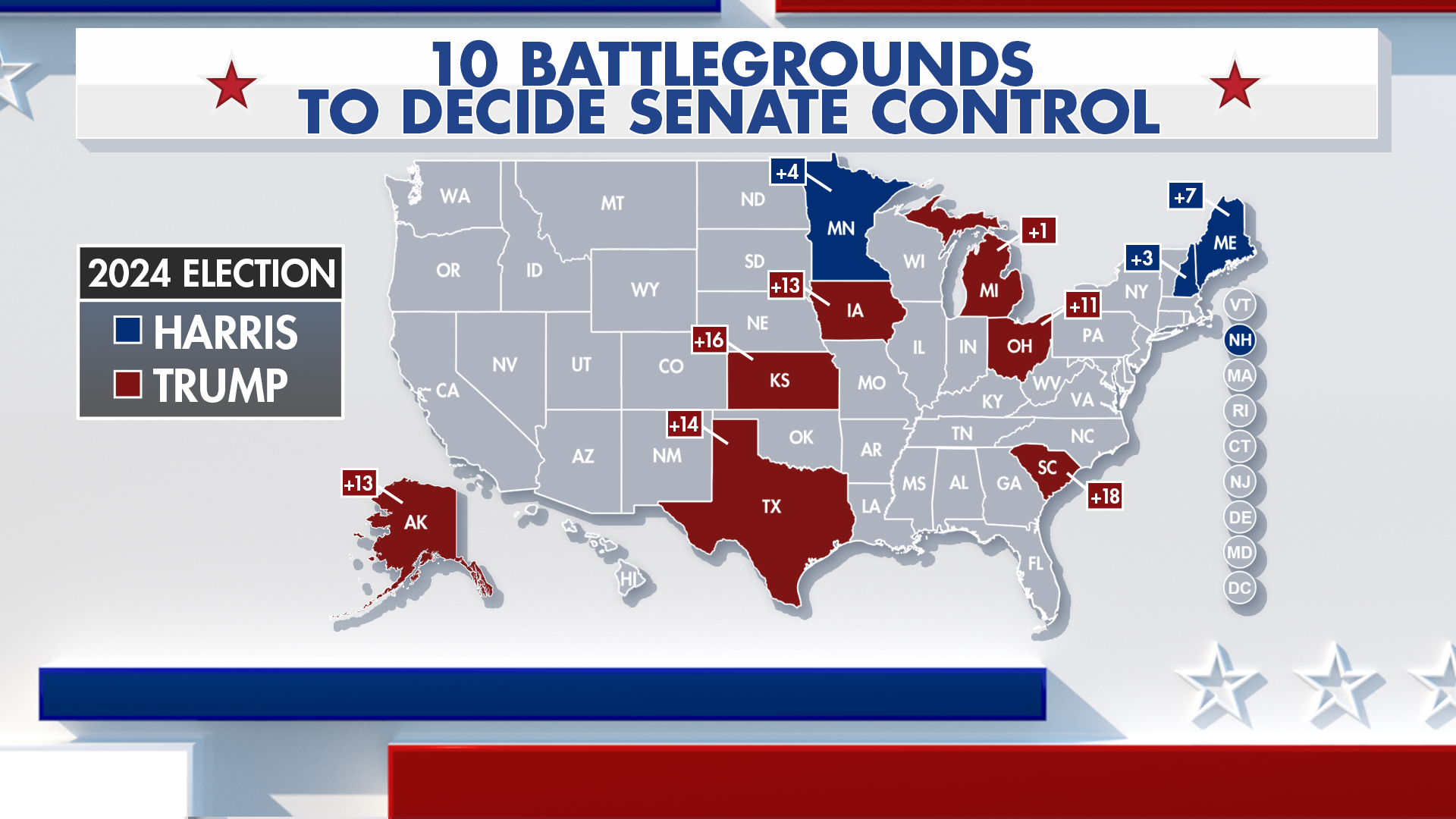
That comes down to the territory. Trump won seven of these 10 battleground states in 2024 and six of them by double digits. That includes Alaska, Iowa, Kansas, Ohio, South Carolina and Texas.
Democrats don’t need to win all of those states to take the Senate, but it’s hard to see how they get to 51 seats without at least two of them.
While former Democratic Senator Sherrod Brown leads in Ohio, the other states are close. Turnout, a polling error in either direction or both could decide them.
There are also a lot of undecided votes. In Alaska, Iowa and Kansas, three states with recent high-quality polling, an average of 10% of voters say they haven’t decided who they will support or won’t support the major candidates.
Any guess on how those voters will break at the ballot box is only a guess. All we know from prior results is that the overall electorate leans conservative, so the Democrats have the tougher assignment to bring them over to their side (or keep them at home).
There are far fewer undecided voters in Texas, where last week’s Poll showed a tied race at 49%-49%.
If Democrats only win two Trump-won battlegrounds, they’ll need to win three other races where former Vice President Harris delivered single-digit victories in 2024: Maine, Minnesota and New Hampshire.
Democrats are ahead in the latter two. Maine could go either way. While Democrats win its presidential races, it could just as easily be considered a Republican state when Susan Collins is on the ballot.
The final Power Rankings for 2026 feature three shifts in the Senate and 19 in the House. A tight gubernatorial race is also on the move.
Both parties are three seats short of a majority in this forecast. Democrats are favored in 48 seats and Republicans are ahead in 47 (they would control the Senate with 50 seats because the vice president breaks ties).
On a good night for Democrats, the party would win most or all the toss-ups, taking their majority up to 53 seats. In that scenario, other competitive states would also come into focus, including two rated Lean R, and on a great Democratic night, two more rated Likely R.
A good night for the Republicans would see them simply hold on to most of the states they already have, up to a ceiling of 52 seats. The party also has opportunities to flip a couple of states, including Minnesota and New Hampshire.
Three states are moving in this forecast.
In Ohio, Brown has enjoyed a lead in three polls this year, including last week’s survey, which had him five points ahead of Republican incumbent Sen. Jon Husted at 52%-47%.
Ohio voters are very familiar with Brown, having sent him to the Senate three times. That has made it hard for Husted to campaign on socialism and woke politics, themes that Republicans elsewhere see as their strongest cards to play.
Ohio moves from Toss-up to Lean D.
(«Lean D» means the Democrat has an edge but it’s still a highly competitive race. We define every ranking and the process for setting them on FoxNews.com.)
South Carolina’s Senate race is effectively open this year. Senator Darline Graham won her primary, but it was close: 52%-48%, and only after Trump rallied with her.
Graham has never faced a general electorate before, and she is about to do that in a poor issues environment both for her and the GOP.
Republicans view this as an uncomfortably close race.
South Carolina moves from Likely R to Lean R.
Mississippi is a Republican stronghold, but Trump’s decision to rally there over other deep red states is a sign that the party thinks it’s competitive.
GOP Senator Cindy Hyde-Smith faces Democratic District Attorney Scott Colom in a race where protein choice has become a breakout issue.
Mississippi moves from Solid R to Likely R.
Democrats are still likely to flip the House this November, and in this forecast, they’re predicted to take at least 223 seats.
Since a good night for the Democrats would see them take most of the toss-up races, they could end up with as many as 240 seats.
(On a great Democratic night, the party would pick up most of the Lean R districts as well, taking them as high as 252 seats.)
Republicans have 195 seats in their columns. A good night for them would take that total up to around 212. That’s six short of a majority, but enough to make life difficult for the next Democratic House Speaker, who would have to balance the demands of the moderate and far-left wings of the party.
Nineteen more races have shifted in the Democrats’ direction this week, all on the same themes outlined in the last House update: national and district polling, top-of-the-ticket strength and rural voter erosion.
The earliest-closing districts on election night will give some sense of the House’s future. Keep an eye on Kentucky’s 6th district, which covers Lexington and a large central area of the state. Trump won here by 15 points in the last presidential election. Thanks to a combination of left-leaning college voters and farmers grappling with higher costs, it looks close this cycle. The district moves from Lean R to Toss-up.
Finally, Ohio’s gubernatorial race is also on the move. The campaign between Democrat Amy Acton and Republican Vivek Ramaswamy was the top story in politics last week after Ramaswamy ran an ad featuring Acton’s mother, who called her daughter a liar.
Acton has been estranged from her mother since age 12, when she says she and her brother left her family home because her mother’s husband was sexually abusing her. Acton’s brother now appears in a response ad discussing their family history.
This ratings change is less about the response to the ad (Ramaswamy and President Trump are supportive of the commercial; most others including Husted and Governor Mike DeWine are against it) than it is about the fact that the Ramaswamy campaign felt the need to run it.
While Ramaswamy sat only two points behind Acton in last week’s Fox poll, he’s an average of seven points behind in other high-quality polls since September.
The businessman and onetime presidential hopeful has struggled in favorability ratings throughout his political career. This ad is unlikely to help.
The Ohio governor’s race moves from Toss-up to Lean D.
Fox News’ special coverage of the 2026 midterm elections begins at 6pm ET next Tuesday, Nov. 3, anchored by Bret Baier and Martha MacCallum. Tune in for the latest race calls and projections for control of the House and Senate from the Decision Desk.
power rankings, midterm elections, politics, senate, fox news poll












INTERNACIONAL
UK charges 2 men in suspected Iran-linked incident at RAF Fairford after US bombers pulled

NEWYou can now listen to Fox News articles!
British prosecutors charged two men Tuesday under the U.K.’s National Security Act following an incident at RAF Fairford, a key base used by the U.S. military’s heavy bombers.
Mohmed Abdulkarim, 24, of London, was charged with assisting a foreign intelligence service. Nouman Essghir, 24, was charged with entering a prohibited place for a purpose prejudicial to the United Kingdom, according to the Crown Prosecution Service.
British counterterrorism police said they believe the foreign country Abdulkarim was assisting was Iran, Reuters reported.
RUBIO CONFIRMS ‘FOREIGN ACTOR’ INVOLVED IN UK TERROR PLOT
FAIRFORD, ENGLAND – JULY 25: A B1 Bomber at RAF Fairford on July 25, 2026 in Fairford, England. Iran’s Islamic Revolutionary Guard Corps (IRGC) has declared RAF Fairford in Gloucestershire a «legitimate target» after U.S. Air Force B-1B Lancer bombers used the British base to launch defensive bombing missions against Iranian military targets. (Photo by Matthew Horwood/Getty Images)
The charges follow a September incident near RAF Fairford in Gloucestershire, England. British police arrested five men outside the base in the early hours of Sept. 27, according to Reuters.
The base had been used by U.S. bombers to carry out strikes against Iran. About a dozen B-1 bombers were among the aircraft later withdrawn from RAF Fairford and returned to their home stations in the United States on security grounds, according to previous Fox News reporting.
FOILED TERROR PLOT AT BOMBER BASE SIGNALS WIDER THREAT TO US MILITARY INSTALLATIONS: EXPERT

The main gate of RAF Fairford is pictured on September 27, 2026 in Fairford, United Kingdom. Police have declared a major incident after evacuating residents from their homes in Whelford, a village about one mile from RAF Fairford, a military base that hosts U.S. Air Force bombers involved in the Iran conflict. Several men have been arrested on suspicion of offences under the explosives act, and the Army’s specialist explosive ordnance disposal team are examining a number of vehicles in the area. (David Bown/Getty Images)
RAF Fairford serves as a key European operating location for U.S. heavy bombers and has supported American military missions.
Frank Ferguson, chief crown prosecutor for the CPS Special Crime and Counter Terrorism Division, said the agency decided to prosecute the two men following a «complex» counterterrorism investigation.

Armed police maintain road blocks and security checks around RAF Fairford on September 28, 2026 in Fairford, England. (Leon Neal/Getty Images)
«We will continue to work closely with our partners as this complex investigation continues,» Ferguson said.
Both men were expected to appear Tuesday at Westminster Magistrates’ Court.
The CPS emphasized that the charges are not findings of guilt and that both defendants have the right to a fair trial.
world, united kingdom, national security, counter terrorism, iran, military
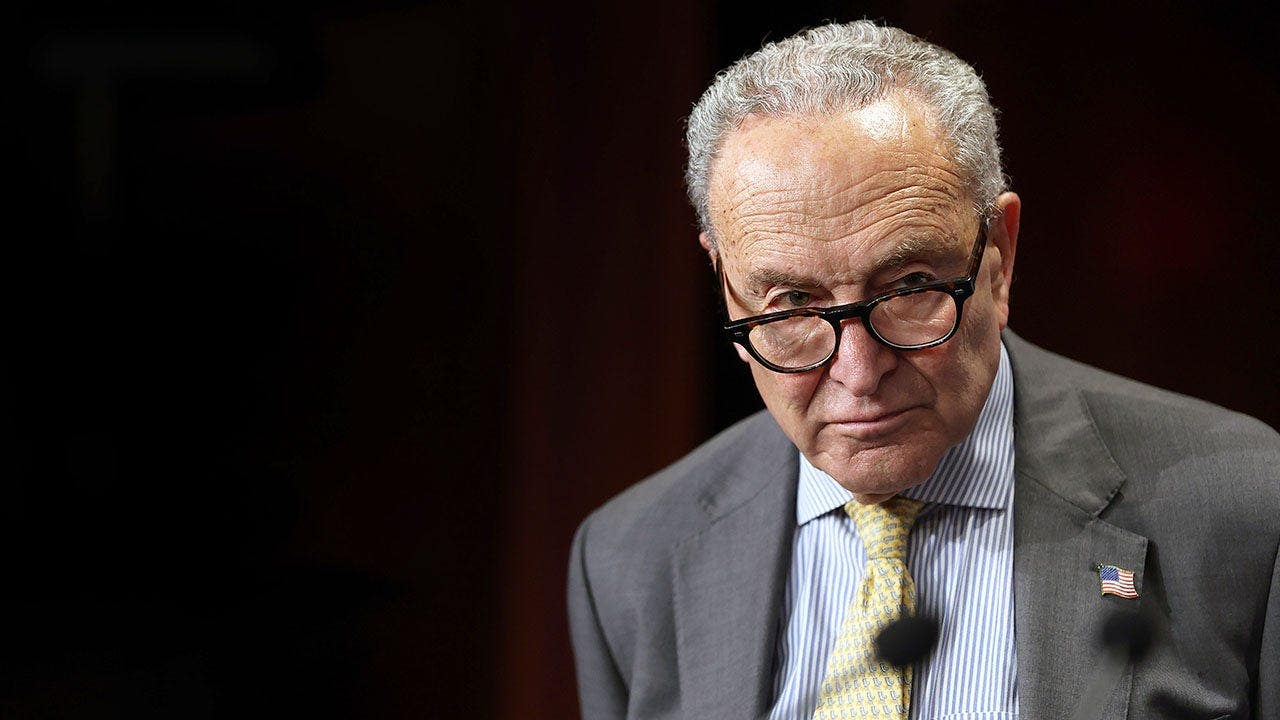
National Democrats are getting aggressive in the homestretch of this election cycle, sending money and party figureheads to a state that, for decades, has been out of reach.
Mississippi has been a Republican stronghold for the GOP in the Senate since the 1980s, but in a political environment that is proving tough for incumbents of the party in power, Democrats appear to smell blood in the water.
But Republicans aren’t buying the last-minute play in the Deep South, arguing that it’s a reach, at best, to make the race competitive.
DEMOCRATS SEE NEW CHANCES TO FLIP RED STATES — BUT A $400M GOP SPENDING ADVANTAGE COULD DERAIL THEIR PLANS
«Largely, I think they’re just throwing s— at the wall at this point,» a GOP political operative told Digital.
The Senate Majority PAC, a political action committee with close ties to Senate Minority Leader Chuck Schumer, D-N.Y., reserved $1.2 million in advertising in the state to boost Scott Colom, a district attorney mounting a bid against Sen. Cindy Hyde-Smith.
And major figures in the Democratic Party, like former Vice President Kamala Harris and former Transportation Secretary Pete Buttigieg, have also made the trip or are set to appear in the state — Buttigieg is scheduled to hold a rally on Mississippi’s Gulf Coast on Tuesday.
Jake Monssen, Hyde-Smith’s campaign manager, told Digital in a statement, «This is simply Washington insiders making a last-ditch effort to give life to Scott Colom’s failing campaign.»
«Scott is bankrolled by the radical left because he is in lockstep with their agenda,» Monssen said. «He supports tax increases, open borders, taxpayer benefits for illegal immigrants, and sex change surgeries for minors.»
Like in other races across the Senate map, Colom has a fight with history to contend with. Mississippi has not elected a Democrat to the Senate since 1982, and the Magnolia State has consistently supported President Donald Trump.
TRUMP-BACKED SENATOR ADMITS GOP FACES NIGHTMARE SCENARIO IN STATE REPUBLICANS HAVEN’T LOST IN 90 YEARS
But Colom believes that the ground operation he’s developed while national Democrats stayed away from the state is what would put him over the top against Hyde-Smith, not the last-minute support.
«It could be enough,» Colom told Digital. «I mean, the thing is, the people of Mississippi built this campaign.»
Colom went on the offensive against Hyde-Smith, arguing that she «refuses to debate, she doesn’t campaign.»
«Because of that, I was able to build momentum on the ground, which means now that it’s getting attention, now that it’s getting resources, I’m able to take advantage of it in a way that other candidates couldn’t,» he said.
Republicans aren’t resting on their laurels in the state, however. The Senate Leadership Fund, a political action committee closely aligned with Senate Majority Leader John Thune, R-S.D., teed up a seven-figure ad buy there in response to Democrats’ spending.
And Trump appeared in Corinth, Mississippi, on Monday to rally for Hyde-Smith. He made a similar pitch to voters that he’s done at every rally stop this midterm cycle: pretend he’s on the ballot.
«In this election, if you would, I’m asking you to pretend that I’m on the ballot,» Trump said. «And the reason is that when I’m on the ballot, exactly 49% more people show up.»
Jonathan Klingler, a professor of political science at the University of Mississippi, told Digital that the increased spending and national attention to a once-sleepy race have generated the «talking point of Mississippi as evidence for momentum and building a Democratic wave.»
THUNE MAKES BOLD PREDICTION ABOUT REPUBLICANS’ SENATE CHANCES AS GOP PULLS MILLIONS FROM KEY RACES
«So at least I’m not — I can’t say whether that’s the intent of the funding here or visits, but that is the effect,» he said.
There are also voter demographics that both Hyde-Smith and Colom have to contend with. Mississippi has the highest share of Black voters in the country at nearly 40% of the electorate. In order for Colom and «Democrats to be successful, they simply have to peel off a larger share of White voters,» Klingler said.
There’s another storyline underneath the headlines of this race, too.
Hyde-Smith and Colom have a history dating back to the Biden administration, when the lawmaker blocked his nomination to serve as a district court judge in Mississippi.
«Instead of saving himself the embarrassment of being denied a job twice by Hyde-Smith, Colom is running a campaign backed by Chuck Schumer, funded by George Soros, and built on pro-transgender and other far-left policies,» National Republican Senatorial Committee spokeswoman Bernadette Breslin told Digital.
That’s not Colom’s motivating factor, however. He had just left Trump’s northeast Mississippi rally where he spoke to voters about their main concerns, «everybody I talked to, gas prices, grocery prices,» and tariffs, he said.
But Colom said his personal dispute with Hyde-Smith was not his primary motivation.
«I’ll tell you, as a Christian, I forgive her for that. That’s not a motivating factor for me,» Colom said. «I mean, as a district attorney, I have to prosecute cases where people lost their loved ones to gun violence. So, you know, and I’ve seen them forgive that person.»
«So that’s not the motivating factor,» he continued. «For me, it’s really the betrayal of the America First movement, right? Like she was supposed to help President Trump get lower grocery prices. Well, she betrayed us. We’re not getting lower grocery prices.»
politics, midterm elections, mississippi, chuck schumer, donald trump
INTERNACIONAL
“Importa más el momento que la duración”: por qué hacer ejercicio luego de comer puede reducir el pico de glucosa en sangre, según la ciencia

La mayoría de las personas asocia el control de la glucosa después de comer con una caminata larga o una visita al gimnasio. Sin embargo, distintas investigaciones sobre actividad física posprandial plantean que unos pocos minutos de movimiento, hechos en el momento indicado, pueden modificar el aumento de azúcar en sangre.
Después de una comida, quedarse sentado es una reacción habitual. Sin embargo, un ensayo controlado aleatorizado publicado en Experimental Physiology halló que un minuto de subir y bajar escaleras a baja intensidad redujo cerca de un 40 % el aumento de glucosa registrado a los 60 minutos, en comparación con permanecer sentado.
El estudio, incluyó a 30 adultos jóvenes sin diabetes. Los participantes hicieron dos pruebas por la tarde, separadas por no más de siete días: en ambas tomaron una bebida con 75 gramos de dextrosa, pero en una permanecieron sentados y en la otra subieron y bajaron 32 escalones durante un minuto, a un ritmo cómodo elegido por ellos mismos.
“El momento resultó importar más que la duración”, dijo William A. Wallace, en su cuenta de X. El especialista en biología humana y tecnología de la salud planteó que una caminata o un breve tramo de escaleras después de comer puede aportar más al control de la glucosa que una sesión más extensa hecha mucho más tarde.
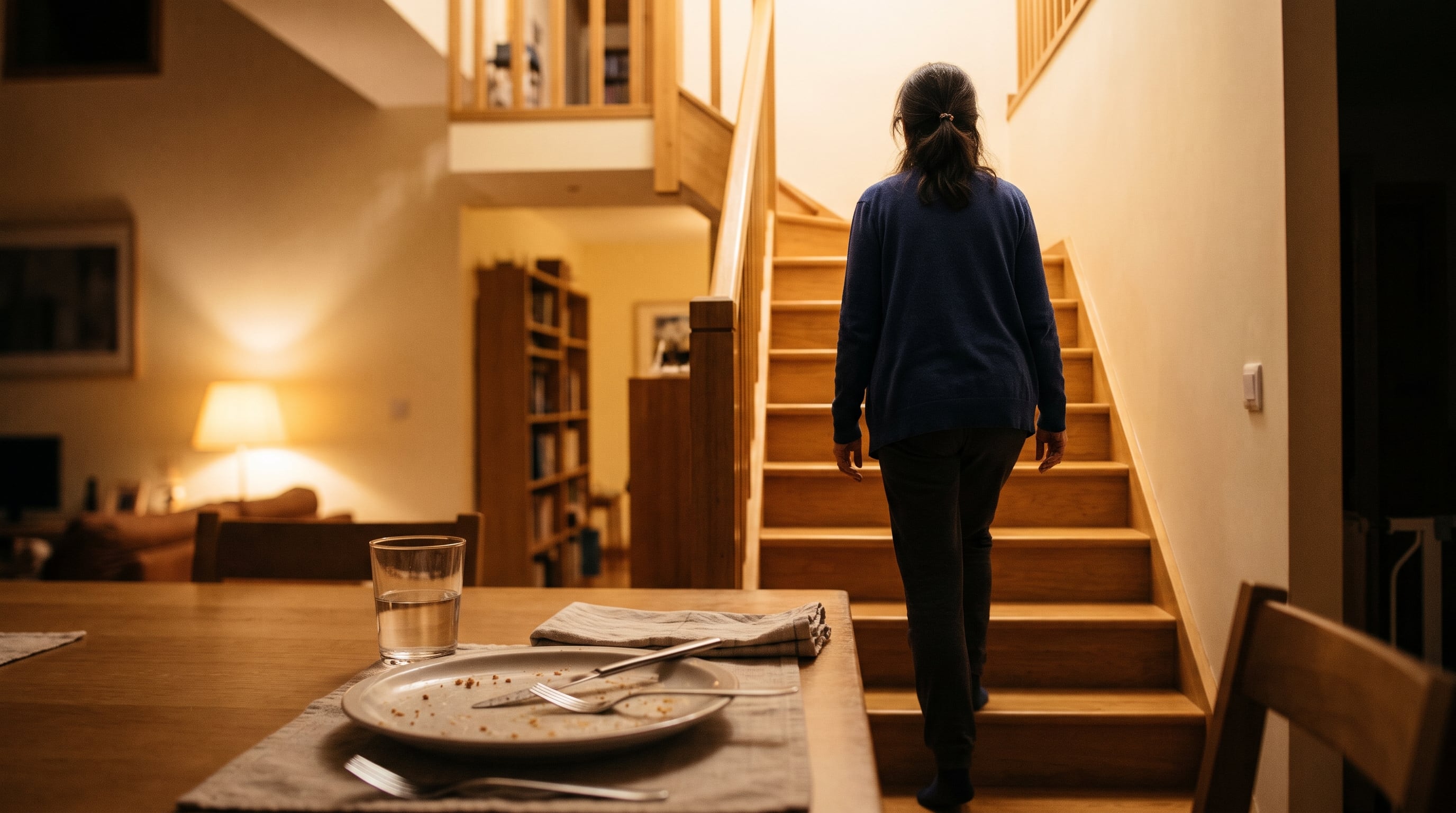
En el ensayo, la glucemia aumentó en promedio 2,5 mmol/L a los 60 minutos en la condición con escaleras, frente a 4,3 mmol/L en la condición sentada. El área bajo la curva y el área incremental bajo la curva también fueron menores tras ese único minuto de movimiento.
Los participantes calificaron el esfuerzo en 1,9 sobre 10 en la escala de Borg modificada. La frecuencia cardíaca máxima durante la actividad fue de 116 latidos por minuto, equivalente al 61 % de la frecuencia cardíaca máxima estimada. El protocolo se realizó después de las 17:00 y el ejercicio comenzó 57 minutos después de beber la solución de dextrosa, un punto pensado para coincidir con el pico previsto de glucosa.
El estudio nocturno midió el efecto hasta dos horas después

Los investigadores tomaron muestras de glucosa al inicio y a los 30, 60, 70, 80, 90 y 120 minutos. La diferencia entre las condiciones apareció luego de la sesión de escaleras: los valores fueron más bajos a los 60 y 70 minutos, mientras que la distancia entre los grupos se redujo a los 80 minutos y prácticamente desapareció a los 90 y 120 minutos.
La investigación fue diseñada como un ensayo cruzado aleatorizado, por lo que las mismas 30 personas participaron tanto de la condición sentada como de la de escaleras. El grupo estuvo compuesto por 13 hombres y 17 mujeres, con una edad media de 29 años. Todos se declararon sanos y ayunaron al menos cinco horas antes de cada prueba.
Los autores señalaron que el estudio evaluó una bebida de glucosa, no una comida completa, y que solo incluyó adultos jóvenes sin diabetes. Por eso, todavía debe determinarse si el resultado se mantiene con comidas habituales, en jornadas sucesivas o entre personas con alteraciones en el control de la glucosa.

El artículo indicó que las respuestas de glucosa después de comer suelen ser mayores al final del día que por la mañana. En ese contexto, un minuto de actividad a intensidad ligera produjo una reducción que los autores describieron como sustancial en el cambio de glucemia desde el inicio hasta los 60 minutos.
La relación entre el horario de la actividad y la glucosa fue evaluada también en una revisión sistemática con metaanálisis publicada en Sports Medicine y citada por los Institutos Nacionales de Salud de Estados Unidos (NIH).
El trabajo reunió ocho ensayos cruzados aleatorizados, con 30 intervenciones y 116 participantes. De ese total, 47 tenían diabetes tipo 2 y 69 no tenían ese diagnóstico. Los estudios compararon los efectos de ejercitarse antes de comer, después de comer y permanecer sin actividad.

El análisis encontró que la actividad física posterior a la ingesta redujo más las subidas de glucosa que el ejercicio previo a una comida y que una condición de reposo. Hacer ejercicio antes de comer, en cambio, no logró una reducción significativa de la glucosa posprandial frente a no hacer actividad.
El intervalo fue otro dato relevante. Los autores observaron que, a menor tiempo entre el final de la comida y el comienzo del ejercicio, mayor era el efecto sobre la glucosa. La revisión concluyó que caminar u otra actividad física realizada lo antes posible después de comer tuvo un resultado más favorable que la misma práctica después de una espera prolongada.
Una revisión sistemática con metaanálisis publicada en julio de 2026 en Reviews in Endocrine and Metabolic Disorders aportó resultados en adultos con diabetes tipo 2. El trabajo reunió 17 ensayos cruzados y concluyó que la actividad física aguda posterior a las comidas redujo la glucosa media durante 24 horas, el tiempo fuera del rango objetivo y la variabilidad glucémica. Según el análisis, esos efectos se mantuvieron entre los distintos tipos de movimiento evaluados.

Tres minutos de escaleras redujeron glucosa e insulina
La duración mínima necesaria para obtener un resultado también fue estudiada en una investigación publicada en Nutrition, Metabolism & Cardiovascular Diseases. El trabajo incluyó a 30 adultos jóvenes sanos, 18 hombres y 12 mujeres, reclutados en el área de la Universidad Estatal de San Diego.
Cada participante realizó cuatro pruebas de tolerancia oral a la glucosa: una de reposo y otras tres que sumaron uno, tres o diez minutos de subir y bajar escaleras. En todas las jornadas tomaron 75 gramos de dextrosa disueltos en agua y utilizaron una escalera de 21 escalones.
El ritmo fue elegido previamente por cada participante entre 90 y 110 pasos por minuto, con un metrónomo para mantenerlo estable. Las pruebas se hicieron por la mañana, tras un ayuno nocturno de al menos diez horas. Las sesiones de diez, tres y un minuto comenzaron 18, 25 y 27 minutos después de terminar la bebida, respectivamente.

Los resultados mostraron que tres minutos de escaleras redujeron la glucosa y la insulina, mientras que un minuto no produjo una diferencia significativa frente a la condición de reposo. El aumento de glucosa fue 15,37 mg/dL menor tras la sesión de tres minutos, y el de insulina, 2,589 μIU/dL menor.
Diez minutos produjeron una reducción mayor: 22,69 mg/dL menos de glucosa y 6,11 μIU/dL menos de insulina. Esa fue, además, la única sesión que mostró una mejora significativa del índice de sensibilidad a la insulina.
Los autores no encontraron cambios en la capacidad antioxidante total con ninguno de los tres tiempos de ejercicio. Tampoco detectaron diferencias entre hombres y mujeres en los cambios de glucosa, insulina, sensibilidad a la insulina o capacidad antioxidante.
El estudio advirtió que se trató de un análisis exploratorio de datos secundarios y que sus resultados deben interpretarse con cautela. También señaló que la bebida con 75 gramos de dextrosa no reproduce una comida común, que suele incluir grasas y proteínas.
ejercicio en casa,elevación de talones,envejecimiento activo,equilibrio físico

UK charges 2 men in suspected Iran-linked incident at RAF Fairford after US bombers pulled

Últimas horas para inscribirse al “Encuentro con los jóvenes” de León XIV: los artistas, los horarios y todas las actividades

Schumer, Dems are quietly betting big on one sleeper race in the Deep South

El romance entre Tom Brady y una reconocida supermodelo: el detalle de su vida que los unió

El juego propio de Gerardo Zamora, el aliado de Cristina Kirchner que suena como alternativa a Kicillof para 2027

Paraguay busca cerrar antes de fin de año la negociación con Brasil por la energía de Itaipú

Escándalo con Sancor Salud: Cuotas millonarias por un servicio nefasto que abandona a los pacientes en urgencias

CFK, Axel Kicillof, Sergio Massa y otros referentes del PJ celebraron el triunfo electoral de Lula da Silva

El riesgo país volvió a superar los 700 puntos y la volatilidad internacional golpeó a los bonos argentinos

Julián Álvarez le dio el triunfo al Atlético Madrid y terminó con otra extensa racha negativa: el gesto de los fanáticos

 POLITICA2 días ago
CFK, Axel Kicillof, Sergio Massa y otros referentes del PJ celebraron el triunfo electoral de Lula da Silva
- DEPORTE3 días ago
Julián Álvarez le dio el triunfo al Atlético Madrid y terminó con otra extensa racha negativa: el gesto de los fanáticos
- POLITICA3 días ago
Javier Milei ratificó su intención de buscar la reelección en 2027: “No veo a los argentinos votando para atrás”