INTERNACIONAL
Buscaban a una mujer desaparecida y encontraron sus restos en la cocina de la casa de su novio: el caso del “Poeta Caníbal”

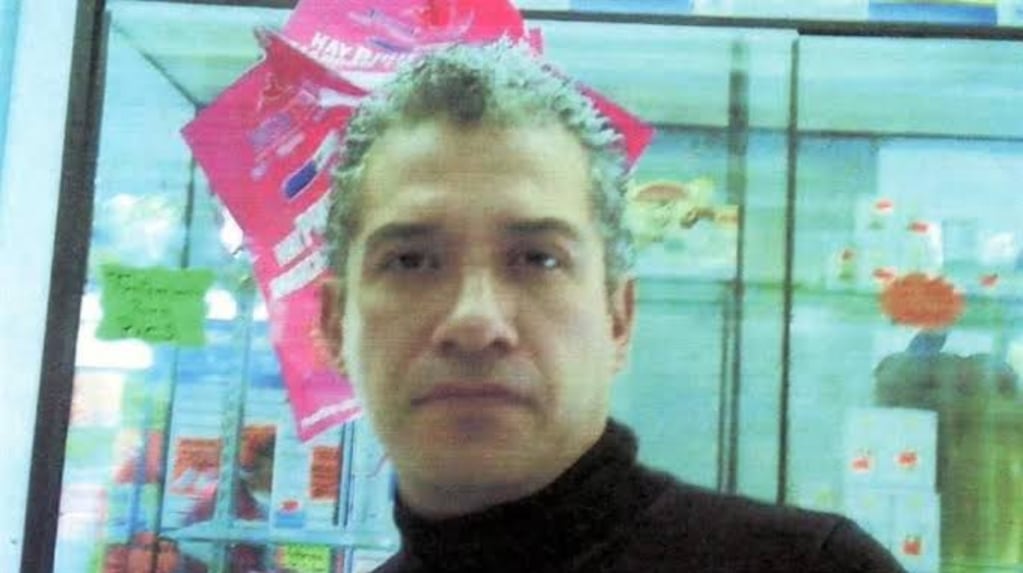
El 8 de octubre de 2007, agentes de la Policía de Ciudad de México ingresaron a un departamento de la colonia Guerrero en busca de una mujer de 32 años, Alejandra Galeana Garavito, que llevaba varios días desaparecida.
La propiedad allanada pertenecía a José Luis Calva Zepeda, un escritor de 38 años que mantenía una relación con ella. Si bien no había sospechas firmes sobre lo que había pasado con Alejandra, lo que encontraron en ese lugar estaba lejos de lo que se habían imaginado.
Al recorrer la casa, los oficiales encontraron restos humanos distribuidos en distintos ambientes. En la cocina, había una olla con partes de un cuerpo y una sartén con restos de carne cocinada. Estos hallazgos abrieron la posibilidad de que se tratara un caso de canibalismo y pusieron a Calva Zepeda en el centro de una investigación perturbadora.
El poeta caníbal
José Luis Calva Zepeda nació el 20 de junio de 1969 en Ciudad de México y, según detallan medios de ese país, vivió una infancia compleja. Su padre murió cuando él tenía dos años y su madre tuvo que hacerse cargo de él y sus cinco hermanos.
Durante su infancia, vivió situaciones violentas y abusos por parte de su mamá, lo cual lo hizo escaparse de su casa a los seis años. A partir de ese momento, estuvo en la calle y comenzó a robar y a consumir drogas.
Para el 2007, Calva Zepeda tenía 38 años y se presentaba como escritor, poeta y dramaturgo. También había trabajado como actor y taxista previamente. Antes de que su nombre apareciera en las noticias policiales, escribía obras de teatro, poesía y relatos de terror.
Entre sus escritos había una novela inconclusa titulada Instintos caníbales o 12 días, un detalle que llamó la atención de los investigadores y de la prensa después del hallazgo en su departamento.
La investigación sobre él comenzó después de que el 5 de octubre de 2007, la familia de Alejandra Galeana Garavito denunciara su desaparición. Ella tenía 32 años, era madre de dos hijos y trabajaba en una farmacia. Según sus seres queridos, ella había dejado de responder las llamadas, por lo que no podían ubicarla.
Tres días después, las primeras averiguaciones llevaron a los policías hasta el departamento de Calva Zepeda, ubicado en la colonia Guerrero, en el centro de Ciudad de México.
En cuanto los agentes ingresaron a la casa, encontraron los restos de la mujer distribuidos en distintos sectores: parte del cuerpo estaba en un placard, una pierna había sido guardada en la heladera y uno de los brazos estaba en una olla sobre la cocina.
Los investigadores también hallaron carne cocinada en una sartén y otros restos en el lugar. Los análisis permitieron establecer que parte de esos tejidos correspondía a la víctima. De esta manera, comenzó a investigarse la hipótesis de que el hombre hubiera cocinado y comido partes de su cuerpo.
Poco después, Calva Zepeda reconoció ante la fiscalía haber asesinado a su pareja y haber cocinado algunos de sus restos, pero negó haberlos ingerido. Según su versión, los había preparado para dárselos a sus perros.
Los indicios encontrados en la cocina y las declaraciones del acusado instalaron la sospecha de canibalismo, aunque no se llegó a una sentencia judicial que estableciera definitivamente que hubiera comido carne humana.
En el avance de la causa, la fiscalía empezó a analizar si Calva Zepeda podía estar relacionado con otros asesinatos de mujeres.
Uno de los casos que despertó sospechas fue el de Verónica Consuelo Martínez Casarrubias, una expareja del escritor que había desaparecido en 2004. Su familia lo señaló por su posible responsabilidad en los hechos.
Los investigadores también examinaron una posible conexión con otro homicidio ocurrido en Ciudad de México. La similitud de algunos elementos de los casos alimentó la hipótesis de que el escritor pudiera haber atacado a más mujeres. Por ello, la prensa lo apodó como “Poeta Caníbal”.
Un final inesperado
Calva Zepeda fue detenido el 8 de octubre de 2007, el mismo día en que la Policía entró a su departamento. Durante el operativo policial, intentó escapar y sufrió lesiones al caer desde una ventana y ser atropellado por un taxi. Después recibió atención médica y quedó bajo custodia.
El 31 de octubre, un juez resolvió que había elementos suficientes para procesar a José Luis Calva Zepeda por el homicidio de Alejandra y delitos relacionados con el tratamiento de los restos humanos. Además, el magistrado dispuso que continuara detenido bajo prisión preventiva mientras avanzaba la causa.
Sin embargo, el caso tuvo un desenlace inesperado el 11 de diciembre de ese mismo año, cuando Calva Zepeda fue encontrado muerto en su celda del Reclusorio Oriente, en Ciudad de México. Según la versión oficial, se había ahorcado con un cinturón.
Su familia cuestionó inicialmente esa explicación y planteó la posibilidad de que hubiera sido asesinado por otros internos. A pesar de ello, las autoridades informaron que la autopsia determinó que la causa de muerte había sido asfixia por ahorcamiento y descartaron iniciar una investigación por homicidio.
canibalismo












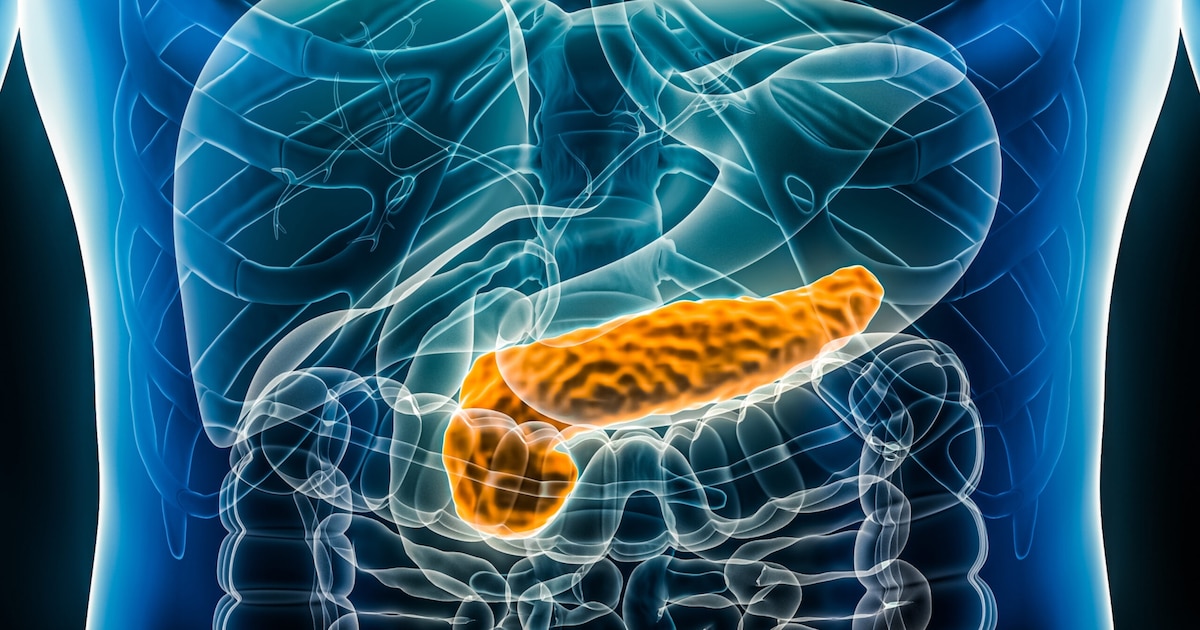
Una vacuna experimental contra el cáncer de páncreas logró activar una respuesta del sistema inmunitario en el 98,9 % de los pacientes evaluados, según un ensayo clínico de fase 2 publicado en Nature Medicine. El estudio todavía no demostró de forma concluyente que el tratamiento evite las recaídas en todos los casos, pero detectó señales favorables en grupos específicos de pacientes.
La vacuna se llama camupepimut y fue probada en 144 personas que habían recibido cirugía y quimioterapia por adenocarcinoma ductal de páncreas, la forma más frecuente de este cáncer. Al iniciar el ensayo, ninguno tenía signos visibles de enfermedad en los estudios por imágenes.
El cáncer de páncreas es uno de los tumores más difíciles de tratar. Incluso después de una operación y de la quimioterapia, puede reaparecer. Algunas estimaciones indican que la recaída ocurre en hasta ocho de cada diez pacientes.
Según se detalla en una nota reciente de Infobae, En 2024, el cáncer de páncreas causó más de 530.000 nuevos diagnósticos y cerca de 490.000 muertes en el mundo, según la Organización Mundial de la Salud. Aunque ocupa el puesto 12 entre los tumores más frecuentes, es la sexta causa de muerte por cáncer y uno de los de peor pronóstico.
La vacuna busca entrenar a las defensas contra una mutación frecuente
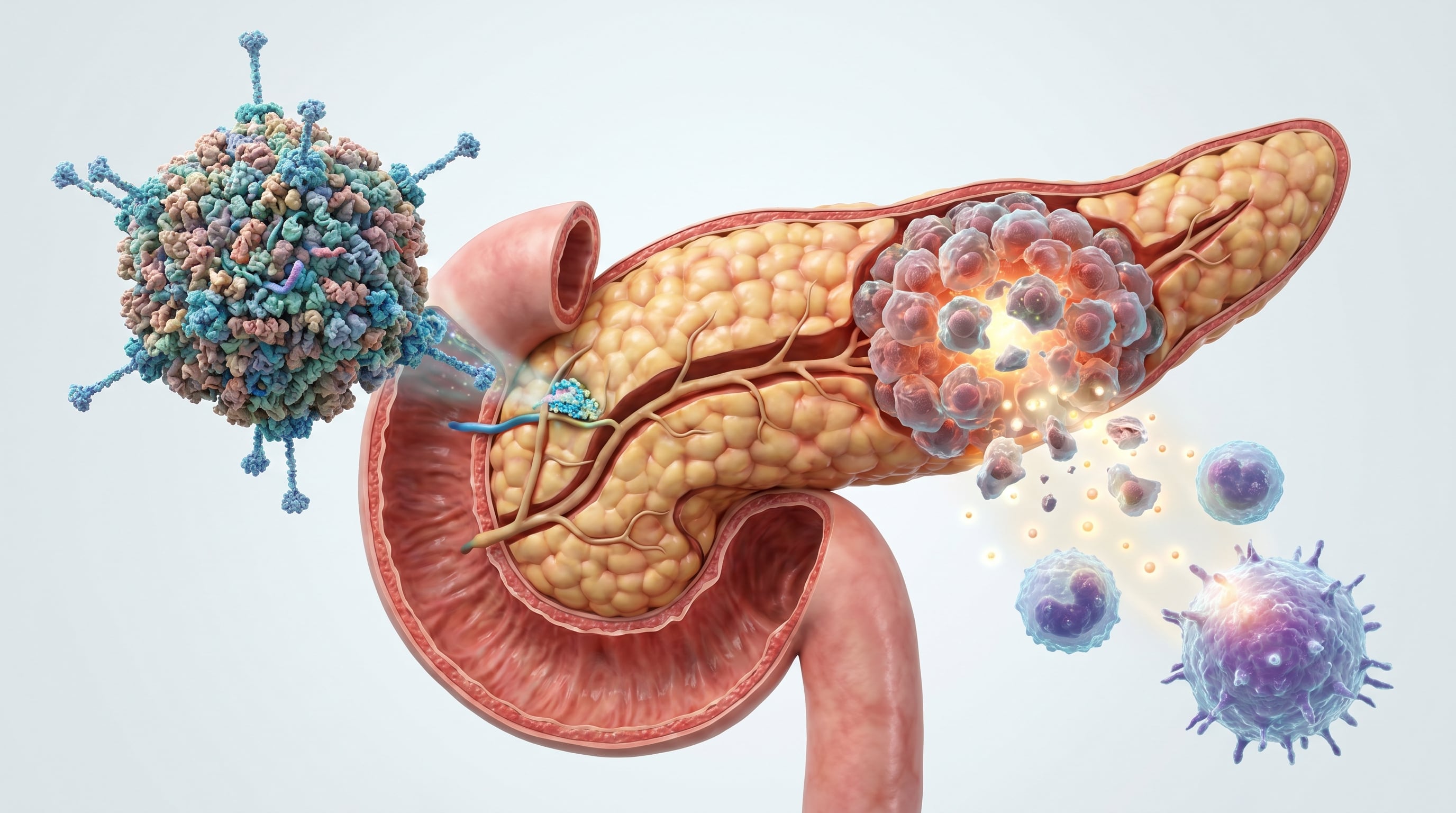
Camupepimut está diseñada para que el sistema inmunitario reconozca alteraciones del gen KRAS, presentes en alrededor del 90 % de los adenocarcinomas de páncreas.

Estas mutaciones ayudan a que las células tumorales sobrevivan y se multipliquen. La vacuna contiene fragmentos que representan siete de las alteraciones más habituales de KRAS y los lleva hasta los ganglios linfáticos, donde el organismo organiza parte de sus defensas.
“Históricamente, el cáncer de páncreas ha sido muy difícil de tratar con inmunoterapia”, señaló Ben George, oncólogo de la Clínica Mayo y primer autor del trabajo. “Logramos generar una fuerte respuesta inmunitaria contra las mutaciones de KRAS en casi todos los pacientes evaluados”.
De los 144 participantes, 96 recibieron la vacuna y 48 integraron el grupo de comparación, que permaneció bajo observación.
Los investigadores midieron el tiempo que pasaba hasta una recaída o la muerte de los pacientes. En el conjunto de los participantes, la diferencia entre los dos grupos no fue suficiente para establecer que la vacuna redujera el riesgo de reaparición del cáncer.
La mediana de tiempo sin enfermedad fue de 23,8 meses en el grupo tratado y de 21,2 meses en el grupo de observación.
Durante los primeros seis meses, cuando los pacientes recibían activamente las dosis, surgió una señal favorable. El 75,7 % de los vacunados seguía sin recaídas, frente al 61,7 % del grupo de observación. Sin embargo, ese dato deberá confirmarse en una investigación más amplia.
La respuesta de las células de defensa fue el dato más sólido
El hallazgo más claro fue la capacidad de la vacuna para activar los linfocitos T, células que pueden identificar y atacar células anormales.
De 90 personas evaluables, 89 desarrollaron una respuesta de linfocitos T contra las mutaciones de KRAS. En más del 80 % de los casos, esa reacción fue al menos nueve veces mayor que antes de la vacunación.
Los pacientes que desarrollaron una respuesta inmunitaria más intensa también tuvieron períodos más largos sin recaídas. Esa relación no prueba por sí sola que la vacuna sea responsable de la mejora, pero respalda la idea de que el sistema inmunitario podría influir en la evolución de la enfermedad.

“Demostramos que es posible enseñar al sistema inmunitario a reconocer estas mutaciones de KRAS”, afirmó George. “El próximo paso es determinar si eso puede cambiar el curso de la enfermedad”.
El ADN tumoral en sangre marcó una diferencia
El estudio identificó un factor asociado a un riesgo mucho mayor de recaída: la presencia de ADN tumoral detectable en sangre antes de comenzar el tratamiento.
Los pacientes con ese marcador tuvieron una mediana de apenas 4,2 meses sin enfermedad, frente a 24 meses entre quienes no lo presentaban. El ADN tumoral circulante funciona como una señal de que podrían quedar rastros microscópicos del cáncer, aunque no aparezcan en las imágenes.
Entre los pacientes sin ADN tumoral detectable, la vacuna mostró resultados más favorables. A los 18 meses, el 70 % de quienes la recibieron seguía sin recaídas o muerte, frente al 56 % de las personas que no fueron vacunadas.
También se observaron mejores resultados en quienes no habían recibido radioterapia antes de participar. Los investigadores creen que ese tratamiento previo puede reducir la cantidad de linfocitos disponibles y, con ello, limitar la respuesta a la vacuna.

Los efectos adversos graves fueron poco frecuentes y aparecieron en proporciones parecidas entre quienes recibieron la vacuna y quienes permanecieron bajo observación.
No hubo muertes atribuidas al tratamiento ni pacientes que tuvieran que abandonarlo por sus efectos. Entre las molestias relacionadas con la aplicación se informaron mareos y síntomas similares a los de una gripe, en general leves.
La investigación fue financiada y patrocinada por Elicio Therapeutics, la empresa que desarrolla camupepimut. Sus autores advierten que el ensayo tuvo un número limitado de participantes y que todavía no hay información suficiente sobre la supervivencia total de los pacientes.
El próximo paso será un ensayo de fase 3, que incorporará el análisis de ADN tumoral en sangre desde el inicio, excluirá a pacientes con radioterapia previa y evaluará dosis de refuerzo. También se estudiará la combinación de la vacuna con otras inmunoterapias.
ciencia,laboratorio,investigación,mujeres científicas,biotecnología,microscopio,tecnología,pipeta,experimentación,salud,innovación,análisis químico
Updated October 29:
We’re updating this forecast to move South Carolina from Lean R to Toss-up.
As this week’s Power Rankings reported, Republicans already viewed this as an uncomfortably close race. That belief is now widely shared.
Tonight, the president is headed back there to help Sen. Darline Graham in the Upstate, where she underperformed in her primary runoff against Rep. Ralph Norman.
New polling has Democratic challenger Annie Andrews and Graham tied at 48%-48%.
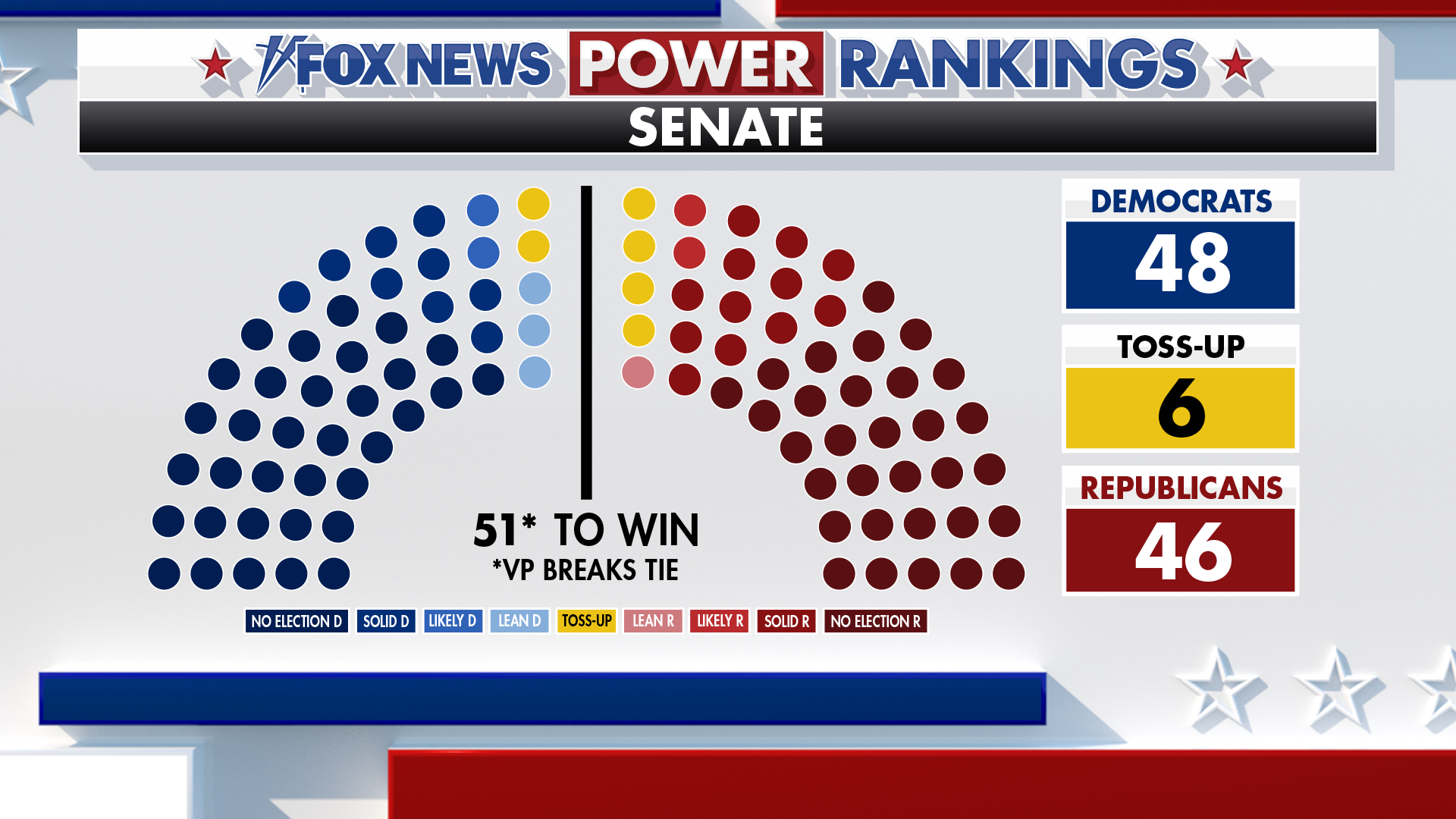
The Senate is still a toss-up with six states to decide the majority. On a good night for the Democrats, their ceiling rises to 54 seats. A good night for the Republicans could see them retain control with up to 52 seats.
It seems like there are two electorates in these midterms.
The first is frustrated with President Trump and ready to reject Republicans. It includes growing numbers of independent, rural and Hispanic voters who say they’ll vote for a Democrat.
That’s what the latest round of House polling shows, including a survey last week that had Democrats up 11 points on the generic ballot and Fox’s most recent national poll.
POWER RANKINGS: TRUMP COUNTRY AT A CROSSROADS
The second electorate is wavering on Republicans but won’t necessarily hand Democrats the Senate. These are the voters in the Midwest and a few other places. They say they prefer the Democrat or Republican in their states by a point or two at most.
That’s the right conclusion from most of the battleground Senate polling.
How could both things be true? In other words, if Democrats have such a wide lead in the House, won’t the Senate fall too?
Both are true, and a big lead in the House doesn’t necessarily translate to the Senate. These voters are all in the same electorate, and they only seem divorced from each other because the House and Senate maps are so far apart this year.
TRUMP-BACKED SENATOR ADMITS GOP FACES NIGHTMARE SCENARIO IN STATE REPUBLICANS HAVEN’T LOST IN 90 YEARS
The president’s declining approval rating and Democratic advantages on the issues will likely deliver them the House and possibly by many seats.
Those advantages have also allowed the blue team to play in a lot of Senate races that Republicans thought were unreachable, but only to the point of making them battlegrounds.
The road to a Senate majority goes through several states that Trump won by 11 points or more. Democrats can win any of these races. If Republicans turn out and stay loyal to their party, the climb for the left will be steep.
That’s why the Senate is a toss-up. Voters could give Democrats a majority and maybe with several seats to spare. They could also let the Republicans keep control.
We’ll find out in seven days.
In his 11-year political career, President Trump has triumphed over almost all of the threats to his power. The exception was the coronavirus pandemic, which was the top issue for voters in the 2020 election and ushered in the Biden presidency.
It was also one of the few threats that Trump has faced from abroad.
This time, Trump and the Republicans face a new foreign opponent: Iran. The administration’s decision to start joint U.S.-Israeli military strikes against the nation in February has cast a shadow over the GOP.
TRUMP WON THIS RELIABLY RED STATE BY DOUBLE DIGITS. NOW A DEADLOCKED RACE IS BRINGING HIM BACK
First, it has impacted Trump’s approval rating, which will decide the fate of many congressional Republicans and has fallen since the war began. It was 44% in the last pre-war survey and sits at 36% now.
The war has also given Democrats advantages on the top issues. In Fox’s October survey, Iran played a role in four issues that more than two-thirds of voters said they were concerned about: inflation (85%), gas prices (83%), government leadership (79%) and the war in Iran itself (75%).
Most voters said they preferred the Democrats to handle those issues: 16 points on inflation, 12 points on gas prices, 11 points on leadership and 9 points on foreign policy.
Still, voters are not convinced that the Senate should change hands.
That comes down to the territory. Trump won seven of these 10 battleground states in 2024 and six of them by double digits. That includes Alaska, Iowa, Kansas, Ohio, South Carolina and Texas.
Democrats don’t need to win all of those states to take the Senate, but it’s hard to see how they get to 51 seats without at least two of them.
While former Democratic Senator Sherrod Brown leads in Ohio, the other states are close. Turnout, a polling error in either direction, or both could decide them.
There are also a lot of undecided voters. In Alaska, Iowa and Kansas, three states with recent high-quality polling, an average of 10% of voters say they haven’t decided who they will support or won’t support the major candidates.
Any guess on how those voters will break at the ballot box is only a guess. All we know from prior results is that the overall electorate leans conservative, so the Democrats have the tougher assignment to bring them over to their side (or keep them at home).
There are far fewer undecided voters in Texas, where last week’s Poll showed a tied race at 49%-49%.
If Democrats only win two Trump-won battlegrounds, they’ll need to win three other races where former Vice President Harris delivered single-digit victories in 2024: Maine, Minnesota and New Hampshire.
Democrats are ahead in the latter two. Maine could go either way. While Democrats win its presidential races, it could just as easily be considered a Republican state when Susan Collins is on the ballot.
The final Power Rankings for 2026 feature three shifts in the Senate and 19 in the House. A tight gubernatorial race is also on the move.
Both parties are short of a majority in this forecast. Democrats are favored in 48 seats, and Republicans are ahead in 46 (they would control the Senate with 50 seats because the vice president breaks ties).
On a good night for Democrats, the party would win most or all the toss-ups, taking the majority with up to 54 seats. In that scenario, other competitive states would also come into focus, including one rated Lean R, and on a great Democratic night, two more rated Likely R.
A good night for the Republicans would see them simply hold on to most of the states they already have, up to a ceiling of 52 seats. The party also has opportunities to flip a couple of states, including Minnesota and New Hampshire.
Three states are moving in this forecast.
In Ohio, Brown has enjoyed a lead in three polls this year, including last week’s survey, which had him five points ahead of Republican incumbent Sen. Jon Husted at 52%-47%.
Ohio voters are very familiar with Brown, having sent him to the Senate three times. That has made it hard for Husted to campaign on socialism and woke politics, themes that Republicans elsewhere see as their strongest cards to play.
Ohio moves from Toss-up to Lean D.
(«Lean D» means the Democrat has an edge, but it’s still a highly competitive race. We define every ranking and the process for setting them on FoxNews.com.)
As this week’s Power Rankings previously reported, Republicans already viewed this as an uncomfortably close race. That belief is now widely shared.
Tonight, the president is headed back there to help Senator Graham in the Upstate, where she underperformed in her primary runoff against Rep. Ralph Norman.
South Carolina moves from Lean R to Toss-up.
Mississippi is a Republican stronghold, but Trump’s decision to rally there over other deep red states is a sign that the party thinks it’s competitive.
GOP Senator Cindy Hyde-Smith faces Democratic District Attorney Scott Colom in a race where protein choice has become a breakout issue.
Mississippi moves from Solid R to Likely R.
Democrats are still likely to flip the House this November, and in this forecast, they’re predicted to take at least 223 seats.
Since a good night for the Democrats would see them take most of the toss-up races, they could end up with as many as 240 seats.
(On a great Democratic night, the party would pick up most of the Lean R districts as well, taking them as high as 252 seats.)
Republicans have 195 seats in their columns. A good night for them would take that total up to around 212. That’s six short of a majority, but enough to make life difficult for the next Democratic House Speaker, who would have to balance the demands of the moderate and far-left wings of the party.
Nineteen more races have shifted in the Democrats’ direction this week, all on the same themes outlined in the last House update: national and district polling, top-of-the-ticket strength and rural voter erosion.
The earliest-closing districts on election night will give some sense of the House’s future. Keep an eye on Kentucky’s 6th district, which covers Lexington and a large central area of the state. Trump won here by 15 points in the last presidential election. Thanks to a combination of left-leaning college voters and farmers grappling with higher costs, it looks close this cycle. The district moves from Lean R to Toss-up.
Finally, Ohio’s gubernatorial race is also on the move. The campaign between Democrat Amy Acton and Republican Vivek Ramaswamy was the top story in politics last week after Ramaswamy ran an ad featuring Acton’s mother, who called her daughter a liar.
Acton has been estranged from her mother since age 12, when she says she and her brother left her family home because her mother’s husband was sexually abusing her. Acton’s brother now appears in a response ad discussing their family history.
This ratings change is less about the response to the ad (Ramaswamy and President Trump are supportive of the commercial; most others, including Husted and Governor Mike DeWine, are against it) than it is about the fact that the Ramaswamy campaign felt the need to run it.
While Ramaswamy sat only two points behind Acton in last week’s Fox poll, he’s an average of seven points behind in other high-quality polls since September.
The businessman and onetime presidential hopeful has struggled in favorability ratings throughout his political career. This ad is unlikely to help.
The Ohio governor’s race moves from Toss-up to Lean D.
Fox News’ special coverage of the 2026 midterm elections begins at 6 p.m. ET next Tuesday, November 3, anchored by Bret Baier and Martha MacCallum. Tune in for the latest race calls and projections for control of the House and Senate from the Decision Desk.
power rankings, midterm elections, politics, elections, senate, polls
INTERNACIONAL
RNC rejects narrative of spoiler candidates ‘on both sides,’ calls Alaska scheme ‘fraudulent’

The Republican National Committee rejected the narrative that both parties engage in similar tactics after a New York Times report exposed Democrat-linked efforts to recruit a second «Dan Sullivan» onto Alaska’s Senate ballot, saying Republicans are focused solely on securing elections while Democrats are «trying to be fraudulent.»
«No, both sides of the aisle don’t do this,» RNC election integrity communications director Ally Triolo told Digital on Thursday. «Our entire effort here at the RNC is securing elections, making them fair and free and honest.»
«We are doing the exact opposite of what Democrats are trying to do. Democrats have voted time and time again against the Save America Act. They have voted against common sense safeguards.
DEM STRATEGIST SHRUGS OFF ALASKA BALLOT SCANDAL ON MS NOW, INSISTS ‘THIS STUFF HAPPENS ALL THE TIME’
«We couldn’t be more different from Republicans versus Democrats, and I honestly hope people see this straight in the eye with what’s happened out of Alaska, that Democrats are completely disingenuous. They have ill intentions. They’re trying to disenfranchise voters, and of course trying to be fraudulent.
«This is fraudulent behavior, and they need to be held accountable to the fullest extent.»
The Times reported Wednesday that Senate nominee Mary Peltola’s campaign, aides from the Democratic Senatorial Campaign Committee and others worked to place a retired teacher named Dan J. Sullivan on the ballot.
JASON CHAFFETZ: DEMOCRATS TRIED TO TRICK ALASKA VOTERS. PELTOLA MUST ANSWER
«Republicans, we tried to fight this months ago and draw attention to this Democrat scheme,» Triolo said. «And look, no wonder Democrats are against election integrity because they don’t want to be held accountable for trying to disenfranchise voters and cheat the system.»
«It has been abundantly clear from the get-go that this was a ploy to try to sway voters, confuse voters, take votes away from the real Sen. Dan Sullivan,» she added. «And that is exactly why you saw the DOJ intervene just last week to make sure there were protections in place before the election could be certified to make sure everything was above board. And now we have this bombshell report coming out exposing exactly what we have been saying, and I think this points to the larger issue of Democrats continually fighting election integrity, because again, they have admitted that they cannot win fair and square when safeguards are in place.»
TRUMP SAYS ‘WE ARE LOOKING INTO’ OTHER DAN SULLIVAN ON ALASKA BALLOT, WARNS ABOUT GOVERNOR’S RACE
The RNC election integrity unit has a major on-the-ground operation in Alaska, she said, including an in-state director, attorneys, observers and poll workers, and that President Donald Trump and the Justice Department have already moved to address the issue.
The DOJ last week sued to block certification of a potential Peltola win if votes for the second Sullivan could have changed the outcome, and a senior DOJ official told on Thursday that the criminal investigation has intensified, with officials examining possible civil-rights violations under 18 U.S.C. §§ 241 and 242.
Vice President JD Vance said authorities should «certainly look into whether [Peltola] committed election fraud,» describing the effort as an attempt to «steal a Senate seat.» Senate Majority Leader John Thune called it a «coordinated effort» and «totally dirty pool.»
SEN DAN SULLIVAN BRANDS PELTOLA’S ALLEGED BALLOT SCHEME A ‘SCANDAL AT THE HIGHEST ORDER’
There is an «aggressive criminal investigation» into Daniel J. Sullivan Jr. appearing on the ballot, sources told Fox News. That investigation has only intensified since the Times’ reporting but has been underway for several months.
This investigation, being run by the U.S. Attorney’s Office in Alaska, is expected to go beyond Tuesday’s Election Day, and there will not be any sort of indictment or heavy grand jury activity before then.
‘DECOY DAN’ SULLIVAN CASE LEADS TOP SENATOR TO BREAK FOUR-YEAR X SILENCE: ‘PATTERN OF LIES’
The DOJ thus far has declined to comment on the matter.
Alaska Gov. Mike Dunleavy has also ordered a state investigation. Peltola’s campaign and DSCC officials have denied involvement in recruiting the second Sullivan to confuse voters, issuing warnings that «both sides» put up spoiler candidates in elections.
The Alaska Supreme Court previously ruled the second Dan Sullivan could remain on the ballot under state law.
«The RNC is heavily invested in protecting the vote in Alaska since this scheme came out,» Triolo said. «We’ve been fighting it, drawing attention to it, doing everything we can to educate voters.
DEM BUCKS PARTY OVER ALLEGED ALASKA VOTE-SIPHONING EFFORT: ‘NEITHER PARTY SHOULD BE DOING IT’
«We are heavily invested in securing Alaska and obviously this scheme is an absolute fraud. You saw President Trump come forward and say that Mary Peltola, the fake Dan Sullivan, all of these individuals should be held accountable not only for lying about their affiliation with the scheme, but also just for trying to deceive voters.
«We are seeing this play out in real time. Even The New York Times, the left-wing media, has no choice but to hold them accountable for their schemes.
«So I think what we need to stay focused on, as Republicans, is that we need to keep the majority. This is why this midterm election feels like a presidential because so much is at stake.»
Fox News’ David Spunt, William Mears and Jake Gibson contributed to this report.
midterm elections, voting, elections, politics, elections disputes

Se dieron a conocer imágenes inéditas de la primera vez que Diego Armando Maradona jugó en el Monumental

Juan Pablo “Pata” Medina reapareció en una asamblea y rechazó la intervención de la Uocra platense

La suba de alimentos continúa en octubre, pero la inflación mensual se desaceleró al 2,7%

Cáncer de páncreas: una vacuna experimental mostró resultados alentadores en un ensayo

La contundente definición de Mauricio Macri sobre las negociaciones con La Libertad Avanza por un acuerdo electoral

Leo Messi no regresará a Newell’s Old Boys

Medios brasileños afirman que Flávio Bolsonaro escapó del país y está en vuelo a Estados Unidos

De Bullrich a Lula da Silva: a Milei se le abrieron dos frentes de conflicto con resolución incierta

Facundo Bagnis vuelve al tenis tras un año de suspensión por doping: “Dejó una cicatriz enorme en mí”

Brasil sacude a la City y hace saltar la brecha entre dólar oficial y el que usan empresas

 INTERNACIONAL3 días ago
Medios brasileños afirman que Flávio Bolsonaro escapó del país y está en vuelo a Estados Unidos
- SOCIEDAD2 días ago
Avanza la búsqueda de los hermanos desaparecidos que fueron arrastrados por la corriente de un río en Santa Cruz
- POLITICA2 días ago
Malvinas: tras aceptar modificaciones, el Gobierno buscará llevar al recinto el proyecto de Ley de Soberanía el 12 de noviembre