INTERNACIONAL
Top Gulf official offers glimmer of hope on Trump-Iran nuclear talks as threat of war hangs over region

NEWYou can now listen to Fox News articles!
DUBAI, United Arab Emirates — A senior United Arab Emirates official says he is cautiously optimistic about negotiations between the United States and Iran, citing progress through Qatari mediation over the past days, even as fears of renewed military confrontation continue to grip the Middle East.
«We see some progress. … We hope that both sides will be able to reach a point where they will start building trust and engaging in a way to avoid the war, to find a political solution. … I am a little bit optimistic, but I don’t exclude the other option,» Dr. Ali Rashid Al Nuaimi, chairman of the Defense, Interior and Foreign Affairs Committee of the UAE’s Federal National Council, told Fox News Digital in an exclusive interview.
His remarks came as Reuters reported on Nov. 5 that Iran had submitted a new nuclear proposal to Washington through Qatar. Tehran, however, continued to insist that the U.S. meet seven conditions before negotiations could proceed, including sanctions relief and an end to the American naval blockade.
IS THIS TRUMP’S LAST ‘LAST CHANCE’? CEASELESS STRING OF BROKEN CEASEFIRES FUELS DOUBT OVER IRAN DEAL
Dr. Ali Rashid Al Nuaimi, chairman of the UAE Federal National Council’s Defense, Interior and Foreign Affairs Committee, speaks to Fox News Digital in Abu Dhabi about the Iranian threat, regional security and prospects for diplomacy. (Efrat Lachter/Fox News Digital)
President Donald Trump has not ruled out further military operations, while Iran has threatened broader retaliation if fighting resumes.
For the UAE, which endured thousands of Iranian missile and drone attacks earlier this year, the possibility of a diplomatic breakthrough offers hope. But its leaders are making clear that hope cannot replace preparedness.
«We plan for the worst. We hope for the best. … We always make sure that we are ready to deal with all the challenges or the threats,» Al Nuaimi said.
That combination of optimism and caution was evident during Fox News Digital’s reporting trip across the Emirates, where daily life appeared remarkably normal despite the uncertainty surrounding the country.
On an evening in downtown Dubai, restaurant terraces were packed, tourists filled the streets and crowds gathered around a fountain show set to music that moved between Arabic songs and Western pop hits.
Businesses were operating, international visitors were arriving and the city continued to project an image of prosperity and openness.
IRAN’S STRAIT OF HORMUZ SCHEME COULD DERAIL ONE GULF NATION’S BRIGHT FUTURE

Crowds gather to enjoy an evening fountain show in downtown Dubai, United Arab Emirates, as daily life continues despite the threat of renewed regional conflict with Iran. (Efrat Lachter/Fox News Digital)
The contrast was just as striking in Abu Dhabi, where Fox News Digital attended the opening of ADIPEC 2026, one of the world’s largest energy conferences, against the backdrop of continuing tensions with Iran and the disruption of the Strait of Hormuz.
Days before the conference, ExxonMobil and Chevron executives had canceled their planned appearances because of security concerns, Reuters reported on Oct. 29.
Yet inside the exhibition halls, delegates from around the world gathered to discuss investment, announce partnerships and explore technological solutions to the energy crisis.
It was a demonstration of the UAE’s determination to keep its economy moving while preparing for a security environment that has changed dramatically.
TRUMP ADMIN THREATENS IRAN WITH ‘CONSEQUENCES’ AS ALLIES CONVENE AMID THREATS OF POST-ELECTION ESCALATION
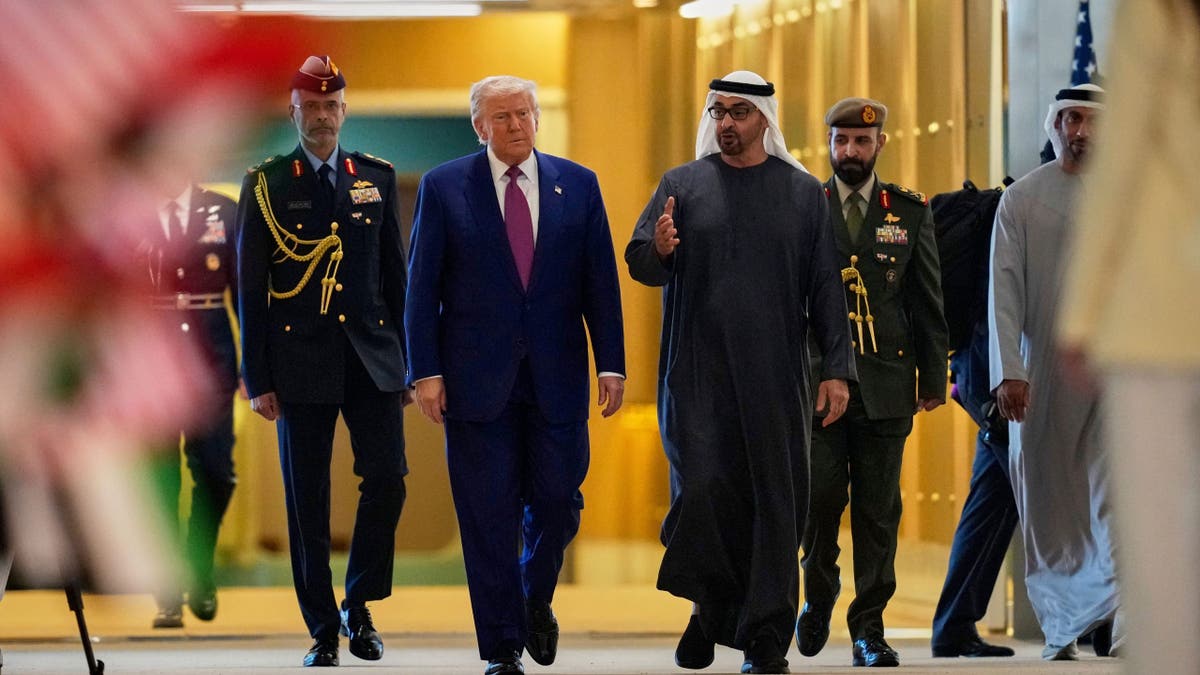
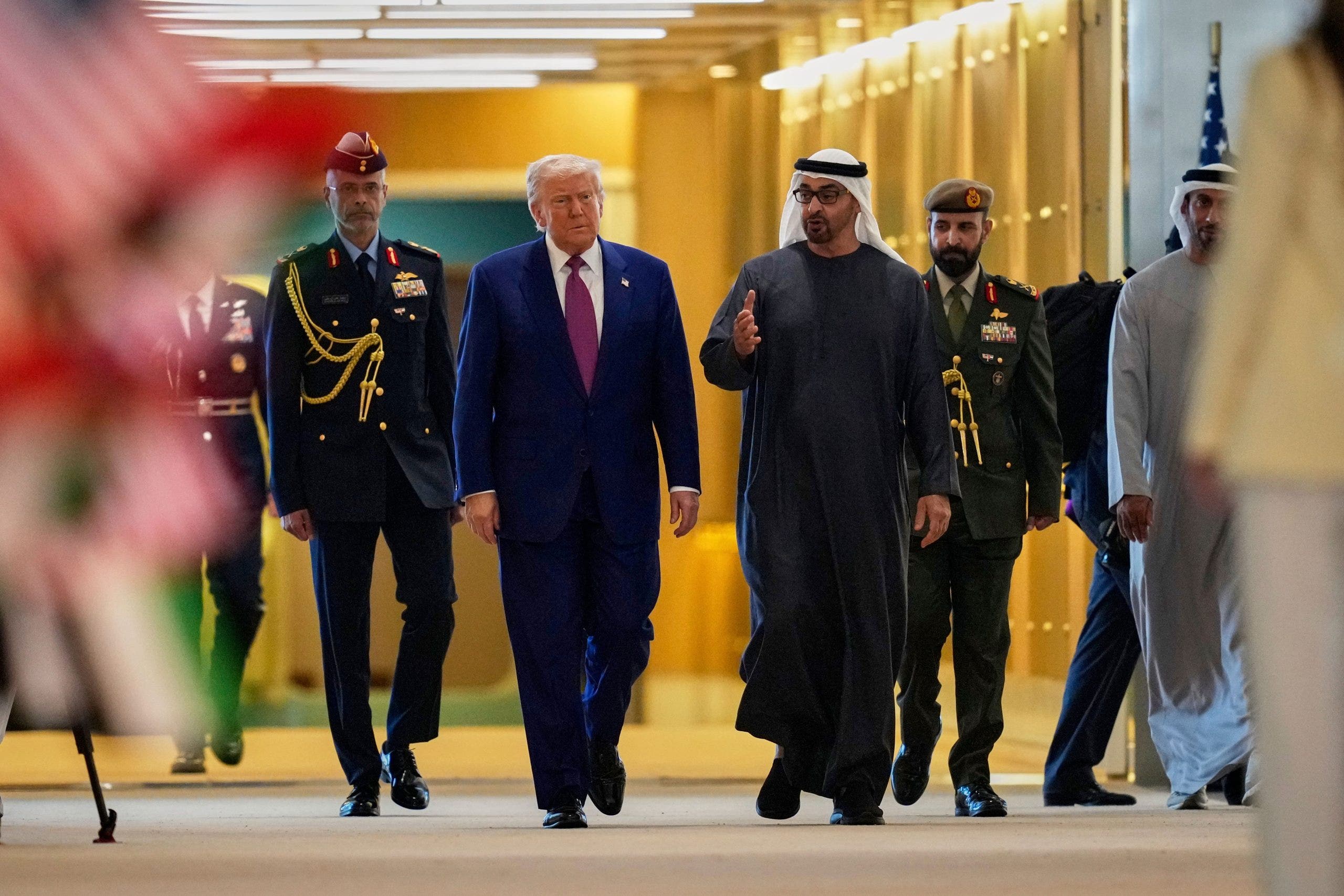
United Arab Emirates President Sheikh Mohammed bin Zayed Al Nahyan greets President Donald Trump at Abu Dhabi International Airport on Thursday, May 15, 2025. (AP Photo/Altaf Qadri)
Preparing for another confrontation
The UAE has already paid a significant price for its proximity to the conflict.
More than 3,000 Iranian missiles and drones targeted the Emirates during the war, according to figures cited by The Associated Press on Nov. 2. The attacks caused casualties and damage to civilian infrastructure.Although no new Iranian attacks had targeted the UAE since May, the threat of renewed confrontation has kept the country on alert.
Al Nuaimi emphasized that while the UAE considers itself a nation committed to peace, it will not hesitate to protect its population.
«Every nation, when it is attacked, [has] the right to defend their people, their sovereignty, their nation,» he said.
But he also drew a clear distinction between the Iranian regime and the Iranian people, who are repressed by the regime. «The Iranian people deserve to be respected, accepted. They have great values, great civilization, and they are our neighbor.»
MIDDLE EAST TAKES CENTER STAGE AT UN AS REGIONAL LEADERS CONFRONT IRAN WAR, GAZA AND HOUTHI THREAT

A man walks past a housing compound as a tall plume of black smoke ascends following an explosion in the Fujairah industrial zone on March 3, 2026. Iran’s strikes on Gulf neighbours since February 28, following the US-Israeli attack, forced the UAE to shut its airspace, blindsiding travellers who thought they were headed to one of the region’s safest holiday destinations. (Fadel SENNA / AFP via Getty Images)
A partnership beyond any administration
Despite the confrontation with Iran, Al Nuaimi rejected the suggestion that the UAE’s relationship with Washington should be judged primarily through the current conflict or any particular U.S. administration.
«We don’t see our relationship with the United States through these conflicts, through security and defense. No, it’s a partnership. It’s a strategic partnership. It is a sustainable partnership. … Our main partnership is with the United States as a nation, with the American people.»
He emphasized that the relationship extends across education, medicine, technology, energy and investment, and is intended to endure political changes in Washington.
«We don’t look at the United States through a certain administration. Our engagement and partnership with the United States … [is] with the nation. It’s with the people. … We have the flexibility and the ability to [adapt] and engage with any administration.»
The comments come at a sensitive time for Gulf governments, whose security relationships with Washington have become more consequential as Iran threatens regional infrastructure and international shipping.
At ADIPEC’s opening ceremony on Nov. 2, Dr. Sultan Al Jaber, the UAE’s minister of industry and advanced technology and chief executive of state-owned energy giant ADNOC, emphasized that the country’s ability to withstand the crisis was the result of years of preparation. «We did not write our resilience playbook during this disruption. We wrote it years before,» Al Jaber told the audience.
The message was consistent with what officials and analysts repeatedly emphasized during Fox News Digital’s visit: the UAE intends to remain a reliable international partner despite the possibility of another regional escalation.
GULF COUNTRIES STRONGLY CONDEMN IRAN’S DRONE ATTACK ON BAHRAIN AS RISING TENSIONS THREATEN MOU

The exhibition floor at ADIPEC 2026 in Abu Dhabi, United Arab Emirates, where global energy companies showcased new technologies and innovations amid growing concerns over energy security and regional instability. (Efrat Lachter/Fox News Digital)
Security beyond military defense
In a separate exclusive interview with Fox News Digital in Dubai, Mohammed Baharoon, director general of the Emirati research center B’huth, argued that the confrontation with Iran has fundamentally expanded the meaning of national security.
«Our resilience now becomes our deterrence,» Baharoon said.
The UAE’s security strategy, he explained, involves far more than intercepting missiles and drones. It also means ensuring reliable energy supplies, food security, functioning infrastructure and the ability to maintain international commerce during a crisis.
For Baharoon, the conflict cannot be understood as a single confrontation between Washington and Tehran.
He described three interconnected wars: the initial American-Israeli campaign against Iran, Tehran’s subsequent attacks on Gulf states and Iran’s disruption of international shipping through the Strait of Hormuz.
«The second war was Iran’s attack on the GCC, because that attack was also unprovoked,» Baharoon said, referring to the Gulf Cooperation Council.
He described the disruption of shipping as a separate confrontation with the global economy, arguing that the consequences extend to countries far removed from the Middle East.
Despite his criticism of Tehran, Baharoon rejected the idea that Iran should permanently be treated as an enemy. Its population, economic potential and geographical importance, he argued, could make it an important contributor to regional prosperity if its leadership shifted away from confrontation.

Attendees gather at ADIPEC 2026, one of the world’s largest energy conferences, held in Abu Dhabi, United Arab Emirates, Nov. 2–5, 2026, as industry leaders discuss global energy security, technological innovation and the growing role of artificial intelligence. (Efrat Lachter/Fox News Digital)
For the UAE, the challenge now is to prepare for the possibility of another confrontation without abandoning the diplomatic and economic relationships it has spent decades building. The crowded streets of Dubai and busy exhibition halls of Abu Dhabi reflect a country determined to move forward, even as the threat of war remains close. Whether the latest negotiations with Iran lead to a breakthrough or another round of fighting, the Emirates is betting that its resilience will allow it to weather the next crisis without losing sight of the future it is trying to build.
war with iran, middle east, national security, geopolitics









INTERNACIONAL
“Es descabellado”: excónsul de Haití en República Dominicana rechaza que la ONU dialogue con el pandillero Wilson Joseph

El excónsul general de Haití en República Dominicana y director ejecutivo de la Fundación Zile, Edwin Paraison, calificó de “totalmente descabellado” que el líder de la peligrosa banda criminal haitiana 400 Mawozo, Wilson Joseph, pretenda arrogarse la vocería para anunciar misiones diplomáticas o una eventual negociación con la Organización de las Naciones Unidas (ONU).
En declaraciones exclusivas ofrecidas a Noticias Telemicro, el exdiplomático desestimó rotundamente los planteamientos del cabecilla criminal, conocido en el bajo mundo como “Lanmò Sanjou” o “La Montagne”, quien recientemente afirmó que una comisión del organismo internacional arribaría a territorio haitiano el próximo 18 de noviembre para entablar un proceso de diálogo y mediación.
Frente a este panorama, Paraison subrayó que “Que una persona sancionada por las Naciones Unidas, además de ser un pandillero y también considerados todos como terroristas, hubiese sido quien anuncie la llegada de una misión de paz de parte de las Naciones Unidas en Haití, es totalmente descabellado”.
Con estas palabras, el exfuncionario evidenció la inviabilidad de que un organismo multilateral otorgue legitimidad institucional o coordine agendas formales con un fugitivo de la justicia internacional.
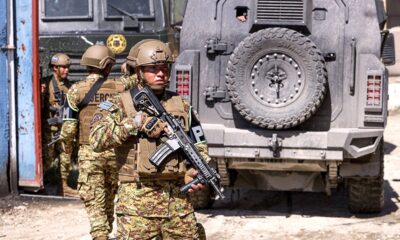
El creciente cerco táctico —robustecido con la presencia y apoyo logístico de contingentes de seguridad, incluidos militares salvadoreños desplegados en misiones de evacuación médica y soporte operacional, ha neutralizado corredores estratégicos de suministro y asfixiado las posiciones de la banda.
En el mismo reporte de Noticias Telemicro, el experto en derecho internacional Pascal Peña analizó las implicaciones que tendría cualquier intento de sentarse en una mesa diplomática con estructuras ilícitas. Peña advirtió que legitimar una iniciativa semejante obligaría a replantear por completo el mandato de la fuerza internacional.
Aunque el portavoz de la ONU, Stéphane Dujarric, confirmó ante la prensa internacional que la correspondencia había sido recibida por las vías regulares del organismo, aclaró de inmediato que acusar recibo no equivale a validar, legitimar ni abrir ningún canal de negociación con el líder de una red armada criminal.
Analistas y observadores coinciden en que este sorpresivo giro retórico responde a un estado de desesperación operativa. Tras meses de desafiar abiertamente al Estado y exhibir fusiles de asalto, municiones de alto calibre y tácticas de guerra urbana, la organización criminal ha comenzado a replegarse ante la intensificación de las operaciones terrestres en áreas neurálgicas como Croix-des-Bouquets, Ganthier y la llanura de Cul-de-Sac.
Perfil del líder criminal: prontuario y antecedentes de Wilson Joseph
Wilson Joseph, alias “Lanmò Sanjou” (expresión en criollo haitiano que se traduce como “La muerte no tiene día”), encabeza la temida pandilla 400 Mawozo, una de las organizaciones delictivas más violentas y numerosas de Haití, especializada en extorsión masiva, robo de cargamentos y secuestros extorsivos.
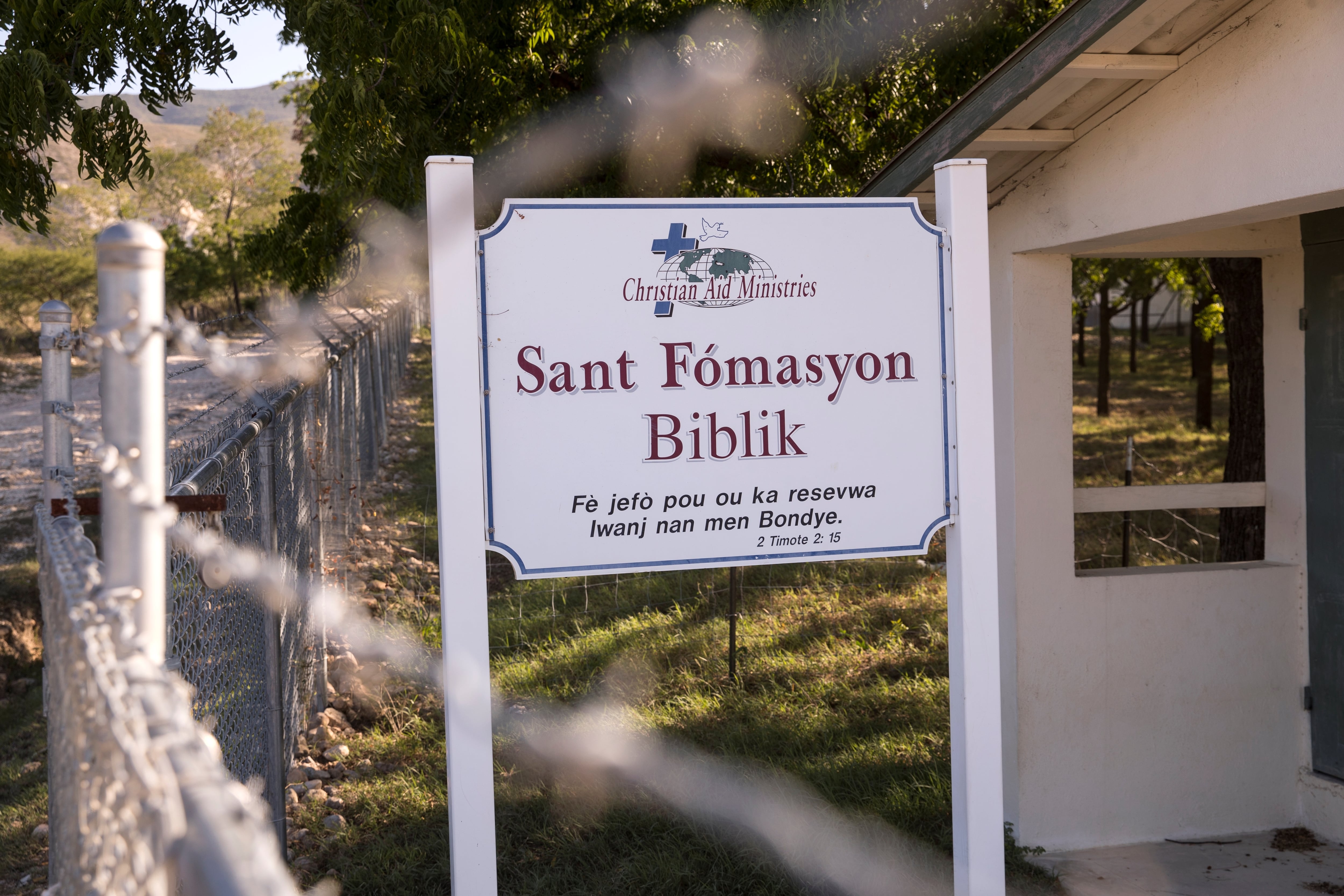
El prontuario de Joseph alcanzó notoriedad global en octubre de 2021, tras liderar el secuestro de 17 personas pertenecientes a la organización Christian Aid Ministries —16 ciudadanos estadounidenses y un canadiense, entre ellos cinco niños— en la zona de Ganthier. Por fortuna, lograron sobrevivir y recuperar su libertad dos meses después.
Por este crimen, en el que exigía un millón de dólares por cada cautivo bajo amenaza de ejecución, el Departamento de Justicia de Estados Unidos presentó cargos formales en su contra por conspiración para la toma de rehenes y secuestro armado. En respuesta, el FBI emitió una orden de captura internacional ofreciendo una recompensa de hasta un millón de dólares por información que conduzca a su arresto.
Adicionalmente, Joseph se encuentra bajo severas sanciones financieras impuestas por el Consejo de Seguridad de la ONU y el Departamento del Tesoro de EE. UU., señalado por:
- Homicidios colectivos
- Violación de derechos humanos
- Tráfico de armamento pesado
- Ataques indiscriminados contra poblaciones civiles e infraestructuras críticas.
Su reciente intento de vestir con ropajes de paz a una organización imputada internacionalmente por crímenes de lesa humanidad refleja, según diplomáticos y juristas, una maniobra desesperada ante el cierre definitivo de sus bastiones territoriales.
edificio,exterior,instalaciones de la organización chirstian aid ministries,secuestro misionero norteamericanos en titanyén,sucesos haití
INTERNACIONAL
California prosecutors slam Newsom’s death row commutations, accuse governor of putting ‘politics over people’
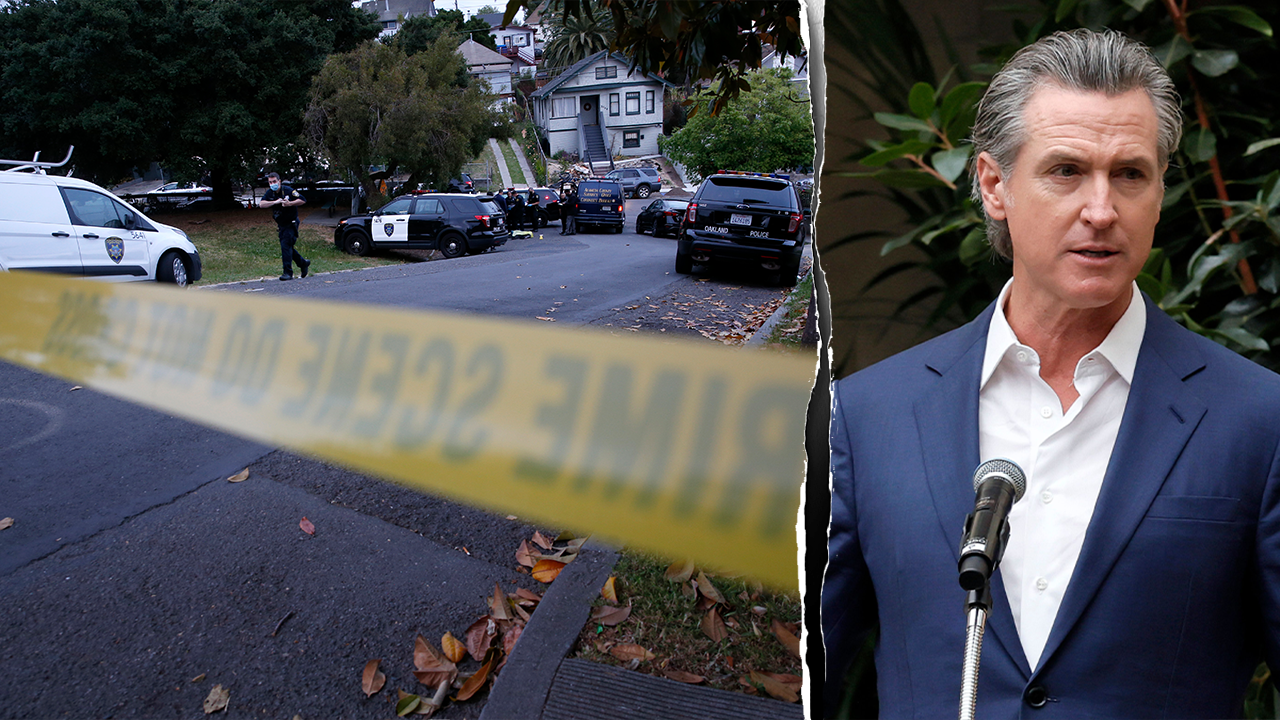
District attorneys and law enforcement unions across California have publicly condemned Gov. Gavin Newsom following his announcement to commute the sentences of 548 death row inmates, a decision one prosecutor called a slap in the face to victims’ families.
Newsom’s sweeping order to commute the condemned inmates to life in prison without the possibility of parole has drawn intense criticism alongside praise from anti-death penalty advocates.
«I think it’s all about politics, sadly. Politics is over people in this case, and that’s a real sad state of affairs,» San Luis Obispo County District Attorney Dan Dow told Digital.
ALABAMA GOVERNOR COMMUTES DEATH SENTENCE AS DOUBTS EMERGE ABOUT EVIDENCE IN MURDER CONVICTION
In an open letter detailing his decision, Newsom said California’s capital punishment system is fundamentally at odds with the state’s principles.
«After nearly 30 years in public office, I have come to understand the limits of what government can justly accomplish,» Newsom wrote. «I take this action because I firmly believe that state-sanctioned killing is incompatible with California’s values, undermines the foundations of our legal system, and diminishes each of us.»
POPE LEO DENOUNCES DEATH PENALTY AS ‘INADMISSIBLE’ AHEAD OF PENTAGON’S PLANNED LIVESTREAMED EXECUTION
Upon taking office in 2019, Newsom issued an executive moratorium on capital punishment. California has not carried out an execution since 2006.
The backlash to the governor’s announcement was immediate.
FLORIDA PUTS 77-YEAR-OLD MAN TO DEATH FOR DEPUTY’S MURDER AS STATE CLOSES IN ON EXECUTION RECORD
«Justice will not have been served for these victims, dozens of them in San Diego County,» said Lt. Jared Wilson, president of the San Diego Police Officers Association. «Their last memories were of these evil, evil men who took their lives. What Gavin Newsom has done is awful.»
Wilson and other law enforcement officials strongly criticized the blanket clemency, citing cases like that of Jesse Michael Gomez, who was sentenced to death for the 2016 murder of San Diego police officer Jonathan «J.D.» De Guzman.
«Californians have been asked on two separate ballot initiatives to abolish the death penalty, and both times they have chosen to keep it for the most serious crimes,» said Los Angeles County District Attorney Nathan Hochman. «Until the law is changed, my office will continue to evaluate every death penalty-eligible case with the rigor, care, and restraint these decisions demand.»
NEW YORK BILLS COULD ABOLISH LIFE WITHOUT PAROLE FOR SERIAL KILLERS AND COP KILLERS, CRITICS WARN
Orange County District Attorney Todd Spitzer called the commutations «mercy for the wolves … while inflicting the ultimate act of cruelty on the sheep,» saying voters in California have upheld the death penalty in recent years.
Riverside County Sheriff Chad Bianco, who previously ran for governor, noted that 127 inmates on California’s death row were sentenced for crimes committed in his county.
«These sentences were not handed down without due process,» he said. «They followed extensive investigations, lengthy trials, evidence presented in court, and decisions made by juries and judges.
«Yet, with one sweeping executive decision, the governor has chosen to override those outcomes, disregarding the voices of victims’ families, the work of prosecutors, and the pursuit of justice that took years to achieve.»
Among the 548 inmates whose sentences were commuted are two men convicted in San Luis Obispo County: Michael Whisenhunt, 61, who was sentenced to death for the 1995 torture and murder of his girlfriend’s 1-year-old daughter, Kesha Gurke; and Rex Krebs, 60, who was convicted in the brutal slayings of two female college students.
CHARLES MANSON CULT FOLLOWER BRUCE DAVIS, CONVICTED IN TWO 1969 KILLINGS, DIES BEHIND BARS AT 83
Dow noted that families of the victims were neither consulted nor notified prior to Newsom’s public announcement.
«I was just sickened, frankly, for the crime victims in California who were slapped in the face by our governor,» Dow said.
JUDGE BLOCKS ALABAMA’S NITROGEN GAS EXECUTION METHOD, RULES IT IS UNCONSTITUTIONALLY CRUEL
Addressing arguments from anti-death penalty groups who contend that capital punishment is inherently flawed and racially biased, Dow defended the current legal framework.
«We have a rigorous defense procedure that weeds out cases. I have strong confidence in the integrity of our convictions,» he said.
california, crime world, gavin newsom, us

El peor error es pensar que perder en la política es una tragedia y que el fracaso se vuelve permanente. La victoria, por otra parte, también tiene sus consecuencias negativas, ya que siempre viene acompañada de la soberbia y la codicia (del poder o de lo que sea). La política latinoamericana es lamentablemente una cuestión de vida o muerte, o de libertad o cárcel, y esto lo hemos logrado arrastrar a cada lugar donde hemos podido latinoamericanizar la política, en su peor forma generalmente. La hostilidad irascible es una constante en la interacción sistémica y, como si ello no fuera lo suficientemente negativo, las redes han otorgado la capacidad de insultar, descalificar, discriminar y agredir de forma amplificada, lo que confiere una nueva dimensión a la participación política. El sistema político y la sociedad viven permanentemente alcanzando puntos de no retorno en la enemización y en los discursos de odio. La frase de que “el poder desgasta al que no lo tiene” se ha transformado en “el poder liquida al que no lo tiene”.
El funcionamiento pendular actual de los sistemas políticos, con variables dramáticas de alternancia, ha evitado, de alguna manera, encontrar condiciones o situaciones de continuidad y, por el contrario, ha transformado el sistema en un permanente juego de ajustes de cuentas. Se espera que los actores políticos aprendan cuando les toca estar en el llano para no repetir atrocidades o errores, pero no, ocurre exactamente lo contrario, se vuelve con más soberbia y con empatía inexistente, los protagonistas vuelven más dueños de la verdad que nunca.
Esto tiene consecuencias muy directas respecto a cómo se ejerce la gobernabilidad y cómo aquellos que asumen el poder tienen más vocación de destrucción de cualquier construcción anterior que de asegurar las dinámicas de continuidad institucional que son tan vitales para alcanzar estrategias sostenibles, así como para hacer funcionar proyectos a largo plazo.
Esto nos lleva a efectos colaterales poco beneficiosos, como condiciones especiales de persecución e inhabilitaciones políticas, procesos electorales enrarecidos y la neutralización del funcionamiento institucional.
La persecución política es uno de los principales problemas. Estamos viviendo en una época en la que las violaciones de Derechos Humanos se presentan como solución a los problemas que nos afectan, ya sean la falta de seguridad, los malos resultados económicos, la ineficiencia institucional, la pobreza, el desempleo o la desigualdad. La política nos muestra que es exactamente lo contrario y que el fracaso es prácticamente una certeza, lo cual se vuelve evidente cuando las políticas económicas sobre seguridad o gobernabilidad comienzan a afectar los derechos humanos de la población. Y el resultado más probable de eso es que se sufran duros reveses políticos. Podemos ver el ejemplo de las megacárceles o de las políticas antimigratorias, donde la eficiencia de los resultados iniciales se ve completamente desvirtuada por la falta de garantías o del debido proceso, lo cual deteriora variables sociales y económicas. Aparte de la manifiesta y patética ineficiencia de tener que cancelar la presunción de inocencia de 120.000 personas y negarles el debido proceso, para resolver algo que con el arresto, respetando el debido proceso de 5.000 liderazgos, cabecillas y actores de peligrosidad especial, se solucionaba. El peor engaño es pensar que la situación anterior era tan mala que cualquier variable represiva u opresiva constituye una solución al respecto, una política represiva quizás resuelva un tema puntual, pero disfuncionaliza tantos otros que las soluciones macro que necesitan los países se ven atrofiadas. Para quienes son subdesarrollados, es una condena letal.
Los fracasos anteriores son una oportunidad para construir y no para destruir. La hostilidad manifiesta contra la realidad no es la forma de resolver los problemas que contiene la misma; esos problemas requieren de una comprensión profunda y desarrollo de capacidades en una interacción continua que permita el cambio y no el agotamiento o destrucción de lo existente.
Los procesos electorales han sufrido también, no solamente las variables de persecución, sino también inhabilitaciones, creación de expedientes, asesinatos, ataques o presiones varias e indebidas sobre las autoridades electorales, destituciones, violaciones varias de independencia funcional de autoridades electorales o de la justicia.
En esa frenética alternancia que ha habido entre derecha e izquierda en el hemisferio se podría haber comprendido que las derrotas reflejan la frustración de la gente con la incapacidad y los malos resultados y la corrupción y etc., etc., y que cuando se tiene la oportunidad de volver, o de acceder al poder no es necesario ni el resentimiento ni la hostilidad ni la agresividad hacia los adversarios políticos, sino solamente gobernar bien, de buena fe y con el más pleno respeto de los derechos de todos.
Las victorias electorales dan algo que es tan importante como lo es la oportunidad de servir a la gente, la gente no vota para hacer a nadie rico o más rico, no vota para elegir a nadie para que haga negocios o más negocios para sí mismo, no vota a nadie para que desaparezca gente, o se lleven preso al vecino por votar diferente, o para que se asesinen periodistas, o se discrimine a mujeres, población LGBTQI, afrodescendientes, ni a migrantes, ni para cometer actos de antisemitismo, ni de islamofobia. En realidad, se vota para tener más derechos y poder ejercer más derechos y por ello la gente ha votado derecha, izquierda, derecha, izquierda, derecha para ver si alguien se aviva y con honestidad, inteligencia, capacidad de trabajo construye país/patria para todos. Y eso quizás pueda inspirar a su sucesor en la lógica de alternancia para que refuerce los ciclos positivos y no el insalubre ejercicio de la venganza personal y política.
Luis Almagro/Director Observatorio de Democracia de CASLA
Elections,South America / Central America,Elections / Voting

En el Gobierno esperan un mensaje breve y conciliador de Milei en el Palacio Libertad tras un pedido del Vaticano

Selección Argentina: FIFA redujo sanción de Nahuel Molina pero ratificó las 10 fechas para Leandro Paredes

En un clima convulsionado, Milei se prepara para recibir al Papa: expectativas y temores por la visita

Quiénes son los hermanos de Villa Carlos Paz que compusieron la canción de bienvenida para el papa León XIV: “Nos caían las lágrimas”

“Es descabellado”: excónsul de Haití en República Dominicana rechaza que la ONU dialogue con el pandillero Wilson Joseph

Debutó en los 42 km a los 31 años y ganó el Maratón de Nueva York: cómo fue el entrenamiento de Andreas Almgren

La oposición cuestionó la suspensión de embargos a las pymes y criticó el plan económico: “Llegaron tarde”

Milei parte nuevamente a España y en el gobierno dicen que no bajará el tono de sus críticas a Pedro Sánchez

Sindicatos del transporte y de la industria se diferencian de la estrategia de la CGT y deciden acciones propias

El embajador de EEUU ratificó el apoyo de Trump a la Argentina tras la derrota republicana: “Nuestro compromiso es firme”

 POLITICA2 días ago
El embajador de EEUU ratificó el apoyo de Trump a la Argentina tras la derrota republicana: “Nuestro compromiso es firme”
- INTERNACIONAL2 días ago
Santiago Peña renunció a la Presidencia de Paraguay por el escándalo del Ueno Bank
- INTERNACIONAL2 días ago
Cámara periscópica de 50 MP y tecnología NXTPAPER en pantalla AMOLED: así es el nuevo smartphone que llega a Perú