INTERNACIONAL
American war hero details dire living conditions US troops face as Hegseth taps him to ‘fix’ it

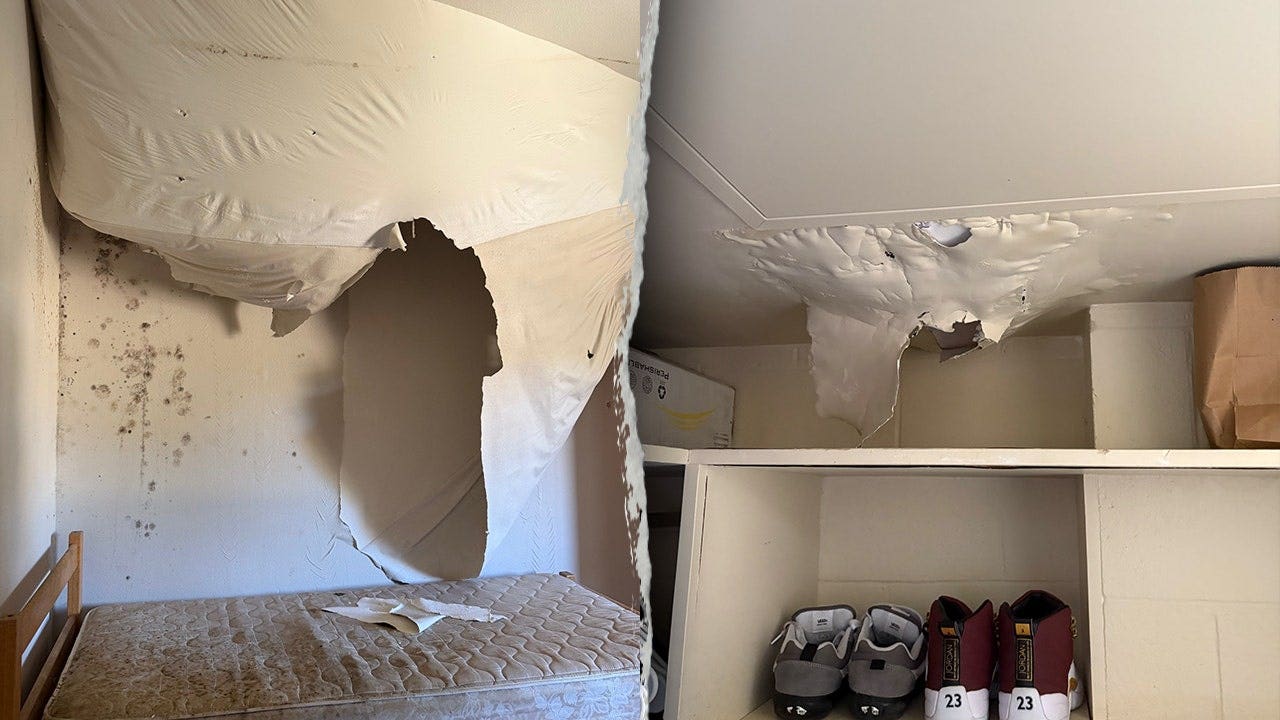
Some troops have gone a year without hot water. Others are sleeping in their cars to escape barracks without air conditioning. And some are asking for little more than drywall, spackle and paint so they can make repairs themselves.
Those are among the conditions Medal of Honor recipient Dakota Meyer says he has encountered while touring military installations on a mission from War Secretary Pete Hegseth: Fix a barracks system plagued by decades of neglect.
«I would tell you that there’s only a couple that I’ve seen that are good,» Meyer told Digital in an interview Thursday.
Meyer, who serves as senior adviser to the Pentagon’s Barracks Task Force, has visited more than eight installations across the Army, Navy, Air Force and Marine Corps since taking on the assignment and plans to visit 30 before the end of the year.
«What I thought was gonna be a professional job very quickly turned into personal,» Meyer said.
DAKOTA MEYER TALKS SERVICE, BLASTS CONTROVERSIAL DESIGN FOR GLOBAL WAR ON TERROR MEMORIAL
At one installation, Meyer recalled asking a 19-year-old service member what she would change about her living conditions if she could «wave a magic wand.»
«If she could just have a hot shower,» Meyer recalled. «It’s absolutely heartbreaking.»
The Pentagon’s barracks problems long predate Hegseth and have survived repeated attempts at reform.
A sweeping 2023 Government Accountability Office investigation documented serious health and safety hazards and found that the department lacked reliable information about the condition of its own barracks, could not determine how much of its facilities spending went toward them and provided insufficient oversight.
Congress and the military services have since committed billions toward improvements, including initiatives ranging from the Marine Corps’ «Barracks 2030» to a Navy overhaul of unaccompanied housing. Yet serious problems persist. As of this year, 12 of GAO’s 31 recommendations remained outstanding.
Hegseth has sought to centralize the effort under a department-wide task force and accelerate improvements, with Meyer saying the secretary has made clear that identifying problems is no longer enough.
«The secretary has made it clear to me he doesn’t expect me to observe this, study it, or to make it better. He expects me to fix it,» Meyer said. «And that’s exactly what we’re going to do.»
Meyer, the only Medal of Honor hero to reenlist after receiving the award, said one of his first requests was for Hegseth to give the task force an «authoritative role,» rather than simply create another layer of oversight.
The goal, he said, was to give the team the ability «to go out and make decisions, to be able to have impact, to be able to make change, and to be able to direct where that funding goes and how fast it gets to our service members.»
EXCLUSIVE: HEGSETH TO DOUBLE CUTS TO GENERALS, ADMIRALS IN MAJOR PENTAGON SHAKEUP
Meyer argued the problem is not simply a lack of money. Funding shortfalls, continuing resolutions and years of deferred maintenance have all contributed, he said, but so have layers of contracting rules and bureaucracy that can slow even relatively basic repairs.
A separate watchdog review found the Pentagon facing a $285 billion maintenance backlog across its broader military facilities’ portfolio, underscoring the scale of the department’s infrastructure challenges.
«When you look at the contracting aspect, it’s easier for people to say no,» Meyer said.
Funding is also part of the problem, according to Meyer, who pointed to Congress’ failure to enact full-year defense appropriations for fiscal 2027. The Pentagon is currently operating under a continuing resolution through Dec. 11, which generally funds ongoing programs at prior-year rates while lawmakers negotiate a broader spending package.
«When you can’t get a budget, when you’re waiting on Congress to pass a budget, to be able to get the funding there, I mean, that is a huge issue,» Meyer said.
But he also argued that the Pentagon has too often measured progress by how much money has been obligated or put under contract, rather than whether troops actually see improvements in their living conditions.
«Our service members don’t, they don’t live in our budget lines,» Meyer said. «They live in the rooms that those budget lines are there to impact.»
For Meyer, that has meant getting out of Washington and hearing directly from the troops living with the consequences.
«You can’t fix these problems or understand these problems by standing on the carpet of the Pentagon,» he said. «You’ve got to go out there and talk to these service members.»
What he has heard, Meyer said, is striking partly because of how little troops are asking for.
«They’re asking for a hot shower. They’re asking for a place to wash their clothes. They’re asking for a door that locks. They’re asking to be able to go to sleep in a place that doesn’t have mold. I mean, they’re asking for light bulbs.»
«They’re willing to be part of the solution,» he added.
Meyer stopped short of placing the blame solely on installation commanders, saying many want to improve conditions but have been constrained by a system that has normalized poor barracks for years.
«I think this is a multidimensional problem, and it’s complex,» he said. «I think that you have commanders out there that want to take care of their service members. I’ve seen that across the board. But … they still have to have the ability to do that.»
Meyer was far less forgiving of previous Pentagon leadership, arguing that years of investments and reform initiatives had failed to translate into adequate living conditions for troops.
«Don’t kid yourself,» Meyer said. «In the past … it wasn’t a priority to the leadership.»
Previous administrations and military leaders did launch barracks improvement efforts and devoted billions of dollars to construction, renovation and maintenance, even as government watchdogs continued to document serious deficiencies.
Meyer said Hegseth has made the issue a personal priority.
«We have the Secretary of War who is putting people first, and he’s not just saying that, he’s doing it through his actions,» Meyer said.
Meyer has put his own name on whether the latest effort succeeds, saying previously that if the barracks aren’t fixed, there is «only one person to blame» — himself.
Asked what «fixed» would actually look like, Meyer offered a simpler standard than any Pentagon metric.
«People are living in places that I would be okay for my daughters living in,» he said.
military, secretary of defense, defense, pete hegseth, spending, politics











El peor error es pensar que perder en la política es una tragedia y que el fracaso se vuelve permanente. La victoria, por otra parte, también tiene sus consecuencias negativas, ya que siempre viene acompañada de la soberbia y la codicia (del poder o de lo que sea). La política latinoamericana es lamentablemente una cuestión de vida o muerte, o de libertad o cárcel, y esto lo hemos logrado arrastrar a cada lugar donde hemos podido latinoamericanizar la política, en su peor forma generalmente. La hostilidad irascible es una constante en la interacción sistémica y, como si ello no fuera lo suficientemente negativo, las redes han otorgado la capacidad de insultar, descalificar, discriminar y agredir de forma amplificada, lo que confiere una nueva dimensión a la participación política. El sistema político y la sociedad viven permanentemente alcanzando puntos de no retorno en la enemización y en los discursos de odio. La frase de que “el poder desgasta al que no lo tiene” se ha transformado en “el poder liquida al que no lo tiene”.
El funcionamiento pendular actual de los sistemas políticos, con variables dramáticas de alternancia, ha evitado, de alguna manera, encontrar condiciones o situaciones de continuidad y, por el contrario, ha transformado el sistema en un permanente juego de ajustes de cuentas. Se espera que los actores políticos aprendan cuando les toca estar en el llano para no repetir atrocidades o errores, pero no, ocurre exactamente lo contrario, se vuelve con más soberbia y con empatía inexistente, los protagonistas vuelven más dueños de la verdad que nunca.
Esto tiene consecuencias muy directas respecto a cómo se ejerce la gobernabilidad y cómo aquellos que asumen el poder tienen más vocación de destrucción de cualquier construcción anterior que de asegurar las dinámicas de continuidad institucional que son tan vitales para alcanzar estrategias sostenibles, así como para hacer funcionar proyectos a largo plazo.
Esto nos lleva a efectos colaterales poco beneficiosos, como condiciones especiales de persecución e inhabilitaciones políticas, procesos electorales enrarecidos y la neutralización del funcionamiento institucional.
La persecución política es uno de los principales problemas. Estamos viviendo en una época en la que las violaciones de Derechos Humanos se presentan como solución a los problemas que nos afectan, ya sean la falta de seguridad, los malos resultados económicos, la ineficiencia institucional, la pobreza, el desempleo o la desigualdad. La política nos muestra que es exactamente lo contrario y que el fracaso es prácticamente una certeza, lo cual se vuelve evidente cuando las políticas económicas sobre seguridad o gobernabilidad comienzan a afectar los derechos humanos de la población. Y el resultado más probable de eso es que se sufran duros reveses políticos. Podemos ver el ejemplo de las megacárceles o de las políticas antimigratorias, donde la eficiencia de los resultados iniciales se ve completamente desvirtuada por la falta de garantías o del debido proceso, lo cual deteriora variables sociales y económicas. Aparte de la manifiesta y patética ineficiencia de tener que cancelar la presunción de inocencia de 120.000 personas y negarles el debido proceso, para resolver algo que con el arresto, respetando el debido proceso de 5.000 liderazgos, cabecillas y actores de peligrosidad especial, se solucionaba. El peor engaño es pensar que la situación anterior era tan mala que cualquier variable represiva u opresiva constituye una solución al respecto, una política represiva quizás resuelva un tema puntual, pero disfuncionaliza tantos otros que las soluciones macro que necesitan los países se ven atrofiadas. Para quienes son subdesarrollados, es una condena letal.
Los fracasos anteriores son una oportunidad para construir y no para destruir. La hostilidad manifiesta contra la realidad no es la forma de resolver los problemas que contiene la misma; esos problemas requieren de una comprensión profunda y desarrollo de capacidades en una interacción continua que permita el cambio y no el agotamiento o destrucción de lo existente.
Los procesos electorales han sufrido también, no solamente las variables de persecución, sino también inhabilitaciones, creación de expedientes, asesinatos, ataques o presiones varias e indebidas sobre las autoridades electorales, destituciones, violaciones varias de independencia funcional de autoridades electorales o de la justicia.
En esa frenética alternancia que ha habido entre derecha e izquierda en el hemisferio se podría haber comprendido que las derrotas reflejan la frustración de la gente con la incapacidad y los malos resultados y la corrupción y etc., etc., y que cuando se tiene la oportunidad de volver, o de acceder al poder no es necesario ni el resentimiento ni la hostilidad ni la agresividad hacia los adversarios políticos, sino solamente gobernar bien, de buena fe y con el más pleno respeto de los derechos de todos.
Las victorias electorales dan algo que es tan importante como lo es la oportunidad de servir a la gente, la gente no vota para hacer a nadie rico o más rico, no vota para elegir a nadie para que haga negocios o más negocios para sí mismo, no vota a nadie para que desaparezca gente, o se lleven preso al vecino por votar diferente, o para que se asesinen periodistas, o se discrimine a mujeres, población LGBTQI, afrodescendientes, ni a migrantes, ni para cometer actos de antisemitismo, ni de islamofobia. En realidad, se vota para tener más derechos y poder ejercer más derechos y por ello la gente ha votado derecha, izquierda, derecha, izquierda, derecha para ver si alguien se aviva y con honestidad, inteligencia, capacidad de trabajo construye país/patria para todos. Y eso quizás pueda inspirar a su sucesor en la lógica de alternancia para que refuerce los ciclos positivos y no el insalubre ejercicio de la venganza personal y política.
Luis Almagro/Director Observatorio de Democracia de CASLA
Elections,South America / Central America,Elections / Voting
INTERNACIONAL
Top Gulf official offers glimmer of hope on Trump-Iran nuclear talks as threat of war hangs over region
NEWYou can now listen to Fox News articles!
DUBAI, United Arab Emirates — A senior United Arab Emirates official says he is cautiously optimistic about negotiations between the United States and Iran, citing progress through Qatari mediation over the past days, even as fears of renewed military confrontation continue to grip the Middle East.
«We see some progress. … We hope that both sides will be able to reach a point where they will start building trust and engaging in a way to avoid the war, to find a political solution. … I am a little bit optimistic, but I don’t exclude the other option,» Dr. Ali Rashid Al Nuaimi, chairman of the Defense, Interior and Foreign Affairs Committee of the UAE’s Federal National Council, told Fox News Digital in an exclusive interview.
His remarks came as Reuters reported on Nov. 5 that Iran had submitted a new nuclear proposal to Washington through Qatar. Tehran, however, continued to insist that the U.S. meet seven conditions before negotiations could proceed, including sanctions relief and an end to the American naval blockade.
IS THIS TRUMP’S LAST ‘LAST CHANCE’? CEASELESS STRING OF BROKEN CEASEFIRES FUELS DOUBT OVER IRAN DEAL
Dr. Ali Rashid Al Nuaimi, chairman of the UAE Federal National Council’s Defense, Interior and Foreign Affairs Committee, speaks to Fox News Digital in Abu Dhabi about the Iranian threat, regional security and prospects for diplomacy. (Efrat Lachter/Fox News Digital)
President Donald Trump has not ruled out further military operations, while Iran has threatened broader retaliation if fighting resumes.
For the UAE, which endured thousands of Iranian missile and drone attacks earlier this year, the possibility of a diplomatic breakthrough offers hope. But its leaders are making clear that hope cannot replace preparedness.
«We plan for the worst. We hope for the best. … We always make sure that we are ready to deal with all the challenges or the threats,» Al Nuaimi said.
That combination of optimism and caution was evident during Fox News Digital’s reporting trip across the Emirates, where daily life appeared remarkably normal despite the uncertainty surrounding the country.
On an evening in downtown Dubai, restaurant terraces were packed, tourists filled the streets and crowds gathered around a fountain show set to music that moved between Arabic songs and Western pop hits.
Businesses were operating, international visitors were arriving and the city continued to project an image of prosperity and openness.
IRAN’S STRAIT OF HORMUZ SCHEME COULD DERAIL ONE GULF NATION’S BRIGHT FUTURE

Crowds gather to enjoy an evening fountain show in downtown Dubai, United Arab Emirates, as daily life continues despite the threat of renewed regional conflict with Iran. (Efrat Lachter/Fox News Digital)
The contrast was just as striking in Abu Dhabi, where Fox News Digital attended the opening of ADIPEC 2026, one of the world’s largest energy conferences, against the backdrop of continuing tensions with Iran and the disruption of the Strait of Hormuz.
Days before the conference, ExxonMobil and Chevron executives had canceled their planned appearances because of security concerns, Reuters reported on Oct. 29.
Yet inside the exhibition halls, delegates from around the world gathered to discuss investment, announce partnerships and explore technological solutions to the energy crisis.
It was a demonstration of the UAE’s determination to keep its economy moving while preparing for a security environment that has changed dramatically.
TRUMP ADMIN THREATENS IRAN WITH ‘CONSEQUENCES’ AS ALLIES CONVENE AMID THREATS OF POST-ELECTION ESCALATION
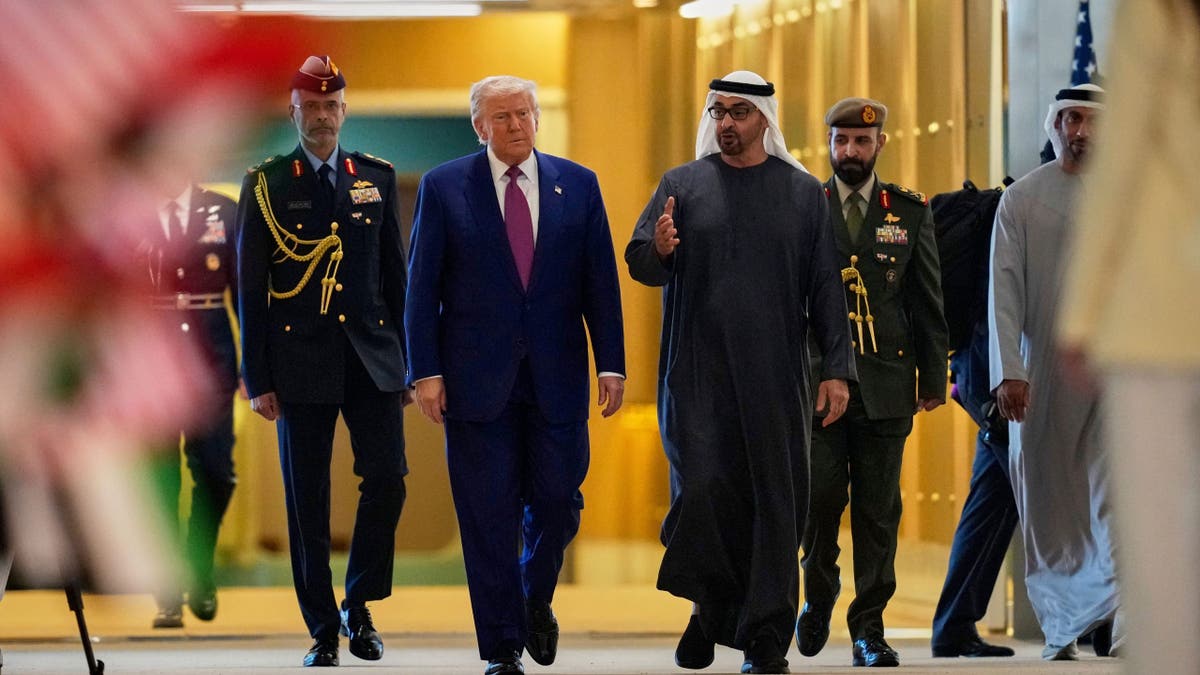
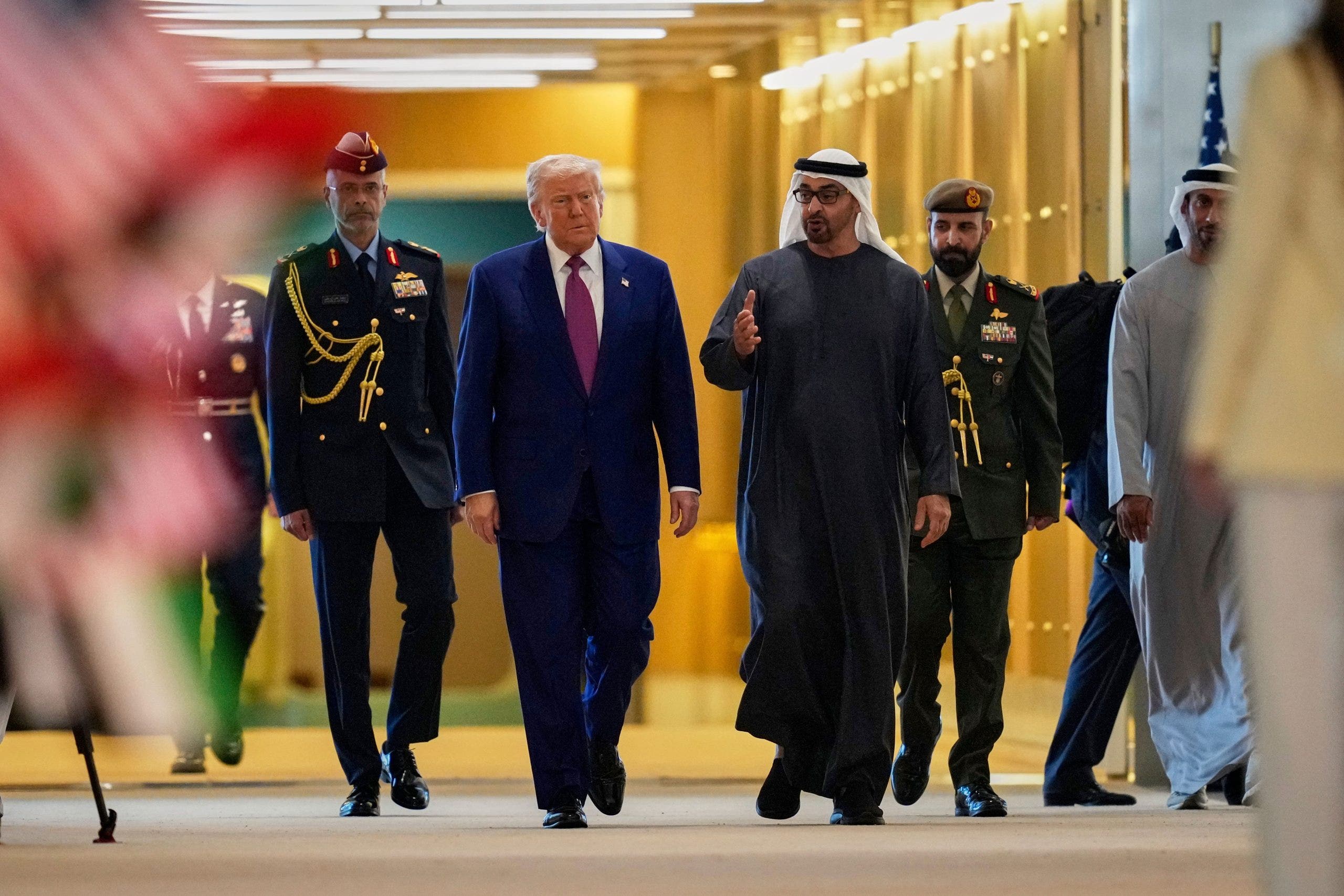
United Arab Emirates President Sheikh Mohammed bin Zayed Al Nahyan greets President Donald Trump at Abu Dhabi International Airport on Thursday, May 15, 2025. (AP Photo/Altaf Qadri)
Preparing for another confrontation
The UAE has already paid a significant price for its proximity to the conflict.
More than 3,000 Iranian missiles and drones targeted the Emirates during the war, according to figures cited by The Associated Press on Nov. 2. The attacks caused casualties and damage to civilian infrastructure.Although no new Iranian attacks had targeted the UAE since May, the threat of renewed confrontation has kept the country on alert.
Al Nuaimi emphasized that while the UAE considers itself a nation committed to peace, it will not hesitate to protect its population.
«Every nation, when it is attacked, [has] the right to defend their people, their sovereignty, their nation,» he said.
But he also drew a clear distinction between the Iranian regime and the Iranian people, who are repressed by the regime. «The Iranian people deserve to be respected, accepted. They have great values, great civilization, and they are our neighbor.»
MIDDLE EAST TAKES CENTER STAGE AT UN AS REGIONAL LEADERS CONFRONT IRAN WAR, GAZA AND HOUTHI THREAT

A man walks past a housing compound as a tall plume of black smoke ascends following an explosion in the Fujairah industrial zone on March 3, 2026. Iran’s strikes on Gulf neighbours since February 28, following the US-Israeli attack, forced the UAE to shut its airspace, blindsiding travellers who thought they were headed to one of the region’s safest holiday destinations. (Fadel SENNA / AFP via Getty Images)
A partnership beyond any administration
Despite the confrontation with Iran, Al Nuaimi rejected the suggestion that the UAE’s relationship with Washington should be judged primarily through the current conflict or any particular U.S. administration.
«We don’t see our relationship with the United States through these conflicts, through security and defense. No, it’s a partnership. It’s a strategic partnership. It is a sustainable partnership. … Our main partnership is with the United States as a nation, with the American people.»
He emphasized that the relationship extends across education, medicine, technology, energy and investment, and is intended to endure political changes in Washington.
«We don’t look at the United States through a certain administration. Our engagement and partnership with the United States … [is] with the nation. It’s with the people. … We have the flexibility and the ability to [adapt] and engage with any administration.»
The comments come at a sensitive time for Gulf governments, whose security relationships with Washington have become more consequential as Iran threatens regional infrastructure and international shipping.
At ADIPEC’s opening ceremony on Nov. 2, Dr. Sultan Al Jaber, the UAE’s minister of industry and advanced technology and chief executive of state-owned energy giant ADNOC, emphasized that the country’s ability to withstand the crisis was the result of years of preparation. «We did not write our resilience playbook during this disruption. We wrote it years before,» Al Jaber told the audience.
The message was consistent with what officials and analysts repeatedly emphasized during Fox News Digital’s visit: the UAE intends to remain a reliable international partner despite the possibility of another regional escalation.
GULF COUNTRIES STRONGLY CONDEMN IRAN’S DRONE ATTACK ON BAHRAIN AS RISING TENSIONS THREATEN MOU

The exhibition floor at ADIPEC 2026 in Abu Dhabi, United Arab Emirates, where global energy companies showcased new technologies and innovations amid growing concerns over energy security and regional instability. (Efrat Lachter/Fox News Digital)
Security beyond military defense
In a separate exclusive interview with Fox News Digital in Dubai, Mohammed Baharoon, director general of the Emirati research center B’huth, argued that the confrontation with Iran has fundamentally expanded the meaning of national security.
«Our resilience now becomes our deterrence,» Baharoon said.
The UAE’s security strategy, he explained, involves far more than intercepting missiles and drones. It also means ensuring reliable energy supplies, food security, functioning infrastructure and the ability to maintain international commerce during a crisis.
For Baharoon, the conflict cannot be understood as a single confrontation between Washington and Tehran.
He described three interconnected wars: the initial American-Israeli campaign against Iran, Tehran’s subsequent attacks on Gulf states and Iran’s disruption of international shipping through the Strait of Hormuz.
«The second war was Iran’s attack on the GCC, because that attack was also unprovoked,» Baharoon said, referring to the Gulf Cooperation Council.
He described the disruption of shipping as a separate confrontation with the global economy, arguing that the consequences extend to countries far removed from the Middle East.
Despite his criticism of Tehran, Baharoon rejected the idea that Iran should permanently be treated as an enemy. Its population, economic potential and geographical importance, he argued, could make it an important contributor to regional prosperity if its leadership shifted away from confrontation.

Attendees gather at ADIPEC 2026, one of the world’s largest energy conferences, held in Abu Dhabi, United Arab Emirates, Nov. 2–5, 2026, as industry leaders discuss global energy security, technological innovation and the growing role of artificial intelligence. (Efrat Lachter/Fox News Digital)
For the UAE, the challenge now is to prepare for the possibility of another confrontation without abandoning the diplomatic and economic relationships it has spent decades building. The crowded streets of Dubai and busy exhibition halls of Abu Dhabi reflect a country determined to move forward, even as the threat of war remains close. Whether the latest negotiations with Iran lead to a breakthrough or another round of fighting, the Emirates is betting that its resilience will allow it to weather the next crisis without losing sight of the future it is trying to build.
war with iran, middle east, national security, geopolitics
INTERNACIONAL
David Bowie, el “astronauta del espacio interior” que llegó a Berlín para cambiar su vida y firmar una trilogía de discos inolvidables

Las editoriales Walden y Dobra Robota acaban de publicar David Bowie – Low, de Hugo Wilcken, un nuevo título de la colección 33 1/3 dedicado al álbum que abrió una de las etapas más experimentales de la carrera del músico británico.
Low (1977) surgió después de que Bowie viajara a Francia junto a Iggy Pop, en un período marcado por su intención de alejarse del consumo de drogas. Allí produjo The Idiot, el primer disco solista del exintegrante de The Stooges, una experiencia que anticipó algunas de las búsquedas sonoras y conceptuales que desarrollaría luego.
El álbum fue grabado entre el castillo de Hérouville, en Francia, y los estudios Hansa de Berlín Occidental, con la participación del productor Tony Visconti y el músico Brian Eno. Su sonido incorporó influencias de la kosmische musik alemana, asociada a grupos como Neu!, Harmonia y Kraftwerk, y dejó una marca en buena parte del post punk posterior.
En el libro, Wilcken recorre Low desde su portada y sus canciones hasta referencias como la obra de Aleister Crowley y el vínculo del disco con Station to Station. El autor australiano, residente en París, también escribió las novelas The Reflection, Colony y The Execution.
“En cuanto a la música, Low y sus discos hermanos fueron una derivación directa de la canción que le dio el título a Station to Station. Muchas veces tengo la impresión de que en cualquiera de mis álbumes siempre hay una canción que señala claramente la intención del álbum siguiente”, dijo Bowie. A continuación, un fragmento del libro.

Capítulo 2: El visitante
En diciembre de 1975, poco después de terminar Station to Station, Bowie ya estaba trabajando en la banda de sonido de The Man Who Fell to Earth, aunque finalmente no se usó en la película permaneció inédita durante muchos años. Puede decirse que Station to Station sentó las bases artísticas de lo que luego sería Low, pero la verdadera génesis del álbum se encuentra en estas sesiones de grabación de la banda de sonido. Según se cuenta, varios temas de Low son material reciclado de esta etapa: Brian Eno afirmó que la canción «Weeping Wall» nació en ese momento, aunque Bowie sostiene que el único material de la banda de sonido que después usó fue la parte del bajo invertida en «Subterraneans». Tal vez Bowie no sea el testigo más confiable acerca del fin de semana perdido de 1975 (al hablar de Station to Station, comentaba: «Sé que se grabó en Los Ángeles porque lo leí en algún lado»), pero de todos modos podemos descartar otros posibles materiales reciclados por lo que indica la evidencia interna.
Para la banda de sonido, Bowie trabajó con Paul Buckmaster (productor de «Space Oddity», el éxito de 1969), quien incorporó un violonchelo para acompañar la guitarra, los sintetizadores y las cajas de ritmos. Las sesiones realizadas en su casa de Bel Air dieron como resultado cinco o seis temas que se grabaron en una grabadora TEAC de cuatro pistas. Según contaba Buckmaster, en aquel momento tanto él como Bowie estaban fascinados con Radio-Activity, el álbum que acababa de lanzar Kraftwerk. El disco reflejaba una etapa de transición en la carrera de Kraftwerk y encauzaba la forma libre experimental hacia un estilo con ritmos robóticos mucho más controlados, algo así como el equivalente sonoro de una pintura de Mondrian. Radio-Activity tiene una clara influencia en Low, con su mezcla de ganchos pop, efectos de sonido inquietantes, retromodernismo, introspección y distancia emocional. En especial, los sintetizadores con sonido de theremin de «Always Crashing in the Same Car» y los interludios electrónicos de «A New Career in a New Town» hacen pensar en Radio-Activity.
Más allá, entonces, de ese primer intento de lo que luego sería «Subterraneans», el verdadero aporte de estas sesiones de grabación para Bowie fue pensar (y crear) por primera vez una música más ambiental, que reflejara un «estado de ánimo». En una carrera profesional que ya llevaba más de una década, a Bowie aún le faltaba grabar una canción puramente instrumental. En este sentido, la logorrea de Station to Station —y su acumulación de imágenes vagamente conectadas— es más una mirada hacia el pasado que hacia el futuro, pues más de la mitad de las canciones de Low quedaron sin letra, en tanto las demás son casi monosilábicas. Antes de Low, Bowie había mostrado la tendencia a seguir una suerte de línea narrativa, si bien imprecisa. En Low, incluso en las canciones con letra, ese impulso narrativo desaparece casi por completo. Y, según contó después, fue durante las sesiones de grabación de The Man Who Fell to Earth cuando por primera vez pensó en trabajar con Brian Eno.
Hay versiones contradictorias sobre los motivos por los cuales se abandonó el proyecto de la banda de sonido. Según Bowie, su mánager (Michael Lippman) le había prometido que tendría los derechos para musicalizar la película y él había empezado las grabaciones con esa condición. Pero, cuando supo que su trabajo competiría con otras dos opciones, dejó el proyecto en un estado de furia. Ese relato no se ajusta a lo que cuentan otras personas involucradas. De acuerdo con Harry Maslin, quien coprodujo Station to Station, en esos tiempos Bowie estaba en tan mal estado que no podía concentrarse en el trabajo tanto como se requería. Buckmaster parece coincidir con esta explicación y recuerda una sesión en la que Bowie prácticamente sufrió una sobredosis y hubo que ayudarlo a irse del estudio. «En mi opinión, la música parecía un demo y no una versión final, a pesar de que se esperaba que entregáramos una versión definitiva», le explicó Buckmaster a David Buckley, el biógrafo de Bowie. «El material que nos quedó no tenía suficiente calidad y Nic Roeg [el director de la película] decidió rechazarlo por ese motivo».
Sin embargo, John Phillips —que terminó a cargo de la banda de sonido— cuenta una historia diferente: «Roeg quería banjos, música folk, rasgos de la cultura estadounidense, porque la película era sobre un extraterrestre que llega al suroeste de los Estados Unidos. “David no puede hacer ese tipo de cosas”, decía Roeg». Este me parece un mejor argumento para explicar el rechazo de la banda de sonido de Bowie: aunque la película The Man Who Fell to Earth parte de una premisa de ciencia ficción, en realidad no es eso, y una banda de sonido «espacial» y futurista habría dado una idea errónea. En cuanto a la calidad del trabajo de Bowie, quienes lo escucharon quedaron impresionados. Para Phillips, la música era «sugerente y hermosa, con repiques y campanas japonesas, y algo que sonaba como vientos y ondas electrónicas». Bowie tenía consigo la banda de sonido durante las grabaciones de Low para trabajar en el material de la canción «Subterraneans», y en algún momento la reprodujo para los músicos: «Era excelente» —recordaba el guitarrista Ricky Gardiner—, «muy diferente de todo lo que había hecho Bowie». Unos meses después, Bowie le envió a Roeg una copia de Low con una nota: «Esto es lo que quería hacer para la banda de sonido».
The Man Who Fell to Earth fue la cuarta película del realizador inglés Nic Roeg. En la cumbre de su carrera, a mediados de la década de 1970, Roeg había recibido un amplio reconocimiento por clásicos de autor como Walkabout y Don’t Look Now (Encuentro de dos mundos y Venecia rojo shocking, respectivamente en español). Y ya había iniciado en la actuación a una estrella del rock (Mick Jagger) en Performance, su debut como director. Pero, para Bowie, The Man Who Fell to Earth resultó ser mucho más que su primer trabajo importante como actor. En muchos sentidos, Thomas Jerome Newton, el personaje que representaba, era la proyección de Bowie imaginada por Nic Roeg. Y Bowie, a su vez, confesó «ser Newton durante seis meses» después de filmar la película, lo que incluyó usar su ropa y conservar sus poses («Me habían ofrecido un par de guiones, pero elegí este porque era el único en el que no tenía que cantar o parecer David Bowie», dijo entonces. «Ahora creo que David Bowie se parece a Newton»). Roeg primero había pensado en Peter O’Toole para ese papel, pero se interesó en Bowie después de ver un documental hecho por Alan Yentob para Omnibus, un programa de arte de la BBC. El documental se llamaba Cracked Actor (‘Un actor destruido’) y mostraba a un Bowie muy flaco y pálido mientras hacía una gira por Estados Unidos. Roeg quedó muy impresionado al verlo, a tal punto que una escena del documental en la que Bowie tiene algo así como un brote psicótico en el asiento trasero de una limusina en Nueva York fue recreada en la película, con el mismo chofer e incluso algunos fragmentos de diálogo textuales. Hay otros aspectos autorreferenciales que dejan en evidencia el vínculo entre Bowie y el personaje que representaba. Al igual que él, Newton hace música y, cerca del final de la película, crea un álbum de sonidos espectrales titulado The Visitor (‘El visitante’). En la escena en la que un personaje compra este álbum en una tienda de discos, en segundo plano se ve un exhibidor que promociona el disco Young Americans de Bowie. En un primer guion, aparentemente también se usaron letras de Bowie.
La película cuenta la historia de un extraterrestre que viaja a la Tierra desde un planeta azotado por la sequía, donde dejó a su mujer y a sus hijos. Con sus conocimientos superiores, crea una corporación de alta tecnología para obtener el dinero que necesita para construir una nave espacial, destinada a llevar agua a su planeta y salvarlo. En esta vida solitaria aparece Mary-Lou, una empleada de hotel que le hace conocer la televisión y el alcohol. Mientras tanto, el fantástico ascenso al poder de Newton despierta el interés de funcionarios del gobierno, que descubren su plan espacial y deciden detenerlo. Newton es encerrado en un ático y sometido a exámenes médicos. Finalmente, los hombres pierden interés en él, Mary-Lou lo encuentra y Newton escapa. Graba el disco The Visitor con la esperanza de que su esposa, que tal vez ya esté muerta, llegue a oírlo. Newton comprende que ya no puede volver a su planeta ni salvar a su familia y se hunde en la autocompasión y el alcohol. En un sentido, se ha vuelto humano.
A Bowie no se le pide que actúe en el sentido convencional (y cuando ocasionalmente tiene que actuar de ese modo, el resultado es bastante pobre). Lo que hace es simplemente proyectar una cualidad sobrenatural que ya está presente en la alienación causada por la fama de la estrella de rock, el consumo de drogas y una concepción romántica de la vida creativa. «La premisa básica era la idea de un hombre obligado a introducirse en una sociedad sin dar mucha información, porque entonces permanecería aislado», explicaba Nic Roeg. «Tenía que ser alguien con una actitud secreta en sí mismo, una persona secreta. Creo que, desde el punto de vista emocional, muchas de estas ideas interpelan a David». Newton es como un refugiado, «un astronauta del espacio interior, más que del espacio exterior. Recuerdo haber hablado con David sobre este tema».
El segundo lado de Low, de estilo «ambiental», en parte se relaciona con la exploración de los extensos paisajes interiores de Newton, tal como deja entrever la nota de Bowie dirigida a Roeg. El hecho de que dos de los álbumes de Bowie y varios de sus singles muestren imágenes de la película da cuenta de su importancia. El papel encajaba a la perfección con el personaje público de Bowie porque materializaba la metáfora del extraterrestre, que Bowie siguió alimentando y combatiendo a la vez (la aburrida rutina del «tipo común y corriente» que llevó adelante en los años ochenta fue algo así como una reacción a ese personaje). Incluso en 1997, el título que eligió para su álbum, Earthling (‘Terrícola’), es toda una referencia irónica a The Man Who Fell to Earth.
12534876,bowie,david,earth,fell,film,film stills,man,personality,television,who

Melody Luz reveló el recuerdo más doloroso de Mariana Nannis que quebró su relación con Alex Caniggia: “Le mostraba mi panza y ella…”

Gimnasia de Mendoza e Independiente Rivadavia jugarán el clásico en el cierre del Torneo Clausura: hora, TV y formaciones

Los proyectos en el Congreso de Estados Unidos que podrían presionar sobre una eventual asistencia financiera de Trump a Milei

Así es la vida, campeón, a veces se gana y a veces se pierde

¿Era Vlahovic un ‘9’ para el Barça?

El mensaje del Papa que inquieta a Milei, el impacto de la derrota de Trump y la advertencia de los mercados

La oposición cuestionó la suspensión de embargos a las pymes y criticó el plan económico: “Llegaron tarde”

Milei parte nuevamente a España y en el gobierno dicen que no bajará el tono de sus críticas a Pedro Sánchez

Sindicatos del transporte y de la industria se diferencian de la estrategia de la CGT y deciden acciones propias

El embajador de EEUU ratificó el apoyo de Trump a la Argentina tras la derrota republicana: “Nuestro compromiso es firme”

 POLITICA2 días ago
El embajador de EEUU ratificó el apoyo de Trump a la Argentina tras la derrota republicana: “Nuestro compromiso es firme”
- INTERNACIONAL2 días ago
Santiago Peña renunció a la Presidencia de Paraguay por el escándalo del Ueno Bank
- INTERNACIONAL2 días ago
Cámara periscópica de 50 MP y tecnología NXTPAPER en pantalla AMOLED: así es el nuevo smartphone que llega a Perú