INTERNACIONAL
Hometown of accused US military plane saboteur is a known magnet for anti-Israel activism


The European hometown of the man who single-handedly destroyed a U.S. military transport aircraft in an act of apparent protest, has a rich history of pro-Palestinian support.
This includes the town council for Cork, Ireland, barring Israeli Prime Minister Benjamin Netanyahu from entering its city limits, citing his «illegal occupation of Palestine and bordering countries» and the continuous pro-Palestinian protests taking place every Saturday since October 2023, organized by the Cork Palestine Solidarity Campaign (CPSC).
Cork’s opposition to Israel adds context to the possible motives for why Daithí O’Corráin, an Irish national, allegedly destroyed a U.S. military C-130 Hercules aircraft in April. The incident also draws attention to the several anti-Israel groups that have sprung up in Ireland in recent years.
IRELAND’S ELITES HAVE FOUND THEIR NEW RELIGION: HATING ISRAEL
Ireland’s anti-Israel foothold became international news in April when O’Corráin, a Cork native, barricaded himself inside a C-130, a U.S. military transport plane. Once inside, he tore out critical wiring, destroyed gauges, contaminated fuel tanks and even poured corrosive chemicals into the aircraft, according to the U.S. Department of Justice.
Although his motives remain unclear, several groups from Cork interpreted his act as a form of resistance against Israel and U.S. military interventionism.
In one such case, a Cork business owner named Tracey Ryan launched an initiative to raise €20,000 for O’Corráin’s legal defense, praising his efforts to resist «the unwanted presence of U.S. military in Ireland in the face of their illegal war & support of Israel’s genocide.»
«We, Daithí’s friends and comrades, are raising funds to support him through his court case. We would really appreciate your support & will keep you updated here on ways to support Daithí,» Ryan wrote in the description of the fundraising page.
According to her personal Facebook profile, Ryan joined a bus of pro-Palestinian activists who went to support O’Corráin at his court appearance. «Bus going to the high court to support Daithí on Thursday!!» Ryan wrote.
O’Corráin has also received support from CPSC, the Cork pro-Palestinian group.
As news of the incident spread, CPSC co-chair Anne McShane posted on her Palestinian advocacy Facebook page in support of O’Corráin, encouraging viewers to send him letters of encouragement after his incarceration.
«Daithi needs our support in order to keep up his morale. Letters are a lifeline for prisoners,» an April 17 post read.
CPSC spearheads anti-Israel demonstrations in Cork. In addition to hosting several pro-Palestinian fundraising initiatives, the group facilitates weekly Saturday demonstrations and invites speakers. At one point, CPSC’s website featured a fundraising site for O’Corráin, but the page has since been removed.
INSIDE THE PROTEST PLAYBOOK TO VILIFY ISRAEL ON ‘GLOBAL DAY OF ACTION’
In CPSC’s own words, the group is part of a larger pro-Palestinian movement.
«It’s not just the city. Towns across all of County Cork stand in solidarity with Palestinians, including Ballincollig, Bandon, Cobh, Charleville, Clonakilty, Fermoy, Kinsale, Macroom, Mallow, Mitchelstown, Skibbereen and more,» the group states on its website.
«Cork Palestine Solidarity Campaign is a branch of the Irish Palestine Solidarity Campaign (IPSC),» it added.
As part of its sister groups’ efforts «to foster links between Palestine and Irish institutions and organizations,» CPSC and IPSC have both applauded Cork’s city council efforts to promote pro-Palestininian policies.
«Well done to the Cork City Council which passed a motion … calling for the Central Bank to end the sale of Israeli bonds,» one Facebook post reads.
The groups have also held Cork up as a template for Ireland’s national policy.
«We call on the Irish government to follow the example of both Dublin and Cork city councils by officially recognizing Israeli Apartheid – and acting to end any and all links to this regime,» another statement reads.
For its own part, the Cork City Council has earned the support of IPSC and CPSC through a range of its official resolutions, making the town’s formal position to condemn any of Ireland’s ties to Israel.
In addition to banning Netanyahu from entering the city’s limits in a 41-8 vote in 2024, Cork’s council has flown the Palestinian flag over city hall on U.N. International Day of Solidarity and called on Ireland to ban trade from Israeli settlements.
Cork has even passed a «twinning» mechanism with the Palestinian city of Nablus — a largely symbolic partnership.
IRISH PM REJECTS ANTISEMITISM CONCERNS IN IRELAND AMID DRAMATIC VOTE OVER BOYCOTTING ISRAEL GAME
Fergal Dennehy, the Lord Mayor of Cork from 2025 to 2026, hosted the mayor of Nablus in February, calling the partnership «just the beginning of what we hope will be a wonderful relationship between our two great cities.»
Neither CPSC nor Cork City Council responded to Digital’s requests for comment on the city’s pro-Palestinian positions or about connections to O’Corráin.
O’Corráin is incarcerated in Ireland and faces criminal charges in the U.S. for «destruction of government property,» valued at $60 million.
politics, ireland, middle east foreign policy, benjamin netanyahu, israel, anti semitism









INTERNACIONAL
Syria’s Christian leaders warn of ‘grave’ threat to community’s future amid wave of attacks
NEWYou can now listen to Fox News articles!
The leaders of Syria’s oldest Christian denominations issued a dire warning about the intensified persecution of their communities and whether there is a future for them in the Middle Eastern nation.
Syrian President Ahmed al-Sharaa, a former U.S.-designated terrorist who commanded the al Qaeda-linked Nusra Front during the nation’s civil war, has since sought to distance himself from his extremist past as he oversees the nation’s rebuilding amid a deteriorating situation for Christians and other minorities.
Senior Christians released a joint statement that noted «a series of heinous and recurring attacks targeting the Syrian people, and Christians in particular. Time and again, we have raised our voices, and we continue to do so, as this wave of attacks has persisted without interruption. These attacks are not, and have never been, isolated incidents.»
The signers were John X, Greek Orthodox Patriarch of Antioch and All the East, Ignatius Aphrem II, Syriac Orthodox Patriarch of Antioch and All the East, and Youssef Absi, Melkite Greek Catholic Patriarch of Antioch and All the East.
SYRIA OFF US TERROR BLACKLIST AFTER NEARLY 50 YEARS AS TRUMP ADMIN CLEARS INVESTMENT HURDLE
Patriarch of the Syrian Orthodox Church of Antioch, Ignatius Aphrem II, on Sept. 18, 2026. (Bernd von Jutrczenka/picture alliance via Getty Images)
The religious leaders cited examples of recent violent attacks on members of the Christian community in the Muslim-majority country.
«What has happened, and continues to happen, in many places, including most recently in Al- Suqaylabiyah, in the form of systematic assaults and kidnappings carried out for exorbitant ransom payments, constitutes a violation of the most basic human rights, as evidenced by the video showing the brutal torture of the jeweler Maher Sankari,» they wrote.
«In view of the competent authorities’ failure to provide security and protection in response to what has occurred and continues to occur, these attacks have once again escalated in recent days, culminating in the targeting of Archbishop Youhanna Abdo Arbash of the Melkite Greek Catholic Archdiocese of Homs, Hama, Al-Nabk Yabroud, and their Dependencies. He was bound, blindfolded, and gagged while his office was ransacked. «
The leaders warned about a «grave question regarding the future of Christians in this country.»
TURKEY DEPORTS PEACEFUL CHRISTIANS UNDER GUISE OF ‘NATIONAL SECURITY’ CLAIMS WATCHDOG
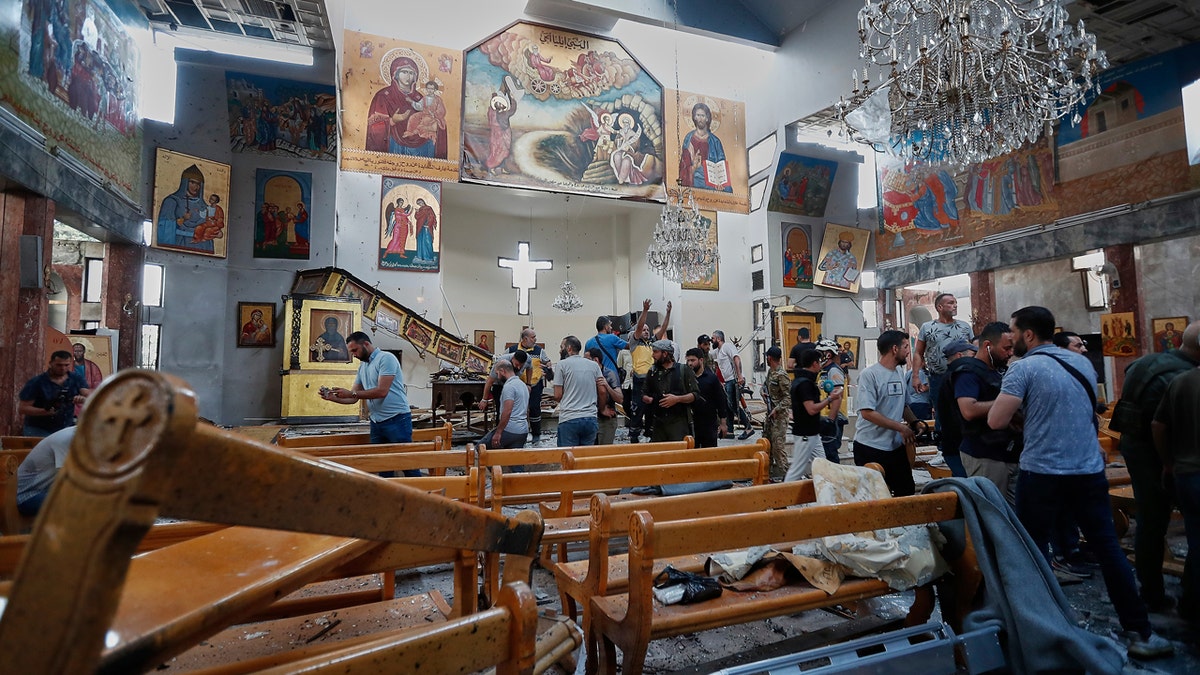
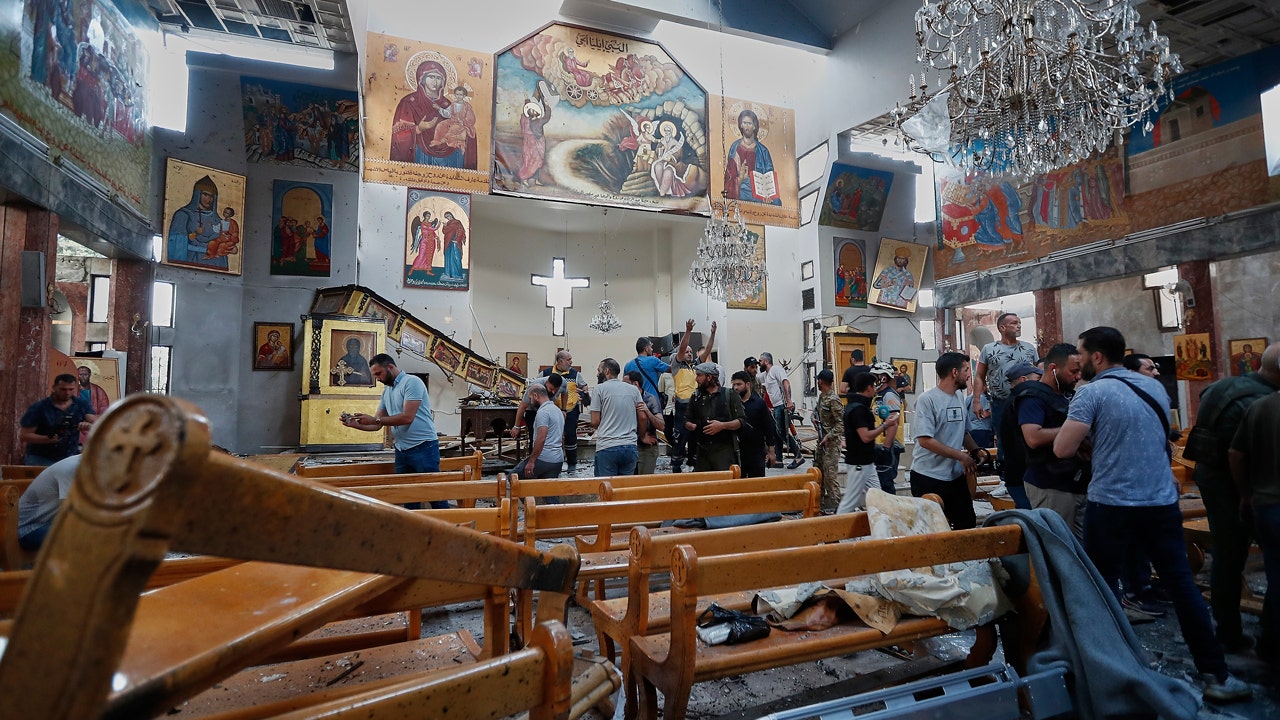
Syrian citizens and security forces inspect the damage inside Mar Elias church, where a suicide bomber detonated himself in Dweil’a in the outskirts of Damascus, Syria, June 22, 2025. (AP Photo/Omar Sanadiki)
A State Department spokesperson told Fox News Digital, «We are concerned by reports of attacks, kidnappings and violence against Christians in Syria and regularly raise these concerns with the Syrian government. We continue to stress the importance of protecting the unalienable rights of all Syrians, regardless of ethnicity or religion.»
Alberto Fernandez, former U.S. ambassador and Mideast analyst, who closely follows the persecution of Christians in the region, told Fox News Digital, «The government in Damascus is an Islamist-controlled one but has tried generally to treat Christians fairly — more so than the treatment of Alawites and Druze. So some Christian property has been returned and some Christian representation has been secured. The regime is still deeply ideological, and includes figures that are more extreme than the norm. «
He added, «Christian existence is seen more as a concession than a question of fundamental rights. But the biggest danger for Christians has been the government’s inability to secure law and order in the country, especially in some areas like Homs, and the difficulty in improving the country’s disastrous economic situation. So deep economic crisis and crime/chaos have driven Christian flight more than actual persecution by the state. «
Fox News Digital reported last year about radical Islamists who targeted Syrian Christians and reportedly murdered Khaled Mazhar, pastor of the Good Shepherd Evangelical Church in Sweida, along with 11 family members. An additional person survived the massacre of Christians because the Islamists thought she was dead.
CHRISTIAN-JEWISH ORGANIZATION DELIVERS EMERGENCY AID TO PERCECUTED SYRIAN MINORITIES UNDER THREAT
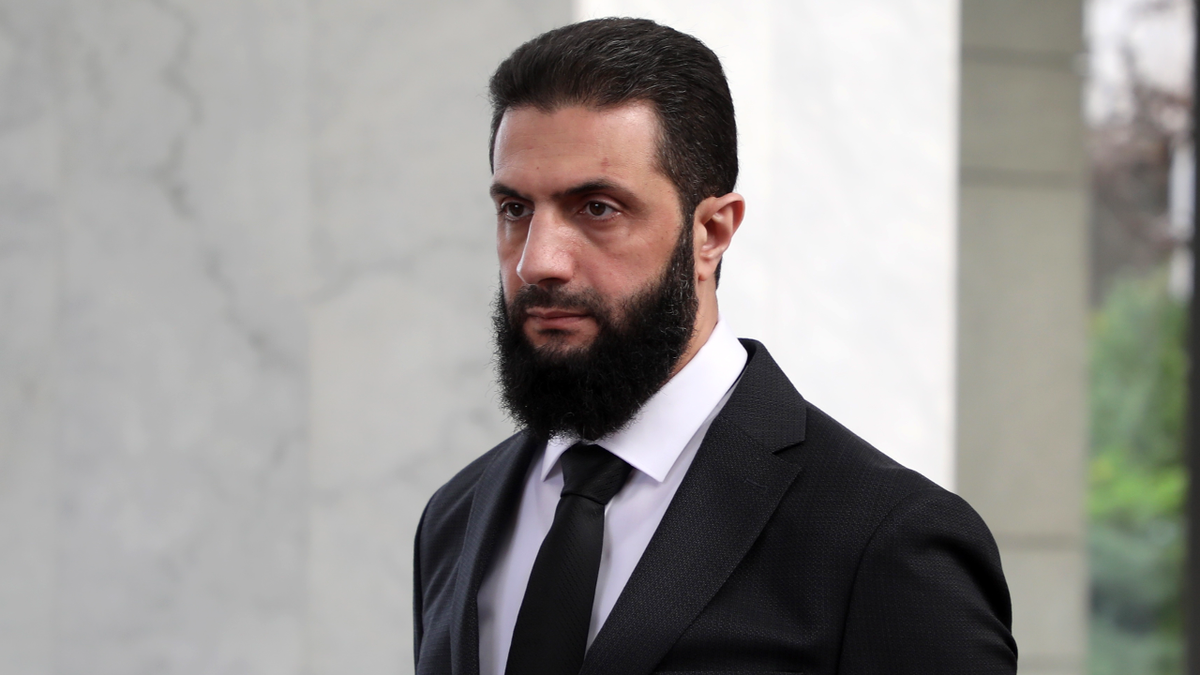
Syrian President Ahmed al-Sharaa on Dec. 30, 2024, in Damascus. (Ali Haj Suleiman/Getty Images)
Syrian government actions
While the Syrian government did not respond to Fox News Digital requests for comment, there have been some positive pronouncements over the last year, according to reports. After the bombing of the Mar Elias Church in Damascus last year, when the Islamic State murdered 25 people, President al-Sharaa pledged to tackle security threats against Christians.
In 2025, his government said it prevented a planned attack on a church in Tartus. Syria’s Interior Ministry said two men had been arrested «en route to carry out a terrorist operation.»
Syria appointed Hind Kabawat, a lawyer, as minister of social affairs and labor. She is the only Christian and woman in the president’s cabinet.
A British government report from earlier this year seemed to downplay threats to the Christian community. It noted, in part, «Since coming to power in Dec. 2024, the new government has engaged with Christian and Shia community leaders and has provided security for religious sites and festivals. While there are reports of attacks, harassment and discrimination by both state and non-state actors, the frequency and severity of these incidents do not suggest that there is a generalized risk to Christians and Shia Muslims.»
After the bombing of the Mar Elias Church in Damascus last year, President al-Sharaa pledged to tackle security threats against Christians. (AP Photo/Omar Sanadiki)
Yet the Rev. Dr. Petra Heltd, a Christian scholar, told Fox News Digital, «The Joint Statement issued regarding the escalating wave of violence, extortion, and targeted attacks against the Christian communities in Syria is a heartfelt cry for help. «
She said, «While standing in solidarity with the suffering brothers and sisters in Syria, we call upon international governments, diplomatic missions and multilateral bodies to take concrete steps to support and protect Christians in Syria and to speak out against those acts against the ancient, living Christian presence in the region — a community that has already dwindled from only roughly one million before 2011 to fewer than 300,000 today.»
STATE DEPARTMENT PRESSES EGYPT TO RESPECT RELIGIOUS FREEDOM AS CHRISTIAN CONVERT FACES POSSIBLE EXECUTION
Hayvi Bouzo, who was born in Syria and is the co-founder and executive director of Middle East 24, told Fox News Digital, «Kidnappings for ransom, an assault on a bishop, and repeated attacks on Christians are not isolated incidents. They are a pattern, and they show that extremist Islamist elements still operate with impunity in parts of Syria. That is not the new Syria that can be stable. Given America’s involvement in Syria, Washington has both the leverage and the responsibility to make the protection of minorities a clear, stated pillar of U.S. policy, and to ensure these abuses do not go unpunished.»

A clock tower and bell tower are pictured at the Greek Orthodox Convent of Our Lady of Saydnaya in southeastern Syria on Aug. 30, 2026. (Louai Beshara/AFP via Getty Images)
Israel’s special envoy to the Christian world, George Deek, told Fox News Digital, «The latest warning from Syria’s church leaders clearly shows that a regime that emerged from jihadist movements and continues to rely on fighters from that background offers little reassurance to Christians or other minorities. We have already seen the consequences for the Druze and Alawites. This is a recurring pattern that should alarm everyone.»
He added, «The international community must stop mistaking promises of moderation for actual moderation. Any engagement with Damascus must be conditioned on concrete protection for minorities, accountability for perpetrators and genuine religious freedom. The future of Syria’s ancient Christian communities cannot depend on the goodwill of former jihadists.»
christianity religion, syria, persecutions, orthodox, religion
INTERNACIONAL
Cuatro de cada diez cubanos que recibe remesas no cubre las necesidades básicas, según una encuesta del Instituto Republicano Internacional
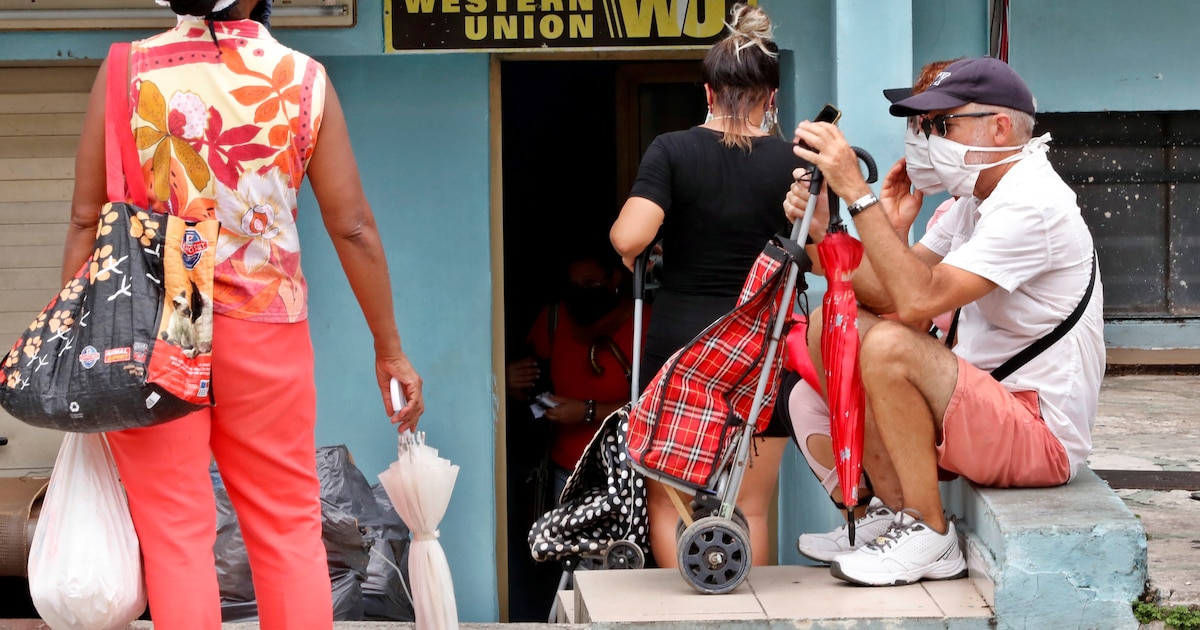
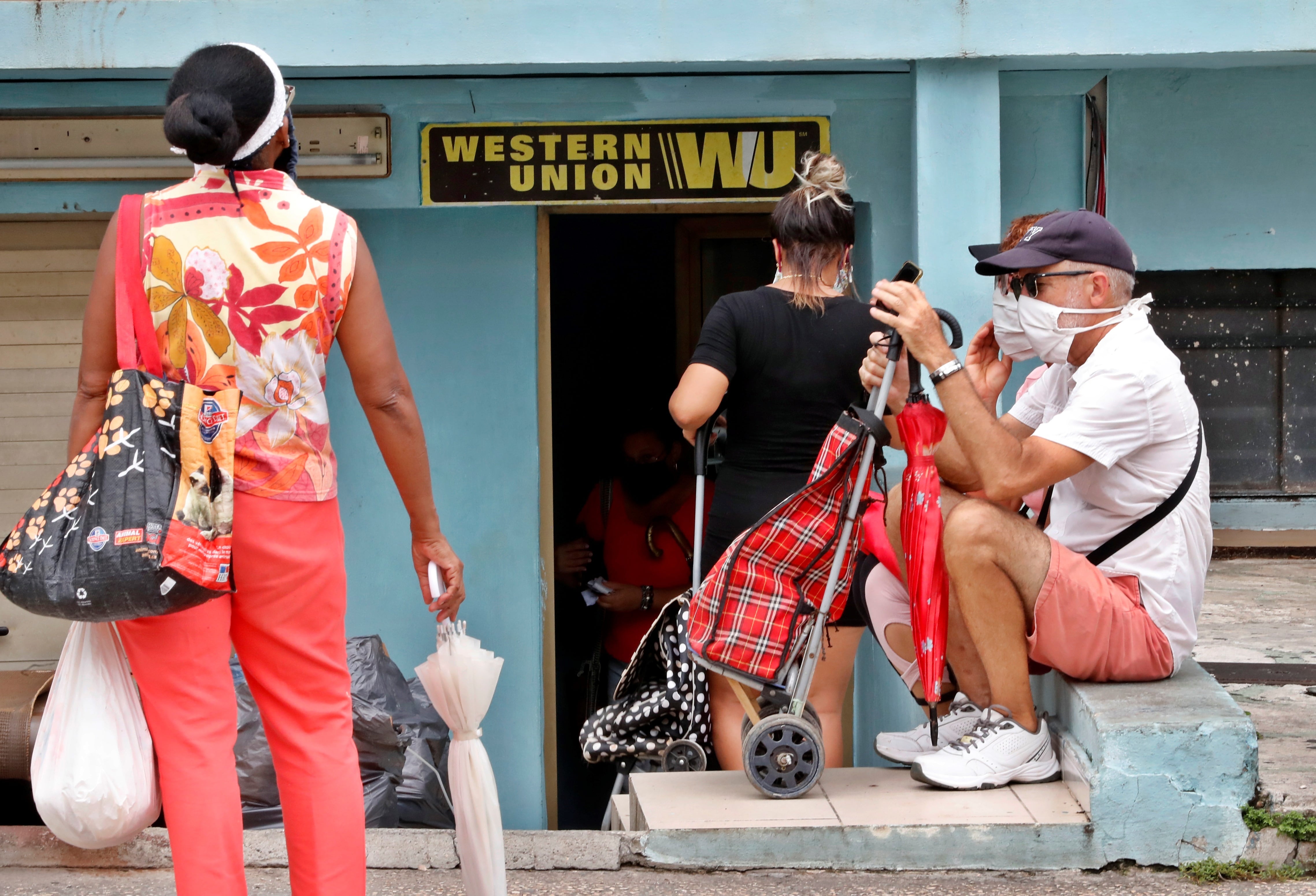
El 38% de los cubanos que reciben remesas no logra cubrir ni la alimentación ni los gastos más elementales de su hogar, según una encuesta nacional del Instituto Republicano Internacional (IRI), organización estadounidense dedicada a estudios de opinión y gobernanza.
El dato, difundido el miércoles, desmonta la idea de que la ayuda familiar desde el extranjero funciona todavía como un colchón suficiente frente al deterioro económico de la isla.
Comer, el gasto que más golpea a los hogares cubanos
El sondeo, elaborado por NORC, centro de investigación de la Universidad de Chicago, mediante entrevistas presenciales a 1,199 adultos entre julio y septiembre, identificó la comida como el principal problema económico. El 65% de los participantes la señaló como el gasto mensual más difícil de cubrir, proporción que trepa al 73% en las provincias orientales y baja al 49% en La Habana.
Quienes no reciben remesas están en peor situación: el 48% de ese grupo admite no poder cubrir sus necesidades básicas, diez puntos por encima de los que sí reciben ayuda del exterior.
La diferencia confirma que el dinero enviado desde fuera todavía amortigua parte del golpe, aunque sus límites quedan expuestos frente al alza sostenida de precios.
Un dato resulta especialmente revelador: el 55% de quienes reciben remesas califica de “muy mala” la situación económica de su hogar, un porcentaje más alto incluso que el 51% registrado entre quienes no cuentan con esa ayuda.
La métrica no mide lo mismo que la insuficiencia de ingresos, pero sugiere que tener acceso a divisas extranjeras no basta para transformar la percepción sobre las condiciones de vida.
Los precios diarios explican la insuficiencia de las remesas
Los números de la encuesta del IRI cobran otra dimensión al cruzarlos con los costos que enfrentan las familias cubanas en el mercado real. A principios de noviembre, CiberCuba, sitio de noticias sobre Cuba con sede en Miami, documentó una compra de alimentos en Baracoa que superó los 8,000 pesos cubanos ( unos 330 USD)y solo permitió adquirir arroz, frijoles, viandas y algunos condimentos, sin carne ni otros productos proteicos de origen animal.
Ese gasto ya superaba el salario estatal medio mensual de agosto, de 7,354 pesos. La devaluación del peso frente al dólar agravó el panorama en las semanas siguientes: según el propio sitio, la divisa estadounidense cerró el 18 de noviembre en 935 pesos en el mercado informal, con el euro estable en 990.
Incluso las remesas que antes representaban un respiro considerable pierden poder de compra con rapidez. En agosto, una médica cubana mostró cómo gastó 36.000 de los 65.000 pesos que obtuvo al cambiar 100 dólares en una compra de alimentos que, según explicó, no le alcanzaría para todo el mes.
¿Por qué no alcanzan las remesas en Cuba? Porque la inflación y la devaluación del peso superan el ritmo al que llega el dinero desde el exterior: mientras los precios de los alimentos se disparan semana a semana, el valor real de los dólares convertidos a pesos se erosiona antes de que las familias completen sus compras mensuales.
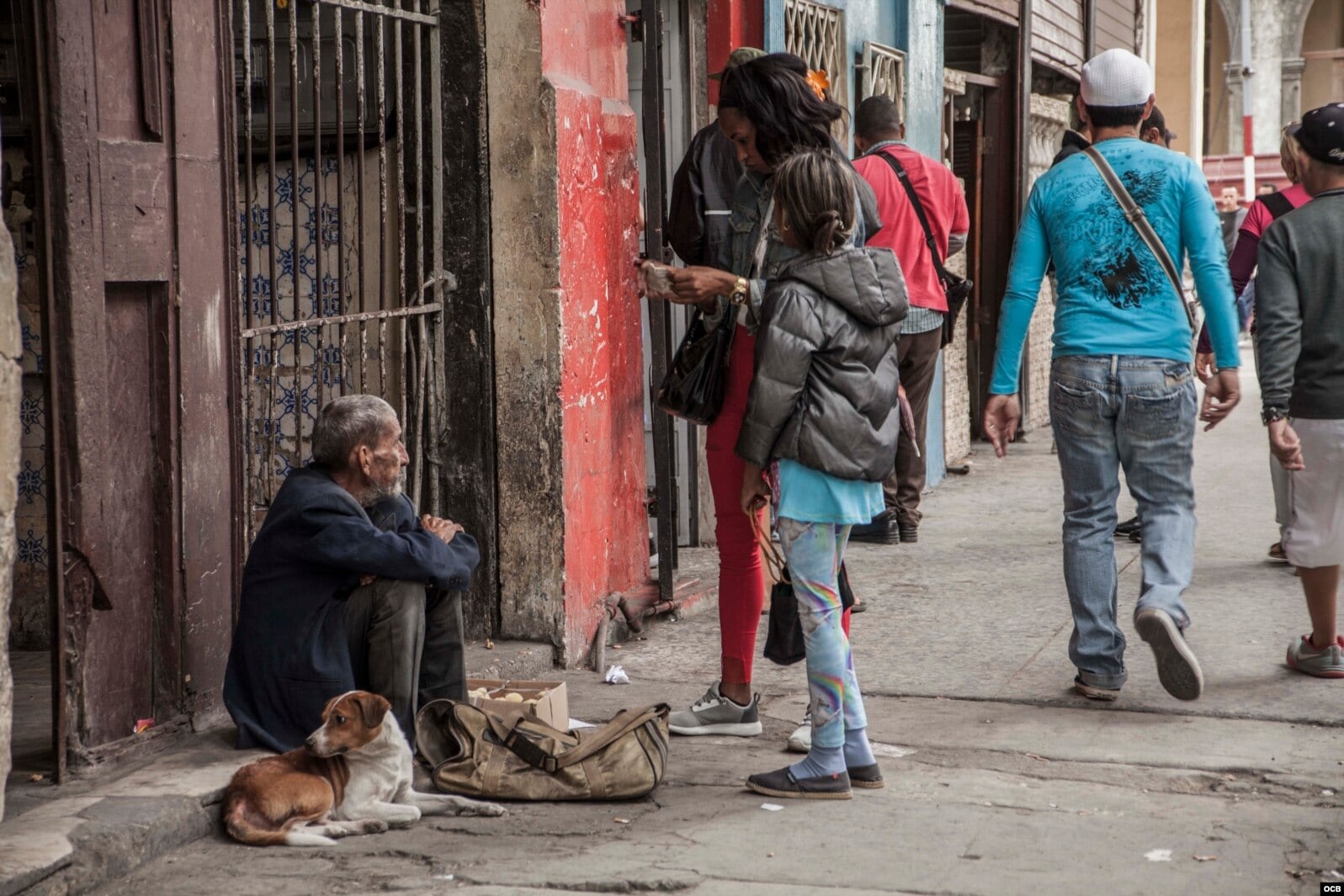
Una red familiar transnacional que no alcanza a compensar la crisis
La encuesta del IRI también dimensionó la extensión de los vínculos entre Cuba y el exterior: el 61% de los participantes tiene familiares o amigos viviendo fuera del país, y entre ellos Estados Unidos es el destino más mencionado, con el 76%.
Esa red, sin embargo, introduce una desigualdad adicional entre los hogares cubanos. El acceso a ayuda económica ya no depende solo de los ingresos que una familia pueda generar dentro de la isla, sino de si cuenta con parientes en el extranjero y de la capacidad de estos para enviar dinero.
El economista Pedro Monreal cuestionó recientemente la insuficiencia del sistema cubano de asistencia social. En un análisis recogido por CiberCuba, señaló las limitaciones de las prestaciones estatales para proteger a los sectores vulnerables en un escenario donde las remesas y la ayuda humanitaria desempeñan un papel central.
El contexto reciente agrava el diagnóstico
El propio Gobierno cubano reconoció en julio que el salario mínimo de 3,210 pesos mensuales no alcanza para cubrir la canasta básica de bienes y servicios, según admitieron funcionarios del Ministerio de Trabajo y Seguridad Social.
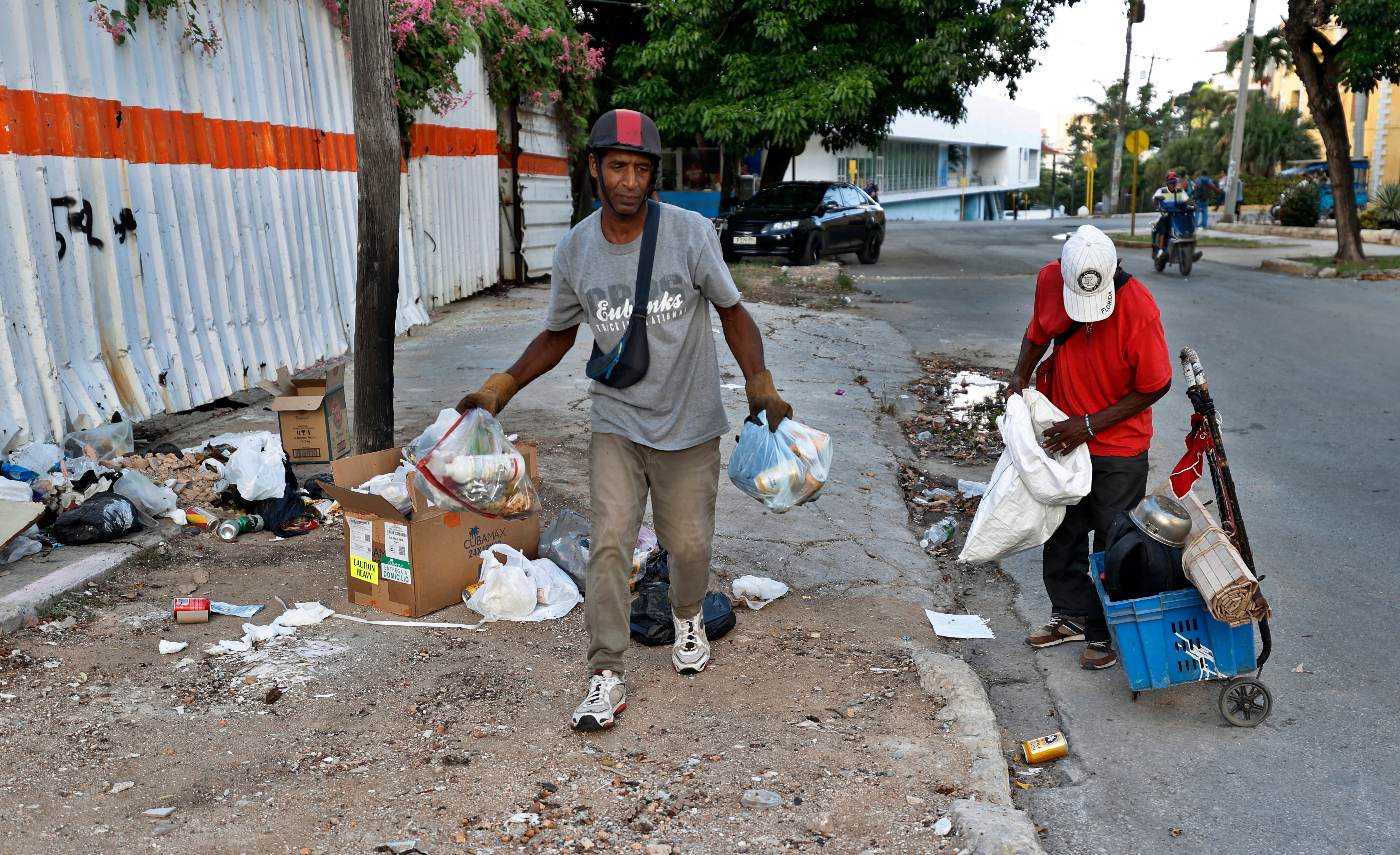
Una estimación del economista José Luis Pérez Capdevila situó en junio el costo real de esa canasta en unos 96,000 pesos mensuales, muy por encima del salario medio nacional.
Este mes, el Gobierno promulgó una reforma de su sistema de seguridad social que introduce un mecanismo anual para ajustar las pensiones a la inflación, según informó la agencia EFE. La medida llega en momentos en que la pensión mínima apenas supera los tres dólares al cambio informal.
La precariedad alimentaria aparece documentada también en otras investigaciones recientes. El IX Informe sobre el Estado de los Derechos Sociales en Cuba, publicado en agosto por el Observatorio Cubano de Derechos Humanos, encontró que ocho de cada diez entrevistados habían tenido que saltarse alguna comida en los seis meses anteriores por falta de dinero o alimentos.
El mismo estudio estimó que el 94% de los cubanos vivía en condiciones de pobreza extrema.
Los resultados del IRI añaden una pieza más a ese panorama: la crisis económica cubana ya no distingue entre quienes dependen de salarios y pensiones en pesos y quienes reciben ayuda desde el exterior. La encuesta declara un margen de error máximo de ±4,2 puntos porcentuales, con un nivel de confianza del 95%.
coronavirus covid- 19,enfermedades,envío dinero,grupo,medidas preventivas,pandemia global,países cuba,western union
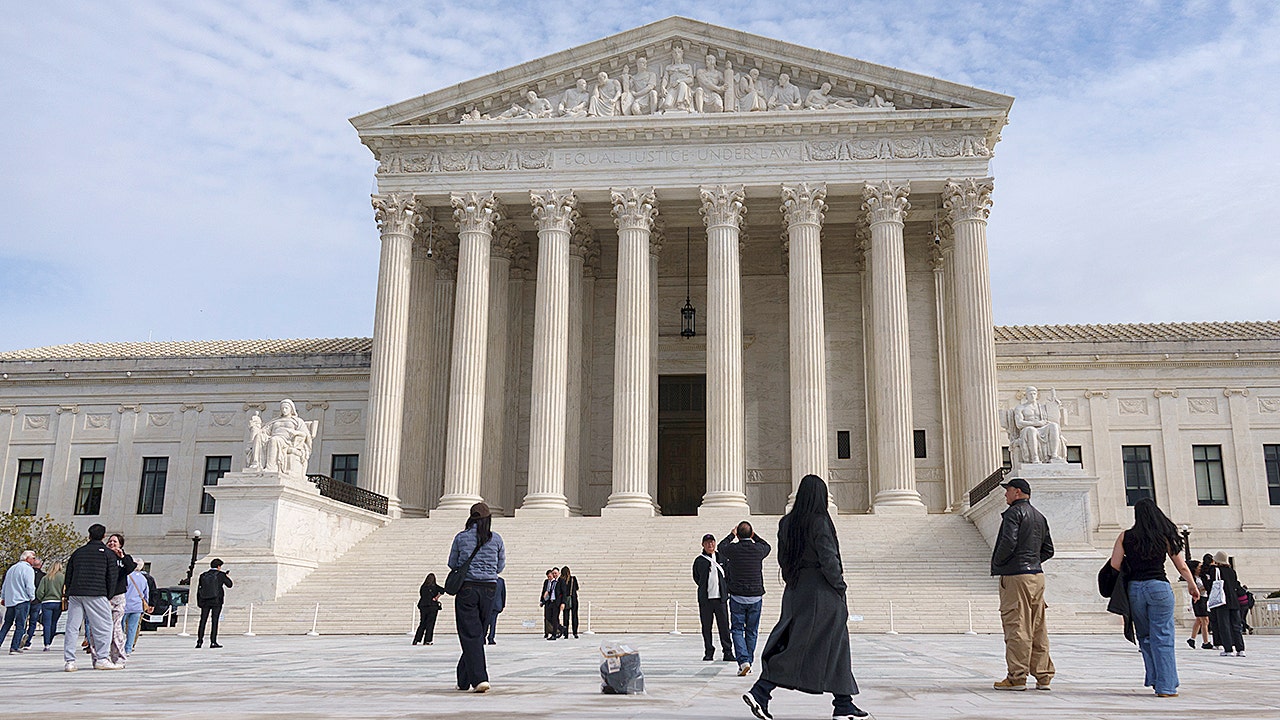
A Trump administration official who served four months in federal prison for defying a congressional subpoena is asking the Supreme Court to overturn his convictions in a case that could raise the bar for criminally prosecuting others who refuse to comply with Congress’s demands.
Peter Navarro, who was a senior trade advisor to President Donald Trump during his first administration, filed a petition with the Supreme Court last month. Navarro currently serves in the Trump administration as senior counselor for trade and manufacturing. He was convicted in 2023 on two counts of contempt of Congress stemming from his refusal to provide testimony and documents to the Democratic-led House Jan. 6 committee on the grounds that he believed he was barred by executive privilege.
If the justices take the case, they could make it harder to convict someone for defying a congressional subpoena by requiring proof that the person knew they were breaking the law.
JUDGE TOSSES CASE AGAINST EX-FBI OFFICIALS ACCUSED OF LYING TO CONGRESS ABOUT HUNTER BIDEN INVESTIGATION
Before Navarro’s trial, U. S. District Judge Amit Mehta ruled in August 2023 that he had failed to establish that Trump invoked executive privilege for the subpoena, barring him from relying on that claim as a defense. After serving his sentence, Navarro appealed his conviction to the U. S. Court of Appeals for the D. C. Circuit, which ruled that a person violates federal law by refusing to comply with a subpoena «even if he subjectively and mistakenly believed his default was lawful. «
The three-judge panel ruled that only the president can invoke executive privilege under Article II, and Trump never granted Navarro protection.
«Dr. Navarro claimed executive privilege before even seeing the subpoena and refused to turn over documents, appear for his deposition, or engage with the Select Committee’s efforts to accommodate his privilege claim,» the court wrote.
«A court, in other words, cannot simply take a defendant at his word that the President invoked privilege because doing so would impermissibly tangle separation-of-powers lines.»
But Abhishek Kambli, counsel for Navarro, argued the D.C. Circuit misinterpreted the statute, pointing to United States v. Murdock. In that 1933 ruling, the Supreme Court held that the presence of the word «willfully» in one part of a statute, but not another, required them to be interpreted differently — allowing a taxpayer’s sincere, mistaken belief about his Constitutional rights to serve as a valid defense against acting «willfully.»
«We absolutely believe that we are correct on the law on this, because Congress chose to use the word willful when it put this statute together, and there’s no reason to believe that willful applies any differently in this context than it has in just about every other one, but it would have the added effect of toning down lawfare and weaponization if we were to succeed,» Kambli told Digital.
The House voted to hold Navarro in contempt for failing to comply with a subpoena, but Kambli argued the Jan. 6 committee bypassed the negotiations traditionally used to resolve disputes involving executive branch officials.
WHITE HOUSE LAWYER’S HARDBALL WARNING TO DEMS HAS LEGAL EXPERTS ON BOTH SIDES QUESTIONING ONE KEY THREAT
«When it comes to executive branch officials, there was an accommodation process where they would negotiate terms of the appearance of the witness that’s an executive branch official, and then determined whether executive privilege applies or not,» Kambli told Digital. «What happened with the J-6 committee is that they short-circuited a lot of that and sent people straight to getting prosecuted and indicted.»
Kambli said a Supreme Court ruling in Navarro’s favor could help «tone down the weaponization that could potentially occur» once Democrats take control of both chambers of Congress.
«What would happen is that if we were to win and the correct mental state is required to prove someone violated this law and get convicted and sent to jail, you would have fewer prosecutions for contempt of Congress because they’re going to be much harder to prove,» Kambli told Digital. «And what will happen is that there’s less of an opportunity to wield a congressional subpoena in a weaponized manner rather than just through a legitimate legislative purpose, which Congress is limited to traditionally.»
Navarro’s lawyers filed the petition a week before Sen. Elissa Slotkin, D-Mich., called for an investigation of alleged Trump administration corruption, saying cases targeting those who «enabled» the president could send a «deterrence message» to young people considering administration jobs.
Following Democrats’ wins in the 2026 midterm elections, lawmakers took to social media to vow investigations into Trump officials, with House Oversight Committee ranking member Rep. Robert Garcia, D-Calif., posting on X, «LAWYER UP.» However, Republicans still control both chambers of Congress until Democrats take control in January 2027.
«We can’t keep this up where people are utilizing lawfare and other weaponization tactics to harm their political opponents, so we think that this petition would protect everyone in the long term and allow our politics to be better, because we’re not constantly trying to utilize congressional subpoenas as a way to indict people,» Kambli told Digital.
SIGN UP TO GET THE POLITICS NEWSLETTER
Mike Davis, a conservative lawyer and founder and president of the Article III Project, which filed an amicus brief supporting the petition, said the Supreme Court must take this case up to end «lawfare.»
«Democrats weaponized Congress to throw Peter Navarro in prison for standing up for President Trump’s executive privilege in good faith,» Davis said. «The D.C. Circuit then ruled that good faith is no defense to contempt of Congress, and that turns every congressional subpoena into a criminal trap. It tears up more than two centuries of negotiation between the co-equal branches.»
The petition from Navarro comes after the Supreme Court vacated the ruling against Steve Bannon. The former Trump White House strategist served four months in federal prison in 2024 after being convicted of two counts of contempt of Congress for defying a subpoena from the House Jan. 6 committee. In April 2026, the Supreme Court vacated the D.C. Circuit’s decision in his case and sent it back for further proceedings following the Justice Department’s motion to dismiss his indictment.
congress, judiciary, federal courts, supreme court oral arguments, politics, democrats

Investigan vínculos de Luis D’Elía con la Guardia Revolucionaria: Stornelli pidió su indagatoria – Nexofin

Ponzio prepara el equipo de River Plate para enfrentar a Lanús: las dudas y los cambios

Cómo es Perfume, el documental que rescata los tesoros de María Gabriela Epumer: “Una mujer humana, potente, hermosa”

La Corte declaró inconstitucional la decisión de Milei de permitir que las prepagas fijen libremente el valor de sus cuotas

Hometown of accused US military plane saboteur is a known magnet for anti-Israel activism

Syria’s Christian leaders warn of ‘grave’ threat to community’s future amid wave of attacks

La inflación de octubre: el dato que sorprendió a casi todos y la distancia que persiste con los parámetros internacionales

Milei dijo que el riesgo país sube por el miedo a "Orcolandia" y afirmó: "Los argentinos no van a votar hacia el pasado"

Encontraron muerto a un trabajador en el Observatorio de La Plata

Se agudiza la suba de tasas y se complica la economía mundial

 POLITICA3 días ago
Milei dijo que el riesgo país sube por el miedo a "Orcolandia" y afirmó: "Los argentinos no van a votar hacia el pasado"
- SOCIEDAD3 días ago
Encontraron muerto a un trabajador en el Observatorio de La Plata
- CHIMENTOS3 días ago
¡Bomba! Sofía Jujuy Jiménez confirmó su primer embarazo a los 35 años: tras pasar una escandalosa infidelidad, conoció a su nuevo novio y será mamá