
INTERNACIONAL
A los 100 años, murió Alan Greenspan, histórico presidente de la Reserva Federal de Estados Unidos


El influyente economista estadounidense Alan Greenspan, quien presidió la Reserva Federal de Estados Unidos durante casi dos décadas y atravesó cinco mandatos presidenciales, murió este lunes a los 100 años.
La noticia fue informada por su esposa, la periodista Andrea Mitchell, corresponsal jefe en Washington y de asuntos exteriores de la cadena NBC News. Según el comunicado que difundió la mujer, Greenspan falleció por la mañana en su domicilio a causa de complicaciones derivadas del Parkinson. Mitchell, con quien estuvo casado durante 29 años, destacó además la brillantez y la calidez humana del economista.
Nacido el 6 de marzo de 1926 en el barrio de Washington Heights, en Nueva York, Greenspan se convirtió en una de las figuras más influyentes de la política económica de Estados Unidos. Conocido con el apodo de “El Maestro”, estuvo al frente de la Reserva Federal entre 1987 y 2006, un período en el que trabajó bajo las presidencias de Ronald Reagan, George H. W. Bush, Bill Clinton y George W. Bush.
Antes de dedicarse por completo a la economía, su vida estuvo marcada por la música. Hijo de un corredor de bolsa, estudió clarinete en la prestigiosa Escuela Juilliard y realizó giras profesionales por Estados Unidos tocando el saxofón y el clarinete en la banda de Henry Jerome.
La figura más influyente de la política monetaria de EE.UU.
Nació el 6 de marzo de 1926 en el barrio de Washington Heights, en Nueva York. (Foto: Reuters)
Tras esa etapa artística, inició su formación académica en economía. Obtuvo su licenciatura en la Universidad de Nueva York en 1948 y luego completó una maestría en la misma institución en 1950. Más adelante, comenzó un doctorado en la Universidad de Columbia bajo la dirección de Arthur Burns, quien años después también sería presidente de la Reserva Federal.
En 1953 fundó su propia consultora, Greenspan, Townsend & Co., desde donde asesoró a diversas empresas, entre ellas Republic Steel. Su carrera en el ámbito público empezó a ganar relevancia en la década de 1960.
En 1968 fue asesor de la campaña presidencial del republicano Richard Nixon y posteriormente ocupó distintos cargos en las administraciones de Nixon, Gerald Ford y Ronald Reagan.
En 1974, durante el gobierno de Ford, asumió la presidencia del Consejo de Asesores Económicos. Ese cargo terminó de consolidarlo como una figura de peso en los círculos de decisión económica de Washington.
Leé también: Javier Milei autorizó tomar créditos por US$5000 millones con bancos internacionales para afrontar el pago de deuda
Su llegada a la Reserva Federal se produjo en 1987, cuando Reagan lo nominó para suceder a Paul Volcker. El Senado estadounidense confirmó su designación el 11 de agosto de ese año.
Apenas dos meses después de asumir, Greenspan enfrentó uno de los mayores desafíos de su carrera. El denominado “Lunes Negro” de octubre de 1987 provocó un derrumbe superior al 22% del índice Dow Jones en una sola jornada, la mayor caída diaria de su historia. La decisión de garantizar liquidez al sistema financiero evitó una crisis de mayor magnitud y dio origen al concepto conocido como “Greenspan Put”.
Durante su gestión, la Reserva Federal condujo una de las expansiones económicas más prolongadas de la historia de Estados Unidos, aproximadamente entre 1991 y 2001. Ese ciclo coincidió con el avance de la globalización y el auge de internet.
Con su esposa, la periodista Andrea Mitchell, corresponsal jefe en Washington y de asuntos exteriores de la cadena NBC News. (Foto: Reuters)

También debió gestionar otros episodios de elevada tensión financiera, entre ellos el colapso del fondo Capital Management en 1998 y el estallido de la burbuja de las empresas puntocom en 2001. Su prolongada permanencia al frente del banco central y su capacidad de influir sobre los mercados le otorgaron un nivel de notoriedad poco habitual para un banquero central.
Sin embargo, su legado fue objeto de revisiones críticas después de dejar la Reserva Federal en 2006. En 2008, durante un testimonio ante el Congreso estadounidense, reconoció haber encontrado una falla en su modelo económico, vinculada a su defensa de la autorregulación bancaria.
Leé también: Se terminó la década de tasas bajas: qué significa para la Argentina la nueva etapa de la Reserva Federal
Con posterioridad, recibió cuestionamientos por su oposición a regular los derivados financieros y por el papel que algunos analistas le atribuyeron en el desarrollo de la burbuja inmobiliaria, decisiones que fueron señaladas tras la crisis de 2008 como factores que contribuyeron al colapso financiero.
Luego de su retiro, fundó la consultora Greenspan Associates y continuó participando del debate económico. En sus últimos años,advirtió sobre la persistencia de la inflación y también se pronunció sobre episodios recientes, como el colapso del exchange de criptomonedas FTX.
Alan Greenspan, Reserva Federal de los Estados Unidos

INTERNACIONAL
Mayor calls upscale restaurant bombing a ‘brutal terrorist act’ after 3 killed, 21 injured
NEWYou can now listen to Fox News articles!
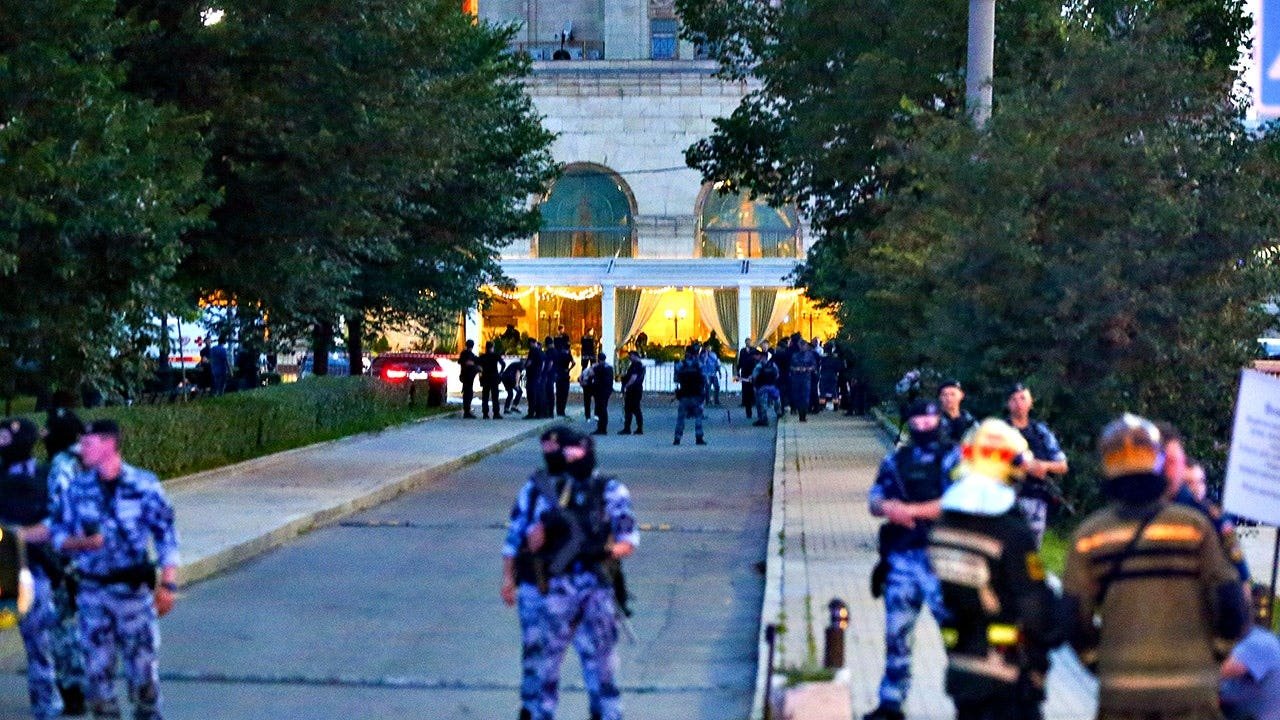
A bombing at an upscale restaurant in Moscow that killed three people and wounded at least 21 others on Saturday was a «brutal terrorist act,» according to the city’s mayor, who vowed to hunt down those responsible for the attack.
Moscow Mayor Sergei Sobyanin made the declaration Sunday, a day after the explosion tore through the Balzi Rossi Italian restaurant in the Russian capital.
«Yesterday, a brutal terrorist act was committed in Moscow that claimed human lives. The victims are currently in the city’s hospitals, where they are receiving all necessary care,» Sobyanin wrote on social media Sunday.
EXPLOSION AT RESTAURANT IN CENTRAL MOSCOW LEAVES THREE DEAD, MORE THAN A DOZEN INJURED
Police block an area near a deadly explosion at a restaurant in Moscow, Saturday, Aug. 1, 2026. (Sergei Vedyashkin/Moscow News Agency via AP)
He added investigators are working to identify those behind the attack and vowed they «will certainly be found and will face the punishment they deserve.»
Russian authorities have not identified any suspects, and no group had claimed responsibility as of Sunday.

Emergency vehicles are parked in an area near a deadly explosion at a restaurant in Moscow, Saturday, Aug. 1, 2026. (Sergei Vedyashkin/Moscow News Agency via AP)
Russia’s National Anti-Terrorism Committee said the blast was caused by a homemade explosive device. Russian state news agency RIA Novosti, citing local officials, reported that a woman carrying the bomb tried to enter the restaurant but was stopped by a security guard before it exploded.
The blast killed the woman, the security guard and a restaurant patron, RIA Novosti reported. At least 21 other people were injured in the explosion, which happened around 8 p.m. local time at the restaurant on Kudrinskaya Square.
UKRAINE UNLEASHES MORE THAN 400 DRONES NEAR MOSCOW IN ONE OF WAR’S BIGGEST ATTACKS
The restaurant was closed to the public Saturday night for a private event, according to its website and Russian state media.

Police block an area near a deadly explosion at a restaurant in Moscow, Saturday, Aug. 1, 2026. (Sergei Vedyashkin/Moscow News Agency via AP)
Video released by Russian state media showed heavily armed police officers, ambulances and other emergency vehicles outside the damaged restaurant as investigators examined the scene.
Earlier this year, Russia’s Federal Security Service, or FSB, said it would tighten security for senior military and government officials following a series of assassination attempts in Russian cities since the Kremlin launched its full-scale invasion of Ukraine in February 2022.
Russian authorities have not linked the restaurant bombing to those earlier attacks or to the war in Ukraine.
Fox News Digital’s Brie Stimson and The Associated Press contributed to this report.
russia, terrorism, bombings, crime world, world
INTERNACIONAL
Dos helicópteros chocaron en pleno vuelo mientras combatían los incendios forestales en Grecia



NEWYou can now listen to Fox News articles!
Republicans in California are making a voter ID ballot initiative the centerpiece of their 2026 strategy as Americans’ frustration grows over affordability and education issues.
«Californians need to feel secure in our elections,» California GOP Chairwoman Corrin Rankin told Fox News Digital in an interview. «The way it is now, there’s so much room for uncertainty and confusion. What Proposition 39 is going to do is it’s going to sort of close the loopholes. It’s a commonsense solution that will strengthen our democracy.»
Beyond the ballot measure, Rankin argues the initiative reflects broader voter frustration that Republicans hope to capitalize on in the 2026 midterms. She claims California voters are primarily concerned about affordability, education and confidence in state government.
SEN MARK WARNER CALLED OUT IN ABC INTERVIEW FOR INACCURATE VOTER ID CLAIMS
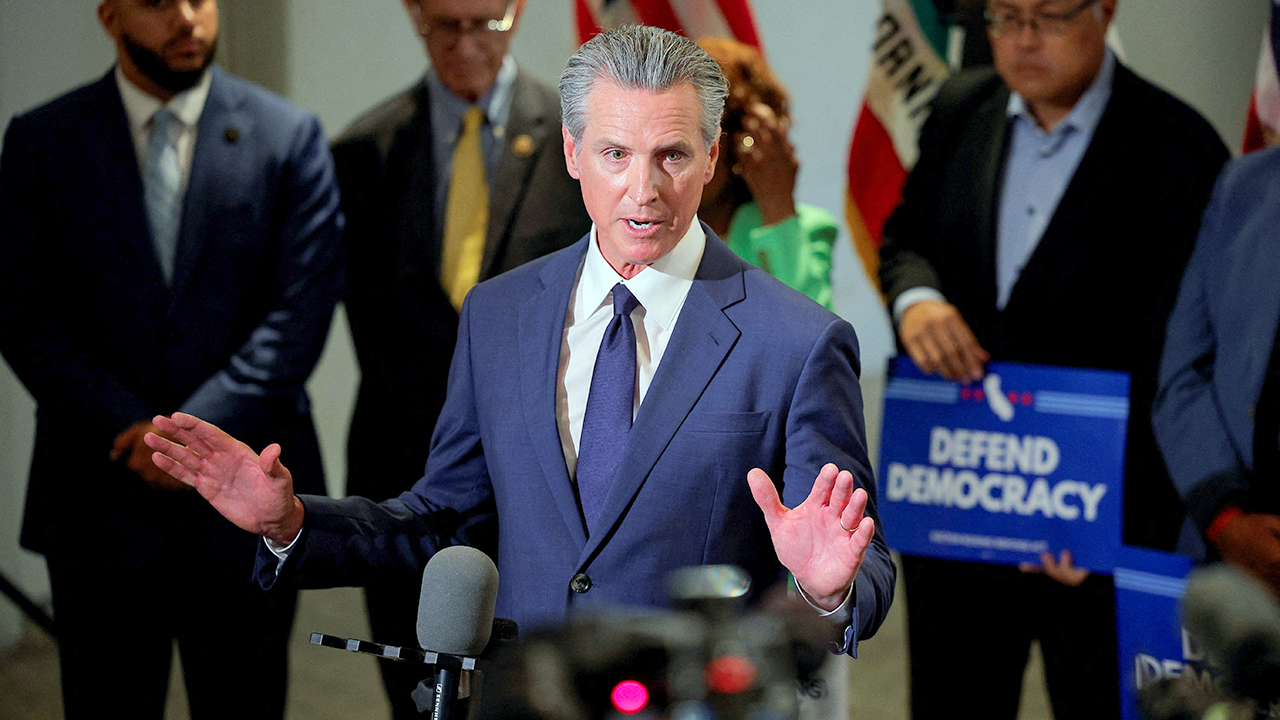
California Democratic Gov. Gavin Newsom, who is term-limited, spoke this week in California. (Reuters)
«Californians need to feel like we can trust our election systems, and trust is not given. Trust is earned and this will allow Californians to feel more like they can trust our election system,» she added.
The Golden State’s primary race on June 2 garnered national attention and widespread criticism after it took weeks to deliver results. California election officials continued to count ballots postmarked by Election Day even if they arrived within seven days — and they are permitted up to 30 days to certify results.
In the primaries, the Los Angeles mayoral race became the center of controversy, and President Donald Trump’s was among the chorus of voices challenging the runoff election results, alleging irregularities as the count continued past Election Day.
Spencer Pratt ultimately lost the race with far-left City Council Member Nithya Raman advancing to face incumbent Democrat Mayor Karen Bass in the general election in November. The race was called six days after the June 2 elections.
«There’s so many other states throughout our country and throughout the world actually that seem to be able to have a winner on election night,» said Rankin. «It’d be wonderful if California could do the same.»
CALIFORNIA’S SLUGGISH VOTE COUNTING RIPPED ACROSS THE POLITICAL SPECTRUM: ‘EXTREMELY EMBARRASSING’

A driver refuels a vehicle with diesel fuel at a Shell gas station in Seattle March 9, 2026. (M. Scott Brauer/Bloomberg via Getty Images)
While election reform is the party’s signature ballot effort, Rankin says kitchen table issues will determine whether Republicans make gains in November.
She said affordability is the No. 1 concern among voters with California recently landing in the top five most expensive states, according to The Missouri Economic Research and Information Center’s quarterly Cost of Living Index.
«A lot of parents want their adult children to stay in California, to be a part of and contribute to the same California dream that was so great for our grandparents and our parents,» said Rankin. «We want it to be great for us and for our children. Affordability is the top issue.»
NEWSOM UNDER FIRE AS CALIFORNIA GAS TAX HIKE SENDS PUMP PRICES EVEN HIGHER
California drivers are paying about $5.65 per gallon for regular gasoline, roughly $1.25 more, or about 28% higher, than they were at this time last year, according to AAA and federal energy data.
Rankin also said Californians are concerned about their school systems with zip codes determining the quality of education students receive, which has long been an argument in the Republican push for school choice.
«When [candidates] keep their race focused on their district, focused on the voters in their district and the issues that matter most to those voters, stay focused on issues like affordability, children’s education, the prices of gas and groceries, things like that,» said Rankin. «That’s what voters want to hear. That’s what they care about. They care about what happens locally.»
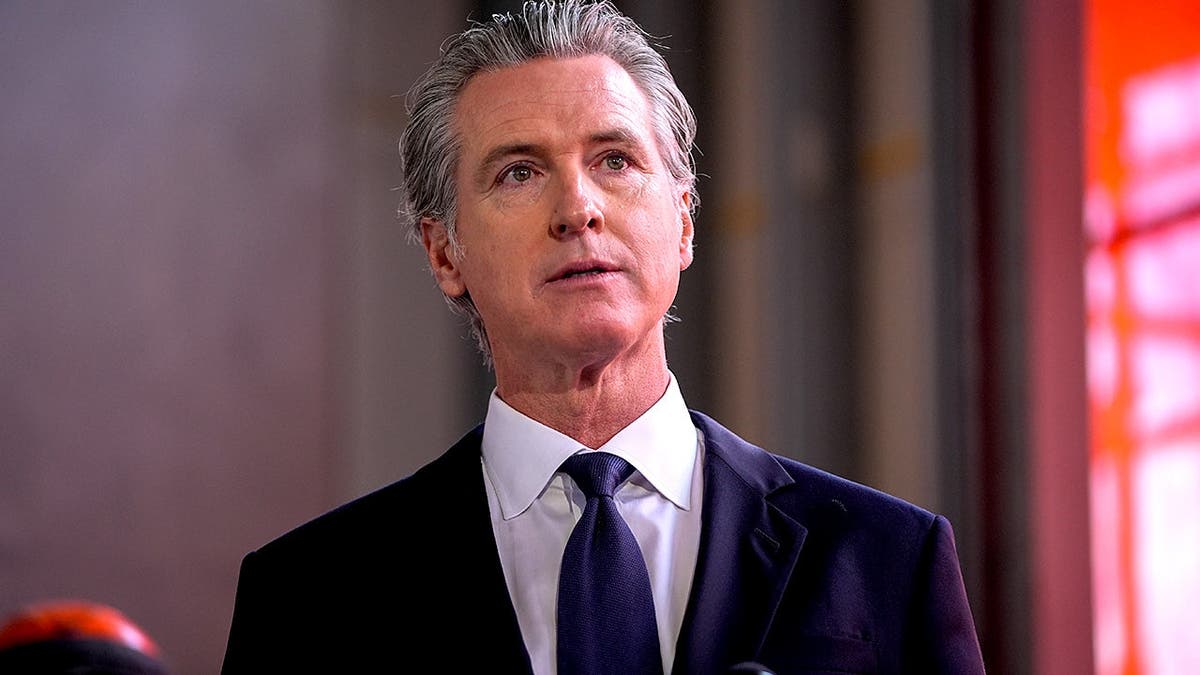
California Gov. Gavin Newsom speaks during a news conference for a housing affordability reform bill signing July 13, 2026, in Oakland, Calif. (Tayfun Coskun/Anadolu via Getty Images)
California Gov. Gavin Newsom is serving his second and final term, fueling speculation about a 2028 presidential bid and creating what Rankin believes is an opportunity for Republicans to win back voters disillusioned with Democratic leadership.
Pointing to the state’s troubled high-speed rail project, Rankin argued California has become a cautionary tale of government waste under one-party rule.
«We’ve got a bullet train that he’s been funding with billions of dollars for years, yet we have no train. So, where’s the money going to?» Rankin asked.
Critics have long scrutinized the project, which was approved by voters in 2008 with an estimated $33 billion price tag but is now projected to cost more than $200 billion.
Rankin said the spending reflects what she views as a broader ideological shift within the Democratic Party, arguing California has embraced policies that are now spreading nationwide.
«I think that the Democrats have gone so far to the left that many Californians just don’t see themselves … many Democrats in California just don’t relate to the current flow of the Democrat party,»Rankin said.
«They’re moving way too far into the extremism of socialism. I think a lot of people have red flags and just don’t want to be part of it.»
Fox News Digital reached out to Gov. Gavin Newsom for comment.
california, midterm elections, elections state and local, campaigning, voting, politics

Javier Milei confirmó que ya eligió a su compañero de fórmula con el que buscará la reelección, aunque aún no revelará el nombre

Se viralizó un video de Tuli Acosta, Luck Ra y La Joaqui: el gesto incómodo que reavivó rumores de triángulo amoroso

Canales para ver el Deportivo Riestra vs. Barracas Central por el Torneo Clausura

Qué dijo Javier Milei sobre la reforma de la Carta Orgánica del Banco Central que impulsa en el Congreso

Según una encuesta, casi 90% de los argentinos dicen que se necesitan dos o más empleos para llegar a fin de mes

Lo mejor de EA Sports FC 27 es que Ultimate Team dejará de ser un trabajo a tiempo completo. Electronic Arts ahora dice que menos es más

Trump admin invokes 30-year dormant terror court as it seeks to deport Afghan woman tied to Election Day plot

“Casta”, “parásito” y “sea democrático”: fuerte respuesta de Victoria Villarruel a Diego Santilli

Dem senator swipes credit for bill he opposed amid heated reelection bid: ‘Disturbing pattern’

“Vamos a acelerar con todo”: el objetivo del Gobierno por las reformas y la agenda electoral de cara al 2027
-
 POLITICA2 días ago
“Casta”, “parásito” y “sea democrático”: fuerte respuesta de Victoria Villarruel a Diego Santilli
-
 INTERNACIONAL3 días ago
Dem senator swipes credit for bill he opposed amid heated reelection bid: ‘Disturbing pattern’
-
 POLITICA6 horas ago
“Vamos a acelerar con todo”: el objetivo del Gobierno por las reformas y la agenda electoral de cara al 2027