INTERNACIONAL
‘A new kind of war’: Inside Ukraine’s hidden factories mass-producing combat drones

NEWYou can now listen to Fox News articles!
LVIV, Ukraine: Exclusive — The same Iranian-designed Shahed drones that rain down Lviv in Ukraine nearly every night are now being hunted by weapons built just miles away — inside hidden factories where former students and office workers assemble kamikaze drones and interceptor systems around the clock.
What began as an improvised wartime effort has evolved into one of the world’s fastest-growing military drone industries — one Ukrainian official says Kyiv now leads NATO in battlefield innovation and can offer hard-won lessons for the U.S. and Israel as they confront the same Iranian drone technology across the Gulf.
«Drone technology completely changed the situation in the frontline,» Lviv Mayor, Andriy Sadovyi, told Fox News Digital in an exclusive interview, «Maybe in six months, maybe in one year, we will have technology to land 1,000 drones in one moment.
POLAND SEEKS ANSWERS AFTER PENTAGON SCRAPS PLANNED US ARMORED BRIGADE ROTATION
Ukrainian-made drones were displayed at a military technology exhibition in an undisclosed location in western Ukraine. (Efrat Lachter/Fox News Digital.)
«If we will have more deep collaboration between Ukraine, the United States, Israel and Europe, we will prepare special equipment for our victory,» he said.
Dmytro, CEO of a Ukrainian drone manufacturer producing roughly 1,000 drones a week, told Fox News Digital, «We are three or four steps ahead of other countries…this is a new kind of war,» he said. «It is a war of IT technology.»
Cheap drones now allow small battlefield units to identify and destroy tanks, armored vehicles and even sophisticated air defense systems that once required expensive missiles or fighter aircraft.
That transformation is visible throughout western Ukraine, where defense technology hubs, secret workshops and testing facilities now operate, while in the cities air raid sirens regularly interrupt daily life.

Drone components and battlefield systems assembled at a Ukrainian manufacturing facility in an undisclosed location in western Ukraine. (Efrat Lachter/Fox News Digital)
Inside the workshop Fox News Digital visited, workers moved rapidly between tables stacked with propellers, fiber-optic cable and other classified drone components. The workers say they no longer see themselves as civilians temporarily helping the war effort. Many now view drone production as essential to Ukraine’s survival.
Vitaliy, one of the technicians assembling kamikaze drones destined for the front line, said he now builds hundreds of drone components a day. «Targets will be vehicles, tanks, troopers, positions,» he told Fox News Digital.
NATO ALLY POLAND WARNS RUSSIA, BELARUS PUSHING ILLEGAL MIGRANTS TOWARD ALLIANCE — AND THE US
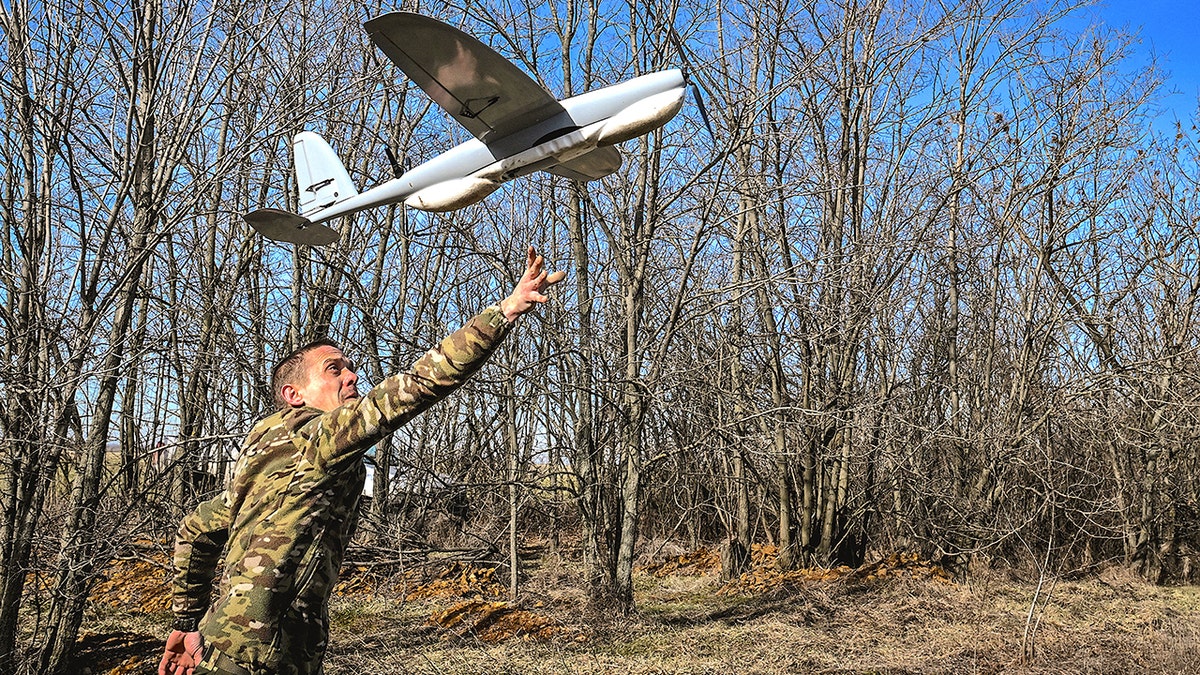
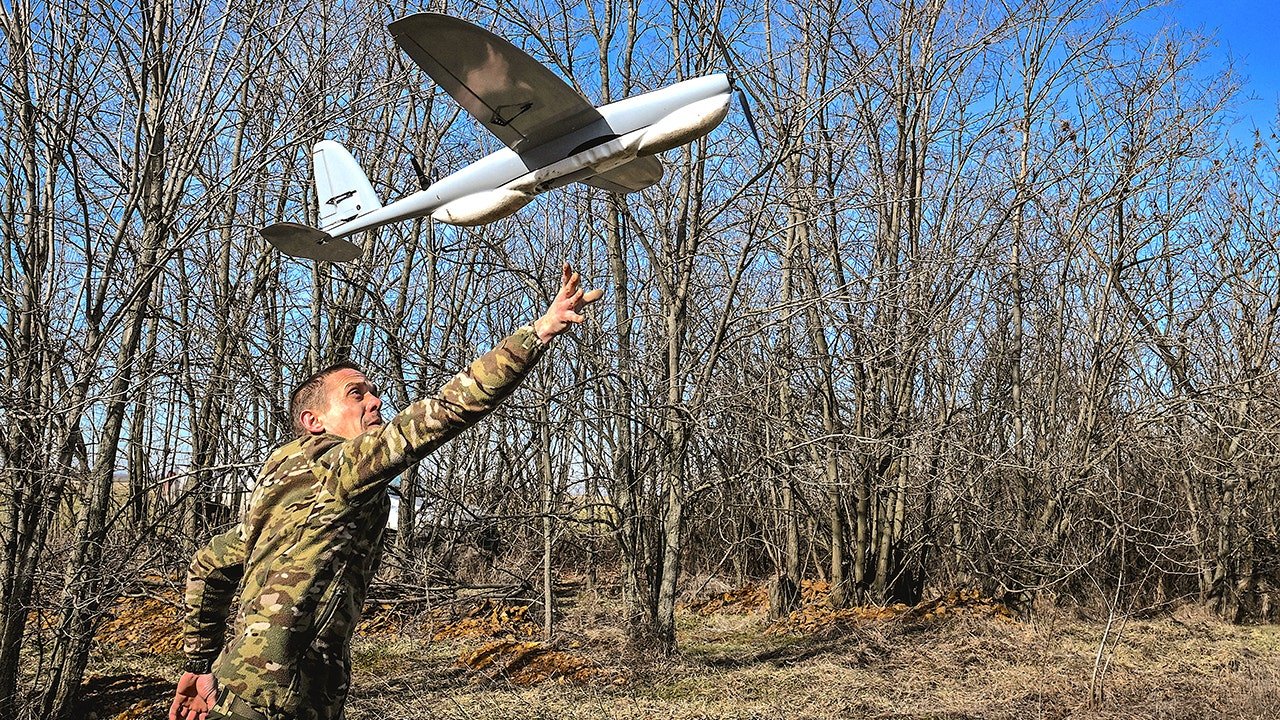
A soldier launches an RQ-35 Heidrun drone used for reconnaissance and artillery fire correction in the Zaporizhzhia, Ukraine on Feb. 22, 2026. (Dmytro Smolienko/Ukrinform/NurPhoto via Getty Images)
Referring to President Donald Trump’s statement that he will end the war, Vitaliy said, «I feel honored because I’m helping my country to get peace much faster,» Vitaliy added. «Peace through strength — this is our motivation. But it is mostly on us, for sure,» he said.
Ukraine’s domestic drone production has expanded at a staggering pace. Ukrainian Deputy Defense Minister Serhiy Boev said earlier this year the country aims to produce more than seven million drones in 2026, up from roughly four million in 2025.
From AI-assisted battlefield systems to drones resistant to Russian electronic warfare, Ukraine’s wartime innovations are exposing vulnerabilities in traditional Western military doctrine.
At another defense technology hub in Lviv, rows of interceptor drones, unmanned ground vehicles and remotely operated weapons systems fill a showroom demonstrating Ukraine’s rapidly evolving battlefield ecosystem.
«We have around 250 tech companies in the system,» said Volodymyr Cherniuk, co-founder of Iron, a Ukrainian defense technology cluster.
Some drones are designed for reconnaissance. Others for evacuation, logistics or direct strike missions. One heavy-lift drone used for nighttime attacks has earned the nickname «Baba Yaga» from Russian troops, which Cherniuk translated as «boogeyman.»
Another interceptor drone is designed specifically to hunt Iranian-made Shahed drones that Russia uses in nightly attacks on Ukrainian cities.
UKRAINE’S ‘SPIDER’S WEB’ DRONE STRIKE BURNS OVER 40 RUSSIAN WARPLANES, MOSCOW CALLS IT ‘TERRORIST ATTACK’
«They can go 300 kilometers per hour,» Cherniuk said. «One hundred grams is enough to shut down a Shahed.»
«We have a lot of Americans, Canadians, Europeans who come here and want our data, feedback from the front line,» Dmytro said.
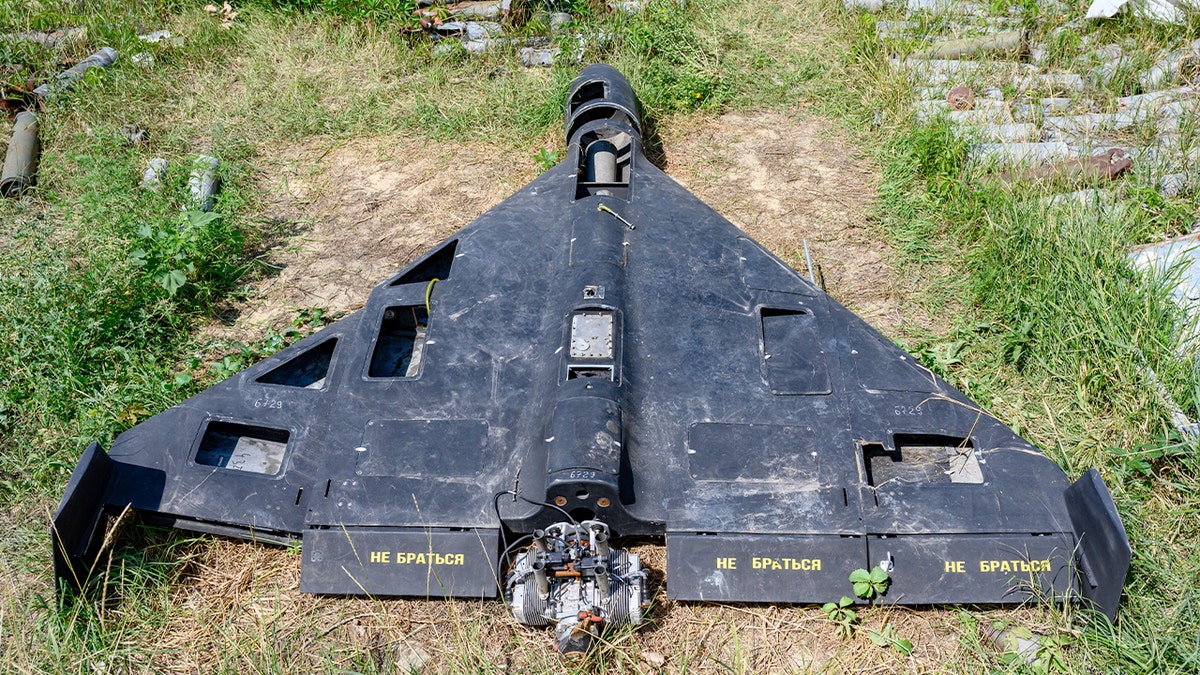
The remains of a Russian-made, Iran-designed Shahed-136 drone, known in Russia as a Geran-2, are displayed with other recovered drones, glide bombs, missiles and rockets in Kharkiv on July 30, 2025. (Scott Peterson/Getty Images)
As Fox News Digital reported from Lviv, air raid sirens repeatedly echoed across the city, a reminder that western Ukraine remains within reach of Russia’s expanding drone campaign.
Russia has dramatically escalated its aerial assaults in the recent week after the end of the short ceasefire, launching massive drone barrages targeting cities and logistical hubs across Ukraine, including areas near NATO territory close to the Polish border.
Ukraine has also increasingly demonstrated its ability to strike deep inside Russian territory with long-range drone attacks targeting areas around Moscow and Russian energy infrastructure.
But the evolving drone war has also increasingly spilled beyond Ukraine and Russia’s borders into NATO territory.
In recent weeks, drones linked to Ukrainian long-range strike operations entered the airspace of Baltic alliance members including Latvia, Lithuania and Estonia, triggering political fallout and renewed concerns about regional air defenses. Latvian Defense Minister Andris Sprūds resigned after drones crashed near fuel storage facilities close to the Russian border.
CLICK HERE TO DOWNLOAD THE FOX NEWS APP
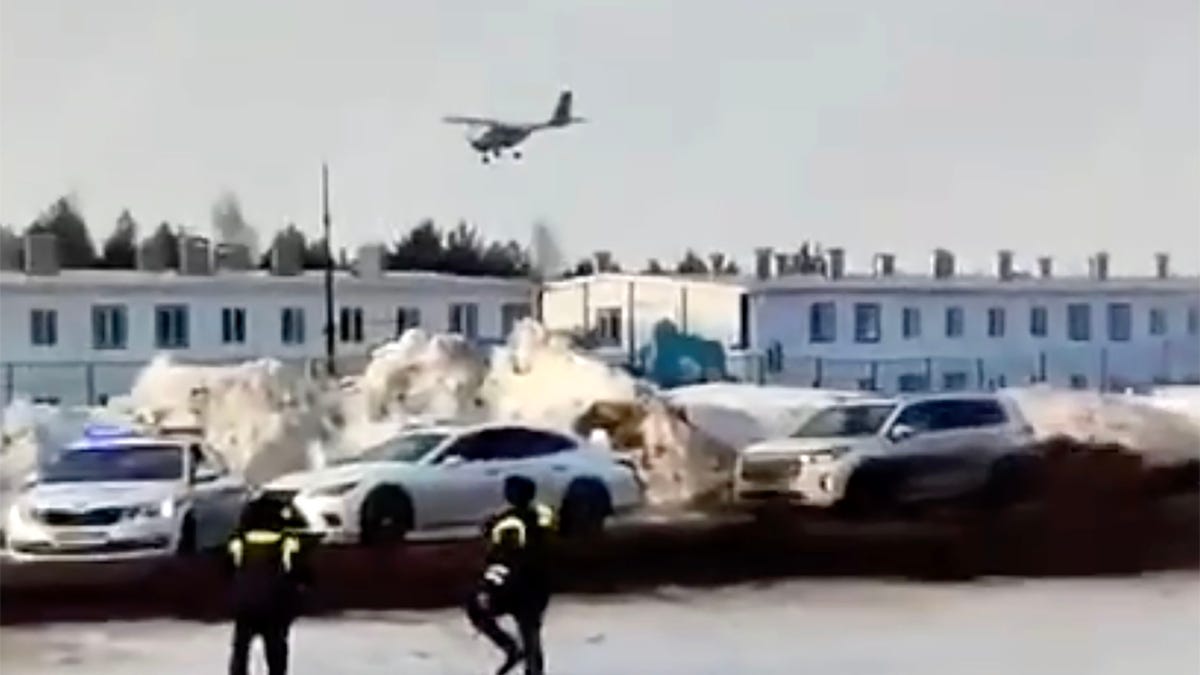
A Russian plant assembling Iranian Shahed drones is targeted in a mass Ukrainian drone attack on Tatarstan (East2West)
Ukrainian and Baltic officials blamed Russian electronic warfare and GPS spoofing for redirecting the drones off course, arguing Moscow is increasingly using electronic warfare not only defensively, but also to create instability and political pressure inside NATO countries.
The incidents underscore how the same Iranian-designed Shahed drones Russia uses nightly against Ukrainian cities — and similar long-range drone technologies increasingly used by both sides — are reshaping modern warfare far beyond the battlefield itself.
ukraine, drones, russia, nato, war with iran












INTERNACIONAL
El sur de Europa sufre una ola de incendios avivados por temperaturas extremas: hay miles de evacuados
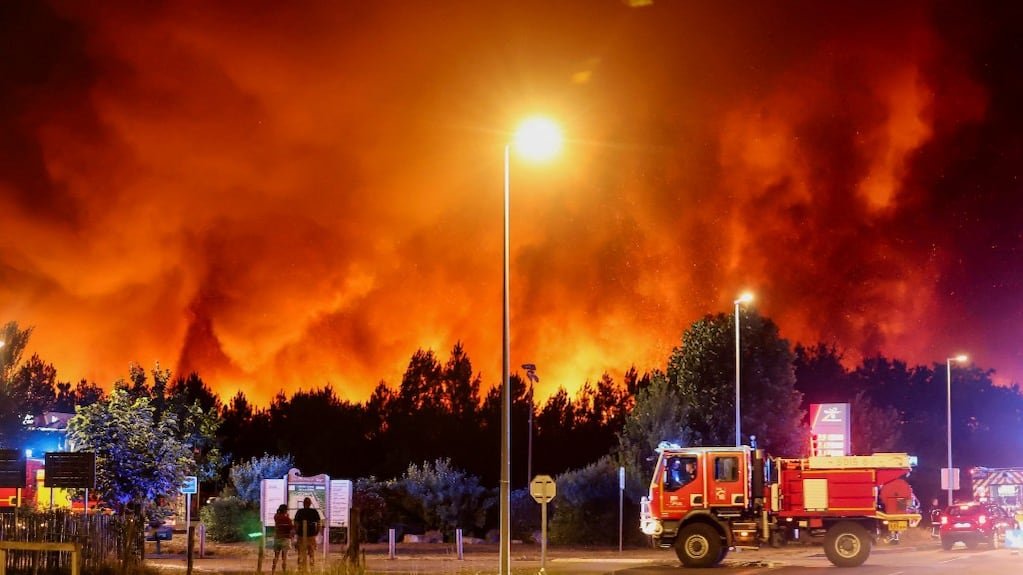
Violentos incendios forestales, avivados por el viento y las altas temperaturas, arrasaron varias regiones del sur de Europa y provocaron este jueves la evacuación de miles de personas en Francia y España.
Este año es el segundo con más superficie quemada por incendios en la Unión Europea a estas alturas desde que empezaron los registros hace 20 años, según datos satelitales del sistema Effis.
Al menos tres bomberos murieron en los últimos días, dos en Francia y un efectivo en Italia.
El gobierno español decretó la noche del jueves la emergencia de alcance nacional en la región de Madrid y en la provincia de Ávila, cerca de la capital. La medida, anunciada por el Ministerio del Interior, busca movilizar más recursos para combatir las llamas, que en Madrid provocaron la evacuación de 10.000 personas.
Qué está pasando en Francia
En tanto, el presidente Francés, Emmanuel Macron, anunció que pidió activar el mecanismo de protección civil de la UE por incendios. Se trata de una herramienta para coordinar la ayuda de emergencia europea cuando un desastre supera la capacidad de respuesta nacional de un país afectado.
En el sur de Francia, los bomberos luchan contra dos incendios de gran magnitud. Uno de ellos, en Le Porge, cerca de la ciudad de Burdeos, en el sudoeste del país, afectó 3400 hectáreas, según la última estimación de los bomberos.
“Los gendarmes vinieron a tocar puerta por puerta. El fuego estaba a 500 metros”, contó a Patrick Martineau, un residente de Le Porge de 69 años. Bomberos combaten las llamas en la zona de Le Porge, en Gironda, en Francia (Foto;: Reuters)
“Tenemos miedo y es difícil de comprender. Es surrealista. Cuando compramos aquí, hace seis años, no pensábamos en el riesgo de incendio”, dijo.
Según varias fuentes, el incendio habría sido provocado por trabajos de desbroce (limpieza de terreno) en un camino forestal.
Leé también: Estados Unidos condiciona el programa nuclear con Arabia Saudita: le exige que normalice sus relaciones con Israel
Según las autoridades, unas 20.000 personas -entre turistas y cientos de residentes de las localidades aledañas al bosque- se vieron obligadas a abandonar la zona.
El otro incendio, que comenzó el martes al mediodía en un campo y se extiende por el departamento del Var, en el sur de Francia, afectó 2500 hectáreas y más de 300 personas fueron evacuadas.
Durante la tarde, el prefecto, Simon Fabre, anunció que “el incendio se reavivó” y se reactivaron entre 50 y 100 focos.
Nuevas evacuaciones en España
Por la noche del jueves, el gobierno español de Pedro Sánchez decretó la emergencia de alcance nacional en la región de Madrid y en la provincia de Ávila, cerca de la capital.
Según se informó, la medida, anunciada por el Ministerio del Interior, busca movilizar más recursos para combatir las llamas, que en Madrid provocaron la evacuación de 10.000 personas.
El incendio más importante se encuentra a unos cien kilómetros al norte de Madrid, en la provincia de Guadalajara. Desde el jueves pasado, arrasó 32.000 hectáreas.

Un helicóptero lanza agua para apagar las llamas cerca de Guadalajara, España (Foto;: EFE)
Contra el incendio declarado cerca de Aldea del Fresno trabajan “18 dotaciones de bomberos”, junto a soldados de la Unidad Militar de Emergencias (UME), indicaron los servicios de emergencia.
Varias carreteras permanecen cortadas por las llamas.
En los últimos días se declararon numerosos incendios en España.
Impulsados por la ola de calor que asfixia al país desde hace dos días, estos incendios forestales se propagan muy rápidamente, sobre todo en las zonas desérticas, donde la maleza constituye el combustible ideal para el rápido avance de las llamas.
Incendios arrasan Sicilia
En Italia, decenas de incendios forestales y de vegetación arrasan Sicilia, anunció el ministro del Interior, Matteo Piantedosi.
Un centenar de habitantes, así como 22 pacientes de una clínica en el centro de la isla, donde las temperaturas superaron los 40°C en los últimos días, fueron evacuados el miércoles, según los bomberos.
“Se han desplegado 6000 efectivos y están operando 20 medios aéreos”, declaró el presidente de la región, Renato Schifani, quien precisó que cerca de 50 incendios -de los 344 reportados el miércoles- siguen activos.
Un portavoz de la Agencia de Protección Civil de Italia declaró que los incendios son avivados por “temperaturas muy altas y un suelo muy seco”. También se registraron más de 160 incendios en las últimas 24 horas en Calabria, la región vecina.
(Con información de AFP)
Europa, Incendios
INTERNACIONAL
Dem’s stunning ideal standard for immigration detention conditions resurfaces amid Texas senate bid
NEWYou can now listen to Fox News articles!
During a 2019 interview following a visit to border enforcement, James Talarico, candidate for U.S. Senate in Texas, said he gauged the suitability of immigration detention facilities based on how he would treat his own family.
«I think I was struck by the conditions these folks were being held in,» Talarico said.
«When I first walked in, I looked at one of the security monitors and saw these things strewn around the floor, and I realized they were human beings being held in these tiny rooms. The standard I use is: would I allow my child, my parent, my grandparent to be held in one of these facilities? And the answer, after my visit, was a resounding no,» Talarico said.
His resurfaced comments continue to raise questions about his views on border policy as he looks to flip a Republican-held Senate seat in Texas.
PROGRESSIVE TALARICO KNIFES BIDEN’S OPEN BORDER, TRIES MODERATING STANCE ON KEY ISSUES IN TEXAS SENATE RACE
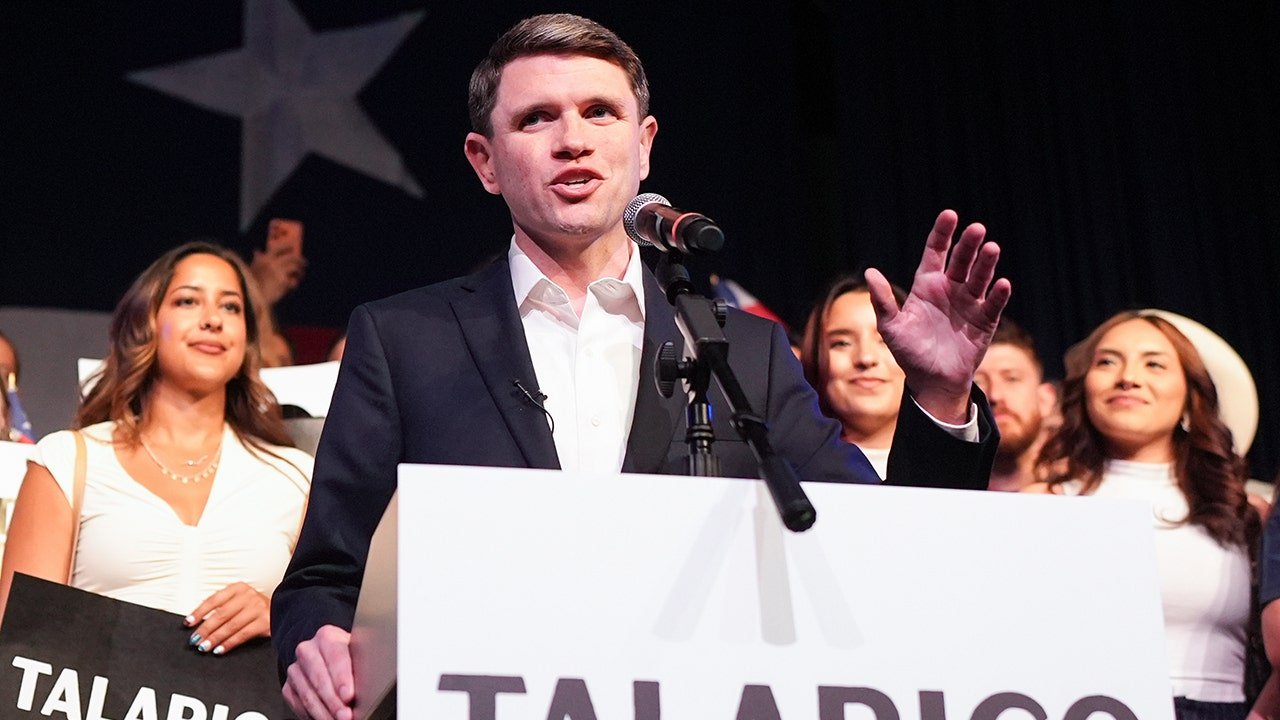
Texas state Rep. James Talarico, D-Austin, a Democratic candidate for the U.S. Senate, speaks at a primary election watch party Tuesday, March 3, 2026, in Austin, Texas. (Eric Gay/AP Photo)
During his campaign, Talarico has drawn scrutiny for walking a tightrope between traditionally Democratic criticisms on President Donald Trump’s border enforcement measures and appearing too soft on border policy.
Like progressives in the party, Talarico has called on lawmakers to abolish Immigration and Customs Enforcement (ICE), has characterized voter ID requirements as a method to rig elections and, in the past, even criticized President Barack Obama’s record on immigration.
In one 2019 remark, Talarico famously called Obama the «deporter-in-chief.»
His past comments have left some observers believing his record makes the case for him.
«There is a very concerning pattern with James Talarico siding with pedophiles, criminal illegal aliens and cartels while slandering the brave men and women of law enforcement who keep Texans safe,» Zach Kraft, a spokesperson for the Republican National Committee (RNC), said in a statement, referring to detentions highlighted by the Department of Homeland Security.
ICE ARRESTS 15 ILLEGAL IMMIGRANTS WITH CONVICTIONS INCLUDING HOMICIDE, RAPE AND CHILD SEX CRIMES OVER WEEKEND

U.S. Immigration and Customs Enforcement Baltimore Field Officer director Matt Elliston listens during a briefing, Monday, Jan. 27, 2025, in Silver Spring, Md. (Alex Brandon/AP Photo)
«Talarico is a true radical and fully committed to defunding the police, knocking down President Trump’s border wall and welcoming millions of illegal aliens into America,» Kraft added.
At the same time, Talarico has voiced concern about the government’s effective use of resources on the border and whether its investments are being reflected in its detention operations.
He raised the issue in the 2019 interview.
«How are we spending close to a billion dollars every year on border security when these border patrol agents told us firsthand they didn’t have the resources, basic logistical items that would help the situation better for them and for the people being held?» Talarico said.
Talarico argued that poor standards don’t speak to individual facility needs but rather reflect broader problems with immigration enforcement.
«This is not a matter of some bad apples at a Border Patrol station. This is a systemic problem that even the Border Patrol agents identified as something morally wrong and something that needed to be solved,» Talarico said in an interview.
«I believe this is a statewide problem; this is a stain on all of our reputations. It violates a lot of the values we have as Texans.»
Texas spent roughly $800 million on border security in 2019, according to the state’s legislative budget board.
TALARICO MAKES STUNNING CLAIM ABOUT WHY HE THINKS TEXAS ELECTIONS AREN’T ‘FREE AND FAIR’
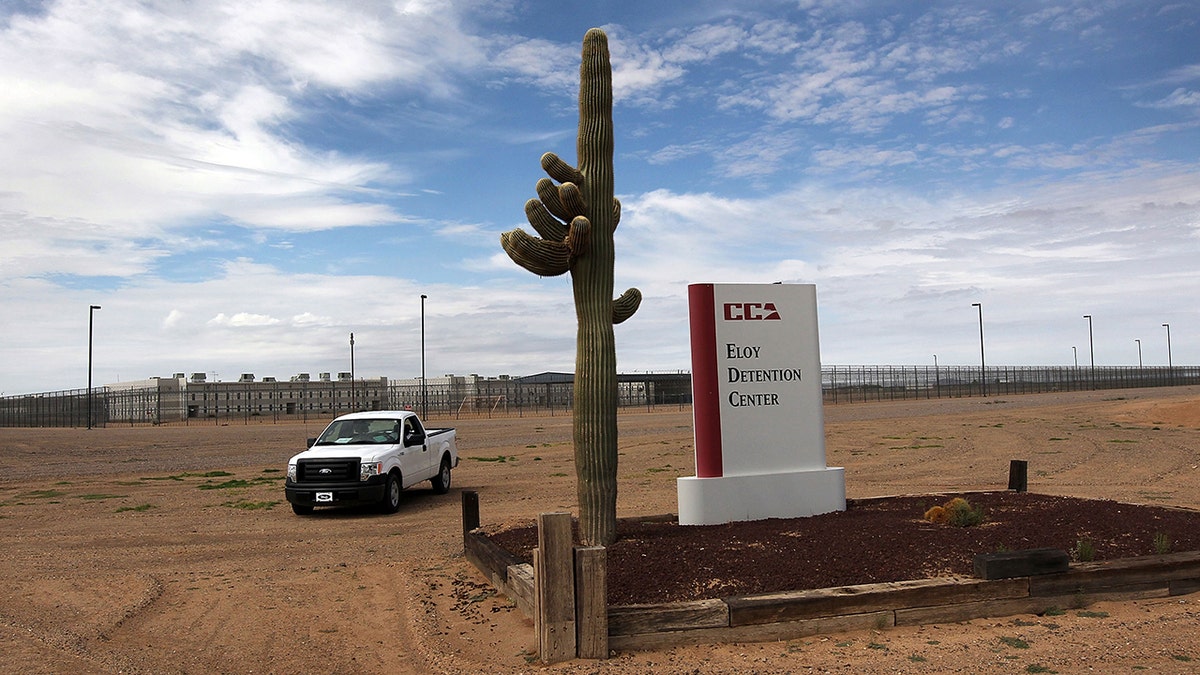
A cactus and sign mark the entrance to the Eloy Detention Facility for illegal immigrants on July 30, 2010.
CLICK HERE TO DOWNLOAD THE FOX NEWS APP
When pressed for more details about Talarico’s ideal detainment conditions a reality, his campaign pointed to his border security plan he recently unveiled.
«James supports stronger border security and safe, secure, and humane detention facilities. He’s the only candidate in this race to unveil a border security agenda endorsed by Republicans and Democrats that will add more border patrol agents and improve technology at the border to better detect threats. For too long, both parties have failed our border communities by grandstanding on the issue instead of finding real solutions. James is running for Senate to keep our country safe by deporting criminals instead of locking up moms, babies and small business owners who have been contributing to our economy for decades,» a campaign spokesperson said.
Having secured the Democratic nomination, Talarico will face Republican nominee Ken Paxton in the Nov. 3 general election.
illegal immigrants, immigration, border security, politics
INTERNACIONAL
“Sobrevivir 90 minutos bajo la guillotina”: Los salvadoreños Iván Barton y David Morán, galardonados tras el Mundial 2026

El arbitraje salvadoreño volvió a escribir una página de oro en la historia del fútbol internacional. En un acto de reconocimiento encabezado por el presidente de la Federación Salvadoreña de Fútbol (Fesfut), Yamil Bukele, los colegiados Iván Barton y David Morán compartieron sus vivencias, aprendizajes y el costado más humano de su destacada labor en la Copa del Mundo 2026, donde alcanzaron la histórica instancia de semifinales.
Infobae estuvo presente en el auditorio de la federación durante la cobertura de esta emotiva ceremonia, donde además se anunció un incentivo económico de 2.500 dólares para cada uno de los réferis.
Más allá de los reconocimientos monetarios y los récords estadísticos, las declaraciones recogidas por este medio dejaron al descubierto la enorme carga emocional, la presión extrema y los dolorosos sacrificios personales que exige mantenerse en la cima del arbitraje de alto rendimiento.

Uno de los momentos más desgarradores y de mayor sensibilidad durante la conferencia ocurrió cuando el árbitro asistente David Morán tomó la palabra. Frente a los medios de comunicación e invitados especiales, Morán relató el que, sin duda alguna, fue el desafío más complejo de toda su vida profesional y personal. Mientras un país entero celebraba cada una de sus apariciones en las canchas mundialistas, el colegiado atravesaba por un duelo desgarrador en absoluto silencio.
Justo en los días previos a encarar su segundo compromiso del torneo, Morán recibió la trágica noticia del fallecimiento de su suegro, una persona a quien consideraba como un pilar fundamental en su vida. Lejos de su patria y sin la posibilidad inmediata de abrazar a los suyos en un instante tan devastador, el asistente salvadoreño tuvo que sobreponerse al dolor para vestir la vestimenta oficial y salir a rendir al máximo nivel exigido por FIFA.
“Luego salir a la cancha con el corazón destrozado, pero sabiendo la responsabilidad que llevamos, quiero dedicar sin duda este triunfo a mi familia, que son el principal soporte para poder alcanzar lo que se ha alcanzado”, confesó Morán visiblemente conmovido.
A pesar de que los reglamentos del organismo internacional le permitían solicitar un vuelo de retorno de emergencia para acompañar a su familia, Morán decidió permanecer en la concentración. Iván Barton no dudó en alabar la fortaleza mental de su compañero de equipo durante la sesión de preguntas recogida por Infobae, revelando que no sabían qué pasaría con la terna si él decidía marcharse, pero que el profesionalismo de Morán salvaguardó el trabajo de años.
El árbitro asistente salvadoreño, David Morán, comparte su emoción y gratitud por el inmenso apoyo recibido de la afición tras su participación mundialista. Escucha sus sentidas palabras sobre lo que significó sentir el calor del pueblo.
Por su parte, el árbitro principal Iván Barton abordó la complejidad de la profesión arbitral y la gigantesca responsabilidad de portar el acrónimo de El Salvador (SLV) ante los ojos del mundo entero. Barton, quien inició su intervención bromeando sobre los nervios que sentía en el podio asegurando que eran mayores a los experimentados antes de pitar la semifinal mundialista, profundizó en cómo lidian los jueces con la abrumadora presión mediática y la constante exigencia del público.
Para el réferi central, dirigir al más alto nivel equivale a convivir constantemente con el riesgo de caer en el descrédito ante la primera falla, en una metáfora tan clara como contundente sobre la vulnerabilidad del árbitro en el terreno de juego.
“Un árbitro, cada vez que entramos a cada partido, yo siempre he dicho que hago una analogía. Es como que si vamos y ponemos nuestra cabeza justo con la guillotina arriba. Aquí está mi cabeza y tengo que sobrevivir 90 minutos o lo que dure, sabiendo que en cualquier momento esa guillotina puede caer.

¿Qué tan fuerte voy a ser para resistir y no morir ahí? Mientras existan las ganas, esa pasión de seguir ejerciendo esta linda profesión, vamos a seguir dando lo mejor para seguir estando en la élite”, reflexiono Barton ante los micrófonos.
El réferi salvadoreño también recordó con mucha nostalgia el momento exacto en el que les comunicaron la designación para dirigir la semifinal. Confesó que tanto él como Morán daban por sentado que ese partido le correspondería a una terna europea y que él ya se encontraba revisando su itinerario de vuelo de regreso a San Salvador.
“Cuando hubo una pausa que tomaron el documento para leer las designaciones, yo saqué mi teléfono y dije: ‘Bueno, mi vuelo ha sido para mañana, así que yo voy mañana’. Y cuando escucho mi nombre, realmente creo que es el momento más dulce. Cuando se dijo mi apellido para la semifinal, sobre todo por el calibre de juego que significaba”, relató.
Respecto a las críticas y declaraciones despectivas emitidas por figuras internacionales durante el desarrollo del torneo como las del entrenador francés Didier Deschamps, Barton se mostró imperturbable y maduro frente a las cámaras de Infobae:
“Él tiene derecho a tener su opinión, pero a nosotros no nos designan basados en la opinión de un técnico, a nosotros no nos designan basados en la opinión de una red social. Lo digo con mucho respeto, porque al final en las redes sociales cada quien va a tener su opinión, pero al final del día lo que a nosotros nos interesa es cumplir técnicamente. Te respeto que digas que soy malo, más no que soy deshonesto”, sentenció enfáticamente.

La actuación de la dupla Barton-Morán no solo llena de orgullo a la afición salvadoreña, sino que los posiciona de manera indiscutible como la terna arbitral centroamericana con mayor recorrido, partidos dirigidos y trascendencia en toda la historia de las Copas del Mundo.
De cara al futuro, ambos colegiados coincidieron ante las preguntas de la prensa en que la única fórmula para sostenerse en la élite es mantener la humildad, el trabajo diario en los entrenamientos y la plena disposición de volcar todo ese aprendizaje internacional en la profesionalización de la liga local y las nuevas generaciones de réferis en El Salvador.
iván barton,david morán,arbitros salvadoreños en el mundial,mundial 2026,fesfut

Beltrán Briones: cómo convirtió su marca personal en un negocio que ya captó US$45 millones

El sur de Europa sufre una ola de incendios avivados por temperaturas extremas: hay miles de evacuados

Operaron al gobernador de Tucumán: le colocaron un stent y se recupera en el Hospital Italiano

Cambio de rumbo: Mastantuono se gana a Mourinho y abre una puerta para seguir en el Madrid

Osvaldo Jaldo fue sometido a una intervención cardíaca en Buenos Aires y permanece internado

Dem’s stunning ideal standard for immigration detention conditions resurfaces amid Texas senate bid

Escándalo Mundial: Las presiones secretas, la amenaza de la FIFA por Malvinas y la verdad detrás del partido contra España

Sin la Copa y sin Messi en el avión, vuelve Tapia y deberá enfrentar tres frentes de tormenta tras la pausa del Mundial

Samuel L. Jackson llamó a Argentina “el país más racista del mundo”: la contundente respuesta que le dejó Bárbara Lombardo

Le ganan a la inflación: los senadores pasarán a cobrar $12 millones brutos a partir de agosto

 DEPORTE2 días ago
Escándalo Mundial: Las presiones secretas, la amenaza de la FIFA por Malvinas y la verdad detrás del partido contra España
- CHIMENTOS3 días ago
Samuel L. Jackson llamó a Argentina “el país más racista del mundo”: la contundente respuesta que le dejó Bárbara Lombardo
- POLITICA21 horas ago
Jorge Berredo, general retirado de las FFAA, asumió como Secretario de Seguridad en San Isidro