INTERNACIONAL
Avanza hoja de ruta para el desarrollo sostenible del bambú entre los productores panameños


La Comisión Nacional del Bambú (Conaba) definió nuevas áreas de trabajo para impulsar el cultivo, la conservación y la transformación del bambú, con aplicaciones previstas en el ambiente, la producción agropecuaria y la vivienda rural.
El bambú cuenta en Panamá con un marco institucional y técnico coordinado por dicha comisión, aunque el país no dispone de una ley dedicada exclusivamente a esta especie.
La regulación se apoya en normas existentes y en acciones de coordinación entre instituciones, productores y otros sectores.
Durante la jornada, los participantes revisaron las resoluciones que dieron origen a la Conaba y analizaron el Plan Nacional del Bambú correspondiente al período 2025-2030.
La asamblea aprobó por mayoría una organización basada en siete ámbitos: agronómico, agroindustrial, ambiental, social, investigación, infraestructura y comunicación.

Estos ejes ordenarán las tareas de las subcomisiones regionales, y la nueva estructura busca que las acciones sobre el bambú no queden limitadas a la producción de plantas.
El planteamiento incorpora el manejo de las plantaciones, el procesamiento industrial, la formación de productores, la investigación y la difusión de oportunidades para las comunidades rurales.
El Ministerio de Desarrollo Agropecuario ocupa actualmente la Secretaría de la Junta Directiva de la Conaba.
Desde esa función, la entidad manifestó su compromiso de coordinar esfuerzos con los sectores que participan en el aprovechamiento responsable del recurso.
La estrategia nacional propone consolidar durante una década una cadena de valor sostenible y competitiva, desde la instalación de viveros tecnificados hasta el uso industrial del bambú.
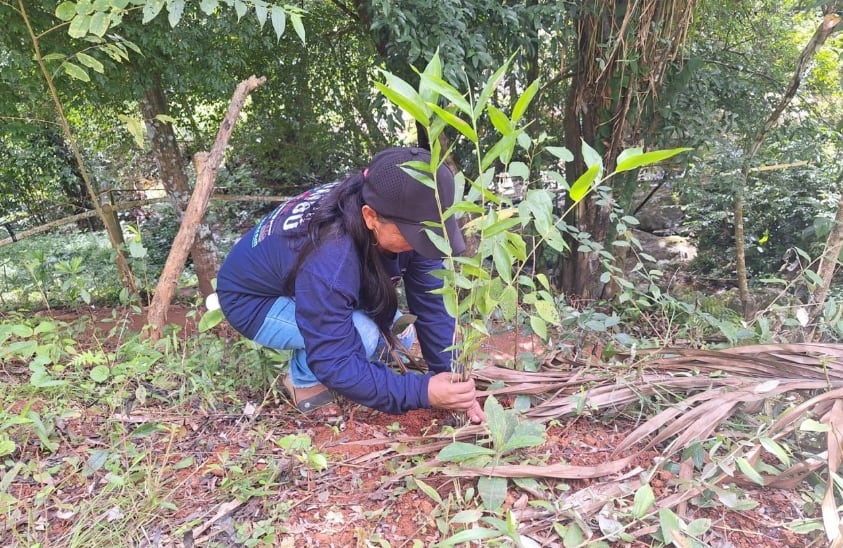
El objetivo incluye ampliar la participación de productores y promover actividades que generen valor agregado en distintos territorios del país.
Uno de los puntos previstos consiste en fortalecer las fases iniciales de la actividad: la propagación, el establecimiento de plantaciones y su manejo. El programa también plantea incorporar tecnologías sostenibles que contribuyan a mejorar el rendimiento del cultivo.
El documento menciona usos potenciales en la bioconstrucción, la artesanía, la medicina, la botánica y la actividad agropecuaria. La propuesta busca validar esas aplicaciones para que puedan integrarse a iniciativas productivas y ambientales. Otra de las líneas de acción se relaciona con las llamadas soluciones basadas en la naturaleza.
Bajo ese enfoque, la información detalla que el bambú podría utilizarse para recuperar suelos degradados, proteger cuencas hídricas y controlar procesos de erosión.
En el ámbito agropecuario, el Ministerio de Desarrollo Agropecuario prevé divulgar métodos de siembra, propagación responsable y manejo sostenible. La institución también evaluará la utilidad del bambú en actividades pecuarias.

El análisis abarcará el potencial de algunas especies como suplemento nutricional para animales. El propósito de esa evaluación es determinar si esta alternativa puede contribuir a reducir costos de producción.
La recopilación de datos será otra de las tareas previstas. Además del Ministerio de Desarrollo Agropecuario, las instituciones del sector agropecuario proyectan reunir información sobre los productores actuales y potenciales, la superficie cultivada, la rentabilidad de la actividad y los problemas que enfrenta el sector.
Ese registro, se indica, servirá para orientar investigaciones, asistencia técnica y opciones de transformación productiva.
El material revisado durante la asamblea menciona un Plan Nacional del Bambú 2025-2030.
En otra parte, la información identifica un Programa Nacional de Bambú 2025-2035 y lo presenta como una estrategia decenal.

La Comisión Nacional del Bambú concentra su labor en el desarrollo sostenible de esta actividad, desde el cultivo y el manejo de plantaciones hasta sus posibles usos en la agronomía, la botánica, la medicina, la artesanía y la industria.
El planteamiento institucional ubica al bambú como una alternativa para la bioeconomía, la economía circular y las medidas frente al cambio climático.
La ejecución de los ejes aprobados definirá el alcance de esa estrategia en las zonas rurales panameñas.
Panamá,bambú,cosecha,agricultores













INTERNACIONAL
Fogel de Centro América recibe el premio Exportador del Año 2026 de la Asociación Guatemalteca de Exportadores

La empresa guatemalteca Fogel de Centro América recibió el reconocimiento de Exportador del Año 2026, el máximo galardón entregado por la Asociación Guatemalteca de Exportadores (Agexport) durante la 38.ª edición del Galardón Nacional a la Exportación.
La ceremonia se realizó la noche del jueves 29 de octubre en un hotel de la Ciudad deGuatemala, bajo el lema “Conectando exportaciones, trascendiendo fronteras”.
Fogel, dedicada desde 1981 al desarrollo de refrigeración comercial, exporta sus soluciones a más de 35 países.
La compañía sustenta su expansión internacional en la innovación y la automatización de procesos, además de contar con laboratorios acreditados, el uso de refrigerantes naturales y tecnología de alta eficiencia que incorpora ingeniería desarrollada en el país.
Un jurado integrado por autoridades y representantes de alto nivel del sector privado la eligió entre las tres empresas que obtuvieron galardón en sus respectivas categorías.

Doce finalistas compitieron por el reconocimiento
La edición 2026 del certamen reunió a doce empresas finalistas y contó con la participación de representantes del sector exportador y del pleno del Consejo Nacional de Promoción de Exportaciones (Conapex), presidido por el Ministerio de Economía.
Durante la bienvenida, Francisco Ralda, presidente de la Junta Directiva de Agexport, se refirió a los desafíos que enfrentan las empresas guatemaltecas frente a la situación geopolítica, los aranceles y los cambios tecnológicos.
“El potencial de Guatemala es mucho mayor que la velocidad con la que está creciendo, y no se puede pedir a los exportadores avanzar más rápido mientras el país tenga obstáculos que frenen su competitividad”, afirmó Ralda ante los asistentes.
El directivo señaló además que “ahora viene la parte más importante: convertir las leyes, los anuncios y los proyectos en resultados”.
Tres empresas recibieron galardón por categoría
Además de Fogel, otras dos compañías obtuvieron reconocimiento en sus respectivos rubros. En la categoría de Sector Servicios y Contact Center & BPO, el galardón fue para Sistemas Aplicativos, S. A. (Sisap), empresa guatemalteca con más de cuatro décadas de trayectoria que presta servicios de ciberseguridad en doce países.
Sisap opera tres centros de operaciones de seguridad (SOC) con inteligencia artificial y respuesta las 24 horas, y a través de su instituto IRSI forma de manera gratuita talento especializado en el área tecnológica.

En la categoría de Sector Agrícola y Acuicultura y Pesca, el premio correspondió a Plantaciones Nahualate, compañía con treinta años de trayectoria que exporta banano, mango, limón, yuca, semillas y alimentos procesados hacia Europa, Norteamérica y el Caribe.
La empresa protege más de 80 hectáreas de bosque y transforma residuos en nuevos recursos, además de operar una clínica empresarial del Instituto Guatemalteco de Seguridad Social (IGSS) para sus colaboradores.
El jurado otorgó menciones honoríficas a tres finalistas
A petición del jurado calificador, se entregaron menciones honoríficas a tres empresas que destacaron durante el proceso de selección: El Gigante Coffee, Avícola Kikiriki y Servicios Visualiza.
Estas compañías no obtuvieron el galardón principal de sus categorías, pero el jurado reconoció su desempeño dentro del conjunto de finalistas.

Ingrid Juárez Brenner fue distinguida como Mujer Exportadora
El reconocimiento a Mujer Exportadora 2026 fue para Ingrid Carolina Juárez Brenner, presidenta de Exprogua.
Pionera del sector de plantas ornamentales desde 1987, su trabajo llevó esta producción guatemalteca a más de 25 países en cinco continentes, en un rubro tradicionalmente liderado por hombres.
Su labor se extendió también al ámbito social, con proyectos de educación, salud y vivienda impulsados a través de la Fundación Corazones Libres.

Mascotas de Lana obtuvo el premio a la primera exportación
En la categoría Mi Primera Exportación, el galardón fue para Mascotas de Lana, emprendimiento fundado por Cristina Sánchez, integrante de la Comisión Hecho a Mano de Agexport y distinguida con el Sello Blanco de Guatemala.
La marca produce personajes tejidos a mano con la técnica del crochet y ha colocado su producción en mercados como España y Estados Unidos, con el trabajo de artesanos guatemaltecos, entre ellos madres que generan ingresos desde sus hogares.

El Inguat recibió el reconocimiento a institución de apoyo
La Junta Directiva de Agexport otorgó el reconocimiento especial a institución de apoyo al Instituto Guatemalteco de Turismo (Inguat), por su trabajo enfocado en fortalecer la imagen del país para el crecimiento del turismo nacional e internacional.
Agexport plantea una agenda de competitividad
Ralda cerró la ceremonia con un llamado a fortalecer la competitividad del país a través de cuatro prioridades que Agexport impulsa: infraestructura vial crítica, eficiencia en puertos, costos de energía y simplificación de trámites.
“Quienes estamos hoy aquí tenemos responsabilidades distintas, pero compartimos un mismo país”, señaló el directivo, quien instó al sector público y privado a trabajar de manera conjunta para incrementar la capacidad exportadora de Guatemala.
Guatemala,Exportadores,Agexport,Exportador del Año
INTERNACIONAL
Dem operative admits Ilhan Omar case has legs as liberal firewall begins to crack: ‘I’m not stupid’

A prominent Minnesota Democrat who served in the state’s House of Representatives revealed on Thursday he believes the federal probe into Rep. Ilhan Omar, D-Minn., has legitimacy.
It’s the latest signal that the political dam may be breaking as scandals and investigations into the congresswoman continue to pile up.
«Democrats should understand that the allegation is almost certainly true—whatever conclusion they draw from that point could vary—and her denials calling it a right-wing, Islamophobic or racist conspiracy are almost certainly not,» Joe Radinovich posted on X in reference to the claims that Omar married her brother as part of an alleged fraudulent immigration scheme.
Radinovich, who served as a Minnesota state representative from 2013 to 2015 as a member of the Minnesota Democratic–Farmer–Labor Party (DFL), added to his post that, in addition to the probe into her immigration status, the investigation into her finances could also be problematic.
OBAMA ADMIN FIRST LAUNCHED THE INVESTIGATION INTO ILHAN OMAR’S ALLEGED BROTHER MARRIAGE
«And then I’d be very, very careful about how I qualified on allegations around her finances—where her defense looks similar and where no meaningful questions have been answered publicly, and where any objective look at the evidence doesn’t look…great,» the former state representative said.
Radinovich, a well-connected DFL operative with ties to the party’s state, federal and Minneapolis political establishments, managed Democrat Rick Nolan’s 2016 congressional campaign, ran Jacob Frey’s successful 2017 campaign for Minneapolis mayor and later served as Frey’s chief of staff. He also won the DFL nomination for Minnesota’s 8th Congressional District in 2018 before losing to Republican Pete Stauber.
Briana Rose Lee, a Minneapolis DFL activist who served as an operations director for Omar’s campaign operation, responded to the post calling it a «witch hunt.»
«Joe. You aren’t stupid,» she wrote. «You know this is a baseless and manufactured witch hunt. I’m actually surprised to see this from you. It’s a new low.»
NEARLY 40 HOUSE DEMS SKIP EFFORT TO END ILHAN OMAR IMMIGRATION PROBE
Radinovich stood by his comments.
«You’re right,» Radinovich wrote. «I’m not stupid. I believe the Trump DOJ has next to no credibility and that it’s unclear to me the timing of the raid was appropriate—though it’s notable a DC judge signed off on it—but I’m pretty confident this specific allegation is true.»
Radinovich’s post is the latest example of the scrutiny surrounding Omar’s legal issues not being confined to conservative media or the MAGA base.
Outlets including the New York Times, MSNBC, NBC News and The Associated Press have reported on evidence suggesting Omar’s marriage and citizenship may have been fraudulent, although no criminal charges have been filed against the Minnesota congresswoman.
Omar’s Washington, D.C., home was raided by Homeland Security Investigations (HSI) on Oct. 12, 2026. HSI is the chief investigative arm of the Department of Homeland Security (DHS). Her passport, phone and computer were seized during the early-morning operation.
later reported that investigators are in possession of Omar’s DNA. Omar’s sister, Sahra Noor, voluntarily submitted to questioning shortly after the raid, skipping out on her book tour for a «family emergency.»
Sources confirmed to Digital that the raid stemmed from an investigation into whether Omar or her late father, Nur Mohamed, fraudulently filled out her citizenship paperwork decades ago. The investigation, the sources noted, could lead to the congresswoman’s denaturalization.
But questions about whether Omar allegedly married her brother, Ahmed Nur Said Elmi, in a fraudulent immigration scheme have also arisen. Omar has been plagued by the accusation for a decade, since she first ran for Minnesota state representative in 2016.
Court filings from the U.S. Attorney’s Office in the District of Columbia referred to Omar as «Ilhan Omar Nur Said Elmi, a/k/a Ilhan Omar,» suggesting that she shares a surname with the man she married in 2009. Ahmed Nur Said Elmi is a British citizen. Sources later told Digital that Ilhan Omar is not the Somali-born congresswoman’s «real name.»
Omar’s office has consistently denied the immigration fraud allegation, characterizing it as a right-wing smear. Most recently, she has said that the renewed scrutiny is the product of a political «vendetta» by President Donald Trump.
But Thursday, Digital confirmed that former President Barack Obama’s administration opened a probe into the allegedly fraudulent marriage in 2016. One source told Digital that the investigation remained open until 2021, when it was closed by the Biden administration. The Times reported that investigators believed the statute of limitations on a potential crime had passed.
Omar’s campaign attacked Radinovich in a Friday morning comment to Digital.
«Joe is a deeply troubled individual whose demons have sadly manifested as an irrational obsession with Congresswoman Omar after managing two losing campaigns against her,» the campaign said. «His claims are false, biased, and without any evidence. While he was once seen as a rising star within the party, Joe is now widely recognized as a shill for Republican and Corporate money.»
politics, ilhan omar, minnesota fraud exposed, minnesota, crime world
INTERNACIONAL
Netanyahu’s bloc falls short as longtime allies reportedly weigh move that could end his rule

NEWYou can now listen to Fox News articles!
Israel’s final election count has confirmed that Prime Minister Benjamin Netanyahu’s bloc has lost its parliamentary majority, but whether opposition leader Gadi Eisenkot can assemble a government to replace him remains an open question as negotiations begin behind closed doors.
The completed count, published early Friday by Israel’s Central Elections Committee, gave Netanyahu’s bloc 53 seats in the 120-member Knesset, compared with 48 for Eisenkot’s opposition alliance. The two predominantly Arab parties secured a historic 19 seats, placing them in a potentially decisive position.
Netanyahu’s Likud emerged as the largest individual party with 27 seats, followed by Eisenkot’s Yashar with 21 and former Prime Minister Naftali Bennett’s Beyachad with 12. Final voter turnout reached 77.9%, according to the Central Elections Committee results.
ISRAEL HEADS INTO DEEPLY DIVIDED ELECTION AS OCT. 7 RECKONING LOOMS: WHAT TO KNOW
Posters of former Israeli Chief of General Staff and Yashar Party leader Gadi Eisenkot, right, and Prime Minister and Likud Party leader Benjamin Netanyahu are seen as election campaigns intensify two days before the vote as campaign posters of candidates are displayed on billboards and buildings across the streets ahead of the Knesset elections scheduled for October 27, in Tel Aviv, Israel, on October 25, 2026. (Nir Keidar/Anadolu via Getty Images)
But the numbers leave neither major bloc with the 61 seats required for a majority, opening a complex political struggle involving potential partnerships with Arab parties, ultra-Orthodox lawmakers or a unity government bringing together longtime rivals.
A source familiar with opposition discussions, who spoke to Fox News Digital on condition of anonymity, described the outcome as a «bitter stalemate,» but not an impossible political situation.
The source said opposition leaders are approaching coalition negotiations with patience and experience rather than treating the inconclusive results as a defeat, arguing that the next government could depend on their ability to forge partnerships that previously seemed unlikely.
FORMER ISRAELI ARMY CHIEF GADI EISENKOT EMERGES AS NETANYAHU’S LEADING ELECTION CHALLENGER

An ultra-Orthodox Jewish man holds his ballot as he votes in the parliamentary election at a polling station in Jerusalem on January 22, 2013. Israelis voted on Tuesday in an election widely expected to win Prime Minister Benjamin Netanyahu a third term in office, pushing the Jewish State further to the right, away from peace with Palestinians and towards a showdown with Iran. (Ronen Zvulun/Reuters)
Ultra-Orthodox allies explore a break with Netanyahu
In a potentially significant development Friday, Israeli journalist Yishai Cohen of Kikar HaShabbat reported that Rabbi Dov Lando, a leading ultra-Orthodox religious authority, had instructed lawmakers from Degel HaTorah, part of United Torah Judaism, to open discussions with the opposition.
According to the report, the objective is to reach an arrangement protecting the status of yeshiva students amid the longstanding dispute over mandatory military service.
Channel 12 reported that figures within the ultra-Orthodox party were considering allowing an Eisenkot-led minority government to survive through outside parliamentary support, potentially breaking with Netanyahu.
«Our votes are not in Netanyahu’s pocket,» party figures told Channel 12, according to a translation of the Hebrew-language report.
However, the office of United Torah Judaism Chairman Yaakov Asher denied that any instruction to begin negotiations had been issued.
Such an arrangement would represent a significant shift from the party’s longstanding alliance with Netanyahu. Eisenkot’s pledge to expand military conscription among ultra-Orthodox men remains a major obstacle, although Channel 12 reported that party figures were willing to consider a compromise on the issue.
The source familiar with opposition discussions told Fox News Digital that Eisenkot’s camp had been preparing for the possibility of cooperation with ultra-Orthodox parties well before the election, suggesting that some of the options now being discussed had already been under consideration behind the scenes.
According to the source, such an arrangement could require compromises over military service and potentially outside parliamentary support from Arab lawmakers, bringing together political factions whose positions appeared irreconcilable during the campaign.
FORMER ISRAELI PM EMERGES AS WILD CARD IN HIGH-STAKES ELECTION WITH MIDDLE EAST’S FUTURE AT STAKE

People gather near a pre-election campaign banner featuring leaders of the Joint List, ahead of Israel’s national election, in Nazareth, Israel, on October 10, 2026. (Ammar Awad/Reuters)
Arab parties signal flexibility, but obstacles remain
Another possibility rests with the Arab parties, which nearly doubled their parliamentary representation from 10 to 19 seats following a surge in turnout.
But the prospects of an Arab-backed government have drawn conflicting assessments.
Channel 12 reported Thursday that Ra’am leader Mansour Abbas had expressed deep skepticism about the possibility of establishing an Eisenkot-led minority government supported by Arab lawmakers.
Israeli political commentator Amit Segal also argued that the available options had narrowed considerably, identifying a Netanyahu-Eisenkot unity government or another election as the two principal remaining possibilities.
Mohammed Majadla, head of the news division at Radio Nas and a Channel 12 political commentator, offered a different assessment in an interview with Fox News Digital, arguing that both Ra’am and the Joint List were prepared to use their parliamentary influence to prevent Netanyahu from returning to power.
«The two Arab lists agree on two things,» Majadla said in the Hebrew-language interview. «First, they are prepared to do everything within the political process to ensure Netanyahu does not return to power.»
According to Majadla, that could include joining a coalition, providing outside parliamentary support or abstaining from key votes.
He said their second shared priority was avoiding another election, which Arab political leaders fear could reverse their gains.
«The ball is now in Eisenkot’s court, not in the Arab parties’ court,» Majadla said. «As far as the Arab parties are concerned, I can tell you they are truly prepared to do everything to make this happen.»
Majadla suggested that public declarations should not necessarily be treated as final positions, particularly as parties seek leverage during coalition negotiations.
The difficulties extend beyond the Arab parties. Eisenkot’s potential partners include politicians who strongly oppose cooperation with ultra-Orthodox factions, while several opposition leaders campaigned against relying on Arab lawmakers to govern.
NETANYAHU FIGHTS FOR POLITICAL FUTURE AS ISRAEL HEADS TO POLLS WITH IRAN THREAT LOOMING
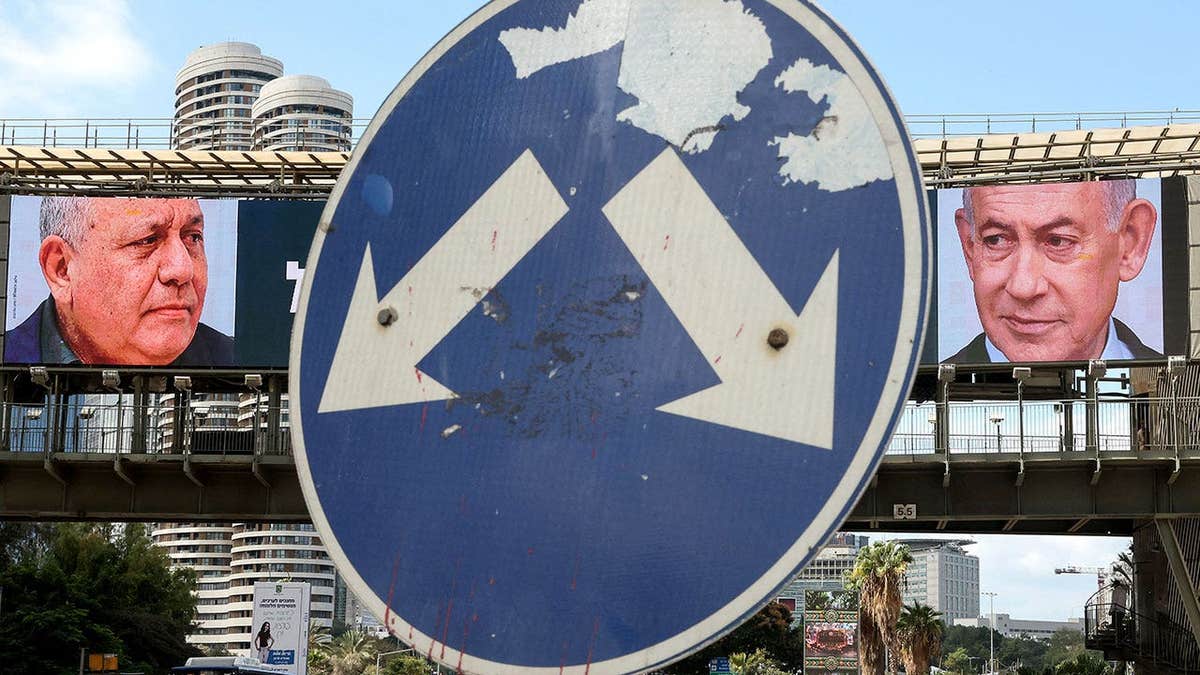
A road sign stands in front of a large billboard featuring Israel’s Prime Minister Benjamin Netanyahu, right, of the Likud Party and former military chief and leader of the centrist Yashar Party, Gadi Eisenkot, in Ramat Gan on October 20, 2026. Israel heads to the polls on October 27 in its first election since the October 7, 2023, Hamas-led attack, in what is seen as a referendum on the prime minister. (Jack Guez / AFP via Getty Images)
Unity government or another election?
A national unity government involving Likud and Yashar would offer a more straightforward mathematical route to a majority, but would require Eisenkot to reconsider his campaign pledge not to join a Netanyahu-led government.
For Netanyahu, the lengthy coalition formation process could provide additional opportunities. If Eisenkot receives the mandate to form a government but fails, President Isaac Herzog could assign the task to another candidate, potentially giving Netanyahu another chance to assemble a coalition. If successive efforts fail, Israel could face another election.
Despite the obstacles, the source familiar with opposition discussions pointed to Bennett and Lapid’s experience navigating complex coalition negotiations as an important asset.
«They’ve both played this game many times. They know it, and they’re not rattled,» the source said, according to a translation of the Hebrew-language conversation.
The source suggested that Bennett’s experience working with Netanyahu gives him a particular understanding of the prime minister’s negotiating tactics, while Lapid brings additional experience in coalition-building.
Former Prime Minister Yair Lapid, one of the opposition’s senior figures, acknowledged Friday that forming a government would be considerably more difficult than campaigning against Netanyahu.
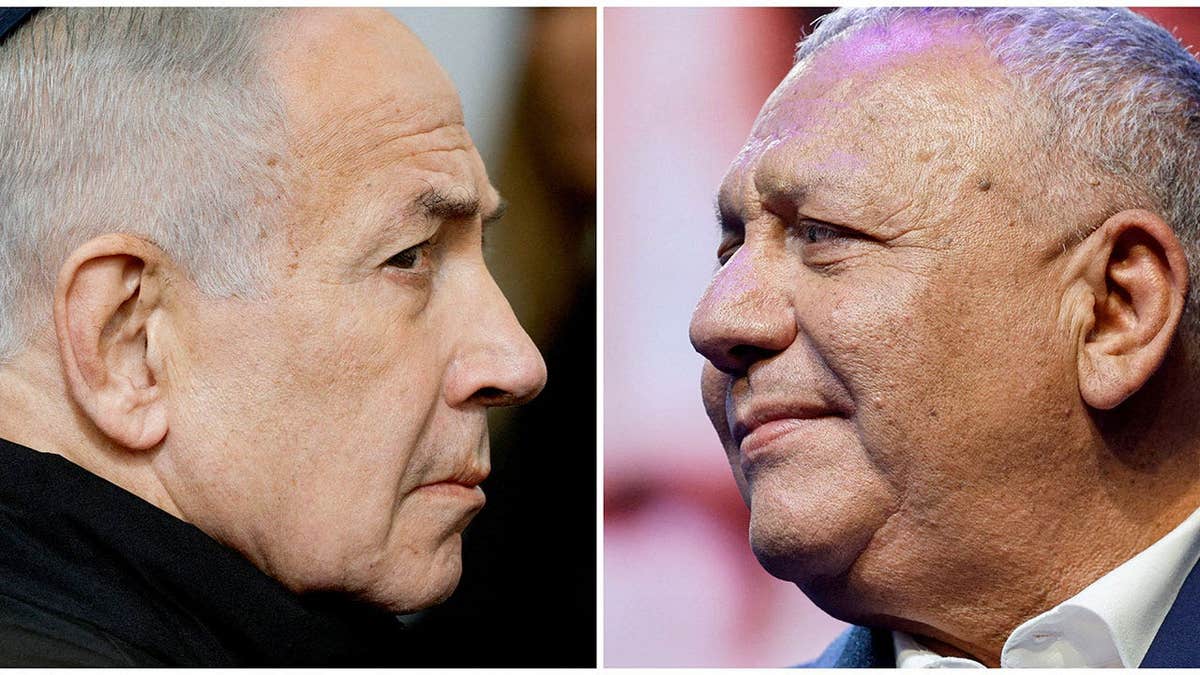
A combination picture shows Israeli Prime Minister Benjamin Netanyahu as he attends a memorial service held for Ran Gvili, an off-duty police officer who was killed fighting militants that had infiltrated Israel during the deadly October 7, 2023, attack by Hamas, and the last hostage recovered from Gaza, in Meitar, Israel, January 28, 2026, and Israeli opposition leader and former military chief, Gadi Eisenkot, as he launches an election campaign for Yashar, his new political party, at an event near Hod Hasharon, Israel, June 30, 2026. (Amir Cohen/Reuters)
«Now comes the truly hard part: trying to form a government,» Lapid wrote on X, urging supporters to remain patient.
«It takes place in small rooms, slowly, away from the cameras,» he wrote, according to a translation of his Hebrew-language statement, emphasizing the importance of negotiations conducted out of public view.
The negotiations will also unfold against the backdrop of the Trump administration’s Middle East agenda.
The source familiar with opposition discussions said understanding Washington’s regional priorities could become an important consideration in shaping a future government, although no specific American role in coalition negotiations has been confirmed.
The election results are scheduled to be formally submitted to President Herzog on November 4, following remaining verification procedures. The new Knesset is expected to be sworn in November 10.
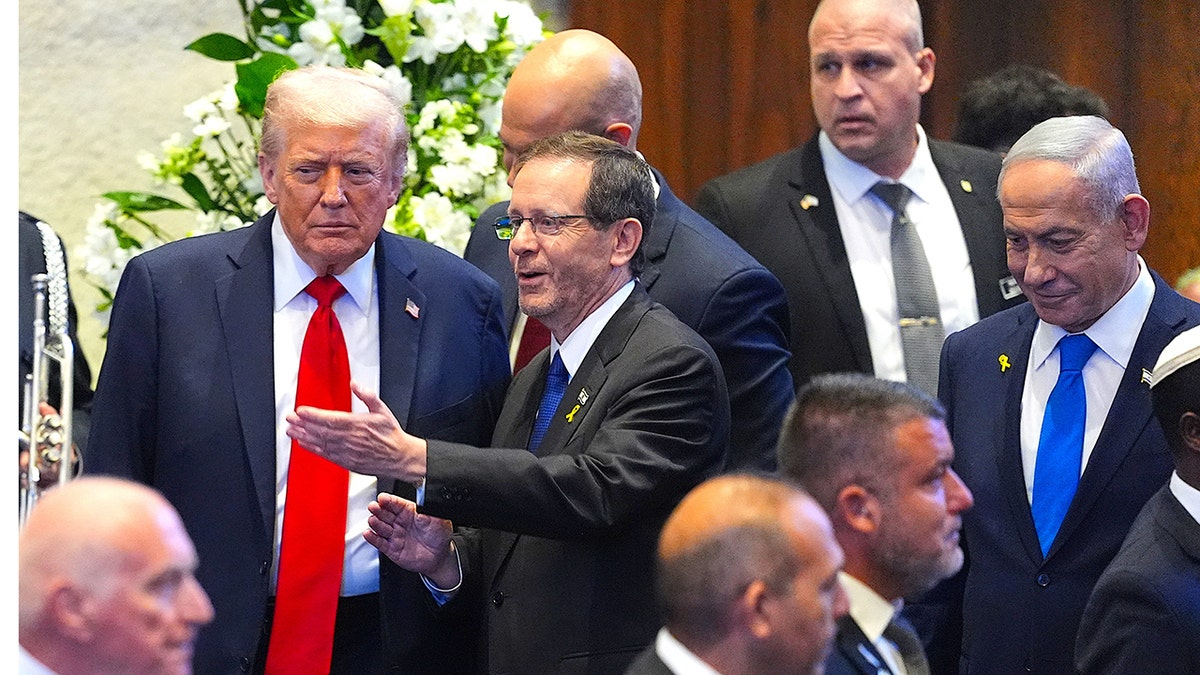
U.S. President Donald Trump enters the Knesset, Israel’s parliament, with Israeli President Isaac Herzog and Israeli Prime Minister Benjamin Netanyahu before he speaks on Oct. 13, 2025 in Jerusalem. (Evan Vucci – Pool/Getty Images)
For now, the election has settled the question of how Israelis voted, but not who will govern them. A source familiar with the negotiations concluded: «Whoever manages to forge new partnerships will move forward. Whoever doesn’t will remain stuck.»
israel, elections, benjamin netanyahu, politics, world

Martín Menem descartó una interna en La Libertad Avanza y le marcó la cancha a Patricia Bullrich

Arteta no se arrepiente de su reacción con Dowman: ‘No estamos en Disneyland’

Sturzenegger contó que el Gobierno usa IA para analizar leyes y modificarlas

“El presidente Milei va a recibir al papa León XIV al pie del avión”, aseguró el secretario de Culto

El FMI elogia a Caputo pero le cobra cada vez más caro y llega un vencimiento millonario

Andy Kusnetzoff habló sobre el escándalo entre Santiago Maratea y La China Ansa en PH: “Fue el programa más verdadero que hice”

Medios brasileños afirman que Flávio Bolsonaro escapó del país y está en vuelo a Estados Unidos

De Bullrich a Lula da Silva: a Milei se le abrieron dos frentes de conflicto con resolución incierta

Facundo Bagnis vuelve al tenis tras un año de suspensión por doping: “Dejó una cicatriz enorme en mí”

Brasil sacude a la City y hace saltar la brecha entre dólar oficial y el que usan empresas

 INTERNACIONAL3 días ago
Medios brasileños afirman que Flávio Bolsonaro escapó del país y está en vuelo a Estados Unidos
- SOCIEDAD2 días ago
Avanza la búsqueda de los hermanos desaparecidos que fueron arrastrados por la corriente de un río en Santa Cruz
- POLITICA2 días ago
Malvinas: tras aceptar modificaciones, el Gobierno buscará llevar al recinto el proyecto de Ley de Soberanía el 12 de noviembre