INTERNACIONAL
Netanyahu’s bloc falls short as longtime allies reportedly weigh move that could end his rule

NEWYou can now listen to Fox News articles!
Israel’s final election count has confirmed that Prime Minister Benjamin Netanyahu’s bloc has lost its parliamentary majority, but whether opposition leader Gadi Eisenkot can assemble a government to replace him remains an open question as negotiations begin behind closed doors.
The completed count, published early Friday by Israel’s Central Elections Committee, gave Netanyahu’s bloc 53 seats in the 120-member Knesset, compared with 48 for Eisenkot’s opposition alliance. The two predominantly Arab parties secured a historic 19 seats, placing them in a potentially decisive position.
Netanyahu’s Likud emerged as the largest individual party with 27 seats, followed by Eisenkot’s Yashar with 21 and former Prime Minister Naftali Bennett’s Beyachad with 12. Final voter turnout reached 77.9%, according to the Central Elections Committee results.
ISRAEL HEADS INTO DEEPLY DIVIDED ELECTION AS OCT. 7 RECKONING LOOMS: WHAT TO KNOW
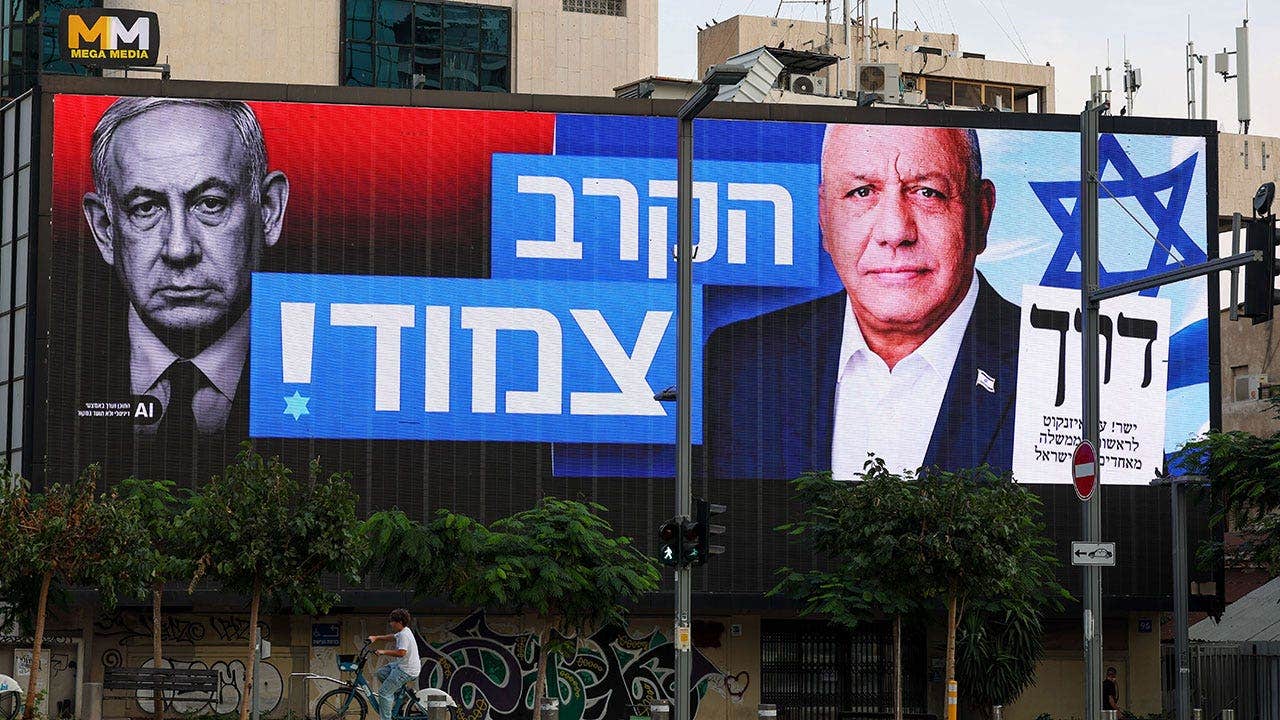
Posters of former Israeli Chief of General Staff and Yashar Party leader Gadi Eisenkot, right, and Prime Minister and Likud Party leader Benjamin Netanyahu are seen as election campaigns intensify two days before the vote as campaign posters of candidates are displayed on billboards and buildings across the streets ahead of the Knesset elections scheduled for October 27, in Tel Aviv, Israel, on October 25, 2026. (Nir Keidar/Anadolu via Getty Images)
But the numbers leave neither major bloc with the 61 seats required for a majority, opening a complex political struggle involving potential partnerships with Arab parties, ultra-Orthodox lawmakers or a unity government bringing together longtime rivals.
A source familiar with opposition discussions, who spoke to Fox News Digital on condition of anonymity, described the outcome as a «bitter stalemate,» but not an impossible political situation.
The source said opposition leaders are approaching coalition negotiations with patience and experience rather than treating the inconclusive results as a defeat, arguing that the next government could depend on their ability to forge partnerships that previously seemed unlikely.
FORMER ISRAELI ARMY CHIEF GADI EISENKOT EMERGES AS NETANYAHU’S LEADING ELECTION CHALLENGER
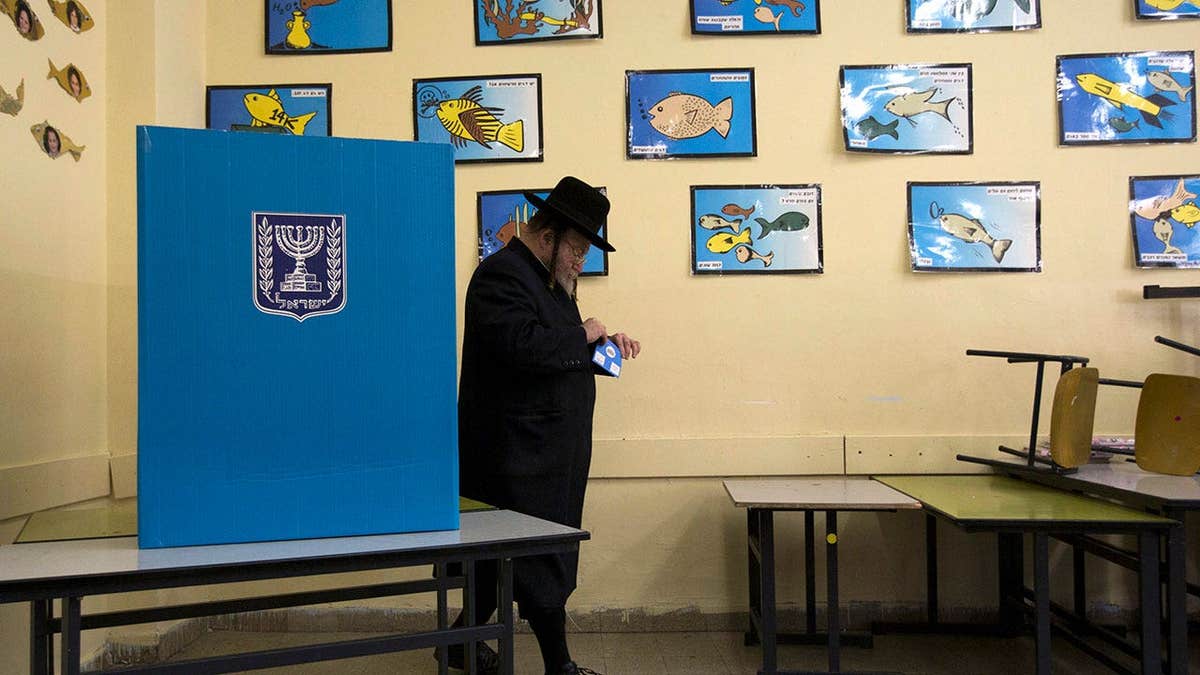
An ultra-Orthodox Jewish man holds his ballot as he votes in the parliamentary election at a polling station in Jerusalem on January 22, 2013. Israelis voted on Tuesday in an election widely expected to win Prime Minister Benjamin Netanyahu a third term in office, pushing the Jewish State further to the right, away from peace with Palestinians and towards a showdown with Iran. (Ronen Zvulun/Reuters)
Ultra-Orthodox allies explore a break with Netanyahu
In a potentially significant development Friday, Israeli journalist Yishai Cohen of Kikar HaShabbat reported that Rabbi Dov Lando, a leading ultra-Orthodox religious authority, had instructed lawmakers from Degel HaTorah, part of United Torah Judaism, to open discussions with the opposition.
According to the report, the objective is to reach an arrangement protecting the status of yeshiva students amid the longstanding dispute over mandatory military service.
Channel 12 reported that figures within the ultra-Orthodox party were considering allowing an Eisenkot-led minority government to survive through outside parliamentary support, potentially breaking with Netanyahu.
«Our votes are not in Netanyahu’s pocket,» party figures told Channel 12, according to a translation of the Hebrew-language report.
However, the office of United Torah Judaism Chairman Yaakov Asher denied that any instruction to begin negotiations had been issued.
Such an arrangement would represent a significant shift from the party’s longstanding alliance with Netanyahu. Eisenkot’s pledge to expand military conscription among ultra-Orthodox men remains a major obstacle, although Channel 12 reported that party figures were willing to consider a compromise on the issue.
The source familiar with opposition discussions told Fox News Digital that Eisenkot’s camp had been preparing for the possibility of cooperation with ultra-Orthodox parties well before the election, suggesting that some of the options now being discussed had already been under consideration behind the scenes.
According to the source, such an arrangement could require compromises over military service and potentially outside parliamentary support from Arab lawmakers, bringing together political factions whose positions appeared irreconcilable during the campaign.
FORMER ISRAELI PM EMERGES AS WILD CARD IN HIGH-STAKES ELECTION WITH MIDDLE EAST’S FUTURE AT STAKE

People gather near a pre-election campaign banner featuring leaders of the Joint List, ahead of Israel’s national election, in Nazareth, Israel, on October 10, 2026. (Ammar Awad/Reuters)
Arab parties signal flexibility, but obstacles remain
Another possibility rests with the Arab parties, which nearly doubled their parliamentary representation from 10 to 19 seats following a surge in turnout.
But the prospects of an Arab-backed government have drawn conflicting assessments.
Channel 12 reported Thursday that Ra’am leader Mansour Abbas had expressed deep skepticism about the possibility of establishing an Eisenkot-led minority government supported by Arab lawmakers.
Israeli political commentator Amit Segal also argued that the available options had narrowed considerably, identifying a Netanyahu-Eisenkot unity government or another election as the two principal remaining possibilities.
Mohammed Majadla, head of the news division at Radio Nas and a Channel 12 political commentator, offered a different assessment in an interview with Fox News Digital, arguing that both Ra’am and the Joint List were prepared to use their parliamentary influence to prevent Netanyahu from returning to power.
«The two Arab lists agree on two things,» Majadla said in the Hebrew-language interview. «First, they are prepared to do everything within the political process to ensure Netanyahu does not return to power.»
According to Majadla, that could include joining a coalition, providing outside parliamentary support or abstaining from key votes.
He said their second shared priority was avoiding another election, which Arab political leaders fear could reverse their gains.
«The ball is now in Eisenkot’s court, not in the Arab parties’ court,» Majadla said. «As far as the Arab parties are concerned, I can tell you they are truly prepared to do everything to make this happen.»
Majadla suggested that public declarations should not necessarily be treated as final positions, particularly as parties seek leverage during coalition negotiations.
The difficulties extend beyond the Arab parties. Eisenkot’s potential partners include politicians who strongly oppose cooperation with ultra-Orthodox factions, while several opposition leaders campaigned against relying on Arab lawmakers to govern.
NETANYAHU FIGHTS FOR POLITICAL FUTURE AS ISRAEL HEADS TO POLLS WITH IRAN THREAT LOOMING
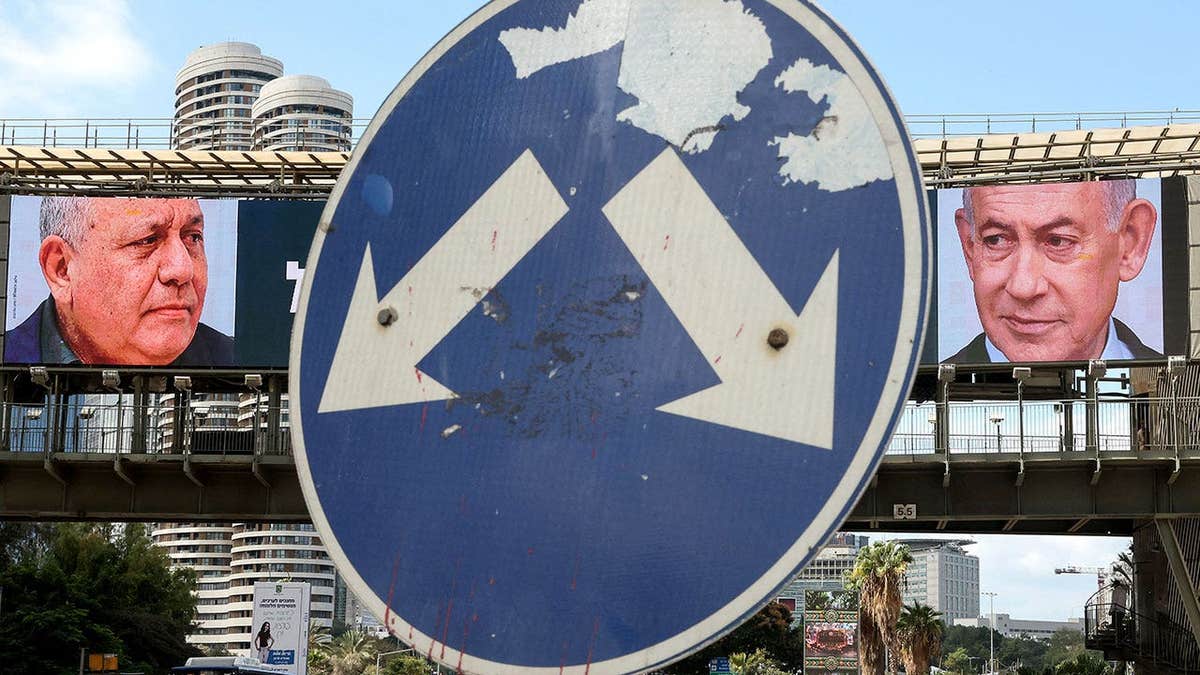
A road sign stands in front of a large billboard featuring Israel’s Prime Minister Benjamin Netanyahu, right, of the Likud Party and former military chief and leader of the centrist Yashar Party, Gadi Eisenkot, in Ramat Gan on October 20, 2026. Israel heads to the polls on October 27 in its first election since the October 7, 2023, Hamas-led attack, in what is seen as a referendum on the prime minister. (Jack Guez / AFP via Getty Images)
Unity government or another election?
A national unity government involving Likud and Yashar would offer a more straightforward mathematical route to a majority, but would require Eisenkot to reconsider his campaign pledge not to join a Netanyahu-led government.
For Netanyahu, the lengthy coalition formation process could provide additional opportunities. If Eisenkot receives the mandate to form a government but fails, President Isaac Herzog could assign the task to another candidate, potentially giving Netanyahu another chance to assemble a coalition. If successive efforts fail, Israel could face another election.
Despite the obstacles, the source familiar with opposition discussions pointed to Bennett and Lapid’s experience navigating complex coalition negotiations as an important asset.
«They’ve both played this game many times. They know it, and they’re not rattled,» the source said, according to a translation of the Hebrew-language conversation.
The source suggested that Bennett’s experience working with Netanyahu gives him a particular understanding of the prime minister’s negotiating tactics, while Lapid brings additional experience in coalition-building.
Former Prime Minister Yair Lapid, one of the opposition’s senior figures, acknowledged Friday that forming a government would be considerably more difficult than campaigning against Netanyahu.
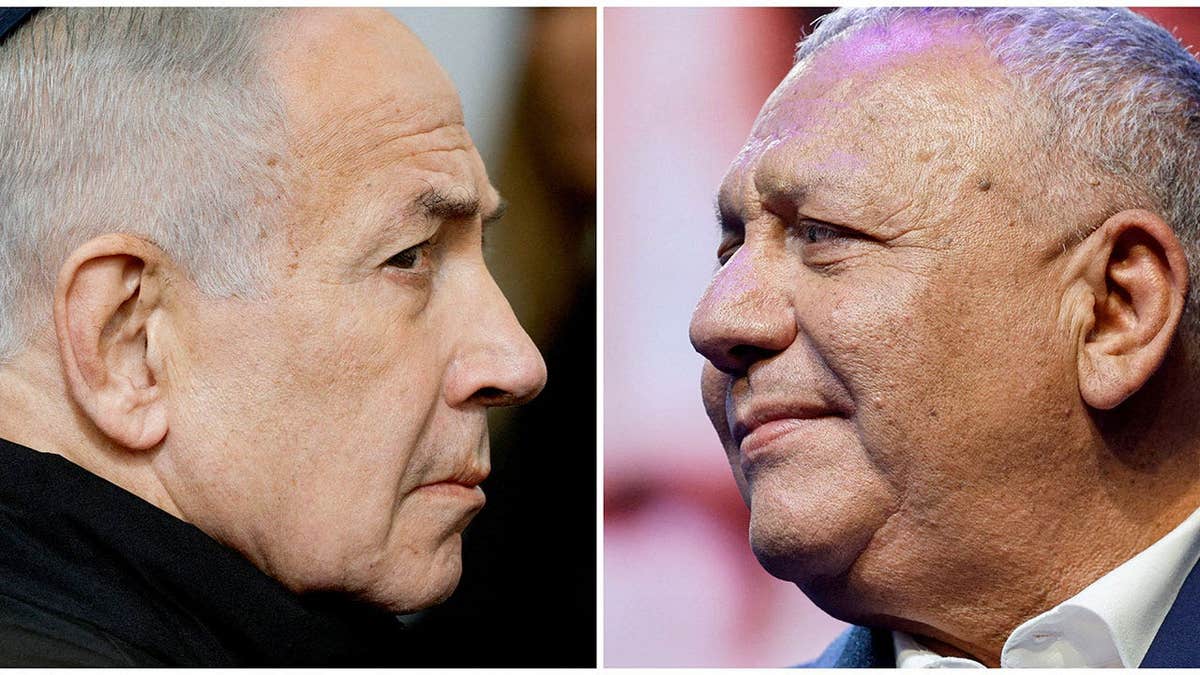
A combination picture shows Israeli Prime Minister Benjamin Netanyahu as he attends a memorial service held for Ran Gvili, an off-duty police officer who was killed fighting militants that had infiltrated Israel during the deadly October 7, 2023, attack by Hamas, and the last hostage recovered from Gaza, in Meitar, Israel, January 28, 2026, and Israeli opposition leader and former military chief, Gadi Eisenkot, as he launches an election campaign for Yashar, his new political party, at an event near Hod Hasharon, Israel, June 30, 2026. (Amir Cohen/Reuters)
«Now comes the truly hard part: trying to form a government,» Lapid wrote on X, urging supporters to remain patient.
«It takes place in small rooms, slowly, away from the cameras,» he wrote, according to a translation of his Hebrew-language statement, emphasizing the importance of negotiations conducted out of public view.
The negotiations will also unfold against the backdrop of the Trump administration’s Middle East agenda.
The source familiar with opposition discussions said understanding Washington’s regional priorities could become an important consideration in shaping a future government, although no specific American role in coalition negotiations has been confirmed.
The election results are scheduled to be formally submitted to President Herzog on November 4, following remaining verification procedures. The new Knesset is expected to be sworn in November 10.
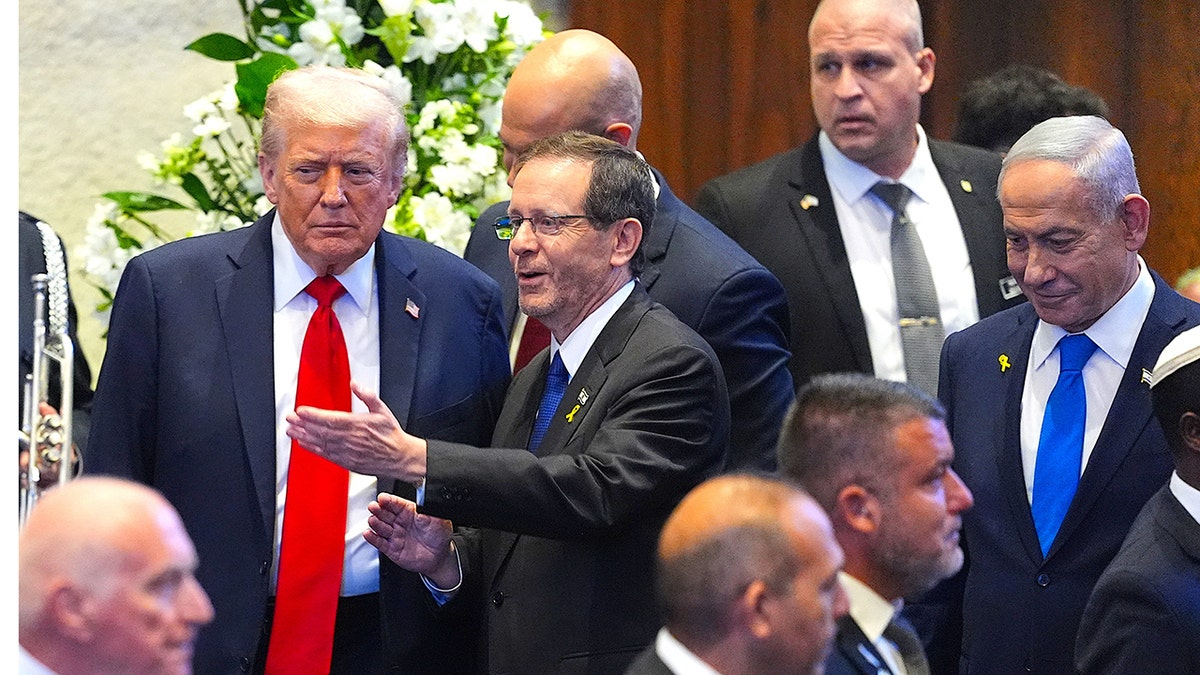
U.S. President Donald Trump enters the Knesset, Israel’s parliament, with Israeli President Isaac Herzog and Israeli Prime Minister Benjamin Netanyahu before he speaks on Oct. 13, 2025 in Jerusalem. (Evan Vucci – Pool/Getty Images)
For now, the election has settled the question of how Israelis voted, but not who will govern them. A source familiar with the negotiations concluded: «Whoever manages to forge new partnerships will move forward. Whoever doesn’t will remain stuck.»
israel, elections, benjamin netanyahu, politics, world








INTERNACIONAL
Un autobús con trabajadores agrícolas vuelca en Tecpán Guatemala y deja al menos 15 personas heridas
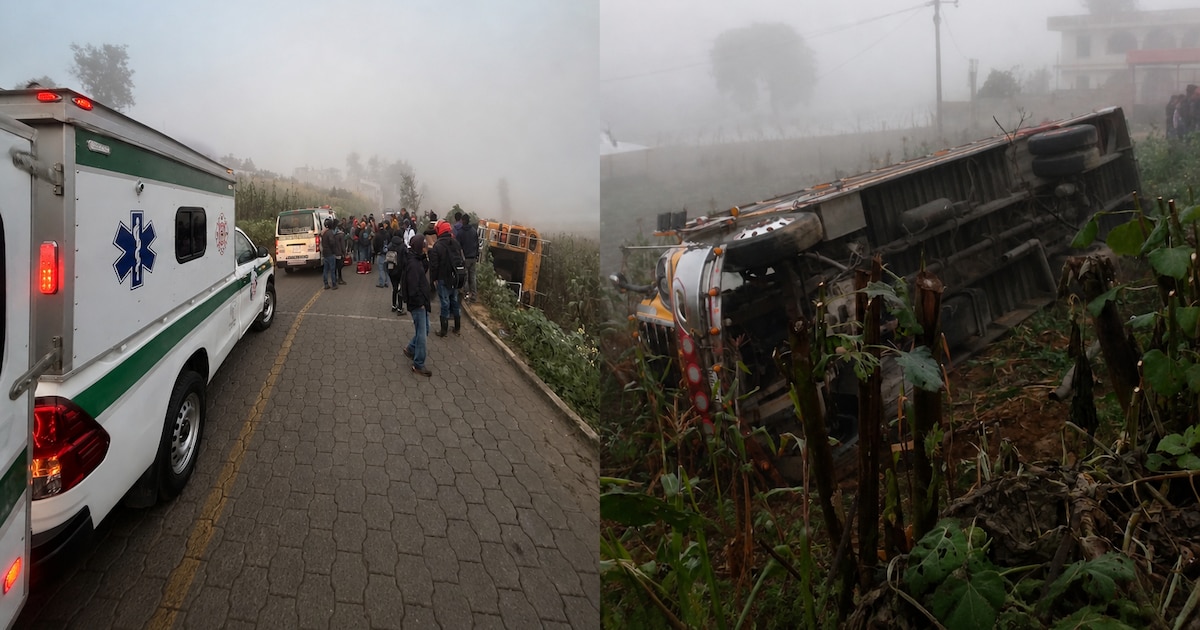
Un autobús de una empresa privada que trasladaba a trabajadores agrícolas volcó la madrugada de este viernes 20 de noviembre en el kilómetro 77 de la ruta Interamericana, a la altura del ingreso a la aldea Chirijuyú, en el municipio de Tecpán Guatemala, departamento de Chimaltenango.
El vehículo salió de la carretera en una curva y cayó a una hondonada, lo que dejó al menos 15 personas heridas, según el reporte preliminar de los cuerpos de socorro.
La unidad, identificada con las placas C442BPQ, cumplía su recorrido habitual para trasladar al personal de una finca hacia su centro de trabajo cuando el conductor perdió el control del vehículo. Las causas exactas del vuelco aún no fueron establecidas por las autoridades, que deberán determinar si existió una falla mecánica, un exceso de velocidad o alguna otra circunstancia asociada al trazado de la vía.

Bomberos atendieron a los pasajeros en el sitio del accidente
Al lugar se movilizaron unidades de los Bomberos Municipales Departamentales de las estaciones de Tecpán Guatemala y Santa Cruz Balanyá, que descendieron hacia la hondonada para rescatar y auxiliar a los ocupantes del autobús. Los socorristas brindaron atención prehospitalaria a varios pasajeros que presentaban lesiones en distintas partes del cuerpo, además de cuadros de crisis nerviosa derivados del impacto y la caída de la unidad.
Según el parte de los bomberos, las personas lesionadas fueron trasladadas a centros asistenciales para recibir atención médica especializada: la emergencia del Hospital General de Tecpán Guatemala y la del Instituto Guatemalteco de Seguridad Social (IGSS), en Chimaltenango. Previamente, otros reportes habían mencionado el traslado de pacientes también al Hospital Nacional de Chimaltenango, lo que refleja la magnitud del operativo de atención médica desplegado tras el vuelco.
El operativo de rescate se coordinó entre dos estaciones bomberiles
Las estaciones de Tecpán Guatemala y Santa Cruz Balanyá desplegaron las unidades AD-132, RD-136 y AD-122 para atender la emergencia tras recibir múltiples llamadas de alerta sobre el vuelco. Los técnicos en urgencias médicas estabilizaron a los heridos en el sitio antes de proceder con los traslados, en una maniobra que exigió descender a la hondonada donde terminó el autobús tras salir de la cinta asfáltica.
Mientras la mayoría de los pasajeros recibió primeros auxilios en el lugar, los casos con lesiones físicas más graves fueron trasladados con inmovilización hacia los hospitales de la zona para su diagnóstico y eventual recuperación. Al menos 15 personas requirieron algún tipo de asistencia médica en el transcurso de la emergencia, de acuerdo con el conteo más reciente de los cuerpos de socorro.
Las autoridades investigan las causas del percance
Hasta el momento, las causas que provocaron que el conductor perdiera el control del vehículo no han sido confirmadas. Las autoridades de tránsito quedaron a cargo de la investigación, que deberá establecer si hubo responsabilidad de la empresa de transporte, del conductor o de factores externos relacionados con el estado de la vía.
El accidente reaviva el debate sobre las condiciones de seguridad en el transporte de trabajadores agrícolas en Guatemala, un servicio utilizado a diario por miles de personas para trasladarse hacia fincas y centros laborales en distintas regiones del país. No se reportaron víctimas fatales en el hecho, según los partes oficiales de los cuerpos de socorro que intervinieron en el sitio.
Otros percances viales complicaron la movilidad el mismo día
La jornada del viernes también registró incidentes de tránsito en la capital y en Villa Nueva, aunque sin relación directa con el vuelco en Chimaltenango. La Policía Municipal de Tránsito (PMT) de la capital informó que distintos percances en el Anillo Periférico impidieron habilitar el carril reversible, entre ellos una colisión de motocicletas en el sector de las Dos Torres y el choque de un automóvil contra un poste de concreto en la 26 calle, zona 7, cuyo conductor presentaba aparente estado de ebriedad.
En Villa Nueva, la PMT reportó además desperfectos mecánicos en varios vehículos pesados sobre la subida de Villalobos, en los kilómetros 11.5, 12 y 13, que también afectaron la circulación con dirección hacia la capital durante parte de la mañana.
Tecpán,accidente de tránsito,autobús,ambulancia,niebla
INTERNACIONAL
Putin launches Ukraine barrage hours after Trump meeting amid alleged Russian missile breach of NATO airspace
NEWYou can now listen to Fox News articles!
Just hours after Russian President Vladimir Putin stood alongside President Donald Trump and Chinese President Xi Jinping at a historic summit in China, Moscow unleashed one of its largest attacks on Ukraine, killing at least eight people, striking three major bridges in Kyiv and sending suspected Russian missiles and a drone into NATO-member Poland.
The massive overnight assault Friday came as the Trump administration announced progress toward expanding peace negotiations with Russia, exposing the stark contrast between the diplomatic optimism emerging from Thursday’s meetings and the escalating war on the ground.
A European intelligence source told Fox News Digital that Putin is preparing an intensified winter military campaign and believes that a combination of sustained battlefield pressure and U.S.-led diplomatic negotiations could eventually force Ukraine to surrender additional territory.
TRUMP’S HISTORIC SUMMIT WITH XI, PUTIN MARKS DIPLOMATIC MILESTONE, BUT BREAKTHROUGHS REMAIN ELUSIVE
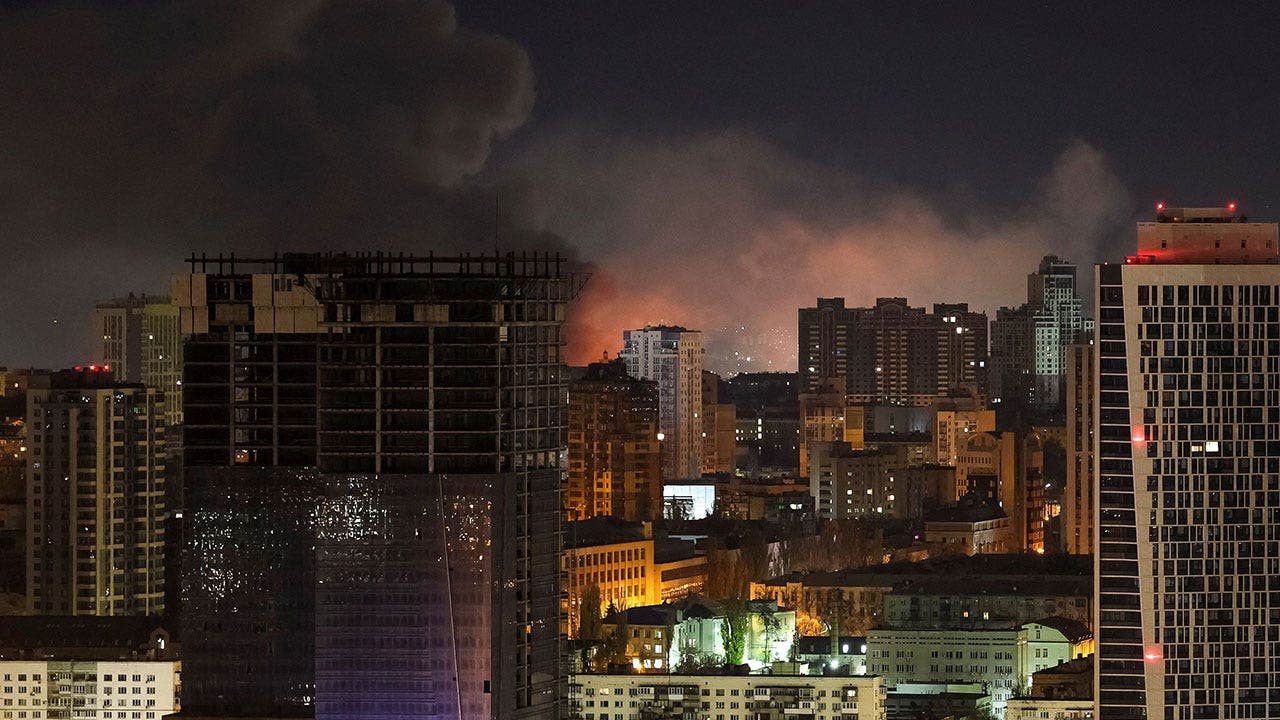
Smoke rises in the city during a Russian missile strike, amid Russia’s attack on Ukraine, in Kyiv, Ukraine Nov. 20, 2026. (Gleb Garanich/Reuters)
The source described the photograph of Putin standing alongside Trump and Xi as a long-sought diplomatic achievement for the Russian leader, even as Moscow prepares to increase pressure on Kyiv.
According to the source, Russia’s calculation is that Ukraine could be compelled to accept territorial concessions by spring, particularly in the country’s east.
«They are very convinced that by spring Ukrainians will give up,» the source told Fox News Digital, describing what the source assessed to be Moscow’s strategy.
The source also warned that Russian military pressure is increasing despite Ukraine’s recent successful strikes against critical Russian infrastructure. «It’s going to be a very difficult winter for Ukrainians,» the source said.
Retired Gen. Philip Breedlove, former NATO Supreme Allied Commander Europe, told Fox News Digital that the timing of Russia’s latest assault should leave little doubt about Putin’s intentions, arguing that the Russian leader has repeatedly responded to President Donald Trump’s diplomatic overtures with renewed attacks on Ukraine.
«Putin never has been a partner for peace in Ukraine,» he said. «And Putin will never be a partner for peace in the future for Ukraine.» Breedlove said that Putin’s objective is to subjugate Ukraine, install a leadership loyal to Moscow and exploit the country’s resources.
RUSSIA PLOTTING ‘MASSIVE STRIKE’ DURING MIDTERMS, ZELENSKYY WARNS, URGES US TO STOP PUTIN

Chinese President Xi Jinping, US President Donald Trump, and Russian President Vladimir Putin greet each other before the welcome banquet at the Asia-Pacific Economic Cooperation (APEC) Economic Leaders’ Meeting at the Shenzhen International Communication Center on November 18, 2026 in Shenzhen, China. (Photo by Iori Sagisawa-China Pool/Getty Images)
Russia launches massive attack on Ukrainian cities
Ukrainian President Volodymyr Zelenskyy said Russia fired more than 400 drones and over 110 missiles, including 27 ballistic missiles, targeting the country’s energy, transportation and logistical infrastructure.
The barrage killed six people in Kyiv and two in the western city of Lviv, while more than two dozen others were wounded, according to a Reuters’ Nov. 20 report.
Three major bridges spanning the Dnipro River in Kyiv — the Podilsko-Voskresenskyi, Darnytskyi and Pivdennyi bridges — were struck, disrupting transportation between the eastern and western sections of the capital.
Russian attacks also damaged railway infrastructure and energy facilities, triggering emergency power outages as temperatures drop ahead of winter.
In Lviv, two people were killed in a strike on the Sknyliv railway station, while additional injuries were reported following attacks on residential buildings and a hospital in other Ukrainian regions.
UKRAINE’S ZELENSKYY ON DEFYING US IN ATTACKING RUSSIAN OIL: ‘OUR RESPONSE MUST BE PAINFUL’
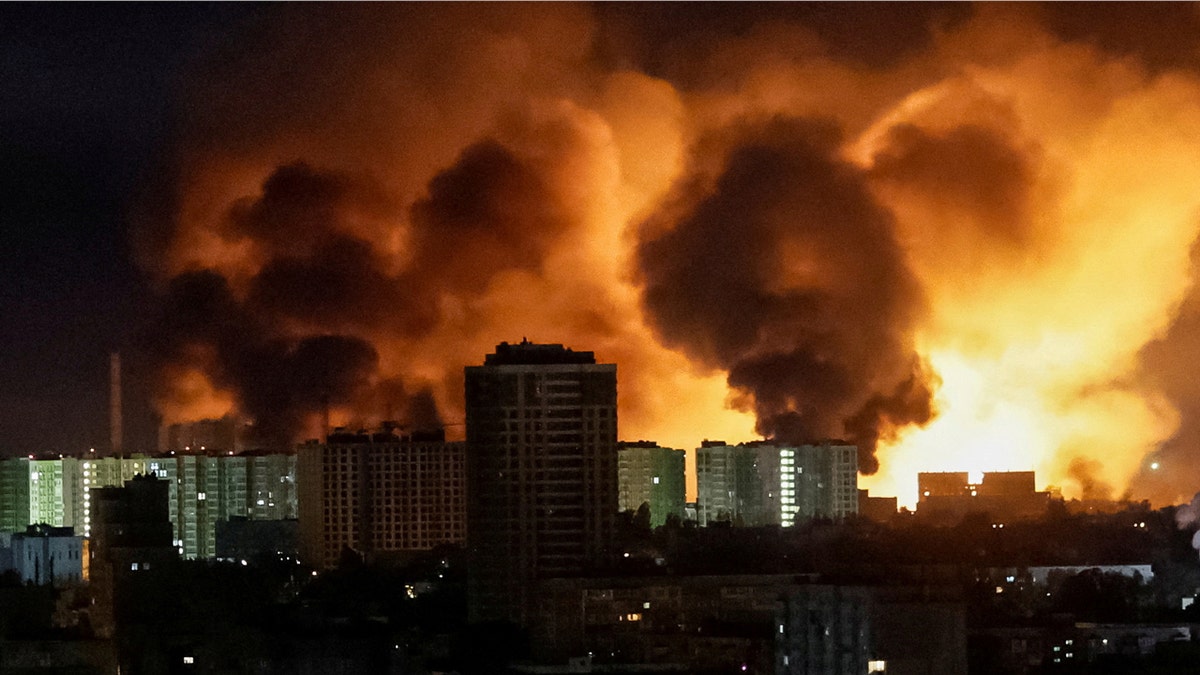
Overnight, Russia launched its largest aerial assault on Ukraine since the war started as fires burned in Kyiv on May 25, 2025. (Reuters/Gleb Garanich)
Zelenskyy accused Moscow of using the attacks to compensate for what he described as military and diplomatic setbacks.
«This was one of the largest attacks,» Zelenskyy said in a statement published on Telegram Friday.
Russia’s Defense Ministry confirmed carrying out a massive operation, saying it targeted facilities connected to Ukraine’s military-industrial complex, including missile and drone production sites and transportation infrastructure.
The competing claims about the targets and the extent of the damage could not be independently verified.

People are seen on top of the Kerch Bridge surveying damage following the explosion on Tuesday, June 3. (APTN/Ukrainian Security Service)
The strikes followed Putin’s warning Thursday that Russia would retaliate against Ukraine for repeated attacks on the Kerch Bridge, which connects Russia with the occupied Crimean Peninsula.
Ukrainian forces launched three attacks on the strategic crossing in four days, damaging its road section and disrupting rail traffic.
The bridge, inaugurated by Putin in 2018, serves as both a transportation route and a powerful symbol of Moscow’s control over Crimea, which Russia annexed in 2014.
UKRAINE STRIKES ‘ONE OF THE LARGEST OIL REFINERIES’ IN SOUTHERN RUSSIA AHEAD OF PUTIN-TRUMP MEETING IN CHINA
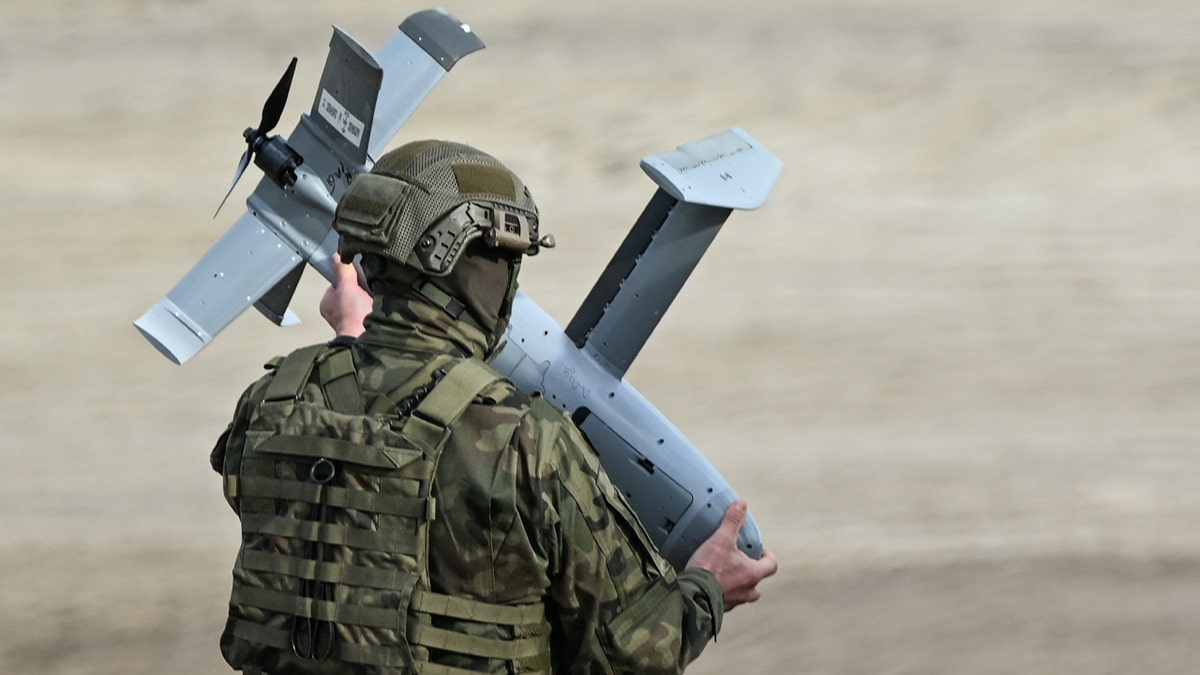
A Polish Army soldier carries an AS3 Surveyor interceptor drone, part of the U.S. «MEROPS» counter-drone system, during a live-fire demonstration at the Deba training grounds in Poland on Nov. 18, 2025. (tur Widak/NurPhoto via Getty Images)
Russian missiles enter NATO-member Poland
The overnight assault also raised concerns beyond Ukraine’s borders after Polish officials reported three separate incursions into the country’s airspace.
Polish Defense Minister Władysław Kosiniak-Kamysz said one of the objects was identified as a Russian Kh-101 cruise missile, while another was believed to be a missile and the third likely a jet-powered drone.
Authorities were investigating debris near Nowy Lipowiec, Mołodycz and Rudnik nad Sanem in southeastern Poland.
«There has been a violation of Polish airspace and an incursion by objects from the Russian Federation,» Kosiniak-Kamysz said, according to Reuters.
Poland said it would seek additional NATO assistance to secure the alliance’s eastern flank.
Breedlove warned that the reported incursions into Polish airspace were part of a broader pattern of Russia testing NATO’s resolve. «Mr. Putin will push further and further when there is no cost to him, when NATO doesn’t respond, when the United States doesn’t respond, in his mind, there is no reason to stop. He will continue,» Breedlove told Fox News Digital.
UKRAINE RELEASES VIDEO SHOWING DAMAGE TO PUTIN’S PRIZED BRIDGE FOLLOWING ‘UNPRECEDENTED OPERATION’ IN CRIMEA
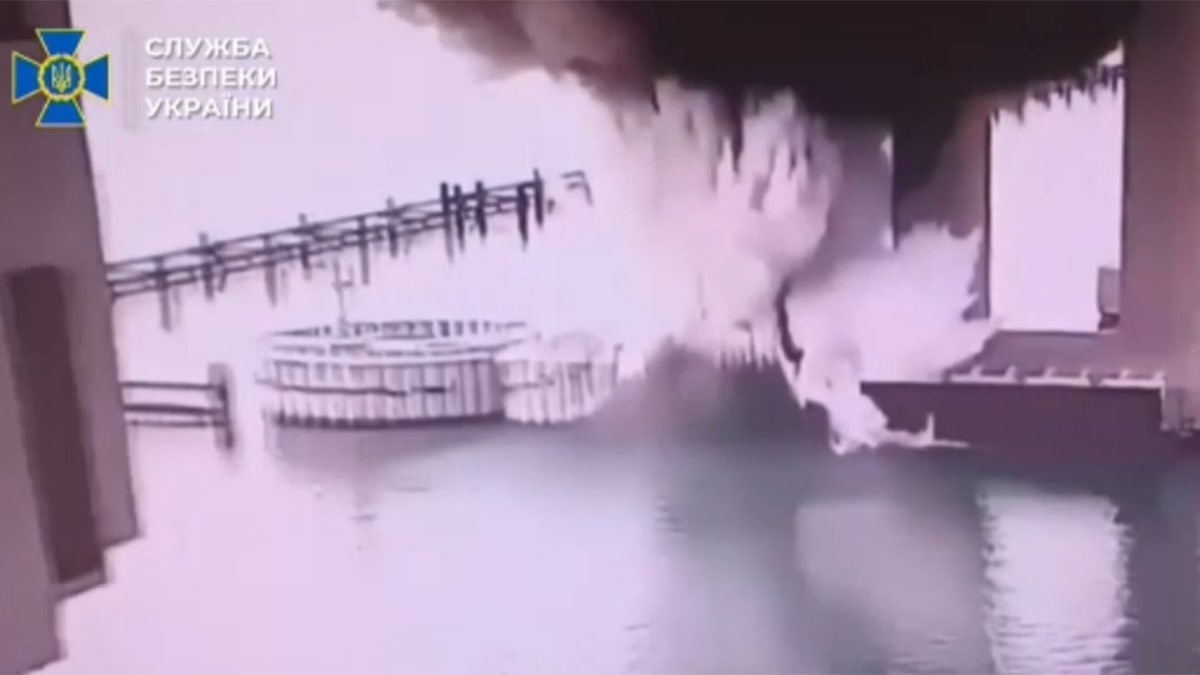
An explosion is seen Tuesday, June 3, along the Kerch Bridge linking Russia and Crimea. (APTN/Ukrainian Security Service)
Putin’s strategy as peace talks advance
The attacks came less than a day after the Trump administration announced what it described as progress toward a broader diplomatic framework involving Russia, Ukraine and European governments.
During talks in Berlin Thursday, U.S. envoy Jared Kushner said Moscow had agreed to engage in an expanded negotiating format that would include European representatives.
«Russia has agreed to engage in the multilateral format with the Europeans,» Kushner said, according to Fox News Digital’s Nov. 19 report.
Zelenskyy urged Washington to organize the next round of discussions quickly, insisting that European governments must play a full role in negotiations affecting the continent’s security.
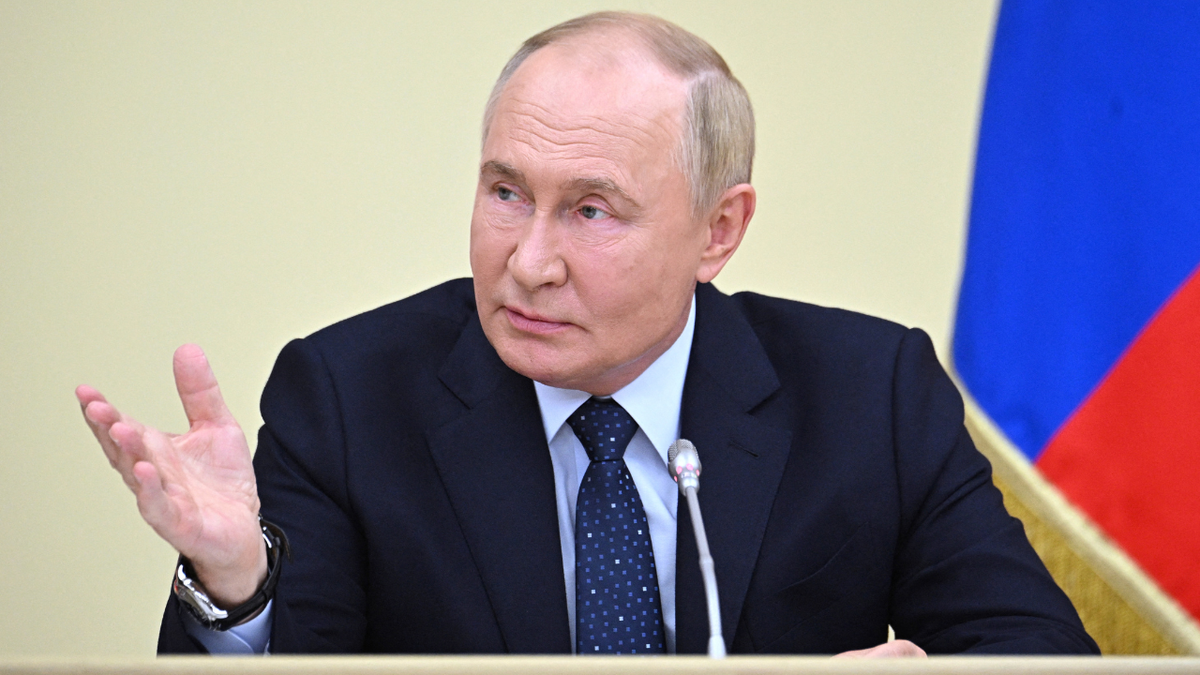
In this pool photograph distributed by Russian state owned Sputnik agency President Vladimir Putin chairs a meeting with Russian Government members at the Novo-Ogaryovo residence, on August 7, 2024. (SERGEI BOBYLYOV/POOL/AFP via Getty Images)
But Moscow’s position remained less clear Friday, with Russian Deputy Foreign Minister Sergei Ryabkov saying an invitation for European officials to visit Moscow did not mean they had been accepted into the existing U.S.-brokered negotiating format, according to The Associated Press.
The European intelligence source suggested Russia believes the diplomatic process itself could strengthen its negotiating position by allowing Moscow to broaden discussions beyond Ukrainian territory to the future security arrangements of Europe.
According to the source, Moscow is seeking to gain time, maintain military pressure and increasingly focus negotiations on wider European security questions.
The source also described Russian efforts to maintain troop numbers without announcing another large-scale nationwide mobilization.
«They have been able to avoid open mobilization, but they have hidden mobilization,» the source said.
According to the source, Russian recruitment efforts include targeting people facing financial difficulties, debt or other social vulnerabilities, alongside continued recruitment from prisons.
RUSSIA’S PUTIN VOWS A RESPONSE ‘FAR MORE PAINFUL’ AFTER UKRAINE ATTACKS PRIZED BRIDGE IN CRIMEA
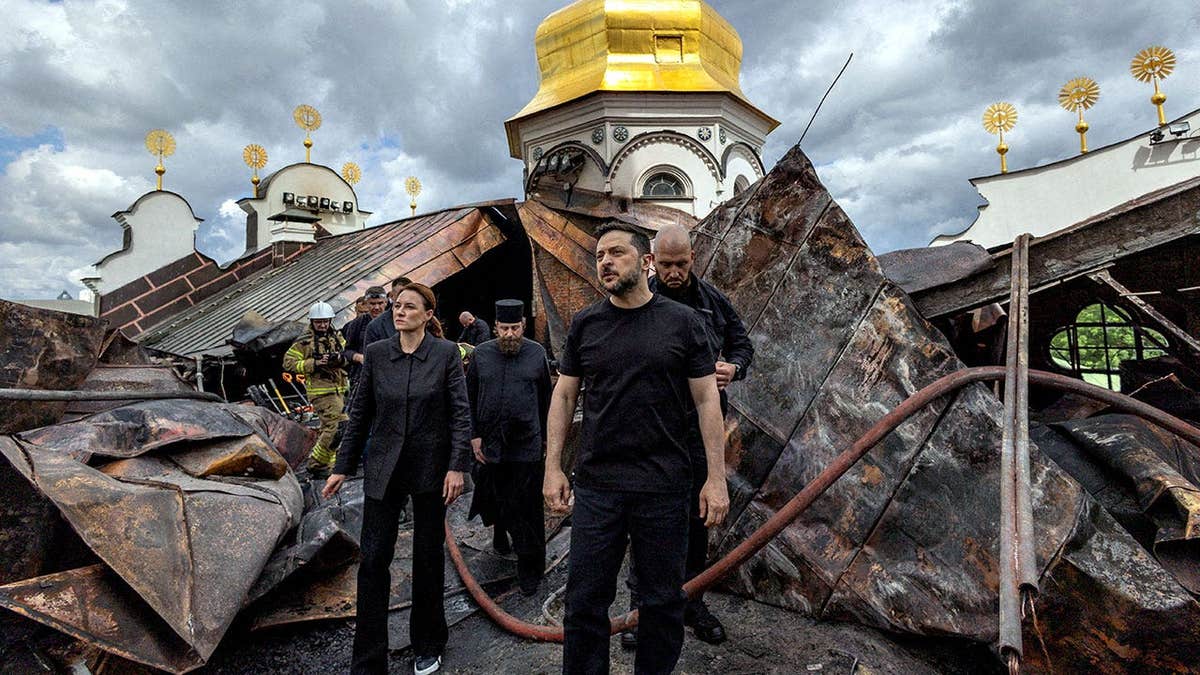
Ukraine’s President Volodymyr Zelenskyy and Ukrainian Prime Minister Yulia Svyrydenko visit the Dormition Cathedral of the Kyiv Pechersk Lavra, which was hit during Russian missile and drone strikes, amid Russia’s attack on Ukraine, in Kyiv, Ukraine June 15, 2026. (Ukrainian Presidential Press Service/Handout via REUTERS)
The source argued that Moscow is prioritizing manpower over the quality and training of new recruits.
«More quantity, less quality,» the source said, warning that inadequately prepared recruits face a greater risk of being killed on the battlefield.
Those recruitment claims have not been independently verified by Fox News Digital.
The source’s broader assessment was that Russia believes it can sustain military operations long enough to increase pressure on Ukraine’s leadership to accept territorial concessions.
For Kyiv, the latest barrage demonstrated the immediate challenge facing U.S.-led peace efforts: negotiations are advancing while Moscow continues large-scale military operations and Ukraine strikes strategic targets deep inside Russian-held territory.

President Donald Trump, Chinese President Xi Jinping and Russian President Vladimir Putin attend a trilateral meeting at Kylin Villa on November 19, 2026 in Shenzhen, China. (Win McNamee/Getty Images)
The events also highlighted the growing risks for NATO as the consequences of Russia’s war extend beyond Ukraine’s borders.
Reuters and the Associated Press contributed to this report.
ukraine, russia, vladimir putin, nato, wars
INTERNACIONAL
De una pequeña ciudad italiana al corazón del poder en India: Sonia Gandhi cuenta su historia de vida

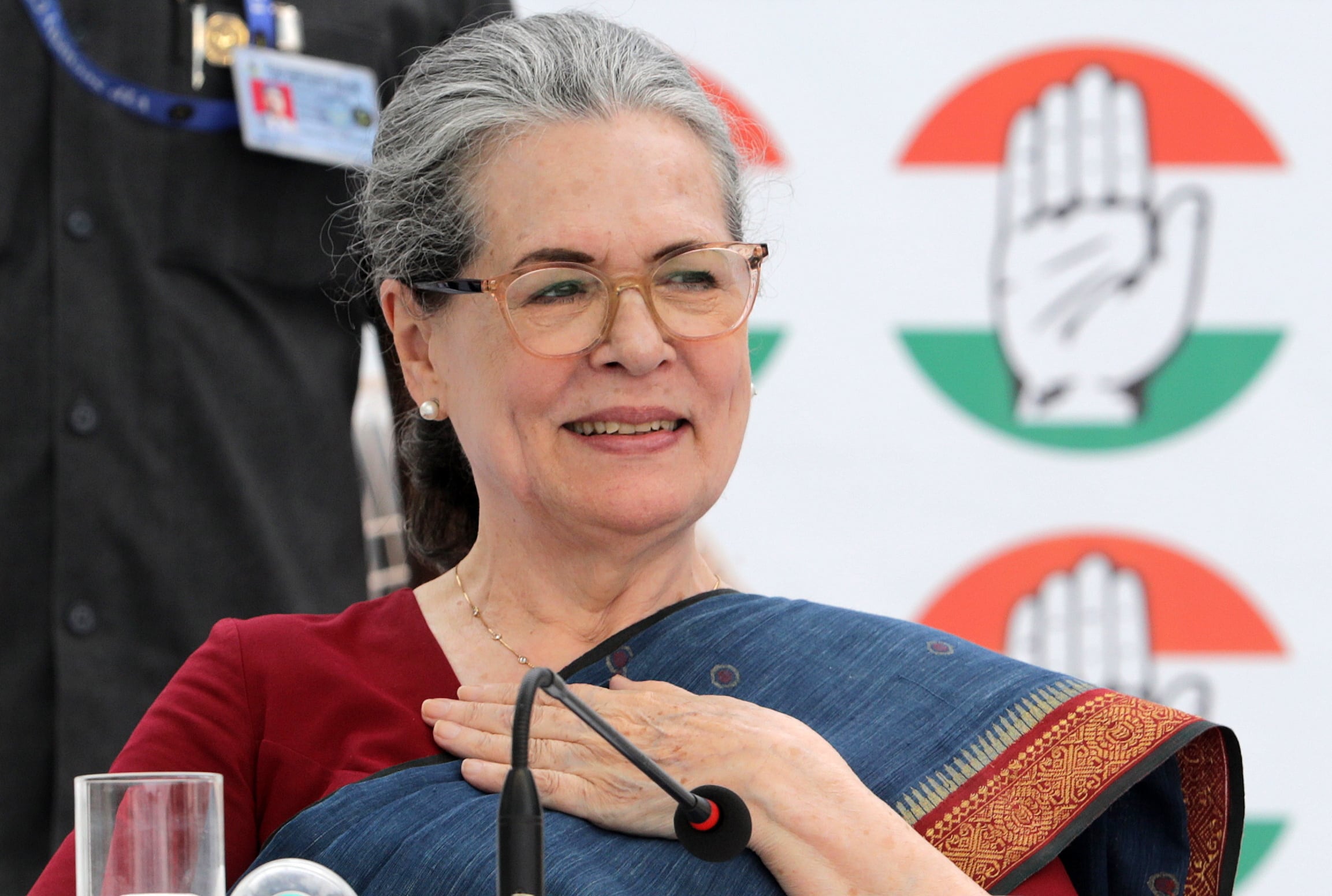
Sonia Gandhi reconstruye en Belonging. A Journey of Love (Pertenencia. Un viaje de amor) su paso de una pequeña ciudad italiana a la conducción del Partido del Congreso en India, una vida atravesada por su matrimonio con Rajiv Gandhi, los asesinatos de Indira y Rajiv, y la decisión de rechazar el cargo de primera ministra tras la victoria electoral de 2004. Próxima a cumplir 80 años, la dirigente relata cómo el amor por un hombre terminó por convertirla en una figura central de la mayor democracia del mundo.
La historia de la familia Nehru-Gandhi se superpone con cerca de la mitad de las ocho décadas transcurridas desde la independencia india. Durante los últimos 12 años, el Partido del Congreso ha sido el principal opositor del Bharatiya Janata Party, encabezado por Narendra Modi.
El vínculo entre Sonia y Rajiv comenzó en un restaurante griego de Cambridge a mediados de la década de 1960. Ella describe aquel domingo de enero como el día que cambiaría su vida, bajo “un hermoso cielo azul salpicado de nubes blancas y esponjosas como en un fresco de Tiepolo”, y define la presentación con el estudiante indio como “un rayo”.
Su padre, Stefano Maino, era un empresario de la construcción de una pequeña localidad italiana y veterano de la Segunda Guerra Mundial. Conocido como Maino el León, fue definido en un perfil de Patrick French publicado en The New Yorker en 1998 como “un fascista impenitente” hasta su muerte; French colaboró brevemente en la elaboración de Belonging.
Gandhi lo llama padre padrone, una expresión italiana que equivale a “padre amo”. Cuando supo de la relación de su hija del medio, golpeó su escritorio con el puño y gritó: “¡Basta!”, aunque le compró un pasaje a India apenas ella cumplió 21 años.
Rajiv era hijo de Indira Gandhi, entonces una de las figuras más influyentes de la política india y descendiente de Jawaharlal Nehru, el primer ministro del país tras la independencia. Poco después de la llegada de Sonia a Delhi, Indira decidió que la pareja debía casarse; la noticia llegó a la familia Maino por radio y Stefano no asistió a la boda.
La futura primera ministra acompañó los primeros años de matrimonio de su nuera, desde el embarazo hasta la ceremonia de imposición del nombre al bebé. Sonia la describe simplemente como “mi suegra”, pero retrata una relación de cercanía y lealtad filial.
La historia familiar también condiciona el modo en que se presentan algunos episodios políticos. La represión de una gran huelga ferroviaria durante el gobierno de Indira y los 21 meses del Estado de Emergencia decretado en 1975 aparecen con un tratamiento contenido, pese a que ese período incluyó detenciones de opositores, restricciones a las libertades civiles y censura de prensa.
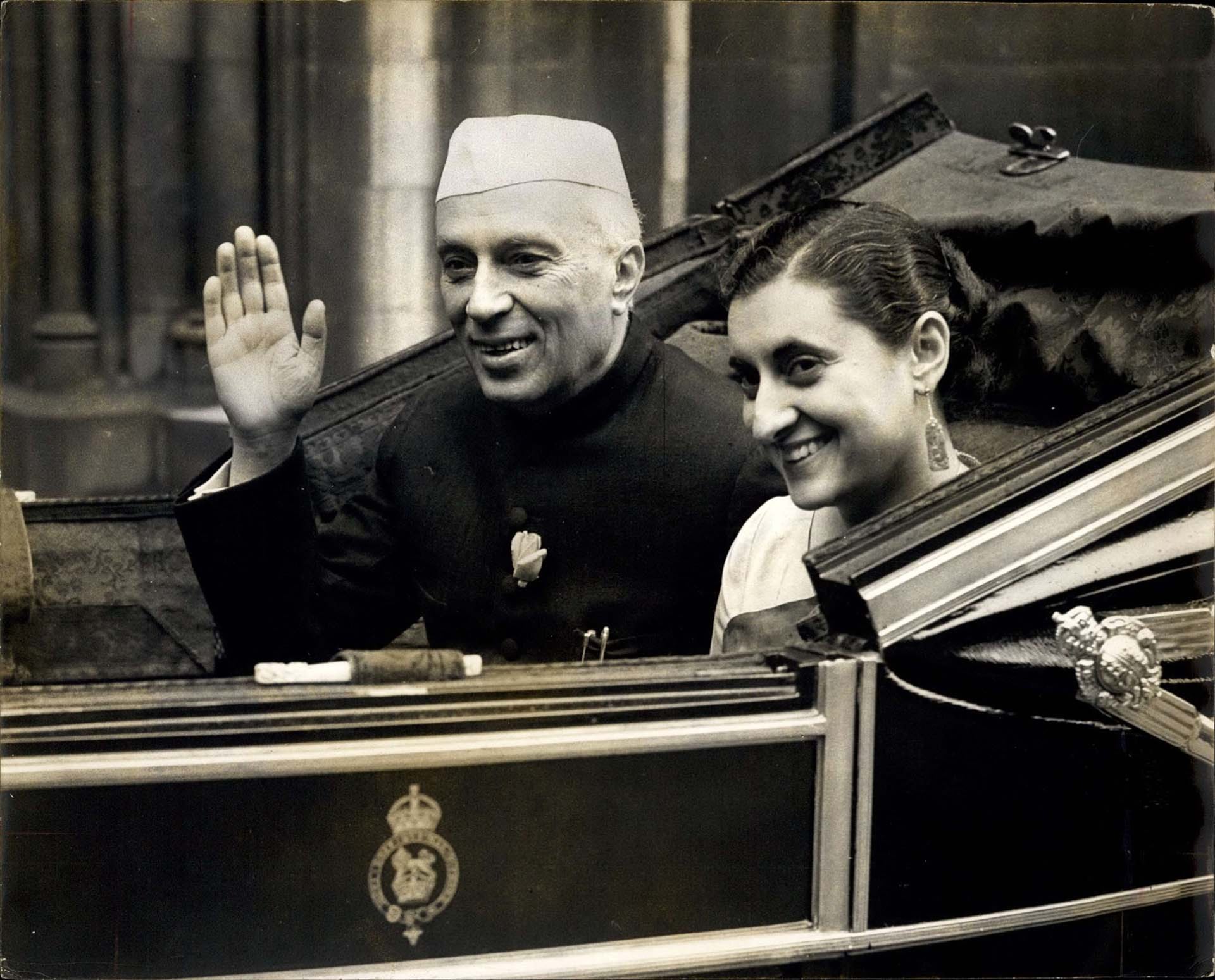
Durante aquellos meses, Sanjay Gandhi, el hijo menor de Indira, acumuló poder dentro del gobierno. Su muerte, a los 33 años, poco después del regreso de su madre al poder en 1980, dejó a la primera ministra devastada y convirtió a Rajiv, hasta entonces piloto comercial sin aspiraciones políticas, en el único miembro de la familia que podía asistirla.
Los asesinatos de Indira y Rajiv Gandhi
La violencia atravesó el núcleo de la familia en 1984. Sonia Gandhi aguardaba “temblando bajo mi bata” en un hospital al que había llevado el cuerpo de Indira Gandhi, alcanzada por disparos de sus propios guardaespaldas sijes.
Los asesinos actuaron como represalia por la orden de enviar al Ejército al Templo Dorado, el sitio más sagrado del sijismo. Cuando Rajiv le dijo que querían investirlo como primer ministro, ella respondió: “¡También te matarán a ti!”. Él contestó: “De todos modos me matarán”.
Rajiv asumió el gobierno a los 40 años, en medio del duelo familiar y tras una ola de violencia contra los sijes encabezada por dirigentes del Partido del Congreso. Su mandato estuvo marcado por decisiones controvertidas, entre ellas maniobras religiosas que favorecieron el crecimiento del nacionalismo hindú del Bharatiya Janata Party y una intervención militar en Sri Lanka para intentar terminar la guerra civil con los separatistas tamiles.

La amenaza sobre la familia persistió después de su salida del poder. Los hijos dejaron la escuela, Sonia sufría temblores en público y Rajiv sobrevivió a un ataque armado; tras perder las elecciones, su sucesor retiró su custodia especial.
Rahul Gandhi, hoy líder de la oposición, anticipaba el peor desenlace. En un acto en Tamil Nadu en 1991, una integrante de los Tigres Tamiles se acercó a Rajiv Gandhi, entonces de 46 años, para colocarle una guirnalda mientras llevaba explosivos adheridos al cuerpo.
La fotografía del atentado quedó grabada en la memoria colectiva india, aunque Sonia Gandhi nunca la vio gracias a la intervención de sus hijos. “Yo me había convertido en la niña que debía ser protegida, y ellos eran los padres”, escribe.
Años después, cuando se desplomó durante un viaje a Japón, una enfermera encontró a Rahul y a su hermana acostados a cada lado de ella en la pequeña cama del hospital. Al conocer la muerte de Rajiv, la reacción inicial de Sonia fue: “Quería morir”.
El rechazo al cargo de primera ministra
Tras el asesinato de su marido, Sonia Gandhi asumió gradualmente un papel político que hasta entonces había evitado. Ella misma reconoce que “no tenía ningún derecho, salvo el hecho de llevar el apellido de la familia”.

Las presiones para que liderara el Partido del Congreso terminaron por convencerla. Estudió hindi, encabezó campañas, negoció alianzas —incluida una con un partido que simpatizaba con los Tigres Tamiles— y enfrentó a un Bharatiya Janata Party que la acusaba de ser una “Monica Lewinsky” dispuesta a instaurar un “Roma Raj”, un gobierno de Roma.
En 2004 condujo a una alianza partidaria a la victoria electoral. Pese a que la insistieron para que asumiera como primera ministra, y pese a la preocupación de sus hijos, eligió a Manmohan Singh para el cargo y mantuvo el control del Partido del Congreso.
Gandhi presidió la fuerza política durante 22 años y también encabezó la coalición gobernante y un consejo asesor con influencia sobre las políticas públicas. Sobre su decisión de no convertirse en primera ministra, escribió: “Había sido mi elección convertirme en india. Lo hice por amor a un hombre, pero ese amor llegó a abarcar a su familia y a su país. Y fue este amor por India el que más me exigió”.
elecciones generales en india 2024,mujer,partido congreso nacional indio,políticos,presentación,programa electoral,retrato

Ignacio Torres confirmó que adelanta las elecciones en Chubut y se extiende la ola de desdoblamientos

Chubut adelantó las elecciones a marzo y Torres buscará la reelección

La visita de Bill Gates a Codelco agita el debate sobre la propiedad del cobre chileno

Del debut ante Liverpool a la referencia sobre Newell’s: la primera conferencia de Pochettino en el United

Un autobús con trabajadores agrícolas vuelca en Tecpán Guatemala y deja al menos 15 personas heridas

Risas, tragos y complicidad: la salida de Benjamín Vicuña y Anita Espasandín luego de los rumores de crisis

Javier Milei y sus medidas, en vivo: “Hoy discutimos si crecemos un punto más o menos”, dijo el Presidente

Encontraron muerto a un trabajador en el Observatorio de La Plata

Camila Giorgi anunció su regreso al tenis tras su misterioso retiro hace más de dos años: “Mi vida ha cambiado mucho”

Milei dijo que el riesgo país sube por el miedo a "Orcolandia" y afirmó: "Los argentinos no van a votar hacia el pasado"

 POLITICA1 día ago
Javier Milei y sus medidas, en vivo: “Hoy discutimos si crecemos un punto más o menos”, dijo el Presidente
- DEPORTE3 días ago
¿Dónde ver EN VIVO y ONLINE el Boca Juniors vs Banfield por la Copa Argentina?
- SOCIEDAD3 días ago
Lourdes Fernández declaró en el juicio contra su expareja: “Fue terrible recordarlo”