
INTERNACIONAL
Balotaje en Perú, análisis: el Congreso sigue siendo una piedra en el zapato de la democracia peruana


Lima. Enviado especial. El Poder Legislativo, que ahora tendrá dos cámaras, cuenta con una enorme tribu opaca de partidos que suelen coincidir para manejarse como un poder paralelo al Ejecutivo y, a veces, incluso por encima de este. Un real cogobierno. Estas maniobras aquí tienen un calificativo severo: se le conoce como “el pacto mafioso”. Ángel Páez, fundador y jefe de la prestigiosa Unidad de Investigación del diario La República, afirma que, durante el periodo de la derrocada presidenta Dina Boluarte, dirigieron directamente el país, pero no solo con esa administración. Advierte que seguirán en sus lugares en el próximo gobierno, aprovechando además la novedosa posibilidad de escalar al Senado.
Formalmente, esta coalición informal de partidos, que también ha demolido en gran medida las atribuciones del Poder Judicial, es una estructura de centro-derecha a extrema derecha que se autodenominó en su momento como el «Bloque Democrático». En realidad, las ideologías pesan, pero menos que el pragmatismo, en un estilo semejante pero más brutal incluso que el Centrão brasileño, que es la estructura parlamentaria que condiciona a los gobiernos de ese país a cambio de grandes cuotas de poder.
Varios politólogos coinciden con este diagnóstico. Los investigadores Alberto Vergara y Daniel Barrenechea califican este fenómeno como un “autoritarismo de coalición”, mientras que analistas constitucionales y jurídicos advierten que el país se encuentra sometido, de facto, a una “dictadura parlamentaria”, donde las leyes se instrumentalizan para blindar intereses particulares por encima del bien común.
Este entramado en el Perú ha sido protagonista de notorios escándalos, desplazando a la justicia para fulminar causas muy graves, como la primera de lavado de activos que afectaba a la líder de derecha Keiko Fujimori. Páez señala que en esos callejones quedó, también, sin investigación y abandonada, la causa por la muerte de al menos medio centenar de personas entre diciembre de 2022 y enero de 2023, en Puno y Ayacucho, por la represión de las protestas en el gobierno de Boluarte. No hay un solo detenido y ya nadie hace preguntas.
El funcionamiento de este dispositivo es básico. Retienen la agenda política y el presupuesto del Estado a cambio de evitar una ofensiva para desplazar del poder al presidente de la República de turno. Sucedió con aquella mandataria, pero cuando ella cayó, continuó con su relevo, José Jerí. Son apenas ejemplos.
La dinámica la marca una estructura sumamente fragmentada pero con intereses compartidos. Son prebendarios del transfuguismo y de las divisiones internas de donde surge esta decena de minibancadas con asombrosas peculiaridades. Un participante importante es Fuerza Popular, del fujimorismo. También Perú Libre, el partido del expresidente golpista Pedro Castillo que orienta el controvertido Vladimir Cerrón, un autodefinido marxista de espalda tiesa y con educación en Cuba que, curiosamente, en el Congreso ha votado sistemáticamente alineado con el fujimorismo. En parte, esas dos fuerzas protagonizan el balotaje de este domingo entre Keiko Fujimori, de Fuerza Popular, y Roberto Sánchez, un hombre de Castillo, pero que denominó a su partido Juntos por el Perú para, según se afirma aquí, distanciarse de Cerrón.
Otro jugador importante de la organización parlamentaria es Alianza para el Progreso, que lidera César Acuña. Actual gobernador de La Libertad, está sospechado por el manejo dudoso de contratos millonarios de obras públicas o por el desvío de fondos destinados a la Universidad César Vallejo —de su propiedad—, los cuales acabaron beneficiándolo de forma personal o a su partido. Las otras fuerzas son los sellos de Avanza País, Podemos Perú, Somos Perú y sectores de Acción Popular.
A todas estas bancadas se les cuestiona escudar o blindar a personajes investigados, cambiar leyes a favor de intereses particulares, como las contrarreformas en educación universitaria que beneficiaron a dueños de universidades (Acuña), o unirse para asegurar impunidad y cuotas de poder institucional. También han sido responsables del derribo de un presidente tras otro. Y aunque hay una violencia urbana creciente, con hampones que buscan cobrar “protección” a las empresas de transporte entre otras y ejecutan a directivos o choferes si no se les paga, este Congreso votó leyes que complican la persecución policial de esos delitos. Así son las cosas.
Respecto a la Justicia, este distópico grupo legislativo primero copó y luego se dedicó a elegir a magistrados afines en instituciones clave como el Tribunal Constitucional, la Defensoría del Pueblo, e incluso a esmerilar la independencia de la Junta Nacional de Justicia. La modernidad de Perú dependerá de cómo se retrocede de ese marasmo institucional. Una gran incógnita.


NEWYou can now listen to Fox News articles!
The estimated 72,000 Moroccan migrants who flooded into the Spanish city of Ceuta within 24 hours is shining the spotlight on Europe’s massive problem of illegal and legal migration and the threat of growing Islamic terrorism.
Mideast and European commentators who closely follow Islamic extremism across the continent say Europe’s political class needs to tackle the origins of radical Islamism to prevent terrorism.
According to a July Europol (formerly known as the European Union Agency for Law Enforcement Cooperation) report, Spain recorded the highest number of arrests (117) for «jihadist terrorism-related offenses» within the European Union during 2025.
CEUTA MIGRANT SURGE EXPOSES SPAIN-MOROCCO TENSIONS AS ISLAMIST GROUPS REPORTEDLY SEEK TO EXPLOIT BORDER CRISIS
Moroccan security forces clash with migrants attempting to cross into Spain’s North African enclave of Ceuta near the town of Fnideq, on the Morocco-Spain border, on July 31, 2026. (Abdel Majid Bziouat / AFP via Getty Images)
Some Spanish outlets claimed that the Spanish Civil Guard and police identified «about a dozen» individuals previously deported from Spain for suspected terror-related offenses among those who entered Ceuta last week. However, Euro News reported that Spain’s interior ministry said it has not confirmed those reports.
Quoting the ministry, it stated that «The Spanish public and the people of Ceuta can be confident that the arrivals on 30 July do not pose a threat to public security.» The report also cited the interior ministry as saying that so far this year 82 people had been arrested for offenses related to jihadist terrorism.
Lorenzo Vidino, Director of the Program on Extremism at The George Washington University, and expert on Islamism in Europe and North America, told Fox News Digital, «This is Europe. This is the way it has been for the last 15 years, with some ebbs and flows.» He said about the new Europol report that «It is more in line with the last 10 years. Europe has sadly learned to live with this reality.»
British political commentator and Mideast expert, Tom Gross, told Fox News Digital: «Europe’s ruling classes need to be honest. It is not racist to point out the obvious: that most terrorism in Western Europe today is being fueled by radical Islamic mosques and teachers.»
GERMAN OFFICIALS WANT TO KNOW WHY BERLIN ATTACK SUSPECT WAS FREE DESPITE ALLEGED ISIS SUPPORT
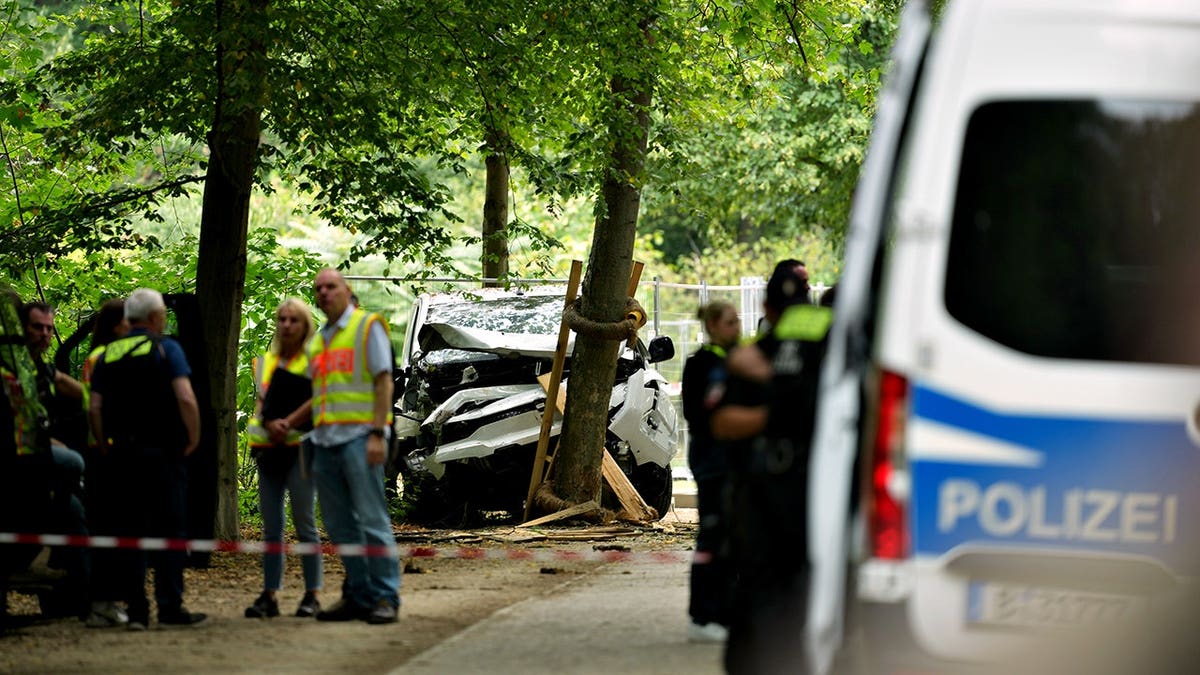
Police officers stand near a vehicle crashed into a tree after driving into a crowd near Berlin’s annual Pride event, in Berlin, Germany, Sunday, July 26, 2026. (AP Photo/Markus Schreiber)
He added, «Leaders in Dubai, Abu Dhabi and Egypt acknowledge this. Why can’t Western leaders?»
Gross said, «Politicians such as new British Prime Minister Andy Burnham, London Mayor Sadiq Khan and Spanish PM Pedro Sanchez, need to stop fueling the propaganda of radical Muslims by implying that there has been some kind of genocide against Muslims in Gaza, when there has been nothing of the sort.»
He continued, «If they really want to help push back radical Islam, European leaders should be assisting, not criticizing, those in Washington and elsewhere calling for the downfall of Iran’s Islamic dictatorship.»
In April, the U.K. raised its national terror threat level to «severe» following an antisemitic attack in London when a Somali immigrant stabbed two men. A «Severe» warning, according to authorities means another terrorist attack is considered «highly likely» in the next six months.
A spokesperson for London’s Mayor Khan told Fox News Digital that «The Mayor has invested £16 million (approxmiately $21.5 million) – more than any other Mayor – to support grassroots community groups to stand up to hate and intolerance. This includes £6 million (approximately $8 million) through his Shared Endeavour Fund to give Londoners the tools and skills to tackle extremism.»
GERMAN OFFICIALS WARN ISLAMIST, FAR-LEFT RHETORIC DRIVING SPIKE IN ANTISEMITIC ATTACKS

Law enforcement patrol immediately following a stabbing attack in Paris on July 27, 2026. (Kenzo Tribouillard/Getty Images)
Late last month, the alleged Islamist State terrorist, the 21-year-old German-Lebanese man, Abdul Ballout, drove a van into the Berlin Pride Parade event, murdering one woman and injuring nearly 30 people. The German authorities had released Ballout despite his recent conviction related to supporting the Islamic State.
German Interior Minister Alexander Dobrindt told public broadcaster ZDF during an interview that in light of the 21-year-old suspect’s conviction and record of backing the Islamic State, it did not make sense that the man was roaming free.
«You can assume that it certainly would have made sense to put this person in custody,» he noted.
Khan’s spokesperson also cited an X Post from the Mayor following the Berlin Pride attack: «My thoughts are with everyone affected by the horrific attack in Berlin and their families. This appalling act of violence has no place in our society. London stands in solidarity with Berlin’s LGBTQ+ community. This is why Pride matters. Those who seek to spread hatred and division will never win.»
SCATHING REPORT CALLS ON US TO LABEL ISLAMIST GROUP INFILTRATING ALL ASPECTS OF AMERICAN LIFE AS TERRORIST ORG
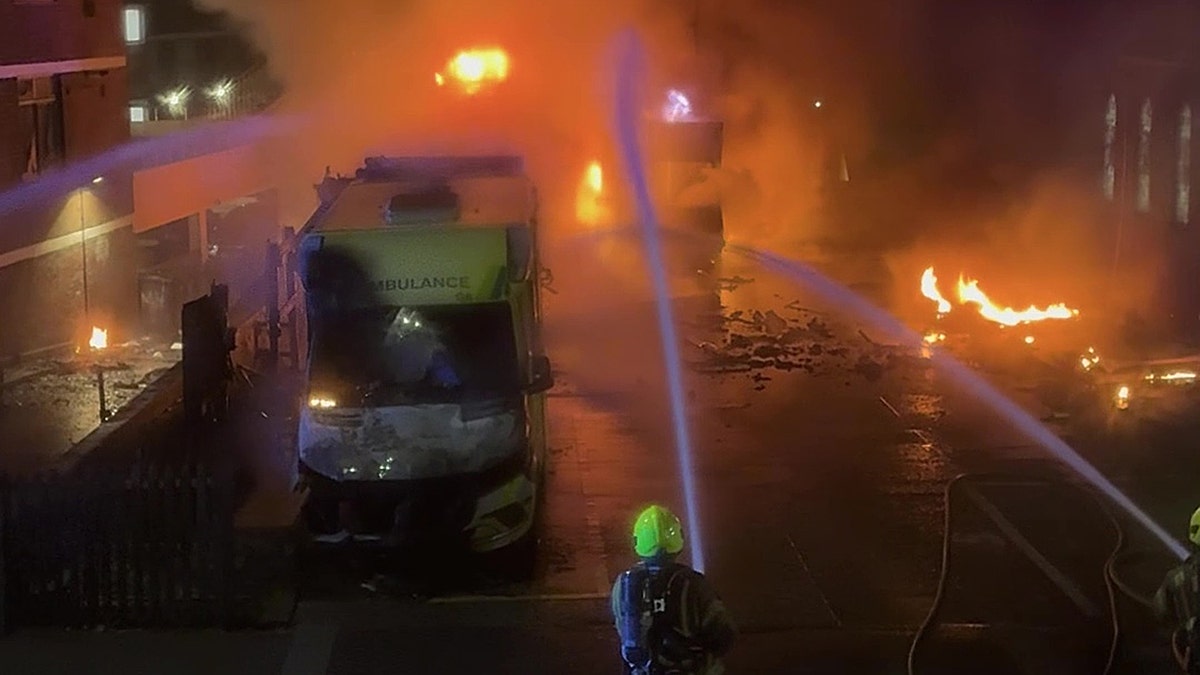
Firefighters are seen tackling a blaze at Highfield Road in the Golders Green neighborhood of London, following an arson attack on four charity ambulances belonging to the Jewish Community volunteer Ambulance Service. (PA/PA Images via Getty Images)
A new report by Germany’s federal intelligence that documents threats to the constitutional order estimates that there are roughly about 28,000 members of Germany’s Islamist scene. Approximately 9,110 are currently assessed to have an «orientation to violence. «The type of violence is defined as jihadi violence.»
Germany’s federal interior ministry, which publishes the annual domestic intelligence threat report, notes that crimes attributed to «religious ideology» have climbed from 134 in 2022 to 998 last year. Radical Islamist crimes are reportedly understood to make up the main portion of the «religious ideology» category.
Germany’s neighbor, France, experienced another stabbing just days after the attack in Germany. A suspect reportedly stabbed three women in Paris and declared as people captured him after the attack, «it is Allah who commanded me.»
Vidino said, «The incident in Paris it seems one of the cases» regarding the how an attack is classified: «Is it terrorism? Is it a crazy guy? Often times, Europeans play down the ideological motive and cite mental health. Some countries tend to do it more than others. Most Europeans go for downplaying of the ideological component.»
AMERICAN ‘JIHAD’ FUELED BY ‘RISKY SOURCE’ INSIDE US BORDERS, WARNS NATIONAL SECURITY EXPERT
Austria’s intelligence agency announced in May on its website that it arrested a group of suspected Islamist terrorists, which included five males aged between 14 and 45 and one 16-year-old female. «The individuals concerned are suspected of having committed offenses related to Islamist extremism and terrorism in Austria, for example through membership of a terrorist organization, incitement to terrorist offenses, dissemination of IS [Islamic State] propaganda, and approval of terrorist offenses,» wrote the Austrian agency.
In June, Swedish authorities arrested a teenage boy who pledged allegiance to the Islamist State and idolized suicide bombers, according to Swedish media. He issued death threats to students at school and showed pictures of beheaded people.
Nervana Mahmoud, a British-Egyptian medical doctor who has written extensively about Islamist terrorism and indoctrination, told Fox News Digital that «The current challenge facing Europe is, in many ways, a battle over Islamist extremism and its place within Western societies. To address the threat at its source, European governments need to focus on preventing radicalization and disrupting foreign funding and ideological networks that fuel extremist movements. Without tackling these root causes, the risk of future terrorist attacks will remain.»
SENATE CLEARS WAY FOR TRUMP’S TOP SPY AS KEY ANTI-TERROR PROGRAM REMAINS IN LIMBO

Map depicting Spain, Morocco, and Spain’s Cueta, which borders Morocco. (2026 EarthStar Geographics, OpenMapTiles, OpenStreetMap contributors)
Mahmoud said, «The United States should learn from Europe’s experience rather than simply criticize it. It has an opportunity to strengthen prevention efforts early by fostering a shared American identity within immigrant communities, disrupting foreign funding that may promote extremist influence through universities and think tanks, and working with Muslim Americans who reject Islamism and uphold democratic values. Long-term success will require not only strong security measures but also sustained efforts to prevent radicalization before it takes hold.»
The United Kingdom’s judicial system recorded a series of convictions of Islamist terrorists in July. Abdullah Bin Yasir was imprisoned for two and a half years after admitting he had bomb-making guides linked to an Islamic State-aligned entity. The construction of bomb material was designed to carry out a terrorist attack.
Late last month, in Wigston, Britain, the authorities arrested a 27-year-old man for supporting the Islamic State.
According to the Crown Prosecution Service, the 31-year-old Mohammad Bashir «pleaded guilty to preparing an act of terrorism» against a British defense target.
A spokesperson for the British Home Office told Fox News Digital, «The United Kingdom has one of the most robust counter-terrorism systems in the world. We remain committed to ensuring our Police and Security Services have the tools and powers they need to prevent the spread of violent ideologies and keep the country safe.»
UK PINS STRING OF ANTISEMITIC ATTACKS ON IRAN-LINKED GROUP, BANS IRGC
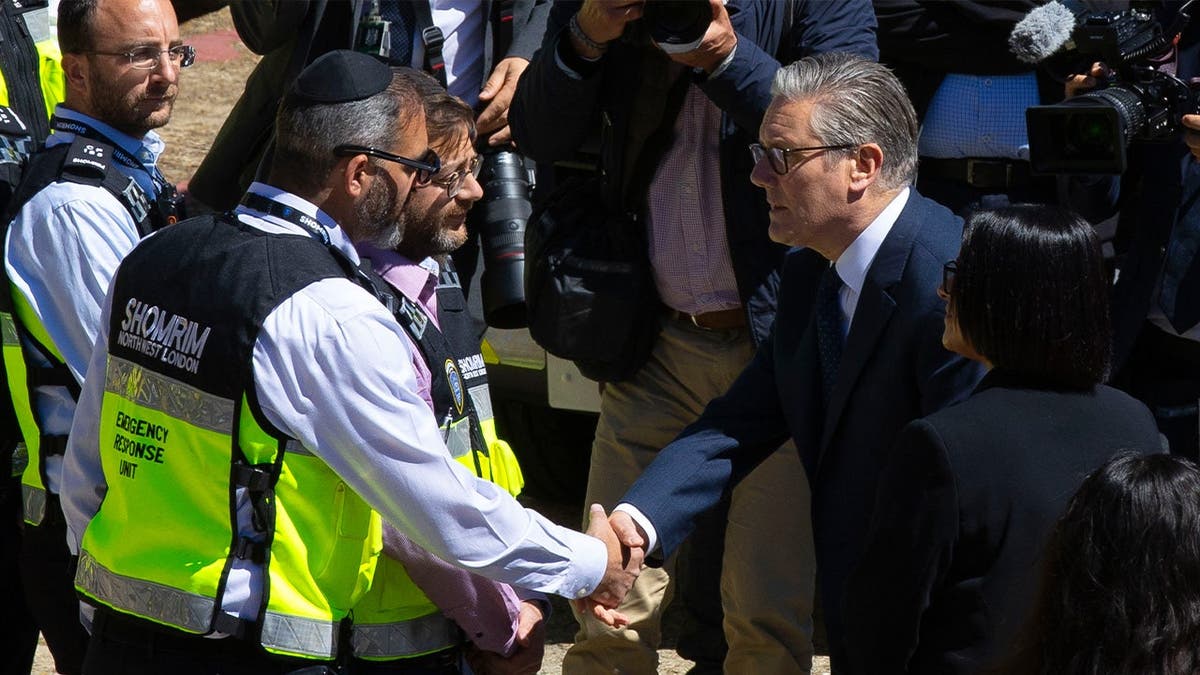
Prime Minister Keir Starmer visits the Hatzola Northwest independent ambulance base after yesterday’s terrorist incident, on April 30, 2026 in Golders Green, England. A 45-year-old British-Somali man was arrested yesterday, after stabbing two Jewish men, Shloime Rand and Moshe Shine, in a terrorist attack in Golders Green. Both victims are in stable condition, and the suspect was caught by police after being tasered. The government has since pledged £25 million to improve security for the Jewish community following the incident. (James Smith/Sam Snap/Getty Images)
The spokesperson added, «This includes a wide range of terrorist offenses and specialized powers designed to risk, support prosecution, and strengthen management of terrorist offenders. Islamist terrorism remains the primary domestic threat to the United Kingdom, accounting for roughly three quarters of the Security Service’s casework.»
Northern continental Europe is also facing a serious Jihadi terrorist threat. According to a late May Danish Security and Intelligence Service statement, the «CTA [Center for Terror Analysis in Denmark] assesses that the terrorist threat from militant Islamists remains at the level of significant.»
Vidino said there has been a silver lining since the outbreak of the Islamic State terrorist attacks in Europe. «I would say I do think most European law enforcement agencies and security forces have gotten better over the years. When the big ISIS radicalization took place, small countries were completely unprepared to deal with it.» He cited Switzerland, Austria and the Scandinavian countries.
«They did not have legal capabilities and mindset. That has changed and it is not perfect.»
Fox News Digital sent multiple press queries to the Spanish government.
terrorism, europe, national security, germany, border security, spain
The AI data center backlash
Paul Gigot, Kim Strassel, Allyssia Finley, and Jason Riley discuss the growing progressive backlash against AI data centers. Citing environmental concerns, increased electricity prices, and potential job displacement, Bernie Sanders and AOC introduced legislation for a nationwide moratorium on new data center construction. The panel explores the economic implications and highlights the lack of clear evidence supporting claims of rising energy costs directly tied to data centers.
NEWYou can now listen to Fox News articles!
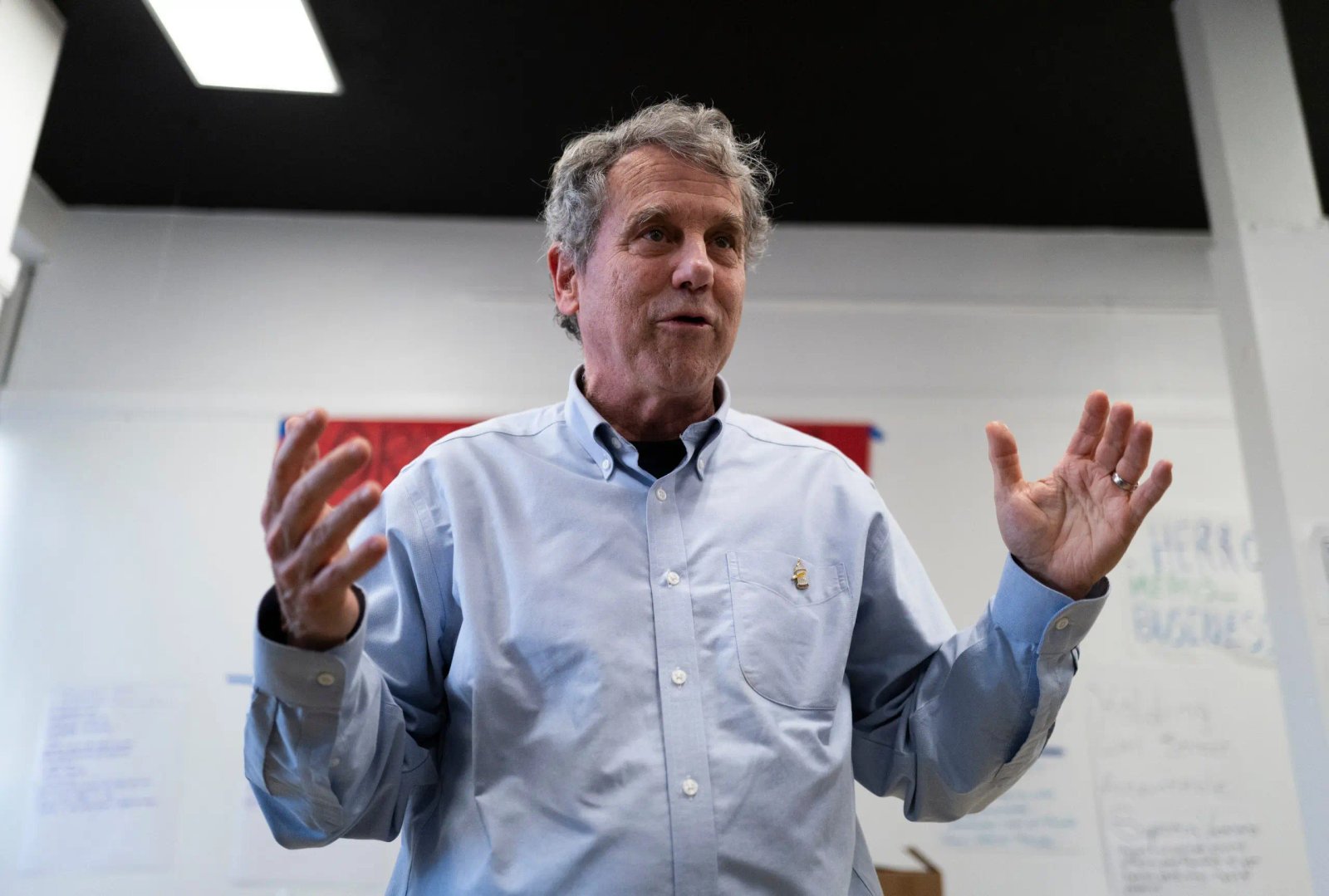
Former Democratic Senator Sherrod Brown once praised data center expansion, records show, even as he now runs on a platform opposing their development in a bid to return to the Senate.
In 2015, Brown put out a press release celebrating the construction of a third data center in Central Ohio.
«This new data center is great news for New Albany and central Ohio. Amazon’s growth in central Ohio signals that this region is not only a great place to do business, but a place where people want to live and raise a family,» Brown said.
Now, just over 10 years later, Brown is painting Ohio’s 226 data centers as a drain on the state’s resources — a reversal that demonstrates how many Democrats have aligned themselves on the issue to press the case for affordability.
WATCH: GOP SENATOR UNLOADS ON ‘CREATURE OF WASHINGTON’ CHALLENGER IN CRITICAL SENATE SHOWDOWN
Sen. Sherrod Brown, D-Ohio, is seen during senate votes in the U.S. Capitol on Tuesday, January 23, 2024. (Tom Williams/CQ-Roll Call, Inc via Getty Images)
«Ohio’s electric grid — big corporations treat it like a game,» Brown said in a recent campaign video.
«[They’re] gobbling up energy to feed their data centers no matter how much it raises our prices. It’s the latest way they’ve rigged the system.»
Brown, who was originally elected to the U.S. Senate in 2006, lost re-election in 2024 to Sen. Bernie Moreno, R-Ohio. Now he is waging a comeback bid for Ohio’s other Senate seat against incumbent Sen. Jon Husted.
Husted, who has not yet won a full term in the Senate, was appointed by Ohio Gov. Mike DeWine to fill the seat of now-former Sen. J.D. Vance, R-Ohio, when Trump tapped him to become vice president.
In the 2026 midterms, Democrats have hammered President Donald Trump and what they see as unfulfilled promises to bring down the cost of everyday items like food, fuel and housing.
While slightly removed from those specific items, an increasing number of Democrats, like Brown, have tied data centers to the issue, arguing that they do little to pay for their own costs in terms of water and electrical use. In their view, data centers are being subsidized by the communities where they’re being built.
FOX NEWS POLL: DEMOCRATIC UNITY, REPUBLICAN CROSSOVERS SHAPE OHIO SENATE RACE
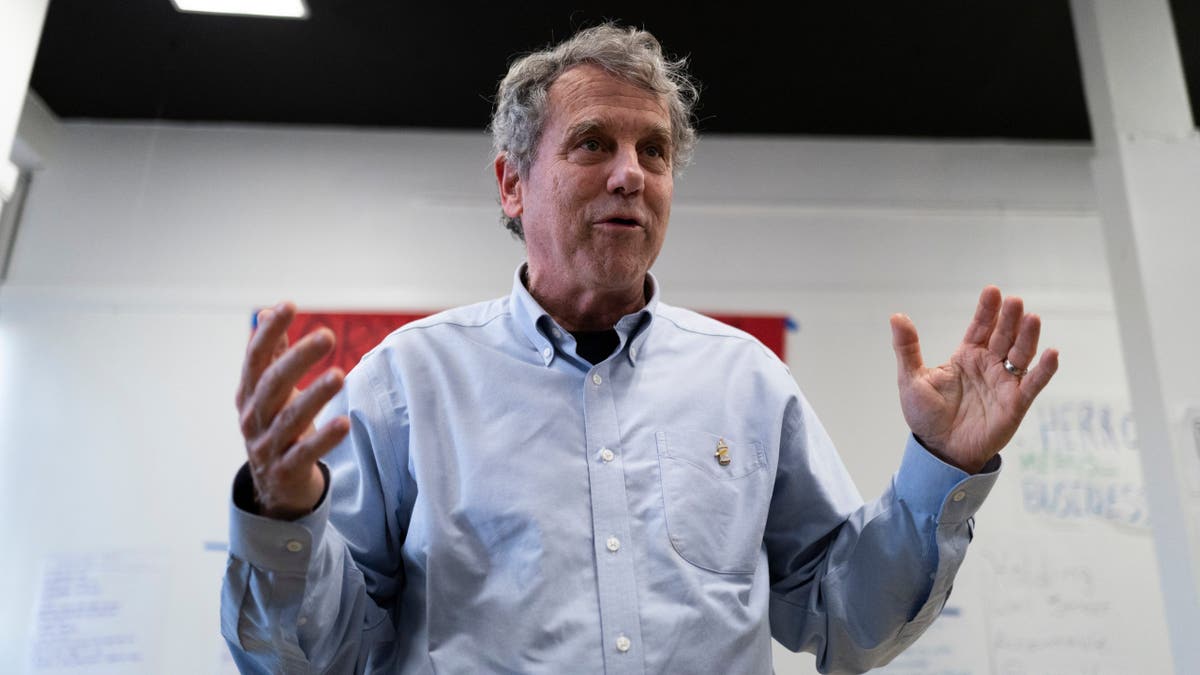
Democratic senate candidate, U.S. Sen. Sherrod Brown, D-Ohio, addresses volunteers at a campaign office on Nov. 4, 2024 in Cleveland Heights, Ohio. (Stephen Maturen/Getty Images)
Debates remain about whether their consumption has meaningfully changed utility rates in local communities and, if so, whether the companies should pay for the costs of their consumption.
Brown said he would support legislation along those lines.
«I’ll require the data centers to pay the full cost of their own electricity — not you,» Brown said.
Ohio, in particular, has become an increasingly important state in the data center conversation as companies like Amazon and Google have sought out state incentives for their construction.
In 2013, the state legislature passed tax exemptions for the «sale, storage, use or other consumption of computer data center equipment.» The law gives the Ohio Tax Credit Authority (TCA) the power to approve tax exemptions for companies that invest more than $100 million over three consecutive years. Not all centers are automatically qualified to participate in the benefit and can receive a partial exemption.
The move has attracted sizeable investment but also cost the state $1.6 billion in forgone revenue in 2025, according to the Ohio 2026-2027 Tax Expenditure Report.
It’s unclear if Brown would support more than just a requirement that data centers pay for their electricity and whether he would consider other legislation to slow their development. In his 2015 press release, Brown noted that the centers had created new job opportunities with their openings.
TOP ENERGY GROUP WARNS WEALTHY FOREIGNERS ARE POTENTIALLY BANKROLLING ANTI-DATA CENTER CAMPAIGNS ACROSS US
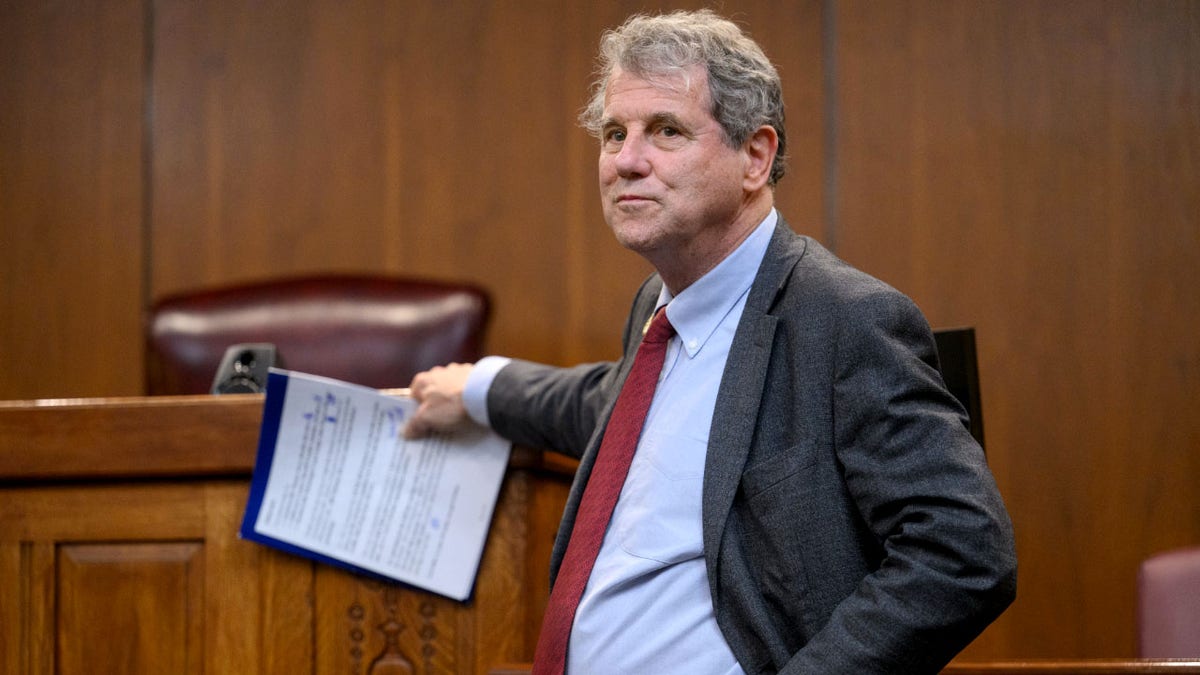
Senator Sherrod Brown, a Democrat from Ohio, during a campaign event at the Steubenville City Building in Steubenville, Ohio, US, on Friday, Oct. 11, 2024. (Justin Merriman/Bloomberg via Getty Images)
«I look forward to working to ensure that our region’s burgeoning logistics hub continues to grow – creating good jobs for Ohioans and helping businesses prosper,» Brown wrote.
His office did not respond to requests for comment from Fox News Digital about the scope of his objections to data center developments in Ohio.
Having secured his party’s nomination for the seat, Brown will face Husted in the state’s Nov. 3 general election.
state and local, ohio, senate
INTERNACIONAL
El amor clandestino que hizo escritora a Victoria Ocampo vuelve cuarenta y dos años después
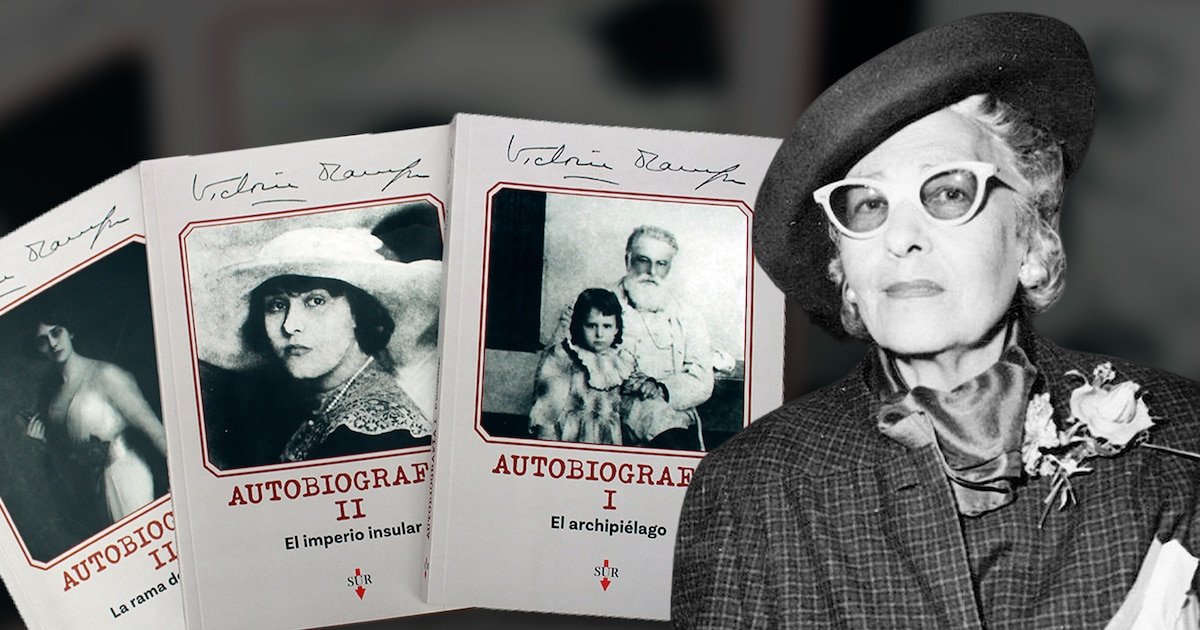
Vuelven, cuarenta y dos años después, los tres primeros tomos de la Autobiografía de Victoria Ocampo. Originalmente se publicaron de manera póstuma, entre 1979 y 1984, en seis volúmenes de Ediciones Revista Sur: El archipiélago, El imperio insular, La rama de Salzburgo, Viraje, Figuras simbólicas. Medida de Francia y Sur y Cía. Hubo reimpresiones en esa misma década y después, nada. Su reedición plantea varios temas interesantes. El archipiélago (1979) cubre la infancia. Genealogía de las dos ramas, los Ocampo y los Aguirre, con antepasados en las actas de mayo, la casa de Viamonte y Florida, los veranos en San Isidro, el gobierno de tías, abuelas e institutrices francesas e inglesas, las cinco hermanas menores. Ahí se instala el dato que ordena toda la obra: el francés como primera lengua de lectura y de escritura, aprendido antes que cualquier idea de país. El título describe una familia dispersa en islas que se tocan sin unirse. El imperio insular (1980) va de la adolescencia al casamiento. El viaje familiar a París, las clases oídas de prestado en la Sorbona y el Collège de France, Bergson entre ellas, la amistad y la correspondencia con Delfina Bunge, las lecturas fundacionales, la vocación de actriz que el padre le prohíbe, Marguerite Moreno, y el noviazgo con Luis Bernardo “Mónaco” de Estrada hasta la boda del 8 de noviembre de 1912. Cierra donde abre el tomo tercero.
El título del tercer tomo es una cita. En De l’amour, Stendhal cuenta que en las minas de sal de Salzburgo los mineros arrojaban una rama deshojada al fondo de un pozo abandonado y la recuperaban meses después cubierta de cristales, irreconocible, deslumbrante. A eso llamó cristalización: la operación por la cual el enamorado recubre al otro de perfecciones que el otro no tiene. Ocampo tomó esa rama y la puso en la portada del volumen donde iba a contar los trece años que pasó con Julián Martínez, primo de su marido, en la clandestinidad más vigilada de Buenos Aires. La rama de Salzburgo se lee, cuarenta y cinco años después, con una incomodidad que los otros tomos no producen. Beatriz Sarlo tituló su ensayo sobre ella “Victoria Ocampo o el amor de la cita”, y la fórmula sirve aquí exactamente al revés de como suele usarse: no se trata de que ella amara citar, sino de que solo podía amar citando. Cuando le tocó escribir el deseo propio, fue a buscar quién se lo había escrito antes.
Victoria Ocampo tenía veintidós años cuando se casó, el 8 de noviembre de 1912, con Luis Bernardo de Estrada, Mónaco, abogado, católico, celoso, de una familia todavía más conservadora que la suya. El matrimonio se deshizo durante la luna de miel. En Roma, en 1913, conoció al primo del marido, que trabajaba en la embajada. El resto ocurrió en el único registro disponible: cartas, teléfono, un departamento alquilado, taxis, chofer, encuentros del lado sur de la ciudad, lejos de las miradas del Barrio Norte. Aparecen la calle Garay, el Parque Lezama, Leandro Alem. La geografía del amor de Victoria Ocampo es la geografía de dónde no la iban a ver.

No existía el divorcio. No había tampoco lengua. Para una mujer de esa clase, en ese Buenos Aires, existían dos vocabularios para nombrar lo que le estaba pasando: el del confesionario, que lo llamaba pecado, y el de la crónica social, que lo llamaba escándalo. Ninguno de los dos servía para describir la experiencia desde adentro. Ocampo hizo lo que había aprendido a hacer con todo lo demás: importó. Stendhal para la mecánica del enamoramiento, Dante para la dignidad de la falta, Proust para los celos, Jung para el fondo del asunto. El libro está lleno de esos nombres y no los usa como ilustración. Los usa a manera de defensa.
En 1924, en plena relación con Martínez, Ocampo publicó su primer libro: De Francesca a Beatrice, una lectura de la Comedia que Ortega y Gasset le editó en Madrid, en Revista de Occidente, con epílogo propio. Francesca es la adúltera del canto V del Infierno, condenada junto a Paolo. Y es, sobre todo, la mujer que cae leyendo: Dante hace que el pecado empiece en un libro, en la página sobre Lanzarote, en el momento en que dos lectores levantan la vista. Ocampo, adúltera y lectora, escribió su primer libro sobre la lectora adúltera, y lo tituló como un itinerario de salida: de Francesca a Beatrice, del amor que condena al amor que salva. El tercer tomo de la Autobiografía es ese mismo libro escrito cuarenta años después y sin el itinerario de salida. Ahí hay solo Francesca, sostenida, argumentada, y una mujer de más de sesenta años que ya sabe cómo terminó todo y que igual se niega a arrepentirse.
Ahora bien, hay una ironía en la elección de la cita elegida. La cristalización de Stendhal es una teoría del error. La rama que sale del pozo no se volvió preciosa: se cubrió de sal. El enamorado ve lo que no hay. Al ponerle a su historia de amor el nombre de la teoría que explica por qué los enamorados se equivocan, Ocampo está admitiendo, en la tapa, que su Julián podía ser una invención suya. Y lo escribe desde la única posición desde la cual eso puede decirse sin cinismo: la de quien vio caerse los cristales ya que la historia termina mal de la manera menos romántica posible. La pasión no la mataron la familia ni la Iglesia ni el marido. La mató la libertad. Mientras hubo que esconderse, hubo incendio. Cuando el obstáculo desapareció, la cosa se enfrió y quedó la amistad. Ese es el dato duro del libro y el que le da su valor de documento: Ocampo relata, sin querer demostrarlo, que su amor había sido inseparable de su ilegalidad. Denis de Rougemont escribió en 1939 que la pasión occidental necesita la espada entre los cuerpos, que Tristán ama el obstáculo más que a Isolda. Ocampo lo comprobó en su propia vida veinte años antes de que Rougemont lo publicara.

Este tercer volúmen es muy diferente a los dos anteriores y vale la pena mirar el vocabulario, porque ahí se ve trabajar la mano. Conviven en él dos lenguas. En los diálogos aparece el voseo porteño, con sus querés, sabés, tenés: Buenos Aires entra al libro por la boca de la gente, en un registro que la Victoria pública casi nunca usaba. Y en las zonas de mayor temperatura aparecen palabras francesas sin traducir, coeur, sang, joie. La distribución no es caprichosa. Lo que se habla, se habla en argentino; lo que se siente, cambia de idioma. Ocampo escribió el cuerpo en la lengua de las institutrices, que era la lengua en la que había leído todo lo que sabía del amor y también la única en la que esas cosas podían decirse sin sonar a médico o a confesor.
Stendhal distingue cuatro especies de amor y Ocampo se queda con el amor-pasión: al inscribirse allí cambia de tribunal. En la grilla moral, lo suyo es adulterio; en la grilla stendhaliana, es una especie con leyes propias, descriptibles, que no admiten juicio porque no admiten voluntad. Pero dada la naturaleza de esta mujer, este amor-pasión es también según sus palabras “Abdicación”: amar como abdicar: ceder soberanía. Victoria Ocampo fundó, financió, dirigió, presidió y decidió durante sesenta años. Este es el único territorio de su obra donde se narra a sí misma como súbdita. Stendhal y Jung conviven en el volumen. La cristalización dice que el enamorado cubre al otro de perfecciones inexistentes; la teoría junguiana de la proyección dice, con otro vocabulario, exactamente lo mismo. Ocampo se dotó de dos aparatos que coinciden en que el amado es una pantalla. Sumale Proust, también presente, cuyos celos son un problema de conocimiento antes que de posesión: se cela porque el otro es incognoscible. La consecuencia es dura y ella la asume: el tomo es una autobiografía de una pasión y de una abdicación, no un retrato de un hombre. Julián Martínez queda escrito casi sin atributos. Es coherente. La rama no se describe, se describe la sal.

Y es en los años de clandestinidad exactamente los años en que Ocampo se vuelve escritora. Primer artículo en La Nación sobre la Comedia, 1920. De Francesca a Beatrice, 1924. La laguna de los nenúfares, 1926. La mujer que no podía firmar su vida empezó a firmar su prosa en el mismo momento. Que la vida clandestina y la vida pública nacieran juntas no es un dato menor: el amor con Julián no fue un episodio dentro de una carrera, fue la condición que la produjo.
Otro de los puntos fuertes de este tercer tomo es el tema de los terceros. El adulterio de una mujer de esa clase era una operación de logística ejecutada por terceros. Un chofer que sabía las direcciones. Una mucama que llevaba las cartas y que, en un episodio célebre, dejó una de esas cartas sobre el escritorio del marido. El teléfono, la tecnología nueva, entra al libro como instrumento erótico y como riesgo, porque del otro lado de la línea siempre había alguien más en la casa. La intimidad de Victoria Ocampo dependía de la discreción de personas a las que ella les pagaba un sueldo, y esa dependencia está escrita, aunque no esté pensada. Es uno de los pocos lugares de la obra donde su clase se le nota sin que ella la administre.
Los editores de 2026 decidieron reemplazar por nombres completos las iniciales con que el original protegía a personas hoy públicamente identificadas. En un libro construido sobre iniciales: Victoria escribía J., y quienes contaron la historia después hablaron de “V. y J.”. La discreción tipográfica era el último resto vivo de la clandestinidad que había hecho posible la pasión: mientras la letra sola resistiera, algo del secreto seguía funcionando. Deshacer la inicial es terminar de hacer lo que la libertad ya le había hecho a ese amor. El libro que enseña que la pasión necesita el obstáculo acaba de perder el suyo.

Spain’s migrant surge reignites debate over Europe’s Islamist terror threat

Muere Jorge Messi, padre de Leo, a los 68 años de edad

El bioeticista argentino Fishel Szlajen presentó en Lima un modelo de gobernanza de la IA para la libertad religiosa

La dura historia familiar de Caua Reymond, el protagonista de Avenida Brasil: “Mi madre tenía HIV y mi abuela discapacidad”

Dem Senate hopeful flip-flops on emerging issue impacting communities across US

El amor clandestino que hizo escritora a Victoria Ocampo vuelve cuarenta y dos años después

La oposición cuestionó a Benegas Lynch por su empresa para vender campos a extranjeros y el senador libertario se defendió

Dólar hoy en vivo: a cuánto se negocian todas las cotizaciones minuto a minuto este miércoles 5 de agosto

Brasil retira a su embajador en la Argentina: qué consecuencias tiene la medida diplomática

Las centrales obreras y los movimientos sociales anunciaron dos días de conflicto callejero
-
 POLITICA2 días ago
La oposición cuestionó a Benegas Lynch por su empresa para vender campos a extranjeros y el senador libertario se defendió
-
 POLITICA3 días ago
Las centrales obreras y los movimientos sociales anunciaron dos días de conflicto callejero
-

 SOCIEDAD3 días ago
Con 7 nominaciones y 2 Óscar, esta noche puedes ver en streaming una gran película bélica con Tom Cruise