INTERNACIONAL
Drug cartel kingpin among targets in sweeping Trump crackdown on alleged Mexican corruption network

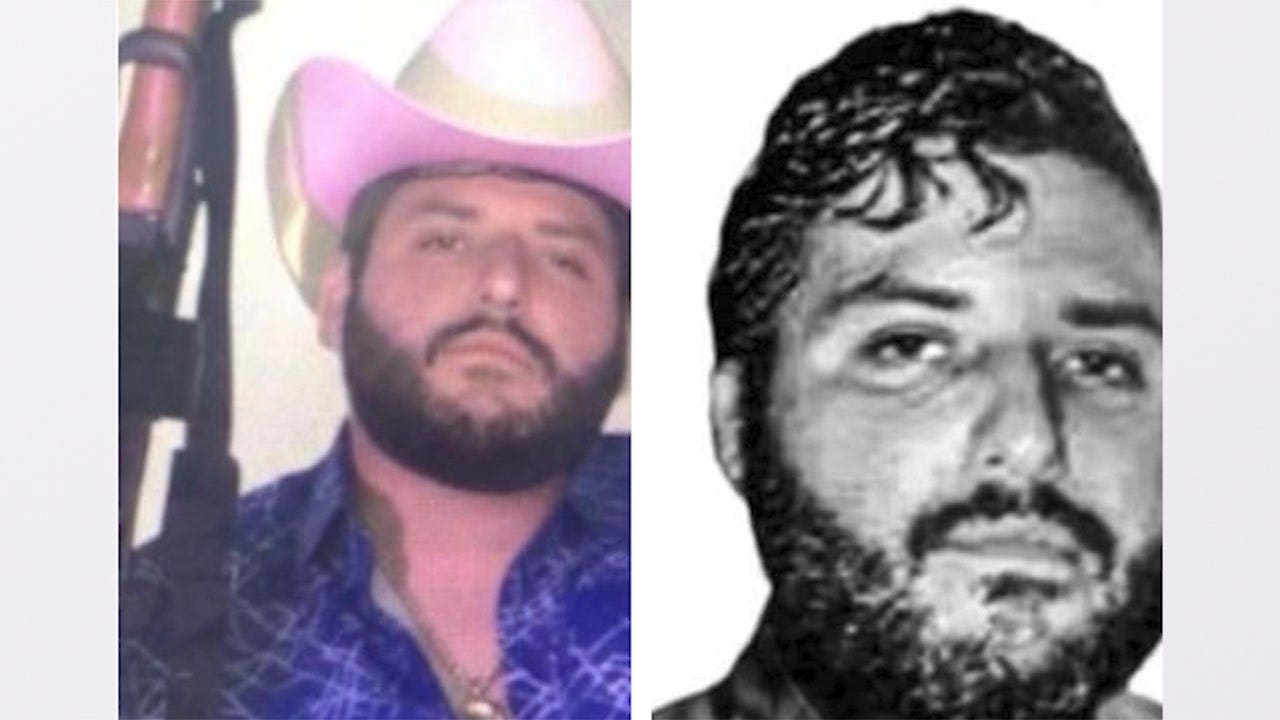
FIRST ON FOX: The Trump administration is seeking to disrupt with a sweeping set of sanctions a sprawling Sinaloa cartel network accused of corrupting Mexican officials just across the U.S. border.
Los Mayos, a powerful faction of the Sinaloa cartel, and its U.S.-born leader are accused of funneling fentanyl and drug money through California and hiring hitmen to kill rivals on American soil.
The Treasury Department, according to material exclusively obtained by Digital ahead of their public release on Tuesday, will sanction 21 individuals and 25 entities in a crackdown against Los Mayos and their alleged illegal activity within U.S. borders.
The targets of the sanctions include Ismael Zambada Sicairos, known as «Mayito Flaco,» a dual U.S.-Mexican citizen born in Anaheim, California, whom Treasury describes as the «undisputed head» of Los Mayos.
MEXICAN GOVERNOR FACING US DRUG CHARGES SEEKS LEAVE JUST ONE DAY AFTER RETURNING TO OFFICE
The action lays out how one of Mexico’s most powerful cartel factions allegedly maintains its grip on two critical trafficking corridors along the U.S. border — through political and police corruption, money laundering and violence that Treasury says has extended into Southern California.
It also exposes what Treasury describes as deep cartel penetration of government and law enforcement in Baja California, the Mexican state bordering California.
The Treasury says Sinaloa-linked «narco-corruption has reached the highest levels» of the state government, alleging that the ex-husband of Gov. Marina del Pilar Ávila Olmeda used his political influence to protect cartel operations and that a former Mexicali public security chief accepted bribes to allow the cartel to exert control over municipal police.
The allegations shed new light on a controversy that erupted last year when the U.S. revoked the visas of both Ávila and her then-husband, Carlos Torres Torres.
Treasury now says the State Department revoked Torres’ visa in May 2025 because of his «cartel affiliation and work on behalf of the Sinaloa cartel.» U.S. officials had not publicly disclosed why Ávila’s visa was revoked.
The State Department revoked Torres’ U.S. visa in May 2025 over what Treasury now describes as his «cartel affiliation and work on behalf of the Sinaloa cartel.» Olmeda’s U.S. visa was also revoked around the same time, though U.S. officials did not publicly disclose a reason for the action against her.
POTENTIAL SECURITY THREAT PROMPTS US TRAVEL SUSPENSION FOR BORDER CITY ON ALERT
Treasury also alleges the cartel’s reach extended directly into California.
Lorenzo Castillo Maldonado, an associate in Mayito Flaco’s network, allegedly hired hitmen on the cartel leader’s orders to kill rival cartel members in Southern California. Another part of the network allegedly worked with complicit Southern California money exchanges to collect bulk cash from U.S. drug sales and move the proceeds back to Mexico.
The sanctions are aimed in part at disrupting Los Mayos’ grip on the Tijuana and Mexicali «plazas,» strategic corridors Treasury says the cartel uses to move fentanyl and other narcotics into the U.S.
«Today’s action underscores that no cartel kingpin, corrupt Mexican government official, or financial facilitator is beyond the reach of Treasury’s authorities,» Treasury Secretary Scott Bessent said. «Our message is clear: the Trump administration will identify and disrupt any cartel actor who threatens our security or the integrity of our financial system.»
The designations effectively cut the targets off from the U.S. financial system, blocking property and assets under U.S. jurisdiction and generally barring Americans from doing business with them. Foreign financial institutions that knowingly facilitate significant transactions for sanctioned individuals could also face U.S. sanctions.
At the center of Tuesday’s action is Mayito Flaco, who Treasury says has emerged as the undisputed leader of Los Mayos following the July 2024 arrest of his father, longtime Sinaloa cartel kingpin Ismael «El Mayo» Zambada Garcia.
SINALOA CARTEL BOSS ‘EL MAYO’ SENTENCED TO LIFE, ORDERED TO PAY $15B IN DRUG TRAFFICKING PROFITS
El Mayo’s arrest set off a violent struggle between Los Mayos and Los Chapitos, the Sinaloa faction led by sons of Joaquin «El Chapo» Guzman. Treasury says the two factions remain locked in a costly internal war that has forced both sides to rebuild their leadership and alliances.
Mayito Flaco, 44, was born in Anaheim in 1982 and later filed a U.S. name change to Fernando Sicairos Aispuro, according to Treasury. He was federally indicted in California in 2014 on drug trafficking and money laundering charges and remains a fugitive in Mexico.
The Treasury says he now commands Los Mayos’ drug trafficking, murder, extortion, corruption and kidnapping operations.
The sanctions also target Torres’ brother, Luis Alfonso Torres Torres, whom Treasury accuses of collecting bribes and laundering illicit funds through companies and political campaigns.
Former Mexicali Public Security Director Pedro Ariel Mendivil Garcia is also being sanctioned. The Treasury alleges Mendivil accepted bribes from Los Rusos leader Juan Jose Ponce Felix, known as «El Ruso,» in exchange for allowing the cartel to exert control over municipal police, facilitate drug trafficking and carry out enforcement operations.
mexican cartel violence, corruption, sanctions, mexico, organized crime, corruption crime, politics








INTERNACIONAL
Polémico planteo en la ONU: ¿puede Estados Unidos disolver el Comité de Descolonización?
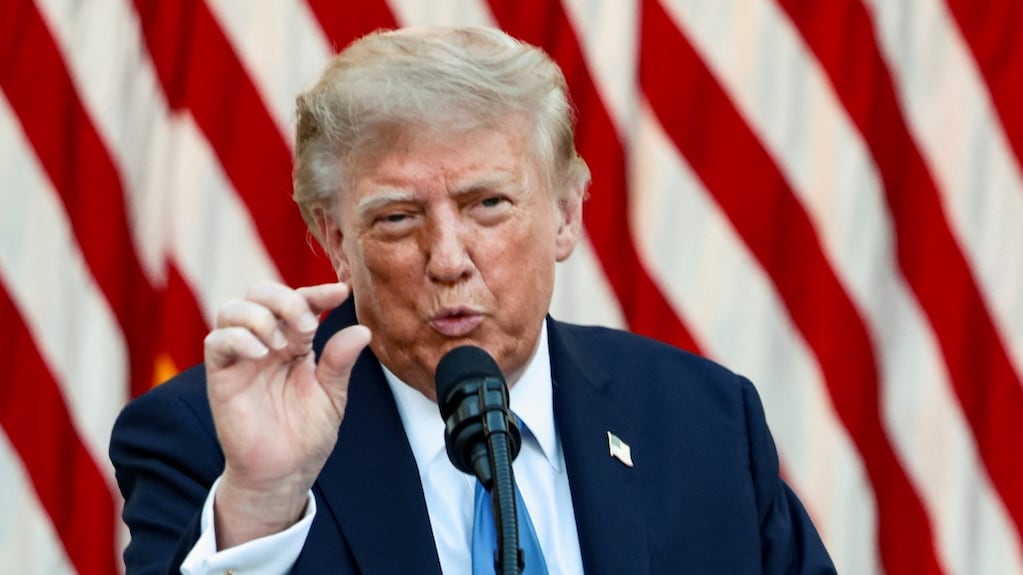
El inesperado pedido de Estados Unidos para disolver el Comité de Descolonización de la ONU, un espacio clave para la causa Malvinas, causó sorpresa en el mundo diplomático y obligó al gobierno de Javier Milei a minimizar el reclamo de su principal aliado internacional.
El planteo fue expuesto por la representante estadounidense durante la Cuarta Comisión de Naciones Unidas. Se trata de un órgano de la Asamblea General que se ocupa de asuntos políticos especiales y de descolonización.
Para la Argentina es un organismo clave. Cada año, el comité es el encargado de instar al Reino Unido a retomar las negociaciones por la soberanía de las Islas Malvinas. Ahora, el reclamo de Washington abre al menos una grieta geopolítica con su socio argentino.
Sin mencionar al archipiélago austral, la representante del gobierno de Donald Trump dijo simplemente que el comité es un “desperdicio de recursos” y pidió disolver su mandato.
Pero el reclamo, según dijo a TN el exembajador argentino ante la ONU Ricardo Lagorio, no tendrá repercusiones en el organismo.
“No es un comité más. Es uno de los más sensibles de la ONU. Maneja uno de los temas más importantes como la descolonización. Quizás Estados Unidos decida desfinanciarlo o se oponga a partidas presupuestarias. Tienen muchos mecanismos, pero que de ahí a que desaparezca, lo dudo”, afirmó.
¿Por qué Trump busca disolver el organismo de descolonización?
Lagorio fue embajador ante la ONU durante el primer año de mandato de Milei (30 de enero-28 de octubre de 2024).
“No conozco precedentes de que un comité tan sensible desaparezca. Si Trump quiere retirarse (del organismo) se retira. Si no quiere presentar candidatura al comité de derechos humanos, no lo hace. Esas son decisiones de Trump”, indicó.
Para Lagorio, “lo más que puede hacer Trump es decir: ´yo pago mi cuota a la ONU, pero de ahora en más ninguna parte va al mantenimiento de ese comité’. Lo demás son bravuconadas«, sostuvo.
“Disolver un comité no depende de él y menos en algo tan sensible”, afirmó.
El exprpresentante argentino en la ONU y exembajador en Rusia dijo que “el funcionamiento de un comité no depende de la voluntad de ningún pais”.
“En última instancia, si Estados Unidos lo quiere desfinanciar puede maniobrar para eso. Pero no va a tener mucho apoyo, quizás el dealgún que otro pais”, dijo.
malvinas
INTERNACIONAL
Reporter’s Notebook: Senate sneaks in one last political play before voters have their say
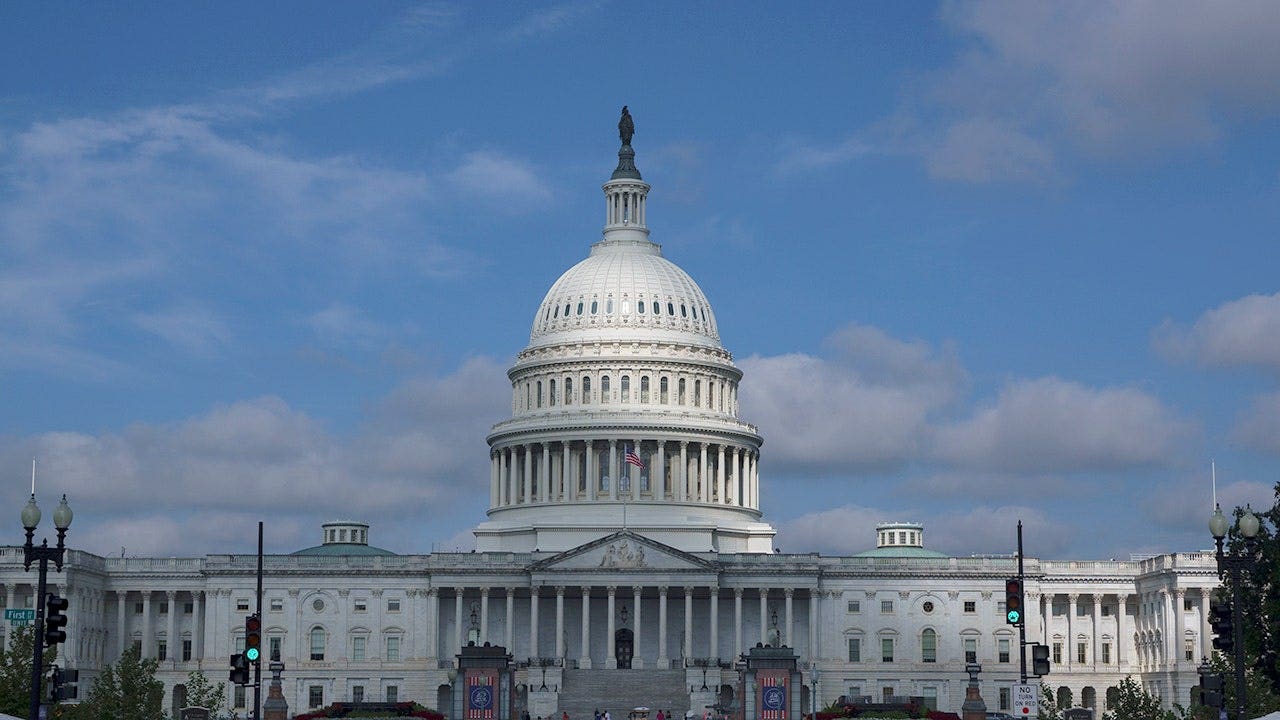
In politics, you sometimes just do what you can.
All 100 duly chosen and sworn U.S. senators understood why the Senate met for a week at the end of September.
Yes there was the college sports bill. Yes there was the confirmation of Labor Secretary Keith Sonderling. Yes there was a big hearing with former special counsel Jack Smith.
But you’d be badly mistaken if you thought both sides were really there to hammer out a package to bring down the cost of living for Americans.
Don’t take my word for it. Take the word of the senators.
REPORTER’S NOTEBOOK: A GUIDE TO THE COLLEGE SPORTS VOTE AND SENATE’S OHIO SHOWDOWN
You are correct to say that Democrats blocked two bills that Republicans say voters really want. One was a measure to diminish the costs consumers pay for data centers and a plan to restrict stock trades by lawmakers. The latter bill even included a voter ID requirement – crucial to the GOP and its base. But Republican senators knew that Democrats wouldn’t accept these proposals.
This was about politics.
And Democratic senators wouldn’t accept any of the GOP’s legislative propositions, either.
So let’s start with the Ratepayer Protection Act.
Both sides know that voters are tripped out about AI and utterly losing it when it comes to data centers. An internal GOP memo in August revealed that the party was especially leery of what this meant for Sen. Jon Husted, R-Ohio Republican Ohio Gov. Mike DeWine appointed Husted to the Senate last year to succeed Vice President JD Vance. Husted helped foster development of data centers as an official back in the Buckeye State.
So, the final week of the Senate’s session before the midterms crawled with politics.
REPUBLICANS FEAR THEY ‘HAVEN’T DONE A DAMN THING’ TO LOWER PRICES AHEAD OF MIDTERM RECKONING
Republicans aimed to curb skyrocketing utility costs associated with the construction of data centers.
«(People) ought to be guaranteed no electricity bills will go up by a cent because of a data center,» said Sen. Josh Hawley, R-Mo. «It sends a clear message that these AI companies and these data centers can’t just come into local communities and strip mine out (land). Raise the electricity rates. Kick people off the grid. Take their water.»
But Democrats say the bill didn’t compel compliance by AI firms. This was just a suggestion that those who build the data centers help foot some of the bill.
«It is a sham. A charade because it has no enforcement,» said Sen. Richard Blumenthal, D-Conn.
«Everything in that bill can already be done by a state regulator. Or it can already be done by a data center developer. And the bill requires nothing of them,» argued Sen. Tim Kaine, D-Va.
I pressed Kaine on if «something was better than nothing.»
He disagreed.
«No. You shouldn’t trick people. And this is not even something,» replied Kaine. «It’s nothing,»
Senate Minority Leader Chuck Schumer, D-N.Y., piled on with, «The Ratepayer Protection Act is a fraud. It does not require any protections at all. While Americans are demanding real guardrails on AI and data centers, Republicans are offering a toothless messaging bill.»
The bill is laced with midterm politics. Democrats claim Republicans called the vote to throw a lifeline to Husted.
Many Senate Republicans were ready for the Senate to leave town for the midterms. But they hedged their bets around the data center bill. And, Husted.
«Can you say 110 precent this is not a vote to help Jon Husted in Ohio?» yours truly inquired of Sen. John Hoeven, R-N.D.
«I think it will help him,» replied Hoeven. Sen. Andy Kim, D-N.J., agreed with Hoeven.
«The one thing I’ll just say is that this is clearly a political ploy,» said Kim. «This is not something that’s good for the American people. But it’s certainly good for Sen. Husted.»
DATA CENTERS COULD BE THE SLEEPER ISSUE OF THE 2026 MIDTERM ELECTIONS
The tilt between Husted and former Sen. Sherrod Brown, D-Ohio, is one of the nation’s most contentious Senate contests.
«I don’t think that there’s a secret that Sen. Husted is trying to pass a piece of legislation so he could go home and run a campaign ad,» said Sen. Ben Ray Lujan, D-N.M.
Husted conceded as much.
«We gave everybody a chance to do something about affordability and the Democrats blocked it. So we’ll go campaign on it,» said Husted.
So yes. The Senate’s last week of session was about the midterms.
«Has there ever been a late September or October before an election that wasn’t all politics?» asked Sen. Thom Tillis, R-N.C.
The evolving positions on the data center bill by Sen. Peter Welch, D-Vt., may be an example of that.
Welch was a yea when asked about the legislation on September 23 , after it overwhelmingly cleared the House.
«I support it and I’d be glad to vote on it,» said Welch.
But the Vermont Democrat flipped to nay when the issue approached a roll call vote on the floor.
«Why did you change? I asked Welch.
«Well, two things. One, they won’t allow us to have an amendment. And the problem with this bill is that it has no teeth,» he replied.
So the question is whether the sides prefer action. Or, if they’d rather have the issue. In fact it could be argued that Husted may have scored some political capital, deploying the blocked bill as a foil in an effort to contrast himself to Democrats.
«It ought to be something that should be a no brainer here on the floor of the Senate,» said Senate Majority Leader John Thune, R-S.D.
TRUMP’S DATA CENTER PUSH FRACTURES CONGRESS AS LOCAL ANGER EXPLODES: ‘GRASPING AT STRAWS’
It’s rare that competitive Senate contests pivot on a solitary issue. And certainly an individual debate or vote. Democratic Maine Senate nominee Troy Jackson is pushing Sen. Susan Collins, R-Maine, on her vote to confirm Supreme Court Justice Brett Kavanaugh in 2018. It was one of the most factious confirmation battles in history. But Collins won reelection in 2020. That vote was eight years ago.
A vote like the one on the data center measure just before the election can plant a seed in the mind of voters. And since Republicans were struggling on affordability – and then AI and data centers emerged as an issue – forcing this vote was probably the best political play the GOP had at its disposal. In campaigns, you do all you can.
Let’s say for a moment that Husted loses narrowly to Brown in two weeks. And maybe Republicans would have held the Senate had Husted prevailed. Perhaps exit polling reveals that voters wished Republicans had done more on affordability. Party insiders would then accuse the Senate GOP brass of political malpractice by denying Husted a chance to make his case.
It was the best Husted could do. And the best Senate Republicans could do.
It may not work. But at least Republicans can say they did what they could.
politics, midterm elections, senate, democrats senate, john thune, chuck schumer, republicans elections
INTERNACIONAL
Guatemala: La PNC abre pesquisas internas y externas por el asesinato de Juan Francisco Solórzano Foppa y por la captura de los hermanos Choc Toz
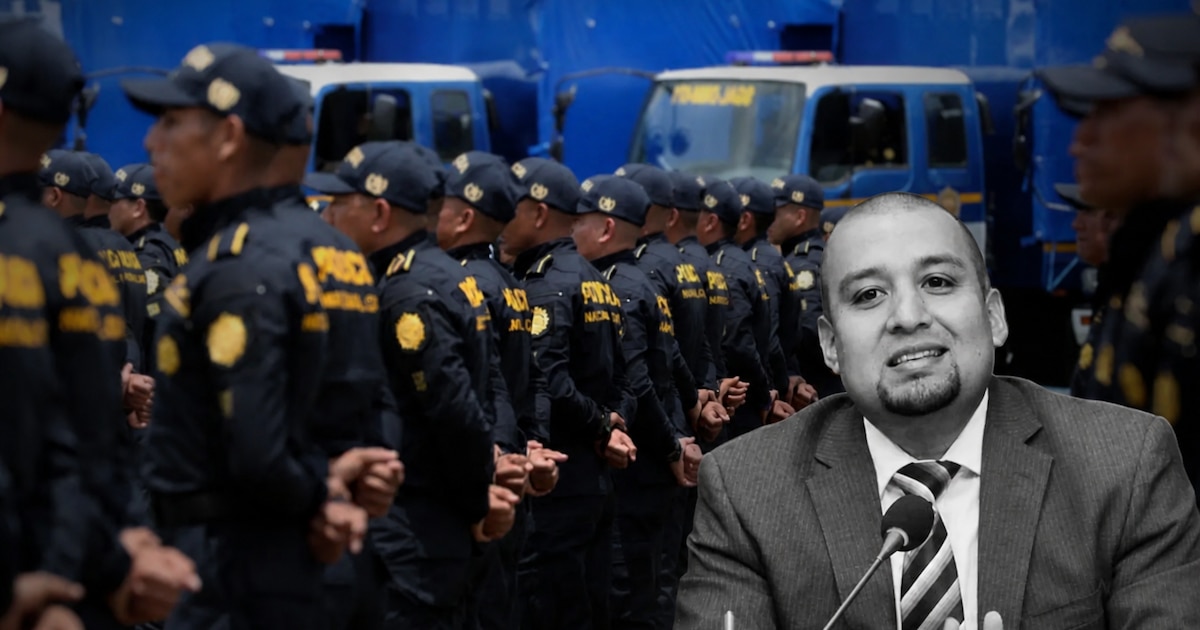
La Policía Nacional Civil (PNC) de Guatemala informó que activó investigaciones internas y externas por el asesinato de Juan Francisco Solórzano Foppa y Gustavo Aguilar, así como por el procedimiento de detención de los hermanos Choc Toz, quienes quedaron libres al dictarse falta de mérito.
La institución también solicitó recursos urgentes para adquirir cámaras corporales y sistemas de videovigilancia destinados a patrullas, para evitar supuestos malos procedimientos por parte de los agentes de la policía en Guatemala.
En el comunicado publicado este lunes 19 de octubre, la Dirección General de la PNC informó que equipos de la Inspectoría General y de la Dirección Especializada en Investigación Criminal (DEIC) trabajan de forma coordinada con el Ministerio Público (MP) para esclarecer el doble crimen ocurrido el 17 de octubre en unas canchas deportivas de la ciudad guatemalteca.
La PNC sostuvo que sus unidades especializadas investigan el caso tanto desde el plano externo como dentro de la institución.
El objetivo, según el texto oficial, es determinar las circunstancias en las que murieron Solórzano Foppa y Aguilar, además de establecer si hubo responsabilidades entre los agentes vinculados al procedimiento contra los hermanos Choc Toz.
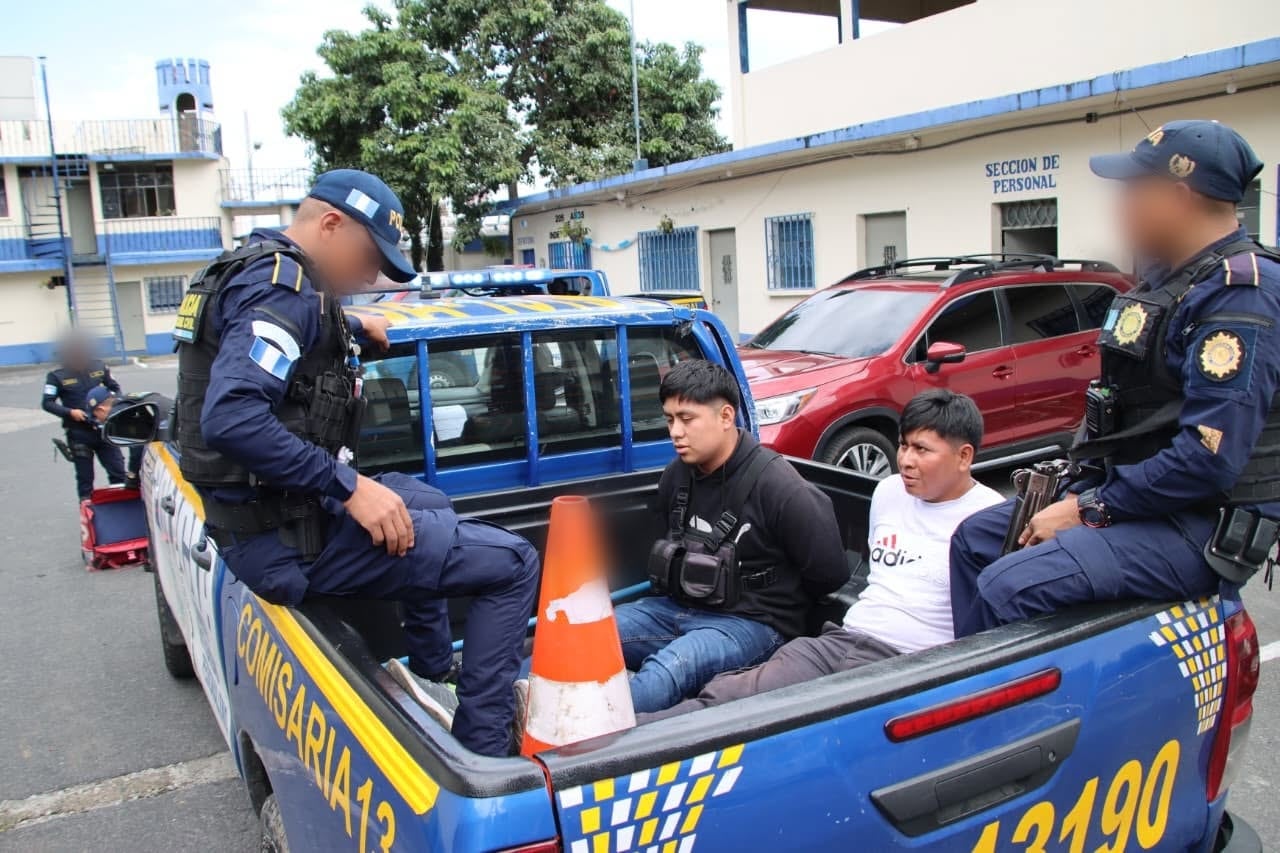
La comunicación institucional no identifica a los policías bajo revisión ni detalla las circunstancias de la captura. Sí afirma que las áreas de investigación y supervisión evalúan “minuciosamente” la actuación de los agentes para verificar que se haya ajustado a la ley y a las garantías fundamentales.
No obstante, fuentes cercanas a la institución indicaron que por lo menos cuatro agentes de la policía están siendo investigados luego de la detención de los hermanos Choc Toz.
“Cuatro equipos de DEIC” siguen el doble asesinato, según David Custodio Boteo
En una entrevista con TN23, el director general de la PNC, David Custodio Boteo, afirmó que la investigación penal se encuentra bajo reserva por decisión del Ministerio Público. Añadió que la Policía Nacional Civil asignó recursos específicos para acompañar las directrices de los fiscales.
“Tenemos cuatro equipos de DEIC, de los mejores equipos de delitos contra la vida, que están dándole seguimiento al caso”, afirmó el jefe policial al referirse al doble asesinato. Según explicó, esos grupos buscan avanzar en las pesquisas por las muertes de Solórzano Foppa y Aguilar.

El funcionario también indicó que la Inspectoría General revisa, en paralelo, el procedimiento realizado por los policías que tuvieron a su cargo la detención de los hermanos Choc Toz. “Son dos equipos especiales que se tienen asignados para apoyar las directrices” emitidas por el Ministerio Público, dijo Boteo durante la entrevista.
Infobae ha tratado de comunicarse con el director de la Policía Nacional Civil para conocer más detalles sobre las pesquisas, el alcance de la revisión a los agentes y las medidas adoptadas tras los hechos. Hasta el cierre de esta nota, el funcionario no había respondido las llamadas.
La PNC pidió fondos para cámaras corporales y videovigilancia en patrullas
La institución anunció que buscará acelerar, por las vías normativas disponibles, la compra e implementación de body cams para los uniformes policiales y de sistemas de grabación para las patrullas. La PNC plantea que el equipamiento aporte registros objetivos de cada intervención y permita verificar la actuación de los agentes.
Boteo aseguró a TN23 que la institución ya prueba cinco cámaras corporales dentro del Plan de Policía Metropolitana. El plan inicial apunta al distrito central y al departamento de Guatemala, donde la PNC prevé comenzar la implementación si logra la asignación presupuestaria.
El director estimó que el proyecto requiere un promedio de Q25 millones, alrededor de USD 3.2 millones, para contratar los equipos y los servicios tecnológicos asociados. La PNC no precisó cuántos dispositivos prevé incorporar durante la primera etapa.
En su comunicado, la institución argumentó que la tecnología busca evitar abusos contra la población, proteger a los agentes ante acusaciones falsas y respaldar las investigaciones sobre procedimientos cuestionados.
Juan Francisco Solórzano Foppa,Policía Nacional Civil,Guatemala,fotomontaje

Nuevo plan de retiro de Javier Milei para empleados públicos nacionales

Murió la exmodelo Marcela Ortiz tras un accidente automovilístico: el dolor de su hija Shelsian

Cuándo hay que hacerse una mamografía si hay antecedentes familiares de cáncer de mama

Jorge Macri fue recibido por el rey Felipe VI en Madrid y firmó la Declaración Iberoamericana de alcaldes

Polémico planteo en la ONU: ¿puede Estados Unidos disolver el Comité de Descolonización?

Rectifican un fallo y condenan a un exintendente salteño por robar rieles y contrabandearlos a Bolivia

El futuro será inteligente, pero inconsciente

La ANMAT prohibió un dispositivo de depilación definitiva por irregularidades sanitarias

Milei-Bullrich, la fórmula que más entusiasma al oficialismo en medio de las turbulencias económicas

Nacho Fernández rompió en llanto al hablar de la cinta de capitán con la imagen de Maradona: “Me acompaña todos los partidos”

 CHIMENTOS3 días ago
Juan Minujín contó como llegó a trabajar con Angelina Jolie y Salma Hayek: «Al principio dije que no»
- INTERNACIONAL3 días ago
Trump’s new press secretary out of the job just days after rocky debut
- POLITICA3 días ago
Los intendentes del PJ que afrontarán un recambio inédito si es que la ley de reelecciones no se revierte