INTERNACIONAL
El posible hallazgo médico que un grupo de especialistas detectó en tres cuadros de Rubens conservados en el Prado

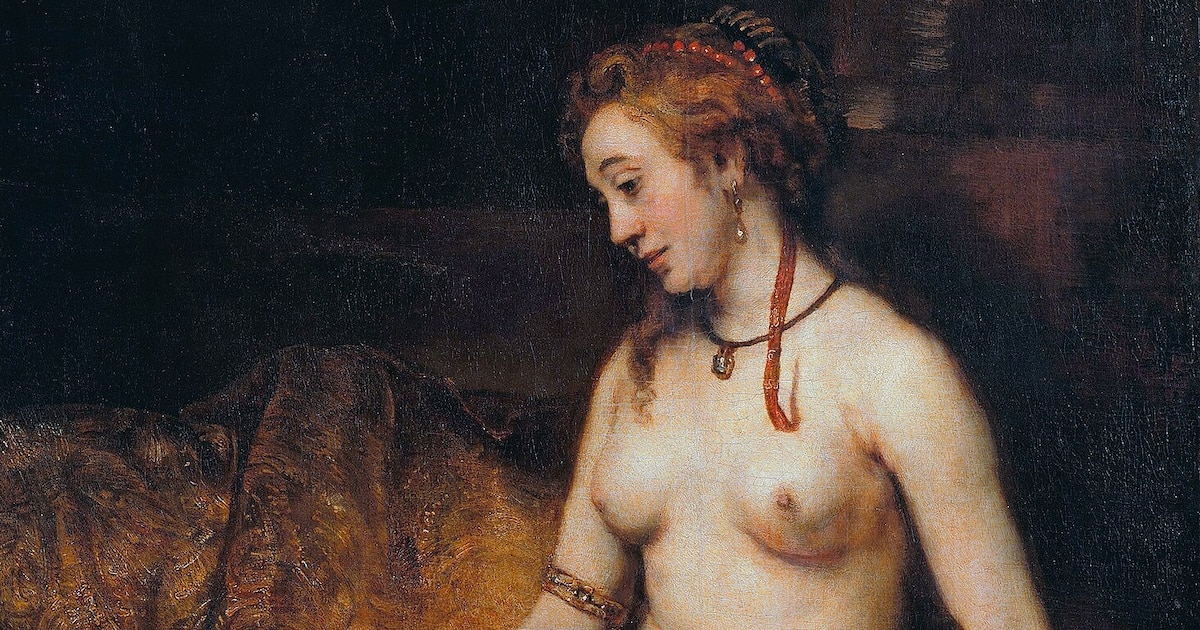
Una simulación por computadora descartó que la marca azul en el pecho izquierdo de Betsabé, en el famoso cuadro de Rembrandt, sea producto de un cáncer de mama, aunque el debate médico sobre la obra lleva más de cuatro décadas abierto y otras hipótesis todavía compiten por explicar la anomalía.
En 1983, los cirujanos P. A. Braithwaite y D. Shugg analizaron Betsabé con la carta del rey David —terminada por Rembrandt Harmenszoon van Rijn en 1654 y conservada en el Museo del Louvre de París— y publicaron una hipótesis que cruzó el arte con la medicina: las alteraciones visibles en el pecho izquierdo de la figura femenina podrían ser compatibles con un cáncer de mama. La coloración azulada en la parte inferior del seno y una hinchazón perceptible bajo la axila izquierda fueron los elementos que sustentaron su lectura clínica.
Desde entonces, el cuadro se convirtió en un símbolo recurrente de la enfermedad y fue citado en publicaciones oncológicas de todo el mundo. La hipótesis ganó peso adicional por la identidad probable de la modelo: Hendrickje Stoffels, compañera del pintor, cuya representación corporal el artista habría tomado del natural con la minuciosidad característica del realismo barroco neerlandés.
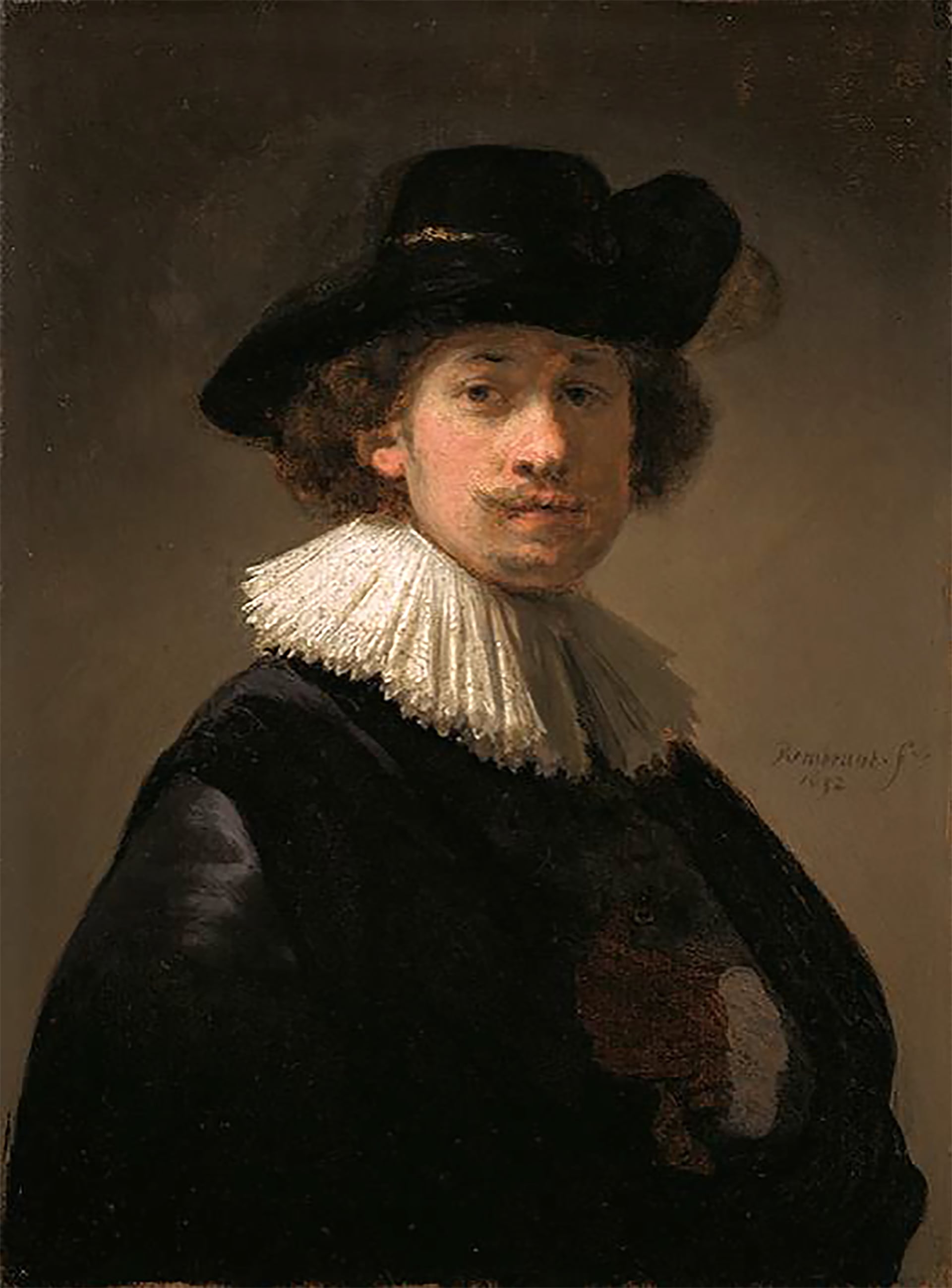
Las simulaciones de la Universidad de Twente pusieron en duda la teoría del tumor
Investigadores del instituto MIRA de la Universidad de Twente decidieron someter la hipótesis a una prueba computacional. Simularon millones de fotones con distintas longitudes de onda que incidían sobre un pecho con tumor y analizaron cuántos regresaban y qué color percibiría el cerebro humano a partir de esa luz.
El proceso de cálculo demandó 700 horas de analisis mediante computadoras. El resultado fue concluyente: una coloración azul de esas características solo podría producirse si el tumor estuviera ubicado entre uno y tres milímetros bajo la superficie de la piel. En la práctica, los tumores mamarios se desarrollan a una profundidad considerablemente mayor, y a esas profundidades no generan alteración alguna del color superficial. Los investigadores concluyeron que era “muy improbable” que la pigmentación registrada por Rembrandt tuviera su origen en un carcinoma.
Otras enfermedades también fueron propuestas para explicar la anomalía
Antes de que la Universidad de Twente publicara sus simulaciones, otros especialistas ya habían cuestionado el diagnóstico de cáncer por razones clínicas. Hendrickje Stoffels sobrevivió casi diez años después de que se pintara el cuadro, una trayectoria difícil de conciliar con un cáncer avanzado sin ningún tipo de tratamiento eficaz disponible en el siglo XVII.
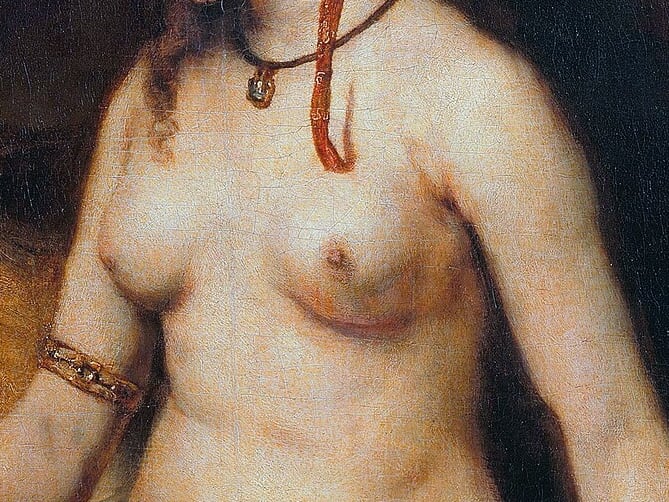
En 2000, el oncólogo R. G. Bourne propuso como alternativa una mastitis tuberculosa o un absceso asociado a la lactancia. Otros investigadores señalaron una mastitis vinculada al embarazo. Y en 2020, el especialista vascular Paolo Zamboni planteó en su estudio la enfermedad de Mondor, una tromboflebitis superficial que afecta los vasos linfáticos y venosos de la mama y que sí podría generar una coloración visible en la superficie de la piel.
Rubens también plasmó signos similares en tres cuadros del Prado
El caso de Betsabé no es el único en la pintura barroca en el que los médicos han identificado posibles indicios de patología mamaria. Un artículo publicado en 2001 en Medicina Clínica por los investigadores Juan J. Grau, Miguel Prats y Matías Díaz-Padrón —este último del Museo del Prado de Madrid— analizó tres obras de Peter Paul Rubens conservadas en ese museo: Las tres Gracias, Orfeo y Eurídice y Diana y sus ninfas perseguidas por sátiros.
En Las tres Gracias, pintada hacia 1636, los autores describieron en la figura de la derecha una tumoración en el cuadrante superior externo del pecho izquierdo, con extensión hacia el hueco axilar, retracción del pezón y signos inflamatorios, elementos que consideraron compatibles con un cáncer localmente avanzado, estadio T4b o IIIb según la clasificación actual. Los investigadores destacaron que esa zona del cuadro, pintada sobre tabla, se conservaba en perfecto estado y que los restauradores no habían introducido cambios en el aspecto de la axila de la modelo.
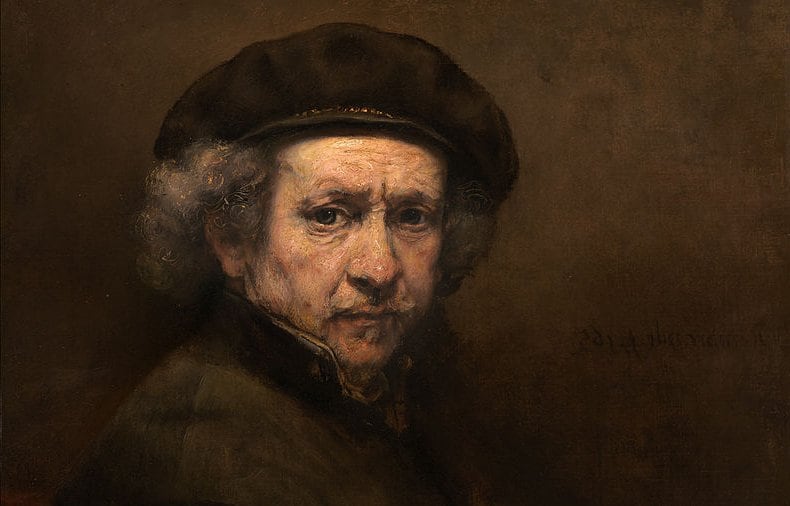
El realismo barroco hace difícil separar el arte del testimonio
La polémica médica alrededor de estas obras está alimentada, en parte, por las propias convenciones estéticas del Barroco. Tanto Rubens como Rembrandt practicaban el realismo pictórico, una tradición en la que el artista buscaba reproducir con fidelidad lo que tenía ante sus ojos. Sus modelos eran personas reales, y sus cuerpos —con sus particularidades y asimetrías— quedaban registrados con una precisión que, siglos después, permite a los médicos especular sobre diagnósticos retroactivos.
Que Hendrickje Stoffels fuera realmente la modelo de Betsabé tampoco está confirmado con certeza absoluta, lo que introduce una variable adicional de incertidumbre. Lo que sí permanece es el debate: cuatro décadas después de que dos cirujanos australianos fijaran su mirada clínica sobre un lienzo del siglo XVII, la ciencia sigue sin cerrar el expediente.
auction,vertical










INTERNACIONAL
Zelenskyy compares Putin to Hitler as Trump pushes to end Ukraine war: ‘He’s an aggressor and a killer’

NEWYou can now listen to Fox News articles!
Ukrainian President Volodymyr Zelenskyy compared Russian President Vladimir Putin to Adolf Hitler on Thursday amid President Donald Trump’s ongoing efforts to end the war between Russia and Ukraine.
«Of course, it’s up to President of the United States, but it’s strange. He’s (Putin) an aggressor and a killer. He can’t be a friend. It just cannot be,» Zelenskyy told the British Broadcasting Company (BBC) during an interview that aired Thursday.
«It’s the same that somebody say about Hitler during the Second World War, that he’s a good friend. No, he is not a friend,» Zelenskyy continued.
Trump used the word friend to describe Putin while meeting with the Russian president during a trilateral summit in China on Nov. 19.
Russia’s President Vladimir Putin and US President Donald Trump shake hands during a meeting on the sidelines of the Asia-Pacific Economic Cooperation (APEC) Summit in Shenzhen, in China’s southern Guangdong Province, on Nov. 19, 2026. (Vyacheslav PROKOFYEV / POOL / AFP via Getty Images)
ZELENSKYY PRESSES US FOR EXPANDED RUSSIA TALKS AS KUSHNER ANNOUNCES BREAKTHROUGH
Trump entered a room where Putin was waiting and said, «Who is he? He’s my friend,» before shaking Putin’s hand. He later posted a photo to Truth Social of the pair shaking hands with the caption «My Friend.»
Zelenskyy further criticized the United States, claiming the U.S. was sending Ukraine signals similar to those he had been getting from Russia.
«We need more progress. This is what we need. We need American position to be American position. We don’t need signals, I mean, that are from the United States, which we can get from Russia,» he told the BBC.
«It’s not about Russia or not Russia,» he added. «They have to put pressure on the situation. The situation is … Russia is [the] aggressor. So that’s why they have to do it. That’s why they are mediators. It’s not about comfortable talks. It’s about a strong country who can pressure because this country has power and respect.»
KUSHNER ENTERS UKRAINE PEACE TALKS AS TRUMP EYES SECURING SAFEGUARDS AGAINST ANOTHER RUSSIAN INVASION

FILE – Ukraine’s President Volodymyr Zelenskyy speaks during a press briefing on the sidelines of the United Nations General Assembly in New York City on September 23, 2025. Zelenskyy accused the U.S. of «help[ing]» more in the Middle East. (Photo by LEONARDO MUNOZ/AFP via Getty Images)
Zelenskyy also expressed frustration that the U.S. has focused much of its foreign policy bandwidth on the Middle East during the Iran war rather than on Europe.
«It’s a pity they made a focus on the Middle East and they helped them more, but it’s their choice,» he said.
The war between Russia and Ukraine has been raging for nearly five years. Starting when Russian troops invaded eastern Ukraine, the war has now racked up well over 1 million casualties between Russia and Ukraine, according to the Center for Strategic & International Studies.
MIKE WALTZ WARNS KREMLIN FACES ‘UNSUSTAINABLE’ LOSSES APPROACHING WWII SCALE AS TRUMP SEEKS DEAL
A recent report from Russian news outlets estimated that Russia has lost at least 700,000 troops. CSIS estimates that Russia’s casualty numbers are double those of Ukraine’s.
Despite the apparent mismatch in casualties, Russia now holds portions of Ukrainian territory and may be poised to keep them after the war’s conclusion, a possibility Trump acknowledged.
TRUMP RUSSIA DEAL COULD FUEL PUTIN’S WAR, EX-NATO COMMANDER WARNS AS ZELENSKYY SAYS ‘NYET’
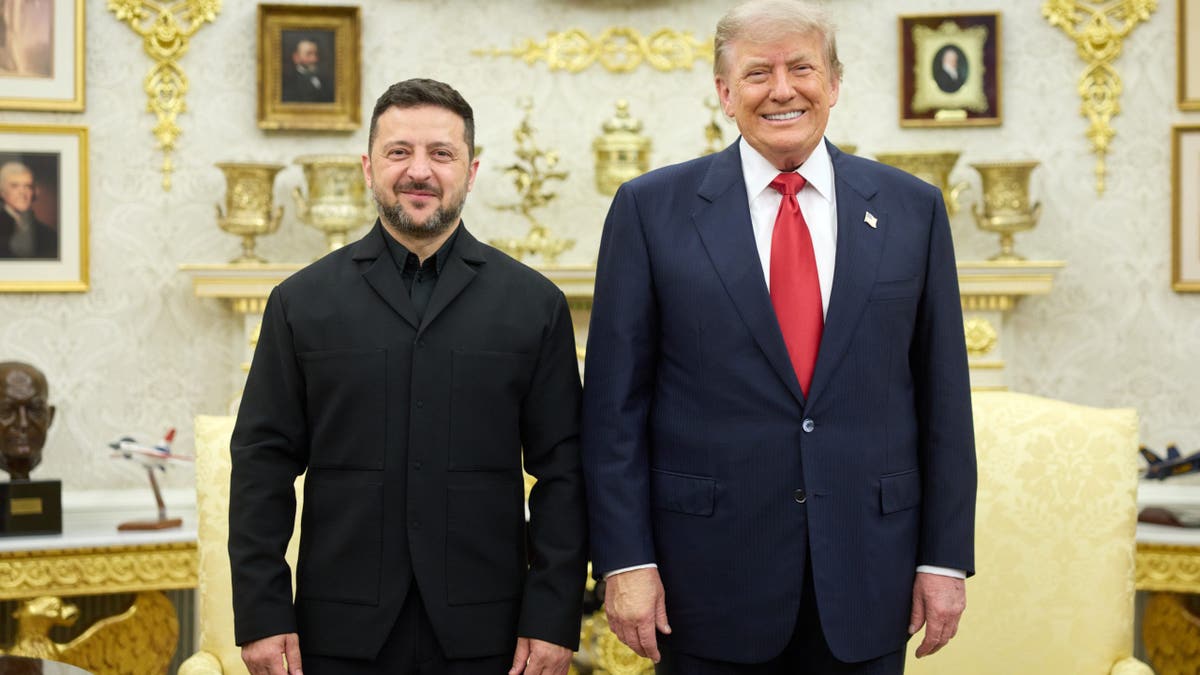
FILE – Ukrainian President Volodymyr Zelenskyy (L) meets with US President Donald Trump (R) at the White House during his visit to Washington, D.C, United States on July 28, 2026.
«They’re gonna end up with a little bit different shaped Ukraine,» Trump told Ross Douthat of CBS’ «60 Minutes.»
Trump also told CBS that he believed the war is going to end soon.
He also told reporters on Thursday that he’s pushing each side to make a deal.
«We want to make a deal. We want to stop the killing,» Trump said.
«I could walk in and say, ‘I don’t like you!’ and then we have the same problem that we have with Zelenskyy and Putin. The biggest problem with that settlement is the fact that you have two leaders that really hate each other,» the president added.
Fox News Digital contacted the White House for comment.
world, volodymyr zelenskyy, vladimir putin, donald trump, ukraine, russia, foreign policy, foreign affairs
INTERNACIONAL
Mamdani eyes 2028 kingmaker role as expert warns socialist movement could gain power even in defeat

New York City Mayor Zohran Mamdani’s efforts to shape the 2028 Democratic presidential field could help socialists build lasting political influence, even if their preferred candidate ultimately loses the nomination, according to political analysts.
«The 2026 midterm bluenami showed us that the Democrat party is shifting far left, and Mamdani is hoping to capitalize on that momentum,» Nicole Huyer, senior research associate for the Heritage Foundation’s Institute for Economic Policy Studies, told Digital.
«What’s really interesting, is that Mamdani seems to be thinking beyond individual candidates for 2028, and more toward building an organized political infrastructure for socialists,» she added.
Mamdani, a self-described Democratic socialist, stunned the political establishment in 2025 when he defeated former Gov. Andrew Cuomo in New York City’s Democratic mayoral primary before winning the general election, marking a major victory for the socialist movement.
The New York City leader recently held private meetings with top union leaders as part of a broader effort to encourage labor-aligned and leftist candidates to launch White House bids in 2028, Axios reported Nov. 8, citing four anonymous sources.
MAMDANI MAKES BEHIND-THE-SCENES MOVES TO SHAPE 2028 DEMOCRATIC PRESIDENTIAL RACE
Mamdani has argued that progressive Democrats cannot afford to let their midterm gains slip away, according to the report.
«He’s making sure that whoever the candidate is in 2028 will have a strong Democratic Socialists of America (DSA) and progressive movement backing them,» Huyer continued. «Basically translating all of the victories socialists saw in 2026 into a coalition capable of winning nationally in 2028.»
Even if Democratic socialists fail to secure the party’s 2028 presidential nomination, the campaign itself could help build a stronger movement for future elections, according to Stu Smith, investigative analyst at City Journal.
«We will see whether DSA and its allies can turn this vision into reality, but even a failed campaign could prove galvanizing,» Smith told Digital. «Many of DSA’s current leaders were politicized through Bernie Sanders’s presidential campaigns.»
«Even if a more moderate Democratic nominee ultimately emerges, it may prove to be a Pyrrhic victory if the effort helps cultivate a new generation of DSA talent that continues to shape left wing politics and public policy in ways that diverge from traditional American political norms,» Smith added.
RADICAL SOCIALIST WING’S HUGE NIGHT REVEALS ASCENDING CLOUT WITHIN DEMOCRATIC PARTY
MAMDANI CONFIDENT THERE’S A PATH FOR A PROGRESSIVE CANDIDATE TO THE WHITE HOUSE IN 2028
Huyer went on to say that certain policies favored by some Democratic socialists, such as steep wealth taxes and rent control, could «be devastating» to the U.S. economy.
«Socialism may be gaining ground ideologically and culturally due to messaging success, but the socialist economic agenda remains completely destructive,» she said.
The DSA’s «Workers Deserve More» platform proposes enacting «aggressive wealth taxes on the richest individuals and corporations» to spend on public goods and infrastructure projects.
SOCIALISTS LAUNCH RADICAL PLATFORM TO ABOLISH THE US SENATE IN BID TO FUNDAMENTALLY TRANSFORM AMERICA
Several DSA chapters across the U.S., including Los Angeles, Atlanta and Chicago, have recently issued «Run AOC Run» resolutions to urge Rep. Alexandria Ocasio-Cortez to launch a 2028 White House bid, City & State New York reported.
More progressive candidates may potentially shift the 2028 Democratic primary field to the left, but they could also split the vote and create an opportunity for a more moderate candidate to win, the Manhattan Institute’s Director of Public Opinion Matthew Shor told Digital.
«On the one hand, a larger number of progressive candidates could push the field toward policies favored by the party’s most committed activists,» Shor stated. «But on the other hand, too many progressives could split the vote in that lane and let a moderate circumvent them en route to the nomination. As much as any faction wants to influence the conversation, they would much rather win the nomination.»
The DSA’s platform also calls for abolishing the Electoral College and replacing the U.S. president and Supreme Court «with an executive and judiciary chosen by and subordinate to Congress.»
Several Democratic socialists secured major wins in this year’s midterms.
Six DSA-endorsed candidates won their House races in the 2026 midterms: Melat Kiros in Colorado; Darializa Avila Chevalier and Claire Valdez in New York; Donavan McKinney in Michigan; Angela Gonzales-Torres in California; and Chris Rabb in Pennsylvania, Digital previously reported.
Still, Democrats embracing far-left candidates in the next election cycle could help the GOP to «regain political momentum» they lost in the 2026 midterms, Wayne Winegarden, senior fellow in business and economics at the Pacific Research Institute, said.
MAMDANI-BACKED SOCIALIST WINS NYC HOUSE SEAT AS DSA EXPANDS ITS REACH IN CONGRESS
«While many progressives may run [in 2028], the Democrats have large majorities in Congress because moderate candidates won in places that have voted Republican for years,» Winegarden told Digital. «Democrats have a strong chance to maintain control over Congress and win the Presidency if they demonstrate they are governing effectively from the center and nominate candidates for President who would govern as such.»
«Should the Democrats embrace the progressive left, they will create a pathway for Republicans to regain political momentum,» he added.
When reached for comment on Nov. 10, Mamdani’s office referred Digital to remarks he made at a Nov. 9 press conference.
«And when it comes to these meetings, I [have] sought and continue to meet with labor leaders precisely because they have been on the front lines of delivering for those working people and the importance of ensuring that the crises that affect working people are at the centerpiece of any of the politics that come from now until 2028,» Mamdani told reporters.
2028 White House hopefuls should prioritize key issues like the U.S. affordability crisis instead of focusing on securing politicians’ endorsements, political strategist Mally Smith told Digital.
«All the candidates running, instead of focusing on who might endorse them, need to create a forward-looking vision for how to tackle the two main issues voters care about going into 2028: corruption and affordability,» Smith explained. «If you have a strong vision for those two issues, endorsements and votes will follow.»
democratic party, alexandria ocasio cortez, politics, zohran mamdani, bernie sanders
INTERNACIONAL
Los cultivos de 99 municipios guatemaltecos enfrentan riesgo por temperaturas de hasta cinco grados Celsius
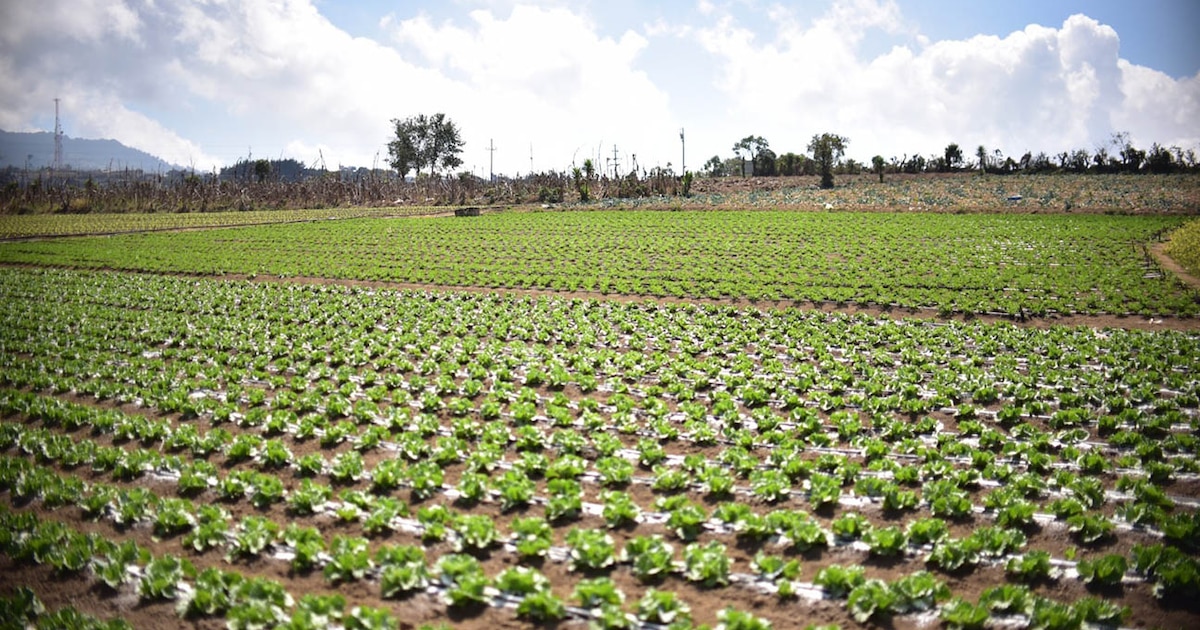
99 municipios de siete departamentos de Guatemala enfrentan riesgo para sus cultivos por temperaturas que pueden bajar de cinco grados Celsius, mientras el Ministerio de Agricultura, Ganadería y Alimentación (MAGA) y el Instituto Nacional de Sismología, Vulcanología, Meteorología e Hidrología (Insivumeh) anticipan un fin de semana de calor durante el día y frío nocturno en las zonas altas.
La advertencia abarca Huehuetenango, Quiché, Quetzaltenango, Sololá, San Marcos, Totonicapán y Chimaltenango, donde el descenso térmico se combinará con vientos del norte y afectará especialmente a las áreas montañosas. El período previsto va del 27 al 30 de noviembre.
El boletín de condiciones agrometeorológicas del MAGA identifica sectores de Huehuetenango y Quiché con vientos que pueden superar los 45 km/h. Esa velocidad incrementa el estrés de las plantas y puede agravar los efectos de las bajas temperaturas nocturnas y de madrugada.
Viento, frío y lluvias sobre los cultivos
El viento moderado del norte puede deshidratar el follaje, reducir la humedad del suelo y provocar daños mecánicos o el volcamiento de cultivos altos o frágiles, como maíz, plátano y banano. El frijol, las hortalizas, el café y los pastos también figuran entre las producciones expuestas a las condiciones previstas.
Las horas de sol favorecen el secado del maíz y el frijol en las zonas donde no llueve. Sin embargo, las precipitaciones vespertinas pueden volver a humedecer el grano y generar encharcamientos en terrenos con poco drenaje.
Las lluvias dispersas alcanzarán entre uno y 25 milímetros en sectores del norte del país, incluidos Alta Verapaz, Izabal y partes de Petén. La nubosidad, las lloviznas y los cambios de temperatura marcarán el comportamiento atmosférico de esas regiones.
La Dirección de Información Geográfica, Estratégica y Gestión de Riesgos del MAGA elaboró el monitoreo con información del Centro de Información Estratégica Agropecuaria. El Ministerio recomendó proteger hortalizas, semilleros y plantas jóvenes mediante microtúneles, cubiertas plásticas o mallas.
También sugirió revisar flores, brotes y frutos después de los descensos de temperatura para detectar daños. Las medidas incluyen instalar o verificar barreras rompevientos y colocar tutores en los cultivos más altos o vulnerables.
Las aplicaciones foliares deben evitarse cuando haya viento o probabilidad de lluvia, debido al riesgo de que el producto se desvíe o sea lavado por las precipitaciones. El cuidado de los lotes con drenaje limitado adquiere mayor importancia en los sectores donde se esperan lluvias durante la tarde.

Riesgos para animales y contrastes térmicos
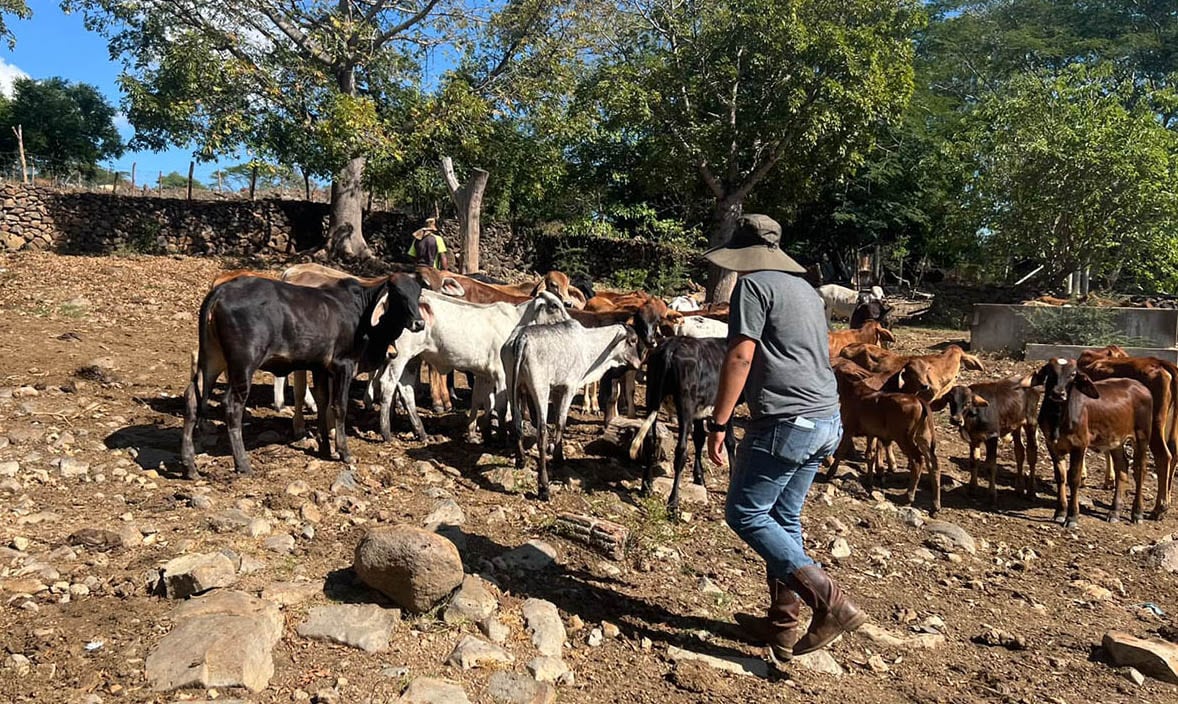
El frío nocturno y el viento pueden provocar estrés en animales jóvenes, aves, cerdos y ovinos ubicados en zonas elevadas. El MAGA aconsejó mantenerlos en corrales o galeras techadas, con camas limpias y secas que contribuyan a conservar el calor corporal.
Los animales jóvenes, las aves, los cerdos y los ovinos necesitan refugios secos y protegidos del viento, sobre todo durante la noche y la madrugada. El Ministerio también pidió vigilar síntomas de enfermedades respiratorias, parásitos y cojeras dentro de los corrales.
La actividad apícola puede reducirse por el viento, las bajas temperaturas, la nubosidad y las lloviznas. Esas condiciones afectan el pecoreo, la búsqueda de alimento de las abejas, y disminuyen la temperatura interna de las colmenas, especialmente en el norte del país.
Para las colmenas, la recomendación es limitar las revisiones y protegerlas de la humedad. El resguardo busca evitar que las variaciones del tiempo afecten aún más la actividad de las abejas.
El Insivumeh prevé una disminución gradual del viento frío del norte, aunque persistirán noches frías en los altiplanos central y occidental. Durante el día, la mayor parte del territorio mantendrá un ambiente cálido, con nubosidad dispersa en el norte y el Caribe.
La Ciudad de Guatemala tendrá neblina durante las primeras horas de la mañana, temperaturas cálidas durante el día y frío en la noche y madrugada. La máxima no superará los 28 °C.
En el Pacífico habrá poca nubosidad y calor húmedo durante el día, con lluvias dispersas nocturnas en la Bocacosta y el suroccidente. Las temperaturas máximas estarán entre 34 y 36 °C.
Petén tendrá niebla al amanecer, alternancia entre cielos parcialmente nublados y poca nubosidad, además de posibles lluvias dispersas por la tarde. Alta Verapaz, el Caribe y la Franja Transversal del Norte registrarán neblina matutina, nubosidad parcial y lloviznas con actividad eléctrica durante la tarde y la noche.
La región del Motagua y los valles del oriente concentrarán los valores más altos del país, con máximas de entre 34 y 36 °C. El pronóstico contempla niebla matutina, poca nubosidad y calor húmedo, seguido por un aumento de nubes hacia la tarde y la noche, con posibilidad de lluvias en zonas montañosas.
El Insivumeh recomendó abrigarse ante el descenso térmico nocturno y matutino, conducir con precaución en los tramos afectados por neblina y seguir los canales oficiales de la institución.
campo agrícola,acolchado plástico,trabajadores agrícolas,zona rural

Entrevista al CEO de Binance tras el ataque: “Queremos que toda la industria entienda las vulnerabilidades que provoca la IA”

¿Dónde ver EN VIVO y ONLINE el Tristán Suárez vs. Gimnasia y Tiro por la Primera Nacional 2026?

Reino Unido recibió con “satisfacción” la decisión del Tribunal del Mar y dijo que la Argentina “fracasó”

Kily González descartó que la eliminación de Inter Miami sea un fracaso y anticipó cambios: “Vamos a traer a varios jugadores”

Postales del Congreso: triunfo libertario, un éxito opositor y un trazo de hipocresía compartida

Suspendieron el veredicto contra el acusado de apuñalar a dos bailarinas en un estudio de danza de Belgrano

Efecto reforma electoral: la suspensión de las PASO divide la estrategia de los “outsiders”

“Estoy preparada para ser presidenta”: fuerte desafío de Patricia Bullrich a Javier Milei

El economista Luis Secco cuestionó el programa económico de Milei: “Estamos estancados desde fines del primer trimestre de 2025″

“Lo real es que estamos estancados”: el análisis de un economista tras la caída de la actividad

 POLITICA1 día ago
Efecto reforma electoral: la suspensión de las PASO divide la estrategia de los “outsiders”
- ECONOMIA3 días ago
“Lo real es que estamos estancados”: el análisis de un economista tras la caída de la actividad
- POLITICA3 días ago
El juez retó a Chiqui Tapia y le subió el monto que debe pagar para salir del país