INTERNACIONAL
Federal judge rules Trump admin plan to cut FEMA workforce in half is unlawful

Supreme Court issues split decisions on presidential firing power
Chief legal correspondent Shannon Bream details the Supreme Court’s latest rulings, including a decision in Trump v. Slaughter affirming the president’s power to dismiss a Federal Trade Commission commissioner. However, in Trump v. Cook, the court states the president cannot unilaterally fire a Federal Reserve governor. These opinions shape executive power and independent agencies.
NEWYou can now listen to Fox News articles!
A federal judge ruled that the Trump administration’s directive for the Federal Emergency Management Agency to cut its workforce in half was unlawful.
U.S. District Judge Susan Illston found on Friday that the Department of Homeland Security acted unlawfully by taking control of FEMA’s authority over its own personnel and pushing the agency to slash thousands of disaster-response jobs.
Although FEMA is under DHS, a federal law adopted after Hurricane Katrina in 2005 states that the department «may not substantially or significantly reduce (FEMA’s) authorities, responsibilities, or functions.»
Illston said the department violated the law last year when it sought to stop FEMA from renewing the temporary contracts of thousands of on-call reservists who respond to disasters.
DHS PLANS COSTLY CRACKDOWN ON STATES THAT DON’T COOPERATE ON ELECTION SECURITY
A federal judge ruled that the Trump administration’s order for the Federal Emergency Management Agency to cut its workforce in half was unlawful. (Kevin Carter/Getty Images)
«There is no evidence in the record reflecting reasoned decision-making for this about-face or for the subsequent conditions DHS placed on FEMA’s renewal authority,» Illston wrote.
Illston’s ruling did not include remedies or penalties, noting that those would be addressed in a separate ruling next month.
The judge said the parties have until Oct. 9 to submit briefings on «what relief remains outstanding» in this case.
The unions that sued argued that the planned cuts are unlawful because they would undermine FEMA’s core disaster‑response mission, were not approved by Congress and were ordered by then-Homeland Security Secretary Kristi Noem instead of FEMA officials.

President Donald Trump has suggested that FEMA should be eliminated and that states should handle their emergency preparedness. (Kevin Dietsch/Getty Images)
The administration has contended that FEMA has considerable flexibility to determine proper staffing levels. President Donald Trump has suggested that FEMA should be eliminated and that states should handle their emergency preparedness.
In June, Illston declined to immediately block the job cuts, ruling that FEMA had at least temporarily abandoned its planned layoffs.
But on Friday, the judge wrote that FEMA appeared to be moving forward with the job cuts. She said FEMA projected its staffing levels for the upcoming fiscal year at 11,383 employees, or about half of previous levels, without any basis for picking that figure.
DEM GOV LASHES OUT AS TRUMP HUD SCRUTINIZES NEARLY $2B IN DISASTER FUNDS OVER FRAUD CONCERNS
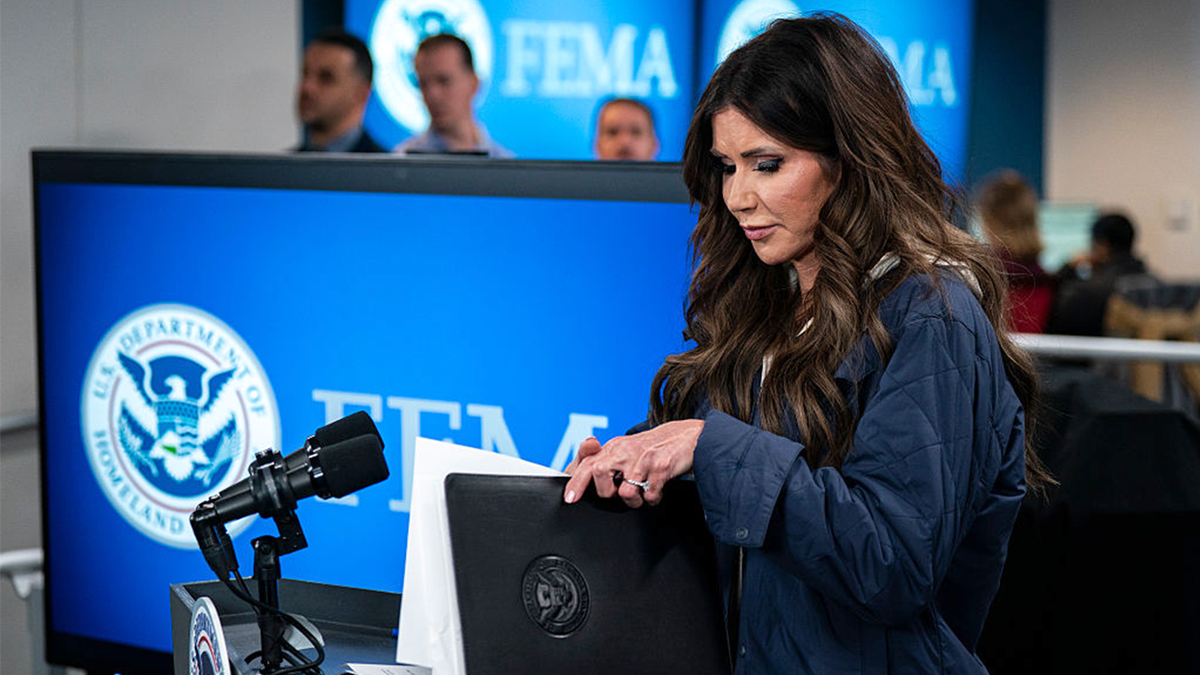
The unions that sued argued that the planned cuts are unlawful because they would undermine FEMA’s core disaster‑response mission, were not approved by Congress and were ordered by then-Homeland Security Secretary Kristi Noem instead of FEMA officials. (Al Drago/Getty Images)
Fox News Digital reached out to DHS and FEMA for comment but they did not immediately respond.
«Under President Trump and [DHS] Secretary [Markwayne] Mullin’s leadership, DHS and FEMA are ready for the 2026 hurricane season,» a FEMA spokesperson said in a statement to The Hill. «FEMA continues to maintain a roster of experienced leadership and support staff across headquarters and regional offices. No position is without experienced leadership.»
In a separate ruling, the judge also faulted FEMA and DHS officials for using the Signal messaging app on their personal cell phones to discuss staffing cuts and deleting the messages.
Illston said the messages would have been relevant to the lawsuit and that she would now presume «that the lost Signal messages would have been unfavorable to Defendants because they would have been further evidence» of unlawful conduct.
Reuters contributed to this report.
fema, politics, homeland security, federal courts, donald trump









La violencia ha dejado cuatro muertes en el inicio de octubre en Panamá, después de que septiembre cerrara con 44 personas asesinadas.
El primer fin de semana de octubre registra un homicidio en el corregimiento de la 24 de Diciembre, un hombre herido de gravedad en Colón y tres muertes de menores en San Joaquín, Monterrico y La Chorrera.
Las circunstancias de los fallecimientos de los menores de edad aún cuentan con escasa información oficial.
El homicidio del hombre ocurrió durante la tarde del sábado en el sector de Altos del Ángel, en el área de Nuevo Tocumen.
La víctima se encontraba dentro de su vehículo cuando varios sujetos llegaron al lugar y le dispararon en repetidas ocasiones.
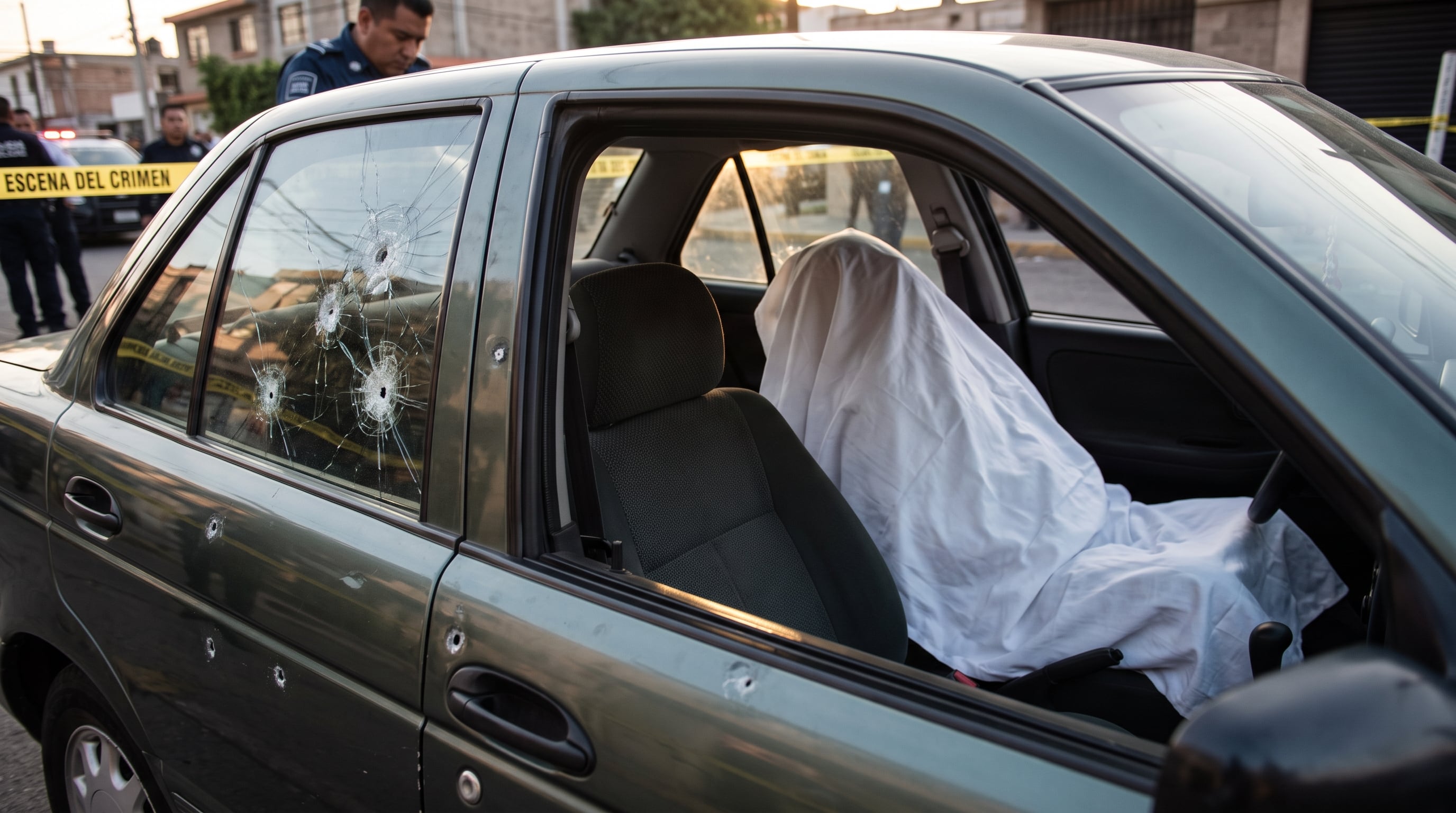
El individuo murió en el sitio tras el ataque, y la información inicial no precisa la identidad de la víctima ni los posibles motivos de la agresión.
El hecho se produjo después de un mes que dejó 44 muertes vinculadas a la violencia en Panamá. Esa cifra expuso la continuidad de los ataques con armas de fuego en distintas zonas del país.
Otro hombre en la provincia de Colón sufrió heridas graves luego de que un pistolero le disparara en la comunidad del Valle de San Judas Tadeo.
El agresor escapó durante la noche tras perpetrar el ataque, y las personas que auxiliaron a la víctima la trasladaron a la sala de urgencias del Hospital Dr. Manuel Amador Guerrero, donde recibió atención médica.
Las autoridades también investigan los fallecimientos de tres menores ocurridas en San Joaquín, Monterrico y la Loma de Guadalupe, esta última en el distrito de La Chorrera, Panamá Oeste.

Los datos conocidos hasta ahora muestran que se trata de hechos con circunstancias distintas y que parte de la información todavía permanece bajo verificación.
El caso ocurrido en La Chorrera involucró a un niño de cuatro años. Según la información preliminar, el menor jugaba entre las divisiones de los cuartos mientras su madre se bañaba.
En ese momento, el niño presuntamente quedó enredado de manera accidental con una soga que utilizaban para tender ropa. Los peritos continúan con las diligencias para determinar las circunstancias precisas del fallecimiento.
El periodista Raúl Vega informó a través de su red social que la investigación busca establecer cómo ocurrió el hecho que afectó a la comunidad de la Loma de Guadalupe. La versión disponible no atribuye responsabilidades ni adelanta conclusiones sobre el caso.
De los otros dos fallecimientos de menores, las autoridades ofrecieron pocos detalles. Se conoce que el caso de Monterrico estuvo relacionado con un disparo y ocurrió en las cercanías de una cancha de fútbol.
La falta de información adicional impide establecer por ahora las circunstancias en las que se produjeron ambos hechos. Tampoco se difundieron datos sobre la edad o identidad de las víctimas.
En Panamá las estadísticas oficiales citadas por distintos medios señalan que el país terminó 2025 con 593 homicidios a nivel nacional.
El número mantiene la preocupación por la criminalidad violenta y el impacto de las armas de fuego.
Los datos describen un escenario marcado por disputas entre bandas, conflictos personales y otros episodios de violencia letal. Estas situaciones forman parte de un problema sostenido de seguridad pública.
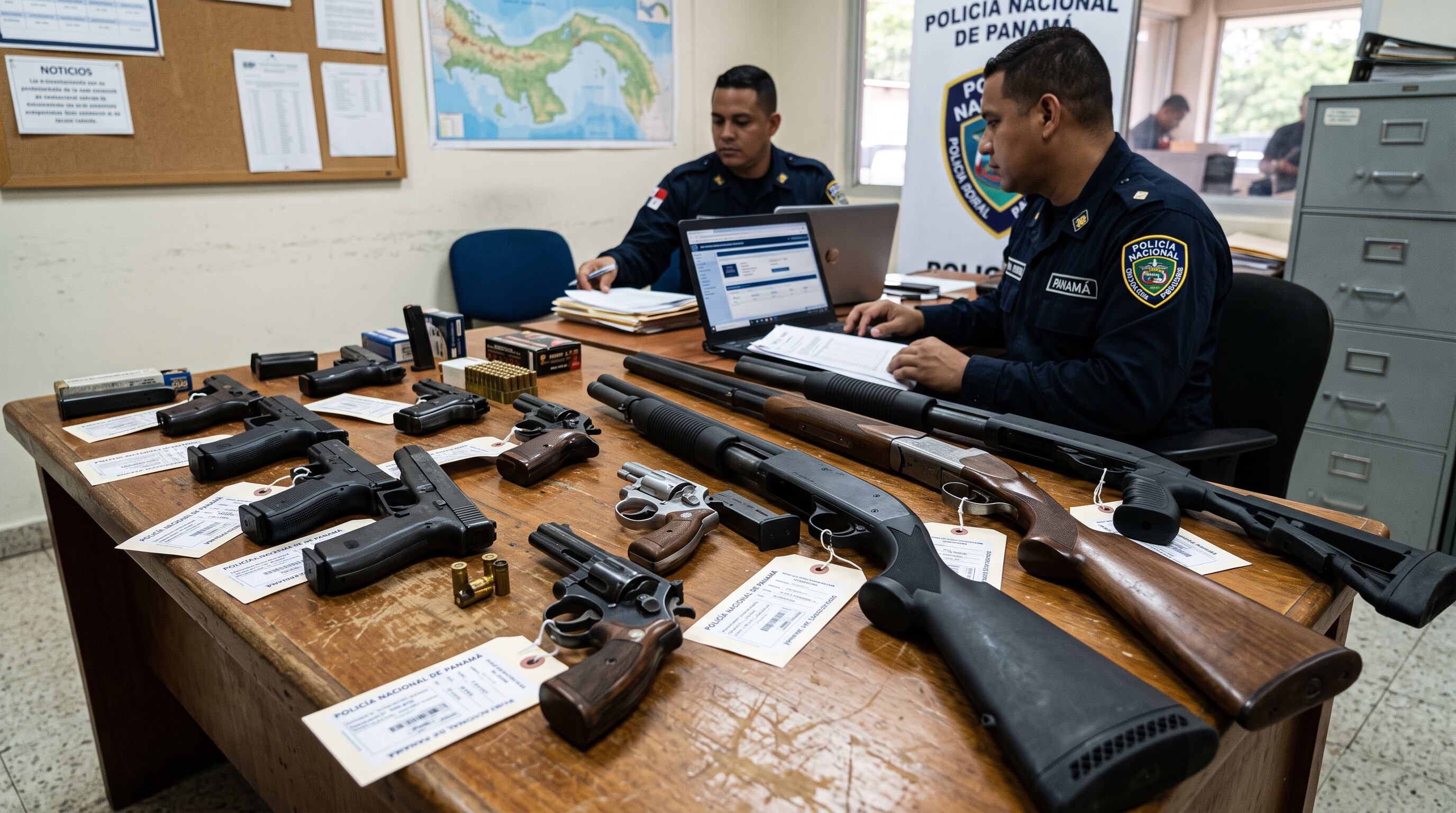
La Policía Nacional informó que en lo que del 2026 ha decomisado 2.293 armas de fuego en operativos y acciones preventivas desarrolladas en el país.

El registro incluye 967 pistolas, 546 fusiles y 316 revólveres.
El desglose también contempla 155 escopetas, 102 rifles, 99 armas tipo pellet, tres mini Uzi, dos subametralladoras y un arma tipo niple. La institución presentó esos resultados como parte de sus estrategias contra los hechos delictivos.
Las operaciones policiales permitieron además la captura de 48.407 personas por delitos y faltas. De ese total, 31.538 correspondieron a personas requeridas mediante oficio.
La entidad registró además 302 capturas por homicidio, 13.985 por faltas administrativas, 2.272 por microtráfico y 310 por delitos relacionados con narcotráfico.
En otro balance, la institución indicó que incautó 19.390 paquetes de presunta sustancia ilícita y 2.191 armas de fuego. Las cifras reflejan la magnitud de las operaciones desplegadas mientras continúan las investigaciones por los hechos ocurridos al inicio de octubre.
Policía de Panamá,cinta de seguridad,acordonamiento,procedimiento policial
NEWYou can now listen to Fox News articles!
SÃO PAULO: As Brazil goes to the polls Sunday, analysts are watching closely to see whether the continent’s most populous nation will be the latest domino to fall into the conservative column, following Colombia, Peru, Chile and others, in voting out the left-wing President Luiz Inácio Lula da Silva.
Known by his nickname Lula, the 80-year-old, who served time in jail for corruption in a massive payback bribery scandal, barely leads Brazilian senator Flavio Bolsonaro, the son of former president Jair Bolsonaro.
Going into Sunday’s first round, neither candidate is expected to win outright. The latest Datafolha poll puts Lula at 42% and Bolsonaro at 38%, with a two-point margin of error. If the election goes to a runoff, it has Lula up by 3%. But the polls have been wrong before.
ANTI-CARTEL CANDIDATE ‘THE TIGER’ CHANNELS TRUMP AND BUKELE IN COLOMBIA ELECTION SHOCKER
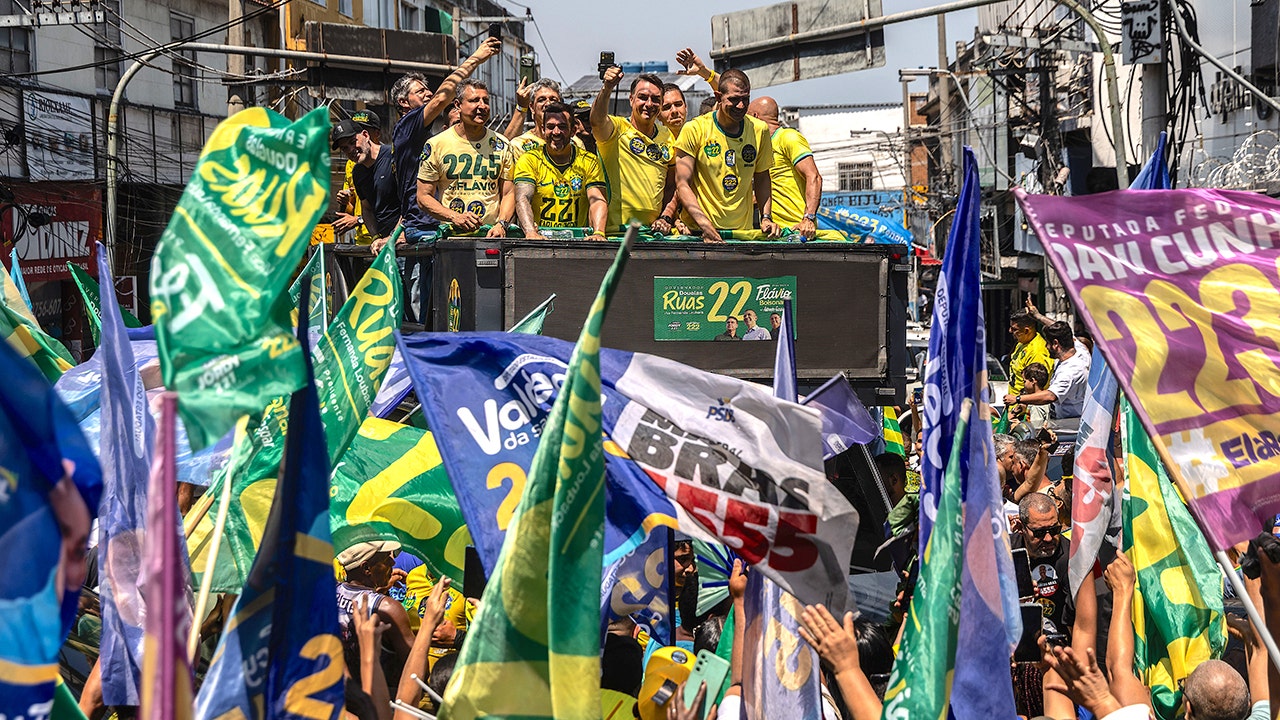
Flavio Bolsonaro, top center, during a campaign rally in Sao Joao de Meriti, Rio de Janeiro state, Brazil, on Saturday, Sept. 26, 2026. President Luiz Inacio Lula da Silva and Bolsonaro are deadlocked less than two weeks before Brazil’s election, a new poll showed, following fresh revelations about the challenger’s ties to a jailed banker at the center of a massive fraud scheme. (Dado Galdieri/Bloomberg via Getty Images)
«The problem with Datafolha, which is the largest polling institute in the country, is that it tends to underestimate the force and voting intention in candidates running against Lula or the Workers Party (PT). This has been consistent for at least over a decade, and it underestimated Jair Bolsonaro’s number on the runoff of 2018 by 7%,» Roberto Reis, an electoral strategist working with several candidates across multiple electoral tiers and analyzing aggregator data, told Fox News Digital. «According to the latest aggregator data such as MRT News or Polling Data, we currently have Lula leading Bolsonaro 42% to 39% on the first runoff of the elections with Bolsonaro leading Lula 45% to 44% on the runoff,» he added.
One Brazil analyst said the election is about more than just another ideological contest between left and right in Latin America. It is the single major remaining stumbling block in the Western Hemisphere that still hasn’t shifted to conservativism. While there are other left-wing governments in the hemisphere, including Cuba, Jamaica, Mexico, Nicaragua and Uruguay, Brazil is by far the largest and most important economy in this group with its status as the 11th largest world economy, according to the IMF, and the 10th largest world economy, according to the World Bank.
‘WAVE OF FREEDOM’ SWEEPS LATIN AMERICA AS TRUMP ALLY TAKES FIGHT TO MARXIST TERROR GROUP
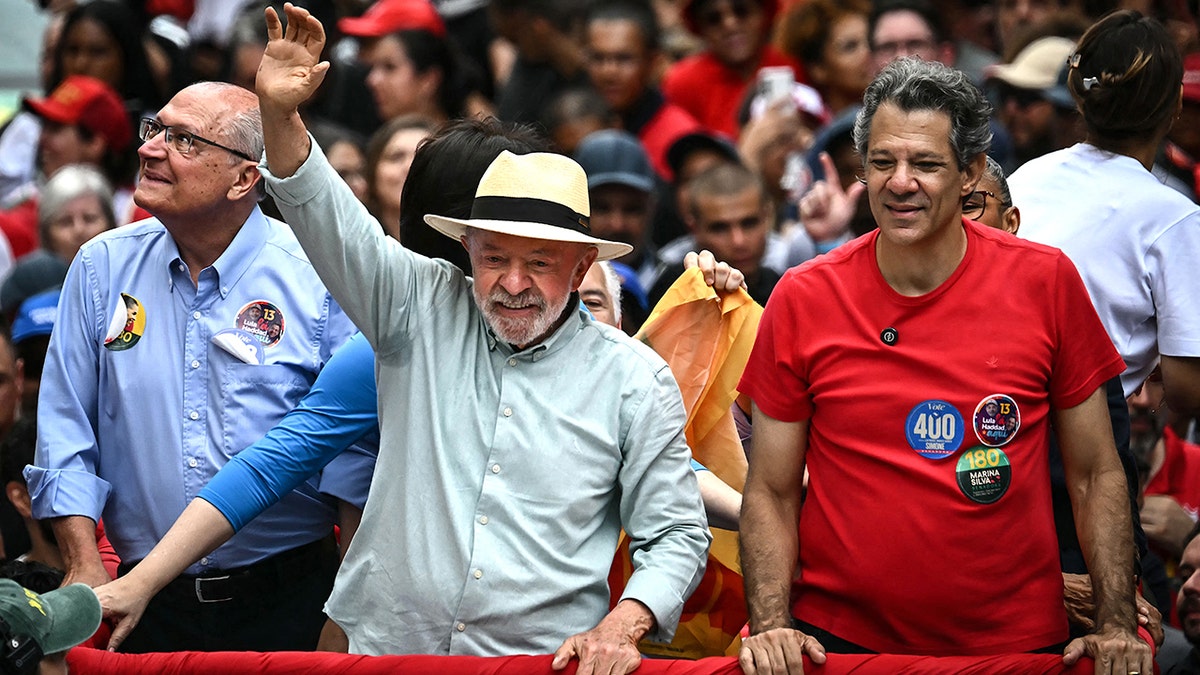
Brazil’s President Luiz Inacio Lula da Silva waves during a campaign rally on the eve of the general election, in Sao Paulo on Oct. 3, 2026. Brazilians go to the polls on Oct. 4 in a tight race led by Lula and Flavio Bolsonaro. (Luis Robayo/AFP Via Getty Images)
Bolsonaro has spent much of the campaign cultivating a relationship with President Donald Trump and presenting himself as a potential U.S. partner in the Western Hemisphere. He met Trump at the White House in May, where the two discussed organized crime, tariffs and Brazil’s rare earth and critical mineral reserves — both critical prime-source materials Brazil has plenty of and which could significantly lower U.S. and European dependency on Russia and China.
Bolsonaro also said he had asked Washington to designate Brazil’s two largest criminal organizations, the First Capital Command (PCC, in its Portuguese acronym) and Red Command (Comando Vermelho, in Portuguese), as terrorist groups. Both designations were accepted by the Department of State on May 28 and became effective in June under section 219 of the Immigration and Naturalization Code.
TRUMP ADMIN’S LIST OF US-DESIGNATED ‘FOREIGN TERRORIST’ GROUPS IN LATIN AMERICA EXPANDS TO 21
The designation by the U.S. government incensed Lula and his allies and was viewed as direct meddling in domestic affairs and a rubber stamp from the Trump administration that the left-wing, populist president has not been doing enough to combat organized crime in his country, directly favoring Bolsonaro’s contest in the elections.
Flávio Bolsonaro has also proposed a free-trade agreement between Brazil and the United States, potentially expanding it into a broader free-trade arrangement among countries in the Americas. And his campaign has emphasized cooperation with Washington on critical minerals, an increasingly strategic issue as the Trump administration tries to reduce U.S. dependence on China, as per a current report by Brazil’s leading newspaper, Folha de S. Paulo.
That would represent a significant change in emphasis from Lula’s foreign policy.

Sen. Flávio Bolsonaro has entered the 2026 Brazilian presidential race after father’s prison endorsement. (Evaristo Sa/AFP via Getty Images)
China is Brazil’s largest trading partner, and Brazilian agricultural exports to China totaled more than $55 billion in 2025, according to Reuters. Lula has defended maintaining strong relations with Beijing while pursuing what he describes as an independent foreign policy that oftentimes borders on aggressiveness toward both the United States and its closest allies, such as Israel.
Lula’s relationship with Trump has been considerably more complicated. Washington imposed new 25% tariffs on a wide range of Brazilian goods in July, affecting about $7 billion of Brazilian exports, while Lula’s government has challenged the measures and sought negotiations with Washington with very limited success so far. Washington has also imposed a ban on most new permanent visa requests coming from Brazil, and that could lead to green cards.
TANVI RATNA: LATIN AMERICA’S RIGHT TURN IS REDRAWING THE UNITED STATES’ BACKYARD
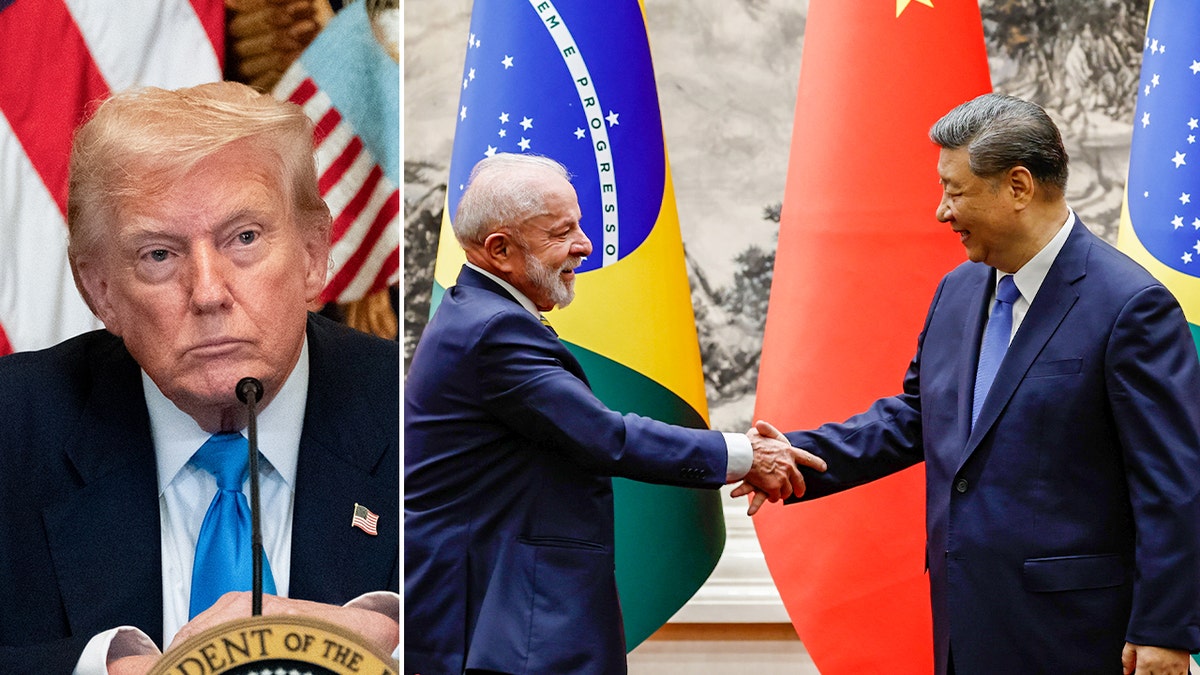
Brazilian President Luiz Inacio Lula da Silva announced his country was open for business at the inauguration of a factory for a Chinese automaker. (Allison Robbert/Bloomberg via Getty Images; Tingshu Wang – Pool/Getty Images)
A Bolsonaro presidency would come with stated plans for closer U.S. economic and security cooperation, greater alignment with Israel, a more confrontational posture toward China’s influence in Brazil, and reduced friction both within the hemisphere and in global affairs. Whether those policies can all be implemented depends on negotiations with Congress, Brazil’s powerful bureaucracy and the country’s economic interests — especially the agribusiness and mining powerhouses in the country.
A Lula victory would mean continuity in a foreign policy trajectory that seeks strong commercial ties with China while maintaining strategic autonomy from Washington, alongside his government’s current position on Israel and Gaza. Both attitudes are in direct defiance of Trump’s policies and could end up damaging U.S.-Brazilian relations even further.
With the presidential race effectively heading toward a second round, the stakes for a new version of the Americas for U.S. interests could very much hinge on its outcome.
brazil, latin america, south america, jair bolsonaro, elections
INTERNACIONAL
Neighborhood backlash collides with America’s tech arms race — but is this the plan to fix it?
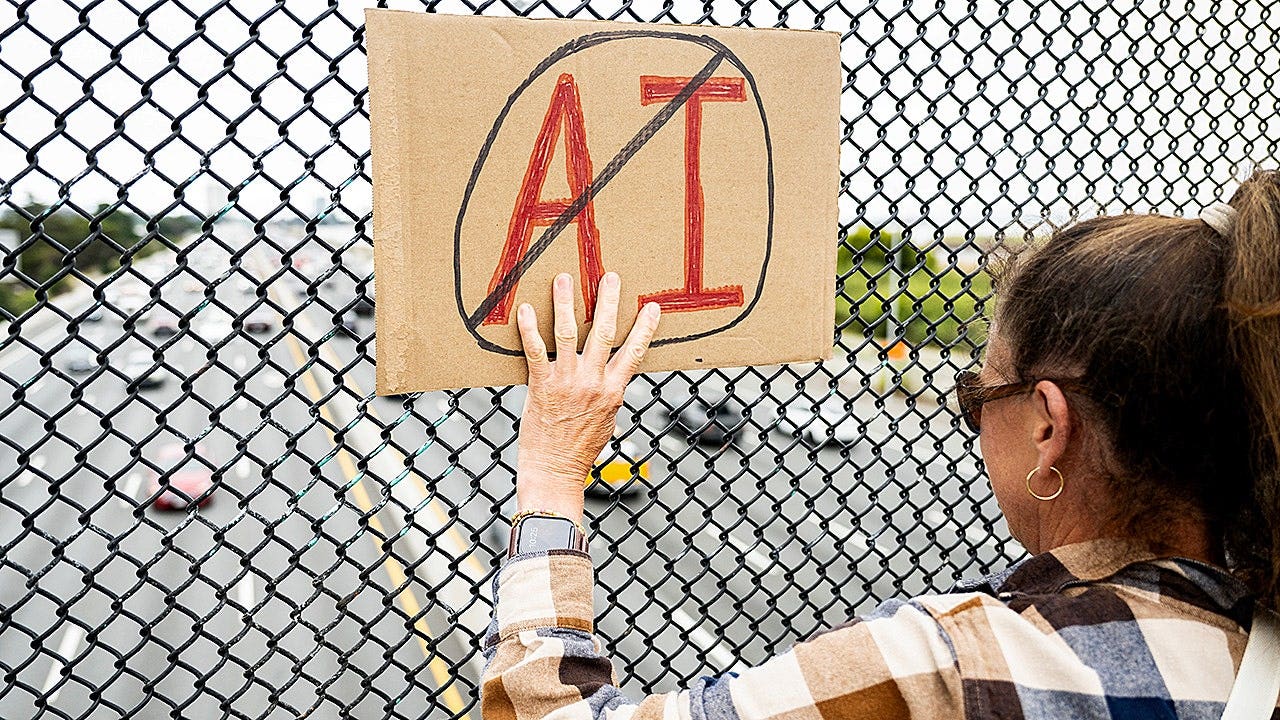
A national security push to expand the infrastructure behind America’s technological ambitions is running into resistance from the communities being asked to host it, pitting Washington’s race to stay ahead of China against mounting local backlash.
Rep. Suhas Subramanyam, D-Va., who represents America’s «Data Center Alley,» warns that backlash could obstruct the very buildout Washington considers a national priority unless Congress steps in — arguing that community buy-in is necessary to keep expansion moving.
«The communities are being steamrolled by the industry,» Subramanyam told Digital. «They’re not feeling like anyone’s listening to them.»
Subramanyam is pitching a four-part federal plan aimed at breaking what he sees as a false choice between unchecked development and outright moratoriums. The proposal addresses siting, power costs, energy and water measurement, and security for the facilities and surrounding communities.
TRUMP’S DATA CENTER PUSH FRACTURES CONGRESS AS LOCAL ANGER EXPLODES: ‘GRASPING AT STRAWS’
«If you are concerned about a race with China, when it comes to building data centers and AI, you should want to work with us on a plan to get community buy-in for where to build data centers,» Subramanyam said.
His Fair Share Act would push states to require large power users to cover more of the infrastructure costs needed to serve them, according to the plan.
HOMEOWNERS IN THE HEART OF AMERICA’S AI BOOM ARE GETTING AN UNEXPECTED PAYOFF
«At the federal level, if we say that we’re going to take away some of your federal funding if you do this, then it will be a no-brainer,» he said, arguing data centers should «pay their fair share for the infrastructure that needs to be built because of them.»
The tension surfaced again this week as Digital reported on complaints of noise and encroachment from a massive data center built against an Ashburn cul-de-sac.
Subramanyam said many residents in his district understand the need for the infrastructure but object to how he says its costs and burdens are distributed.
Loudoun County says data center revenue has helped it lower its real-property tax rate, from $1.145 per $100 of assessed value in 2016 to $0.805 in 2026, according to the county.
But Subramanyam argued residents must weigh those benefits against costs he says can appear elsewhere, particularly on utility bills.
«What’s not OK is feeling like they come in, jack up utility costs and we pay for their power infrastructure,» he said, also citing water, air quality and other community concerns.
The industry disputes that data centers are driving higher residential power bills. The Leesburg-based Data Center Coalition has cited a recent analysis by energy consulting firm E3 that found no historical evidence that data centers increased residential electricity costs under existing rate structures.
Digital reached out to the trade group, which is based in Data Center Alley, for comment on the package.
Subramanyam argues infrastructure with national implications cannot continue developing «ad hoc» under a patchwork of state and local rules.
CHINA ‘THROWING GASOLINE ON THE FIRE’ IN AI DATA CENTERS RACE, SAY LAWMAKERS
Other pieces of the plan would establish federal standards for siting and measurement and develop protections against security threats, including attacks on critical infrastructure overseas.
«I know that localities do zoning, states do energy policy and other related things, but Congress and the federal government need to get involved,» Subramanyam said.
AMERICA’S REDDEST STATE CHASES BILLION-DOLLAR BOOM AS OTHERS SOUR ON MASSIVE EMERGING INDUSTRY
Those concerns have also become a focus of state action. Gov. Abigail Spanberger unveiled a September framework aimed at strengthening local control, shifting more infrastructure costs onto major power users and setting new standards for water use and grid reliability.
«In the years before I took office, data centers came to Virginia, and the commonwealth did not have a clear or coordinated plan to address their impacts on Virginians — on their electric bills, their water, their land, their air, or their quality of life,» Spanberger told Digital.
Leaders across the political spectrum, from Spanberger to Texas Republican Gov. Greg Abbott, have crafted plans and emphasized the issue’s importance on multiple fronts.
Just across the Blue Ridge, West Virginia has taken a different approach, creating a microgrid program designed to attract large projects. Critics have raised concerns about limits on local government powers, while proponents have mapped out potential property tax elimination.
Jefferson County stakeholders recently debated the issue with the state’s data-economy liaison at a forum in Shepherdstown, where county Commissioner Cara Keys criticized the potential loss of local control while the liaison maintained that project approvals would be handled judiciously, according to WVMetroNews.
«Two things can be true: You can support data centers, and you can be against the guardrails lacking in [the law],» Keys said.
SIGN UP TO GET THE POLITICS NEWSLETTER
For Subramanyam, the sharply different approaches on either side of the Blue Ridge illustrate the patchwork he says Washington must address before local resistance hardens further.
«The only plan I’ve seen is either to do nothing or a full moratorium,» he said. «And to me, neither of those is a viable option moving forward.»
national security, domestic policies, virginia, congress, state and local, politics, big tech backlash, infrastructure across america

Javier Milei volvió a atacar con insultos al director de LA NACION

Desde París, Rogelio Frigerio aseguró que los gobernadores aliados coinciden en “no volver al pasado” en 2027

“No me pegues más”: el estremecedor video que se viralizó y derivó en una causa por violencia de género en Tapalqué

Un hombre y tres menores mueren de manera violenta el fin de semana en Panamá

Victoria Villarruel viajó a Madrid junto a senadores para asistir a un acto del rey Felipe VI

Qué ver en Netflix: la miniserie de 10 episodios que está entre lo más elegido de este domingo

Ley de Tierras: la CGT repudió el fallo de la Corte Suprema y le exigió a Diputados que rechace el DNU de Milei

Milei volvió a dar un discurso en la Argentina Week de París y se emocionó en el cierre

Capcom ha admitido su destino con los remakes de Resident Evil y muchos jugadores se hacen la misma pregunta: ¿Qué pasa con Resident Evil 5 y 6?

Caso Mariaca: un ministro paraguayo acusó a funcionarios bolivianos de proteger al narco Sebastián Marset

 POLITICA2 días ago
Milei volvió a dar un discurso en la Argentina Week de París y se emocionó en el cierre
- INTERNACIONAL3 días ago
Caso Mariaca: un ministro paraguayo acusó a funcionarios bolivianos de proteger al narco Sebastián Marset
- POLITICA3 días ago
Desde San Juan y en modo campaña, Máximo Kirchner dijo que los jueces de la Corte “desconocen la soberanía”