INTERNACIONAL
Panamá destaca con un crecimiento de 4.4% y una reducción del déficit, afirma ministro de Economía y Finanzas

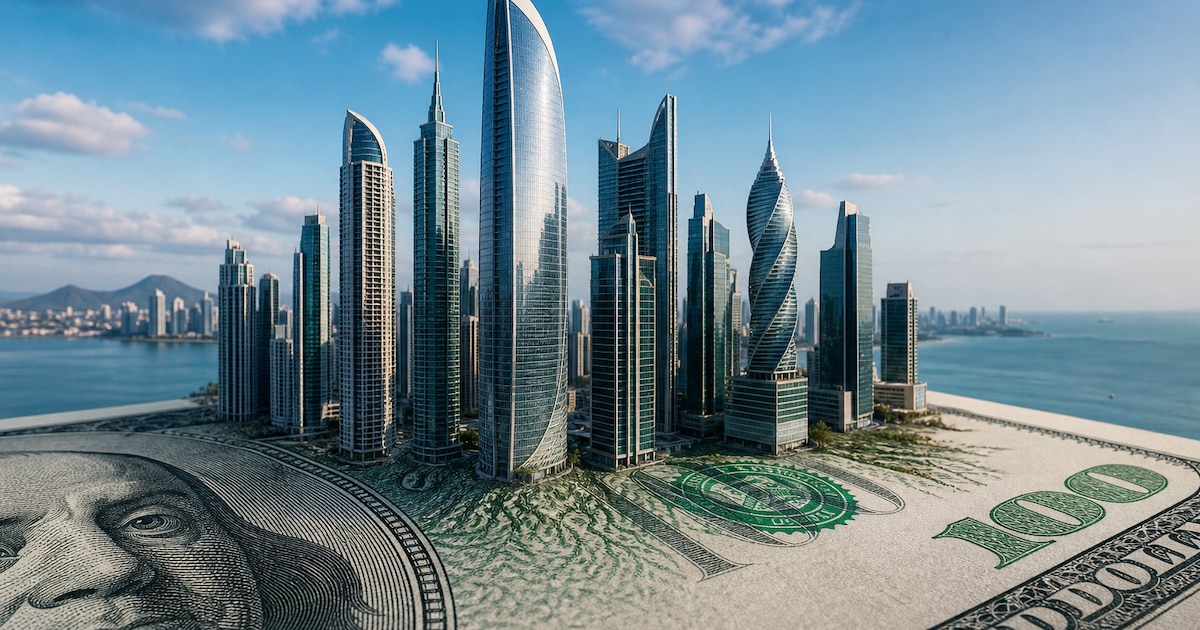
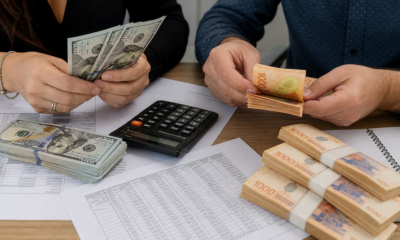
El Gobierno panameño propuso un presupuesto de $35.112 millones para 2027, con una meta de déficit de 2,97% del producto interno bruto (PIB) y una partida de B/.12.564 millones para inversión.
La propuesta busca, según los voceros gubernamentales, sostener la actividad económica mientras avanza el ajuste de las cuentas públicas.
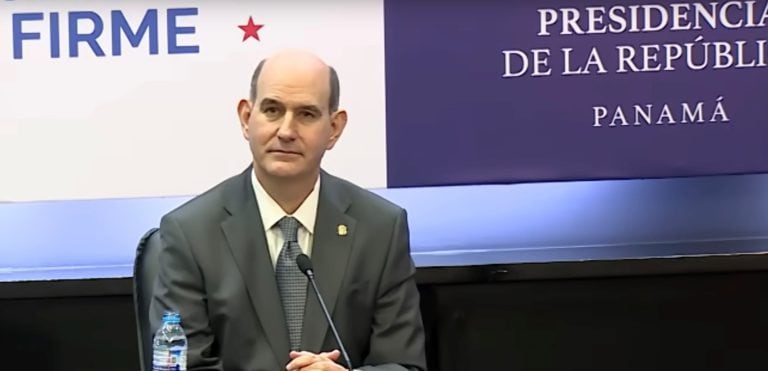
El ministro de Economía y Finanzas, Felipe Chapman, presentó este panorama durante el Foro de Inversionistas Latinex 2026, denominado “Panamá: crecimiento, confianza y consolidación fiscal”. El encuentro convocó a inversionistas, emisores, reguladores y autoridades.
Panamá busca mantener el crecimiento, atraer capital privado y reducir el desequilibrio fiscal sin recortar los recursos destinados a infraestructura, servicios públicos y proyectos de inversión.
Esa es la línea expuesta por Chapman, quien sostuvo que el Estado debe preservar la estabilidad macroeconómica y crear condiciones para que las empresas inviertan y generen empleo.
El funcionario ubicó esa política en un escenario regional de menor dinamismo. La Comisión Económica para América Latina y el Caribe (CEPAL) proyectó una expansión de 2,2% para América Latina y el Caribe durante este año, en un contexto de incertidumbre geopolítica, mayores precios de la energía y condiciones financieras exigentes.
Para Panamá, la previsión del organismo es distinta. La CEPAL estimó un crecimiento de 4,4% en 2026 y de 4,6% en 2027, luego de elevar su cálculo para este año, que antes era de 4,0%.
La actividad económica acumuló un aumento de 5,4% a junio, de acuerdo con el Índice Mensual de Actividad Económica. Durante ese mes, el indicador subió 8,2%.
Chapman atribuyó el resultado al desempeño del comercio, el transporte y la logística, el turismo, la recuperación gradual de la construcción y los avances de la agroindustria. “Una economía más diversificada es también una economía más resiliente”, afirmó el ministro.
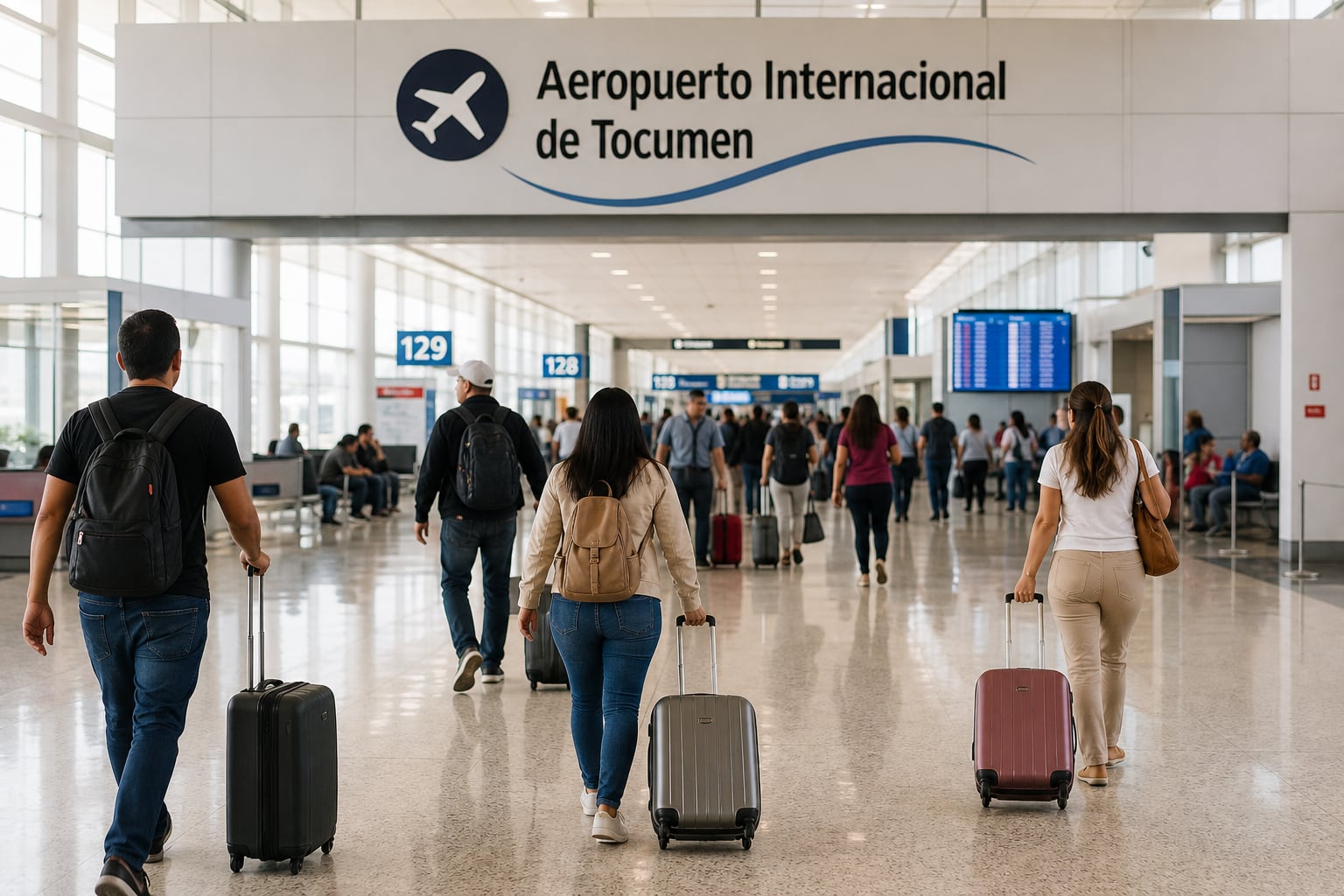
La actividad de la plataforma logística panameña tuvo una participación central en los resultados expuestos por el titular de Economía y Finanzas. El Aeropuerto Internacional de Tocumen movilizó 11,5 millones de pasajeros durante el primer semestre, con un alza interanual de 14,8%.

El movimiento de carga aérea creció 9,2%, mientras que la carga portuaria total aumentó 3,1%. La Zona Libre de Colón registró, a su vez, un incremento de 24,9% en sus reexportaciones.
Para Chapman, esos datos muestran una recuperación de la capacidad del país para conectar y movilizar personas, mercancías, capital y servicios. Esa condición figura entre las ventajas que el Gobierno busca trasladar a nuevos proyectos productivos.
El Canal de Panamá también elevó sus indicadores durante la primera mitad del año. Los ingresos por peajes llegaron a $2.207 millones, 9,5% más que en igual período anterior.
Las toneladas netas transportadas por la vía interoceánica aumentaron 9,2% y los tránsitos avanzaron 7,1%. El ministro incluyó esos resultados entre los elementos que sostienen la perspectiva de expansión de la economía.
El mercado laboral registró 174.379 contratos de trabajo en el primer semestre. La cifra superó en 31.461 los registros del mismo período de 2025 y representó una variación de 22%.
El incremento alcanzó a las contrataciones por tiempo definido, indefinido y por obra determinada. Chapman vinculó esa evolución con la recuperación económica y con la inversión pública y privada.
La inflación se ubicó en 1,4% a junio, pese al aumento internacional de los precios del petróleo. El Gobierno aplicó medidas temporales y focalizadas ante el encarecimiento de los combustibles.
Al cierre de julio, el subsidio al combustible había recibido $32,3 millones. La medida alcanzó a más de 50.000 vehículos ligados al transporte público, colectivo y colegial, el transporte de carga y la pesca artesanal.
El Ejecutivo sostuvo que ese apoyo busca contener los costos de distribución y transporte de alimentos, con el objetivo de reducir la presión sobre los precios que pagan los hogares.
El déficit del Sector Público No Financiero se situó en $2.642 millones a julio. El resultado implicó una disminución de $313 millones frente al mismo período de 2025.
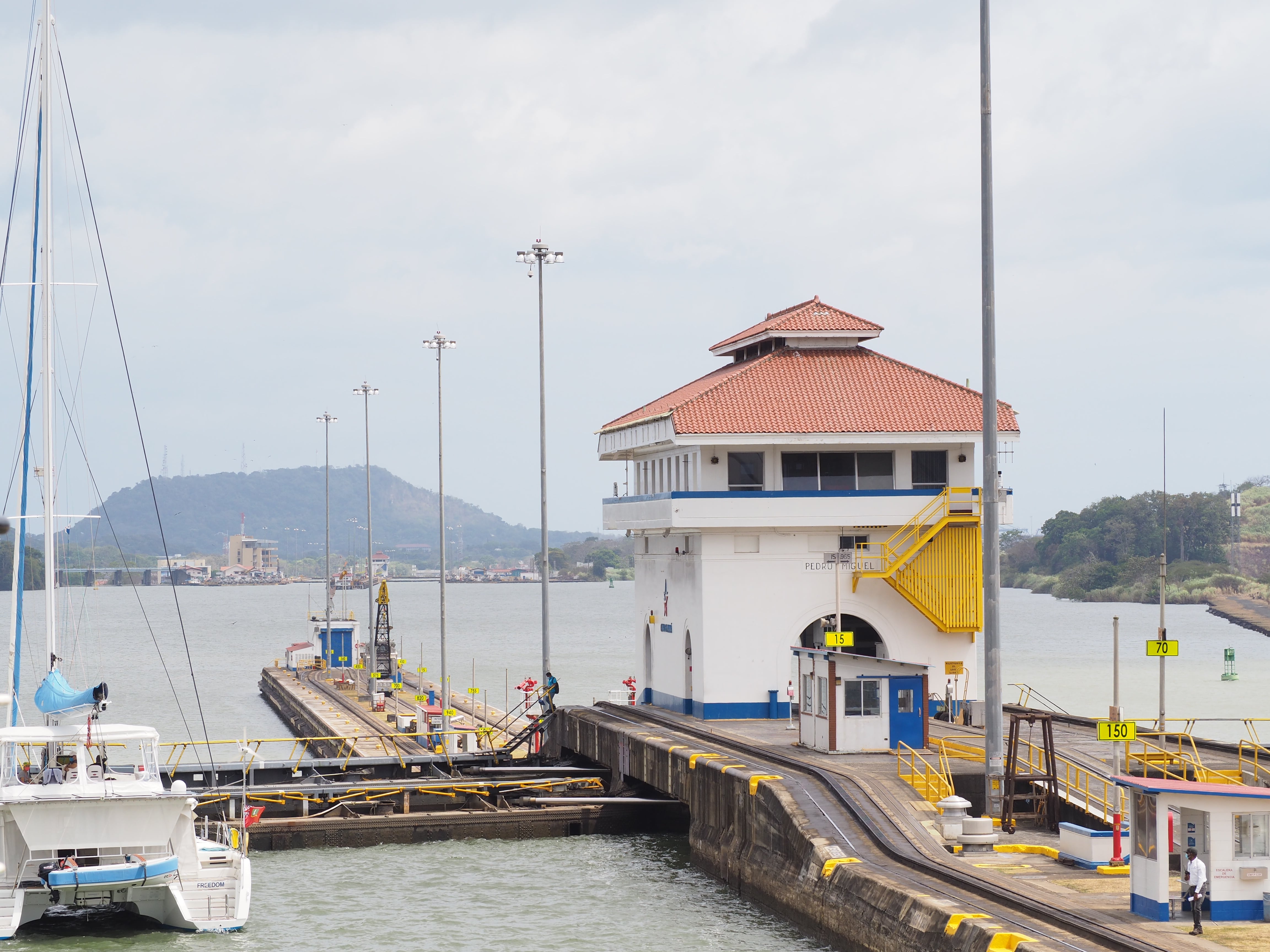
Como proporción del PIB, el indicador pasó de 3,27% a 2,78%. En ese lapso, los ingresos totales aumentaron 8%, mientras que el gasto total tuvo un crecimiento de 2,8%.
“La consolidación fiscal no significa simplemente gastar menos. Significa administrar mejor los recursos públicos”, sostuvo Chapman. El ministro planteó que esa gestión debe mejorar los ingresos y habilitar inversiones que generen bienestar y crecimiento.
El déficit primario también se redujo. A julio de 2025 equivalía a 1,39% del PIB y este año descendió a 0,96%, una mejora de 0,44 puntos porcentuales, equivalente a $351 millones.
El ahorro corriente del Sector Público No Financiero mejoró en $82 millones, respecto del año anterior. El ahorro total tuvo una variación favorable de $275,5 millones y redujo su saldo negativo en más de 30%.
Ciudad de Panamá,dólar estadounidense,rascacielos,centro financiero










NEWYou can now listen to Fox News articles!
SÃO PAULO: As Brazil goes to the polls Sunday, analysts are watching closely to see whether the continent’s most populous nation will be the latest domino to fall into the conservative column, following Colombia, Peru, Chile and others, in voting out the left-wing President Luiz Inácio Lula da Silva.
Known by his nickname Lula, the 80-year-old, who served time in jail for corruption in a massive payback bribery scandal, barely leads Brazilian senator Flavio Bolsonaro, the son of former president Jair Bolsonaro.
Going into Sunday’s first round, neither candidate is expected to win outright. The latest Datafolha poll puts Lula at 42% and Bolsonaro at 38%, with a two-point margin of error. If the election goes to a runoff, it has Lula up by 3%. But the polls have been wrong before.
ANTI-CARTEL CANDIDATE ‘THE TIGER’ CHANNELS TRUMP AND BUKELE IN COLOMBIA ELECTION SHOCKER
Flavio Bolsonaro, top center, during a campaign rally in Sao Joao de Meriti, Rio de Janeiro state, Brazil, on Saturday, Sept. 26, 2026. President Luiz Inacio Lula da Silva and Bolsonaro are deadlocked less than two weeks before Brazil’s election, a new poll showed, following fresh revelations about the challenger’s ties to a jailed banker at the center of a massive fraud scheme. (Dado Galdieri/Bloomberg via Getty Images)
«The problem with Datafolha, which is the largest polling institute in the country, is that it tends to underestimate the force and voting intention in candidates running against Lula or the Workers Party (PT). This has been consistent for at least over a decade, and it underestimated Jair Bolsonaro’s number on the runoff of 2018 by 7%,» Roberto Reis, an electoral strategist working with several candidates across multiple electoral tiers and analyzing aggregator data, told Fox News Digital. «According to the latest aggregator data such as MRT News or Polling Data, we currently have Lula leading Bolsonaro 42% to 39% on the first runoff of the elections with Bolsonaro leading Lula 45% to 44% on the runoff,» he added.
One Brazil analyst said the election is about more than just another ideological contest between left and right in Latin America. It is the single major remaining stumbling block in the Western Hemisphere that still hasn’t shifted to conservativism. While there are other left-wing governments in the hemisphere, including Cuba, Jamaica, Mexico, Nicaragua and Uruguay, Brazil is by far the largest and most important economy in this group with its status as the 11th largest world economy, according to the IMF, and the 10th largest world economy, according to the World Bank.
‘WAVE OF FREEDOM’ SWEEPS LATIN AMERICA AS TRUMP ALLY TAKES FIGHT TO MARXIST TERROR GROUP
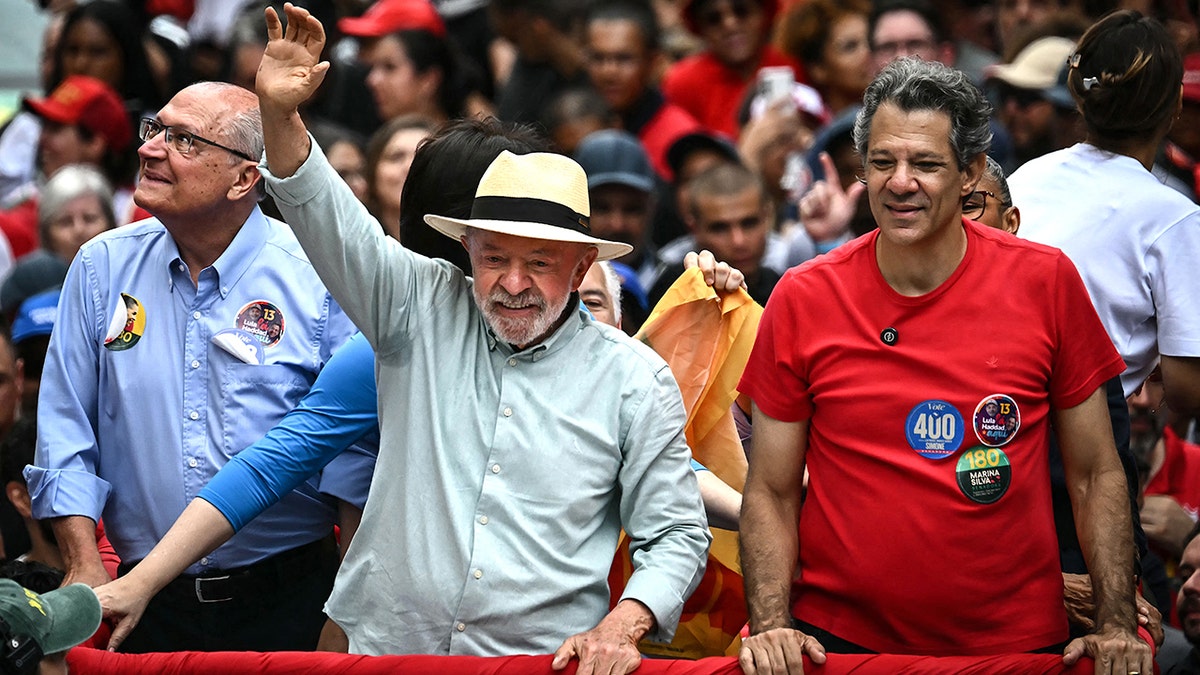
Brazil’s President Luiz Inacio Lula da Silva waves during a campaign rally on the eve of the general election, in Sao Paulo on Oct. 3, 2026. Brazilians go to the polls on Oct. 4 in a tight race led by Lula and Flavio Bolsonaro. (Luis Robayo/AFP Via Getty Images)
Bolsonaro has spent much of the campaign cultivating a relationship with President Donald Trump and presenting himself as a potential U.S. partner in the Western Hemisphere. He met Trump at the White House in May, where the two discussed organized crime, tariffs and Brazil’s rare earth and critical mineral reserves — both critical prime-source materials Brazil has plenty of and which could significantly lower U.S. and European dependency on Russia and China.
Bolsonaro also said he had asked Washington to designate Brazil’s two largest criminal organizations, the First Capital Command (PCC, in its Portuguese acronym) and Red Command (Comando Vermelho, in Portuguese), as terrorist groups. Both designations were accepted by the Department of State on May 28 and became effective in June under section 219 of the Immigration and Naturalization Code.
TRUMP ADMIN’S LIST OF US-DESIGNATED ‘FOREIGN TERRORIST’ GROUPS IN LATIN AMERICA EXPANDS TO 21
The designation by the U.S. government incensed Lula and his allies and was viewed as direct meddling in domestic affairs and a rubber stamp from the Trump administration that the left-wing, populist president has not been doing enough to combat organized crime in his country, directly favoring Bolsonaro’s contest in the elections.
Flávio Bolsonaro has also proposed a free-trade agreement between Brazil and the United States, potentially expanding it into a broader free-trade arrangement among countries in the Americas. And his campaign has emphasized cooperation with Washington on critical minerals, an increasingly strategic issue as the Trump administration tries to reduce U.S. dependence on China, as per a current report by Brazil’s leading newspaper, Folha de S. Paulo.
That would represent a significant change in emphasis from Lula’s foreign policy.

Sen. Flávio Bolsonaro has entered the 2026 Brazilian presidential race after father’s prison endorsement. (Evaristo Sa/AFP via Getty Images)
China is Brazil’s largest trading partner, and Brazilian agricultural exports to China totaled more than $55 billion in 2025, according to Reuters. Lula has defended maintaining strong relations with Beijing while pursuing what he describes as an independent foreign policy that oftentimes borders on aggressiveness toward both the United States and its closest allies, such as Israel.
Lula’s relationship with Trump has been considerably more complicated. Washington imposed new 25% tariffs on a wide range of Brazilian goods in July, affecting about $7 billion of Brazilian exports, while Lula’s government has challenged the measures and sought negotiations with Washington with very limited success so far. Washington has also imposed a ban on most new permanent visa requests coming from Brazil, and that could lead to green cards.
TANVI RATNA: LATIN AMERICA’S RIGHT TURN IS REDRAWING THE UNITED STATES’ BACKYARD
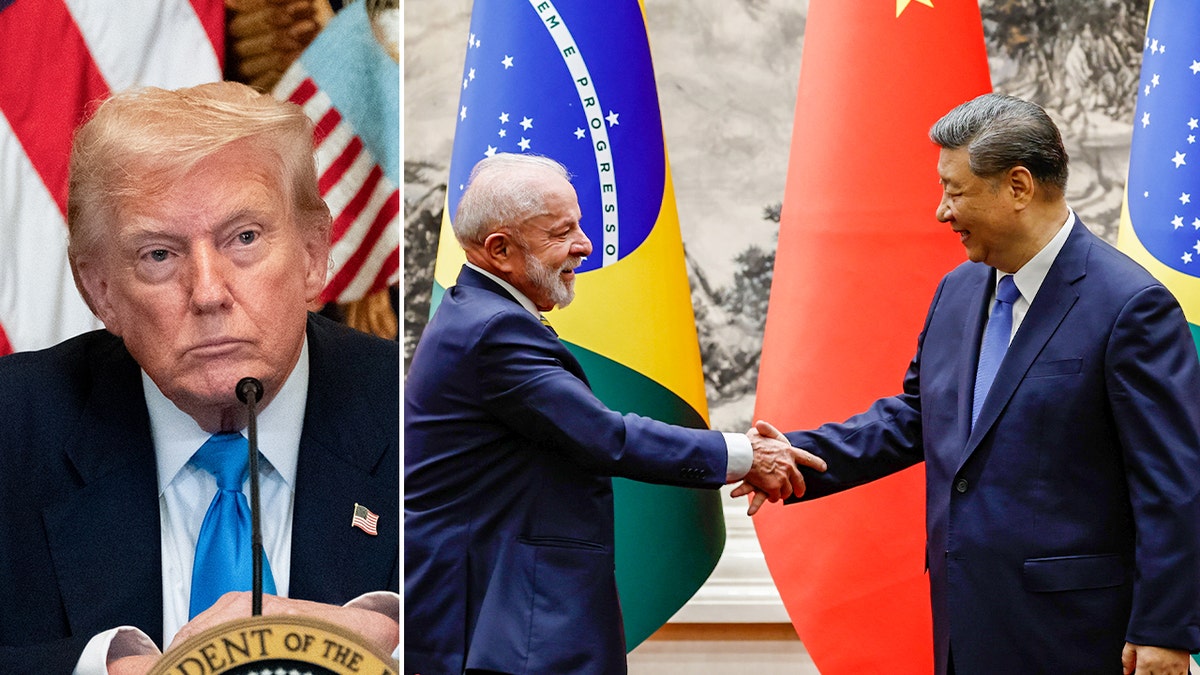
Brazilian President Luiz Inacio Lula da Silva announced his country was open for business at the inauguration of a factory for a Chinese automaker. (Allison Robbert/Bloomberg via Getty Images; Tingshu Wang – Pool/Getty Images)
A Bolsonaro presidency would come with stated plans for closer U.S. economic and security cooperation, greater alignment with Israel, a more confrontational posture toward China’s influence in Brazil, and reduced friction both within the hemisphere and in global affairs. Whether those policies can all be implemented depends on negotiations with Congress, Brazil’s powerful bureaucracy and the country’s economic interests — especially the agribusiness and mining powerhouses in the country.
A Lula victory would mean continuity in a foreign policy trajectory that seeks strong commercial ties with China while maintaining strategic autonomy from Washington, alongside his government’s current position on Israel and Gaza. Both attitudes are in direct defiance of Trump’s policies and could end up damaging U.S.-Brazilian relations even further.
With the presidential race effectively heading toward a second round, the stakes for a new version of the Americas for U.S. interests could very much hinge on its outcome.
brazil, latin america, south america, jair bolsonaro, elections
INTERNACIONAL
Neighborhood backlash collides with America’s tech arms race — but is this the plan to fix it?
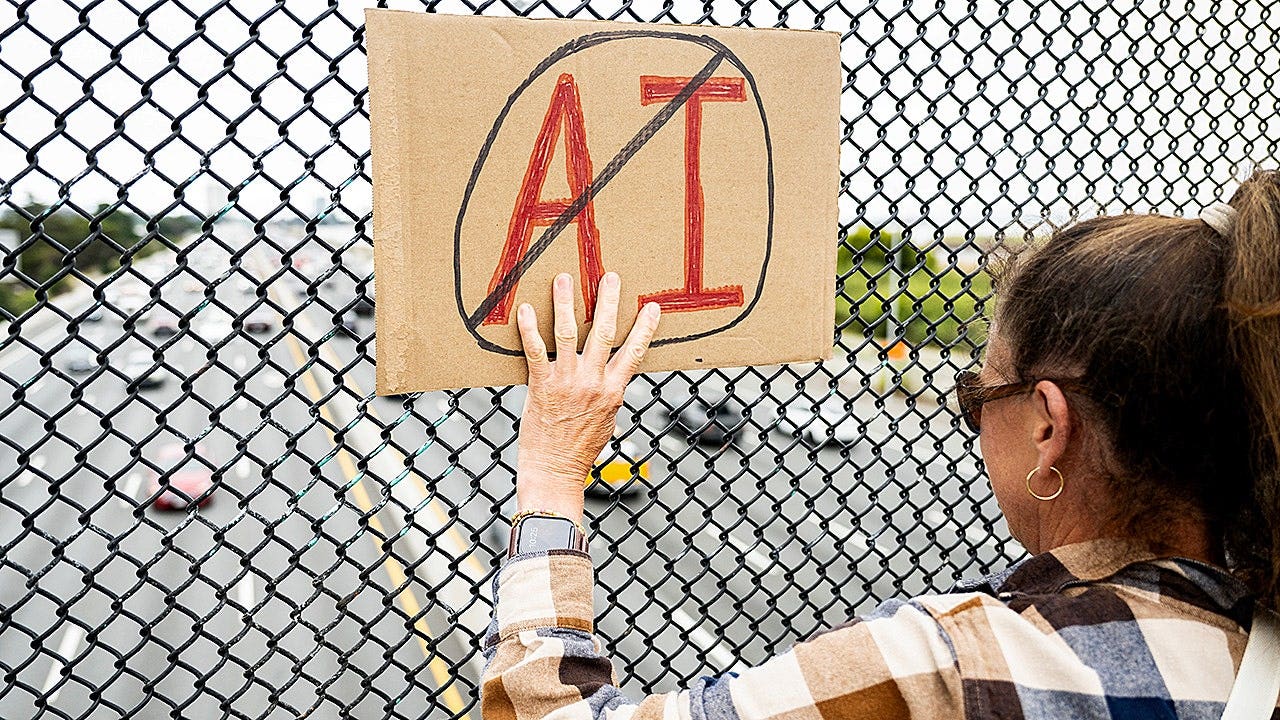
A national security push to expand the infrastructure behind America’s technological ambitions is running into resistance from the communities being asked to host it, pitting Washington’s race to stay ahead of China against mounting local backlash.
Rep. Suhas Subramanyam, D-Va., who represents America’s «Data Center Alley,» warns that backlash could obstruct the very buildout Washington considers a national priority unless Congress steps in — arguing that community buy-in is necessary to keep expansion moving.
«The communities are being steamrolled by the industry,» Subramanyam told Digital. «They’re not feeling like anyone’s listening to them.»
Subramanyam is pitching a four-part federal plan aimed at breaking what he sees as a false choice between unchecked development and outright moratoriums. The proposal addresses siting, power costs, energy and water measurement, and security for the facilities and surrounding communities.
TRUMP’S DATA CENTER PUSH FRACTURES CONGRESS AS LOCAL ANGER EXPLODES: ‘GRASPING AT STRAWS’
«If you are concerned about a race with China, when it comes to building data centers and AI, you should want to work with us on a plan to get community buy-in for where to build data centers,» Subramanyam said.
His Fair Share Act would push states to require large power users to cover more of the infrastructure costs needed to serve them, according to the plan.
HOMEOWNERS IN THE HEART OF AMERICA’S AI BOOM ARE GETTING AN UNEXPECTED PAYOFF
«At the federal level, if we say that we’re going to take away some of your federal funding if you do this, then it will be a no-brainer,» he said, arguing data centers should «pay their fair share for the infrastructure that needs to be built because of them.»
The tension surfaced again this week as Digital reported on complaints of noise and encroachment from a massive data center built against an Ashburn cul-de-sac.
Subramanyam said many residents in his district understand the need for the infrastructure but object to how he says its costs and burdens are distributed.
Loudoun County says data center revenue has helped it lower its real-property tax rate, from $1.145 per $100 of assessed value in 2016 to $0.805 in 2026, according to the county.
But Subramanyam argued residents must weigh those benefits against costs he says can appear elsewhere, particularly on utility bills.
«What’s not OK is feeling like they come in, jack up utility costs and we pay for their power infrastructure,» he said, also citing water, air quality and other community concerns.
The industry disputes that data centers are driving higher residential power bills. The Leesburg-based Data Center Coalition has cited a recent analysis by energy consulting firm E3 that found no historical evidence that data centers increased residential electricity costs under existing rate structures.
Digital reached out to the trade group, which is based in Data Center Alley, for comment on the package.
Subramanyam argues infrastructure with national implications cannot continue developing «ad hoc» under a patchwork of state and local rules.
CHINA ‘THROWING GASOLINE ON THE FIRE’ IN AI DATA CENTERS RACE, SAY LAWMAKERS
Other pieces of the plan would establish federal standards for siting and measurement and develop protections against security threats, including attacks on critical infrastructure overseas.
«I know that localities do zoning, states do energy policy and other related things, but Congress and the federal government need to get involved,» Subramanyam said.
AMERICA’S REDDEST STATE CHASES BILLION-DOLLAR BOOM AS OTHERS SOUR ON MASSIVE EMERGING INDUSTRY
Those concerns have also become a focus of state action. Gov. Abigail Spanberger unveiled a September framework aimed at strengthening local control, shifting more infrastructure costs onto major power users and setting new standards for water use and grid reliability.
«In the years before I took office, data centers came to Virginia, and the commonwealth did not have a clear or coordinated plan to address their impacts on Virginians — on their electric bills, their water, their land, their air, or their quality of life,» Spanberger told Digital.
Leaders across the political spectrum, from Spanberger to Texas Republican Gov. Greg Abbott, have crafted plans and emphasized the issue’s importance on multiple fronts.
Just across the Blue Ridge, West Virginia has taken a different approach, creating a microgrid program designed to attract large projects. Critics have raised concerns about limits on local government powers, while proponents have mapped out potential property tax elimination.
Jefferson County stakeholders recently debated the issue with the state’s data-economy liaison at a forum in Shepherdstown, where county Commissioner Cara Keys criticized the potential loss of local control while the liaison maintained that project approvals would be handled judiciously, according to WVMetroNews.
«Two things can be true: You can support data centers, and you can be against the guardrails lacking in [the law],» Keys said.
SIGN UP TO GET THE POLITICS NEWSLETTER
For Subramanyam, the sharply different approaches on either side of the Blue Ridge illustrate the patchwork he says Washington must address before local resistance hardens further.
«The only plan I’ve seen is either to do nothing or a full moratorium,» he said. «And to me, neither of those is a viable option moving forward.»
national security, domestic policies, virginia, congress, state and local, politics, big tech backlash, infrastructure across america
INTERNACIONAL
Diez ciudadanos cubanos son buscados en Estados Unidos por asaltos, delitos contra menores y fraudes sanitarios
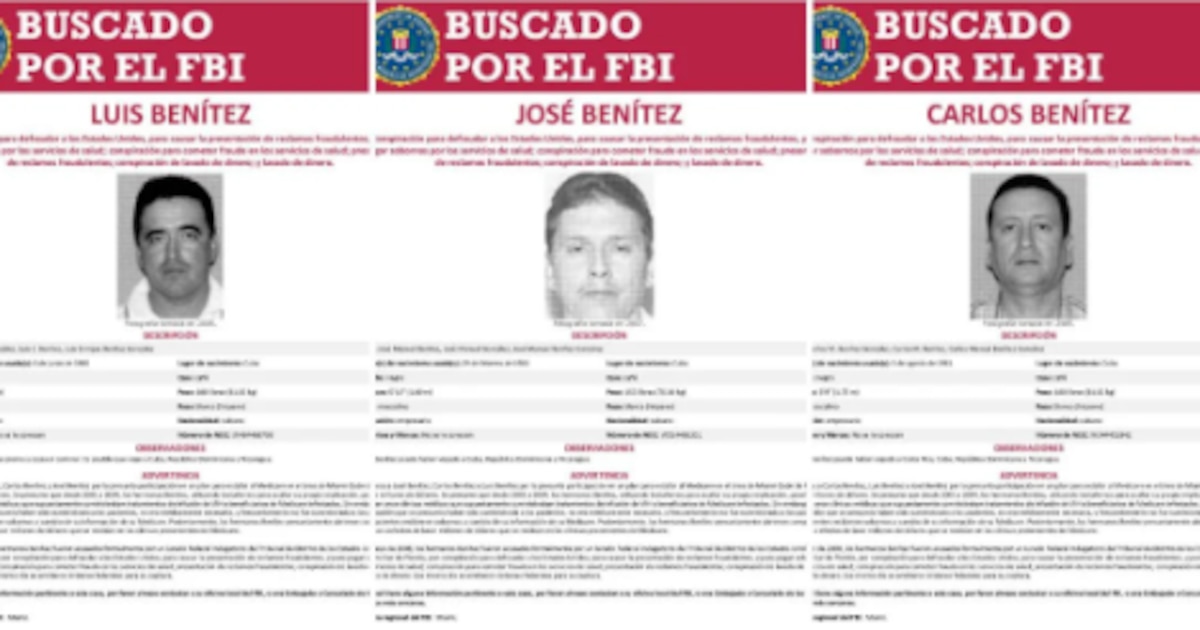
Diez ciudadanos cubanos buscados por autoridades federales de Estados Unidos figuran en expedientes relacionados con asaltos, delitos contra menores y fraudes contra el sistema de salud. Algunos de los casos permanecen abiertos desde hace varias décadas y, en distintos registros, las autoridades han incluido a Cuba entre los posibles paraderos de los acusados.
La recopilación publicada por Periódico Cubano reúne nombres que aparecen en registros del FBI y de la Oficina del Inspector General del Departamento de Salud y Servicios Humanos de Estados Unidos (HHS-OIG). Las causas incluyen desde un robo armado a una joyería de Florida hasta presuntos esquemas de facturación falsa al Medicare por decenas de millones de dólares.
Entre los casos más recientes se encuentra el de Alberto Pérez Elías, ciudadano cubano de 57 años acusado de participar en el asalto a Tio Jewelers, en Cape Coral, Florida, el 6 de enero de 2026. Según la información reunida por Periódico Cubano, los responsables habrían perforado una pared, amenazado al gerente con un arma y sustraído joyas valoradas en más de USD 1 millón.
Una orden federal contra Pérez Elías fue emitida el 24 de junio. El FBI ofrece una recompensa de hasta USD 50,000 por información que permita encontrarlo y detenerlo, mientras que otros tres acusados en la misma causa ya fueron arrestados. Las autoridades advierten que debe ser considerado armado y peligroso.
Otro de los nombres incluidos en la página de fugitivos de la oficina del FBI en Tampa es el de Alejandro T. Pena Lam, de 25 años y vinculado a Miami. El expediente federal citado lo relaciona con la presunta inducción de una menor de 13 años para producir y enviar imágenes ilegales por internet.
Los hermanos Benítez siguen prófugos por un presunto fraude sanitario
Carlos, José y Luis Benítez figuran como fugitivos en una investigación por fraude sanitario. Según los datos de la HHS-OIG citados por la publicación, los tres hermanos habrían operado clínicas de infusión para pacientes con VIH en Miami y presentado reclamaciones falsas al Medicare.
La acusación federal sostiene que el presunto esquema obtuvo aproximadamente USD 110 millones. Los tres continúan clasificados como prófugos en los registros federales mencionados.
La HHS-OIG es una entidad distinta del FBI, aunque ambas pueden colaborar en investigaciones de fraude sanitario y en operaciones coordinadas con el Departamento de Justicia. En este tipo de causas, la oficina del Departamento de Salud y Servicios Humanos mantiene registros de personas prófugas y solicita información que ayude a localizarlas.
El listado incluye a Amaury Pérez, acusado en 2015 de conspiración para cometer fraude sanitario y lavado de dinero. Los investigadores calcularon que él y sus cómplices habrían facturado de forma fraudulenta alrededor de USD 2.5 millones al Medicare.
El registro federal de Pérez señala a Cuba como uno de sus posibles paraderos. Esa referencia no confirma que se encuentre en la Isla, sino que figura entre las ubicaciones consideradas por las autoridades dentro de la búsqueda.
Las causas incluyen reclamaciones por equipos médicos y uso de identidades
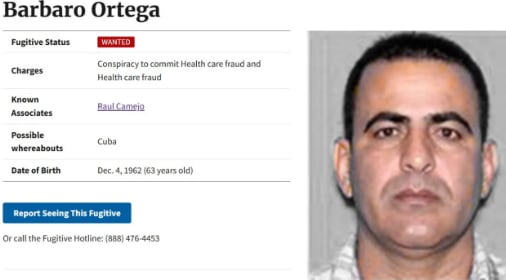
Bárbaro Ortega y Raúl Camejo fueron acusados en 2009 por un supuesto esquema de reclamaciones falsas relacionadas con equipos médicos. La operación habría generado aproximadamente USD 3.3 millones en solicitudes de pago.
Medicare desembolsó USD 972,413 en esa causa, según los datos incluidos en la recopilación. Ambos permanecen registrados como fugitivos y, en el expediente de Ortega, las autoridades mencionaron a Cuba como posible ubicación.
También continúa prófugo Jorge Caro, acusado de utilizar información personal de personas fallecidas para presentar reclamaciones fraudulentas al Medicare. Las solicitudes vinculadas al expediente habrían alcanzado cerca de USD 5.2 millones.
La clínica asociada al caso recibió aproximadamente USD 1.63 millones del programa federal. La HHS-OIG incluye igualmente a Cuba entre los posibles paraderos de Caro, sin que el registro permita establecer su ubicación actual.
Jorge Iglesias-Vázquez aparece en reportes anteriores del FBI
El décimo nombre incorporado en el recuento es el de Jorge Iglesias-Vázquez, nacido en Cuba y acusado en 2008 de fraude sanitario. De acuerdo con los reportes mencionados por la publicación, su empresa recibió cerca de USD 1.1 millones del Medicare.
Los informes anteriores del FBI lo identificaban como fugitivo y señalaban a Cuba como posible destino. Su perfil, no obstante, ya no aparece entre los fugitivos publicados actualmente por la oficina del FBI en Tampa.
Los expedientes reunidos abarcan cerca de dos décadas y corresponden a acusaciones de distinta naturaleza. En varios casos de fraude sanitario, las autoridades estadounidenses incorporaron a Cuba como posible lugar de residencia o fuga de los acusados.
La mención de la Isla en esos registros no equivale a una confirmación sobre la presencia de los requeridos en territorio cubano.

Latin America’s conservative shift faces its biggest test yet in Brazil election

Neighborhood backlash collides with America’s tech arms race — but is this the plan to fix it?

Luis Lacalle Pou en IDEA: “El Presidente tiene que tener paciencia, prudencia y equilibrio”

Daniela Christiansson habló sin filtro sobre Wanda Nara y los celos por Maxi López a días de mudarse al país

Diez ciudadanos cubanos son buscados en Estados Unidos por asaltos, delitos contra menores y fraudes sanitarios

Pablo Quirno a los empresarios de IDEA: “Pedían previsibilidad, Milei devolvió años al cálculo empresario”

Ley de Tierras: la CGT repudió el fallo de la Corte Suprema y le exigió a Diputados que rechace el DNU de Milei

Milei volvió a dar un discurso en la Argentina Week de París y se emocionó en el cierre

Capcom ha admitido su destino con los remakes de Resident Evil y muchos jugadores se hacen la misma pregunta: ¿Qué pasa con Resident Evil 5 y 6?

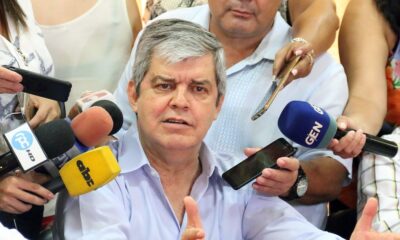
Caso Mariaca: un ministro paraguayo acusó a funcionarios bolivianos de proteger al narco Sebastián Marset

 POLITICA2 días ago
Milei volvió a dar un discurso en la Argentina Week de París y se emocionó en el cierre
- INTERNACIONAL3 días ago
Caso Mariaca: un ministro paraguayo acusó a funcionarios bolivianos de proteger al narco Sebastián Marset
- POLITICA3 días ago
Desde San Juan y en modo campaña, Máximo Kirchner dijo que los jueces de la Corte “desconocen la soberanía”