INTERNACIONAL
Fin de la gira por África: el papa León XIV instó a Estados Unidos e Irán a retomar las conversaciones de paz y condena la pena de muerte


El avión que trajo de regreso a Roma al Papa tras su gira de 18.000 kilómetros por cuatro países africanos arribó al anochecer. El pontífice dio una conferencia de prensa informal a los 70 periodistas que lo acompañaron tres horas antes de aterrizar. Hizo un llamado a Estados Unidos e Irán a retomar las conversaciones de paz y también condenó la pena de muerte. Asimismo, afirmó que los países tienen derecho a controlar sus fronteras, pero no deben tratar a los migrantes «peor que a animales», y lamentó que la enseñanza moral de la Iglesia se reduzca a cuestiones sexuales.
Dijo que la cuestión no era si el régimen de Irán debería cambiar o no. «La cuestión debería ser cómo promover los valores en los que creemos sin la muerte de tantos inocentes», señaló. Además, pidió «una nueva cultura de paz» para reemplazar el recurso a la violencia cada vez que surgen conflictos. «Como pastor no puedo estar a favor de la guerra», dijo a los periodistas. «Me gustaría alentar a todos a encontrar respuestas que provengan de una cultura de paz y no de odio y división».
Afirmó que lleva consigo la foto de un niño musulmán libanés que murió en la guerra de Israel con el grupo armado Hezbollah. El niño fue fotografiado con un cartel de bienvenida al Papa cuando visitó el Líbano el año pasado.
El pontífice respondió que condenaba «todas las acciones que son injustas» e incluyó en ellas la pena de muerte, después de que le preguntaran su opinión sobre las recientes ejecuciones en Irán. «Condeno que se quite la vida a las personas. Condeno la pena de muerte. Creo que la vida humana debe ser respetada y que todas las personas, desde la concepción hasta la muerte natural, deben ser respetadas y protegidas en sus vidas».
Sobre si es necesario un cambio de régimen en Irán, el pontífice norteamericano abogó por «promover un nuevo comportamiento basado en la cultura de la paz», porque «se tiende a resolver todo con la violencia y con la guerra, y lo que hemos visto es que tantos inocentes mueren». Afirmó que, en el mundo actual, la cuestión «es cómo promover los valores en los que creemos sin la muerte de tantos inocentes». Dijo que «la vida debe ser protegida y respetada; por lo que, cuando un régimen o un país toma la decisión de quitar vidas injustamente, es algo que debe ser condenado».
Ante otra pregunta sobre las migraciones, respondió: «El tema es muy complejo. Me pregunto qué hace el Norte del globo para ayudar al Sur y a aquellos países donde hoy no encuentran un futuro. Viven ese sueño de que todos quieren ir al Norte, pero a veces el Norte no tiene respuestas que ofrecer». Criticó que, para muchas personas, África «es considerada un lugar donde pueden ir y llevarse los minerales y sus riquezas en favor de la riqueza de otras naciones» y que, por ello, «quizás a nivel mundial tenemos que trabajar para promover mayor justicia e igualdad en el desarrollo de estos países africanos, para que no haya necesidad de emigrar».
El Papa Prevost dijo también que la Iglesia no apoya la bendición formal de las parejas homosexuales o en situación irregular, pero subrayó que «todas las personas pueden recibir una bendición». Los periodistas le preguntaron por la reciente decisión del cardenal alemán Reinhard Marx, arzobispo de Múnich, de autorizar la bendición de parejas homosexuales en su diócesis. El pontífice destacó que, antes que nada, «cuando la Iglesia habla de moralidad, parece que el único tema es el sexual. En realidad, creo que hay cuestiones más importantes como la justicia, la igualdad, la libertad de hombres y mujeres y la libertad religiosa, que tienen prioridad sobre ese tema tan particular».
Afirmó que «la Santa Sede ya se ha dirigido a los obispos alemanes y ha dejado claro que no está de acuerdo con la bendición formal de parejas homosexuales», más allá de lo que el Papa Francisco dijo específicamente al afirmar que todas las personas reciben bendiciones.
Ante otra pregunta referida a los gobiernos africanos y sus encuentros con líderes autoritarios, afirmó que el Vaticano, al mantener la «neutralidad», puede abordar situaciones concretas para que las vidas de las personas «puedan mejorar». «La presencia de un Papa con cualquier jefe de Estado puede interpretarse de diferentes maneras. Algunos la consideran como algo extraño, como si el Papa y la Iglesia dieran su aprobación a esa forma de vida. No siempre hacemos proclamaciones criticando, juzgando o condenando, pero hay muchísimo trabajo que se realiza entre bambalinas para promover la justicia y las causas humanitarias; para buscar, a veces, situaciones donde pueda haber presos políticos y encontrar la manera de que sean liberados, o ante situaciones de hambre y enfermedad».

INTERNACIONAL
EXCLUSIVE: Legal group tells NYPD cops they can contact ICE directly despite blue city’s sanctuary rules

Tom Homan criticizes NYC mayor over ‘sanctuary city’ pride
Border czar Tom Homan criticizes NYC Mayor Mamdani, a Democratic socialist, for his ‘pride’ in New York being a sanctuary city. Homan argues that these policies prevent cooperation with federal immigration enforcement, potentially leading to tragic consequences, exemplified by the Laken Riley case. He emphasizes the importance of law and order.
NEWYou can now listen to Fox News articles!
EXCLUSIVE: A conservative legal group is telling New York City police officers they can contact U.S. Immigration and Customs Enforcement (ICE) directly, even if local sanctuary policies say otherwise, releasing a new guide as border czar Tom Homan prepares a major immigration enforcement surge in the nation’s largest city.
Fox News Digital has obtained an unreleased 35-page handbook titled «Law Enforcement Officer Immigration Cooperation Guide» from America First Legal (AFL) that tells state and local police officers they can share a person’s immigration-status information directly with ICE even if New York City or other sanctuary city policies say otherwise.
The guide argues that Section 1373 of federal law bars state and local governments from preventing officers from sharing citizenship or immigration-status information with federal immigration authorities like ICE.
TOM HOMAN WARNS ICE SURGE COMING TO NEW YORK CITY AS MAMDANI BOASTS ABOUT SANCTUARY STATUS
White House border czar Tom Homan attends a news conference along the southern border. (Mike Blake/Reuters, File)
America First Legal is a nonprofit which describes itself as «founded to unapologetically and boldly defend the rights of everyday Americans.»
The guide arrives days after Homan revealed he had reviewed plans to deploy «more ICE agents than you’ve ever seen» into New York City after Mayor Zohran Mamdani signed an executive order reinforcing the city’s sanctuary-status policies.
The guide repeatedly cites Section 1373 of federal immigration law, arguing that state and local governments «may not prohibit, or in any way restrict» officials from sending immigration-status information to federal authorities.
DOJ ESCALATES BLUE-STATE ICE STANDOFF AFTER STATES REFUSE KEY FEDERAL REQUEST

Federal agents patrol the halls of immigration court at the Jacob K. Javitz Federal Building. According to White House border czar Tom Homan, ICE will increase its operations in New York City due to its status as a sanctuary city. (Getty Images, File)
It tells officers they may contact ICE’s 24-hour Law Enforcement Support Center to verify a person’s immigration status using only a name and date of birth and says officers may do so «regardless of any local directive telling you not to,» according to the document obtained by Fox News Digital.
The release comes as the Trump administration prepares to dramatically increase immigration enforcement in New York.
Homan told Fox News last week that a significant ICE operation is coming to the city after self-described democratic socialist Mamdani reaffirmed New York’s sanctuary policies.
NYC MAYOR ZOHRAN MAMDANI RELEASES AUDIT ACCUSING FEDERAL IMMIGRATION AGENTS OF MISLEADING TACTICS
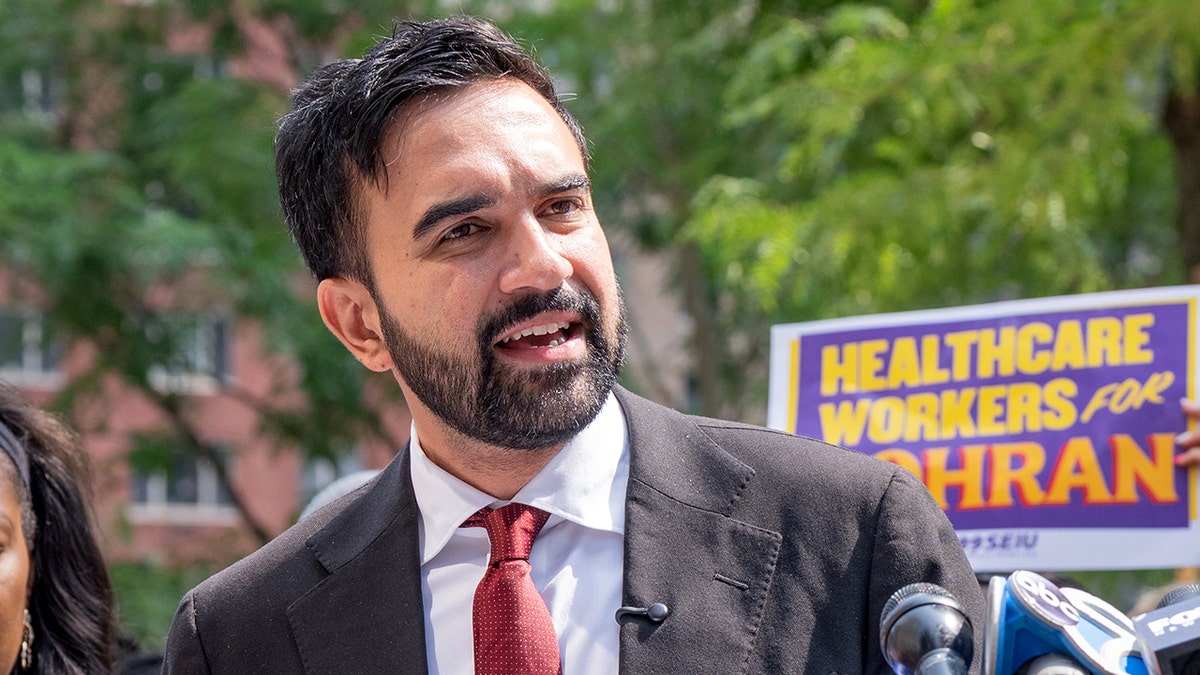
New York City Mayor Zohran Mamdani and the Trump administration continue to clash over immigration enforcement. (Lev Radin/Pacific Press/LightRocket via Getty Images, File)
«It’s coming,» Homan said. «There’s going to be a surge, and there needs to be a surge.»
While Homan declined to discuss operational details, he said ICE would not back away from enforcing immigration law despite opposition from city leaders.
The guide comes as Mamdani and the Trump administration continue to clash over immigration enforcement.
Mamdani’s Executive Order 13 directs the NYPD to review, update and train officers on department policies governing communication, cooperation and coordination with federal immigration authorities.
The order says the city believes «the aggressive tactics that certain non-local law enforcement agencies use in pursuing civil immigration enforcement actions… hinder public safety by creating a culture of fear.»
America First Legal argues those local rules cannot lawfully prevent an officer from voluntarily sharing immigration-status information with ICE because federal law supersedes conflicting local policies.
The guide also argues sanctuary policies could create legal risks for the officials who enforce them. AFL contends some officials could face federal criminal charges for obstructing immigration enforcement and that victims of crimes allegedly committed by illegal immigrants released despite ICE detainers could, in some cases, sue those officials under federal civil RICO law.
The organization is also inviting officers who believe they were threatened, disciplined or retaliated against for cooperating with ICE to seek confidential legal representation.
«Politicians who hide behind sanctuary policies are not above the law, and they have no right to bully or gag the officers who are trying to keep their communities safe,» AFL senior counsel James Rogers said in a statement accompanying the guide.
CLICK HERE TO DOWNLOAD THE FOX NEWS APP
Gene Hamilton, president of America First Legal, said officers «should never be forced to choose between following federal law and following unlawful directives to appease politicians committed to sanctuary policies.»
New York City Hall did not immediately respond to Fox News Digital’s request for comment.
Fox News Digital’s Taylor Penley contributed to this reporting.
sanctuary cities, illegal immigrants, new york city, homeland security, zohran mamdani, tom homan, police and law enforcement, politics
INTERNACIONAL
Irán informó que un petrolero explotó tras chocar con una mina marina en el Estrecho de Ormuz
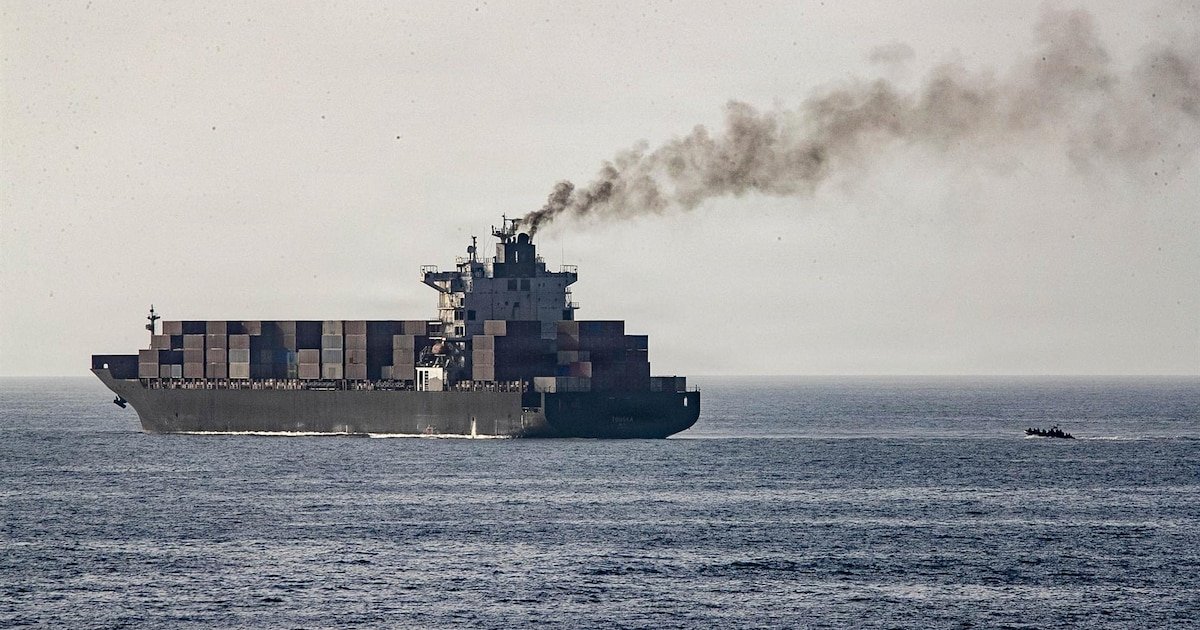
Las autoridades iraníes anunciaron este domingo que una mina explotó al paso de un petrolero en el estrecho de Ormuz, según informaron fuentes de la Defensa iraní al portal especializado Defence Press y a la agencia semioficial Mehr. La explosión ocurrió en torno al mediodía y no hay constancia de víctimas por ahora, ni más datos sobre el barco más allá de que “se desvió de la ruta especificada por Irán” en su paso por el estrecho.
El tráfico en Ormuz sigue en mínimos históricos debido al doble bloqueo impuesto por Irán y Estados Unidos desde la reanudación de las hostilidades. Según datos de MarineTraffic, el tráfico por el estrecho se redujo el viernes a solo seis cruces confirmados, una caída del 60% respecto al día anterior.
Cinco de esos seis buques siguieron el plan unilateral iraní —la ruta designada por Teherán para el paso de las embarcaciones—, lo que puso de manifiesto la continua concentración del tráfico a lo largo de ese corredor específico. En paralelo, el estrecho de Bab el Mandeb, en la entrada del mar Rojo, registró 49 cruces confirmados, entre ellos cinco buques autorizados, 11 clandestinos y cuatro tránsitos no oficiales, de acuerdo con datos recogidos por la agencia oficial turca Anatolia.

El incidente se produce en medio de una disputa que se arrastra desde hace meses por el control de la navegación en Ormuz, corredor por el que normalmente circula cerca del 20% del petróleo comercializado por vía marítima en el mundo. Irán restringió el paso por la vía cuando comenzó la guerra el 28 de febrero, disparando contra petroleros y cargueros, lo que disparó los precios del petróleo durante todo el conflicto.
Tras la firma de un acuerdo de alto el fuego provisional en junio, estalló una disputa por el control del estrecho: Irán exigió que los barcos usaran una ruta cerca de su litoral y advirtió que podría cobrar tarifas, mientras los buques navegaban cada vez más por una ruta meridional junto a la costa de Omán, dentro de una operación de vigilancia de Estados Unidos. Cuando Irán atacó algunas de esas embarcaciones, Washington reanudó los ataques contra las defensas costeras iraníes y luego amplió sus objetivos hacia puentes e infraestructura en el sur y el centro del país.
Tras la firma de un acuerdo de alto el fuego provisional en junio, estalló una disputa por el control del estrecho: Irán exigió que los barcos usaran una ruta cerca de su litoral y advirtió que podría cobrar tarifas, mientras los buques navegaban cada vez más por una ruta meridional junto a la costa de Omán, dentro de una operación de vigilancia de Estados Unidos. Cuando Irán atacó algunas de esas embarcaciones, Washington reanudó los ataques contra las defensas costeras iraníes y luego amplió sus objetivos hacia puentes e infraestructura en el sur y el centro del país.
A comienzos de julio, Teherán volvió a declarar cerrado el estrecho y Estados Unidos restableció el bloqueo naval sobre puertos y buques iraníes en la zona, medida que había sido suspendida tras el memorando de entendimiento alcanzado a mediados de junio.
La incertidumbre en Ormuz golpea de lleno a las economías del Golfo Pérsico, que dependen fuertemente de la exportación de hidrocarburos. Ante el cierre parcial del estrecho, países como Kuwait han buscado alternativas para sostener su producción: la petrolera estatal Kuwait Petroleum Corporation firmó recientemente un acuerdo de infraestructura de oleoductos valorado en 16.000 millones de dólares con los fondos internacionales Blackstone, KKR y Brookfield, en un intento por diversificar sus rutas de exportación.
La escalada en Ormuz también repercutió en otros puntos calientes de la región: los rebeldes hutíes de Yemen, respaldados por Irán, incrementaron sus ataques contra buques y bases sauditas en el estrecho de Bab el Mandeb, aumentando la presión sobre la otra vía marítima clave para el comercio energético.
En paralelo, Irán y Omán mantuvieron el fin de semana varias rondas de conversaciones técnicas en Teherán para intentar definir mecanismos que garanticen la navegación segura por Ormuz, aunque sin que hasta el momento se hayan registrado cambios en el tráfico marítimo de la zona. Un funcionario regional involucrado en la mediación calificó la actual pausa en los combates como una “señal positiva” para destrabar ese tipo de acuerdos, aunque advirtió que aún no está claro si se trata de una tregua duradera o de una simple pausa operativa.
Environment
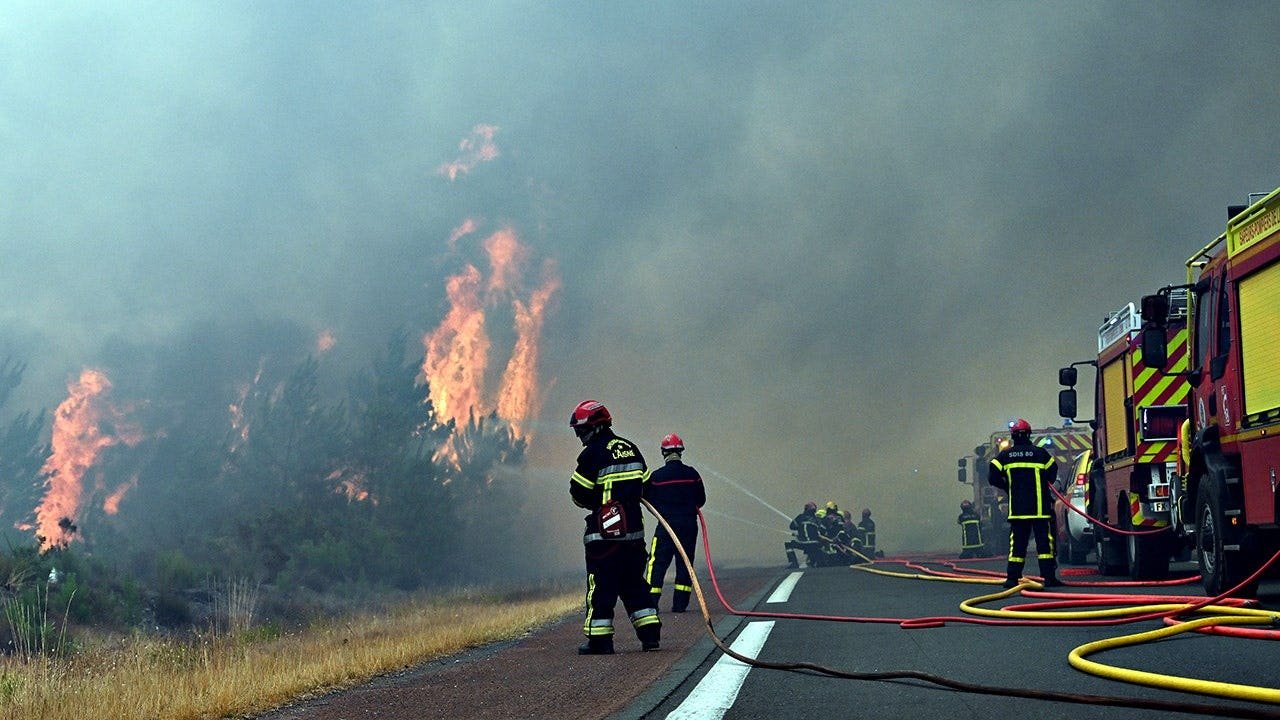
European wildfires force more than 250K evacuations across Spain, France
Wildfires are sweeping across Spain and France, forcing more than 250,000 people to evacuate. One blaze is threatening France’s famed Bordeaux wine region, while Spain has declared a national emergency. France has deployed the military, and the Tour de France has been shortened as firefighters battle the massive blazes.
NEWYou can now listen to Fox News articles!
More than a quarter-million people have been driven from their homes in southwest France as a massive wildfire barrels toward the famed wine capital of Bordeaux, with officials warning the fast-moving inferno has become so fierce it’s creating its own winds and behaving erratically.
French authorities ordered another 55,000 people to evacuate overnight Sunday from communities south of Bordeaux, bringing the total number of evacuees in the region to about 250,000. Gusty winds, dry conditions and repeated heat waves have fueled a fire that has burned out of control since midweek.
Interior Minister Laurent Nunez said firefighters faced a «difficult» night and warned Sunday that «the situation remains very unfavorable.»
EUROPE’S FIRES REVEAL DEADLY MIX OF RECORD HEAT, HUMAN ERROR, ARSON AND LAND MISMANAGEMENT
Firefighters spray water in a burning forest near Lacanau, southwestern France, Saturday, July 25, 2026. (AP Photo/Emma Da Silva)
«The fire again became extremely virulent again and unpredictable, generating its own winds and advancing erratically toward the Bordeaux metropolitan area,» Nunez posted on X, adding that the blaze «became calmer by the end of the night.»
The fire has now burned an estimated 42,000 hectares, or about 162 square miles — roughly four times the size of Paris — in the Gironde region. Bordeaux Mayor Thomas Cazenave said the flames came within about 9 miles of the city, prompting officials to partially close a major highway into and out of the region.
More than 2,500 firefighters, backed by 18 planes and helicopters, are working to slow the fire’s advance. France has also deployed 1,500 soldiers to help clear vegetation and build firebreaks, while several European countries have sent aircraft and firefighting crews to assist.
FRANCE RECORDS MORE THAN 5,700 EXCESS DEATHS DURING HISTORIC EARLY SUMMER HEAT WAVE
Nunez said 450 volunteers have also pitched in to help.
«We came to lend a hand because if it were our region, we’d want others to do the same,» 65-year-old farmer Pascal Roudier told Reuters. «And given the scale of the disaster, we think our efforts are very welcome too.»
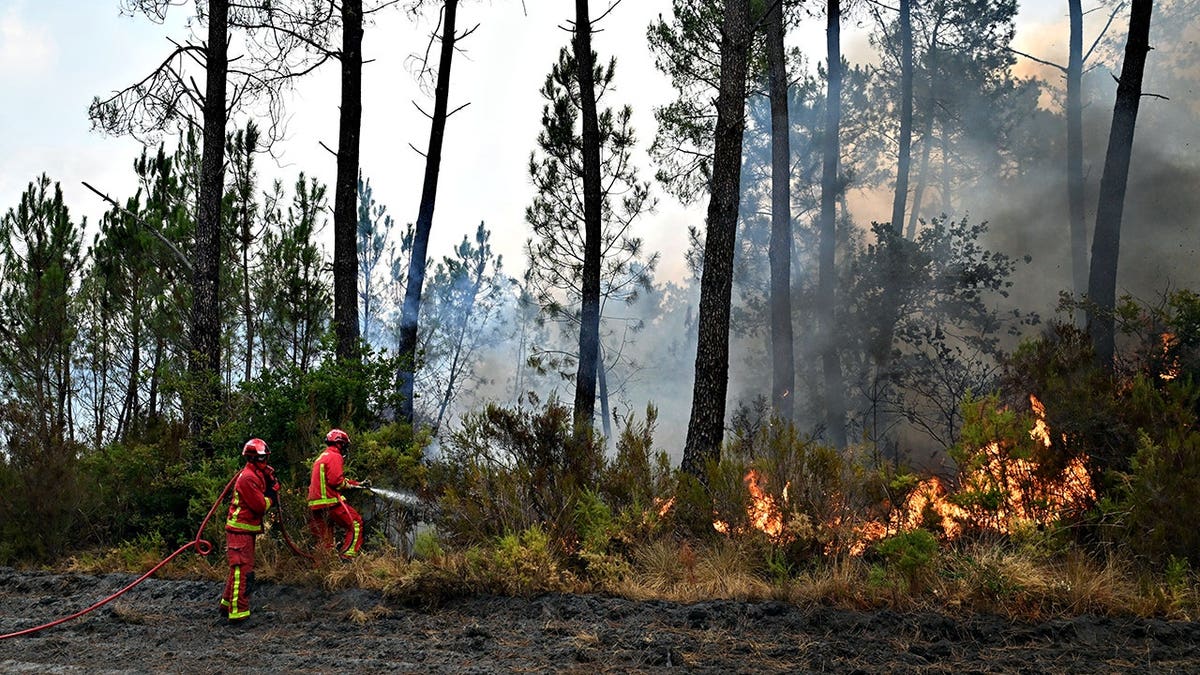
Firefighters battle a wildfire near Marcheprime, outside, Bordeaux, France, Sunday, July 26, 2026. (AP Photo/Emma Da Silva)
The Bordeaux-area fire is one of several major wildfires burning across France. A separate blaze in the neighboring Landes region has forced another 36,000 people to evacuate, while nearly 3,000 others have left their homes in southern France’s Var region along the Mediterranean coast.
Neighboring Spain is facing its own wildfire emergency.
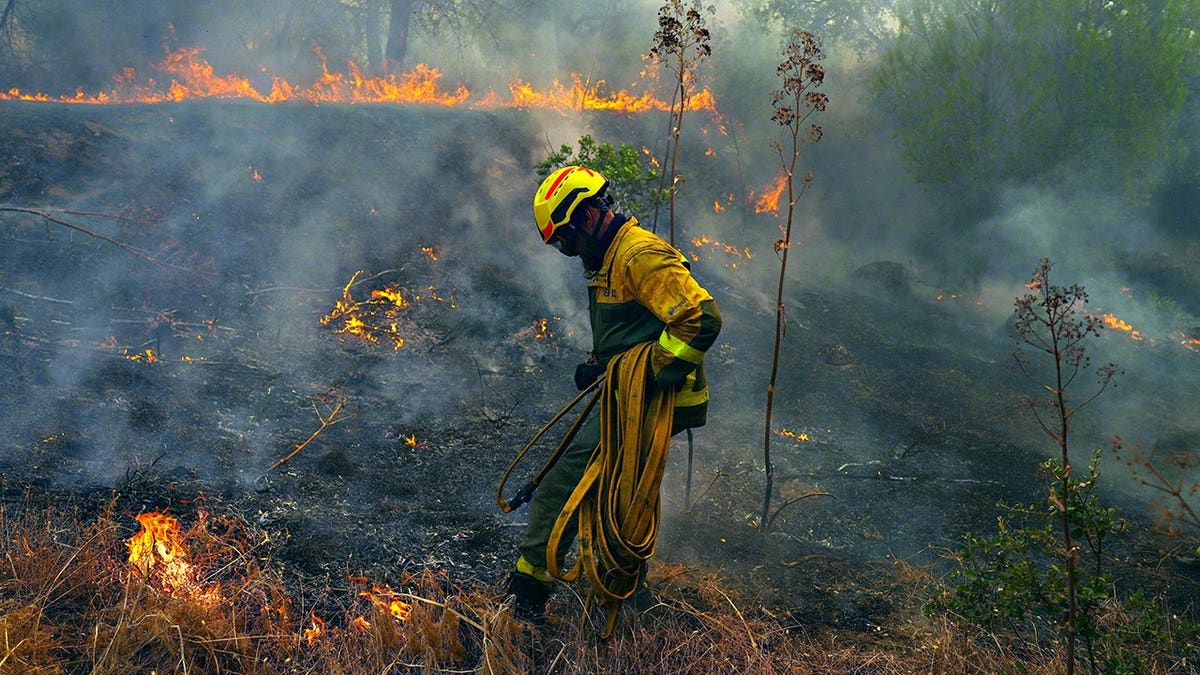
A firefighter carries a hose while battling a wildfire in San Martin de Valdeiglesias, west of Madrid, Spain, Sunday, July 26, 2026. (AP Photo/Manu Fernandez)
Authorities there have evacuated about 116,000 people in recent days as fires burned across the Valencia region and west of Madrid. A fast-moving fire in a Valencia suburb killed one man Saturday, marking Spain’s first wildfire death in the latest wave of fires.
CLICK HERE TO DOWNLOAD THE FOX NEWS APP
Earlier this month, 13 people were killed in southern Spain in the country’s deadliest wildfire in recent memory.
The Associated Press contributed to this report.
france, europe, fires disasters, natural disasters, world

Desesperada búsqueda de una adolescente de 17 años en Corrientes: activaron la Alerta Sofía

EXCLUSIVE: Legal group tells NYPD cops they can contact ICE directly despite blue city’s sanctuary rules

Sofía Aldrey fue mamá tras las múltiples infidelidades de Fede Bal y mostró por primera vez a su bebé

Canales para ver el River Plate vs. Barracas Central por el Torneo Clausura

Brasil llamó a consulta a su embajador en la Argentina por los insultos de Milei a Lula

Seguí en vivo el discurso del presidente Javier Milei en La Rural

Jorge Berredo, general retirado de las FFAA, asumió como Secretario de Seguridad en San Isidro

Sin la anestesia mundialista, aflora la crisis del conurbano y Milei necesita reconectar con lo popular

Senado: Bullrich y Sturzenegger cierran filas para tratar de avanzar con la extranjerización de tierras
Marc Stanley destacó el potencial de Vaca Muerta para “estabilizar la economía” y evitó hablar de política interna

 POLITICA3 días ago
Senado: Bullrich y Sturzenegger cierran filas para tratar de avanzar con la extranjerización de tierras
- INTERNACIONAL3 días ago
Recuperaron ADN de un tenedor plástico y acusaron a una mujer de haber apuñalado 100 veces a su mejor amiga hace 14 años
- INTERNACIONAL3 días ago
Khanna demands answers from CCP-linked company accused of undercutting US manufacturers